Part 2 — ILLUSTRATIONS (continued 3)
Reading edition
"The masters couldn't whip the slaves there. The law said in black and white no master couldn't whip no slave, no matter what he done. When a slave got bad they took him to the county seat and had him whipped. One day I seen my old daddy get whipped by the county and state 'cause he wouldn't work. They had a post in the public square what they tied 'em to and a man what worked for the county whipped 'em.
"After he was whipped my daddy run away to the north. Daddy come by when I was cleanin' the yard and said, 'Pierce, go 'round side the house, where nobody can't see us.' I went and he told me goodbye, 'cause he was goin' to run away in a few days. He had to stay in the woods and travel at night and eat what he could find, berries and roots and things. They never caught him and after he crossed the Mason-Dixon line he was safe.
"There used to be a man who raised bloodhounds to hunt slaves with. I seen the dogs on the trail a whole day and still not catch 'em. Sometimes the slave made friends with the dogs and they wouldn't let on if they found him. Three dogs followed one slave the whole way up north and he sold them up there.
"I heered 'em talk about some slaves what run barefooted in cold weather and you could trail 'em by blood in the snow and ice where they hurt their feet.
"Most of the time the master gave us castor oil when we were sick. Some old folks went in the woods for herbs and made medicine. They made tea out of 'lion's tongue' for the stomach and snake root is good for pains in the stomach, too. Horse mint breaks the fever. They had a vermifuge weed.
"I seed a lot of Southern soldiers and they'd go to the big house for something to eat. Late in '63 they had a fight at a place called Kingston, only 12 miles from our place, takin' how the jacks go. We could hear the guns go off when they was fightin'. The Yankees beat and settled down there and the cullud folks flocked down on them and when they got to the Yankee lines they was safe. They went in droves of 25 or 50 to the Yankees and they put 'em to work fightin' for freedom. They fit till the war was over and a lot of 'em got kilt. My mother and sister run away to the Yankees and they paid 'em big money to wash for 'em.
"When peace come they read the 'mancipation law to the cullud people and they stayed up half the night at Mr. Harper's, singing and shouting. They spent that night singin' and shoutin'. They wasn't slaves no more. The master had to give 'em a half or third of what he made. Our master parceled out some land to 'em and told 'em to work it their selves and some done real well. They got hosses that the soldiers had turned loose to die, and fed them and took good care of 'em and they got good stock that way. Cotton was twenty and thirty cents a pound then.
"After us cullud folks was 'sidered free and turned loose, the Klu Klux broke out. Some cullud people started to farmin', like I told you, and gathered the old stock. If they got so they made good money, and had a good farm, the Klu Klux would come and murder 'em. The gov'ment builded school houses and the Klu Klux went to work and burned 'em down. They'd go to the jails and take the cullud men out and knock their brains out and break their necks and throw 'em in the river.
"There was a cullud man they taken, his name was Jim Freeman. They taken him and destroyed his stuff and him, 'cause he was making some money. Hung him on a tree in his front yard, right in front of his cabin.
"There was some cullud young men went to the schools they'd opened by the gov'ment. Some white woman said someone had stole something of hers so they put them young men in jail. The Klu Klux went to the jail and took 'em out and killed 'em. That happened the second year after the War.
"After the Klu Kluxes got so strong the cullud men got together and made the complaint before the law. The Gov'nor told the law to give 'em the old guns in the com'sary, what the Southern soldiers had used, so they issued the cullud men old muskets and said protect themselves. They got together and organized the militia and had leaders like reg'lar soldiers. They didn't meet 'cept when they heered the Klu Kluxes was coming to get some cullud folks. Then they was ready for 'em. They'd hide in the cabins and then's when they found out who a lot of them Klu Kluxes was, 'cause a lot of 'em was kilt. They wore long sheets and covered the hosses with sheets so you couldn't rec'nize 'em. Men you thought was your friend was Klu Kluxes and you'd deal with 'em in stores in the daytime and at night they'd come out to your house and kill you. I never took part in none of the fights, but I heered the others talk 'bout them, but not where them Klu Klux could hear 'em.
"One time they had 12 men in jail, 'cused of robbin' white folks. All was white in jail but one, and he was cullud. The Klu Kluxes went to the jailor's house and got the jail key and got them men out and carried 'em to the River Bridge, in the middle. Then they knocked their brains out and threw 'em in the river.
"We was 'fraid of them Klu Kluxes and come to town, to Snow Hill. We rented a little house and my mother took in washing and ironing. I went to school and learned to read and write, then worked on farms, and fin'ly went to Columbia, in South Carolina, and worked in the turpentine country. I stayed there a while and got married.
"I come to Texas in 1877 and Galveston was a little pen then, a little mess. I worked for some white people and then went to Houston and it wasn't nothing but a mudhole. So I messed 'round in South Carolina again a while and then come back to Galveston.
"The Lawd called me then and I answered and was preacher here at the Union Baptist Church, on 11th and K, 'bout 25 years.
"I knowed Wright Cuney well and he held the biggest place a cullud man ever helt in Galveston. He was congressman and the white people looked up to him just like he was white.
"Durin' the Spanish-American War I went to Washington, D.C., to see my sister and got in the soldier business. The gov'ment give me $30.00 a month for drivin' a four-mule wagon for the army. I druv all through Pennsylvania and Virginia and South Carolina for the gov'ment. I was a——what do they call a laborer in the army?
"When war was over I come back here and now I'm too old to work and the state gives me a pension and me and my granddaughter live on that. The young folks is makin' their mark now. One thing about 'em, they get educated, but there's not much for them to do when they get finished with school but walk the streets now. I been always trying to help my people to rise 'bove their station and they are rising all the time, and some day they'll be free."
420298
MOLLY HARRELL was born a slave on the Swanson plantation, near Palestine, Texas. She was a housegirl, but must have been too small to do much work. She does not know her age, but thinks she was about seven when she was freed. Molly lives at 3218 Ave H., Galveston, Texas.
"Don't you tell nobody dat I use to be a slave. I 'most forgot it myself till you got round me jes' den. Course, I ain't blamin' you for it, but what you done say 'bout all de plantations havin' schools was wrong, so I jes' had to tell you I been a slave myself. It jes' slip out.
"Like I jes' say, I knows what I's talkin' 'bout, 'cause I use to be a slave myself and I don't know how to read and write. Dat why I say I can't see so good. It don't do to let folks know dey's smarter'n you, 'cause den dey got you right where dey wants you. Now, Will, dat de man I's marry to, am younger'n me but he don't know it. When you git marry, you don't tell de man how old you is. He wouldn't have you if you did. 'Course, Will ain't so young heself, but he's born after de war and I's born durin' slavery, so dat make me older.
"Mr. Swanson use to own de big plantation in Palestine. Everybody in dat part de country knowed him. He use to live in a plain, wood house on de Palestine road. My mother use to cook and wait on tables. John was my father.
"Dey use to have de little whip dey use on de women. Course de field hands got it worse, but den, dey was men. Mr. Swanson was good and he was mean. He was nice one day and mean as Hades de next. You never knowed what he gwine to do. But he never punish nobody 'cept dey done somethin'. My father was a field hand, and Mr. Swanson work de fire out dem. Work, work—dat all dey know from time dey git up in de mornin' till dey went to bed at night. But he wasn't hard on dem like some masters was. If dey sick, dey didn't habe to work and he give dem de med'cine hisself. If he cotch dem tryin' play off sick, den he lay into dem, or if he cotch dem loafin'. Course, I don't blame him for dat, 'cause dere ain't anythin' lazier dan a lazy nigger. Will am 'bout de laziest one in de bunch. You ain't never find a lazier nigger dan Will.
"I was purty little den, but I done my share. I holp my mother dust and clean up de house and peel 'tatoes. Dere some old men dat too old to work so dey sot in de sun all day and holp with de light work. Dey carry grub and water to de field hands.
"Somebody run 'way all de time and hide in de woods till dere gut pinch dem and den dey have to come back and git somethin' to eat. Course, dey got beat, but dat didn't worry dem none, and it not long till dey gone 'gain.
"My mother sold into slavery in Georgia, or round dere. She tell me funny things 'bout how dey use to do up dere. A old white man think so much of he old nigger when he die he free dat nigger in he will, and lef' him a little money. He open de blacksmith shop and buy some slaves. Mother allus say dose free niggers make de hardes' masters. One in Palestine marry a nigger slave and buy her from her master. Den he tell everybody he own a slave.
"Everybody talk 'bout freedom and hope to git free 'fore dey die. I 'member de first time de Yankees pass by, my mother lift me up on de fence. Dey use to pass by with bags on de mules and fill dem with stuff from de houses. Dey go in de barn and holp deyself. Dey go in de stables and turn out de white folks' hosses and run off what dey don't take for deyself.
"Den one night I 'member jes' as well, me and my mother was settin' in de cabin gettin' ready to go to bed, when us hear somebody call my mother. We listen and de overseer whisper under de door and told my mother dat she free but not to tell nobody. I don't know why he done it. He allus like my mother, so I guess he do it for her. The master reads us de paper right after dat and say us free.
"Me and my mother lef' right off and go to Palestine. Most everybody else go with us. We all walk down de road singin' and shoutin' to beat de band. My father come nex' day and jine us. My sister born dere. Den us go to Houston and Louisiana for a spell and I hires out to cook. I works till us come to Galveston 'bout ten year ago.
420316
Dibble, Fred, P.W., Beehler, Rheba, P.W., Beaumont, Jefferson, Dist. #3.
ANN HAWTHORNE, Beaumont, Tex., was clad in a white dress which was protected by a faded blue checked apron. On her feet she wore men's bedroom slippers much too large for her, and to prevent their falling off, were tied around the ankle by rag strings. She wore silk hose with the heels completely worn out of them. Her figure is generous in proportions, and her hair snow white, fixed in little pig tails and wrapped in black string. Ann related her story in a deep voice and a jovial manner. Although born and raised in Jasper county, she speaks boastfully about having been to Houston.
"If you's lookin' for Ann Hawthorne, dis is me. I was bo'n in slavery, and I was a right sizeable gal when freedom come. I was 'bout 10 or 12 year' ol' when freedom riz up."
"I was bo'n up here in Jasper. Ol' marster Woodruff Norsworthy and Miss Ca'lina, dey was my ol' marster and mistus. Miss Ca'lina she name' me."
"My pa was Len Norsworthy. My ma was name Ca'line after ol' mistus. Dat how come I 'member ol' mistus name so good. I got fo' brudders livin', but nary a sister. My brudders is Newton and Silas and Willie and Frank. I say dey's livin'. I mean dat de las' time I heard of 'em dey was livin'."
"Yas, I 'member de house I was raise in. It was jis' a one-room log house. Dey was a ol' Geo'gia hoss bed in it. It was up pretty high and us chillun had to git on a box to git in dat bed. De mattress was mek outer straw. Sometime dey mek 'em in co'n sacks and sometime dey put 'em in a tick what dey weave on de loom. I had a aunt what was de weaver. She weave all de time for ol' marster. She uster weave all us clo's."
"My ma she was jis' a fiel' han' but my gramma and my aunt dey hab dem for wuk 'roun' de house. I didn' do nuthin' but chu'n (churn) and clean de yard, and sweep 'roun' and go to de spring and tote de water. I l'arn how to hoe, too."
"Dat was a big plantation. Fur as I kin 'member I t'ink dey was 'bout 25 or 30 slaves on de place. You see I done git ol' and childish and I can't 'member like what I uster could. I 'member though, dat my pa uster drive a team for ol' marster. Sometime he fiel' han' on de plantation, too."
"Ol' marster he was good to his slaves. I heerd of slaves bein' whip' but I ain't never see any git whip. Dey was a overseer on de place and iffen dey was any whippin' to be did, he done it."
"Me? I never did git no lickin's when I was a li'l slave. No mam. I allus did obey jis' like I was teached to do and dey didn' hafter whip me. I 'members dat."
"We done our playin' 'roun' dat big house, but dat front gate, we dassen' go outside dat. We uster jump de rope and play ring plays and sich. You know how dey yoke dey han's togedder? Dat de way us uster do and go 'roun' and 'roun' singin' our li'l jumped up songs. Den us jis' play 'roun' lots of times anyt'ing what happen to come up in our min's."
"Dey feed us good back in slavery. Give us plenty of meat and bread and greens and t'ings. Ye, dey feed us good and us had plenty. Dey give us plenty of co'nbread. Dat's de reason I's a co'nbread eater now. I ain't no flour-bread eater. I lubs my co'nbread. Us all eat outer one big pan. Dey give each li'l nigger a big iron spoon and us sho' go to it. Dey give us milk in a sep'rate vessel, and dey give eb'ryone a slice of meat in our greens. And dey never dassent tek de other feller's piece of meat. Eb'ryt'ing better go 'long smoove wid us chillun. We better eat and shut our mouf. We dassent raise no squall."
"I tell dese chillun here dey ain't know nuffin'. Dey got dey glass. We had our li'l go'ds (gourds) pretty and clean and white. I wish I had one of dem ol' time go'ds now to drink my milk outer."
"In good wedder dey feed us under a big tree out in de yard. And us better leave eb'ryt'ing clean and no litter 'roun'. In de winter time dey fed us in de kitchen."
"Us gals wo' plain, long waisted dress. Dey was cut straight and wid long waist and dey button down de back."
"Dey was a cullud man what mek shoes for de slaves to wear in de winter time. He mek 'em outer rough red russet ledder. Dat ledder was hard and lots of times it mek blister on us feet. I uster be glad when summer time come so's I could go barefoot."
"Dey had cabins for de slaves to live in. Dere was jis' one room and one family to de cabin. Some of 'em was bigger dan others and dey put a big family in a big cabin and a li'l family in a li'l cabin."
"I never see no slaves bought and sol'. I heerd my gramma and ma say dey ol' marster wouldn' sell none of his slaves."
"I heerd 'bout dem broom-stick marriages, but I ain't never seed none. Dat was dey law in dem days."
"Dey didn' know nuffin' 'bout preachin' and Sunday School in dem times. De fus' preachin' I heerd was atter dat. I hear a white preacher preach. He uster preach to de white folks in de mornin' and de cullud folks in de afternoons. But de slaves some of 'em uster had family prayer meetings to deyselfs."
"De ol' marster he didn' work he han's on Sunday and he give 'em half de day off on Sadday, too. But he never give 'em a patch to work for deyself. Dat half a day off on Sadday was for de slaves to wash and clean up deyselfs."
"I never git marry 'till way atter freedom come. Dat was up in Jasper county where I's bred and bo'n. I marry Hyman Hawthorne. Near as you kin guess, dat was 'bout 50 year' ago. Den he die and lef' me wid eight chillun. My baby gal she ain't never see no daddy."
"Atter he dead I wash and iron and cook out and raise my chillun. I was raise up in de fiel' all my life. When I git disable' to wuk in de time of de 'pressure (depression) I git on my walkin' stick. I wag up town and I didn' fail to ax de white folks 'cause I wo' myself out wukkin' for 'em. Dey load up my sack and sometime dey bring me stuff in a car right dere to dat gate. But I's had two strokes and I ain't able to go to town no mo'."
"I tell you I never hear nuthin' 'bout chu'ch 'till way atter freedom. Sometime den us go to chu'ch. Dey was one Mef'dis' Chu'ch and one Baptis' Chu'ch in Jasper. Dere moughta been a Cabilic (Catholic) Chu'ch dere too, but I dunno 'bout dat."
"I don' 'member seein' no sojers. I t'ink some of ol' marster's boys went to de war but de ol' man didn' go. I dunno 'bout wedder dey come back or not 'cep'n' I 'member dat Crab Norsworthy he come back."
"When any of de slaves git sick ol' mistus and my gramma dey doctor 'em. De ol' mistus she a pretty good doctor. When us chillun git sick dey git yarbs or dey give us castor oil and turpentine. Iffen it git to be a ser'ous ailment dey sen' for de reg'lar doctor. Dey uster hang asafoetida 'roun' us neck in a li'l bag to keep us from ketch' de whoopin' cough and de measles."
"Dey was a gin and cotton press on de place. Ol' marster gin' and bale' he own cotton. Dat ol' press had dem long arms a-stickin' down what dey hitch hosses to and mek 'em go 'roun' and 'roun' and press de bale."
"Dey raise dey own t'bacco on de place. I didn' use snuff nor chew 'till after I growed up and marry. Back in slavery you couldn' let 'em ketch you wid a chew of t'bacco or snuff in your mouf. Iffen you did dey wouldn' let you forgit it."
"I uster like to go and play 'roun' de calfs, jis' go up and pet 'em and rub 'em. But we dassent git on 'em to ride 'em."
"Marster uster sit 'roun' and watch us chillun play. He enjoy dat. He call me his Annie 'cause I name' after my mistus. Sometime he hab a wagon load of watermilion haul' up from de fiel' and cut 'em. Eb'ry chile hab a side of watermilion. And us hab all de sugar cane and sweet 'taters us want."
"Dey had a big smokehouse. Dey hab big hog killin' time, and dey dry and salt de meat in a big long trough. Dey git oak and ash and hick'ry wood and mek a fire under it and smoke it. My gramma toted de key to dat smokehouse and ol' mistus she'd tell her what to go and git for de white folks and de cullud folks."
"When Crismus come 'roun' dey give us big eatin'. Us hab chicken and turkey and cake. I don' 'member dat dey give us no presents."
"My gramma and my ma and ol' man Norsworthy dey come from Alabama. I never hear of him breakin' up a family. But when dey was livin' in Geo'gy, my ma marry a man name' Hawthorne in Geo'gy. He wouldn' sell him to Marse Norsworthy when he come to Texas. Atter freedom marster go to Geo'gy to git him and bring him to Texas, but he done raisin' up anudder family dere and won't come. Li'l befo' she die her husban' come. When he 'bout wo' out and ready to die, den he come. Some of de ol'es' chillun 'member dey daddy and dey crazy for him to come and dey mek up de money for him. When he git here dey tek care of him 'till he die right dere at Olive. Ma tell 'em to write him he neenter (need not) come. She say he ain't no service to her. But he come and de daughter tek care of her ma and pa bofe."
"I's got 8 gran'chillun and 5 great-gran'chillun. I 'vides (divide) my time 'tween my daughter here and de one in Houston."
"You wants to tek my picture? Daughter, I don' want dat hat you got dere. Dat one of de chillun' hats. Git dat li'l bonnet. Dat becomes me better. I can't stan' much sun. Dey say I's got high blood pressue."
420186
JAMES HAYES, 101, was born a slave to a plantation owner whose name he does not now recall, in Shelby Co., two miles from Marshall, Texas. Mr. John Henderson bought the place, six slaves and James and his mother. James, known as Uncle Jim, seems happy, still stands erect, and is very active for his age. He lives on a green slope overlooking the Trinity river, in Moser Valley, a Negro settlement ten miles northeast of Fort Worth.
"Dis nigger have lived a long time, yas, suh! I's 101 years ole, 'cause I's bo'n Dec. 28, 1835. Dat makes me 102 come nex' December. I can' 'member my fust marster's name, 'cause when I's 'bout two years ole, me and my sis, 'bout five, and our mammy was sol' to Marster John Henderson. I don' 'member anything 'bout my pappy, but I 'member Marster Henderson jus' like 'twas las' week. I's settin' hear a thinkin' of dem ole days when I's a li'l nigger a cuttin' up on ole marster's plantation. How I did play roun' with de chilluns till I's big enough for to wo'k. After I's 'bout 13, I jus' peddles roun' de house for 'bout a year, den 'twarn't long till I hoes co'n and potatoes. Dere's six slaves on dat place and I coul' beat dem all a-hoein'.
"De marster takes good care of us and sometimes give us money, 'bout 25¢, and lets us go to town. Dat's when we was happy and celebrates. We'uns spent all de money on candy and sweet drinks. Marster never crowded us 'bout de wo'k, and never give any of us whuppin's. I's sev'ral times needed a whuppin', but de marster never gives dis nigger more'n a good scoldin'. De nearest I comes to gittin whupped, 'twas once when I stole a plate of biscuits offen de table. I warn't in need of 'em, but de devil in me caused me to do it. Marster and all de folks comes in and sets down, and he asks for de biscuits, and I's under de house and could hear 'em talk. De cook says, 'I's put de biscuits on de table.' Marster says, 'If you did, de houn' got 'em.' Cook says, 'If a houn' got 'em, 'twas a two-legged one, 'cause de plate am gone, too.' I's made de mistake of takin' de plate. Marster give me de wors' scoldin' I ever has and dat larned me a lesson.
"Not long after dat, Marster sol' my mammy to his brudder who lived in Fort Worth. When dey took her away, I's powerful grieved. 'Bout dat time de War started. De marster and his boy, Marster Ben, jined de army. De marster was a sergeant. De women folks was proud of dere men folks, but dey was powerful grieved. All de time de men's away, I could tell Missy Elline and her mamma was worried. Dey allus sen's me for de mail, and when I fotches it, dey run to meet me, anxious like, to open de letter, and was skeert to do it. One day I fotches a letter and I could feel it in my bones, dere was trouble in dat letter. Sure 'nough, dere was trouble, heaps of it. It tells dat Marster Ben am kilt and dat dey was a shippin' him home. All de ole folks, cullud and white, was cryin'. Missy Elline, she fainted. When de body comes home, dere's a powerful big funeral and after dat, dere's powerful weepin's and sadness on dat place. De women folks don' talk much and no laughin' like 'fore. I 'members once de missy asks me to make a 'lasses cake. I says, 'I's got no 'lasses.' Missy says, 'Don' say 'lasses, say molasses.' I says, 'Why say molasses when I's got no 'lasses.' Dat was de fus' time Missy laugh after de funeral.
"Durin' de War, things was 'bout de same, like always, 'cept some vittles was scarce. But we'uns had plenty to eat and us slaves didn' know what de War was 'bout. I guess we was too ign'rant. De white folks didn' talk 'bout it 'fore us. When it's over, de Marster comes home and dey holds a big celebration. I's workin' in de kitchen and dey tol' me to cook heaps of ham, chicken, pies, cakes, sweet 'taters and lots of vegetables. Lots of white folks comes and dey eats and drinks wine, dey sings and dances. We'uns cullud folks jined in and was singin' out in de back, 'Massa's in de Col', Har' Groun'. Marster asks us to come in and sing dat for de white folks, so we'uns goes in de house and sings dat for de white folks and dey jines in de chorus.
"Three days after de celebration, de marster calls all de slaves in de house and says, 'Yous is all free, free as I am.' He tol' us we'uns could go if we'uns wanted to. None of us knows what to do, dere warn't no place to go and why would we'uns wan' to go and leave good folks like de marster? His place was our home. So we'uns asked him if we could stay and he says, 'Yous kin stay as long as yous want to and I can keep yous.' We'uns all stayed till he died, 'bout a year after dat.
"When he was a-dyin', marster calls me to his bed and says, 'My dyin' reques' is dat yous be taken to your mama.' He calls his son, Zeke, in and tells him dat I should be fotched to my mamma. And 'bout in a year, Marster Zeke fotches me to my mamma, in Johnson Station, south of Arlington. She's wo'kin' for Jack Ditto and I's pleased to see her.
I's pleased to see my mammy, but after a few days I wants to go back to Marshall with Marster Zeke. Dat was my home, so I kep' pesterin' marster to fetch me back, but he slips off and leaves me. I has to stay and I's been here ever since.
"I gits my fust job with Carter Cannon, on a farm, and stays seven years. Den I goes to Fort Worth and takes a job cookin' in de Gran' Hotel for three years. Den I goes to Dallas and cooks for private families, and wo'ks for Marster James Ellison for 30 years. I stops four years ago and comes out here to wait till de good Lawd calls me home.
"Bout gittin' married, after I quits de Gran' Hotel I marries and we'uns has two chillen. My wife died three years later.
"You knows, I believes I's mo' contented as a slave. I's treated kind all de time and had no frettin' 'bout how I gwine git on. Since I's been free, I sometimes have heaps of frettin'. Course, I don' want to go back into slavery, but I's paid for my freedom.
"I's never been sick abed, but I's had mo' misery dis las' year dan all my life. It's my heart. If I live till December, I'll be 102 years old, and dis ole heart have been pumpin' and pumpin' all dem years and have missed nary a beat till dis las' year. I knows 'twon't be long till de good Lawd calls dis ole nigger to cross de Ribber Jordan and I's ready for de Lawd when he calls.
420082
Felix Haywood (A)
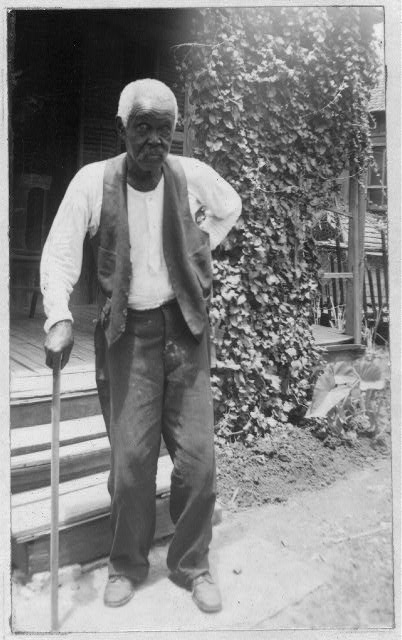
Felix Haywood (B)
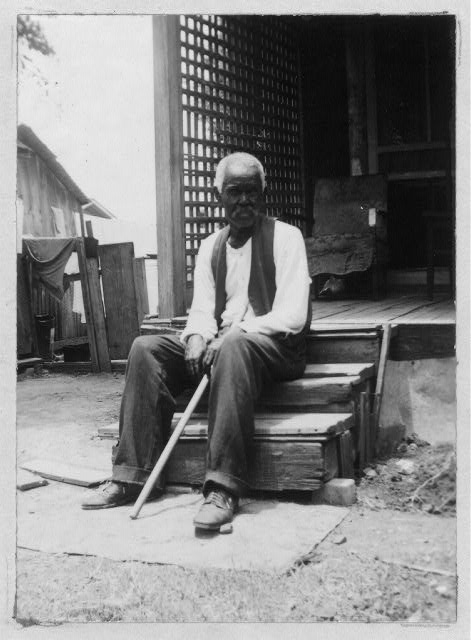
FELIX HAYWOOD is a temperamental and whimsical old Negro of San Antonio, Texas, who still sees the sunny side of his 92 years, in spite of his total blindness. He was born and bred a slave in St. Hedwig, Bexar Co., Texas, the son of slave parents bought in Mississippi by his master, William Gudlow. Before and during the Civil War he was a sheep herder and cowpuncher. His autobiography is a colorful contribution, showing the philosophical attitude of the slaves, as well as shedding some light upon the lives of slave owners whose support of the Confederacy was not accompanied by violent hatred of the Union.
"Yes, sir, I'm Felix Haywood, and I can answer all those things that you want to know. But, first, let me ask you this: Is you all a white man, or is you a black man?"
"I'm black, blacker than you are," said the caller.
The eyes of the old blind Negro,—eyes like two murkey brown marbles—actually twinkled. Then he laughed:
"No, you ain't. I knowed you was white man when you comes up the path and speaks. I jus' always asks that question for fun. It makes white men a little insulted when you dont know they is white, and it makes niggers all conceited up when you think maybe they is white."
And there was the key note to the old Negro's character and temperament. He was making a sort of privileged game with a sportive twist out of his handicap of blindness.
As the interviewer scribbled down a note, the door to the little shanty on Arabella Alley opened and a backless chair was carried out on the porch by a vigorous old colored woman. She was Mrs. Ella Thompson, Felix' youngest sister, who had known only seven years of slavery. After a timid "How-do-you-do," and a comment on the great heat of the June day, she went back in the house. Then the old Negro began searching his 92 years of reminiscences, intermixing his findings with philosophy, poetry and prognostications.
"It's a funny thing how folks always want to know about the War. The war weren't so great as folks suppose. Sometimes you didn't knowed it was goin' on. It was the endin' of it that made the difference. That's when we all wakes up that somethin' had happened. Oh, we knowed what was goin' on in it all the time, 'cause old man Gudlow went to the post office every day and we knowed. We had papers in them days jus' like now.
"But the War didn't change nothin'. We saw guns and we saw soldiers, and one member of master's family, Colmin Gudlow, was gone fightin'—somewhere. But he didn't get shot no place but one—that was in the big toe. Then there was neighbors went off to fight. Some of 'em didn't want to go. They was took away (conscription). I'm thinkin' lots of 'em pretended to want to go as soon as they had to go.
"The ranch went on jus' like it always had before the war. Church went on. Old Mew Johnson, the preacher, seen to it church went on. The kids didn't know War was happenin'. They played marbles, see-saw and rode. I had old Buster, a ox, and he took me about plenty good as a horse. Nothin' was different. We got layed-onto(whipped) time on time, but gen'rally life was good—just as good as a sweet potato. The only misery I had was when a black spider bit me on the ear. It swelled up my head and stuff came out. I was plenty sick and Dr. Brennen, he took good care of me. The whites always took good care of people when they was sick. Hospitals couldn't do no better for you today.... Yes, maybe it was a black widow spider, but we called it the 'devil biter'.
"Sometimes someone would come 'long and try to get us to run up North and be free. We used to laugh at that. There wasn't no reason to run up North. All we had to do was to walk, but walk South, and we'd be free as soon as we crossed the Rio Grande. In Mexico you could be free. They didn't care what color you was, black, white, yellow or blue. Hundreds of slaves did go to Mexico and got on all right. We would hear about 'em and how they was goin' to be Mexicans. They brought up their children to speak only Mexican.
"Me and my father and five brothers and sisters weren't goin' to Mexico. I went there after the war for a while and then I looked 'round and decided to get back. So I come back to San Antonio and I got a job through Colonel Breckenridge with the waterworks. I was handling pipes. My foreman was Tom Flanigan—he must have been a full-blooded Frenchman!
"But what I want to say is, we didn't have no idea of runnin' and escapin'. We was happy. We got our lickings, but just the same we got our fill of biscuits every time the white folks had 'em. Nobody knew how it was to lack food. I tell my chillen we didn't know no more about pants than a hawg knows about heaven; but I tells 'em that to make 'em laugh. We had all the clothes we wanted and if you wanted shoes bad enough you got 'em—shoes with a brass square toe. And shirts! Mister, them was shirts that was shirts! If someone gets caught by his shirt on a limb of a tree, he had to die there if he weren't cut down. Them shirts wouldn't rip no more'n buckskin.
"The end of the war, it come jus' like that—like you snap your fingers."
"How did you know the end of the war had come?" asked the interviewer.
"How did we know it! Hallelujah broke out—
"'Abe Lincoln freed the nigger With the gun and the trigger; And I ain't goin' to get whipped any more. I got my ticket, Leavin' the thicket, And I'm a-headin' for the Golden Shore!'
"Soldiers, all of a sudden, was everywhere—comin' in bunches, crossin' and walkin' and ridin'. Everyone was a-singin'. We was all walkin' on golden clouds. Hallelujah!
"'Union forever, Hurrah, boys, hurrah! Although I may be poor, I'll never be a slave— Shoutin' the battle cry of freedom.'
"Everybody went wild. We all felt like heroes and nobody had made us that way but ourselves. We was free. Just like that, we was free. It didn't seem to make the whites mad, either. They went right on giving us food just the same. Nobody took our homes away, but right off colored folks started on the move. They seemed to want to get closer to freedom, so they'd know what it was—like it was a place or a city. Me and my father stuck, stuck close as a lean tick to a sick kitten. The Gudlows started us out on a ranch. My father, he'd round up cattle, unbranded cattle, for the whites. They was cattle that they belonged to, all right; they had gone to find water 'long the San Antonio River and the Guadalupe. Then the whites gave me and my father some cattle for our own. My father had his own brand, 7 B ), and we had a herd to start out with of seventy.
"We knowed freedom was on us, but we didn't know what was to come with it. We thought we was goin' to get rich like the white folks. We thought we was goin' to be richer than the white folks, 'cause we was stronger and knowed how to work, and the whites didn't and they didn't have us to work for them anymore. But it didn't turn out that way. We soon found out that freedom could make folks proud but it didn't make 'em rich.
"Did you ever stop to think that thinking don't do any good when you do it too late? Well, that's how it was with us. If every mother's son of a black had thrown 'way his hoe and took up a gun to fight for his own freedom along with the Yankees, the war'd been over before it began. But we didn't do it. We couldn't help stick to our masters. We couldn't no more shoot 'em than we could fly. My father and me used to talk 'bout it. We decided we was too soft and freedom wasn't goin' to be much to our good even if we had a education."
The old Negro was growing very tired, but, at a request, he instantly got up and tapped his way out into the scorching sunshine to have his photograph taken. Even as he did so, he seemed to smile with those blurred, dead eyes of his. Then he chuckled to himself and said:
"'Warmth of the wind And heat of the South, And ripe red cherries For a ripe, red mouth.'"
"Land sakes, Felix!" came through the window from sister Ella. "How you carries on! Don't you be a-mindin' him, mister."
420096
Phoebe Henderson
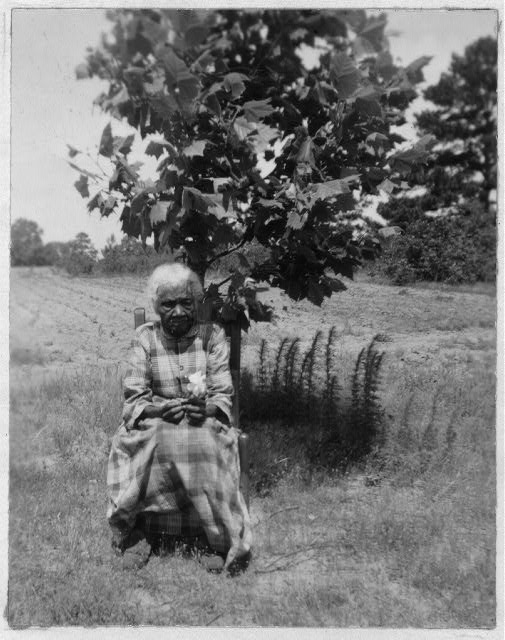
PHOEBE HENDERSON, a 105 year old Negro of Harrison Co., was born a slave of the Bradley family at Macon, Georgia. After the death of her mistress, Phoebe belonged to one of the daughters, Mrs. Wiley Hill, who moved to Panola County, Texas in 1859, where Phoebe lived until after the Civil War. For the past 22 years she has lived with Mary Ann Butler, a daughter, about five miles east of Marshall, in Enterprise Friendship Community. She draws a pension of $16.00 a month.
"I was bo'n a slave of the Bradley family in Macon, Georgia. My father's name was Anthony Hubbard and he belonged to the Hubbard's in Georgia. He was a young man when I lef' Georgia and I never heard from him since. I 'member my mother; she had a gang of boys. Marster Hill brought her to Texas with us.
"My ole missus name was Bradley and she died in Tennessee. My lil' missus was her daughter. After dey brought us to Texas in 1859 I worked in the field many a day, plowin' and hoein', but the children didn't do much work 'cept carry water. When dey git tired, dey'd say dey was sick and the overseer let 'em lie down in de shade. He was a good and kindly man and when we do wrong and go tell him he forgave us and he didn't whip the boys 'cause he was afraid they'd run away.
"I worked in de house, too. I spinned seven curts a day and every night we run two looms, makin' large curts for plow lines. We made all our clothes. We didn't wear shoes in Georgia but in this place the land was rough and strong, so we couldn't go barefooted. A black man that worked in the shop measured our feet and made us two pairs a year. We had good houses and dey was purty good to us. Sometimes missus give us money and each family had their garden and some chickens. When a couple marry, the master give them a house and we had a good time and plenty to wear and to eat. They cared for us when we was sick.
"Master Wiley Hill had a big plantation and plenty of stock and hawgs, and a big turnip patch. He had yellow and red oxen. We never went to school any, except Sunday school. We'd go fishin' often down on the creek and on Saturday night we'd have parties in the woods and play ring plays and dance.
"My husband's name was David Henderson and we lived on the same place and belonged to the same man. No, suh, Master Hill didn't have nothin' to do with bringin' us together. I guess God done it. We fell in love, and David asked Master Hill for me. We had a weddin' in the house and was married by a colored Baptist preacher. I wore a white cotton dress and Missus Hill give me a pan of flour for a weddin' present. He give us a house of our own. My husband was good to me. He was a careful man and not rowdy. When we'd go anywhere we'd ride horseback and I'd ride behin' him.
"I's scared to talk 'bout when I was freed. I 'member the soldiers and that warrin' and fightin'. Toby, one of the colored boys, joined the North and was a mail messenger boy and he had his horse shot out from under him. But I guess its a good thing we was freed, after all.
420007
Albert Hill
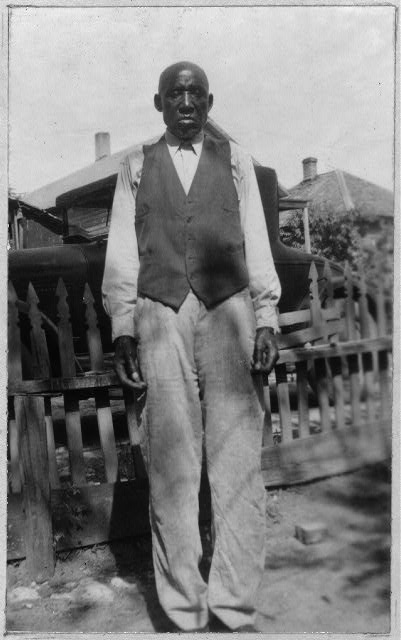
ALBERT HILL, 81, was born a slave of Carter Hill, who owned a plantation and about 50 slaves, in Walton Co., Georgia. Albert remained on the Hill place until he was 21, when he went to Robinson Co., Texas. He now lives at 1305 E. 12th St., Fort Worth, Texas, in a well-kept five-room house, on a slope above the Trinity River.
"I was born on Massa Carter Hill's plantation, in Georgia, and my name am Albert Hill. My papa's name was Dillion, 'cause he taken dat name from he owner, Massa Tom Dillion. He owned de plantation next to Massa Hill's, and he owned my mammy and us 13 chillen. I don't know how old I is, but I 'members de start of de war, and I was a sizeable chile den.
"De plantation wasn't so big and wasn't so small, jus' fair size, but it am fixed first class and everything am good. We has good quarters made out of logs and lots of tables and benches, what was made of split logs. We has de rations and massa give plenty of de cornmeal and beans and 'lasses and honey. Sometimes we has tea, and once in a while we gits coffee. And does we have de tasty and tender hawg meat! I'd like to see some of dat hawg meat now.
"Massa am good but he don't 'low de parties. But we kin go to Massa Dillion's place next to us and dey has lots of parties and de dances. We dances near all night Saturday night, but we has to stay way in de back where de white folks can't hear us. Sometimes we has de fiddle and de banjo and does we cut dat chicken wing and de shuffle! We sho' does.
"I druv de ox, and drivin' dat ox am agitation work in de summer time when it am hot, 'cause dey runs for water every time. But de worst trouble I ever has is with one hoss. I fotches de dinner to de workers out in de field and I use dat hoss, hitched to de two-wheel cart. One day him am halfway and dat hoss stop. He look back at me, a-rollin' de eye, and I knows what dat mean—'Here I stays, nigger.' But I heered to tie de rope on de balky hosses tail and run it 'twixt he legs and tie to de shaft. I done dat and puts some cuckleburrs on de rope, too. Den I tech him with de whip and he gives de rear back'ards. Dat he best rear. When he do dat it pull de rope and de rope pull de tail and de burrs gits busy. Dat hoss moves for'ard faster and harder den what he ever done 'fore, and he keep on gwine. You see, he am trying git 'way from he tail, but de tail am too fast. Course, it stay right behin' him. Den I's in de picklement. Dat hoss am runnin' away and I can't stop him. De workers lines up to stop him but de cart give de shove and dat pull he tail and, lawdy whoo, dat hose jump for'ard like de jackrabbit and go through dat line of workers. So I steers him into de fence row, and dere's no more runnin', but an awful mix-up with de hoss and de cart and de rations. Dat hoss so sceered him have de quavers. Massa say, 'What you doin'?' I says, 'Break de balk.' He say, 'Well, yous got everything else broke. We'll see 'bout de balk later.'
Massa has de daughter, Mary, and she want to marry Bud Jackson, but massa am 'gainst it. Bud am gwine to de army and dat give dis boy work, 'cause I de messenger boy for him and Missy Mary. Dey keeps company unbeknownst and I carry de notes. I puts de paper in de hollow stump. Once I's sho' I's kotched. Dere am de massa and he say, 'Where you been, nigger?' I's sho' skeert and I says, 'I's lookin' for de squirrels.' So massa goes 'way and when I tells you I's left, it ain't de proper word for to 'splain, 'cause I's flew from here.' I tells Missy Mary and she say, 'You sho' am de Lawd's chosen nigger.'
"De 'federate soldiers comes and dey takes de rations, but de massa has dug de pit in de pasture and buried lots of de rations, so de soldiers don't find so much. De clostest battle was Atlanta, more dan 25 mile 'way.
"When de war come over, Bud Jackson he come home. De massa welcome him, to de sprise of everybody, and when Bud say he want to marry Missy Mary, massa say, 'I guesses you has earnt her.'
"When freedom am here, massa call all us together and tells us 'bout de difference 'tween freedom and hustlin' for ourselves and dependin' on someone else. Most of de slaves stays, and massa pays them for de work, and I stays till I's 21 year old, and I gits $7.00 de month and de clothes and de house and all I kin eat. De massa have died 'fore dat, and dere am powerful sorrow. Missy Mary and Massa Bud has de plantation den, and dey don't want me to go to Texas. But dey goes on de visit and while dey gone I takes de train for Robinson County, what am in Texas.
"I works at de pavin' work and at de hostlin' work and I works on de hosses. Den I works for de Santa Fe railroad, handlin' freight, and I works till 'bout three year ago, when I gits too old for to work no more.
"But I tells you 'bout de visit back to de old plantation. I been gone near 40 year and I 'cides to go back, so I reaches de house and dere am Missy Mary peelin' apples on de back gallery. She looks at me, and she say, 'I got whippin' waiting for yous, 'cause you run off without tellin' us.' Dere wasn't no more peelin' dat day, 'cause we sits and talks 'bout de old times and de old massa. Dere sho' am de tears in dis nigger's eyes. Den we talks 'bout de nigger messenger I was, and we laughs a little. All day long we talks a little, and laughs and cries and talks. I stays 'bout two weeks and seed lots of de folks I knowed when I was young, de white folks and de niggers, too.
"I's too old to make any more visits, but I would like to go back to Old Georgia once more. If Missy Mary was 'live, I'd try, but she am dead, so I tries to wait for old Gabriel blow he horn. When he blow he horn, dis nigger say, 'Louder, Gabriel, louder!'
420308
ROSINA HOARD does not know just where she was born. The first thing she remembers is that she and her parents were purchased by Col. Pratt Washington, who owned a plantation near Garfield, in Travis County, Texas. Rosina, who is a very pleasant and sincere person, says she has had a tough life since she was free. She receives a monthly pension of fourteen dollars, for which she expresses gratitude. Her address is 1301 Chestnut St., Austin, Tex.
"When I's a gal, I's Rosina Slaughter, but folks call me Zina. Yes, sar. It am Zina dat and Zina dis. I says I's born April 9, 1859, but I 'lieve I's older. It was somewhere in Williamson County, but I don't know the massa's name. My mammy was Lusanne Slaughter and she was stout but in her last days she got to be a li'l bit of a woman. She died only last spring and she was a hunerd eleven years old.
"Papa was a Baptist preacher to de day of he death. He had asthma all his days. I 'member how he had de sorrel hoss and would ride off and preach under some arbor bush. I rid with him on he hoss.
"First thing I 'member is us was bought by Massa Col. Pratt Washington from Massa Lank Miner. Massa Washington was purty good man. He boys, George and John Henry, was de only overseers. Dem boys treat us nice. Massa allus rid up on he hoss after dinner time. He hoss was a bay, call Sank. De fields was in de bottoms of de Colorado River. De big house was on de hill and us could see him comin'. He weared a tall, beaver hat allus.
"De reason us allus watch for him am dat he boy, George, try larn us our A B C's in de field. De workers watch for massa and when dey seed him a-ridin' down de hill dey starts singin' out, 'Ole hawg 'round de bench—Ole hawg 'round de bench.'
"Dat de signal and den everybody starts workin' like dey have something after dem. But I's too young to larn much in de field and I can't read today and have to make de cross when I signs for my name.
"Each chile have he own wood tray. Dere was old Aunt Alice and she done all de cookin' for de chillen in de depot. Dat what dey calls de place all de chillen stays till dere mammies come home from de field. Aunt Alice have de big pot to cook in, out in de yard. Some days we had beans and some day peas. She put great hunks of salt bacon in de pot, and bake plenty cornbread, and give us plenty milk.
"Some big chillen have to pick cotton. Old Junus was de cullud overseer for de chillen and he sure mean to dem. He carry a stick and use it, too.
"One day de blue-bellies come to de fields. Dey Yankee sojers, and tell de slaves dey free. Some stayed and some left. Papa took us and move to de Craft plantation, not far 'way, and farm dere.
"I been married three time. First to Peter Collinsworth. I quit him. Second to George Hoard. We stayed togedder till he die, and have five chillen. Den I marries he brother, Jim Hoard. I tells you de truth, Jim never did work much. He'd go fishin' and chop wood by de days, but not many days. He suffered with de piles. I done de housework and look after de chillen and den go out and pick two hunerd pound cotton a day. I was a cripple since one of my boys birthed. I git de rheumatis' and my knees hurt so much sometime I rub wed sand and mud on dem to ease de pain.
"We had a house at Barton Springs with two rooms, one log and one box. I never did like it up dere and I told Jim I's gwine. I did, but he come and got me.
"Since freedom I's been through de toughs. I had to do de man's work, chop down trees and plow de fields and pick cotton. I want to tell you how glad I is to git my pension. It is sure nice of de folks to take care of me in my old age. Befo' I got de pension I had a hard time. You can sho' say I's been through de toughs.
420286
TOM HOLLAND was born in Walker County, Texas, and thinks he is about 97 years old. His master, Frank Holland, traded Tom to William Green just before the Civil War. After Tom was freed, he farmed both for himself and for others in the vicinity of his old home. He now lives in Madisonville, Texas.
"My owner was Massa Frank Holland, and I's born on his place in Walker County. I had one sister named Gena and three brothers, named George and Will and Joe, but they's all dead now. Mammy's name was Gena and my father's named Abraham Holland and they's brung from North Carolina to Texas by Massa Holland when they's real young.
"I chopped cotton and plowed and split rails, then was a horse rider. In them days I could ride the wildest horse what ever made tracks in Texas, but I's never valued very high 'cause I had a glass eye. I don't 'member how I done got it, but there it am. I'd make a dollar or fifty cents to ride wild horses in slavery time and massa let me keep it. I buyed tobacco and candy and if massa cotch me with tobacco I'd git a whippin', but I allus slipped and bought chewin' tobacco.
"We allus had plenty to eat, sich as it was them days, and it was good, plenty wild meat and cornbread cooked in ashes. We toasted the meat on a open fire, and had plenty possum and rabbit and fish.
"We wore them loyal shirts open all way down the front, but I never seed shoes till long time after freedom. In cold weather massa tanned lots of hides and we'd make warm clothes. My weddin' clothes was a white loyal shirt, never had no shoes, married barefooted.
"Massa Frank, he one real good white man. He was awful good to his Negroes. Missis Sally, she a plumb angel. Their three chillen stayed with me nearly all the time, askin' this Negro lots of questions. They didn't have so fine a house, neither, two rooms with a big hall through and no windows and deer skins tacked over the door to keep out rain and cold. It was covered with boards I helped cut after I got big 'nough.
"Massa Frank had cotton and corn and everything to live on, 'bout three hundred acres, and overseed it himself, and seven growed slaves and five little slaves. He allus waked us real early to be in the field when daylight come and worked us till slap dark, but let us have a hour and a half at noon to eat and rest up. Sometimes when slaves got stubborn he'd whip them and make good Negroes out of them, 'cause he was real good to them.
"I seed slaves sold and auctioned off, 'cause I's put up to the highest bidder myself. Massa traded me to William Green jus' 'fore the war, for a hundred acres land at $1.00 a acre. He thought I'd never be much 'count, 'cause I had the glass eye, but I'm still livin' and a purty fair Negro to my age. All the hollerin' and bawlin' took place and when he sold me it took me most a year to git over it, but there I was, 'longin' to 'nother man.
"If we went off without a pass we allus went two at a time. We slipped off when we got a chance to see young folks on some other place. The patterrollers cotched me one night and, Lawd have mercy on me, they stretches me over a log and hits thirty-nine licks with a rawhide loaded with rock, and every time they hit me the blood and hide done fly. They drove me home to massa and told him and he called a old mammy to doctor my back, and I couldn't work for four days. That never kep' me from slippin' off 'gain, but I's more careful the next time.
"We'd go and fall right in at the door of the quarters at night, so massa and the patterrollers thinks we's real tired and let us alone and not watch us. That very night we'd be plannin' to slip off somewheres to see a Negro gal or our wife, or to have a big time, 'specially when the moon shine all night so we could see. It wouldn't do to have torch lights. They was 'bout all the kind of lights we had them days and if we made light, massa come to see what we're doin', and it be jus' too bad then for the stray Negro!
"That there war brung suffrin' to lots of people and made a widow out of my missis. Massa William, he go and let one them Yankees git him in one of them battles and they never brung him home. Missis, she gits the letter from his captain, braggin' on his bravery, but that never helped him after he was kilt in the war. She gits 'nother letter that us Negroes is free and she tells us. We had no place to go, so we starts to cry and asks her what we gwine do. She said we could stay and farm with her and work her teams and use her tools and land and pay her half of what we made, 'sides our supplies. That's a happy bunch of Negroes when she told us this.
"Late in that evenin' the Negroes in Huntsville starts hollerin' and shoutin' and one gal was hollerin' loud and a white man come ridin' on a hoss and leans over and cut that gal nearly half in two and a covered wagon come along and picks her up and we never heared nothin' more.
"I married Imogene, a homely weddin' 'fore the war. We didn't have much to-do at our weddin'. I asks missis if I could have Imogene and she says yes and that's all they was to our weddin'. We had three boys and three gals, and Imogene died 'bout twenty years ago and I been livin' with one child and 'nother. I gits a little pension from the gov'ment and does small jobs round for the white people.
"I 'lieve they ought to have gived us somethin' when we was freed, but they turned us out to graze or starve. Most of the white people turned the Negroes slam loose. We stayed a year with missis and then she married and her husband had his own workers and told us to git out. We worked for twenty and thirty cents a day then, and I fin'ly got a place with Dr. L.J. Conroe. But after the war the Negro had a hard struggle, 'cause he was turned loose jus' like he came into the world and no education or 'sperience.
"If the Negro wanted to vote the Klu Kluxes was right there to keep him from votin'. Negroes was 'fraid to git out and try to 'xert they freedom. They'd ride up by a Negro and shoot him jus' like a wild hawg and never a word said or done 'bout it.
"I's farmed and makin' a livin' is 'bout all. I come over here in Madison County and rents from B.F. Young, clost to Midway and gits me a few cows. I been right round here ever since. I lives round with my chillen now, 'cause I's gittin' too old to work.
"This young bunch of Negroes is all right some ways, but they won't tell the truth. They isn't raised like the white folks raised us. If we didn't tell the truth our massa'd tear us all to pieces. Of course, they is educated now and can get 'most any kind of work, some of them, what we couldn't.
420052
Eliza Holman
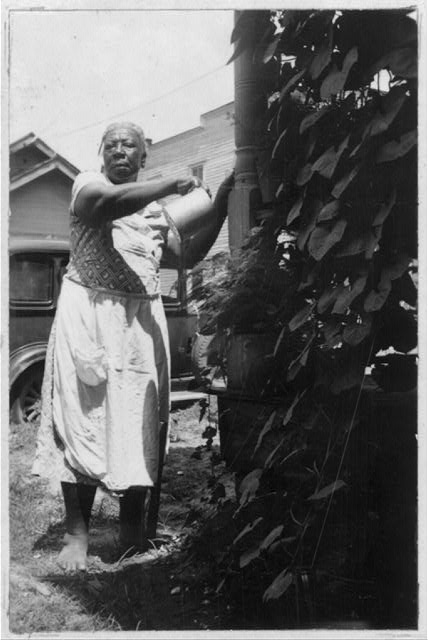
ELIZA HOLMAN, 82, was born a slave of the Rev. John Applewhite, near Clinton, Mississippi. In 1861 they came to Texas, settling near Decatur. Eliza now lives at 2507 Clinton Ave., Fort Worth, Texas.
"Talk 'bout de past from de time I 'members till now, slave days and all? Dat not so hard. I knows what de past am, but what to come, dat am different. Dey says, 'Let de past be de guide for de future,' but if you don't know de future road, hows you gwine guide? I's sho' glad to tell you all I 'members, but dat am a long 'memberance.
"I know I's past 80, for sho', and maybe more, 'cause I's old 'nough to 'member befo' de war starts. I 'members when de massa move to Texas by de ox team and dat am some trip! Dey loads de wagon till dere ain't no more room and den sticks we'uns in, and we walks some of de time, too.
"My massa am a preacherman and have jus' three slaves, me and pappy and mammy. She am cook and housekeeper and I helps her. Pappy am de field hand and de coachman and everything else what am needed. We have a nice, two-room log house to live in and it am better den what mos' slaves have, with de wood floor and real windows with glass in dem.
"Massa am good but he am strict. He don't have to say much when he wants you to do somethin'. Dere am no honey words round de house from him, but when him am preachin' in de church, him am different. He am honey man den. Massa could tell de right way in de church but it am hard for him to act it at home. He makes us go to church every Sunday.
"But I's tellin' you how we'uns come to Texas. De meals am cook by de campfire and after breakfast we starts and it am bump, bump, bump all day long. It am rocks and holes and mudholes, and it am streams and rivers to cross. We'uns cross one river, musta been de Mississippi, and drives on a big bridge and dey floats dat bridge right 'cross dat river.
"Massa and missus argues all de way to Texas. She am skeert mos' de time and he allus say de Lawd take care of us. He say, 'De Lawd am a-guidin' us.' She say, 'It am fools guidin' and a fool move for to start.' Dat de way dey talks all de way. And when we gits in de mudhole 'twas a argument 'gain. She say, 'Dis am some more of your Lawd's calls.' He say, 'Hush, hush, woman. Yous gittin' sac'ligious.' So we has to walk two mile for a man to git his yoke of oxen to pull us out dat mudhole, and when we out, massa say, 'Thank de Lawd.' And missus say, 'Thank de mens and de oxen.'
"Den one day we'uns camps under a big tree and when we'uns woke in de mornin' dere am worms and worms and worms. Millions of dem come off dat tree. Man, man, dat am a mess. Massa say dey army worms and missus say, 'Why for dey not in de army den?'
"After we been in Texas 'bout a year, missy Mary gits married to John Olham. Missy Mary am massa's daughter. After dat I lives with her and Massa John and den hell start poppin' for dis nigger. Missy Mary am good but Massa John am de devil. Dat man sho' am cruel, he works me to death and whups me for de leas' thing. My pappy say to me, 'You should 'come a runaway nigger.' He runs 'way hisself and dat de las' time we hears of him.
"When surrender come I has to stay on with Massa Olham, 'cause I has no place to go and I's too young to know how to do for myself. I stays 'bout till I's 16 year old and den I hunts some place to work and gits it in Jacksboro and stays dere sev'ral years. I quits when I gits married and dat 'bout nine year after de war end.
"I marries Dick Hines at Silver Creek and he am a farmer and a contrary man. He worked jus' as hard at his contrariness as him did at his farmin'. Mercy, how distressin' and worryment am life with dat nigger! I couldn't stand it no longer dan five year till I tooks my getaway. De nex' year I marries Sam Walker what worked for cattlement here in Fort Worth and he died 'bout 20 year ago. Den 'twas 'bout 13 year ago I marries Jack Holman and he died in 1930. I's sho' try dis marrin' business but I ain't gwine try it no more, no, suh.
"'Twixt all dem husbands and workin' for de white folks I gits 'long, but I's old and de last few years I can't work. Dey pays me $12.00 de month from de State and dat's what I lives on. Shucks, I's not worth nothin' no more. I jus' sets and sets and thinks of de old days and my mammy. All dat make me sad. I'll tell you one dem songs what 'spresses my feelin's 'zactly.
"I's am climbin' Jacob's ladder, ladder, I's am climbin' Jacob's ladder, ladder, Soldier of de cross; O-h-h-h! Rise and shine, Give Gawd de glory, glory, glory, In de year of Jubilee. I wants to climb up Jacob's ladder, ladder, Jacob's ladder, till I gits in de new Jerusalem. "Dat jus' how I feels."
420143
LARNCE HOLT, 79, was born near Woodville, in Tyler County, Texas, a slave of William Holt. He now lives in Beaumont, Texas.
"I's jus' small fry when freedom come, 'cause I's born in 1858. Bill Holt was my massa's name, dat why dey calls me Larnce Holt. My massa, he come from Alabama but my mammy and daddy born in Texas. Mammy named Hannah and daddy Elbert. Mammy cooked for de white folks but daddy, he de shoemaker. Dat consider' a fine job on de plantation, 'cause he make all de shoes de white folks uses for everyday and all de cullud people shoes. Every time dey kill de beef dey save de hide for leather and dey put it in de trough call de tan vat, with de oak bark and other things, and leave 'em dere long time. Dat change de raw hide to leather. When de shoe done us black dem with soot, 'cause us have to do dat or wear 'em red. I's de little tike what help my daddy put on de soot.
"Massa have de big plantation and I 'member de big log house. It have de gallery on both sides and dey's de long hall down de center. De dogs and sometimes a possum used to run through de hall at night. De hall was big 'nough to dance in and I plays de fiddle.
"My mammy have four boys, call Eb and Ander and Tobe. My big brother Eb he tote so many buckets of water to de hands in de field he wore all de hair offen de top he head.
"I be so glad when Christmas come, when I's li'l. Down in de quarter us hang up stocking and us have plenty homemake ginger cake and candy make out of sugar and maybe a apple. One Christmas I real small and my mammy buy me a suit of clothes in de store. I so proud of it I 'fraid to sit down in it. 'Terials in dem day was strong and last a long time. One time I git de first pair shoes from a store. I thought dey's gold. My daddy bought dem for me and dey have a brace in de toe and was nat'ral black.
"When freedom come us family breaks up. Old missy can't bear see my mammy go, so us stay. Dey give my daddy a place on credick and he start farm and dey even 'low him hosses and mule and other things he need. My massa good to de niggers. I stays with my mammy till she die when I ten year old and den my brother Eb he take me and raise me till I sixteen. Den I go off for myself.
"Dem young year us have good time. I fiddle to de dance, play 'Git up in de Cool,' and 'Hopus Creek and de Water.' Us sho' dress up for de dance. I have black calico pants with red ribbon up de sides and a hickory shirt. De gals all wears ribbons 'round de waist and one like it 'round de head.
"Us have more hard time after freedom come dan in all de other time together. Us livin' in trouble time. 'Bout 15 year ago I lost a leg, a big log fall 'cross it when I makin' ties. I had plenty den but it go for de hospital.
420120
Bill Homer
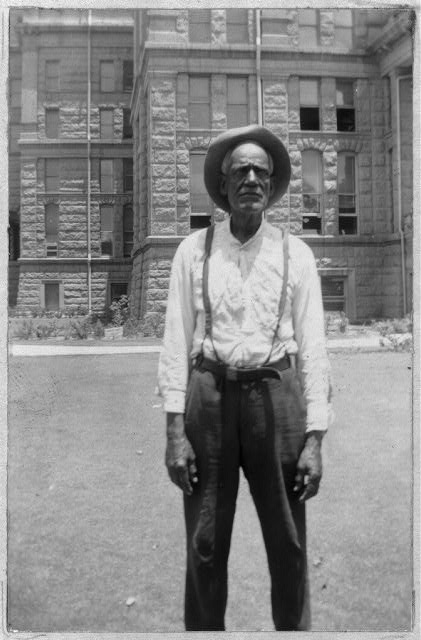
BILL HOMER, 87, was born a slave on June 17, 1850, to Mr. Jack Homer, who owned a large plantation near Shreveport, La. In 1860 Bill was given to Mr. Homer's daughter, who moved to Caldwell, Texas. Bill now lives at 3215 McKinley Ave., Fort Worth, Texas.
"I is 87 years old, 'cause I is born on June 17th, in 1850, and that's 'cording to de statement my missy give me. I was born on Massa Jack Homer's plantation, close to Shreveport. Him owned my mammy and my pappy and 'bout 100 other slaves. Him's plantation was a big un. I don't know how many acres him have, but it was miles long. Dere was so many buildings and sheds on dat place it was a small town. De massa's house was a big two-story building and dere was de spinnin' house, de smokehouse, de blacksmith shop and a nursery for de cullud chillens and a lot of sheds and sich. In de nigger quarters dere was 50 one-room cabins and dey was ten in a row and dere was five rows.
"De cabins was built of logs and had dirt floors and a hole whar a window should be and a stone fireplace for de cookin' and de heat. Dere was a cookhouse for de big house and all de cookin' for de white folks was 'tended to by four cooks. We has lots of food, too—cornmeal and vegetables and milk and 'lassas and meat. For mos' de meat dey kotched hawgs in de Miss'sippi River bottoms. Once a week, we have white flour biscuit.
"Some work was hard and some easy, but massa don' 'lieve in overworkin' his slaves. Sat'day afternoon and Sunday, dere was no work. Some whippin' done, but mos' reasonable. If de nigger stubborn, deys whips 'nough for to change his mind. If de nigger runs on, dat calls de good whippin's. If any of de cullud folks has de misery, dey lets him res' in bed and if de misery bad de massa call de doctor.
"I larnt to be coachman and drive for massa's family. But in de year of 1860, Missy Mary gits married to Bill Johnson and at dat weddin' massa Homer gives me and 49 other niggers to her for de weddin' present. Massa Johnson's father gives him 50 niggers too. Dey has a gran' weddin'. I helps take care of de hosses and dey jus' kep' a-comin'. I 'spect dere was more'n 100 peoples dere and dey have lots of music and dancin' and eats and, I 'spects, drinks, 'cause we'uns made peach brandy. You see, de massa had his own still.
"After de weddin' was over, dey gives de couple de infare. Dere's whar dis nigger comes in. I and de other niggers was lined up, all with de clean clothes on and den de massa say, 'For to give my lovin' daughter de start, I gives you dese 50 niggers. Massa Bill's father done de same for his son, and dere we'uns was, 100 niggers with a new massa.
"Dey loads 15 or 20 wagons and starts for Texas. We travels from daylight to dark, with mos' de niggers walkin'. Of course, it was hard, but we enjoys de trip. Dere was one nigger called Monk and him knows a song and larned it to us, like this:
"'Walk, walk, you nigger, walk! De road am dusty, de road am tough, Dust in de eye, dust in de tuft; Dust in de mouth, yous can't talk— Walk, you niggers, don't you balk. "'Walk, walk, you nigger walk! De road am dusty, de road am rough. Walk 'til we reach dere, walk or bust— De road am long, we be dere by and by.'
Now, we'uns was a-follerin' behin' de wagons and we'uns sings it to de slow steps of de ox. We'uns don't sing it many times 'til de missy come and sit in de back of de wagon, facin' we'uns and she begin to beat de slow time and sing wid we'uns. Dat please Missy Mary to sing with us and she laugh and laugh.
"After 'bout two weeks we comes to de place near Caldwell, in Texas, and dere was buildin's and land cleared, so we's soon settled. Massa plants mostly cotton and corn and clears more land. I larned to be a coachman, but on dat place I de ox driver or uses de hoe.
"Yous never drive de ox, did yous? De mule ain't stubborn side of de ox, de ox am stubborn and den some more. One time I's haulin' fence rails and de oxen starts to turn gee when I wants dem to go ahead. I calls for haw, but dey pays dis nigger no mind and keeps agwine gee. Den dey starts to run and de overseer hollers and asks me, 'Whar you gwine?' I hollers back, 'I's not gwine, I's bein' took.' Dem oxen takes me to de well for de water, 'cause if dey gits dry and is near water, dey goes in spite of de devil.
"De treatment from new massa am good, 'cause of Missy Mary. She say to Massa Bill, 'if you mus' 'buse de nigger, 'buse yous own.' We has music and parties. We plays de quill, make from willow stick when de sap am up. Yous takes de stick and pounds de bark loose and slips it off, den slit de wood in one end and down one side, puts holes in de bark and put it back on de stick. De quill plays like de flute.
"I never goes out without de pass, so I never has trouble with de patter rollers. Nigger Monk, him have de 'sperience with 'em. Dey kotched him twice and dey sho' makes him hump and holler. After dat he gits pass or stays to home.
"De War make no diff'runce with us, 'cept de soldiers comes and takes de rations. But we'uns never goes hungry, 'cause de massa puts some niggers hustlin' for wil' hawgs. After surrender, missy reads de paper and tells dat we'uns is free, but dat we'uns kin stay 'til we is 'justed to de change.
"De second year after de War, de massa sells de plantation and goes back to Louisiana and den we'uns all lef'. I goes to Laredo for seven year and works on a stock ranch, den I goes to farmin'. I gits married in 1879 to Mary Robinson and we'uns has 14 chilluns. Four of dem lives here.
"I works hard all my life 'til 1935 and den I's too old. My wife and I lives on de pensions we gits.
420234
Scott Hooper
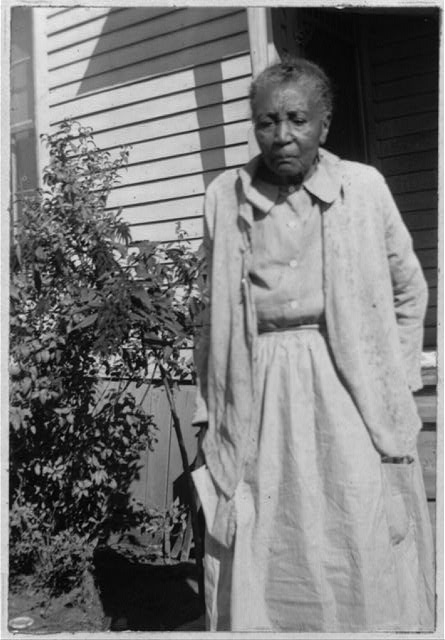
SCOTT HOOPER, 81, was born a slave of the Rev. Robert Turner, a Baptist minister who owned seven slave families. They lived on a small farm near Tenaha, then called Bucksnort, in Shelby County, Texas. Scott's father was owned by Jack Hooper, a neighboring farmer. Scott married Steve Hooper when she was thirteen and they had eight children, whose whereabouts are now unknown to her. She receives an $8.00 monthly pension.
"Well, I'll do de best I can to tell yous 'bout my life. I used to have de good 'collection, but worryment 'bout ups and downs has 'fected my 'membance. I knows how old I is, 'cause mammy have it in de Bible, and I's born in de year 1856, right in Shelby County, and near by Bucksnort, what am call Tenaha now.
"Massa Turner am de bestest man he could be and taken good care of us, for sho'. He treat us like humans. There am no whuppin's like some other places has. Gosh. What some dem old slaves tell 'bout de whup and de short rations and lots of hard work am awful, so us am lucky.
"Massa don't have de big place, but jus' seven families what was five to ten in de family. My mammy had nine chillen, but my pappy didn't live on us place, but on Jack Hooper's farm, what am four mile off. He comes Wednesday and Saturday night to see us. His massa am good, too, and lets him work a acre of land and all what he raises he can sell. Pappy plants cotton and mostest de time he raises better'n half de bale to he acre. Dat-a-way, he have money and he own pony and saddle, and he brung us chillen candy and toys and coffee and tea for mammy. He done save 'bout $500 when surrender come, but it am all 'Federate money and it ain't worth nothin'. He give it to us chillen to play with.
"Massa Turner am de Baptist preacherman and he have de church at Bucksnort. He run de store, too, and folks laughs 'cause 'sides being a preacherman he sells whiskey in dat store. He makes it medicine for us, with de cherry bark and de rust from iron nails in it. He call it, 'Bitters,' and it a good name. It sho' taste bitter as gall. When us feels de misery it am bitters us gits. Castor oil am candy 'side dem bitters!
"My grandmammy am de cook and all us eats in de shed. It am plenty food and meat and 'lasses and brown sugar and milk and butter, and even some white flour. Course, peas and beans am allus on dat table.
"When surrender come massa calls all us in de yard and makes de talk. He tells us we's free and am awful sorry and show great worryment. He say he hate to part with us and us been good to him, but it am de law. He say us can stay and work de land on shares, but mostest left. Course, mammy go to Massa Hooper's place to pappy and he rents land from Massa Hooper, and us live there seven years and might yet, but dem Klu Klux causes so much troublement. All us niggers 'fraid to sleep in de house and goes to de woods at night. Pappy gits 'fraid something happen to us and come to Fort Worth. Dat in 1872 and he farms over in de bottom.
"I's married to Steve Hooper den, 'cause us marry when I's thirteen years old. He goes in teamin' in Fort Worth and hauls sand and gravel twenty-nine years. He doin' sich when he dies in 1900. Den I does laundry work till I's too old. I tries to buy dis house and does fair till age catches me and now I can't pay for it. All I has is $8.00 de month and I's glad to git dat, but it won't even buy food. On sich 'mount, there am no way to stinch myself and pinch off de payments on de house. Dat am de worryment.
420021
Alice Houston (A)
Alice Houston (B)
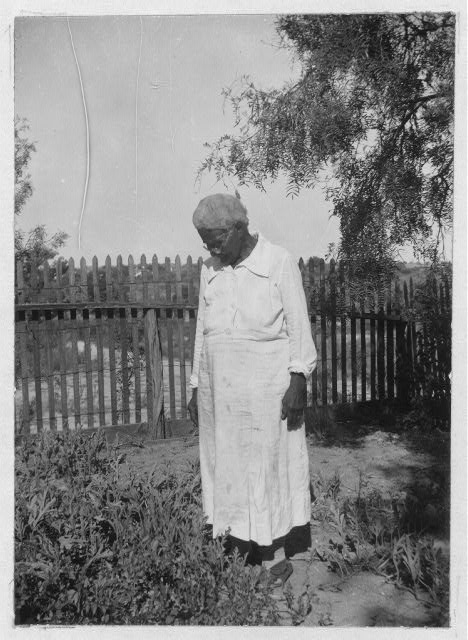
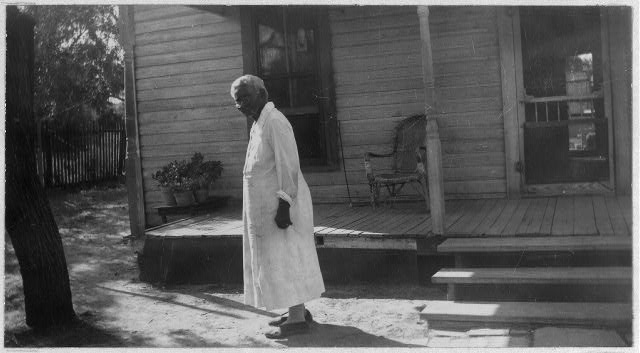
ALICE HOUSTON, pioneer nurse and midwife on whom many San Angeloans have relied for years, was born October 22, 1859. She was a slave of Judge Jim Watkins on his small plantation in Hays County, near San Marcos, Texas and served as house girl to her mistress, Mrs. Lillie Watkins for many years after the Civil War. At Mrs. Watkins' death she came with her husband, Jim Houston, to San Angelo, Texas where she has continued her services as nurse to white families to the present time.
Alice relates her slave day experiences as follows:
"I was jes' a little chile when dat Civil War broke out and I's had de bes' white folks in de world. My ole mistress she train me for her house girl and nurse maid. Dat's whar I's gits so many good ideas fer nursin'.
"My mother's name was Mariah Watkins an' my father was named Henry Watkins. He would go out in de woods on Sat'day nights and ketch 'possums and bring dem home and bake 'em wid taters. Dat was de best eatin' we had. Course we had good food all de time but we jes' like dat 'possum best.
"My marster, he only have four families and he had a big garden fer all of us. We had our huts at de back of de farm. Dey was made out of logs and de cracks daubbed up wid mud. Dey was clean and comfortable though, and we had good beds.
"When we was jes' little kids ole marster he ketch us a stealin' watermelons and he say, 'Git! Git! Git! And when we runs and stoops over to crawl through de crack of de fence he sho' give us a big spank. Den we runs off cryin' and lookin' back like.
"Ole marster, he had lots of hogs and cows and chickens and I can jes' taste dat clabber milk now. Ole miss, she have a big dishpan full of clabber and she tells de girl to set dat down out in de yard and she say, 'Give all dem chillun a spoon now and let dem eat dat.' When we all git 'round dat pan we sho' would lick dat clabber up.
"We had straight slips made out of white lowell what was wove on dat ole spinnin' wheel. Den dey make jeans for de men's breeches and dye it wid copperas and some of de cloth dey dye wid sumac berries and hit was sho' purty too.
"Ole miss, she make soda out of a certain kind of weed and dey makes coffee out of dried sweet taters.
"My marster he didn' have no over-seer. He say his slaves had to be treated right. He never 'lowed none of his slaves to be sold 'way from their folks. I's nev'r, nev'r seen any slaves in chains but I's hear talk of dem chains.
"My white folks, dey tries to teach us to read and spell and write some and after ole marster move into town he lets us go to a real school. That's how come I can read so many docto' books you see.
"We goes to church wid our white folks at dem camp meetin's and oh Lawdy! Yes, mam, we all sho' did shout. Sometimes we jined de church too.
"We washed our clothes on Sat'day and danced dat night.
"On Christmas and New Year we would have all de good things old marster and ole missus had and when any of de white folks marry or die dey sho' carry on big. Weddin's and funerals, dem was de biggest times.
"When we gits sick, ole marster he have de docto' right now. He sho' was good 'bout dat. Ole miss she make us wear a piece of lead 'round our necks fer de malaria and to keeps our nose from bleedin' and all of us wore some asafoetida 'round our necks to keep off contagion.
"When de war close ole marster calls up all de slaves and he say, 'You's all free people now, jes' same as I is, and you can go or stay,' and we all wants to stay 'cause wasn't nothin' we knowed how to do only what ole marster tells us. He say he let us work de land and give us half of what we make, and we all stayed on several years until he died. We stayed with Miss Watkins, and here I is an ole nigga, still adoin' good in dis world, a-tellin' de white folks how to take care of de chilluns."
420271
JOSEPHINE HOWARD was born in slavery on the Walton plantation near Tuscaloosa, Alabama. She does not know her age, but when Mr. Walton moved to Texas, before the Civil War, she was old enough to work in the fields. Josephine is blind and very feeble. She lives with a daughter at 1520 Arthur St., Houston, Texas.
"Lawd have mercy, I been here a thousand year, seems like. 'Course I ain't been here so long, but it seems like it when I gits to thinkin' back. It was long time since I was born, long 'fore de war. Mammy's name was Leonora and she was cook for Marse Tim Walton what had de plantation at Tuscaloosa. Dat am in Alabamy. Papa's name was Joe Tatum and he lived on de place 'jinin' ourn. Course, papa and mamy wasn't married like folks now, 'cause dem times de white folks jes' put slave men and women together like hosses or cattle.
"Dey allus done tell us it am wrong to lie and steal, but why did de white folks steal my mammy and her mammy? Dey lives clost to some water, somewheres over in Africy, and de man come in a little boat to de sho' and tell dem he got presents on de big boat. Most de men am out huntin' and my mammy and her mammy gits took out to dat big boat and dey locks dem in a black hole what mammy say so black you can't see nothin'. Dat de sinfulles' stealin' dey is.
"De captain keep dem locked in dat black hole till dat boat gits to Mobile and dey is put on de block and sold. Mammy is 'bout twelve year old and dey am sold to Marse Tim, but grandma dies in a month and dey puts her in de slave graveyard.
"Mammy am nuss gal till she git older and den cook, and den old Marse Tim puts her and papa together and she has eight chillen. I reckon Marse Tim warn't no wor'ser dan other white folks. De nigger driver sho' whip us, with de reason and without de reason. You never knowed. If dey done took de notion dey jes' lays it on you and you can't do nothin'.
"One mornin' we is all herded up and mammy am cryin' and say dey gwine to Texas, but can't take papa. He don't 'long to dem. Dat de lastes' time we ever seed papa. Us and de women am put in wagons but de men slaves am chained together and has to walk.
"Marse Tim done git a big farm up by Marshall but only live a year dere and his boys run de place. Dey jes' like dey papa, work us and work us. Lawd have mercy, I hear dat call in de mornin' like it jes' jesterday, 'All right, everybody out, and you better git out iffen you don't want to feel dat bullwhip 'cross you back.'
"My gal I lives with don't like me to talk 'bout dem times. She say it ain't no more and it ain't good to think 'bout it. But when you has live in slave times you ain't gwine forgit dem, no, suh! I's old and blind and no 'count, but I's alive, but in slave times I'd be dead long time ago, 'cause white folks didn't have no use for old niggers and git shet of dem one way or t'other.
"It ain't till de sojers comes we is free. Dey wants us to git in de pickin', so my folks and some more stays. Dey didn't know no place to go to. Mammy done took sick and die and I hires out to cook for Missy Howard, and marries her coachman, what am Woodson Howard. We farms and comes to Houston nigh sixty year ago. Dey has mule cars den. Woodson gits a job drayin' and 'fore he dies we raises three boys and seven gals, but all 'cept two gals am dead now. Dey takes care of me, and dat all I know 'bout myself.
420275
LIZZIE HUGHES, blind Negress of Harrison County, Texas, was born on Christmas Day, 1848, a slave of Dr. Newton Fall, near Nacogdoches. Lizzie married when she was eighteen and has lived near Marshall since that time. She is cared for by a married daughter, who lives on Lizzie's farm.
"My name am Lizzie Fall Hughes. I was borned on Christmas at Chireno, 'tween old Nacogdoches town and San Augustine. Dat eighty-nine year ago in slavery time. My young master give me my age on a piece of paper when I married but the rats cut it up.
"I 'longed to Dr. Fall and old Miss Nancy, his wife. They come from Georgia. Papa was named Ed Wilson Fall and mammy was June. Dr. Newton Fall had a big place at Chireno and a hundred slaves. They lived in li'l houses round the edge of the field. We had everything we needed. Dr. Newton run a store and was a big printer. He had a printin' house at Chireno and 'nother in California.
"The land was red and they worked them big Missouri mules and sho' raised somethin'. Master had fifty head of cows, too, and they was plenty wild game. When master was gone he had a overseer, but tell him not to whip. He didn't 'lieve in rushin' his niggers. All the white folks at Chireno was good to they niggers. On Saturday night master give all the men a jug of syrup and a sack of flour and a ham or middlin' and the smokehouse was allus full of beef and pork. We had a good time on that place and the niggers was happy. I 'member the men go out in the mornin', singin':
"'I went to the barn with a shinin', bright moon, I went to the wood a-huntin' a coon. The coon spied me from a sugar maple tree, Down went my gun and up the tree went me. Nigger and coon come tumblin' down, Give the hide to master to take off to town, That coon was full of good old fat, And master brung me a new beaver hat.'
"Part of 'nother song go like this:
"'Master say, you breath smell of brandy, Nigger say, no, I's lick 'lasses candy.'
"When old master come to the lot and hear the men singin' like that, he say, 'Them boys is lively this mornin', I's gwine git a big day's plowin' done. They did, too, 'cause them big Missouri mules sho' tore up that red land. Sometime they sing:
"'This ain't Christmas mornin', just a long summer day, Hurry up, yellow boy and don't run 'way, Grass in the cotton and weeds in the corn, Get in the field, 'cause it soon be morn.'
"At night when the hands come in they didn't do nothin' but eat and cut up round the quarters. They'd have a big ball in a big barn there on the place and sixty and seventy on the floor at once, singin':
"'Juba this and Juba that, Juba killed a yaller cat. Juba this and Juba that, Hold you partner where you at.'
"The whites preached to the niggers and the niggers preached to theyselves. Gen'man sho' could preach good them times; everybody cried, they preached so good. I's a mourner when I git free.
"I's big 'nough to work round the house when war starts, but not big 'nough to be studyin' 'bout marryin'. I's sho' sorry when we's sot free. Old master didn't tell his niggers they free. He didn't want them to go. On a day he's gone, two white men come and showed us a piece of paper and say we's free now. One them men was a big mill man and told mama he'll give her $12.00 a month and feed her seven li'l niggers if she go cook for his millhands. Papa done die in slavery, so mama goes with the man. I run off and hid under the house. I wouldn't leave till I seed master. When he come home he say, 'Lizzie, why didn't you go?' I say, 'I don't want to leave my preserves and light bread.' He let me stay.