Part 1 — "UNCLE WILLIS ANDERSON" (continued 5)
Reading edition
"I'm Preely Coleman and I never gits tired of talking. Yes, ma'am, it am Juneteenth, but I'm home, 'cause I'm too old now to go on them celerabrations. Where was I born? I knows that 'zactly, 'cause my mammy tells me that a thousand times. I was born down on the old Souba place, in South Carolina, 'bout ten mile from New Berry. My mammy belonged to the Souba family, but its a fact one of the Souba boys was my pappy and so the Soubas sells my mammy to Bob and Dan Lewis and they brung us to Texas 'long with a big bunch of other slaves. Mammy tells me it was a full month 'fore they gits to Alto, their new home.
"When I was a chile I has a purty good time, 'cause there was plenty chillen on the plantation. We had the big races. Durin' the war the sojers stops by on the way to Mansfield, in Louisiana, to git somethin' to eat and stay all night, and then's when we had the races. There was a mulberry tree we'd run to and we'd line up and the sojers would say, 'Now the first one to slap that tree gits a quarter,' and I nearly allus gits there first. I made plenty quarters slappin' that old mulberry tree!
"So the chillen gits into their heads to fix me, 'cause I wins all the quarters. They throws a rope over my head and started draggin down the road, and down the hill, and I was nigh 'bout choked to death. My only friend was Billy and he was a-fightin', tryin' to git me loose. They was goin' to throw me in the big spring at the foot of that hill, but we meets Capt. Berryman, a white man, and he took his knife and cut the rope from my neck and took me by the heels and soused me up and down in the spring till I come to. They never tries to kill me any more.
"My mammy done married John Selman on the way to Texas, no cere'mony, you knows, but with her massa's consent. Now our masters, the Lewises, they loses their place and then the Selman's buy me and mammy. They pays $1,500 for my mammy and I was throwed in.
"Massa Selman has five cabins in he backyard and they's built like half circle. I grows big 'nough to hoe and den to plow. We has to be ready for the field by daylight and the conk was blowed, and massa call out, 'All hands ready for the field.' At 11:30 he blows the conk, what am the mussel shell, you knows, 'gain and we eats dinner, and at 12:30 we has to be back at work. But massa wouldn't 'low no kind of work on Sunday.
"Massa Tom made us wear the shoes, 'cause they's so many snags and stumps our feets gits sore, and they was red russet shoes. I'll never forgit 'em, they was so stiff at first we could hardly stand 'em. But Massa Tom was a good man, though he did love he dram. He kep' the bottle in the center of the dining table all the time and every meal he'd have the toddy. Us slaves et out under the trees in summer and in the kitchen in winter and most gen'rally we has bread in pot liquor or milk, but sometimes honey.
"I well 'members when freedom come. We was in the field and massa comes up and say, 'You all is free as I is.' There was shoutin' and singin' and 'fore night us was all 'way to freedom.
420292
HARRIET COLLINS was born in Houston, Texas, in 1870. Her family had been slaves of Richard Coke, and remained with him many years after they were freed. Harriet recalls some incidents of Reconstruction days, and believes in the superstitions handed down to her from slave days.
"My birthday done come in January, on de tenth. I's birthed in Houston, in 1870, and Gov. Richard Coke allus had owned my daddy and mammy, and dey stayed with him after freedom. Mammy, what was Julia Collins, didn't die till 1910, and she was most a hundred year old.
"She done told me many a time 'bout how folkses git all worked up over Marse Coke's 'lection. Mammy took lunch to de Capitol House to Marse Richard, and dere he am on de top floor with all he congressmen and dat Davis man and he men on de bottom floor, tryin' to say Marse Richard ain't got no right to be governor dis here State. Old Miss and de folkses didn't sleep a wink dat night, 'cause dey thunk it sho' be a fight. Dat in 1873, Mammy allus say.
"De old place at Houston was like most all old places. Dere was little, small dormer windows, dey call 'em, in upstairs, and big porches everywhere. Dere was 'hogany furniture and rosewood bedsteads, and big, black walnut dressers with big mirrors and little ones down de side. Old Miss allus have us keep de drapes white as drifted snow, and polish de furniture till it shine. Dere was sofies with dem claw foots, and lots of purty chiny and silver.
"On de farm out from town dere was de log house, with quarters and de smokehouse and washhouse and big barns and carriage house. De quarters was little, whitewashed, log houses, one for de family, and a fence of de split palin's round most of dem.
"De white and cullud chillen played together, all over de place. Dey went fishin' and rode de plough hosses and run de calves and colts and sech devilment. De little white gals all had to wear sunbonnets, and Old Miss, she sew dem bonnets on every day, so dey not git sunburnt. Us niggers weared de long, duckin' shirts till us git 'bout growed, and den us weared long, dark blue dresses. Dey had spinnin' and weavin' rooms, where de cullud women makes de clothes.
"Old Miss, she sho' a powerful manager. She knowed jes' how much meal and meat and sorghum it gwine take to run de plantation a year. She know jes' how much thread it take for spinnin', and she bossed de settin' hens and turkeys and fixin' of 'serves and soap. She was sho' good to you iffen you work and do like she tell you. Many a night she go round to see dat all was right. She a powerful good nuss, too, and so was mammy.
"De white folks had good times. Dey'd go hossback ridin' and on picnics, and fishin' and have big dinners and balls. Come Christmas, dey have us slaves cut a big lot of wood and keep fires all night for a week or two. De house be lit with candles from top to toe, and lots of company come. For dinner us have turkey and beef roast and a big 'ginny ham and big bowls of eggnog and a pitcher of apple cider and apple toddy. All us git somethin' on Christmas and plenty eggnog, but no gittin' drunk.
"I can jes' see Marse Dick, tall and kinder stooped like, with de big flop hat and longtail coat and allus carryin' a big, old walkin' stick. He was sho' a brave man and de big men say dey likes dat flop hat, 'cause dey done follow it on de battlefield. He had a big voice and dey do tell how, in de war, he'd holler, 'Come on, boys,' and de bullets be like hail and men fallin' all round, but dat don't stop Marse Dick. He'd take off dat flop hat and plunge right on and dey'd foller he bald head where de fight was hottes'. He was sho' a man!
"When I gits married it was eight folkses dere, I jus' walks off and goes to housekeepin'. I had a calico dress and a Baptist preacher marries us.
"Dere been some queer things white folks can't understand. Dere am folkses can see de spirits, but I can't. My mammy larned me a lots of doctorin', what she larnt from old folkses from Africy, and some de Indians larnt her. If you has rheumatism, jes' take white sassafras root and bile it and drink de tea. You makes lin'ment by bilin' mullein flowers and poke roots and alum and salt. Put red pepper in you shoes and keep de chills off, or string briars round de neck. Make red or black snakeroot tea to cure fever and malaria, but git de roots in de spring when de sap am high.
"When chillen teethin' put rattlesnake rattles round de neck, and alligator teeth am good, too. Show de new moon money and you'll have money all month. Throw her five kisses and show her money and make five wishes and you'll git dem. Eat black-eyed peas on New Year and have luck all dat year:
"'Dose black-eyed peas is lucky, When et on New Year's Day; You'll allus have sweet 'taters And possum come you way.'
"When anybody git cut I allus burns woolen rags and smokes de wound or burns a piece fat pine and drops tar from it on scorched wool and bind it on de wound. For headache put a horseradish poultice on de head, or wear a nutmeg on a string round you neck.
If you kills de first snake you sees in spring, you enemies ain't gwine git de best of you dat year. For a sprain, git a dirt dauber's nest and put de clay with vinegar and bind round de sprain. De dime on de string round my ankle keeps cramps out my leg, and tea from red coon-root good, too. All dese doctorin' things come clear from Africy, and dey allus worked for mammy and for me, too.
420187
ANDREW (Smoky) COLUMBUS was born in 1859 on the John J. Ellington plantation, one mile south of Linden, Texas. He continued in the service of the Ellingtons until about 1878, when he moved to Jefferson, Texas. He carried meals to Abe Rothchild, who was in jail, charged with the murder of Diamond Bessie Moore. Andrew was 37 years a servant of Hon. Tom Armistead, and was a porter in the Capital at Austin when Armistead was a senator. Andrew now lives in Marshall, Texas.
"I was bo'n a slave of Master John Ellington, who lived in Davis County (now Cass Co.), Texas. Master John had a big house and close by was a long, double row of slave quarters. It looked like a town. There was four boys and two girls in Master's fam'ly and one daughter, Miss Lula, married Lon Morris, that run the Lon Morris School.
"Master John was one white man that sho' took care of his niggers. He give us plenty warm clothes and good shoes, and come see us and had Dr. Hume doctor us when we was sick. The niggers et ham and middlin' and good eats as anybody. Master John's place joined the Haggard place, where they was lots of wild turkey and the slaves could go huntin' and fishin' when they wanted.
"We had a church and a school for the slaves and the white folks helped us git book learnin'. Mos' of the niggers allus went to preachin' on Sunday.
"The hands didn't work Saturday afternoons. That's when we'd wash our clothes and clean up for Sunday. There was parties and dances on Saturday night for them as wanted them. But there wasn't no whiskey drinkin' and fightin' at the parties. Mammy didn't go to them. She was religious and didn't believe in dancin' and sech like. On Christmas Master John allus give the slaves a big dinner and it didn't seem like slavery time. The niggers had a sight better time than they do now.
"Master John did all the bossin' hisself. None of his niggers ever run off 'cause he was too good for them to do that. I only got one whippin' from him and it was for stealin' eggs from a hen's nest. My pappy was carriage driver for Master. I didn't do much of the work when I was a boy, jes' stayed round the house.
"Master John raised lots of cotton and after it was baled he hauled it to Jefferson on ox wagons. I'd allus go with him, ridin' on top of the bales. I'll never forgit how scared I was when we'd cross Black Cypress on Roger's Ferryboat and it'd begin to rock.
"I don't remember much about the War. When it was over Master John calls all his slaves together and says, 'You'se free now and you can go or stay.' He told the men who wanted to leave they could have a wagon and team, but most of them stayed. Pappy took a wagon and team and left but mammy and us children stayed and lived with Master Ellington 'bout 15 years after the war was over.
"When I left Master John I moved to Jefferson and married Cora Benton and we had three boys and two girls. While I was in Jefferson Sheriff Vine goes to Cincinnati after Abe Rothchild, for killin' 'Diamond Bessie.' Abe shot hisself in the forehead when he heared Sheriff Vine was after him, but it didn't kill him. There was sho' some stirrin' about when the sheriff fotch Abe back to Jefferson.
"Mr. Sam Brown was the jailer. Abe wouldn't eat the jail food and hired me to bring his meals to him from the hotel. His cell was fixed up like a hotel room, with a fine brussels rug and nice tables and chairs. He kep' plenty of whiskey and beer to drink. He'd allus give me a drink when I took his meals.
"I worked 37 years for Mr. Tom Armistead, who helped W.T. Crawford and his brother defend Rothchild. Mr. Eppenstadt, he was mayor of Jefferson then and acted as a go-between man in the case.
"Master Tom Armistead never married and I kep' house and cooked for him. He give me lots of fine clothes. I bet I owned more fine shirts than any nigger in Texas. He got me a job as porter in the Capitol at Austin while he was senator. I was workin' there when they moved in the new Capitol in 1888. They was gonna put on a big party and say all the porters had to wear cutaway suits. I didn't have one, so the day 'fore the party I goes over to Mr. Tom's room at the Bristol Hotel and git one of his. I didn't know then it was a right new one he had made for the party. When I goes back to the Capitol all dressed up in that cutaway suit, I meets Mr. Templeton Houston and he recognises the suit and says. 'You sho' look fine in Mr. Tom's new suit,' 'bout that time Mr. Tom walks up and, you know, he give me that suit and had him another one made for the party! I wouldn't live where there wasn't no good white folks.
420218
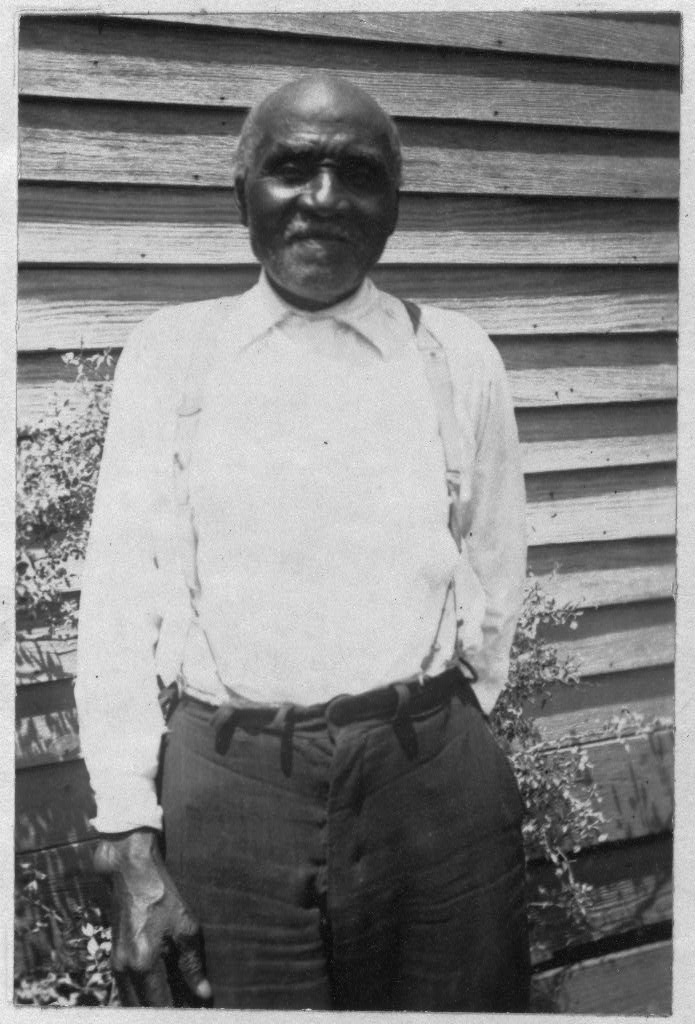
Steve Conally
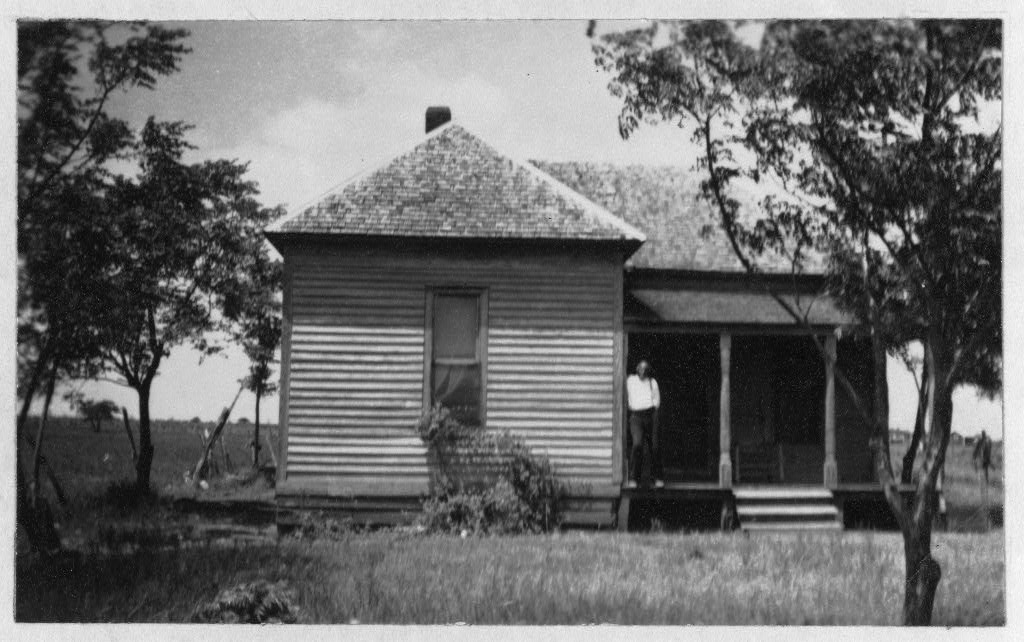
Steve Conally's House
STEVE CONNALLY, 90, was born a slave of Tom Connally, grandfather of United States Senator Tom Connally, from Texas. The family then lived in Georgia, and Steve's master was a member of the Georgia Legislature.
"I was born in Murray County, Georgia, and was a slave of Massa Tom Connally, but they called him Massa "Cushi" Connally. He was a member of de Georgia Legislature. I stayed with Missy Mary Connally till I was sixty-seven and Massa Cushi died when I was sixty-nine.
"My mother, Mandy, weighed two hundred pounds and she was de Connally cook. When I was born, she took de fever and couldn't raise me, so Missy Mary took and kep' me in a li'l cot by her bed. After dat, I'm with her nearly all de time and follows her. When she go to de garden I catches her dresstail and when she go to de doctor, 'bout eighty miles away, I goes with her.
"I mus' tell you why everybody call Massa Connally Cushi. Dere am allus so many Tom Connallys in de fam'ly, dey have to have de nickname to tell one from de other.
"Back dere in Georgia, us have lots and lots of fruit. Come time, de women folks preserves and cans till it ain't no use. My mammy take de prize any day with her jelly and sech, and her cakes jes' nachelly walk off and leave de whole county. Missy Mary sho' de master hand hersef at de fine bakin' and I'd slip round and be handy to lick out de pans.
"Dey didn't have no 'frigerators den, but dey built log houses without a floor over de good, cold spring, and put flat rocks dere to keep de milk and cream and butter cold. Or dey dig out de place so de crock be down in de wet dirt. Dey sho' have to make de latch up high, so de bad chillen couldn't open dat door!
"De plantation in Georgia was de whopper. I don't know 'zactly how many acres, but it a big one. Us make everything and tan hides and make shoes, jes' like all de big places did. De big house and de weavin' house and de tannin' yard and de sugar mill and slave quarters made a li'l town. Dere used to be some mighty big doin's dere. De Connally men and women am allus good lookers and mighty pop'lar, and folkses come from far and near to visit dem. All de 'portant men come and all de sassiety belles jes' drift to our place. Dere sho' lots of big balls and dinners and de house fix mighty fine dem times. De women wore de hoop skirts and de ribbons and laces. My missy was de bes' lookin' from far and near, and all de gem'mans want to dance with her. She sho' look like de queen you see in de picture books and she have mighty high ways with folks, but she's mighty good to dis here li'l black boy.
"I goes in de buggy with Massa Cushi, up to Tennessee, to git his sons what been kilt or wounded. Massa Ned, he dead, and Massa Charles, he shot in de hip, and die after he git brung home. Massa Dick hurt, too, but he didn't die.
"Right after de Civil War, when I'm 'bout nineteen, I comes to Texas with de Connallys, all what didn't git kilt in de war. I stays with Missy Mary till she die in Georgia. Her son, Jones Connally, come to Brazos County, near Bryan, and after dat removes to Eddy. I works for him two years and has lived round Eddy ever since. De Connallys give me a house and lot in Eddy. Some de fool niggers 'spected a lot, but I wasn't worryin' none. All I wanted was to stay near de Connallys. Mos' gen'ly all de slaves what I knowed was found places for and holp git a start at jobs and places to live. All de Connally slaves loved dem. Some de timber land give to Mrs. Rose Staten and when she go up dere a old nigger woman name Lucy sees her. She so happy to see one dem Connally chillen she laugh and cry.
"Massa Jones Connally have de twin gals, name Ola and Ella. Olla born with de lef' arm off at de elbow and she allus follow me round. When I go to milk I puts her in de trough. I saved her life lots of times. One time she's on de cone of de two-story house, when she's 'bout two years old. I eases up and knocks de window out and coaxes her to come to me. 'Nother time, I's diggin' de well and some clods falls down and I looks up and dere am dat Missy Ola leanin' over, mos' tumblin' in de well on her head. I gives de loud yell and her brother-in-law come runnin' and grabs her legs.
"Senator Tom Connally, what am a son of Jones Connally, often says he'd like to visit his grandpa's old home in Georgia. I'd like mighty well to go with him and take him all over de old home place and out to de old cemetary."
420079
Valmar Cormier
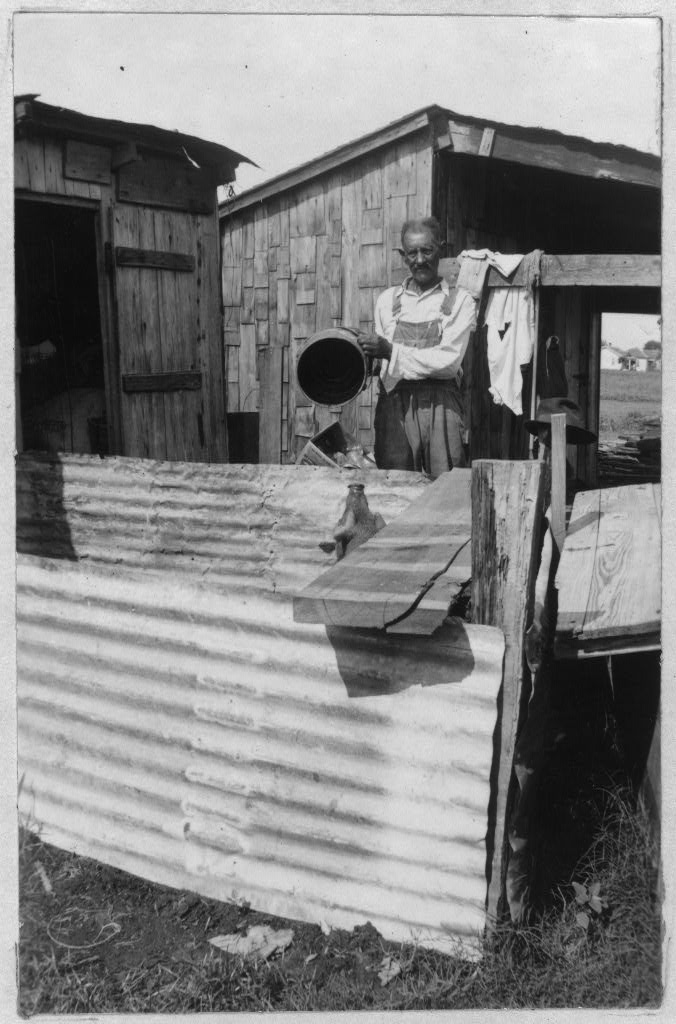
VALMAR CORMIER was born a slave to Duplissent Dugat, a small slave-holder of Lafayette, Louisiana. He tells his story in a mixture of English and French. As far as he knows, he is nearly 90 years old. He now lives with his sister, Mary Moses, in the Pear Orchard Settlement, in Beaumont, Texas.
"I 'member de day my old marster go to de war. I kin 'member dat jes' like yesterday. He used to like to play de fiddle and make me dance when I was li'l, but he went to de war and got kilt. He name Duplissent Dugat. Mary, my sister, she don't 'member de old marster.
"De slaves did de work on dat farm. Dey was two growed-ups, my mama, Colaste, and my uncle, and dere was us two chillen. My father was a white man, a white Creole man. I never carry he name till after freedom.
"Marster was jes' a poor man and he have jes' a ordinary house. De slave house was jes' a old plank house 'bout twelve feet by twenty feet and have dirt floor. Us cook in de big fireplace and take a log 'bout four foot long and have a big iron pot with a iron lid. Dey put red hot coals under de pot and on top de lid and dey have a big iron poker with a hook on it what dey took de lid off with.
"Befo' dey have coal oil lamp dey used to use homemake candles. Dey'd kill de brutes and keep and save all de tallow and one day was set off to make de candles. All de neighbors come and dey have kind of party and eat and things. Sometime dey make three, four hunnerd candles in one day and lay dem in a big box, so dey won't git break.
"Us make soap on de plantation, too. Dey melt de tallow and cracklin's and git lye out de fireplace ash. We have cotton and corn and potatoes growin', so we has plenty to eat. Us have coosh-coosh, dat cornbread and meat, and some fish to eat. Snails us jes' go through de woods and pick dem up and eat dem jes' like dat. Us eat plenty crawfish. De chillen git string and old piece fat meat and tie on de end, and us go to de bog and drap de string down dat crawfish hole. When de old man grab de meat with he pincher, den us jerk us up a crawfish, and bile him in hot water, or make de gumbo.
"Us drink French coffee befo' de war, but endurin' de war us couldn't git de good kind. Den us make coffee out of coffee weed. Dey parch dat weed in de iron oven, grind it and put it in de iron pot.
"I seed de sojers and I run under de house, I was so scared. Mary, she hide under de bed in de house. De Yankees come take de cattle and went 'way with dem. I kin sho' rec'lect when dose sojers come and de road was full goin' day and night. De Yankees find a lot of Confed'rate sojers close to Duson, de other side of Rayne and dey captures lots and brung dem back by dere.
"After while it all over and dey told us we free, but my mama kep' working for old missus after freedom, 'cause old marster, he kilt in dat war. Den old missus die and left three li'l chillen, but I don't know what happen to them, 'cause us go to another place and I plow and Mary she he'p pick cotton.
"I git marry at 20 and my first wife de French gal. We marry by de priest in de church. Us have so many chillen us have to keep a map to account for all dem, dere was 19 in all. We stays in Louisiana long time, den come to Texas.
420296
LAURA CORNISH was born on the plantation of Isaiah Day, near Dayton, Texas. She "reckons I's 'bout twelve or maybe thirteen years old when all de cullud folks was made free." Laura's memory is poor, but she made an effort to recall slave days. She lives at 2915 Nance St., Houston, Texas.
"Lawd have mercy 'pon me, when you calls me Aunt Laura it seems jes' like you must be some of my white folks, 'cause dat what dey calls me. I mean Papa Day's chillen and dere younguns, when dey comes to see me. But it been de long time since any of dem come to see old Aunt Laura, and I reckon dey most all gone now.
"You know where Dayton is at? Well, dat's where Papa Day's plantation was at and where I's borned. I don't know when dat am, 'zactly, but when all de cullud folks was made free, I reckons I's 'bout twelve or thirteen years old.
"Mama's name was Maria Dunlap and daddy's name was Saul. Mamma was de seamstress and don't do nothin' but weave cloth on de spinnin' wheel and make clothes. Daddy from Lake Providence, I heared him say, but I don't know where at dat is. He do all de carpenter work. I has five sisters and two brothers, but dey heaps older dan me and I don't know much 'bout dem.
"We 'longs to Papa Day, his name Isaiah, but us all call him Papa Day, 'cause he won't 'low none he cullud folks to call him master. He say us is born free as he is, only de other white folks won't tell us so, and our souls is jes' as white, and de reason us am darker on de outside is 'cause us is sunburnt. I don't reckon dere am anybody as good to dere cullud folks as he was.
"Miss Martha, he wife, was mighty good, too. Does any us chillen git hurt or scratched, she fix us up and give us a hug. I knows dey has two boys and a gal, and dey comes to see me long time after I's free and brings dere own chillen. But my mem'ry am sort of foggy-like and I can't 'member dere names now.
"De only work Papa Day 'lows us chillen do am pick de boles close to de ground, and dat mostly fun, and us ride to de house on de wagon what takes de pickin' at night. Papa Day don't make he cullud folks work Saturdays and Sundays and dey can visit round on other plantations, and he say nobody better bother us none, either.
"One time us chillen playin' out in de woods and seed two old men what look like wild men, sho' 'nough. Dey has long hair all over de face and dere shirts all bloody. Us run and tell Papa Day and he makes us take him dere and he goes in de briar patch where dem men hidin'. Dey takes him round de knees and begs him do he not tell dere massa where dey at, 'cause dey maybe git kilt. Dey say dey am old Lodge and Baldo and dey run 'way 'cause dere massa whips dem, 'cause dey so old dey can't work good no more. Papa Day has tears comin' in he eyes. Dey can't hardly walk, so he sends dem to de house and has Aunt Mandy, de cook, fix up somethin' to eat quick. I never seed sech eatin', dey so hongry. He puts dem in a house and tells us not to say nothin'. Den he rides off on he hoss and goes to dere massa and tells him 'bout it, and jes' dares him to come git dem. He pays de man some money and Lodge and Baldo stays with Papa Day and I guess day thunk dey in Heaven.
"One mornin' Papa Day calls all us to de house and reads de freedom papers and say, 'De gov'ment don't need to tell you you is free, 'cause you been free all you days. If you wants to stay you can and if you wants to go, you can. But if you go, lots of white folks ain't gwine treat you like I does.'
"For de longest time, maybe two years, dey wasn't none of Papa Day's cullud folks what left, but den first one fam'ly den 'nother gits some land to make a crop on, and den daddy gits some land and us leaves, too. Maybe he gits de land from Papa Day, 'cause it an't far from his plantation. Us sho' work hard on dat place, but I heared mama say lots of times she wishes we stay on Papa Day's place.
"I 'member one year us don't make no crop hardly and daddy say he gwine git out 'fore us starves to death, and he moves to Houston. He gits a job doin' carpenter work and hires me out for de housegirl. But mama dies and daddy takes sick and dies, too. Lawd have mercy, dat sho' de hard time for me when I loses my mama and daddy, and I has to go to Dayton and stay with my sister, Rachel. Both my husbands what I marries done been dead a long time now, and de only child I ever had died when he jes' a baby. Now I's jes' alone, sittin' and waitin' for de Lawd to call me."
420260
John Crawford
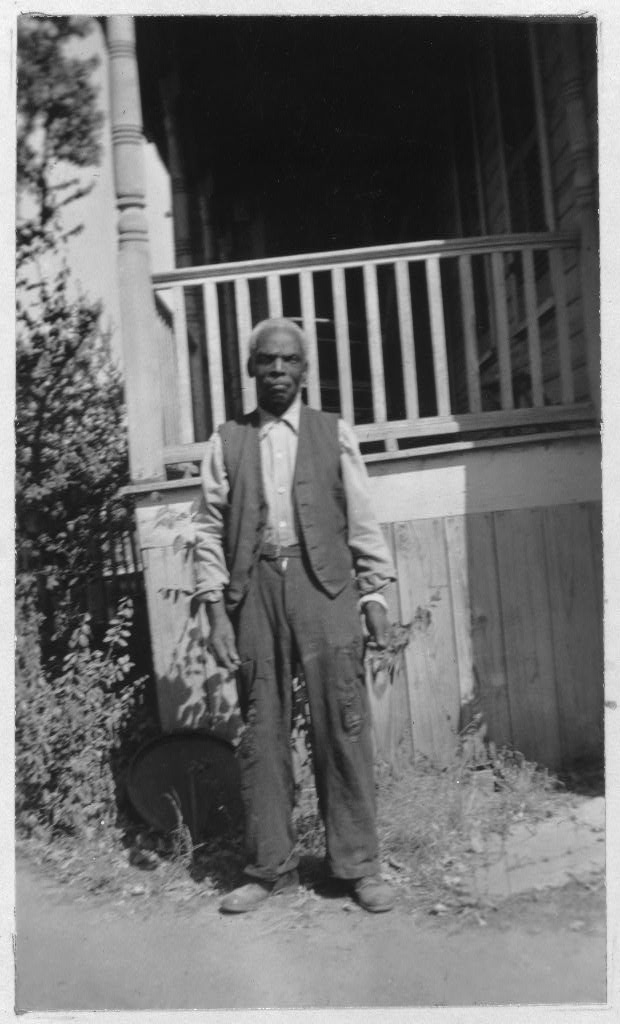
JOHN CRAWFORD, 81, was born a slave on Judge Thompson Rector's plantation at Manor, Texas. After emancipation, John was a share-cropper. He has always lived in Travis County and is now cared for by a daughter at Austin.
"John Crawford am me. It am eighty-one years since I's borned and dat's on de old Rector plantation where Manor am now. It wasn't dere den. I knowed the man it was named after.
"Ma's name was Viney Rector and the old judge brung her from Alabama. She milked all the cows two times a day and I had to turn out all de calves. Sometimes dey'd git purty rough and go right to dere mammies.
"Pap's name was Tom Townes, 'cause he 'longed on de Townes place. He was my step-pap and when I's growed I tooken my own pap's name, what was Crawford. I never seed him, though, and didn't know nothin' much 'bout him. He's sold away 'fore I's borned.
"Pap Townes could make most everythin'. He made turnin' plows and hossshoe nails and a good lot of furniture. He was purty good to me, 'siderin' he wasn't my own pap. I didn't have no hard time, noway. I had plenty bacon and side-meat and 'lasses. Every Sunday mornin' the jedge give us our rations for de week. He wasn't short with dem, neither.
"Many was de time Injuns come to Jedge Rector's place. Dem Injuns beg for somethin' and the jedge allus give dem somethin'. They wasn't mean Injuns, jes' allus beggin'.
"I can't read and write to this day. Nobody ever larnt me my A B C's and I didn't git no chance at school.
"On Christmas mornin' Massa Rector come out and give each man and woman a big, red pocket handkerchief and a bottle of liquor. He buyed dat liquor by de barrel and liked it hisself. Dat why he allus had it on de place.
"One mornin' the jedge done send word down by de cook for nobody to go to de fields dat day. We all want up to de big house and de jedge git up to make de speech, but am too choke up to talk. He hated to lose he slaves, I reckon. So his son-in-law has to say, 'You folks am now free and can go where you wants to go. You can stay here and pick cotton and git fifty cents de hunerd.' But only two families stayed. De rest pulled out.
"After freedom we rented land on de halves. Some niggers soon got ahead and rented on de third or fourth. When you rent that-a-way you git three bales and de boss git one. But you has to buy you own teams and seed and all on dat plan.
"Its a fac' we was told we'd git forty acres and a mule. Dat de talk den, but we never did git it.
"De Ku Klux made a lot of devilment round-about dat county. Dey allus chasin' some nigger and beatin' him up. But some dem niggers sho' 'serve it. When dey gits free, dey gits wild. Dey won't work or do nothin' and thinks dey don't have to. We didn't have no trouble, 'cause we stays on de farm and works and don't have no truck with dem wild niggers.
"In 1877 I marries Fannie Black at de town of Sprinkle. It wasn't sech a town, jes' a li'l place. Me and her stayed married fifty-two years and four months. She died and left me eight year ago. We had seven chillen and they is all livin'. Four is here in Austin and two in California and one in Ohio.
"I gits a li'l pension, $9.00 de month, and my gal, Susie, takes care of me. I ain't got long to go now 'fore de Lawd gwine call me.
420076
Green Cumby
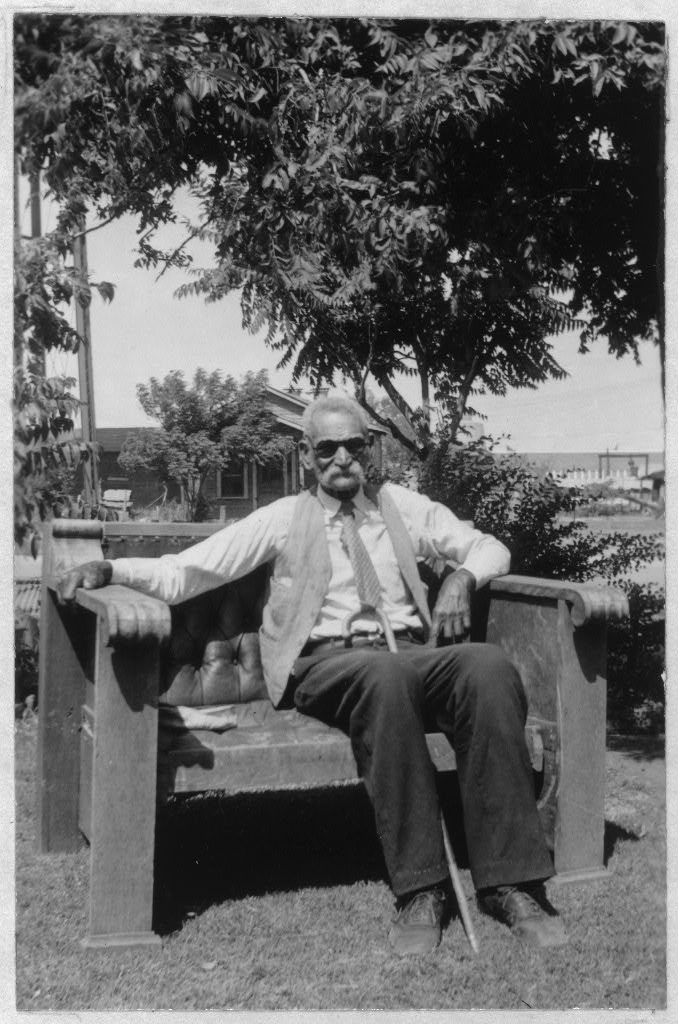
GREEN CUMBY, 86, was born a slave of the Robert H. Cumby family, in Henderson, Texas. He was about 14 at the close of the Civil War. He stayed with his old master four years after he was freed, then married and settled in Tyler, Texas, where he worked for the compress 30 years. He lives with his daughter at 749 Mesquite St., Abilene, Texas.
"Durin' slavery I had purty rough times. My grandfather, Tater Cumby, was cullud overseer for forty slaves and he called us at four in de mornin' and we worked from sun to sun. Most of de time we worked on Sunday, too.
"De white overseers whupped us with straps when we didn't do right. I seed niggers in chains lots of times, 'cause there wasn't no jails and they jus' chained 'em to trees.
"Spec'lators on hosses drove big bunches of slaves past our place from one place to another, to auction 'em at de market places. De women would be carryin' l'il ones in dere arms and at night dey bed 'em down jus' like cattle right on de ground 'side of de road. Lots of l'il chillun was sold 'way from de mammy when dey seven or eight, or even smaller. Dat's why us cullud folks don't know our kinfolks to dis day.
"De best times was when de corn shuckin' was at hand. Den you didn't have to bother with no pass to leave de plantation, and de patter rolls didn't bother you. If de patter rolls cotch you without de pass any other time, you better wish you dead, 'cause you would have yourself some trouble.
"But de corn shuckin', dat was de gran' times. All de marsters and dere black boys from plantations from miles 'round would be dere. Den when we got de corn pile high as dis house, de table was spread out under de shade. All de boys dat 'long to old marster would take him on de packsaddle 'round de house, den dey bring him to de table and sit by he side; den all de boys dat 'long to Marster Bevan from another plantation take him on de packsaddle 'round and 'round de house, allus singin' and dancin', den dey puts him at de other side de table, and dey all do de same till everybody at de table, den dey have de feast.
"To see de runaway slaves in de woods scared me to death. They'd try to snatch you and hold you, so you couldn't go tell. Sometimes dey cotched dem runaway niggers and dey be like wild animals and have to be tamed over 'gain. Dere was a white man call Henderson had 60 bloodhounds and rents 'em out to run slaves. I well rec'lect de hounds run through our place one night, chasin' de slave what kilt his wife by runnin' de harness needle through her heart. Dey cotch him and de patter rolls took him to Henderson and hangs him.
"De patter rolls dey chases me plenty times, but I's lucky, 'cause dey never cotched me. I slips off to see de gal on de nex' plantation and I has no pass and they chases me and was I scairt! You should have seed me run through dat bresh, 'cause I didn't dare go out on de road or de path. It near tore de clothes off me, but I goes on and gits home and slides under de house. But I'd go to see dat gal every time, patter rolls or no patter rolls, and I gits trained so's I could run 'most as fast as a rabbit.
"De white chillun larned us to read and write at night, but I never paid much 'tention, but I kin read de testament now. Other times at night de slaves gathers round de cabins in little bunches and talks till bedtime. Sometimes we'd dance and someone would knock out time for us by snappin' de fingers and slappin' de knee. We didn't have nothin' to make de music on.
"We mos'ly lived on corn pone and salt bacon de marster give us. We didn't have no gardens ourselves, 'cause we wouldn't have time to work in dem. We worked all day in de fields and den was so tired we couldn't do nothin' more.
"My mammy doctored us when we was feelin' bad and she'd take dog-fenley, a yaller lookin' weed, and brew tea, and it driv de chills and de fever out of us. Sometimes she put horse mint on de pallet with us to make us sweat and driv de fever 'way. For breakfast she'd make us sass' fras tea, to clear our blood.
"My marstar and his two step-sons goes to de war. De marster was a big gen'ral on de southern side. I didn't know what dey fightin' 'bout for a long time, den I heered it 'bout freedom and I felt like it be Heaven here on earth to git freedom, 'spite de fac' I allus had de good marster. He sho' was good to us, but you knows dat ain't de same as bein' free.
420124
Tempie Cummins
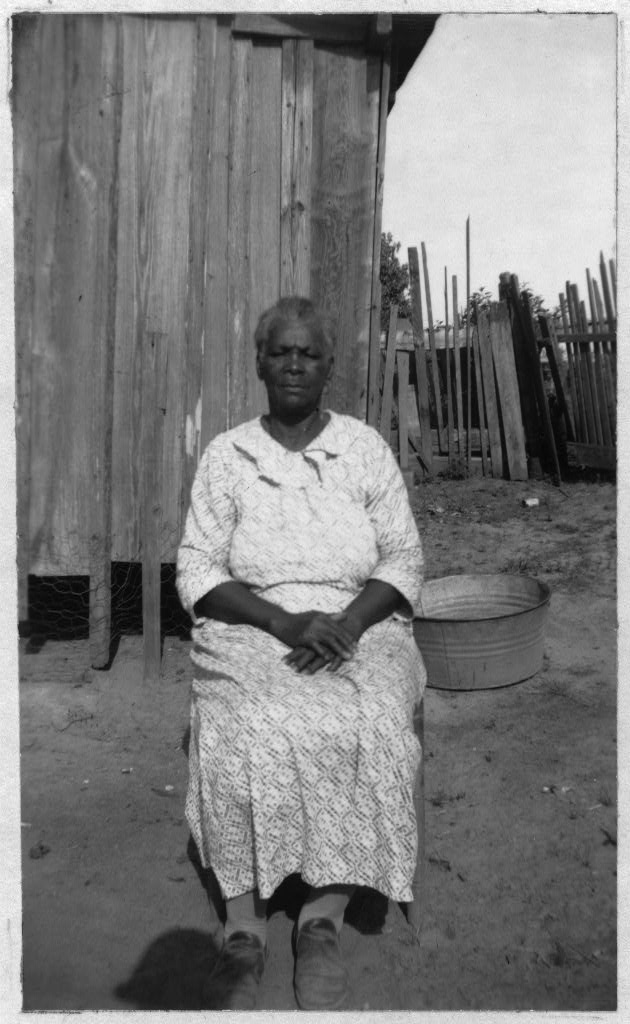
TEMPIE CUMMINS was born at Brookeland, Texas, sometime before the Civil War, but does not know her exact age. William Neyland owned Tempie and her parents. She now lives alone in a small, weather-beaten shack in the South Quarters, a section of Jasper, Tex.
"They call me Tempie Cummins and I was born at Brookeland but I don' know jus' the 'xact date. My father's name was Jim Starkins and my mother's name was Charlotte Brooks and both of 'em come from Alabama. I had jus' one brudder, Bill, and four sisters named Margaret and Hannah and Mary and 'Liza. Life was good when I was with them and us play round. Miss Fannie Neyland, she Mis' Phil Scarborough now, she raise me, 'cause I was give to them when I was eight year old.
"I slep' on a pallet on the floor. They give me a homespun dress onct a year at Christmas time. When company come I had to run and slip on that dress. At other time I wore white chillens' cast-off clothes so wore they was ready to throw away. I had to pin them up with red horse thorns to hide my nakedness. My dress was usually split from hem to neck and I had to wear them till they was strings. Went barefoot summer and winter till the feets crack open.
"I never seed my grandparents 'cause my mother she sold in Alabama when she's 17 and they brung her to Texas and treat her rough. At mealtime they hand me a piece of cornbread and tell me 'Run 'long.' Sometime I git little piece of meat and biscuit, 'bout onct a month. I gathered up scraps the white chillens lef'.
"Marster was rough. He take two beech switches and twist them together and whip 'em to a stub. Many's the time I's bled from them whippin's. Our old mistus, she try to be good to us, I reckon, but she was turrible lazy. She had two of us to wait on her and then she didn' treat us good.
"Marster had 30 or 40 acres and he raise cotton, and corn and 'tatoes. He used to raise 12 bales cotton a year and then drink it all up. We work from daylight till dark, and after. Marster punish them what didn' work hard enough.
"The white chillen tries teach me to read and write but I didn' larn much, 'cause I allus workin'. Mother was workin' in the house, and she cooked too. She say she used to hide in the chimney corner and listen to what the white folks say. When freedom was 'clared, marster wouldn' tell 'em, but mother she hear him tellin' mistus that the slaves was free but they didn' know it and he's not gwineter tell 'em till he makes another crop or two. When mother hear that she say she slip out the chimney corner and crack her heels together four times and shouts, 'I's free, I's free.' Then she runs to the field, 'gainst marster's will and tol' all the other slaves and they quit work. Then she run away and in the night she slip into a big ravine near the house and have them bring me to her. Marster, he come out with his gun and shot at mother but she run down the ravine and gits away with me.
"I seed lots of ghosties when I's young. I couldn' sleep for them. I's kind of outgrowed them now. But one time me and my younges' chile was comin' over to church and right near the dippin' vat is two big gates and when we git to them, out come a big old white ox, with long legs and horns and when he git 'bout halfway, he turns into a man with a Panama hat on. He follers us to Sandy Creek bridge. Sometimes at night I sees that same spirit sittin' on that bridge now.
"My old man say, in slavery time, when he's 21, he had to pass a place where patterroles whipped slaves and had kilt some. He was sittin' on a load of fodder and there come a big light wavin' down the road and scarin' the team and the hosses drag him and near kilt him.
420070
Adeline Cunningham
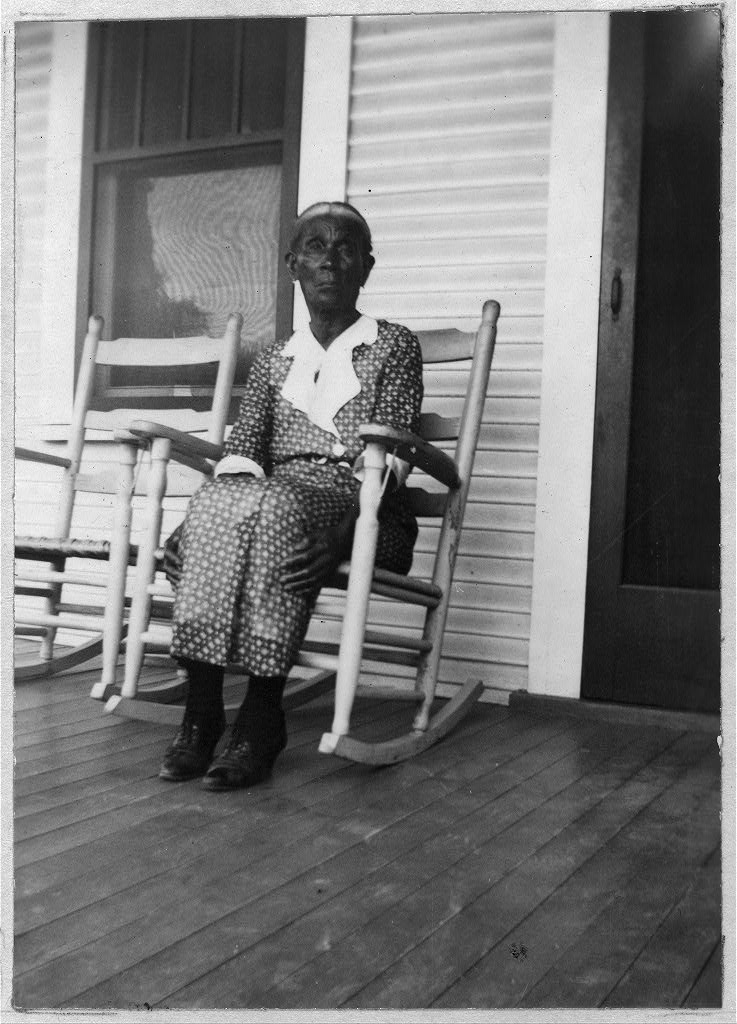
ADELINE CUNNINGHAM, 1210 Florida St., born 1852, was a slave in Lavaca County, 4-1/2 miles n.e. of Hallettsville. She was a slave of Washington Greenlee Foley and his grandson, John Woods. The Foley plantation consisted of several square leagues, each league containing 4,428.4 acres. Adeline is tall, spare and primly erect, with fiery brown eyes, which snap when she recalls the slave days. The house is somewhat pretentious and well furnished. The day was hot and the granddaughter prepared ice water for her grandmother and the interviewer. House and porch were very clean.
"I was bo'n on ole man Foley's plantation in Lavaca County. He's got more'n 100 slaves. He always buy slaves and he never sell. How many acres of lan' he got? Lawd, dat man ain't got acres, he got leagues. Dey raises cotton and co'n, and cattle and hawgs. Ole man Foley's plantation run over Lavaca and Colorado county, he got 1600 acres in one block and some of it on de Navidad River. Ole man Foley live in a big log house wid two double rooms and a hall, and he build a weavin' house agin his own house and dey's anudder house wid de spinnin' wheels. And ole man Foley run his own cotton gin and his own grindin' mill where dey grinds de co'n and dey got a big potato patch.
"Dey was rough people and dey treat ev'ry body rough. We lives in de quarter; de houses all jine close togedder but you kin walk 'tween 'em. All de cabins has one room and mostly two fam'lies bunks togedder in de one room wid dirt floors. De slaves builds de cabins, de slaves got no money, dey got no land.
"No suh, we never goes to church. Times we sneaks in de woods and prays de Lawd to make us free and times one of de slaves got happy and made a noise dat dey heered at de big house and den de overseer come and whip us 'cause we prayed de Lawd to set us free.
"You know what a stockman is? He is a man dat buys and sells cattle. Ev'ry year de stockman comes to ole man Foley's and he lines us up in de yard and de stockman got a lotta slaves tied togedder and ole man Foley he buys some slaves but he won't sell none. Yassuh, de stockman buys and sells de slaves jes' de same as cattle.
"Dey feeds us well sometimes, if dey warn't mad at us. Dey has a big trough jes' like de trough for de pigs and dey has a big gourd and dey totes de gourd full of milk and dey breaks de bread in de milk. Den my mammy takes a gourd and fills it and gives it to us chillun. How's we eat it? We had oyster shells for spoons and de slaves comes in from de fields and dey hands is all dirty, and dey is hungry. Dey dips de dirty hands right in de trough and we can't eat none of it. De women wuks in de fields until dey has chillun and when de chillun's ole enough to wuk in de fields den de mother goes to ole man Foley's house. Dere she's a house servant and wuks at spinnin' and weavin' de cotton. Dey makes all de clothes for ole man Foley and his fam'ly and for de slaves.
"No suh, we ain't got no holidays. Sundays we grinds co'n and de men split rails and hoes wid de grubbin' hoe. Ole man Foley has a blacksmif shop and a slave does de blacksmiffin. De slaves builds cabins wid split logs and dey makes de roof tight wid co'n shucks and grass. One time a month, times one time in two months, dey takes us to de white folks church.
"Dey's four or five preachers and de slaves. Iffen deys a marriage de preacher has a book. He's gotter keep it hid, 'cause dey's afraid iffen de slaves learns to read dey learns how to run away. One of de slaves runs away and dey ketches him and puts his eyes out. Dey catches anudder slave dat run away and dey hanged him up by de arm. Yassuh, I see dat wid my own eyes; dey holds de slave up by one arm, dey puts a iron on his knee and a iron on his feet and drag 'im down but his feet cain't reach de groun'.
"Ole man Foley ain't bad, but de overseers is mean. No suh, we never gits no money and we never gits no lan'. Ole man Foley, he wants to give us sumpin for gardens but Mr. John Woods, his gran'son, is agin it.
"Was I glad when dat was over? Wouldn' you be? It's long after we's free dat I gits married. Yassuh, and I live in San Antonio 'bout 20 years."
420035
Will Daily's House
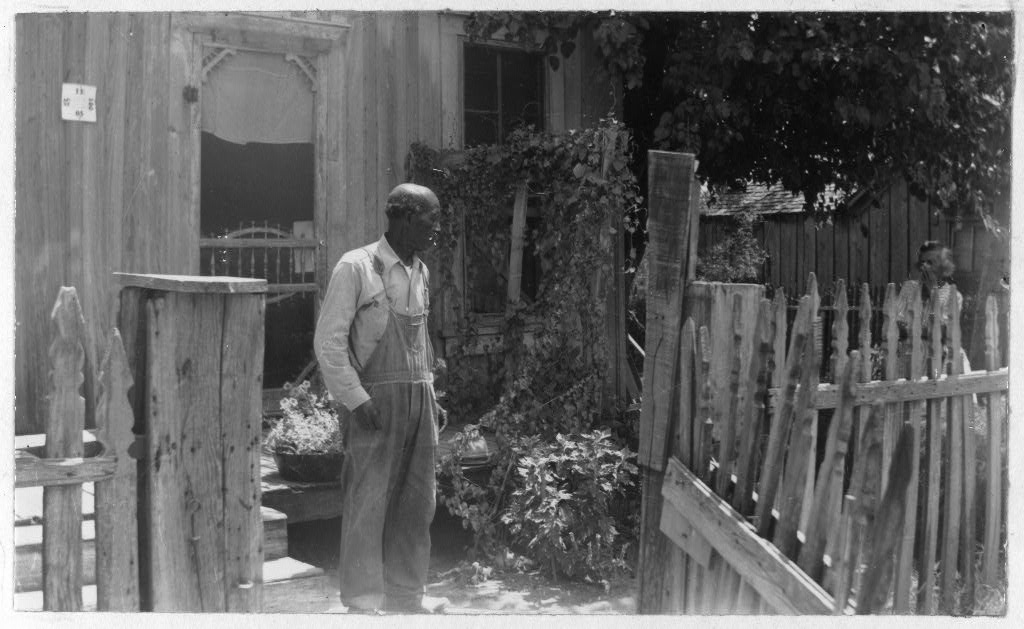
Will Daily
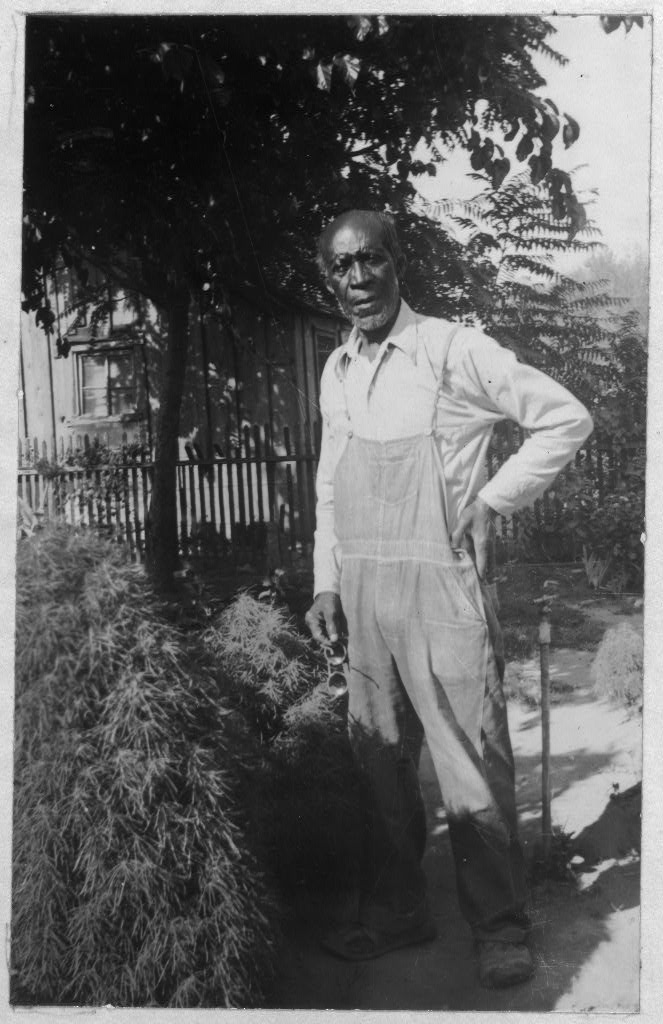
WILL DAILY, was born in 1858 in Missouri, near the city of St. Louis. He was a slave of the John Daily family and served as chore boy around the house, carried the breakfast to the field and always drove up the horses on the plantation. The latter duty developed a fondness for horses which led to a career as a race horse rider and trainer. He remained with his white folks several years after freedom and in Missouri many years longer in this work. He came to San Angelo, Texas in 1922 and took up hotel work which he followed until his health broke, only a few years ago. He now lives in his small home, in the colored district of the city and depends on his old age pension for a livelihood.
"Huh! What you say, did you say somethin' 'bout de ole age pension?", questioned Will when approached on the slavery question, but he answered readily, "Sho! sho' I was a slave an' I aint ashamed to admit dat I was. Some of dese here fellers thinks dey sounds ole when dey says dey was slaves and dey denies it but I's proud enough of de good treatment I's got, to allus tell about it. My marster had a driver but he say his niggers was human, wid human feelin's, so he makes dat driver reports to him fer what little thrashin's we gits. Course we had to do de right thing but jes' some how did, mos' of de time 'cause he was good to us. Soon as I was big enough, about four or five years ole, ole miss, she starts trainin' me fer a house boy. I's a doin' all sorts of chores by de time I was six years old. Den ole marster he starts sendin' me out on de plantation to drive up de hosses. I sho' likes dat job 'cause aint nothin' I loves any better den hosses. Den when I was bigger he starts me to carryin' de breakfast to de field whar de grown niggers had been out workin' since way 'fore day. Dey all done dat. Dey say de days wasn't long enough to put in enough time so dey works part of de night.
"We had good grub 'cause we raised all de co'n and de hogs and de cows and chickens and plenty of everything. Mos' times we have biscuits and bacon and syrup for breakfast and butter too if we wants it but mos' niggers dey likes dat fat bacon de bes'.
"Our log cabins was good and comfortable. Dey was all along in a row and built out of de same kind of logs what our marsters house was.
"We had good beds and dey was clean.
"I nev'r had no money when I was a slave 'cause I was jes' a small boy when de slaves was set free.
"We had lots of fish and rabbits, more den we had 'possum but we sho' likes dat 'possum when we could git it.
"My marster had about three hundred slaves and a big plantation.
"I seen some slaves sold off dat big auction block and de little chillun sho' would be a cryin' when dey takes dere mothers away from dem.
"We didn' have no jail 'cause my marster didn' believe dat way, but I's seen other slaves in dem chains and things.
"We didn' know nothin' 'bout no learnin' nor no church neither and when de slaves die dey was jes' buried without no singin' or nothin'.
"When de war started, my father, he goes and once I remember he comes home on a furlough and we was all so glad, den when he goes back he gits killed and we nev'r see him no mo'.
"We had de doctor and good care when we was sick. I's don't remember much 'bout what kinds of medicine we took but I's know it was mostly home-made.
"We all wears dat asafoetida on a string 'round our necks and sometimes we carry a rabbit's foot in our pockets fer good luck.
"When de war was ended and de slaves was free old Uncle Pete, our oldest slave, comes a-walkin' up from de woods whar he always go to keeps from bein' bothered, to read his Bible, and he had dat Bible under his arm an' he say, 'I's know somethin', me an' de Lawd knows somethin'', and den he tells us. He say, 'You all is free people now, you can go when you please and come when you pleases and you can stay here or go some other place'. Well I had to stay 'cause my mother stayed and I's jes' keeps on ridin' dem race hosses 'til long after my marster was dead, den I's gits me some hosses of my own and train other men's hosses too.
"I's worked at dat racin' business 'til I's come to Texas and when I went to work in hotels dat killed me up. I's done ev'r thing from makin' soap fer de scrubbin', to cookin' de bes' meals fer de bes' hotels. I aint been no good since, though, and I had to quit several years ago.
"De first time I was married was to Phillis Reed in Missouri and we jes' jumps over de broom, and after Phillis die and I comes to Texas I's gits married again to Susie, here in San Angelo; we jes' jumps ov'r de broom too. I's nev'r had no chillun of my own so I's jes' a settin' here a-livin' off de ole age pension."
420029
Julie Francis Daniels
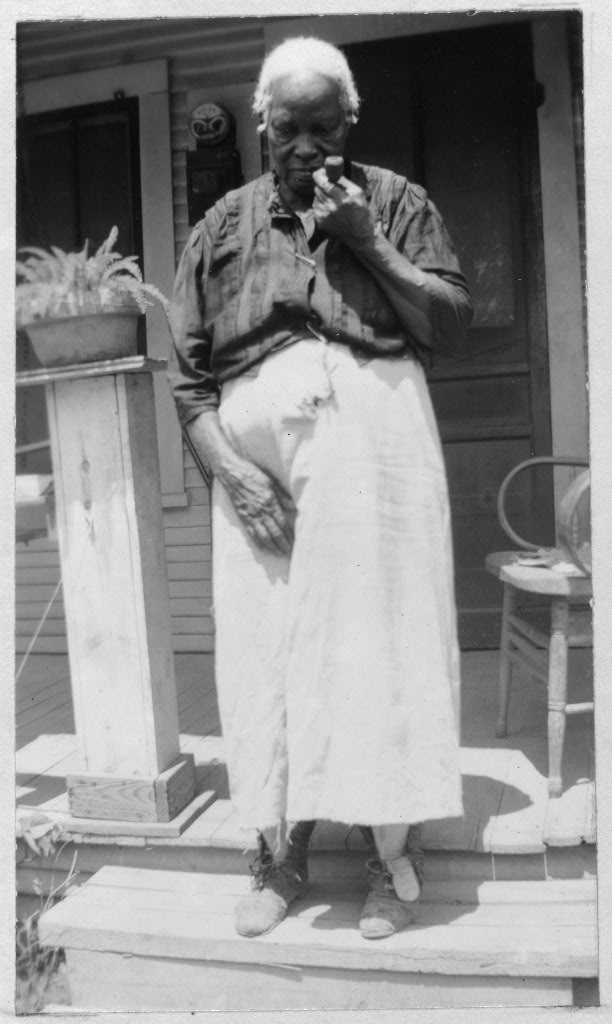
JULIA FRANCIS DANIELS, born in 1848, in Georgia, a slave of the Denman family, who moved to Texas before the Civil War. Julia's memory fails her when she tries to recall names and dates. She still tries to take part in church activities and has recently started to learn reading and writing. She lives with a daughter at 2523 Spring St. Dallas, Texas.
"They's lots I disremembers and they's lots I remembers, like the year the war's over and the fightin' all done with, 'cause that the year I larned to plow and that the time I got married. That's the very year they larned me to plow. I larnt all right, 'cause I wasn't one slow to larn anything. Afore to that time, they ain't never had no hoe in the field for me a-tall. I jes' toted water for the ones in the field.
"I had plenty brothers and sisters, 'bout ten of 'em, but I disremembers some they names. There was Tom and George and Marthy and Mandy, and they's all name' Denman, 'cause my mammy and daddy was Lottie and Boyd Denman and they come from Georgia to Cherokee County and then to Houston County, near by to Crockett, with Old Man Denman. He was the one owned all us till he 'vided some with Miss Lizzie when she marries Mr. Cramer.
"My daddy worked in the fields with Uncle Lot and my brothers, and my Uncle Joe, he's driver. But Briscoe am overseer and he a white man. He can't never whup the growed mens like he wants, 'cause they don't let him unless he ask Old Man Denman. I seed him whup 'em, though. He make 'em take off the shirt and whup with the strap.
"Now, my mammy was cook in the Denman house and for our family and Uncle Joe's family. She didn't have much time for anythin' but cookin' all the time. But she's the bestes' cook. Us had fine greens and hawgs and beef. Us et collard greens and pork till us got skittish of it and then they quit the pork and kilt a beef. When they done that, they's jus' pourin' water on our wheels, 'cause us liked best of anythin' the beef, and I do to this day, only I can't never git it.
"Old Man Denman had a boy what kilt squirrels and throwed 'em in the kitchen. The white folks et them. You ain't never seen no white folks then would eat rabbit. I had a brother who hunted. Mostly on Sundays. He'd leave for the swamps 'fore daybreak and we'd know when we'd hear him callin', 'O-o-o-o-o-da-da-ske-e-e-e-t,' he had somethin'. That jus' a make-up of he own, but we knowed they's rabbits for the pot.
"All the mens don't hunt on Sunday, 'cause Uncle Joe helt meetin' in front he house. Us look out the door and seed Uncle Joe settin' the benches straight and settin' he table out under the trees and sweepin' clean the leaves and us know they's gwine be meetin'. They's the loveliest days that ever they was. Night times, too, they'd make it 'tween 'em whether it'd be at our house or Uncle Joe's. We'd ask niggers from other farms and I used to say, 'I likes meetin' jus' as good as I likes a party.'
"When crops is laid by us have the most parties and dence and sing and have play games. The reels is what I used to like but I done quit that foolishness many a year ago. I used to cut a step or two. I remembers one reel call the 'Devil's Dream.' It's a fast song
"'Oh, de Devil drempt a dream, He drempt it on a Friday— He drempt he cotch a sinner.'
"Old Man Denman am the great one for 'viding he property and when Miss Lizzie marries with Mr. Creame Cramer, which am her dead sister's husband, Old Man Denman give me and two my sisters to Miss Lizzie and he gives two more my sisters to he son. Us goes with Miss Lizzie to the Cramer place and lives in the back yard in a little room by the back door.
"Everything fine and nice there till one day Miss Lizzie say to me, 'Julia, go down to the well and fetch me some water,' and I goes and I seed in the road a heap of men all in gray and ridin' hosses, comin' our way. I runs back to the house and calls Miss Lizzie. She say, 'What you scairt for?' I tells her 'bout them men and she say they ain't gwine hurt me none, they jus' wants some water. I goes back to the well and heared 'em talk 'bout a fight. I goes back to the house and some of the mens comes to the gate and says to Mr. Cramer, 'How're you, Creame?' He say, 'I's all right in my health but I ain't so good in my mind.' They says, 'What the matter, Creame?' He say, 'I want to be in the fight so bad.'
"When they goes I asks Miss Lizzie what they fightin' 'bout and she say it am 'bout money. That all I knows. Right after that Mr. Cramer goes and we don't never see him no more. Word come back from the fightin' he makes some the big, high mens mad and they puts chains 'round he ankles and make him dig a stump in the hot sun. He ain't used to that and it give him fever to the brain and he dies.
"When Mr. Cramer goes 'way, Miss Lizzie takes us all and goes back to Old Man Denman's. The sojers used to pass and all the whoopin' and hollerin' and carryin' on, you ain't never heered the likes! They hollers, 'Who-o-o-o, Old Man Denman, how's your chickens?' And they chunks and throws at 'em till they cripples 'em up and puts 'em in they bags, for cookin'. Old Man Denman cusses at 'em somethin' powerful.
"My sister Mandy and me am down in the woods a good, fur piece from the house and us keeps heerin' a noise. My brother comes down and finds me and say, 'Come git your dinner.' When I gits there dinner am top the gate post and he say they's sojers in the woods and they has been persecutin' a old woman on a mule. She was a nigger woman. I gits so scairt I can't eat my dinner. I ain't got no heart for victuals. My brother say, 'Wait for pa, he comin' with the mule and he'll hide you out.' I gits on the mule front of pa and us pass through the sojers and they grabs at us and says, 'Gimme the gal, gimme the gal.' Pa say I faints plumb 'way.
"Us heered guns shootin' round and 'bout all the time. Seems like they fit every time they git a chance. Old Man Denman's boy gits kilt and two my sisters he property and they don't know what to do, 'cause they has to be somebody's property and they ain't no one to 'heritance 'em. They has to go to the auction but Old Man Denman say not to fret. At the auction the man say, 'Goin' high, goin' low, goin' mighty slow, a little while to go. Bid 'em in, bid 'em in. The sun am high, the sun am hot, us got to git home tonight.' An old friend of Old Man Denman's hollers out he buys for William Blackstone. Us all come home and my sisters too and Old Man Denman laugh big and say, 'My name allus been William Blackstone Denman.'
"I's a woman growed when the war was to a end. I had my first baby when I's fourteen. One day my sister call me and say, 'They's fit out, and they's been surrenderin' and ain't gwine fight no more.' That dusk Old Man Denman call all us niggers together and stand on he steps and make he speech, 'Mens and womans, you is free as I am. You is free to go where you wants but I is beggin' yous to stay by me till us git the crops laid by.' Then he say, 'Study it over 'fore you gives me you answer. I is always try as my duty to be fair to you.'
"The mens talks it over a-twixt theyselves and includes to stay. They says us might as well stay there as go somewhere else, and us got no money and no place to go.
"Then Miss Lizzie marries with Mr. Joe McMahon and I goes with her to he house near by and he say he larn me to plow. Miss Lizzie say, 'Now, Julia, you knows how to plow and don't make no fool of yourself and act like you ain't never seed no plow afore.' Us make a corn crop and goes on 'bout same as afore.
"I gits married that very year and has a little fixin' for the weddin', bakes some cakes and I have a dress with buttons and a preacher marries me. I ain't used to wearin' nothin' but loring (a simple one piece garment made from sacking). Unnerwear? I ain't never wore no unnerwear then.
"My husband rents a little piece of land and us raise a corn crop and that's the way us do. Us raises our own victuals. I has 17 chillen through the year and they done scatter to the four winds. Some of them is dead. I ain't what I used to be for workin'. I jus' set 'round. I done plenty work in my primer days.
420015
Katie Darling
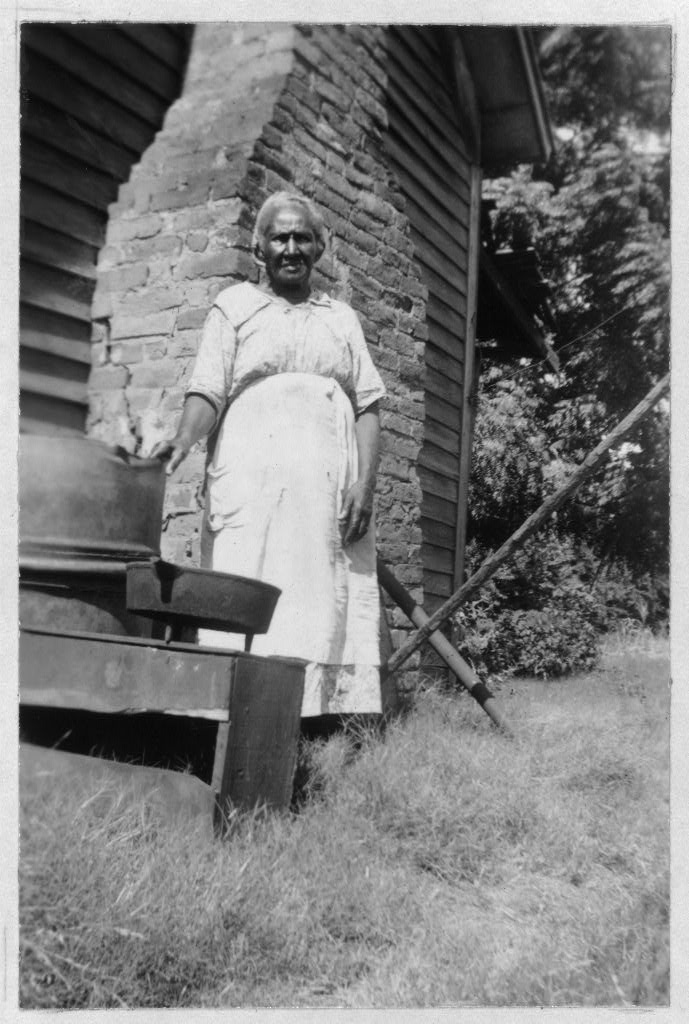
KATIE DARLING, about 88, was born a slave on the plantation of William McCarty, on the Elysian Fields Road, nine miles south of Marshall, Texas. Katie was a nurse and housegirl in the McCarty household until five years after the end of the Civil War. She then moved to Marshall and married. Her husband and her three children are dead and she is supported by Griffin Williams, a boy she found homeless and reared. They live in a neat three-room shack in Sunny South addition of Marshall, Texas.
"You is talkin' now to a nigger what nussed seven white chillen in them bullwhip days. Miss Stella, my young missy, got all our ages down in she Bible, and it say I's born in 1849. Massa Bill McCarty my massa and he live east and south of Marshall, clost to the Louisiana line. Me and my three brudders, Peter and Adam and Willie, all lives to be growed and married, but mammy die in slavery and pappy run 'way while he and Massa Bill on they way to the battle of Mansfield. Massa say when he come back from the war, 'That triflin' nigger run 'way and jines up with them damn Yankees.'
"Massa have six chillen when war come on and I nussed all of 'em. I stays in the house with 'em and slep' on a pallet on the floor, and soon I's big 'nough to tote the milk pail they puts me to milkin', too. Massa have more'n 100 cows and most the time me and Violet do all the milkin'. We better be in that cowpen by five o'clock. One mornin' massa cotched me lettin' one the calves do some milkin' and he let me off without whippin' that time, but that don't mean he allus good, 'cause them cows have more feelin' for than massa and missy.
"We et peas and greens and collards and middlin's. Niggers had better let that ham alone! We have meal coffee. They parch meal in the oven and bile it and drink the liquor. Sometime we gits some of the Lincoln coffee what was lef' from the nex' plantation.
"When the niggers done anything massa bullwhip them, but didn't skin them up very often. He'd whip the man for half doin' the plowin' or hoein' but if they done it right he'd find something else to whip them for. At night the men had to shuck corn and the women card and spin. Us got two pieces of clothes for winter and two for summer, but us have no shoes. We had to work Saturday all day and if that grass was in the field we didn't git no Sunday, either.
"They have dances and parties for the white folks' chillen, but missy say, 'Niggers was made to work for white folks,' and on Christmas Miss Irene bakes two cakes for the nigger families but she darsn't let missy know 'bout it.
"When a slave die, massa make the coffin hisself and send a couple niggers to bury the body and say, 'Don't be long,' and no singin' or prayin' 'lowed, jus' put them in the ground and cover 'em up and hurry on back to that field.
"Niggers didn't cou't then like they do now, massa pick out a po'tly man and a po'tly gal and jist put 'em together. What he want am the stock.
"I 'member that fight at Mansfield like it yes'day. Massas's field am all tore up with cannon holes and ever' time a cannon fire, missy go off in a rage. One time when a cannon fire, she say to me, 'You li'l black wench, you niggers ain't gwine be free. You's made to work for white folks.' 'Bout that time she look up and see a Yankee sojer standin' in the door with a pistol. She say, 'Katie, I didn't say anythin', did I?' I say, 'I ain't tellin' no lie, you say niggers ain't gwine git free.'
"That day you couldn't git 'round the place for the Yankees and they stays for weeks at a time.
"When massa come home from the war he wants let us loose, but missy wouldn't do it. I stays on and works for them six years after the war and missy whip me after the war jist like she did 'fore. She has a hun'erd lashes laid up for me now, and this how it am. My brudders done lef' massa after the war and move nex' door to the Ware place, and one Saturday some niggers come and tell me my brudder Peter am comin' to git me 'way from old missy Sunday night. That night the cows and calves got together and missy say it my fault. She say, 'I'm gwine give you one hun'erd lashes in the mornin', now go pen them calves.'
"I don't know whether them calves was ever penned or not, 'cause Peter was waitin' for me at the lot and takes me to live with him on the Ware place. I's so happy to git away from that old devil missy, I don't know what to do, and I stays there sev'ral years and works out here and there for money. Then I marries and moves here and me and my man farms and nothin' 'citin' done happened."
420046
Carey Davenport
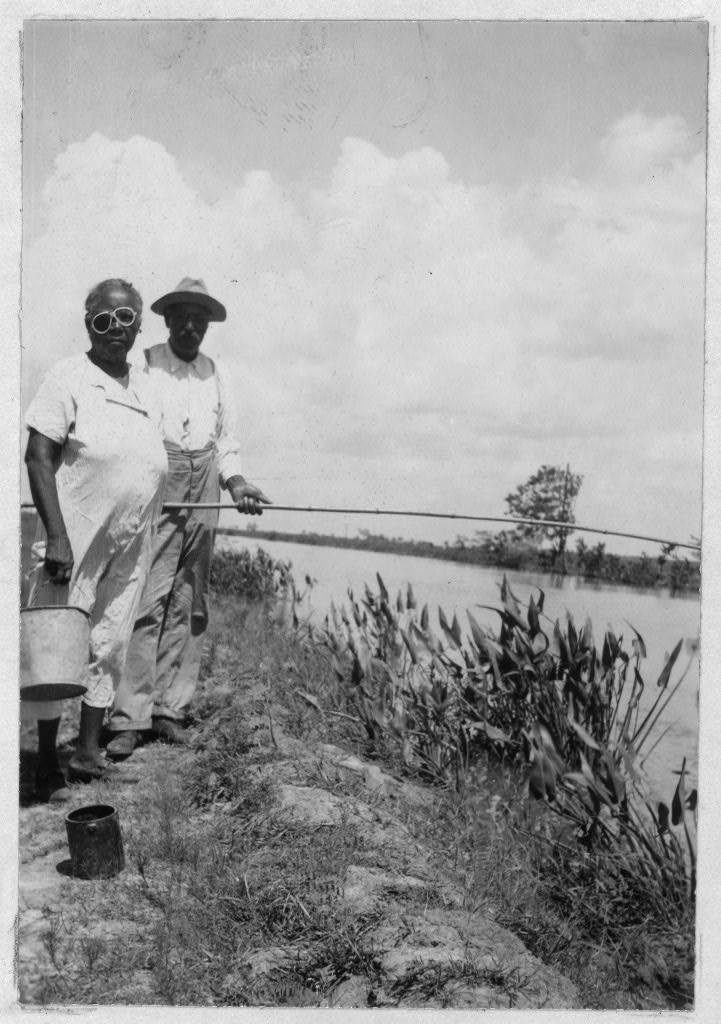
CAREY DAVENPORT, retired Methodist minister of Anahuac, Texas, appears sturdy despite his 83 years. He was reared a slave of Capt. John Mann, in Walker Co., Texas. His wife, who has been his devoted companion for 60 years, was born in slavery just before emancipation. Carey is very fond of fishing and spends much time with hook and line. He is fairly well educated and is influential among his fellow Negroes.
"If I live till the 13th of August I'll be 82 years old. I was born in 1855 up in Walker County but since then they split the county and the place I was born is just across the line in San Jacinto County now. Jim and Janey Davenport was my father and mother and they come from Richmond, Virginia. I had two sisters, Betty and Harriet, and a half brother, William.
"Our old master's name was John Mann but they called him Capt. Mann. Old missus' name was Sarah. I'd say old master treated us slaves bad and there was one thing I couldn't understand, 'cause he was 'ligious and every Sunday mornin' everybody had to git ready and go for prayer. I never could understand his 'ligion, 'cause sometimes he git up off his knees and befo' we git out the house he cuss us out.
"All my life I been a Methodist and I been a regular preacher 43 years. Since I quit I been livin' here at Anahuac and seems like I do 'bout as much preachin' now as I ever done.
"I don't member no cullud preachers in slavery times. The white Methodist circuit riders come round on horseback and preach. There was a big box house for a church house and the cullud folks sit off in one corner of the church.
"Sometimes the cullud folks go down in dugouts and hollows and hold they own service and they used to sing songs what come a-gushin' up from the heart.
"They was 'bout 40 slaves on the place, but I never seed no slaves bought or sold and I never was sold, but I seen 'em beat—O, Lawd, yes. I seen 'em make a man put his head through the crack of the rail fence and then they beat him till he was bloody. They give some of 'em 300 or 400 licks.
"Old man Jim, he run away lots and sometimes they git the dogs after him. He run away one time and it was so cold his legs git frozen and they have to cut his legs off. Sometimes they put chains on runaway slaves and chained 'em to the house. I never knowed of 'em puttin' bells on the slaves on our place, but over next to us they did. They had a piece what go round they shoulders and round they necks with pieces up over they heads and hung up the bell on the piece over they head.
"I was a sheep minder them days. The wolves was bad but they never tackled me, 'cause they'd ruther git the sheep. They like sheep meat better'n man meat. Old Captain wanted me to train he boy to herd sheep and one day young master see a sow with nine pigs and want me to catch them and I wouldn't do it. He tried to beat me up and when we git to the lot we have to go round to the big gate and he had a pine knot, and he catch me in the gate and hit me with that knot. Old Captain sittin' on the gallery and he seed it all. When he heered the story he whipped young master and the old lady, she ain't like it.
"One time after that she sittin' in the yard knittin' and she throwed her knittin' needle off and call me to come git it. I done forgot she wanter whip me and when I bring the needle she grab me and I pull away but she hold on my shirt. I run round and round and she call her mother and they catch and whip me. My shirt just had one button on it and I was pullin' and gnawin' on that button and directly it come off and the whole shirt pull off and I didn't have nothin' on but my skin. I run and climb up on the pole at the gate and sot there till master come. He say, 'Carey, why you sittin' up there?' Then I tell him the whole transaction. I say, 'Missus, she whip me 'cause young marse John git whip that time and not me.' He make me git down and git up on his horse behin' him and ride up to the big house. Old missus, she done went to the house and go to bed with her leg, 'cause when she whippin' me she stick my head 'tween her knees and when she do that I bit her.
"Old master's house was two-story with galleries. My mother, she work in the big house and she have a purty good house to live in. It was a plank house, too, but all the other houses was make out of hewed logs. Then my father was a carpenter and old master let him have lumber and he make he own furniture out of dressed lumber and make a box to put clothes in. We never did have more'n two changes of clothes.
"My father used to make them old Carey plows and was good at makin' the mould board out of hardwood. He make the best Carey plows in that part of the country and he make horseshoes and nails and everything out of iron. And he used to make spinning wheels and parts of looms. He was a very valuable man and he make wheels and the hub and put the spokes in.
"Old master had a big farm and he raised cotton and corn and 'taters and peanuts and sorghum cane and some ribbon cane. The bigges' crops was cotton and corn.
"My father told us when freedom come. He'd been a free man, 'cause he was bodyguard to the old, old master and when he died he give my father he freedom. That was over in Richmond, Virginia. But young master steal him into slavery again. So he was glad when freedom come and he was free again. Old master made arrangement for us to stay with him till after the harvest and then we go to the old Rawls house what 'long to Mr. Chiv Rawls. He and my father and mother run the place and it was a big farm.
"I git marry when I was 'bout 22 years old and that's her right there now. We's been married more'n 60 years and she was 17 years old then. She was raised in Grant's colony and her father was a blacksmith.
"We had it all 'ranged and we stop the preacher one Sunday mornin' when he was on the way to preachin' and he come there to her pa's house and marry us. We's had 11 children and all has deceased but three.
"I was educated since freedom, 'cause they wasn't no schools in slavery days, but after I was freed I went to public schools. Most my learnin' I got from a German man what was principal of a college and he teach me the biggest part of my education.
"When I was 14 a desperado killed my father and then I had my mother and her eight children to take care of. I worked two months and went to school one month and that way I made money to take care of 'em.
420215
Campbell Davis
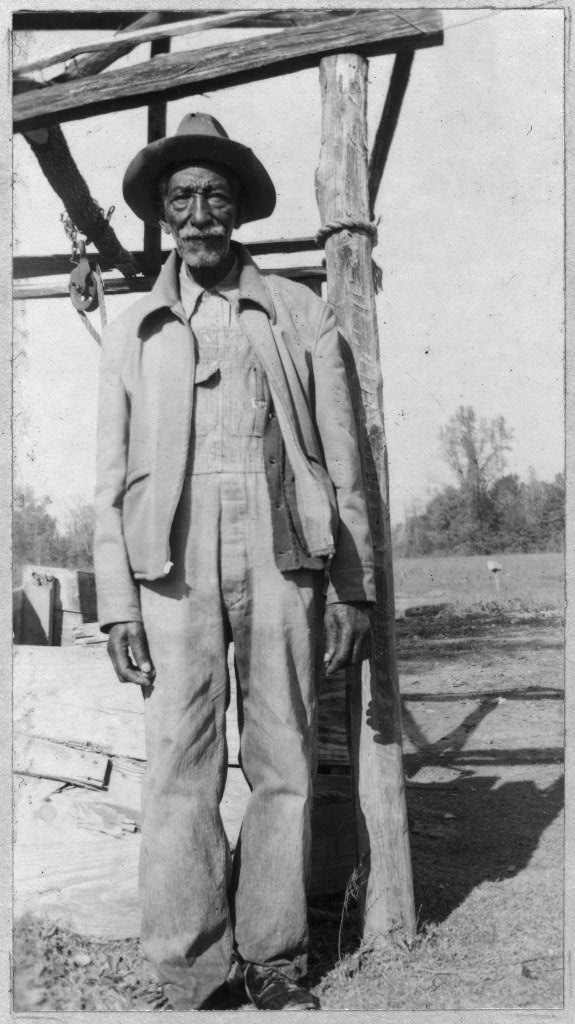
CAMPBELL DAVIS, 85, was born in Harrison Co., Texas, a slave of Henry Hood. He remained on the Hood place about three years after he was freed, then farmed in Louisiana. In 1873 he married and moved back to Harrison Co., where he farmed until old age forced him to stop. He now lives with his nephew, Billie Jenkins, near Karnack. Campbell receives a $12.00 per month old age pension.
"I's big 'nough in slavery time to hear dem tell de darkies to get up and go in the mornin', and to hear the whistlin' of dem whips and howlin' of de dogs. I's birthed up in the northeast part of this county right on the line of Louisiana and Texas, and 'longed to old man Henry Hood. My mammy and daddy was Campbell and Judy Davis and dey both come from Alabama, and was brung here by de traders and sold to Massa Hood. They was nine of us chillen, name Ellis and Hildaman and Henderson and Henrietta and Georgia and Harriet and Patsy.
"Massa Henry didn't have de fine house but it a big one. Us quarters sot off 'cross de field in de edge of a skit of woods. Dey have dirt floors and a fireplace and old pole and plank bunks nail to de walls.
"Dey fed us beef and veg'tables—any kind, jus' name it—and 'low us sop bread in potlicker till de world look level. Dat good eatin' and all my life I ain't have no better.
"Massa didn't 'low no overseer on he place. One my uncles de driver, and massa blow de old conk shell long 'fore day, and if de darkies didn't git goin' you'd hear dem whips crackin'.
"I seed one my sisters whip 'cause she didn't spin 'nough. Dey pull de clothes down to her waist and laid her down on de stomach and lash her with de rawhide quirt. I's in de field when dey whips my Uncle Lewis for not pickin' 'nough cotton. De driver pull he clothes down and make him lay on de groun'. He wasn't tied down, but he say he scart to move.
"De women am off Friday afternoon to wash clothes and all de hands git Saturday afternoon and mos' de man go huntin' or fishin'. Sometimes dey have parties Saturday night and couples git on de floor and have music of de fiddle and banjo. I only 'members one ring play:
"Hop light, li'l lady, The cakes all dough, Don't mind de weather, Jus' so de wind don't blow.
"De bigges' day to blacks and whites was fourth of July. De hands was off all day and massa give de big dinner out under de trees. He allus barbecue de sheep or beef and have cakes and pies and fancy cookin'. He's one de bes' bosses round dat country. He 'lieve in makin' dem work and when dey need whippin' he done it, but when it come to feedin' he done dat right, too. And on Christmas he give us clothes and shoes and nuts and things and 'nother big dinner, and on Christmas night de darkies sing songs for de white folks.
"Us git some book larnin' 'mongst ourselves, round de quarters, and have our own preacher. Mos' de time us chillen play, makin' frog holes in de sand and mud people and things.
"I done hear lots of talk 'bout ghosts and hants and think I seed one onct. I's comin' home from de neighbors at night, in de moonlight, and 'rectly I seed something white by side de road. De closer I gits de bigger it gits. I's scart but I walks up to it and it nothin' but de big spiderweb on de bush. Den I says to myself, 'Dere ain't nothin' to dis ghost business.'
"Massa have one son go to war and he taken a old cullud man with him. I seed soldiers on hosses comin' and goin' de big road, and lots of dem come to Port Caddo in boats. De pretties' sight I ever seed am a soldier band all dress in de uniforms with brass buttons. When de soldiers come back from de war dey throwed cannon balls 'long de road and us chillen play with dem.
"When de war am over, massa call us all and say we's free, but can stay on and work for de victuals and clothes. A bunch leaves and go to de Progoe Marshal at Shreveport and ask him what to do. He tell dem to go back and wait till dey find work some place. My mammy and me stays at de Hood place 'bout three years. When I's twenty-one I marries and come back to Harrison County. Mammy and me done farm in Louisiana up to dat. My wife and me marries under de big oak tree front of de Leigh Church. Us jus' common folks and doesn't have no infair or big to-do when us marry.
"I's voted but our people won't pull together. I votes de 'publican ticket de long time, but last time I pulls over and votes de Democrat ticket. I 'cides I jus' as well go with de braves as stay with de scart.
"If de young gen'ration would study dey could make something out deyselves, but dey wont do it. Dey am too wild. Jus' last week, I hears de young cullud preacher at Karnack say, 'Brudders and sisters, style and brightness am what we needs today.' I looks at him and says to myself, 'Thank de Lawd I knows better'n dat.' When I's comin' up it am dark, but I knows better things am ahead for us people and us trusts in de Lawd and was hones' with our white folks and profits by what dey tells us. Dey wasn't no niggers sent to jail when I's comin' up. It dis 'style and brightness' what gits de young niggers in trouble. Dey got de dark way 'head of dem, less dey stops and studies and make somethin' out deyselves."
420294
WILLIAM DAVIS was born near Kingston, Tennessee, on the first of April, 1845. His family were the only slaves owned by Jonathan Draper, Baptist minister. In 1869 William joined the army and was stationed at Fort Stockton, Texas. He has lived in Houston since 1870. William is active and takes a long, daily walk.
"Well, suh, jes' sit down in de chair yonder and I'll tell you what I can 'bout times back yonder. Let's see, now. I was born on de first day of April in 1845. De reason I knows was 'cause Miss Lizzie, our missy, told me so when we was sot free. Mammy done told me I was born den, on de Tennessee river, near Kingston. I heared her say de turnpike what run past Massa John's house dere goes over de mountain to Bristol, over in Virginny. Mammy and pappy and all us chillen 'long to de Drapers, Massa Jonathan what us call Massa John, and he wife, Miss Lizzie, and we is de only cullud folks what dey owns.
"Massa John am de Baptist preacher, and while I'm sho' glad to see my folks sot free, I'll tell de truth and say Massa John and Miss Lizzie was mighty good to us. Dey have four chillen; Massa Milton, what am oldes' and kill in de first battle; Massa Bob and Massa George and Massa Canero. Oh, yes, dey have one gal, Missy Ann.
"Course us didn't have no last names like now. Mammy named Sophie and pappy named Billy. Sometimes de owners give de slaves last names 'cordin' to what dey do, like pappy was meat cook and mammy cook pies and cakes and bread, so dey might have Cook for de last name.
"We has a bigger family dan Massa John, 'cause dey eight of us chillen. I ain't seen none of dem since I lef' Virginny in 1869, but I 'member all de names. Dere was Jane and Lucy and Ellen and Bob and Solomon and Albert and John, and I'm de younges' de whole lot.
"I heared Miss Lizzie tell some white folks dat my mammy and pappy give to her by her pappy in Alabama when she get married. Dat de custom with rich folks den, and mammy 'long to de Ames, what was Miss Lizzie's name 'fore she marry. I heared her say when de stars falls, I think she say in 1832, she was 'bout eighteen, and dey think de world am endin'.
"Pappy was a Indian. I knows dat. He came from Congo, over in Africa, and I heared him say a big storm druv de ship somewhere on de Ca'lina coast. I 'member he mighty 'spectful to Massa and Missy, but he proud, too, and walk straighter'n anybody I ever seen. He had scars on de right side he head and cheek what he say am tribe marks, but what dey means I don't know.
"'Bout de first I 'members real good am where we am in Virginny and Massa John runs de Washington College, in Washington County. I 'member all de pupils eats at massa's house and dat de first job I ever had. 'Scuse me for laughin', but I don't reckon I thunk of dat since de Lawd know when. Dat my first job. Dey has a string fasten to de wall on one side de room, with pea fowl tail feathers strung 'long it, and it runs most de length de room, above de dinin' table, and round a pulley-like piece in de ceilin' with one end de string hangin' down. When mealtime come, I am put where de string hang down and I pulls it easy like, and de feathers swishes back and forth sideways, and keeps de flies from lightin' while folks am eatin'. 'Ceptin' dat, all I does is play round with Massa George and Missy Ann.
"Dey ain't no whuppin' on our place and on Sunday us all go to church, and Massa John do de preachin'. Dey rides in de buggy and us follow in de wagon. De white folks sets in front de church and us in back.
"I can't tell you how long us stay at de college, 'zactly, but us moves to Warm Springs to take de baths and drink de water, in Scott County. Dat two, three years befo' de war, and Massa John run de hotel and preach on Sunday. I think dere am three springs, one sulphur water and one lime water and one a warm spring. I does a little bit of everything round de hotel, helps folks off de stage when it druv up, wait on table and sich. When I hears de horn blow—you know, de stage driver blow it when dey top de hill 'bout two miles 'way, to let you know dey comin'—I sho' hustle round and git ready to meet it, 'cause most times folks what I totes de grips for gives me something. Dat de first money I ever seed. Some de folks gives me de picayune—dat what us call a nickel, now, and some gives me two shillin's, what same as two-bits now. A penny was big den, jes' like a two-bit piece, now.
"But when war begin 'tween de Yankees and de South, it sho' change everything up, 'cause folks quit comin' to de Springs and de soldiers takes over de place. Massa Milton go to jine de South Army and gits kill. Morgan and he men make de Springs headquarters most de war, till de Yankees come marchin' through toward de last part. I know pappy say dem Yankees gwine win, 'cause dey allus marchin' to de South, but none de South soldiers marches to de North. He didn't say dat to de white folks, but he sho' say it to us. When de Yankees come marchin' through, de Morgan soldiers jes' hide out till dey gone. Dey never done no fightin' round Warm Springs. Lots of times dey goes way for couple weeks and den comes back and rests awhile.
"Den one mornin'—I 'members it jes' like it yestiddy, it de fourth of July in 1865—Miss Lizzie say to me, 'Willie, I wants you to git you papa and de rest de family and have dem come to de porch right away.' I scurries round quick like and tells dem and she comes out of de house and says, 'Now, de Yankees done sot you free and you can do what you wants, but you gwineter see more carpet baggers and liars dan you ever has seed, and you'll be worse off den you ever has been, if you has anythin' to do with dem. Den she opens de book and tells us all when us born and how old us am, so us have some record 'bout ourselves. She tells me I'm jes' nineteen and one fourth years old when I'm sot free.
"She tell pappy Massa John want to see him in de house and when he comes out he tells us Massa John done told him to take a couple wagons and de family and go to de farm 'bout ten miles 'way on Possum Creek and work it and stay long as he wants. Massa has us load up one wagon with 'visions. Pappy made de first crop with jes' hoes, 'cause us didn't have no hosses or mules to plow with. Us raise jes' corn and some wheat, but dey am fruit trees, peaches and apples and pears and cherries. Massa John pay pappy $120 de year, 'sides us 'visions, and us stays dere till pappy dies in 1868.
"Den I heared 'bout de railroad what dey buildin' at Knoxville and I leaves de folks and gits me de job totin' water. Dey asks my name and I says William Davis, 'cause I knows Mr. Jefferson Davis am President of de South durin' de war, and I figgers it a good name. In 1869 I goes to Nashville and 'lists in de army. I'm in de 24th Infantry, Company G, and us sent to Fort Stockton to guard de line of Texas, but all us do am build 'dobe houses. Col. Wade was de commander de fort and Cap'n Johnson was captain of G. Co. Out dere I votes for de first time, for Gen. Grant, when Greeley and him run for president. But I gits sick at de Fort and am muster out in 1870 and comes to Houston.
"I gits me de deckhand job on de Dinah, de steamboat what haul freight and passengers 'tween Galveston and Houston. Den I works on de Lizzie, what am a bigger boat. Course, Houston jes' a little bit of place to what it am now—dey wasn't no git buildin's like dey is now, and mud, I tell you de streets was jes' like de swamp when it rain.
"Long 'bout 1875 I gits marry to Mary Jones, but she died in 1883 and I gits marry 'gain in 1885 to Arabelle Wilson and has four girls and one boy from her. She died 'bout ten years back. Course, us cullud folks marry jes' like white folks do now, but I seen cullud folks marry 'fore de war and massa marry dem dis way: dey goes in de parlor and each carry de broom. Dey lays de brooms on de floor and de woman put her broom front de man and he put he broom front de woman. Dey face one 'nother and step 'cross de brooms at de same time to each other and takes hold of hands and dat marry dem. Dat's de way dey done, sho', 'cause I seed my own sister marry dat way.
"I has wished lots of times to go back and see my folks, but I never has been back and never seed dem since I left, and I guess dey am all gone 'long 'fore now. I has jobbed at first one thing and 'nother and like pappy tells me, I has trials and tribulations and I has good chillen what ain't never got in no trouble and what all helps take care dere old pappy so I guess I ain't got no complainin' 'bout things.
"I dreams sometimes 'bout de peach trees and de pear trees and de cherry trees and I'd give lots to see de mountains 'gain, 'cause when de frost come, 'bout now, de leaves on de trees put on pretty colors and de persimmons and nuts is ready for pickin' and a little later on us kill de hawgs and put by de meat for de winter.
"De Lawd forgive me for dis foolishness, 'cause I got a good home, and has all I need, but I gits to thinkin' 'bout Virginny sometimes and my folks what I ain't seed since I left, and it sho' make me want to see it once more 'fore I die.
420281
ELI DAVISON was born in Dunbar, West Virginia, a slave of Will Davison. Eli has a bill of sale that states he was born in 1844. His master moved to Texas in 1858, and settled in Madison County. Eli lives in Madisonville, with one of his sons.
"My first Old Marse was Will Davison. My father's name was Everett Lee and mama was Susan, and he come to see her twict a month, 'cause he was owned by 'nother master.
"Marse Davison had a good home in West Virginia, where I's born, in Dunbar, but most of it 'longed to he wife and she was the boss of him. He had a great many slaves, and one mornin' he got up and 'vided all he had and told his wife she could have half the slaves. Then we loaded two wagons and he turned to his oldest son and the next son and said, 'You's gwine with me. Crawl on.' Then he said to he wife, 'Elsie, you can have everything here, but I'm takin' Eli and Alex and these here two chillen.' The other two gals and two boys he left, and pulled out for Texas. It taken us mos' two years to git here, and Marse Will never sot eyes on the rest of his family no more, long as he lived.
"Marse never married any more. He'd say, 'They ain't 'nother woman under the sun I'd let wear my name.' He never said his wife's name no more, but was allus talkin' of them chillun he done left behind.
"We gits here and starts to build a one room log house for Marse Will and his two boys. My quarters was one them covered wagons, till he trades me off. He cried like a baby, but he said, 'I hate to do this, but its the only way I'll have anything to leave for my two boys.' Looks like everything done go 'gainst him when he come to Texas, and he took sick and died. The boys put him away nice and loaded up and went back to Virginia, but the home was nailed up and farm lying out, and it took them mos' a year to find they folks. The mother and one gal was dead, so they come back and lived and died here in Texas.