Part 1 — (Texas)
Reading edition
420241
Will Adams
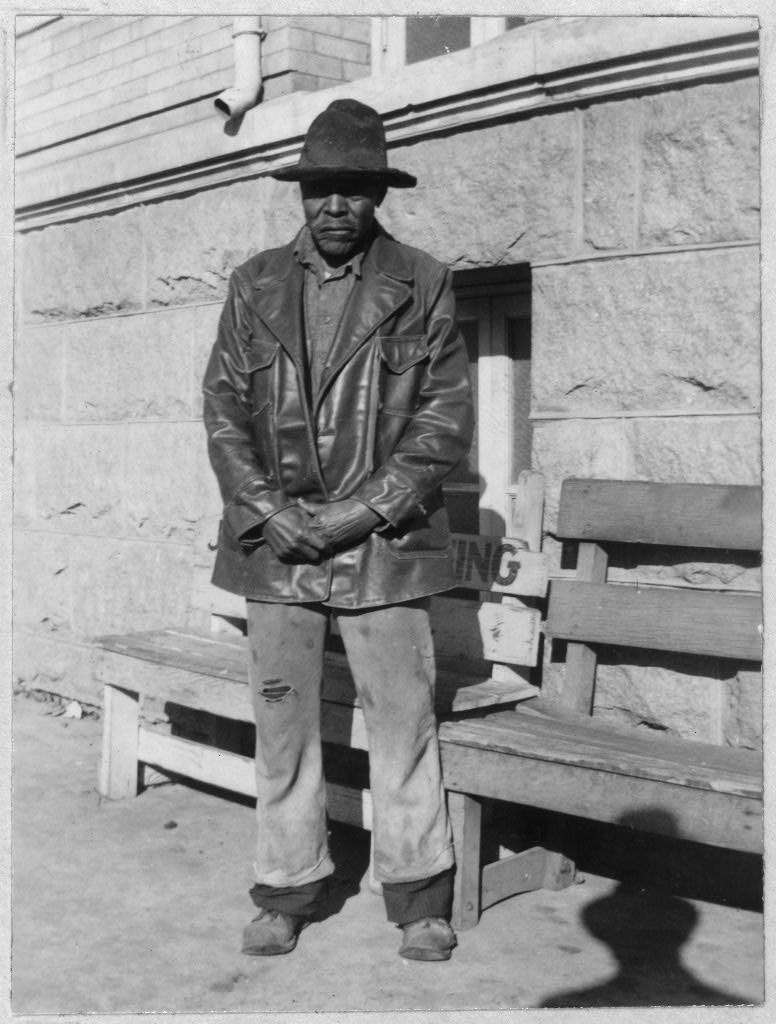
WILL ADAMS was born in 1857, a slave of Dave Cavin, in Harrison Co., Texas. He remained with the Cavins until 1885, then farmed for himself. Will lives alone in Marshall, Texas, supported by a $13.00 monthly pension.
"My folks allus belongs to the Cavins and wore their name till after 'mancipation. Pa and ma was named Freeman and Amelia Cavin and Massa Dave fotches them to Texas from Alabama, along with ma's mother, what we called Maria.
"The Cavins allus thunk lots of their niggers and Grandma Maria say, 'Why shouldn't they—it was their money.' She say there was plenty Indians here when they settled this country and they bought and traded with them without killin' them, if they could. The Indians was poor folks, jus' pilfer and loaf 'round all the time. The niggers was a heap sight better off than they was, 'cause we had plenty to eat and a place to stay.
"Young Massa Tom was my special massa and he still lives here. Old Man Dave seemed to think more of his niggers than anybody and we thunk lots of our white folks. My pa was leader on the farm, and there wasn't no overseer or driver. When pa whip a nigger he needn't go to Massa Dave, but pa say, 'Go you way, you nigger. Freeman didn't whip you for nothin'.' Massa Dave allus believe pa, 'cause he tells the truth.
"One time a peddler come to our house and after supper he goes to see 'bout his pony. Pa done feed that pony fifteen ears of corn. The peddler tell massa his pony ain't been fed nothin', and massa git mad and say, 'Be on you way iffen you gwine 'cuse my niggers of lyin'.'
"We had good quarters and plenty to eat. I 'members when I's jus' walkin' round good pa come in from the field at night and taken me out of bed and dress me and feed me and then play with me for hours. Him bein' leader, he's gone from 'fore day till after night. The old heads got out early but us young scraps slep' till eight or nine o'clock, and don't you think Massa Dave ain't comin' round to see we is fed. I 'members him like it was yest'day, comin' to the quarters with his stick and askin' us, 'Had your breakfas'?' We'd say, 'Yes, suh.' Then he'd ask if we had 'nough or wanted any more. It look like he taken a pleasure in seein' us eat. At dinner, when the field hands come in, it am the same way. He was sho' that potlicker was fill as long as the niggers want to eat.
"The hands worked from sun to sun. Massa give them li'l crops and let them work them on Saturday. Then he bought the stuff and the niggers go to Jefferson and buy clothes and sech like. Lots saved money and bought freedom 'fore the war was over.
"We went to church and first the white preacher preached and then he larns our cullud preachers. I seed him ordain a cullud preacher and he told him to allus be honest. When the white preacher laid his hand on him, all the niggers git to hollerin' and shoutin' and prayin' and that nigger git scart mos' to death.
"On Christmas we had all we could eat and drink and after that a big party, and you ought to see them gals swingin' they partners round. Then massa have two niggers wrestle, and our sports and dances was big sport for the white folks. They'd sit on the gallery and watch the niggers put it on brown.
"Massa didn't like his niggers to marry off the place, but sometimes they'd do it, and massa tell his neighbor, 'My nigger am comin' to you place. Make him behave.' All the niggers 'haved then and they wasn't no Huntsville and gallows and burnin's then.
"Old massa went to war with his boy, Billie. They's lots of cryin' and weepin' when they sot us free. Lots of them didn't want to be free, 'cause they knowed nothin' and had nowhere to go. Them what had good massas stayed right on.
"I 'members when that Ku Klux business starts up. Smart niggers causes that. The carpet-baggers ruint the niggers and the white men couldn't do a thing with them, so they got up the Ku Klux and stirs up the world. Them carpet-baggers come round larnin' niggers to sass the white folks what done fed them. They come to pa with that talk and he told them, 'Listen, white folks, you is gwine start a graveyard if you come round here teachin' niggers to sass white folks." Them carpet-baggers starts all the trouble at 'lections in Reconstruction. Niggers didn't know anythin' 'bout politics.
"Mos' the young niggers ain't usin' the education they got now. I's been here eighty years and still has to be showed and told by white folks. These young niggers won't git told by whites or blacks either. They thinks they done knowed it all and that gits them in trouble.
"I stays with the Cavins mos' twenty years after the war. After I leaves, I allus farms and does odd jobs round town here. I's father of ten chillen by one woman. I lives by myself now and they gives me $13.00 a month. I'd be proud to git it if it wasn't more'n a dollar, 'cause they ain't nothin' a old man can do no more.
420055
William Adams
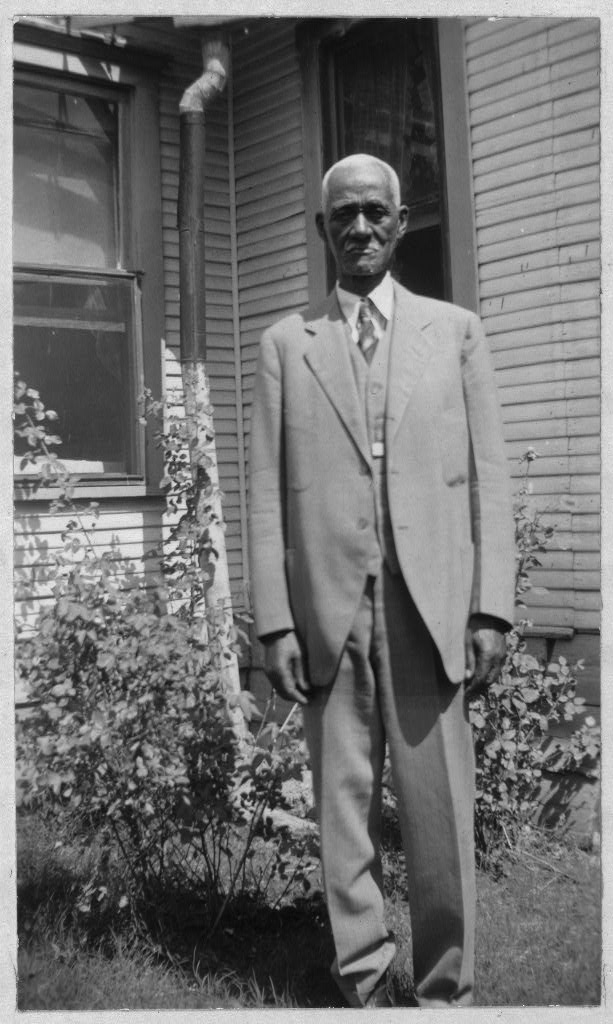
WILLIAM ADAMS, 93, was born in slavery, with no opportunity for an education, except three months in a public school. He has taught himself to read and to write. His lifelong ambition has been to become master of the supernatural powers which he believes to exist. He is now well-known among Southwestern Negroes for his faith in the occult.
"Yous want to know and talk about de power de people tells you I has. Well, sit down here, right there in dat chair, befo' we'uns starts. I gits some ice water and den we'uns can discuss de subject. I wants to 'splain it clearly, so yous can understand.
"I's born a slave, 93 years ago, so of course I 'members de war period. Like all de other slaves I has no chance for edumacation. Three months am de total time I's spent going to school. I teached myself to read and write. I's anxious to larn to read so I could study and find out about many things. Dat, I has done.
"There am lots of folks, and edumacated ones, too, what says we'uns believes in superstition. Well, its 'cause dey don't understand. 'Member de Lawd, in some of His ways, can be mysterious. De Bible says so. There am some things de Lawd wants all folks to know, some things jus' de chosen few to know, and some things no one should know. Now, jus' 'cause yous don't know 'bout some of de Lawd's laws, 'taint superstition if some other person understands and believes in sich.
"There is some born to sing, some born to preach, and some born to know de signs. There is some born under de power of de devil and have de power to put injury and misery on people, and some born under de power of de Lawd for to do good and overcome de evil power. Now, dat produces two forces, like fire and water. De evil forces starts de fire and I has de water force to put de fire out.
"How I larnt sich? Well, I's done larn it. It come to me. When de Lawd gives sich power to a person, it jus' comes to 'em. It am 40 years ago now when I's fust fully realize' dat I has de power. However, I's allus int'rested in de workin's of de signs. When I's a little piccaninny, my mammy and other folks used to talk about de signs. I hears dem talk about what happens to folks 'cause a spell was put on 'em. De old folks in dem days knows more about de signs dat de Lawd uses to reveal His laws den de folks of today. It am also true of de cullud folks in Africa, dey native land. Some of de folks laughs at their beliefs and says it am superstition, but it am knowin' how de Lawd reveals His laws.
"Now, let me tell yous of something I's seen. What am seen, can't be doubted. It happens when I's a young man and befo' I's realize' dat I's one dat am chosen for to show de power. A mule had cut his leg so bad dat him am bleedin' to death and dey couldn't stop it. An old cullud man live near there dat dey turns to. He comes over and passes his hand over de cut. Befo' long de bleedin' stop and dat's de power of de Lawd workin' through dat nigger, dat's all it am.
"I knows about a woman dat had lost her mind. De doctor say it was caused from a tumor in de head. Dey took an ex-ray picture, but dere's no tumor. Dey gives up and says its a peculiar case. Dat woman was took to one with de power of de good spirit and he say its a peculiar case for dem dat don't understand. Dis am a case of de evil spell. Two days after, de woman have her mind back.
"Dey's lots of dose kind of cases de ord'nary person never hear about. Yous hear of de case de doctors can't understand, nor will dey 'spond to treatment. Dat am 'cause of de evil spell dat am on de persons.
"'Bout special persons bein' chosen for to show de power, read yous Bible. It says in de book of Mark, third chapter, 'and He ordained twelve, dat dey should be with Him, dat He might send them forth to preach and to have de power to heal de sick and to cast out devils.' If it wasn't no evil in people, why does de Lawd say, 'cast out sich?' And in de fifth chapter of James, it further say, 'If any am sick, let him call de elders. Let dem pray over him. De prayers of faith shall save him.' There 'tis again, Faith, dat am what counts.
"When I tells dat I seen many persons given up to die, and den a man with de power comes and saves sich person, den its not for people to say it am superstition to believe in de power.
"Don't forgit—de agents of de devil have de power of evil. Dey can put misery of every kind on people. Dey can make trouble with de work and with de business, with de fam'ly and with de health. So folks mus' be on de watch all de time. Folks has business trouble 'cause de evil power have control of 'em. Dey has de evil power cast out and save de business. There am a man in Waco dat come to see me 'bout dat. He say to me everything he try to do in de las' six months turned out wrong. It starts with him losin' his pocketbook with $50.00 in it. He buys a carload of hay and it catch fire and he los' all of it. He spends $200.00 advertisin' de three-day sale and it begin to rain, so he los' money. It sho' am de evil power.
"'Well,' he say, 'Dat am de way it go, so I comes to you.'
"I says to him, 'Its de evil power dat have you control and we'uns shall cause it to be cast out.' Its done and he has no more trouble.
"You wants to know if persons with de power for good can be successful in castin' out devils in all cases? Well, I answers dat, yes and no. Dey can in every case if de affected person have de faith. If de party not have enough faith, den it am a failure.
"Wearin' de coin for protection 'gainst de evil power? Dat am simple. Lots of folks wears sich and dey uses mixtures dat am sprinkled in de house, and sich. Dat am a question of faith. If dey has de true faith in sich, it works. Otherwise, it won't.
"Some folks won't think for a minute of goin' without lodestone or de salt and pepper mixture in de little sack, tied round dey neck. Some wears de silver coin tied round dey neck. All sich am for to keep away de effect of de evil power. When one have de faith in sich and dey acc'dently lose de charm, dey sho' am miserable.
"An old darky dat has faith in lodestone for de charm told me de 'sperience he has in Atlanta once. He carryin' de hod and de fust thing he does am drop some brick on he foot. De next thing, he foot slip as him starts up de ladder and him and de bricks drap to de ground. It am lucky for him it wasn't far. Jus' a sprain ankle and de boss sends him home for de day. He am 'cited and gits on de street car and when de conductor call for de fare, Rufus reaches for he money but he los' it or fergits it at home. De conductor say he let him pay nex' time and asks where he live. Rufus tells him and he say, 'Why, nigger, you is on de wrong car.' Dat cause Rufus to walk further with de lame foot dan if he started walkin' in de fust place. He thinks there mus' be something wrong with he charm, and he look for it and it gone! Sho' 'nough, it am los'. He think, 'Here I sits all day, and I won't make another move till I gits de lodestone. When de chillen comes from school I sends dem to de drugstore for some of de stone and gits fixed.'
"Now, now, I's been waitin' for dat one 'bout de black cat crossin' de road, and, sho' 'nough, it come. Let me ask you one. How many people can yous find dat likes to have de black cat cross in front of 'em? Dat's right, no one likes dat. Let dis old cullud person inform yous dat it am sho' de bad luck sign. It is sign of bad luck ahead, so turn back. Stop what yous doin'.
"I's tellin' yous of two of many cases of failure to took warnin' from de black cat. I knows a man call' Miller. His wife and him am takin' an auto ride and de black cat cross de road and he cussed a little and goes on. Den it's not long till he turns de corner and his wife falls out of de car durin' de turn. When he goes back and picks her up, she am dead.
"Another fellow, call' Brown, was a-ridin' hossback and a black cat cross de path, but he drives on. Well, its not long till him hoss stumble and throw him off. De fall breaks his leg, so take a warnin'—don't overlook de black cat. Dat am a warnin'.
420192
WILLIAM M. ADAMS, spiritualist preacher and healer, who lives at 1404 Illinois Ave., Ft. Worth, Texas, was born a slave on the James Davis plantation, in San Jacinto Co., Texas. After the war he worked in a grocery, punched cattle, farmed and preached. He moved to Ft. Worth in 1902.
"I was bo'n 93 years ago, dat is whut my mother says. We didn' keep no record like folks does today. All I know is I been yere a long time. My mother, she was Julia Adams and my father he was James Adams. She's bo'n in Hollis Springs, Mississippi and my father, now den, he was bo'n in Florida. He was a Black Creek Indian. Dere was 12 of us chillen. When I was 'bout seven de missus, she come and gits me for her servant. I lived in de big house till she die. Her and Marster Davis was powerful good to me.
"Marster Davis he was a big lawyer and de owner of a plantation. But all I do was wait on ole missus. I'd light her pipe for her and I helped her wid her knittin'. She give me money all de time. She had a little trunk she keeped money in and lots of times I'd have to pack it down wid my feets.
"I dis'member jus' how many slaves dere was, but dere was more'n 100. I saw as much as 100 sold at a time. When dey tuk a bunch of slaves to trade, dey put chains on 'em.
"De other slaves lived in log cabins back of de big house. Dey had dirt floors and beds dat was made out of co'n shucks or straw. At nite dey burned de lamps for 'bout an hour, den de overseers, dey come knock on de door and tell 'em put de light out. Lots of overseers was mean. Sometimes dey'd whip a nigger wid a leather strap 'bout a foot wide and long as your arm and wid a wooden handle at de end.
"On Sat'day and Sunday nites dey'd dance and sing all nite long. Dey didn' dance like today, dey danced de roun' dance and jig and do de pigeon wing, and some of dem would jump up and see how many time he could kick his feets 'fore dey hit de groun'. Dey had an ole fiddle and some of 'em would take two bones in each hand and rattle 'em. Dey sang songs like, 'Diana had a Wooden Leg,' and 'A Hand full of Sugar,' and 'Cotton-eyed Joe.' I dis'member how dey went.
"De slaves didn' have no church den, but dey'd take a big sugar kettle and turn it top down on de groun' and put logs roun' it to kill de soun'. Dey'd pray to be free and sing and dance.
"When war come dey come and got de slaves from all de plantations and tuk 'em to build de breastworks. I saw lots of soldiers. Dey'd sing a song dat go something like dis:
"'Jeff Davis rode a big white hoss, Lincoln rode a mule; Jess Davis is our President, Lincoln is a fool.'
"I 'member when de slaves would run away. Ole John Billinger, he had a bunch of dogs and he'd take after runaway niggers. Sometimes de dogs didn' ketch de nigger. Den ole Billinger, he'd cuss and kick de dogs.
"We didn' have to have a pass but on other plantations dey did, or de paddlerollers would git you and whip you. Dey was de poor white folks dat didn' have no slaves. We didn' call 'em white folks dem days. No, suh, we called dem' Buskrys.'
"Jus' fore de war, a white preacher he come to us slaves and says: 'Do you wan' to keep you homes whar you git all to eat, and raise your chillen, or do you wan' to be free to roam roun' without a home, like de wil' animals? If you wan' to keep you homes you better pray for de South to win. All day wan's to pray for de South to win, raise the hand.' We all raised our hands 'cause we was skeered not to, but we sho' didn' wan' de South to win.
"Dat night all de slaves had a meetin' down in de hollow. Ole Uncle Mack, he gits up and says: 'One time over in Virginny dere was two ole niggers, Uncle Bob and Uncle Tom. Dey was mad at one 'nuther and one day dey decided to have a dinner and bury de hatchet. So day sat down, and when Uncle Bob wasn't lookin' Uncle Tom put some poison in Uncle Bob's food, but he saw it and when Uncle Tom wasn't lookin', Uncle Bob he turned de tray roun' on Uncle Tom, and he gits de poison food.' Uncle Mack, he says: 'Dat's what we slaves is gwine do, jus' turn de tray roun' and pray for de North to win.'
"After de war dere was a lot of excitement 'mong de niggers. Dey was rejoicin' and singin'. Some of 'em looked puzzled, sorter skeered like. But dey danced and had a big jamboree.
"Lots of 'em stayed and worked on de halves. Others hired out. I went to work in a grocery store and he paid me $1.50 a week. I give my mother de dollar and keeped de half. Den I got married and farmed for awhile. Den I come to Fort Worth and I been yere since.
420198
SARAH ALLEN was born a slave of John and Sally Goodren, in the Blue Ridge Mountains of Virginia. Before the Civil War, her owners came to Texas, locating near a small town then called Freedom. She lives at 3322 Frutas St., El Paso, Texas.
"I was birthed in time of bondage. You know, some people are ashamed to tell it, but I thank God I was 'llowed to see them times as well as now. It's a pretty hard story, how cruel some of the marsters was, but I had the luck to be with good white people. But some I knew were put on the block and sold. I 'member when they'd come to John Goodren's place to buy, but he not sell any. They'd have certain days when they'd sell off the block and they took chillen 'way from mothers, screamin' for dere chillen.
"I was birthed in ole Virginia in de Blue Ridge Mountains. When de white people come to Texas, de cullud people come with them. Dat's been a long time.
"My maw was named Charlotte, my paw Parks Adams. He's a white man. I guess I'm about eighty some years ole.
"You know, in slavery times when dey had bad marsters dey'd run away, but we didn' want to. My missus would see her people had something good to eat every Sunday mornin'. You had to mind your missus and marster and you be treated well. I think I was about twelve when dey freed us and we stayed with marster 'bout a year, then went to John Ecols' place and rented some lan'. We made two bales of cotton and it was the first money we ever saw.
"Back when we lived with Marster Goodren we had big candy pullin's. Invite everybody and play. We had good times. De worst thing, we didn' never have no schoolin' till after I married. Den I went to school two weeks. My husban' was teacher. He never was a slave. His father bought freedom through a blacksmith shop, some way.
"I had a nice weddin'. My dress was white and trimmed with blue ribbon. My second day dress was white with red dots. I had a beautiful veil and a wreath and 'bout two, three waiters for table dat day.
"My mother was nearly white. Brighter than me. We lef' my father in Virginia. I was jus' as white as de chillen I played with. I used to be plum bright, but here lately I'm gettin' awful dark.
"My husban' was of a mixture, like you call bright ginger-cake color. I don' know where he got his learnin'. I feel so bad since he's gone to Glory.
"Now I'm ole, de Lord has taken care of me. He put that spirit in people to look after ole folks and now my chillen look after me. I've two sons, one name James Allen, one R.M. Both live in El Paso.
"After we go to sleep, de people will know these things, 'cause if freedom hadn' come, it would have been so miserable.
420149
ANDY ANDERSON, 94, was born a slave of Jack Haley, who owned a plantation in Williamson Co., Texas. During the Civil War, Andy was sold to W.T. House, of Blanco County, who in less than a year sold Andy to his brother, John House. Andy now lives with his third wife and eight of his children at 301 Armour St., Fort Worth, Texas.
"My name am Andy J. Anderson, and I's born on Massa Jack Haley's plantation in Williamson County, Texas, and Massa Haley owned my folks and 'bout twelve other families of niggers. I's born in 1843 and that makes me 94 year old and 18 year when de war starts. I's had 'speriences durin' dat time.
"Massa Haley am kind to his cullud folks, and him am kind to everybody, and all de folks likes him. De other white folks called we'uns de petted niggers. There am 'bout 30 old and young niggers and 'bout 20 piccaninnies too little to work, and de nuss cares for dem while dey mammies works.
"I's gwine 'splain how it am managed on Massa Haley's plantation. It am sort of like de small town, 'cause everything we uses am made right there. There am de shoemaker and he is de tanner and make de leather from de hides. Den massa has 'bout a thousand sheep and he gits de wool, and de niggers cards and spins and weaves it, and dat makes all de clothes. Den massa have cattle and sich purvide de milk and de butter and beef meat for eatin'. Den massa have de turkeys and chickens and de hawgs and de bees. With all that, us never was hongry.
"De plantation am planted in cotton, mostly, with de corn and de wheat a little, 'cause massa don't need much of dem. He never sell nothin' but de cotton.
"De livin' for de cullud folks am good. De quarters am built from logs like deys all in dem days. De floor am de dirt but we has de benches and what is made on de place. And we has de big fireplace for to cook and we has plenty to cook in dat fireplace, 'cause massa allus 'lows plenty good rations, but he watch close for de wastin' of de food.
"De war breaks and dat make de big change on de massas place. He jines de army and hires a man call' Delbridge for overseer. After dat, de hell start to pop, 'cause de first thing Delbridge do is cut de rations. He weighs out de meat, three pound for de week, and he measure a peck of meal. And 'twarn't enough. He half starve us niggers and he want mo' work and he start de whippin's. I guesses he starts to edumacate 'em. I guess dat Delbridge go to hell when he died, but I don't see how de debbil could stand him.
"We'uns am not use' to sich and some runs off. When dey am cotched there am a whippin' at de stake. But dat Delbridge, he sold me to Massa House, in Blanco County. I's sho' glad when I's sold, but it am short gladness, 'cause here am another man what hell am too good for. He gives me de whippin' and de scars am still on my arms and my back, too. I'll carry dem to my grave. He sends me for firewood and when I gits it loaded, de wheel hits a stump and de team jerks and dat breaks de whippletree. So he ties me to de stake and every half hour for four hours, dey lays ta lashes on my back. For de first couple hours de pain am awful. I's never forgot it. Den I's stood so much pain I not feel so much and when dey takes me loose, I's jus' 'bout half dead. I lays in de bunk two days, gittin' over dat whippin', gittin' over it in de body but not de heart. No, suh, I has dat in de heart till dis day.
"After dat whippin' I doesn't have de heart to work for de massa. If I seed de cattle in de cornfield, I turns de back, 'stead of chasin' 'em out. I guess dat de reason de massa sold me to his brother, Massa John. And he am good like my first massa, he never whipped me.
"Den surrender am 'nounced and massa tells us we's free. When dat takes place, it am 'bout one hour by sun. I says to myself, 'I won't be here long.' But I's not realise what I's in for till after I's started, but I couldn't turn back. For dat means de whippin' or danger from de patter rollers. Dere I was and I kep' on gwine. No nigger am sposed to be off de massa's place without de pass, so I travels at night and hides durin' de daylight. I stays in de bresh and gits water from de creeks, but not much to eat. Twice I's sho' dem patter rollers am passin' while I's hidin'.
"I's 21 year old den, but it am de first time I's gone any place, 'cept to de neighbors, so I's worried 'bout de right way to Massa Haley's place. But de mornin' of de third day I comes to he place and I's so hongry and tired and scairt for fear Massa Haley not home from de army yit. So I finds my pappy and he hides me in he cabin till a week and den luck comes to me when Massa Haley come home. He come at night and de next mornin' dat Delbridge am shunt off de place, 'cause Massa Haley seed he niggers was all gaunt and lots am ran off and de fields am not plowed right, and only half de sheep and everything left. So massa say to dat Delbridge, 'Dere am no words can 'splain what yous done. Git off my place 'fore I smashes you.'
"Den I kin come out from my pappy's cabin and de old massa was glad to see me, and he let me stay till freedom am ordered. Dat's de happies' time in my life, when I gits back to Massa Haley.
420317
Dibble, Fred, P.W., Beehler, Rheba, P.W., Beaumont, Jefferson, Dist. #3.
A frail sick man, neatly clad in white pajamas lying patiently in a clean bed awaiting the end which does not seem far away. Although we protested against his talking, because of his weakness, he told a brief story of his life in a whisper, his breath very short and every word was spoken with great effort. His light skin and his features denote no characteristic of his race, has a bald head with a bit of gray hair around the crown and a slight growth of gray whiskers about his face, is medium in height and build. WASH ANDERSON, although born in Charleston, S.C., has spent practically all of his life in Texas [Handwritten Note: (Beaumont, Texas—]
"Mos' folks call me Wash Anderson, but dey uster call me George. My whole name' George Washington Anderson. I was bo'n in Charleston, Sou'f Ca'lina in 1855. Bill Anderson was my ol' marster. Dey was two boy' and two gal' in his family. We all lef' Charleston and come to Orange, Texas, befo' freedom come. I was fo' year' ol' when dey mek dat trip."
"I don' 'member nuttin' 'bout Charleston. You see where I was bo'n was 'bout two mile' from de city. I went back one time in 1917, but I didn' stay dere long."
"My pa was Irvin' Anderson and my mommer was name' Eliza. Ol' marster was pretty rough on his niggers. Dey tell me he had my gran'daddy beat to death. Dey never did beat me."
"Dey made de trip from Charleston 'cross de country and settle' in Duncan's Wood' down here in Orange county. Dey had a big plantation dere. I dunno if ol' marster had money back in Charleston, but I t'ink he must have. He had 'bout 25 or 30 slaves on de place."
"Ol' man Anderson he had a big two-story house. It was buil' out of logs but it was a big fine house. De slaves jis' had little log huts. Dere warn't no flo's to 'em, nuthin' but de groun'. Dem little huts jis' had one room in 'em. Dey was one family to de house, 'cep'n' sometime dey put two or t'ree family' to a house. Dey jis' herd de slaves in dere like a bunch of pigs."
"Dey uster raise cotton, and co'n, and sugar cane, and sich like, but dey didn' uster raise no rice. Dey uster sen' stuff to Terry on a railroad to sen' it to market. Sometime dey hitch up dey teams and sen' it to Orange and Beaumont in wagons. De ol' marster he had a boat, too, and sometime he sen' a boatload of his stuff to Beaumont."
"My work was to drive de surrey for de family and look atter de hosses and de harness and sich. I jis' have de bes' hosses on de place to see atter."
"I saw lots of sojers durin' de war. I see 'em marchin' by, goin' to Sabine Pass 'bout de time of dat battle."
"Back in slavery time dey uster have a white preacher to come 'roun' and preach to de cullud folks. But I don't 'member much 'bout de songs what dey uster sing."
"I play 'roun' right smart when I was little. Dey uster have lots of fun playin' 'hide and seek,' and 'hide de switch.' We uster ride stick hosses and play 'roun' at all dem t'ings what chillun play at."
"Dey had plenty of hosses and mules and cows on de ol' plantation. I had to look atter some of de hosses, but dem what I hatter look atter was s'pose to be de bes' hosses in de bunch. Like I say, I drive de surrey and dey allus have de bes' hosses to pull dat surrey. Dey had a log stable. Dey kep' de harness in dere, too. Eb'ryt'ing what de stock eat dey raise on de plantation, all de co'n and fodder and sich like."
"Atter freedom come I went 'roun' doin' dif'rent kind of work. I uster work on steamboats, and on de railroad and at sawmillin'. I was a sawyer for a long, long time. I work 'roun' in Lou'sana and Arkansas, and Oklahoma, as well as in Texas. When I wasn't doin' dem kinds of work, I uster work 'roun' at anyt'ing what come to han'. I 'member one time I was workin' for de Burr Lumber Company at Fort Townsend up dere in Arkansas."
"When I was 'bout 36 year' ol' I git marry. I been married twice. My fus' wife was name' Hannah and Reverend George Childress was de preacher dat marry us. He was a cullud preacher. Atter Hannah been dead some time I marry my secon' wife. Her name was Tempie Perkins. Later on, us sep'rate. Us sep'rate on 'count of money matters."
"I b'longs to de Baptis' Chu'ch. Sometime' de preacher come 'roun' and see me. He was here a few days ago dis week."