Part 1 — "UNCLE WILLIS ANDERSON" (continued 4)
Reading edition
"I don't know as I 'spected massa's land to be 'vided and give us, but they was plenty of land for everybody, and missy allus treated us right. Wages was terrible small for a long time after I married and sometimes they wouldn't pay us, and we had to beg or steal. I's went a whole two days without nothin' to eat. If it hadn't been for them there Klu Klux, sometimes the niggers would have went on the warpath for starvin'. But the Klu Kluxers wouldn't let 'em roam none, if they tried they stretch them out over a log and hit them with rawhide, but never say a word. That was got the niggers—they was so silent, not a sound out of them, and the nigger he can't stand that.
"I gits a pension and works when I can and gits by. Some the young niggers is purty sorry, they's had so much and don't 'preciate none of it. I's glad for what I can git, 'cause I 'members them old times after the war when it was worse'n now.
420178
JEFF CALHOUN, about 98, was born a slave of the Calhoun family, in Alton, Alabama. After his master died, a son-in-law, Jim Robinson, brought Jeff and 200 other slaves to Austin, Texas. Jeff was 22 when the Civil War began. He stayed with his old master, who had moved to Stewart Mills Texas, after he was freed, and raised 23 children. He says, "I 'spect I has near a thous- children, grandchildren and great grandchildren." He makes his home among them, drifting over five states when and as he wishes.
"My name am Jeff Calhoun and I was born in Alton, in Alabama, about 1838, 'cause I's told by my massa. Dat makes me 'bout 98 year old now. My father was Henry Robinson and my mammy, she Mary Robinson. She was born in Maryland, in Virginia, but didn't know much 'bout her folks, 'cause she was sold off young. Dere was four of us brothers and ten sisters, but dey all dead now but me.
"We makes our beds out of forked saplings drove in the ground, 'cause de floors was dirt. We sets de pole in dat ground and it run to de top of de cabin and we makes one bed down low and one bed above. De big folks sleeps in de low beds and de chillun above, 'cause dey can climb.
"My massa had 15 chillun and my mamma suckled every one of dem, 'cause his wife was no good to give milk.
"We allus had lots to eat, but for meat we has to go to de woods and git deer and turkey and buffalo and some bear. I have eat hoss and skunk and crow and hawk.
"We has a big fire to cook on, and to make de corn cakes we put one leaf down and put batter on dat and put another leaf over it and cover with hot ashes and by noon it was done. Same thing for supper. We never have biscuits 'cept on Sunday or Christmas.
"My mama was de spinner so I has plenty shirts and some britches, and we raises indigo on de place and makes dye of it. We never wore no shoes in de summer and some winters neither. We has a good pair of pants and shirt we wears Sundays and holidays and was married in.
"De way dey done at weddings dem days, you picks out a girl and tell your boss. If she was from another plantation you had to git her bosses 'mission and den dey tells you to come up dat night and git hitched up. They says to de girl, 'You's love dis man?' Dey says to de man, 'You loves dis girl?' If you say you don't know, it's all off, but if you say yes, dey brings in de broom and holds it 'bout a foot off de floor and say to you to jump over. Den he says you's married. If either of you stumps you toe on de broom, dat mean you got trouble comin' 'tween you, so you sho' jumps high.
"My massa was good to us. He lived in a log house with a floor and was all fixed up with pretty furniture and mirrors and silver on de table. De missus was little and frail, but she was good to us and so was de massa. He wasn't no hand to whip like some of he neighbors. Dey would tied de slaves' hands to a pole and whip de blood out of them. Dey was whipped for runnin' away.
"I knowed a slave call Ben Bradley and he was sold on de auction block and his massa chained him hand and foot and started for Texas. Dey got to de Red River and was crossin' and de chains helt him down and he never came up. And I have a uncle what run off and dey took a pack of hounds—a pack were twelve—and dey got on his trail and I heared dem runnin' him. Dey run him three days and nights and took a gun loaded with buck shot but was sposed not to shoot above de legs. Dey come back and said he got away, but some boys was out huntin' and finds him and he been shot four times with buck shot.
"De only time we got to rest was Sunday and de fourth of July and Christmas, and one day Thanksgiving. We got de big dinners on holidays. After supper was have corn shuckings, or on rainy days, and sometimes we shucks 500 bushels. We allus picked de cotton in big baskets, and when we gits it all picked we spreads on big and has a celebration.
"I was in Texas when de war broke out and I hauls corn lots of times to de gin where was de soldier camp, and I helped cook awhile and would have been in de battle of Vicksburg only dey takes another man 'stead of me and he gits kilt. I's glad I's a sorry cook, or I'd got kilt 'stead of him.
420262
Simp Campbell
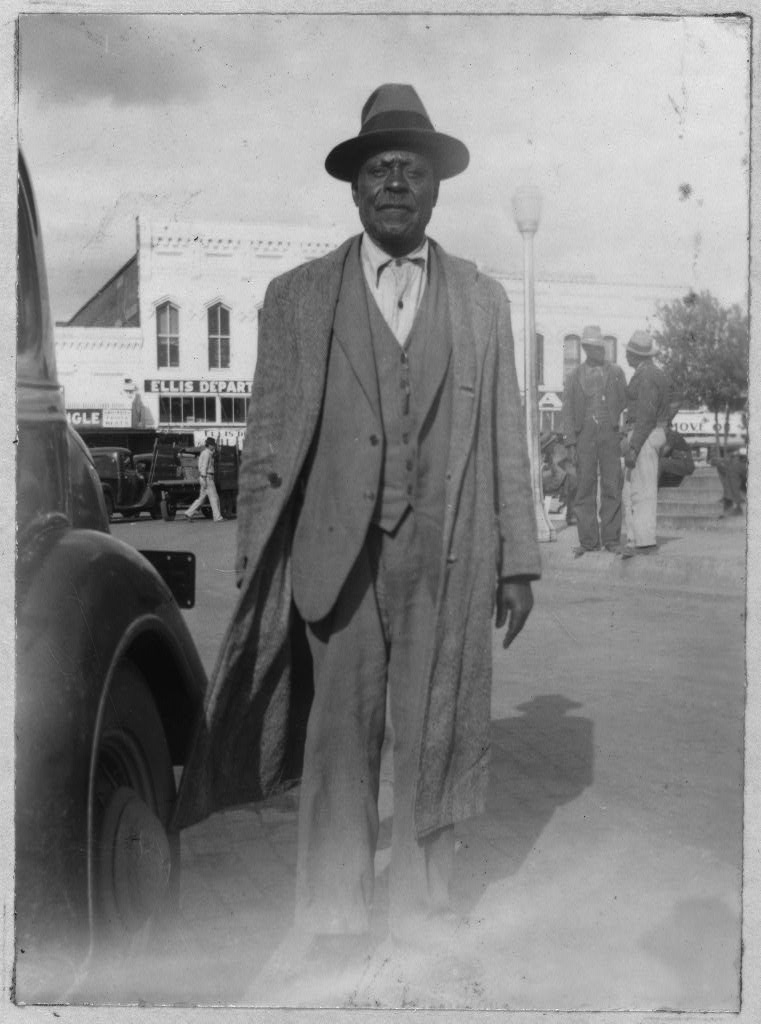
SIMP CAMPBELL was born January 1860, in Harrison County, Texas, He belonged to W.L. Sloan and stayed with him until 1883, when Simp married and moved to Marshall. He and his wife live in Gregg Addition, Marshall, Texas, and Simp works as porter for a loan company.
"My name is Simpson Campbell, but everybody, white and black, calls me Simp. I's born right here in Harrison County, on Bill Sloan's place, nine miles northwest of Marshall. I got in on the last five years of slavery.
"Pappy was Lewis Campbell, and he was sold by the Florida Campbells to Marse Sloan and fotched to Texas, but he allus kep' the Campbell name. Mammy was Mariah and the Sloans brung her out of South Carolina. She raised a passel of chillen. Besides me there was Flint, Albert and Clinton of the boys, and—let me count—Dinah, Clandy, Mary, Lula, Liza, Hannah, Matilda and Millie of the girls.
"The Sloans lived in a big house, but it wasn't no shanty. They was fixed 'bout as good as anybody in the county and driv as good hosses and rigs as anybody. They wasn't a mean streak in the whole Sloan family.
"The slave quarters sot in rows right down in the field from the big house. They had beds made to the wall, and all the cookin' was on the fireplace. We raised all our meat and corn and garden truck right there on the place and Marse Sloan brung wheat and other rations from Shreveport. The nigger women spinned all the cloth and pappy made shoes by hand, when they kilt a beef. The beef was dried and jetted and hung in the smokehouse.
"Marse's place civered a thousand acres and he had over a hunderd slaves, with a overseer, Johnson, and a nigger driver. Us niggers was treated well but the overseer had order to whip us for fightin'. If the nigger driver hit too many licks, the overseer sold him off the place.
"We worked from four till six and done a task after that, and sot round and talked till nine and then had to go to bed. On Saturday night you'd hear them fiddles and banjoes playin' and the niggers singin'. All them music gadgets was homemade. The banjoes was made of round pieces of wood, civered with sheepskin and strung with catgut strings.
"They wasn't no school but Marse Bill larnt some his niggers readin' and writin' so we could use them bookin' cotton in the field and sich like. They was a church on the Sloan place and white preachers done most the 'xhorting. Mammy allus say the cullud preachers had to preach what they's told—obey you master and missus.
"I seed Yankee sojers and wagons comin' home from Mansfield. Marse Tom sot us free right after surrender, but my folks stayed on with him till he died, in 1906. I lef when I's twenty-three and marries and made a livin' from public work in Marshall all my life. I worked as day laborer and raised two boys and two girls and the boys is farmin' right here in the county and doin' well.
"When I's eighteen they got up a 'mendment to the Constitution and got out a "People's Party Ticket." It was a Democratic ticket and control by Southerners. They told us niggers if we'd vote that ticket we'd be rec'nized as white folks, but I didn't 'lieve a word of it. Old Man Sloan told all his niggers that and they all voted that ticket but two—that was Charley Tang and Simp Campbell.
"I 'lieve the young race of our people is progressin' fine. If they had priv'lege to use they educations, they'd make more progress, but the color line holds them back.
420106
James Cape
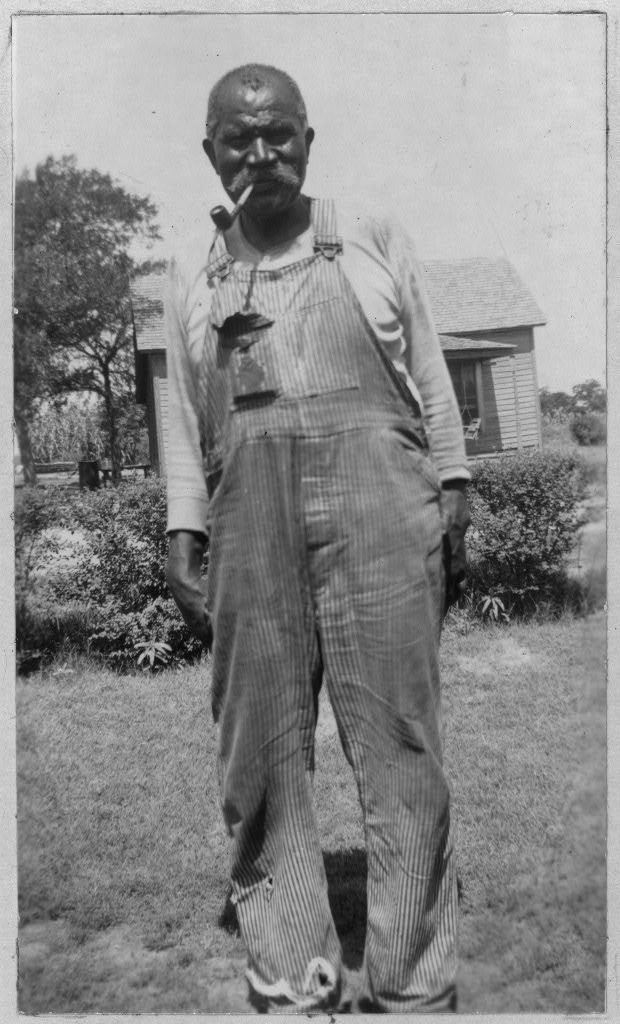
JAMES CAPE, centenarian, now living in a dilapidated little shack in the rear of the stockyards in Fort Worth, Texas, was born a slave to Mr. Bob Houston, who owned a large ranch in southeast Texas. James' parents came direct from Africa into slavery. James spent his youth as a cowboy, fought in the Confederate army, was wounded and has an ugly shoulder scar. After the war, James unknowingly took a job with the outlaw, Jesse James, for whom he worked three years, in Missouri. He then came back to Texas, and worked in the stockyards until 1928. Documentary proof of James' age is lacking, but various facts told him by his parents and others lead him to think he must be over 100 years old.
"I's bo'n in yonder southeast Texas and I don' know what month or de year for sho', but 'twas more dan 100 years ago. My mammy and pappy was bo'n in Africa, dats what dey's tol' me. Dey was owned by Marster Bob Houston and him had de ranch down dere, whar dey have cattle and hosses.
"When I's old 'nough to set on de hoss, dey larned me to ride, tendin' hosses. 'Cause I's good hoss rider, dey uses me all de time gwine after hosses. I goes with dem to Mexico. We crosses de river lots of times. I 'members once when we was a drivin' 'bout 200 hosses north'ards. Dey was a bad hail storm comes into de face of de herd and dat herd turns and starts de other way. Dere was five of us riders and we had to keep dem hosses from scatterment. I was de leader and do you know what happens to dis nigger if my hoss stumbles? Right dere's whar I'd still be! Marster give me a new saddle for savin' de hosses.
"One day Marster Bob comes to me and says, 'Jim, how you like to jine de army?' You see, de war had started. I says to him, 'What does I have to do?' And he says, 'Tend hosses and ride 'em.' I was young den and thought it would be lots of fun, so I says I'd go. So de first thing I knows, I's in de army away off east from here, somewhar dis side of St. Louis and in Tennessee and Arkansas and other places. I goes in de army 'stead of Dr. Carroll.
"After I gits in de army, it wasn' so much fun, 'cause tendin' hosses and ridin' wasn' all I does. No, sar, I has to do shootin' and git shooted at! One time we stops de train, takes Yankee money and lots of other things off dat train. Dat was way up de other side of Tennessee.
"You's heard of de battle of Independence? Dat's whar we fights for three days and nights. I's not tendin' hosses dat time. Dey gives me a rifle and sends me up front fightin', when we wasn' running'. We does a heap of runnin' and dat suits dis nigger. I could do dat better'n advance. When de order comes to 'treat, I's all ready.
"I gits shot in de shoulder in dat fight and lots of our soldiers gits killed and we loses our supply, jus' leaves it and runs. 'Nother time we fights two days and nights and de Yankees was bad dat time, too, and we had to run through de river. I sho' thought I's gwine git drowned den. Dat's de time we tries to git in St. Louis, but de Yankee mans stop us.
"I's free after de war and goes back to Texas, to Gonzales County, and gits a job doin' cowboy work for Marster Ross herdin' cattle. And right dere's whar I's lucky for not gittin' in jail or hanged. It was dis way: I's in town and dat man, Ross, says to me, 'I unnerstan' you's a good cowhand,' and he hires me and takes me way out. No house for miles 'fore we comes to de ranch with cattle and I goes to work. After I's workin' a while, I wonders how come dey brings in sich fine steers so often and I says to myself, 'Marster Ross mus' have heaps of money for to buy all dem steers.' Dey pays no 'tention to de raisin' of cattle, jus' brings 'em in and drives dem 'way.
"One time Marster Ross and six mens was gone a week and when dey comes back, one of 'em was missin'. Dey had no steers dat time and dey talks 'bout gittin' frusterated and how one man gits shot. I says to myself, 'What for was dey chased and shot at?' Den I 'members Marster Bob Houston done tol' me 'bout rustlers and how dey's hanged when dey's caught, and I knows den dat's how come all dem fine steers is driv in and out all de time. But how to git 'way, dere's de puzzlement. I not know which way to go and dere's no houses anywhere near. I keeps gittin' scarter, and ever' time somebody comes, I thinks its de law. But Marster Ross drives de cattle north and I says to him, 'I's good hand at de drive. Kin I go with you nex' time you goes north?' And not long after dat we starts and we gits to Kansas City. After Marster Ross gets shut of de critters, he says. 'We'll res' for couple days, den starts back.' I says to me, 'Not dis nigger.'
"I sneaks 'way and was settin' on a bench when 'long comes a white man and he's tall, had dark hair and was fine lookin'. He says to me, 'Is you a cowhand?' So I tells him I is, and he says he wants a hand on his farm in Missouri and he says, 'Come with me.' He tells me his name was James and takes me to his farm whar I tends cattle and hosses for three years and he pays me well. He gives me more'n I earns. After three years I leaves, but not 'cause I larned he was outlaw, 'cause I larned dat long time afterwa'ds. I's lonesome for Texas and dat's how I comes to Fort Worth and here's whar I's stayed ever' since.
"I's married 'bout 40 years ago to a woman dat had eight chillens. We sep'rated 'cause dem chillens cause arg'ments. I can fight one, but not de army.
420180
RICHARD CARRUTHERS, 100 year old ex-slave, was born in Memphis, Tennessee. Mr. Billy Coats bought him and his mother and brought them to Bastrop Co., Texas. He came to Houston 20 years ago and lives in a negro settlement known as Acres Home, about 8 miles northeast of Houston. It is a wooded section, with a clearing here and there for a Negro shack and plots of ground for growing "victuals and co'n."
"I wants to tell the Gospel truf. My mammy's name was Melia Carruthers and my papa's name was Max. My papa's papa's name was Carruthers, too. My brothers names was Charlie and Frank and Willie and John and Tom and Adam.
"When I was still little Mr. Billy Coats bought my mama and us and with about 500 of his slaves we set out to come to Texas. We goes to Bastrop County and starts to work. My old missy—her name was Missy Myra—was 99 year old and her head was bald as a egg and had wens on it as big as eggs, too.
"In them days the boss men had good houses but the niggers had log cabins and they burned down oftentimes. The chimney would cotch fire, 'cause it was made out of sticks and clay and moss. Many the time we have to git up at midnight and push the chimney 'way from the house to keep the house from burnin' up.
"The chairs was mostly chunks of cordwood put on end, or slabs, just rough, and the beds was built like scaffoldin'. We made a sort of mattress out of corn shucks or moss.
"My missy, she was good, but the overseer, he rough. His temper born of the debbil, himse'f. His name was Tom Hill, but us called him 'Debbil Hill.'
Old Debbil Hill, he used to whup me and the other niggers if we don't jump quick enough when he holler and he stake us out like you stake out a hide and whup till we bleed. Many the time I set down and made a eight-plait whup, so he could whup from the heels to the back of the head 'til he figger he get the proper ret'ibution. Sometime he take salt and rub on the nigger so he smart and burn proper and suffer mis'ry. They was a caliboose right on the plantation, what look like a ice-house, and it was sho' bad to git locked up in it.
"Us got provisions 'lowanced to us every Saturday night. If you had two in the family, they 'lowanced you one-half gallon 'lasses and 12 to 15 pounds bacon and a peck of meal. We have to take the meal and parch it and make coffee out of it. We had our flours. One of them we called biscuit flour and we called it 'shorts.' We had rye and wheat and buck grain.
"If they didn't provision you 'nough, you jus' had to slip 'round and git a chicken. That easy 'nough, but grabbin' a pig a sho' 'nough problem. You have to cotch him by the snoot so he won't squeal, and clomp him tight while you knife him. That ain't stealin', is it? You has to keep right on workin' in the field, if you ain't 'lowanced 'nough, and no nigger like to work with his belly groanin'.
"When the white preacher come he preach and pick up his Bible and claim he gittin the text right out from the good Book and he preach: 'The Lord say, don't you niggers steal chickens from your missus. Don't you steal YOUR MARSTER'S hawgs.' That would be all he preach.
"Us niggers used to have a prayin' ground down in the hollow and sometime we come out of the field, between 11 and 12 at night, scorchin' and burnin' up with nothin' to eat, and we wants to ask the good Lawd to have mercy. We puts grease in a snuff pan or bottle and make a lamp. We takes a pine torch, too, and goes down in the hollow to pray. Some gits so joyous they starts to holler loud and we has to stop up they mouth. I see niggers git so full of the Lawd and so happy they draps unconscious.
"I kep' a eye on the niggers down in the cotton patch. Sometime they lazy 'round and if I see the overseer comin' from the big house I sings a song to warn 'em, so they not git whupped, and it go like this:
"'Hold up, hold up, American Spirit! Hold up, hold up, H-O-O-O-O-O-O-O!'
"We used to go huntin' and they was lots of game, bears and panthers and coons. We have bear dawgs, fox dawg and rabbit dawg that mostly jus' go by the name of houn' dawg. Then they have a dawg to run niggers.
"I never tried the conjure, but they would take hair and brass nails and thimbles and needles and mix them up in a conjure bag. But I knows one thing. They was a old gin between Wilbarger and Colorado and it was hanted with spirits of kilt niggers. Us used to hear that old mill hummin' when dark come and we slip up easy, but it stop, then when you slip away it start up.
"I 'member when the stars fell. We runs and prays, 'cause we thinks it jedgment day. It sure dumb old Debbil Hill, them stars was over his power.
"On Sundays we put shoes on our feet and they was brass toed. They was so hard and stiff they go 'tump, tump, tump,' when we walk. That's the only day we got 'cept Christmas and we jus' got somethin' extry to eat. All them women sho' knowed how to cook! I often tell my wife how glad I was one mornin' when my missy give me a hot, butter biscuit. I goes down and shows it to all the other boys. We didn't git them hot, butter biscuits in them days.
"I used to dance the pigeon wing and swing my partners 'round. Was them womenfolks knock-kneed? You sho' couldn't tell, even when you swung 'em 'round, 'cause they dresses was so long.
"I's been all 'round the mountain and up on top of it in my day. Durin' slave time I been so cold I mos' turn white and they sot me 'fore the fire and poultice me with sliced turnips. Come a norther and it blow with snow and sleet and I didn't have 'nough clothes to keep me warm.
"When a nigger marry, he slick up his lowers and put on his brass-toed shoes, then the preacher marry him out of the Bible. My pappy have a pass to visit my mammy and if he don't have one, the paddle roller conk him on the head. My grandma and grandpa come here in a steamboat. The man come to Africa and say, 'Man and woman, does you want a job?' So they gits on the boat and then he has the 'vantage.
"When I was 21 and some more, I don't know jus' how old, I was a free man. That the day I shouted. We niggers scattered like partridges. I had a fiddle and I'd play for the white folks wherever I went, when they has the balls. I marries after 'while, but I don't know what year, 'cause we never done paid no 'tention to years. My first wife died after a long time, I think 'bout 34 year and I married another and she died this very year. Jus' three months later I marries my housekeeper, named Luvena Dixon, cause I allus lived a upright life and I knowed the Lawd wouldn't like it if I went on livin' in the same house with Luvena without we was married. She is 52 year old, and we is happy.
420216
Cato Carter
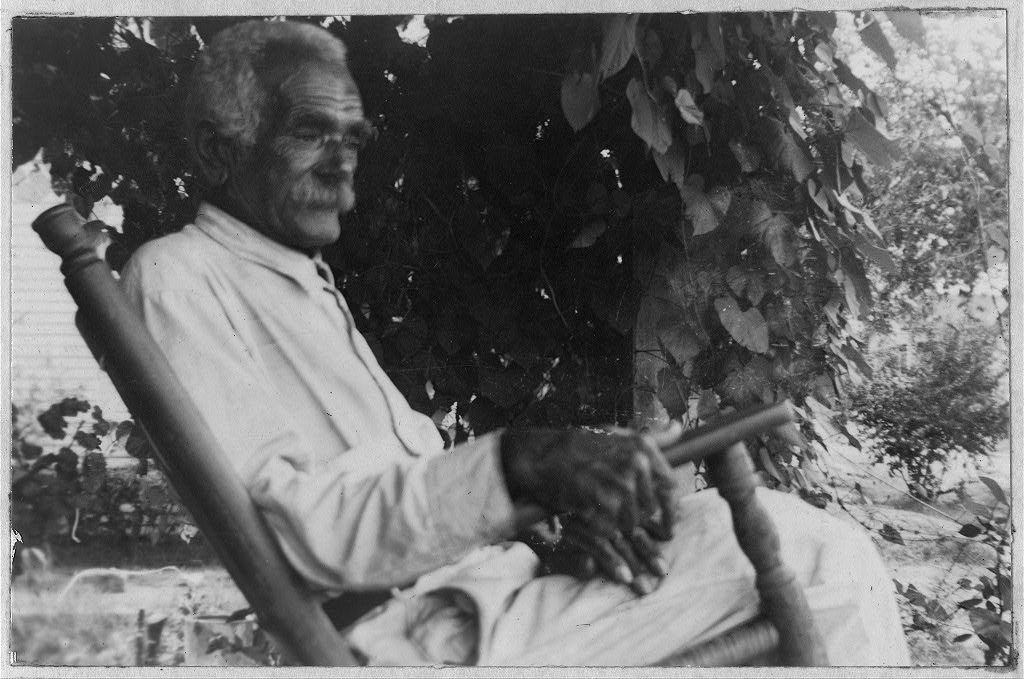
Cato Carter
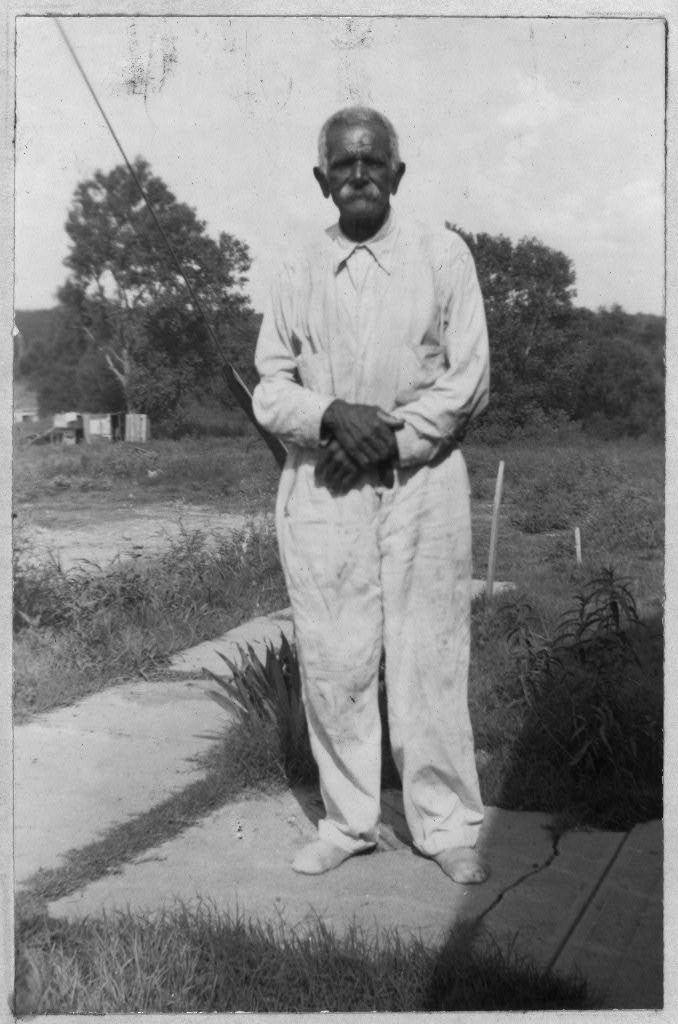
CATO CARTER was born in 1836 or 1837, near Pineapple, Wilcox County, Alabama, a slave of the Carter family. He and his wife live at 3429 Booth St., Dallas, Texas.
"I'm home today 'cause my li'l, old dog is lost and I has to stay 'round to hunt for him. I been goin' every day on the truck to the cotton patches. I don't pick no more, 'count my hands git too tired and begin to cramp on me. But I go and set in the field and watch the lunches for the other hands.
"I am a hunerd one years old, 'cause I's twenty-eight, goin' on twenty-nine, a man growned, when the breakin' up come. I'm purty old, but my folks live that way. My old, black mammy, Zenie Carter, lived to be a hunerd twenty-five, and Oll Carter, my white massa—which was the brother of my daddy—lived to be a hunerd four. He ain't been so long died. Al Carter, my own daddy, lived to be very ageable, but I don't know when he died.
"Back in Alabama, Missie Adeline Carter took me when I was past my creepin' days to live in the big house with the white folks. I had a room built on the big house, where I stayed, and they was allus good to me, 'cause I's one of their blood. They never hit me a lick or slapped me once, and told me they'd never sell me away from them. They was the bes' quality white folks and lived in a big, two-story house with a big hall what run all the way through the house. They wasn't rough as some white folks on their niggers.
"My mammy lived in a hewn-oak log cabin in the quarters. There was a long row of cabins, some bigger than t'others, 'count of fam'ly size. My massa had over eighty head of slaves. Them li'l, old cabins was cozy, 'cause we chinked 'em with mud and they had stick chimneys daubed with mud, mixed with hawg-hair.
"The fixin's was jus' plain things. The beds was draw-beds—wooden bedsteads helt together with ropes drawed tight, to hold them. We scalded moss and buried it awhile and stuffed it into tickin' to make mattresses. Them beds slep' good, better'n the ones nowadays.
"There was a good fireplace for cookin' and Sundays the Missie give us niggers a pint of flour and a chicken, for to cook a mess of victuals. Then there was plenty game to find. Many a time I've kilt seventy-five or eighty squirrels out of one big beech. There was lots of deer and bears and quails and every other kind of game, but when they ran the Indians out of the country, the game jus' followed the Indians. I've seed the bigges' herds of deer followin' the way the Indians drifted. Whenever the Indians lef', the game all lef' with them, for some reason I dunno.
"Talkin' 'bout victuals, our eatin' was good. Can't say the same for all places. Some of the plantations half starved their niggers and 'lowanced out their eatin' till they wasn't fittin' for work. They had to slip about to niggers on other places to piece out their meals. They had field calls and other kinds of whoops and hollers, what had a meanin' to 'em.
"Our place was fifteen hunerd acres in one block, and 'sides the crops of cotton and corn and rice and ribbon cane we raised in the bottoms, we had veg'tables and sheep and beef. We dried the beef on scaffolds we built and I used to tend it. But bes' of anythin' to eat, I liked a big, fat coon, and I allus liked honey. Some the niggers had li'l garden patches they tended for themselves.
"Everythin' I tell you am the truth, but they's plenty I can't tell you. I heard plenty things from my mammy and grandpappy. He was a fine diver and used to dive in the Alabama river for things what was wrecked out of boats, and the white folks would git him to go down for things they wanted. They'd let him down by a rope to find things on the bottom of the riverbed. He used to git a piece of money for doin' it.
"My grandmammy was a juksie, 'cause her mammy was a nigger and her daddy a Choctaw Indian. That's what makes me so mixed up with Indian and African and white blood. Sometimes it mattered to me, sometimes it didn't. It don't no more, 'cause I'm not too far from the end of my days.
"I had one brother and one sister I helped raise. They was mostly nigger. The Carters told me never to worry 'bout them, though, 'cause my mammy was of their blood and all of us in our fam'ly would never be sold, and sometime they'd make free man and women of us. My brother and sister lived with the niggers, though.
"I was trained for a houseboy and to tend the cows. The bears was so bad then, a 'sponsible pusson who could carry a gun had to look after them.
"My massa used to give me a li'l money 'long, to buy what I wanted. I allus bought fine clothes. In the summer when I was a li'l one, I wore lowerin's, like the rest of the niggers. That was things made from cotton sackin'. Most the boys wore shirttails till they was big yearlin's. When they bought me red russets from the town, I cried and cried. I didn't want to wear no rawhide shoes. So they took 'em back. They had a weakness for my cryin'. I did have plenty fine clothes, good woolen suits they spinned on the place, and doeskins and fine linens. I druv in the car'age with the white folks and was 'bout the mos' dudish nigger in them parts.
"I used to tend the nurslin' thread. The reason they called it that was when the mammies was confined with babies havin' to suck, they had to spin. I'd take them the thread and bring it back to the house when it was spinned. If they didn't spin seven or eight cuts a day, they'd git a whuppin'. It was consid'ble hard on a woman when she had a frettin' baby. But every mornin' them babies had to be took to the big house, so the white folks could see if they's dressed right. They was money tied up in li'l nigger young'uns.
"They whupped the women and they whupped the mens. I used to work some in the tan'ry and we made the whips. They'd tie them down to a stob, and give 'em the whuppin'. Some niggers, it taken four men to whup 'em, but they got it. The nigger driver was meaner than the white folks. They'd better not leave a blade of grass in the rows. I seed 'em beat a nigger half a day to make him 'fess up to stealin' a sheep or a shoat. Or they'd whup 'em for runnin' away, but not so hard if they come back of their own 'cordance when they got hungry and sick in the swamps. But when they had to run 'em down with the nigger dogs, they'd git in bad trouble.
"The Carters never did have any real 'corrigible niggers, but I heard of 'em plenty on other places. When they was real 'corrigible, the white folks said they was like mad dogs and didn't mind to kill them so much as killin' a sheep. They'd take 'em to the graveyard and shoot 'em down and bury 'em face downward, with their shoes on. I never seed it done, but they made some the niggers go for a lesson to them that they could git the same.
"But I didn't even have to carry a pass to leave my own place, like the other niggers. I had a cap with a sign on it: 'Don't bother this nigger, or there will be Hell to pay.' I went after the mail, in the town. It come in coaches and they put on fresh hosses at Pineapple. The coachman run the hosses into Pineapple with a big to-do and blowin' the bugle to git the fresh hosses ready. I got the mail. I was a trusty all my days and never been 'rested by the law to this day.
"I never had no complaints for my treatment, but some the niggers hated syrup makin' time, 'cause when they had to work till midnight makin' syrup, its four o'clock up, jus' the same. Sun-up to sundown was for fiel' niggers.
"Corn shuckin' was fun. Them days no corn was put in the cribs with shucks on it. They shucked it in the fiel' and shocked the fodder. They did it by sides and all hands out. A beef was kilt and they'd have a reg'lar picnic feastin'. They was plenty whiskey for the niggers, jus' like Christmas.
"Christmas was the big day at the Carter's. Presents for every body, and the bakin' and preparin' went on for days. The li'l ones and the big ones were glad, 'specially the nigger mens, 'count of plenty good whiskey. Mr. Oll Carter got the bes' whiskey for his niggers.
"We used to have frolics, too. Some niggers had fiddles and played the reels, and niggers love to dance and sing and eat.
"Course niggers had their ser'ous side, too. They loved to go to church and had a li'l log chapel for worship. But I went to the white folks church. In the chapel some nigger mens preached from the Bible, but couldn't read a line no more than a sheep could. The Carters didn't mind their niggers prayin' and singin' hymns, but some places wouldn't 'low them to worship a-tall, and they had to put their heads in pots to sing or pray.
"Mos' the niggers I know, who had their mar'age put in the book, did it after the breakin' up, plenty after they had growned chillen. When they got married on the places, mostly they jus' jumped over a broom and that made 'em married. Sometimes one the white folks read a li'l out of the Scriptures to 'em and they felt more married.
"Take me, I was never one for sickness. But the slaves used to git sick. There was jaundice in them bottoms. First off they'd give some castor oil, and if that didn't cure they'd give blue mass. Then if he was still sick they'd git a doctor.
"They used to cry the niggers off jus' like so much cattle, and we didn't think no diff'rent of it. I seed them put them on the block and brag on them somethin' big. Everybody liked to hear them cry off niggers. The cryer was a clown and made funny talk and kep' everybody laughin'.
"When massa and the other mens on the place went off to war, he called me and said, 'Cato, you's allus been a 'sponsible man, and I leave you to look after the women and the place. If I don't come back, I want you to allus stay by Missie Adeline! I said, 'Fore Gawd, I will, Massa Oll.' He said, 'Then I can go away peaceable.'
"We thought for a long time the sojers had the Fed'rals whupped to pieces, but there was plenty bad times to go through. I carried a gun and guarded the place at nighttime. The paddyrollers was bad. I cotched one and took him to the house more'n once. They wore black caps and put black rags over their faces and was allus skullduggerying 'round at night. We didn't use torches any more when we went 'round at night, 'cause we was afeared. We put out all the fires 'round the house at nighttime.
"The young mens in grey uniforms used to pass so gay and singin', in the big road. Their clothes was good and we used to feed them the best we had on the place. Missie Adeline would say, 'Cato, they is our boys and give them the best this place 'fords.' We taken out the hams and the wine and kilt chickens for them. That was at first.
"Then the boys and mens in blue got to comin' that way, and they was fine lookin' men, too. Missie Adeline would cry and say, 'Cato, they is just mens and boys and we got to feed them, too.' We had a pavilion built in the yard, like they had at picnics, and we fed the Fed'rals in that. Missie Adeline set in to cryin' and says to the Yankees, 'Don't take Cato. He is the only nigger man I got by me now. If you take Cato, I just don't know what I'll do.' I tells them sojers I got to stay by Missie Adeline so long as I live. The Yankee mens say to her, 'Don't 'sturb youself, we ain't gwine to take Cato or harm nothin' of yours.' The reason they's all right by us, was 'cause we prepared for them, but with some folks they was rough somethin' ter'ble. They taken off their hosses and corn.
"I seed the trees bend low and shake all over and heard the roar and poppin' of cannon balls. There was springs not too far from our place and the sojers used to camp there and build a fire and cook a mule, 'cause they'd got down to starvation. When some of the guerillas seed the fire they'd aim to it, and many a time they spoiled that dinner for them sojers. The Yankees did it and our boys did it, too. There was killin' goin' on so ter'ble, like people was dogs.
"Massa Oll come back and he was all wore out and ragged. He soon called all the niggers to the front yard and says, 'Mens and womens, you are today as free as I am. You are free to do as you like, 'cause the damned Yankees done 'creed you are. They ain't a nigger on my place what was born here or ever lived here who can't stay here and work and eat to the end of his days, as long as this old place will raise peas and goobers. Go if you wants, and stay if you wants.' Some of the niggers stayed and some went, and some what had run away to the North come back. They allus called, real humble like, at the back gate to Missie Adeline, and she allus fixed it up with Massa Oll they could have a place.
"Near the close of the war I seed some folks leavin' for Texas. They said if the Fed'rals won the war they'd have to live in Texas to keep slaves. So plenty started driftin' their slaves to the west. They'd pass with the womens ridin' in the wagons and the mens on foot. Some took slaves to Texas after the Fed'rals done 'creed the breakin' up.
"Long as I lived I minded what my white folks told me, 'cept one time. They was a nigger workin' in the fiel' and he kept jerkin' the mules and Massa Oll got mad, and he give me a gun and said, 'Go out there and kill that man.' I said, 'Massa Oll, please don't tell me that. I ain't never kilt nobody and I don't want to.' He said, 'Cato, you do what I tell you.' He meant it. I went out to the nigger and said, 'You has got to leave this minute, and I is, too, 'cause I is 'spose to kill you, only I ain't and Massa Oll will kill me.' He drops the hanes and we run and crawled through the fence and ran away.
"I hated to go, 'cause things was so bad, and flour sold for $25.00 a barrel, and pickled pork for $15.00 a barrel. You couldn't buy nothin' lessen with gold. I had plenty of 'federate money, only it wouldn't buy nothin'.
"But today I is a old man and my hands ain't stained with no blood. I is allus been glad I didn't kill that man.
"Mules run to a ter'ble price then. A right puny pair of mules sold for $500.00. But the Yankees give me a mule and I farmed a year for a white man and watched a herd of mules, too. I stayed with them mules till four o'clock even Sundays. So many scoundrels was goin' 'bout, stealin' mules.
"That year I was boun' out by 'greement with the white man, and I made $360.00. The bureau come by that year lookin' at nigger's contracts, to see they didn't git skunt out their rightful wages. Missie Adeline and Massa Oll didn't stay mad at me and every Sunday they come by to see me, and brung me li'l del'cate things to eat.
"The Carters said a hunerd times they regretted they never larned me to read or write, and they said my daddy done put up $500.00 for me to go to the New Allison school for cullud folks. Miss Benson, a Yankee, was the teacher. I was twenty-nine years old and jus' startin' in the blueback speller. I went to school a while, but one mornin' at ten o'clock my poor old mammy come by and called me out. She told me she got put out, 'cause she too old to work in the fiel'. I told her not to worry, that I'm the family man now, and she didn't never need to git any more three-quarter hand wages no more.
"So I left school and turnt my hand to anything I could find for years. I never had no trouble findin' work, 'cause all the white folks knowed Cato was a good nigger. I lef' my mammy with some fine white folks and she raised a whole family of chillen for them. Their name was Bryan and they lived on a li'l bayou. Them young'uns was crazy 'bout mammy and they'd send me word not to worry about her, 'cause she'd have the bes' of care and when she died they'd tend to her buryin'.
"Finally I come to Texas, 'cause I thought there was money for the takin' out here. I got a job splittin' rails for two years and from then on I farmed, mostly. I married a woman and lived with her forty-seven years, rain or shine. We had thirteen chillen and eight of them is livin' today.
"Endurin' the big war I got worried 'bout my li'l black mammy and I wanted to go back home and see her and the old places. I went, and she was shriveled up to not much of anything. That's the last time I saw her. But for forty-four years I didn't forget to send her things I thought she'd want. I saw Massa Oll and he done married after I left and raised a family of chillen. I saw Missie Adeline and she was a old woman. We went out and looked at the tombstones and the rock markers in the graveyard on the old place, and some of them done near melted away. I looked good at lots of things, 'cause I knowed I wouldn't be that way 'gain. So many had gone on since I'd been there befo'.
"After my first wife died I married 'gain and my wife is a good woman but she's old and done lost her voice, and has to be in Terrell most the time. But I git 'long all right, 'cept my hands cramps some.
"You goin' take my picture? I lived through plenty and I lived a long time, but this is the first time I ever had my picture took. If I'd knowed you wanted to do that, I'd have tidied up and put on my best.
420276
JACK CAUTHERN, 85, was born near Austin, Texas. Dick Townes owned Jack and his parents. After they were freed, the family stayed on the plantation, but Jack went to San Angelo, because "times was too dull in Travis County."
"My master was Dick Townes and my folks come with him from Alabama. He owned a big plantation fifteen miles from Austin and worked lots of slaves. We had the best master in the whole county, and everybody called us "Townes' free niggers," he was so good to us, and we worked hard for him, raisin' cotton and corn and wheat and oats.
"Most the slaves lived in two-room log cabins with dirt floors, over in the quarters, but I lived in master's yard. That's where I was born. There was a tall fence 'tween the yard and the quarters and the other nigger boys was so jealous of me they wouldn't let me cross that fence into the quarters. They told me I thinked I was white, jes' for livin' in master's yard.
"Me and young master had the good times. He was nigh my age and we'd steal chickens from Old Miss and go down in the orchard and barbecue 'em. One time she cotched us and sho' wore us out! She'd send us to pick peas, but few peas we picked!
"Old Miss was good to her cullud folks. When she'd hear a baby cryin' in the night she'd put on boots and take her lantern and go see about it. If we needed a doctor she'd send for old Dr. Rector and when I had the measles he give me some pills big as the end of my finger.
"We went to church all the time. Young Miss come over Sunday mornin' and fotched all us chillen to the house and read the Bible to us. She was kind of a old maid and that was her pleasure. We had baptisin's, too. One old cullud man was a preacher. Lawd, Lawd, we had shoutin' at them camp meetin's!
"I guess we was glad to be free. Old master done die and Old Miss was managin' the plantation. She had the whole bunch in the yard and read the freedom paper. The old slaves knowed what it meant, but us young ones didn't. She told everybody they could stay and work on shares and most of 'em did, but some went back to they old homes in Alabama.
"I stayed a while and married, and came to San Angelo. The reason I come, times was dull in Travis County and I done hear so much talk 'bout this town I said I was comin' and see for myself. That was in 1900 and it was jes' a forest here then. I worked eighteen years in McCloskey's saloon, and he gave me ten dollars every Christmas 'sides my pay and a suit every year. I wish he was livin' now. My wife and I was together fifty-two years and then she died. After a long time I married again, and my wife is out pickin' cotton now.
"It seem mighty hard to me now by side of old times, but I don't know if it was any better in slavery days. It seems mighty hard though, since I'm old and can't work.
420154
SALLY BANKS CHAMBERS, wife of Ben Chambers of Liberty, does not know her age. She was born a slave of Jim Moore, in Oakland, Louisiana. Sally has been married three times and has had seven children, about 54 grandchildren and 13 great-grandchildren. Heavy gold earrings hang from her ears and she dresses, even in midsummer, in a long-sleeved calico shirt, heavy socks and shoes, and a sweeping skirt many yards wide.
"Befo' I marry de first time my name am Sally Banks, and I's borned in de old states, over in Louisiana, round Oakland. I ain't 'member nothin' 'bout dat place, 'cause I's so small when dey brung me to Texas.
"Old massa name Jim Moore. He a fair old gen'man, with a big bald place on he head, and he am good to de slaves. Not even as stric' as old missus, what was de big, stout woman. She am terrible stric', but she whip de li'l white chillen too, so dey be good.
"My daddy name John Moore and mama name Car'line, and dey borned in Louisiana. My grandpa was Lewis Moore and grandma name Polly, but dey wasn't reg'lar Africy people. My grandma, she have right smart good blood in her.
"When old massa come to Texas he brung us over first by wagon, a mule wagon with a cover over de top, and he rent de house clost to Liberty. But de nex' year he find a place on de river bottom near Grand Cane and it jes' suit him for de slaves he have, so he brung all de rest over from Louisiana.
"My mama have four chillen when us come to Texas, but she have eleven more after freedom. When war broke out she have six, but she multiply after dat. She de milker and washwoman and spinner, and make de good, strong clothes.
"Dey have li'l separate houses make outten logs for us slaves. De white folks house was one dese big, old double-pen house, with de hall down de middle. Dey have right nice things in it.
"De white folks 'lowance out de food every Saturday night and dat spose last de week. All de cullud folks cook for deyself 'cept'n de single mens, and dey eats up in de big kitchen. Us have syrup and cornbread and lots of sweet 'taters and homecure' meat what dey salt down and hang in de smokehouse.
"De old missus, she ain't 'low no dancin' or huzzawin' round dat place, 'cause she Christian. Dey 'low us Saturday and Sunday off, and de women do dey own washin den'. De menfolks tend to de gardens round dey own house. Dey raise some cotton and sell it to massa and git li'l money dat way. Us don't never have no presents, but dey give eatments mostly.
"De young massas both go to war. Dey John Calhoun Moore and William. De oldes' goes crazy, kind of shellshock like. As far as I knowed, he ain't never git no more better. Young William and de old man comes back without no scratch, but dey ain't serve long. All dey three 'lists by deyselfs, 'cause dey didn't have no truck with dem conscrip'ers. One my uncles, Levy Moore, he go to war to wait on de massas, and he struck with de fever at Sabine Pass and die right dere.
"After freedom riz up, old massa come home. Den he call all de growed folks and tell dem dey's free. A heap left, dey jes' broke ranks and left. My daddy and mama both stay. Dey de fav'rites. Old missus make present to my mama of a heap of things she need. But de white folks was jus' rentin' and when dey have no slaves no more dey give it up and move to Tarkington Prairie. Us lost track of dem and ain't never seed dem no more.
"My daddy come back to Liberty den and work in de woodyard. Mama, she larn me to work and cook and sich and hire me out to nuss a white baby. I ain't knowed how much dey pay, 'cause mama she collec' de money.
"I's 19 year old when I marry de first time. You know I got two dead men, dat Dick Owens and Nero Williams, both of Liberty. I has two gals, Alice and Airy, for Dick, and five chillen for Nero. Dey all dead but Adlowyer and Mamie, and dey lives right here. I been marry some thirty odd year to Ben Chambers but us ain't never have no chillen.
"Goodness, I dunno how many grandchillen I has. I jedge 'bout 54 in all and 13 great ones.
"I loves to work and I ain't gwineter beg, though I's got too old to do much. I can't take it but a li'l at a time, but I gits by somehow.
420179
JEPTHA CHOICE, 1117 Brashear St., Houston, Texas, was born in slavery, on the plantation of Jezro Choice, about 6 miles south of Henderson, Texas. Jeptha was sent to school with the white children, and after he was freed, he was sent to school for several years, and became a teacher. He moved to Houston in 1888 and opened a barber shop. Jeptha claims to have been born on Oct. 17, 1835, which would make him 101 years old. He has the appearance of extreme age, but has a retentive memory, and his manner of speaking varies from fairly good English to typical Negro dialect and idiom.
"I'll be 102 years old, come fall, 'cause my mother told me I was born on Oct. 17, 1835, and besides, I was about 30 years old at the end of the Civil War. We belonged to the Choices and I was born on their plantation. My mother's name was Martha and she had been brought here from Serbia. My father's name was John and he was from the East Indies. They was brought to this country in a slave boat owned by Captain Adair and sold to someone at New Orleans before Master Jezro Choice bought them. I had five sisters and one brother but they are all dead, 'cepting one brother who lives near Henderson.
"Master Jezro was right kind. He had 50 or 60 slaves and a grist mill and tannery besides the plantation. My white folks sort of picked me out and I went to school with the white children. I went to the fields when I was about 20, but I didn't do much field works, 'cause they was keepin' me good and they didn't want to strain me.
"On Sunday we just put an old Prince Albert coat on some good nigger and made a preacher out of him. We niggers had our band, too, and I was one of the players.
"The master was mighty careful about raisin' healthy nigger families and used us strong, healthy young bucks to stand the healthy nigger gals. When I was young they took care not to strain me and I was as handsome as a speckled pup and was in demand for breedin'. Later on we niggers was 'lowed to marry and the master and missus would fix the nigger and gal up and have the doin's in the big house. The white folks would gather round in a circle with the nigger and gal in the center and then master laid a broom on the floor and they held hands and jumped over it. That married 'em for good.
"When babies was born old nigger grannies handled them cases, but until they was about three years old they wasn't 'lowed round the quarters, but was wet nursed by women who didn't work in the field and kept in separate quarters and in the evenin' their mammies were let to see 'em.
"We was fed good and had lots of beef and hawg meat and wild game. Possum and sweet yams is mighty good. You parboil the possum about half done and put him in a skewer pan and put him in a hot oven and just 'fore he is done you puts the yams in the pan and sugar on 'em. That's a feast.
"Sometimes when they's short of bread the old missus would say, 'How 'bout some ash cakes?' Then they'd mix cornmeal and water and sweep ashes out of the open hearth and bake the ash cakes.
"The master and his boys was all kilt in the war and after freedom I stayed all summer. It was pretty tough on us niggers for a while, 'cause the womenfolks what was left after the war didn't have money. But Colonel Jones, the master's son-in-law, took me to live in Henderson and paid twenty-five cents a week for more schoolin' for me and I learned through fractions. Then I got me a job teachin' school about six months a year and in off times I'd farm. I did lots of different kinds of work, on the narrow gauge railroad out of Longview and I learned to be a barber, too. But I had to give it up a few years back 'cause I can't stand up so long any more and now I'm tryin' to help my people by divine healing.
420243
Amos Clark's Sorghun Mill
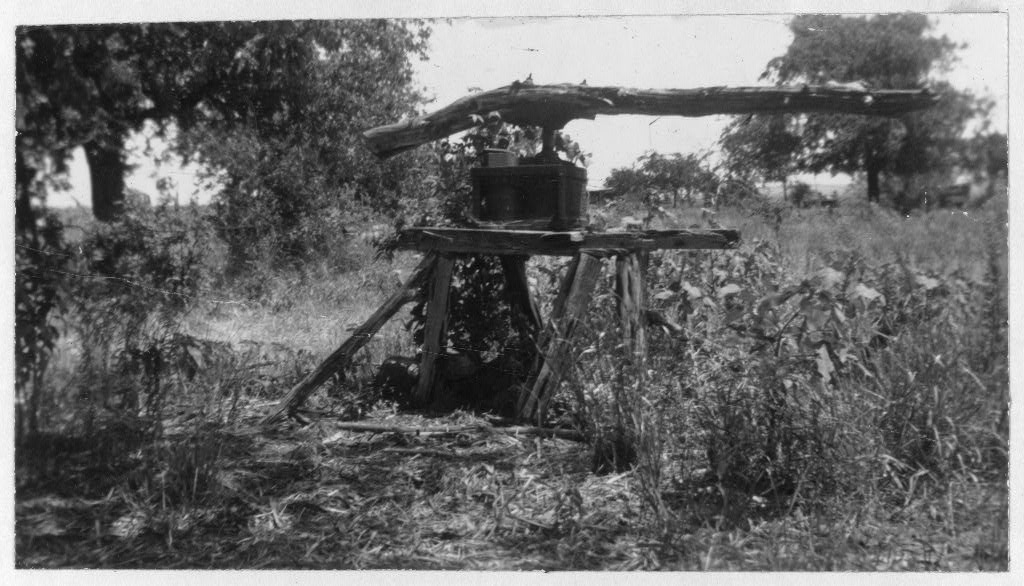
Amos Clark
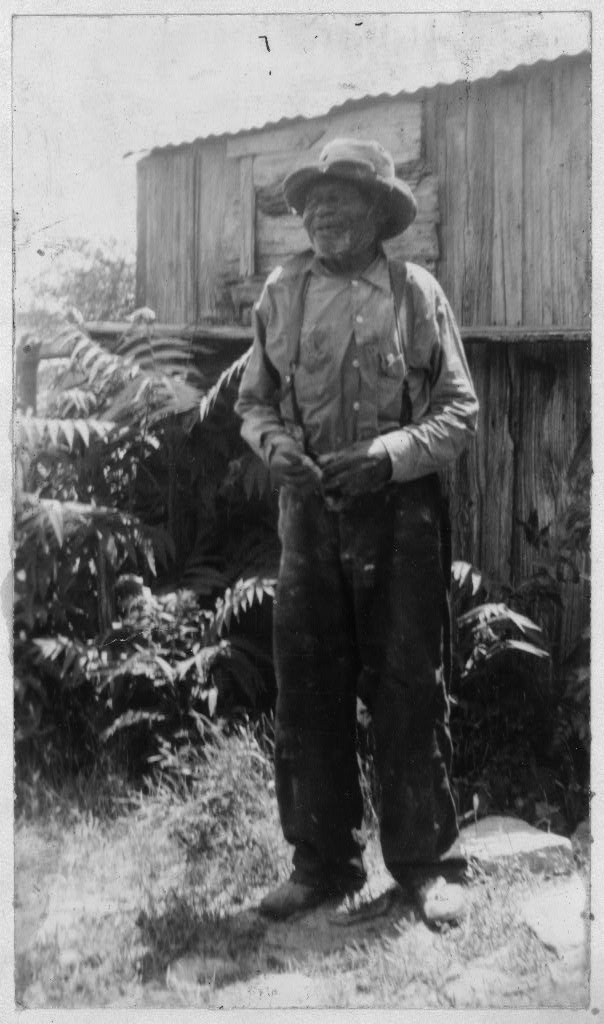
AMOS CLARK, 96, was born a slave of Robert Clark, in Washington County, Texas. After Amos was freed, he farmed near Belton, Texas. Amos now lives in Waco.
"I was borned on the second of April, in 1841. Mammy say dat de year, 'cause Marse Bob's brother, Tom, done go tradin' and has a lot of trouble with de Indians, and come back with scars all over he arms. It warn't all dey fault, 'cause Marse Tom allus gittin' in trouble with somebody.
"When I was still half-growed, Marse Bob traded me to Marse Ed Roseborough, and we come to Belton to live. Us piled ox wagons high with beddin' and clothes and sich, and Old Marse had he books in a special horsehair trunk, what de hide still had hair on. It had brass tacks all trimmin' it up, and it was sho' a fine trunk, and he say, 'Amos, you black rascal, keep you eye on dat trunk, and don't git it wet crossin' de water and don't let no Indian git it.' Us had a sizeable drove of cattle and some sheep and pigs and chickens and ducks.
"Marse and Missis finds where dey wants de house and us gits dem axes out and in a few days dere am a nice log house with two big rooms and a hall 'tween dem, mos' as big as de rooms. Us been on de road 'bout six weeks and Missis sho' proud of her new house. Den us makes logs into houses for us and a big kitchen close to de big house. Den us builds a office for Old Marse and makes chairs and beds and tables for everybody. Old Miss brung her bed and a spindly, li'l table, and us make all de rest.
"For eatin' de good shooters and scouters gits birds and rabbits and wild turkeys and sometimes a lot of wild eggs or honey, when dey chops a bee tree down. A old Indian come to holp us hunt. He'd work a week if Marse Ed give him some red calico or a hatchet. Old Miss done bring a dozen hens and a bag of seeds, and folks come ridin' twenty miles to swap things.
"Dere warn't no mill to grind corn, so de boss carpenter, he hollows out a log and gits some smooth, hard rocks and us grind de corn like it was a morter. Old Man Stubblefield builded a watermill on de creek 'bout eight miles from us, and den us tooken de corn dere.
"Dere was three hundred acres and more'n fifty slaves, and lots of work, clearin' and buildin' and plantin'. Some de cabins didn't git no floor for two years. Jes' quick as dey could, de men gits out clapboards for de walls and split puncheon slabs for floors and palin's for fences.
"Missis, she takes two de likelies' young slaves and makes a garden, come spring. Somehow she git herself roses and posies and vegetables.
"Dere warn't no overseer. Marse Ed, he jes' ride round on he big hoss and see to things. Us didn't know nothin 'bout de war much, 'cause none us could read or write.
"Dere was two fiddlers 'mongst us, Jim Roseborough and Tom. Dey'd have de big barbecue for folks come from miles round, and coffee and chicken and turkey and dancin' and fiddlin' all night. Come daybreak, dey jes' goin' good. Us niggers dance back de quarters, and call
"'All eight balance and all eight swing, All left allemond and right hand grand, Meet your partner and prom'nade, eight, Den march till you come straight. "'First lady out to couple on de right, Swing Mr. Adam and swing Miss Eve, Swing Old Adam befo' you leave, Don't forgit your own—now you're home.'
"Two, three years after dat I marries Liza Smith. Us has four chillen and all dead 'cept John, and he lives out west.
"After freedom Old Marse say kill a yearlin' and have de big dinner and dance. De young ones he told to scatter out and hunt work, not to steal and work hard. Some de oldes' ones he give a cabin and a patch of land. He say de niggers what want to stay on and work for him can, iffen he make enough to feed dem. I stays with Marse Ed, but he give me a patch of twenty acres and a sorghum mill to make a livin' on. Dat how I gits on my way after freedom.
"I gits dat sorghum mill to workin' good and works de Roseborough land and my patch, and raises corn and cotton and wheat. I was plumb good at farmin'. I allus had a piece or two of money in my pocket since I can 'member, but now de old man's too old. De gov'ment gives me seven or eight dollars a month and I has a few chickens and gits by, and de good white folks nigh by sees dat dis old boy don't git cold.
420059
Anne Clark
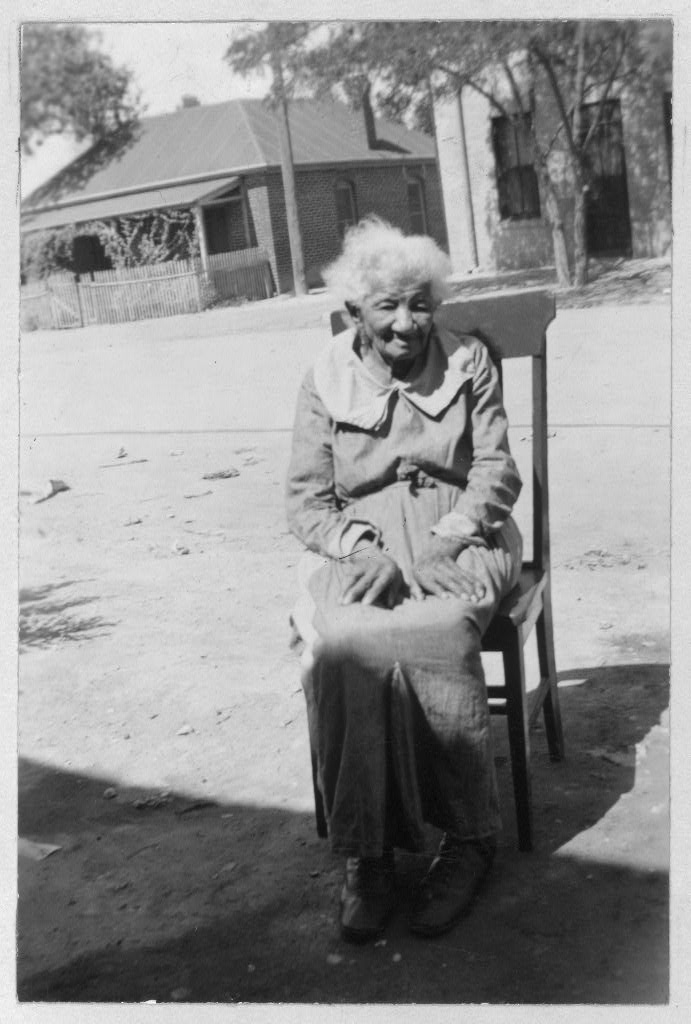
Anne Clark
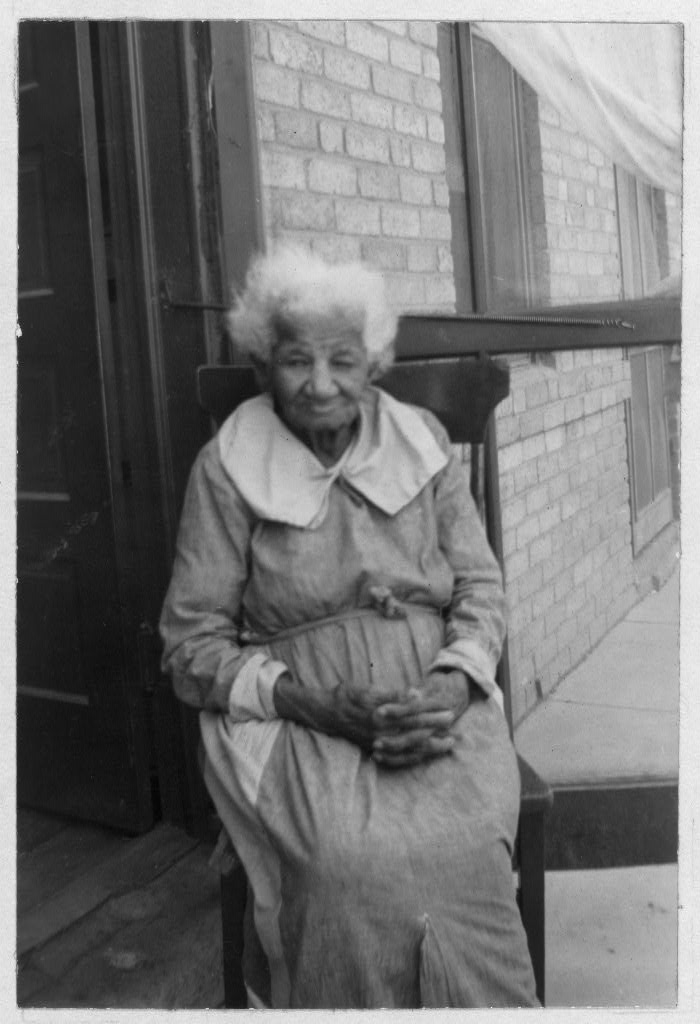
MOTHER ANNE CLARK, 112 years old, lives at 3602 Alameda Ave., El Paso, Texas. She is too crippled to walk, but a smile lights up the tired old eyes that still see to sew without glasses. One tooth of a third set is in her upper gum. She is deaf, but can hear if you speak close to her ear. She says, "Lemma git my ears open, bofe of 'em," wets her finger, then pulls so hard on the ear lobes it seems they would be injured.
"I'll be 112 years old, come first day of June (1937). Bo'n in Mississippi. I had two marsters, but I've been free nearly 80 years. I was freed in Memphis.
"My marster was a Yankee. He took me to Louisiana and made a slave outta me. But he had to go to war. He got in a quarrel one day and grabbed two six-shooters, but a old white man got him down and nearly kilt him. Our men got him and gave him to the Yankees.
"Capt. Clark, my second marster, took a shot at him and he couldn' come south no more. You don' know what a time I seen! I don' wanna see no more war. Why, we made the United States rich but the Yankees come and tuk it. They buried money and when you bury money it goes fu'ther down, down, down, and then you cain't fin' it.
"You know, the white folks hated to give us up worse thing in the world. I ploughed, hoed, split rails. I done the hardest work ever a man ever did. I was so strong, iffen he needed me I'd pull the men down so the marster could handcuff 'em. They'd whop us with a bullwhip. We got up at 3 o'clock, at 4 we done et and hitched up the mules and went to the fiel's. We worked all day pullin' fodder and choppin' cotton. Marster'd say, 'I wan' you to lead dat fiel' today, and if you don' do it I'll put you in de stocks.' Then he'd whop me iffen I didn' know he was talkin' to me.
"My poppa was strong. He never had a lick in his life. He helped the marster, but one day the marster says, 'Si, you got to have a whoppin', and my poppa says, 'I never had a whoppin' and you cain't whop me.' An' the marster says, 'But I kin kill you,' an' he shot my poppa down. My mama tuk him in the cabin and put him on a pallet. He died.
"My mama did the washin' for the big house. She tuk a big tub on her head and a bucket of water in her hand. My mama had two white chillen by marster and they were sold as slaves. I had two chillen, too. I never married. They allus said we'd steal, but I didn' take a thing. Why, they'd put me on a hoss with money to take into town and I'd take it to the store in town, and when I'd git back, marster'd say, 'Anne, you didn' take a thing.'
"When women was with child they'd dig a hole in the groun' and put their stomach in the hole, and then beat 'em. They'd allus whop us."
"Don' gring me anything fine to wear for my birthday. I jus' wan' some candy. I'm lookin' for Him to take me away from here."
420293
THOMAS COLE was born in Jackson Co., Alabama, on the 8th of August, 1845, a slave of Robert Cole. He ran away in 1861 to join the Union Army. He fought at Chickamauga, under Gen. Rosecran and at Chattanooga, Look Out Mt. and Orchard Knob, under Gen. Thomas. After the war he worked as switchman in Chattanooga until his health failed due to old age. He then came to Texas and lives with his daughter, in Corsicana. Thomas is blind.
"I might as well begin far back as I remember and tell you all about myself. I was born over in Jackson County, in Alabama, on August 8, 1845. My mother was Elizabeth Cole, her bein' a slave of Robert Cole, and my father was Alex Gerrand, 'cause he was John Gerrand's slave. I was sposed to take my father's name, but he was sech a bad, ornery, no-count sech a human, I jes' taken my old massa's name. My mother was brung from Virginny by Massa Dr. Cole, and she nussed all his six chillen. My sister's name was Sarah and my brother's name was Ben and we lived in one room of the big house, and allus had a good bed to sleep in and good things to eat at the same table, after de white folks gits through.
"I played with Massa Cole's chillen all de time, and when I got older he started me workin' by totin' wood and sech odd jobs, and feedin' de hawgs. Us chillen had to pick cotton every fall. De big baskets weigh about seventy-five to a hundred pounds, but us chillen put our pickin's in some growed slave's basket. De growed slaves was jes' like a mule. He work for grub and clothes, and some of dem didn't have as easier a time as a mule, for mules was fed good and slaves was sometimes half starved. But Massa Cole was a smart man and a good man with it. He had 'spect for the slaves' feelin's and didn't treat dem like dumb brutes, and 'lowed dem more privileges dan any other slaveholder round dere. He was one of de best men I ever knows in my whole life and his wife was jes' like him. Dey had a big, four-room log house with a big hall down the center up and down. De logs was all peeled and de chinkin' a diff'rent color from de logs and covered with beads. De kitchen am a one-room house behin' de big house with de big chimney to cook on. Dat where all de meals cooked and carry to de house.
"In winter massa allus kill from three to four hundred hawgs, de two killin's he done in November and January. Some kill and stick, some scald and scrape, and some dress dem and cut dem up and render de lard. Dey haul plenty hick'ry wood to de smokehouse and de men works in shifts to keep de smoke fire goin' sev'ral days, den hangs de meat in de meathouse. First us eat all de chitlin's, den massa begin issuin' cut-back bones to each fam'ly, and den 'long come de spareribs, den de middlin' or a shoulder, and by dat time he kill de second time and dis was to go all over 'gain. Each fam'ly git de same kind of meat each week. Iffen one git a ham, dey all git a ham. All de ears and feet was pickle and we eats dem, too. If de meat run out 'fore killin' time, us git wild turkeys or kill a beef or a goat, or git a deer.
"Massa let us plant pumpkins and have a acre or two for watermelons, iffen us work dem on Saturday evenin's. Dere a orchard of 'bout five or six acres peaches and apples and he 'low us to have biscuits once a week. Yes, we had good eatin' and plenty of it den.
"Massa had one big, stout, healthy lookin' slave 'bout six foot, four inches tall, what he pay $3,000 for. He bought six slaves I knows of and give from $400 up for dem. He never sold a slave 'less he git onruly.
"Massa allus give us cotton clothes for summer and wool for winter, 'cause he raised cotton and sheep. Den each fam'ly have some chickens and sell dem and de eggs and maybe go huntin' and sell de hides and git some money. Den us buy what am Sunday clothes with dat money, sech as hats and pants and shoes and dresses.
"We'd git up early every day in de year, rain or shine, hot or cold. A slave blowed de horn and dere no danger of you not wakin' up when dat blowed long and loud. He climb up on a platform 'bout ten feet tall to blow dat bugle. We'd work till noon and eat in de shade and rest 'bout a hour or a little more iffen it hot, but only a hour if it cold. You is allus tired when you makes de day like dat on de plantation and you can't play all night like de young folks does now. But us lucky, 'cause Massa Cole don't whip us. De man what have a place next ours, he sho' whip he slaves. He have de cat-o-nine tails of rawhide leather platted round a piece of wood for a handle. De wood 'bout ten inches long and de leather braided on past de stock quite a piece, and 'bout a foot from dat all de strips tied in a knot and sprangle out, and makes de tassle. Dis am call de cracker and it am what split de hide. Some folks call dem bullwhips, 'stead of cat-o-nine tails. De first thing dat man do when he buy a slave, am give him de whippin'. He call it puttin' de fear of Gawd in him.
"Massa Cola 'low us read de Bible. He awful good 'bout dat. Most de slaveowners wouldn't 'low no sech. Uncle Dan he read to us and on Sunday we could go to church. De preacher baptize de slaves in de river. Dat de good, old-time 'ligion, and us all go to shoutin' and has a good time. Dis gen'ration too dig'fied to have de old-time 'ligion.
"When baptizin' comes off, it almost like goin' to de circus. People come from all over and dey all singin' songs and everybody take dere lunch and have de good time. Massa Cole went one time and den he git sick, and next summer he die. Missy Cole, she moves to Huntsville, in Alabama. But she leave me on de plantation, 'cause I'm big and stout den. She takes my mother to cook and dat de last time I ever seed my mother. Missy Cole buys de fine house in Huntsville my mother tells me to be good and do all de overseer tells me. I told her goodbye and she never did git to come back to see me, and I never seed her and my brother and sister 'gain. I don't know whether dey am sold or not.
"I thinks to myself, dat Mr. Anderson, de overseer, he'll give me dat cat-o-nine tails de first chance he gits, but makes up my mind he won't git de chance, 'cause I's gwine run off de first chance I gits. I didn't know how to git out of dere, but I's gwine north where dere ain't no slaveowners. In a year or so dere am 'nother overseer, Mr. Sandson, and he give me de log house and de gal to do my cookin' and sich. Dere am war talk and we 'gins gwine to de field earlier and stayin' later. Corn am haul off, cotton am haul off, hawgs and cattle am rounded up and haul off and things 'gins lookin' bad. De war am on, but us don't see none of it. But 'stead of eatin' cornbread, us eats bread out of kaffir corn and maize. ""We raises lots of okra and dey say it gwine be parch and grind to make coffee for white folks. Dat didn't look good either. Dat winter, 'stead of killin' three or four hundred hawgs like we allus done befo', we only done one killin' of a hundred seventy-five, and dey not all big ones, neither. When de meat supply runs low, Mr. Sandson sends some slaves to kill a deer or wild hawgs or jes' any kind of game. He never sends me in any dem bunches but I hoped he would and one day he calls me to go and says not to go off de plantation too far, but be sho' bring home some meat. Dis de chance I been wantin', so when we gits to de huntin' ground de leader says to scatter out, and I tells him me and 'nother man goes north and make de circle round de river and meet 'bout sundown. I crosses de river and goes north. I's gwine to de free country, where dey ain't no slaves. I travels all dat day and night up de river and follows de north star. Sev'ral times I thunk de blood houn's am trailin' me and I gits in de big hurry. I's so tired I couldn't hardly move, but I gits in a trot.
"I's hopin' and prayin' all de time I meets up with dat Harriet Tubman woman. She de cullud women what takes slaves to Canada. She allus travels de underground railroad, dey calls it, travels at night and hides out in de day. She sho' sneaks dem out de South and I thinks she's de brave woman.
"I eats all de nuts and kills a few swamp rabbits and cotches a few fish. I builds de fire and goes off 'bout half a mile and hides in de thicket till it burns down to de coals, den bakes me some fish and rabbit. I's shakin' all de time, 'fraid I'd git cotched, but I's nearly starve to death. I puts de rest de fish in my cap and travels on dat night by de north star and hides in a big thicket de nex' day and along evenin' I hears guns shootin'. I sho' am scart dis time, sho' 'nough. I's scart to come in and scart to go out, and while I's standin' dere, I hears two men say, 'Stick you hands up, boy. What you doin?' I says, 'Uh-uh-uh, I dunno. You ain't gwine take me back to de plantation, is you?' Dey says, 'No. Does you want to fight for de North?' I says I will, 'cause dey talks like northern men. Us walk night and day and gits in Gen. Rosecran's camp and dey thunk I's de spy from de South. Dey asks me all sorts of questions and says dey'll whip me if I didn't tell dem what I's spyin' 'bout. Fin'ly dey 'lieves me and puts me to work helpin' with de cannons. I feels 'portant den, but I didn't know what was in front of me, or I 'spects I'd run off 'gain.
"I helps sot dem cannons on dis Chickamauga Mountain, in hidin' places. I has to go with a man and wait on him and dat cannon. First thing I knows, bang, bang, boom, things has started, and guns am shootin' faster dan you can think, and I looks round for de way to run. But dem guns am shootin' down de hill in front of me and shootin' at me, and over me and on both sides of me. I tries to dig me a hole and git in it. All dis happen right now, and first thing I knows, de man am kickin' me and wantin' me to holp him keep dat cannon loaded. Man, I didn't want no cannon, but I has to help anyway. We fit till dark and de Rebels got more men dan us, so Gen. Rosecran sends de message to Gen. Woods to come help us out. When de messenger slips off, I sho' wish it am me slippin' off, but I didn't want to see no Gen. Woods. I jes' wants to git back to dat old plantation and pick more cotton. I'd been willin' to do mos' anything to git out that mess, but I done told Gen. Rosecran I wants to fight de Rebels and he sho' was lettin' me do it. He wasn't jes' lettin' me do it, he was makin' me do it. I done got in dere and he wouldn't let me out.
"White folks, dere was men layin' wantin' help, wantin' water, with blood runnin' out dem and de top or sides dere heads gone, great big holes in dem. I jes' promises de good Lawd if he jes' let me git out dat mess, I wouldn't run off no more, but I didn't know den he wasn't gwine let me out with jes' dat battle. He gwine give me plenty more, but dat battle ain't over yet, for nex' mornin' de Rebels 'gins shootin' and killin' lots of our men, and Gen. Woods ain't come, so Gen. Rosecran orders us to 'treat, and didn't have to tell me what he said, neither. De Rebels comes after us, shootin', and we runs off and leaves dat cannon what I was with settin' on de hill, and I didn't want dat thing nohow.
"We kep' hotfootin' till we gits to Chattanooga and dere is where we stops. Here comes one dem Rebel generals with de big bunch of men and gits right on top of Look Out Mountain, right clost to Chattanooga, and wouldn't let us out. I don't know jes' how long, but a long time. Lots our hosses and mules starves to death and we eats some de hosses. We all like to starve to death ourselves. Chattanooga is in de bend de Tennessee River and on Look Out Mountain, on de east, am dem Rebels and could keep up with everything we done. After a long time a Gen. Thomas gits in some way. He finds de rough trail or wagon road round de mountain 'long de river and supplies and men comes by boat up de river to dis place and comes on into Chattanooga. More Union men kep' comin' and I guess maybe six or eight generals and dey gits ready to fight. It am long late in Fall or early winter.
"Dey starts climbin' dis steep mountain and when us gits three-fourths de way up it am foggy and you couldn't see no place. Everything wet and de rocks am slick and dey 'gins fightin'. I 'spect some shoots dere own men, 'cause you couldn't see nothin', jes' men runnin' and de guns roarin'. Fin'ly dem Rebels fled and we gits on Look Out Mountain and takes it.
"Dere a long range of hills leadin' 'way from Look Out Mountain, nearly to Missionary Ridge. Dis ridge 'longside de Chickamauga River, what am de Indian name, meanin' River of Death. Dey fights de Rebels on Orchard Knob hill and I wasn't in dat, but I's in de Missionary Ridge battle. We has to come out de timber and run 'cross a strip or openin' up de hill. Dey sho' kilt lots our men when we runs 'cross dat openin'. We runs for all we's worth and uses guns or anything we could. De Rebels turns and runs off and our soldiers turns de cannons round what we's capture, and kilt some de Rebels with dere own guns.
"I never did git to where I wasn't scart when we goes into de battle. Dis de last one I's in and I's sho' glad, for I never seed de like of dead and wounded men. We picks dem up, de Rebels like de Unions, and doctors dem de bes' we could. When I seed all dat sufferin', I hopes I never lives to see 'nother war. Dey say de World War am worse but I's too old to go.
"I sho' wishes lots of times I never run off from de plantation. I begs de General not to send me on any more battles, and he says I's de coward and sympathizes with de South. But I tells him I jes' couldn't stand to see all dem men layin' dere dyin' and hollerin' and beggin' for help and a drink of water, and blood everywhere you looks. Killin' hawgs back on de plantation didn't bother me none, but dis am diff'rent.
"Fin'ly de General tells me I can go back to Chattanooga and guard de supplies in camp dere and take care de wounded soldiers and prisoners. A bunch of men is with me and we has all we can do. We gits de orders to send supplies to some general and it my job to help load de wagons or box cars or boats. A train of wagons leaves sometimes. We gits all dem supplies by boat, and Chattanooga am de 'stributing center. When winter comes, everybody rests awhile and waits for Spring to open. De Union general sends in some more cullud soldiers. Dere ain't been many cullud men but de las' year de war dere am lots. De North and de South am takin' anything dey can git to win de war.
"When Spring breaks and all de snow am gone, and de trees 'gins puttin' out and everything 'gins to look purty and peaceable-like, makin' you think you ought to be plowin' and plantin' a crop, dat when de fightin' starts all over 'gain, killin' men and burnin' homes and stealin' stock and food. Den dey sends me out to help clear roads and build temp'rary bridges. We walks miles on muddy ground, 'cross rivers, wadin' water up to our chins. We builds rafts and pole bridges to git de mules and hosses and cannons 'cross, and up and down hills, and cuts roads through timber.
"But when dey wants to battle Gen. Thomas allus leaves me in camp to tend de supplies. He calls me a coward, and I sho' glad he thunk I was. I wasn't no coward, I jes' couldn't stand to see all dem people tore to pieces. I hears 'bout de battle in a thick forest and de trees big as my body jes' shot down. I seed dat in de Missionary Ridge battle, too.
"I shifts from one camp to 'nother and fin'ly gits back to Chattanooga. I bet durin' my time I handles 'nough ammunition to kill everybody in de whole United States. I seed mos' de mainest generals in de Union Army and some in de Rebel Army.
"After de war am over we's turned loose, nowhere to go and nobody to help us. I couldn't go South, for dey calls me de traitor and sho' kill me iffen dey knows I fit for de North. I does any little job I can git for 'bout a year and fin'ly gits work on de railroad, in Stevenson, in Alabama. I gits transfer to Chattanooga and works layin' new tracks and turn tables and sich.
"In 'bout two weeks I had saw a gal next door, but I's bashful. But after payday I dresses up and takes her to a dance. We sparks 'bout two months and den we's married at her uncles. Her name am Nancy. We buys a piece of land and I has a two-room house built on it. We has two chillen and I's livin' with de baby gal now.
"I 'lieve de slaves I knowed as a whole was happier and better off after 'mancipation dan befo'. Of course, de first few years it was awful hard to git 'justed to de new life. All de slaves knowed how to do hard work, and dat de old slaves life, but dey didn't know nothin' 'bout how to 'pend on demselves for de livin'. My first year was hard, but dere was plenty wild game in dem days. De south was broke and I didn't hear of no slaves gittin' anything but to crop on de halves. Dey too glad to be free and didn't want nothin'.
"Things 'gin to git bad for me in Chattanooga as de white men finds out I run off from de South and jined de North. Some de brakemen try to git my job. I fin'ly quits when one of dem opens a switch I jus' closed. I seed him and goes back and fixes de switch, but I quits de job. I goes up north but dey ain't int'rested, so I comes back and sells my home and buys me a team and wagon. I loads it with my wife and chillen and a few things and starts for Texas. We's on de road 'bout six weeks or two months. We fishes and hunts every day and de trip didn't cost much. I buys ninety acres in timber in Cass County and cuts logs for a house and builds a two-room house and log crib. My wife built a stomp lot for de team and cow and a rail fence.
"We got 'nough land cleared for de small crop, 'bout thirty acres, and builds de barn and sheds outselves. We lived there till de chillen am growed. My wife died of chills and fever and den my boy and I built a four-room house of planks from our timber. Den I gits lonesome, 'cause de chillen gone, and sells de place. I bought it for fifty cents de acre and sold it for $12.00 de acre.
"I buys sixty acres in Henderson County for $15.00 a acre and marries de second time. I didn't care for her like Nancy. All she think 'bout am raisin' de devil and never wants to work or save anything. She like to have broke me down befo' I gits rid of her. I stayed and farmed sev'ral years.
"My son-in-law rents land in Chambers Creek bottom, and he usually gits he crop 'fore de flood gits it. We has some hawgs to kill ev'ry winter and we has our cornmeal and milk and eggs and chickens, so de 'pression ain't starved us yit. We all got might' nigh naked durin' de 'pression. I feeds de hawgs and chickens night and mornin'. I can't see dem, but I likes to listen to dem eatin' and cackle. People don't know how dey's blessed with good eyes, till dey loses dem. Everybody ought to be more thankful dan they is.
"I ain't never voted in my life. I leans to de 'publicans. I don't know much 'bout politics, though.
"Today I is broke, 'cause I spent all my money for med'cine and doctors, but I gits a small pension and I spends it mos' careful.
420270
ELI COLEMAN, 91, was born a slave of George Brady, in Kentucky. Eli's memory is poor and his story is somewhat sketchy. He now lives in Madisonville, Texas.
"I has a old bill of sale, and it shows I's born in 1846 and my massa am George Brady. I know my pappy's name was same as mine, and mammy was Ella, and I had one brother named Sam, and my sisters was Sadie and Rosa and Viola. They's all dead now.
"Pappy was owned by Massa Coleman, what was brother to Massa Brady. Pappy could only see mammy once a week when he's courtin' for her. I heard pappy tell 'bout his pappy, over in Africy, and he had near a hundred wives and over three hundred chillen.
"Pappy never did work. All he ever did was trade. He'd make one thing and 'nother and trade it for something to eat. He could get lots of fruit and game out of the woods them days, and there was lots of fish.
"Our log house was built of logs, trimmed, and had six rooms. It was long, like a cowbarn or chicken house, and my room was third. We had one door to each room, covered over with hides. We dug out one corner for the bed and fenced it up and gathered straw and moss and tore-up corn shucks, and put in the corner to sleep on. What I mean, it was a warm bed.
"We did all kinds of work, choppin' cotton and split rails and cut rock, and work in the tobacco field. We'd cut that tobacco and hang it in the shed to dry. It had to be hanged by the stubble end.
"We had plenty to eat, sech as corn pones. The corn was grated by hand and cooked in ashes, and no salt or soda or fancy things like they put in bread now.
"There was possum and rabbit and we cooked them different to now. A great big, old pot hung over the old rock fireplace. Food cooked that way still eats good. Massa Brady allus give us lots out of the garden. He fed us reg'lar on good, 'stantial food, jus' like you'd tend to you hoss, if you had a real good one.
"Massa Brady, he was one these jolly fellows and a real good man, allus good to his black folks. Missy, she was plumb angel. They lived in a old stone house with four big rooms. It was the best house in the whole county and lots of shade trees by it.
"We had 'bout a hundred acres in our plantation and started to the field 'fore daylight and worked long as we could see, and fed ane stock and got to bed 'bout nine o'clock. Massa whopped a slave if he got stubborn or lazy. He whopped one so hard that slave said he'd kill him. So Massa done put a chain round his legs, so he jus' hardly walk, and he has to work in the field that way. At night he put 'nother chain round his neck and fastened it to a tree. After three weeks massa turnt him loose and that the proudes' nigger in the world, and the hardes' workin' nigger massa had after that.
"On Saturday night we could git a pass or have a party on our own place. Through the week we'd fall into our quarters and them patterrollers come walk all over us, and we'd be plumb still, but after they done gone some niggers gits up and out.
"On Christmas Day massa make a great big eggnog and let us have all we wants with a big dinner. He kilt a yearlin' and made plenty barbecue for us.
"Massa was a colonel in the war and took me along to care for his hoss and gun. Them guns, you couldn't hear nothin' for them poppin'. Us niggers had to go all over and pick up them what got kilt. Them what was hurt we carried back. Them what was too bad hurt we had to carry to the burying place and the white man'd finish killin' them, so we could roll them in the hole.
"When massa say we're free, we all 'gun to take on. We didn't have no place to go and asked massa could we stay, but he say no. But he did let some stay and furnished teams and something to eat and work on the halves. I stayed and was sharecropper, and that was when slavery start, for when we got our cop made it done take every bit of it to pay our debts and we had nothing left to buy winter clothes or pay doctor bills.
"'Bout a year after the war I marries Nora Brady, jus' a home weddin'. I asks her to come live with me as my wife and she 'greed and she jus' moved her clothes to my room and we lived together a long time. One mornin' Nora jus' died, and there warn't no chillen, so I sets out for Texas. I done hear the railroad is buildin' in Texas and they hires lots of niggers. I gits a hoss from massa and rolls up a few clothes and gits my gun.
"I never got very far 'fore the Indians takes my hoss away from me. It was 'bout fifty mile to a train and I didn't have no money, but I found a white man what wants wood cut and I works near a month for him and gits $2.00. I gits on a train and comes a hundred mile from where that railroad was goin' 'cross the country, and I has to walk near all that hundred miles. Once and now a white man comin' or goin' lets me ride. But I got there and the job pays me sixty cents a day. That was lots of money them days. Near as I 'member, it was 1867 or 1868 when I comes to Texas.
"Then I marries Agnes Frazer, and we has a big weddin' and a preacher and a big supper for two or three weeks. Her pappy kilt game and we et barbecue all the time. We had eleven chillen, one a year for a long time, five boys and six gals. One made a school teacher and I ain't seen her nearly forty-five years, 'cause she done took a notion to go north and they won't let her back in Texas 'cause she married a white man in New York. I don't like that. She don't have no sense or she wouldn't done that, no, sir.
"Since the nigger been free it been Hell on the poor old nigger. He has advance some ways, but he's still a servant and will be, long as Gawd's curse still stay on the Negro race. We was turnt loose without nothin' and done been under the white man rule so long we couldn't hold no job but labor. I worked most two years on that railroad and the rest my life I farms. Now I gits a little pension from the gov'ment and them white folks am sho' good to give it to me, 'cause I ain't good for work no more.
420003
Preely Coleman
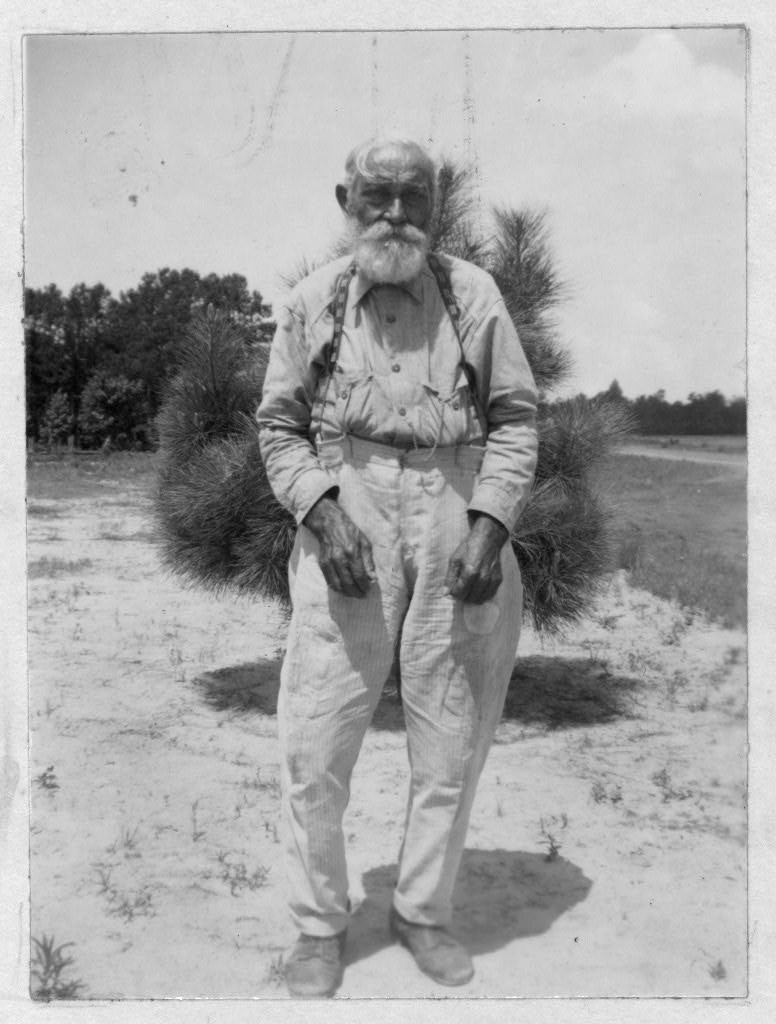
PREELY COLEMAN was born in 1852 on the Souba farm, near New Berry, South Carolina, but he and his mother were sold and brought to Texas when Preely was a month old. They settled near Alto, Texas. Preely now lives in Tyler.