Front matter (continued 3)
Reading edition
The origin and meaning of the mystical , that symbol of "hidden wisdom" as it has been denominated by scholars of our days, found on all Egyptian monuments, in the temples, in the hands of the gods, in the tombs on the breast of the mummies, also met with in the ancient edifices of Mayax, and on the statues and altars in the temples at Palenque, has given rise to many speculations on the part of modern savants. They have not reached yet any conclusion, although its name TAU says plainly, that it is nothing more or less than a representation of the "God of Rain" the "Southern Cross." Effectively tau is a Maya word composed of the three primitives ti, here, a for ha, water, and u month, which translated freely means "This is the month for water;" hence for the resurrection of nature—for the new life to come.

The complex form of the mystical which is formed of a cone with two arms extending, one each side, and an oval placed immediately above them, has been denominated by the Egyptologists cruz-ansata. It is not of Egyptian origin. It has its prototype in the conoidal pillar, surmounted by a sphere, used by the Babylonians as symbol of life and death; death being but the beginning or nursery of life. This emblem was only a reminiscence of the yaxche, the sacred tree of the Mayas, under the roots of which, the natives assert, is always to be found a source of pure cold water. The trunk of the yaxche, from the foot to the top, forms a perfect cone from which the main branches shoot in an horizontal direction. Its leafy top, seen from a distance, presents the appearance of a half sphere of verdure. The cone, the tau and the cruz-ansata were for those initiated to the mysteries the same symbol, emblematical of Deity, of the life to come, of the dual powers, of fertility. The Mayas and other peoples of Central America, in the sculptures or paintings, always represented their sacred trees with two branches shooting horizontally from the top of the trunk, thus presenting the appearance of a cross or tau.
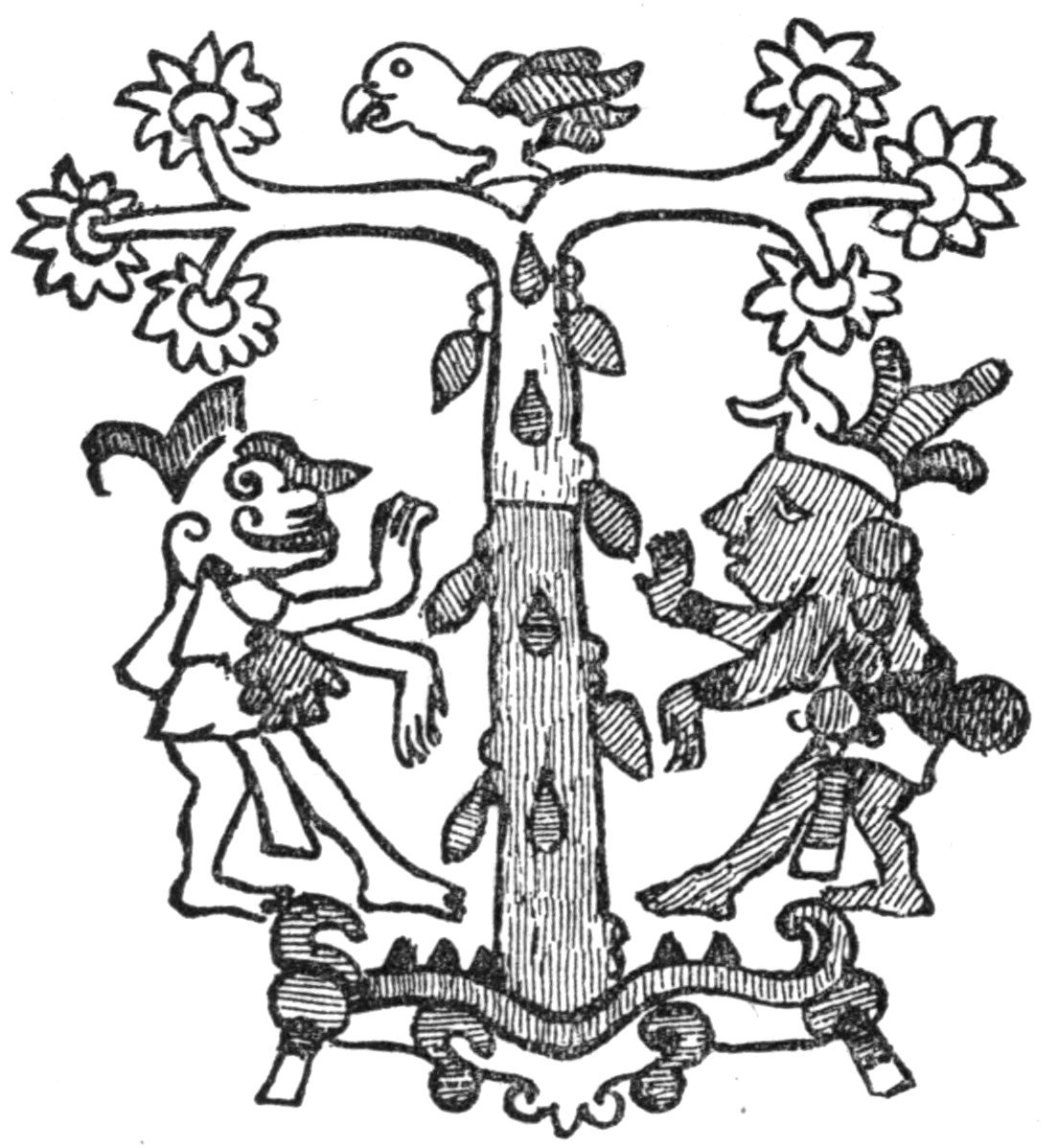
From a Mexican MS. in British Museum. (Add. MS. b. m. 9789.)
In straying apparently so far from the main object of these pages, and tracing to their true origin the primitive traditions of mankind and many of the religious symbols common to all the civilized nations of antiquity, by dispelling the mists that have accumulated around them in the long vista of ages, my aim has been to show that they all emanated from one and the same source, and that this source was the country of Mayax, in the "Lands of the West." Ancient sacred mysteries, have been celebrated in the temples of Egypt, Chaldea, and India, from ages so remote that it is no longer known by whom or where they were first instituted. Herodotus tells us that the daughters of Danaus instituted the Thesmophoria in honor of the goddess Ceres, in imitation of the mysteries celebrated in Egypt in honor of Isis, and taught them to the Pelasgic women. That Eumolpus, king of Eleusis, instituted in his own country the Eleusinian mysteries on his return from Egypt, where he had been initiated by the priests as Orpheus who founded in Thracia those that bear his name; but who taught the rites of initiation, the use of the symbols and their meaning, to the Hierophants of Egypt, to the magi of Chaldea, to the Gymnosophists of India?
The mode of initiation, the use of the same symbols, with an identical signification ascribed to them, by peoples living so far apart whose customs and manners were so unlike, whose religion, so far at least as external practices were concerned, differed so widely, show that these mysteries originated with one people, and were carried to and promulgated among the others. As we do not find it mentioned anywhere that they originated either with the Egyptians, Chaldees, or Hindoos, and we have seen that their primitive traditions have been derived from the history of the early rulers of Mayax, is it not natural that we should look for the institution of the mysteries among the Mayas, since we find the same mysterious symbols, used by the initiates in all the other countries, carved on the walls of the temples of their gods, and the palaces of their kings? Their history may afford the clue to the original meaning of said symbols, as their language has given us the true signification of the words used by the celebrating priest to dismiss the initiates in the Eleusinian mysteries, or by the Brahmins at the end of their religious ceremonies, and as it has revealed the so long hidden mystery of the mystical Tau.
That sacred mysteries were celebrated from times immemorial in the temples of Mayax, Xibalba, Nachan (Palenque of to-day), Copan and other places of Central America there can be no doubt, since besides the symbols sculptured on the walls of the temples and palaces, in two distinct instances, we see the rites and the trials of initiation described in the Popol-Vuh; and as these rites and trials were identical with those to which the applicants to initiation in the mysteries of Egypt, Greece, Chaldea and India were subjected, we are justified in seeking in Mayax for the causes that may have induced the founders of the sacred mysteries to select the odd numbers 3, 5, and 7, instead of the even 2, 4, and 6 for mystic numbers.
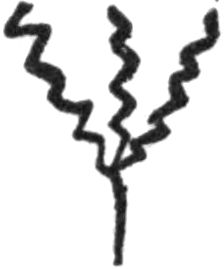
The symbolization of number 3 may possibly be accounted for in two different ways. One is suggested by the sceptre of Poseidon, that Plato says was the first king of Atlantis, and is represented by the Greek mythologists as being a son of Kronos; his three-pronged trident being an allusion to the three great islands that formed his kingdom, North and South America and Atlan, that now lies buried under the waves of the Atlantic ocean. The emblem placed in the hands of Vul the god of the atmosphere in the Chaldean mythology, found also in those of the Hindoo gods, may likewise represent the three worlds or great regions that the Egyptian and Maya hierogrammatists designed by the character in the hieroglyph for the name of the "Lands of the West," which the latter also figured as the sacred tree with three branches,[4] a simile of which we find in Scandinavia, in the three roots of the sacred ash Yggdrasil, mystic-world tree, and the three heavens, and the three worlds whose destruction, by water, was prophesied by Vishnu.

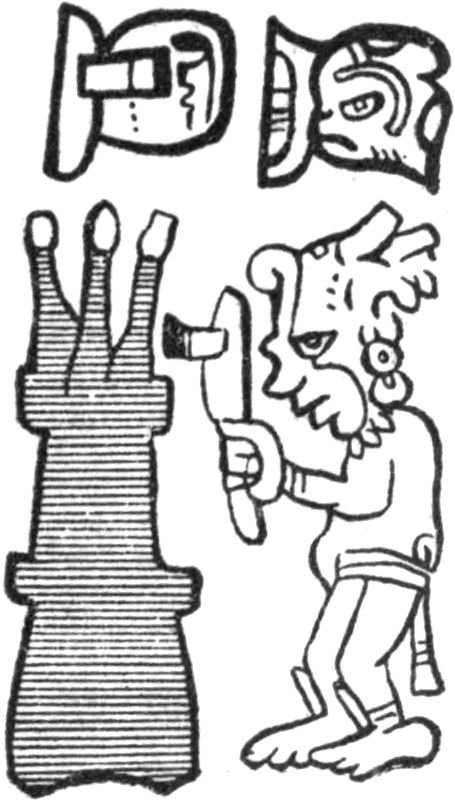
The deification of the "World" composed of three parts forming a great whole, may have been the origin of the Trimourti, or Triune god, so prevalent among the ancient nations of antiquity, and probably led to the mystification of number 3. We find it symbolized all over the earth, in every nation. We see it in Mayax in the three platforms on which are raised the most ancient edifices; in the three rooms that formed the temple where the mysteries were performed; in the three steps that led to the first or lower platform in all sacred edifices; in the 21 metres (3 × 7) of all the principal pyramids in Yucatan; in the three concentric circles of the Zodiac. We meet with it constantly in India, in the vyahritis or three sacred words; the three ornaments or saranas; the three principal classes; the three ways of salvation; the three fetters of the soul or gunas; the three eyes in Siva's forehead; the three strands of the sacred cord worn by the initiates of the three principal classes; the three letters of the sacred word A.u.m. In Egypt the three thonged flagelum of Osiris; the triple phallus carried in procession at the festival of the Paamylia in honor of the birth of Osiris, and also the triads, as likewise in Chaldea.
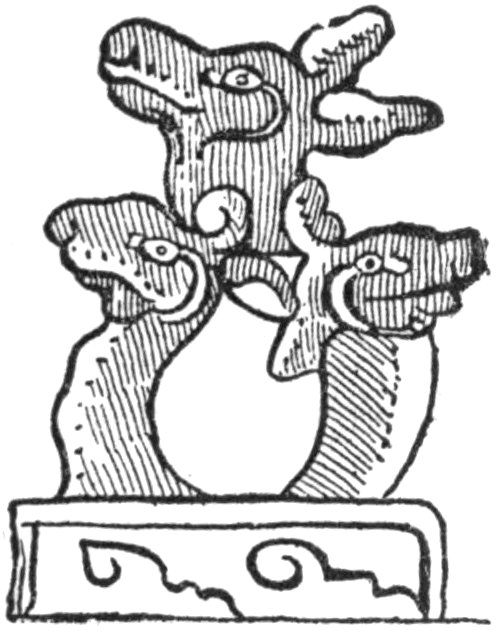
Another way of accounting for the mystification of number 3, is by taking heed of the indications of Orpheus, Plato, Proclus, and the other Greek philosophers who had been admitted to the participation of the secrets communicated in the mysteries to those worthy of being entrusted with them. They tell us that the three intellects of the Demiurgos, of the triple deity, were "three kings."
[5]
The author of the Troano MS., relates at some length the history of the three sons of king Can; and of the troubles that arose among them when, after the death of their father, the reins of the government fell into their hands. Of that fact a faint tradition, very much distorted, seems to have still existed among the aborigines of Central America at the time of the Spanish conquest; for Bishop Landa states: "That it was said that once upon a time three lords, brothers, governed the country together." Those three brothers, sons of king Can, are realities, personages who have certainly lived a mundane existence, since we not only have their portraits, their weapons, and their ornaments, but also their mortal remains. They recall vividly the three sons of Adam, the three sons of Seb, and the three sons of Kronos. The author of the Troano MS., informs us that the members of the family of king Can were deified after their death, and worshiped in temples, the ruins of which still exist buried in the depths of the forests of Yucatan under a shroud of verdure. It is not at all improbable that Cay, the elder brother and high-pontiff having instituted with his father the sacred mysteries, took as symbol of the various degrees into which they divided them, the number of the members of their family, in order to perpetuate their name and history through the coming ages. This explanation seems the more plausible, if we remember that Eusebius tells us that the Egyptians represented the supreme Deity under the shape of a serpent (Canhel) that was as superior to the triads, as the father is to his children in whom he rejoices. "Numero Deus impare gaudet." In this connection the three Hoang-ti, of Chinese mythological times, might also be mentioned. They too had the shape of serpents.
Among the ancient civilized nations of the eastern continents number 5 was also considered mystic. Frequent mention is made of it in their sacred books. In China it occupies a conspicuous place among the celestial or perfect numbers, as 1, 3, 5, 7, 9, are called in the y-king, or Canonical book of Changes; a very ancient work, so highly esteemed by the wise philosopher Confucius (Kong-fou-tse) that he was seldom seen without it. There we read of the five elements, water, fire, wood, metal, and earth; of the five kinds of grain; of the five colors, black, red, green or blue, yellow and white; of the five tastes, salt, bitter, sour, acid, and sweet; of the five tones in music; of the five relations of life between men; those between a king and its ministers, a father and his children, a husband and his wife, elder and younger brothers, and between friends; of the five virtues, philanthropy, uprightness, decorum, prudence, fidelity; of the five organs of the body, kidneys, heart, liver, lungs, and spleen; of the five Chang-ti, or elementary generations; of the five parts that form the heavens; of the five seasons of the year; of the five genii that govern the five elements; of the five principal mountains of the empire; of the five tutelary mountains.
In India number 5 is also very prevalent in things pertaining particularly to psychological conceptions or religious observances; so they speak of the five organs of intelligence, by means of which the external objects are perceived; of the five organs of action; the five elements, the five great oblations; of the five great sacrifices; the five great fires, etc. In Mayax it was likewise a mystic number, since we find this simbol carved at each end of the southern apartment in the edifice consecrated to the celebration of the sacred mysteries. It appears in the number of steps leading from the courtyards or terraces to the principal apartments in the "House of the Governor," "the palace of king Can" and other edifices at Uxmal, and in other buildings. It is the number particularly set apart for the second of the three platforms that compose the base on which all the ancient temples and palaces of the Mayas are raised. In the rites of modern Freemasonry, it is still the sacred number related to the second degree. In the Troano MS., the legends of all the compartments into which the work is divided, as in chapters, are composed of five characters, to indicate that said legends are the headings, that is ho-ol, the beginning, the head.
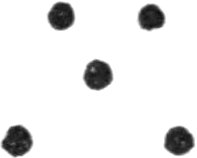
This number may have become sacred, in the mysteries, among the Mayas, in remembrance of the number of the children of king Can; for besides his three sons Cay, Aac, and Coh, he had, by his wife Zoo, two daughters, Moo and Nicte, whose names bear a striking resemblance to T-Mau, one of the names of Isis and Nike her sister. So king Can by his wife Zoↄ, had five children, just as Seb had by his wife Nut in Egypt; these being Aroeris, Set, Osiris, Isis, and Nike. Strange coincidence, that may, however, give us a knowledge of the origin of the mystification of number five.
Seven seems to have been the sacred number par excellence among all civilized nations of antiquity. Why? This query has never been satisfactorily answered. Each separate people has given a different explanation, according to the peculiar tenets of their religion. That it was the number of numbers for those initiated to the sacred mysteries there can be no doubt. Pythagoras, who had borrowed his ideas on numbers from the Egyptians, calls it the "Vehicle of life," containing body and soul, since it is formed of a quartenary, that is: Wisdom and Intellect; and a trinity or action and matter. Emperor Julian, in Matrem and in Oratio, expresses himself thus: "Were I to touch upon the initiation into our secret mysteries, which the Chaldees bacchised, respecting the seven-rayed god, lighting up the soul through him, I should say things unknown to the rabble, very unknown, but well known to the blessed Theurgists."
Whatever that knowledge may have been, and their esoteric explanation of the cause of the mystification of number seven, can only be surmised to-day; but it is not improbable that it was to be found in some event in the early history of the race whose traditions we find scattered broadcast over the Earth. We have seen that the family of king Can was composed of seven members, who became rulers of the seven cities that bear their names, the ruins of which still exist in the forests of Yucatan, and by the beauty and richness of the ornamentation, the massiveness and finish of the walls of their temples and palaces, excite the admiration of the beholder. These personages, deified after their death, have been worshiped in various countries, and are yet in some, under different names. May not the remembrance of the existence of these seven ancient rulers of Mayax, have been the origin of the tradition of the seven divine rulers of Egypt; of the seven Manous that according to the Brahmins, governed the world in the night of times; of the seven Richis or holy personages who assisted them; of the seven princes of the Persian court; and the seven councillors of the king; of the seven Ameshaspants or first angels; of the seven great gods of the Assyrians; or the seven primitive gods regarded by the Japanese as their ancestors and said by them to have governed the world during an incalculable number of years; of the seven Cabiri, worshiped by the Pelasgians at Lemnos and Samothracia; the seven great gods in theogony of the Nahuatls? Do we not see a simile of the Ah Ac chapat or seven-headed serpent of the Mayas, totem of their seven primitive Rulers, that is of the seven members of king Can's family, in the seven-headed heavenly Serpent on which rests Vishnu, the Indian creator, that corresponds to the Egyptian Kneph or the Mehen (Canhel) of the Mayas; or in the seven serpents that form the crown of Siva; or again in the Seven-rayed god Heptaktis, of which the emperor Julian was so reluctant to speak?
It would seem that the duration of certain religious festivals was fixed to commemorate the existence on Earth of these seven primitive gods or rulers, the tradition of which we find in all countries where we meet with vestiges of the Mayas. So we see the seven days of the festival of the Eleusinian mysteries; the seven days of the festival in honor of the bull Apis, a symbol of Osiris; the seven days of the feast of the tabernacles. The septenary system was also adopted for the same purpose no doubt, in Mayax, since we find the seven cities dedicated to each of the members of king Can's family; the seven pyramids that adorned the city of Uxmal; the seven turrets that ornamented the south façade of the north wing of king Can's palace at Uxmal, each turret inscribed with the name of one of the members of his family; those dedicated to the females being on the east end of the wing. The seven gradients into which is divided the third or uppermost of the three platforms that serve as a substructure to the temples and palaces; the seven superposed gradients, forming all the pyramids calling to mind the seven terraces of the temple of the seven lights at Borsippa, the most perfect form of Chaldee "temple tower," and the "pyramid degrees" at Sakkara, although in this Egyptian pyramid the gradients are more numerous. The seven rooms built on the west side of the conical mound that supports the temple in which the mysteries were performed at Uxmal: each room again being dedicated to one of the members of king Can's family; the bust of the person to whom it was consecrated being affixed over the doorway. The seven courses of the stones used in the construction of the walls and of the triangular arches that form the ceilings of the rooms. The same system prevails in the arrangement of the grand gallery in the centre of the great pyramid at Ghizzeh in Egypt. In that monument as in all the antique edifices of Mayax, the proportional scale followed by the architects in the drawing of their plans is in accordance with the numbers 3, 5, 7, and their multiples.
The predilection of the nations of antiquity in which the sacred mysteries were celebrated, for number seven appears in many ways. The seven days that the rainfall that produced the deluge lasted, according to the Chaldeans, is reproduced in the seven days of the prophesy of the deluge by Vishnu to Satyravata, as we read of it in the Bhagavata purana; and the seven days of the prophesy of the same event, made by the Lord to Noah, according to Genesis; on account of the seven days of rainfall the Babylonian priests used seven vases in the sacrifices; and in the hierarchy of Mazdeism, the seven Marouts or genii of the winds; the seven rounds of the ladder in the cave of Mithra. The Aryans had the seven horses that drew the chariot of the sun; the seven Apris or shapes of the flame; the seven rays of Agni; the seven steps of Buddha at his birth. The Egyptians had divided their nation into seven classes; the week into seven days: according to them the creation was completed in seven days. Among the Hebrews, we find the seven lamps of the ark, and of Zacharias vision; the seven branches of the golden candlestick; the seven days of the feast of the dedication of the temple; the seven years of plenty; and the seven years of famine. In the Christian dispensation, the seven churches with the seven angels at their head; the seven golden candlesticks; the seven heads of the beast that rose from the sea; the seven seals of the book; the seven trumpets of the angels; the seven vials full of the wrath of God; the seven last plagues of Apocalypse. In Greek mythology, the seven heads of the hydra killed by Hercules, the seven islands sacred to Proserpine mentioned by Proclus.
The prevalence of seven as a mystic number among the inhabitants of the "Western Continent" is not less remarkable. It frequently occurs in the Popol-Vuh. We find it besides in the seven families said by Sahagun and Clavigero to have accompanied the mystical personage named Votan, the reputed founder of the great city of Nachan, identified by some with Palenque. In the seven caves from which the ancestors of the Nahualts are reported to have emerged. In the seven cities of Cibola, described by Coronado and Niza, the site of which has been accurately fixed by Mr. Frank Cushing in the immediate neighborhood of the village of Zuñi. In the seven Antilles; in the Seven heroes who, we are told, escaped the deluge.
Can it be maintained that this acceptation of seven as a mystic number by nations so heterogeneous and living so far apart, and from the remotest ages, is purely accidental? The origin of its mystification has never been explained. It has been transmitted to us by our predecessors, who themselves had accepted it from theirs, without knowing why it was made the sacred number of the third degree in the rites of initiation into Freemasonry. True, in receiving the degree the initiated are told the esoteric meaning attached to it in modern times; but this meaning does not give the origin of its mystification. In fact, it is an invention of our days.
That it was the sacred number of the highest degree of the sacred mysteries in Mayax is evident. We have seen that 3 was the number of the male children of king Can; 5 that of his sons and daughters; 7 was consequently that of the members of the whole family. It is not therefore improbable that to commemorate that fact, 7 was made the sacred number of the third degree of their sacred mysteries, and that this was the origin of its mystification.
In these pages I have presented, without commentaries, a few of the facts that twelve years researches among the ruins of the antique temples and palaces of the Mayas, a knowledge of their language (still spoken by their descendants, and in some places, as in the vicinity of Peten, in all its pristine purity); the deciphering of certain mural inscriptions; the study of the sacred book of the Quiches, and the interpretation of passages in the Troano MS., have disclosed to me concerning the history, civilization, cosmogonical conceptions, religious tenets and practices of the ancient inhabitants of Yucatan.
It is for you, reader, to judge if such facts are worthy your consideration, and of the truthfulness of my assertion that a knowledge of the history of the primitive dwellers in these "Lands of the West" will help to raise the veil that has covered during so many centuries the origin of the first traditions of mankind. Although in the first annual report of the executive committee of the "Archæological institute of America," we read that: "The study of American archæology relates indeed to the monuments of a race that never attained to a high degree of civilization and that has left no trustworthy records of continuous history. It was a race whose intelligence was for the most part of a low order, whose sentiments and emotions were confined within a narrow range, and whose imagination was never quickened to find expression of itself in poetic or artistic forms of beauty. From what it was or what it did, nothing is to be learned that has any direct bearing on the progress of civilization." With all due respect for the learning of the gentlemen who have attached their names to so astounding an assertion, I beg to differ from their opinion expressed so emphatically. I differ because I have seen and photographed the constructions left by the mighty races that have preceded us on this continent. They have not. Because I have studied for years, in situ, these monuments that attest to the high civilization of their builders. They have not. Because I have learned the language in which they have consigned part at least of their history in inscriptions carved on stones, and read some of said inscriptions. They have not. Indeed, on this continent, not far from New Orleans, exist the relics of past generations which are as interesting, if not more so, as those of Egypt, Babylonia, Greece, and Italy; as deserving the attention of all students of archæology, of history, of ethnology, and philology. It is time yet to save from utter destruction the last records of ancient American history, that are crumbling every day more and more, and are being destroyed by the hand of ignorance and cupidity. A few years more, and all intelligible traces of them will have disappeared. Will nothing be done in this country to preserve what remains of the ancient American civilization? of that civilization which seems to have been the fountain-head at which the philosophers of all nations, in the remotest antiquity, have come to acquire knowledge and drink inspiration from the learning and wisdom of the Maya sages.
Americans have established in Athens schools for the study of Greek Archæology; in Alexandria, for the decipherment of the inscriptions carved on the walls of the temples, on the obelisks, and in the papyri found in the tombs in Egypt; is it not time that students in United States should direct their attention to the ancient history of the continent on which they live? It is not altogether lost, and the tongue in which it is written is not a dead language. Maya is one of the oldest forms of speech, cöeval, if not anterior to Sanscrit. The names Alpha, Beta, Gamma, etc., etc., of the letters of the Greek alphabet, form a curious epic poem in that language. There are many interesting inscriptions in it that only await decipherment to illumine the past records of the race in America. Many of these precious documents exist in the City of New York. They will reveal the history of the mighty nations that have dwelt on this "Western Continent;" they will tell us of the origin of many of our primitive traditions. Why then not found in Yucatan, in the midst of the ruins of the temples and colleges of the learned priesthood of Mayax, a school where students of American archæology can learn with their language, what the Maya sages knew of man's origin, of his intellectual development, of the past of their people, of the colonists they sent to other parts of the world, where they carried the arts, sciences, and religion of the mother country and its civilization from which our own is descended?
After twelve years of incessant labors and great hardships, unaided by any government or scientific society, having to encounter opposition, and surmount countless difficulties placed maliciously in our way by those whose duty it should have been to afford us all protection, robbed of our finds by the Mexican government which has even refused to indemnify us for the money expended in making these discoveries, Mrs. Le Plongeon and myself, after saving from destruction many important documents and relics, have at last found a key that will unlock the door of that chamber of mysteries. Shall it be allowed to remain closed much longer? We have lifted, in part at least, the veil that has hung so long over the history of mankind in America in remote ages. Shall it be allowed to fall again? Will no efforts be made by American students, by men of wealth and leisure in the United States, to remove it altogether?
INDEX.
A Aac, his history, 78-79. — protecting genius of, 90. — offer of marriage by, 83. Abel, murder of, 74. — meaning of the name of, 85. Adam, a myth, 1. Adrian, Emperor, 27. Ah-ac-chapat, seven-headed serpent, its meaning, 67. Akkadian language, 33. Alom, the creator, 56. Alexander the Great, 29. Amautas, 47, Angrand, quoted, 108. Arch, triangular, 37. Architects, foundation of society of, 3. Ardvi çoura anahita (goddess), 28. Asp, badge of royalty, why, 119. — figure of Central America, 120. Atlantis, submerged, 41. — record of submersion of, in Egypt and Mayax, 91. — figured as a black man, 92. — its destruction, 11,500 years ago, 106. Aum, figured as an equilateral triangle, 60. Auvergne, (Guy of) burned alive, 3. B Bacon, Roger, quoted, 50. Balche, nectar, amrita, beverage of the gods, 94. Bâli, murdered, 77. Bearded men in Mayax, 71. Benoit (Pope), renews bull of excommunication, 6. Berosus, on the creation of the world according to the Chaldees, 110. Bird deity at Kioto, Japan, 107. Birch, Samuel, quoted, 26. Bitol, creator, 56. Black populations in America, 87. Bottles, Chinese, found in the tombs of Egypt, in the ruins of Hissarlik, 57. Brahmins, 29-32. Brothers (in India), 29. Bruce, Robert, gives protection to the Knights Templars, 3. Building Associations, Roman, 14. Burnouf, Emile, 57. C Cabiri (mysteries), 18. Camazotz, god of bats, 44. Can, king of Mayax, 45. — his family, 77. — royal titles of, 83. — deified, and represented with a mastodon's head, 93. — members of his family worshiped in Japan, 95. Cay, high pontiff, 19, 45. Chamber of Police of Paris, prohibit Freemasonry, 6. Charles I., King, 4. Chichen-Itza, the city of serpents, 108. Christians, first, 1. Church of Rome opposes Freemasonry, 5. — accuses M⸫ of heresy, burns them alive, 12. — persecutes Chaldean magicians and Egyptian priests, 14. Cibola, seven cities of, 48. Cilician pirates, 27. Circular buildings in Yucatan, their use, 64. Clement V. (Pope), abolishes the order of Knights Templars, 3. — entices Jacques de Molay to Paris, 2. — death of, 4. Clement XII. (Pope), excommunicates all Freemasons, 6. — persecutes them, 7. Clement of Alexandria, quoted, 25. Cogolludo, quoted, 124. Coh, murdered by his brother, 80. — who was, 78. — analysis of remains of, 84. — statue of, robbed by Mexican Government, 87. Colebrook, H. T., quoted, 54, 72. Collegia of Romans, 2, 13. Coleraine, Lord, founded a lodge in Gibraltar and another in Madrid, 6. Communications between Egypt and India and China, 57. Conceptions concerning a Triune God, 53, 54, 55, 56, 58. Confucius, 56. — quoted, 144. Coronado, quoted, 148. Creation of the world, myth found in Chichen-Itza, 72. — myth of, in various countries, 109. — its origin traced to Mayax, 111. — portrayed on East façade of Palace at Chichen-Itza, 112. — tableau of, explained, 114. Cromwell, 4. Cross, as sacred symbol of water deities among all nations, of the life to come, and eternity, 128. — as symbol in Bacchic and Eleusinian mysteries, 129. — symbol of the, in America, 129. — god of rain, 130. — southern, 132. Crown of lower Egypt, the same as that worn by kings in Mayax, 118. Customs, many similar in India, Mayax, and Egypt, 97. Cushing, Frank, quoted, 47, 148. Cyril, (Bishop) murderer of Hypathia, persecuted the worshipers of Isis and Osiris, 16. D Damascius, quoted, 53. Danaus' Daughters, 18. Daniel, prophet, quoted, 30, 45. Degrees (3) in Freemasonry, among the Jesuits, and the Egyptian priests, 12. Deluge, tradition of, common to all nations where the name Maya is found, 90. — what the Egyptians said of, 91. — relation of, in Troano M.S. and mural inscriptions, 92. Democritus, 54. Druids, 2. E Egyptian civilization, birthplace of, 113. Emperors, Roman, persecuted the Chaldean magicians and Egyptian priests to death, 15. Ephoroi, 19, 22. Epoptai, 23. Essenes, 1. Eubulus, quoted, 27, 46. Eumolpus, initiated to Egyptian sacred mysteries instituted those of Eleusis, 18. Eusebius, quoted, 57, 72, 99. Eusoph, equilateral triangle, 60. F Fanton, (Dr.) opinion of, 17, 33. Fergusson, James, quoted, 99, 122, 123. Fernando, VI., of Spain, makes Freemasonry high treason, 6. Fi-Fangpao, 57. Findel, J. G., opinion of, 10. Four, number, its meaning, 105. Francis of Lorraine (Duke) initiated, protects masons, founds lodges, 7. Fratricide, account of the same in Genesis, Ramayana, papyri of Egypt, inscriptions of Mayax, 84. Freemasonry, various opinions concerning origin of, 1, 2. — persecuted, 5, 6. — established in France and Spain, 6. — in Ireland, Italy, America, Lisbon, 7. — in Germany, 8. — origin of, traced to America, 22. Frederick II. of Prussia, initiated, assumes the title of G⸫ M⸫ Universal, frames a constitution, 8, 9. G Ganesha, god of letters, its representation, its worship, 96. — origin of its elephant head, 97. Garcilasso de la Vega, quoted, 46. George I. ascends the throne, 5. George (Bishop), persecutes the worshipers of Isis and Osiris, 16. Gods, twelve, of Egyptians, Greeks, Mayas, Japanese, Chinese, 96. Grand Master, degree of, created, 4. Grand Lodge, first established in London, 5, 32. Gregory of Nazianze, quoted, 31. Gucumatz, winged serpent, the creator, 112. H Hach-mac, 45. Henoch, book of, quoted, 16, 21, 24, 25, 37, 44. Herodotus, quoted, 15. — concerning the Thesmophoria, 18, 60. — quoted, 74, 134. Hermippus, 28. Hermetic books, relation of creation in modern, 111. Hierophantes, 19, 32. Hiu-chin, quoted, 55. House, dark, 43. House of spears, 43. — ice, 43. — tiger, 44. — fiery, 44. — of bats, 44. Hunhun Appu, 44. I Illuminati, incorporated into Freemasonry, 9. Initiations into Egyptian mysteries, but little known, 16. — into Eleusinian mysteries, 19, 20, 22, 23, 24. Inquisition persecutes Masons, 5. Isis, meaning of the name, 87. — her title, her totem, 88. — believed to be a fabulous being, 89. J James II., 4. Japanese, offspring of the twelve gods, 95. Jerome, Saint, 31. John the Baptist, St., selected patron of the M⸫ Order, 5. Juan Gaston of Medicis, (Duke) persecutes Masons, 7. K Khan, titles of kings in Asia, origin of it, 83. Kings, three, 60. Kneph, name of the creator, 53. Knights of Christ, order of, founded, 3. Knights Templars, take refuge in Scotland and Portugal, 3. — refuse to recognize the authority of J. M. Larmenio, 12. — received their symbols from Christians initiated into Egyptian mysteries, 12. Krause, quoted, 13. Kronos, king of the "Lands of the West," 53. L La, meaning of the word, 54. Lab-mac, title of high priest among the Mayas, 30. Landa (Bishop), quoted, 64, 68, 70, 124. Larmenio, Johan Marcus—appointed Grand Master of the K. Templars, 3. Leibnitz, initiated into Freemasonry, 15. Leopard skin as a symbol, 86. Lopi, quoted, 55. M Ma, the world, 33. Macrobius, his meaning of the triangular arch, 63. Magi, 30, 32. Maha-atma, the great soul, 55. Maha-atmas, the brothers, 29, 45. Manco Capac, founder of the Inca empire, 47. Marriage, custom among the Mayas, 78. Maria, Virgin, goddess Maïa-Isis anthropomorphised, 131. Mastodon, worship of, 93. — explanation of tableau representing the worship of, 94. Maya, name found in various countries, 71. — challenges Bâli, 76. — empire figured as a serpent, 116. — empire figured as a tree, 125. — empire the land of the deer in the middle of the earth, 126. — according to the Chinese represented as a tree, 127. Mayax, description of the country of, 69. Matthew, Henry, 51. Mathusalath, 37. Memnon, King of Ethiopia, 57. Menes, wise men of the Mayas, 71. Mithra, mysteries of, 27. Moo, who she was, 78. — history of conspiracy, against, 81. — rejects the love of Aac, 82. Molay, Jacques de, enticed to Paris and arrested, 2. — burnt alive, 3. — appoints his successor, 3. Moses, 51. Mystai, the initiated, 19. N Nahuatls, 48. Names, various, of Cain explained, 89. Niroukta, 54. Niza, 148. Number 3, origin of its symbolization, 136. —5, origin of its symbolization, 141, 142. —7, origin of its symbolization, 143, 149. O Oblong Square, its meaning, 34. — its origin as symbol, 62. — forms the ground plan of temples and palaces, 62. Oliva, Annello, Fath., 47. Origenes, quoted, 28. Orpheus, initiated into Egyptian sacred mysteries founds the orphic, 18, 53, 60, 135. Orphic Mysteries, 72. Osiris, 34, 49. — murder of, 74. — culture hero, 74. — his history, 75. — meaning of the name, 87. — believed to be a mythical being, 89. Ouranos, 53. P Pachacamac, 56. Pallas, 28. Parsis, 28. Payne, Thomas, 2. Pentagon, as a symbol, its meaning, 63. Pentateuch, not written by Moses, 51. Petroma, 19. Phillippe-le-bel, causes the arrest of J. de Molay, 2. — death of, 4. Philip V. of Spain, persecutes masons, 6. Philostratus, quoted, 29, 57. Phœnes, 53. Pianchi, King of Ethiopia, initiated, 26. Plato, quoted, 41, 53. — relation of submersion of Atlantis correct, 92. Plates from Troano M.S., explanation of, 117 (note), 126 (note), 137 (note), 139 (note). Plutarch, quoted, 27, 32, 63, 74, 90, 93. Pompeius, 27. Popol-vuh, initiations described in, 42, 56. — creation of the world in, 111. Porphyrius, quoted, 27, 28. — his explanation of the image of the creator, 72. Poseidon, 53. Pradjapati, 55. Preston, J. G., 4. Price, Henry, first American Grand-master, 7. Primander, most ancient Egyptian book, also Supreme Intelligence, 110. Proclus, quoted, 53, 60. Proposal of marriage, mode of, in Mayax and Japan, 83. Puttman, B., first Grand-master in Germany, 8. Pythagoras, 1. — his narrow escape when initiated, 25, 54. — God number and harmony, according to, 60. — on number four, 106. Q Qaholom, name of the creator, 56. Quichua language, 47. R Ra, meaning of the name, 54. Rab-mag, name of the chief of the Magi, 30. Ramsay, Michael Andrew, 2. — origin of Freemasonry according to, 11. Rooms in temples, their shape symbolical, 63. Rosicrucians, their incorporation into Freemasonry, 9. S Salisbury, Stephen, 84. Sanctuary at Uxmal, description of, 35. Schliemann, Henry, quoted, 57. Set, meaning of the name, 89. — becomes the evil principle, 89. — enemy of the sun, 89. — his protecting genius, 90. — his emblem, 90. Serpent, 98. — origin of its worship unknown, 100. — when considered an evil genius, 100. — image of the creator, 100-109. — traces of its worship all over the world, 101. — origin of its worship according to the Maya priests, 109. — symbol of the country in Mayax and in Egypt, 116. — worshiped still in India, 121. — title of the Kings of Mayax, 121 — origin of, and tree worship in America, 123. Solon, 41. Soul, Maya belief in immortality of the, 124. Sougriva, causes the death of Bâli, 77. — meaning of the name, 90. Strabo, quoted, 31. Strathmore, Lord, Grandmaster, 8. Symbols, masonic, identical in the temples of Egypt, Chaldea, India, and Central America, 11 — masonic, in Uxmal, 65, their meaning, 66, 67. — found under the base of Cleopatra's needle, 17. — of worship, the same in Mayax, Egypt, and Peru, 94, 105. Symbolization of number three, 136. — of number five, 142. — of number seven, 149. T Tao-tse, 55. Tau, meaning of mystic, 132. — complex form of, its origin, 132 Temple of mysteries at Uxmal, 36. Temptation, origin of temptation of the woman in the garden, 82, 83. Thales, initiated to Egyptian sacred mysteries, 18. Theon, of Smyrna, quoted, 24. Theophilus (Bishop), persecutes the worshipers of Isis and Osiris, 16. Thesmophoria, mysteries of Ceres, 134. Thompson, Charles O., certificate of chemical analysis, 84, 85. Thoth, god of letters in Egypt, his description of the creation, 110. Tiahuanuco, explanation of sculptures on Monolith-gate, at, 102. Ti-Hoang, king of the country in the middle of the land, 96. Tien-Hoang, his twelve children, 96. Tree worship in America, 123, 124. — by the Phœnicians, Druids, Scandinavians, the inhabitants of Delos, Samos, Athens, Dodona, Arcadia, Canaan, India, Ceylon, 123. — — Egypt, Assyria, 124. — relationship between the serpent and tree worship, 124. — sacred, among the Mayas, 124. Triangle as a symbol, 60. — its meaning among the Mayas, 61. — its meaning among the Egyptians, 63. Triangular Arches, symbols of a Triune God, 62. U Uati, goddess, genius of lower Egypt, its symbols, 115. Uiracocha, god, 56. V Valmiki, quoted, 75, 76. Villoison, Dance de, quoted, 2. W Wake, Stanyland, quoted, 99. Wilford, Captain, quoted, 33. William III., King of England, initiated into Freemasonry, 4. Winged circle, symbol of, 124. Words of dismissal, 21. — their meaning, 22, 33. Worshipers of Isis and Osiris persecuted by Bishops George, Theophilus, Cyril, 16. X Xibalba, 42, 45, 48, 49. Y Yaqui nation, 48. Yaxché, sacred tree among the Mayas, 124. — origin of the cruz-ansata, of the cone as symbol of the mystic Tau, 132. Z Zend-avesta, 28. Zoroaster, institutes the mysteries of Mithra, 27, 28. — his explanation of the triangular arch, 62. Zuñi Indians, 47, 48.
Notes
[1]
From drawings and photographs made by the author, and engraved by the Moss Engraving Co., by the new process of Mr. John C. Moss.
[2]
An interpretation of the Maya legend explanatory of the illustration may not be amiss, inasmuch as it shows that the serpent was the symbol of the country. Beginning at the top of the column, it reads as follows:
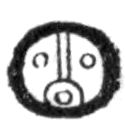
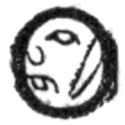
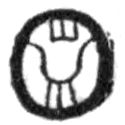
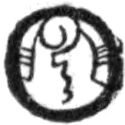
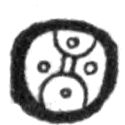
Ahau Eb Kan cib Lamat
A-ha-u Heb Kanaan cib Lam-a-ti
that is literally: He-water-Basin turn abundant fluid submerge the land.
Freely translated,
The Master of the basin of water turns it: abundant fluid submerges the land.
A glance at the illustration will suffice to show that the interpretation is correct. In my work "The Monuments of Mayax," etc., I give a more complete explanation of it.
[3]
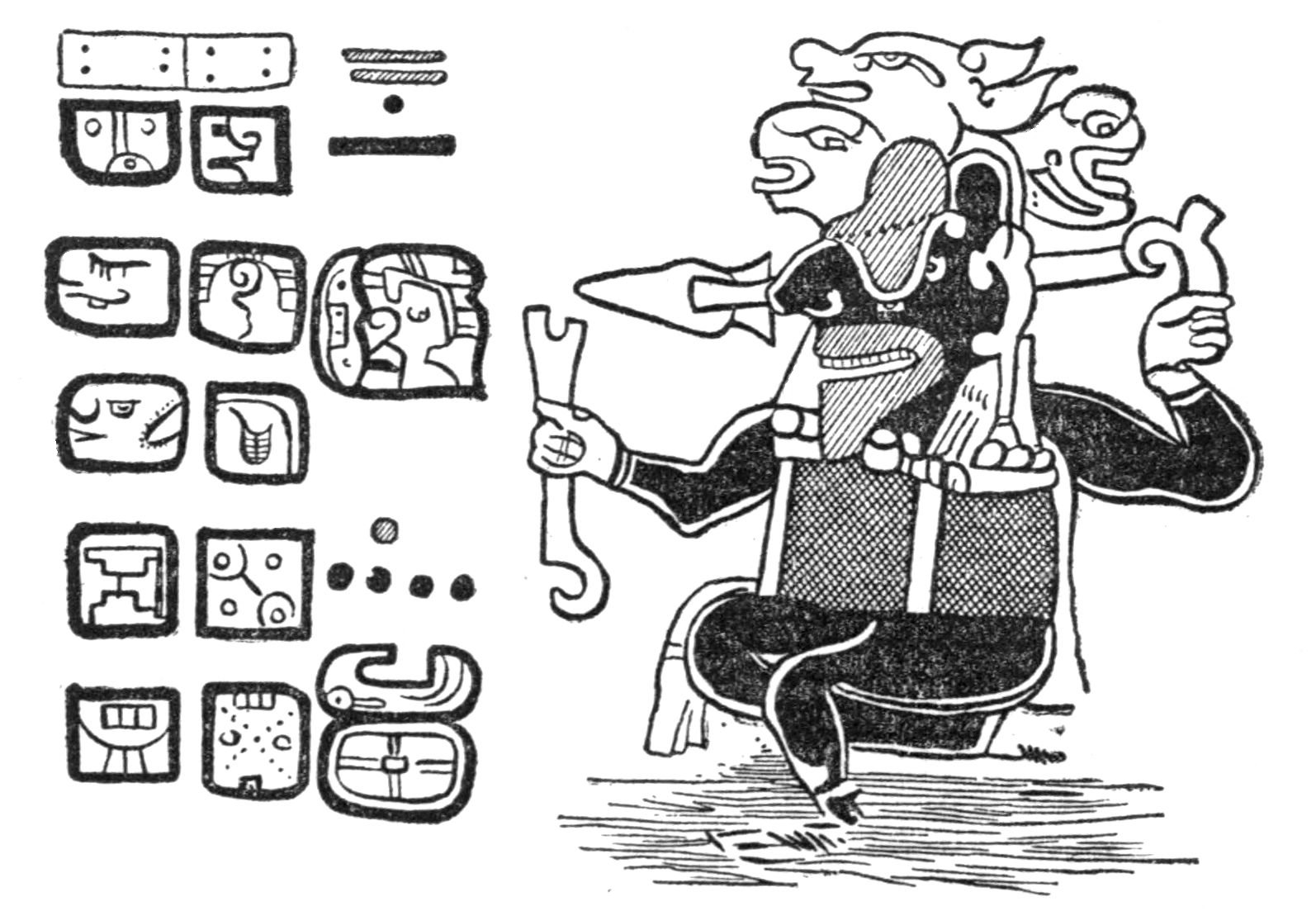
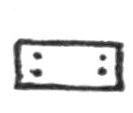
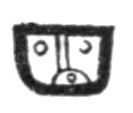
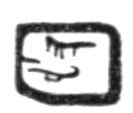
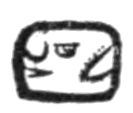
The legend reads commencing from the top of the left hand column—
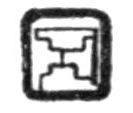
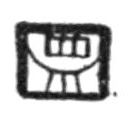
Can Ahau Cimen eb for heb Ezanab Kan
the King master of the basin of water dead forcing its way earthquake has risen
(beginning again at the top of the second column)
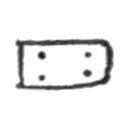
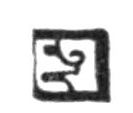
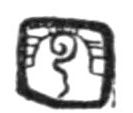
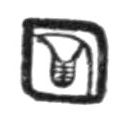
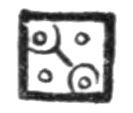
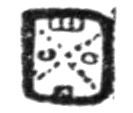
Can oc cib ik lamat ix
foot sank air—wind filled up crater—or bosom of the volcanoes
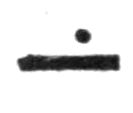
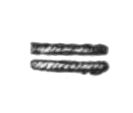
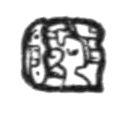
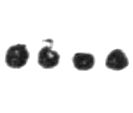

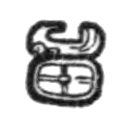
uac luumilob umukan can kak-mul Timanik
six fertile lands umukan four volcano Timanik
Can, the master of the basin of water, who was dead, forcing his way by means of the earthquake, has risen. Can's foot sank, the air having filled up the crater of the volcano. Six fertile lands have appeared in Umukan (Cuba) and four volcanoes in Timanik (one of the small Antilles.)
The Maya writers, as the author of the Troano, etc., sometimes represented the Earth under the figure of an old woman and called it mam—the grandmother. She is here represented holding in her left hand the sign of the smoke, and darting a javelin emblem of the volcanic energy, and in her right hand she holds the symbol of the "Land of the Scorpion" "Zinaan," the West India Islands of our days. The deer head represents the Maya Empire.
[4]
The legend literally translated reads as follows:
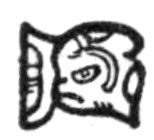
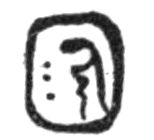
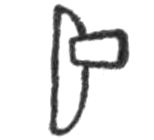
that is: PPeu, caban for cabahaan has struck again —bat—ax.
Freely translated: PPeu has struck again the tree with his ax. PPeu was the name of one of the twelve ancient rulers who governed the country in times anterior to the great cataclysm during which the Atlantic island was submerged. Deified after his death he became one of the protecting genii of the land, whose effigies still adorn the east façade of the palace at Chichen Itza, where they are placed, between the eyes, over the trunks of the mastodon's head, and surrounded with an aureola.
[5]
Symbol of the three sons of King Can—represented under the emblem of the three deer heads—Uluumil ceh, "the land of the deer," being one of the names of the country of the Mayas.