Front matter
Reading edition
UNITED STATES DEPARTMENT OF THE INTERIOR Stewart L. Udall, Secretary
NATIONAL PARK SERVICE Conrad L. Wirth, Director
NATURAL HISTORY HANDBOOK NUMBER THREE
This publication is one of a series of handbooks explaining the natural history of scenic and scientific areas in the National Park System administered by the National Park Service, U.S. Department of the Interior. It is printed by the Government Printing Office and may be purchased from the Superintendent of Documents, Washington, D.C., 20401
Price 35 cents
ROCKY MOUNTAIN NATIONAL PARK · COLORADO
By Edwin C. Alberts
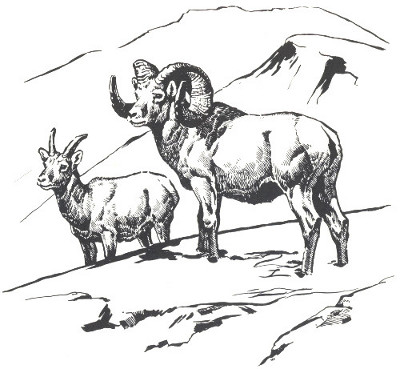
NATURAL HISTORY HANDBOOK SERIES NO. 3 Washington, D.C., 1954 (Revised 1963)
i
NATIONAL PARK SERVICE Natural History Handbook Series
No. 1. Olympic National Park
No. 2. Badlands National Monument
No. 3. Rocky Mountain National Park
No. 4. Saguaro National Monument
No. 5. Great Smokey Mountains National Park
ii
Administration
Rocky Mountain National Park, established on January 26, 1915, and containing about 410 square miles, is administered by the National Park Service, U.S. Department of the Interior.
The National Park System, of which this park is a unit, is dedicated to conserving the scenic, scientific, and historic heritage of the United States for the benefit and enjoyment of its people.
A superintendent is in immediate charge of Rocky Mountain National Park, with headquarters in Estes Park village on the east side of the park. Address communications to the Superintendent, Rocky Mountain National Park, Box 1086, Estes Park, Colo.
America’s Natural Resources
Created in 1849, the Department of the Interior—America’s Department of Natural Resources—is concerned with the management, conservation, and development of the Nation’s water, wildlife, mineral, forest, and park and recreational resources. It also has major responsibilities for Indian and territorial affairs.
As the Nation’s principal conservation agency, the Department works to assure that nonrenewable resources are developed and used wisely, that park and recreational resources are conserved, and that renewable resources make their full contribution to the progress, prosperity, and security of the United States—now and in the future.
iii