Chapter X · ABOLITION AND DISEASE
Reading edition
Abolition not necessarily laissez-faire.—Norwegian handling of disease problem.—Danish plan.—Italian plan.—Voluntary and compulsory provisions compared.—Denunciation of alleged sources of infection.—Attendance at free dispensaries.—Attitude of prostitutes,—of medical practitioners.—Notification of venereal disease.—Hospital provisions for treatment in Great Britain,—on the Continent.—Statistics unreliable and imperfect.—Census of venereal disease in Prussia,—in Sweden,—Venereal disease in European armies.—Regulation without effect in England.—Decline in amount of disease after its abolition.—Prussian army statistics.—Statistics from Christiania,—from Copenhagen,—from Zurich.—Fluctuations in venereal infection.—Reduction in amount of disease.—Abolition more favorable to such effort than regulation.
In the preceding chapter I remarked that though abolition may be accompanied by a laissez-faire policy, this is not necessarily the case. The situation in respect to venereal disease best illustrates this statement. We shall see that the public in England is well-nigh entirely indifferent on the subject; almost total laissez-faire prevails there. Abolition Scandinavia has, on the other hand, displayed great vigor and originality in grappling with the problem of disease. Abolition includes, therefore, the countries least active and most active in this respect,—both extremes.
The Norwegians were in this matter first in the field with a scheme, the essential points of which can be most clearly stated by means of a contrast with regulation. 344Regulation endeavors to protect the public health by safeguarding through police agencies the health of registered prostitutes,—these prostitutes being periodically examined by police surgeons and forcibly treated when found diseased; the distinctive features of sanitary regulation are, therefore, its limitation to professional inscribed prostitutes, its management by the police, and the prison-like nature of the cure. In contradistinction to this procedure, the unsatisfactory nature and outcome of which we have discussed, the Scandinavian experiment, generally speaking, aims to reach all those suffering with venereal disease, men and women alike; and it seeks to accomplish this end by transferring the function from the police to the health department, by the provision of free treatment, and by endeavoring to enlist the patient’s aid in ascertaining the source of infection, and in the isolation and cure of disease. Separation from the police is intended to allay the patient’s dread of becoming involved with the criminal authority, and, as nearly as may be, to establish the feeling that venereal disease is after all a disease and not a crime,—an evil that, aside from all else, requires consideration on its own account The voluntary nature of submission to treatment is intended still further to deepen the impression that the entire matter is left to the patient’s intelligence and self-interest—precisely as though he were otherwise afflicted; free treatment is designed to strengthen the inducement and to dispose of the competition of quacks.
The Norwegian law under which this system has been organized dates from 1860; by its terms local health 345boards with very extensive powers in reference to epidemic and contagious diseases were organized; and these boards were left free to determine what precautions should be taken and to require reports.
In order to assist the health—not the police—authorities in controlling the diseases in question, all physicians are required to report daily—usually without names[613]—their venereal patients, to furnish the patient with a copy of the laws relating to the communication of venereal disease[614] and to require the patient to sign a statement acknowledging the fact that he (or she) has been thus explicitly warned.[615] The physician also 346endeavors to ascertain the source of the infection and the person inculpated is reported to the Health Office. This latter individual on calling by invitation[616] is informed of the nature of the charge—the name of the accuser being withheld—and is invited to submit to examination at a hospital or by a municipal physician. No compulsion is applied; the advantages of knowing the truth and the offer of free and skilful treatment in complete privacy form the entire inducement. If disease is thus proved to exist, treatment can be compelled, to the extent of forcibly confining the infected person in a hospital. But reliable persons receive ambulatory treatment at the hands of municipal physicians,—men, at the office of the physician, women at the Board of Health office where a woman physician is on duty. The police are invoked only if an individual having been “denounced” neglects or refuses to comply with the summons of the Health Department. Persons who, having knowledge of their infectious condition, communicate disease, are punished with imprisonment for not exceeding three years.
The Danish law dealing with the subject represents a 347gradual evolution greatly hastened in its final stages by the Norwegian example.[617] The proffer of free treatment dates back to 1788; a law of 1874 sought to impose an obligation to take advantage of this opportunity; in the law of March 30, 1906, fifteen of the eighteen paragraphs which compose the statute deal with the problem of venereal infection.[618] The main provisions are the following:[619] It is made a punishable offence to communicate venereal infection even as between husband and wife; any person who in ignorance of his or her condition infects another is liable for the medical charges and damages; venereally infected persons may, regardless of their ability to pay, receive free treatment from the municipality; they are in duty bound to submit to such free treatment if they are themselves unable to employ a physician; if the manner of living of the patient is such as to endanger others, or if the patient does not observe directions, or is a pauper in receipt of aid, he or she may be forcibly interned,—the decision to rest with the police officials[620]; patients can be required to continue under medical observation even after the conclusion of their regular treatment; every physician is obligated to 348hand venereal patients a printed warning against marriage and against sexual intercourse, and to explain the legal liabilities incurred through violation of this injunction; every physician must report the instances in which such action has been taken by him[621]; patients are free to indicate the supposed source of their infection, though not obliged to do so, and the physician may in his discretion report such alleged source to the police, who may or may not take action thereon; a child, suffering with syphilis may not be nursed by any one other than its own mother; nor may a syphilitic wet nurse continue the practice of her vocation. A woman arrested for any offence connected with prostitution or on the charge of infecting another may with her consent be medically examined through the police; in case of refusal to submit, the courts shall have the power to order the same; compulsory examination must be carried out by paid municipal physicians of the same sex as the accused; these same physicians are obligated to examine all applicants and to treat all venereal patients without either demanding or accepting a fee; in Copenhagen municipal clinics must be maintained by the department of health in different parts of the city; the patient can be required to return for treatment at appointed times and if sent to the hospital may be compelled to remain until discharged by the physician. Should the patient fail to obey instructions, the case must be reported by the attending physician to the City physician, who is authorized to take action.[622]
349The municipal clinics, maintained for the purposes above stated, seven in number, are prominently announced on every advertising obelisk. As indicating the direct way in which the subject is handled, I reproduce on page 350 the bulletin.[623]
At Rome, side by side with the ineffective municipal regulatory system previously described, the royal government of Italy has, by a law approved August 1, 1907, instituted a dispensary system, in many respects closely following the Danish type. The measure provides for “gratuitous public prophylaxis of gonorrhœa, soft chancre, and syphilis.”[624] The dispensaries are to be organized by the communes acting in coöperation with the ministry of the Interior, or in default of such arrangement, by the Interior department itself; the expense is to be borne by the commune assisted by governmental aid; physicians shall be appointed by the government; “they shall treat without any distinction all sufferers from venereal diseases who apply to the dispensaries. The cure is gratuitous for all alike.”[625] Provision is further made for hospital facilities. Supplementary sections endeavor to bring professional prostitutes within the scope of the act.
350
AT THE FOLLOWING PLACES AND FROM THE FOLLOWING PHYSICIANS, ALL PERSONS SUFFERING FROM VENEREAL DISEASE, REGARDLESS OF ABILITY TO PAY, HAVE THE RIGHT TO DEMAND FREE TREATMENT WITHIN THE HOURS INDICATED:
PLACE NAME OF PHYSICIAN CONSULTATIONS FOR MEN
MON. TUES. WED. THUR. FRI. SAT.
Day Even. Day Even. Day Even. Day Even. Day Even. Day Even.
Rudolph Berghs Hospital Ravn 12½–1½ 12½–1½ 12½–1½ 6–7
Jersild 9½–10½ 6–7 9½–10½ 9½–1½
Isted Street 30 Meincke 3–4 6–7 3–4 3–4 6–7 3–4
Griffenfeldt Street 8 Einar Petersen 2–3 2–3 2–3 6–7
H. Levy 6–7 10–11 10–11 10–11
Osterbro Street 56 D H. Sorensen 9½–10½ 6–7 9½–10½ 9½–10¼
C. E. Jensen 3–4 3–4 6–7 3–4 7–8
Torve Street 12 H. Bonnesen 8½–9½ 6–7 8½–9½
P. Haslund 6–7 3–4 3–4 3–4
St. Kongens Street 46 Goldschmidt 11–12 11–12 11–12
PLACE NAME OF PHYSICIAN CONSULTATIONS FOR WOMEN
MON. TUES. WED. THUR. FRI. SAT.
Day Even. Day Even. Day Even. Day Even. Day Even. Day Even.
Rudolph Berghs Hospital Ravn 9½–10½ 6–7 10–11 6–7
Jersild 6–7 6–7
Isted Street 30 Miss Hamburger 10–11 10–11 2–3
Griffenfeldt Street 8 Einar Petersen 6–7 12½–1½
H. Levy 6–7 10–11
Osterbro Street 56 D H. Sorensen 9½–10½ 6–7
C. E. Jensen 6–7 3–4
Torve Street 12 H. Bonnesen 6–7 8½–9½ 8½–9½
P. Haslund 3–4 6–7
St. Kongens Street 46 Goldschmidt 6–7 11–12
Venders Street 8 Miss N. Nielsen 6–7 10–11 10–11 10–11 6–7 10–11
Health Board of Copenhagen, April 1, 1912.
351Between the Italian and the Scandinavian legislation above summarized there is, however, an important distinction. The Italian scheme is wholly and unconditionally voluntary and hygienic; it lacks altogether compulsory features, addressing itself unreservedly to health, without regard to either order or morals. A ministerial circular, interpreting its scope and purpose declares: “Any construction of the law aiming to ascertain the presence of disease is unlawful and in opposition to its purport, because the police spirit leads to the concealment of disease and avoidance of cure. Compulsory action is offensive to the liberty and dignity of human personality. The prophylaxis of venereal disease is to be kept entirely distinct from the protection of morals and the measures of the police. The two services differ in object,—the one having a hygienic end, the other aiming to protect public order. Confusion is dangerous and constitutes an abuse.”[626]
As contrasted with this thoroughgoing acceptance of the voluntary point of view, the Danish policy retains certain vestiges of police complicity. It includes, for example, the right of compulsory examination in case of women arrested for offences indicative of professional prostitution[627]; it continues to relate the police to venereal disease, through the compulsory proviso above cited and through the provisions encouraging the disclosure of the supposed source of the infection.[628]
As to the wisdom of the above mentioned provisions 352grave doubt exists. They are unquestionably in conflict with the spirit animating the statute as a whole. Dr. Santoliquido, the author and administrator of the unqualified Italian scheme, is strongly of the opinion that the slightest taint of police complicity or the slightest suggestion of publicity seriously impedes the utilization of the facilities offered.[629] The Danish lawmakers were evidently afraid to be thoroughgoing. On the one hand they were entirely clear that regulation failed, not only because it reached no men and relatively few women, but because the association of disease with crime tended to drive disease into hiding. They saw that, to entice it out, to ensure more general, more skillful, more thorough treatment, the interest and the intelligence of the patients had to be appealed to; they must be taught to be cured for their own sakes and that of others; and in order that every obstacle thereto might be removed, treatment offered in a scientific spirit must be made free and accessible. They feared, however, to leave the matter at this point; they felt that some provision had to be made for backsliders; and to keep these under treatment, even against their own inclination, the intervention of the police was made possible. Undoubtedly the individuals immediately concerned may thus gain,—for they may be helped. But the danger is that unfortunate indirect effects may more than outweigh the direct favorable effects. The vestige of the police spirit may hinder the very transformation in the attitude of those afflicted 353that the legislation hoped to bring about. Thus incidental compulsion may tend to tear down what the law as a whole endeavors to build up.[630]
As opposed then to the Italian policy of leaving the matter wholly to individuals and endeavoring to educate them to take advantage of abundant facilities, the Danish plan leaves the matter to individuals, if the individual is willing to act intelligently; but it endeavors to coerce the rest. There is, however, some doubt as to whether the second part of the Danish arrangement does not tend to defeat the first. Even under police regulation we observed that most was achieved where force was most completely dissembled; and, wherever, as at Paris, police regulation and voluntary hospital facilities are both provided, the latter are far more effective than the former. Moreover, the remnant of police compulsion is always in danger of relapsing into regulation, applicable mainly, perhaps altogether, to women,—a policy to which we have discovered insurmountable objections.
From the standpoint of the theory of the law, then,—that abundant facilities for treatment coupled with an unqualified appeal to the intelligence and self-interest of the patient is likely to reach, on the whole, the largest number of the afflicted—grave question may also be raised regarding denunciation of the source of a particular 354venereal infection. On its face, the transaction appears reasonable enough: a sufferer, after interrogation by his physician or of his own motion, may report his belief that he was contaminated by this woman or that.[631] The information communicated by the doctor to the police is held in strict confidence, and the person involved may be requested to call at police headquarters; where, being informed of the nature of the accusation, it is suggested that he (or she) consult a physician,—a municipal physician or a physician of the individual’s own choosing; should he (or she) be reported as ill, treatment may be compelled, if the individual declines otherwise to submit.[632]
On its face, I say, this looks like a not unreasonable method of attacking infection at its source in the case of persons who lack the conscience or the intelligence to act of their own accord; for clearly the foci thus reached might, if left alone, have continued, ignorantly or malevolently, to breed further contamination. Denunciation aims to bring these concealed sources to light; offers them treatment, if they are intelligent enough to take advantage of such opportunity; and adds the state’s right and power to compel a proper course of action, if, for any reason whatsoever, they are differently minded.
355As a matter of fact, the thing is by no means so simple. In the first place, with the best intention, the patient may be mistaken as to the source of his or her infection. Prostitution is promiscuous on both sides. The women notoriously consort in quick succession with many men; men often consort with different women. The periods of incubation are more or less indefinite and variable, so that a mere reckoning back to a particular act of intercourse is not conclusive. In one set of cases, carefully studied from this standpoint,[633] over half of those questioned were unable to throw any light on the subject.
The very difficulty in question opens the way to error and abuse. Despite the confidential fashion in which the subject is handled, the humiliation involved in a mistaken or false accusation is no trifle. The same principle holds here as in respect to arrest for alleged solicitations—a single error is worse than a hundred omissions. It is a totally different thing from a mistaken allegation that some other infectious disease exists in a given house or person,—diphtheria, for example, or scarlet fever. The manner in which venereal disease is usually contracted, the implications attending its presence, set it off in a class by itself, and open the door to abuses for which other contagious diseases give no opportunity. A procedure that might, therefore, be safely employed in reference to scarlet fever, if feasible 356or necessary, may be totally inapplicable to syphilis.
The experience of Copenhagen has quite fully justified these doubts. Denunciation is an invitation to blackmail; it can be and has been employed by men simply to rid themselves of women of whom they have tired; for, while in theory equally applicable to both sexes, under existing conditions women have most to fear from it. For this reason, physicians do not regularly report to the police the alleged sources of infection; nor do the police always act even on such denunciations as reach them. But despite the caution with which the police act, it happens not infrequently that denounced women prove on examination to be free of infection. Women wishing to be revenged upon former “friends” or lovers do not hesitate to employ the same device; and not infrequently with a similar result. The following table shows the results of the examinations made at the instance of the Copenhagen police during a series of years:[634]
Year No. Examined Men Women No. Men ill No. Women ill No. persons reported for not continuing treatment No. of these reached
Men Women
1907 410 22 388 21 172 154 37 68
1908 609 61 548 54 195 218 60 89
1909 739 36 703 28 226 238 95 112
1910 822 25 797 14 155 336 130 141
1911 780 40 740 24 160 364 117 133
The figures above given by no means represent all the accusations filed with the police. They are those 357only that the department felt justified in following up. As the police cannot permit themselves to be made an indiscriminate instrument of private oppression or vengeance, they use their own discretion as to whether they will act on a given “denunciation.” Necessarily therefore their action is so uncertain as to be quite ineffective; with anything less than the most complete integrity it might readily be something worse than uncertain. The officials are therefore in serious doubt as to whether denunciation is workable even under the comparatively simple conditions of the Norwegian and Danish capitals; of a commission of nine persons recently appointed to consider the question in Copenhagen, five members favored repeal; four favored retention, not on the ground of its general value, but as a means of reaching utterly reckless or insane individuals who go so far as to boast of their success in disseminating disease.[635]
But perhaps a more serious objection to denunciation from the purely sanitary standpoint lies here;—that it continues the hurtful association of venereal disease with the police. It works in this respect like the reporting of patients who break off treatment without authorization. A certain number can, of course, be laid hold of. Of 1,749 cases recorded in the table given, 543 were compelled or induced to resume treatment. This is, of course, so much to the good; but suppose it impedes the wider acceptance and operation of the voluntary principle, on which, in the long run, the success of the dispensary system depends? The large number of disappearances 358above noted suggests the repellent outcome of this traditional association, which must be completely uprooted, if persons ill of venereal disease are to seek treatment as readily as those ill of measles or mumps.[636]
The final columns of the table given on page 356 deserve comment on another score. During five years, 1,749 persons discontinued treatment for venereal disease before they were dismissed by their physicians: of them, 1,310 were men, 439 were women. It would appear, therefore, that men may be less intelligent and conscientious than women in the pursuit of regular and voluntary treatment. Either sex may, of course, be the means of indefinitely spreading infection,—women by infecting a series of men, men by infecting a series of women. If compulsory medical examination and treatment (i. e. regulation) are therefore to be applied to only one sex, they ought, in the light of the Copenhagen figures, to be applied to men rather than to women,—for of the two sexes, compulsion, if desirable, would be best applied to the sex that makes the less use of voluntary opportunity.
The problematical points above discussed do not, however, touch the heart of the subject. At bottom, the issue between regulation and abolition turns upon this question: are the ravages of venereal disease more likely to be mitigated by the medical examination and compulsory 359treatment of registered prostitutes, assuming such examination and treatment to be as intelligent as they can be made, or by the provision of free, abundant and confidential opportunities for all sufferers, assuming that the dispensaries are as well conducted as they can possibly be? In behalf of patient and thorough experimentation along the latter line, the failure of regulation is of course the first and perhaps most powerful argument. The Italian sanitarians lean largely on another,—that compulsion can in no event be defended, since it involves an infraction of personal liberty. In my judgment, it is a pity to raise a metaphysical issue of this kind. Could it be once proved that compulsion succeeds, society would probably not permit itself to be balked by abstract principles of personal liberty; a not dissimilar argument by anti-vaccinationists has been peremptorily overruled by most civilized states. No individual’s liberty can be made to include the privilege of spreading contagion, if a demonstrated method of checking the process is known. In this volume, I have throughout endeavored to meet regulation on its own ground. A verdict unfavorable to regulation has been found in the first instance, not because it violates personal liberty, but because it fails; because it is at least useless in respect to order, and worse than useless in respect to venereal disease. In the same way, the voluntary system is recommended, not because it is consonant with modern theories of individuality, but because it may prove the most effective way of throwing light upon the dark corners in which disease huddles and multiplies.
Experience affords as yet no conclusive proof of the 360superiority of the voluntary system. Its introduction is too recent and too limited to have as yet affected the general situation. Moreover, the system can not be judged until communities have been educated to take advantage of it, or—what comes to the same thing—until it becomes evident that it is impossible to educate the afflicted to take advantage of it. Time is a most important factor in this matter. The ancient police association must altogether die out; even the feeling of personal humiliation about contamination must be taught to subordinate itself to a realization of the duty of submitting to competent treatment. It is not surprising to find that the women formerly registered in Copenhagen used their freedom in the first instance to stay away; the more intelligent consulted private physicians, but the others simply ignored their condition. This experience does not prove either the wisdom or necessity of regulation; it proves only the baneful effect of associating hygiene with the police and the necessity of patience until the former association is dissolved and an entirely new association created.
How far results may be claimed for the voluntary system, I shall consider in a moment. But certainly the way the system operates creates a presumption thus far in its favor. Notwithstanding the partial retention of the police connection, the dispensaries of Copenhagen are already treating more women than formerly were reached by regulation; in the year 1910, of all cases reported to the Health Office, 40% had taken advantage of the dispensaries. The following tables exhibit the attendance 361of new patients at the free dispensaries during the years 1910 and 1911:[637]
Year Men Women Children Sent into Hospital Reported for failure to keep up Treatment
1910 3,991 1,090 78 750 238
1911 3,748 1,165 72 644 277
Moreover, the attitude of the prostitutes themselves is perceptibly changing. I mentioned above that at the outset they refused to attend the dispensaries. I was, however, reliably informed that this is no longer the case to anything like the same extent. Women who formerly endeavored to “evade the whole thing” describe themselves now as only “too glad to come.” M. Augagneur submitted to the French Extra-Parliamentary Commission a comparative table strongly confirmatory of the Danish experience. The record in question runs from 1876 to 1903; it shows the number of women—registered and non-registered prostitutes respectively—who were treated for venereal disease at the Hospice de l’Antiquaille: in 1876, 835 registered prostitutes, 281 non-registered. Thereafter, the former steadily declined with the inevitable disintegration of the regulatory system; the latter tended to rise. In the final year (1903) the registered prostitutes compulsorily treated numbered only 180; the clandestines voluntarily treated had increased to 327,—i. e., the number receiving voluntary treatment was almost twice as large as the number receiving 362compulsory treatment, despite the continuance of the police association.[638]
The attitude of the medical profession is an interesting indication of the way in which the new law has worked. At the outset, nine-tenths of the Copenhagen doctors were regulationists; even those favorable to abolition were fearful of sudden abolition. Nowadays the medical professions of both Christiania and Copenhagen are described as practically unanimous against regulation. Dr. Hoff in his vigorous pamphlet above quoted declares that the Danish law may indeed be modified as to details; but its main outlines are secure. And this, despite the fact that the free dispensary has practically effaced the specialists in venereal diseases,—an incidental result philosophically accepted by those whom it has affected.[639]
A word as to one other peculiarity of the Scandinavian laws,—viz. the notification of venereal disease. In Christiania, physicians are required to report daily to the Health Department, without names, new patients suffering with any venereal disease.[640] The Danish law is similar; while other contagious diseases are notifiable with names, venereal diseases are notified without names as a rule. The policeman on the beat collects the notices as he makes his rounds. A circular, dated July 1, 1912, institutes a similar form of notification in Sweden. It is stated that all cases of contagious sexual disease must be reported by the attending physician in franked envelops 363to the “official physician of the province or the board of health, with the name of the disease, the age and sex of the patient, but without name and address.” Notification answers in general a statistical purpose; but in Denmark, a patient who interrupts treatment may be reported by name and find himself forced to continue treatment or to fly. It is impossible to discover that notification itself has had any bad effects whatsoever. It appears rather to have assisted in making the sufferer realize his danger to others,—precisely as the notification of other diseases has resulted in increased conscientiousness. The fear one observes among English abolitionists, that notification may prove an indirect method of reinstating regulation of one sex is baseless, in so far as Denmark and Norway are concerned.
Of the other abolition countries,—Great Britain, Switzerland and Holland, none has as yet taken the disease problem seriously. Laissez-faire—an unreasoning, prejudiced laissez-faire, at that—still prevails.
In England, the public authorities concerned with the prevention and treatment of disease have thus far made “no organized effort to diminish the prevalence of venereal disease,” nor would the desirability of their interesting themselves in the matter “be accepted as indisputable.”[641] The hospital provisions for venereal diseases are utterly inadequate. Indoor accommodation in the large voluntary hospitals of London there is practically none,—and this even in teaching hospitals. It is held that “it is unreasonable to expect subscribers to spend 364their money on rescuing persons from the consequences of their sins.”[642] The Inspector for the Local Government Board reports that “no beds or wards were reserved for infective venereal cases in any of 30 general hospitals visited in London and the provinces. In one of the London hospitals, a rule precluded the treatment of unmarried women suffering from venereal disease, though no such rule existed with regard to unmarried men.”[643] A more liberal policy characterizes the out-patient departments, though their organization and equipment are both defective. The poor law infirmaries and workhouses are apt to be better equipped; and it is interesting to note in passing that the administrators of these institutions when asked for their “opinion regarding the advisability of endowing the guardians with the powers of compulsory detention (of those seeking treatment for venereal complaints) were practically unanimous in declaring that it would deter patients from coming.” A few special hospitals called lock-hospitals (the name is etymologically obscure, but has nothing to do with “lock-up”) are also devoted to the care of venereal patients. Of these, recent writers state: The lock-hospitals are pathetically meager, containing “in London 136 beds for females, 27 for males; elsewhere about 70, making perhaps 250 in the United Kingdom.”[644] Out-patient services are also found in connection with the lock-hospital. English conditions in this respect 365therefore deserve the severe language of Sidney and Beatrice Webb: “The man or woman suffering from gonorrhœa or syphilis, even if the innocent victim of another’s guilt, is refused admission to the voluntary hospital; deterred, and as often as possible, hustled out of the workhouse; and wholly unprovided for by the local health authority.”[645] Moreover, the method of conducting the only available resort—the lock-hospital—is more or less repellent. The patient is made to feel that his cure ought also to be a penance. The head nurse opens and reads all letters sent or received, a measure that marks off the venereal from any other patient. The sanitary spirit is as yet quite undeveloped: “I don’t believe in making it safe”—remarked the secretary of a lock-hospital to me, just as we entered the children’s ward, where thirty to forty innocent victims were under his care, the moral and medical aspects of the problem as yet hindering each other in his mind!
The abolition cities on the Continent are in respect to hospital facilities much better off, for dermatological clinics, including beds for venereal diseases, form part of the general hospitals in large cities.
I have now briefly described conditions as to the laws and hospital provisions relating to venereal disease in various abolition countries. The issue between abolition and regulation ought in theory to be determinable by an inspection of statistical results, contrasting the results in regulation and abolition countries respectively. Is this the case?
366There are many reasons why a summary method of settling the question by results is inapplicable. In the first place, available data are neither sufficiently reliable nor sufficiently complete.[646] Recent improvements in diagnostic art show the existence of venereal disease where mere clinical examination—up to recently the sole reliance of the physician—is incapable of discerning it; in some cases, the same improvements now result in a negative diagnosis where superficial appearance might formerly have led to a positive opinion. Hence one serious defect of even conscientiously compiled figures. But there is another serious source of error. Such general statistics as exist are in an extraordinary degree fractional and unscientific. Only in certain small sections of Scandinavia has a more or less accurate system of reporting been in vogue for even a relatively short period. Elsewhere our inferences must be based on hospital and insurance reports or rough personal estimates. In these conditions, so narrow a question as the issue between regulation and abolition does not lend itself to statistical determination.[647]
367Statistics and opinion, however, both concur in an indirect contribution to the problem. Venereal disease is shown by both to be so widely prevalent in regulated cities that one marvels whether the situation could really be any worse under even the most radical laissez-faire abolition. It is a truism that physicians eager to equip themselves as specialists in venereal disease resort to the crowded clinics of Paris, Vienna, and Berlin, all regulated towns, because there disease is found in greatest abundance and richest variety,—a strange comment on the alleged efficacy of regulation! On the basis of all available sources of information, Blaschko calculates that of the clerks and merchants in Berlin between 18 and 28 years of age, 45% have had syphilis, 120% have had gonorrhœa; 77% have had syphilis, 200% have had gonorrhœa in Breslau.[648] Similar inquiry among students shows according to the same investigator, that “in the course of his four years at the University, every student is venereally infected at least once,—a statement that no one familiar with the facts will be inclined to question.”[649] Pinkus declares that in Germany one man in every five has had syphilis,[650] and that gonorrhœa averages more than one attack per man.[651]
An attempt was made by the Prussian Government to take a census of the amount of venereal disease among 368men in the Kingdom on April 30, 1900. It developed—as far as the returns showed—that in general on that day 28 men out of every 10,000 were infected; in Berlin, however, the average was 142 per 10,000; in cities of over 100,000 inhabitants, 100 per 10,000; in the cities of over 30,000 inhabitants, 58 per 10,000; in cities under 30,000 inhabitants, 45 per 10,000. The results may be represented thus:
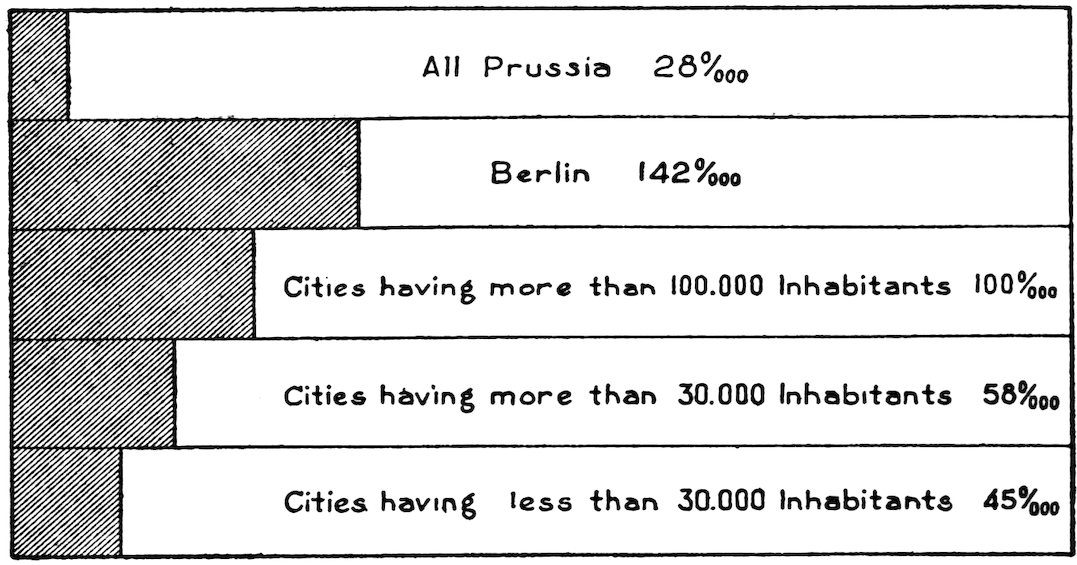
Figure I.—Venereal disease among males in the population of Prussia, April 30, 1900.
The inference to be drawn from Figure I is obvious: the amount of venereal disease is in direct relation to the size of the town. The figures given cannot accurately represent the actual totals; but they may nevertheless give a fairly reliable indication of relative conditions. The steady decrease with the size of the city appears to suggest the main, perhaps the sole important concrete factor, viz., the size of the city; a factor upon which we shall stumble again in another connection.
369A similar inquiry was also made in Sweden, with a view to determining how many persons were under treatment for infectious venereal disease January 31, 1905. A questionnaire was sent to 1,264 physicians, of whom 1,181 replied.[652] The Swedish and Prussian figures are set side by side in the following table:[653]
SWEDEN (JAN 31, 1905)
Syph. Soft chancre Gon.
Stockholm (pop. 317,964) 23. 1.2 31.2
Göteborg (pop. 138,030) 15.6 1.4 18.9
Malmö (pop. 70,797) 14.4 3.1 28.6
Norrköping (pop. 44,378) 11.3 0.3 16.8
Whole Kingdom 3.6 0.3 5.4
PRUSSIA (APR. 30, 1900)
Berlin 23.6 5.8 53.2
Seventeen cities of more than 100,000 inhab. 17.8 3.5 32.6
Forty-two cities 30–100,000 10.8 1.9 19.6
Whole Kingdom 5.1 1.1 9.9
A more definite impression is obtainable regarding the incidence of venereal disease in European armies: do the curves thus arrived at throw any light on the issue between regulation and abolition? The subjoined graph (Fig. II) embodies the official statistics of the war offices of Europe from 1881 to 1905.
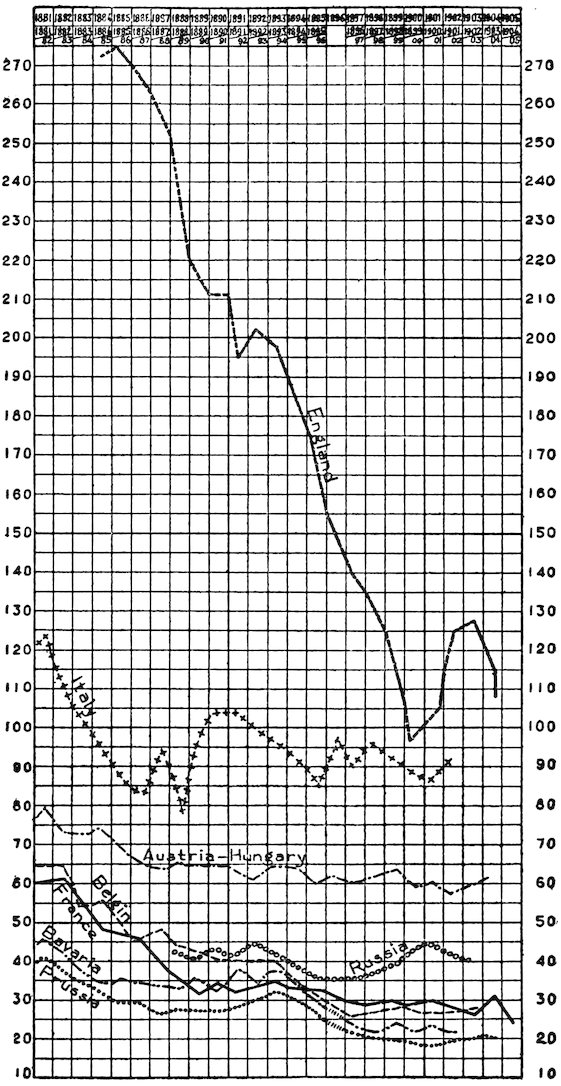
Figure II.—Venereal disease in European armies.
At first sight, the graph might be interpreted as a conclusive argument in behalf of regulation. But careful consideration entirely changes its significance. In the first place, the earlier or more unfavorable English statistics are stated to be altogether unreliable. It is indeed on the face of the matter impossible to credit anything like the precipitous decline depicted. Moreover, 371the implied comparison is itself unfair. A continental army includes the youth of the entire nation,—all those between certain ages,—city and country boys alike; the good elements dilute the showing that would be made by the bad. The English army, on the other hand, is a volunteer force, largely recruited from among the adventurous and the derelict,—precisely those among whom an inordinately large proportion of venereal disease would naturally occur. The continental curves may represent the condition of the total male population of the ages in question; the English curve speaks for only a single section and the two cannot be directly compared. Moreover, the very magnitude of the discrepancy is fatal to its explanation by regulation. The marked variations between the armies of regulated countries,—Italy, Austria, and Prussia, indicate clearly the existence of other factors. Finally, there is observable a general movement downwards coinciding with the breakup of regulation on the Continent. If regulation exerts a perceptible effect, its narrowing scope ought to be attended by a gradual rise in the curves, instead of the reverse.
To whatever the general differences in the curves be due, there is nothing in them to suggest that regulation plays any rôle whatsoever. Closer consideration of separate curves will establish this proposition beyond dispute. The English Contagious Diseases Acts, under which medical inspection of prostitutes was instituted, were repealed in 1886,[654] the very year in which the graph records the highest incidence of venereal disease in the army. Repeal was followed, not by a rise, but by a fall 372that, except for the interlude created by the Boer War, has continued almost uninterruptedly from that day to this. Regulation was at its height in England from 1870 to 1882. In the former year, of 38,408 recruits inspected, 15.78 per thousand were rejected on the score of syphilis; the number of recruits increased during the period in question to 45,423, of whom in the last year of effective regulation 10.72 per thousand were rejected for the same reason. Is this improvement attributable to regulation? Clearly not; for the rate of rejection has declined since abolition more rapidly than at any other time: in 1886, 77,991 were examined and 8.18 rejected per thousand; in 1897, 59,986 were examined and 3.47 rejected per thousand.[655]
373The annual admission of enlisted men to hospitals for venereal diseases tells the same story. In 1886—the year of the repeal, this reached the startling total of 267.1 to the thousand; by 1900, the figure had fallen to 93.2; it rose to 125 in 1903, and fell thereafter steadily to 66 in 1909.[656]
The curve (page 374)[657] shows admissions, per thousand of strength, for syphilis (primary and secondary) in the army at home and in India for the years 1880–1908.
374
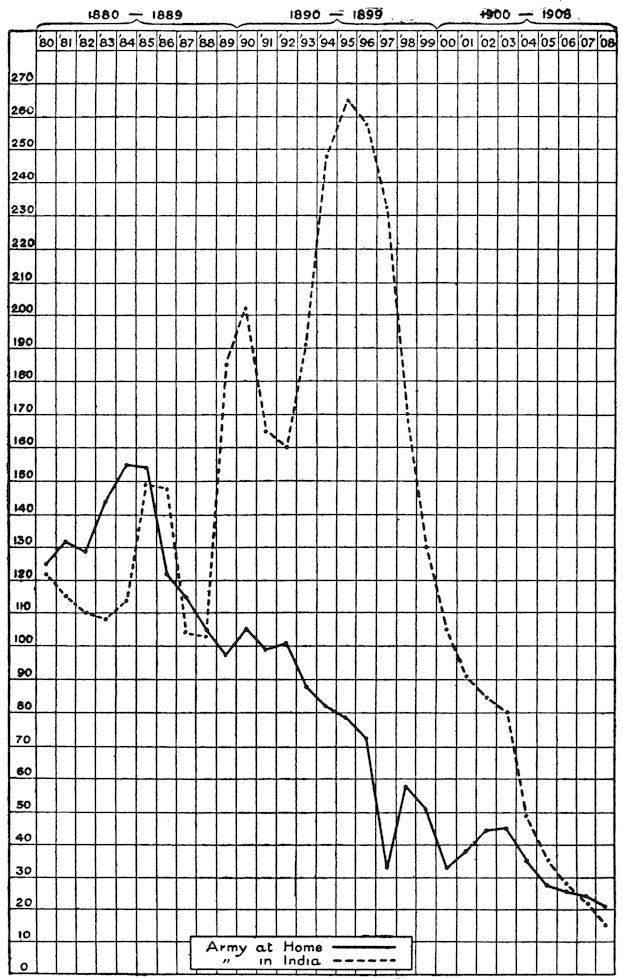
Figure III.—Admissions per 1,000 for syphilis, British army, 1880–1908.
375Finally, a comparison made between regulated and non-regulated military stations before and during regulation and after abolition exhibits capricious variations indicating clearly the negative outcome of regulation: (See Fig. IV, p. 376.)
Col. Melville’s analysis is as follows: “The most obvious fact is the parallelism of the curves. Though the curve for unprotected stations is on the whole higher, they follow the same general trend. They both fall at first, and from 1875, they both rise steadily. Regulation did not keep disease down between 1876 and 1882; its increase in unprotected stations was proportionately somewhat less than in the protected. The marked increase in the protected stations after relaxation of the rules in 1882 only continues the rise originating six years previously. Total repeal in 1886 is followed by a very marked fall in both curves, which, however, had begun in 1883 in the unprotected, and in 1884 in the protected, stations.”[658]
Statistics of the British Army. Admission to Hospital for Venereal Disease. Ratio per 1,000 of Strength.
Year Home Army
1882 246.0
1883 260.0
1884 270.7
1885 275.7
1886 267.1
1887 252.9
1888 224.5
1889 212.1
1890 212.4
1891 197.4
1892 201.2
1893 194.6
1894 182.4
1895 173.5
1896 158.3
1897 139.7
1898 132.7
1899 122.4
1900 93.2
1901 105.4
1902 122.7
1903 125.0
1904 107.6
1905 90.5
1906 82.0
1907 71.9
1908 68.4
1909 66.0
377
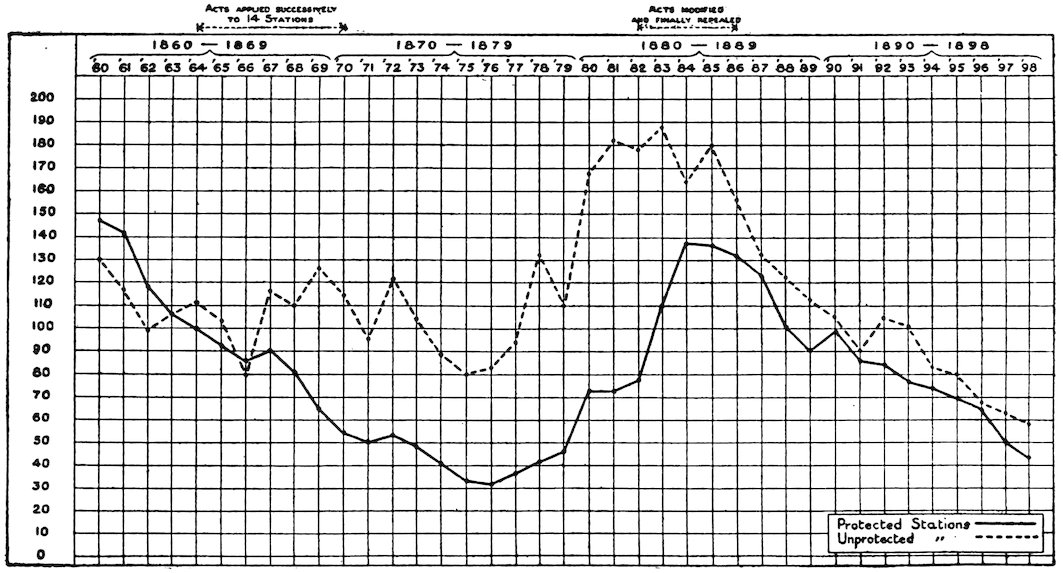
Figure IV.—Comparison of 14 protected with 14 unprotected stations in respect to admissions with primary venereal sores.
German army statistics, intensively studied, yield a similarly negative result as to benefits of regulation in respect to the incidence of venereal disease. Recurring to Figure II (p. 370) we observe that the extent of infection decreased continuously from 1881 (as in all other armies except the Italian, where irregularities are considerable) up to 1900, despite the fact that, as has been shown, methods of medical examination were so crude that they probably caused more disease than they isolated. The Dutch curve has also consistently dropped,—most of all so, since abolition.[659] In Stockholm, the statistics exhibit the same decline, coincidentally with the gradual weakening of regulation.[660]
Closer inspection of the Prussian statistics brings to light the one significant factor that we have already remarked in a previous correction, viz., the size of the community involved. It appears that during a series of years the percentage of venereally infected recruits is practically constant at 7.7%, despite the ups and downs of regulation meanwhile; but infection in different army corps shows wide discrepancies, varying from four per cent. in the XI, XIII, and XIV army corps to 20.7 per cent. in 378the III, which is stationed in and about Berlin. The same relation holds as to recruits. In the years 1903–5, 41.3 of the Berlin recruits were venereally infected; 30 per cent. of the recruits from Hamburg and Altona,—yet these are the most effectively regulated towns in the German Empire. I do not mean to imply that the amount of infection is to be accounted for by the existence of regulation, but rather that it is clear that regulation does not lessen it. The really important factor is the size of the town. For throughout the period just mentioned (1903–5) the extent of infection among recruits dwindled with the size of the places from which they were drawn; regulation had nothing whatever to do with it. Berlin, as I have said, showed an infection of 41.3 per cent.; towns of more than 100,000 inhabitants 15.8 per cent.; towns between 50,000 and 100,000, 10.2 per cent.; those between 25,000 and 50,000, 8 per cent.; smaller towns and the country districts, 4.4 per cent. The size of the garrison has a similar effect. A small garrison (less than 400) shows venereal infection of 11.9 per cent. in 1905–6; a garrison between 1,000 and 3,000, 16.9 per cent.; a garrison between 5,000 and 10,000, 19.8 per cent.; garrisons of over 10,000, 26.6 per cent. Regulation can have had no influence whatever on these figures; and this is all the more certain in view of the fact, that though regulation has tended to disintegrate in the last two decades, the percentage of infection, everywhere a matter of the size of the place or the garrison, has in this period, everywhere in absolute amount markedly decreased: in the smallest garrisons, from 33.2 per cent. in 1885 to 11.9 per cent. in 1905; in the largest, 379from 36.8 per cent. in the former year to 26.6 in the latter.[661]
Evidence more direct, though of limited range in point of time, is contributed by various towns that have adopted the abolition policy. Of these, Christiania is by far the most satisfactory. It has the longest record and the most satisfactory statistics; for venereal diseases have been notifiable since 1876, though the form of notification has undergone some modification. If diagnostic means have not been too defective in the past, a stretch of something like 20 years is represented by the abolition experience of the Norwegian capital, which has increased in population during the period in question from something below 80,000 to almost a quarter of a million.
The official table (see p. 380) gives the local situation from 1876 to 1911, inclusive.[662]
380
Year Gonorrhea Soft Chancre Acquired Syphilis Congenital Syphilis Total Population Reported total as percentage of population Reported cases of syphilis as percentage of population
Men Women Both Men Women Both Men Women Both Men Women Both
1876 593 419 1012 79 022 1.28 0.53
1877 909 134 297 33 1373 106 781 1.28 0.31
1878 1040 166 311 31 1548 112 977 1.37 0.30
1879 951 176 1127 200 114 314 211 154 365 21 15 36 1842 116 801 1.58 0.34
1880 1208 219 1427 265 99 364 268 156 424 21 22 43 2258 119 407 1.39 0.39
1881 1277 199 1468 353 78 431 302 151 453 33 39 72 2424 122 036 1.99 0.43
1882 1140 146 1286 580 127 707 308 188 496 21 23 44 2533 122 424 2.07 0.44
1883 1100 186 1286 257 49 306 175 111 286 21 15 36 1924 124 155 1.55 0.26
1884 1118 142 1260 208 57 265 172 126 298 17 22 39 1862 128 300 1.45 0.27
1885 997 186 1183 175 32 207 148 123 271 33 29 62 1723 130 790 1.32 0.25
1886 1095 99 1194 292 65 357 163 101 264 25 14 39 1854 134 036 1.39 0.23
1887 829 106 935 306 37 343 175 97 272 21 23 44 1594 135 615 1.18 0.23
1888 509 66 575 71 16 87 103 109 212 18 14 32 906 138 319 0.66 0.18
1889 585 85 670 73 8 81 187 107 294 10 22 32 1077 143 347 0.75 0.23
1890 679 60 739 213 25 238 330 178 508 16 13 29 1514 151 130 1.00 0.26
1891 759 42 801 180 15 195 303 170 473 10 10 20 1489 156 535 0.95 0.31
1892 935 90 1025 192 13 205 355 208 563 9 18 27 1820 161 151 1.13 0.37
1893 1069 97 1166 260 23 283 278 229 507 12 15 27 1983 167 588 1.18 0.32
1894 1283 121 1404 281 29 310 353 193 546 25 17 42 2302 174 717 1.32 0.34
1895 1482 126 1608 387 34 421 518 206 724 26 14 40 2793 182 856 1.52 0.42
1896 1471 149 1620 393 49 442 498 235 733 32 28 60 2855 192 554 1.48 0.41
1897 2031 173 2204 447 46 493 450 233 683 25 25 50 3430 203 337 1.69 0.36
1898 2125 207 2332 433 51 484 565 259 824 25 27 52 3692 221 255 1.67 0.40
1899 1966 191 2156 491 44 535 543 221 764 35 34 69 3525 226 423 1.56 0.37
1900 1871 170 2041 507 43 550 457 195 652 28 26 54 3297 228 929 1.44 0.31
1901 1684 174 1858 292 32 324 432 208 640 23 17 40 2862 224 909 1.27 0.30
1902 1576 159 1735 418 37 455 368 196 546 20 28 48 2802 225 709 1.24 0.27
1903 1570 183 1753 401 39 440 431 183 614 24 20 44 2851 223 649 1.27 0.29
1904 1392 139 1531 347 20 367 355 154 509 26 34 60 2467 222 373 1.11 0.26
1905 1384 139 1523 278 16 294 340 128 468 24 26 50 2335 226 774 1.03 0.23
1906 1108 132 1240 169 14 183 802 129 431 19 16 35 1889 229 324 0.82 0.21
1907 903 112 1015 133 10 143 251 123 374 10 25 35 1567 231 687 0.68 0.18
1908 1055 107 1162 198 21 219 278 134 412 24 26 50 1843 235 674 0.78 0.20
1909 1149 101 1250 172 19 191 315 142 457 31 27 58 1956 239 511 0.82 0.22
1910 1261 98 1359 206 14 220 332 141 473 27 13 40 2092 244 038 0.86 0.21
1911 1373 94 1467 327 27 354 356 163 519 19 17 36 2376 247 488 0.96 0.22
381In the period covered by these statistics, the population of Christiania has trebled; we might, therefore, expect a marked rise in the presence of venereal disease. As a matter of fact, the incidence of syphilis was never again so high as in the first year; with certain fluctuations, it fell, despite the marked increase in population, from .53 per cent. in 1876 to .22 per cent. in 1911. The decline in all three diseases taken together, though not quite so striking, is sufficiently noteworthy in the face of general conditions that might account for a rise: 1.28 per cent. in 1876, .96 per cent. in 1911. Abolition took place in 1887. During some of the following years a rise is observable, explicable in several ways: (1) It was the purpose of the law to induce disease, hitherto hidden, to come out into the open. The breaking of the police association, the prominence given to the free dispensary, ought to have brought out cases that under the old order were handled secretly and thus escaped reporting; a rise in the number recorded might mean not more fresh cases, but merely more cases under proper treatment. (2) Coincidently with the introduction of the new law, these diseases had to be reported daily, instead of monthly, and greater accuracy in this respect might account for a rise indicating not more disease, but more complete statistics.
The experience of Copenhagen is unfortunately too brief to be of commanding importance; a proper system of notification was introduced for the first time in July 1912. Available statistics, obviously very incomplete, make the following showing:[663]
Years Gonorrhœa Soft Chancre Acquired Syphilis Syphilis Congenital Syphilis Total
1907 5,684 728 1,869 39 63 8,383
1908 6,320 1,164 2,349 63 61 9,957
1909 6,029 1,034 2,108 57 52 9,280
1910 6,076 848 2,330 39 85 9,378
1911 6,500 692 2,543 66 87 9,888
382During five years there has been on the face of the figures a rise of 18 per cent. in the total number of cases reported. Does this indicate wider contamination as a result of abolition? Let us consider. During the same period the population increased from 426,540 to 462,161, (i. e. 8 per cent.), so that to some extent at least the apparent increase is relative, not absolute. Moreover, the entire tendency, here as in Christiania, has been to lay hold of as many infected persons as possible; in other words, unless more cases were brought to light for some years to come, the dispensary policy would be a failure. Indeed, in the early years, the dispensary physicians were paid per patient, in order to enlist their active coöperation in ferreting out foci of infection.
Graphic representation shows that abolition has done no harm, even though the most unfavorable interpretation be placed upon the figures. The rapid decline immediately prior to repeal would appear to indicate that abolition took place when Copenhagen was, in respect to venereal disease, in the trough of the wave. Free dispensaries brought some hidden cases to light; hence, a brief rise,—a reaction from which is already in progress, partly explicable, perhaps, by the extinction of some active foci through treatment.
The curves (pp. 383, 384, 385) show the course of venereal diseases in Copenhagen on the basis of the Reports of the Health Department.[664]
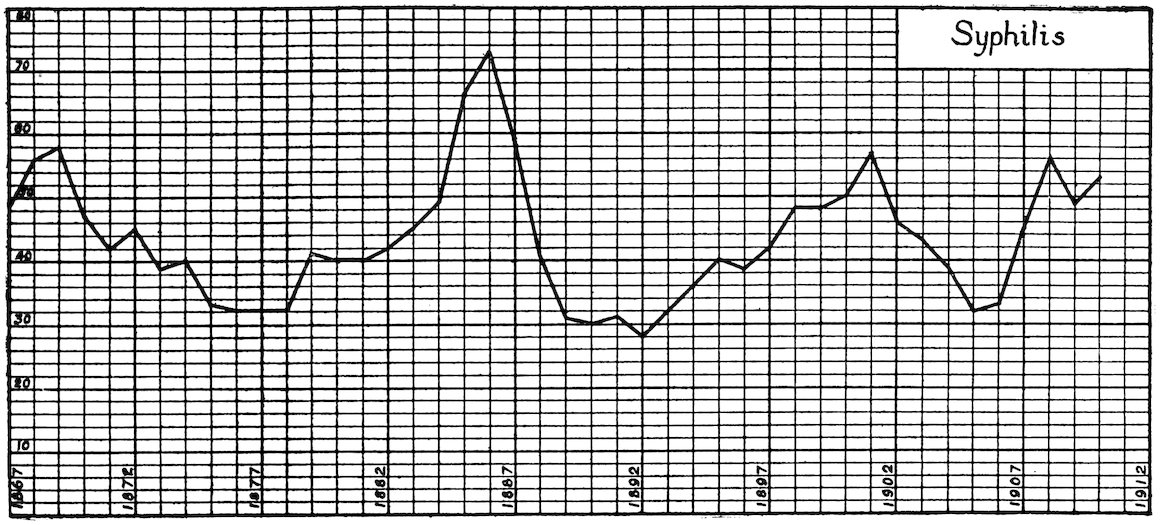
Figure V.—Course of syphilis at Copenhagen.
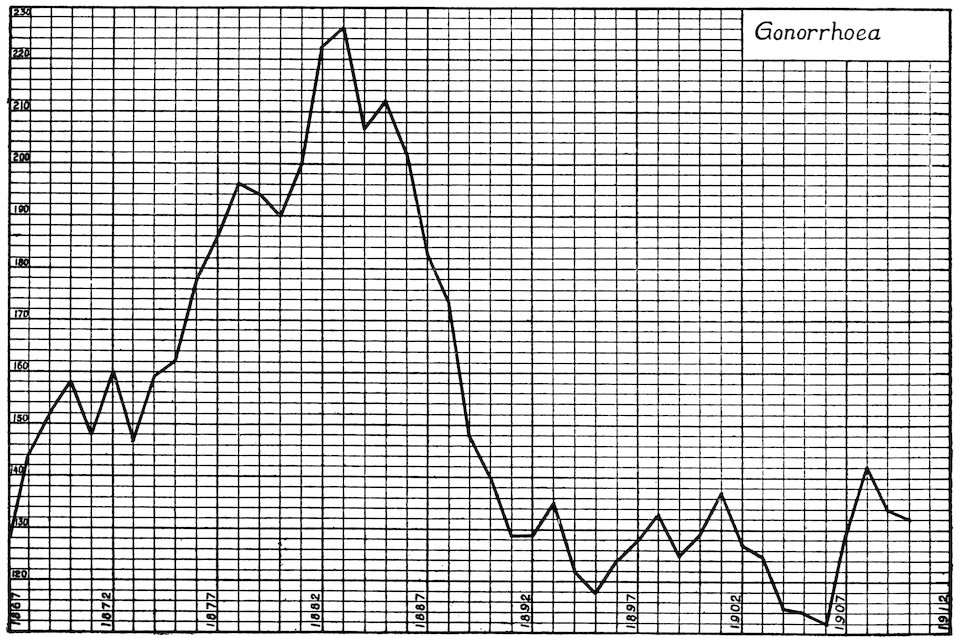
Figure VI.—Course of gonorrhœa at Copenhagen.
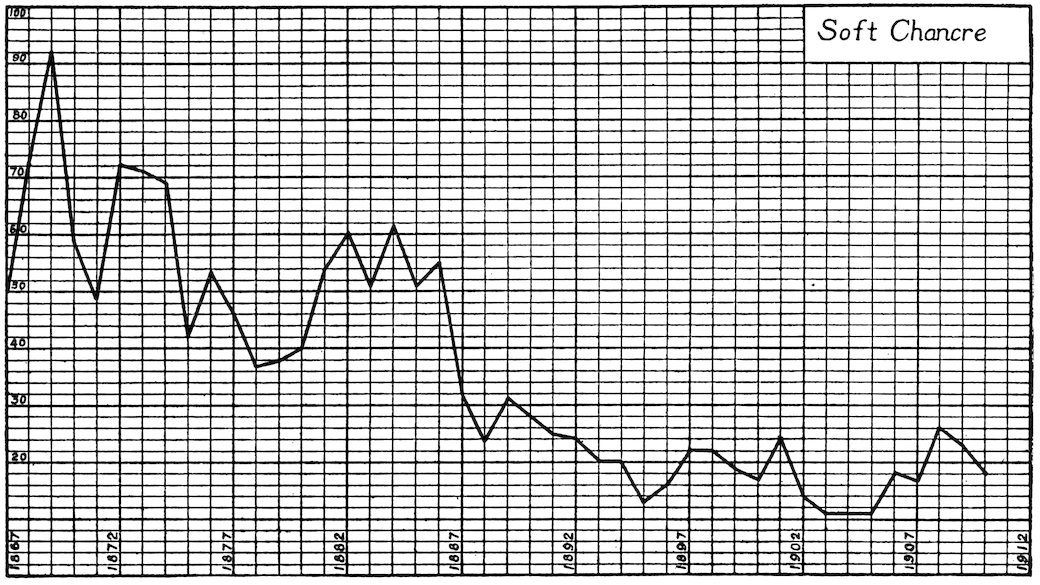
Figure VII.—Course of soft chancre at Copenhagen.
In relation to population, the following table shows the incidence of venereal disease per 10,000 inhabitants 386since 1867. Needless to repeat, only the statistics of more recent years are of any genuine consequence:[665]
Year Gonorrhœa Soft chancre Syphilis
1867 128 50 49
1868 144 73 56
1869 152 92 58
1870 158 59 47
1871 148 49 42
1872 160 72 45
1873 147 71 39
1874 159 69 40
1875 162 42 33
1876 178 53 32
1877 186 46 32
1878 196 37 32
1879 194 38 41
1880 190 40 40
1881 200 54 40
1882 222 60 42
1883 226 51 45
1884 207 61 49
1885 212 51 66
1886 202 55 73
1887 183 32 59
1888 174 24 41
1889 148 31 31
1890 140 28 30
1891 129 25 31
1892 129 24 28
1893 135 20 32
1894 122 20 36
1895 118 13 40
1896 124 16 39
1897 128 22 42
1898 133 22 48
1899 125 19 48
1900 129 17 50
1901 137 24 57
1902 127 14 46
1903 125 11 43
1904 115 11 39
1905 114 11 32
1906 112 18 33
1907 129 17 45
1908 142 26 56
1909 134 23 49
1910 132 18 53
1911 140 15 58
Dr. Rudolf Krefting, of Christiania, has plotted out two highly interesting curves by way of depicting and comparing the course of events in Copenhagen and Christiania in respect to syphilis.[666] (See Fig. VIII, p. 387.)
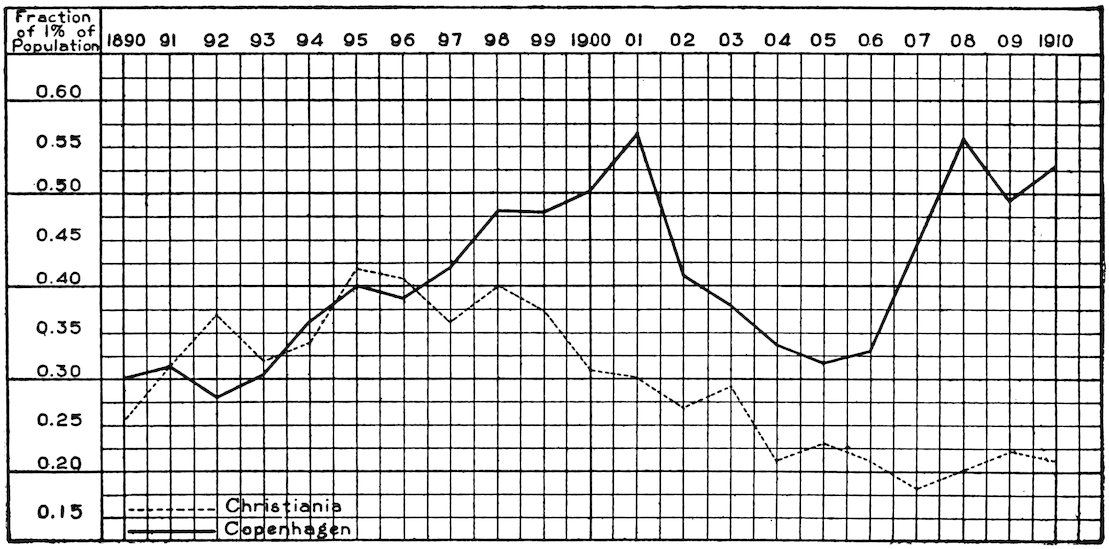
Figure VIII.—Copenhagen and Christiania compared in respect to syphilis.
Despite considerable variations, the dotted line shows, as we have already observed, that there was relatively to population less syphilis in Christiania in 1910 than in 1890; that, though the amount of disease treated in abolition Christiania was in the years immediately succeeding repeal greater than the amount reported in Copenhagen, conditions rapidly improved, so that the situation is now well in hand. The maximum was reached almost twenty years ago (1895). The Copenhagen curve 388continues to rise until 1901, when it falls unaccountably, rises on repeal of regulation and shows a declining tendency as the new system gets to working more smoothly. In any event, Copenhagen with control and with an imperfect system of notification actually shows almost uninterruptedly more syphilis than Christiania without control and with a much more thorough system of notification.[667] That abolition alone is to be credited with the decline or with the difference between the two cities cannot be maintained; for similar declines—less credible, perhaps, inasmuch as the data are less reliable—are observable under regulation also. A very marked instance I have just noted, viz., the decline in reported cases of syphilis at Copenhagen between 1901 and 1905,—while regulation was still in vogue. That abolition with the dispensary system treats more disease than regulation is beyond all question; that it treats enough more to affect sensibly the disease curves one may believe, but may not yet hold to be scientifically demonstrated. But this is not essential, for unless the evidence is clearly in its favor, regulation falls to the ground. As to this, there is no question whatsoever. The medical profession, the health authorities, the police of both Christiania and Copenhagen are well-nigh unanimous in their conviction on the basis of experience and statistics that abolition has done no harm; and if abolition has done no harm, assuredly regulation can have done no good.[668]
389A single bit of evidence may also be gleaned from the experience of Zurich. The records of the Policlinic (out-patient department or dispensary) and the cantonal hospital are available since 1894. Bordells were forbidden in 1897. The population of the city was at that time 140,000; by 1911, it had risen to 195,600. Yet the total number of cases treated at the dispensary fell from 483 in the former year to 392 in the latter. The number of venereal patients admitted to the cantonal hospital, 114 in 1897, has now risen to 251, but the ratio 390to population has decreased. These facts are indicated on Figures IX and X.
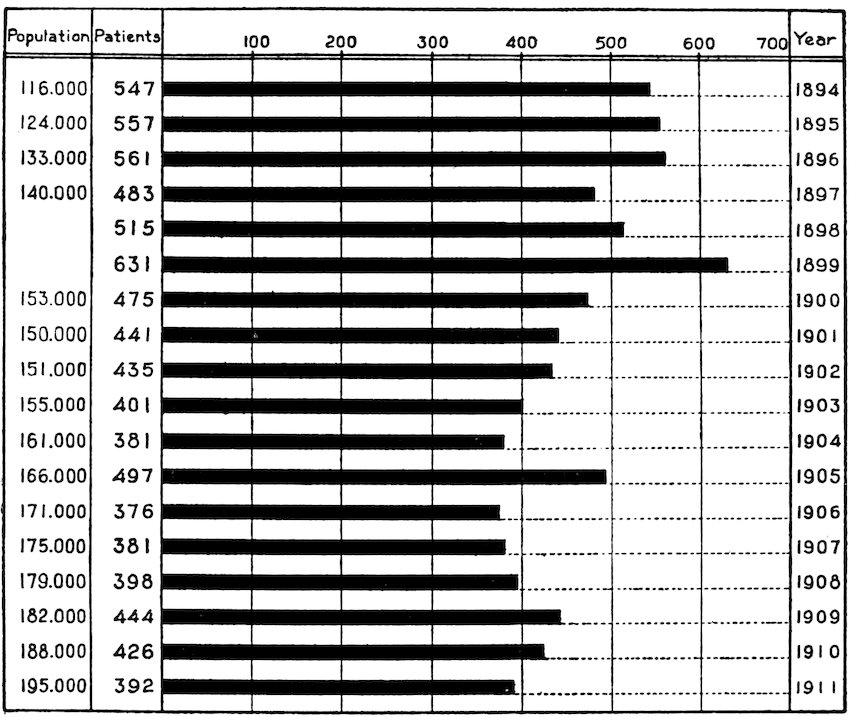
Figure IX.—Venereal diseases, Zurich Policlinic.
Let us now bring together the results of the two chapters in which we have discussed this problem. In the first place, let me remind the reader of the absurdity of supposing that regulation means that the authorities are alive to the problem of venereal disease and that abolition means that they close their eyes to it. Regulation means simply that the police deal with a very small portion of venereal disease; on the Continent, at least, abolition means that the health authorities are energetically attempting to reach more and more of it.
391
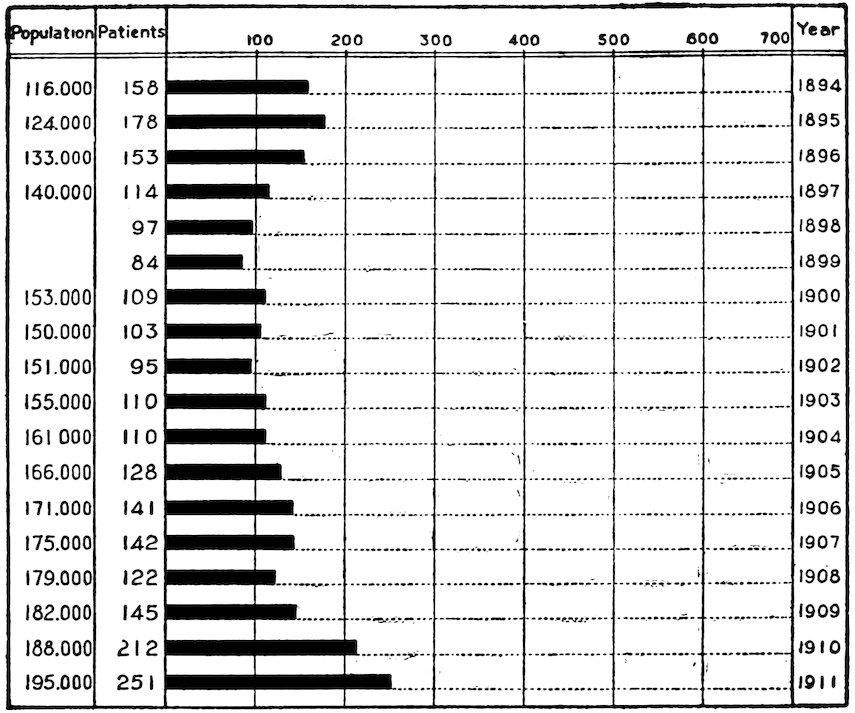
Figure X.—Venereal diseases, Canton hospital, Zurich.
In the second place, we must emphasize the fact that venereal disease is inevitably attendant upon sexual promiscuity. Venereal disease is an evil in itself and deserves to be combated with all the resources and facilities known to science and to sanitation; but so long as prostitution exists, venereal disease will remain serious and widespread; we have discovered absolutely no reason—statistical or other—to believe that regulation at all reduces its ravages; there is, however, good reason to believe that the bordell and the medical examination contribute to its aggravation by increasing miscellaneous commerce and by decreasing resistance. 392On the other hand, there is no ground—statistical or other—for believing that abolition increases disease; there is excellent reason for believing that abolition, plus a deliberately planned and organized dispensary system, has already proved a mitigating factor and is capable of much greater usefulness than has yet been anywhere realized.
This summary still leaves on our hands the problem of understanding the fluctuations of venereal infection. But in this respect, venereal disease is one with other infections and contagions. All alike are subject to unaccountable ups and downs. We know as yet practically nothing of the factors which determine the rise and fall of infectious disease curves, or the outbreak and the subsidence of epidemics. Apart from any prophylactic measures yet known to science, such scourges as syphilis and gonorrhœa wax and wane. Throughout the world, there is some evidence to suggest that aside from temporary disturbances due to war,[669] they have been for a decade or two in the declining stage; whether this is temporary or permanent we have absolutely no means of telling; experience suggests the former, but time alone will tell.
I would not, however, convey the notion that all fluctuations are mysterious and spontaneous and that therefore nothing can be accomplished by intelligent action. The army curves are an argument against any such fatalistic view. With increased keenness of military competition, every factor conducive to efficiency has to be reckoned 393with; the outcome of war would, it is felt, depend not only on battleship tonnage and the paper strength of the army, but on the health of the crew and of the enlisted men; their physical vigor is at least as important as smokeless powder and a powerful rifle. Almost simultaneously, therefore, the war authorities of Europe have undertaken to compete with the tavern and the wanton. Games are cultivated, places of recreation provided, the spirit of emulation has been aroused; and instruction is given,—the enlisted man is taught that continence is possible and wholesome; he is urged, if he has indulged himself, to employ prophylactic measures;[670] in the highly probable event of their failure, he is to have prompt recourse to the surgeon. A successful effort to bring about more sparing use of alcohol has perhaps done more than anything else to make these devices and suggestions fruitful.
The indisputable improvement that intelligent endeavor has thus effected in all European armies is a strong argument in behalf of applying a similar policy to the general population. I have said that venereal disease is an evil in itself,—a serious drain on the efficiency of the body politic. That nation which first succeeds in reducing it will have scored heavily on its competitors. The German Society for combating venereal disease[671] 394is the most vigorous organ in Europe engaged in the cultivation and dissemination of this point of view. Waiving consideration of other aspects of the problem of prostitution, for the time being, it urges that the same methods be employed in the contest with venereal disease that are invoked against other scourges: medical research for the means of prevention, isolation and cure; enlightenment of all those afflicted or liable to affliction in order that the willing intelligence of the patient may cooperate with the rational intent of the community. Thus tuberculosis, measles, small-pox, cholera and other pests have been attacked with some measure of success. Venereal disease offers indeed peculiar difficulties, but they are difficulties that only strengthen the argument for intelligence and resource broadly utilized. If this be true, the situation described does not call for regulation, tending, as it does, to concentrate its fire upon a few foci, and to cover up other sources of infection so that they fester in darkness, but rather for the more liberal and enlightened policy, which, if not identical with abolition, follows naturally in its wake.
395