SECOND SESSION.
Reading edition
SECOND SESSION.
The Congress was called to order by President White at 2:00 o’clock p. m.
President White—Gentlemen, we are a little late in getting together this afternoon, owing to the late adjournment of the morning session.
We have a program for four days, a most entertaining one. Those that do not get here will miss something, while those of us who are here are going to gain something.
The audience will please rise while the Rev. Dr. A. B. Storms invokes the Divine blessing.
Invocation
Invocation—Our Heavenly Father, we wait for a moment, asking for the blessings of Thy grace upon us. We need Divine guidance in all our counsels; may we be guided by Heaven. We return Thee thanks for Thy great kindness, for the bountiful harvest, for the resources with which Thou hast stored the earth. We thank Thee for the revelation of Thy love, for the redemption that speaks of the worth of Thy children. We thank Thee for all the impulses Thou hast set in motion for bringing good out of evil, for bringing men to their best. We pray for the guidance of the divine spirit that in all these councils which have for their purpose the good of our kind, we may have such guidance and be sustained by such grace that permanent good shall come.
May Thy blessing rest upon this Congress, upon all it represents, upon our people and Nation. May this be a people whose God is the Lord, we ask in the Redeemer’s name. Amen.
Address, “What the States are Doing”
President White—The first thing on this afternoon’s program is a report from Dr. George E. Condra on “What the States are Doing.” He is President of the National Association of Conservation Commissioners. We are very much interested to know how far the spirit of Conservation is being taken up and applied in the different States. We will now hear Dr. Condra.
Dr. Condra—Mr. President and Delegates: This report, prepared at the request of the Executive Committee of the Congress, is based on data received from several Governors, and the conservation organizations of various States. It can not be given in detail, for that would require too much of your time. Neither do we deem it advisable to treat the subject State by State, for it would call for needless repetition. Consequently the data are reviewed subject by subject corresponding to the leading departments of Conservation, and the States are mentioned only in connection with the progress they have attained in each department. It is assumed that: 1. You are in full sympathy with State Conservation and its co-operation with Federal agencies. 2. You do not expect to hear overdrawn statements. 3. You wish a review of such conservation facts as are really worth while in development. 4. You know how natural resources control industrial development. 5. You agree that the leading resources in the United States are mineral fuels, iron, water, soil, plant and animal life, the varying importance in the distribution of which determines to a considerable extent the locations of industrial and commercial centers, and that these resources are not distributed according to state lines, but that development is influenced to some extent by State laws.
COAL.
The importance of coal in our country is much greater than most people suppose. It is well distributed. The amount of power derived from it is many times that of all our man power working every hour of the day. The annual production of our coal leads that of Great Britain by a wide margin. The ranking States in output are Pennsylvania, West Virginia, Illinois, Ohio, Indiana, Kentucky, Alabama, Colorado, Iowa, Wyoming, Tennessee and Maryland. Wyoming is thought to contain even larger natural stores of coal than Pennsylvania. Mr. Edward W. Parker, head of the coal division of the United States Geological Survey, reports over two trillion tons of unmined coal west of the 100th meridian, lying principally in the Great Plains and Rocky Mountain provinces, and in smaller districts farther west.
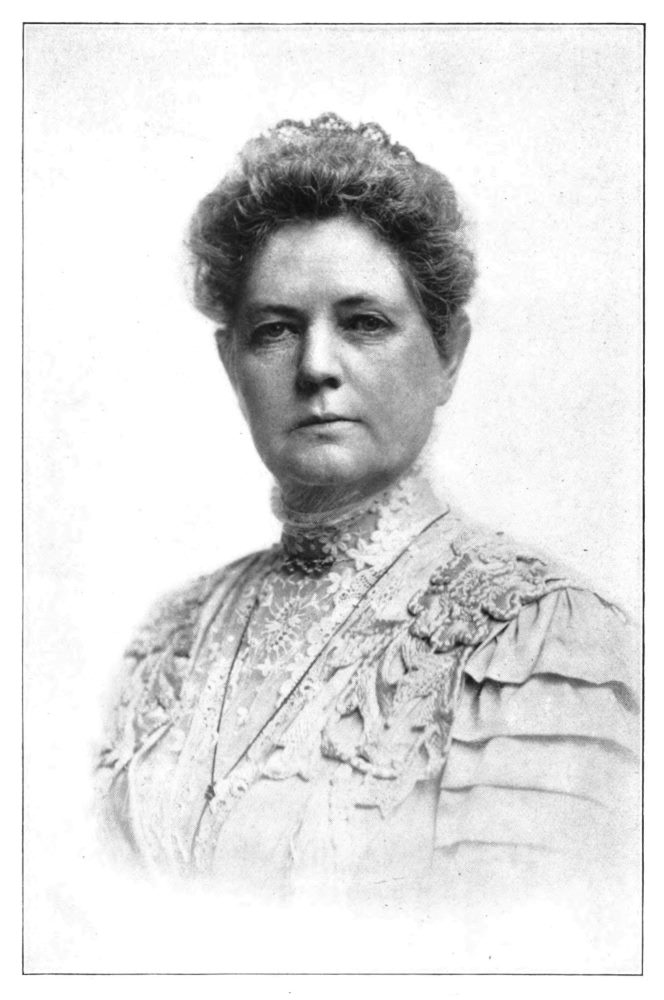
MRS. PHILIP N. MOORE
OF ST. LOUIS, MO., VICE-PRESIDENT, FIFTH NATIONAL CONSERVATION CONGRESS
It is evident that there is much more coal for future consumption than most conservationists have claimed. This is a pleasing fact, for it indicates that industry should not be seriously hampered by lack of this source of power for many years to come. The argument that there is enough coal and to spare is used, however, to further selfish ends. It causes bad management of coal lands at many places. Notwithstanding the fact that the United States is so favorably endowed with coal it is coming to be known that some of the better bituminous and anthracite grades most favorably located are doomed to early exhaustion. The rapid increase in the use of these is causing some of the eastern States to show deep interest in conservation.
During the year the conservation of coal was directed mainly towards larger recovery from the mines, to the study and prevention of mine accidents, especially those caused by explosions, to improving the methods of use whereby more power is derived, and to the saving of by-products in coke making. The National Bureau of Mines lead in most of these investigations. Several States, mostly in the eastern province, studied the same problems, as for example, Pennsylvania, West Virginia, Tennessee, Virginia and Alabama. Illinois was equally active in the interior province. Practically all coal mines are now inspected by delegated authority.
The bee-hive coke oven produced relatively less coke during the year than the by-product oven in which is recovered coal tar and other useful products of considerable value. Investigations definitely proved that the most economic way to use certain soft coals is in the manufacture of producer gas. The culm heaps in the Scranton and Wilkesbarre districts were drawn upon more than formerly for the production of the smaller sizes of washed coal. This is an important utilization of what formerly was waste.
It would seem that every one in this Congress should be deeply interested in the conservation of coal whether his State produces it or not, for the permanence of this resource has a power relation, one that affects the industrial and social development of the whole country.
PETROLEUM AND NATURAL GAS.
These are uncertain resources as to their occurrence and permanence of development. The amount of production, however, is very large, coming from several States, and having increased from about 63,000,000 barrels in 1900 to over 200,000,000 barrels in 1911. New pools were developed in each province, though the annual production fell off at places. The largest developments were in California and Oklahoma, yet Illinois, West Virginia, Ohio, Texas, Pennsylvania, Louisiana and Indiana were important producers, as they have been for several years. No new conservation movements were inaugurated except that California took more definite steps to prevent waste at the wells. Adequate tankage, together with a high degree of attainment in refining, are the two leading factors in the conservation of petroleum. This industry is a splendid example of conservation for special interests, yet the public is supplied with many useful commodities, such as kerosene, gasoline, waxes, paraffine, oils, etc. Kerosene has a close commercial relation to the gas engine and the automobile industry. The price of gasoline, for reasons not fully understood by the speaker, made a marked advance. Just how this may affect the future building of gas engines is not known.
The production of natural gas is even more erratic than petroleum. It is readily used in the manufacture of brick, tile, glass and cement. A lack of permanence gives to the gas-using industries a migratory character, a movement to and from gas regions. For several years such plants have operated up to their full market capacity in Kansas and Oklahoma. The financial depressions of 1907 and of the past year checked some of factory building in and near the gas regions. For about two years certain companies have been diligent in selling equipment for making gasoline from natural gas.
The conservation movement is partly responsible for the decrease in waste of natural gas. Formerly the unused wells of Oklahoma and Louisiana, especially, were allowed to cast their millions of feet of fuel into the air without even a remonstrance from the States. Flambeaux burned night and day in the streets of small towns and many persons between Indiana and Texas were then heard to say that gas is cheaper than matches. The States stand indicted. This wrong to nature and to present and future industry cannot be repaired. The deed is done, and our only hope is that we may escape without having to suffer for such an offense.
IRON ORE.
This is the basis of iron and steel manufacture. It supplies the materials used in harnessing the power of fuel and water and has importance in mining, transportation, smelting and milling. The industries connected with iron and steel making in the United States are conducted in a much larger way than in Great Britain and Germany next in rank. The increasing use of steel by railroads, in highway construction, ship-building, the making of engines and farm machinery, and for large building is causing many persons to wonder how long this progress can continue unhampered. Is there no limit to our high grade ore and to the development of the gigantic enterprises dependent upon coal, iron and steel? What appears to be the correct answer to this question has been made by good authority. It is that the supply of high grade ore, like that now used, is not permanent—that it will not last many years. If this is true, the time will be when it will become necessary to mine less desirable ore, grading lower and lower as production continues. This, without doubt, will have an unfavorable effect upon our whole industrial organization.
The history of iron in the United States is most interesting. It shows that one by one many of the small districts were abandoned for the richer fields of the Lake Superior region, the Birmingham and Guernsey districts. The States that lost out in this change now realize that production may again return to their borders when the richer and larger deposits are exhausted. In consequence of this several States are beginning investigations looking to the future utilizing of low grade ores. At the smelters more than usual thought is given to the quality of output, making it more durable or otherwise better suited to the use for which it is intended. Experiments are under way for the purpose of testing out hydro-electric smelting in parts of California and other western States where the ore is distant from coal.
Much of the iron and steel conservation is directed by corporate interests in whom the ownership of ore and the development based thereon are definitely established.
WATER RESOURCES.
Dr. W. J. McGee, whose death we mourn, once said that “water is the prime necessity of life.” He also discussed its importance for drinking, in navigation, for power, and in the production from the soil of such materials as food and clothing.
The drinking water of the country and small towns is obtained principally from underground through wells and springs. A few States are trying to improve their domestic water supply by making sanitary surveys, noting the relation of the wells to drainage from lots, privies and other dangerous sources. Typhoid epidemics, due to sewage entering the water system, occurred in several towns. More than usual activity was manifest in making careful studies of streams in their relation to floods, drainage, power, sewage, water supplies and navigation. The Lakes and Rivers Commission of Illinois has gathered and published more data than other States in this line. The subject, “Navigation of Inland Waterways,” with special reference to the Mississippi and its “Lakes to the Gulf Route,” received new impetus principally because of its relation to the Panama Route. The Gulf States are now supported by Illinois especially in a campaign for larger attainments in this development.
Irrigation had a good year, especially so in the Rocky Mountain and Great Plains regions. The irrigation development is an important contributor to the larger industrial life of the whole country.
LAND AND SOIL.
The United States has vast areas of land of many kinds. The soil of this land is our greatest physical resource. Its fertility feeds the crops and is therefore of fundamental importance in agriculture and industrial development based thereon. Nevertheless, it is true that many disregard this great fact in their farm management. They conserve their own selfish interests and not the state. Just how to develop the State’s view point in land management is not known. The southern States, in co-operation with the United States Department of Agriculture, are making progress in the solution of this problem. In many places there, the farmers are showing rapid improvement in crop rotation and methods of cultivation.
In Texas and Florida, much of the wet alluvial land is being improved by drainage. The Levee and Drainage Board of Texas surveyed over 300,000 acres last year and constructed 100 miles of levees. Land valued at twenty dollars an acre became worth seventy-five dollars to one hundred dollars at a cost of thirty dollars per acre. Deep floods of the Mississippi River did great damage in Louisiana, Mississippi, Arkansas and Kentucky, causing the Delta region to put forth a plea for National aid in draining the wet lands of the South. It does seem that their plea for support should not go unheeded when such a vast, fertile area lies unreclaimed.
Nearly every State is studying soil erosion, the tenant system and land taxation. Dr. E. N. Lowe, State Geologist of Mississippi, reports that his survey endeavored to secure the enactment of a law that would tend to check the great losses in the northern part of the State caused by soil erosion. The bill was opposed by a prominent senator on the ground that it would interfere with the personal rights of land owners. The bill did not pass, but Dr. Lowe is to conduct a campaign of education before the next Legislature is convened. The difference in viewpoint here shown, is the difference between the meaning of “legal” and “right.” Does any one have the right to ruin the land?
Co-operative soil surveys were carried on during the year in the various States with complete success. Every State now sees the need of reliable study and mapping of its soils, to serve as a basis for farm management, taxation, and real estate. At a recent meeting of the National Tax Association, held in Des Moines, Iowa, the relation of land surveys and taxation was discussed with considerable detail. It was the conclusion that land value maps should be prepared by soil surveys to serve as a physical basis of taxation.
FOREST RESOURCES.
Though originally endowed with vast areas of forest on public domain, some having great value, our Federal Government was slow to develop effective measures for its protection, utilization and future growth. One generation stripped the forest from the agricultural lands of the central west; and their posterity turned the trick with interest in the west. No wonder many persons took advantage of such an occasion as was presented in the Rocky Mountain and Pacific regions to help themselves where the public treasury was free for the asking, not having been carefully surveyed and evaluated. The large timber owners are not alone to blame for this history, which in considerable part is not what it might have been. It is time, then, to close the chapter and to turn our attention to present day events in so far as they are related to forest conservation. Now the State foresters and Federal forces closely co-operate with the large lumber producers along several lines. The Weeks Law, recently enacted, furthers co-operative effort in the prevention of forest fires. One of the first States to take advantage of this law was Wisconsin. Then came applications from New Hampshire, Montana and most other forest States. New York appears to lead in perfecting State patrol. Most States in the Appalachian province have perfected their patrol systems. Oregon appears to lead in the Pacific region.
Colorado of the Rocky Mountain province is fighting the Forestry Commission, the Conservation Commission and Federal agencies, under the guise of State Rights. Here the National Government has large reserves and is meeting the expense of fire protection. Certain State men are diligently spreading the doctrine of State Rights, claiming that the Federal Government should cede its domain to the State. Such a sentiment is echoed, but not so forcefully, in a few other western States. The opponents of this doctrine claim that the States do not have the means to patrol the forest, and that the State Rights people are making the campaign for selfish reasons—to secure ownership of the forest.
During the year, many cities and States added to the area of their parks and forest reserves. The Maryland Legislature voted $50,000 for this purpose. The Appalachian bill passed the last Congress, providing funds for use in establishing reserves in the Appalachian province. A start in this development has been made at several places. It is reported, however, that land speculators are interfering with the project by securing options on land that is wanted for the reserves.
The work in general tree planting and forestation progressed about as usual. Promoters handle eucalyptus propositions in California with varying degrees of success. Many States, especially in the middle west, are planting catalpa for the production of posts. One of the largest problems in several States, as in Oregon, Washington, Wisconsin and Michigan, is that of utilizing the cut-over land. Some of this is suitable for farming, but much of it is classed as forest land. The problem then is one of reforestation, which cannot be done economically on most of the land because of high tax. The tax problem is closely related to and by many thought to be the controlling feature in the reforestation of land in private ownership. The Wisconsin and the Oregon Conservation Commissions are studying the problem. Louisiana has passed laws intended to promote timber planting on large holdings.
A few States published helpful literature on economic species of trees suitable for forestation, shade and decorative purposes. A little volume by the New Jersey Forest Commission, title “Planting and Care of Shade Trees,” is a model that other States may well follow.
Following in line with the recommendations of this Congress, and in harmony with the policies of state foresters and the Federal Bureau, considerable progress was made during the year in forest surveys and forest studies. Fully half of the States are doing this work under the direction of their geological surveys, forest bureaus, or Conservation Commissions. Maryland and Rhode Island have completed such surveys.
Several large lumber producers report improvements in the way of saving practically all of the timber. When one wants to cite an example of extreme waste in lumbering, he usually refers to the Pacific region, perhaps not realizing that the method of utilization may be determined by commercial limitations. Be that as it may, it is pleasing to know that some companies in the West, as for example, the Smith Lumber & Manufacturing Company, are installing by-product plants. The company above named is building a fiber plant to utilize the waste mill products by the sulphate process, and to extract the turpentine from the red fir.
VITAL RESOURCES.
More than usual progress has been made in recent years in learning that living things, whether forest, forage, cereal crops, game, fish, farm animals or man, are natural resources subject to development.
Perhaps the greatest result of the Conservation movement is found in its helpfulness in improving the life and lot of people. Such a stimulus is needed, for it certainly is time society should conserve its men and women not only in working efficiency but in fitness to be fathers and mothers as well.
Most States have departments to promote good seed, fish and game resources, and the breed and health of animals. Some of the publications issued by these departments are most attractive and valuable as, for example, the reports on birds by the North Caroline Geologist-Natural History Survey.
More than usual State activity is now put forth in improving the stock, health, life and working efficiency of people. To further this end there is inspection of water, milk, food, drugs, and factories. Several States are making preliminary sanitary surveys; others conduct investigations under the head of “conservation of people.” It has been learned that the public health can be markedly improved by observing a few simple safeguards that prevent sickness and disease. This calls for education, and perhaps for organized inspection of both the home and the school. State medical colleges begin to realize their duty in preventive medicine, and in some cases show a willingness to co-operate with health organizations in extension work in the conservation of public health. A number of the Southern States have taken important steps to rid their sections of typhoid, tuberculosis and the hook worm disease. Mississippi reports marked progress in this line. The Louisiana Health Train is known to all. The exhibits at this Congress indicate the great progress attained by Dr. Hurty and others in their fields. In closing the discussion in this department it should be noted that practically all parts of the country show a deep interest in the work of Dr. Wiley and the fight he has made for pure food. It is further evident that there is a strong demand for a Federal health department to work in co-operation with the state departments.
CONSERVATION ORGANIZATION.
Several State departments are related to Conservation work, as for example, the Geological Survey, Soil Survey, Natural History Survey, Forest Commission, Public Service Commission, Pure Food Department, Health Department, and Experiment Stations. So, since most of these have been in existence for several years, we should know that conservation work is not a new thing. The various forces were united into a definite movement, however, in 1908, following the Governors’ conference at Washington. Immediately after the adjournment of that meeting the Governors appointed State conservation commissions to serve their respective States. Unfortunately, many commissioners were selected mainly because of their political affiliations. In some cases the selections were made wholly on the basis of ability to serve. Such Commissioners were chosen from among public spirited citizens, and the State and university departments closely connected with industrial development.
Practically all commissioners chosen because of political affiliation did very little work. Most of them were not reappointed after changes in State administrations. The non-political commissions did better work as a rule, and soon received financial support and statutory authority from the State for a wider range of activity. The commissioners with this authority are now appointed by the Governor, or they become commissioners by virtue of their connection with certain university and State departments named in the State laws. The tendency is to make the commissions entirely non-political and to give them full charge of certain natural resource surveys and the State supervision of development, at least to some extent. A resolution passed by the Trans-Mississippi Commercial Congress of this year is of interest in this connection. It reads thus: “We favor the selection of Conservation Commissioners from among those who are actively engaged in State surveys, in the investigation of conservation problems, or in the development of public welfare.” It further urges that the work of such commissioners be done along non-political lines and in co-operation with Federal Conservation efforts. Most States have conservation commissions.
The best organized work is in New York, Rhode Island, Oregon, Nebraska, Wisconsin, Kansas, Utah, West Virginia and New Mexico. The New York Commission has three commissioners, a secretary, assistant secretary, deputy commissioners and several engineers, all well paid. The Commission has full authority to investigate and supervise the development of water, forest, fish and game resources. Rhode Island stands next to New York in organization, duties, and results attained. Its commission has full charge of the natural history survey, supervises the development of natural resources, and conducts an educational campaign. Nebraska’s commission is non-political, composed principally of heads of departments in the University, who also direct the various State surveys. The duties of the commission are largely in supervision and education. A Conservation Survey unites the efforts of the University and State departments in systematic surveys of the water, soil and forest and in making careful field studies of the leading economic problems. Nebraska holds a Conservation Congress each year with a large attendance. This Congress has great value in unifying State development. It is under the guidance of the Commission, Conservation Survey and public spirited citizens and is an open forum for the discussion of development problems. The duties of other State Commissions are similar to those of the States above described. Utah is directing its effort mainly in the line of making non-political maps.
The Conservation Commissioners together with other persons directing State development have an organization called the National Association of Conservation Commissioners. It meets each year as a department of this Congress. The object of the association is co-operation, in which each State is able to learn of the progress attained in other States.
That the conservation activities in the various States are benefited by the different sessions of the National Conservation Congress is very evident. The influence also of the National Conservation Association is helpful.
In concluding this division of my report, I wish to emphasize the facts that the State conservation commission is coming into a broad field of work, that it must stand for the best interests of the State as a whole, that an important part of its activity is to unite the efforts of departments now existing in a co-operative work that has practical value to the State. Such commission must be composed of broad-minded men, preferably those who have a thorough acquaintance with the departments represented. The commissioners should be free from political entanglements, and refrain from using their position for selfish ends. They should stand for the greatest good of their States first, last and all the time.
Does your State have a commission of this kind?
SURVEY BASIS OF DEVELOPMENT.
The survey idea is now popular. In fact it may be abused in some cases, especially where the work is done with a lack of scientific spirit and undue rapidity. Such effort has no place in the conservation survey which seeks to determine useful facts, those really worth while in development.
In harmony with the spirit of the year which calls for the fundamentals, we have the following resolution by the Trans-Mississippi Congress, passed in its last session:
“Recognizing the natural resources as the physical basis of development, we urge the States of the Trans-Mississippi region to make surveys of their leading resources under competent direction, and to publish reliable reports upon the same. We favor such reorganization of the State conservation commissions as will qualify them to make inventories of natural resources, to study industrial problems, and promote the proper development of the respective States.”
This demands that Conservation be placed on a survey basis. Just that thing is the order in many States under the leadership of conservation activity and through the co-operation of State and Federal agencies. During the past year, progress was made in co-operating the work of the different surveys, making them of greater value to the people and State. It is now understood and agreed that the following lines of information should be determined and made available for use in the development of each State as soon as possible consistent with good work and reliable results and in about the order herein named. The points considered in the complete survey are:
A. Topography. By topography is meant the surface features of the land. Topographic maps have many uses in development. Maryland, New York, Connecticut, Rhode Island, Oklahoma, and a few other States are now mapped.
B. Structure. By this we mean the underground make-up of a region, the kind and arrangement of the materials of the land. Structure is directly related to mineral resources, topography, water supply, and soils.
C. Surface Water and Drainage. This refers to the amount of run-off, to such as streams, lakes, marshes, and has importance in irrigation, navigation, fish culture, city water supplies, etc. Illinois is leading in this survey.
D. Ground Water. This is water in the land. It is the source of crop water and the largest source for domestic and town supplies. The amount of water held by the soil is even more important than the quantity of rainfall. The depth to the water table, and the quantity, and quality of well water are of great importance in agricultural regions.
E. Climate. The elements—temperature, sunshine, wind, humidity, and rainfall—are recognized as having importance and should be known for every part of our country. The latest movement is for facts in local climate, even that of the farm or certain parts of it, and of the soil.
F. Soils. The relation of soil to industry is generally known. The soil survey classifies and describes the soils as to origin and properties, and maps them accurately so that the farmer may know definitely the kinds and their distribution on his farm. Farm management demands intelligent comprehension of soil characteristics.
G. Native Life. The native plants and animals of a country represent the natural selection of the fittest for the conditions encountered. The life of a region reflects the topography, soil, and climate under which it lives. In new territory the native plant life reveals to the keen student much concerning the soil and climatic conditions. In older communities undisturbed patches of vegetation tell the same story. By studying such life the qualities needed in cultivated crops may be fairly well determined and the losses incident to haphazard experimenting avoided. Native life then needs to be considered in a rural survey because: (1) It gives a summary history of soil and climatic influences; (2) it may lead to economic production of certain native types of plants and animals; (3) it presents concretely the problem of utilization of waste lands; (4) it will give emphasis to the need of utilizing our lakes and streams as a source of food supply.
H. Social and Industrial Conditions. If a move into new territory is contemplated, the questions of vital interest are not only of the natural and industrial conditions but also in regard to social conditions. By this is meant the classes of people as to race and culture, and the opportunities offered for advance in social and intellectual lines. These characteristics of people are closely associated with their occupations. The pursuits of the people are largely dominated by the physical basis of industry. Hence the social survey must recognize this influence if it is to correctly interpret conditions as they exist. Data of most vital interest in the social rural survey pertain to the following lines: (a) History of settlement. (b) Condition of agriculture. (c) Education. (d) Religion. (e) Recreation. (f) Sanitation. The industrial conditions of a region are practically determined by its physical features. The development is further related to the biological and social life. Hence the industrial survey must be based on these fundamentals if it is to be comprehensive.
In closing this review of the fundamentals in surveys it should be understood that: 1. The physical and biological surveys should come first, since they are necessary for accurate work in other investigations. 2. The special surveys of industries, rural and urban life should be made from the common basis of physical and biological conditions and extended into their respective fields.
It should be recognized that the broad controls affecting industry are structure, topography, drainage, climate, soils and native life, but that they do not have equal importance in any and every locality. Any one of them may be the controlling feature with the rest of minor importance.
It is not a pleasing fact to know that most States have not yet accurately mapped their lands, waters and forests. The departments responsible for this work should receive adequate financial support and the people in turn should demand results.
What progress has your State made in these lines?
RELATION OF EDUCATION TO CONSERVATION.
The State universities of the Middle West especially are meeting their obligation to the people by training students for real work—for efficient service. Such institutions, by their instruction, surveys and extension departments further the development of practically every line of industrial activity in the State. From these centers are directed geological, soil, water, sanitary, social, farm management and other surveys. Consequently the professors and advanced students get a good work-out and the citizens are caused to look to the institution for assistance in practically every development problem that arises. The State universities that are giving the largest service in this line appear to be Wisconsin, Minnesota, Cornell Agricultural College, Illinois, and Nebraska. It is my great privilege to be connected with one of these.
Unmistakably, the present tendency is to associate the public service State departments and conservation activities more with higher education, taking them from the field of politics. This noticeable feature in the rearrangement of conservation activities of the past year is worthy of consideration by all States.
CONSERVATION OF BUSINESS.
The different lines of business are conserved in many ways. This applies to practical developments in improving the process involved in handling commodities all the way from manufacture to sale; to trade, in the direction of economy in buying, transportation and sales; to farming in improving methods of cultivation, the better care of stock, and in less buying on time; to more economic use of school and church buildings; to the building and maintenance of good roads and clean streets, and to the improvement of public service generally. So there is room for practical conservation in many lines. It prevents waste, increases efficiency, and thereby decreases the cost of commodities. A very general movement for good business is the feature of the year. It is promoting real business by demanding that it be done on the square and free from fraud. This is working a public good.
At another time, I will discuss the subject, “Land Frauds or Get-Rich-Quick Schemes,” with special reference to their effect upon real business.
CONCLUSIONS.
As a summary conclusion, you will permit me to enumerate the things that stand out in the progress of the year.
1. The prominence of Conservation on many State and National programs.
2. The tendency to place State development on a survey and fact basis.
3. Development of co-operation between State and Federal agencies.
4. Demand by the public for reliable land classifications, soil, sanitary and agricultural surveys.
5. Interest in soil fertility as a basis for agricultural development.
6. The affiliation of Conservation organizations with educational departments and removal from politics.
7. Discussion of Lakes-to-the-Gulf Route and success attained in presenting the cause of drainage in the Mississippi delta region.
8. Modernizing of State universities, making them of greater value to the State.
9. The determined demand for vocational training in the public schools.
10. A demand for less extravagance in public service.
11. Taxation of cut-over lands.
12. Perfection of forest control.
13. The very general recognition that people are the most important natural resource subject to development.
14. Increased regard for sanitation throughout the country.
15. Massachusetts minimum wage law for women.
16. A determined and widespread movement on the part of social workers to eliminate the social evil.
17. Widespread movement against fraud and the assistance given to the movement by the Postoffice and National Reclamation departments.
18. More than usual discussion of co-operative enterprises and methods of distribution.
19. Rapid progress in the building and maintenance of good roads.
20. A growing tendency for the citizens in every part of the country to outgrow provincialism; to come into respect and appreciation for the people and institutions of every State; to recognize the fact that the home State is but a part of the Union and larger world in which people live not to themselves alone but in helpful relationship with all others.
President White—This was a very interesting address, which we allowed to extend beyond the time, because it is a summary of Conservation work during the past year in all the States. Heretofore, we have had a report from a representative of each State, but it was thought advisable this year to have these reports condensed into one paper, a work which Dr. Condra has done most admirably.
The next address, which is of the greatest interest, is on the subject of “Human Life, Our Greatest Resource,” and the name of the gentleman who is to deliver it will be a sufficient guaranty that it will be replete with interest, and will be useful to every one of us who listens. I now introduce Dr. William A. Evans, of Chicago.
(Dr. Evans failed to return his manuscript for insertion in the Proceedings.)
President White—We must hasten on, for we have some other addresses that will be very interesting to the children. There are a great many present that have come no doubt to see the wild life pictures. So we shall have to hasten in order to reach them.
Dr. Bessey, who was to have been next on our program, will be here at 3:30 o’clock.
Address, “Conservation Redifined”
We shall now call on Mr. E. T. Allen, of Portland, Oregon, whose subject is “Conservation Redefined.”
Mr. Allen—On a hot afternoon, a bare-footed boy, on his way home from school, in western Washington, eager as any school boy for the swimming hole, or whatever waiting attraction had kept his eye on the clock since about 2:00 o’clock, stopped, hesitated, then clambered down a steep, brushy slope to the stream at its foot, filled his hat with water, climbed up the hill again laboriously so as not to spill his burden, and put it on a camp-fire some voting citizen had left burning by the roadside. It still smoked, so he went back twice, three times. About then, the man who told me this story came along and asked the boy why he made it his business to put out that fire.
“Why, it told in a little book I got at school,” was the reply, “why every one should try to stop forest fires. It told what grown-up people can do by being careful and passing laws and such, but it said a boy may do as much as anybody by putting out some little fire with water or dirt before it gets big.”
Now, the action of that school boy, and of the teacher who handed him the booklet, and of the State authorities who instructed her to do so, and of the man who wrote the booklet and enlisted the State’s co-operation in its distribution to a hundred thousand children, and of the timber owners through whose protective association that man was hired and the cost of printing and distributing that booklet was paid, was Conservation. It was forest Conservation, definitely conceived, definitely executed, and with an exceedingly definite result.
About a month ago I was talking to an extremely intelligent man, a scientific man whose life is devoted to bettering humanity. He said, “Allen, do you believe in Conservation?”
Rather astonished, I replied, “It’s my trade, isn’t it?”
“Oh, I don’t mean forest protection, like putting out fires and making trees grow, but forest Conservation—Pinchotism, tying up everything for future generations.”
Now that man’s conception was the result of Conservation activity, certainly. Without our agitation there would have been no counter agitation. No doubt he has read of these congresses every fall and of countless other forms of our work. But, apparently, only one interpretation, and that a mistaken one, had ever reached him in a form definite enough to make an impression. How else can you account for getting effort and sacrifice from the irresponsible barefoot school boy, but no realization by a citizen of the highest type that Conservation wants his help in some way that he can give it?
To what extent these remarks apply to your work along other Conservation lines, I am not competent to say. In forestry, there has been, I will not say too much debate, but certainly too little other use of our Conservation machinery in presenting clear-cut principles of forest economics in the specific local forms and with the specific local needs that are necessary to engage and direct accomplishment. This is true of what we do at these meetings and more true of what we do when we go home.
What our forests need most is more patrolmen, more trails and telephones for them to use, more funds and organization to marshal fire-fighting crews when required, better fire laws and courts that will enforce them, public appreciation that forest fire departments are as necessary as city fire departments, more consideration for life and property by the fool that is careless with match and spark, realization by more lumbermen that it pays in more ways than one to do their part, State officials who will handle State lands intelligently, tax laws that will permit good private management, consumers who will take closely-utilized products, and a few other things that demand specific study and specific action. Very few will follow automatically after any amount of agitation under the general term of forest Conservation. Do you suppose this would have sent the boy down the hill after water? No more will it write a good forest code and drive it through the devious channels of legislation. No more will it organize a hundred busy lumbermen and install a trained co-operative patrol. No more will it supply the necessary systematic campaigning to teach the people of your State and mine in just what ways their homes and pocketbooks are touched by every injury to forests or forest industry and exactly what they, as individuals, must do to prevent such injury.
Without decrying their sentimental aspects, these are business problems. They call for all the exact facts, all the systematic planning, all the decisive action, all the appeal to human motives, selfish and otherwise, that are essential to any business. We have a commodity to offer. By whatever name we call it, fire prevention, reforestation, or more vague yet, forest Conservation, we are really offering prosperity insurance. It must be paid for by the community in currency of individual and collective effort, by individual care with the forest and by public policies enforced at public expense. To make the community pay for this commodity requires the same methods that make it buy life insurance; the same devising of a sound, attractive policy that the buyer can see and understand, the same skilful advertising, the same personal persuasion by its agents. I believe that if this were a congress of life insurance agents they would be talking mostly of just these things, particularly of improved methods to close with procrastinating “prospects,” with a view to putting these methods into the most definite kind of practice the day after they got home. We do not need argument on the merit of Conservation any more than they would on the merit of life insurance. We are converted, or we would not be here. But we need a whole lot of instruction in salesmanship, and I believe we fail to make this the feature of these congresses that it might be.
Let us look ahead, we agents of prosperity insurance, to see what is to be done after we get home.
The Government needs little but our moral support. The Federal Forest Service is our highest authority in technique, the national forests are our most conspicuous examples of practice. But the task of the Forest Service is stupendous, not only in protecting these vast forest areas and the lives within them, but also in replanting denuded areas and managing great timber sales, so new growth will follow. Congress does not appropriate anything like enough for this work. The forest rangers out West are working for you and me, not for Congress. We want more of them, and better facilities for their work, and it is up to us to say so at the right time, to the right men, and so emphatically that there will be no misunderstanding. Petty politics and “retrenchment” would not be practiced so much more vigorously when dealing with the lives and resources of the people than when dealing with the “pork barrel” if we Conservationists were half as free with telegrams as we are with resolutions. Yes, this means you. So long as you stand for having the appropriations for preserving the Nation’s forests from three to twenty times less per acre than the lumberman is spending on his contiguous holdings, or for any congressional attack upon the integrity of the national forest system, your Conservation preachments are going to the wrong address or are not properly spelled in words that look like votes.
There is even greater need of definitions that apply to the situation of our States. Many have done nothing. Others have ill-balanced laws passed by some one agency without due consideration of the needs of others or of the greater need of bringing all into harmonious co-operation. In few is there a far-seeing comprehensive policy financed and executed. Here, of all places, forest Conservation must narrow itself to specific issues. Scattered ideas do not pass good laws or prevent the passage of bad ones. Propaganda work must be as forcible and carefully directed as blows with an ax, to cut out one by one the local foundation of every obstacle. In presenting our remedy we must prove our knowledge of the principles and technical frame-work which will insure freedom from politics, just distribution of cost, effective organization, strict and enforceable fire laws, systems of patrol and fire-fighting, facilities for educating lumber men and public management of State-owned lands, fair taxation, and, above all, co-operation with and stimulation of endeavor by private owners. Without such knowledge, and skilful publicity and campaigning, your very success in general agitation may result in legislation worse than none.
All this involves considerable knowledge of the problems of the private owner. After all, he controls most of our forest area. His use of it, our use of it, and the effect of our relations on our joint use of it, largely determine our forest destinies. And there is entirely too much forgetting that forests are useless unless used; that not forests, but forest industry, is what we really seek to perpetuate. Except from their protection of stream-flow and game, the community has little to gain from forest preservation unless it also preserves, on a profitable and permanent footing, the industry that makes forests usable and worth preserving, that employs labor, affords market for crops and services, pays taxes, and manufacturers and distribute an indispensable commodity. Forest wealth is community wealth, but not without forest industry to coin it.
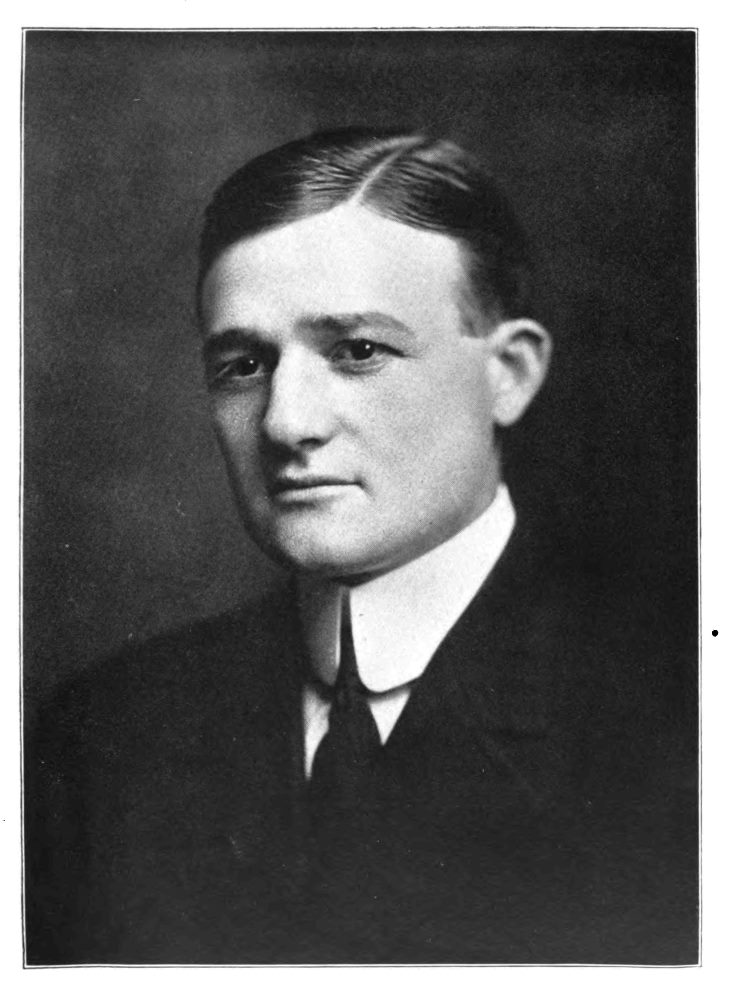
E. LEE WORSHAM
OF ATLANTA, GA., CHAIRMAN EXECUTIVE COMMITTEE, FOURTH NATIONAL CONSERVATION CONGRESS
The lumberman as a class, because he is honest and useful as a class, should be accorded the same encouragement as a captain of desirable industry that is accorded the leader in agriculture or irrigation who develops possibilities of utilizing our resources and supplying our needs. And as a class, because whatever may be true of the past he now sees his livelihood dependent upon forest preservation, he is a stauncher supporter of forest reform than any other class. He will utilize the present crop closely, and grow a new one, whenever these are business possibilities. The most efficient and liberally supported fire organizations in America are the lumbermen’s co-operative patrols inaugurated in the Pacific Northwest and now spreading eastward. Most of our best State forest legislation has been promoted by lumbermen. Where this is not true, we can make it true quickest, as Judge Lindsay has found with his boys, not by censure and compulsion that make them sullen or antagonistic, but by learning their troubles and working with them hand in hand toward the ends which in the very nature of things must in the long run be of mutual advantage. And this means that we must talk a common language; that here, too, forest Conservation must be expressed in practical terms of fire prevention, just taxation, and business encouragement.
What I have said of propaganda for State and private action applies to our appeal to the ordinary citizen, with this difference that because his number is greater, and his interests are more varied, we must add to the list of our specific personal arguments and to the list of our publicity mediums for carrying these arguments. Every vocation, every trait of character, every selfish and unselfish motive, has its best avenue of approach.
Immediate tangible results come most surely from immediate injury. Even good laws are of small use unless the public of today is sufficiently warned to insist on their enforcement. Do not think me lacking in ideals when I say that our greatest need is vigor and skill in appealing to human selfishness. The altruist comes to us unsought. But to reach the hand with the torch, the vote withheld, the word unspoken; we must find the man, make him listen, and show the cost of forest destruction to his particular home and pocketbook. We will not have forest Conservation till we have done this, and we will not do it until we master and apply the technical knowledge of mediums and psychological appeal that go into any successful advertising campaign.
The definitions of Conservation I have outlined are those used by the Western Forestry and Conservation Association. Its field is the five Pacific forest States—the Nation’s woodlot—containing over half the country’s standing timber and capable, by reason of rapid growth, of growing an adequate supply forever. In this field we practice what we preach. Our constituent local patrol associations spend from $300,000 to three quarters of a million a year, all paid by lumbermen, but protecting your resources and mine.
Our booklet reached that school boy and three hundred thousand more. Through every modern avenue of publicity—newspapers, circulars, posters, railroad folders, telephone directories and a dozen others—we carry the lessons of forest economics to every citizen in terms he can best understand and apply. Although you had not made that scientific man style himself a conservationist, we had secured his help in passing a model fire law. We wrote that law. Under it State, Government and lumbermen work hand in hand to protect practically every forest acre, sharing the cost, and the lumbermen in that one State contribute $150,000 a year.
But, best of all, we provide a common meeting ground for all four agencies in our entire territory, each having the hearty support and confidence of the others, and we talk only of our joint business of actual, practical, constructive work. We talk not needs, but methods, and find means to apply the methods.
We believe in this National Congress of Conservationists. We think it will enter a permanent future of still higher usefulness when it develops a more sectional organization, giving the real workers in every branch opportunity to get the very most out of meeting their own colleagues, and this not only in the technique of application but also in the lagging art of promoting the prosperity insurance of Conservation in terms and policies the public can understand and cannot evade.
President White—It will now be necessary to drop a curtain in order to arrange a screen for the illustrated lectures that are going to follow, so everyone will retain their seats. We shall not be detained long. While the curtain is dropped, Secretary Shipp will make some announcements.
The announcements were made by the Secretary.
Report, Comittee on Education
President White—Dr. C. E. Bessey, of the University of Nebraska, having now arrived, will read his valuable report for the Standing Committee on Education:
Dr. Bessey—Your committee recognizing that in the field of education we must for a time provide for a propaganda of suggestion and information, to be followed ultimately, when the public mind has been adequately wakened, with plans for a campaign of aggressive activity, now presents the following as a preliminary report. And while we feel confident that even at this stage something may be done more than the inauguration of a campaign of agitation, it is certain, nevertheless, that it is agitation more than anything else that we can best promote at the present time. And we must not belittle the importance of this stage of our work, for in every great movement there is first the period of agitation during which the “seers of visions and the dreamers of dreams” talk, and urge, and plead, with increasing vehemence and increasing confidence.
It is our privilege now to promote such a work of agitation. Accordingly our suggestions are all made with reference to this preliminary phase of our work.
There are three principal lines along which this preliminary work may be developed—namely, in the communities, in the schools, and in our law-making bodies.
I. WORK IN THE COMMUNITY.
Here we have to change the feeling of apathy, and carelessness, and irresponsibility, to one of active, conscientious responsibility. In this task we have to deal with the men and women and children who constitute the community. We must influence all of them. We must reach them in such a way that there will grow up in the community a better feeling with regard to the world we live in, and a clearer appreciation of our relation to it in every way. They must be led to see that the world is to be used, not destroyed. Just as the child has to be taught that his toy is to be enjoyed, and played with, but not wantonly destroyed, so we must bring the men and women in the community to see that preservation, and not destruction, is the higher duty. That citizen is the better one who leaves to the next generation a better world than he found; whose use of Nature’s soil, and water, and plants, and animals, leaves Nature still the rich storehouse in which others after him may find these unimpaired, and in abundance.
How shall such a high sense of responsibility be developed in the community? How may we awaken this larger and deeper altruism? How can we bring the men and women of this generation to see that they are stewards of their Master’s estate?
Your committee commends three agencies as rendering effective service:
(a) Public Lectures. For these we may rely upon public spirited men who are primarily interested in Conservation, as well as many whose affiliations to different branches of natural science have prepared them to appreciate the purposes of this propaganda. To these we may add the great number of ministers of the gospel who nearly to a man may be depended upon to favor the movement, and to speak for it as occasion offers. Last of all we may confidently enumerate the teachers in the public schools and the higher educational institutions, and from them we may certainly secure many regularly prepared addresses and many more less formal short helpful talks. The influence of all of these presentations can scarcely be measured beforehand, but we confidently predict that in a few years we shall find that there has been a decided change in the general attitude of the community from one of ignorant indifference to a more or less intelligent interest.
(b) Articles in the Public Press. We believe in the power of the public press as a molder of the opinions of the community, and feel that we must enlist the interest and co-operation of the newspapers throughout the country. To do this generally will require carefully considered, nation-wide plans; but a great deal may be done in every locality by the printing of the addresses referred to above. Where this is not possible abstracts may always be published, as well as summaries of shorter talks and discussions. Now and then a short, pointed article should be prepared and printed in the local paper. Here we feel the need of admonishing writers to be brief. No communication should attempt to be exhaustive. Better far to say a little at a time, and to come back to the subject again and again, than to say it all at once. Short, suggestive articles are generally read, while long ones usually become so dry that few read them.
(c) Books and Pamphlets. For certain classes of people the appeal through the more permanent form of publication is far more effective, and therefore there is in our work a need of the book writer, and the writer of pamphlets. Here, quite naturally the writer must possess to a marked degree the ability to present the matter in such a sustained way that his book or pamphlet will be read throughout. Probably the most effective writing of this class is that which appears in our illustrated magazines where by the aid of half-tone reproductions of striking photographs the interest of the reader is held much more certainly. Such articles collected into small books or pamphlets would go far towards stimulating a proper state of mind in regard to the conservation of our natural resources.
It occurs to us also to suggest that now and then our state experiment stations might quite legitimately devote a bulletin to Conservation.
II. WORK IN THE SCHOOLS.
While the community as a whole is receiving such suggestions as are possible through the agencies mentioned—lectures, addresses, newspaper articles, books and pamphlets—there is a vastly more effective means at our disposal in the public schools, dealing as they do with no less than twenty millions of children. We suggest that teachers everywhere be urged to include in all the studies that pertain to nature something in regard to the preservation of natural objects. This need not be much in amount, and it should be brought in with care and wisdom. We are reminded that once a very good cause was much discredited in the schools by the rash unwisdom of its advocates who insisted upon such an overdose of advice and admonishment that acute nausea resulted. So we would suggest that in the following studies care should be taken on the one hand to suggest conservation while on the other hand still greater care should be taken not to overdo the matter.
(a) Nature Study. Along with an appreciation of Nature there should be inculcated the feeling that others after us should have the opportunity of enjoying the same beauties that we have.
(b) Geography. As now generally presented this deals more with the earth and what it contains, than with its political divisions. Thus the soil, the forest cover, the streams, the water supply, all fall within this rejuvenated science, and here most readily can be inculcated the principles of conservation, as applied to the soil, the forests, the streams, and the underground waters.
(c) Botany. When the pupil’s attention is more specifically drawn to the plant covering of the earth, in the study of botany, it is not at all difficult to impress upon him the desirability of preserving the vegetation of the present day for the generations that are to come after us. No lover of plants can contemplate with pleasure the thought that for the botanists of the twenty-first century certain curious orchids, some rare trees, and possibly some Golden Rods, may be as completely extinct as are the Paleozoic Calamites and Lepidodendrids. The latter perished from the face of the earth, and we know of them now only by the fragments that have been preserved in the fossils which we dig up from the old rocks. Extinction has been the fate of many a plant, and extinction of plants now living is by no means improbable. The botanical teacher should preach the doctrine of preservation, the preservation of the plants of the present for the people who come after us.
(d) Zoölogy. So, too, the teacher of zoölogy should improve his opportunity to help create a feeling favorable to the conservation of the present animal life. Especially do we need a propaganda of conservation in relation to the birds of the country. And here we remark that there are methods of presenting this part of zoölogy which emphasize rather the living bird in the tree than the dead bird in the cabinet. And these methods are happily displacing those that suggested if not required the death of every bird studied. We are well aware of the fact that it is not so much the killing of birds for study that threatens the extinction of some species, as the wanton killing for the sake of killing, and as in the case of birds of fine plumage, the killing for the money value of the dead birds. Yet we realize that the place to begin is to educate the children of the schools not to kill birds for any purpose. When they have regard for the life of a bird they may be trusted not to kill one needlessly.
(e) Geology. In this the pupil comes to see the foundations of the earth, fortunately little of which man may injure or deface. And yet how thankful we are that on the hills of New England there have been preserved in their original ruggedness the great masses of granite that have withstood the elements for millions of years. And who is not gratified that the great wall of the Palisades on the Hudson River has been saved for all time? These cliffs were valuable for crushing into gravel for road-making, and for the quarrying of building stone, but certain men of finer sensibilities felt that the Palisades had a far higher value for their grandeur and beauty. And so the Palisades were saved.
We need more of this fine sense of the value of rocks, and lakes, and waterfalls, and cliffs, and mountains, and of the need of their preservation.
(f) Conservation Clubs. Aside from much that may be done in school classes to foster a spirit of conservation something further may be accomplished by taking advantage of the club forming instinct of children. Conservation clubs, Conservation leagues, Conservation guilds, pacts, societies, or what-not, may be suggested by the wise teacher, who can discreetly keep himself in the background while the youngsters do the work. If a nauseating namby-pambyism can be avoided such clubs may be joined by even the most vigorous of boys, the very class in whom it is desirable to develop the spirit of conservation.
III. WORK THROUGH LEGISLATION.
What has been already outlined is probably enough for the present, but the American people are not satisfied unless something is done in the way of enacting our ideas into laws. In the present condition of society we act as though we thought it quite impossible to do anything on a large scale without having the sanction of a direct law in regard to it. We are only very slowly learning that some of the best of human activities have been developed independently of legislation, and no doubt the time will come when we shall not be so anxious to have our plans formulated into laws found in our statute books. But for the present we may suggest the following legislation as helpful. We purposely avoid suggesting the passage of laws dealing with details. They must come later, when the conservation sense of the public has been adequately aroused. Here we may consider state and national laws.
(a) State Laws. These may well include those intended to preserve rare birds, and in some places certain rare plants which are in danger of extermination. To these may also be added provisions for the preservation of important natural features, as forests, waterfalls or massive rocks that lend interest or beauty to the general landscape.
(b) National Laws. These may deal with larger problems, as the preservation of certain widely distributed birds. Naturally, too, it is the National Government that must take the initiative in regard to the conservation of the great forests, waterways, waterfalls, and the features in the national parks and reserves.
Carefully drawn laws, both State and National, covering the foregoing will no doubt aid the cause of Conservation. Too much must not be attempted. More good will result from a constant vigilance with regard to the passage of bad laws which give away the heritage of the community, than from attempts now to formulate a general conservation code.
Respectfully submitted,
Charles E. Bessey (Chairman),
David Starr Jordan,
Edwin A. Alderman,
E. T. Fairchild,
Edwin B. Craighead,
Committee.
President White—We have all been very much interested in this valuable contribution to Conservation, coming from such distinguished contributors as were on this committee, and I desire, for the officers of the Conservation Congress, to thank the committee for its admirable report. I feel that every delegate here would like to join in an expression of thanks for such an interesting and such a helpful paper, which will go forth to all sections of the country. All those who desire to so express thanks please rise to their feet. (The entire audience rose to its feet.)
This is a very grateful and pleasant expression of thanks. I thank you.
Illustrated Address, “Bird Slaughter and the Cost of Living”
We will now be entertained by an illustrated address by Dr. T. Gilbert Pearson, of New York City, Secretary of the National Association of Audubon Societies. The subject is “Bird Slaughter and the Cost of Living.”
(Dr. Pearson’s address, which, unfortunately, was not recorded by the official reporter, was heard with keenest interest by a large audience and was interrupted by frequent applause. The speaker prefaced his illustrated lecture with a vivid statement of wild life conditions, which was heard with closest attention.)
President White—I am sure you have been entertained by the very excellent address we have just heard. And there is another interesting address to follow. I want every one of you to know we are having a very interesting Congress and a very large attendance. This afternoon there have been three section meetings going on: one, I understand, with about one thousand people in attendance. All belong to the Conservation Congress.
Address and Illustrated Lecture, “Federal Protection of Migratory Birds”
We will now listen to a discussion of “Federal Protection of Migratory Birds,” by Dr. W. T. Hornaday, Director of the New York Zoölogical Park.
Dr. Hornaday—Mr. President, Ladies and Gentlemen: The subject presented to this Congress by the Committee on Conservation of Wild Life is one of the most practical subjects that you could possibly imagine. It touches the market basket and the dinner pail, and I know of nothing that can come much closer home to a family than that. Within the last three months, in the City of New York, we have had riots in our streets on account of the high cost of certain articles of food.
Whenever I have an opportunity to stand before an audience and speak in behalf of wild life, “I would that my tongue could utter the thoughts that arise in me.”
We have reached the period now when it is absolutely necessary for us to adjust our ideas according to new conditions. I am trying to place before you conditions as they exist throughout the United States today, and I think when that has been done the facts will suggest to you the logical conclusion. The trouble is that our system of protecting wild life is nine-tenths absolutely wrong. We are confronted today by a slaughter of wild life throughout the whole United States, throughout the whole continent of North America, and throughout the world, that is absolutely appalling.
Now, in the City of New York there are several national organizations which make it their business to keep in touch with the conditions of wild life throughout the world. Unless a person takes pains to keep in touch with those conditions, as those national organizations do, you lose sight of the things that are actually going on and which ought to be of common knowledge. But our lives are so busy, there is so much to do, the days are so short, and we are so pressed for time that we grasp only the things that come close to us.
Now, take the slaughter of bird life, it is not like the cutting down of a forest. When a forest is cut down the stumps are left to be constant reminders of the destruction for days, for weeks and for years. When your bird life is destroyed, it simply fades from view. It fails to return in the spring and you go about your day’s business and you see the beauties of the forest and field, but you forget to what extent the birds have disappeared. It is a difficult thing to obtain an accurate estimate of the decrease in the general volume of wild bird life throughout a given year, but it is possible to obtain such estimates. Now, there is in the United States a tremendous force at work destroying wild life. The force that is preserving wild life is not nearly so large and not nearly so active. I will show you presently a picture especially designed to bring this home to you. Dr. Pearson has set before you many beautiful pictures showing bird life in protected areas. That points an important moral which I do not wish to forget. It means that if we are diligent, if we reform our system and our laws we can to a very large extent bring back the vanished bird life. There is hope for the future. Today we are confronted by the prospect of a country gameless and birdless everywhere except in the protected areas. We all know how important the game preserves and the protected bird areas are. We cannot have too many of them; they cannot be too large. But there is a vast volume of bird life that cannot be protected in the preserves, the migratory phase of bird life, which we cannot control except for short periods of the year.
I believe that the subject we are now bringing before you is one in which it is possible for the members of this Conservation Congress to achieve a practical result of the greatest magnitude and in the shortest possible time and with the least effort of any subject that will be presented to this Congress. I know that is a large order, but I think that before I conclude you will agree with me that my proposition is not exaggerated.
When I was assured that I could have the honor and the privilege of speaking to this Congress on the subject of wild life, the first thought that occurred to me was to endeavor to place before you some ocular proof of the slaughter of wild life that is now going on at so terrific a rate. I gathered from my side table a collection of pictures that had dropped into my hands from various portions of the United States and outside, and those pictures I wish you to see now. They will tell a story of their own with very few words from me, and after that we will come to the logical conclusion.
Dr. Hornaday here gave an illustrated lecture which was thoroughly enjoyed.
President White—The Congress will now stand adjourned until 8:15 o’clock this evening, when Dr. Harvey W. Wiley will speak, at Tomlinson Hall.
A large reception was given by the officers of the Congress and the Local Board of Managers to the speakers, delegates and visitors, at 7:30 o’clock, Claypool Hotel.