OPENING SESSION.
Reading edition
OPENING SESSION.
OPENING SESSION.
The Congress convened in the Murat Theater, Indianapolis, Indiana, on the morning of October 1, 1912, President J. B. White in the chair.
President White—The Fourth National Conservation Congress will now come to order, and the audience will please rise while the Rev. Dr. F. S. C. Wicks invokes Divine blessing.
Invocation.
Invocation.
Infinite and Eternal One, we would open our Congress with an acknowledgment of Thee as the Giver of every good and perfect gift. Thou hast placed us in a rich and fertile land, teeming with the things needful for Thy children, and Thou hast laid upon us the great responsibility of conserving these resources so that these blessings will extend to our children’s children and to all generations forevermore. To Thee be all the praise and the glory. Amen.
ADDRESSES OF WELCOME.
ADDRESSES OF WELCOME.
President White—On behalf of the State of Indiana, your fellow citizen, the Honorable Charles Warren Fairbanks, will address the Congress in words of welcome. (Applause.)
Mr. Fairbanks—Mr. President, Ladies and Gentlemen: Indiana has frequently been honored by the presence of conventions of national importance. Our countrymen, engaged in various and vast pursuits and in the consideration of a large variety of questions, religious, social, fraternal, economic and political in their character, have assembled here from time to time to take counsel together with respect to the subjects engaging their particular attention, and to the advancement of our common welfare.
Our State has a hospitality for all who are engaged in promoting the moral, material and political well-being of our rapidly multiplying millions. I will not be misunderstood, I know, when I say that we have never more heartily welcomed to our midst any body of men than we now welcome the Fourth National Conservation Congress. (Applause.)
We recognize in this great assembly one of the most beneficent agencies for good which has taken on the form of systematic organization, national in its scope. It is not sectional, but is as comprehensive in its purpose as the ample limits of the Republic. It takes thought, not of the few, but embraces within its generous purpose one hundred millions of people of all conditions and without suggestion or partiality for white or black, native or alien born. How vast and how vital the field of its activities!
How full of promise such an assembly as this is! It is, Mr. Chairman, a complete answer to the pessimist. No thought of commercial gain has brought you here; a spirit of altruism, love of country and of mankind has been the impelling motive which has caused you, at your own expense, to leave the comforts of your homes and firesides and your daily vocations to come here and deliberate upon great themes of larger interest to the great community of which you are a part than to yourselves.
You hold no commission from the government, yet your service is of profound importance to it. You are not public servants in a narrow sense, but in a broad sense you freely serve the public in the best possible way.
The lesson of men voluntarily devoting themselves to the betterment of their fellows without the thought of sordid gain is a fine one and must impress itself in a very vivid and beneficial way upon the minds of others and tend to elevate the entire mass. What tends to impress us with our interdependence and to stimulate a feeling of homogeneity among us as this movement does is of incalculable benefit. It is a splendid thing for people to fellowship together in this manner, to take counsel of each other with reference to questions concerning the common good. It shows that we are interested more in what concerns the great body of the community than in what concerns ourselves.
General Harrison, gifted statesman and our fellow citizen, once very happily expressed the fact of the strength of confederated numbers in a good cause. He told of an engagement during the great Civil War when he was colonel of an Indiana regiment that was fighting in the midst of a woods and thicket. The enemy was pressing hard in front and fighting every inch of ground with a desperation that was unsurpassed. The Indiana regiment was feeling the shock of war in an extreme degree, and was almost on the point of discouragement. They felt they were fighting the battle alone. But in the course of time, as they emerged into a savannah, they saw a New York regiment, with its battle flags flying to the breeze; and over there another regiment from Kansas, and a shout of victory went up all along the line, for they found they were not a mere detachment, but part of a great army fighting for a common cause.
So it is a fine thing to feel that we are part of a great army fighting for a common cause—for home and country, rather than detached units fighting for ourselves. (Applause.)
Conservation is comparatively new in the vocabulary of our modern domestic economy, but it is a great word. It has come to be one of the greatest words of the human language from a practical standpoint. It is a continent-wide word in America. Conservation in some aspect of the subject touches every community, every city, every State and every individual. In other words, in a vital degree, it touches the welfare of one hundred millions of American citizens. Its importance is just beginning to be appreciated. Great today, but greater tomorrow in the progress of affairs. (Applause.)
A good Providence endowed us so abundantly with the prime necessities of our being that we have not fully realized the fact that there was either a possibility or danger of dissipating them. We were wont to boast of our inexhaustible resources. Nature has been prodigal, and we have been prodigal in the use and abuse of what she had so generously placed at our hands.
The forests—how vast and how majestic! We were obliged to fell them for the plow and the harvest, and for homes and cities. We came to look upon them as in our way—obstructions to our progress, as in a certain sense they were, but in a large way they were not. And we carried the work of demolition to the danger point before we realized our mistake. What nature had been centuries creating for us we frequently recklessly destroyed in a day.
The soil, the primary source of human life and strength, was rich beyond compare. In the laboratory of nature the chemical elements had been so nicely compounded that, to use a familiar simile, the farmer had only to tickle the land with a hoe and it laughed with the harvest. In time, Mother Earth began to resent neglect and abuse, and the crop yield diminished; but that mattered little to the unthinking, for there were still vast areas of virgin soil and the food supply was adequate to our needs. In the course of time, however, there were no unoccupied lands to be pre-empted, no fresh soil for the asking.
MILLIONS COME TO OUR SHORES.
Millions of men and women flocked to our shores every ten years from every land beyond the seas, seeking home and opportunity; millions every decade were added to our population at home by natural increase. Students of statistics came to realize that in the face of an increasing demand for food supply at home, regardless of the millions in the Old World dependent upon our granaries, soil exhaustion was a subject of very vital importance, a crime, if you please, not by the statute, but by moral law; and this may be said with respect to the reckless or ignorant dissipation of all our natural resources.
We are in a very real sense trustees of the fields and forests, mines and other sources of wealth, not to use and abuse at our will, but rather to use for our own reasonable necessities and then to transmit them unimpaired, so far as possible, and if possible increased in life-sustaining power, to our children. (Applause.)
By no other method can our civilization be perpetually maintained upon the highest level and the Republic kept in the forefront of the nations of the world. The man who owns and tills the soil, who owns and fells the forest, who owns and mines the coal, has no moral right to abuse his ownership; no one has a moral right to waste patrimony which must support not only the owner but the man who is not the owner, and whose continued comfort and existence must depend upon the wisdom with which the owner of the soil and forest and mine uses them.
The importance of Conservation derives emphasis from the rapidity with which our population grows. Our cities will not only multiply in number, but their inhabitants will increase, population will become congested everywhere, and the demand upon our natural resources will be greatly increased. We have added nearly ninety millions to our population in one hundred years. One hundred years ago we were small in numbers compared with the older countries. We have outstripped all but the older empires and republics of Continental Europe. Take Russia, with her 172,000,000; take India, with 325,000,000, and China, where they are building a republic upon the ruins of an empire, with her 400,000,000, and the United States stands fourth in magnitude of population among the nations of the world, having outstripped all but these, and with the present ratio of increase, in one hundred and fifty or two hundred years we will stand not the last of these great populous countries. And what does this signify? It signifies that the great subject of Conservation that you are taking hold of with such intelligent, patriotic interest, will be the overmastering question then as it is today. (Applause.)
Who can put a practical limitation upon a definition of Conservation? Conservation of our natural resources does not go far enough. The public health falls within the subject of Conservation in the fullest and best sense, and that is susceptible of many subdivisions. Conservation of the minds and morals, Conservation of our political institutions—all of these and many more subjects of but little less importance engage the attention of such men as are assembled here.
I understand, Mr. Chairman, that the human side of Conservation is to receive particular emphasis in this Congress. I am glad it is so. We have been so long concerned with the physical resources that we have failed to give proper credit to really a larger aspect of Conservation. As important as is the conservation of our natural resources, far more important is the question of conserving the health, conserving the intellect, conserving the morality of the one hundred millions of people we have. (Applause.) I have known men who were more solicitous regarding the health of a fine horse or dog than the health of the family. I have sometimes seen (but not in any of the States from which any of you come) ladies that had a more affectionate solicitude for a fine cat or a fine poodle than for the members of her household. (Laughter.) We are getting beyond that. We are coming to appreciate that that greatest assets in the United States today are men and women, and we must know how to conserve them.
There is manifest and gratifying awakening upon this subject throughout the country. We have not begun to appreciate the possibilities in this field. Men of science, the microscope, the laboratory and carefully gathered and well-digested statistics have opened up a new world to our vision. Physicians and surgeons have been exploring the mysteries of the physical man and familiarizing themselves with the perils of his environment and learning how to arrest the work of his destroyer.
They have learned how to locate his worst enemies by the use of the searching eye of the microscope, enemies who destroy more thousands than those enemies who come with fleets and armies and flaunting banners. It was not the Chagres river and Culebra cut which defeated the French Company in the construction of the Panama Canal, but the mosquito.
An American physician opened up the way to the completion of this work of world-wide moment by destroying the insect which had successfully defeated the French. The white plague, which takes such tremendous toll annually, is now under siege from every quarter, and science will in due time win a new victory in removing this scourge. Better sanitation in cities, villages, schoolhouses, workshops, homes, on farms and in cities, guarding our water supply against pollution, insuring pure food and pure drugs and their better preparation, are a few of the imperative requirements of the day. And when I speak of pure food and drugs, Dr. Wiley comes to my mind. (Applause.) He has to do with an aspect of practical Conservation that will entitle him and his associates to perpetual remembrance in the United States. (Applause.)
These are all practical questions, the importance of which cannot be over-emphasized. They concern the health and happiness of many millions of people and the destiny of the Republic itself.
INDIANA NOT INDIFFERENT.
Indiana has not been indifferent to this great movement. It has taken up the work of Conservation with full appreciation of its magnitude and its direct bearing upon the present and future of the State. Our interests are so diversified that our conservationists in all branches of the movement find full opportunity for the exercise of their activities.
We have an agricultural college which is doing much to advance agriculture, horticulture, stock raising and the like along advanced lines. Farmers are being interested in the necessity of cultivation of the soil and the importance of seed selection, drainage and the like. We have farmers’ short courses instituted by the college which are proving of immense value. We are conserving the health of the livestock upon the farms. Sanitation has played an important part in this branch of work, as it has upon the human side.
We have a board of forestry supported by the State, and a Forestry Association organized by the people; also a commission to protect the food supply of our lakes and streams. These are only a few of the evidences of our progress in Conservation.
We are conserving with particular care the health of our school children with admirable results. We have learned, somewhat slowly perhaps, that sound bodies and sound minds should and can go together, and that to educate the mind and allow the body to become diseased is false economy on the part of the State and is nothing short of a crime, committed through either our ignorance or indifference.
We have sought to guard against and cure occupational diseases which impair and disqualify so many wage earners. We have more and more sought to throw around them such safeguards as well protect them against injury and death, and then to provide an adequate measure of compensation in case of accident as one of the legitimate burdens upon industry of the community which ultimately rests upon the public.
HAVE REDUCED ACCIDENTS.
During the last fifteen years we have made much advance in the conservation of the health of our people. By rigid factory inspection we have reduced accidents to our workmen from machinery and by improved sanitation we have protected their health. We have also rigidly inspected our mines with like results.
In fifteen years diphtheria has decreased sixty per cent., consumption has decreased in this same period six to eight per cent.; deaths from typhoid fever have fallen in the last two years from almost two thousand to 936 in 1911. Education, better living, improved sanitation, and an efficient State Board of Health, with its excellent organization of health officers in every locality, the co-operation of the press in the education of the people and support of our health officers, have accomplished a great work in increasing in a very considerable degree the health, vigor and happiness of our people.
The net result of it all is told in the vital statistics of the State. In the last fifteen years the duration of life has been increased from 38.7 years to 44.6 years.
We are advocating the creation of a State Conservation Board with supervisory power over all subjects of Conservation now committed to separate and independent boards or commissions, so as to more effectively co-ordinate their efforts in a scientific manner, avoiding duplication and intensifying the work. It is suggested that a building be erected by the State for the proper accommodation of the entire Conservation service.
We regard this as a matter of great importance, and there is no doubt whatever that the State will liberally respond to the prevailing sentiment in favor of broadening the work of Conservation. It never pursues any parsimonious policy in supporting whatever concerns the education, health, moral safety and welfare of our people, so far as this may be appropriately accomplished under the law.
It is not inappropriate in this presence to observe that the Conservation of our political fabric must not be left out of consideration. This is a matter we must always hold uppermost in our minds, lest we allow harm to come to our priceless heritage.
Partisan utterance would, of course, contravene good taste, and I shall not offend against it; but I may suggest with propriety that we should hold fast to the fundamental principles of republican government, which have been our guaranty of liberty and human rights and of orderly progress for a century and a quarter.
The political wisdom of our forefathers has been abundantly vindicated in our experience. Older countries in continental Europe and in the Orient are turning toward us more and more and fashioning their political institutions after ours.
We need not be quick to surrender the present well-tried guaranties we have of justice and the rights of men for theories which neither upon good reason nor upon experience are commended to our best judgement.
The program which lies before you is full of the promise of entertainment and instruction. Men of wide experience, students of our economic and social needs, will lay before you the rich fruit gathered by them in the fields of their activities. Specialists in many branches of the great work of Conservation will make you their debtors. I shall not, of course, attempt to anticipate the subjects upon which they will enlighten you.
Custom, my friends, alone has led me to make the observations in which I have indulged in extending you welcome on behalf of the State of Indiana. It is quite unnecessary to occupy your time in discharge of this pleasant duty, which but for his enforced absence would have been performed by the distinguished Governor of the State.
You would understand me, I know, if I merely said “Welcome.” You would know that it was no perfunctory utterance, but that it came from the bottom of the Hoosier heart. In a sense we do not look upon you as our guests; we prefer to regard you as members of our household. (Applause.)
President White—The thanks of the delegates, the thanks of the visitors, and the thanks of the people of the United States are due and will be given to the Hon. Charles W. Fairbanks for this most intelligent address, this statement of the principles that lie at the heart of every true conservationist. (Applause.) He has taken a forward step, he has led in the great movement in his own State, and he is now president of the Indiana Forestry Association.
I want to say that it is very fortunate for the people of the country that this address, and others that will follow, will be published and sent broadcast over this great land. We are going to teach the principles of conservation in every home.
It is now fitting that the next speaker should be also a conservationist—a conservationist of a different type, but no less a true conservationist, for at his hands, through his work, has come to the City of Indianapolis a reduction in fire loss from $600,000 to $300,000 annually. He is President of the Merchants’ and Manufacturers’ Insurance Bureau, and has practiced conservation in a most practical manner by reducing the fire loss and saving money to the people. We who have investigated that subject in Germany and other countries know how necessary it is that it should be brought home to us here in our cities and our homes. I now have the pleasure of introducing to you the Chairman of the Local Board of Managers, Mr. Richard Lieber. (Applause.)
Address of Welcome for the City of Indianapolis
Mr. Lieber—Mr. President, Ladies and Gentlemen: It is a very great pleasure and a distinguished honor to welcome you to our city upon this auspicious occasion. The City of Indianapolis deeply appreciates your coming and knows that through participation in your assemblages and deliberations it will materially profit in those matters which are of such vast and comprehensive benefit to its citizens. From here, through your able and learned speakers, potential knowledge will be disseminated throughout the length and breadth of our beloved country, which, in its application, will increase the happiness, contentment and usefulness of our people.
You have come here to consider most serious problems regarding the conservation of national wealth, more particularly that of vital resources, and above all, the conservation of human life.
For that reason, coupled with our welcome, is our expression of thanks for your coming, for “your worth is warrant of your welcome.”
The thought of conservation is comparatively new. It marks a new era in the development of the country, and nowhere are its lessons more intensely needed than in a country like ours, vast in its expanse, relatively sparsely populated and apparently inexhaustible in its natural riches.
But are these riches inexhaustible? Can we go on in the manner of our fathers and forefathers, who frequently had to destroy in self defense?
Not since the days of the migration of nations, not even since the legendary days of the fall of Troy has the world witnessed anything like this stupendous conquest of a virgin continent. It is an intensified Iliad of modern days. No comparison with former ages can suffice. What are even the wondrous tales of Moses’ messengers of the great land where “floweth milk and honey” compared with the gigantic proportions and abounding riches of this modern promised land?
That the pioneer, coming to this land was destructive before he could be constructive is a matter of historical truth. It could not have been otherwise. He fought civilization’s battle, that civilization may enjoy peace and prosperity. But some of these destructive habits of the settler have taken root in our being and destruction has continued where construction was needed. What have the American people not wasted! Land and water, fish and game, coal, natural gas and too many other riches. Above all, how many useful and dear lives are drawn into the surging maelstrom of our national waste through indifference, carelessness and greed!
We find ourselves confronted here with the anamorphosis of civilization.
Human sacrifice belongs to a dark and unenlightened day, but the human sacrifice in mills and mines, in railroads and sweatshops in our time is a dark blot upon our civilization. (Applause.)
In this mad chase after things material at any cost, we must pause, for a nation will become unbalanced in its natural progress if its spiritual and intellectual advance be retarded.
Conservation wishes to bring about a more harmonious blending of these national needs. It teaches a wholesome regard for created values, it preaches the sanctity of a child’s life and the economic value of our boys’ and girls’ health, and aside from general consideration where is an application of conservation ideals and principles more needed than in our cities. We must learn that a good man’s or woman’s example in the community is more beneficial and of greater force than a mere ordinance. Virtue, righteousness and high principle spring from the seen of teaching that has fallen in mind and heart; they are inculcated but cannot be legislated. (Applause.)
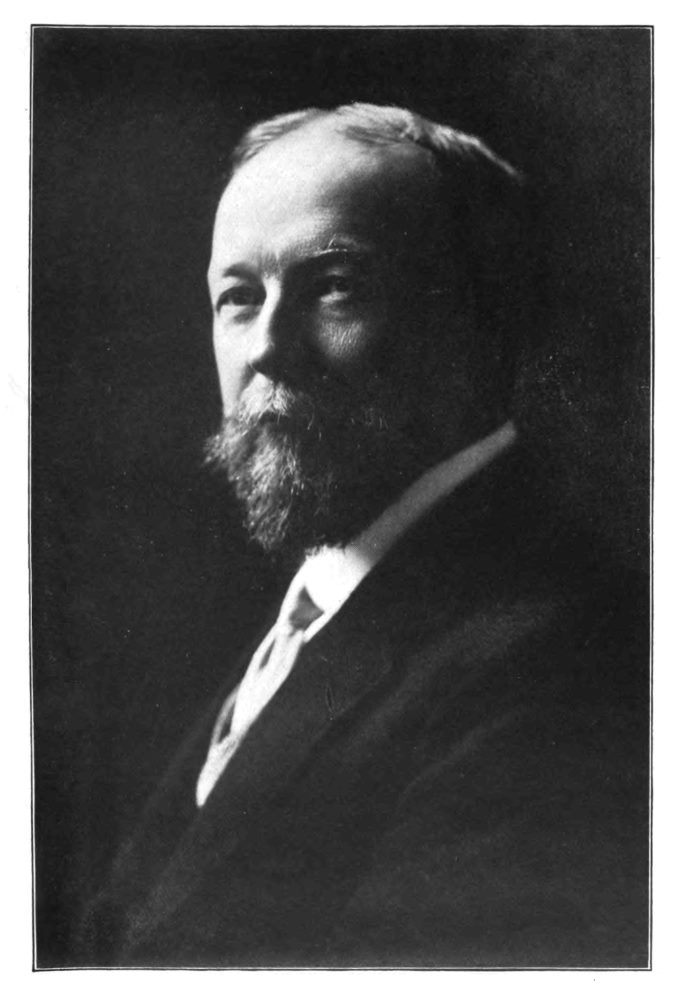
CHARLES LATHROP PACK
PRESIDENT, FIFTH NATIONAL CONSERVATION CONGRESS
Would it not in this connection be braver for us fathers and mothers to speak openly to our boys and girls concerning the dangers that beset them in their course of life end thus turn the energies of their lives into the board avenues of light, strength and usefulness than to let them be drawn into the abysmal chasm of a veritable hell of human waste. Would it not be better to save, to lessen the inflow, than to clog the mouth of this human sewer by police orders after prudery, hypocrisy and cowardice have filled it? (Applause.) We are everlastingly treating symptoms instead of diseases, attacking effects instead of causes, and we persistently thereby aggravate the malady.
Let us have more light of thought, more air of true freedom and a deeper and more sympathetic understanding of our own needs and those of our fellow man that we may be enabled to show the folly of vice, the contentment of virtue; that we may alleviate pain and want, and that the warmth of human sympathy may send hope to the hopeless, courage to the faltering and faith to the despondent.
With these fervent wishes the City of Indianapolis welcomes the Fourth National Conservation Congress. (Applause.)
President White—These words of welcome, coming from a different point of view, are felt deeply by us all. We feel the spur of duty still greater.
It is very fitting that another side of conservation should be heard from. The business men, the local business organizations of a city have done a good work for conservation. Human efficiency is one of the greatest forces that move the world, and systematic organization is one of the greatest powers towards efficient conservation of life and of all material progress. A business man knows that his success depends upon perfect organization, and that perfect organization is just as necessary to the conservation of every natural resource.
I have the pleasure of introducing to you Mr. Winfield Miller, of Indianapolis, who speaks on behalf of the local business organizations. (Applause.)
Address on Behalf of the Local Business Organizations
Mr. Miller—Mr. President, Ladies and Gentlemen: When I was honored by the commercial organizations of Indianapolis with the invitation to extend for them a few words of greeting and welcome to this National Conservation Congress, I looked into the biggest book, the Dictionary, for a definition of the word “Conservation.” I found the word concisely defined to mean “the art of preserving from decay, loss or injury.” While the definition is not extended, it is comprehensive and can be readily amplified to cover every phase of the question.
I then turned to the greatest book, the Bible, and read that early edict which still holds good, “In the sweat of thy face shalt thou eat bread.” Over this ancient decree and its cause, there have been volumes of theological commiseration, but in the light of subsequent history, it is now generally agreed that man has been a greater force in the garden of the world that if he had remained in the Garden of Eden.
The thought occurs, however, that resting under the edict of life-long toil man would, from an early period, have practiced conservation in all things. But he soon discovered that “the earth and the fulness thereof” were his, and, as ever, has been injuriously careless of results.
Again, he was not left without hope. The same great authority, in language and grandeur of thought unsurpassed, gives a promise of perpetual inspiration, in this, that “While the earth remaineth, seed time and harvest, and cold and heat, and summer and winter, and day and night shall not cease.” This promise, according to accepted chronology, has the confirmation of forty centuries of time and gives man the assurance of a continued field in which to do his work. The earth, the air, the waters are his environment; they are immutable, unchangeable. The animal, vegetable and mineral kingdoms furnish him food, clothing, shelter, life. Their best use should be his first and highest consideration.
Nature has been prodigal in her gifts to man. Her kingdoms have been his to rightfully exploit. But too long and too often has selfish and neglectful exploitation been his purpose and practice.
There is abundance for all if nature’s forces are properly conserved and her products fairly distributed. But some men, in their greed and haste, have grabbed a thousand-fold more than their necessities or happiness required. They eat their bread in the sweat of the other man’s face. On the other hand, the many have been ignorantly neglectful of the opportunities of their environments—so that life presses hard, too hard. Avarice, ignorance, waste, have linked arms to the detriment of civilization.
We must strive for the necessities of food, clothing and shelter. These sustain animal life, which is worth while; but animal life, endowed with the highest moral and mental strength, is the goal to be reached, for the summit of man’s ambitions should shine with human comfort and happiness. Conservation is the road to that summit and this National Congress has convened to further blaze the path and light the road. (Applause.)
Inventions of the last century, mostly within the half century, have injected into the field of travel and communication means that excite profound admiration; chemical analysis of the air and soil have shown that the food supply of the world, if nature’s forces are properly conserved, is without limit; while the mighty strides made in the better understanding of the physical needs of man himself insure the race at large improved health and longer life.
May I briefly indulge in a few common illustrations? The telegraph, the telephone, the automobile, steam and electric power save time and shorten distance. In that part of commerce relating to traffic we have caught the spirit of conservation. The railroad builder no longer takes the route of the least resistance in construction, but applies the geometric proposition that the straightest line is the shortest distance between two given points, works to that end, meets the difficulties of engineering, reduces gradients, and practically builds his road along the line of least resistance, conserves time, saves energy, increases efficiency and lessens rates.
The school books tell us of the “Seven Wonders” of the ancient world—the Pyramids, the Hanging Gardens of Babylon, and so on; all to gratify the vanity of kings and queens; not one for the advancement of civilization.
In a little more than two years the dream of four centuries will be realized—the Panama Canal will be completed. The distance from the Occident to the Orient will be shortened seven thousand miles—the truly modern wonder in advancing civilization and practical conservation. (Applause.)
While the physical aspects of this mighty work, as they relate to the traffic and commerce of the world, stand out in bold relief, but little less, if any, in achievement, is the practical demonstration that scientific sanitary methods can clean the plague spots of the world and make them healthy and habitable for man.
Who can compute the saving of time and energy this mighty work will bestow on the generations to come. Long after the passions of this generation have ceased, history will record the names of the strong men who have brought to full consummation this great waterway, as true benefactors of mankind.
At this time, our public press is ecstatic over the great harvests of 1912 that promise such abounding prosperity. Some writers are so extravagant as to say that the bountiful yields from our soil make an epoch in history. To speak of one crop only, the corn, or Indian maize crop, spreads over 108,000,000 acres, and is estimated to be 3,000,000,000 bushels. How enormous! At fifty cents a bushel, its money value would be $1,500,000,000, or $16.00 to every man, woman and child in the United States. Measured in bread, there would be enough to give to each of our 93,000,000 of people a five-cent loaf for more than 320 days, or nearly one full year. As gratifying as this is, the average yield is only twenty-seven bushels per acre; while it is shown that, by proper selection of seed, cultivation and fertilization of the soil, easily twice the yield could be produced, which would double the benefits enumerated.
How often do we pass a barren field, the soil too impoverished to grow wire grass, nettles, or thistles. The every-day farmer will tell you that a crop or two of clover will restore the necessary plant life to the soil of that field, and again make it blossom like the rose. He knows from practical observation and experience the cure, if he cannot scientifically trace the cause of the transformation.
Truly truth is stranger than fiction. Back of the restoration of a thousand barren fields restored to productiveness in the simply way named, lies one of the world’s greatest romances in patient scientific investigation that will continue to bring untold benefits to mankind. You know the story of Professor Nobbe, of Forest Academy, Germany. He also knew that clover and other legumens of the plant family would restore fertility to the soil. But why? After long and exhaustive study, labor and experiment, he found that the clover family were nature’s chemist of the soil; that by an invisible, intangible cord of attraction they drew from the inexhaustible reservoir of the air nitrogen so necessary to plant and animal life.
We are told that “nitrogen is what makes the muscles and brain of man; that it is the essential element of all elements in the growth of animals and plants, and, significantly enough, it is also the chief constituent of the gunpowder and other explosives with which the wars of the world are waged. The single discharge of a 13-inch gun liberates enough nitrogen to produce scores of bushels of wheat.”
Some day, through this agency, man may turn his attention entirely from war to the production of food, and in that hour true conservation of life will have reached its triumph.
We are further told that four-fifths of the air we breath is nitrogen, and that four-fifths of the atmosphere around us is nitrogen, so that if mankind dies of nitrogen starvation, it will die with food everywhere in and about it.
So that, while the human race may be but from three to six months behind abject starvation, the fact begins to appear that through science “mankind has just begun to sound the world’s capacity for food production and that it is practically limitless.”
The proper conservation of the soil by the application of the research of scientific discovery means increased yields of all plant crops, with but little greater expenditure of energy. This would enable the producer of food and clothing to sell more pounds, bushels and yards at less cost, and still reap as great reward for his labor as at present. This would forestall the Malthusian doctrine that population increases faster than the means of subsistence and, still better, would help to solve the high cost of living that presses so sorely upon the millions throughout the world today. Man is a productive machine; so the more machines of the highest type the world possesses the better for the world.
This conservation movement that is so strongly taking hold of the minds of thinking men and women, is so big, so broad and so comprehensive that it covers every phase of human thought and activity in what is best and highest for the individual as well as organized society. It is education in the broadest sense.
The Golden Rule is not only a statement but a living principle. To teach that a just distribution of nature’s gifts to each individual who is willing to earn and conserve his share is a recognition of that principle.
The City of Indianapolis esteems it a high honor to have this Congress with us. To all of its members, and especially to the distinguished men from other lands who have come to give us their best thought upon the various questions affecting this great movement, we extend our most cordial welcome and greeting, and our deep appreciation of your presence.
Our commercial organizations also cordially join in holding the door of welcome and hospitality open to you, and bespeak for your deliberations their kindest sympathy and deepest interest.
President’s Address
President White—This is a proud day for the officers of this Congress, for its delegates from the different States, and for the friends of Conservation everywhere, to be welcomed so hospitably, not only for ourselves who are strangers within your gates, but generously because of your sympathy in the great cause for which we stand. The citizens of your great city are noted for their public spirit, for their broad culture, and as being always found in the van with the army of those of progressive ideas. It is very fitting that the State of Indiana should have this Congress within its borders because of the immense interest shown and all the valuable help given by its citizens in the conservation of all natural resources, especially of human life and soil fertility.
To become the best, to do the best for all in a community, we must each develop the best within us, and must find our greatest reward in something far beyond the mere accumulation of dollars. Our community of interests recognizes a reciprocity of duty each to and for the other. Our title to the regard of our fellow men must come from our devotion to them and our love of humanity and its highest ideals, and not from selfish zeal in accumulating monetary wealth, which only represents the toil, the waste, and the necessities of human lives. This has been and is the age of commercialism. The measure of success has been gauged by the amount of money accumulated. In the language of Goldsmith, our country was in danger of descending to a condition “where wealth accumulates and men decay.” But I believe a turning point has been reached; and that we are entering upon a new era, a more glorious conception of higher duties for mankind; so that it shall not be asked: “What hath he taken from others in the competitive struggle for existence,” but rather: “What hath he given to others of himself for their advancement and development?” He who lives only for himself and does not plant for those that are to come after him, lives in vain. I believe the time is near at hand when a man shall be regarded with pity and as very poor indeed, who has nothing but money selfishly gained for selfish use.
The Conservation Congress of the United States has a great field to occupy. Its labors are for the betterment of its citizens in every way. Its work is to seek for the best methods to do the greatest good to all for this and for future generations. And in this there is no partisan politics; but it is such good national politics, that each party will strive only in seeking for the best methods for the common good.
Human life, with its possible attainments, is far beyond valuation in money. We should reverse the tables; and instead of human life being estimated in dollars, the dollar should be valued only for what it can do for greater humanity. Dr. Holmes, Director of the United States Bureau of Mines, in illustrating waste of material resources, says that in producing one half billion tons of coal, we waste or leave underground one quarter of a billion tons. And then only eleven per cent of the energy in coal is utilized; nearly ninety per cent is lost through inefficiency of boilers, engines and dynamos. How great a per cent. are we wasting of human life and human efficiency? We will have abundance of all the necessaries of life, and even of life itself, if we wisely save, wisely develop and protect, and wisely use. Human life is our greatest asset, and its waste is a permanent loss. The wealth of the nation is in its men, thrifty, honest, capable and patriotic men—in their moral and physical health, the foundation of their highest efficiency. The milestones of a nation’s progress are recorded in the history of every generation. In India, the average duration of life is twenty-five years; in Sweden more than fifty years; in the State of Massachusetts (the State where most careful records have been taken) it is over forty-five years. Wherever sanitary and highest medical science has been applied, it has been found possible to increase the span of life. In Europe it is said to have doubled in three and a half centuries. The report from Massachusetts shows an increase of fourteen years in the past century. So this humanitarian cause is surely a most economic, worthy and profitable one. In figuring from the standpoint of capital, Prof. Mayo Smith estimates that men and women between fifteen and forty-five years of age are worth an average of one thousand dollars. But figuring from a human standpoint, they are worth all that there is, money being only one of the tools to work with in effecting exchange of commodities, and the products of brawn and brain. We want to increase the ratio of the value of man to the soil, of man to all and any of his products, of man to money, and to put man first all the time. (Applause.)
We will increase the fertility and productiveness of the soil and we will enlarge the scope and increase the efficiency of the man. We waste in production as well as in consumption. In agriculture we will say that we will make the soil produce so many bushels per acre per man. The man will be first in his wise application of labor and methods and of means to an end. The “limits of subsistence” under what political economists used to call their “law of diminishing returns” has no fear for the conservationist. The developing of human intelligence is enlarging the production of the soil. Irrigation, where possible, and where impossible the science of what is called dry farming brings increasing results. Old farms in Europe produce more than they did 300 years ago, and this will prove true with us, and there will be no starvation for the human race because of increasing population.
And so will it be with all other industries, occupations and professions. He will be greatest who accomplishes most for man. For the brotherhood of man was the world made and the fullness thereof. Such freedom as may benefit any individual and does not in any way work to the injury of others is natural justice to all. Competition shall be robbed of the “red tooth and the bloody claw,” and co-operation and development for the good of all shall be the supreme object of all our efforts.
We will protect our watersheds by growing forests, and learn to control our floods, prevent soil erosion, and store the water, and convert its power into electricity, and from electricity produce light, heat and power in undiminishing quantity forever. In nearly every State there is daily flowing to waste power enough, if arrested and utilized on its way to the sea, to turn every wheel of industry and to move the traffic of commerce, and furnish light and heat for every city. It is said that the wheel does not turn with water that is past, but other wheels farther down the stream do, and the power is used again and again and finally pumped back by the sun to the mountains and plains to forever repeat the process of service to mankind. New discoveries are being made, and the use for by-products is being multiplied so that they are often found to be of greater use than the product from which they are derived. We must protect our forests by preventing forest fires. Government and State appropriations must be made sufficient for this purpose. In the report of the Conservation Commission to the President, it is stated that fifty million acres are burned over annually, and since 1870 there has been lost each year an average of fifty lives and fifty million dollars’ worth of timber. The lumbermen’s interests are to prevent fires and to stop waste; and they are anxious to co-operate with the State and with associations for this purpose, and are already doing so in many places. The true, saving features of forestry are becoming better understood, and better applied; and we will save our forests, and will grow trees, wherever necessary and profitable, the same as any other crop; and there will be no timber famine in the near or distant future. Our foresters are studying the experience of France, Austria, Italy, and Switzerland, coupled with our own experience, and we are making successful progress. In Kansas five years ago, according to President Waters of the State Agricultural College, there was only one school that taught agriculture. Now nearly five hundred high schools and more than six thousand rural schools are teaching the principles of agriculture, forestry and domestic science.
The Commissioner of Internal Revenue reports that for the official year 1912 ending June 30, the people of the United States drank more whisky and rum and smoked more cigarettes than ever before in its history. The smoking of over 11,221,000,000 cigarettes exceeded the record of 1911 by nearly two billions. Does this make for or against human efficiency? In this huge traffic is it the man or the dollar that stands first in importance? Popular education will be the source of protection, that all may have a fair chance for a useful life. There are other great factors of vice and crime leading to national decay. Also there is the enormous waste of human life by our railroads, mills, mines and factories amounting to tens of thousands annually, and those permanently injured and made a burden to themselves and to society to tens of thousands more. In no civilized country in the world is this loss anywhere near as great in proportion to work accomplished as in the United States. The greatest part of this immense loss can be prevented. (Applause.)
Here is thought and work for those in the department of vital statistics and those in charge of our health departments, who are laboring for the conservation of human life. Surely there is a great moral and economic need for this national organization. May this Congress, which now begins the work of its program, prove to be another step in advance of its predecessors in the labor of love and of progressive activities. The work in this vineyard is for both men and women; for him with one talent as well as for him with ten talents. Conservation should be taught in our schools and preached in our churches. It is a call of and for all the people.
In the language of the official call of this Congress, the objects of this Congress are “to provide for discussion of the resources of the United States as the foundation for the prosperity of the people; to furnish definite information concerning the resources and their development, use and preservation, and to afford an agency through which the people of the country may frame policies and principles affecting the conservation and utilization of their resources and to be put into effect by their representatives in State and Federal governments.” (Applause.)
President White—The preliminary organization has now been completed. It was expected that the President of the United States would be present to honor this occasion, at the opening of this Congress, or it was at least hoped that it would be possible for him to do so, but before he knew that he would send a personal representative he wrote a letter of greeting to the Congress, which I will now read:
MESSAGE FROM THE PRESIDENT.
MESSAGE FROM THE PRESIDENT.
Beverly, Mass., September 7, 1912.
Hon. J. B. White, President National Conservation Congress, Bemus Point, N. Y.:
My Dear Mr. White: Inasmuch as I have had to deny myself the pleasure of being present at the opening of the National Conservation Congress on October 1st, I want to take this means of conveying to the officers and delegates my very cordial greetings and good wishes for a most enthusiastic and instructive session.
You who know of my very real interest in the conservation of our national resources need no assurance of my hope that your meeting in every way may be a success, and I only want to say that that interest has not diminished in the slightest.
May your deliberations be productive of great good in promoting the cause of Conservation and in enlisting public interest in the solution of the problems which must be met in giving the people of the present day the benefit of the nation’s resources, while at the same time insuring to posterity its full heritage.
Sincerely yours,
WILLIAM H. TAFT.
It was afterwards found possible for the President to be represented personally, and he has sent the Honorable Henry L. Stimson, Secretary of War, to represent him here at this Congress. I now take pleasure in introducing to you Secretary Stimson. (Applause.)
Address, Hon. Henry L. Stimson, Secretary of War
ADDRESS BY THE SECRETARY OF WAR.
(Representing the President of the United States.)
Mr. President, Ladies and Gentlemen of the National Conservation Congress: I unite very sincerely in the congratulations which the former speakers have tendered to you on your assembling here in such an important and such a noble cause.
I am very happy to be here as the representative of President Taft—happy, both because of the interest which I know he feels in the great movement for Conservation, and also because of my own personal association with and enthusiasm for that movement. Four days ago, when I was busily engaged in inspecting one of the army posts of northern Wyoming, in the far away Rocky Mountains, I received an urgent telegraphic request from the President, that I should come here today and attend your meeting on his behalf. And the 1,600 miles or more which separate Fort Yellowstone from Indianapolis, may serve at the same time as a measure of the President’s interest in your meeting, and a measure of the depth of my own unpreparedness to speak to you today. I know, therefore, that you will understand and pardon me if I talk to you rather informally, merely as one friend to others interested in a great common cause, and confine the brief remarks which I shall make to one of the phases of Conservation with which I have become familiar through the work of the War Department.
Parenthetically, I might say that inasmuch as the Department of War is not usually considered as a particularly appropriate agency for the conservation of life, I will have to hark back to the material side of Conservation in some of its aspects which have been presented at your former meetings.
Of course, the main work which the Federal Government performs in regard to Conservation is done through the Department of the Interior. Incidentally, the truest of all indications of the interest with which the President regards the conservation of the natural resources of this country lies in the character and attainments of the man whom he has placed at the head of that Department in order to conserve them—Walter L. Fisher. (Applause.) You will all of you remember how his thorough investigation and clear-cut decision of the famous Cunningham claims, has settled and disposed of, in the interest of the people, one of the most bitter controversies of our cause. You are also undoubtedly familiar with the careful investigation which he made last year into the very complicated and serious problems of conservation which confront our Nation in Alaska; and with the luminous address with which he reported his conclusions and pointed out a solution of these questions. Though the work of his Department in investigating and conserving in the public interest, the water power sites which remain on our public lands, and our remaining beds of coal and phosphate, has not attracted so much attention as his work in these former more controverted matters; yet there is, I think, a very general and well founded feeling throughout the country that in all these matters the interests of the people of the United States are being thoroughly protected by the Secretary of the Interior in accordance with the most intelligent and thorough views of Conservation. (Applause.)
I allude to his method of thorough investigation because I think it is characteristic of the attitude of the President himself toward this whole subject. In order that progress should be real, it must be based upon carefully ascertained facts. In dealing with the problems of Conservation, we are dealing with problems which are new to our Nation. As the honorable speaker who first addressed you pointed out, we have only recently passed from an era of exploitation into an era of Conservation. We are surrounded by thousands of our fellow countrymen who have been brought up to honestly believe that the only method of developing the country is to turn its resources as rapidly as possible over into private hands. In putting into effect, therefore, the new policy to which the Nation has now come, there must be care taken lest false steps, or the injustice which may come from hasty action, may not produce a reaction which will delay or imperil the reform. As a former District Attorney, representing the people in the enforcement of the law, I have long had it impressed upon me how essential it was that no hasty, or harsh, or intolerant action, taken in the heat and controversy of a jury trial, should thereafter imperil the entire work and by producing injustice, and a subsequent reversal in the higher courts, bring some great reform into disrepute or temporary delay. Patience, thoroughness, and courage, mark the only pathway towards permanent progress and reform. (Applause.)
Now, the subject which I am going to call to your attention briefly this morning is one of those few matters where my own Department, instead of the Department of the Interior, touches upon the problems of national Conservation. It is also a subject the history of which, I think, exemplifies clearly the importance of the methods to which I have just alluded. I wish to point out to you the attitude of the administration as to the Federal regulation of water power in our navigable rivers.
It is needless to remind such a body as yours of the importance of that sphere of Conservation. All our other present sources of power—such as coal, wood, oil, and the like—are limited, and will be eventually exhausted. Water power alone is permanent. And just as we are coming to learn more and more the value of that permanence, we are simultaneously, through the development of electricity, learning to transmit its energy to greater and greater distances. No other subject occupied more keenly the attention of the past session of Congress, or was more vigorously debated upon the floors of that body.
For many years our national policy, or rather lack of national policy, towards our waterways and our water power, has presented a singular inconsistency. On the other hand, we have been spending hundreds of millions of the taxpayers’ money on the improvement of the navigation of our great inland waterways. On the other, we have been granting away permits for the construction of dams on these same rivers and waterways, which will create water power of incalculable and increasing value; and we have been doing this without exacting for the taxpayers any return or compensation whatever.
I believe it was not until the administration of President Roosevelt that any effort was made to obtain for the public any compensation for the water power which was thus granted away. Mr. Roosevelt demanded in his veto of the James River bill, and in several other messages, that no permits for dams in navigable rivers should be granted without a reservation of proper compensation to the public for the grant thus made. His action was courageous and right. But there were not as yet in the hands of the public sufficient carefully ascertained facts upon which the constitutional power of the Federal Government to take such action could be confidently based. And there was therefore great ground for misapprehension in the public mind of any action attempting to take such a position. A bitter controversy at once arose with those advocates of States’ rights, who contended that the Federal Government had no rights whatever in connection with water power, that under the Constitution its powers were limited solely to navigation, and that water power was an entirely separate and distinct sphere, falling wholly within the jurisdiction of the several States. Such advocates contended that for the Federal Government to exact compensation for a water power right, simply because it was in a position to withhold the permit altogether if it wanted to, was little better than legalized blackmail; and the progress of the reform was stubbornly and for a long time successfully contested.
Even as late as 1906, the General Dam Act, passed by Congress and approved by the President, conveys to the Executive no clear right to exact compensation for these grants. It has remained for Mr. Taft’s administration, following the method of patient investigation and research which I have above mentioned, to collect the facts necessary to solve the problem, and to show from these facts that the jurisdiction of the Federal Government over navigation must necessarily include jurisdiction over water power as an incident of the navigation.
Most of the rivers of this country are long and comparatively shallow. In order to make them commercially navigable, there has become prevalent among engineers a method of improvement known as the “slack water” method or the method of “canalization.” The method consists in building throughout the length of these rivers, a series of dams and locks, by which the river is converted into a succession of deep pools, adequate for commerce of a far more important character than could use the river in its unimproved condition. In fact, many rivers which are not capable in their natural state of being used at all commercially, can by this method be made useful and available for important commerce.
Now, most of the dams thus constructed in a “slack water” improvement, particularly in the rapid portions of the streams, will create water power of commercial value. It is also manifest that if the commercial value of the water power thus created can be realized by the Government and turned into further river improvement, the improvement of navigation on our rivers can be greatly expedited, and the expense to the general taxpayer very much lessened. And, on the contrary, unless this is done, the complete improvement of the river will be just so much delayed and postponed. The water power developed is thus shown to be intimately connected with navigation. It is a by-product of the improvement which can be turned into further improvement. And from the standpoint of constitutional law, it makes no difference whether the dam in question is to be erected by the Federal Government or by a private corporation. If it is a dam which is to assist the navigation of the river as well as to create water power, the power of the Government will be complete. What the Federal Government can constitutionally do itself it can do through an agent.
The corps of army engineers to whom are referred all proposed bills in Congress granting permits for dams for water power have been accordingly, under Mr. Taft’s administration, directed to investigate and answer specifically four questions in every report. They are directed to ascertain in regard to every such bill:
First, is the river on which the dam is to be created a navigable stream subject to being improved, either now or in the future of the country, at the expense of the general taxpayer?
In the second place, they are asked whether the dam which is sought to be constructed will form an essential part of any such improvement.
Thirdly, whether the dam will create water power of commercial value.
Fourthly, whether the value of that water power will tend to increase with the growth and development of the Nation.
You can see for yourself the pertinence of such questions. Once answered in the affirmative, there is a case presented upon which the jurisdiction of the Government’s power can rest.
Trial has now shown that the answers to these questions are nearly always in the affirmative. And as a result of the information thus obtained we are in a position now, unlike our position six years ago, where we can take a step forward, and hold permanently the ground thus gained.
There is now laid before Congress a sure foundation upon which we can rest our national right to exact the fair value of these grants. Investigation has regularly brought out the fact that each one of these dams is essentially connected with navigation, and that a failure to preserve the right to regulate them and to exact compensation for the power created is throwing away a valuable national asset.
The issue has been sharply drawn by President Taft, and his position clearly stated in his message, submitted on the 24th of last August, vetoing the bill which proposed to grant authority to build a dam in the Coosa River. The Coosa River is in Alabama. The bill in question sought to authorize the Alabama Power Company to build a dam suitable for the development of navigation in that river, and at the same time to create water power for the exclusive benefit of the corporation. It contained no provision permitting the Federal Government to exact any compensation for the rights of water power thus granted. The bill was strongly urged by powerful leaders of both houses of Congress. It was also vigorously opposed by the leaders of the conservation movement of Congress. But it ultimately passed. The President vetoed it in a message which asserts in unqualified language the duty of the Federal Government to reserve to itself the right to exact proper compensation. (Applause.) The President says on this point:
“I think this is a fatal defect in the bill, and that it is just as improvident to grant this permit without such a reservation as it would be to throw away any other asset of the Government. To make such a reservation is not depriving the States of anything that belongs to them. On the contrary, in the report of the Secretary of War it is recommended that all compensation for similar privileges should be applied strictly to the improvement of navigation in the respective streams—a strictly Federal function. The Federal Government by availing itself of this right may in time greatly reduce the swollen expenditures for river improvements which now fall wholly upon the general taxpayer. I deem it highly important that the nation should adopt a consistent and harmonious policy of treatment of these water power projects which will preserve for this purpose their value to the Government whose right it is to grant the permit.”
There are few subjects of equal importance with the proper improvement of our great river systems. We are behind many of the nations of Europe in our appreciation of this importance. The development of our rivers is not only vitally important for the commerce that they will thus carry, but even more for the regulative effect which they should and can have upon the freight rates of the railroads with which they compete. If Mr. Taft’s position is sustained, it means that all the potential value of these streams can be turned toward the improvement of their navigation. As he says, it offers one of the possible solutions for our swollen river and harbor appropriations. On the other hand, it also means that the hand of the nation is to be kept on this great national asset of our water power; and that this great subject of water power regulation will be handled comprehensively, consistently, and with due regard for the wants of the Nation as a whole.
If, however, the view of the opponents of the President prevails, it means that this necessary improvement of our rivers will be greatly postponed, and that all the expense of such improvement will have to be borne by the general taxpayers of the Nation. And it further means that the closely related subject of our water powers on these navigable rivers, instead of being treated nationally and broadly, will be subject to the piecemeal policies of forty-eight different States. Seldom is there presented an opportunity to apply the principles of conservation simultaneously to two such important subjects as river transportation and water power regulation. (Applause.)
President White—I am sure we all appreciate the address that has just been delivered by our distinguished representative of the President. It has left upon our minds the significance of the importance of protecting those natural resources that are permanent and which should not be given away to private individuals, or corporations.
Announcements
We will now hear some announcements.
Mr. Thomas R. Shipp (Executive Secretary)—The section of which Dr. Wiley is chairman, the section on “Food”, will meet this afternoon at four instead of tomorrow morning. The meeting will be held in the Palm Room, Claypool Hotel, and will be open to the public. The fact that Dr. Wiley is at the head of this section and will preside and speak will make it of great interest to delegates. In addition to Dr. Wiley, there are other gentlemen of national reputation on this question who will speak. An invitation is extended to all delegates to attend this meeting this afternoon at 4:00 o’clock.
President White—If there are no further announcements we will adjourn until this afternoon at 2:00 o’clock.