Part 2 — CHAPTER XXVI HOOKWORM DISEASE AND AMOEBIC DYSENTERY
Reading edition
CHAPTER XXVI HOOKWORM DISEASE AND AMOEBIC DYSENTERY
Hookworm disease and amoebic dysentery resemble typhoid fever in one respect, in that they, too are spread by the improper disposal of human excreta.
Where hookworm disease prevails
Hookworm disease is found almost exclusively in tropical or subtropical climates. In the United States it is rarely seen north of the Potomac and Ohio rivers.
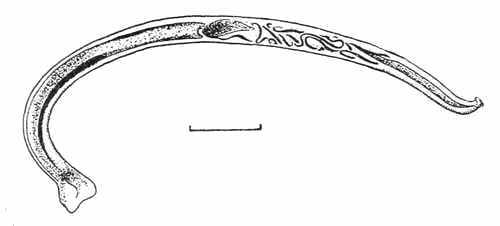
Fig. 59. A full-grown hookworm, magnified; the short line shows the average length of the hookworm.
What the hookworm is
This disease is not caused by a germ, as is typhoid fever, but by a worm from a quarter to half an inch long, and about as thick as a small hairpin. These worms get into a person's intestinal canal, and there lay their eggs, which are later given off in the bowel discharges. When these discharges are thrown on the ground, or are put into an open water-closet, they may be carried about by chickens, flies, and pigs. Then the eggs hatch in the soil and tiny hookworms result. When human excreta are not properly disposed of, in climates where hookworm disease prevails, the soil becomes practically full of these little worms, and from the soil they find their way into the bodies of the people.
How it enters the body
There are two principal ways by which the hookworm may enter the body. One is through the mouth, which these worms reach in practically the same way as do typhoid fever germs. The hookworm may enter the body through the skin also. Some authorities state that the worm bores its way in; but it is probable that it does not actually bore through sound skin, but enters at some point where there is a small break.
Where it lives in the body
After the worm gets through the skin, it is taken into the blood and carried to the lungs, and from there it finds its way to the throat and is swallowed. It makes no difference whether the hookworm is swallowed or enters the body through the skin; it finally reaches the intestinal canal, where it then makes its home. Sometimes thousands of these worms are found in a single person, and each one of them entered the body through the mouth or through the skin. The worms do not multiply in the body, and the eggs they lay never hatch until after they have left the body.
How it affects the patient
When the hookworm gets into the intestinal canal, it fastens itself to the wall and sucks the blood from it, at the same time giving off a poison that enters the blood of the victim. The loss of blood and the effects of the poison soon cause the person in whose body these worms are living to become weak, pale, and thin. He is not able to do much work, if any, and the result is that people suffering from this disease are often called lazy. They are not lazy; they are sick, and many of them die.
How hookworm disease can be prevented
All this sickness and all these deaths might be prevented simply by the proper disposal of human excreta. No human excreta should ever be put anywhere except into a properly constructed sewer or properly constructed privy. If this rule were always observed, both hookworm disease and typhoid fever would be abolished.
Where amoebic dysentery prevails
Amoebic dysentery is another disease that is confined almost entirely to tropical and subtropical climates, though cases sometimes occur in colder regions.
How it is spread and how it may be prevented
This disease, like typhoid fever, is caused by a germ that leaves the body with the bowel discharges. The germ makes its way into the body in the same way that the typhoid germ enters; that is, it is taken in with food or drink. The various means by which this germ gets into our food are the same as those by which the typhoid germ gets in; and the precautions that will prevent the spread of typhoid fever will also prevent dysentery. Amoebic dysentery kills a great many people in warm climates, though it does not kill as many as does typhoid fever. If it does not cause immediate death, it often leaves the patient very weak and sickly for months or years.
Questions. 1. In what climates are hookworm disease and amoebic dysentery commonly found? 2. In what respects do they resemble typhoid fever? 3. How does the hookworm enter the body? 4. Where do the hookworm eggs hatch? 5. How can hookworm disease be prevented? 6. What other diseases can be prevented by the same precautions?
Remember. 1. Typhoid fever, hookworm disease, and amoebic dysentery are all caused by the improper disposal of human excreta. 2. Most of the sickness that can be prevented is the result of dirty habits; if all people would keep clean and see that everything about them was kept clean, a great deal of sickness would be prevented and a great many lives would be saved.