Part 2 — CHAPTER XVII ENCOURAGEMENT OF DISEASE BY UNCLEANLY HABITS
Reading edition
CHAPTER XVII ENCOURAGEMENT OF DISEASE BY UNCLEANLY HABITS
We shall not try to learn here all the ways by which it is possible to destroy the germs of disease as they come from sick people. But there are certain rules (we sometimes call them fundamental principles) that you must know, if you hope to keep well and to prevent others from getting sick.
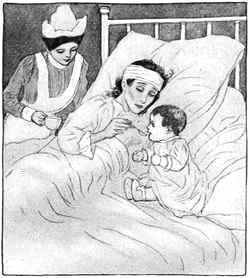
Fig. 40. How diseases are frequently transmitted to children.
Why we should stay away from the sickroom
The first of these rules is: Do not go into the room where any one is sick unless it is absolutely necessary. No one but the nurse should sleep in the room with a sick person. We know that certain diseases are communicable (catching), but it has not yet been determined whether some others are communicable or not. It has not been proved, for instance, that we cannot catch rheumatism from another person. Only a few years ago it was believed that one could not take consumption from another person, but now we know that this is the very way to get it. Therefore, stay away from sick people as much as possible. It is not good for the patient to have people around him, and it is dangerous for the well to come in contact with the sick.
Not using things used by the sick
The second rule is: Do not use anything used by a sick person until it has been washed. This is a good rule to apply to things used by a well person also. It is neither safe nor pleasant to eat from the spoon or fork, or to use the napkin or towel which has been used by someone else.
Sometimes children think the food prepared for a sick person is ever so much nicer than that set before themselves, and wish they could have a little of it. How often have we seen a sick mother give her little ones "a taste" from the spoon with which she is eating. This is very dangerous, and if she knew it, the mother would cut her hand off before exposing her children to this danger.
Reason for scalding things used by the sick
Third: Everything taken from a sickroom should be boiled before it is used again. The knives, forks, and plates should not be put with other dishes until after they have been separately washed and boiled. Towels, napkins, bedding, and clothing from a sickroom should not be washed with other bedding and clothing, but should be washed and boiled separately. Some people send out the clothes from the sickroom with the rest of their washing, and in this way give disease to others.
How excreta from the sick should be treated
Fourth: All discharges (sputum, urine, bowel discharges, and matter from sores) from any sick person should be thoroughly disinfected before being finally disposed of. The sputum should be received on little rags or paper napkins, and burned; and the other discharges should be disinfected with some poison that will kill the germs. We shall say more about disinfection when we come to study the prevention of special diseases.
Necessity of washing the hands after touching the sick
Fifth: Every person who touches a sick person, or handles anything that comes from a sickroom, should immediately wash his hands. Unless he washes his hands at once, the germs which may be on them may get into his mouth.
How dirt causes disease
Sixth: Dirt, which is an indirect cause of disease, must not be allowed to accumulate. If your yard were full of dirt, garbage, and manure, it would not cause disease unless the germs of some disease became planted there. But such a place is an indirect cause of disease, in that it furnishes a fine place for germs to grow in. If a fly with typhoid germs on its feet were to alight in such a yard, the germs would be planted in a most favorable spot and would grow very fast.
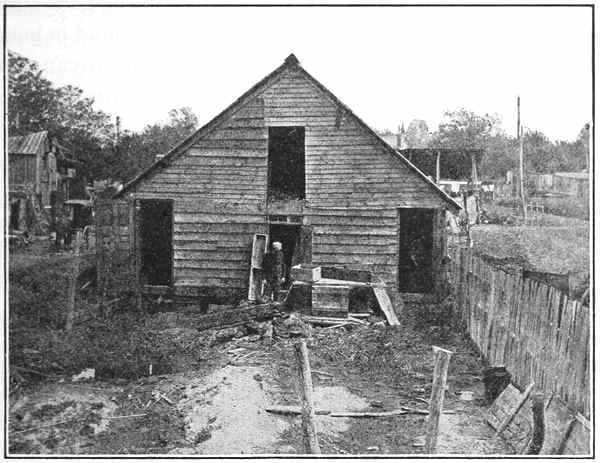
Fig. 41. A place that is an indirect cause of disease, since it furnishes a fine place for germs to grow in.
None of the disease germs like sunshine; neither do they like dry places. They die very quickly in the sunlight, and grow very slowly, if at all, in dry places; but in damp, dark places they grow very fast. Dirty back yards make ideal gardens for germs.
Let a fly with germs on its feet alight in a clean yard where sunshine can reach every corner, and what chance will the germs have to grow? They will not even get a start. Hence, while disease cannot be caused by dirt, disease germs stand a very good chance of living where there is plenty of dirt and no sunshine. Filthy habits are on an equality with filthy conditions, and go hand in hand with them. One of the worst of habits, and a cause of much sickness, is that of answering Nature's calls in places other than the closet.
Questions. 1. Why should you never make unnecessary visits to a sick person? 2. Why should you avoid anything used by a sick person? 3. Why should everything taken from a sickroom be scalded? 4. What should be done with all discharges from a sick person? 5. How is dirt a source of disease?
Remember. 1. Unless it is necessary, do not go into a room where anyone is sick. 2. Never sleep in a room with a sick person. 3. Never eat from a spoon or plate that has been used by another. 4. Boil all the articles taken from the room of a sick person. 5. Always wash your hands after touching a sick person or anything that comes from his room. 6. Sunshine kills germs; let the sunshine into every corner of your house.