20th-Century Pieces
Reading edition
FOR SERVICE IN THE SPANISH-AMERICAN WAR
One of the most controversial figures of the Spanish-American War is represented in the Museum’s collection of some of the silver that was presented to Rear Admiral Winfield Scott Schley.[26] Schley became a national hero primarily because of his genial personality, and he was acclaimed and supported by the masses of the American public even while his claims to fame were being challenged by his colleagues.
Admiral Schley had already had a long and illustrious naval career before the outbreak of the war with Spain. After his graduation from the Naval Academy in 1860, he served on board the frigate Niagara when it was detailed to bring to the United States the first representatives from Japan to this country. As a junior naval officer he took part in the Civil War engagements leading up to the capture of Port Hudson. Then followed a period with sea duty and alternate posts ashore at the Naval Academy and elsewhere. During this period he took part in the capture of some Korean forts in 1871, and later he commanded the relief expedition that rescued the Arctic explorer Lieutenant Adolphus W. Greeley and six of his companions near Cape Sabine, when they were near death, and brought them safely home after a perilous voyage through 1,400 miles of ice.
The controversial period of Schley’s career began with his appointment to command the Flying Squadron, stationed at Hampton Roads at the opening of the Spanish-American War, with the arrangement that should his squadron operate with the Atlantic Squadron in the West Indies, he would be under its senior officer, William T. Sampson. Since Sampson was junior to Schley in rank, this led to the famous Sampson-Schley controversy of the war. Despite his orders to blockade Santiago immediately, Schley took his time getting there with his squadron, and then he failed to establish a close blockade. During the month-long blockade in which the two squadrons were joined, matters were strained between the commands. Sampson was in conference about seven miles east of Santiago when the Spanish fleet finally emerged from the harbor. Schley immediately seized full command of the battle despite Sampson’s proximity and his prompt return to action.
The press, probably influenced by his likable personality, made a hero of Schley, but his fellow naval officers felt differently. A court of inquiry held in 1901 found Schley to be at fault, but despite this decision he retained his public popularity, a tribute to his affability and bluff, hearty manner.
The many pieces in the Museum’s collection of presentation silver given to Schley not only attest the recipient’s popularity but seem to express the poor taste, debased design, and stereotyped workmanship that was characteristic at the beginning of the 20th century.
Not just one presentation piece but an entire silver service was made from Spanish coins recovered from the Cristóbal Colón that was sunk at Santiago. The original service consisted of 69 pieces, of which the Museum has the table centerpiece, soup tureen and ladle, fish platter, and a vegetable dish (cat. 39554).
The centerpiece, measuring 14 by 30 by 8 inches, is designed with a circular base holding four classical female figures. On each side of the base is a shallow silver dish shaped like a seashell and supported by dolphins. A shield on one side of the base bears the following inscription:
This service made of Spanish coins recovered from the Cristobal Colon sunk in the battle off Santiago de Cuba July 3, 1898 is presented to Rear Admiral Winfield Scott Schley by his friends in loving appreciation of his heroic services to his country.
An eagle ornaments the opposite side of the base.
The covered oval soup tureen (7 inches by 131⁄4 inches; cat. 39555) bears the same inscription as the centerpiece and is marked “S. Kirk & Son Co.” The cover, monogrammed “W S S,” has a rather effective design of overlapped laurel leaves with clusters of berries. The ladle (14 inches long; cat. 39556) is monogrammed “W S S” on the bowl (4 inches in diameter), and it has the same design as the tureen.
The fish platter (25 inches by 13 inches; cat. 39557) is similar to the tureen in design. The oval vegetable dish (11 inches by 151⁄4 inches; cat. 39558) is also similar and is inscribed the same way, including the mark of “S. Kirk & Son Co.”
An elaborate silver centerpiece given to Admiral Schley in Memphis, Tennessee, in 1902 consists of a bowl, vase, and candelabra made to be fitted into one unit (fig. 15). The large bowl (20 inches by 6 inches) is chased in marine designs and bears the following inscriptions:
Presented to Winfield Scott Schley, Admiral U.S.N. in recognition of his services in destroying the Spanish Fleet off Santiago de Cuba, July 3, 1898.
Twenty-thousand American citizens join in honoring valor, fidelity to duty and a lofty generosity that exemplified the sublimest manhood. Memphis, Tennessee, April 28, 1902.
There is glory enough for All.
The silver vase (32 inches high) is made to fit into the bowl, and it has a portrait of Admiral Schley on one side and a picture of his flagship, the Brooklyn, on the other. Each end of the bowl is fitted with a socket to hold a three-branch silver candelabra, and there are two solid blocks of silver for insertion in the sockets when the candelabra are not being used. These pieces are marked “Sterling” but no maker’s mark is visible.
A silver card (cat. 39518), measuring 31⁄4 inches by 51⁄2 inches, that was presented to Schley at a dinner given in his honor is engraved as follows:
Rear Admiral Winfield Scott Schley, U.S.N. The Commercial club of Kansas City, Mo., November 19, 1902.
The turn of the century marks the beginning of the popularity of loving cups as presentation pieces. There are four loving cups in the Admiral Schley collection.
The earliest of these cups bears the following inscription:
Presented to Rear Admiral W. S. Schley by the citizens of Atlanta Georgia, November 4, 1899.
This cup (cat. 39571), 9 inches in diameter and 141⁄2 inches in depth, is shaped like a vase and is decorated with a scroll design. Each of its three handles is attached to the cup with two applied silver oak leaves. The piece is marked “Maier & Berkley, Atlanta, Georgia, Sterling, 385,16.”
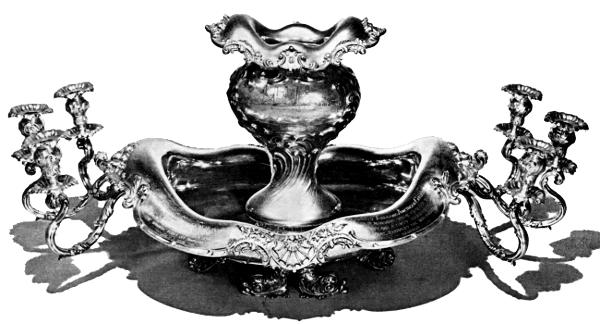
Figure 15.––Centerpiece given to Adm. Winfield Scott Schley in Memphis, Tennessee, for his services in Cuba during the Spanish-American War. Part of the Schley collection, gift of Mrs. R. S. Wortley. In Division of Naval History. (Acc. 136891, cat. 39548; Smithsonian photo 45992-G.)
Another silver cup with three handles was presented to Schley on February 5, 1902, by the Chamber of Commerce and the citizens of Knoxville, Tennessee, in recognition of his services during the Spanish-American War. This cup (cat. 39573) has the mark of the Gorham Silver Company and the words “Sterling, A 2219, 6 pints.”
The silver loving cup given to Admiral Schley by the City of Dallas reflects the exuberance of the Texas donors as well as the taste of the turn of the century. It bears the following inscription:
Presented to Winfield Scott Schley, Rear Admiral, U.S.N. A token of the Affectionate Regard and Grateful Appreciation of the City of Dallas, Texas, For His Illustrious Achievements in the Service of our Country, October 20, 1902.
This cup (cat. 39572) measures 8 inches in diameter and 21 inches in depth. The three handles terminate in eagles’ heads. The design pictures a battleship in gold identified as the “U.S.S. Oregon,” a head and laurel wreath with the words “U.S.S. Brooklyn,” and an eagle and a star in a wreath for the “U.S.S. Texas.” The base of the cup is decorated with three Texas longhorns with an anchor and shield. It bears the marks of the Gorham Silver Company.
The fourth loving cup (cat. 39538) is made of vanadium steel rather than of silver. This too is a three-handled cup. It measures 7 inches in diameter and 121⁄2 inches in depth and is decorated with the emblem of the Masonic Order of the Mystic Shrine and the following inscriptions:
Presented to Noble Winfield Scott Schley by Syria Temple, A.A.O.N.M.S. November 20, 1909.
Syria Pittsburgh, Pennsylvania
The war with Spain is further commemorated by a silver loving cup[27] presented to Rear Admiral Charles D. Sigsbee, U.S.N. Sigsbee, commissioned captain in 1897, was in command of the battleship Maine when she blew up in Havana harbor in 1898. A naval court of inquiry exonerated Sigsbee, his officers, and crew from all blame for the disaster; and the temperate judicious dispatches from Sigsbee at the time did much to temper the popular demand for immediate reprisal.
The cup bears the following inscription:
The Commercial Club of St. Paul Minn. Sends Greetings to Capt. Charles Dwight Sigsbee who as Commander of the Auxiliary Cruiser St. Paul had a brilliant share in the Naval Exploits of the Spanish War of 1898.
May you live long and prosper.
Marks on the cup are those of the Gorham Silver Company and the words “Sterling,” “Patented,” and “5 pts.”
Admiral Sigsbee achieved greater distinction for his services as a scientist than as a naval hero. An outstanding hydrographer, he made a deep-sea survey of the Gulf of Mexico, and from 1893 to 1897 he was chief of the Navy’s hydrographic office.
FOR ARCTIC EXPLORATION
In the midst of the myriad of soldiers, sailors, and politicians who have been presented with silver through the past two centuries, we find an arctic explorer being given similar recognition at the beginning of this century. Rear Admiral Robert E. Peary was the first man to reach the North Pole, and the United States National Museum has a collection of silver presented to him in recognition of this achievement.
Peary became interested in arctic exploration as early as 1886 and discovered he had an aptitude for its grueling demands on several minor expeditions to Greenland and the arctic ice cap. In 1893 he became determined to reach the North Pole, and he spent the next 15 years in unsuccessful attempts to achieve his ambition. In 1908 Peary left on another polar expedition; after a hazardous trip, he reached his goal on April 6, 1909. His victory seemed a hollow one because of the claim of a rival explorer that was finally proven spurious. In October a committee of experts appointed by the National Geographic Society supported Peary’s claims, and in 1911 he was tendered the thanks of Congress. Admiral Peary’s work as an explorer had immense scientific value, as he developed a highly efficient method of exploration which has continued to be used advantageously.
Three loving cups and a replica of a ship in silver[28] that were presented to Peary are in the collections of the United States National Museum. Two of the cups were gifts to Peary from cities in his home state of Maine. One loving cup (cat. 12186), 10 inches high, is marked with the old English “T” of Tiffany & Company, “7072,” and “5 pts.” It is inscribed:
To Commodore Robert Edwin Peary, U.S.N. in recognition of his remarkable achievement in placing the flag of the United States at the North Pole, April 6, 1909. Presented September 23, 1909 by the City of Bangor, Me.
The other loving cup from Maine (cat. 12187) is 12 inches deep and bears the Tiffany “T,” “7056,” “Sterling,” and “51⁄2 pts.” The inscription reads:
Presented by the citizens of Portland, and South Portland, Maine, To Commodore Robert Edwin Peary, U.S.N. September 23, 1909 in recognition of his achievement in nailing the stars and stripes to the North Pole.
The third loving cup (cat. 12188) is 18 inches high and is marked with the lion, anchor, and “G” of the Gorham Silver Company and with “Sterling,” “332A,” “7 pints,” and “D. Kappa Epsilon.” The inscription reads:
Presented to Commodore Robert Edwin Peary, U.S.N. by the Delta Kappa Epsilon Association of New York City, December 18, 1909.
In 1910 the Royal Scottish Geographic Society presented Admiral Peary with a silver replica of a ship (fig. 1) of the type used by Henry Hudson, John Davis, and William Baffin in their explorations for the Northwest Passage. The replica, representing a ship under full sail, is 24 inches high and 20 inches long. The foresail bears a long inscription in Latin likening Peary to other early arctic explorers. The marks indicate the piece was made in Great Britain.
Also in the Museum’s collection is a silver plaque[29] presented to Peary by the Circumnavigator’s Club in New York. It bears the mark of Tiffany & Company and is inscribed:
Circumnavigator’s Club Presented to the Immortal Navigator Peary on the Occasion of his presence as guest of honor at our Annual dinner held at Delmonico’s New York City, the Eleventh of December, 1913. Officers: President W. Tyre Stevens, 1st V. P. Wilson D. Lyon, 2nd V. P. W. D. Oelbermann, Treasurer, F. C. Schulze, Sec. F. W. Hilgar, Gov. E. H. Paterson, J. H. Burch Jr., George L. Carlisle, W. G. Paschoff, C. A. Haslett, William H. Zinn.
The bottom edge of the plaque is engraved “Tiffany & Co. Makers” and “18417 Sterling Silver.”
FOR SERVICE DURING WORLD WAR I
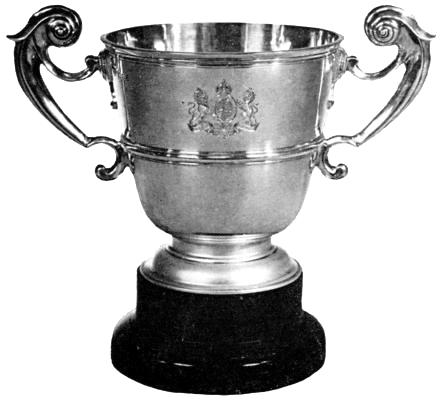
Figure 16.––Cup presented to the Honorable Brand Whitlock by the British Government. Gift of Mrs. Brand Whitlock. In Division of Political History. (Acc. 137815, cat. 40028; Smithsonian photo 45992-E.)
Of all the silver pieces in the collections of the National Museum that commemorate military prowess, the sole piece relating to World War I was presented to a man who achieved fame for his humanitarian service as a diplomat––the Honorable Brand Whitlock, who was appointed American Minister to Belgium in 1913. Whitlock came to the position with a distinguished record as four-time mayor of Toledo, Ohio, where his administration was noted for its reforms. He had insisted on a fair deal for the working man; he liberalized the administration of justice; he kept the city government free of graft; and he won a battle against the power of vested interests in the city.
After the invasion of Belgium in World War I, Whitlock remained at his post where he performed many services for the oppressed citizens. His presence in Brussels facilitated for both friend and foe the enormous task of organizing the distribution of food among the civilian population of Belgium and the occupied zone of France. In 1916 he chose to follow the Belgian Government into exile. His activities won him the lifelong affection and admiration of the people of Belgium, and after the war they showered him with evidences of their esteem. Among the many presentation medals, documents, and miscellaneous gifts that he received is a silver loving cup (fig. 16) from the British Government. On one side the cup bears the British coat of arms, and on the other side is inscribed:
Presented to Brand Whitlock by his Britannic Majesty’s Government, 11 November 1918.
The base is marked “C & Co.,” “130 Regent St., Carrington and Co., London W,” and “Copy of Antique Irish 1717, 66 × 13, P 6610, xy P d.”
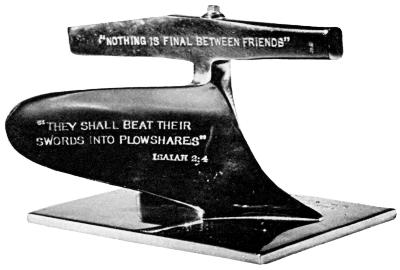
Figure 17.––Paperweight identical to those presented by William Jennings Bryan to 30 diplomats who signed with him treaties for the investigation of all international disputes. Gift of William Jennings Bryan. In Division of Political History. (Acc. 57778, cat. 15307; Smithsonian photo 45992-C.)
A presentation piece made of polished steel is really outside the scope of this paper, but as it has an interesting bit of diplomatic history connected with it, it has been included in the catalogue. The object is a paperweight (fig. 17) designed by William Jennings Bryan when he was Secretary of State. The weight, in the form of a plowshare, was made from swords condemned by the War Department. Thirty of these weights were given by Secretary Bryan to the diplomats who in 1914 signed with him treaties providing for the investigation of all international disputes. The shaft of the plow bears the inscription:
“Nothing is final between friends” “Diplomacy is the art of keeping cool”
The blade is inscribed
“They shall beat their swords into plowshares” Isaiah 2:4
On the base is engraved:
“From William Jennings Bryan to the Smithsonian Institution, August 13, 1914”
TO MR. AND MRS. ROBERT TODD LINCOLN
Among the pieces of presentation silver acquired in 1960 by the Smithsonian Institution is a covered urn that was given to Mr. and Mrs. Robert Todd Lincoln by their children on the occasion of their 50th wedding anniversary.[30] Robert Todd Lincoln, son of the President, became a prominent lawyer in Chicago and later served as president of the Pullman Company, as Secretary of War in the cabinets of President Garfield and President Arthur, and as Minister to Great Britain under President Benjamin Harrison. The silver gilt urn has two handles, measures 13 inches from the base to the finial on the cover, and 7 inches at its widest point. Bands of ornamentation feature both the grape design and the acorn and oak-leaf design. It is inscribed:
Robert Todd Lincoln––Mary Harlan 1868-1918
The gilt wash, although almost completely polished off the outside surface, still covers the inside of the urn and its lid.
TO CONGRESSMEN
A silver tureen and tray[31] were given to the Honorable James R. Mann, Republican leader of the House of Representatives, by the members of the House in 1919. Mann was elected a Representative from Illinois in 1897, and he remained a member of Congress until his death in 1922. In 1912 he became minority leader. In addition to the Mann Act, his name is associated with other important legislation of the period such as the Pure Food and Drugs Act and the Woman Suffrage Amendment.
The tray, which holds the tureen, is inscribed:
James R. Mann Republican Leader from House Members of the 65th Congress, March 3rd, 1919.
It is marked on the back with “W. Sterling, 4086––16 in.” The initial represents the Wallace Silver Company.
The oval tureen is on a pedestal base. There is a scroll design around the edge of the base, the edge of the bowl, and the opening of the bowl. The piece measures 14 inches from handle to handle, is 10 inches high, and has the initials “J R M” in old English letters engraved on the side.
In the Museum’s collection is a loving cup of Chinese design that was presented by the Chamber of Commerce, Peking, China, to a party of American Congressmen on a tour of China and Japan in 1920.[32] The height of the cup is 175⁄8 inches, and its width, including the two large handles, is 155⁄16 inches. The piece is mounted on a papier-mâche base that is covered with silk. The engraved Chinese characters translate as follows:
Commemorating the welcome of Congressmen from Great America traveling in China
Respectfully presented by members of the Chinese Diet
May the spring of your well-being be as vast as the ocean.
TO SUFFRAGETTES
Among the significant social changes that occurred in the 19th century was the movement for woman suffrage that began about the middle of the century as a concerted action by a nucleus of determined women. The crusade gained strength and numbers during the second half of the century, and finally achieved success with the ratification of the Suffrage Amendment in 1920. Many women worked in this cause, and the pieces of presentation silver in the National Museum’s Woman Suffrage Collection constitute a record of the most important leaders.
Chief spokesman of the movement and its leader for many years was Elizabeth Cady Stanton of New York State. She was instrumental in calling the first Woman’s Rights Convention in Seneca Falls, New York, in 1848, and she served as president of the National Woman Suffrage Association from its beginning in 1869 and as president of the National American Woman Suffrage Association from 1890 to 1891. She continued to be an active worker in the movement until her death in 1902, writing and editing many works on suffrage in addition to her administrative work.
On the occasion of her 80th birthday in 1895, Mrs. Stanton was presented with a silver tray[33] (8 inches wide and 11⁄2 inches deep) that is inscribed:
From the Ladies of Seneca Falls, 1848-1895.
This tray, presented at a meeting at the Metropolitan Opera House in New York City, bears on the back a “W” in a circle, a two-headed lion in a rectangle (probably an early mark of the Wallace Silver Company), the word “Sterling,” and the number “2048.”
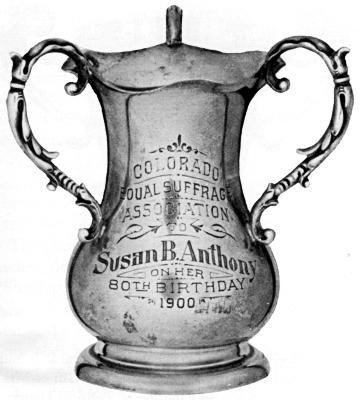
Figure 18.––Cup given to Susan B. Anthony by the Colorado Equal Suffrage Association. Gift of National American Woman Suffrage Association. In Division of Political History. (Acc. 64601, cat. 26163; Smithsonian photo 45992-J.)
On the same occasion Mrs. Stanton was presented a silver loving cup[34] that is inscribed:
1815-1895 Presented to Elizabeth Cady Stanton by the New York City Woman Suffrage League, November 12, 1895. Defeated day by day but unto victory born.
The cup, 41⁄2 inches in diameter and 73⁄8 inches deep, is marked on the bottom with the Wallace “W,” similar to the mark on the tray, and “Sterling, 3798, 41⁄2 pints, 925/100 fine, Pat 1892.”
The life story of Susan B. Anthony is a record of 60 years of devotion and work for the enfranchisement of women. An organizer and director of countless suffrage activities, she was tireless in conducting campaigns for woman suffrage. She is the one individual who has become so identified with the fight for woman suffrage that, more than any other, her name has become synonymous with that term. During her lifetime she worked in almost every capacity in the organized movement. She became president of the National American Woman Suffrage Association in 1892 and served until her 80th birthday in 1900. On that occasion the Colorado Equal Suffrage Association presented her with a miniature, three-handled loving cup that stands only 33⁄4 inches high (fig. 18). In one section of the cup there is engraved the word “Colorado” and the state’s coat of arms; in an adjoining section is an engraving of the state flower; and in the third section is the following inscription:
Colorado Equal Suffrage Association to Susan B. Anthony on her 80th Birthday 1900.
The cup is marked on the bottom “Sterling, 590, A. J. Stark & Co., Denver.”
She was also given a silver-plated teakettle[35] by the Political Equality Club of Rochester, New York. The stand is 31⁄2 inches high, and the teapot is 51⁄4 inches high. Engraved around the top of the teapot is:
Susan B. Anthony 1820-1893.
The stand is marked “Mfd. & Plated Reed & Barton” and “65.”
The chosen leader of the Woman Suffrage Movement after 1900 was Mrs. Carrie Chapman Catt, a vigorous organizer and campaigner who led the drive for the constitutional amendment that was finally ratified in 1920. Mrs. Catt founded the International Woman Suffrage Alliance in 1902 and served as its president until 1923. Her late years were devoted to the cause of international peace and disarmament.
Mrs. Catt was the prime mover in calling the first international conference on suffrage, which, in 1902, welcomed representatives from nine foreign nations––Great Britain, Germany, Norway, Sweden, Denmark, Turkey, Russia, Australia, and Chile. The delegates were honored guests at the National Suffrage Convention then in session in Washington where they also attended two congressional hearings on suffrage and were received by President Theodore Roosevelt at the White House.[36] Mrs. Catt was given a silver tray[37] inscribed:
To Carrie Chapman Catt from the foreign delegates to the First International Suffrage Conference, Washington, D.C., Feb. 12-18, 1902.
The back of the tray is marked “Galt & Bro. Sterling, 386.” The Galt silver firm is in Washington, D.C.
The campaign for the first referendum in the state of New York on woman suffrage was considered to be the most decisive of all the state fights. New York was divided into 12 campaign districts working under Mrs. Catt. The campaign was most vigorously waged, but the referendum was defeated.[38] After the New York campaign Mrs. Catt received a silver gilt tray[39] inscribed:
Honorable Carrie Chapman Catt from Katherine Howard Notman
Eleventh Assembly District Campaign Chairman, 1915 The right of the citizens of the United States to vote shall not be denied or abridged by the United States or by any state on account of sex.
The tray is marked on the reverse “Tiffany and Co., 18154, Makers 811, Sterling Silver, 925/1000/M.”
Mrs. Catt had started the suffrage movement in the Philippine Islands when she visited there in 1912 and organized the first suffrage club in Manila. In 1937 the Philippine legislature submitted the question of votes for women to the women of the Islands themselves. The campaign committee working out of Manila sent native women campaigners throughout the Islands to be sure all races and religions were represented in the vote. Mrs. Catt raised money in this country and sent it to the campaign committee to help with the fight.[40] Over half a million Philippine women voted favorably on the question, and several months later Mrs. Catt was presented with a silver plaque, mounted on native woods, that is now in the Museum’s collection.[41] It is inscribed:
In grateful acknowledgement of the moral and financial aid given by the women of America through Carrie Chapman Catt to the women of the Philippines through the International Federation of Women’s Clubs in their struggles for their political rights culminating in ultimate victory in April, 1937.

Figure 19.––Belt given to H. W. Higham as the winner of a 6-day bicycle race at Glasgow, Scotland. Gift of Mr. H. W. Higham. In Division of Transportation. (Acc. 168449, cat. 313867; Smithsonian photo 45992-F.)
FOR SPORTS EVENTS
The earliest of the sports trophies in the collection is an ornate belt (fig. 19) made of blue velvet upon which are mounted five engraved silver plates connected by silver straps. On the center plate is the inscription:
6 Days Bicycle Champion Belt of Scotland Won by H. W. Higham Nottingham 19th June 1880 Contested at Glasgow
One of the two adjoining smaller plates has an engraving of a man riding a high-wheeled bicycle, and the other has an engraving of a man standing beside a similar bicycle. The two outer plates are engraved with Scottish coats of arms. The belt is 341⁄2 inches long and 3 inches wide.
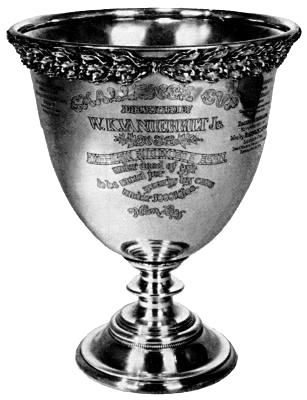
Figure 20.––The Vanderbilt Cup, an annual award for automobile races in the early 20th century. Gift of William K. Vanderbilt, Jr. In Division of Transportation. (Acc. 131820, cat. 310894; Smithsonian photo 45992-B.)
Trophies were awarded for competition among the various makes of cars almost as early as the advent of the automobile itself. The earliest such trophy in the Museum’s collection is a three-handled, cut-glass cup[42] with a wide silver rim on which is engraved:
Automobile Club of New Jersey. Eagle Rock Hill Climbing Contest. First Prize Nov. 5, 1901.
The prize was won by Charles E. Duryea who drove an automobile of his own manufacture.
Most important of the automobile trophies was the Vanderbilt Cup (fig. 20) for racing, which was established by William K. Vanderbilt, Jr., in 1904 to bring the best cars of foreign make to the United States so that domestic manufacturers could observe them. It is believed that the trophy contributed in this way to the rapid development of the automobile in the United States. The Vanderbilt Cup races were held annually in the United States under the auspices of the American Automobile Association.
The silver cup, measuring 23 inches high and 20 inches in diameter and weighing about 40 pounds, is engraved with statistics of the various races––such as dates, winners, types of cars, distances, and times.[43] There is a wreath around the brim, and the front is decorated with a period racing car in repoussé. The inscription reads:
Challenge Cup Presented by W. K. Vanderbilt Jr. American Automobile Assn. under deed of gift to be raced for yearly by cars under 1000 kilos.
On the inside of the stem is marked “Tiffany and Co.” and “35 pints.”
Athletic trophies in the collection include eight silver and silver-plated loving cups awarded for athletic events to the crew members of various ships of the U.S. Navy.[44] The sporting events represented include baseball and football games, canoe and cutter races, and track meets held among the fleet between 1903 and 1915.
TROWELS FOR CORNERSTONE LAYING
The National Museum also has a small collection of silver trowels used for laying cornerstones of public buildings. There is an ivory-handled trowel (fig. 21) with the inscription:
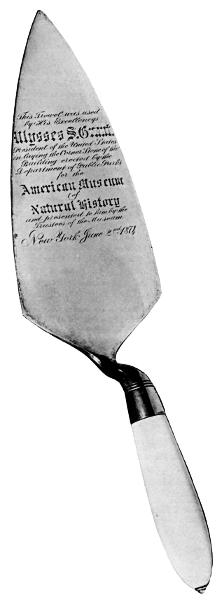
Figure 21.––Trowel used by President Ulysses S. Grant in laying the cornerstone of the Museum of Natural History, New York City. Gift of Julia Dent Grant and William H. Vanderbilt. In Division of Political History. (Acc. 18528, cat. 3004; Smithsonian photo 45992-A.)
This Trowel was used by His Excellency Ulysses S. Grant. President of the United States in laying the Corner Stone of the Building erected by the Department of Public Parks for the American Museum of Natural History and presented to him by the Trustees of the Museum New York June 2nd 1874.
There are also some silver trowels in the Bishop Matthew Simpson Collection.[45] The earliest of these is inscribed:
Presented to Bishop Simpson D.D.L.L.D. at a laying of a stone of the New Wesleyan Church, Willesden, in commemoration of the 1st Methodist OEcumenical Conference held in London, Sept. 10, 1881.
This trowel (cat. 38199) bears the English standard marks with the initials “H. H.”
On the same trip to London Bishop Simpson received an ivory-handled silver trowel (cat. 38198) inscribed:
Presented to Bishop Simpson upon his laying the foundation stone of Clouditte Methodist Church, Dublin, 12th October, 1881.
Another silver trowel in the same collection is inscribed:
Used by Bishop Simpson at the laying of the cornerstone of the Wenonah Methodist Episcopal Church, Wenonah, New Jersey, Aug. 15, 1883, and presented to him in loving remembrance of his presence.
This trowel (cat. 38197) is marked “Coin” on the back.
The fourth trowel, given to Mrs. Simpson, is inscribed as follows:
Presented to Mrs. Bishop Matthew Simpson by the Lady Managers in loving remembrance of her laying the cornerstone of the Methodist Episcopal Orphanage, Philadelphia, Oct. 13, 1887.
The back of this trowel (cat. 38208) is marked “Sterling.”
FIRE TRUMPETS
Three fire trumpets in a collection[46] on loan from the Insurance Company of North America are inscribed as presentation pieces. One of these is 22 inches high and has eagle-head handles and an overall repoussé design. This trumpet is engraved:
May 1871 Retired from active service by the establishment of the Volunteer Fire Department In grateful remembrance we restore to Samuel G. Simpson his handsome gift presented by him to the Southwark Fire Co. Nov. 7, 1865.
Another trumpet is engraved with crossed ladders, pikes, and fire helmets against an overall floral design. It is 191⁄2 inches high. The inscription reads:
Presented to Vigilant Engine Co. #6 of Paterson New Jersey at the Annual Fair of the Willis Street Baptist Church April 1879.
The inscription on the third trumpet reads simply:
Presented to Captain George W. Erb by the Ladies of St. Rose’s Fair.
It has an elaborate engine-engraved design and is 211⁄2 inches high.
U.S. Government Printing Office: 1965 For sale by Superintendent of Documents, U.S. Government Printing Office Washington, D.C. 20402 Price 30 cents
Paper 47, pages 81-108, from UNITED STATES NATIONAL MUSEUM BULLETIN 241:
CONTRIBUTIONS FROM THE MUSEUM OF HISTORY AND TECHNOLOGY
SMITHSONIAN INSTITUTION WASHINGTON, D.C. 1965