18th-Century Pieces
Reading edition
Silversmiths have been making presentation pieces from the earliest days of our country, but the Smithsonian Institution has only a few 18th-century pieces in its collection.
The earliest of these is an inlaid silver snuffbox (fig. 2) made by William Cario, who worked in Portsmouth, New Hampshire, about 1763. The oval box––evidently a gift to the silversmith’s second wife, Lydia Croxford, whom he married in 1768––has inscribed on its base “The property of Lydia Cario” and “1769.” The cover has an undersurface of horn, and the silver on the outer surface is inlaid with mother-of-pearl and tortoise shell in a filigree pattern.
Many of the earliest pieces of presentation silver were made for use in churches, and they were given by groups as well as by individuals. Representative of this type is a silver alms plate[1] with the following inscription on the rim:
The Gift of the Honble thomas hancock esqr to the church in Brattle Street Boston 1764.
The plate is shallow with a slightly domed center. Engraved on the flat rim, in addition to the inscription, is a crest at the top and the cherub’s head at the bottom. The piece is marked by John Coburn, who lived in Boston from 1725 to 1803. Five trays matching this one are in the Boston Museum of Fine Arts.[2]
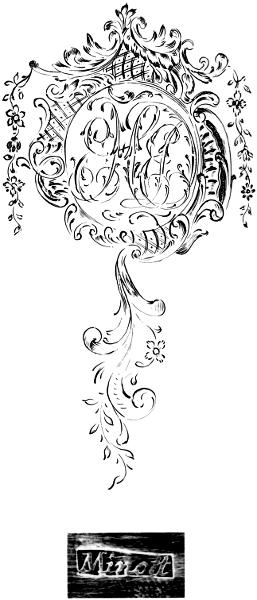
Figure 3.––Mark of Samuel Minott and monogram of Elias Hasket Derby on silver tankard. Bequest of Arthur Michaels. In Division of Cultural History. (Acc. 162866, cat. 383545; Smithsonian photos 44828-D, 44828-F.)
A silver tankard made by Samuel Minott, who worked in Boston from about 1765 to 1803, can be accurately placed by the account of ownership thoughtfully inscribed on its base by one of its later owners. The legend reads:
Richard Derby to E. S. Hasket Derby 1763 John Derby George Derby 1831 Roger Derby 1874
The tankard has a tapered, ringed body, an S-shaped handle with a plain boss at the end, a scroll thumb-piece, a flat molded drop ornament on the handle, and a domed cover with an acorn finial. On the body beneath the Derby coat of arms, is monogrammed “E H D” for Elias Hasket Derby (fig. 3). Elias Hasket Derby achieved wealth and fame as a Salem merchant prince engaged in the China trade.
Similar in design to these 18th-century pieces is a standing cup[3] or chalice with the inscription:
Presented by the Sisters of the New South Church for its communion service––January 1, 1815.
This cup, with a concave body and a baluster stem with a square foot, is marked “Moulton” and is in the style of Ebenezer Moulton who worked in Boston between 1768 and 1824.