SOLUTIONS
Reading edition
FRONTISPIECE
The words which describe this picture can be recast, letter for letter, into the perfect anagram—
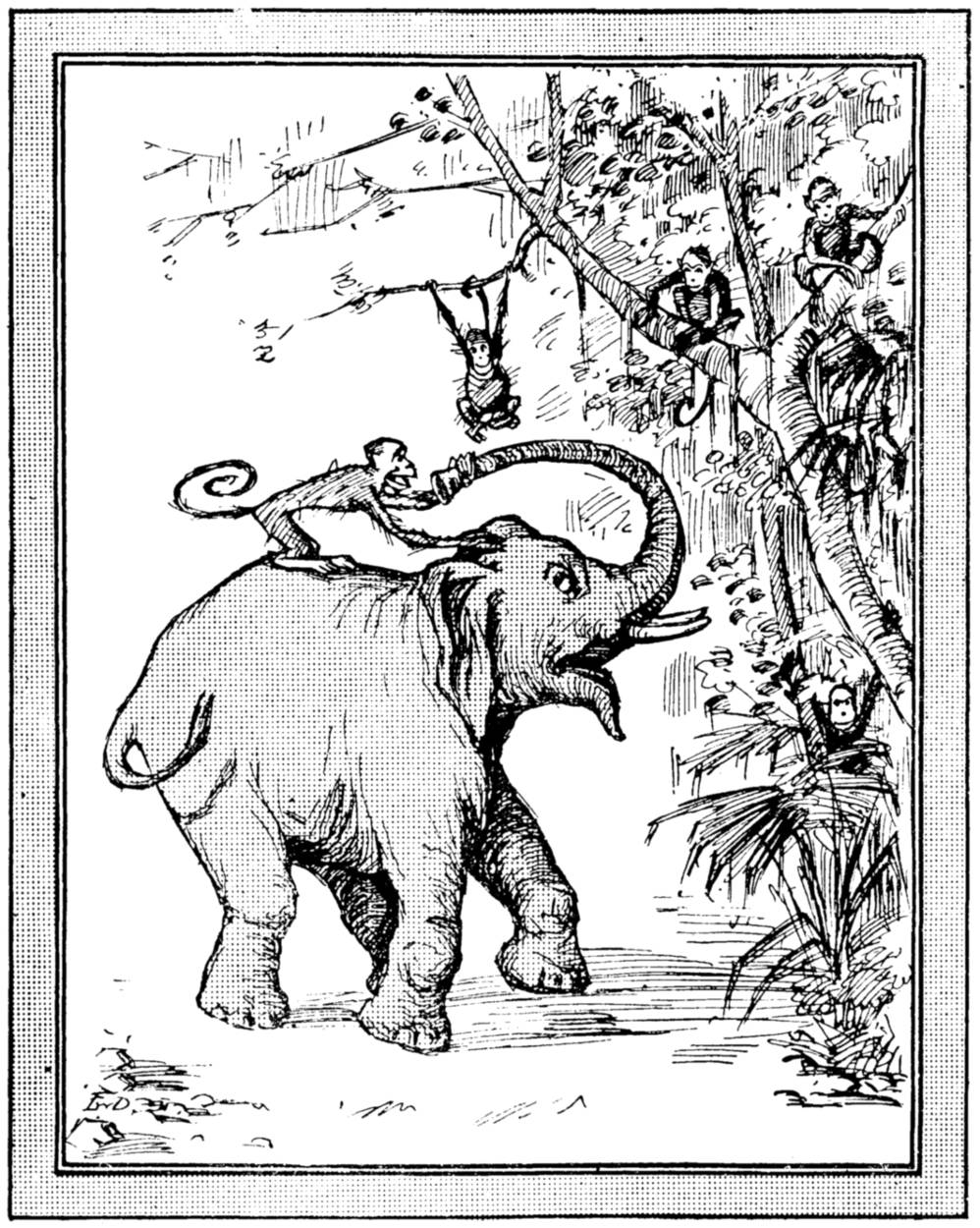
“Please, Mister Elephant, are you there?”
Return to description
No. IV.
It is said that there are 86 ways in which the numbers in this model magic square can be added up so that they make 34.
4 15 14 1
9 6 7 12
5 10 11 8
16 3 2 13
Image
It is not difficult to discover more than half this number that are symmetrical, including, of course, the 4 rows, 4 columns and 2 diagonals. Here are a dozen samples, from which others can be seen—
4, 1, 16, 13.
15, 14, 3, 2.
14, 12, 5, 3.
6, 7, 10, 11.
15, 8, 9, 2.
1, 6, 11, 16.
14, 8, 9, 3.
9, 15, 2, 8.
4, 5, 12, 13.
4, 5, 11, 14.
4, 9, 8, 13.
9, 14, 3, 8.
Return to description
No. VIII
Here is the completed magic square—
216 175 224 183 232 191 240 199 248
247 215 174 223 182 231 190 239 207
206 246 214 173 222 181 230 198 238
237 205 245 213 172 221 189 229 197
196 236 204 244 212 180 220 188 228
227 195 235 203 252 211 179 219 187
186 226 194 243 202 251 210 178 218
217 185 234 193 242 201 250 209 177
176 225 184 233 192 241 200 249 208
Image
Every row, column and diagonal adds up to exactly 1908.
Return to description
No. IX
This up-to-date magic square adds up to 1908 in quite 56 different symmetrical ways.
469 484 472 483
481 474 478 475
482 471 485 470
476 479 473 480
Image
Here are 44 of them—
Rows 4
Columns 4
Diagonals 2
The corners 1
Corners of squares of 9 cells 4
Squares of 4 cells 9
Opposite pairs of outside cells 6
Opposite pairs of short diagonals
Such combinations as 469, 481, 485, 473 8
Such combinations as 482, 484, 472, 470
Total 44
There are a dozen other ways, more or less symmetrical, such as 481, 474, 483, 470; or 474, 485, 470, 479.
Return to description
No. X
This is the rearrangement of the domino magic square—
● ● ● ●
● ● ● ● ●
● ● ● ●
● ● ● ● ● ● ● ●
● ● ● ●
● ● ● ● ● ● ● ●
● ● ● ● ● ● ●
● ● ● ● ●
● ● ● ● ● ● ●
● ● ● ● ● ●
● ●
● ● ● ● ● ●
● ● ● ● ● ● ●
● ● ● ● ● ●
● ● ● ● ● ● ●
● ● ● ● ●
● ● ●
● ● ● ● ●
● ● ● ● ●
● ●
● ● ● ● ●
● ● ● ● ● ● ● ●
● ● ● ● ●
● ● ● ● ● ● ● ●
● ● ● ● ● ●
● ●
● ● ● ● ● ●
● ● ● ● ● ● ● ●
● ● ●
● ● ● ● ● ● ● ●
Image
The three-ace, which was a corner stone in the former diagram now occupies the centre, and the rearrangement was effected by first transferring the two bottom rows to the top, and then the fourth and fifth columns to the extreme left. This method of shifting the stones does not affect the magic quality of the square.
Return to description
No. XI
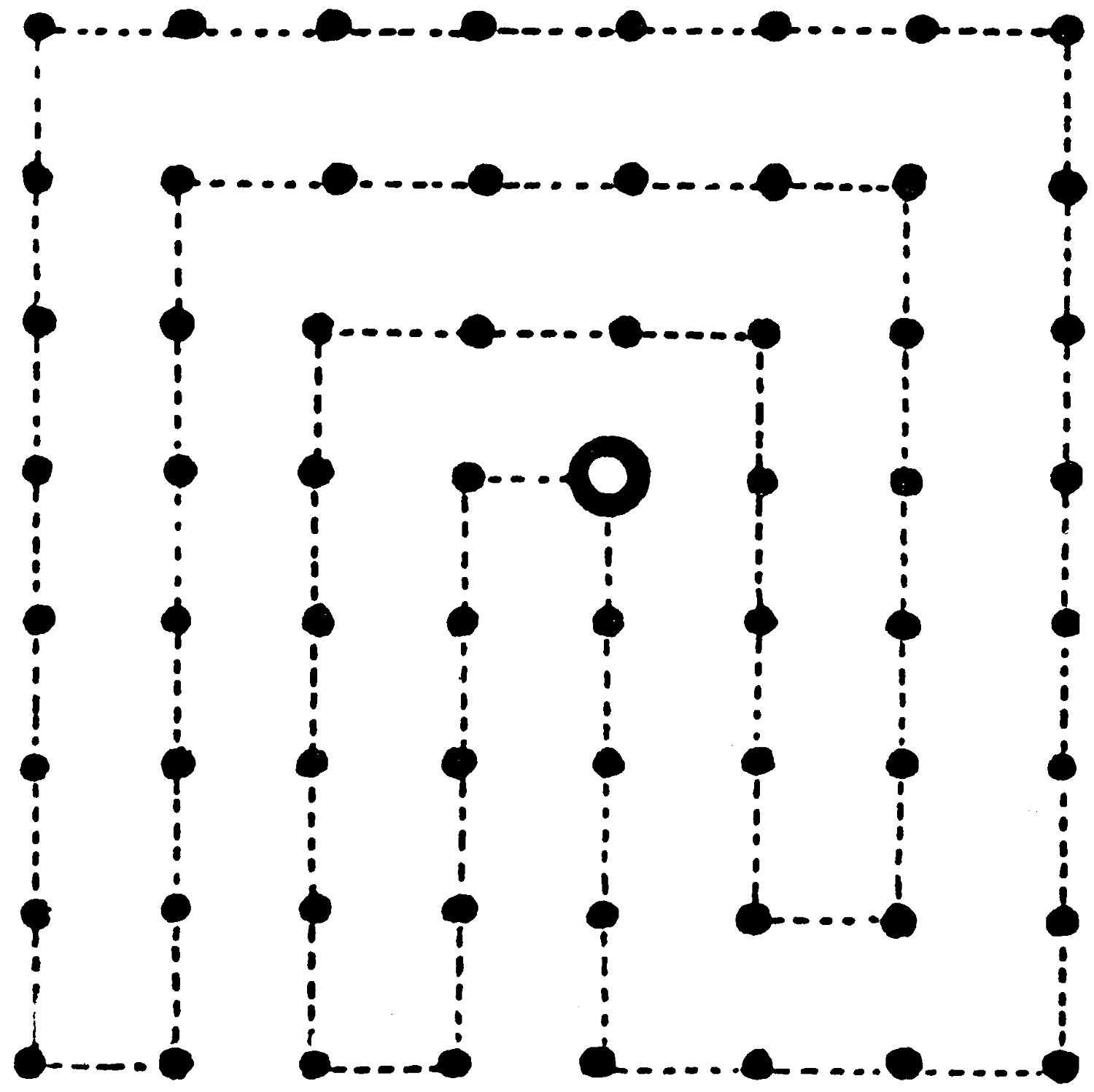
The affinity between chess and numbers is well illustrated by the Knight’s tour on this diagram—
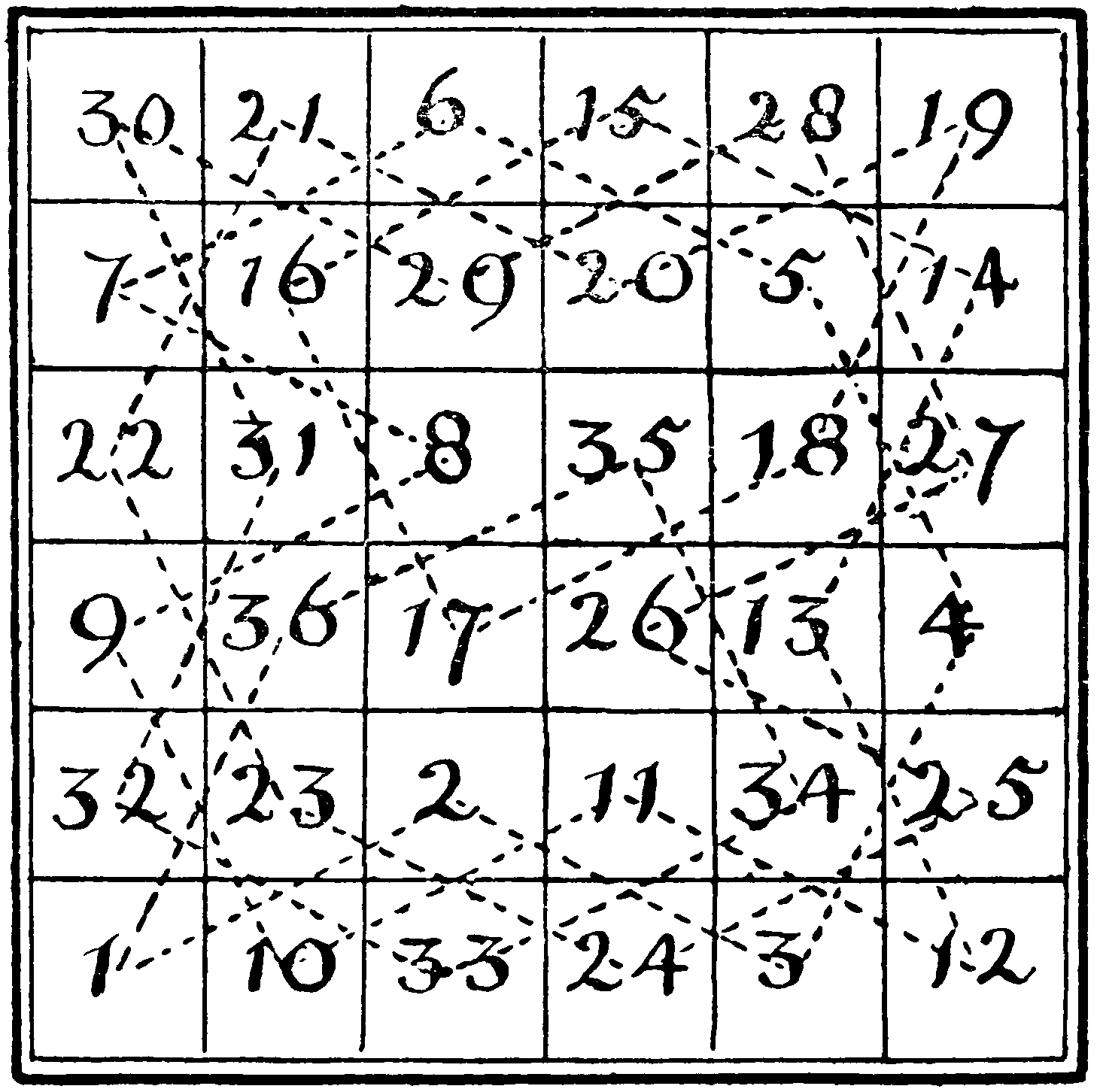
The Knight starts from the square marked 1, and returns at last to it. The constant difference between any opposite and corresponding numbers in cells that are equidistant from the centre is 18.
Return to description
No. XII
Here are the cells in the diagram of our Numbers Patience, so filled in that each of the rows across from side to side adds up exactly to 143.
17 30 41 31 24
18 32 13 46 34
11 12 14 50 56
51 19 42 16 15
22 21 35 45 20
Image
Each cell contains, in accordance with the conditions, a different number.
Return to description
No. XIII
This is the division of a square into fifteen parts, which will form the windmill:—
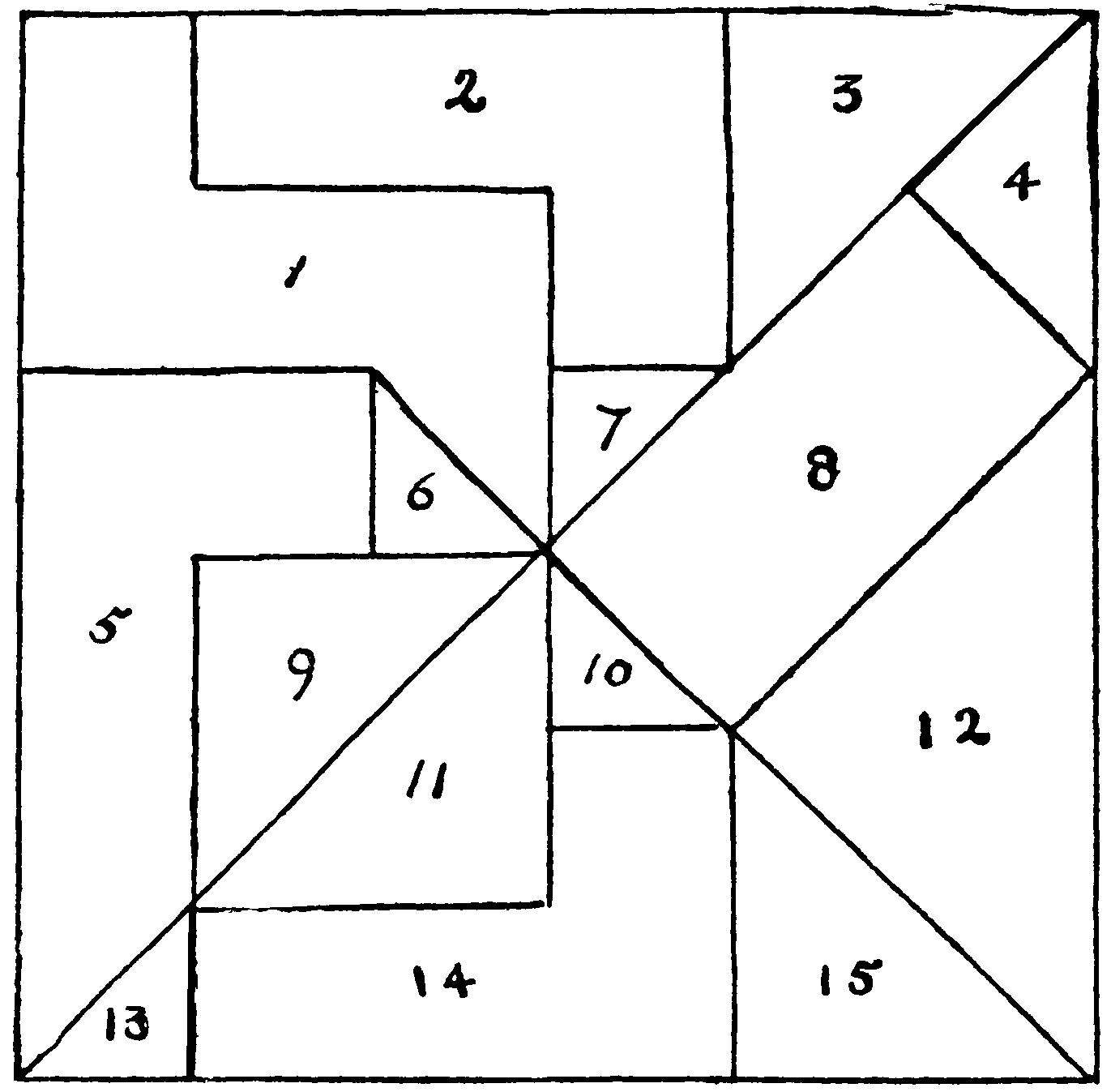
This puzzle may, of course, be reversed, the parts of the square being given, and the solver asked to form with them a symmetrical windmill.
Return to description
No. XIV
In this nest of 49 squares it is possible to count 784 distinct interlacing figures, whose opposite sides are equal, and whose angles are all right angles.
Image
Of these 784 rectangles 140 are squares.
Return to description
No. XV
This is the domino magic square, in which all the stones are used except double-six, double-five and six-five.
● ● ●
● ● ●
● ● ●
● ● ● ● ● ● ●
● ● ● ●
● ● ● ● ● ● ●
● ● ●
● ● ● ●
● ● ●
● ● ● ● ● ● ●
● ● ●
● ● ● ● ● ● ●
● ● ● ● ●
● ●
● ● ● ● ●
● ● ● ● ● ●
● ● ●
● ● ● ● ● ●
● ● ● ●
● ● ● ●
● ● ● ●
● ● ● ● ●
● ● ● ● ●
● ● ● ● ●
● ● ● ● ●
●
● ● ● ● ●
● ● ● ● ● ● ●
● ●
● ● ● ● ● ● ●
Image
All rows, columns and diagonals add up to 27, as do the stones in the four corner cells and the four central border cells of the full square, and of the square of nine cells in the middle.
Return to description
No. XVI
Those to whom games of Patience appeal will find an interesting and pretty form of it in the construction of a pyramid with a complete set of dominoes.
● ●
● ●
● ●
● ● ● ●
● ● ● ●
● ● ● ●
● ● ● ● ● ● ● ●
● ●
● ● ● ● ● ● ● ●
● ● ● ● ● ● ● ● ● ●
● ● ● ●
● ● ● ● ● ● ● ● ● ●
● ● ● ● ● ● ● ● ● ● ● ● ● ●
● ●
● ● ● ● ● ● ● ● ● ● ● ● ● ●
● ● ● ● ● ● ● ● ● ● ● ● ● ● ● ●
● ● ● ●
● ● ● ● ● ● ● ● ● ● ● ● ● ● ● ●
● ● ● ● ● ● ● ● ● ● ● ● ● ● ● ● ● ●
● ● ● ● ●
● ● ● ● ● ● ● ● ● ● ● ● ● ● ● ● ● ●
Image
Solvers may like to study the position given, which is one of many that are possible, and to discover for themselves the ruling conditions which are its characteristics.
Return to description
No. XVII
When the boy’s father came up just in time to stop him from breaking out of bounds, and said, “Never throw a leg, lad,”
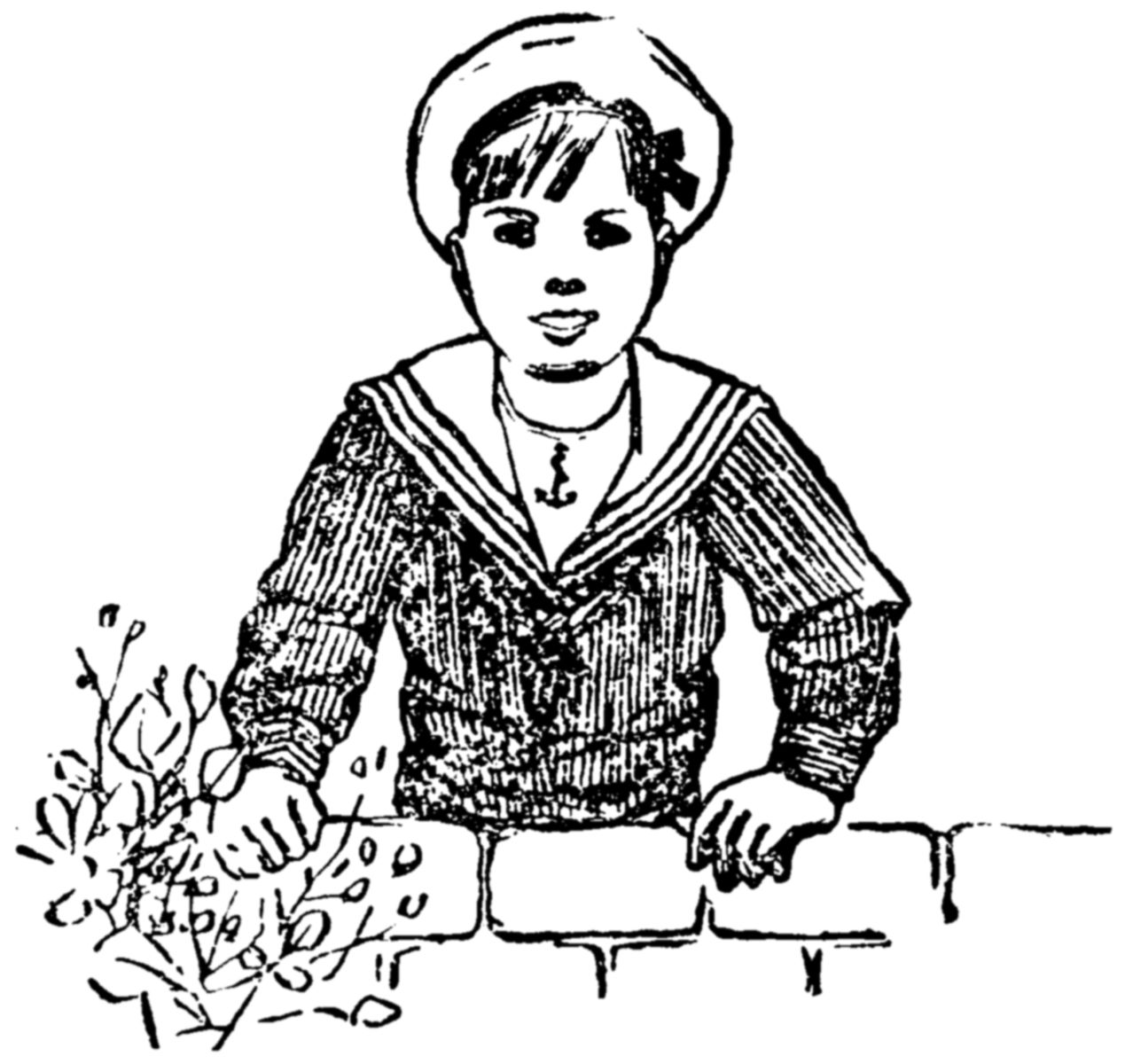
the rest of the sentence, spelt with exactly the same letters, was “over the garden wall!”
Return to description
No. XVIII
“Catastrophe,” the title of the tragedy foreshadowed, can be recast into “A cat! stop her!” By similar process the words, “New parrot stand in a house,” become “He turns on a soda-water tap!”
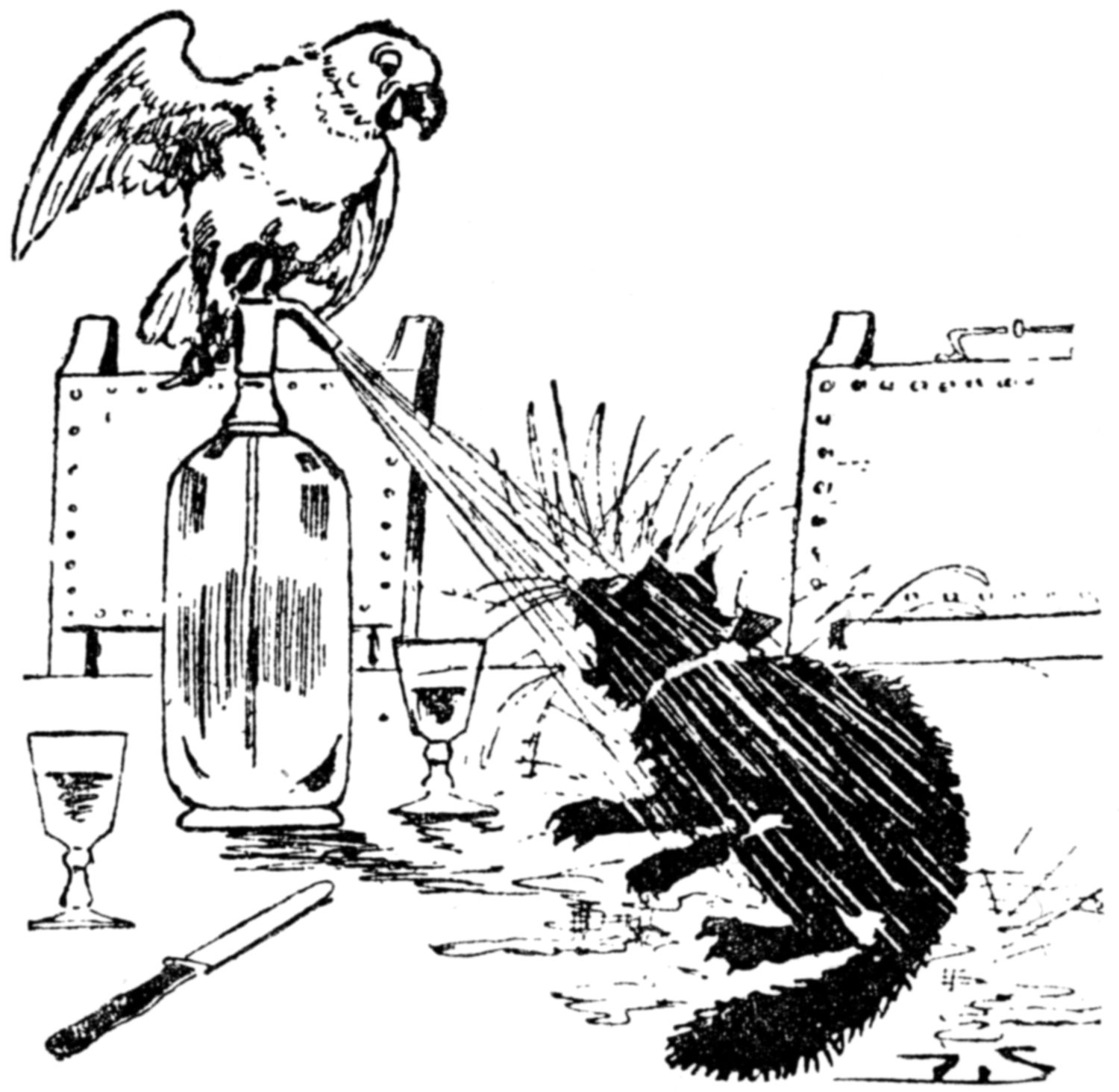
The parrot’s ready resource and triumph is depicted here with striking effect.
Return to description
No. XIX
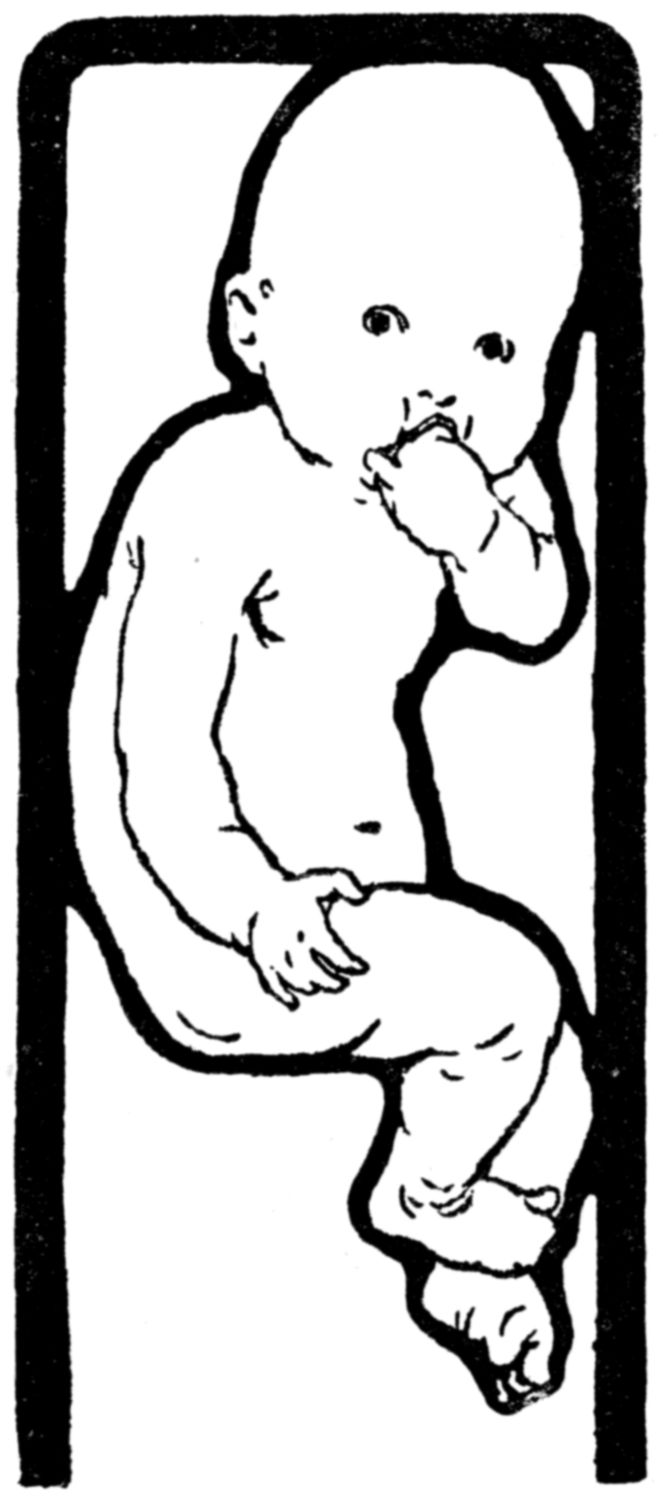
When the judge at a baby show said to the mother of the small boy whose thumb was in his mouth, “Your lad Tommy likes such tit-bits,” the precocious child replied, as he removed his comforting hand, in a sentence spelt with exactly the same letters, “So to-day, sir, I suck my little thumb.”
Return to description
No. XX
When the lady sitting at the back of this overloaded wagonette said to her husband, “This big load quite hinders his pull,” in her sympathy with the struggling horse,
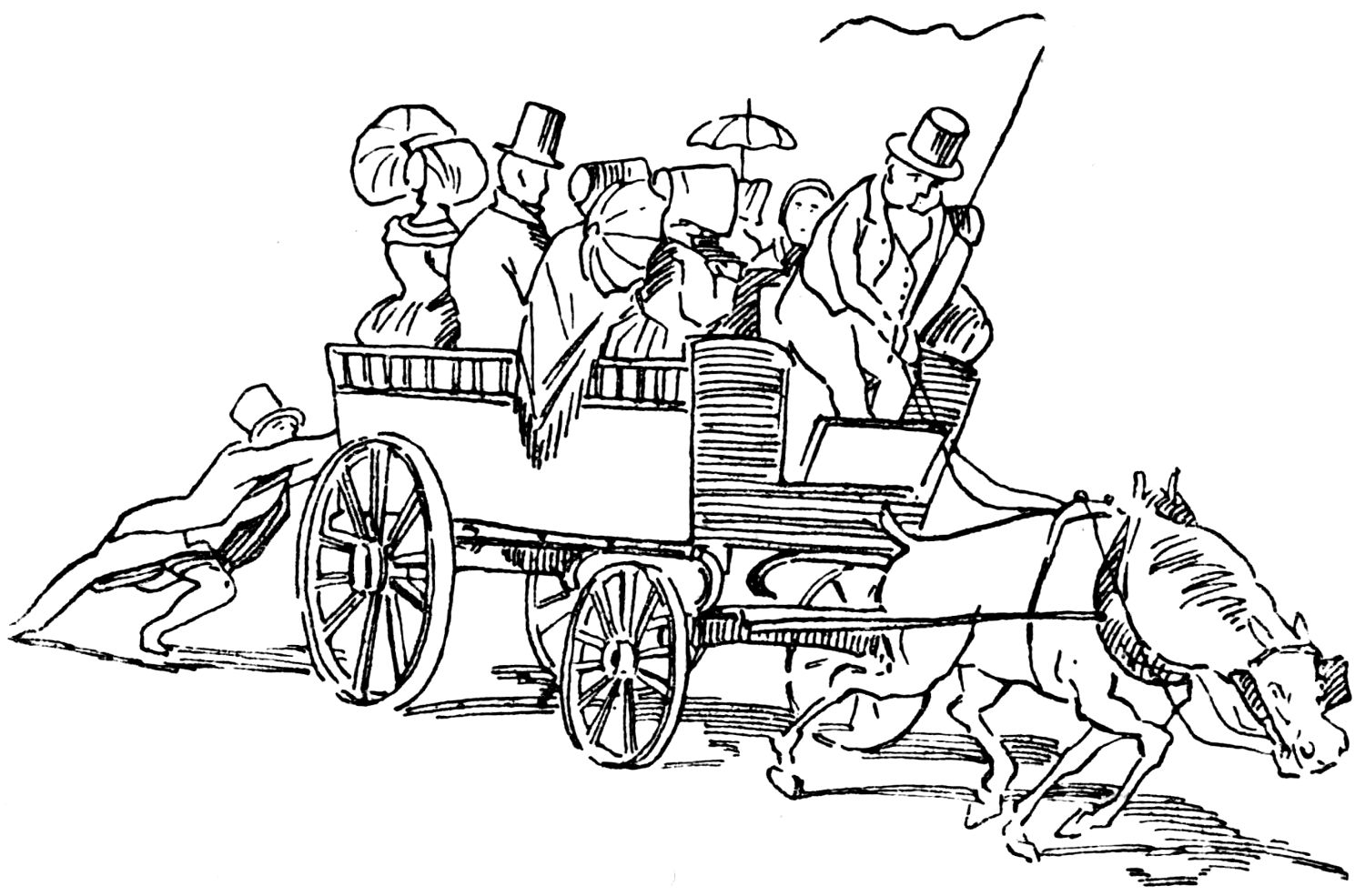
he made this very practical reply, in a sentence spelt with exactly the same letters: “Do sit quiet, girl; I shall push behind!”
Return to description
No. XXI
When a bystander whispered to the marker, “Eh! what a stout player is striking!”
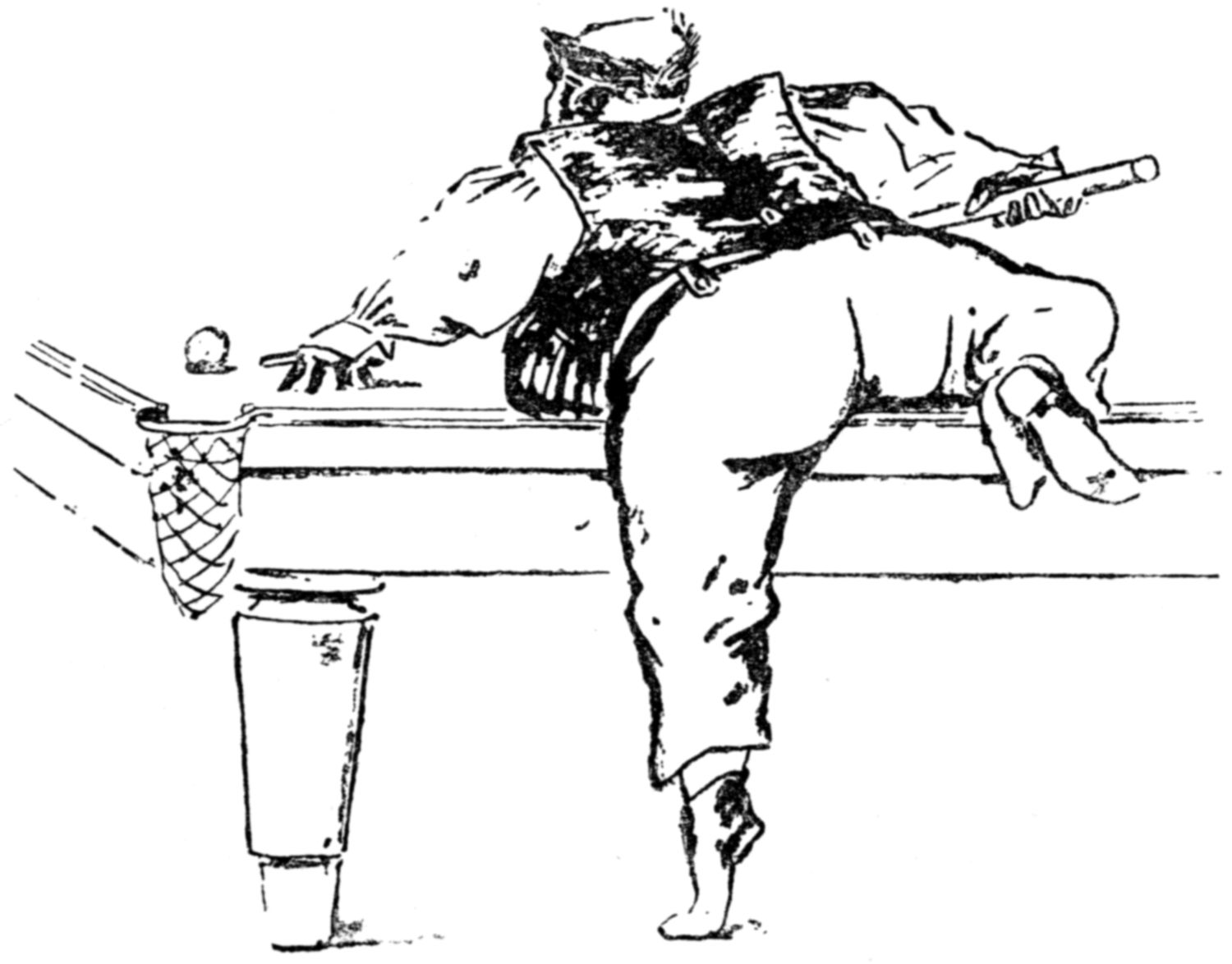
an appropriate reply, spelt with exactly the same letters, would have been: “He plays without taking a rest, sir.”
Return to description
No. XXII
The two English words appropriate to this picture—
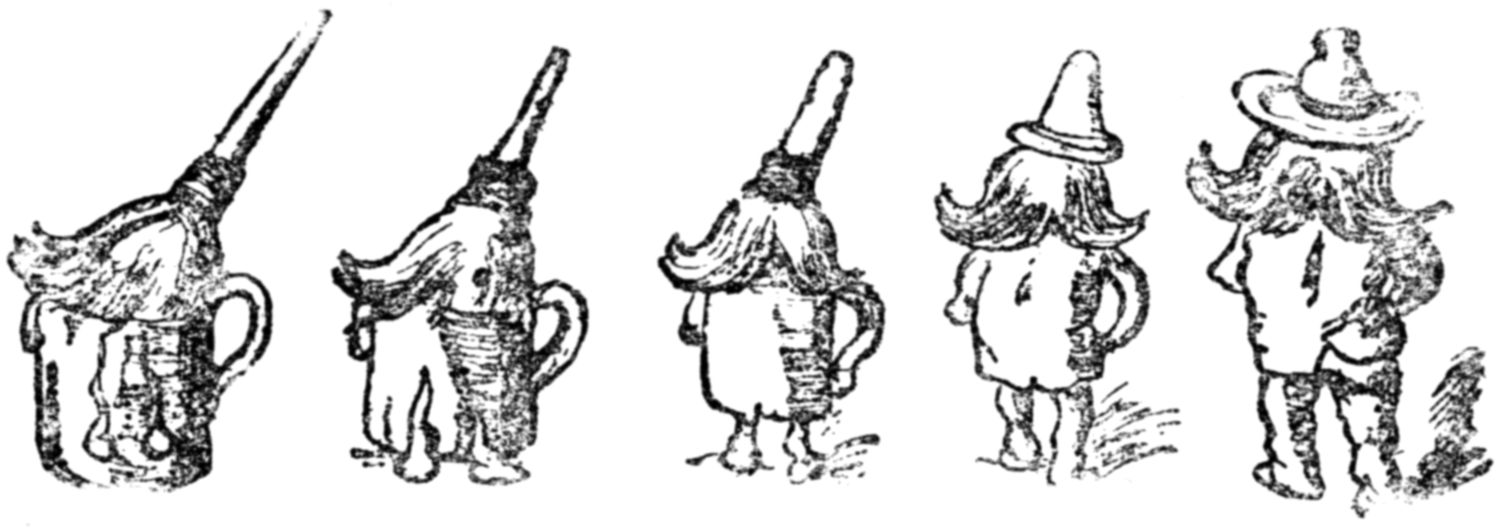
which have as their anagrams “Or not a man first,” and “O I love nuts!” are Transformation and Evolutions.
Return to description
No. XXIII
This is a fancy portrait of William—
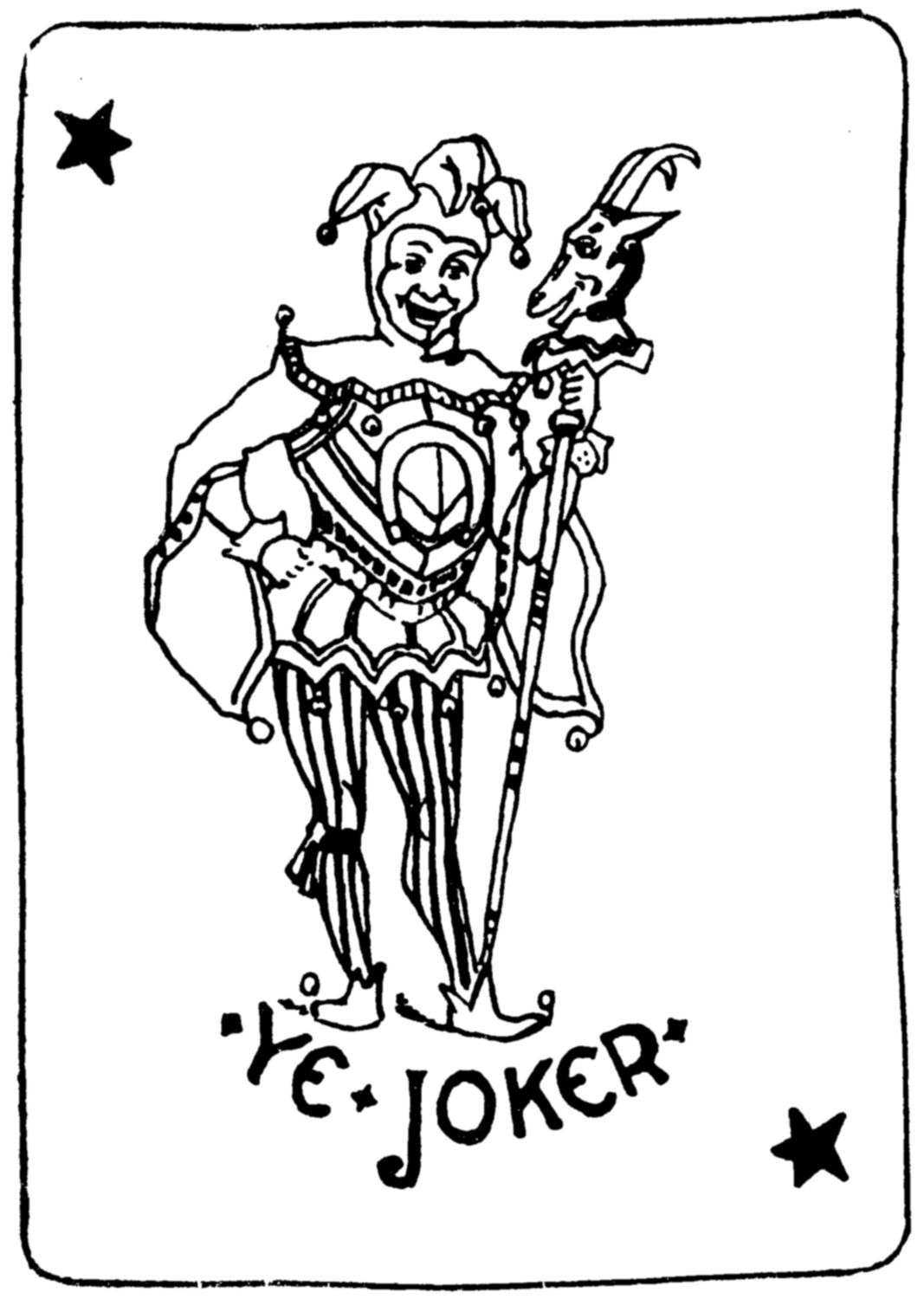
We decide by anagram whether this is William or dear Jack, for these words, when recast, spell “I am Will, a card joker!”
Return to description
No. XXIV
The word indicated by this picture in combination with the lines below it—
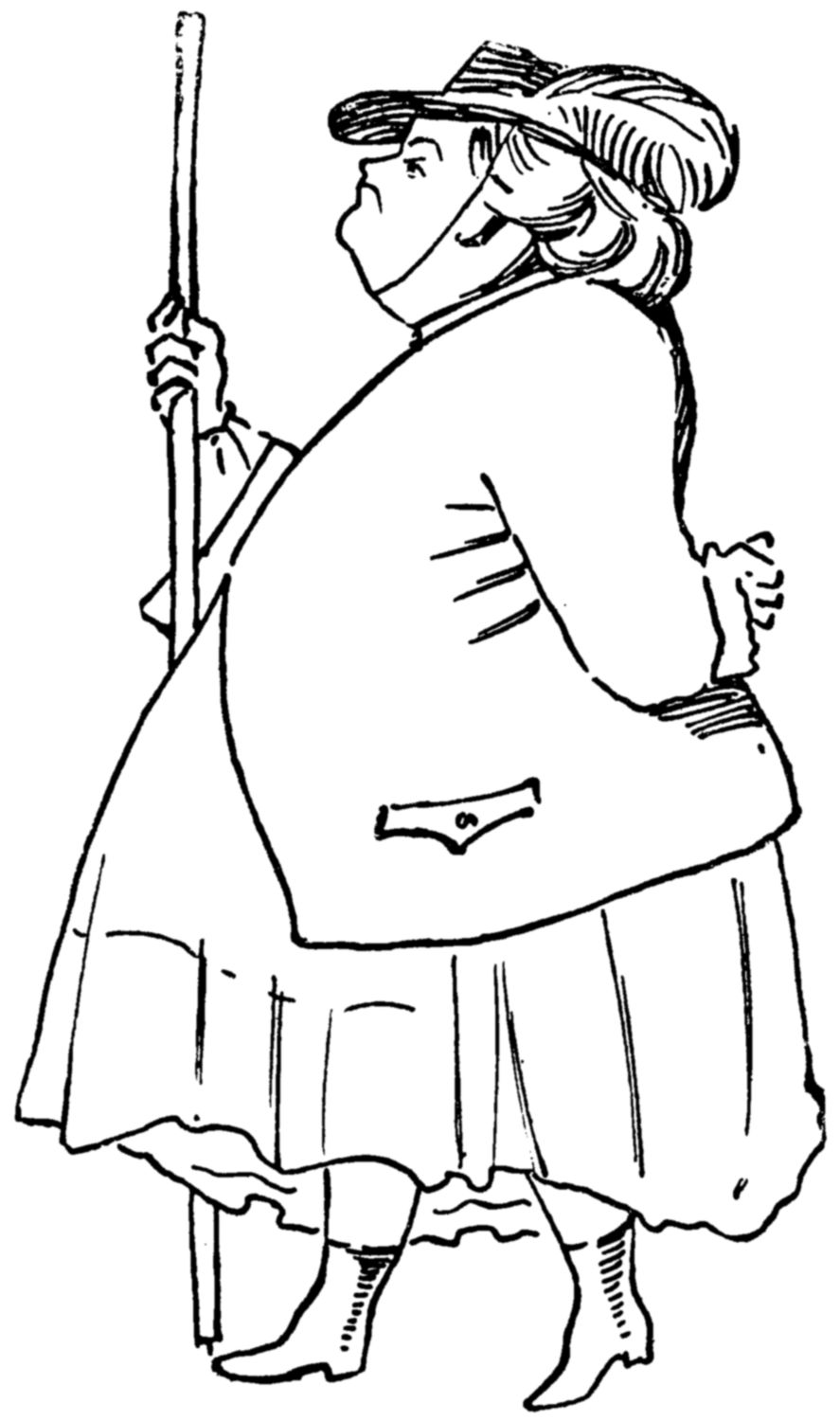
Begin with the end of my first, And then you will find out the rest; For it all will appeal to your thirst, Or point to a ponderous guest.
is Stout.
Return to description
No. XXV
The words of Jigger’s wife, when she said that he seemed to be in a “sad pet,” were true by anagram.
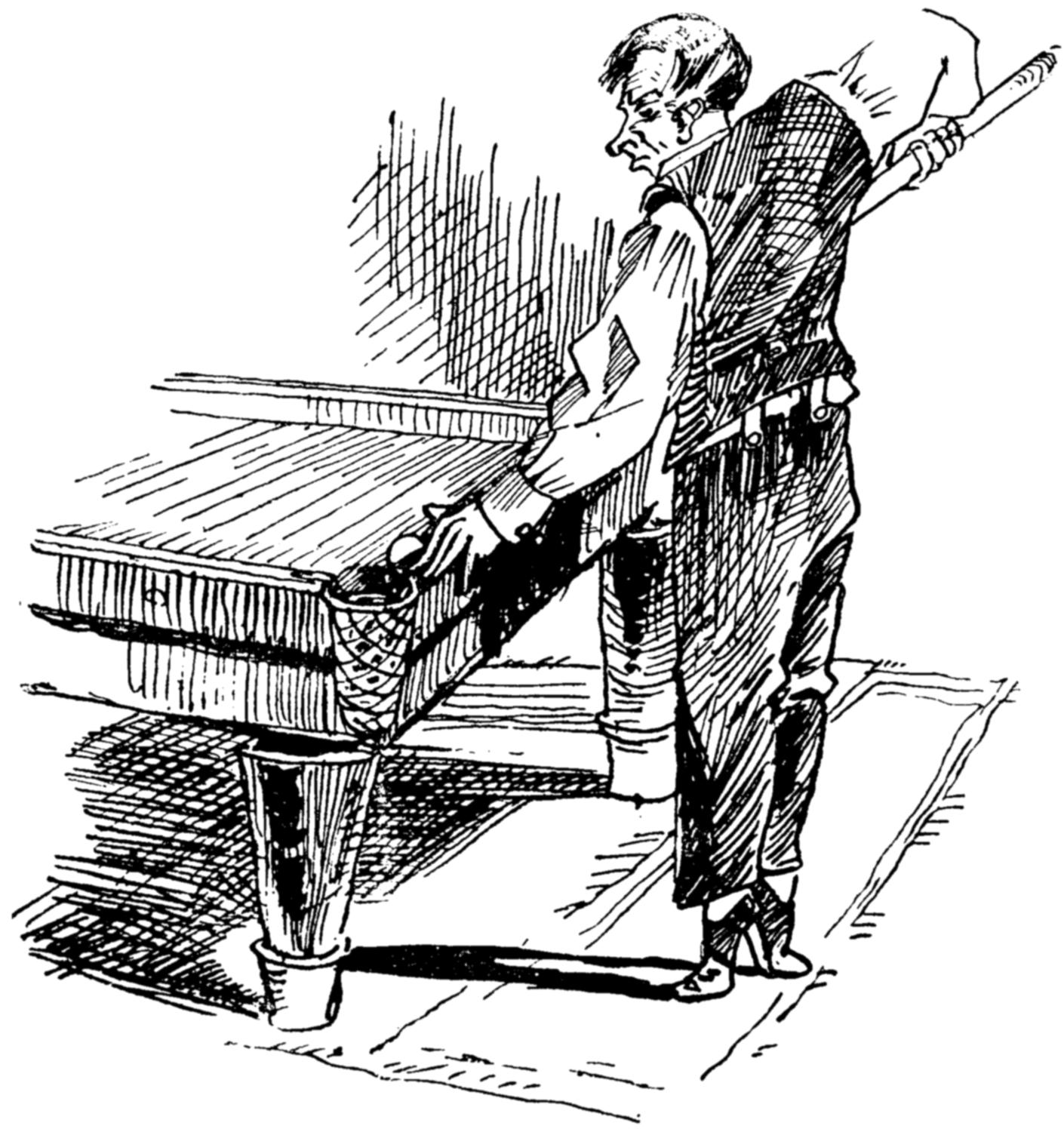
His ball hugs the cushion so closely as to be completely pasted.
Return to description
No. XXVI
When, as they held on to the fractious cow, the farmer exclaimed, “See, we hold this cow’s horns and tail,”
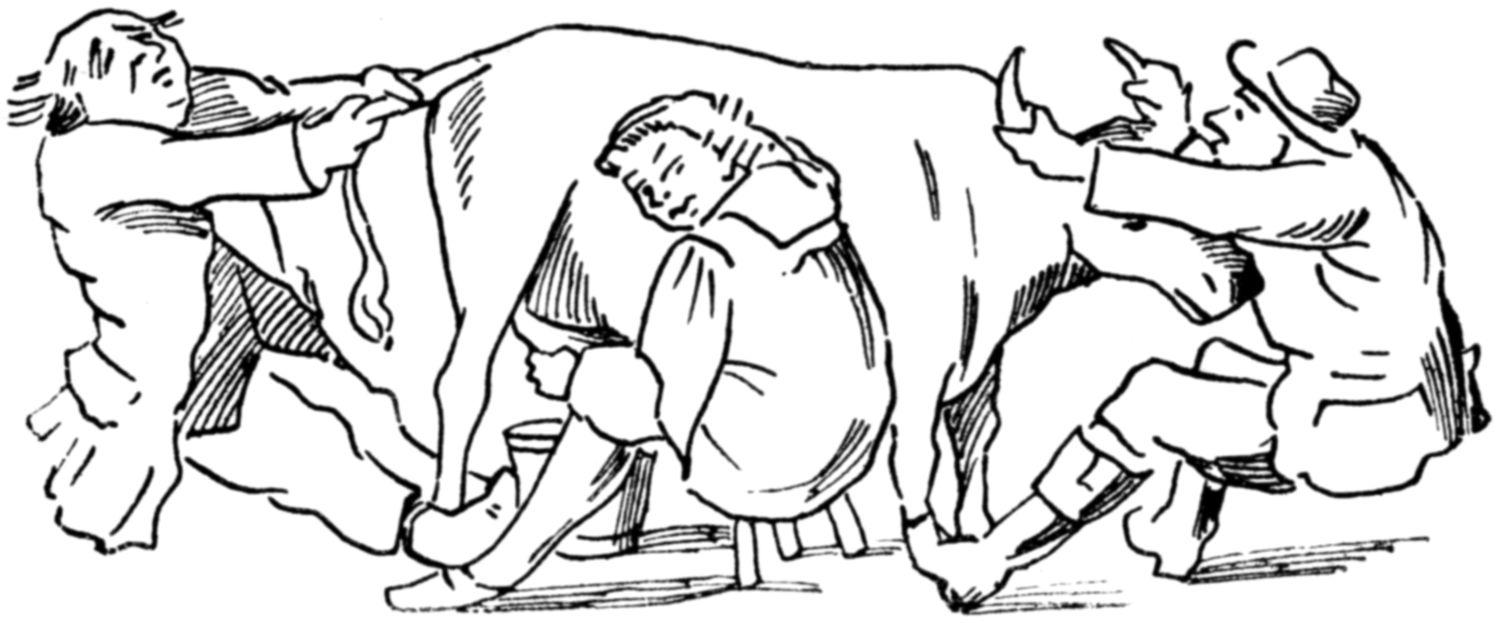
his foreman, using exactly the same letters in his sentence, said—
“She cannot toss, her wild head is low.”
Return to description
No. XXVII
While the horse shown in this picture might be saying, if it could speak, “I’m a train’d stepper!”—
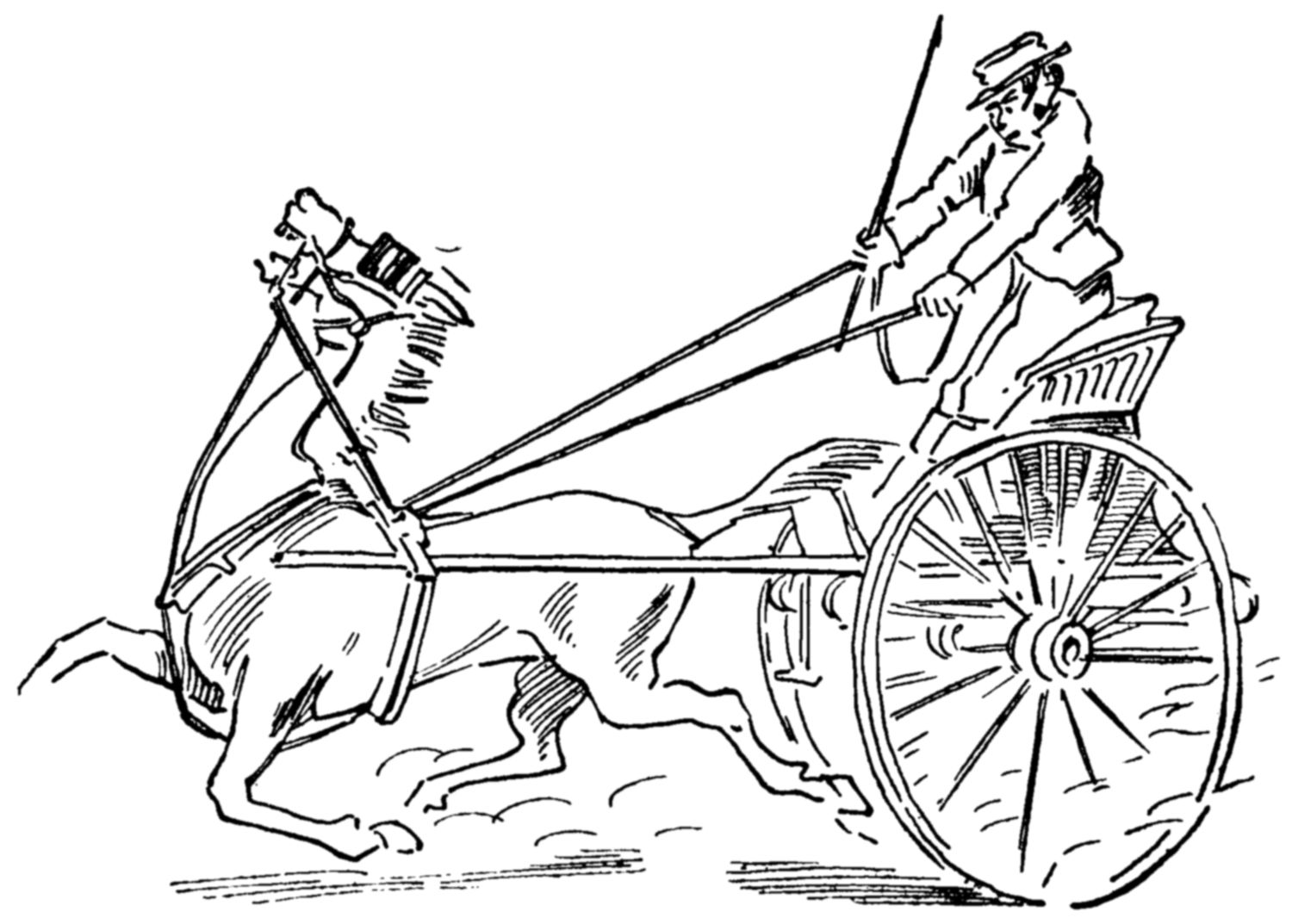
the driver, from his point of view, might say, as he held him in check, “Spirit and a temper!” making use in his words of exactly the same letters.
Return to description
No. XXVIII
When one onlooker, seeing the artist working with his feet, said—
“Why, now I see this fine artist has no hand!”
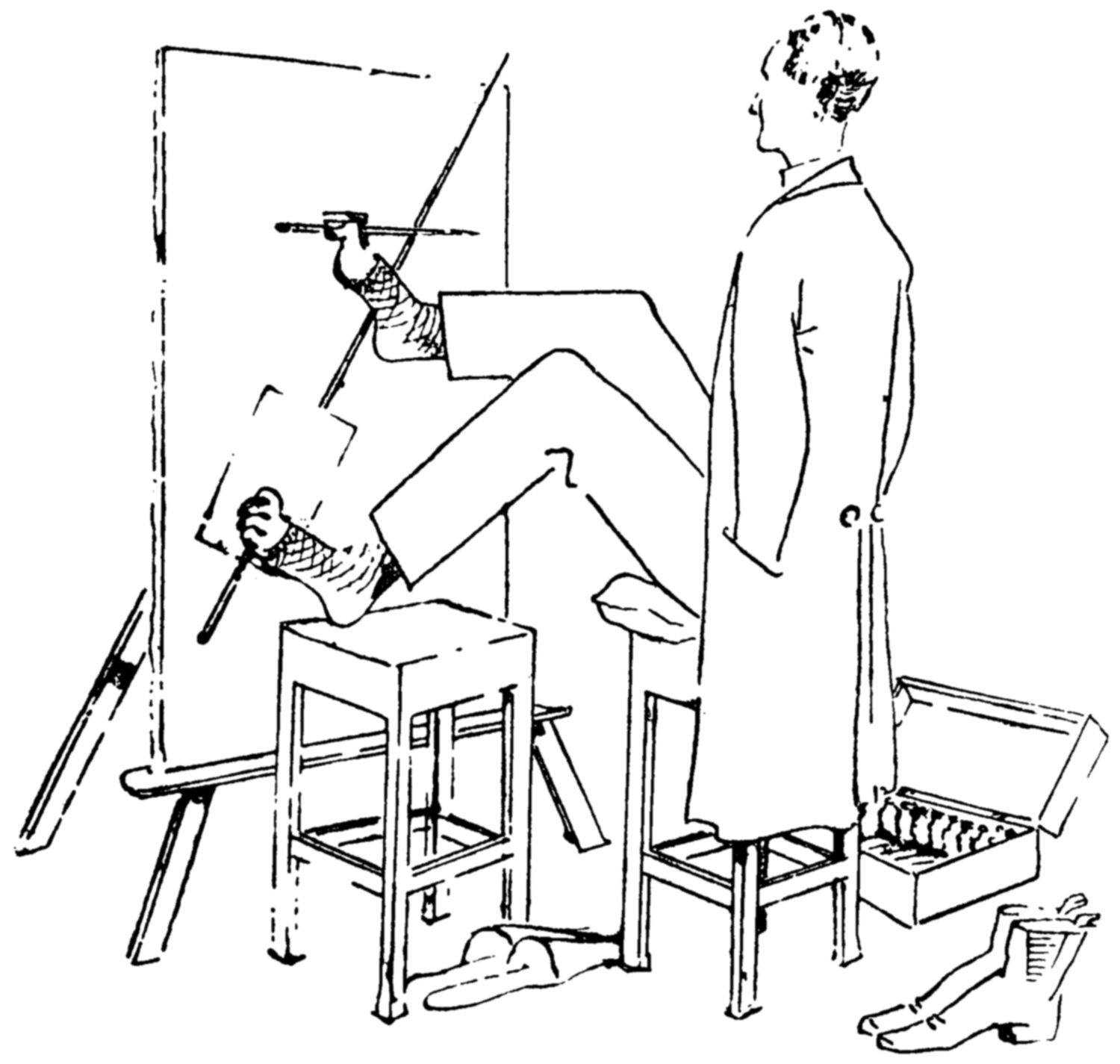
the other replied, using exactly the same letters,
“He draws in any fashion with his ten toes!”
Return to description
No. XXIX
When her husband, showing this picture
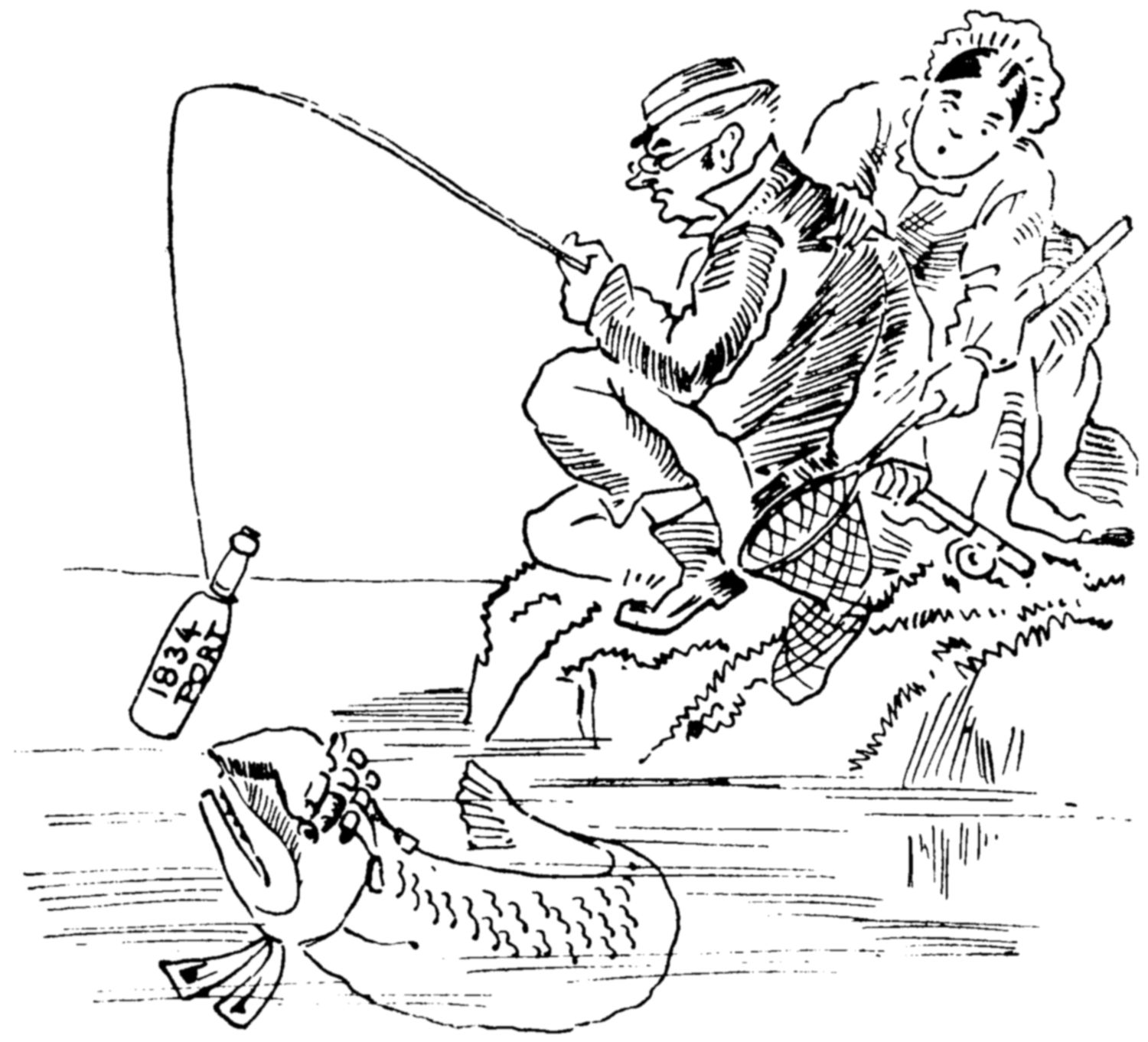
said to his wife, “This is a wine bottle, dear, on a lure,” she, knowing that temptation in this form would fail, said, as she glanced at his illustration of their aims, in words spelt with exactly the same letters:—
“And see, he will not rise at our bait!”
Return to description
No. XXX
The sturdy musician, who had said, “What shall I play?” to which some one replied, “Any strains of Beethoven, he charms all!” as this was not an acceptable suggestion, struck up a piece after his own heart.
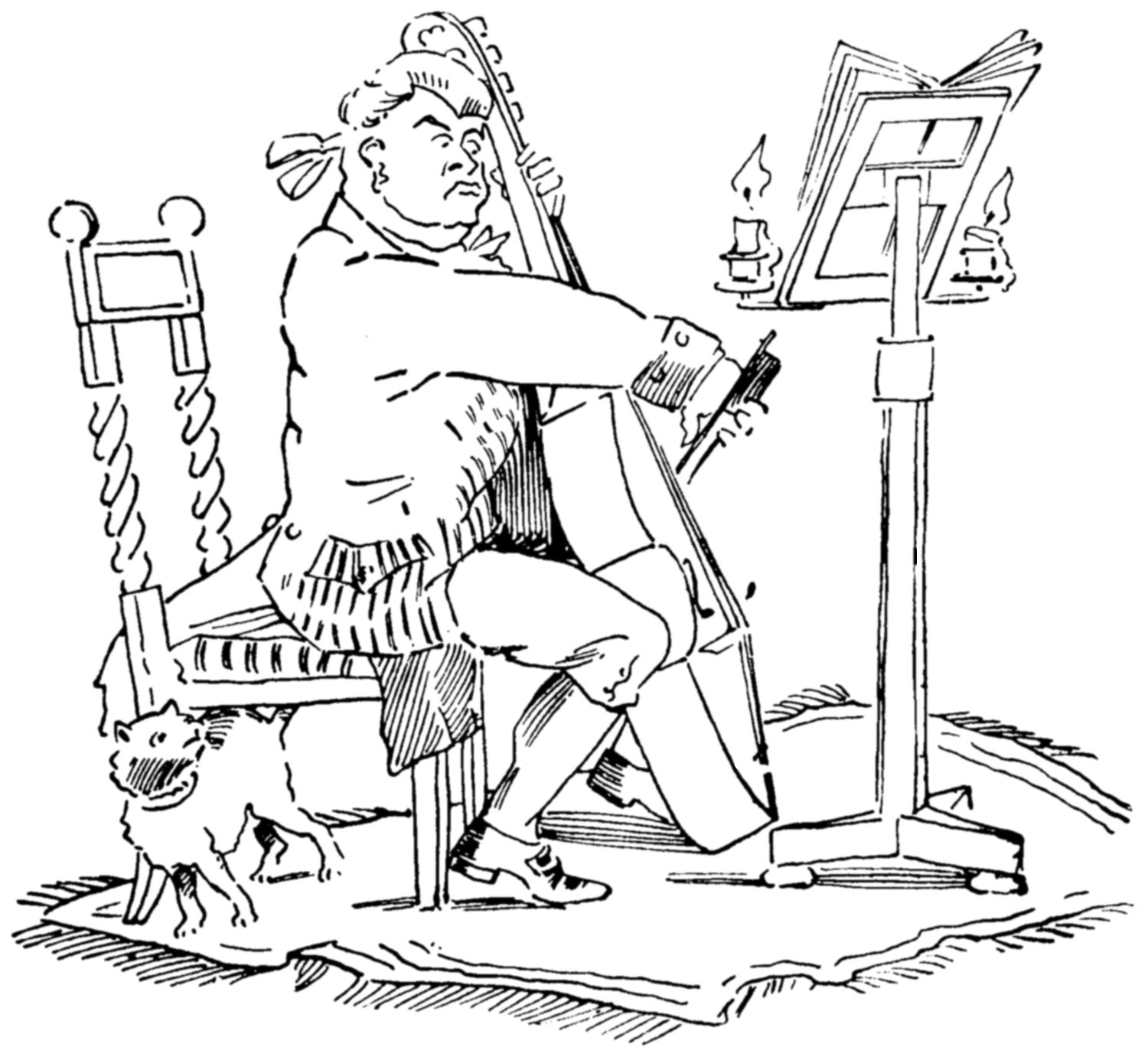
He said, as he struck the strings, in a sentence composed of exactly the same letters—“Nay, for this ’cello heaven sent a Brahms!”
Return to description
No. XXXI
Here is the picture of a parsnip lying across a swede readjusted and reversed.
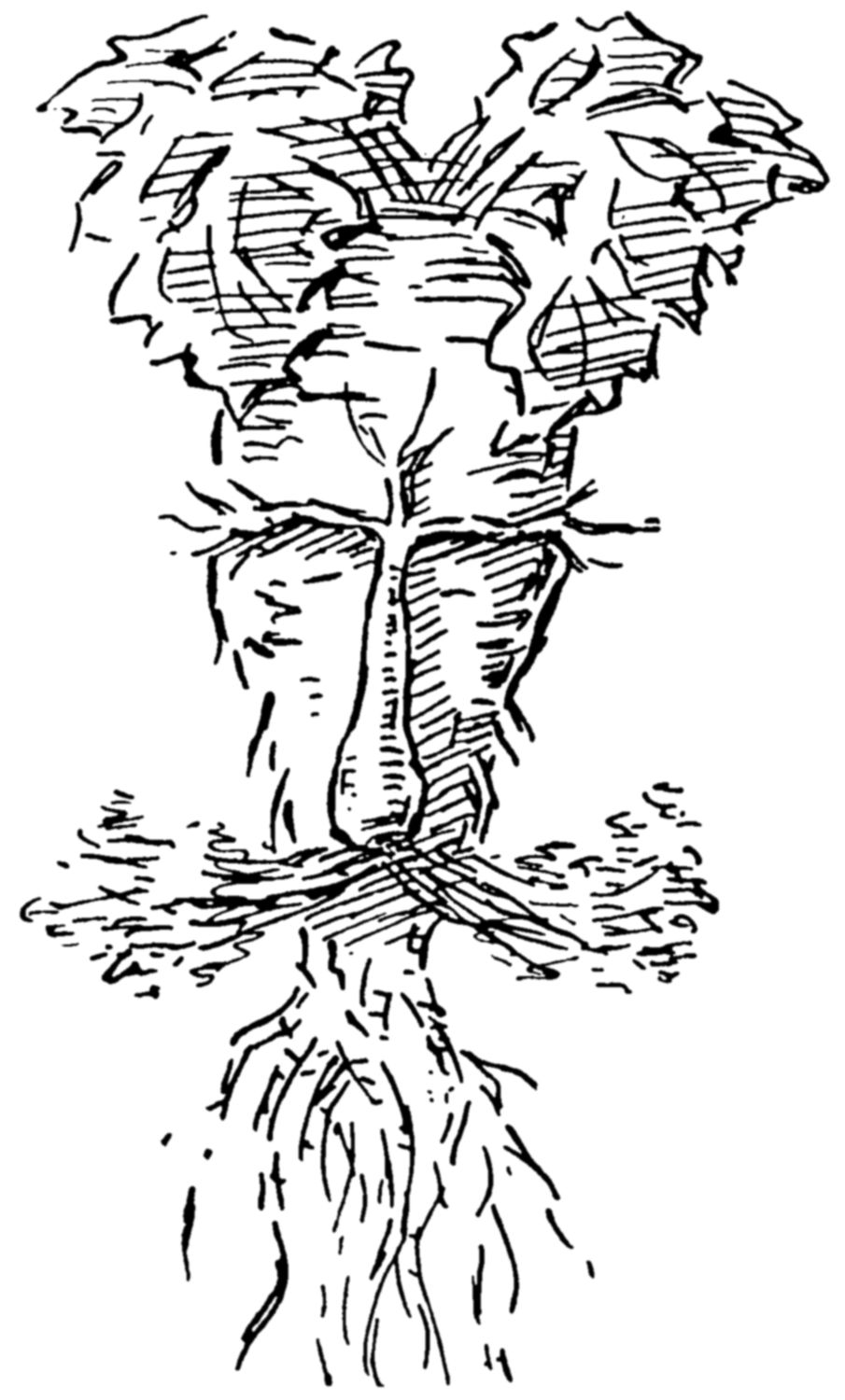
We gave as a clue the anagram—
“Here is our parsnip on swede.”
ANAGRAM
Wise and superior person he!
but this is now hardly needed to show who is thus represented in friendly caricature: (With apologies to G. B. S.)
Return to description
No. XXXII
The letter puzzle is solved thus—
L E V E L
E E E E
V V V
E E E E
L E V E L
Image
Within this square the word LEVEL runs in twelve different directions, being itself a palindrome.
Return to description
No. XXXIII
The sentence formed with the ten letters above the line, which is the key to this sum, is Do your best. If these letters are numbered consecutively 1, 2, 3, 4, 5, 6, 7, 8, 9, 0, and the corresponding figures are substituted for the letters, the sum works out as is shown in the second diagram—
S B 9 7
R E 6 8
Y D 3 1
O T 4 0
U O 5 2
O E E 2 8 8
Image
Return to description
No. XXXIV
The twelve names of flowers and foliage that may be gathered within these borders, by moving in any direction one square at a time,
1L 2L 3B 4H 5P 6E 7F
8L 9Y 10E 11L 12O 13R 14N
15I 16V 17B 18R 19I 20V 21K
22A 23L 24E 25T 26O 27N 28I
29C 30N 31A 32S 33U 34L 35P
Image
are 18, 26, 32, 24, Rose; 25, 33, 34, 28, 35, Tulip; 35, 28, 27, 21, Pink; 31, 32, 25, 24, 18, Aster; and, in similar ways, Verbena; Salvia; Ivy; Lily; Lilac; Heliotrope; Fern; and Bell.
Return to description
No. XXXV
The solution of this little problem, set by Dr Puzzlewitz on his blackboard to test the powers of his young pupils—“What are the values of A and B, when 4 is the result of dividing A by B, or of subtracting B from A?”—
A - B = 4
A ÷ B = 4
Image
is that A = 51⁄3 and B = 11⁄3.
Return to description
No. XXXVI
This is the diamond squared:—
s
h i s
h i n t s
s i n u o u s
s t o r m
s u m
s
Image
in which the words read alike from top to bottom, and from left to right.
Return to description
No. XXXVII
This is the arrangement of the 32 letters in the 64 cells—
A E I O
E O A I
A I E O
I O A E
O I E A
E O A I
A I E O
E A O I
Image
No A is in the same column, row, or diagonal with another A, no E with another E, no I with another I, and no O with another O.
Return to description
No. XXXVIII
This is the anagram square, with the letters, which in the former diagram spelt the words vote, wove, prow, call, stew, news, core, nape, recast into fresh words which now read alike from top to bottom and from left to right of the square.
C R O W
C L A W
L O V E
R O P E
A P E S
O V E N
W E N T
W E S T
Image
The empty squares and diagonal setting are necessary for this particular puzzle, as the words would not form a word square if their letters were placed below one another in the usual way.
Return to description
No. XXXIX
The sentence formed with the ten letters above the line, which is the key to this sum, is—Add these up. If these letters are numbered consecutively 1, 2, 3, 4, 5, 6, 7, 8, 9, 0, and the corresponding figures are substituted for the numbers, the sum works out as is shown below.
D U 2 9
E H 6 5
E D 8 3
A P 1 0
S T 7 4
D E A 2 6 1
Image
Return to description
No. XL
The four words, seek, slab, leek, moan, which were placed on the white squares when recast form the following combination:—
M A S K
A B L E
S L O E
K E E N
Image
These fresh words read alike from side to side, and zigzag from top to bottom.
Return to description
No. XLI
These are the four words, recast by anagram from afar, task, seat, leal, and which now form a perfect word square.
F A S T
A R E A
S E A L
T A L K
Image
Return to description
No. XLII
The word square is recast thus—
c r e s s
r e a c h
e a g e r
s c e n e
s h r e d
Image
Its words are spelt with the same letters as the words chess, greed, canes, rears, cheer, which formed the original square, but did not read alike from top to bottom, and from left to right, as these do.
Return to description
No. XLIII
The five familiar proverbs hidden in this square of 169 letters are: A rolling stone gathers no moss. Too many cooks spoil the broth. A live dog is more to be feared than a dead lion. You cannot eat your cake and have it. Peace hath her victories no less renowned than war.
R E N O W N E D T H A N W
S Y O U R C A K E A N D A
S T E T O B E F E A R H R
E A R K S S P O I L E A F
L E O O H E R S N T D V O
O T M O T L I N O H T E U
N O S C A L A G M E H I R
S N I Y G O R S O B A T S
E N G N E N O T S R N P A
I A O A M O O T S O A E W
R C D E V I L A H T D A S
O U O Y N O I L D A E C A
T C I V R E H H T A H E Z
Image
Return to description
No. XLIV
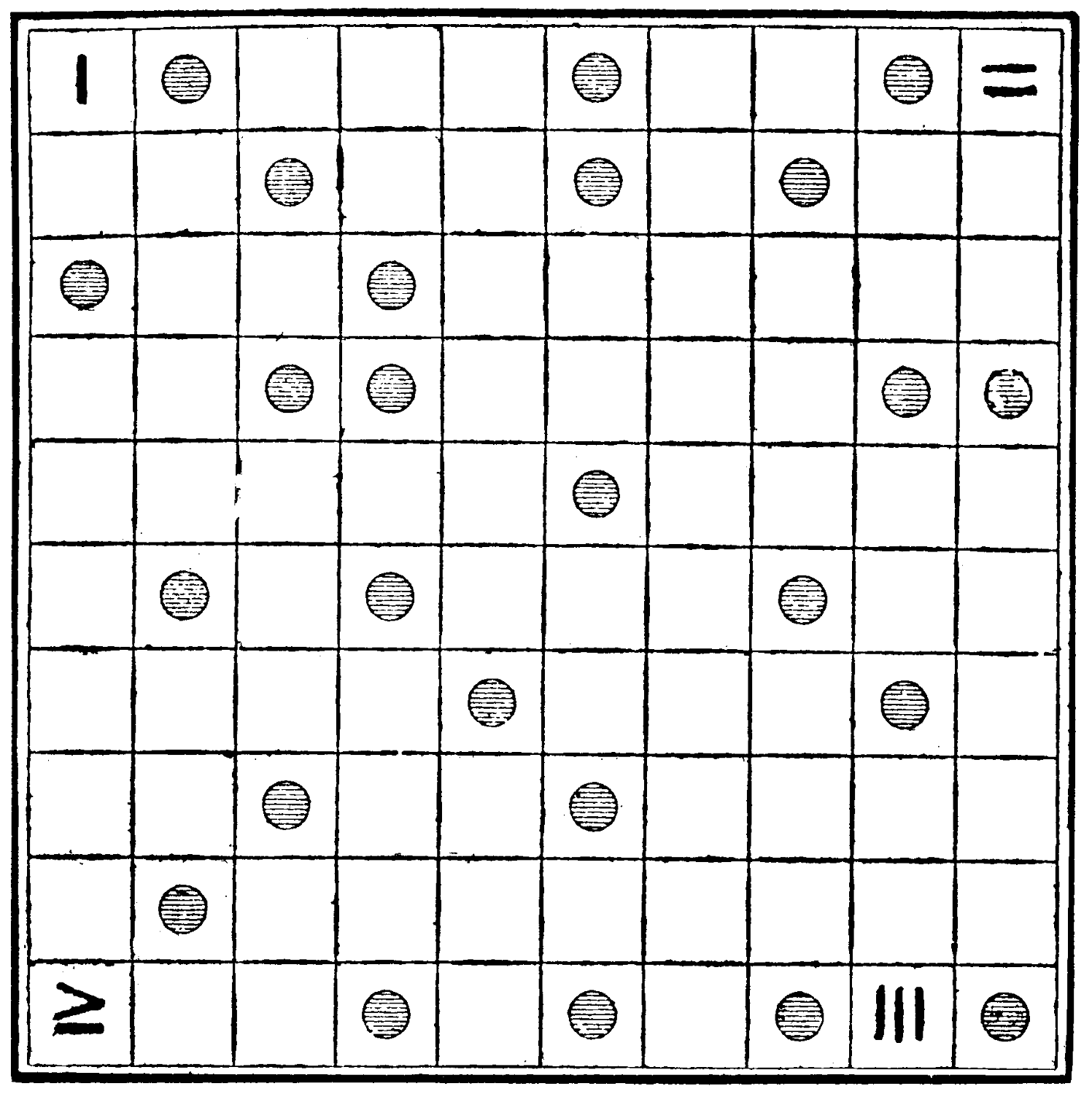
If the shaded circles are cut out and the diagram is placed squarely over the jumbled letters, with the I., II., III., IV. in turn at the top left-hand corner, this sentence is disclosed—
Le premier Supplément du Journal de la Jeunesse a été publié dans le Numéro du Dix-neuf Juin Mil huit cent soixante-quinze.
Return to description
No. XLV
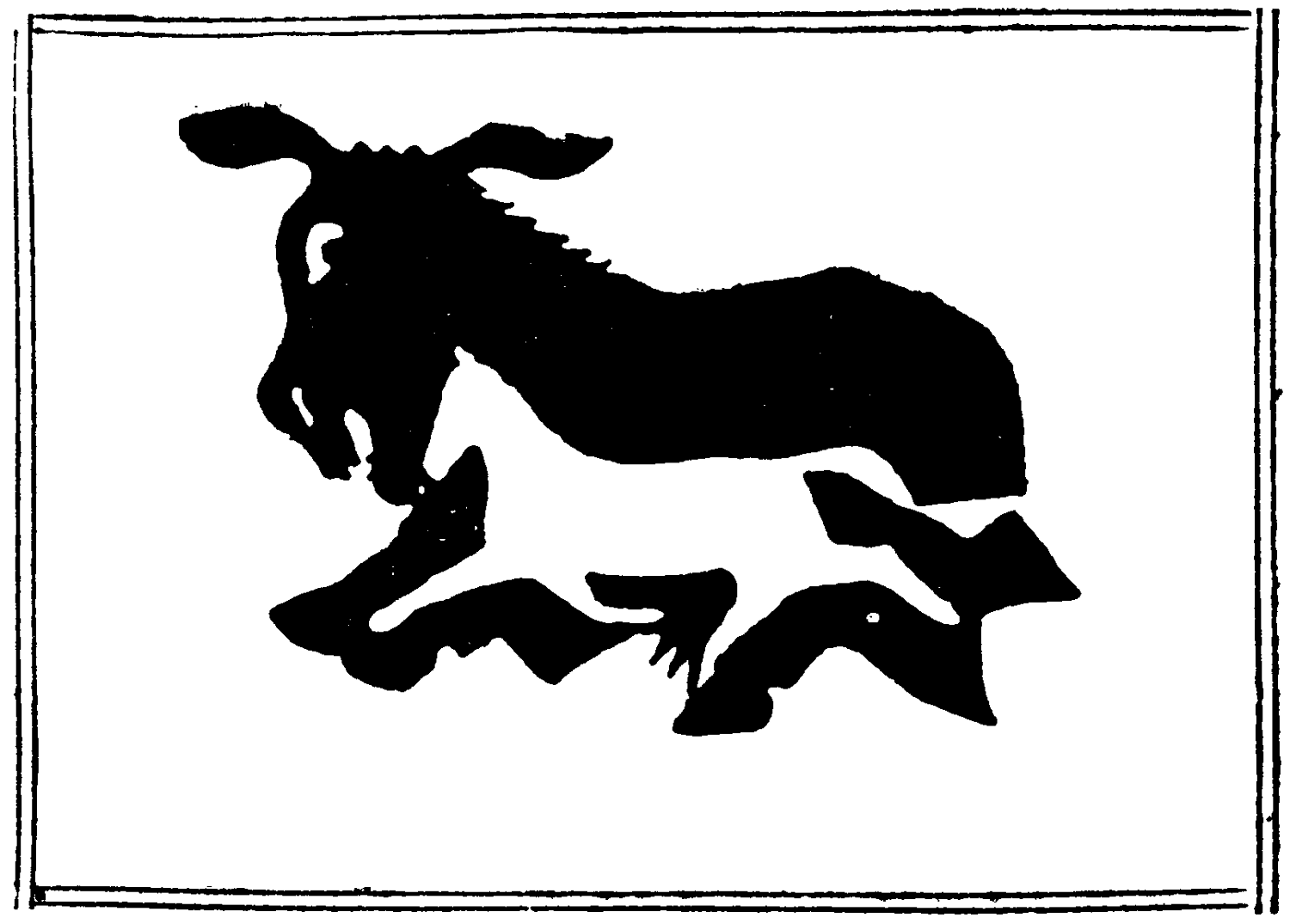
This is the way to reconstruct Sam Loyd’s black pony—so that, while its legs and tail are strangely misplaced, they form the spirited outline of a white galloping horse.
Return to description
No. XLVI
Here is the key to Sam Loyd’s ingenious puzzle—
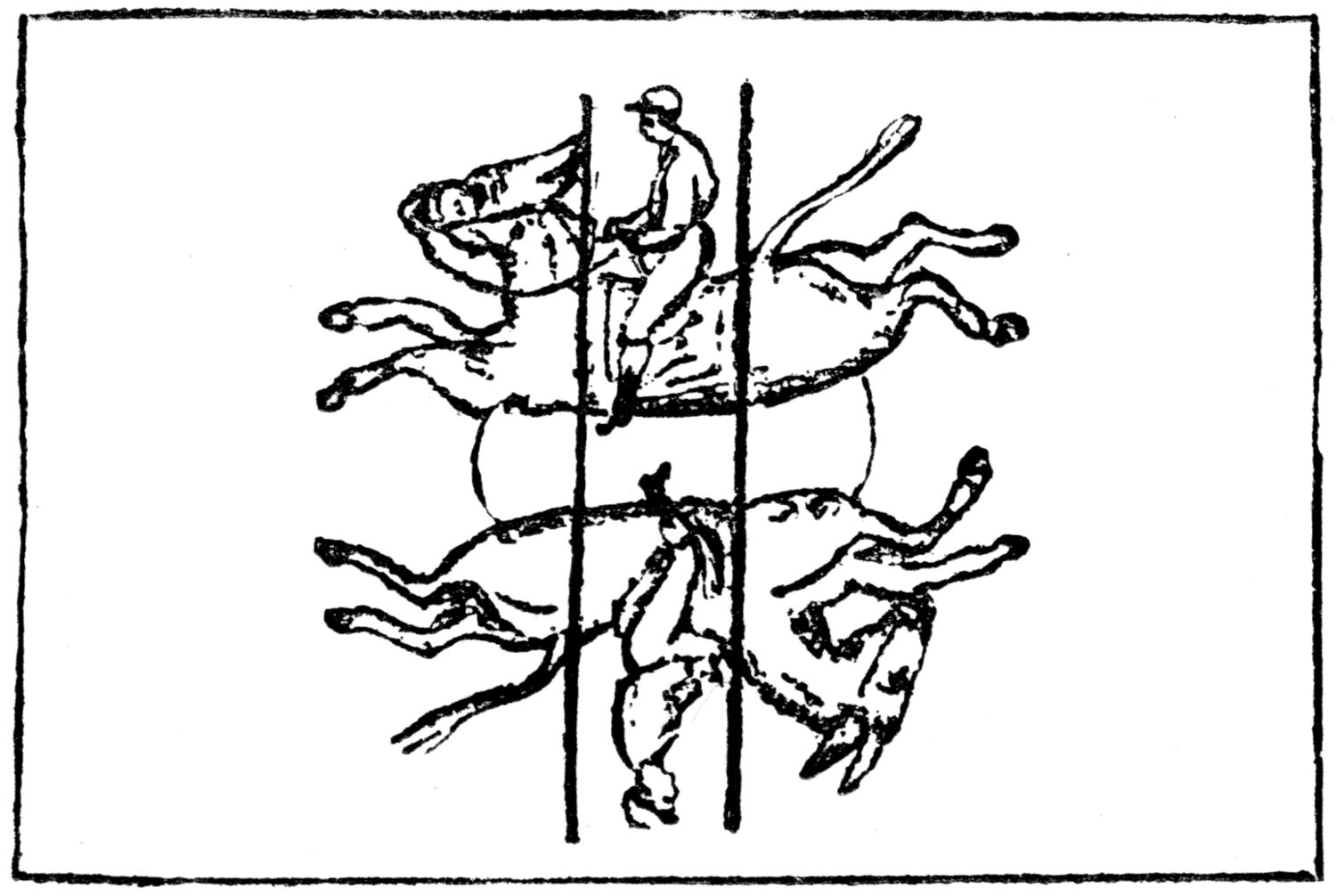
which shows the jockeys and horses in full racing trim.
Return to description
No. XLVII
This is the inevitable result of the boy’s attempt to annex with his mouth the sugar on the chair—
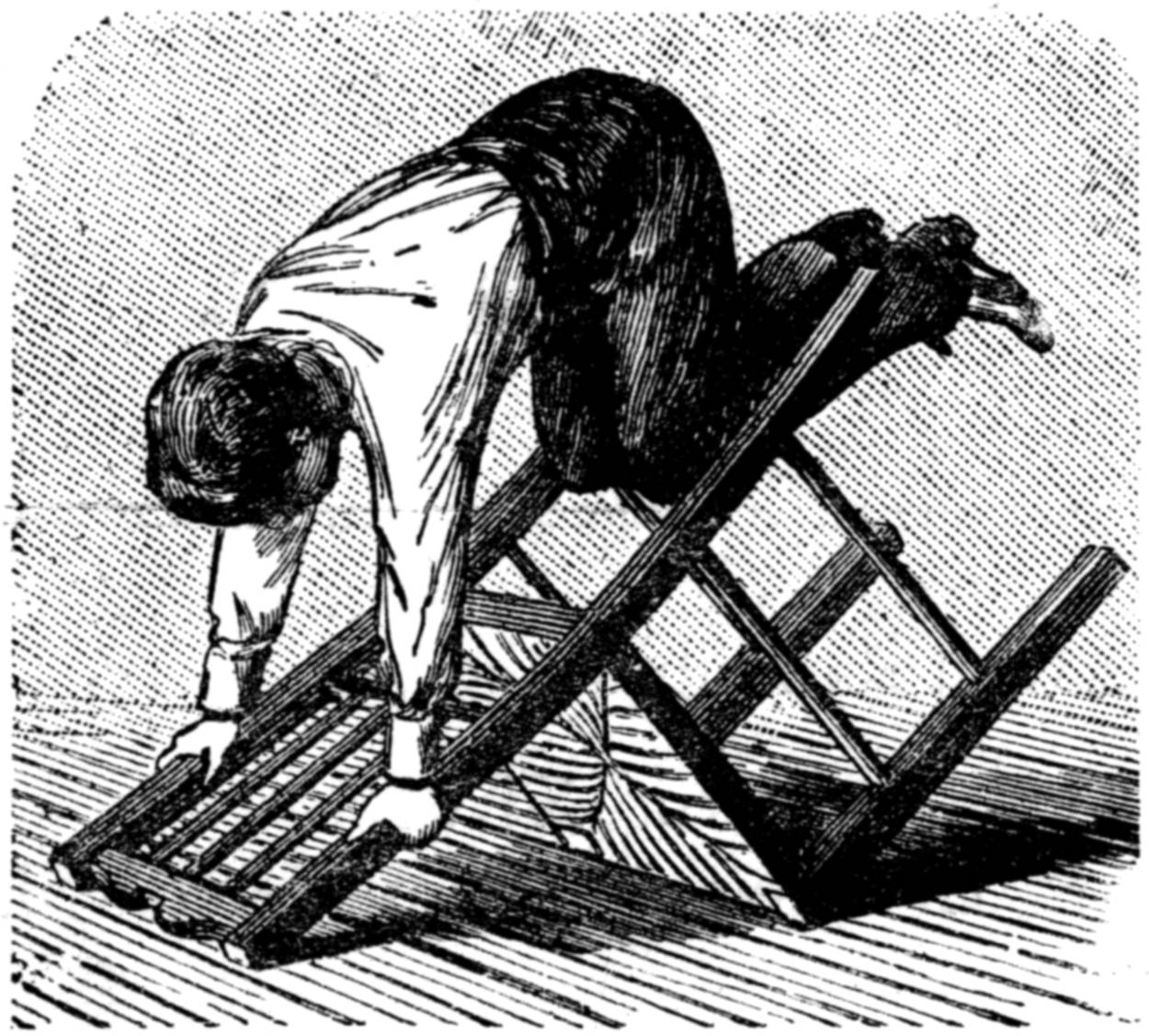
Return to description
No. XLVIII
The leap-frog puzzle is solved in nine hops thus:—
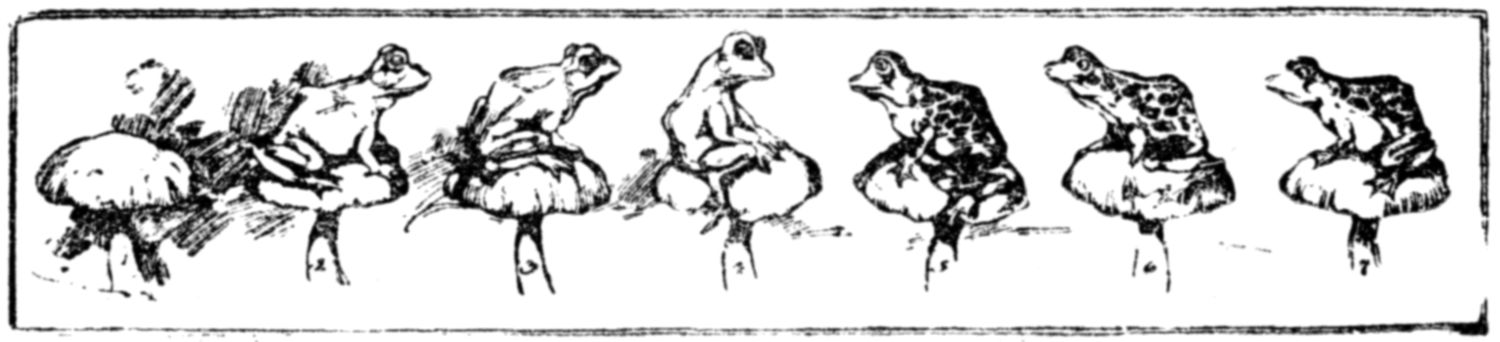
First jump from stool 2, then from 5, 3, 6, 7, 1, 3, and 6 in turn to the vacant stools.
Return to description
No. LV
This diagram shows that the seven wheels, which spin so merrily when the paper is rotated in the hand, can be divided off into separate enclosures by only three straight lines—
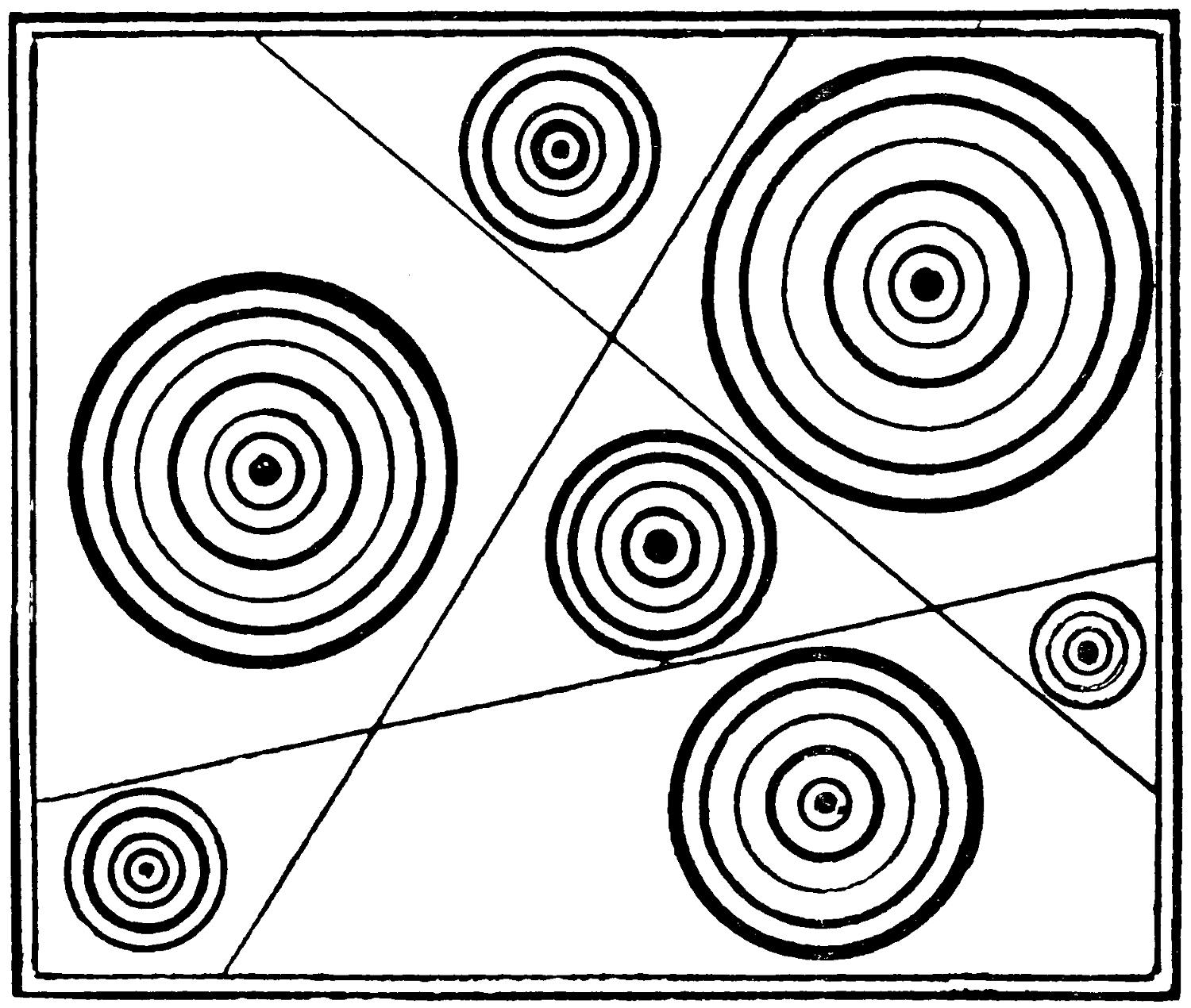
Return to description
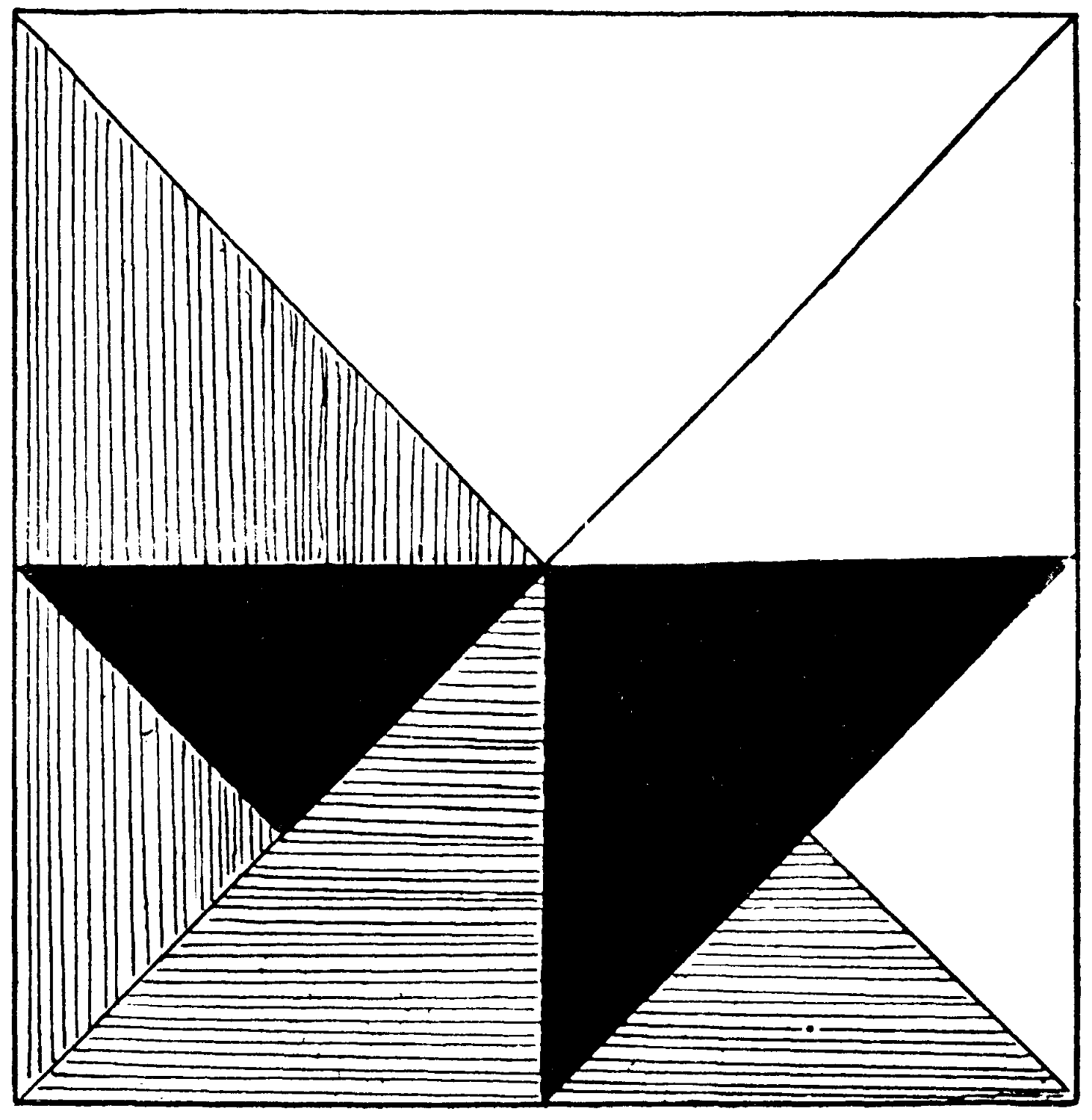
No. LVI
The diagram below shows how the market-gardener, keeping one-fourth of his square field for himself in the shape of a triangle, was able to divide the remainder so that each of his four sons had an equal portion of similar shape—
Return to description
No. LVII
Here is a drawing of the perfect Latin cross—
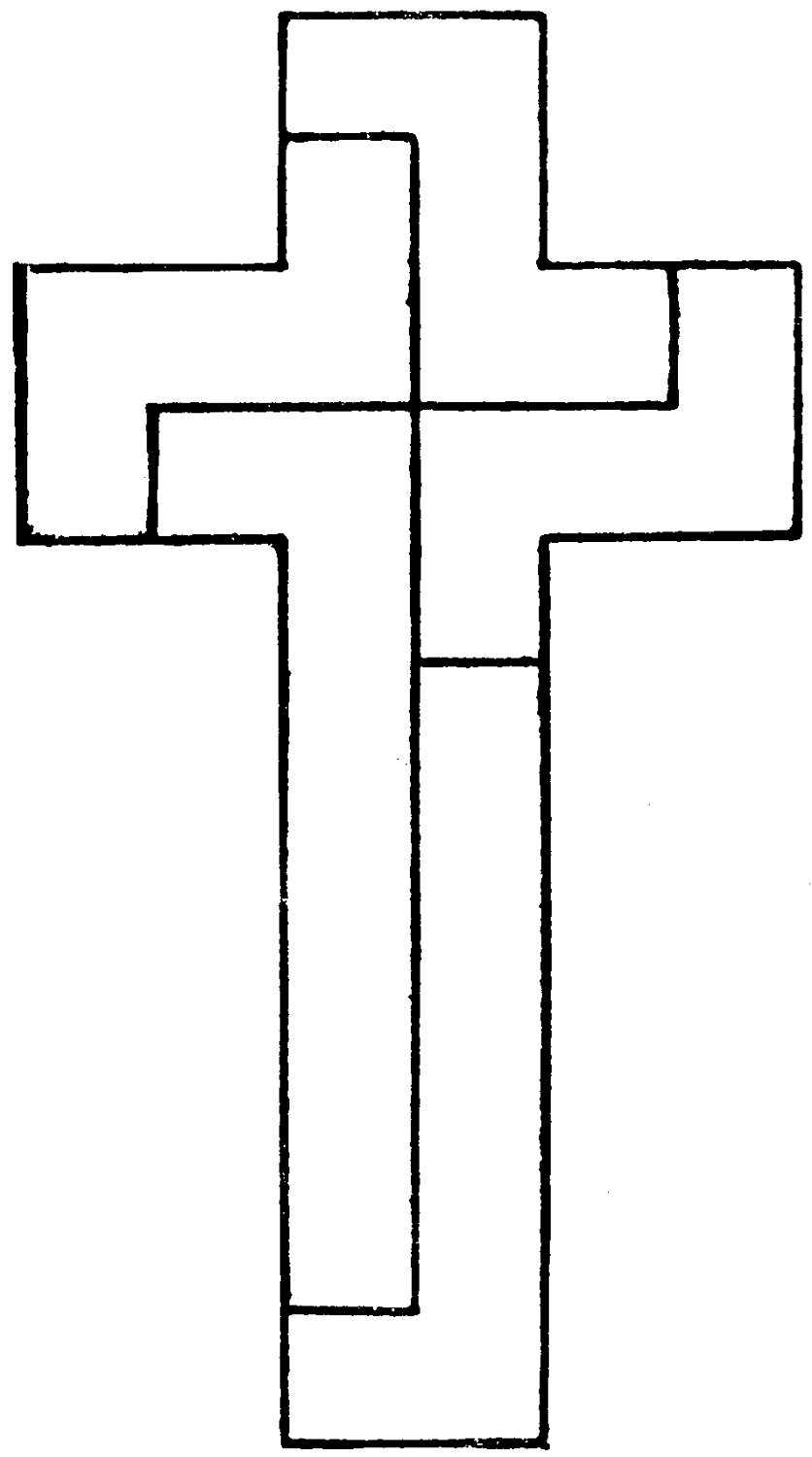
The position of the two long pieces does not readily suggest itself to those who try to arrange the five on paper with a pencil.
Return to description
No. LVIII
This diagram shows the effectual means taken by four rich men, whose houses were further afield, to exclude four poor men from all access to a central lake, that they might reserve the fishing for themselves.
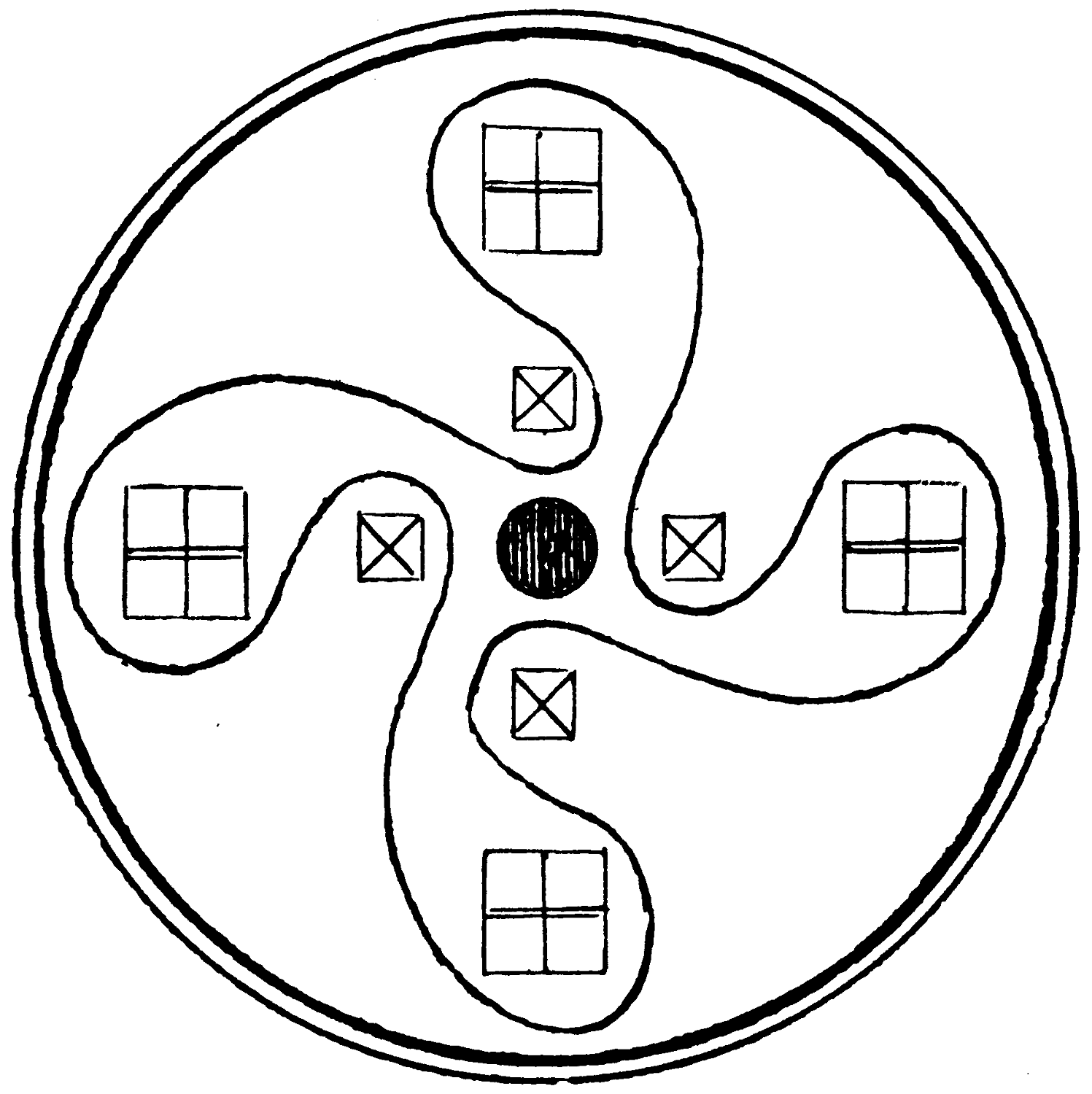
They built a high wall on the lines that are indicated which, while it left a way for each of them to the water, altogether shut it away from their poor neighbours.
Return to description
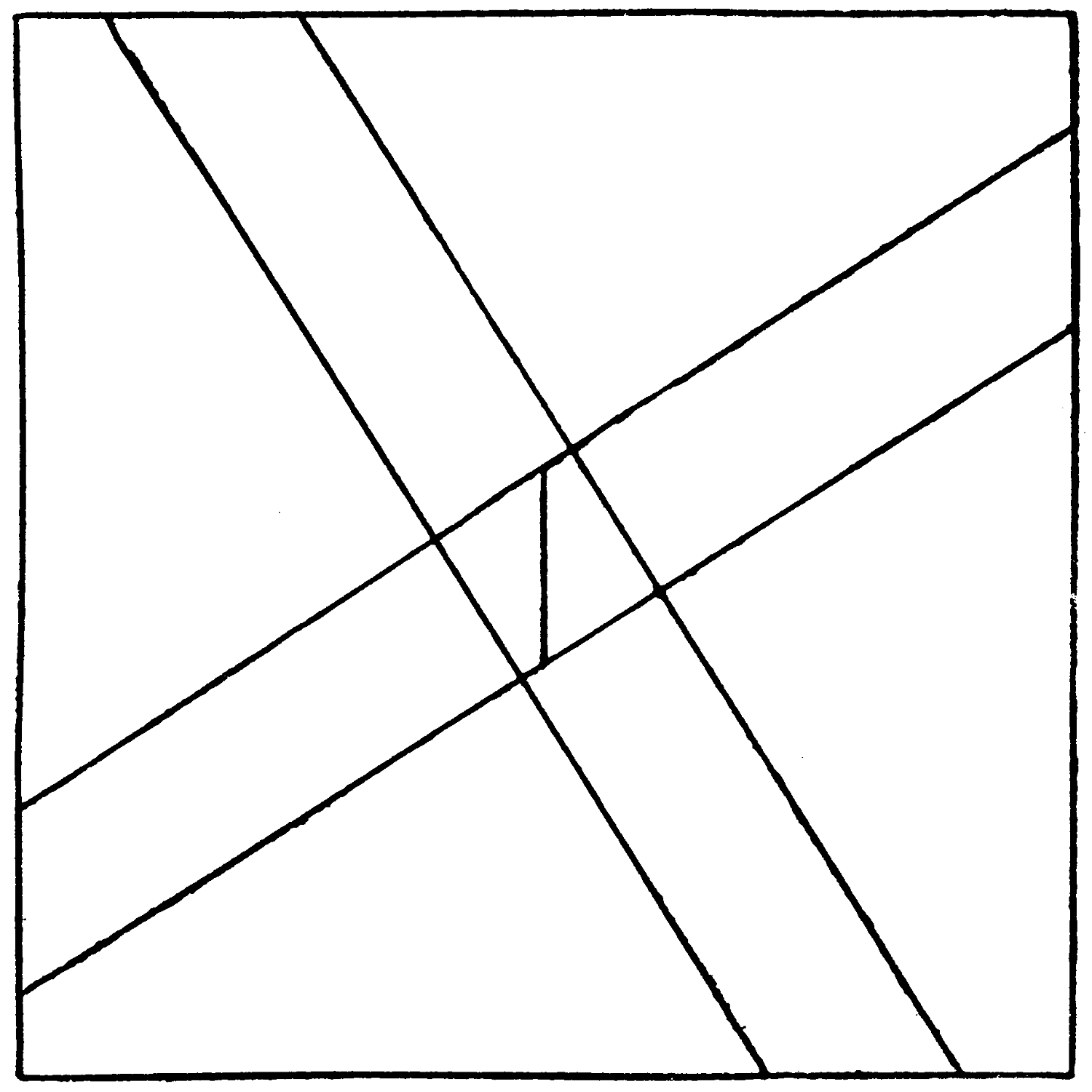
No. LIX
This is the square that can be formed with the ten pattern pieces given—
Return to description
No. LX
The dotted lines in this diagram show how the figure can be divided into nine parts by four straight cuts
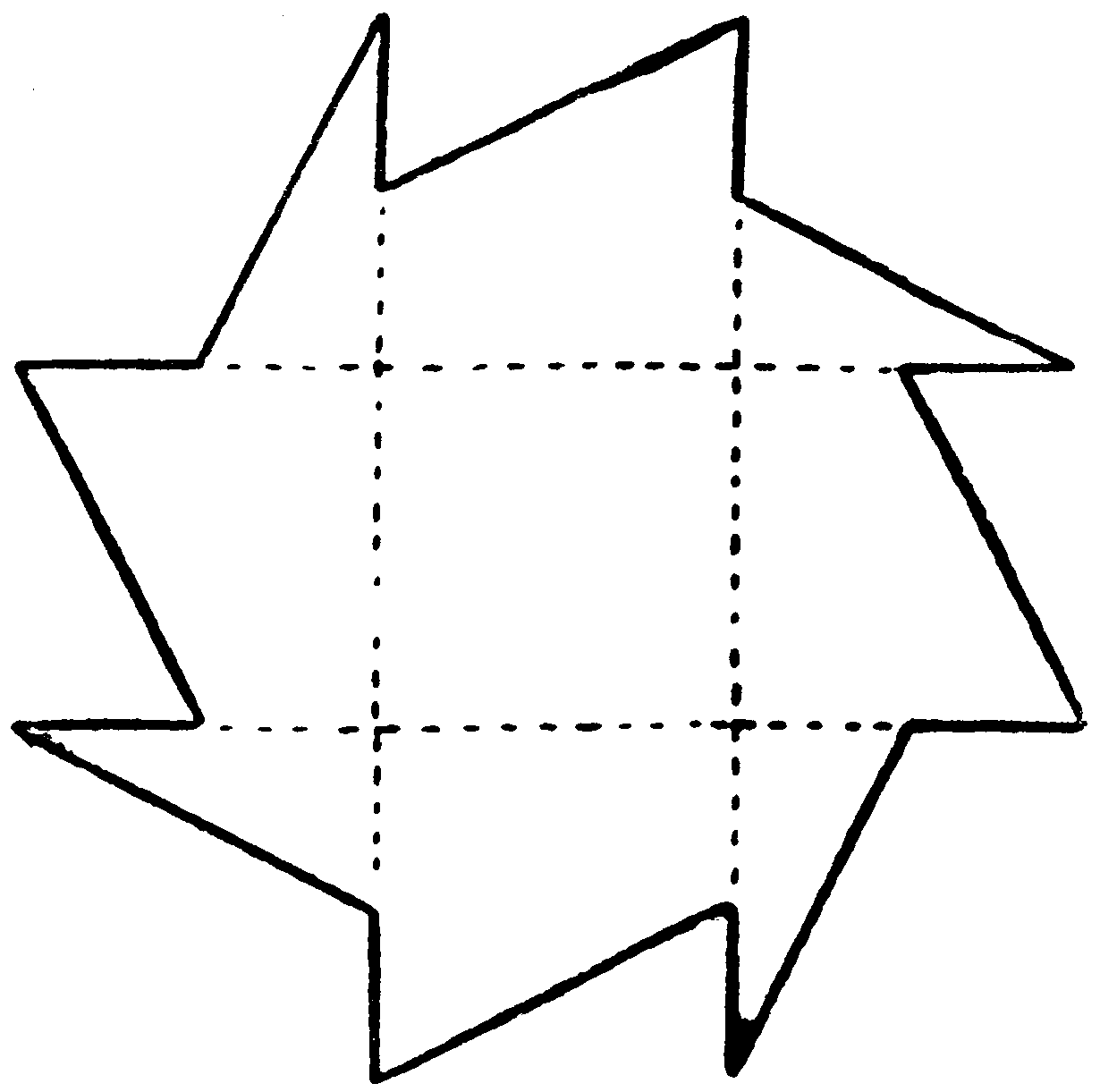
which can be reunited to form a perfect cross.
Return to description
No. LXI
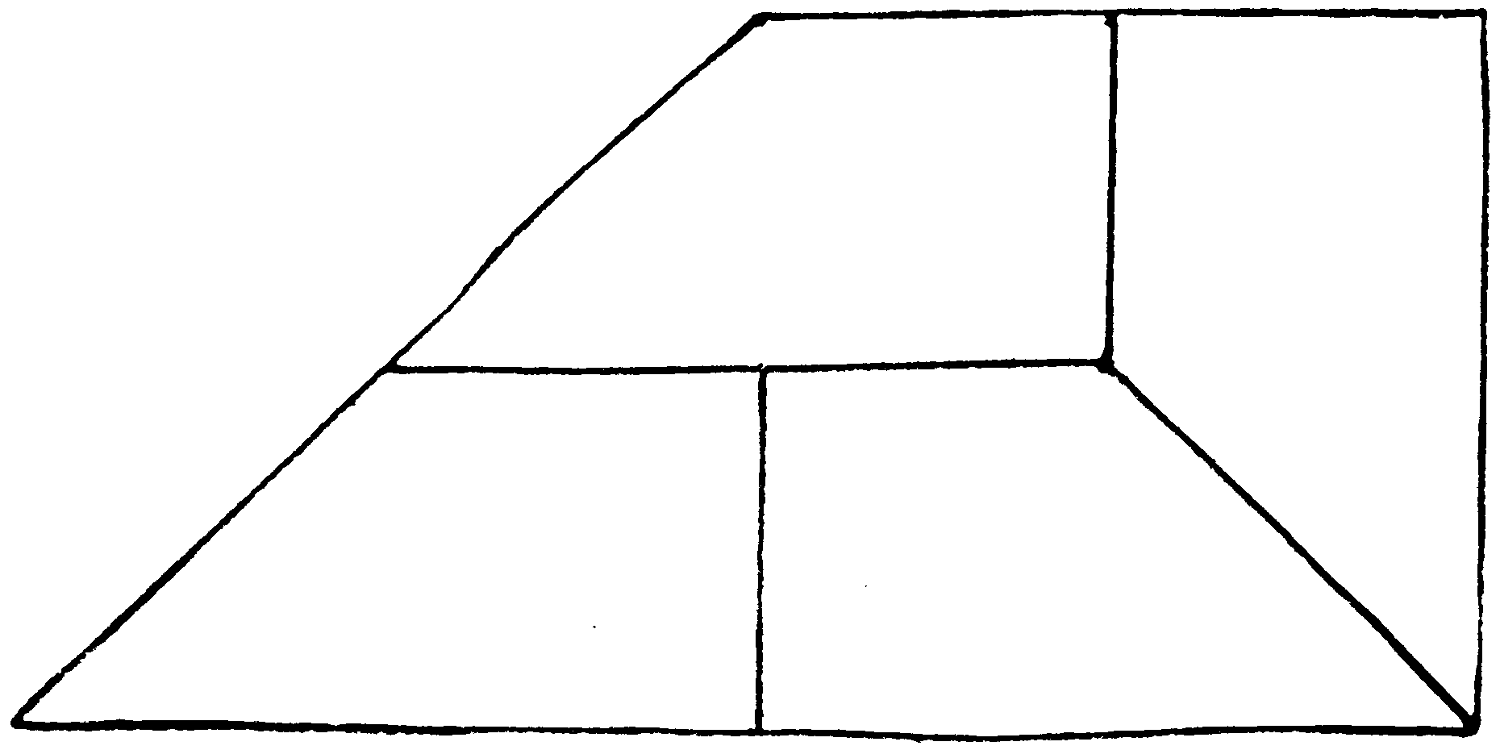
This is a simple way by which the figure given can be divided by four straight cuts into four equal and similar parts—
Return to description
No. LXII
This is the way to draw twenty-two straight lines within the circle at right-angles to each other, so that they divide it into four similar parts—
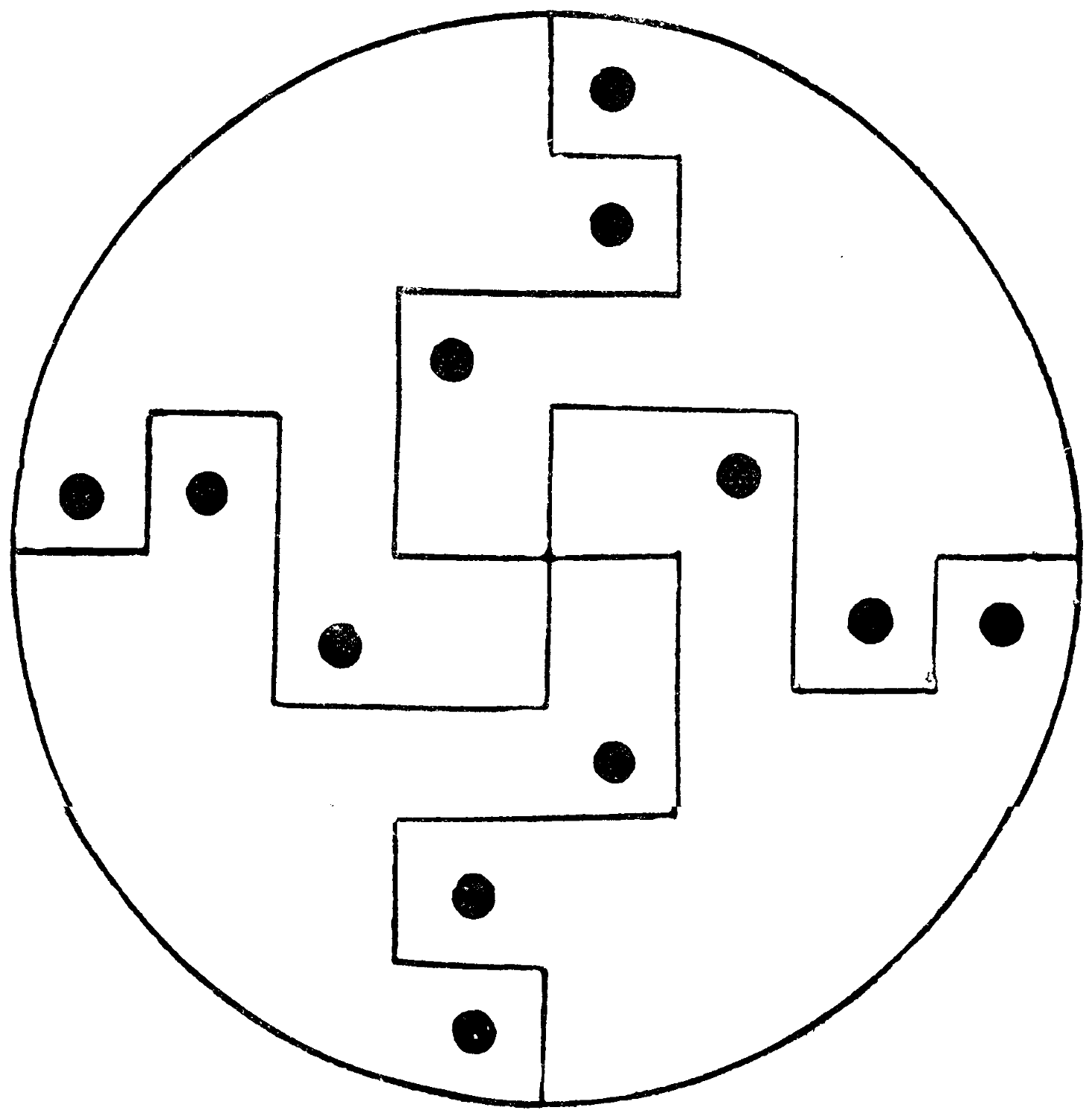
and each part has three dots within its borders.
Return to description
No. LXIII
These diagrams show how the upper triangle is divided into five parts, which can be rearranged to form the equilateral triangle below.
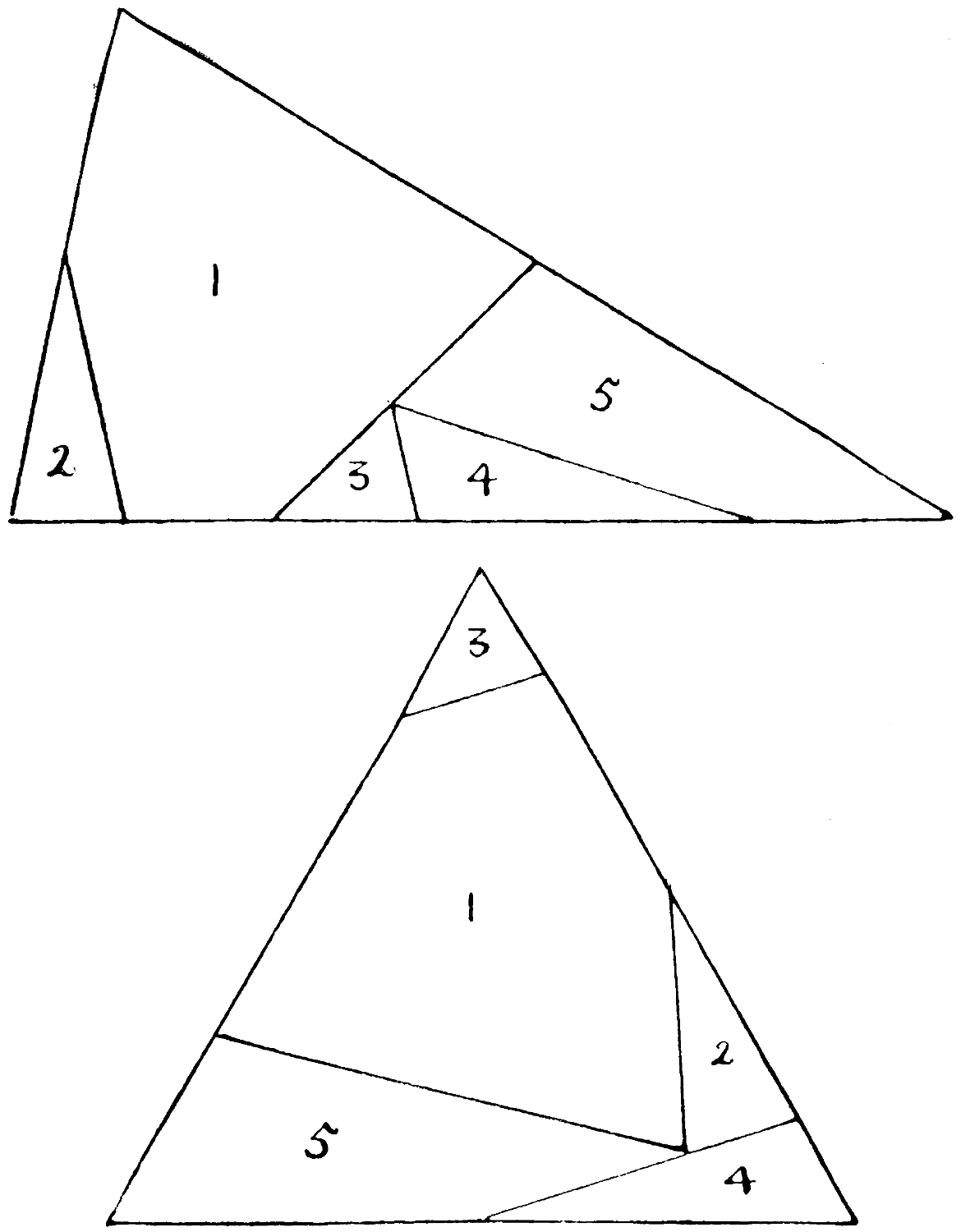
The originator of this ingenious novelty says, “The method of construction is not shown, but its application is general, and the result is easily verified by measurement.”
Return to description
No. LXVI
This is an arrangement of the twenty-seven counters in nine rows, six in a row, within the borders of an equilateral triangle.
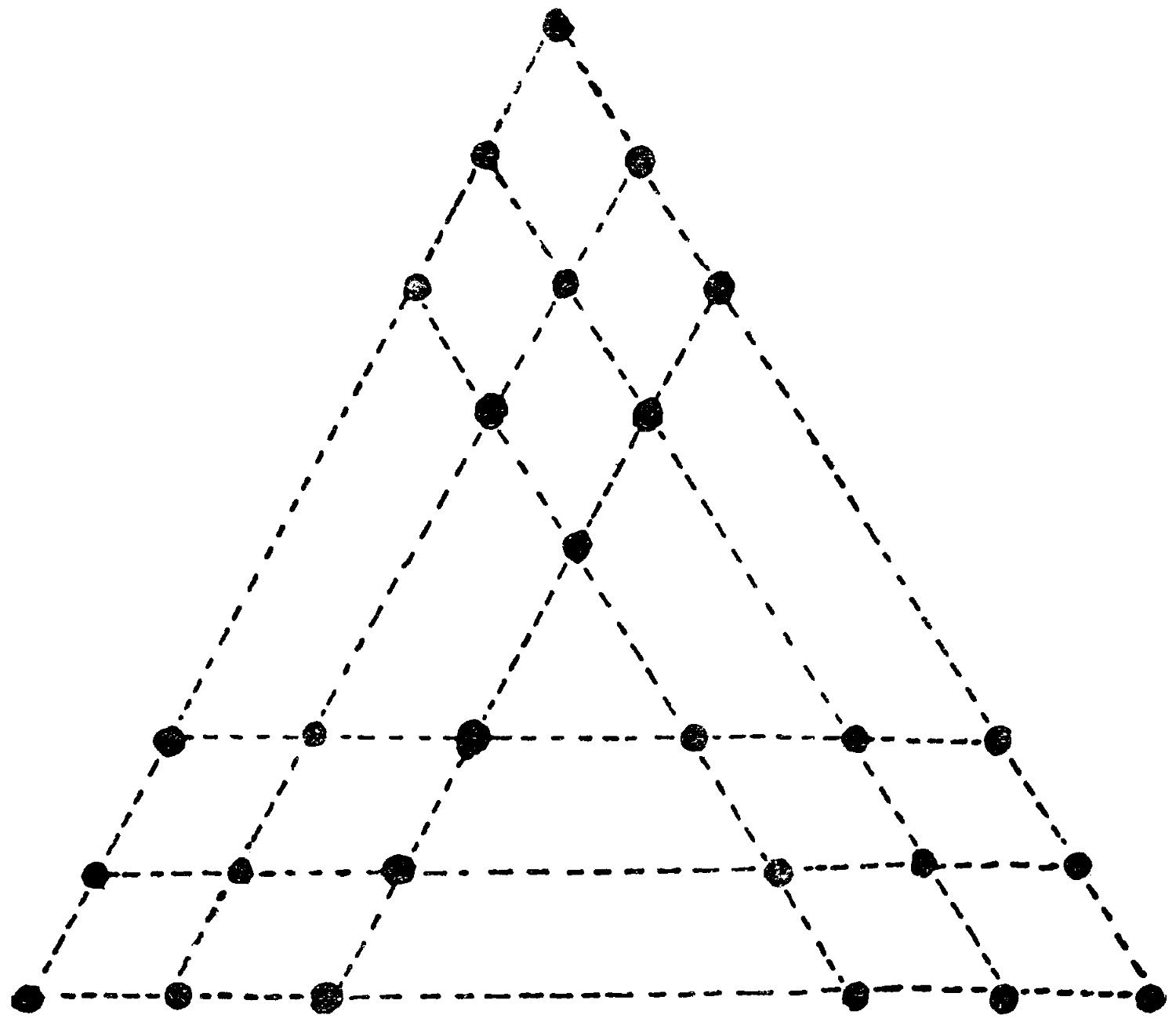
Return to description
No. LXVII
All the cards of one colour, when placed alternately, can be brought together in four moves, two at a time, thus—
A ♠ 2 ♡ 3 ♣ 4 ♢ 5 ♣ 6 ♢ 7 ♣ 8 ♡
Image
Place two and three beyond eight; Place five and six between one and four; Place eight and two between four and seven; Place one and five between seven and three.
Return to description
No. LXVIII
You can in a moment tell the number chosen on these cards, when you are told on which of them it appears,
I. II. III. IV.
1 33 65 97 2 34 66 98 4 36 68 100 8 40 72 104
3 35 67 99 3 35 67 99 5 37 69 101 9 41 73 105
5 37 69 101 6 38 70 102 6 38 70 102 10 42 74 106
7 39 71 103 7 39 71 103 7 39 71 103 11 43 75 107
9 41 73 105 10 42 74 106 12 44 76 108 12 44 76 108
11 43 75 107 11 43 75 107 13 45 77 109 13 45 77 109
13 45 77 109 14 46 78 110 14 46 78 110 14 46 78 110
15 47 79 111 15 47 79 111 15 47 79 111 15 47 79 111
17 49 81 113 18 50 82 114 20 52 84 116 24 56 88 120
19 51 83 115 19 51 83 115 21 53 85 117 25 57 89 121
21 53 85 117 22 54 86 118 22 54 86 118 26 58 90 122
23 55 87 119 23 55 87 119 23 55 87 119 27 59 91 123
25 57 89 121 26 58 90 122 28 60 92 124 28 60 92 124
27 59 91 123 27 59 91 123 29 61 93 125 29 61 93 125
29 61 93 125 30 62 94 126 30 62 94 126 30 62 94 126
31 63 95 127 31 63 95 127 31 63 95 127 31 63 95 127
V. VI. VII.
16 48 80 112 32 48 96 112 64 80 96 112
17 49 81 113 33 49 97 113 65 81 97 113
18 50 82 114 34 50 98 114 66 82 98 114
19 51 83 115 35 51 99 115 67 83 99 115
20 52 84 116 36 52 100 116 68 84 100 116
21 53 85 117 37 53 101 117 69 85 101 117
22 54 86 118 38 54 102 118 70 86 102 118
23 55 87 119 39 55 103 119 71 87 103 119
24 56 88 120 40 56 104 120 72 88 104 120
25 57 89 121 41 57 105 121 73 89 105 121
26 58 90 122 42 58 106 122 74 90 106 122
27 59 91 123 43 59 107 123 75 91 107 123
28 60 92 124 44 60 108 124 76 92 108 124
29 61 93 125 45 61 109 125 77 93 109 125
30 62 94 126 46 62 110 126 78 94 110 126
31 63 95 127 47 63 111 127 79 95 111 127
Image
by adding together the numbers at the top left-hand corner of these.
Return to description
No. LXIX
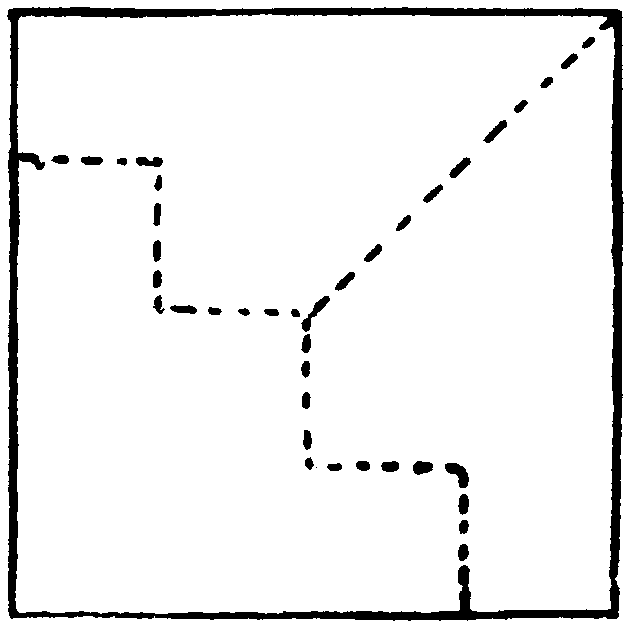
This diagram shows that the postman can take a course which involves fewer turnings than that indicated, when he had to pass round eighteen corners.
It will be seen that he has to turn only fifteen times.
Return to description
No. LXX
This shows how a square can be divided into three parts, so that these can be reunited to form No. 2 and No. 3 of the diagram.
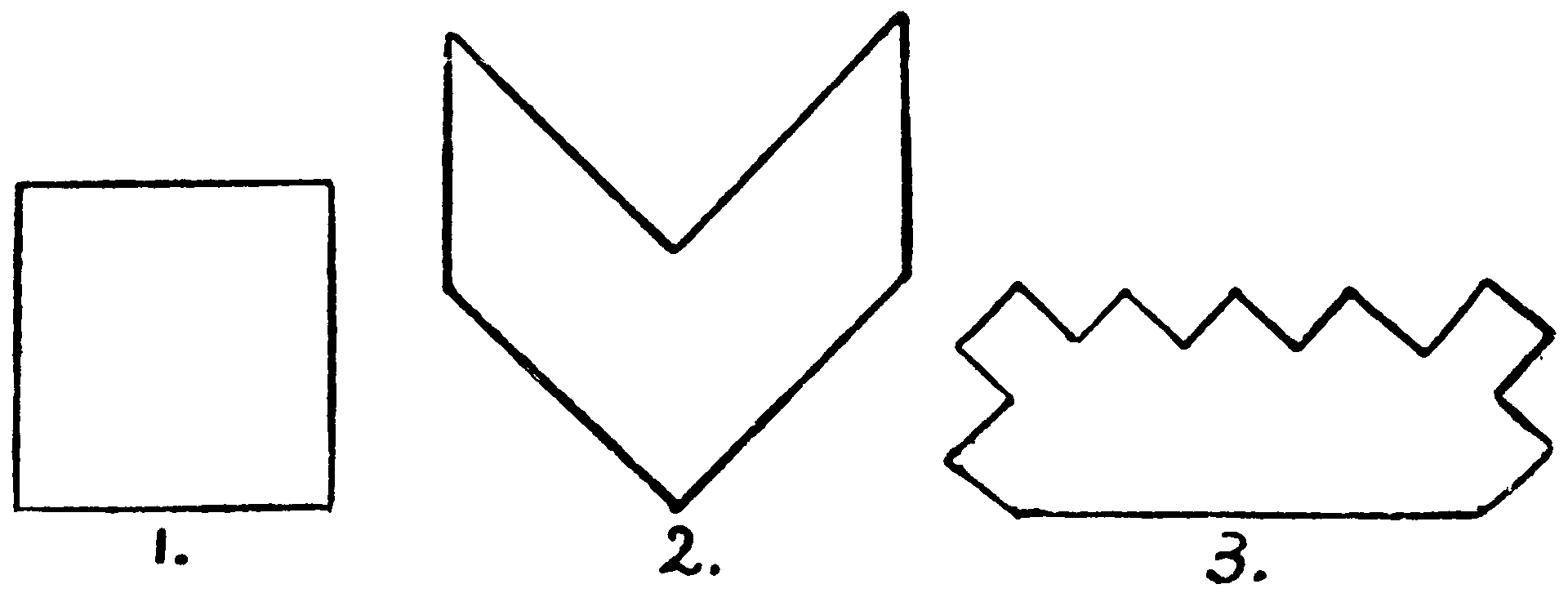
Try it with scissors and paper or cardboard.
Return to description
No. LXXI
♘ ♖ ♚ ♖
Image
This position fulfils the conditions of the puzzle. Obviously it could not occur in actual play.
Return to description
No. LXXV
The dotted lines in this diagram show where the flag with a cross taken out from its centre must be cut, so that the two pieces can be rejoined to form a perfect flag.
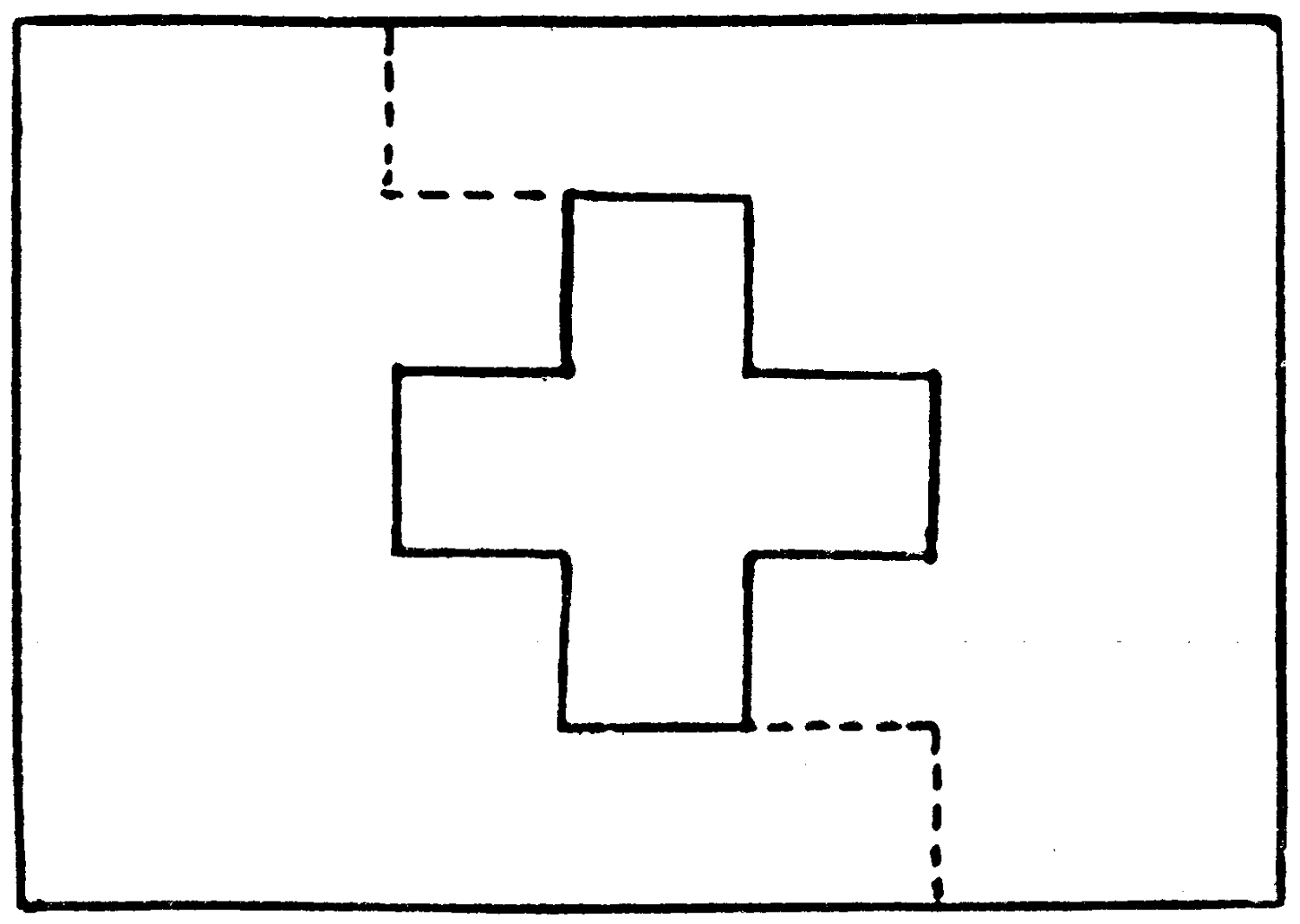
The piece on the right is moved upward, and to the left.
Return to description
No. LXXVI
This is a way in which the eleven parts can be readjusted to form a square:—
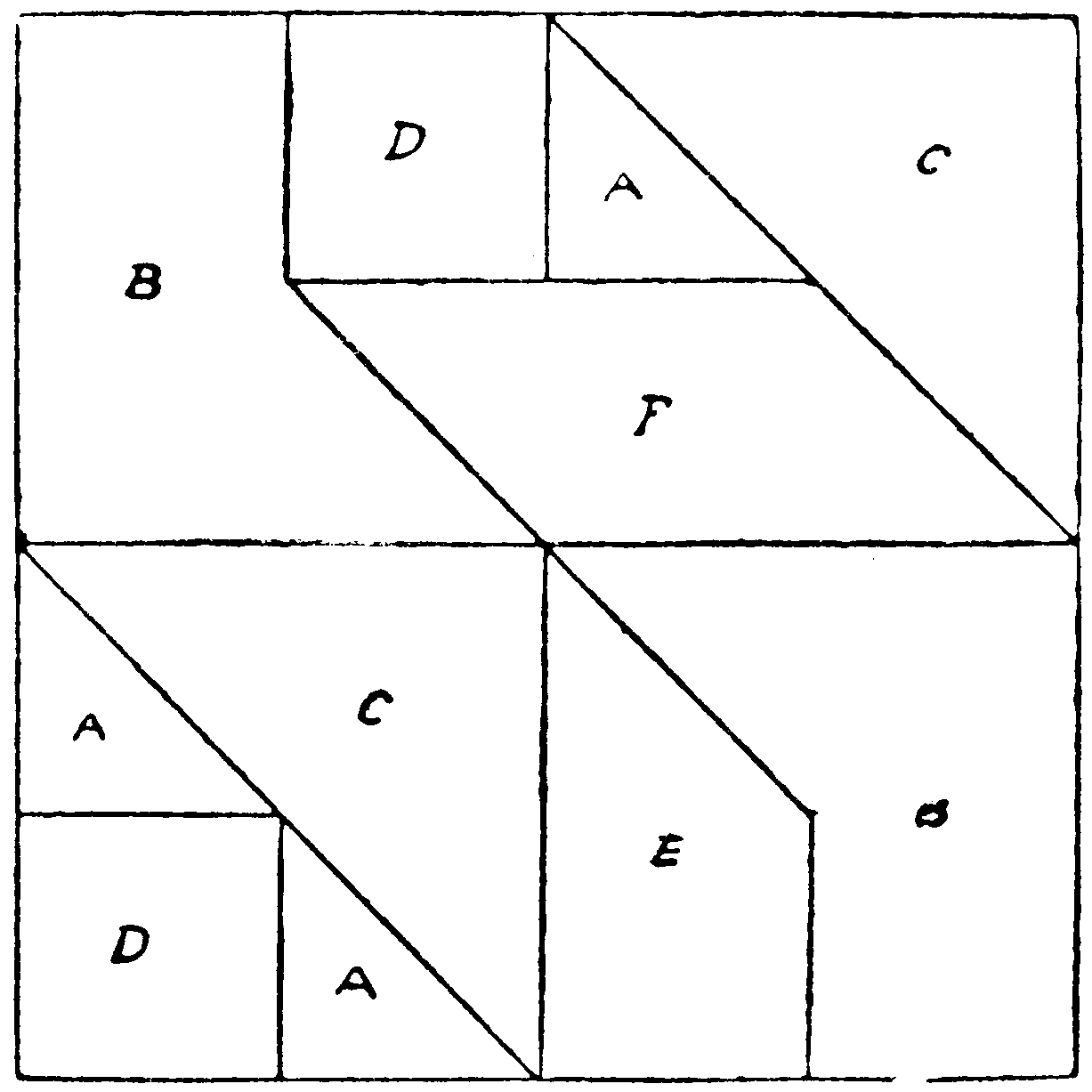
Return to description
No. LXXVIII
This shows the shortest course—
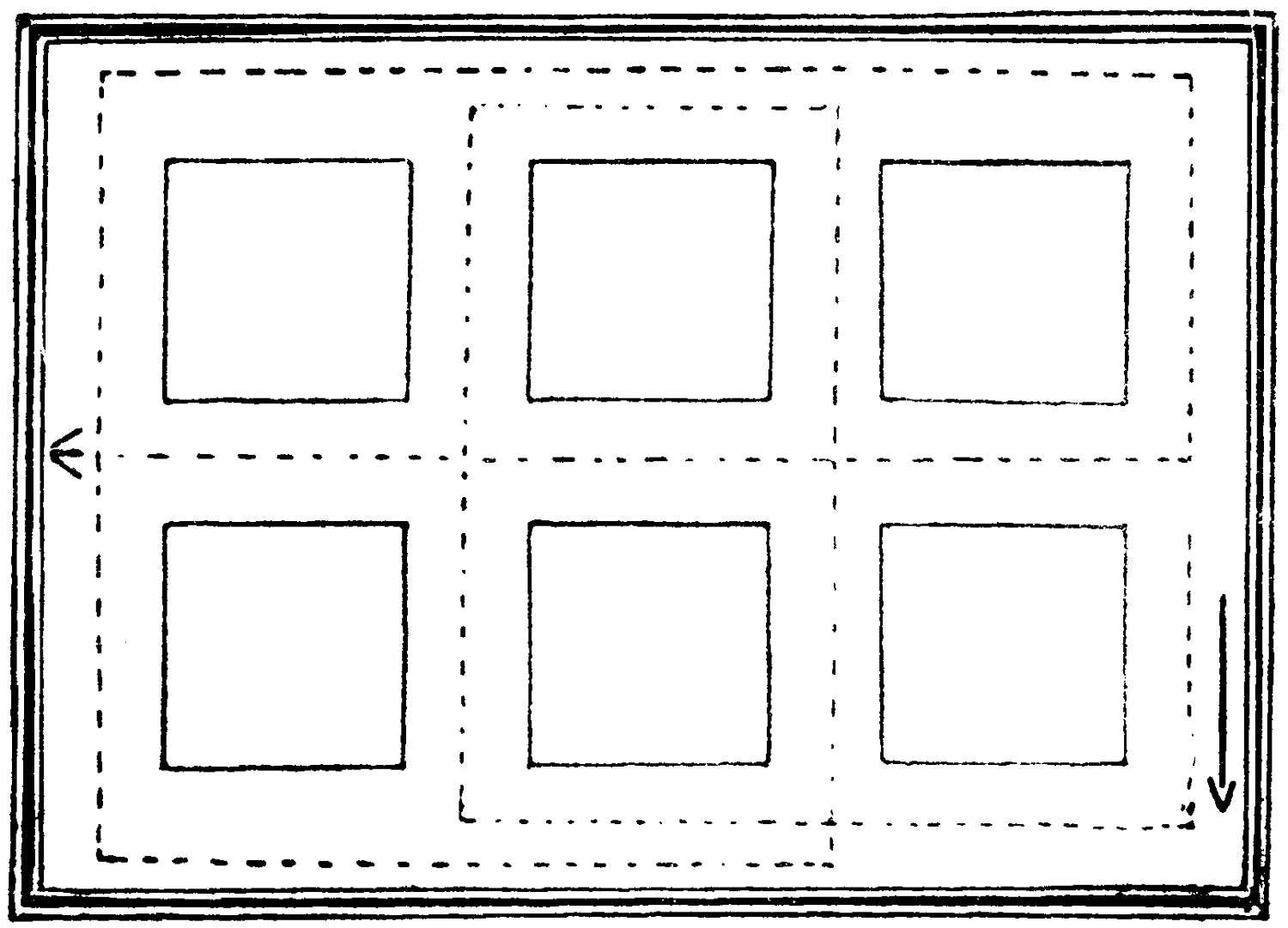
This track takes him completely round every block, passing only once round four of them.
Return to description
No. LXXIX
Here is a very simple and symmetrical arrangement, by which on a board of 36 squares twelve counters are so placed that there are two, and two only, on each line, column, and diagonal.
◎ ◎
◎ ◎
◎ ◎
◎ ◎
◎ ◎
◎ ◎
Image
There are other arrangements which fulfil the conditions.
Return to description
No. LXXXI
In this nest of triangles of five tiers there are 1196 separate triangles, or nearly double the number (653) of a similar nest of four tiers.
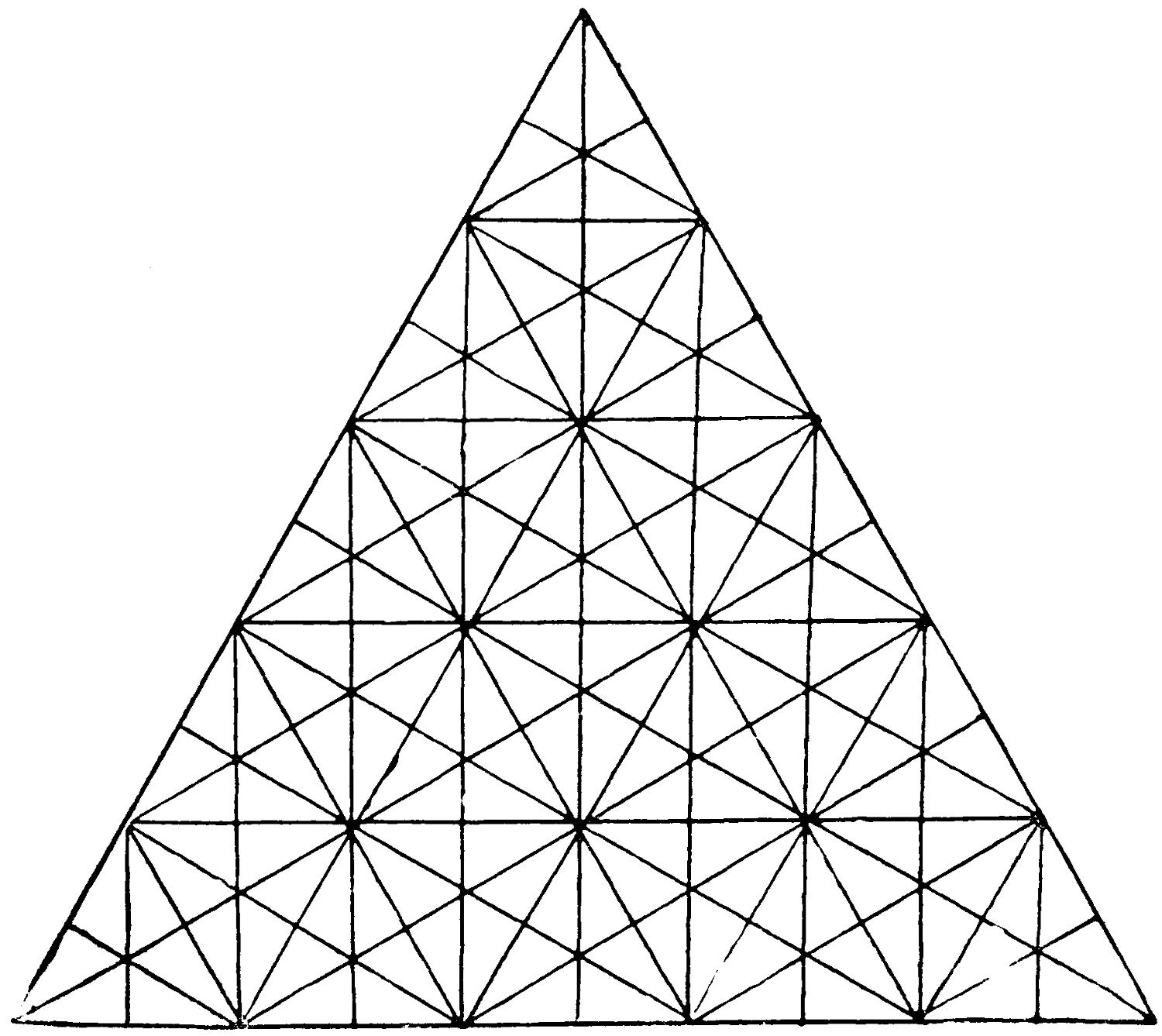
In such a figure with 10,000 tiers there would be 6,992,965,420,332 different triangles!
Return to description
No. LXXXII
The match puzzle, in which eight matches set in a row are to be rearranged in four pairs, by passing one match over two four times—
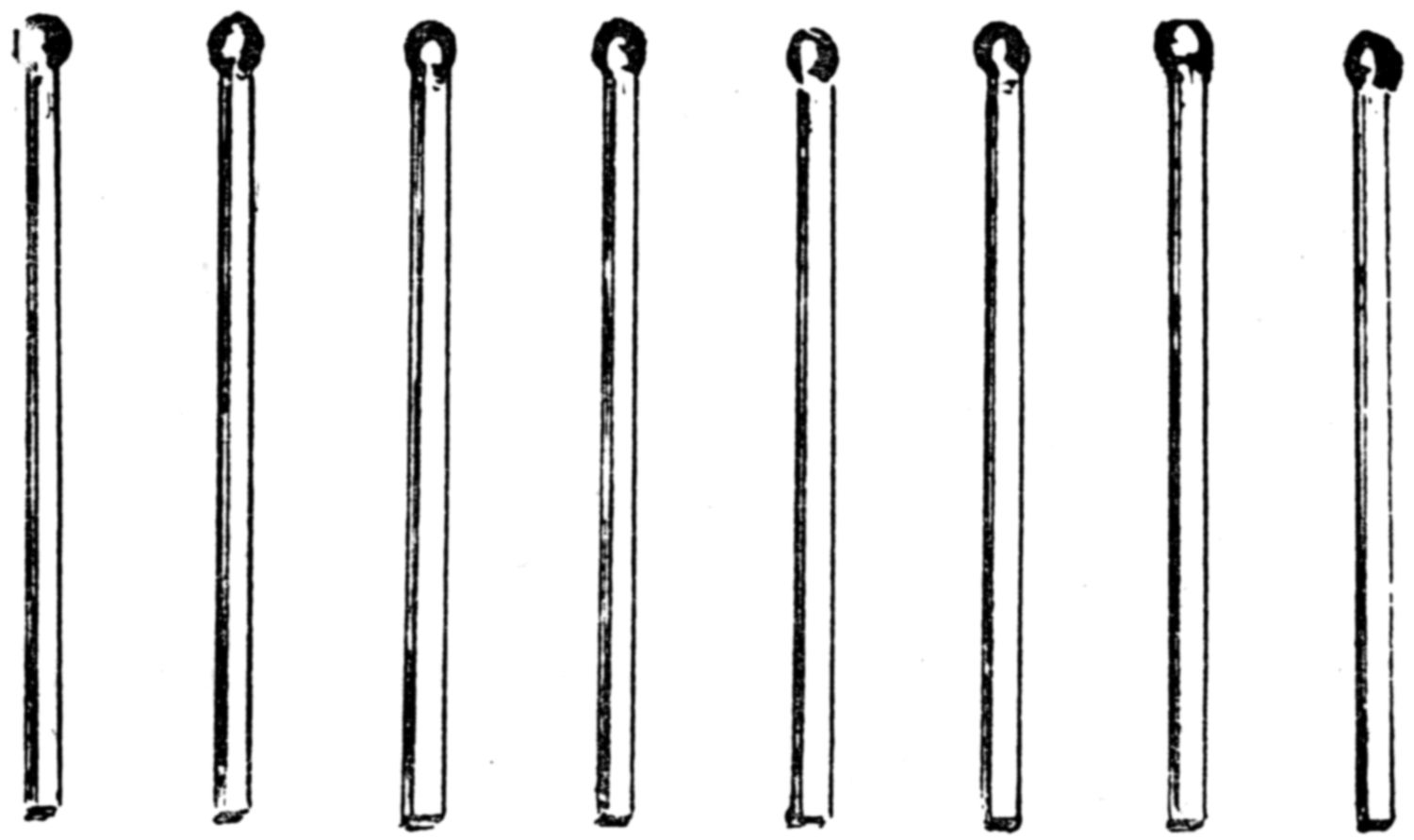
is solved, if the matches are numbered 1, 2, 3, 4, 5, 6, 7, 8, by moving 4 to 7, 6 to 2, 1 to 3, and 5 to 8.
Return to description
No. LXXXIII
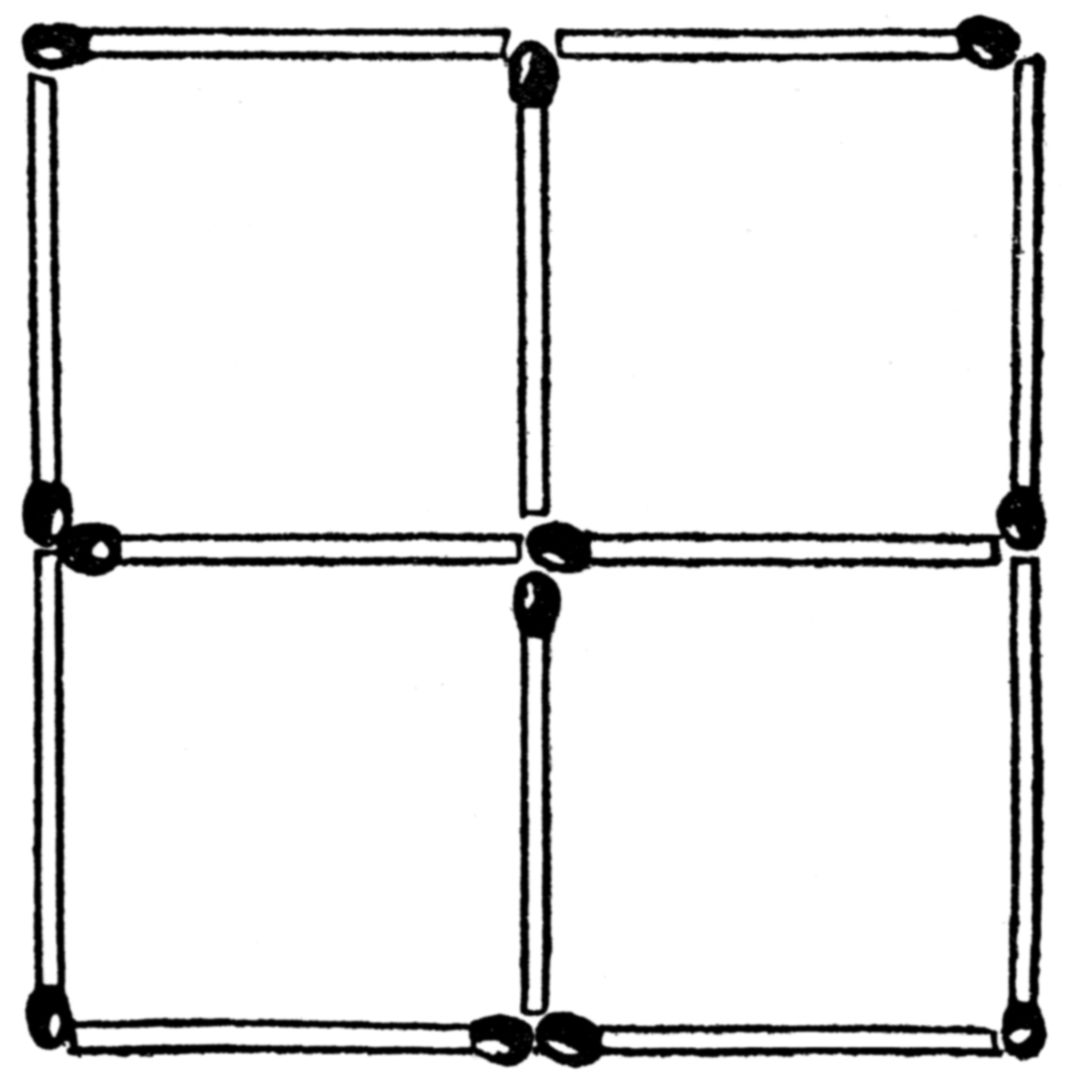
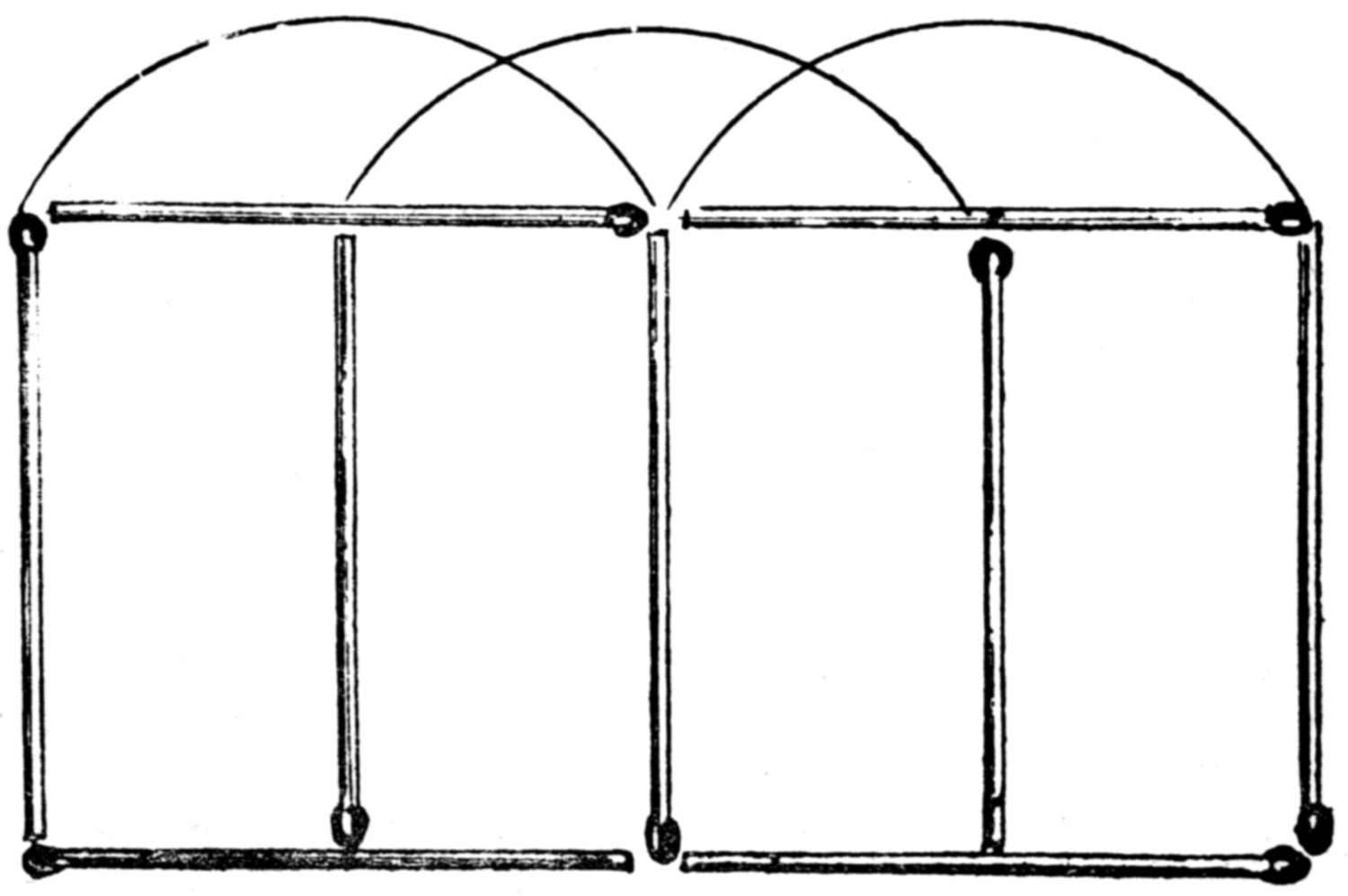
The lower diagram shows how, when three matches are removed from the four squares, the remaining nine can be readjusted to represent three squares—
Return to description
No. LXXXIV
This diagram shows how different arrangements of four matches are possible in all the thirty-six cells of the square.
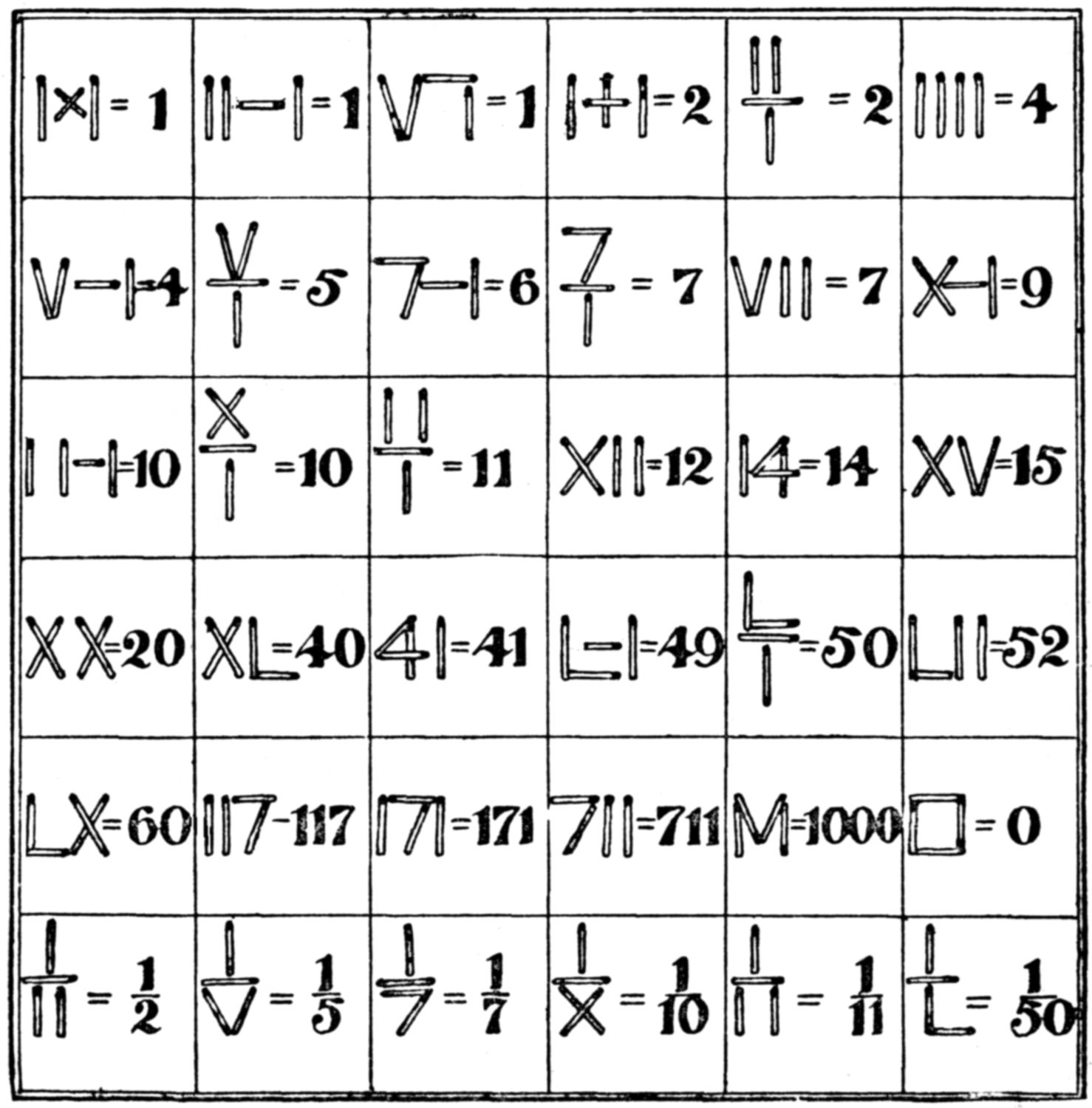
In every case a whole number or a fraction is represented, with such signs or lines as are necessary, and only four matches are used.
Return to description
No. LXXXV
It will be seen from the diagram below that the sentence, when filled in as required, is “Rise to vote, sir.”
R I S E T O V O T E S I R
I I I I
S S S S
E E E E
T T T T
O O O O
V V V
O O O O
T T T T
E E E E
S S S S
I I I I
R I S E T O V O T E S I R
Image
As this sentence is a perfect palindrome, and reads alike from either end, it can be traced in a great number of different directions.
Return to description
No. LXXXVII
This subtraction sum may be very neatly worked, without reducing the distances to inches, thus:—
miles furlongs rods yards feet inches
1 „ 0 „ 0 „ 0 „ 0 „ 0
7 „ 39 „ 5 „ 1 „ 5
0 „ 0 „ 0 „ 0 „ 0 „ 1
Image
Instead of borrowing one foot, we borrow half-a-foot—i.e., 6 inches; taking 5 from the 6 we have 1 as a remainder; now carrying the 6 inches to the 1 foot, and borrowing half a yard, and subtracting, we have 0 as remainder; carrying the half-yard to the 5 yards, we borrow the full 51⁄2 yards, which are one rod, and proceed in the usual manner afterwards, with the result that is shown.
Return to description
No. LXXXIX
This is an arrangement of nine counters on the irregular board of 67 squares.
●
●
●
●
●
●
●
●
●
Image
No two counters are in the same row, column, or diagonal.
Return to description
No. XC
This is the arrangement of nine cards in ten rows, three in each row—
K ♢ Q ♠ K ♡
A ♣ A ♢ A ♠
10 ♡ K ♣ J ♢
Image
Return to description
No. XCI
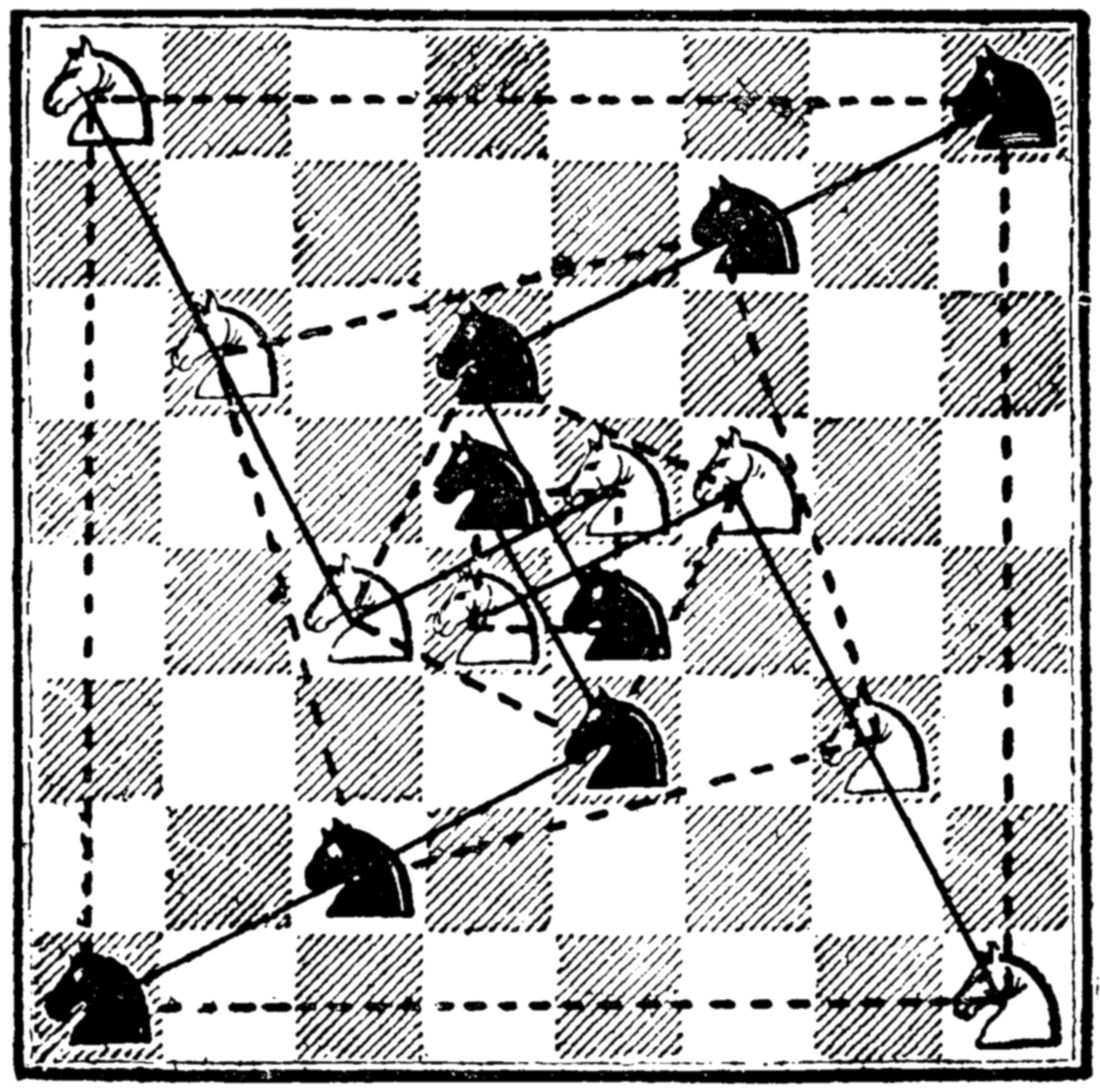
The following diagram shows how the two ladies and their squires represented by white Knights and black, and dressed to impersonate Light, Liberty, Love, and Learning, started from the four comer squares, and stepped a figure which exhibited at each pause a revolving square, and in three paces came together in the centre, by a course traced upon the lines of their combined monograms.
Return to description
No. XCII
The 5 maxims in these 36 cells—
tell you know tells knows tells he should not
do you think of does thinks of does is not good
believe you hear believes hears believes is false
spend you have spends has spends he needs
judge you see judges sees judges is not there
never all he who all he often what
Image
are disentangled by reading the lowest line with each of the upper ones in turn. Thus the first maxim runs:—“Never tell all you know, he who tells all he knows often tells what he should not,” and so on throughout.
Return to description
No. XCIII
The dislocated circle is solved by making a single cut through the dotted line shown in the diagram below, and join up the pieces.
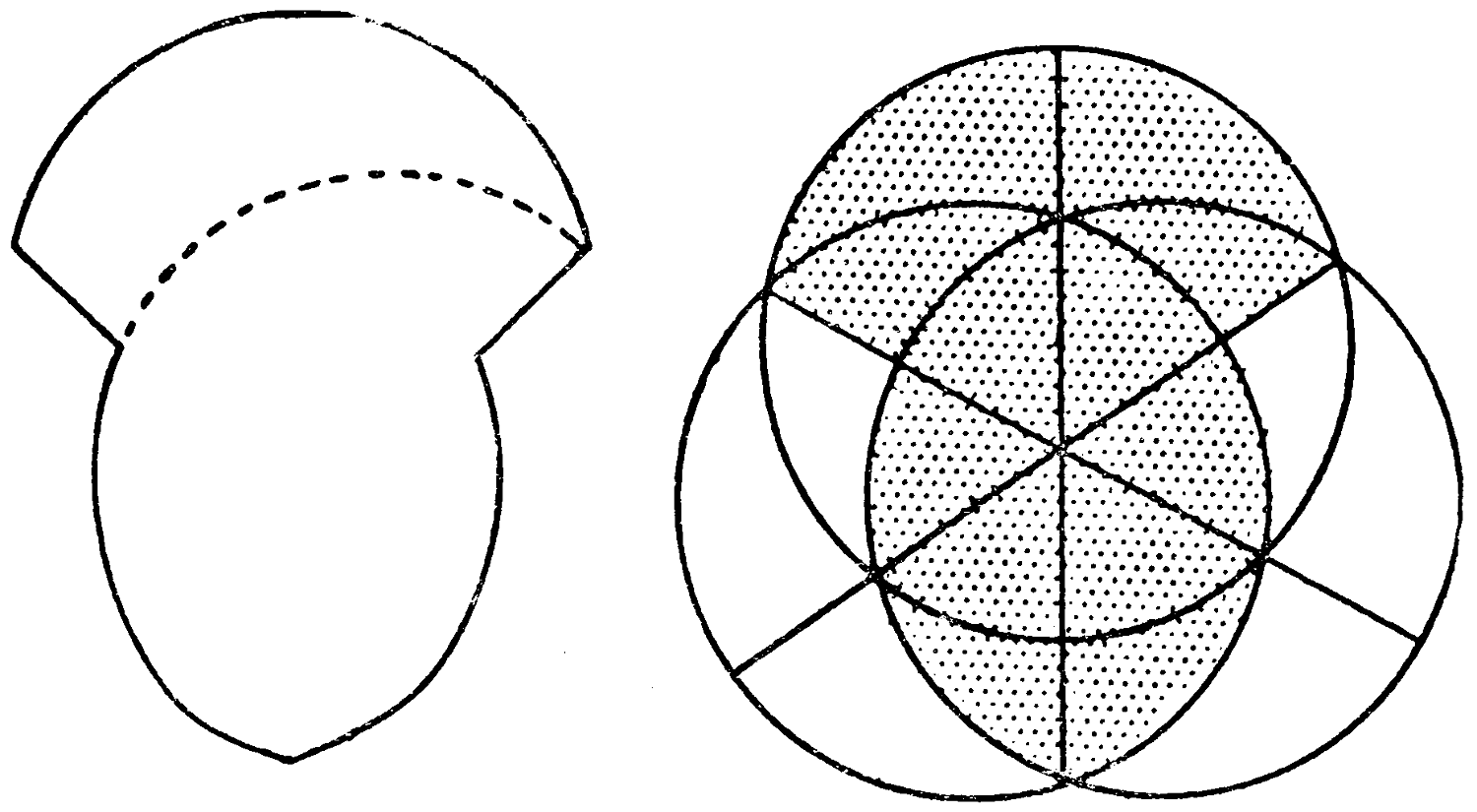
The second diagram shows how this figure is arrived at, by drawing three similar and intersecting circles, which have their centres at the angles of an equilateral triangle. The piece cut off by the dotted line corresponds to the section that completes the circle below.
Return to description
No. XCV
The catch-words Cleans, Scrubs, Scours, Polishes, which proclaim the merits of an “Old Dutch Cleanser” on the sails of this windmill,
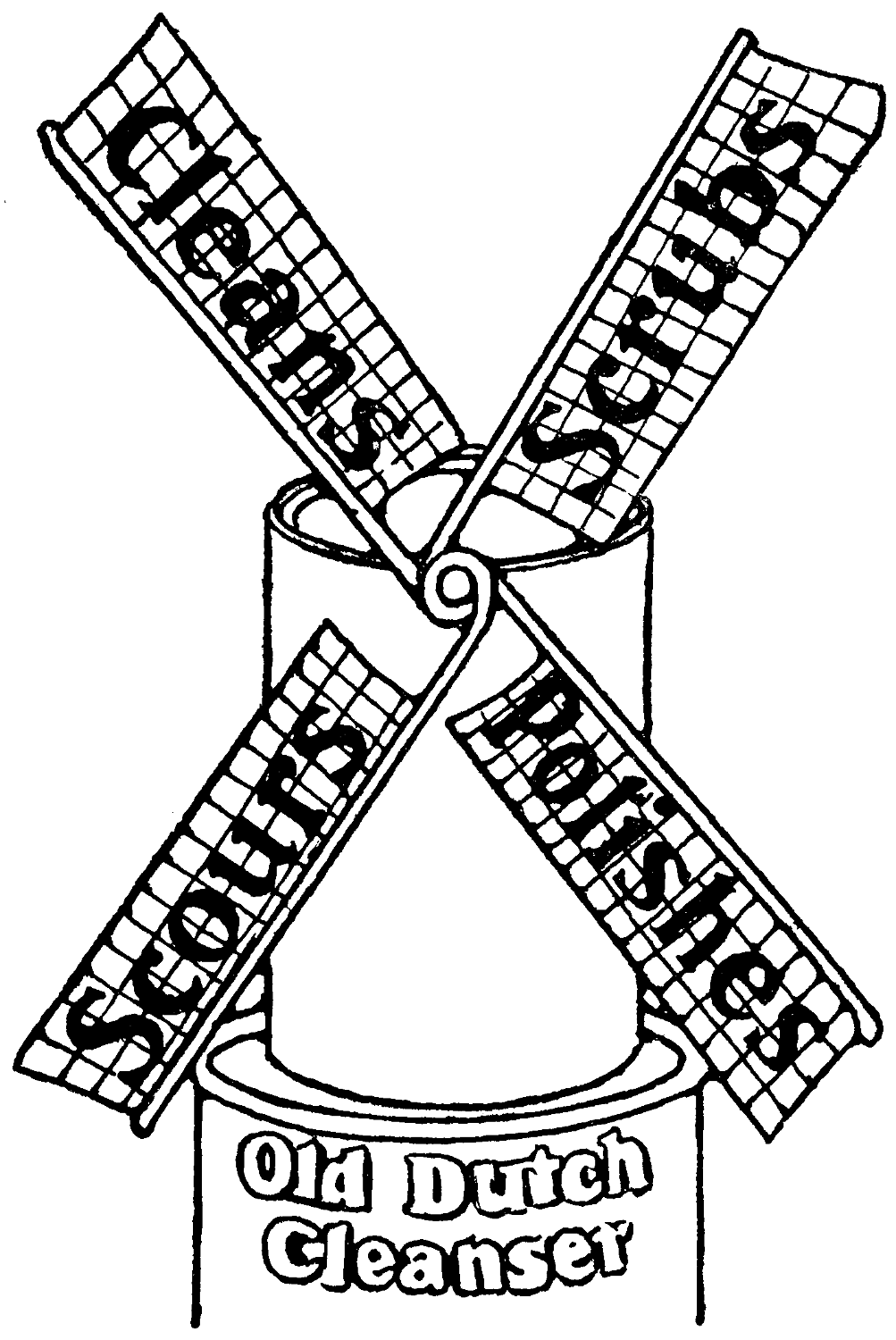
can be recast so that the same letters form the singularly appropriate sentence—
“O rub on, sir, success spells cash!”
Return to description
No. XCVI
The following diagram shows the solution of this new chess puzzle, and fulfils its conditions that no Queen should attack a Queen, no Rook a Rook, no Bishop a Bishop, and no Knight a Knight.
B B B B Q R B B
Kt R Kt Kt Q
Kt R Kt Q Kt Kt B
Q Kt Kt R Kt B
B Kt Kt Q R
B Q Kt Kt R Kt
Kt Kt R Kt Q Kt
R B Q Kt B B B Kt
Image
Mr Dudeney explains that only 8 Queens or 8 Rooks can be thus placed upon the board, while the greatest number of Bishops is fourteen, and of Knights thirty-two. But as all Knights must be placed on squares of the same colour, while the Queens occupy four of each colour, and the bishops seven of each colour, it follows that only twenty-one Knights can be placed, and the arrangement shown above contains the maximum number of these pieces under the conditions.
Return to description
No. CII
This diagram shows the order in which the syllables or words of the eight-line verse are to be read on the course of a Knight’s moves at chess—
14 sor 55 to 22 king 37 good 12 say 51 luck 18 loy 35 eth
23 and 38 moth 13 a 54 soon 17 dis 36 our 11 to 50 bad
56 place 15 ry 40 church 21 his 52 force 9 is 34 hat 19 al
39 er 24 queen 53 him 16 wight 33 he 20 to 49 may 10 truth
2 man 57 his 28 and 41 and 8 chess 61 es 32 knight 47 op’s
25 a 42 sneer 1 the 60 and 29 un 48 lawn 7 of 62 tates
58 cas 3 that 44 at 27 less 64 pawn 5 no 46 bish 31 lant
44 eth 26 faith 59 tles 4 hath 45 the 30 gal 63 in 6 love
Image
They run thus:—
The man that hath no love of chess, Is, truth to say, a sorry wight; Disloyal to his King and Queen, A faithless and ungallant Knight. He hateth our good mother Church, And sneereth at the bishop’s lawn; May bad luck force him soon to place His castles and estates in pawn!
Return to description
No. CV
If such a network as is shown in the diagram below is drawn on clear tracing-paper and placed on the page of a book, it will conceal the words beneath it.
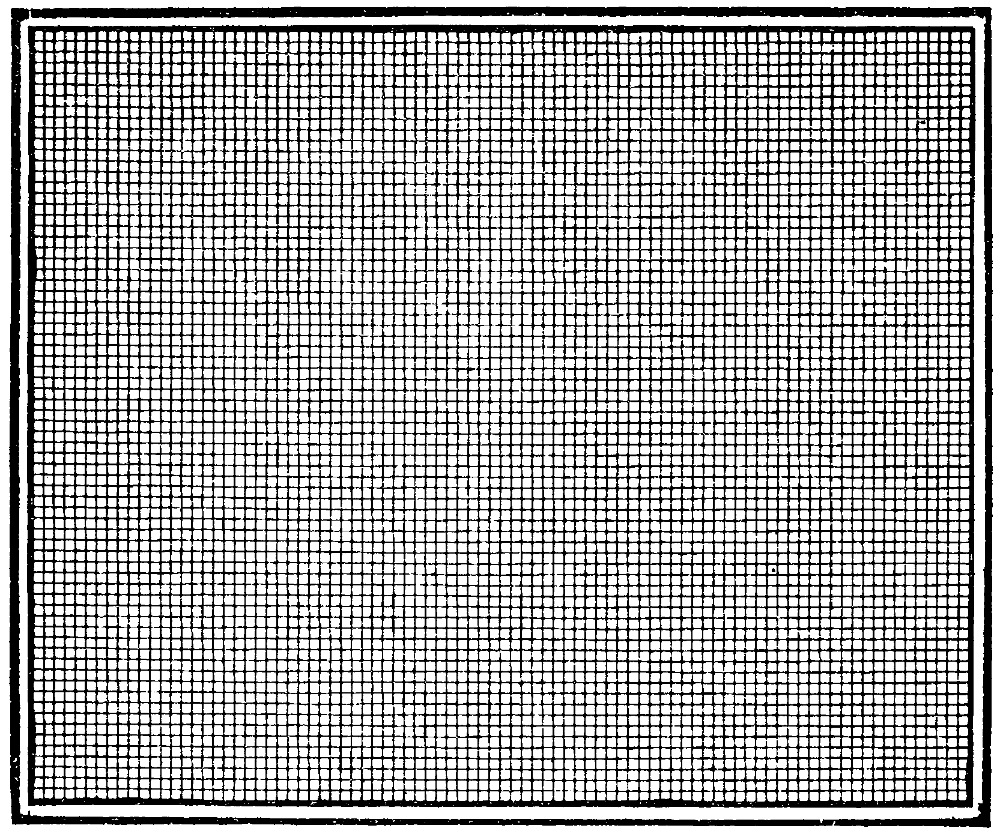
But if, while lying close to the page, it is moved quickly round and about, the letters and words will be distinctly seen, just as objects on the other side of close lattice-work become visible as we pass them quickly in a train.
Return to description
No. CVI
These are the results of cutting, in the direction of the dotted lines, completely round a simple paper ring, a ring with one twist, and a ring with a double twist.
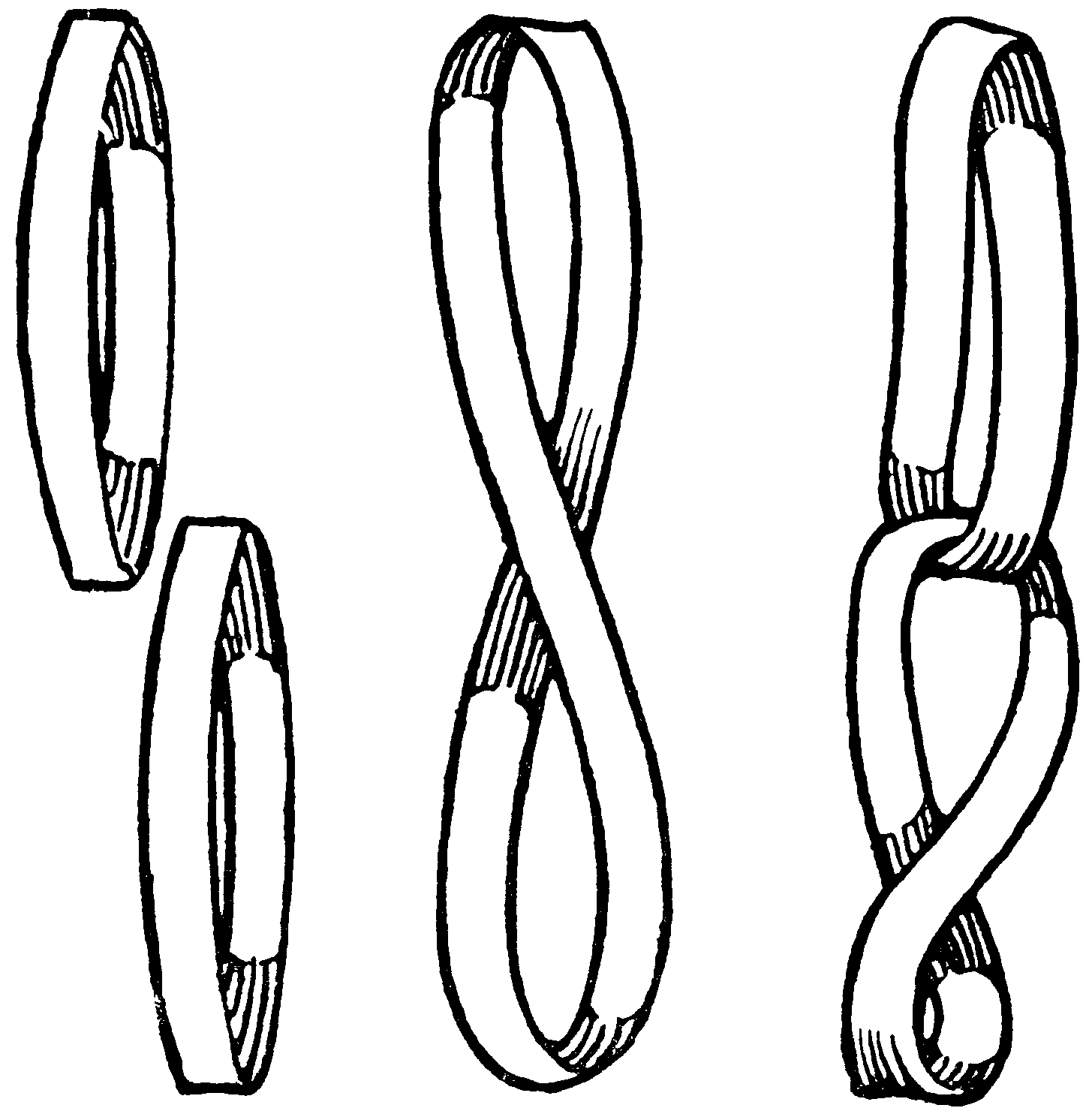
We have (1) two simple rings; (2) one large-twisted ring; (3) two rings linked together. If a third twist is given before cutting, a curious knot is formed.
Return to description
CVII
The string when it has been placed in the position shown in the diagram, and two buttons larger than the hole have been fixed upon its ends can be easily removed if the narrow slip of the leather is drawn through the hole.
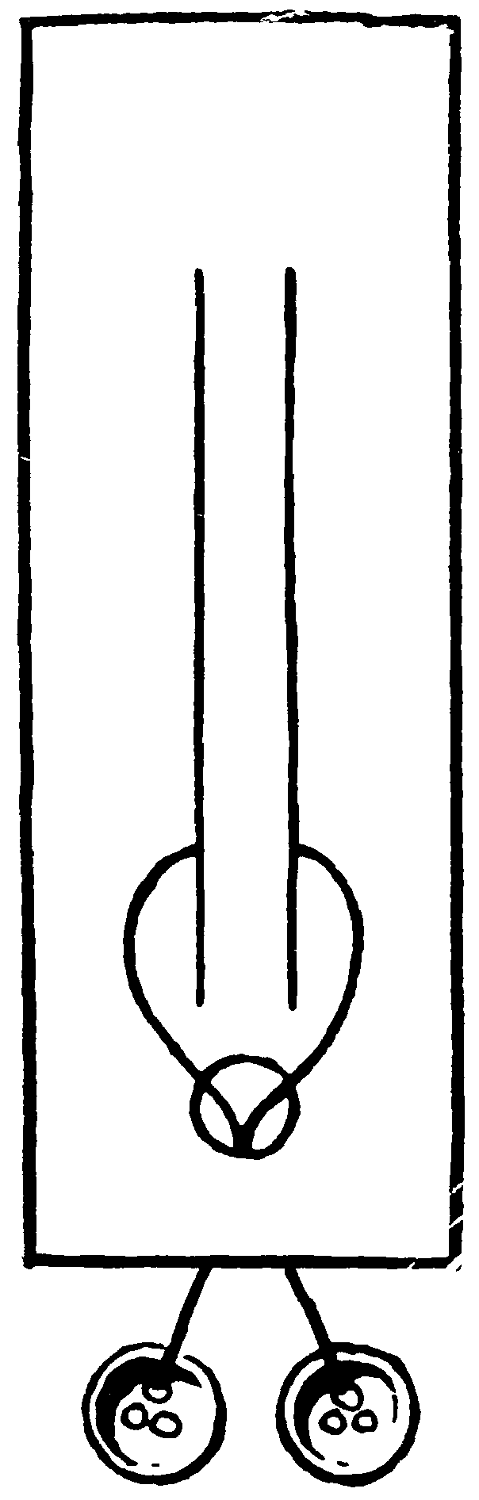
Return to description
CVIII
The scissors, when securely fastened, as is shown in the diagram,
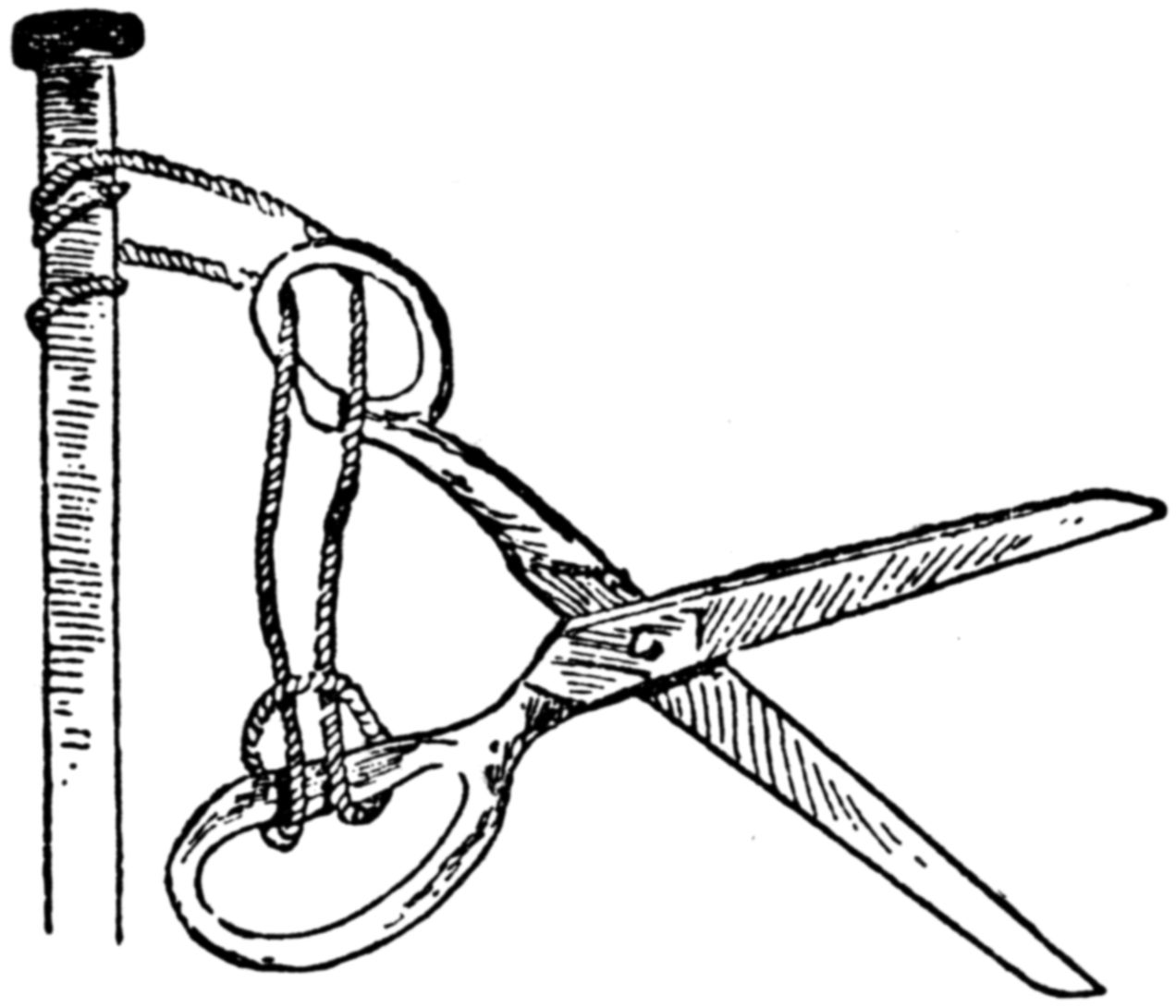
can be easily released by passing the loop upward through the handle, and then completely over them.
Return to description
CIX
The primitive wolf-trap consisted of two circular fences higher than a wolf could scale, with a gate as was shown on the former diagram. To set the trap a lamb was placed in the safe centre, and the gate was opened as is shown below—
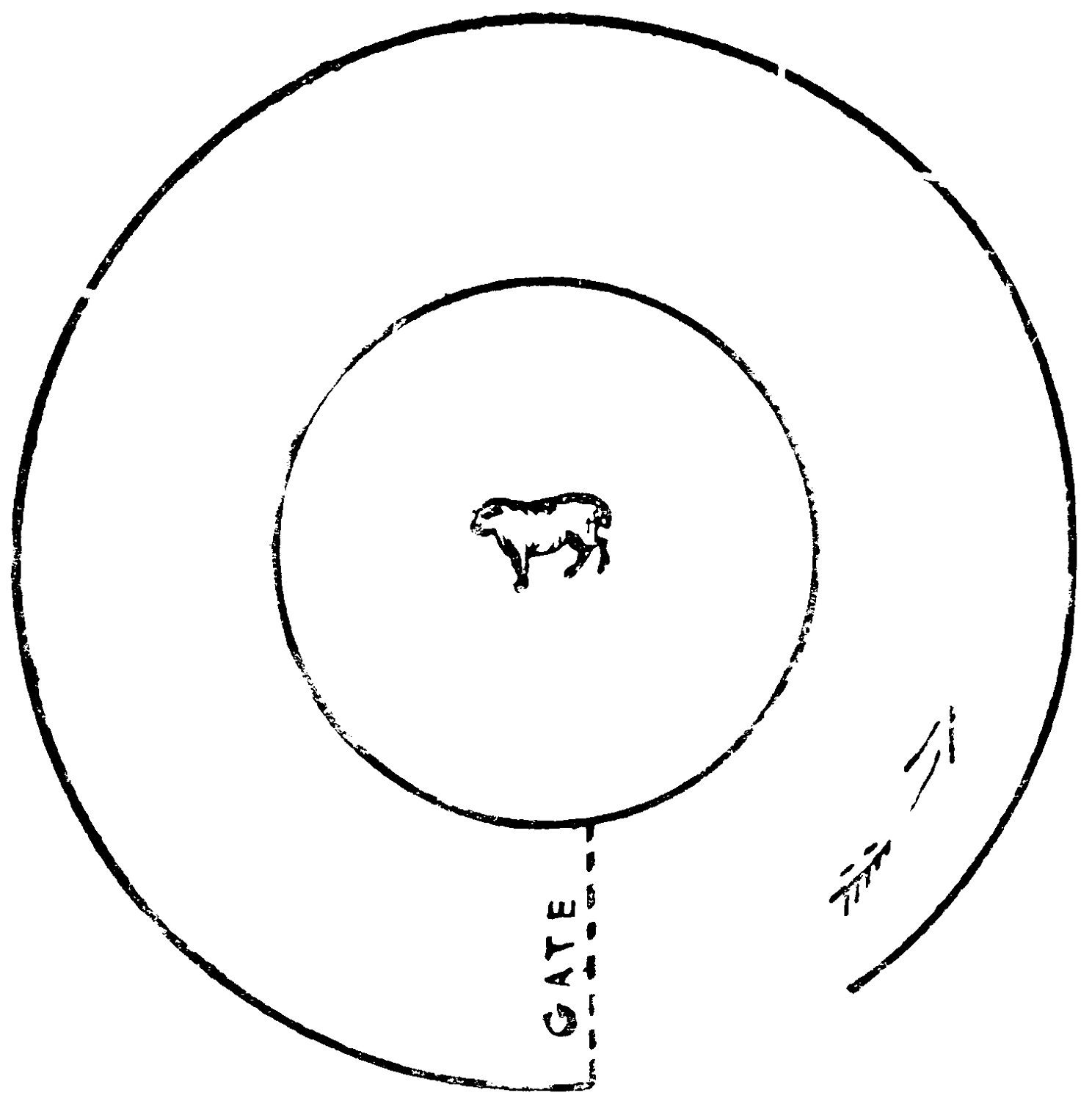
Attracted by the bleating of the lamb, the wolf entered the outer circle, made his way round, and presently pushed aside the gate, which closed with a spring, and shut off all escape.
Return to description
No. CXII
When you have told someone to think of a number between 5 and 15, and while you are not looking, to count upwards from the lowest card step, and round in the direction indicated by the arrow, until that number is reached, and then, starting afresh with “one” on that card to count backwards round the semi-circle, this time not including the central upright or the steps below it, until the number thought of is again reached, you can tell at once which is the final card arrived at, for it will be as many places upwards on the left as there are step cards and their upright.
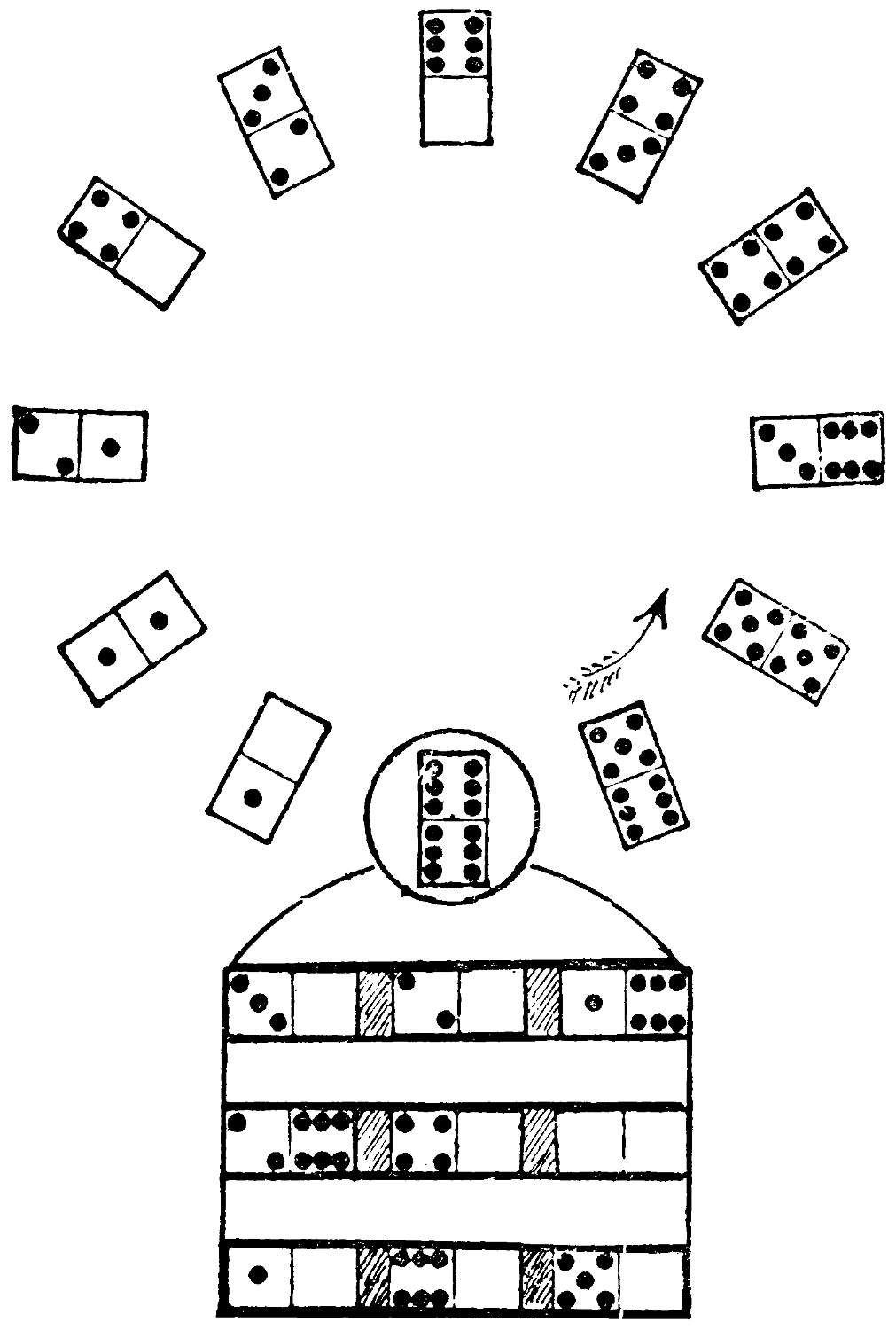
Thus if there are 3 steps, it must always be the fourth card upwards on the left of the semi-circle. To keep up the puzzle, the number of steps should each time be changed, on the pretext that their number does not signify.
Return to description
No. CXIII
This diagram shows how the apple may be divided into six pieces by two straight cuts, so that there shall be a gash in each piece.
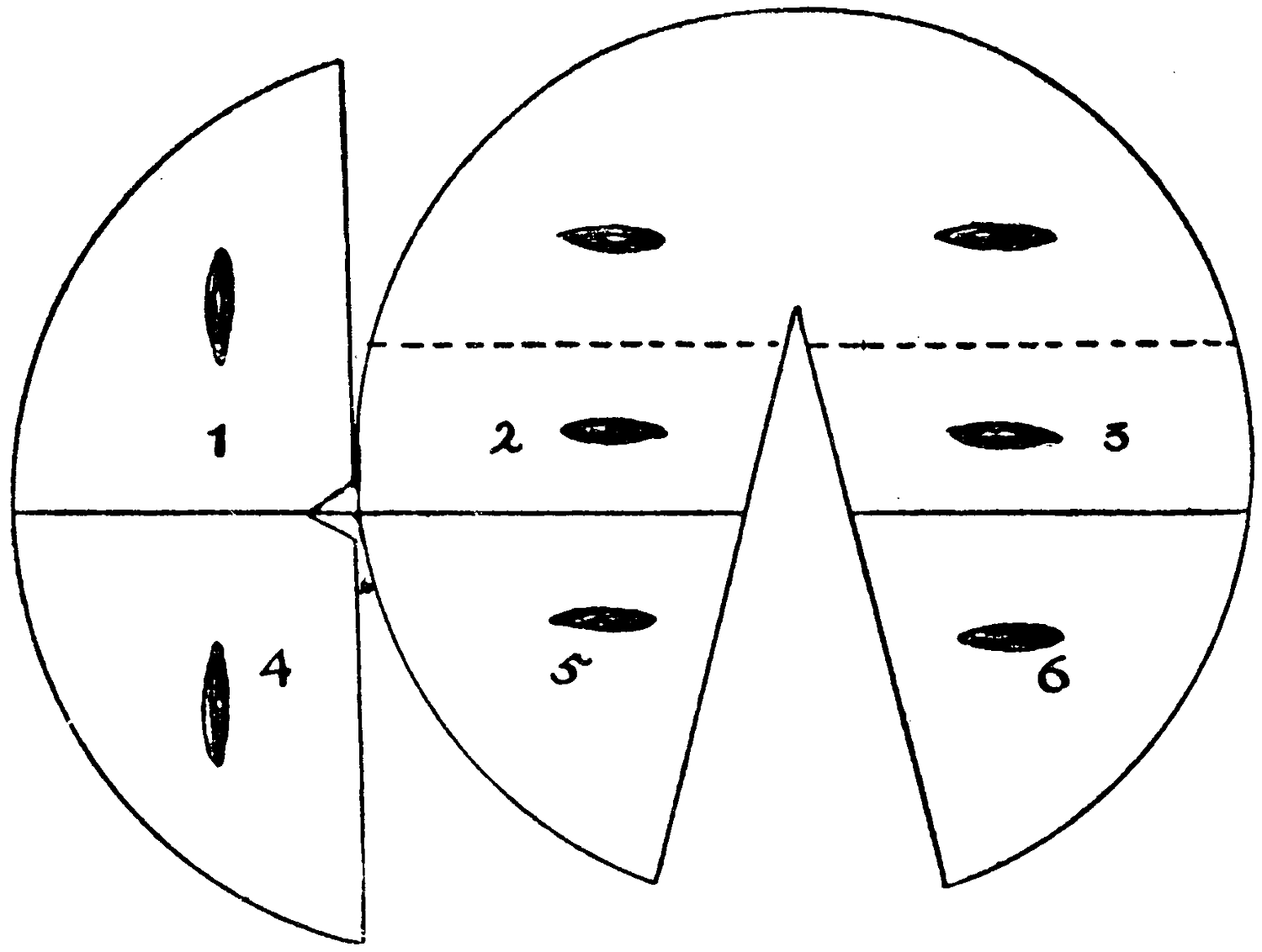
First cut the apple through the dotted line, then place the upper piece shown at the side of the larger piece, and make the second cut straight through, where the line is drawn.
Return to description
No. CXVII
The sixpence under the middle of the tumbler can be easily removed thus—
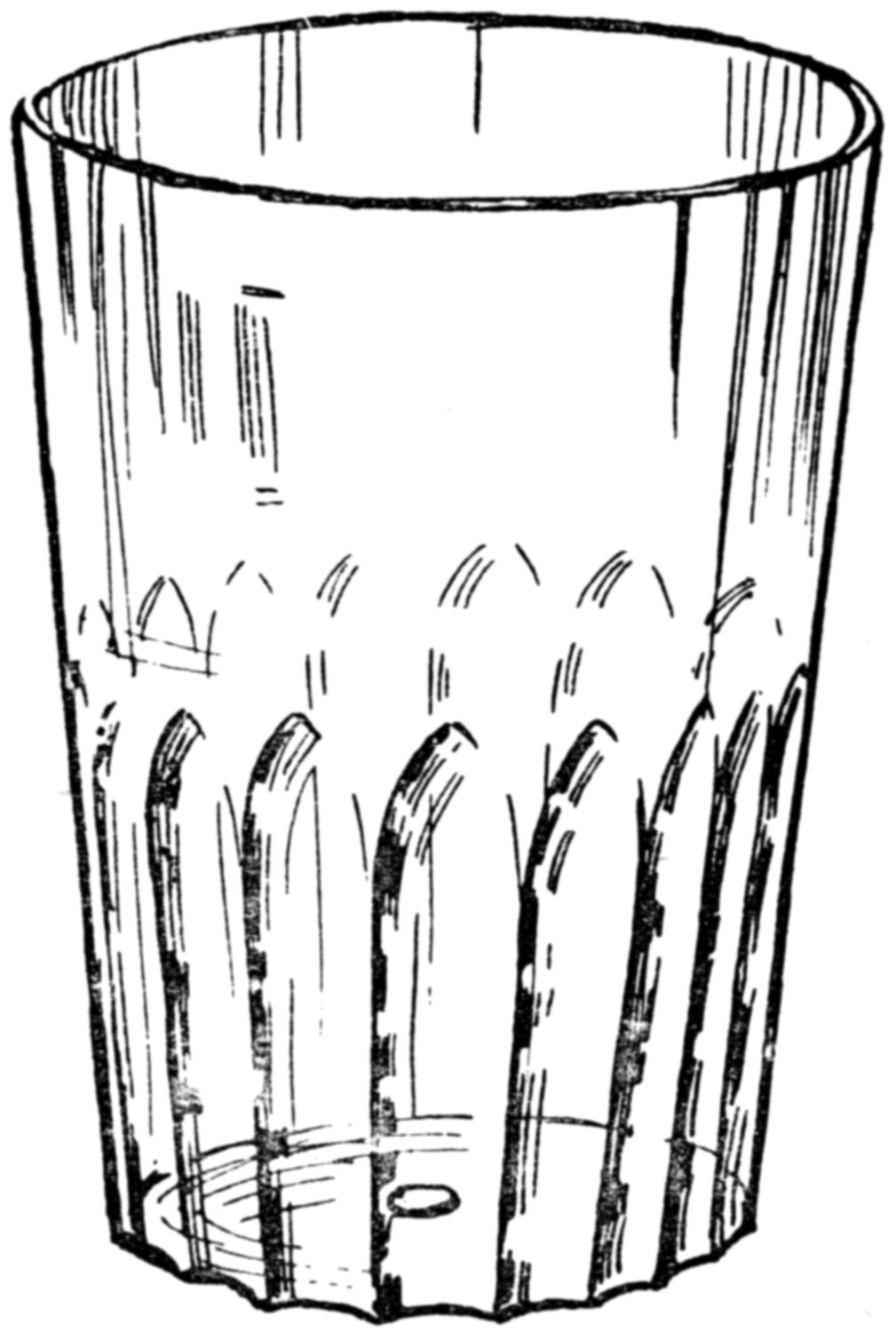
Slip larger coins under opposite edges of the tumbler to raise it slightly, and then scratch firmly on the cloth, from just outside the rim, in the direction you wish the sixpence to take. It will at once respond, and makes its own way gradually outside the circle that had surrounded it.
Return to description
No. CXVIII
This is the way to draw the spiral—
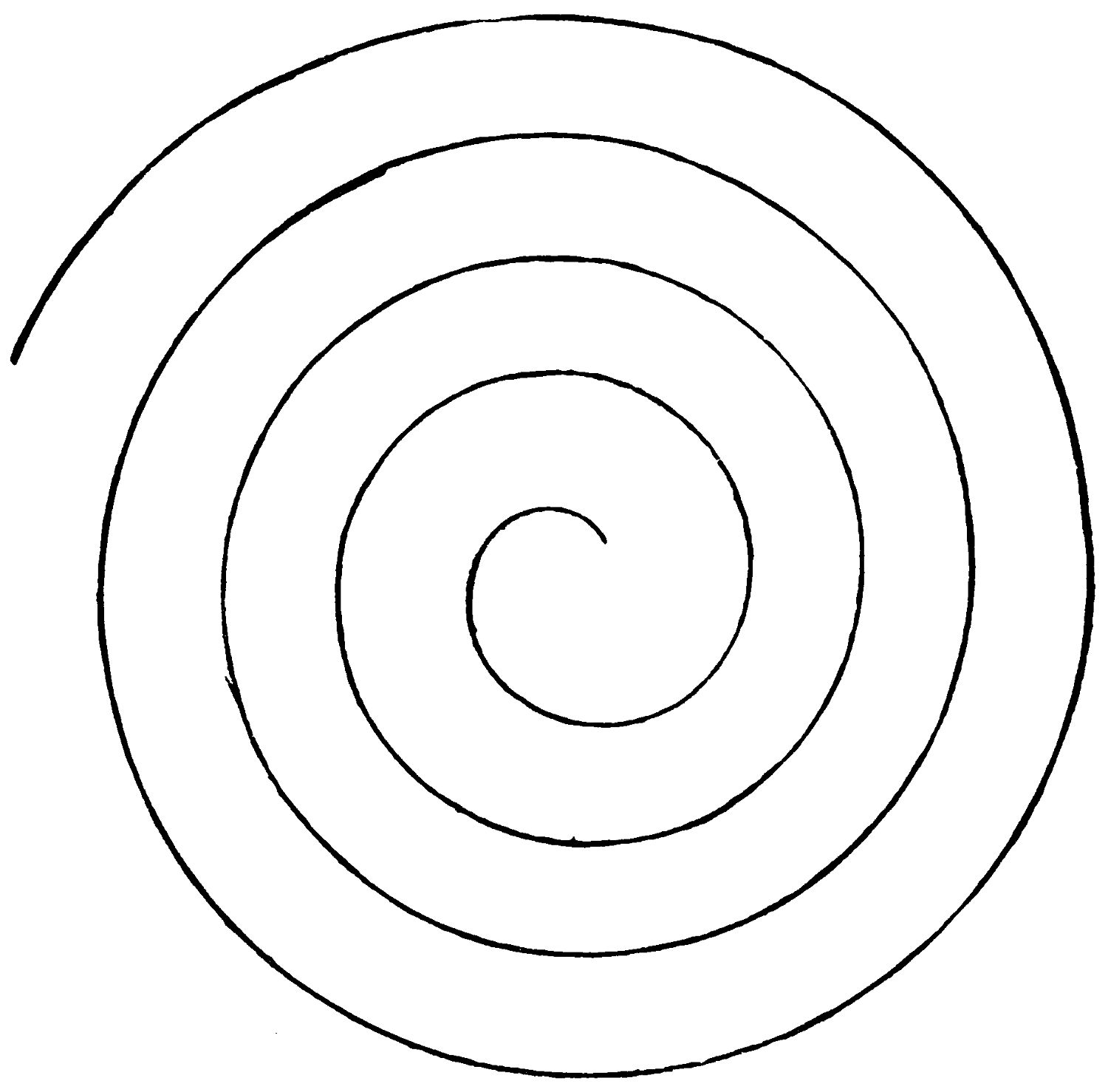
Tie a piece of strong thread with a loop at its end round the upper part of the windings of a screw. Drive the screw into a board, through the middle of a card, wind the thread down the screw so that its loop just reaches the card, place a pencil in this loop, and draw the spiral freely, unwinding the thread from the grooves of the screw, and keeping it always taut. A perfect spiral is the result.
Return to description
No. CXXII.
The secret of the talking head is simple indeed when you know it.
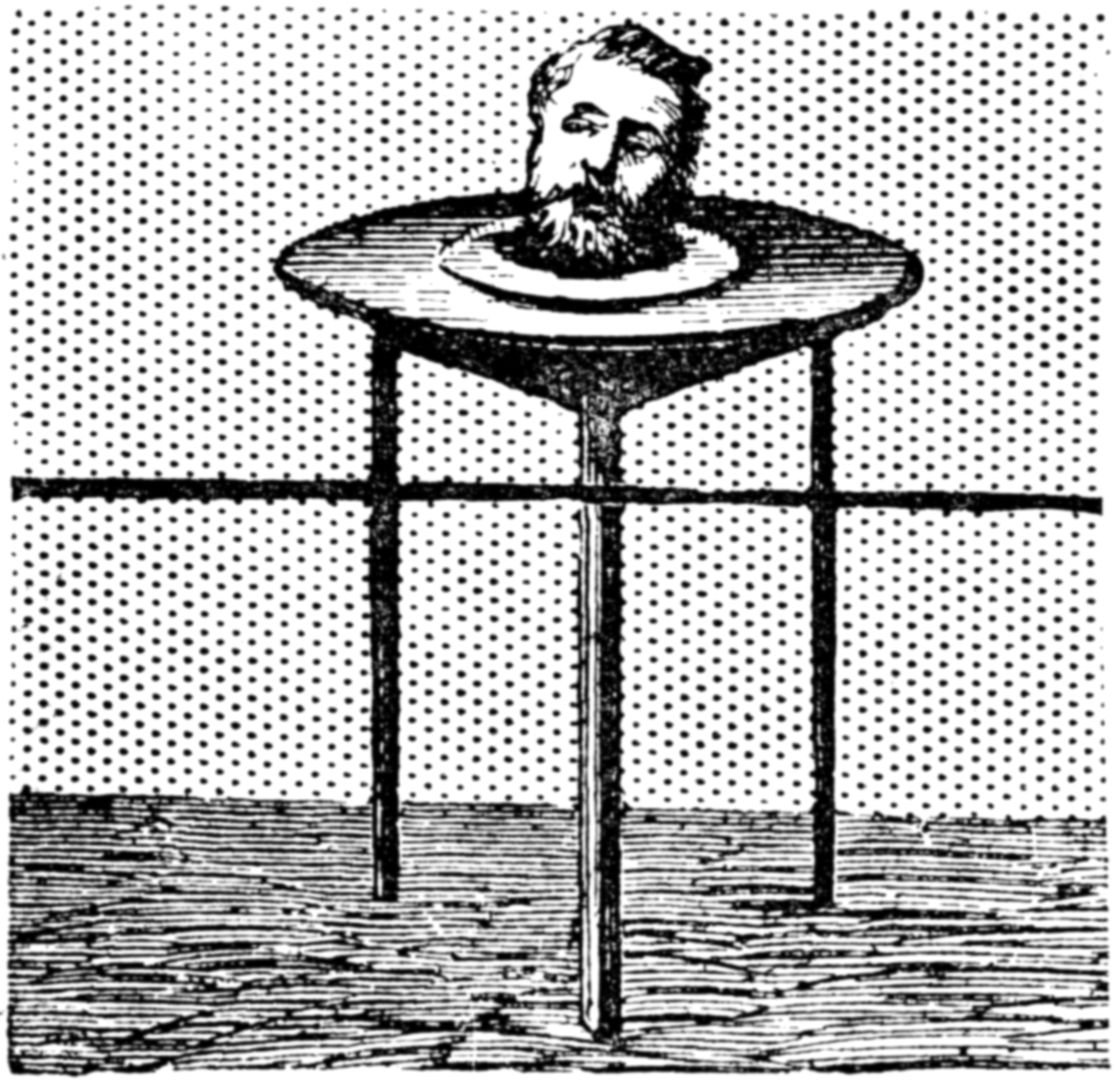
Between the front and two side legs of the table mirrors are fixed, which reflect the similar surroundings, so that the performer, kneeling behind these, and putting his head through a hole in the table top, completely conceals his body and limbs from the audience.
Return to description
No. CXXV
The picture charade is completed thus—
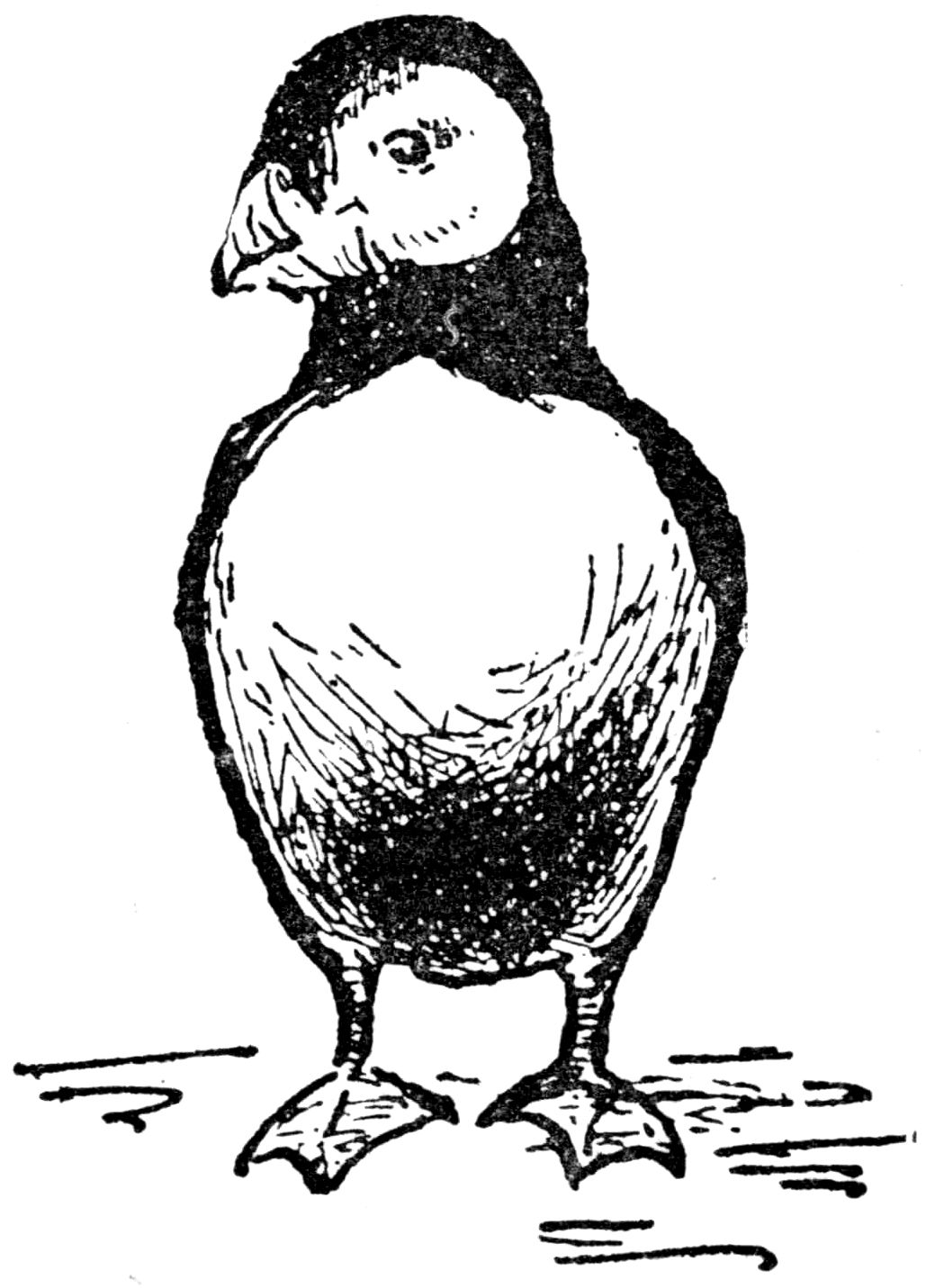
My first may blow the candle out, My second then comes in; My whole in water moves about Without an oar or fin—
and is solved by Puffin.
Return to description
No. CXXVI
When the walnuts and cobnuts have been arranged as is shown on the diagram—

they can be shifted so that they stand alternately, by moving two that are close together at a time, in four moves, as follows:—
(1) Move 2 and 3 beyond 8.
(2) Move 5 and 6 between 1 and 4.
(3) Move what are now 6th and 7th in the gap.
(4) Move what are now 1st and 2nd in the gap, and the alternate arrangement is complete.
Return to description
No. CXXVII
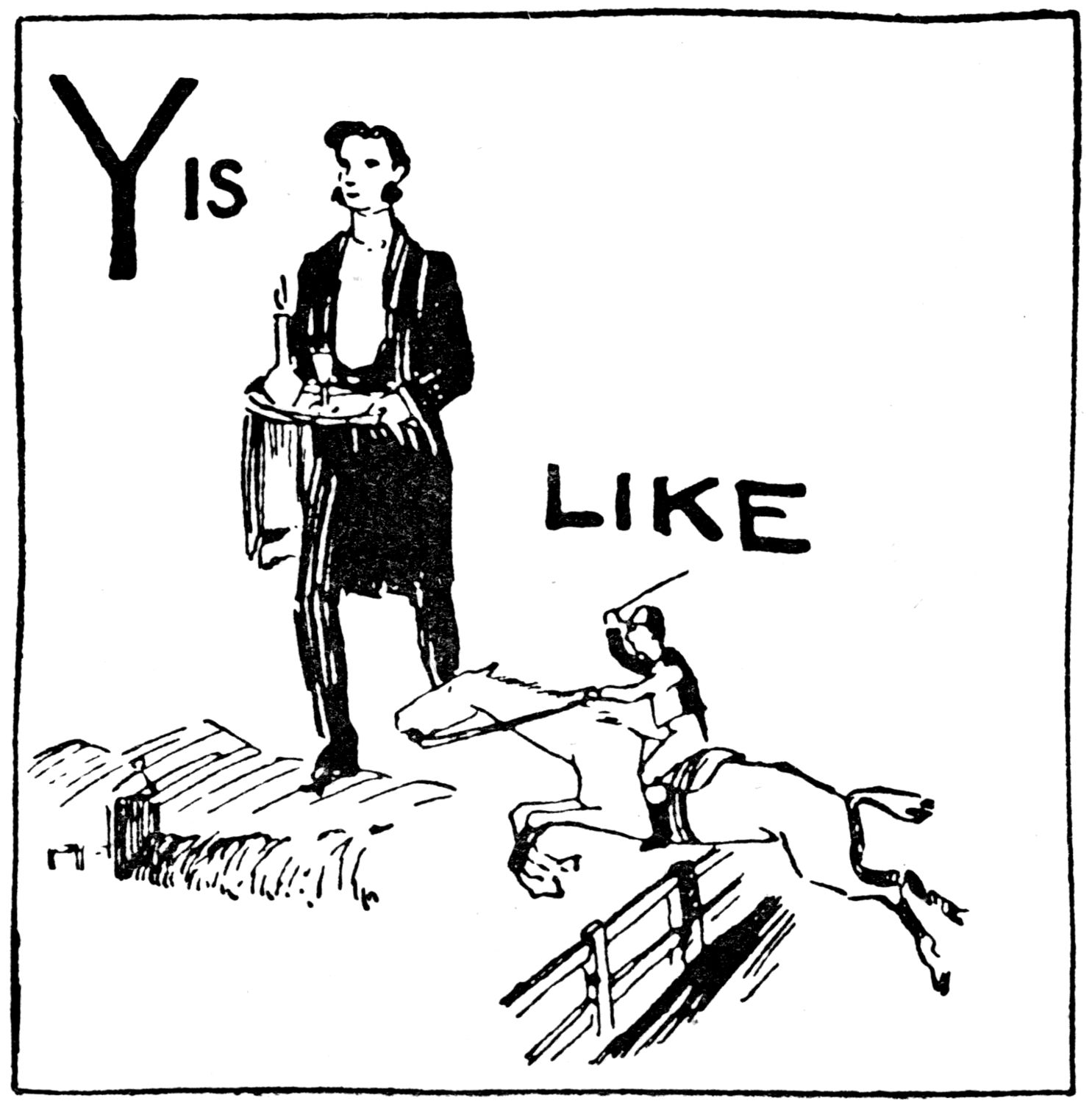
The question suggested by this picture riddle is: Why is a waiter like a racehorse? And the solution is: Because he runs for cups and plates.
Return to description