JAMES HARVEY ROBINSON
James Harvey Robinson translation
Professor of History in Columbia University
WITH THE COLLABORATION OF
HENRY WINCHESTER ROLFE
Sometime Professor of Latin in Swarthmore College
SECOND EDITION, REVISED AND ENLARGED
G. P. PUTNAM'S SONS
NEW YORK AND LONDON
The Knickerbocker press
1914
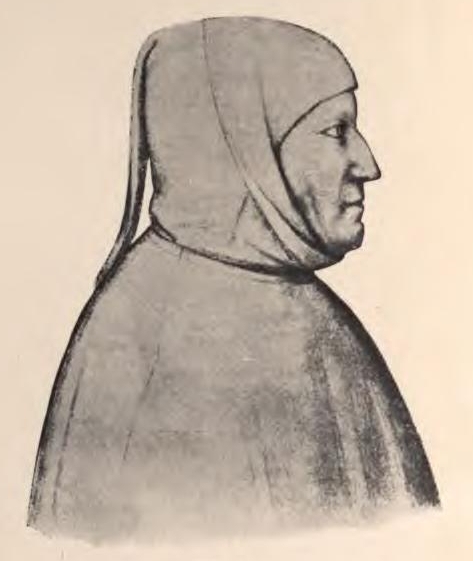
PETRARCH.
TO
G. R. R.
AND
B. C. R.
PREFACE TO THE SECOND EDITION
During the fifteen years which have elapsed since the appearance of the first edition of this volume a marked changed of attitude has taken place among scholars in regard to the "Renaissance" and the nature and importance of the revival of classical literature. This change is briefly explained in the opening pages of the introductory chapter (which have been entirely rewritten), and the reasons given for assigning to the "Renaissance" a less distinctive place in the history of culture than it formerly enjoyed. While this does not essentially affect the value of Petrarch's letters and the interest and importance of the personality which they reveal, it enables us to put him and his work in a more correct perspective.
There has, moreover, been added to Chapter VI (pp. 413 sqq.) a careful analysis of Petrarch's Secret. These confessions must be accorded a high place in the literature of self-revelation; they furnish the reader a more complete and vivid impression of Petrarch's intellectual life as well as of his strange and varied emotions than can be formed from reading the correspondence alone. He not only understood his complicated self but possessed in an unprecedented degree the power of conciliating the interest of others in his own troubles and perplexities. In short, this new edition will serve at once to rectify certain general misapprehensions and at the same time to give a more adequate account of the truly extraordinary person with which it deals.
J. H. R.
COLUMBIA UNIVERSITY,
November, 1913.
PREFATORY NOTE TO THE FIRST EDITION
The purpose of this volume is essentially historical. It is not a piece of literary criticism; it is only incidentally a biography. It has been prepared with the single but lively hope of making a little clearer the development of modern culture. It views Petrarch not as a poet, nor even, primarily, as a many-sided man of genius, but as the mirror of his age—a mirror in which are reflected all the momentous contrasts between waning Mediævalism and the dawning Renaissance.
Petrarch knew almost everyone worth knowing in those days; consequently few historical sources can rival his letters in value and interest; their character and significance are discussed at length in the introduction which follows.
We have ourselves come to love the eager, independent, clear-sighted, sensitive soul through whose eyes we have followed the initial spiritual struggle of modern times; we would that others might learn to love him too.
In the preparation of this volume the editors have naturally availed themselves of the excellent edition of Petrarch's Epistolæ de Rebus Familiaribus et Variæ, by Giuseppe Fracassetti, 3 vols., 8°, Florence, 1859-63. For the Epistolæ de Rebus Senilibus, and the remaining Latin works, they have necessarily relied upon the lamentably incorrect edition of the Opera printed at Basle in 1581, for in spite of its imperfections it is the most complete collection of Petrarch's writings that we possess. The references in the foot-notes are, therefore, to the pages of Fracassetti's edition or of that of 1581, as the case may be. Much aid has been derived from Körting's standard work, Petrarca's Leben und Werke; from Fracassetti's elaborate notes to his Italian version of the letters; from Voigt's masterly analysis of Petrarch's character and career, at the opening of Die Wiederbelebung des classischen Alterthums; and especially from M. Pierre de Nolhac's scholarly and fascinating study, Pétrarque et l'Humanisme.
Part third of the present volume, upon Petrarch's classical studies, is the work of Mr. Rolfe, and the whole book has had the benefit of his acute and painstaking revision.
J. H. R.
BIRCHWOOD, JAFFREY, N. H.,
September, 1898.
CONTENTS
PREFACE TO THE SECOND EDITIONv
PREFATORY NOTE TO THE FIRST EDITIONvii
LIST AND DESCRIPTION OF ILLUSTRATIONS.xi
INTRODUCTORY1
I. BIOGRAPHICAL57
II. PETRARCH AND HIS LITERARY CONTEMPORARIES159
III. THE FATHER OF HUMANISM225
IV. TRAVELS295
V. POLITICAL OPINIONS; RIENZO AND CHARLES IV327
VI. THE CONFLICT OF MONASTIC AND SECULAR IDEALS 379
VII. PETRARCH'S CONFESSIONS411
VIII. FINALE455
INDEX469
ILLUSTRATIONS
I.—A SKETCH OF VAUCLUSE BY PETRARCH'S HAND Cover
II.—PORTRAIT OF PETRARCH Frontispiece
III.—A PAGE FROM PETRARCH'S COPY OF THE ILIAD
Through the kindness of M. de Nolhac, and with the generous permission of the École des hautes Études at Paris, the editors have been enabled to reproduce three plates of unusual historical interest.
I.—THE SKETCH OF VAUCLUSE with the inscription, Transalpina solitudo mea jocundissima—my delightsome Transalpine retreat—which appears on the front cover of this volume, was discovered by M. de Nolhac in Petrarch's own copy of Pliny's Natural History. A reference in the book to the Fountain of the Sorgue suggested to its owner the idea of recalling by a few strokes of the quill his memories of a spot where he had spent so many years. This sketch, his only essay at pictorial reproduction which has come down to us, is an interesting illustration of the versatility of self-expression which distinguished him from his predecessors and contemporaries.
II.—THE PORTRAIT, which forms the frontispiece, is taken from a manuscript in the National Library at Paris, and its history has been carefully traced by M. de Nolhac (op. cit., pp. 376 sqq.). It adorns the first page of a copy of Petrarch's own work, The Lives of Illustrious Men, which was transcribed with unusual care for his last princely patron, the ruler of Padua, by one of the poet's most intimate and trusted friends, Lombardo della Seta. A note at the end of the work states that Lombardo completed his task January 25, 1379. We may, therefore, assume that this portrait was executed not later than four and a half years after Petrarch's death, in the city where he spent much of his time during the closing period of his life, and by an artist selected by the poet's devoted friends. It is maintained by some modern historians of art that there was, in those days, no real feeling for portraiture; without, however, venturing into the domain of art criticism, we may, at least, claim for this sketch almost unimpeachable historical authenticity.
III.—THE FACSIMILE of a page from one of Petrarch's own volumes will give some idea, to those unfamiliar with manuscripts, of the appearance of a book in the fourteenth century; it shows us, too, the untiring energy of the first modern scholar in emending and elucidating the scattered and neglected fragments of ancient literature, for which he made such diligent search.
INTRODUCTORY
"La formule qui définit le mieux Pétrarque est celle qui le désigne comme "le premier homme moderne." Par la direction de sa pensée, il échappe presque entièrement à l'influence de son siècle et de son milieu, ce qui est sans doute la marque la moins contestable du génie."—PIERRE DE NOLHAC.
History is the memory of mankind; it far outruns the narrow range of our own personal recollections and enables us to participate consciously in a process of change so impressive in its vast length and complexity as to reduce the experiences of our own generation to a mere incident. It makes it possible for us to see not only how to-day is growing out of yesterday, and this year out of last, but how the nineteenth century prepared the way for the twentieth, the eighteen for the nineteenth, and so on, back and back to the very beginnings of man's lineage. No one of us has precisely the same experiences two days in succession, and yet amid the most considerable vicissitudes of life we always carry over from day to day and year to year a great part of our habits and convictions,—which constitute what others call our character. The life of a people, although much more stable than that of most of its members, is always slowly and irrevocably altering; it is in the main a perpetuation of the old but always possesses some element of the new, since the individuals who compose a nation, as well as the conditions under which they live, are always changing.
The historian should reckon with both the old and the new in tracing man's past; he must show not only how things have changed but how they have remained the same. The mass of hoary tradition and ancient custom which enters so generously into every stage of civilisation, no matter how progressive, often, however, escapes his observation. Successful historians are men of letters who have something of the poet, the dramatist or the story-teller in them, and in order to construct a narrative which has any chance of appealing to their readers they are forced, following the example of the playwright, to divide the past into periods, like the scenes in a play, and assign to each a dominant motive. In doing this they are tempted greatly to exaggerate the exceptional and novel. Moreover, since the historian can include in his story but a very small part of the multitudinous experiences of mankind during the period with which he is dealing, he inevitably selects what will fit into a coherent narrative and neglects all the rest; he must introduce order where there is essential confusion, lucidity where there is obscurity, and discover simplicity where their is inextricable complexity.
As a result of this highly artificial nature of the historian's work—of which he himself is usually unconscious—historical legends arise, which by reason of their dramatic character and their plausible simplicity are eagerly and widely accepted, and only reluctantly abandoned when some of the vast number of facts which have been neglected in their formation are given an opportunity to assert themselves. The pretty myth of the common origin and gradual dispersion of all those peoples whose language belongs to the Indo-European group has been dissipated by recollecting that a common language does not necessarily imply a common racial origin. The legend that Luther first translated the Bible into German vanishes before a list of the numerous editions of German Bibles printed during the fifty years previous to his undertaking. The publication of Napoleon's letters add too many facts to permit one longer to accept what Thiers and John S. C. Abbott say of him. A similar fate awaits the Renaissance; that, too, has assumed the form of a myth, which is threatened by a consideration of certain obvious facts which its authors innocently, but none the less fatally, overlooked.
As this word is used in histories of literature, art, and philosophy, it implies a freeing of man's mind from the shackles of the Middle Ages; he discovers himself and the world in all its beauty and interest; he shakes off religious dependence and becomes self-reliant; he casts aside the cowl and goes forth joyfully into the sunlight. This awakening has been attributed to a revived interest in the neglected works of the classical authors. They were potent, it has been assumed, to bring new life into a paralysed world, so soon as they become the object of passionate study and emulation. It was they, it has been claimed, that dispelled the gloomy superstition of the Dark Ages and aroused a buoyant spirit of Hellenism which enabled men to soar above the fruitless subtleties of Scholastic Theology.
This conception of the Renaissance is much more recent in origin than is usually supposed; it is scarcely more than fifty years old, and finds its first clear presentation in the well-known Civilisation of the Renaissance, which the Basel professor, Jacob Burckhardt, published in 1860. Fifteen years later John Addington Symonds began to issue his stately series of volumes on The Renaissance in Italy. The charm of his style served to popularise the conception of a distinctive period during which Europe awoke from its winter sleep and developed those traits of character which we deem essentially modern. For a generation or more the Renaissance has been the theme of innumerable popular books and lectures and has constituted a recognised "epoch" in manuals of historical instruction.
That it is a convenient term no one will deny! The civilisation of the Italian city states in the fourteenth, fifteenth, and early sixteenth centuries, from Dante to Machiavelli, from Giotto to Raphael, presents so much of rich delight that we ought to have a suitable name for it all. In this sense the expression, Renaissance, will probably continue to be used; but it is safe to predict that as we gain fuller insight into the conditions which preceded and followed this period it will be ranked much lower than hitherto as a time of decisive progress in human knowledge and ideals. Neither Burckhardt nor Symonds were cognisant of the extraordinary achievements of what they called vaguely the Middle Ages. And both of them were so classical-minded as to have but an inadequate appreciation of how slight were the intellectual changes of the Renaissance compared with those that developed in the seventeenth and eighteenth centuries, the results of which make the world in which we live what it is.
It is clear enough to historical students of to-day that the twelfth and thirteenth centuries offer the spectacle of a far more unmistakable awakening than does the so-called Renaissance. These centuries witnessed the development of the towns, the revival of the Roman Law, the founding of the universities, in which the encyclopædic works of the most learned, penetrating, and exacting of all ancient thinkers—Aristotle—were made the basis of a liberal education; and they beheld the literary birth of those vernacular languages which were one day to displace the speech of the Romans. These centuries devised, moreover, a new, varied, and lovely style of architecture, sculpture, and ornament, which still fills us with wonder and delight; they carried the knowledge of natural things and the practical arts beyond the point reached by Greeks or Romans; they sketched out the great career of experimental and applied science, which was hidden from the ancients and which is one of the main revolutionising forces of our day.
When we consider these and other achievements which preceded the Renaissance we are forced to ask what did it contribute that was equally important and distinctive? This question is a difficult one. Neither Burckhardt nor Symonds were in a position even to ask it, and only recently are students in this field setting themselves to re-examine more carefully and fully the facts, and place the achievements of the period in proper relation to what went before and what came after.[1]
One thing at least is clear. The knowledge of the Greek language had died out in western Europe with the disruption of the Roman Empire, and except in so far as Greek thought and taste had become embodied in Latin, it was lost for several hundreds of years. In the thirteenth century Aristotle's works were put into Latin, and so deeply did they impress their readers that they were assigned a supreme place, alongside the Bible and the Church and Roman Law. Two centuries later a great part of the Greek classics, Homer, Æschylus, Sophocles, Euripides, Herodotus, and above all Plato, were brought from Constantinople, translated into Latin and made available for such scholars as cared to read them. This was the great literary work of the fifteenth century. Meanwhile every vestige of Latin literature was being hunted out, copied, and edited. There was not a great deal to be found that had not been known and read more or less all along, but the sense of its preciousness increased and a conviction developed that it was far better than anything that had been produced since the German Barbarians broke up the Roman Empire. The scholars who carried on this work had much to say of humanitas, by which they meant the culture to which man alone, of all creatures, is able to aspire. Cicero uses the word in this sense, and they found it defined for them by Aulus Gellius, a compiler who lived under Marcus Aurelius. Culture to them was in the main what it has been to the classical-minded ever since—namely, familiar intercourse with the best authors of Greece and Rome.
The Humanists did not, however, at once cast off the mediæval modes of thought. They ranged on their library shelves side by side with the pagan classics, the works of the Greek and Latin Christian fathers; they fell under the spell of Neoplatonism and deemed Plotinus and Porphyry legitimate interpreters of Plato. They were not even proof against the crude superstitions and futilities of the Jewish Cabbala.
The rôle of classical literature in the development of thought and taste is momentous, but it has served to hamper as well as to forward the progress of knowledge and the increase of insight. The classics have to-day worn out their welcome in many quarters. The more bigoted among the classicists of our own time have little of the truly Hellenic about them. Greece in its finest period owed its greatness partly to its frank use of its own vernacular language, partly to its exceptional freedom from tradition and routine. The classicist, on the contrary, would have us base our education upon dead languages and adhere piously to tradition, and routine. The Greek writers of the fifth century before Christ were free and progressive; their modern retainers are too often ultra-conservative and indifferent to the glowing opportunities of their own time.
But their position in any case is very different from that of the Humanists of the fifteenth century. To-day we can acquaint ourselves with the best that has been said and thought without going back to the masterpieces of antiquity. Each European people has developed its own national literature and given birth to geniuses able to assimilate, elaborate, and augment the older heritage in modern speech and modern literary forms. So the importance of the revival of classical scholarship five hundred years ago is not to be judged by the position that Greek and Roman books occupy in our intellectual life to-day. However conscious one may be of the limitations of classical thought and the obstacles which its unconditional admirers have opposed to natural and salutary intellectual readjustments, no one will have any inclination to underrate its vast significance in the development of modern culture.
Francesco Petrarch is generally accorded the distinction of being the first great leader in the revival of classical literature. He did not live to see the incoming of the Greek books, but he made a vain effort to learn the language and fully realised its importance. He was, moreover, untiring in promoting the study of Roman literature and writes to his dearest friend Boccaccio: "I certainly will not reject the praise which you bestow upon me for having stimulated in many instances, not only in Italy but perchance beyond its confines, the pursuit of studies such as ours, which have suffered neglect for so many centuries. I am indeed one of the oldest among us who are engaged in the cultivation of these subjects."[2]
But Petrarch's claim upon our attention as the father of Humanism is only one—and that perhaps a minor one—among many. In his own humanity lies perhaps his chief charm: A poor mortal like ourselves, he tells us so persuasively and fully of his own feelings, his self contradictions and spiritual, conflicts, that, as we read his letters and "Confessions," we greet him across the gulf of centuries and recognise in him a man of like passions with ourselves. We can become more intimately acquainted with him than with any one in the whole history of mankind before his time, not excepting Cicero and Augustine. Those who know Petrarch, know him ordinarily only through his Italian verses, now somewhat out of style. But Petrarch the reformer, the first modern scholar, the implacable enemy of ignorance and superstition; Petrarch the counsellor of princes, the leader of men, and the idol of his time, is to be sought in his letters, of which some of the more striking are made available in this volume.
His incomparable sonnets seemed to their author in his later years little more than a youthful diversion. They earned for him among the illiterate multitude a reputation which he claimed to despise; they could never constitute the foundation for the scholar's fame to which he aspired. Had he foreseen that posterity would brush aside the great works in Latin which, cost him years of toil, and keep only his "popular trifles in the mother tongue" (nugellas meas vulgares), his chronic melancholy might have deepened into dark despair. Near the close of his life, in preparing a copy of his Italian verses for a friend, he says: "I must confess that I look with aversion upon the silly boyish things I at one time produced in the vernacular (vulgari juveniles ineptias). Of these I could wish everyone ignorant, myself included. Although their style may testify to a certain ability considering the period at which I composed them; their subject matter ill comports with the gravity of age. But what am I to do? They are in the hands of the public and are read more willingly than the serious works which with more highly developed faculties I have written since."[3]
A German scholar (Voigt) has gone so far as to declare that Petrarch would be no less bright a star in the history of the human mind, had he never written a verse of Italian. This very obvious exaggeration is perhaps both natural and salutary. The Latin works, especially the letters, are so fascinating and exhibit such new and important phases of his character and ideals, that those who have enthusiastically busied themselves with them have gradually come to accept the poet's repeated assertion that his Italian works were mere youthful trifles, of little interest as compared with his great Latin epic or his various treatises.[4] Yet the world has decided otherwise, and decided rightly. It has allowed over three hundred years to pass without demanding a new edition of those Latin works, by which the author sought to gain everlasting renown, while, on the other hand, hundreds of editions of the despised Canzoniere have been published, not only in the original but in many translations. For the poet finds his fullest expression in his greatest literary work, the Italian lyrics. No one really familiar with the letters will fail to recognise in them the author of the sonnets. We find there the same strength and weakness, the same genuine feeling, often disguised by mannerisms and traditional conceits, the same aspirations and conflicts, the same subjectivity and self-analysis. We have to do with a single great spirit revealing itself with a diversity and mobility of literary form known only to genius. Opening the Canzoniere, we find in the following lines sentiments which might have been despatched in an elegant epistle to his friend Nelli, or to "Lælius," or recorded in his Confessions.
Ma ben veggi' or sì come al popol tutto Favola fui gran tempo: onde sovente Di me medesmo meco mi vergogno: E del mio vaneggiar vergogna è 'l frutto, E 'l pentirsi, e 'l conoscer chiaramente Che quanto piace al mondo è breve sogno.[5]
But even if it be admitted that the lyrics form Petrarch's greatest claim to renown, and that the letters often only reflect, as might be anticipated, sentiments familiar to the thoughtful reader of the Italian verses, yet the poems alone can never tell the whole story of their author's importance and influence. Literary ideals which have no place in the sonnets are to be found in the letters; in them we may study the reviver of a forgotten culture, and the prophet of an era of intellectual advance the direct results of which we still enjoy.
The Middle Ages furnish us no earlier example of the psychological analysis which we discover in both the verse and prose of Petrarch. His writings are the first to reveal completely a human soul, with its struggles, its sufferings, and its contradictions. "Petrarch was a master in one respect at least, he understood how to picture himself; through him the inner world first receives recognition; he first notes, observes, analyses, and sets forth its phenomena."[6] The all-pervading self-consciousness that meets us in the letters is sure to produce a painful impression as we first open them. It may, for a time, indeed, seem little better than common priggishness. But behind a thin veil of vanity and morbid sensitiveness we straightway discover a great soul grappling with the mystery of life. Baffled by the contradictions that it feels within itself, it gropes tremblingly towards a new ideal of earthly existence.
Petrarch was not content to live unquestioningly, adjusting his conduct to the conventional standard. He was constantly preoccupied with his own aims and motives. Nor was the problem that he confronted a simple one, for the old and the new were contending for supremacy within his breast. The mediæval conception of our mortal life was that of a brief period of probation, during which each played his obscure rôle in the particular group, guild, or corporation to which Providence had assigned him, bearing his burdens patiently in the beatific vision of a speedy reward in another and better world. Petrarch formally assented to this view but never accepted it. The preciousness of life's opportunity was ever before him. Life was certainly a preparation for heaven, but, he asked himself, was it not something more? Might there not be worthy secular aims? Might not one raise himself above those about him and earn the approval of generations to come, as the great writers of antiquity had done? His longing to obtain an earthly reputation, and the temptation consciously to direct his energies toward achieving posthumous fame, seemed to him now a noble instinct, and again where tradition weighed heavily upon him, a godless infatuation. In order to put the matter before himself in all its aspects he prepared an imaginary dialogue, after the model offered by Boëthius and Cicero, between himself and Saint Augustine. This little book he called his Secret, as he did not desire to have it enumerated among the works he had written for fame's sake: and here he recorded his spiritual conflicts for his own personal good.[7] Of the contents of this extraordinary confession something will be said later. Its very existence is an historic fact of the utmost significance.[8]
Petrarch aspired to be both a poet and a scholar, and it is not easy to determine definitely whether in his later years he looked upon his great Latin epic or upon his historical works as his best title to fame. He often refers to the high mission of the poet, and in the address that he delivered at Rome, when he received the laurel crown, he took for his subject the nature of poetry. For him poetry embraced only Latin verse in its classical form. The popular, rhyming cadences of the Middle Ages, in which the rhythmic accent followed not quantity but the prose accent,[9] doubtless seemed to him no more deserving of the name of poetry than Dante's Commedia or his own Italian sonnets. We shall have occasion later to describe his peculiar conception of allegory.[10]
As a scholar Petrarch had no definite bent. "Among the many subjects which have interested me," he says, "I have dwelt especially upon antiquity, for our own age has always repelled me, so that, had it not been for the love of those dear to me, I should have preferred to have been born in any other period than our own. In order to forget my own time I have constantly striven to place myself in spirit in other ages, and consequently I have delighted in history."[11] We shall not then be going far astray if we style Petrarch a classical philologist, using the term in a broad sense, and always remembering that an enlightened and enthusiastic classical philologist was just what the world much needed in the fourteenth century.
Although the letters are by far the most interesting of Petrarch's Latin productions, the reader may be curious to know something of the character and extent of the other long-forgotten books which the author trusted would earn him eternal fame. No complete edition of his works has ever been published,[12] but were they brought together, they would fill some seventeen volumes of the size of the present one, and we may imagine that the publishers would issue them somewhat as follows:
Vols. I-VIII, The Letters.
IX-X, Phisicke against Fortune, as well Prosperous as Adverse[13] (De Remediis Utriusque Fortunæ).
XI, Historical Anecdotes (Rerum Memorandum Libri IV).
XII, Lives of Famous Men.
XIII, The Life of Julius Cæsar.[14]
XIV, The Life of Solitude and On Monastic Leisure.
XV, Miscellany, including the Confessions (De Contemptu Mundi seu Suum Secretum), Invectives, Addresses, and Minor Essays.
XVI, Latin Verse, comprising the Africa, the Eclogues, and sixty-seven Metrical Epistles.
XVII, The Italian Verse, comprising the Sonnets, Canzone, and Occasional Poems.
Of the Latin works only one can be said to have enjoyed any considerable popularity. Of the Antidotes for Good and Evil Fortune there were over twenty Latin editions issued from 1471 to 1756.[15] And besides the Latin original, translations exist in English, Bohemian, French, Spanish, Italian, and several in German. Yet only one or two new editions have been demanded during the past two hundred and fifty years. The first part of the work is destined to establish the vanity of all earthly subjects of congratulation, from the possession of a chaste daughter to the proprietorship of a flourishing hennery. In the second part comfort is administered to those who have lost a wife or child, or are suffering from toothache, a ruined reputation, the fear of lingering death, or are painfully conscious that they are growing too fat. What seems to us mere cant and cynical commonplace may well have gratified a generation that delighted in the frescos of the cemetery at Pisa, but the popularity of the book naturally waned just as Dances of Death lost their charm. Yet the essays are not entirely without interest,[16] and their variety and paradoxicalness, if nothing else, may still hold the attention.
The two works upon which Petrarch probably based his literary reputation were the long Latin epic, the Africa, and his Lives of Famous Men. These are often referred to in his correspondence, especially the Africa. This was, however, never finished, and in his later years came to be a subject which the author could not hear mentioned without a sense of irritation. The poem was printed half a dozen times in the sixteenth century.[17] The biographical work fared much worse, and was, with the exception of the Life of Cæsar, not printed until our own day.[18]
Among the lesser works, the Confessions and an essay on The Life of Solitude were each printed eight or nine times before the year 1700. The letters also found readers. We have, however, but to glance at the list of editions of the Canzoniere to see how "these trivial verses, filled with the false and offensive praise of women," rather than his Latin epic and scholarly compilations, have served to keep his memory green. Thirty-four editions of the Italian verses were printed before 1500, and one hundred and sixty-seven in the sixteenth century. Since 1600 some two hundred more have appeared.[19]
It is not, however, in his formal treatises that the source of Petrarch's influence is to be found. They may aid us better to understand their author, but they can never explain the charm which he exercised over his contemporaries. He was not only an indefatigable scholar himself, but he possessed the power of stimulating, by his example, the scholarly ambition of those with whom he came in contact. He rendered the study of the Latin classics popular among cultivated persons, and by his own untiring efforts to discover the lost or forgotten works of the great writers of antiquity he roused a new and general enthusiasm for the formation of libraries and the critical determination of the proper readings in the newly found manuscripts.
It is hard for us to imagine the obstacles which confronted the scholars of the early Renaissance. They possessed no critical editions of the classics in which the text had been established by a comparison of all the available codices. They considered themselves fortunate to discover a single copy of even well-known authors. And so corrupt was the text, Petrarch declares, by reason of careless transcriptions, that should Cicero or Livy return and stumblingly read his own writings once more, he would promptly declare them the work of another, perhaps of a barbarian.[20]
While copies of the Æneid, of Horace's Satires, and of certain of Cicero's Orations, of Ovid, Seneca, and a few other authors, were apparently by no means uncommon during the twelfth and thirteenth centuries, it seemed to Petrarch, who had learned through the references of Cicero, Quintilian, Saint Augustine, and others, something of the original extent of Latin literature, that treasures of inestimable value had been lost by the shameful indifference of the Middle Ages. "Each famous author of antiquity whom I recall," he indignantly exclaims, "places a new offence and another cause of dishonour to the charge of later generations, who, not satisfied with their own disgraceful barrenness, permitted the fruit of other minds and the writings that their ancestors had produced by toil and application, to perish through insufferable neglect. Although they had nothing of their own to hand down to those who were to come after, they robbed posterity of its ancestral heritage."[21] The collection of a library was, then, the first duty of one whose mission it was to re-establish the world in its literary patrimony.
A man's books are not a bad measure of the man himself, provided he be what Lowell calls a book-man, and his collections be really a genuine expression of his preferences and not those of his grandfather or his bookseller. If this is true to-day, with the all-pervading spirit of commercial enterprise which constantly imposes upon our tastes, how much more true must it have been when Petrarch, with all his self-sacrificing enthusiasm and industry, brought together during a long life only two hundred volumes.[22] Books in those days were of course laboriously produced by hand. There was no device to secure uniformity in the copies of a work as they were slowly written off by the same or different persons. Each scribe inevitably made new mistakes which could be safely corrected only by a comparison with the author's manuscript. The average copyist was apparently hardly more careful than the type-setter of to-day. A book as it came from his hands was little better than uncorrected galley proof.
In one case, Petrarch tried for years to get one of his shorter works, The Life of Solitude, satisfactorily transcribed, so that he could send a copy of it to the friend to whom he had dedicated it. He writes:
"I have tried ten times and more to have it copied in such a way that, even if the style should not please either the ears or the mind, the eyes might yet be gratified by the form of the letters. But the faithfulness and industry of the copyists, of which I am constantly complaining and with which you are familiar, have, in spite of all my earnest efforts, frustrated my wishes. These fellows are verily the plague of noble minds. What I have just said must seem incredible. A work written in a few months cannot be copied in so many years! The trouble and discouragement involved in the case of more important books is obvious. At last, after all these fruitless trials, on leaving home, I put the manuscript into the hands of a certain priest to copy. Whether he will, as a priest, perform his duty conscientiously, or, as a copyist, be ready to deceive, I cannot yet say. I learn from the letters of friends that the work is done. Of its quality, knowing the habits of this tribe of copyists, I shall continue to harbour doubts until I actually see it. Such is the ignorance, laziness, or arrogance of these fellows, that, strange as it may seem, they do not reproduce what you give them, but write out something quite different."[23]
Each copy of a work had, therefore, before the invention of printing, its own peculiar virtues and vices. A correct and clearly written codex possessed charms which no modern "numbered" edition on wide-margined paper can equal. We have many indications of the affection which Petrarch felt for his books and which he instilled into others. Even his rustic old servant at Vaucluse learned to distinguish the various volumes, great and small. The old fellow would glow with satisfaction, his master tells us, when a book was put into his hands to be replaced upon the shelves; pressing it to his bosom, he would softly murmur the name of the author.[24] Petrarch's interest was, however, no selfish one; he fondly hoped that his collection would become the nucleus of a great public library, such as we find a century or two after his time. When he could no longer foster interest in his favourite studies by his own potent presence and by his letters to his friends and fellow-scholars, his books, with their careful annotations and textual corrections, would form a permanent incentive to progress.
He chose Venice as the most appropriate place to establish his library. The letter in which he offers to leave his books to that city gives us a clear notion of his purpose. Laying aside all regard for classical models, he addressed the Venetian Government in the current Latin of the chancery:
"Francesco Petrarca desires, if it shall please Christ and St. Mark, to bequeath to that blessed Evangelist the books he now possesses or may acquire in the future, on condition that the books shall not be sold or in any way scattered, but shall be kept in perpetuity in some appointed place, safe from fire and rain, in honour of the said saint and as a memorial of the giver, as well as for the encouragement and convenience of the scholars and gentlemen of the said city who may delight in such things. He does not wish this because his books are very numerous or very valuable, but is impelled by the hope that hereafter that glorious city may, from time to time, add other works at the public expense, and that private individuals, nobles, or other citizens who love their country, or perhaps even strangers, may follow his example and leave a part of their books, by their last will, to the said church. Thus it may easily fall out that the collection shall one day become a great and famous library, equal to those of the ancients. The glory which this would shed upon this State can be understood by learned and ignorant alike. Should this be brought about, with the aid of God and of the famous patron of your city, the said Francesco would be greatly rejoiced, and glorify God that he had been permitted to be, in a way, the source of this great benefit. He may write at greater length if the affair proceeds. That it may be quite clear that he does not mean to confine himself in so important a matter to mere words, he desires to accomplish what he promises, etc.
"In the meantime he would like for himself and the said books a house, not large, but respectable [honestam] in order that none of the accidents to which mortals are subject shall interfere with the realisation of his plan. He would gladly reside in the city if he can conveniently do so, but of this he cannot be sure, owing to numerous difficulties. Still he hopes that he may do so."[25]
September 4, 1362, the grand council determined to accept the offer of Petrarch, "whose glory," the document recites, "was such throughout the whole world that no one, in the memory of man, could be compared with him in all Christendom, as a moral philosopher and a poet." The expense for a suitable dwelling was to be met from the public treasury, and the officials of St. Mark's were ready to provide a proper place for the books.
Petrarch lived for several years, as we shall see, in the house furnished by the Venetian Government, and it was, until recently, believed that his books were sent to the city, and, to the disgrace of the Republic, allowed to perish from negligence. Tommasini, the author of a once esteemed life of Petrarch, reports the discovery in 1634, in a room of St. Mark's, of certain stray volumes nearly destroyed by moisture and neglect,[26] which he assumed to be the remains of Petrarch's original collection. This has recently been shown to be a mistake, for the books in question never belonged to Petrarch, many indeed dating from the next century. There is, in fact, no reason to suppose that his library ever reached Venice after his death.
M. Pierre de Nolhac has succeeded, by the most minute and painstaking study of Petrarch's handwriting and habits of annotation, in partially reconstructing a catalogue of his books. The fate of the poet's collection was a matter of vital interest to the literary men of his time. Immediately after his death, Boccaccio wrote to ask what had been done with the bibliotheca pretiosissima. Some, he said, reported one thing and some another. But the books evidently found their way to Padua, for it was there that Coluccio Salutati and others sent for copies, not only of Petrarch's own works, but of rare classics which he possessed, such as Propertius and the less known orations of Cicero. Petrarch's last tyrant-patron, Francesco di Carrara, Lord of Padua, had for several years been upon bad terms with Venice, and it is easy to understand why the famous library, once in his possession, was never delivered to St. Mark's, as its owner had intended. The prince appears to have sold many of the volumes, although he retained a choice selection for himself. A renewal of the wars with his neighbours brought upon him, however, a final calamity, and he was forced to cede all of his possessions, in 1388, to Gian Galeazzo Visconti. The latter carried off the precious books to Pavia, where he added them to his own important collection. One volume has been discovered by M. de Nolhac, which bears the half-obliterated name of Francesco di Carrara. But Pavia was in turn robbed of its treasures, for in 1499 the French seized them and transported them to Blois, whence they have found their way to Paris. Some twenty-six volumes in the National Library have been satisfactorily proven actually to have belonged to Petrarch, while Rome can boast of but six, and Florence, Venice, Padua, and Milan of one each. The rest may either have been destroyed, or be wanting in those characteristic traits by which they could be identified.
Petrarch's habit of annotating the books in which he was most interested[27] gives the volumes which have come down to us a certain autobiographical value, and M. de Nolhac's study of these extempore and informal impressions will fascinate every admirer of the premier humaniste. We cannot, of course, infer from the fragments of the library which can now be identified what the original collection included, but a careful study of his works and of the extant marginal glosses has led M. de Nolhac to the following conclusions. The library doubtless contained almost all the great Latin poets except Lucretius. Petrarch probably knew Tibullus only from an anthology. There were serious gaps in his Latin prose, but he had an especially good collection of the Latin historians. Tacitus, although known to Boccaccio, was quite missing, and he had only the more important portions of Quintiliano Institutes, which he much admired. Seneca was nearly complete, and he had most of the best-known works of Cicero, although the letters Ad Familiares and a number of the Orations were wanting. Of the early Christian Fathers, Ambrose, Jerome, and Augustine were prominent, but this section of his library contained relatively few authors, while the mediæval writers were very scarce indeed. The Letters of Abelard, some works of Hugh de Saint Victor, Dante's Commedia, and the Decameron of Boccaccio were, we know, included. Petrarch could not read Greek, but he possessed Latin versions of the Timæus of Plato, the Ethics and Politics, at least, of Aristotle, Josephus's Histories, and the translation of the Iliad and Odyssey that he and Boccaccio had had made. The want of Greek literature was the greatest weakness in his education; for, having no means of comparison, he was led to estimate falsely the value of the Latin classics.
In considering the powers of criticism which Petrarch exhibits in his discussion of the Latin language and literature, the study of which was his main occupation during a long life, we must not unconsciously allow ourselves to judge him by the scientific standard of to-day. Before we can give full credit to his genius we must recollect the incredible ignorance of his time. To give but one instance—an eminent professor in the University of Bologna, in a letter to Petrarch, gravely ranked Cicero among the poets, and assumed that Ennius and Statius were contemporaries.[28] A free fancy was the only prerequisite for establishing derivations. We find no less a student than Dante explicitly rejecting a correct etymology in order to substitute for it one which suited him better,[29] when he claims that nobile is derived from non vile instead of from nosco.
In order to understand the deep significance of Petrarch's scholarship, one must turn to a book like the Etymologies of the saintly Isidore of Seville, whose work was a standard treatise in the Middle Ages. To choose an example or two at random, we find that the lamb (Latin, agnus) owes its name to the fact that "it recognises [agnoscit] its mother at a greater distance than other animals, so that in even a very large herd it immediately bleats response to its parent's voice." Equi (horses) are so called because they were equal (æquabantur) when hitched to a chariot.[30] It may well be that Petrarch knew but little more about the science of language in the modern sense of the word than Isidore or the author of the Græcismus, another famous text-book of the period, but his spirit is the spirit of a scholar. Speculations of the kind above noted seemed to him fatuous and puerile, although he might have been entirely at a loss to suggest any more scientific derivations to replace the currently accepted ones. He distinguished instinctively between fact and fancy, and the reader will discover in his letters much sound criticism and an innate sense of fitness and proportion quite alien to the Middle Ages.
In no respect, indeed is his greatness more apparent than in his general rejection of the educational ideals of his times. He was as little in sympathy with the intellectual predilections of the period as was Voltaire with the contentions of Jansenist and Jesuit. He disliked dialectics, the most esteemed branch of study in the mediæval schools; he utterly disregarded Scotus and Aquinas, and cared not for nominalism or realism, preferring to derive his religious doctrines from the Scriptures and the half-forgotten church Fathers, his partiality for whom, especially for Augustine and Ambrose, is evident from his numerous references to their works. His neglect of the Schoolmen is equally patent. Lastly, he dared to assert that Aristotle, although a distinguished scholar, was not superior to many of the ancients, and was inferior at least to Plato. He ventured to advance the opinion that not only was Aristotle's style bad, but his views upon many subjects were quite worthless.
It would be difficult to exaggerate the powerful fascination which Aristotle exercised over the mediæval mind. Only the Scriptures and the stately compilations of the civil and canon law were classed with his works. His knowledge seemed all-embracing, and his dicta were accepted as unquestionable. He was "the Philosopher" (philosophus), "the master," as Dante calls him, "of them that know." Nor is his supremacy hard to understand. When his works reached Western Europe, at the end of the twelfth and the opening of the thirteenth century, partly through the Arabs of Spain and partly from Constantinople, men were filled with an eager, undiscriminating desire for knowledge. His treatises afforded both an acceptable method and the necessary data for interminable dialectical activity. His Metaphysics, Physics, Ethics, and the rest, supplied abundant material upon which his principles of logic might be brought to bear by a disputatious generation. So the greatest of inductive philosophers became the hero of a recklessly deductive age, which was both too indolent and too respectful of authority to add to or correct his observations. It was assumed that nothing remained to be done except to understand, expound, and comment upon the writings of a genius to whom all the secrets of nature and of man had been revealed. Even theology, a characteristic creation of the Middle Ages, was greatly affected, if not dominated, by Aristotle, so that Luther's first act of revolt took the form of an attack upon "that accursed heathen."
Some of his acquaintances in Venice were accustomed, during their conversations together, to suggest some problem of the Aristotelians or to talk about animals; Petrarch says:
"I would then either remain silent or jest with them or change the subject. Sometimes I asked, with a smile, how Aristotle could have known that, for it was not proven by the light of reason, nor could it be tested by experiment. At that they would fall silent, in surprise and anger, as if they regarded me as a blasphemer who asked any proof beyond the authority of Aristotle. So we bid fair to be no longer philosophers, lovers of the truth, but Aristotelians, or rather Pythagoreans, reviving the absurd custom which permits us to ask no question except whether he said it.... I believe, indeed, that Aristotle was a great man and that he knew much; yet he was but a man, and therefore something, nay, many things, may have escaped him. I will say more.... I am confident, beyond a doubt, that he was in error all his life, not only as regards small matters, where a mistake counts for little, but in the most weighty questions, where his supreme interests were involved. And although he has said much of happiness, both at the beginning and the end of his Ethics, I dare assert, let my critics exclaim as they may, that he was so completely ignorant of true happiness that the opinions upon this matter of any pious old woman, or devout fisherman, shepherd, or farmer, would, if not so fine-spun, be more to the point than his."[31]
Commonplace as these reflections seem to us, they resound in the history of culture like a decisive battle in the world's annals. Nor was it mere pettishness which led Petrarch to speak thus of the supreme authority of his age: the instincts and training which made it impossible for him to bow down and worship the Stagirite, implied a great intellectual revolution. Nowhere is the broadening effect of his intelligent and constant reading of the classics more apparent than in his estimate of Aristotle's relative greatness. He was far too intimately acquainted with the history of literature to feel for any one man the respect entertained for their master by the Schoolmen.
The so-called natural science of his day was scornfully put aside by Petrarch as unworthy the attention of a man of culture. Those fond of the subject, he tells us, "say much of beasts, birds, and fishes, discuss how many hairs there are on the lion's head and feathers in the hawk's tail, and how many coils the polypus winds about a wrecked ship; they expatiate upon the generation of the elephant and its biennial offspring, as well as upon the docility and intelligence of the animal and its resemblance to human-kind. They tell how the phœnix lives two or three centuries, and is then consumed by an aromatic fire, to be born again from its ashes." This characteristic mediæval lore he rejects as false, and sensibly declares that the accounts of such wonders as reach his part of the world relate to matters unfamiliar to those who describe them. Hence, such stories are readily invented and received by reason of the distance from the places where the phenomena are said to occur. "Even if all these things were true," he characteristically urges, "they help in no way toward a happy life, for what does it advantage is to be familiar with the nature of animals, birds, fishes, and reptiles, while we are ignorant of the nature of the race of man to which we belong, and do not know or care whence we come or whither we go?"[32]
The astrologers, so highly esteemed in his day, seemed to him mere charlatans, who were supported by the credulity of those who were madly curious to know what could not be known, and should not be known if it could. Cicero and Augustine had demonstrated the futility of the claims made by the mathematici, as they were long called, and Petrarch ratified their judgment; yet so general was the belief in their powers that astrology was taught in the universities of Italy.[33] Even the hard-headed despot of Milan once deferred a military expedition because an astrological friend of Petrarch's declared the proposed time to be unpropitious. The army had, however, scarcely started, with the approval of the astrologer, before such terrible and prolonged rains set in that only the personal courage and good fortune of the prince prevented a disaster. When Petrarch inquired of his friend how he made so grievous, a miscalculation, the astrologer replied that it was especially difficult to forecast the weather. He received the triumphant retort: "It is easier, then, to know what is going to happen to me alone or to some other individual several years hence, than that which threatens heaven and earth to-day or to-morrow!"[34]
Petrarch's good sense was once or twice tested to the utmost, and yet he refused to give a supernatural explanation even to startling personal experiences, such as still occasionally disturb the precarious adjustment of our generally accepted scheme of the universe. He gives two curious instances of prophetic visions that came true. On one occasion, he had left the bedside of a very dear friend, whose case had been pronounced hopeless by the physicians. Upon his falling into a troubled sleep the sick man appeared to him and announced that he would get the better of his malady if only he were not deserted. There was one already at hand, he said, who might save him. Hereupon Petrarch awoke to find one of the doctors at his door, who had come to comfort him for the loss of his friend. He thereupon compelled the reluctant physician to return to the sick-room: they immediately perceived hopeful signs in the condition of the patient, who was in due time completely restored to health.
The second dream that Petrarch narrates concerned his noble friend, Giacomo of Colonna, who while still a young man had been made Bishop of Lombez, a town not far from Toulouse. Petrarch was, at the time of which we are speaking, at Parma, separated from his friend, as he points out, by no inconsiderable stretch of country.
"Vague rumours of his illness had reached me, so that, swayed alternately by hope and fear, I was eagerly awaiting more definite news. I shudder even now as I recall it all; my eye rests upon the very spot where I saw him in the quiet of the night. He was alone, and crossed the brook that is running before me through my garden. I hastened to meet him, and in my surprise and astonishment I overwhelmed him with questions—whence he came, whither he was going, why he was in such haste, and entirely alone? He made no reply to my queries, but, smiling as was his wont when he spoke, he said: 'Do you remember how you were troubled by the storms of the Pyrenees, when you once spent some time with me beyond the Garonne?[35] I am worn out by them now, and have left them never to return. I go to Rome.' While saying this he had swiftly reached the limits of the enclosure. I pressed him to permit me to accompany him, but twice he gently repulsed me with a wave of the hand, and finally, with a strange change in his face and voice, said: 'Desist, I do not wish your companionship now.' Then I fixed my eyes upon him and recognised the bloodless pallor of death. Overcome by fright and sorrow, I cried out, so that, as I awoke at that very moment, I heard the last echoes of my own scream. I marked the day and told the whole story to the friends who were within reach and wrote about it to those absent. Twenty-five days later the announcement of his death reached me. Upon comparing the dates, I discovered that he had appeared to me upon the same day upon which he departed this life. His remains were carried to Rome three years later—I, however, neither suspected nor anticipated anything of the kind at the time of my dream. His spirit, as I ardently hope, triumphs in heaven, to which it has returned.
"But we've dreamed enough, let us awake! I will add but a word. It was not because, in a period of anxiety, first my friend and then my master appeared to me in a dream, that the one recovered and the other died. In both cases I simply seemed to behold what, in the one case, I dreaded and, in the other, desired, and fate coincided with my vision. I have, therefore, no more faith in dreams than Cicero, who said that for a single one which accidentally came true he was perplexed by a thousand false ones."[36]
Petrarch's enlightenment and scholarship would, however, have availed the world but little, had he not possessed at the same time certain quite different qualities which go to make up the successful reformer. History abundantly proves that one may be far in advance of one's age and yet leave not a solitary disciple behind. In the fourteenth century, to cite one or two instances, a certain Pierre Dubois eloquently advocated the higher education of women and their instruction in medicine and surgery, the study of the modern languages, the marriage of the clergy and the secularisation of their misused property, the simplification of judicial procedure, and a system of international arbitration.[37] But no one, so far as is known, gave ear to his suggestions, however salutary: six centuries have elapsed and the world has still but half carried out his programme. While Petrarch was studying law at Bologna, Marsiglio of Padua issued one of the most extraordinary treatises ever produced on government, but, although the circumstances of its publication were favourable to publicity, its influence was imperceptible.
We have, therefore, but half explained the secret of Petrarch's influence if we dwell only upon his profound insight and his moral and intellectual saneness. He might well have been "the first modern" and yet have suffered the fate of many another whom we know to have conceived prophetic ideals. He was in advance of his world, it is true, but he was of it. There was a fundamental sympathy between him and his age. He was mediæval as well as modern. He belonged both to the present and the future. Like Luther and Voltaire, he spoke to a generation that was eagerly and expectantly awaiting its leader, and ready to obey his summons when it should come. Luther was a monk before he was a reformer. Had he been less certain that the devil disported himself in the box of hazel-nuts that he kept on his desk, he might, in just so far, have exercised a less potent influence over a superstitious people. Had Voltaire been less blasphemous and more appreciative of the true greatness of Hebrew literature, he might never have advanced the cause of humanity.
Of Petrarch's affinities with the culture of his time the reader may form his own judgment from the abundant evidence furnished by the letters. In one important respect he was ever the child of the Middle Ages; he never freed himself from the monastic theory of salvation, although he frequently questioned some of its implications.
His success was not, however, due solely to the gospel that he preached and its fitness for his day and generation. He enjoyed, in addition to these, the inestimable advantage of personal popularity. He was the hero of his age. He was courted, as he says with perfect truth, by the greatest rulers of his time, who omitted no inducement that might serve to draw him to their capitals. He was the friend of successive Popes and of the far-away Emperor himself. The King of France claimed the honour of his presence at the French Court, as Frederick the Great sought that of Voltaire. Luther and Erasmus were scarcely more widely known than he.
It was, however, with men of letters that his influence was most potent. Among his fellows he ruled supreme. His relations with Boccaccio, the greatest of his Italian contemporaries, were especially sympathetic and affectionate, but scarcely less cordial was his esteem for aspiring young Humanists whose names are now forgotten. Of their feelings for him we can judge from the few letters addressed to him that have come down to us. A modest Florentine scholar, Francesco Nelli, who had won the great man's love, tells us of the rejoicing which the arrival of Petrarch's messages occasioned among his Florentine friends.
"Your circle," Nelli writes, "assembled to partake of an elegant repast.... Those who live and rejoice in the renown of your name and profess your revered friendship (you will understand me, although I express myself but ill) each brought forth his treasure and refreshed us with its sweetness.... Your poem was eagerly read with delight and fraternal good-will. Then we joyously discussed your letters, by means of which you were joined to each of us by a lasting bond of friendship, so that we each silently proved your affection for us by thus producing incontestable evidence. There was no envy, such as is usually aroused by commendation, no detraction or aspersions; each was bent upon adding his part to the applause aroused by your eloquence."[38]
As the reader turns to the letters themselves, he will soon discover that, in spite of their author's assertions to the contrary, each is a well-rounded and carefully elaborated Latin essay, hardly destined to perform the ordinary functions of a letter. While he believed Cicero to be his model, he allowed himself, whether by some natural inclination or from the fact that he knew them earlier, to follow Seneca's epistles more closely. All trivial domestic matters or questions of business, which he regarded as beneath his own dignity and that of the Latin language, were relegated to a separate sheet, written presumably in Italian, which was much better adapted to every-day affairs than the intractable classical forms which he strove to imitate.[39] But none of these contemned post-scripts, interesting as they would probably be to us, have been preserved, and we have not a single line of Italian prose from Petrarch's pen.[40]
Although he was fond of saying that he took no pains with his style in his intercourse with his friends, the constant traces of care and revision will scarcely escape the reader. Moreover, these finished communications were not to be treated lightly. "I desire," he says, "that my reader, whoever he may be, should think of me alone, not of his daughter's wedding, his mistress's embraces, the wiles of his enemy, his engagements, house, lands, or money. I want him to pay attention to me. If his affairs are pressing, let him postpone reading the letter, but when he does read, let him throw aside the burden of business and family cares, and fix his mind upon the matter before him. I do not wish him to carry on his business and attend to my letter at the same time. I will not have him gain without any exertion what has not been produced without labour on my part."[41]
The conditions were, indeed, very untoward in those days for regular correspondence between friends, and it is natural that the modern note, lightly dashed off and despatched for the most trifling sum, with almost unfailing security, to any part of the globe, should have had no analogy in the fourteenth century. There was in Petrarch's time no regular postal system. Letters were intrusted to a special messenger, or to someone going in the proper direction, pilgrim or merchant. Sometimes a long period might elapse without any opportunity of forwarding a letter, for the scarcity of messengers was as familiar an evil to those living in a great city like Milan as to the solitary sojourner in the wilderness.[42] Once Petrarch resorted to his cook as a messenger. When once under way, there was no assurance that the letter would reach its destination. Many are Petrarch's laments, over the loss of his own and his friends' messages. They were often intercepted and opened, sometimes apparently by autograph-mongers; they might then be returned or not as it pleased those who violated them. Once, as he was returning to Padua, Petrarch came upon two letters from his friend Nelli, in the hands of certain fellows—"not bad men indeed," but those whom he was as much surprised to find interested in such things as if he had discovered "a mole amusing itself with a mirror."
At last Petrarch's patience was quite exhausted and he resolved to give up writing letters altogether. About a year before his death he imparted his purpose to Boccaccio, as follows:
"I know now that neither of two long letters that I wrote to you have reached you. But what can we do?—nothing but submit. We may wax indignant, but we cannot avenge ourselves. A most insupportable set of fellows has appeared in northern Italy, who nominally guard the passes, but are really the bane of messengers. They not only glance over the letters that they open, but they read them with the utmost curiosity. They may, perhaps, have for an excuse the orders of their masters, who, conscious of being subject to every reproach in their restless careers of insolence, imagine that everyone must be writing about and against them; hence their anxiety to know everything. But it is certainly inexcusable, when they find something in the letters that tickles their asinine ears, that instead of detaining the messengers while they take time to copy the contents, as they used to do, they should now, with ever increasing audacity, spare their fingers the fatigue, and order the messengers off without their letters. And, to make this procedure the more disgusting, those who carry on this trade are complete ignoramuses, suggesting those unfortunates who possess a capacious and imperious appetite together with a weak digestion, which keeps them always on the verge of illness. I find nothing more irritating and vexatious than the interference of these scoundrels. It has often kept me from writing, and often caused me to repent after I had written. There is nothing more to be done against these letter-thieves, for everything is upside down, and the liberty of the state is entirely destroyed.
"To this obstacle to correspondence I may add my age, my flagging interest in almost everything, and not merely satiety of writing but an actual repugnance to it. These reasons taken together have induced me to give up writing to you, my friend, and to those others with whom I have been wont to correspond. I utter this farewell, not so much that these frivolous letters shall, at last, cease to interfere, as they so long have done, with more serious work, but rather to prevent my writings from falling into the hands of these paltry wretches. I shall, in this way, at least escape their insolence, and when I am forced to write to you or to others I shall write to be understood and not to please.[43] I remember already to have promised, in a letter of this kind, that I would thereafter be more concise in my correspondence, in order to economise the brief time which remained to me. But I have not been able to keep this engagement. It seems to me much easier to remain silent altogether with one's friends than to be brief, for when one has once begun, the desire to continue the conversation is so great that it were easier not to begin than to check the flow."[44]
If the letters of Erasmus can, as Mr. Froude suggested, be properly regarded as the most important single source for the history of the Reformation, those of Petrarch must, by reason of the scantiness of other material, be looked upon as indispensable to an understanding of the intellectual life of Italy at the opening of the Renaissance. Still his entire correspondence is by no means available as yet in even a tolerable Latin edition, and, except for an Italian translation, his letters are quite out of the reach of those who cannot read them in the original.[45] The editors of the present volume therefore feel no hesitation in offering to the English-reading public a version of some of the more characteristic examples of a correspondence possessing such exceptional interest. They were unfortunately forced to select, since the letters that have been preserved would, if reproduced in extenso, fill no less than eight volumes of the size of this. The choice has been determined by a desire to shed all possible light upon the historical rôle of Petrarch and upon the times in which he lived. Some explanations have necessarily been added to the text, but a constant effort has been made to exclude all that was mere erudition or interesting only to the special student. The letters selected have nearly always been given in their entirety and with all possible literalness, for condensation would inevitably have interfered with the true impression which the original produces, even if it served at times to render the book more readable. We can but hope that the choice that we have made will, so far as is possible in so brief a compass, give a correct notion, at first hand, of the extraordinary character with whom we have to do.
I.
BIOGRAPHICAL
Vestro de grege unus fui autem, mortalis homuncio. Epistola ad Posteros.
Francesco Petrarca to Posterity.
Greeting.—It is possible that some word of me may have come to you, though even this is doubtful, since an insignificant and obscure name will scarcely penetrate far in either time or space. If, however, you should have heard of me, you may desire to know what manner of man I was, or what was the outcome of my labours, especially those of which some description or, at any rate, the bare titles may have reached you.
To begin with myself, then, the utterances of men concerning me will differ widely, since in passing judgment almost every one is influenced not so much by truth as by preference, and good and evil report alike know no bounds. I was, in truth, a poor mortal like yourself, neither very exalted in my origin, nor, on the other hand, of the most humble birth, but belonging, as Augustus Cæsar says of himself, to an ancient family. As to my disposition, I was not naturally perverse or wanting in modesty, however the contagion of evil associations may have corrupted me. My youth was gone before I realised it; I was carried away by the strength of manhood; but a riper age brought me to my senses and taught me by experience the truth I had long before read in books, that youth and pleasure are vanity—nay, that the Author of all ages and times permits us miserable mortals, puffed up with emptiness, thus to wander about, until finally, coming to a tardy consciousness of our sins, we shall learn to know ourselves. In my prime I was blessed with a quick and active body, although not exceptionally strong; and while I do not lay claim to remarkable personal beauty, I was comely enough in my best days.[1] I was possessed of a clear complexion, between light and dark, lively eyes, and for long years a keen vision, which however deserted me, contrary to my hopes, after I reached my sixtieth birthday, and forced me, to my great annoyance, to resort to glasses.[2] Although I had previously enjoyed perfect health, old age brought with it the usual array of discomforts.
My parents were honourable folk, Florentine in their origin, of medium fortune, or, I may as well admit it, in a condition verging upon poverty. They had been expelled from their native city,[3] and consequently I was born in exile, at Arezzo, in the year 1304 of this latter age which begins with Christ's birth, July the twentieth, on a Monday, at dawn. I have always possessed an extreme contempt for wealth; not that riches are not desirable in themselves, but because I hate the anxiety and care which are invariably associated with them. I certainly do not long to be able to give gorgeous banquets. I have, on the contrary, led a happier existence with plain living and ordinary fare than all the followers of Apicius, with their elaborate dainties. So-called convivia, which are but vulgar bouts, sinning against sobriety and good manners, have always been repugnant to me. I have ever felt that it was irksome and profitless to invite others to such affairs, and not less so to be bidden to them myself. On the other hand, the pleasure of dining with one's friends is so great that nothing has ever given me more delight than their unexpected arrival, nor have I ever willingly sat down to table without a companion. Nothing displeases me more than display, for not only is it bad in itself, and opposed to humility, but it is troublesome and distracting.
I struggled in my younger days with a keen but constant and pure attachment, and would have struggled with it longer had not the sinking flame been extinguished by death—premature and bitter, but salutary.[4] I should be glad to be able to say that I had always been entirely free from irregular desires, but I should lie if I did so. I can, however, conscientiously claim that, although I may have been carried away by the fire of youth or by my ardent temperament, I have always abhorred such sins from the depths of my soul. As I approached the age of forty, while my powers were unimpaired and my passions were still strong, I not only abruptly threw off my bad habits, but even the very recollection of them, as if I had never looked upon a woman. This I mention as among the greatest of my blessings, and I render thanks to God, who freed me, while still sound and vigorous, from a disgusting slavery which had always been hateful to me.[5] But let us turn to other matters.
I have taken pride in others, never in myself, and however insignificant I may have been, I have always been still less important in my own judgment. My anger has very often injured myself, but never others. I have always been most desirous of honourable friendships, and have faithfully cherished them. I make this boast without fear, since I am confident that I speak truly. While I am very prone to take offence, I am equally quick to forget injuries, and have a memory tenacious of benefits. In my familiar associations with kings and princes, and in my friendship with noble personages, my good fortune has been such as to excite envy. But it is the cruel fate of those who are growing old that they can commonly only weep for friends who have passed away. The greatest kings of this age have loved and courted me. They may know why; I certainly do not. With some of them I was on such terms that they seemed in a certain sense my guests rather than I theirs; their lofty position in no way embarrassing me, but, on the contrary, bringing with it many advantages. I fled, however, from many of those to whom I was greatly attached; and such was my innate longing for liberty, that I studiously avoided those whose very name seemed incompatible with the freedom that I loved.
I possessed a well-balanced rather than a keen intellect, one prone to all kinds of good and wholesome study, but especially inclined to moral philosophy and the art of poetry. The latter, indeed, I neglected as time went on, and took delight in sacred literature. Finding in that a hidden sweetness which I had once esteemed but lightly, I came to regard the works of the poets as only amenities. Among the many subjects which interested me, I dwelt especially upon antiquity, for our own age has always repelled me, so that, had it not been for the love of those dear to me, I should have preferred to have been born in any other period than our own. In order to forget my own time, I have constantly striven to place myself in spirit in other ages, and consequently I delighted in history; not that the conflicting statements did not offend me, but when in doubt I accepted what appeared to me most probable, or yielded to the authority of the writer.
My style, as many claimed, was clear and forcible; but to me it seemed weak and obscure. In ordinary conversation with friends, or with those about me, I never gave any thought to my language, and I have always wondered that Augustus Cæsar should have taken such pains in this respect. When, however, the subject itself, or the place or listener, seemed to demand it, I gave some attention to style, with what success I cannot pretend to say; let them judge in whose presence I spoke. If only I have lived well, it matters little to me how I talked. Mere elegance of language can produce at best but an empty renown.
My life up to the present has, either through fate or my own choice, fallen into the following divisions. A part only of my first year was spent at Arezzo, where I first saw the light. The six following years were, owing to the recall of my mother from exile, spent upon my father's estate at Ancisa, about fourteen miles above Florence. I passed my eighth year at Pisa,[6] the ninth and following years in Farther Gaul, at Avignon, on the left bank of the Rhone, where the Roman Pontiff holds and has long held the Church of Christ in shameful exile. It seemed a few years ago as if Urban V. was on the point of restoring the Church to its ancient seat, but it is clear that nothing is coming of this effort, and, what is to me the worst of all, the Pope seems to have repented him of his good work, for failure came while he was still living. Had he lived but a little longer, he would certainly have learned how I regarded his retreat.[7] My pen was in my hand when he abruptly surrendered at once his exalted office and his life. Unhappy man, who might have died before the altar of Saint Peter and in his own habitation! Had his successors remained in their capital he would have been looked upon as the cause of this benign change, while, had they left Rome, his virtue would have been all the more conspicuous in contrast with their fault.[8]
But such laments are somewhat remote from my subject. On the windy banks of the river Rhone I spent my boyhood, guided by my parents, and then, guided by my own fancies, the whole of my youth. Yet there were long intervals spent elsewhere, for I first passed four years at the little town of Carpentras, somewhat to the east of Avignon: in these two places I learned as much of grammar, logic, and rhetoric as my age permitted, or rather, as much as it is customary to teach in school: how little that is, dear reader, thou knowest. I then set out for Montpellier to study law, and spent four years there, then three at Bologna. I heard the whole body of the civil law, and would, as many thought, have distinguished myself later, had I but continued my studies. I gave up the subject altogether, however, so soon as it was no longer necessary to consult the wishes of my parents.[9] My reason was that, although the dignity of the law, which is doubtless very great, and especially the numerous references it contains to Roman antiquity, did not fail to delight me, I felt it to be habitually degraded by those who practise it. It went against me painfully to acquire an art which I would not practise dishonestly, and could hardly hope to exercise otherwise. Had I made the latter attempt, my scrupulousness would doubtless have been ascribed to simplicity.
So at the age of two and twenty[10] I returned home. I call my place of exile home, Avignon, where I had been since childhood; for habit has almost the potency of nature itself. I had already begun to be known there, and my friendship was sought by prominent men; wherefore I cannot say. I confess this is now a source of surprise to me, although it seemed natural enough at an age when we are used to regard ourselves as worthy of the highest respect. I was courted first and foremost by that very distinguished and noble family, the Colonnesi, who, at that period, adorned the Roman Curia with their presence. However it might be now, I was at that time certainly quite unworthy of the esteem in which I was held by them. I was especially honoured by the incomparable Giacomo Colonna, then Bishop of Lombez,[11] whose peer I know not whether I have ever seen or ever shall see, and was taken by him to Gascony; there I spent such a divine summer among the foot-hills of the Pyrenees, in happy intercourse with my master and the members of our company, that I can never recall the experience without a sigh of regret.[12]
Returning thence, I passed many years in the house of Giacomo's brother, Cardinal Giovanni Colonna, not as if he were my lord and master, but rather my father, or better, a most affectionate brother—nay, it was as if I were in my own home.[13] About this time, a youthful desire impelled me to visit France and Germany. While I invented certain reasons to satisfy my elders of the propriety of the journey, the real explanation was a great inclination and longing to see new sights. I first visited Paris, as I was anxious to discover what was true and what fabulous in the accounts I had heard of that city.[14] On my return from this journey I went to Rome,[15] which I had since my infancy ardently desired to visit. There I soon came to venerate Stephano, the noble head of the family of the Colonnesi, like some ancient hero, and was in turn treated by him in every respect like a son. The love and good-will of this excellent man toward me remained constant to the end of his life, and lives in me still, nor will it cease until I myself pass away.
On my return, since I experienced a deep-seated and innate repugnance to town life, especially in that disgusting city of Avignon which I heartily abhorred, I sought some means of escape. I fortunately discovered, about fifteen miles from Avignon, a delightful valley, narrow and secluded, called Vaucluse, where the Sorgue, the prince of streams, takes its rise. Captivated by the charms of the place, I transferred thither myself and my books. Were I to describe what I did there during many years, it would prove a long story. Indeed, almost every bit of writing which I have put forth was either accomplished or begun, or at least conceived, there, and my undertakings have been so numerous that they still continue to vex and weary me. My mind, like my body, is characterised by a certain versatility and readiness, rather than by strength, so that many tasks that were easy of conception have been given up by reason of the difficulty of their execution. The character of my surroundings suggested the composition of a sylvan or bucolic song. I also dedicated a work in two books upon The Life of Solitude,[16] to Philip, now exalted to the Cardinal-bishopric of Sabina. Although always a great man, he was, at the time of which I speak, only the humble Bishop of Cavaillon.[17] He is the only one of my old friends who is still left to me, and he has always loved and treated me not as a bishop (as Ambrose did Augustine), but as a brother.
While I was wandering in those mountains upon a Friday in Holy Week, the strong desire seized me to write an epic in an heroic strain, taking as my theme Scipio Africanus the Great, who had, strange to say, been dear to me from my childhood. But although I began the execution of this project with enthusiasm, I straightway abandoned it, owing to a variety of distractions. The poem was, however, christened Africa, from the name of its hero, and, whether from his fortunes or mine, it did not fail to arouse the interest of many before they had seen it.
While leading a leisurely existence in this region, I received, remarkable as it may seem, upon one and the same day,[18] letters both from the Senate at Rome and the Chancellor of the University of Paris, pressing me to appear in Rome and Paris, respectively, to receive the poet's crown of laurel. In my youthful elation I convinced myself that I was quite worthy of this honour; the recognition came from eminent judges, and I accepted their verdict rather than that of my own better judgment. I hesitated for a time which I should give ear to, and sent a letter to Cardinal Giovanni Colonna, of whom I have already spoken, asking his opinion. He was so near that, although I wrote late in the day, I received his reply before the third hour on the morrow. I followed his advice, and recognised the claims of Rome as superior to all others. My acceptance of his counsel is shown by my twofold letter to him on that occasion, which I still keep. I set off accordingly; but although, after the fashion of youth, I was a most indulgent judge of my own work, I still blushed to accept in my own case the verdict even of such men as those who summoned me, despite the fact that they would certainly not have honoured me in this way, had they not believed me worthy.[19]
So I decided, first to visit Naples, and that celebrated king and philosopher, Robert, who was not more distinguished as a ruler than as a man of culture.[20] He was, indeed, the only monarch of our age who was the friend at once of learning and of virtue, and I trusted that he might correct such things as he found to criticise in my work. The way in which he received and welcomed me is a source of astonishment to me now, and, I doubt not, to the reader also, if he happens to know anything of the matter. Having learned the reason of my coming, the King seemed mightily pleased. He was gratified, doubtless, by my youthful faith in him, and felt, perhaps, that he shared in a way the glory of my coronation, since I had chosen him from all others as the only suitable critic. After talking over a great many things, I showed him my Africa which so delighted him that he asked that it might be dedicated to him in consideration of a handsome reward.[21] This was a request that I could not well refuse, nor, indeed, would I have wished to refuse it, had it been in my power. He then fixed a day upon which we could consider the object of my visit. This occupied us from noon until evening, and the time proving too short, on account of the many matters which arose for discussion, we passed the two following days in the same manner. Having thus tested my poor attainments for three days, the King at last pronounced me worthy of the laurel. He offered to bestow that honour upon me at Naples, and urged me to consent to receive it there, but my veneration for Rome prevailed over the insistence of even so great a monarch as Robert. At length, seeing that I was inflexible in my purpose, he sent me on my way accompanied by royal messengers and letters to the Roman Senate, in which he gave enthusiastic expression to his flattering opinion of me. This royal estimate was, indeed, quite in accord with that of many others, and especially with my own, but to-day I cannot approve either his or my own verdict. In his case, affection and the natural partiality to youth were stronger than his devotion to truth.
On arriving at Rome, I continued, in spite of my unworthiness, to rely upon the judgment of so eminent a critic, and, to the great delight of the Romans who were present, I who had been hitherto a simple student received the laurel crown.[22] This occasion is described elsewhere in my letters, both in prose and verse.[23] The laurel, however, in no way increased my wisdom, although it did arouse some jealousy—but this is too long a story to be told here.
On leaving Rome, I went to Parma, and spent some time with the members of the house of Correggio, who, while they were most kind and generous towards me, agreed but ill among themselves. They governed Parma, however, in a way unknown to that city within the memory of man, and the like of which it will hardly again enjoy in this present age.
I was conscious of the honour which I had but just received, and fearful lest it might seem to have been granted to one unworthy of the distinction; consequently, as I was walking one day in the mountains, and chanced to cross the river Enza to a place called Selva Piana, in the territory of Reggio, struck by the beauty of the spot, I began to write again upon the Africa, which I had laid aside. In my enthusiasm, which had seemed quite dead, I wrote some lines that very day, and some each day until I returned to Parma. Here I happened upon a quiet and retired house, which I afterwards bought, and which still belongs to me. I continued my task with such ardour, and completed the work in so short a space of time, that I cannot but marvel now at my despatch.[24] I had already passed my thirty-fourth year when I returned thence to the Fountain of the Sorgue, and to my Transalpine solitude. I had made a long stay both in Parma and Verona,[25] and everywhere I had, I am thankful to say, been treated with much greater esteem than I merited.
Some time after this, my growing reputation procured for me the good-will of a most excellent man, Giacomo the Younger, of Carrara, whose equal I do not know among the rulers of his time. For years he wearied me with messengers and letters when I was beyond the Alps, and with his petitions whenever I happened to be in Italy, urging me to accept his friendship. At last, although I anticipated little satisfaction from the venture, I determined to go to him and see what this insistence on the part of a person so eminent, and at the same time a stranger to me, might really mean. I appeared, though tardily, at Padua,[26] where I was received by him of illustrious memory, not as a mortal, but as the blessed are greeted in heaven—with such delight and such unspeakable affection and esteem, that I cannot adequately describe my welcome in words, and must, therefore, be silent. Among other things, learning that I had led a clerical life from boyhood, he had me made a canon of Padua, in order to bind me the closer to himself and his city. In fine, had his life been spared, I should have found there an end to all my wanderings. But alas! nothing mortal is enduring, and there is nothing sweet which does not presently end in bitterness. Scarcely two years was he spared to me, to his country, and to the world. God, who had given him to us, took him again.[27] Without being blinded by my love for him, I feel that neither I, nor his country, nor the world was worthy of him. Although his son, who succeeded him, was in every way a prudent and distinguished man, who, following his father's example, always loved and honoured me, I could not remain after the death of him with whom, by reason especially of the similarity of our ages, I had been much more closely united.
I returned to Gaul, not so much from a desire to see again what I had already beheld a thousand times, as from the hope, common to the afflicted, of coming to terms with my misfortunes by a change of scene.[28] ..............
The preceding brief autobiography, written at the close of his life,[29] does not extend beyond Petrarch's forty-seventh year, and in spite of its peculiar interest it is but a very imperfect sketch, which must be supplemented by the abundant data scattered through the correspondence. In order that the reader may approach the letters with a fuller understanding of the circumstances in which they were written, it is therefore desirable to touch upon certain points which Petrarch neglected in his account of himself, and then to trace his life from his return to Vaucluse in 1351, the last event mentioned in the Letter to Posterity to his death, twenty-three years later.
Of his parents he tells us but little. His father had, before his exile, held a responsible position in the Florentine Republic, and his readiness of speech had caused him to be chosen upon more than one occasion to perform important public missions. His name, Petracco, was changed by his son to Petrarca; why, we do not know. It has been suggested that Francesco invented the latter as more rhythmical, or adopted it on account of some hidden symbolic meaning, as four centuries later young Arouet mysteriously chose to call himself Voltaire. It is perhaps safer to look upon the alteration as merely an instance of the Latinisation of proper names, which was quite natural and almost necessary at a time when Latin was so generally employed.
Petracco père was a friend of Dante while they lived in Florence together, and when it pleased the citizens of that most beautiful and most famous daughter of Rome to cast them out from her sweet bosom, and they were, as Dante tells us, borne to divers ports "by the dry wind that blows from grievous poverty,"[30] the bonds of friendship were knit the closer, for a community of misfortune as well as of tastes and interests served to bring them together. Petrarch's father was, however, forced by the care of his family to give up his studies. We know nothing of his literary tastes, except that he was an ardent admirer of Cicero; and, although his interest was probably legal rather than literary, his son confidently assumes that, had he been permitted by circumstances to continue his intellectual pursuits, he would have reached a high degree of scholarship.[31] Almost the only anecdote recorded of him is a trifling instance of his personal vanity. When somewhat past his fiftieth birthday, he was one day horrified to discover, upon looking into the glass, a single hair verging upon grey. Amazed at this indication of premature decay, he not only filled his own home but roused the whole neighbourhood with his laments. Petrarch adds, with an air of conscious virtue, that his own hair began to grow grey before he reached five and twenty.[32]