← Table of contents
Orchesography

A Demonstration of all the Steps which have been before explain’d.

John Weaver translation

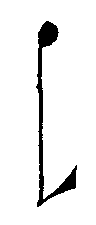
A straight Step forwards. The same backwards.
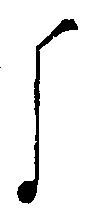
Illustration from Orchesography, or, the Art of Dancing The Art of Dancing by Characters and Demonstrative Figures

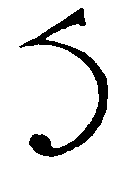
An open Step outwards. The same inwards. The same sideways.
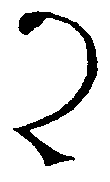
Illustration from Orchesography, or, the Art of Dancing The Art of Dancing by Characters and Demonstrative Figures

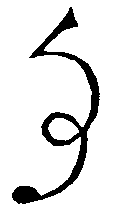
A circular Step outwards. The same inwards.
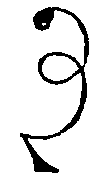
Illustration from Orchesography, or, the Art of Dancing The Art of Dancing by Characters and Demonstrative Figures

A waving Step forwards. The same backwards. The same sideways.
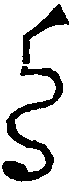
Illustration from Orchesography, or, the Art of Dancing The Art of Dancing by Characters and Demonstrative Figures

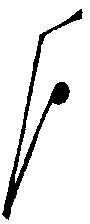
A beaten Step forwards. The same backwards. The same sideways.
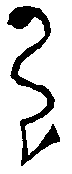
Illustration from Orchesography, or, the Art of Dancing The Art of Dancing by Characters and Demonstrative Figures

To a Step may be added these following Marks, viz. Sinking, Rising, Springing or Bounds, Capers, Falling, Sliding, holding the Foot up, Pointing the Toes, placing the Heel, turning a quarter Turn, a half Turn, a three quarter Turn, and a whole Turn.

The Mark for a Sink, is a little Stroke inclining towards the little black Head.

A Sink.
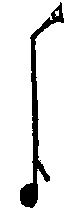
Illustration from Orchesography, or, the Art of Dancing The Art of Dancing by Characters and Demonstrative Figures

The Mark for a Rise from a Sink, is when there is a little straight Stroke upon the Step.

A Rise.
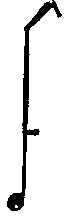
Illustration from Orchesography, or, the Art of Dancing The Art of Dancing by Characters and Demonstrative Figures

The Mark of a Spring or Rise from the Ground, is when there are two of the aforesaid Strokes, which is sometimes call’d a Bound.

A Spring, or Bound.
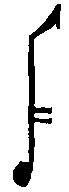
Illustration from Orchesography, or, the Art of Dancing The Art of Dancing by Characters and Demonstrative Figures

The Mark for a Caper, is when there are three Strokes.

A Caper.
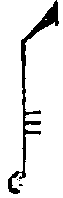
Illustration from Orchesography, or, the Art of Dancing The Art of Dancing by Characters and Demonstrative Figures

The Mark for a Falling Step, is when at the End of the little straight Stroke, another straight one is join’d parallel to the Step, and pointing to the Mark for the Foot.

A falling Step.

Illustration from Orchesography, or, the Art of Dancing The Art of Dancing by Characters and Demonstrative Figures

The Mark of a Slide, is when at the End of the little Stroke, a small Bar is plac’d parallel to the Step.

A Slide.

Illustration from Orchesography, or, the Art of Dancing The Art of Dancing by Characters and Demonstrative Figures

The Mark for the Foot up, is when the Step is cut off.

The Foot up.

Illustration from Orchesography, or, the Art of Dancing The Art of Dancing by Characters and Demonstrative Figures

The Mark for pointing the Foot, without the Body’s bearing upon it, is when there is a Point directly at the End of that which represents the Toe.

To point the Foot.
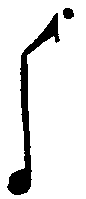
Illustration from Orchesography, or, the Art of Dancing The Art of Dancing by Characters and Demonstrative Figures

The Mark for placing the Heel, without the Body’s bearing upon it, is when there is a Point directly behind that which represents the Heel.

To place the Heel.

Illustration from Orchesography, or, the Art of Dancing The Art of Dancing by Characters and Demonstrative Figures

A quarter Turn of the Body, is shewn by a quarter of a Circle plac’d on the Step.

A quarter Turn.

Illustration from Orchesography, or, the Art of Dancing The Art of Dancing by Characters and Demonstrative Figures

A half Turn, is represented by a half Circle.

A half Turn.

Illustration from Orchesography, or, the Art of Dancing The Art of Dancing by Characters and Demonstrative Figures

A three quarter Turn, is shewn by a three quarter Circle.

A three quarter Turn.

Illustration from Orchesography, or, the Art of Dancing The Art of Dancing by Characters and Demonstrative Figures

A whole Turn, is represented bya whole Circle.

A whole Turn.
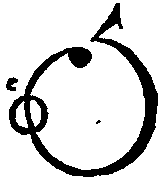
Illustration from Orchesography, or, the Art of Dancing The Art of Dancing by Characters and Demonstrative Figures
Explore with AITake your curiosity a little further.

Reading settings