TOP-WORKING SEEDLING PECAN TREES
Reading edition
W. N. Hutt, North Carolina
According to a census we have just completed there are in North Carolina upwards of 50,000 seedling pecan trees. These trees range in age from one to thirty years. Seventy-five per cent of them are of bearing age, but there is probably not one per cent of that number that are profitable bearing trees. In all parts of the pecan country experience has shown that seedling pecans are notably slow in coming into bearing and some trees never bear at all. Those that do bear have nuts that are almost invariably, small, thick-shelled and of indifferent quality. In this respect, however, the pecan tree differs in no way from any of our other classes of fruits. No one would today be so foolish as to try to get a good peach or apple orchard by planting the seeds of these fruits; but this is just what a great many people have been trying to do with pecans.
This attempt to produce pecan orchards from seed has been the origin of the 50,000 trees noted in the census above. Now that we have these seedling pecan trees, are they of any value at all? Can we make anything out of them whatever or must we cut them down and charge up the expenses to the account of experience, and start over again with standard varieties of budded and grafted trees? Years of time and quantities of money have been spent in producing these beautiful but comparatively valueless seedling trees. However, they are far from being a total loss, for in those deep roots and stalwart trunks and spreading branches, there are latent possibilities in abundance. If by some magic power like that of Aladdin's wonderful lamp told of in the "Tales of the Arabian Nights," we could transform these seedling trees in a single night to standard varieties, we would enrich every owner of pecan trees by hundreds of dollars and the aggregate wealth of the state would be increased by millions.
For several years I have been in search of Aladdin's wonderful lamp to enlighten me how to effect this felicitous transformation. Like Aladdin's quest of old the search has been long and wearisome and has led me a tedious road through many vexatious disappointments, but at last I have found the lamp! I have in my power the magic by which a worthless seedling pecan tree can be transformed into a productive standard variety. This magic talisman is simply
Patch-Budding.
Every kind of budding is magical. Is it not wonderful to make a crab apple tree produce Stayman or Grimes Golden apples or a quince bush produce luscious Duchess pears? Is it not strange that the sap from the same root can produce red apples on one branch, yellow ones on another, and russets on a third? How does it come that one twig can be made to produce sour apples and the next Paradise Sweets? Strange! Wonderful!! but True!!! It is all owing to the fact that the sap of a tree is a homogeneous substance and that it is the bud through which it passes that stamps the individuality upon it whether it shall be a crab or a Grimes Golden. If we make all the buds of the tree of the Grimes character, the apples will all be Grimes Goldens. In the same way if we make all the buds on a pecan tree Stuarts or Schleys there will be nuts to be gathered from that tree and they will not be the worthless scrub seedlings.
When I began my experiments in the top-working of seedling pecan trees I soon found that there were many things one could not do with pecan trees. I counted myself a successful propagator of apples, peaches, plums, grapes and various other kinds of plants, but apple, peach and general propagation methods failed to give success in the budding and grafting of pecans. I concluded the method must be all right but that I should be more exact about my mechanical manipulations. I started out with the ordinary cleft graft commonly used for top-working most sorts of trees. I experimented in several different orchards and put in hundreds of cleft grafts. I took great pains to make my work as mechanically perfect as possible. All conditions of stock, scions, weather, etc., seemed to promise the highest degree of success. The result of that season's work was a world of disappointment, a lot of experience, and two living grafts. One of these latter, the result of my skill, was so effectively pruned that fall by the pecan girdler that my work for the season was a minus quantity in all but experience. The other living graft, which was put in by an assistant, is now a bearing Curtis tree, our only monument to the success of cleft grafting the pecan. Other propagators are said to be able to secure fair results with cleft grafting of pecans in certain localities, but from my experience, I am willing to aver that it cannot be done in this latitude.
Next followed a series of trials with shield budding which is so uniformly successful with peach, but peach methods failed entirely with pecans. Then followed a succession of trials with whip grafting, veneer grafting, bark grafting, and chip budding, all with a varyingly large percentage of failure and a uniformly small percentage of success. Some propagators in the South report fairly successful results in the chip budding of pecans, but my results with this method were largely of a negative character.
After persistent trials of all the known methods of budding and grafting, through the varying conditions of four successive seasons, I have narrowed the propagation of the pecan in North Carolina to one single method, namely, patch-budding. This method has year after year given us the highest percentage of successful unions. The operation illustrated by figures 1 to 12, is as follows:
1. Heading Back.
During the dormant period which is, roughly speaking, from November 1st to March 1st, the seedling trees are cut back to stubs, the ends of which may be from one to three inches in diameter. Wounds larger than this size take years to heal and endanger the life of the tree. Large trees can be operated on as well as small seedlings, only one has to go higher up so as not to cut too large limbs. Figure 1 shows a seedling pecan tree 18 inches in diameter, which was stubbed back in the winter of 1911-1912 and successfully budded the following summer. The result of this drastic heading-back is a numerous growth of vigorous, rapidly growing shoots near the ends of the stubs, by which Nature endeavors to heal over the wounds. The cambium in these vigorous, sappy shoots is in the most active condition possible; just the condition most suitable for the union of stock and scion. This optimum condition cannot be secured except by the forced growth as the result of the heading back. Our experiments, year after year, have shown that on the ordinary new shoots, even on active young seedling trees, the percentage of living buds was much less than on the forced shoots of the headed-back trees.
Fig. 1. Seedling pecan tree, 18 inches in diameter, cut back in winter, showing summer's growth of vigorous shoots ready for budding.
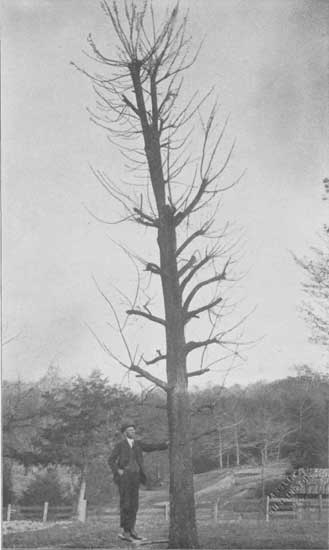
Fig. 2. First operation. Making parallel cuts on stock.]
![Fig. 2. First operation. Making parallel cuts on stock.]](/illustrations/919074d845a4ce5b.jpg)
Fig. 3. Second operation. Making vertical cut between parallel cuts on stock.
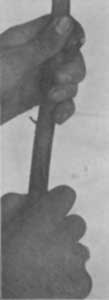
Fig. 4. Third operation. Loosening bark on stock.
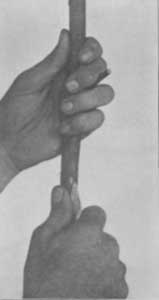
Fig. 5. Fourth operation. Making parallel cuts on bud stick.
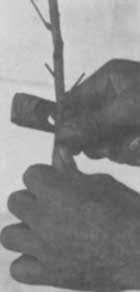
6. Fifth operation. Making vertical cut between parallel cuts on bud stick.
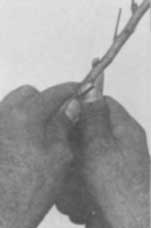
Fig. 7. Sixth operation. Taking bud from bud stick.
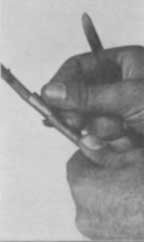
Fig. 8. Seventh operation. Fitting bud to stick.
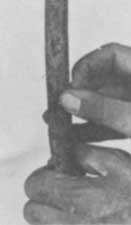
Fig. 9. Eighth operation. Beginning the tie.
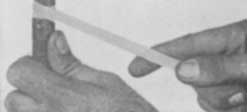
Fig. 10. Ninth operation. Finishing the tie.
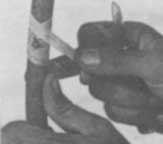
Fig. 11. The tie complete.
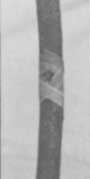
Fig 12. Bud united.
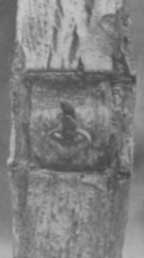
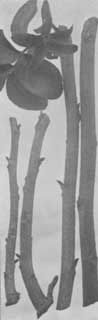
Fig. 13. Bud stick of present season's growth. The three lower, or basal, buds are best.
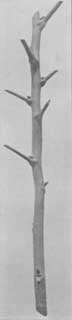
Fig. 14. Bud sticks of previous season's growth.
The different steps in the operation of patch budding are briefly as follows:
1st operation. Making parallel cuts on stock. See Figure 2.
2d operation. Making vertical cut to remove bark from stock. See Figure 3.
3d operation. Loosening patch on stock. See Figure 4.
4th operation. Making parallel cuts on bud stick. See Figure 5.
5th operation. Making vertical cut to remove bud patch from bud stick. See Figure 6.
6th operation. Taking bud off bud stick. See Figure 7.
7th operation. Inserting bud on stock. See Figure 8.
8th operation. Beginning the tie. See Figure 9.
9th operation. Wrapping the bud. See Figure 10.
10th operation. The completed operation. See Figure 11.
Figure 12. Bud united.
These illustrations should make the method self-explanatory.
Knives for Patch-budding.
Two sorts of knives are used for patch-budding, the double one for making the parallel cuts and the ordinary budding knife for removing the patch.
Cambium.
Professor Bailey, in his "Encyclopedia of Horticulture," says, "The ways and fashions of grafting are legion. There are as many ways as there are ways of whittling. The operator may fashion the union of stock and scion to suit himself if only he apply cambium to cambium, make a close joint and properly protect the work."
The fundamental basis of the whole science of grafting is cambium. What then is this important substance by means of which one plant may be made to live and grow and produce on the roots of another? If we strip off the bark of any actively growing, woody plant we will find just beneath a soft, colorless substance; this substance is cambium. It feels slimy to the touch and if scraped with the finger nail a little doughy mass can be raised. As we examine it it will be seen to quickly darken to cream color, then to yellow and finally to dark brown. A change has taken place in it in a few seconds, right under our eyes. When we first exposed it, it was living, active and capable of building the most complicated of plant structures; now it is dead, inert and impotent. If we examine the smallest portion of this doughy mass under a compound microscope we will find it not merely slime but a highly organized tissue made up of countless minute cells, each with a delicate wall about it and containing a thickish liquid (protoplasm). The cambium cells are brick-shaped, and are placed end to end, with layer overlapping layer, like bricks in the wall of a building. The microscopic structure of cambium tissue gives us a clearer conception of its extreme delicacy. It is one of the most sensitive and delicate substances in all nature. Exposure to the air will kill it and completely destroy its functions in a few seconds. It is easily crushed by slight pressure and quickly killed by exposure to drying, frost, moisture and sunlight. Nature shows her extreme care of it for in making bark she has formed for the delicate cambium a perfect protective covering. Like the cambium the bark is composed of cells, as in fact are all animal and vegetable structures. But the cells of the bark have thick walls of a tough, corky substance, and each cell contains air instead of protoplasm. The corkiness of the bark makes it an impervious, waterproof covering that does not allow the cambium to be dried out or to be washed by external moisture. The air in the bark cells being in a still condition is a non-conductor of heat, and layer of bark overlapping layer, the cambium is completely covered with a dead-air blanket. This keeps it from being frozen in winter and from being overheated in summer, just as a dead-air space in the walls of a building protects from extremes of heat and cold. From this it is plain that nature takes great pains to cover and protect the delicate cambium from all external influences. This stands in striking contrast to the careless manner in which many propagators and planters handle the delicate parts of trees. It also explains why some budders get such a small percentage of living buds and some planters so few living trees.
Cambium is the building material of plants and without it growth is impossible. It covers every portion of the tree from the topmost terminal bud to the deepest root tip like a living blanket. During the growing season the cambium cells divide lengthwise forming new cells. These divide again and grow, and new cells are formed, until by fall a complete mantle of bark covers the outer surface of the cambium, while within it has built up a solid layer of the woody structure of the tree. A few rows of cambium cells are left in an embryonic condition to carry on growth the following year. The cambium is thus the only tissue of the tree that retains from year to year the power of active growth. The layers of wood and bark, after performing their functions for a few seasons, gradually die and are overlapped by new layers, but the cambium remains living throughout the entire life of the tree even if it be, as in the giant Redwoods, thousands of years.
Besides forming the regular wood of the tree the cambium also grows out over cut places and builds in woody tissues that heal over the wounds. It is owing to this fact alone that budding and grafting are possible. The callus on cuttings and root grafts is another evidence of the same phenomenon, for the cambium of the roots of a tree is continuous and identical with that of the branches.
The Stock.
The whole practice of successful grafting and budding is the proper handling of active cambium. The cambium is the cementing material that unites stock and scion and unless there is active cambium there will be no union. It must be said here that no matter how great the future growth of the union, the scion never becomes truly united or fused with the stock. The cambium grows all over and around the cut parts and cements them together, but if the graft union be split open fifty years later, the dead wood of the original scion may be found of the original size and in the original position. Since, then, successful grafting depends on the union of the cambium of the stock with that of the scion, theoretically the best time for grafting and budding would be when the cambium is most active. Actual nursery practice shows that this is practically correct, at least as regards the stock.
The ideal stock for propagation purposes is the young seedling of one or two years growth. In such a stock all the tissues are new and fresh and working to their maximum capacity and the cambium is in its most active condition. In top-working old trees it will be found that though the branches may appear vigorous, they are a long way from having anything like the active circulation found in small seedlings. Buds put in these branches would give a very small "live," while the same care on nursery seedlings could be counted on giving a high percentage of living buds. In top-working, therefore, it is found necessary in order to get the cambium sufficiently active, to stub back the branches to mere pollards. This cutting back should be done in the winter or dormant season. The following growing season will see a dense growth of very vigorous shoots trying to repair the injury. See Figure 1. These shoots are ideal stocks for, on account of their having all the sap from the greater root of the mature tree, the cambium will be even more active than in the nursery seedling. Often when nursery seedlings are in partially dormant condition, owing to unfavorable weather or other conditions, they may be forced into budding condition by slashing off part of the growth above where the buds are to be inserted. In our top-working experiments this fact was further emphasized by a windstorm which broke off many of the sappy shoots just above where the bud was put on. Every single one of these buds "took," though some others, just as carefully put on, failed. The success of all the buds on the wind-broken shoots was undoubtedly due to the forcing of the cambium growth just at the point where the bud was inserted.
The Scion.
Although it is desirable to have the cambium of the stock in an active growing condition, it is quite the reverse with the scion. The reason of this is evident, for if the scion were active, it would soon exhaust its small supply of food and die before the union could be formed and it could get its permanent supply of nourishment from the root. It is desirable to have scions fresh and firm but in a quiescent condition until pushed into activity by the growth of the stock. If, on the other hand, the scions or buds become too dry the sap will not be able to revive them and no union will be made.
For patch-budding, the buds may be cut from scions or bud sticks of the present or the past season's growth. Figure 13 shows a bud stick of the present season's growth from which the leaves have been cut. Such a bud stick cannot be obtained until July, for before that time the bark is so tender that it is impossible to get the bud patch off the stick without crushing it or peeling off the cuticle of the bark. The basal buds of the present season's growth, Figure 13, make the best buds because they are more mature and dormant than the buds above them and as they have shed the leaf stalk they can be tied in more easily and snugly than those with the thick, fleshy base of the leaf stalk attached. Some budders make a practice of cutting off the leaves ten days or two weeks before they commence budding and leaving the scions on the trees to ripen the buds and shed off the bases of the petioles. There is in this way no danger of the thick fleshy leaf base decaying under the wrap and souring and killing the buds.
Figure 14 shows budwood of the previous season's growth. This budwood can be cut during the winter and kept over in fresh dormant condition by being packed in damp sawdust and carried over in ordinary cold storage or in a refrigerator. It will be ready for use in the spring as soon as the bark will slip on the stocks. By this method the budding season may be greatly extended and propagation started at least two months before any of the present season's buds will be sufficiently mature for use.
The Kinds of Buds to Select.
As to the buds themselves the most desirable are those at the base of the season's growth. See Figure 13. These, though not large, are plump and fully mature. The bark is smoother and firmer about them than higher up the stem and there is no leaf stalk to interfere with cutting them accurately and making a close fit and tie. These buds are dormant and there is little danger of their pushing into growth in the fall and being cold hurt the following winter. For best success in patch budding it is not desirable to select very large, overdeveloped buds, or those that have grown so rapidly as to stand out on a little pedicel or basal stalk. In removing such a bud from the stick, the central column of the pedicel will often pull out and remain on the stick. Such a bud will almost invariably die. An observation of pecan buds in general will show that they are normally triple in form, the largest above and two smaller ones beneath it. The largest bud will grow first but if anything happens to it, the next one will take its place.
Tying in the Buds.
A good deal of the success in patch-budding depends on the tying in of the buds. The cambium must be thoroughly protected if a union is to result. It is necessary to have some kind of tie that will retain the sap as well as exclude external moisture. After experimenting with different materials and methods I have finally abandoned all except the waxed strip tie. This is made by dipping sheet cotton in pure, liquid beeswax and pressing out all extra wax. The cloth after dipping is formed into convenient sized rolls. From these rolls the cloth is torn at budding time into strips a quarter of an inch wide and from six to eight inches long.
In tying in a bud hold it firmly so that it will not slip and begin at the top and bind it in very tightly with the waxed strip. Reverse the tie at the rear of the bud like a surgeon's bandage and cover the patch completely, leaving only the tip of the bud sticking out. The wax in the cloth will cause the tie to adhere sufficiently to the wood so that no other ligature is required. In budding in the spring, when the flow of sap is very copious, it is well to tie in a small splinter about the size of a match just below the bud to drain off the excess sap. This will save many buds from being killed by souring of the sap. In two to three weeks time the tie should be loosened so that the rapid growth of the stock will not cause the tie to cut into the bark.
The Mechanics of Patch-budding.
After all has been said about cambium and stocks and scions and their relation to each other, there is still volumes to be written on the mechanics of pecan propagation. I do not want to scare anyone off from trying, but if there is any plant more difficult to propagate than the pecan, I have not yet found it. Even experienced propagators of general nursery stock have given up pecan budding as a bad job. On the other hand, a novice or "pecan crank" who is handy with tools and has the patience to study out the causes of his failures, may acquire the skill to obtain almost a perfect "live" of buds. This all goes to show that extreme precision is the password in the mechanics of patch-budding. In the first place, the knives should be of the finest quality so that they will hold a clean, fine edge. All cuts should be made with accuracy and precision, so that there are no rough edges and bias corners. The number of living buds will, under ordinary circumstances, be in exact proportion to the accuracy with which the bud patch fits the place made for it on the stock. The experienced pecan budder as he takes the bud off the stick can tell whether or not they will grow. If he tears the bark in cutting the patch, he drops that bud and cuts another; if the bud patch splits, he discards it; if his fingers touch the cambium or the bud patch falls to the ground, he wastes no time with it, but cuts another and another until he gets the conditions perfect. There is little use in tying in any bud that does not fit perfectly. For this reason it is desirable to have the bud stick of the same diameter as the stock. The bud patches from thin or small scions have to be stretched to fit and generally give a poor "live"; likewise, the buds from the more or less ridged portion at the top of the bud stick. The transfer of the bud patch should also be made quickly so that the cambium will have the shortest possible exposure to the air.
After Treatment.
The process of patch-budding is not complete even after a good "live" of buds is secured. It still requires some judicious after-treatment to get them into good normal growth. On account of the drastic heading back the tree has received, practically every dormant bud will be forced into active growth. These will push out so vigorously in spring that if not held in check, they may completely overgrow and crowd out the buds put in. Attention should be given during the early growing period to see that the buds put in have sufficient room for proper development. If all or too many of the seedling buds are rubbed off, the inserted buds will not be able to carry all of the heavy flow of sap and so may be drowned and killed. On the other hand, the inserted buds may not start unless forced by the extra sap obtained by rubbing off a portion of the seedling buds. A good deal of horticultural judgment is required to adjust the proper balance between the seedling and the inserted buds so as to get the best development of the latter. When the inserted buds are able to carry all the sap of the tree, all seedling shoots should be cut out and attention directed towards forming the new growth into a strong symmetrical top.
If conditions are favorable, there will generally be some nuts the second season. By the third year the transformation from the seedling to the named variety should be complete, and a good crop of high class nuts should be expected.
Mr. Pomeroy: Would it not be an advantage if two persons worked at the budding? After the cuts are made, one could be taking the part from the stock and the other taking the bud from the budding stick.
The Chairman: That is a very good plan. One man could put in the buds and another man could tie—a boy handy with his fingers in making ties.
Professor Smith: Why the superiority of beeswax to grafting wax?
The Chairman: A good many budders object to grafting wax, on account of the oil therein contained being injurious to the trees. A great many people have dead trees as a result. Trees don't like oil, and for that reason we use beeswax and only the purest kind of beeswax. In fact, these pecan cranks who want to do things as they should be, like to examine the wax to see if there is pollen or bee bread or anything foreign in it.
Professor Smith: Is there any particular time that is best for grafting?
President Hutt: Yes; in the early part of the season there is a very vigorous flow of sap and we find we lose more buds then than in the later grafting. In early grafting we put in drainage, just like the physicians, little tubes or something to drain out the moisture. We put in a little chip and tie over it very carefully so if there is any drainage it may escape. In the fall and late summer drainage is not necessary at all, and we really get better unions then when the trees are slowing down than we do in the spring when they are full of sap.
Mr. Storrs: In selecting your buds, do you take them from trees that have borne, or from young trees, or indiscriminately?
President Hutt: We take them either from bearing or young trees. It is not important which, just so you get the right kind.
The important thing is to select good fresh active stuff, and particularly good sized scions and not small ones.
In budding we fit one side perfectly, and on the other side we leave a space of one sixteenth of an inch like a door. We didn't do that at first and we lost a good many buds because the active growth began on both sides. We had to leave a place there at the side, an expansion joint, to take care of that.
Mr. Storrs: Then you fit them at the top and bottom and at one side?
The Chairman: Yes, that's it.
The Secretary: This is one of the most important papers ever read before this Association, and that is because the success of nut growing anywhere is absolutely conditioned on our knowledge of propagation. If the propagation of nut trees were as easy as the propagation of apple and peach trees, we would probably now have in the north as many orchards of good nut trees as of apple and peach trees. Any one who has tried this budding of nut trees will, I am sure, appreciate the difficulties that Professor Hutt has described and the pains he has taken in telling us about them. This is the beginning of the demonstrations in propagating. They will be continued tomorrow; we will have then three or four of the most expert grafters and budders in the country, perhaps, who will give further demonstrations.
I would like to ask Professor Hutt a question. I noticed that in putting in some Persian walnut buds this summer, all died except a couple where the tops accidentally broke off.
The Chairman: That is explained by the illustration I gave of the wind blowing off all the shoots. Every one that was blown off lived even though some were badly torn. It was simply forcing the cambium at that point where it was needed. Mr. Roper had an experience of that kind.
W. N. ROPER Vice-President Northern Nut Growers Association
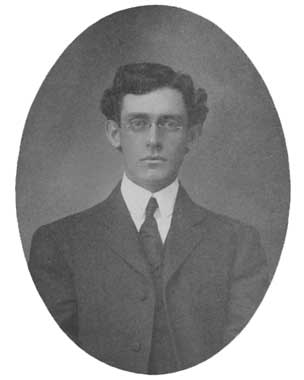
Mr. Roper: We put buds on stock that was not very active, so the trees were cut back to six inches above the bud, forcing all the growth into the bud, and I suppose 95 per cent of those buds lived; on the trees not cut back the buds did not live.
The Secretary: You have spoken about soaking the scions in cold water; does not that injure the buds? We have been told heretofore that keeping the scions in water started the cells into activity and rendered them less likely to grow; but perhaps that referred particularly to scions for grafting rather than budding.
The Chairman: I would like to ask Mr. Wiggins that question, he is a specialist.
Mr. Wiggins: One of the dangers in keeping bud wood is that of keeping it in too much moisture. It does not require much to keep the bud plump.
The Secretary: I understand the reason for soaking is simply to allow the bud to be taken off.
The Chairman: Yes.
Mr. Jones: In our experience the soaking of wood does not injure it for budding, but it does for grafting. You can soak the wood for budding all you want to, we have soaked it until the top bud came out.
The Secretary: I am interested in knowing about this special wax cloth. Can it be used also in grafting?
The Chairman: The other is much cheaper for that purpose. To just cover the thing up and exclude the air is all that is necessary in grafting. Liquid wax—four of rosin, four of tallow and two of beeswax—gives excellent results, but for budding purposes it is absolutely essential to have good clean wax, and for our purposes we have never found anything but pure beeswax would answer.
The Secretary: There is a substance called "white wax" which pharmacists use in making toilet preparations—purified beeswax. It is pure white. Is that any advantage?
The Chairman: I would not use it. It contains some paraffine.
The Secretary: It should consist of purified and bleached beeswax only. It is more expensive than the ordinary beeswax.
[Read by title.]