Front matter (continued 5)
Reading edition
Mitsukuri (1905:265) reported that in hatchlings of Trionyx sinensis the length of the carapace averages 2.7 centimeters (hatchlings of sinensis seem to average smaller than any American species), and that the average length of carapace (cm.) at the end of the first year is 4.5, second year 10.5, third year 12.5, fourth year 16.0, and end of fifth year 17.5; he stated also that females of sinensis are sexually mature in their sixth year. Breckenridge (1955:7-9) computed a growth curve based on 11 recaptures of females of spinifer in Minnesota; his data on rate of growth for the first five years do not differ appreciably from those of Mitsukuri. As most females of spinifer are sexually mature when the carapace is about 11 inches long, the age at sexual maturity is approximately 12 years according to Breckenridge (op. cit.:8, Fig. 4). The discrepancy in age of females at the size of attainment of sexual maturity (Mitsukuri—six years; Breckenridge—12 years) is, in part, rectified by the fact that Trionyx sinensis probably is a smaller species. Also, Breckenridge's computation of the growth curve is based on continuously decreasing increments of growth and seemingly eliminates consideration of the probable marked decrease in rate of growth that occurs when sexual maturity is attained—a phenomenon noted in other species of turtles. I think that increments of growth of immature turtles are, on the average, larger than those of sexually mature turtles. Judging from these criteria, the age of a female of spinifer at sexual maturity is less than 12 years, and turtles having carapaces 17 to 18 inches in length (maximal size for spinifer) would be older than 53 years (op. cit.:9). Occasional individuals, however, may greatly exceed the usual growth rate in which event large adults may be younger than 50 years.
Females of muticus are sexually mature when the plastron is 14.0 to 16.0 centimeters long, which corresponds to a carapace 19.6 to 22.4 centimeters (about 73/4 to 83/4 inches) long (average CL/PL approximately 1.4, see Fig. 13). The smaller adult females probably mature sexually in their sixth year, but most probably do so when seven years old. Accordingly, some T. spinifer emoryi, which are sexually mature at a plastral length of 16.0 centimeters, are also sexually mature in their seventh year, whereas most spinifer (sexually mature at a plastral length of 18.0 to 20.0 cm., corresponding to a length of carapace of 25.2 to 28.0 cm. or about 10 to 11 inches) probably become sexually mature in their ninth year, and some when eight years old. Most males of spinifer are sexually mature when the plastron is 9.0 to 10.0 centimeters long (length of carapace 12.6 to 14.0 cm. or 5 to 51/2 inches), whereas males of muticus and some T. spinifer emoryi are sexually mature at a plastral length of 8.0 to 9.0 centimeters (length of carapace 11.2 to 12.6 cm. or 41/2 to 5 inches). The smaller adult males are probably sexually mature in their fourth growing season. Breckenridge (op. cit.:7, Tab. II) commented on the abundance of females between five and 12 inches in length, and males that ranged in length from five to seven inches. The abundance of turtles in these size ranges is probably due, in part, to a slowing of the rate of growth indicating the approach of sexual maturity; the abundance of the smallest males is especially in accord with the size at sexual maturity of males (about five inches).
The largest acceptable record of size of spinifer is 18 inches in length of carapace (Breckenridge, 1957:232). Stockwell (1878:402), however, wrote that females of spinifer attain "an extreme length of from twenty-four to twenty-eight, and, in rare instances, thirty inches, with an average length of carapace of fifteen to eighteen," and True (1893:152) mentioned lengths of two feet or even more. Turtles 17 to 18 inches long are doubtless rare and probably about 60 years old. A specimen of ferox lived the longest time in captivity—25 years (Pope, 1949:304). Individuals of ferox probably exceed the maximum recorded length of carapace of 181/2 inches (Agassiz, 1857:401). The head of a ferox having a width of 31/2 inches (Wright and Funkhouser, 1915:120) corresponds to a length of carapace of approximately 221/2 inches (PL/HW == 4.9; CL/PL == 1.3). De Sola and Abrams (1933:12) wrote that ferox in the Okefinokee Swamp, Georgia, attains a length of two feet. The largest female of muticus of which I have record is 21.5 centimeters in plastral length (KU 2308), a measurement corresponding to a carapace about 13 inches long.
Mortality
Man, in one sense or another, is a great enemy of soft-shelled turtles. Those caught by fishermen are destroyed because of the erroneous belief that they are harmful to fish populations. Some are drowned in hoop-nets or gill nets used by commercial fishermen. Many softshells are used by man for food. Herald (1949:118-19) reported the results of spraying an area with DDT and mentioned a 10-inch individual of ferox that was eating a dead bluegill, and which "probably died as a result of ingesting contaminated food."
Predation on eggs probably accounts for most mortality. Hamilton (1947:209) reported tracks of spotted skunks, raccoons and foxes seen about destroyed nests, and Cahn (1937:183) incriminated skunks and raccoons. Goldsmith (1945:449) reported a raccoon that unearthed seven nests in one night. Little and Keller (1937:221) wrote of egg shells found in the sand (probably not as a result of hatching), and Muller (1921:182) reported egg shells around dug-up nests, suggesting such predators as "ground moles," raccoons and crows. Chesser (in Harper, 1926:416) said that in the Okefinokee Swamp the jackdaw (fish crow), raccoon, bear and domestic dogs will eat the eggs. Wright and Funkhouser (1915:122) recorded a young ferox in the stomach of a water moccasin (Agkistrodon piscivorus), and suggested that young soft-shells probably are food of larger snakes. Kellogg (1929:26) wrote that stomachs of two alligators each contained one soft-shelled turtle. Newman (1906:136) found that young captives were eaten by individuals of Chrysemys and Sternothaerus, and I found that they were eaten by Kinosternon. Mitsukuri (1905:261-62) stated that first- and second-year individuals of T. sinensis are eaten by the adults.
Breckenridge (1960) wrote that a clutch of eggs probably failed to develop because of an "… unusually cool season." Evermann and Clark (1920:595) stated that "many young appear to perish during the first winter." They (op. cit.:594) found two eggs submerged in two feet of water and it is supposed that they never hatched. Dundee (1950:139) reported remains of soft-shelled turtles left on the mud of a dried swamp.
Parasites
Muller (1921:182) found maggots in a few eggs of a clutch, but thought that only the infertile and decomposing eggs were infested. I removed a hard, spherical cyst from the hind leg of a preserved softshell (TU). A captive hatchling (TU 17304) died as the result of a continuously enlarging and deepening hole on the top of its head; I could not discern a visible parasite with the naked eye. I found 25 leeches (Placobdella parasitica, largest about 13 mm.; identified by Dr. Kenneth B. Armitage, Department of Zoology, University of Kansas) in association with 11 T. m. muticus (number per turtle not known) that were collected from the Kansas River at Lawrence, Douglas County, Kansas. Evermann and Clark (1920:596) reported a few nematodes in the stomachs of some spinifer, and three nematodes are listed by Harwood (1932:46, 60, 62, 66) in the same species. Hughes, Higginbotham and Clary (1941) have listed the known reptilian hosts of parasitic trematodes, and Hughes, Baker and Dawson (1941) have done the same for tapeworms. The species of parasites and their trionychid hosts are listed below.
Trematoda
Trionyx ferox: Neopolystoma orbiculare Vasotrema amydae
Neopolystoma rugosa Vasotrema attenuatum
Polystomoides coronatus Vasotrema robustum
Teloporia aspidonectes
Trionyx muticus: Crepidostomum cooperi Opisthorchis ovalis
Trionyx spinifer: Hapalorhynchus evaginatus Vasotrema amydae
Opisthorchis ovalis Vasotrema attenuatum
Polystomoides coronatus Vasotrema longitestis
Teloporia aspidonectes Vasotrema robustum
Cestoda
Trionyx ferox: Proteocephalus trionychinus
Trionyx spinifer: Proteocephalus testudo
Nematoda
Trionyx spinifer: Camallanus trispinosus Spiroxys amydae
Falcaustra chelydrae
Economic Importance
Several authors have mentioned softshells as a food item much sought after by man. The commercial value of these turtles has been summarized by Clark and Southall (1920:15-16). Softshells are consumed in quantity only in small towns near the place of capture. They are found only occasionally in the markets of large cities because the turtles are little known and the palatability of their flesh is unappreciated. Also, they do not stand shipment so well as other turtles, and they are "not so meaty as the snapper; so there is more waste" (Clark and Southall, loc. cit.). Little and Keller (1937:221) reported living individuals for sale at the market in Ciudad Juarez, Chihuahua; however my inquiry at markets in Juarez in the summer of 1959 disclosed no evidence of recent sale of soft-shelled turtles. In the southeastern United States the demand is perhaps greater than in other regions. I have noted softshells in the market at New Orleans, and Oliver (1955:19) has mentioned the sale of "some 146,600 pounds" in one recent year in Florida. Over most of their range, however, there probably is no general demand for softshells and no special efforts are made to capture them. Softshells have been raised successfully on "turtle farms" in Japan (Mitsukuri, 1905). True (1893:152) wrote that "The eggs also are considered very excellent."
Softshells generally are condemned by fishermen because of the mistaken belief that they are detrimental to fish populations. Food of softshells is principally crawfish and insects. Fish comprise a small proportion of the diet (frequency 1.9% in Michigan, Lagler, 1943: Tab. 9). Most of the fishes eaten seem to be small minnows. Probably fish would comprise a larger percentage of the diet if they could be caught. I doubt that a softshell can pursue and capture a healthy fish in natural waters. Recently dead fish are eaten and perhaps fish eggs, and senile and decrepit fishes. There is no evidence that soft-shelled turtles are active predators on any kind of fish. Of course in congested areas such as ponds of fish hatcheries, it is desirable to eliminate the turtles. The known food habits of soft-shelled turtles suggest that they compete with game fishes for food, but there is no information on the intensity of competition (Lagler, op. cit.:305).
The combined statements of many authors in their general accounts of food habits (for instance, Babcock, 1919:425) have tended to create the erroneous belief that soft-shelled turtles harm waterfowl. To my knowledge the only basis for this belief is the statement of Wright and Funkhouser (1915:123) that according to the natives of the Okefinokee Swamp, the larger turtles "devour also such waterfowl as are unfortunate enough to be taken unaware by these reptiles." Perhaps an occasional waterfowl is eaten, but the present information on kinds of food eaten certainly does not warrant the destruction of soft-shelled turtles. There may be some mortality in congested areas such as game refuges where young birds crowd the surface of the water.
The kind of bait successfully used in trapping softshell turtles suggests that they are of some value as scavengers.
EVOLUTIONARY HISTORY
Before attempting to reconstruct the history of soft-shelled turtles in North America, it will be helpful to summarize the salient facts concerning the distribution and relationships of the living forms, and to comment on fossils.
Distribution
The geographic range of the family Trionychidae in North America is principally in the eastern two-thirds of the continent and contributes to the well-known floral and faunal resemblance of eastern North America to that of eastern Asia (Schmidt, 1946:149) because Trionyx ferox (see Fig. 18) resembles the species of the genus in Asia more closely than it does any North American species. The Recent distribution in America does not include the Neotropical region, whereas the geographical range in the Old World extends south of the equator (Fig. 1; Dunn, 1931:109, fig. 2; Gadow, 1909:333, fig. 72; Hay, 1908:35, fig. 16).
American softshells occur in all river systems in the United States and the two adjacent river systems on the east coast of México that drain into the Gulf of México. Softshells inhabit streams of the Great Plains and occur westward to the foothills of the Rocky Mountains in the western tributaries of the Mississippi River. Only T. s. spinifer occurs in the southern part of the Great Lakes-St. Lawrence drainage. Softshells are absent from the Atlantic Coast drainage except the Hudson River and those rivers at least south of (and including) the Pee Dee River in South Carolina.
T. s. emoryi is not known to be indigenous west of the Río Grande drainage, and has probably been introduced across the Continental Divide via the Gila River in western New Mexico into the Colorado River drainage of Arizona (Miller, 1946:46); the species undoubtedly occurs in México on the Sonoran side of the Colorado River opposite Baja California (Bogert and Oliver, 1945:417).
In the summer of 1959, I trapped turtles and with a specimen in hand inquired about softshells occurring in the inland drainages of northern México. From two collecting stations on the Río Nazas in Durango, only specimens of Pseudemys and Kinosternon were obtained; local inhabitants had neither seen nor heard of softshells. Flooded conditions in August of 1959 permitted trapping in only one of the inland drainages of northwestern Chihuahua, the Río Santa María; only specimens of Kinosternon were obtained. Local residents near that river as well as those living near the Río Casa Grandes and Río del Carmen had not seen or heard of softshells. A person that I judge to be a competent observer reported seeing a softshell in June of 1958 in the Río Alamos (Arroyo Cuchujáqui) near Alamos, Sonora, in the Río del Fuerte drainage on the west coast of México. I was a member of a field party from the University of Kansas that visited that locality in late January of 1959; only specimens of Pseudemys and Kinosternon were collected. Possibly isolated populations occur in streams of the Pacific Coast drainage of northern México. If so, they may have entered Pacific Coast drainages by stream capture across the Continental Divide. Several species of fish that are characteristic of the Río Grande traversed the Sierra Madre Occidental at some former time (presumably via the Río Conchos and Río Papigochic) and occur in the Yáqui River drainage (Meek, 1904:xxxviii, xlvii; Miller, 1959:214-15, 217). Because of the probability that the Río Nazas at some former time flowed north into the Río Grande (Meek, op. cit.:xxxiv), it is notable that softshells are absent in the Río Nazas drainage; the Big Bend turtle, Pseudemys scripta gaigeae, occurs in both drainages.
Relationships
Characters of Trionyx ferox suggesting a closer resemblance to some Old World members of the family than to the other three American species are: large size; marked difference between juvenal and adult patterns on the carapace; the marginal ridge; and the longitudinal ridgelike prominences on the carapace, especially in juveniles. Other characters of ferox suggesting a corresponding, but less marked resemblance to Old World species of Trionyx are: the large size of the eighth pair of pleurals; the absence of callosities on the epiplastron and preplastra; frequent fusion of the hyoplastra and hypoplastra (more than in spinifer or muticus); and tolerance of marine waters (more than muticus or spinifer). Some fossils also suggest alliance with ferox and some Old World members of the genus in their large size, large eighth pair of pleurals, and occurrence in marine deposits; several Old World species have been reported at sea (Pelochelys, T. triunguis, T. sinensis). T. ferox is monotypic and has the most southeasterly displaced, geographic range.
Because ferox resembles softshells from the Old World more closely than it does any American species, ferox is assumed to be more closely related to Old World softshells than to any American species, and, because of resemblance to some fossils, ferox is assumed to resemble most closely the primitive, ancestral stock of softshells that occupied North America. T. spinifer, T. muticus and T. ater, which resemble each other more closely than any of them resembles T. ferox or any Old World species, are considered autochthonous in North America. T. spinifer and T. muticus are distinct, sympatric species. Burt (1935:321) suggested that the two species "may be variants of the same species." T. ater is weakly differentiated from T. spinifer emoryi. The species, ferox, spinifer and muticus are well-differentiated and were considered by Agassiz (1857), Gray (1869) and Baur (1893) as belonging to three different genera.
In the widely distributed T. spinifer, the subspecies spinifer, hartwegi and asper closely resemble one another; asper seems most distinct, whereas spinifer and hartwegi are terminal populations of an east-west cline in one character. The subspecies pallidus, guadalupensis and emoryi resemble one another more closely than any resembles any of the subspecies mentioned immediately above; T. s. pallidus, however, is annectent. T. s. pallidus and guadalupensis represent terminal populations of clines in several characters, some of which occur in emoryi, but that subspecies is more distinct from pallidus and guadalupensis than those subspecies are from each other. T. s. emoryi is the most variable subspecies. T. ater, known only from a restricted area in central Coahuila, is most closely related to T. s. emoryi, and possesses some characters judged to represent the attenuation of the geographic cline in pallidus, guadalupensis and emoryi mentioned above. Some characters of ater show alliance to the species muticus. Of T. muticus, whose geographic range is removed from that of ater, there are two subspecies. Four subspecies of spinifer (spinifer, hartwegi, pallidus and asper) intergrade in the Mississippi River drainage of Louisiana; few specimens, however, are typical of asper. The subspecies of muticus do not show definite evidence of intergradation. To facilitate quick reference, the occurrence of some characters that are shared by, or are approximated in, two or more forms are listed in Table 10. In addition to external characters, some ratios emphasize the clinal relationship between T. s. pallidus, guadalupensis, and emoryi mentioned above. Of especial interest is the frequent resemblance of those subspecies and T. ater to T. ferox (dorsal pattern on limbs of adults, reduction in anterior tuberculation, wide head, narrow carapace, and short snout), and the less marked resemblance of T. muticus to T. ferox; not shown in Table 10 is the resemblance of ferox to T. muticus calvatus in having thick, black-bordered postocular stripes. Some populations of T. s. emoryi resemble T. muticus in the corresponding size at sexual maturity and in having well-developed plastral callosities. It is notable that the occurrence of ater, and to a lesser extent that of T. s. emoryi, which resembles ferox (and muticus), is in the southwestern United States and northern México.
Table 10. Frequency of Selected Characters Among Species and Subspecies of Trionyx in North America. Characters of muticus Refer to the Typical Subspecies; Horizontal Dashes Connecting X's Indicate that Computations for Those Subspecies Were Combined; Vertical Dashes Indicate that the Subspecies Is Intermediate Between the Adjacent Subspecies.
Characters Species and subspecies
ferox spinifer hartwegi asper pallidus guadalupensis emoryi ater muticus
Juvenal pattern:
black spots, ocelli X X X
white dots X X X X
Pattern on snout:
acute angle (reduced in muticus) X X X X X X
|
triangular X X X X
Pattern on side of head:
contrasting marks X X X X X X
|
non-contrasting marks (distinct stripe in muticus) X X X X
Pattern on limbs of adults:
contrasting X X X X X
|
reduced or absent X X X X X
Tuberculation (anterior edge of carapace):
conical, equilateral X X X X
reduced or absent X X X X X
Head (PL/HW, fig. 3):
wide X X X X X
narrow X X X X
Carapace (CL/CW, fig. 4):
wide X X X X X X
|
narrow X X X X
Level of Carapace Width (CL/PCW, fig. 5):
middle of carapace X X X X X
farther posteriorly X X X X
Snout (HW/SL, fig. 6):
long X —— —— X X X —— —— X X
| |
short X X —— —— X X X
Fossils
The known occurrence of fossil trionychids throughout the world indicates a former distribution more widespread than the family has today; the principal difference in the former and present distributions is the lack of living softshells in Europe.
I have not studied in detail the many fossil remains but such examination as I have made of them suggests that many of the characters used as a basis for distinguishing fossil forms in North America are subject to individual variation or are of no diagnostic value in the living species (Hummel, 1929:769). Knowledge of the variation in the living species of the Old World would aid in adequately appraising the North American fossils. Some osteological characters of the three living American species (excluding ater) together with data on variation within a given species are mentioned below. Some differences in skulls of the three species already were mentioned in the section "Osteological Characters." Because most fossil remains are those of the carapace and plastron, attention is here given to those structures.
Widened alveolar surfaces of jaws.—An ontogenetic variation affecting large skulls of T. ferox and some individuals of T. spinifer asper; presumably confined to females. Of especial interest is its presence in some populations of asper that are not otherwise distinguishable (external characters) from the rest of the individuals comprising that subspecies.
Sculpturing.—No differences in pattern (generally of anastomosing ridges) on carapace or plastron; fineness or coarseness seemingly correlated with size; frequency and kind (knoblike or ridgelike) of bony prominences on carapace variable; bony prominences confined to species spinifer and ferox, occurring principally on large females.
Fontanelles of carapace.—Closure more or less correlated with increasing size, although much variation noted between individuals of same size; small individuals have fontanelles confluent (medially), thus separating nuchal from contact with first neural and first pair of pleurals.
Number and arrangement of neurals and pleurals.—Neurals number six to nine, usually seven or eight; pleurals number seven or eight pairs, and may or may not be in contact with each other posteriorly; eighth pair of pleurals when present reduced, never contacting seventh neural; arrangement posteriorly variable (see Fig. 16 and Tab. 5).
Plastral callosities.—Increase in size with advancing age causing corresponding reduction in size of plastral vacuity; relatively best developed in muticus (all elements touching medially on KU 41380 leaving no plastral vacuity); probably no callosities on preplastra or epiplastron of ferox; callosity on epiplastron of spinifer not covering entire surface (as it may in muticus).
Epiplastron.—Obtusely-angled (greater than 90 degrees) in muticus; acutely-angled (90 degrees or less) in ferox and spinifer.
Hyo-hypoplastral suture.—Usually present, but occasionally absent, in all species.
The fossil turtles of North America have been treated monographically by Hay (1908), who apportioned fossil trionychid remains into eight genera (three living) of two families. Recently, Romer (1956:514) relegated all trionychid fossils to the genus Trionyx. Characters, as gleaned from Hay's synopsis (op. cit.:465-548, Pls. 85-113), that seem especially worthy of taxonomic consideration are: (1) The presence of a preneural, which is not known to occur in the living American species (seemingly the preneural is fused with the first neural and represents the elongate first neural in living species); (2) The large eighth pair of pleurals, especially when they contact the seventh neural; (3) The thickness of the costal plates, a condition probably correlated with the size of some fossils, which are larger than any living species (for example, Hay, op. cit.:518, mentioned the greatest dimension of a nuchal bone as approximately 300 mm.).
The approximate extent of the known horizontal distribution of fossils is indicated in Figure 24. A comparison of known localities of fossils and the distribution of living softshells (introduced population of T. s. emoryi in Colorado River drainage omitted) shows that the distribution was more widespread in former times. Localities of fossils are centered on the Atlantic Coast from New Jersey to North Carolina and in the Rocky Mountain-Great Plains region from Alberta and Saskatchewan to northwestern New Mexico; the oldest fossils, which occur in each region, are found in Upper Cretaceous deposits. Many fossils occur in marine and brackish water deposits. Most localities depicted on the map are mentioned by Hay (1908:36-37, 465-548). Other localities included on the map are in southern Alberta (Russell, 1929:164; 1930:27; Sternberg, 1926:104), southern Saskatchewan (Russell, 1934:109), northern South Dakota (Hay, 1910:324), central Utah (Gilmore, 1946), western Colorado (Schmidt, 1945), southwestern Kansas (Galbreath, 1948:284), southeastern Texas (Hay in Stejneger, 1944:65), southern California (Brattstrom, 1958:5), and northeastern Coahuila, México (Mullerried, 1943:623). Hay's record of the living Platypeltis (= Trionyx) ferox and other remains from the Peace Creek formation in Hillsborough County, Florida (op. cit.:548), presumably is the same record mentioned by Pope (1949:305).
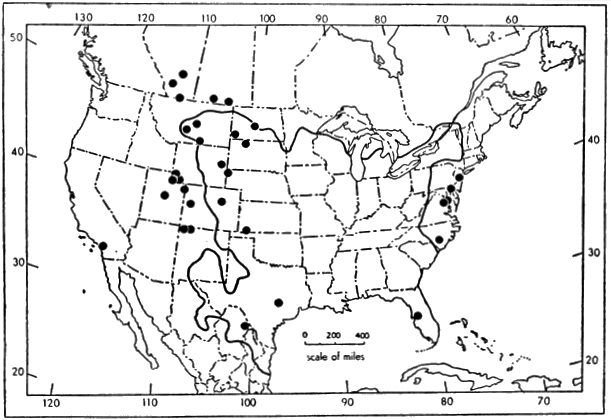
Fig. 24. Geographic distribution of Recent soft-shelled turtles (bordered by heavy black line) and fossil trionychids (black circles) in North America. The introduced population of T. s. emoryi in the southwestern United States is not shown.
Ameghino (in Hay, op. cit.:35) recorded specimens of a trionychid from the Cretaceous of Patagonia, a record that, at present, cannot be accepted (Simpson, 1943:423). Mullerried (loc. cit.) also mentioned some trionychid remains that were housed in Tuxtla Gutierrez, Chiapas, México, (material now lost), but their geographical provenance was unknown. The former extent of range southward is not known; it is improbable that trionychids occurred in South America (Simpson, 1943:423).
Phylogeny
The occurrence of T. ferox in Florida and the suggestion of ferox-like characters in turtles from southwestern Texas and northern Mexico presents a distributional pattern that resembles the disjunct ranges of many other pairs of closely related taxa. The clear-water ponds in central Coahuila, which are inhabited by ater, correspond to aquatic habitats supporting ferox in Florida. The splitting of the geographic range into eastern and western parts possibly resulted from a southward shift of colder climates in glacial stages of the Pleistocene, or from the development of an intervening arid region in the late Miocene and Pliocene (see discussions in Martin and Harrell, 1957, and Blair, 1959). An initial separation of range by an arid environment in the Pliocene may have been terminated by the colder climates in the Pleistocene.
The degree of morphological difference between ferox and the forms in southwestern Texas and northern México, suggests that the time of separation antedated the Pleistocene.
Trionychid turtles may have traversed the Bering land bridge between Asia and North America in late Mesozoic times for they occur as fossils on the Atlantic Coast and in the Rocky Mountain-Great Plains region in Upper Cretaceous deposits. Shallow, inland seas may have afforded no barrier to the dispersal of softshells which presumably were tolerant of saline waters. The orogeny and volcanic action with subsequent erosion and sedimentation of the Rocky Mountain system, which was later accompanied by drier climates, tended to obliterate suitable habitats in the western United States; softshells persisted at least until the Upper Eocene on the west coast (Brattstrom, 1958:5). The factors responsible for the disappearance of softshells on the Atlantic Coast probably were related to the glacial advances in the Pleistocene; the most recent fossils known occur in Miocene deposits.
The relationships of the living species and subspecies were probably correlated with geologic change in aquatic environments and drainage patterns. These changes probably included stream capture, flooding, drought, uplifting and planation. A hypothetical, evolutionary history is presented in the phylogenetic diagram where letter symbols represent species and subspecies, and grouped symbols (referred to in subsequent paragraphs) represent ancestral stocks.
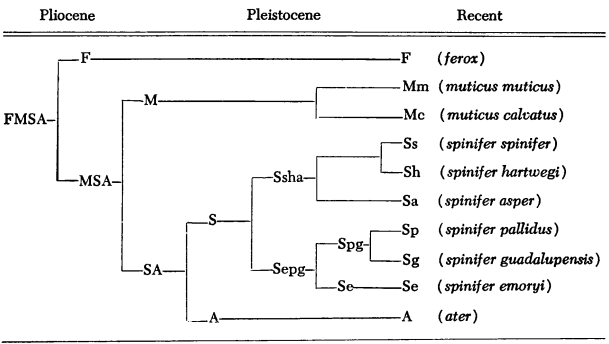
Click here to see text version of above chart.
An arid environment in the central and southern United States and northern Mexico may have increased in area especially southward from Miocene times into the Pliocene (Dorf, 1959:189, 191). The combination of physiographic changes and aridity, which modified the mesic, essentially continuous, aquatic habitats, may have isolated and aided in the differentiation of the ferox, muticus and spinifer stocks. Encroachment of the Eocene seas, the maximal extent of which corresponded to the Gulf Coastal Plain and included a northerly extension as far as Cairo in southern Illinois (Mississippi embayment), possibly was an initial barrier isolating the ferox stock of the east.
In the late Miocene or early Pliocene, the MSA (muticus-spinifer-ater) stock presumably occupied a large region of the central United States, which extended southward into northern México and along the Gulf Coast at least as far as Alabama. Farther eastward, the ferox stock was isolated in more mesic, probably swampy, marshy habitats.
Later, in the southwestern part of the range of the MSA stock (southern Texas and northern México), the SA and muticus stocks were separated. The muticus stock occurred to the northeastward, and presumably no farther south than the area included within the present drainage basin of the Colorado River. Southward, the SA stock was isolated into several populations that are today represented by ater and T. s. emoryi, the most variable subspecies; the distribution of the most distinctive population of emoryi indicates a former isolated inland drainage. The multiple fragmentation of the SA stock presumably terminated by the end of the Pliocene. The progenitors of T. ater probably closely resembled ferox. Trionyx ater and T. ferox resemble each other morphologically and in habitat. Therefore, the progenitors of ater are considered to have undergone comparatively little differentiation.
The spinifer stock, occurring principally in the area included within the present drainage basin of the Río Grande, extended its geographic range eastward and became sympatric with muticus and ferox. An expansion of range necessarily demands more mesic conditions; these were perhaps afforded by the pluvials (wet, rainy ages) that were coincident with the glacial periods in the Pleistocene (Antevs, 1948:168). The pluvials permitted the isolated populations of the spinifer stock to unite, and permitted that stock to extend its range eastward. The concurrent continental glaciation permitted the spinifer stock to extend its range eastward only in a belt approximately 300 miles wide along the Gulf Coast, and also displaced the ranges of ferox and muticus to southern latitudes. Perhaps ferox was less tolerant of decreased temperatures or changes in habitat than was the spinifer stock but, for some unknown reason, ferox did not extend its range westward. Because T. ater closely resembles T. s. emoryi, continued isolation of ater since the beginning of the Pleistocene seems unlikely and ater may have been reunited in subsequent pluvial periods with the spinifer (emoryi) stock. A climatic fluctuation between relatively wet and dry periods is corroborated by studies of soil profiles in Trans-Pecos Texas (Bryan and Albritton, 1943).
The separation of the range of spinifer in the general region of western Louisiana, resulting in the differentiation of the spinifer group of subspecies to the east and the emoryi group of subspecies to the west, and the differentiation of T. s. asper and T. m. calvatus, both having corresponding western limits of distribution (Mississippi River drainage), are associated with the activities of the Mississippi River and its flood-plain. The combined effects of the pluvials and interpluvials seem responsible for changes in the lower Mississippi Valley. Great volumes of summer melt-water in the glacial stages greatly increased the breadth of the channel of the lower Mississippi River (corresponding to the northern extent of the Mississippi embayment; Hobbs, 1950), and this, coupled with the encroachment of Pleistocene seas (especially in the Mississippi embayment) in the interglacial periods, perhaps separated populations eastward represented today by T. m. calvatus and T. s. asper. The spinifer-hartwegi stock probably developed in southern Louisiana in association with the meandering of the Mississippi River and its tributaries, and its broad alluvial plain. The biota of that plain differed from that adjacent to the east or west (see discussion in Viosca, 1944) and constituted a barrier, of a sort, to free communication between the east and west. Westward the emoryi group of subspecies differentiated, its eastern limit probably being the Red River, which followed its own course to the Gulf along the lowlands on the west side of the Mississippi Valley and did not empty directly into the Mississippi until Recent times (Holland, 1944:20). There was not an equally-marked, corresponding separation of the range of muticus. However, the juvenal pattern of the subspecies muticus that inhabits the Gulf Coast streams is slightly different (having less short lines) from that of muticus elsewhere.
The Río Grande (inhabited by emoryi) presumably had its own exit to the Gulf whereas rivers westward to (and including) the Red River (inhabited by pallidus-guadalupensis cline) probably were joined near their mouths forming a large drainage system. Hubbs (1957:93) pointed out that the Río Grande-Nueces divide also limits a large number of species of fish. The differentiation of pallidus and guadalupensis is possibly due to a difference in the salt content of waters that drain the Edward's Plateau (see page 547), or to isolation of those subspecies in separate drainage systems that had their own exits to the Gulf.
In the lower Mississippi drainage, the spinifer-hartwegi stock extended its range northward following the retreat of the last glacial stage, and differentiated into those two subspecies in the upper Mississippi drainage and Great Lakes-St. Lawrence drainage system.
I have seen one specimen (UMMZ 59198) from the eastern part of the Tennessee drainage (inhabited by T. s. spinifer) that resembles T. s. asper (occupying the Gulf Coast drainages of the southeast). This resemblance tends to support the thesis of a former confluence of the Coosa (Alabama River system) and Tennessee drainages as believed by some malacologists to explain resemblances in molluscan fauna and as corroborated by physiographical evidence (see discussion in van der Schalie, 1945).
The Importance of the Study of Turtle Populations in Relation to the History of River Systems
In the Río Grande drainage the geographic distribution of the population of emoryi having orange color in males is approximately the same as that of Pseudemys scripta gaigeae; the corresponding distributions suggest that a part of the Río Grande drainage consisting of the Río Conchos in Chihuahua and the Big Bend region of Texas was isolated in former times. Accordingly, the known aquatic chelonian fauna in the basin of Cuatro Ciénegas in central Coahuila, México, is endemic (except T. s. emoryi). And the coincidence of the geographic ranges of T. muticus calvatus and Graptemys pulchra in the southeast suggest a former association of the included (Pearl to Escambia) river systems. The occurrence of T. s. pallidus in the Red River drainage indicates that the Red River was formerly associated with the Gulf Coast streams of eastern Texas and western Louisiana (inhabited by pallidus) and not with the Mississippi River drainage. The lower Mississippi River valley forms a prominent barrier to the eastern and western dispersal of many kinds of species and subspecies of turtles. T. m. calvatus and T. s. asper, which occur in rivers of the Gulf Coast drainage east of the Mississippi, are well-differentiated subspecies showing little or no evidence of intergradation with their relatives in the Mississippi River. The large faunal break provided by the Mississippi River would seem to indicate greater age for that river than for other rivers of the Gulf Coast drainage.
A comparison of the distributions of Trionyx and Graptemys in Texas suggests a faunal break between the drainage systems of the Brazos and Colorado rivers. Graptemys versa occurs in the Colorado and Guadalupe-San Antonio drainages. To my knowledge versa hitherto has not been recorded from the latter drainage system. I have seen one specimen of Graptemys (custody of Gerald Raun, University of Texas) from the Guadalupe River drainage, which I judge to be representative of versa, and Olson (1959:48) has reported Graptemys (probably versa) in the San Antonio River. The distribution of G. versa parallels in a general way, the distribution of T. s. guadalupensis. G. kohni and T. s. pallidus occur in the Brazos River and eastward. Also, it is notable that the population of T. m. muticus occurring in the Colorado River drainage differs slightly (more black pigmentation) from the same subspecies in the adjacent Brazos River system.
There is much difference in the patterns of distribution and degree of differentiation of different genera of aquatic turtles in the eastern United States. Tinkle (1958:41-43, Figs. 49-55) concluded that a general resemblance in the patterns of distribution of the different genera of turtles was evidence that the rates of evolution were essentially the same, assuming that each genus had had a similar time interval for differentiation (op. cit.:42). If this is true, corresponding patterns of distribution might indicate the same relative age of the population of turtles concerned. Generally, the genera of turtles that on morphological grounds are considered the oldest and most primitive (Macroclemys, Chelydra) show less differentiation into species and subspecies than those considered younger and more recently evolved (Graptemys, Pseudemys). In the genus Graptemys, much differentiation occurs in the geologically, recently formed, Gulf Coast drainage systems of the southeastern United States. It would seem then, that faster rates of differentiation denote more recent genera, whereas older genera are endowed with a "genetic senility" and are less subject to change.
Evidence of the relative age of two genera of turtles, as suggested by their degree of differentiation into minor taxa, and the degree of difference between populations of two genera that inhabit adjacent drainage systems, may indicate the relative ages of particular river systems. For example, the slight resemblance of G. versa to kohni and the close resemblance of T. s. guadalupensis to pallidus in Texas may reflect the age of the genus Trionyx and the youth of the genus Graptemys. Remembering that the genus Graptemys is relatively recently evolved and assuming G. versa to be the most primitive and ancestral species of the genus (at least it is monotypic, the most aberrant species, and unlike any other species of the genus), it seems logical to suppose that the physiographic changes responsible for the Colorado-Brazos divide and the isolation of versa occurred early in the evolutionary history of the genus Graptemys. The degree of differentiation of Trionyx suggests that that genus is, comparatively, much older, and that the same physiographic changes responsible for the Colorado-Brazos divide and differentiation of the subspecies pallidus and guadalupensis occurred late in the evolutionary history of the genus Trionyx.
In general, patterns of distribution of turtle populations support physiographic evidence concerning changes in stream confluence and relative age of river systems.
SUMMARY
In North America, soft-shelled turtles (genus Trionyx) occur in northern México, the eastern two-thirds of the United States, and extreme southeastern Canada. The genus fits the well-known Sino-American distributional pattern. In North America there are four species. Three (ferox, spinifer and muticus) are well-differentiated and one (ater) is not well-differentiated from spinifer. Characters of taxonomic worth are provided by the following: size; proportions of snout, head and shell; pattern on carapace, snout, side of head, and limbs; tuberculation; sizes of parts of skull; number of parts of carapaces; and, shape and number of some parts of plastra. Many features show geographical gradients or clines. T. ferox is the largest species and muticus is the smallest. Females of all species are larger than males. With increasing size of individual, the juvenal pattern is replaced by a mottled and blotched pattern in females of all species; adult males of spinifer retain a conspicuous juvenal pattern, whereas the juvenal pattern is sometimes obscured or lost on those of ferox and muticus. The elongation of the preanal region in all males, and the acquisition of a "sandpapery" carapace in males of spinifer occur at sexual maturity. There is a marked secondary sexual difference in coloration in a population of T. s. emoryi (side of head bright orange in males and yellow in females). The sex of many hatchlings of T. s. asper can be distinguished by the pattern on the carapace. Slight ontogenetic variation occurs in some proportional measurements. Large skulls of ferox and some asper (those in Atlantic Coast drainages) have expanded crushing surfaces on the jaws. Considering osteological characters, muticus is most distinct; there is less difference between ferox and spinifer than between those species and muticus.
T. ferox is monotypic, confined to the southeastern United States, and resembles Old World softshells more than it does any American species. The northern part of the geographic range of ferox overlaps that of T. s. asper; there, the two species are ecologically isolated. T. spinifer is polytypic, has the largest geographic range, and is composed of six subspecies, of which two are described as new (pallidus and guadalupensis). The subspecies are divisible into two groups. One, the spinifer group (spinifer, hartwegi and asper) is recognized by a juvenal pattern having black spots or ocelli; asper is the most distinctive and shows little evidence of intergradation in the lower Mississippi River drainage with the spinifer-hartwegi complex, which, northward, is differentiated into two subspecies in which there is an east-west cline in size of the ocelli on the carapace. The emoryi group (pallidus, guadalupensis, emoryi) is recognized by a pattern of white spots; emoryi is most distinctive. Each of several characters behaves as a cline if traced from east to west through the three subspecies. T. s. pallidus intergrades with the spinifer-hartwegi complex in the lower Mississippi River drainage. T. s. emoryi is the most variable subspecies; in its most notable population the males have orange coloration. T. s. emoryi has been introduced into the Colorado River drainage of Arizona. T. ater most closely resembles T. s. emoryi, but shows alliance with T. muticus and T. ferox. T. ater is confined to ponds of crystal-clear water in central Coahuila, México. T. muticus is completely sympatric with spinifer, and is composed of two subspecies (muticus and calvatus). T. m. calvatus shows no evidence of intergradation in the lower Mississippi River drainage with T. m. muticus, corresponding somewhat to the relationship of T. s. asper with the intergradient population of T. spinifer in the Mississippi River.
Softshells have pharyngeal respiration and probably are incapacitated by rotenone. T. ferox and the subspecies of spinifer occur in a wide variety of fresh-water habitats; muticus is more nearly restricted to running water (especially in the northern parts of its range) than spinifer, and may be less vagile than spinifer. T. ferox is more tolerant of marine and brackish waters than are muticus or spinifer. Small size and pallid coloration seem correlated with arid environments. The largest species (ferox) and the smallest population of spinifer (resembling muticus) both occur in the southernmost part of the range of the genus. Diurnal habits include basking on shores or débris in water, floating at the surface, procuring food, and burrowing in shallow and deep water (no observations for spinifer and muticus in deep water). Softshells are principally carnivorous; the food consists mostly of crawfish and insects; there is evidence of cannibalism involving predation on first- and second-year-old turtles. The capture of food is triggered primarily by movement of prey; sight seems to be more important than smell to Trionyx in capturing food. There is no indication of a food preference between species; enlarged crushing surfaces of jaws in some ferox and asper may be an adaptation for feeding on mollusks. Schools of fish are reported to follow softshells, and presumably acquire food that is dislodged by the grubbing and scurrying of the turtles on the bottom. Softshells are wary. They are good swimmers, and travel rapidly on land. The depressed body is an adaptation for burrowing and concealment. Permanent growths of algae do not occur on the dorsal surface of softshells. There is evidence of some nocturnal activity, and a general parallel in habits between trionychids and chelydrids. Softshells sometimes move overland; they move little in aquatic habitats. The normal annual period of activity of spinifer in latitudes 40° to 43° is approximately five months from April into September, depending on the weather; they hibernate under a shallow covering of mud in deep water. The southernmost populations may be active throughout the year.
Males of spinifer are sexually mature when the plastron is 9.0 to 10.0 centimeters in length (some when 8.0 long), whereas those of muticus are sexually mature at 8.0 to 9.0 centimeters. In the mentioned size range, the smaller adult males are probably in their fourth growing season, and the larger males in their fifth. Most females of spinifer are sexually mature at a plastral length of 18.0 to 20.0 centimeters and are probably in their ninth year; the smaller individuals probably are in their eighth. Females of muticus are sexually mature when the plastron is 14.0 to 16.0 centimeters long. Most of these are seven years old but some are only six years old. Some large females contain immature ovaries. The near-maximum length of carapace of spinifer is 18 inches, and such turtles are perhaps 60 years old; ferox perhaps attains a length of two feet.
T. ferox deposits eggs from late March to mid-July, whereas northern populations of spinifer and muticus usually deposit theirs from mid-June to mid-July. Sandy sites are preferred for nests, although movement to other sites occurs if the preferred sandy sites are submerged or otherwise rendered unusable. T. muticus limits its nest sites to the open areas of sand bars and does not lay inland where it must traverse vegetated areas, as does spinifer. Nests of ferox and spinifer seem to differ from those of muticus in being flask-shaped.
The seasonal reproductive potential is perhaps less in northern populations (averaging 20 eggs per clutch and only one clutch per season) than in southern populations (averaging about 10 eggs per clutch, but three clutches per season). Larger females deposit more eggs than smaller females. Eggs laid in northern latitudes are slightly smaller than those laid farther south. In any latitude the incubation period probably is at least 60 days. Hatchlings presumably leave nests at dusk, nighttime or dawn, and may winter over in eggs or nests.
Man is a great enemy of softshells. Predation on eggs probably accounts for most mortality. Physical conditions of the environment (overcrowding of nest sites, inadequate hibernation sites) and probably some kinds of parasitism contribute to mortality. Softshells are eaten locally and sometimes appear in the market of large cities, but over most of their range, there probably is no general demand and no special efforts are made to capture them. Fish, mostly minnows, comprise a small proportion of the diet. There is no evidence that softshells are active predators on any kind of fish, but their known food habits suggest that they compete with game fishes for food. Softshells are scavengers.
Fossil material was not studied in detail. The fossil softshells indicate a more widespread, former distribution. Some osteological characters and their variation in the living species are mentioned as an aid to future workers concerned with an assay of fossil remains. Fossils occur in marine, brackish and fresh-water deposits, and many are much larger than the living species; the oldest American fossils are of Upper Cretaceous age.
The interrelationships of the living species and subspecies suggest that the species spinifer, ater, and muticus are derivatives of a ferox-like ancestor, and that they differentiated in North America; most differentiation occurs in southwestern Texas and northern México where characters of some populations indicate alliance with ferox. It is hypothesized that aridity in the late Tertiary effected specific differentiation by the modification and isolation of aquatic habitats. Pluvial periods in the Pleistocene provided for confluence of aquatic habitats and expansion of geographic ranges, and coupled with physiographic changes, conceivably caused or enhanced some of the subspecific variation.
LITERATURE CITED
References marked with an asterisk were not seen by the author.
Adams, M. S., and Clark, H. F.
1958. A herpetofaunal survey of Long Point, Ontario, Canada. Herpetologica, 14(1):8-10, April 25.
Adler, K. K., and Dennis, D. M.
1960. New herpetological records from Ohio. Jour. Ohio Herp. Soc., 2(4):25-27.
Agassiz, L.
1857. Contributions to the natural history of the United States of America. Vol. I. Part II. North American Testudinata. Vol. II. Part III. Embryology of the turtle. Little, Brown and Co., Boston, pp. 233-452d; pp. 449-643, 27 pls.
Allen, E. R., and Neill, W. T.
1950. The alligator snapping turtle Macrochelys temminckii in Florida. Spec. Publ. Ross Allen's Rept. Inst., 4:1-15, 6 figs., May.
Allen, W. B., Jr.
1955. Some notes on reptiles. Herpetologica, 11(Pt. 3):228, November 30.
Anderson, P.
1942. Amphibians and reptiles of Jackson County, Missouri. Bull. Chicago Acad. Sci., 6(11):203-220.
Anderson, P. K.
1958. The photic responses and water-approach behavior of hatchling turtles. Copeia, 1958(3):211-215, 5 figs., August 28.
Antevs, E.
1948. Climatic changes and pre-white man. In The Great Basin with emphasis on glacial and postglacial times. Bull. Univ. Utah, 38(20), Biol. Ser., 10(7):168-191, 1 fig., 1 table, June 30.
Atkinson, D. A.
1901. The reptiles of Allegheny County, Pennsylvania. Ann. Carnegie Mus., 1901-1902, 1(4):145-157.
Babcock, H. L.
1919. The turtles of New England. Mem. Boston Soc. Nat. Hist., 8(3): 325-431, 16 pls., April.
1938. Field guide to New England turtles. New England Mus. Nat. Hist., Nat. Hist. Guides, 2:1-56, 9 pls., November.
Barbour, T., and Loveridge, A.
1929. Typical reptiles and amphibians. Bull. Mus. Comp. Zool., 69(10): 205-360, June.
Bartram, W.
1791. Travels through North and South Carolina, Georgia, east and west Florida, the Cherokee country, the extensive territories of the Muscogulges, or Creek Confederacy, and the country of the Chactaws; containing an account of the soil and natural productions of those regions, together with observations on the manners of the Indians. First Edition, Philadelphia, xxxiv+522 pp., 8 pls. (including frontispiece), 1 map. Plates unnumbered except "Plate IV" (dorsal view of head of softshell), inserted between pages 282 and 283.
Baur, G.
1887. Über die stellung der Trionychidae zu den übrigen Testudinata. Zool. Anz., 10(242):96-102, January 17.
1888. Notes on the American Trionychidae. Amer. Nat., 22(264): 1121-22, December.
1891. On the relations of Carettochelys Ramsay. Amer. Nat., 25:631-639, 3 pls., July.
1893. Notes on the classification and taxonomy of the Testudinata. III. The genera of the Trionychidae. Proc. Amer. Phil. Soc., 31:213-221, May 5.
Bergounioux, M. F.-M.
1932. Sur la place des Trionyx dans la classification des chéloniens. Compt. Rend. Acad. Sci., 195(26):1407-09, December 27.
1936. Sur l'origine du groupe des Trionychoidés. Compt. Rend. Acad. Sci., 203(21):1087-88, November 23.
1937. Chéloniens fossiles du Kiméridgien du Cap de la Hève. Bull. Soc. Nat. Hist. de Toulouse, 71(1-2):180-91, 2 figs., 2 pls., June 30.
1952. Remarques due les chéloniens fossiles de la famille des Carettochelyidae. Compt. Rend. Acad. Sci., 234(23):2302-04, June 4.
Beyer, G. E.
1900. Louisiana herpetology with a check-list of the batrachians and reptiles of the state. Proc. Louisiana Soc. Nat., 1897-1899, pp. 25-46.
Bishop, S. C.
1923. Notes on the herpetology of Albany County, New York, III. Copeia, 1923(125):115-20, December 31.
Blair, W. F.
1959. Distributional patterns of vertebrates in the southern United States in relation to past and present environments. In Zoogeography, edit. C. L. Hubbs. Amer. Assoc. Adv. Sci., Publ. No. 51, Washington, pp. 433-468, 11 figs., January 16.
Blanchard, F. N.
1923. The amphibians and reptiles of Dickinson County, Iowa. Univ. Iowa Stud. Nat. Hist., 10:19-26.
* Blatchley, W. S.
1891. Notes on the batrachians and reptiles of Vigo County, Indiana. Jour. Cincinnati Soc. Nat. Hist., 14:22-35 (from Carr, 1952:467).
Bogert, C. M., and Oliver, J. A.
1945. A preliminary analysis of the herpetofauna of Sonora. Bull. Amer. Mus. Nat. Hist., 83(6):297-426, 13 figs., 8 pls., 1 table, 2 maps, March 30.
Boulenger, G. A.
1889. Catalogue of the chelonians, rhynchocephalians, and crocodiles in the British Museum (Natural History). Taylor and Francis, London, x + 311 pp., 73 figs., 6 pls.
1890. The fauna of British India, including Ceylon and Burma. Reptilia and Batrachia. Taylor and Francis, London, xviii + 541 pp., 142 figs.
Boyer, D. A., and Heinze, A. A.
1934. An annotated list of the amphibians and reptiles of Jefferson County, Missouri. Trans. Acad. Sci. St. Louis, 28(3):185-202, 1 fig., April 1.
Brattstrom, B. H.
1958. New records of Cenozoic amphibians and reptiles from California. Bull. Southern California Acad. Sci., 57(1):5-12, 2 pls.
Breckenridge, W. J.
1944. Reptiles and amphibians of Minnesota. Univ. Minnesota Press, Minneapolis, xiii + 202 pp., 52 figs., 45 maps.
1955. Observations on the life history of the soft-shelled turtle Trionyx ferox, with especial reference to growth. Copeia, 1955(1):5-9, 4 figs., 3 tables, February 18.
1957. A large spiny soft-shelled turtle. Copeia, 1957(3):232, August 26.
1960. A spiny soft-shelled turtle nest study. Herpetologica, 16(4): 284-285, December 30.
Brennan, L. A.
1934. A check list of the amphibians and reptiles of Ellis County, Kansas. Trans. Kansas Acad. Sci., 37:189-191.
Breukelman, J., and Smith, H. M.
1946. Selected records of reptiles and amphibians from Kansas. Univ. Kansas Publ. Mus. Nat. Hist., 1(5):101-112, August 15.
Brimley, C. S.
1910. Records of some reptiles and batrachians from the southeastern United States. Proc. Biol. Soc. Washington, 23:9-18, March 23.
Brock, V. E.
1947. The establishment of Trionyx sinensis in Hawaii. Copeia, 1947 (2):142, June 30.
Brown, B. C.
1950. An annotated check list of the reptiles and amphibians of Texas. Baylor Univ. Press, Waco, xii + 257 pp.
Brumwell, M. J.
1951. An ecological survey of the Fort Leavenworth Military Reservation. Amer. Midl. Nat., 45(1):187-231, 6 figs., January.
Bryan, K., and Albritton, C. C., Jr.
1943. Soil phenomena as evidence of climatic changes. Amer. Jour. Sci., 241(8):469-490, August.
Bundy, R. E.
1951. New locality records of reptiles in New Mexico. Copeia, 1951(4): 314, December 28.
Burt, C. E.
1933. Some distributional and ecological records of Kansas reptiles. Trans. Kansas Acad. Sci., 36:186-208.
1935. Further records of the ecology and distribution of amphibians and reptiles in the middle west. Amer. Midl. Nat., 16(3):311-66, May.
Burt, C. E., and Hoyle, W. L.
1934. Additional records of the reptiles of the central prairie region of the United States. Trans. Kansas Acad. Sci., 37:193-216.
Butler, A. W.
1894. On the habits of turtles. Proc. Indiana Acad. Sci., 1893, p. 224, August.
Cagle, F. R.
1939. A system of marking turtles for future identification. Copeia, 1939(3):170-73, 1 fig., September 9.
1942. Turtle populations in southern Illinois. Copeia, 1942(3):155-162, 1 pl., October 8.
1942a. Herpetological fauna of Jackson and Union counties, Illinois. Amer. Midl. Nat., 28(1):164-200, July.
1944. Home range, homing behavior, and migration in turtles. Misc. Publ. Mus. Zool., Univ. Michigan, 61:1-34, 4 figs., 2 pls., 1 map, November 21.
1950. 100 The life history of the slider turtle, Pseudemys scripta troostii (Holbrook). Ecol. Monog., 20(1):31-54, 18 figs., January.
1954. Two new species of the genus Graptemys. Tulane Stud. Zool., 1(11):167-86, 15 figs., 1 table, August 26.
Cagle, F. R., and Chaney, A. H.
1950. Turtle populations in Louisiana. Amer. Midl. Nat., 43(2):383-88, 2 figs., March.
Cahn, A. R.
1929. The herpetology of Waukesha County, Wisconsin. Copeia, 1929 (170):4-8, April 30.
1937. The turtles of Illinois. Illinois Biol. Monog., 16(1-2):1-218, 31 pls., 20 tables, 20 maps, 15 figs., August 31.
Carr, A. F., Jr.
1940. A contribution to the herpetology of Florida. Univ. Florida Publ., Biol. Sci. Ser., 3(1):1-118, January.
1952. Handbook of turtles. The turtles of the United States, Canada and Baja California. Comstock Publ. Assoc., Cornell Univ. Press, xv + 542 pp., 37 figs., 82 pls., 15 tables, 23 maps.
Chaney, A. H., and Smith, C. C.
1950. Methods for collecting map turtles. Copeia, 1950(4):323-24, December 22.
Clark, H. W., and Southall, J. B.
1920. Fresh-water turtles: a source of meat supply. Rep't. U. S. Comm. Fish., 1919, Appendix 7, U. S. Bur. Fish. Doc., 889:1-20, 8 pls.
Clarke, R. F.
1956. Distributional notes on some amphibians and reptiles in Kansas. Trans. Kansas Acad. Sci., 59:213-19.
1958. An ecological study of reptiles and amphibians in Osage County, Kansas. Emporia St. Res. Stud., 7(1):1-52, 15 figs., 4 tables, September.
Committee on Herpetological Common Names.
1956. Common names for North American amphibians and reptiles. Copeia, 1956(3):172-185, August 29.
Conant, R.
1930. Field notes of a collecting trip. Bull. Antivenin Inst. Amer., 4(3): 60-64, December.
1951. The reptiles of Ohio. Second edition (with revisionary addenda). Amer. Midl. Nat., Univ. Notre Dame Press, 284 pp., 27 pls., 77 maps.
1958. A field guide to reptiles and amphibians of eastern North America. Houghton Mifflin Co., Boston, xviii + 366 pp., 62 figs., 40 pls., 248 maps.
Conant, R., and Goin, C. J.
1948. A new subspecies of soft-shelled turtle from the central United States, with comments on the application of the name Amyda. Occas. Pap. Mus. Zool., Univ. Michigan, No. 510:1-19, 2 pls.
Cook, F. A.
1946. Distribution of species of Amyda in Mississippi. Jour. Mississippi Acad. Sci., 1946, pp. 185-190.
Cope, E. D.
1894. Note on the above (Trionyches in the Delaware drainage by C. W. Johnson). Amer. Nat., 28:889, October.
Corrington, J. D.
1927. Field notes on some amphibians and reptiles at Biloxi, Mississippi. Copeia, 1927(165):98-102, December 23.
Cowles, R. B., and Bogert, C. M.
1936. The herpetology of the Boulder Dam region (Nev., Ariz., Utah). Herpetologica, 1 (Pt. 2):33-42, December 30.
Cox, U. O.
1894. The climbing habits of the softshell turtle (Aspidonectes spinifer). Science, 23(573):50, January 26.
Crenshaw, J. W., Jr., and Hopkins, M. N., Jr.
1955. The relationships of the soft-shelled turtles Trionyx ferox ferox and Trionyx ferox aspera. Copeia, 1955 (1):13-23, 4 figs., February 18.
D'Abreu, E. A.
1928. An albino turtle. Jour. Bombay Nat. Hist. Soc., 32(3):608.
Darlington, P. J., Jr.
1957. Zoogeography: The geographical distribution of animals. John Wiley and Sons, Inc., New York, xiv + 675 pp., 80 figs., 21 tables, frontispiece.
* Daudin, F. M.
1801. Histoire naturelle, générale et particuliére des Reptiles. Paris, 2:1-432, 13 pls. (from Loveridge and Williams, 1957:511).
Deckert, R. F.
1918. A list of reptiles from Jacksonville, Florida. Copeia, 1918 (54):30-33, February 17.
De Kay, J. E.
1842. Zoology of New-York. Part III. Reptiles and Amphibia. Albany, vi + 98 pp., 23 pls.
Dellinger, S. C., and Black, J. D.
1938. Herpetology of Arkansas. Part One. The Reptiles Occas. Pap. Univ. Arkansas Mus., No. 1:1-47 pp., June 11.
Deraniyagala, P. E. P.
1930. Testudinate evolution. Proc. Zool. Soc. London, 1930, pp. 1057-70, 3 pls., January 21, 1931.
1939. The tetrapod reptiles of Ceylon. Volume 1. Testudinates and crocodilians. Ceylon Jour. Sci., Columbo Mus. Nat. Hist. Ser., xxxii + 412 pp., 137 figs., 24 pls., 62 tables.
De Rooij, N.
1915. The reptiles of the Indo-Australian Archipelago. I. Lacertilia, Chelonia, Emydosauria. E. J. Brill Ltd., Leiden, xiv + 384 pp., 132 figs.
De Sola, C. R., and Abrams, F.
1933. Testudinata from south-eastern Georgia, including the Okefinokee swamp. Copeia, 1933(1):10-12, April 3.
Dickinson, W. E.
1950. Recent additions to the records of the distribution of the reptiles in Wisconsin. Trans. Wisconsin Acad. Sci. Arts Letters, 40(1):71-77, August 15.
Dill, W. A.
1944. The fishery of the lower Colorado River. California Fish and Game, 30(3):109-211, 38 figs., 7 tables, July.
Dorf, E.
1959. Climatic changes of the past and present. Contr. Mus. Paleont., Univ. Michigan, 13(8):181-210, 3 figs., 1 pl., 7 maps, April 17.
Dowling, H. G.
1957. A review of the amphibians and reptiles of Arkansas. Occas. Pap. Univ. Arkansas Mus., No. 3:1-51, 1 map, July 15.
Duellman, W. E., and Schwartz, A.
1958. Amphibians and reptiles of southern Florida. Bull. Florida St. Mus., 3(5):81-324, 28 figs.
Duméril, A. M. C., and Bibron, G.
1835. Erpétologie générale ou histoire naturelle complète des reptiles. Paris, 2:iv + 682 pp., 12 pls., 2 folding tables.
Dundee, H. A.
1950. Kinosternon subrubrum hippocrepis (Gray) in Oklahoma. Herpetologica, 6(Pt. 5):138-39, November 20.
Dunn, E. R.
1931. The herpetological fauna of the Americas. Copeia, 1931(3):106-119, 6 figs., October 30.
Dunson, W. A.
1960. Aquatic respiration in Trionyx spinifer asper. Herpetologica, 16 (4):277-83, 2 figs., December 30.
* Dutta, S. K.
1931. Congenital absence of limbs in tortoises of the genera Trionyx and Emyda. Allahabad Univ. Stud., Sci. Sect., 8(2):1-8 (from Biol. Absts.).
Eaton, T. H.
1945. Herpetological notes from Allegany State Park, New York. Copeia, 1945(2):115, June 30.
Edgren, R. A.
1942. Amphibians and reptiles from Van Buren County, Michigan. Copeia, 1942(3):180, October 8.
1944. Notes on amphibians and reptiles from Wisconsin. Amer. Midl. Nat., 32(2):495-498, September.
Eigenmann, C. H.
1896. Testudinata (of Turkey Lake, Indiana). Proc. Indiana Acad. Sci., 1895, 5:262-64.
Endsley, J. R.
1954. An annotated listing of a herpetological collection mainly from Tennessee. Jour. Tennessee Acad. Sci., 29(1):36-41, January.
Evans, H. E., and Roecker, R. M.
1951. Notes on the herpetology of Ontario, Canada. Herpetologica, 7(Pt. 2):69-71, June 5.
Evermann, B. W., and Clark, H. W.
1920. Lake Maxinkuckee: A physical and biological survey. Vol. 1. Dep't. Conserv. St. Indiana, Publ. No. 7, 660 pp., 23 figs., 8 pls., 36 color pls., frontispiece, 1 folding map. Contains "The turtles and batrachians of the Lake Maxinkuckee region," Proc. Indiana Acad. Sci., 1917 (1916), pp. 472-518, with minor changes.
Fitzinger, L.
1835. Entwurf einer systematischen Anordnung der Schildkröten nach den Grundsätzen der natürlichen Methode. Ann. Wiener Mus. Naturg., 1(1):103-128.
1843. Systema reptilium. Fasc. I. Ambyglossae. Vindobonae, vi + 106 pp.
Flower, S. S.
1933. Notes on recent reptiles and amphibians. Proc. Zool. Soc. London, 1933, pp. 735-851, 1 fig., 1 map, September 20.
Force, E. R.
1930. The amphibians and reptiles of Tulsa County, Oklahoma, and vicinity. Copeia, 1930(2):25-39, June 30.
Fowler, H. W.
1907. The amphibians and reptiles of New Jersey. Ann. Rep't. New Jersey St. Museum, 1906, 2:23-250.
Funkhouser, W. D.
1925. Wild life in Kentucky. Kentucky Geol. Surv., 16(ser. 6):xiv + 385, 89 figs., frontispiece.
Gadow, H.
1909. Amphibia and reptiles. Macmillan and Co., Ltd., London, xiii + 668 pp., 181 figs.
Gage, S. H.
1884. Pharyngeal respiration in the soft-shelled turtle (Aspidonectes spinifer). Proc. Amer. Assoc. Adv. Sci., 1883, 32:316-18.
Gage, S. H., and Gage, S. P.
1886. Aquatic respiration in soft-shelled turtles: a contribution to the physiology of respiration in vertebrates. Amer. Nat., 20:233-236, March.
Galbreath, E. C.
1948. Pliocene and Pleistocene records of fossil turtles from western Kansas and Oklahoma. Univ. Kansas Publ. Mus. Nat. Hist., 1(17):283-284, August 16.
Gehlbach, F. R., and Collette, B. B.
1959. Distributional and biological notes on the Nebraska herpetofauna. Herpetologica, 15(Pt. 3):141-143, September 10.
Gentry, G.
1941. Herpetological collections from counties in the vicinity of the Obey River drainage of Tennessee. Jour. Tennessee Acad. Sci., 16(3):329-332, July.
Geoffroy Saint-Hilaire, É.
* 1809. Mémoire sur les tortues molles. Nouv. Bull. Sci. Philom., Paris, 1(22):363-67, July (from Stejneger, 1944:27, and Loveridge and Williams, 1957:515).
1809a. Mémoire sur les tortues molles, nouveau genre sous le nom de Trionyx, et sur la formation des carapaces. Ann. Mus. Hist. Nat., Paris, 14:1-20 pp., 5 pls., August.
* Gilmore, C. W.
1946. Reptilian fauna of the North Horn Formation of central Utah. Prof. Pap. U. S. Geol. Surv., 210-C:28-53 (from Biol. Absts.).
Gloyd, H. K.
1928. The amphibians and reptiles of Franklin County, Kansas. Trans. Kansas Acad. Sci., 31:115-141.
Goff, D. S., and Goff, C. C.
1935. On the incubation of a clutch of eggs of Amyda ferox (Schneider). Copeia, 1935(3):156, October 15.
Goin, C. J.
1948. The occurrence of Amyda spinifer aspera in Florida. Copeia, 1948 (4):304, December 31.
Goldsmith, W. M.
1945. Notes on the egg laying habits of the softshell turtles. Proc. Iowa Acad. Sci., 1944, 51:447-49, December.
Gray, J. E.
1844. Catalogue of the tortoises, crocodiles, and amphisbaenians in the collection of the British Museum. London, viii + 80 pp.
1855. Catalogue of shield reptiles in the collection of the British Museum. Part I. Testudinata (Tortoises). London, 79 pp., 42 pls.
1864. Revision of the species of Trionychidae found in Asia and Africa, with descriptions of some new species. Proc. Zool. Soc. London, 1864, pp. 76-98, 21 figs., February 23.
1869. Notes on the families and genera of tortoises (Testudinata) and on the characters afforded by the study of their skulls. Proc. Zool. Soc. London, 1869, pp. 165-225, 20 figs., 1 pl., March 11.
1870. Supplement to the catalogue of shield reptiles in the collection of the British Museum. Part I. Testudinata (Tortoises). With figures of skulls of 36 genera. London, 120 pp., 40 figs.
Green, N. B.
1937. The amphibians and reptiles of Randolph County, West Virginia. Herpetologica, 1(Pt. 4):113-16, November 16.
Guidry, E. V.
1953. Herpetological notes from southeastern Texas. Herpetologica, 9 (Pt. 1):49-56, June 1.
Gunning, G. E., and Lewis, W. M.
1957. An electrical shocker for the collection of amphibians and reptiles in the aquatic environment. Copeia, 1957 (1):52, April 5.
Hall, H. H., and Smith, H. M.
1947. Selected records of reptiles and amphibians from southeastern Kansas. Trans. Kansas Acad. Sci., 49(4):447-54.
Hamilton, W. J., Jr.
1947. Egg laying of Trionyx ferox. Copeia, 1947(3):209, September 12.
Hardy, R., and Lamoreaux, L.
1945. Emory's turtle in the Virgin River drainage of northwestern Arizona. Copeia, 1945(3):168, October 15.
Harper, F.
1926. Tales of the Okefinokee. Amer. Speech, 1(8):407-20, May.
1940. Some works of Bartram, Daudin, Latreille, and Sonnini, and their bearing upon North American herpetological nomenclature. Amer. Midl. Nat., 23(3):692-723, 1 fig., May.
Harwood, P. D.
1932. The helminths parasitic in the Amphibia and Reptilia of Houston, Texas and vicinity. Proc. U. S. Nat. Mus., 81(2940):1-71, 5 pls.
Hay, O. P.
1892. The batrachians and reptiles of the state of Indiana. Ann. Rep't Indiana Dep't Geol. Nat. Res., 17:1-204 pp., 3 pls.
1908. The fossil turtles of North America. Publ. Carnegie Inst. Washington, 75:iv + 568, 704 figs., 113 pls.
1910. Descriptions of eight new species of fossil turtles from west of the one-hundredth meridian. Proc. U. S. Nat. Mus., 38(1747):307-26, 23 figs., 3 pls., June 29.
Hedrick, R. M., and Holmes, J. C.
1956. Additional Minnesota herpetological notes. Flicker, 28(3):123-26, September.
Hemming, R. (editor).
1956. Opinion 417. Ops. Decs. Internat. Comm. Zool. Nomencl., 14(1):1-42.
1957. Opinion 447. Ops. Decs. Internat. Comm. Zool. Nomencl., 15(12):211-224.
Henning, W. L.
1938. Amphibians and reptiles of a 2,200-acre tract in central Missouri. Copeia, 1938(2):91-92, June 30.
Herald, E. S.
1949. Effects of DDT-oil solutions upon amphibians and reptiles. Herpetologica, 5(Pt. 6):117-20, December 15.
Hibbard, C. W.
1936. The amphibians and reptiles of Mammoth Cave National Park proposed. Trans. Kansas Acad., Sci., 39:277-81.
Hobbs, W. H.
1950. The Pleistocene history of the Mississippi River. Science, N. S., 111:260-62, 2 figs., March 10.
Hoffman, C. K.
1890. Reptilian. I. Schildkröten. In Bronn's Klassen und Ordnungen des Thier-Reichs. Leipzig, 6(3):1-442, 48 pls.
Holland, W. C.
1944. Physiographic divisions of the Quarternary lowlands of Louisiana. Proc. Louisiana Acad. Sci., 8:11-24, 1 fig., December.
Hubbs, C.
1957. Distributional patterns of Texas fresh-water fishes. So'western Nat., 2(2-3):89-104, 2 figs., December 27.
Hudson, G. E.
1942. The amphibians and reptiles of Nebraska. Nebraska Conserv. Bull., No. 24:1-145, 20 pls., 32 maps, June.
Hughes, R. C., Baker, J. R., and Dawson, C. B.
1941. The tapeworms of reptiles. Part II. Host catalogue. Wasmann Collector, 4(3):97-104, April.
Hughes, R. C., Higginbotham, J. W., and Clary, J. W.
1941. The trematodes of reptiles. Part II. Host catalogue. Proc. Oklahoma Acad. Sci., 1940, 21:35-43.
Hummel, K.
1929. Die fossilen weichschildkröten (Trionychia). Eine morphologisch-systematische und stammesgeschichtliche studie. Geol. und Paläont. Abh. N. F., 16(5):357-487, 34 figs. Abstract by K. Staesche in Neu. Jahrb. Min., Geol. und Paläont., Referate III, 1929, pp. 768-72.
Hurter, J.
1911. Herpetology of Missouri. Trans. Acad. Sci. St. Louis, 20(5):59-274, 7 pls., July 28.
Hurter, J., and Strecker, J. K.
1909. Amphibians and reptiles of Arkansas. Trans. Acad. Sci. St. Louis, 18(2):11-27, May 14.
Johnson, C. W.
1894. Trionyches in the Delaware drainage. Amer. Nat., 28:889, October.
Karlstrom, E. L.
1957. The use of CO^{60} as a tag for recovering amphibians in the field. Ecology, 38(2):187-195, 6 figs., 1 table, April.
Kellogg, R.
1929. The habits and economic importance of alligators. U. S. Dep't. Agric., Tech. Bull. 147:1-36, December.
Knepton, J. C., Jr.
1956. County records of Testudinata collected in Georgia. Jour. Tennessee Acad. Sci., 31(4):322-24, October.
Lacépède, B. G. E.
1788. Histoire naturelle des quadrupèdes ovipares et des serpens. Volume I. Paris, 17 pp., 1 folding table, 651 pp., 1 folding table, 41 pls.
Lagler, K. F.
1943. Food habits and economic relations of the turtles of Michigan with special reference to fish management. Amer. Midl. Nat., 29(2): 257-312, 9 figs., 9 tables, March.
1943a. Methods of collecting fresh-water turtles. Copeia, 1943(1):21-25 1 fig., March 31.
1954. Michigan turtles. Reprint from Michigan Conserv., 23(3):no page numbers, May-June.
Lane, H. H.
1910. A paired entoplastron in Trionyx and its significance. Proc. Indiana Acad. Sci., 1909, pp. 345-50.
Legler, J. M.
1955. Observations on the sexual behavior of captive turtles. Lloydia, 18(2):95-99, June.
Lesueur, C. A.
1827. Note sur deux especes de tortues du genre Trionyx Gffr. St. H. Mém. Mus. Hist. Nat. Paris, 15:257-68, 2 pls.
Linsdale, J. M.
1927. Amphibians and reptiles of Doniphan County, Kansas. Copeia, 1927(164):75-81, July-September.
1940. Amphibians and reptiles in Nevada. Proc. Amer. Acad. Arts Sci., 73(8): 197-257, 29 figs., May.
Linsdale, J. M., and Gressitt, J. L.
1937. Soft-shelled turtles in the Colorado River basin. Copeia, 1937 (4):222-225, 3 figs., December 31.
Little, E. L., and Keller, J. G.
1937. Amphibians and reptiles of the Jornada Experimental Range, New Mexico. Copeia, 1937(4):216-22, December 31.
Löding, H. P.
1922. A preliminary catalogue of Alabama amphibians and reptiles. Geol. Surv. Alabama, Alabama Mus. Nat. Hist., No. 5:1-59 pp., September.
Logier, E. B. S., and Toner, G. C.
1955. Check-list of the amphibians and reptiles of Canada and Alaska. Contr. Roy. Ontario Mus. Zool. Palaeont., No. 41:v + 88 pp., 77 maps, August 31.
Loveridge, A., and Williams, E. E.
1957. Revision of the African tortoises and turtles of the suborder Cryptodira. Bull. Mus. Comp. Zool., 115(6):163-557, 62 figs., 18 pls., February.
* Mansueti, R., and Wallace, D. H.
1960. Notes on the soft-shell turtle (Trionyx) in Maryland waters. Chesapeake Sci., 1(1):71-72.
Marr, J. C.
1944. Notes on amphibians and reptiles from the central United States. Amer. Midl. Nat., 32(2):478-90, September.
Martin, P. S., and Harrell, B. E.
1957. The Pleistocene history of temperate biotas in Mexico and eastern United States. Ecology, 38(3):468-80, 15 figs., 2 tables, July.
Maslin, T. P.
1959. An annotated check list of the amphibians and reptiles of Colorado. Univ. Colorado Stud., Ser. Biol., 6:vi + 98 pp., November.
Mattox, N. T.
1936. Annular rings in the long bones of turtles and their correlation with size. Trans. Illinois St. Acad. Sci., 1935, 28(2):255-56, March.
Meek, S. E.
1904. The fresh-water fishes of Mexico north of the Isthmus of Tehuantepec. Field Columbian Mus. Publ. 93, Zool. Ser., 5:lxiii + 252, 72 figs., 17 pls., 1 map, August.
* Mertens, R.
1928. Über die einwirkung der kulturlandschaft auf die verbreitung der amphibien und reptilien. Zool. Garten Leipzig, N. S., 1(Pt. 5-6): 195-203 (from Biol. Absts., and Stejneger, 1944:47).
Mertens, R., and Wermuth, H.
1955. Die rezenten schildkröten, krokodile und brückenechsen. Zool. Jahrb., 83(5):323-440, October 31.
Miller, R. R.
1946. The probable origin of the soft-shelled turtle in the Colorado River basin. Copeia, 1946(1):46, April 30.
1959. Origin and affinities of the fresh-water fish fauna of western North America. In Zoogeography, edit. C. L. Hubbs. Amer. Assoc. Adv. Sci., Publ. No. 51, Washington, pp. 187-222, 19 figs., 2 tables, January 16.
Minton, S. A., Jr.
1944. Introduction to the study of the reptiles of Indiana. Amer. Midl. Nat., 32(2):438-477, September.
1959. Observations on amphibians and reptiles of the Big Bend region of Texas. So'western Nat., 1958, 3(1-4):28-54, 6 tables, 1 map, May 29.
Mitsukuri, K.
1905. The cultivation of marine and fresh-water animals in Japan. The snapping turtle, or soft-shell tortoise, "suppon." Bull. U. S. Bur. Fish., 24:60-266, 2 figs., 1 pl.
Mittleman, M. B.
1944. The status of Testudo terrapin Schoepf. Copeia, 1944(4):245-250, December 26.
* Mohr, J. C.
1929. A case of partial albinism in Trionyx cartilagineus (Bodd.). Misc. Zool. Sumatrana, 40:1-2 (from Biol. Absts.).
Moore, G. A., and Rigney, C. C.
1942. Notes on the herpetology of Payne County, Oklahoma. Proc. Oklahoma Acad. Sci., 22:77-80.
Müller, F.
1878. Katalog der im museum und universitätskabinet zu Basel aufgestellten amphibien und reptilien nebst anmerkungen. Verh. der Natur. Ges. Basel, 6:557-709, 3 pls.
Muller, J. F.
1921. Notes on the habits of the soft-shell turtle, Amyda mutica. Amer. Midl. Nat., 7(6):180-83, November.
Mullerried, F. K. G.
1943. Fosiles raros de Mexico III.—Una tortuga fosil del estado de Chiapas. An. Inst. Biol. Mexico, 14(2):623-24.
Myers, G. S.
1927. Notes on Indiana amphibians and reptiles. Proc. Indiana Acad. Sci., 1926, 36:337-40.
Necker, W. L.
1939. Records of amphibians and reptiles of the Chicago region, 1935-1938. Bull. Chicago Acad. Sci., 6(1):1-10.
Neill, W. T.
1951. Taxonomy of North American soft-shelled turtles, genus Amyda. Publ. Res. Div. Ross Allen's Rept. Inst., 1(2):7-24, 1 fig., January 31.
1951a. Notes on the role of crawfishes in the ecology of reptiles, amphibians, and fishes. Ecology, 32(4):764-66, October.
1958. The occurrence of amphibians and reptiles in saltwater areas, and a bibliography. Bull. Marine Sci. Gulf and Caribbean, 8(1):97 pp., March.
Netting, M. G.
1944. The spineless soft-shelled turtle, Amyda mutica (Le Sueur), in Pennsylvania. Ann. Carnegie Mus., 30:85-88.
Newman, H. H.
1906. The habits of certain tortoises. Jour. Comp. Neurol. Psychol., 16(2):126-52.
Nielsen, A.
1951. Is dorsoventral flattening of the body an adaptation to torrential life? Proc. Internat'l. Assoc. Limnology, 11:264-67.
Nixon, C. W., and Smith, H. M.
1949. The occurrence of kyphosis in turtles. Turtox News, 27(1):28-29, 3 figs., January.
Noland, W. E.
1951. The hydrography, fish, and turtle population of Lake Wingra. Trans. Wisconsin Acad. Sci. Arts Letters, 40(2):5-58, 1 map, April 27.
Nopcsa, F. B.
1926. Heredity and evolution. Proc. Zool. Soc. London, 1926, pp. 633-65, 9 figs.
Okada, Y.
* 1930. Notes on the herpetology of the Chichijima, one of the Bonin Islands. Bull. Biogeog. Soc. Japan, 1(3):187-91 (Japanese), pp. 193-94 (English summary) (from Biol. Absts.).
1938. A catalogue of vertebrates of Japan. Maruzen Co., Ltd., Tokyo, iv + 412 pp.
* Oken, L.
1816. Lehrbuch Zoologie (Naturgeschichte III, 2). Leipzig, xvi + 1270 pp. (from Conant and Goin, 1948:18).
Oliver, J. A.
1955. The natural history of North American amphibians and reptiles. Van Nostrand Co., Inc., Princeton, New Jersey, ix + 359 pp., 74 figs., 15 tables, 12 pls.
Oliver, J. A., and Shaw, C. E.
1953. The amphibians and reptiles of the Hawaiian Islands. Zoologica, 38(5):65-95, 19 figs.
Olson, R. E.
1959. Notes on some Texas herptiles. Herpetologica, 15(Pt. 1):48, February 25.
Ortenburger, A. I.
1927. A report on the amphibians and reptiles of Oklahoma. Proc. Oklahoma Acad. Sci., 1926, 6(Pt. 1):89-100.
Ortenburger, A. I., and Freeman, B.
1930. Notes on some reptiles and amphibians from western Oklahoma. Publ. Univ. Oklahoma Biol. Surv., 2(4):175-88, 2 maps.
Over, W. H.
1943. Amphibians and reptiles of South Dakota. Nat. Hist. Stud., Univ. So. Dakota, 6:1-31, 20 figs., July.
Parker, M. V.
1937. Some amphibians and reptiles from Reelfoot Lake. Jour. Tennessee Acad. Sci., 12(1):60-86, 18 figs., January.
1939. The amphibians and reptiles of Reelfoot Lake and vicinity, with a key for the separation of species and subspecies. Jour. Tennessee Acad. Sci., 14(1):72-101, 14 figs., January.
1948. A contribution to the herpetology of western Tennessee. Jour. Tennessee Acad. Sci., 23(1):20-30, January.
Parsons, T. S.
1958. The choanal papillae of the Cheloniidae. Breviora, 85:1-5, 2 pls., January 31.
1960. The structure of the choanae of the Emydinae (Testudines, Testudinidae). Bull. Mus. Comp. Zool., 123(4):113-127, 4 figs., September.
Penn, G. H.
1950. Utilization of crawfishes by cold-blooded vertebrates in the eastern United States. Amer. Midl. Nat., 44(3):643-58, 3 figs., 4 tables, November.
Pennant, T.
1772. An account of two new tortoises: in a letter to Matthew Maty, M. D. Sci. R. S. Philos. Trans. London, 1771, 61:266-73, 1 pl.
Peters, J. A.
1942. Reptiles and amphibians of Cumberland County, Illinois. Copeia, 1942(3):182-83, October 8.
Pickens, A. L.
1927. Reptiles of upper South Carolina. Copeia, 1927(165):110-13, December 23.
Pimentel, R. A.
1959. On the analysis of biological data. Turtox News, 37(4):98-101, 1 fig., April.
Pope, C. H.
1935. The reptiles of China. Natural history of central Asia. Vol. X. Amer. Mus. Nat. Hist., lii + 604 pp., 78 figs., 64 tables, 27 pls.
1949. Turtles of the United States and Canada. A. A. Knopf, New York, 3rd printing, xviii + 343 + v pp., 99 figs., September.
Pope, T. E. B.
1930. Wisconsin herpetological notes. Trans. Wisconsin Acad. Sci. Arts Letters, 25:273-84.
Pope, T. E. B., and Dickinson, W. E.
1928. The amphibians and reptiles of Wisconsin. Bull. Public Mus. City Milwaukee, 8(1):1-138, 28 figs., 21 pls., April 3.
Proctor, V. W.
1958. The growth of Basicladia on turtles. Ecology, 39(4):634-45, 3 figs., October.
Rafinesque, C. S.
1832. Description of two new genera of softshell turtles of North America. Atlantic Jour. and Friend of Knowledge, Philadelphia, 1(2):64-65, Summer.
Risley, P. L.
1933. Observations on the natural history of the common musk turtle, Sternotherus odoratus (Latreille). Pap. Michigan Acad. Sci. Arts Letters, 1932, 17:685-711, 2 figs., 1 table.
Rivers, J. J.
1889. Description of a new turtle from the Sacramento River, belonging to the family of Trionychidae. Proc. California Acad. Sci., 2nd Ser., 2:233-36, December 20.
Rhoades, S. N.
1895. Contributions to the zoology of Tennessee. No. 1. Reptiles and batrachians. Proc. Acad. Nat. Sci. Philadelphia, 47:376-407.
Romer, A. S.
1945. Vertebrate paleontology. Univ. Chicago Press, 2nd Ed. (5th printing, 1953), x + 687 pp., 377 figs., 4 tables.
1956. Osteology of the reptiles. Univ. Chicago Press, xxi + 772 pp., 248 figs.
Russell, L. S.
1929. Paleocene vertebrates from Alberta. Amer. Jour. Sci., 17(98):162-178, 5 figs., February.
1930. A new species of Aspideretes from the Paskapoo Formation of Alberta. Amer. Jour. Sci., 20(115):27-32, 3 figs., July.
1934. Fossil turtles from Saskatchewan and Alberta. Trans. Roy. Soc. Canada, 28:101-11, 6 pls., 1 table, May.
Ruthven, A. G., Thompson, C., and Thompson, H.
1912. The herpetology of Michigan. Michigan Geol. Biol. Serv., Publ. 10, Biol. Ser. 3, 161 pp., 55 figs., 16 pls.
Schmidt, K. P.
1924. Emory's soft-shelled turtle in Arizona. Copeia, 1924(131):64, June 30.
1945. A new turtle from the Paleocene of Colorado. Fieldiana Geol., 10(1):1-4, 1 fig., September 19.
1946. On the zoogeography of the Holarctic Region. Copeia, 1946 (3):144-152, 1 map, October 20.
1953. A check list of North American amphibians and reptiles. Sixth edition. Amer. Soc. Ichth. Herp., Univ. Chicago Press, viii + 280 pp.
Schmidt, K. P., and Inger, R. F.
1957. Living reptiles of the world. Hanover House, Garden City, New York, 287 pp., 266 illus.
Schmidt, K. P., and Necker, W. L.
1935. Amphibians and reptiles of the Chicago region. Bull. Chicago Acad. Sci., 5(4):57-77.
Schmidt, K. P., and Owens, D. W.
1944. Amphibians and reptiles of northern Coahuila, Mexico. Zool. Ser. Field Mus. Nat. Hist., 29(6):97-115, February 23.
* Schneider, J. G.
1783. Allgemeine Naturgeschichte der Schildkröten, nebst einem system. Verzeichnisse der einzelnen arten. Leipzig, "2 Kpftaf. (wovon 1 illum.) gr. 8" (from Engelmann, W., 1846, Bibliotheca Historico-naturalis. 1700-1846, p. 422).
Schoepff, I. D.
1795. The Historia Testudinum iconibus illustrata. Fasc. 5. Erlangen, Plag. L-O (32 pp.), 6 pls.
Schwartz, A.
1956. The relationships and nomenclature of the soft-shelled turtles (genus Trionyx) of the southeastern United States. Charleston Mus. Leaflet, 26:1-21, 1 fig., 2 maps, 3 pls., May.
* Schweigger, A. F.
1812. Monographiae cheloniorum. Königsberger Arch. Naturwiss. Math., 1:271-368, 406-458 (from Loveridge and Williams, 1957:533).
Shields, L. M., and Lindeborg, R. G.
1956. Records of the spineless soft-shelled turtle and the snapping turtle from New Mexico. Copeia, 1956(2):120-21, May 29.
Shockley, C. H.
1949. Fish and invertebrate populations of an Indiana bass stream. Invest. Indiana Lakes Streams, 3(5):247-70, 4 figs., 4 tables.
Shoup, C. S., Peyton, J. H., and Gentry, G.
1941. A limited biological survey of the Obey River and adjacent streams in Tennessee. Jour. Tennessee Acad. Sci., 16(1):48-76, 9 tables, January.
Siebenrock, F.
1902. Zur systematik der schildkrötenfamilie Trionychidae Bell, nebst der beschreibung einer neuen Cyclanorbis-art. Sitzungsb. Akad. Wiss. Wien, 91(1):807-46, 18 figs., October.
1909. Synopsis der rezenten schildkröten, mit berücksichtigung der in historischer zeit ausgestorbenen arten. Zool. Jahrb., Suppl. 10, Pt. 3, pp. 427-618.
1924. Die nearktischen Trionychidae. Verh. Zool.-Bot. Ges. Wien, 1923, 73:180-94.
Simkins, C. S.
1925. Origin of the germ cells in Trionyx. Amer. Jour. Anat., 36(2): 185-213, 4 pls., November 15.
Simpson, G. G.
1943. Turtles and the origin of the fauna of Latin America. Amer. Jour. Sci., 241(7):413-29, July.
Smith, C. E.
1958. Natural History of Thomas County, Nebraska. Privately published, 99 pp.
Smith, H. M.
1947. Kyphosis and other variations in soft-shelled turtles. Univ. Kansas Publ. Mus. Nat. Hist., 1(6):117-24, 1 table, July 7.
1956. Handbook of amphibians and reptiles of Kansas. Misc. Publ. Univ. Kansas Mus. Nat. Hist., 2nd ed., No. 9:1-356, 253 figs., April 20.
Smith, H. M., and James, L. F.
1958. Taxonomic significance of cloacal bursae in turtles. Trans. Kansas Acad. Sci., 61(1):86-98.
Smith, H. M., Nixon, C. M., and Minton, S. A., Jr.
1949. Observations on constancy of color and pattern in soft-shelled turtles. Trans. Kansas Acad. Sci., 56(1):92-98, 3 figs.
Smith, H. M., and Taylor, E. H.
1950. An annotated checklist and key to the reptiles of Mexico exclusive of the snakes. Bull. U. S. Nat. Mus., 199:v + 253.
Smith, M. A.
1930. The Reptilia and Amphibia of the Malay peninsula. A supplement to G. A. Boulenger's Reptilia and Batrachia, 1912. Bull. Raffles Mus., 3:xviii + 149 pp., 13 figs., April.
1931. The fauna of British India including Ceylon and Burma. Reptilia and Amphibia. Vol. I.—Loricata, Testudines. Taylor and Francis, London, xxviii + 185 pp., 2 pls., 42 figs., 1 map (frontispiece), March.
Smith, P. W.
1947. The reptiles and amphibians of eastern central Illinois. Bull. Chicago Acad. Sci., 8(2):21-40.
Smith, P. W., and List, J. C.
1955. Notes on Mississippi amphibians and reptiles. Amer. Midl. Nat., 53(1):115-25, January.
Smith, P. W., and Minton, S. A., Jr.
1957. A distributional summary of the herpetofauna of Indiana and Illinois. Amer. Midl. Nat., 58(2):341-51, 13 figs.
Snedecor, G. W.
1956. Statistical methods. Iowa St. College Press, Ames, Iowa, 5th ed., xiii + 534 pp.
Stebbins, R. C.
1954. Amphibians and reptiles of western North America. McGraw-Hill Book Co., New York, vii + 528 pp., 104 pls., 52 figs.
Stein, H. A.
1954. Additional records of amphibians and reptiles in southern Illinois. Amer. Midl. Nat., 51(1):311-12.
Stejneger, L.
1907. Herpetology of Japan and adjacent territory. Bull. U. S. Nat. Mus., 58:xx + 577 pp., 409 figs., 35 pls.
1944. Notes on the American soft-shell turtles, with special reference to Amyda agassizii. Bull. Mus. Comp. Zool., 94(1):1-75 pp., 30 pls., 10 tables, May.
Stejneger, L., and Barbour, T.
1917. A check list of North American amphibians and reptiles. Harvard Univ. Press, Cambridge, Mass., 1st ed., iv + 125 pp.
1923. A check list of North American amphibians and reptiles. Harvard Univ. Press, Cambridge, Mass., 2d ed., x + 171 pp.
1933. A check list of North American amphibians and reptiles. Harvard Univ. Press, Cambridge, Mass., 3rd ed., xiv + 185 pp.
1939. A check list of North American amphibians and reptiles. Harvard Univ. Press, Cambridge, Mass., 4th ed., xvi + 207 pp.
1943. A check list of North American amphibians and reptiles. Fifth edition. Bull. Mus. Comp. Zool., 93(1):xix + 260 pp.
Sternberg, C. M.
1926. Notes on the Edmonton Formation of Alberta. Canadian Field Nat., 40(5):102-04, May.
Stille, W. T., and Edgren, R. A., Jr.
1948. New records for amphibians and reptiles in the Chicago area, 1939-1947. Bull. Chicago Acad. Sci., 8(7):195-202.
Stockwell, G. A.
1878. On some peculiarities in the anatomy of soft-shelled turtles. The Zoologist, 3rd Ser., 2(23):401-07, November.
Stone, W.
1906. Notes on reptiles and batrachians of Pennsylvania, New Jersey and Delaware. Amer. Nat., 40(471):159-70, March.
Strecker, J. K.
1909. Notes on the herpetology of Burnet County, Texas. Bull. Baylor Univ., 12(1):1-9, January.
1915. Reptiles and amphibians of Texas. Bull. Baylor Univ., 18(4):1-82, August.
1924. Notes on the herpetology of Hot Springs, Arkansas. Bull. Baylor Univ., 27(3):29-47, September.
1926. A list of reptiles and amphibians collected by Louis Garni in the vicinity of Boerne, Texas. Contr. Baylor Univ. Mus., No. 6:1-9.
1926a. Notes on the herpetology of the east Texas timber belt. 2. Henderson County amphibians and reptiles. Contr. Baylor Univ. Mus., 7:3-7, July 15.
1927. Observations on the food habits of Texas amphibians and reptiles. Copeia, 1927(162):6-9, January-March.
1928. Occurrence of the spotted night snake (Hypsiglena ochrorhynchus Cope) in Central Texas, with other Bosque County herpetological notes. Contr. Baylor Univ. Mus., 15:1-6, July 10.
1935. Notes on the zoology of Texas from the unpublished manuscripts of John Kern Strecker (assembled and edited by Walter J. Williams). Bull. Baylor Univ., 38(3):vii + 69 pp.
Strecker, J. K., and Frierson, L. S., Jr.
1926. The herpetology of Caddo and De Soto Parishes, Louisiana. Contr. Baylor Univ. Mus., 5:3-10, May 15.
Strecker, J. K., and Williams, W. J.
1927. Herpetological records from the vicinity of San Marcos, Texas, with distributional data on the amphibians and reptiles of the Edwards Plateau region and central Texas. Contr. Baylor Univ. Mus., 12:1-16, December.
Stunkard, H. W.
1930. Morphology and relationships of the trematode Opisthoporus aspidonectes (MacCallum, 1917) Fukui, 1929. Trans. Amer. Micros. Soc., 49(3):210-19, 1 pl., July.
Surface, H. A.
1908. First report on the economic features of turtles of Pennsylvania. Zool. Bull. Div. Zool. Pennsylvania St. Dep't. Agric., 6(4-5):105-96.
Swanson, P. L.
1939. Herpetological notes from Indiana. Amer. Midl. Nat., 22(3):684-95, November.
1952. The reptiles of Venango County, Pennsylvania. Amer. Midl. Nat., 47(1):161-82, 1 fig., January.
Taylor, E. H.
1920. Philippine turtles. Philippine Jour. Sci., 16(2):111-44, 7 pls.
1933. Observations on the courtship of turtles. Univ. Kansas Sci. Bull., 21(9):269-71, March 15.
1935. Arkansas amphibians and reptiles in the Kansas University Museum. Univ. Kansas Sci. Bull., 22(10):207-18, April 15.
Telford, S. R., Jr.
1952. A herpetological survey in the vicinity of Lake Shipp, Polk County, Florida. Quart. Jour. Florida Acad. Sci., 15(3):175-85.
Tihen, J. A., and Sprague, J. M.
1939. Amphibians, reptiles, and mammals of the Meade County State Park. Trans. Kansas Acad. Sci., 42:499-512, 5 figs., 3 pls.
Tinkle, D. W.
1958. The systematics and ecology of the Sternothaerus carinatus complex (Testudinata, Chelydridae). Tulane Stud. Zool., 6(1):1-56, 57 figs., March 31.
Trowbridge, A. H.
1937. Ecological observations on amphibians and reptiles collected in southeastern Oklahoma during the summer of 1934. Amer. Midl. Nat., 18(2):285-303, 1 fig., March.
True, F. W.
1893. Useful aquatic reptiles and batrachians of the United States. In The fisheries and fishery industries of the United States by G. B. Goode, Sect. I, Part II, pp. 137-162.
Van Denburgh, J.
1917. Concerning the origin of the soft-shelled turtle, Aspidonectes californiana Rivers. Proc. Calif. Acad. Sci. 4th Ser., 7(2):33-35.
van der Schalie, H.
1945. The value of mussel distribution in tracing stream confluence. Pap. Michigan Acad. Sci., Arts Letters, 1944, 30:355-73, 4 figs., September.
Vinyard, W. C.
1955. Epizoophytic algae from mollusks, turtles, and fish in Oklahoma. Proc. Oklahoma Acad. Sci., 1953, 34:63-65, January.
Viosca, P., Jr.
1923. An ecological study of the cold-blooded vertebrates of southeastern Louisiana. Copeia, 1923(115):35-44, February 1.
1944. Distribution of certain cold-blooded animals in Louisiana in relationship to the geology and physiography of the state. Proc. Louisiana Acad. Sci., 8:47-62, 3 figs., December.
Webb, R. G.
1956. Size at sexual maturity in the male softshell turtle, Trionyx ferox emoryi. Copeia, 1956(2):121-22, 1 fig., May 29.
1959. Description of a new softshell turtle from the southeastern United States. Univ. Kansas Publ. Mus. Nat. Hist., 11(9):517-25, 1 fig., 2 pls., August 14.
1960. Type and type locality of the Gulf Coast spiny softshell turtle, Trionyx spinifer asper (Agassiz). Breviora, No. 129:1-8, 2 pls., December 21.
Webb, R. G., and Legler, J. M.
1960. A new softshell turtle (genus Trionyx) from Coahuila, Mexico. Univ. Kansas Sci. Bull., 40(2):21-30, 2 pls., April 20.
Webster, E. B.
1936. A preliminary list of the reptiles and amphibians of Pottawatomie County, Oklahoma, near Shawnee. Proc. Oklahoma Acad. Sci., 1935, 16:20-22.
Weed, A. C.
1923. Notes on reptiles and batrachians of central Illinois. Copeia, 1923(116):47-50, March 15.
Welter, W. A., and Carr, K.
1939. Amphibians and reptiles of northeastern Kentucky. Copeia, 1939 (3):128-30, September 9.
Wheeler, G. C.
1947. The amphibians and reptiles of North Dakota. Amer. Midl. Nat., 38(1):162-90, July.
Wied-Neuwied, M. A. P.
* 1838. Reise in das innere Nord-America in den Jahren 1832 bis 1834. Reise von Bethlehem nach Pittsburgh über die Alleghanys, vom 17. September bis zum 7. October. Coblenz, pp. 121-42 (from Carr, 1952:527).
1865. Verziechniss der reptilien welche auf einer reise im nordlichen America beobachtet wurden. Nova Acta Acad. Leopold.—Carol., 32:viii + 146, 7 pls.
Williams, E. E.
1950. Variation and selection in the cervical central articulations of living turtles. Bull. Amer. Mus. Nat. Hist., 94(9):509-61, 20 figs., 10 tables, March 24.
Williams, E. E., and McDowell, S. B.
1952. The plastron of soft-shelled turtles (Testudinata, Trionychidae): a new interpretation. Jour. Morph., 90(2):263-75, 2 pls., March.
Williams, K. L.
1957. Yolk retraction as a possible cause of kyphosis in turtles. Herpetologica, 13(Pt. 3):236, October 31.
Wood, L. W.
1959. New Ohio county records in the herpetology collection of the Cleveland Museum of Natural History. Jour. Ohio Herp. Soc., 2(2):8, September.
Wright, A. H.
1919. The turtles and the lizard of Monroe and Wayne counties, New York. Copeia, 1919(66):6-8, February 25.
Wright, A. H., and Funkhouser, W. D.
1915. A biological reconnaissance of the Okefinokee Swamp in Georgia. The reptiles. Proc. Acad. Nat. Sci., Phila., 67:107-92, 14 figs., 3 pls., April 23.
Yarrow, H. C.
1882. Check list of North American Reptilia and Batrachia, with catalogue of specimens in the U. S. National Museum. Bull. U. S. Nat. Mus., 24:vi + 249 pp.
Zangerl, R.
1939. The homology of the shell elements in turtles. Jour. Morph., 65(3):383-407, 9 figs., 2 pls., November.
Transmitted June 8, 1961.
PLATE 31
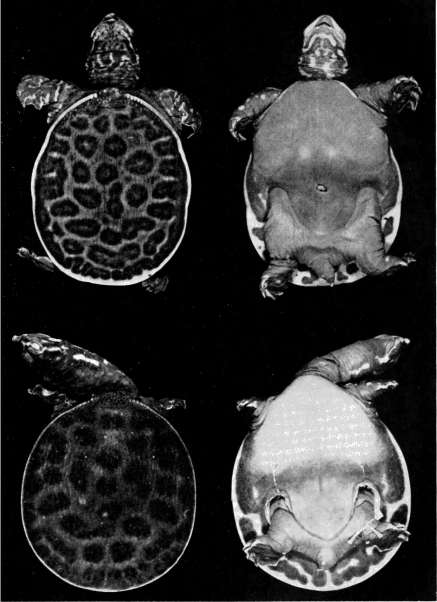
Trionyx ferox, juveniles. Top—UMMZ 76755 (× 1) dorsal and ventral views; Lake Griffin, Lake County, Florida. Bottom—TU 13960 (× 3/4), dorsal and ventral views; Hillsborough River, ca. 20 mi. NE Tampa, Hillsborough County, Florida.
PLATE 32
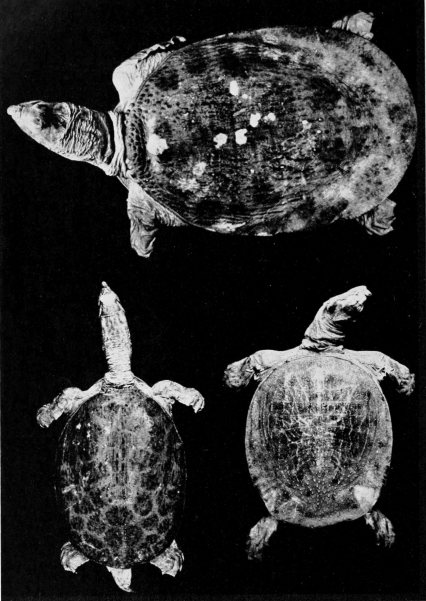
Top—Trionyx ferox, female, UMMZ 90010 (× 2/9); east edge Okefinokee Swamp, Charlton County, Georgia. Bottom—Left, Trionyx ferox, adult male, UMMZ 102276 (× 1/5), 14 mi. SE Punta Gorda, Lee County, Florida; right, Trionyx sinensis, female, KU 39417 (× 3/10), 5 mi. ESE Seoul, Korea. All dorsal views; note resemblance of two species in having longitudinal ridging and marginal ridge of carapace.
PLATE 33
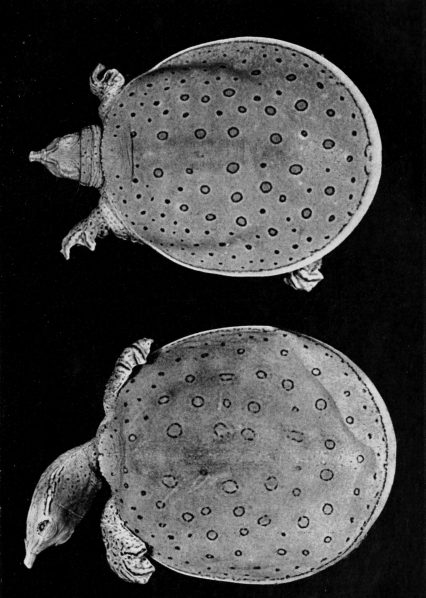
Trionyx spinifer spinifer, juveniles, dorsal views. Top—UMMZ 74518 (× 12/5); Portage Lake, Washtenaw County, Michigan. Bottom—TU 16132 (× 11/5); Sevierville, Sevier County, Tennessee.
PLATE 34
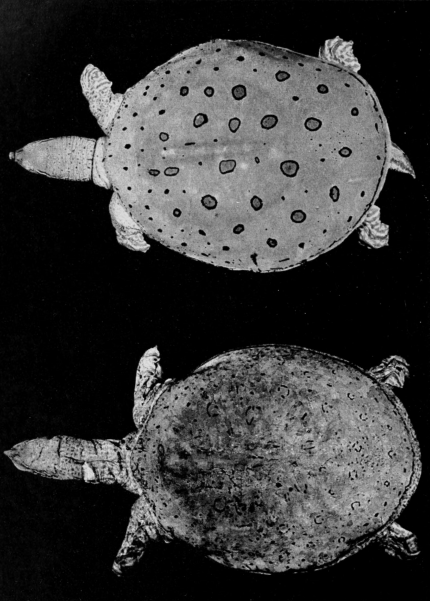
Trionyx spinifer spinifer, dorsal views. Top—Adult male, UMMZ 54401 (× 3/7), Portage Lake, Livingston County, Michigan. Bottom—Female, UMMZ 81699 (× 2/7), Ottawa County, Michigan.
PLATE 35
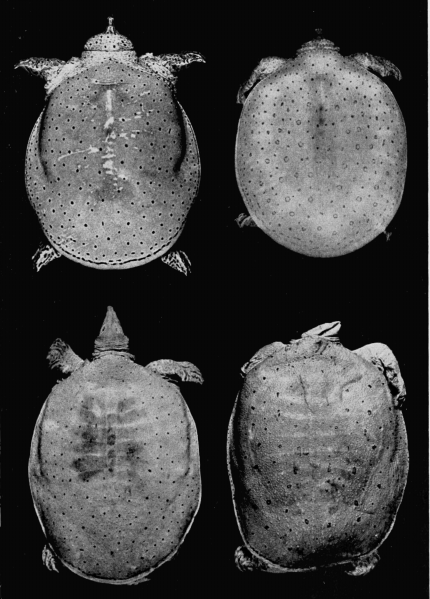
Trionyx spinifer hartwegi, dorsal views. Top—Juveniles; left, KU 40210 (× 9/10), 121/2 mi. S, 11/4 mi. W Meade, Meade County, Kansas; right, KU 16531 (× 1), Smoky Hill River, 3 mi. SW Elkader, Logan County, Kansas. Bottom—Adult Males; left, KU 18385 (× 2/5), Arrington, Comanche County, Kansas; right, KU 3758 (× 3/10), Little Salt Marsh, Stafford County, Kansas.
PLATE 36
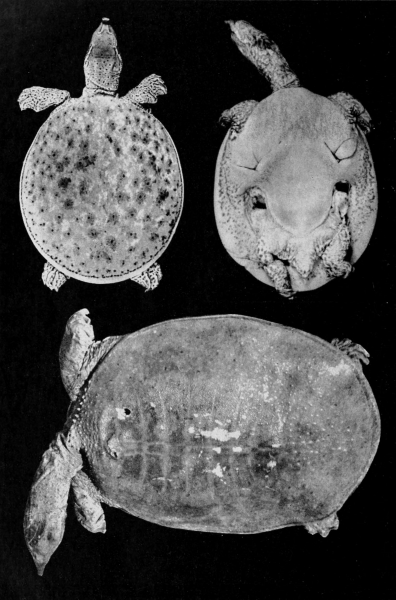
Trionyx spinifer hartwegi. Top—Juveniles; left, TU 13885, dorsal view (× 3/4), Little Vian Creek, 1 mi. E Vian, Sequoyah County, Oklahoma; right, KU 3732, ventral view (× 5/7), Independence, Montgomery County, Kansas. Bottom—Adult female, TTC 719, dorsal view (× 2/7), 10 mi. S, 2 mi. W Gruver, Hansford County, Texas.
PLATE 37
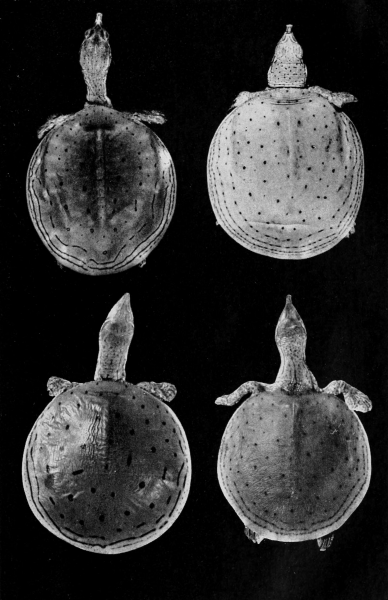
Trionyx spinifer asper, juveniles, dorsal views. Top—Left, male, KU 50839 (× 9/10), Flint River, 11/2 mi. S Bainbridge, Decatur County, Georgia; right, female, TU 15661 (× 9/10), Blackwater River, 4.3 mi. NW Baker, Okaloosa County, Florida. Bottom—Left, male, TU 13623 (× 7/9), Yellow River, 3.1 mi. W Hammond, Tangipahoa Parish, Louisiana; right, female, TU 14362 (× 4/5), Hobolochito Creek, 1 mi. N Picayune, Pearl River County, Mississippi.
PLATE 38
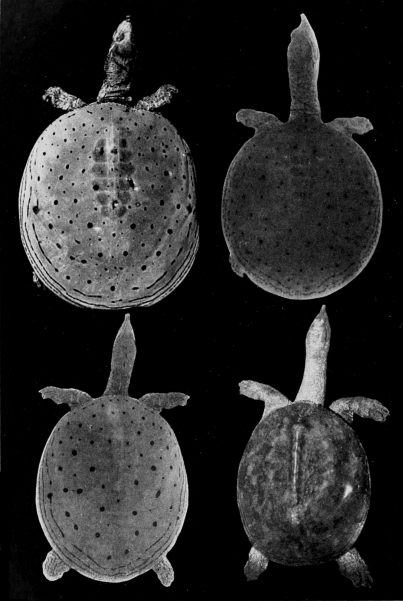
Trionyx spinifer asper, dorsal views. Top—Left, adult male, TU 15869 (× 1/2), Escambia River, 1.2 mi. E Century, Escambia County, Florida; right, female, TU 14673.3 (× 1/2), Black Warrior River, 171/2 mi. SSW Tuscaloosa, Tuscaloosa County, Alabama. Bottom—Left, adult male, TU 17117 (× 1/4), Pearl River, Varnado, Washington Parish, Louisiana; right, female, TU 16584 (× 1/5), locality same as TU 15869.
PLATE 39
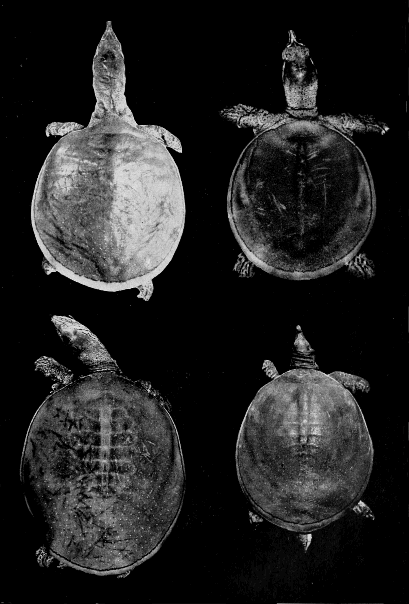
Trionyx spinifer pallidus, new subspecies, dorsal views. Top—Juveniles; left, TU 481 (× 2/3), Caddo Lake, Caddo Parish, Louisiana; right, KU 50832 (× 9/10), mouth of Caney Creek, 4 mi. SW Kingston, Marshall County, Oklahoma. Bottom—Adult males; left, holotype, TU 484 (× 1/3), locality same as TU 481; right, TU 1122 (× 2/9), Lacassine Refuge, Cameron Parish, Louisiana.
PLATE 40
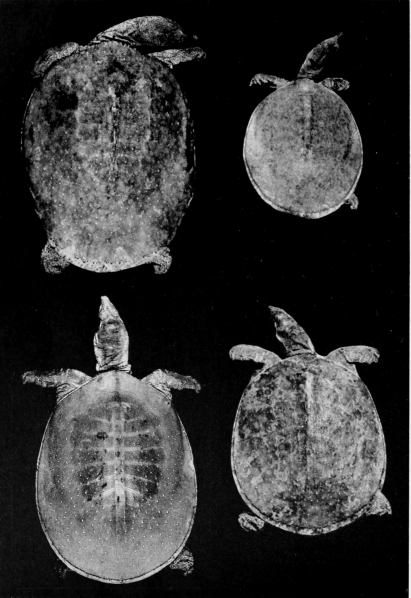
Trionyx spinifer pallidus, new subspecies, dorsal views. Top—Females; left, TU 13213 (× 1/4), Sabine River, 8 mi. SW Negreet, Sabine Parish, Louisiana; right, TU 13266 (× 2/9), Sabine River, 8 mi. SW Merryville, Beauregard Parish, Louisiana. Bottom—Left, adult male, SM 2889 (× 1/4), Groveton, Trinity County, Texas; right, female, TU 14402 (× 1/5), Trinity River, near junction with Big Creek, Liberty County, Texas.
PLATE 41
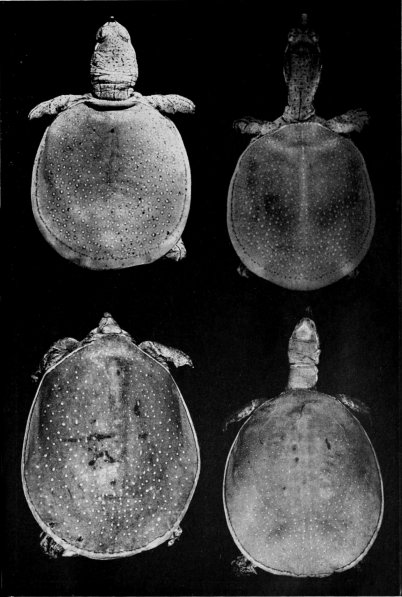
Trionyx spinifer guadalupensis, new subspecies, dorsal views. Top—Juveniles; left, ANSP 16717 (× 1), no data; right, KU 50834 (× 11/10), Hondo Creek, 4 mi. W Bandera, Bandera County, Texas. Bottom—Adult males; left, holotype UMMZ 89926 (× 1/3), 15 mi. NE Tilden, McMullen County, Texas; right, SM 659 (× 3/10), Colorado River, near Austin, Travis County, Texas.
PLATE 42
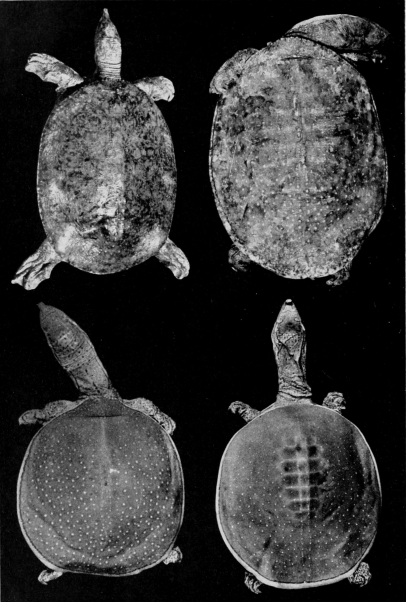
Trionyx spinifer guadalupensis, new subspecies, dorsal views. Top—Adult females; left, TU 16036.1 (× 1/5), Llano River, 2 mi. W Llano, Llano County, Texas; right, TU 10160 (× 1/5), Guadalupe River, 9 mi. SE Kerrville, Kerr County, Texas. Bottom—Left, female, CM 3118 (× 3/4), Black Bayou, Victoria County, Texas; right, male, TU 14419.6 (× 5/9), San Saba River, 11 mi. NNW San Saba, San Saba County, Texas.
PLATE 43
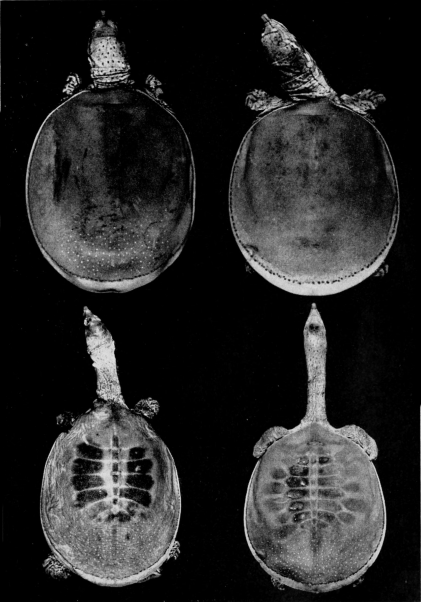
Trionyx spinifer emoryi, dorsal views. Top—Juveniles; left, UMMZ 69411 (× 3/4), Río Conchos, 9 mi. N Linares, Nuevo León, México; right, UMMZ 69412 (× 5/6), Río Purificación, north Ciudad Victoria, Tamaulipas, México. Bottom—Adult males; left, topotype, TU 11561 (× 1/3), Brownsville, Cameron County, Texas; right, KU 48217 (× 1/3), Black River Village, Eddy County, New Mexico.
PLATE 44
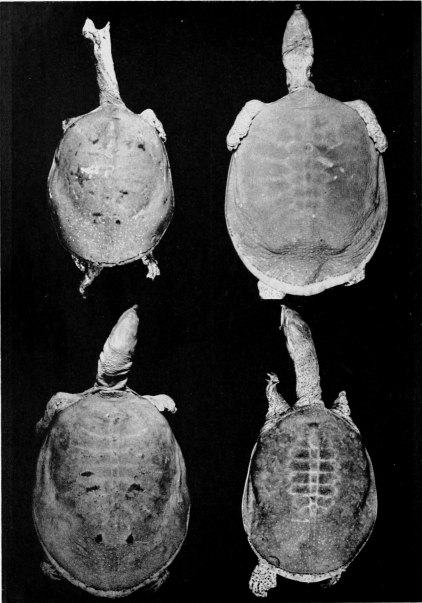
Trionyx spinifer emoryi, dorsal views. Top—Left, adult male, KU 51194 (× 2/7), Río Conchos, near Meoquí, Chihuahua, México; right, female, KU 3119 (× 4/9), Salt River, Phoenix, Maricopa County, Arizona. Bottom—Females; left, KU 3118 (× 1/5), locality same as KU 3119; right, TU 14453 (× 3/10), Pecos River, near junction with Independence Creek, Terrell County, Texas.
PLATE 45
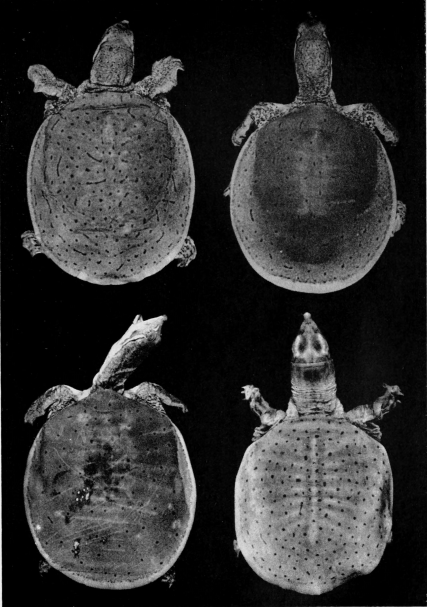
Trionyx muticus muticus, juveniles, dorsal views. Top—Topotypes (× 1), Wabash River, 2 mi. S New Harmony, Posey County, Indiana; left, INHS 7278; right, INHS 7279. Bottom—Left, TU 14375 (× 3/4), Trinity River near junction with Big Creek, Liberty County, Texas; right, KU 50845 (× 12/5), 4 mi. N Atwood, Hughes County, Oklahoma.
PLATE 46
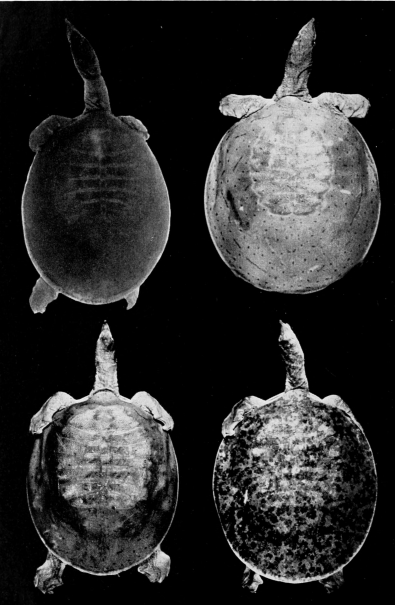
Trionyx muticus muticus, dorsal views. Top—Adult males; left, TU 14606 (× 3/10), White River, Cotter, Marion County, Arkansas; right, KU 48237 (× 1/3), 8 mi. S Hanover, Washington County, Kansas. Bottom—Females (× 1/4), 2 mi. E Manhattan, in Pottawatomie County, Kansas; left, KU 48229; right, KU 48238.
PLATE 47
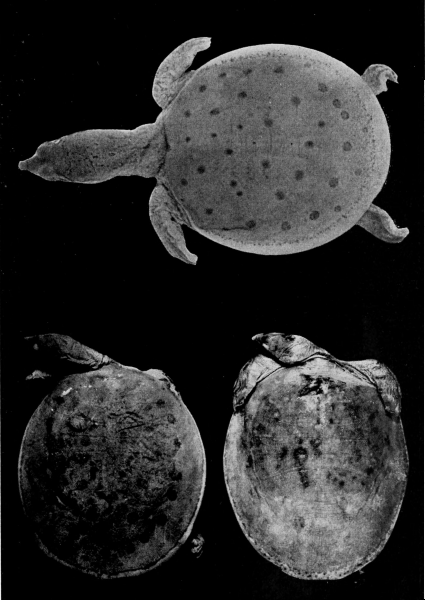
Trionyx muticus calvatus, dorsal views. Top—Juvenile, TU 17303 (× 12/5), Pearl River, Varnado, Washington Parish, Louisiana. Bottom—Left, adult male, KU 47118 (× 3/10), Pearl River within 4 mi. of Monticello, Lawrence County, Mississippi; right, adult female, TU 17306 (× 2/9), Pearl River, 9 mi. S Monticello, Lawrence County, Mississippi.
PLATE 48
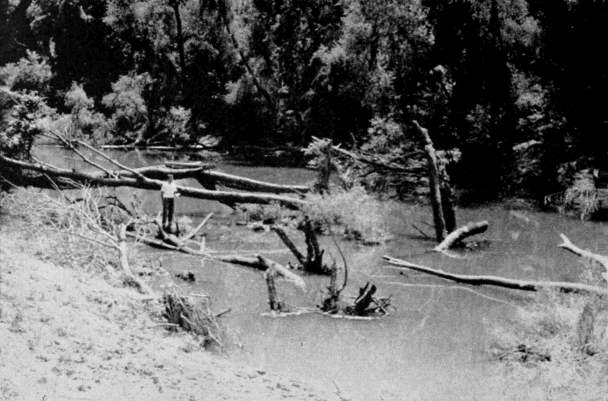
Fig. 1. Habitat of T. s. pallidus, Little River, 6.5 mi. S Broken Bow, McCurtain County, Oklahoma, September 7, 1953.
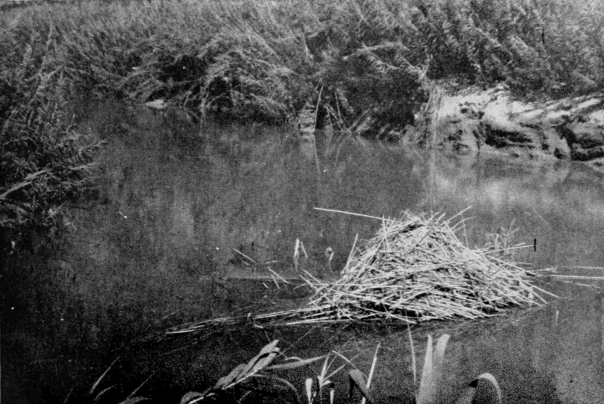
Fig. 2. Habitat of T. s. emoryi, Río Mesquites, 2 mi. W Nadadores, Coahuila, México, July 27, 1959. Two emoryi were trapped in hoop nets set in quiet water to left of what is believed to be a muskrat house.
PLATE 49
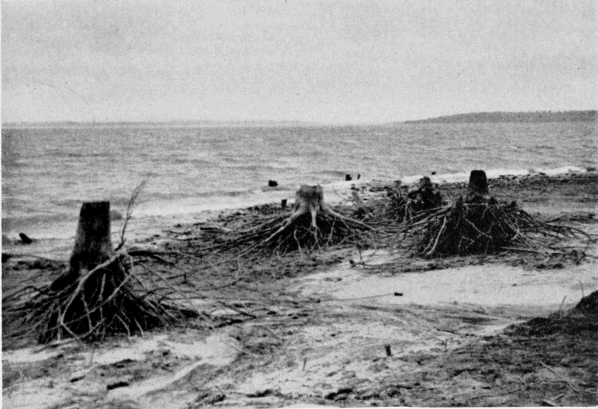
Fig. 1. General habitat of T. s. pallidus and T. m. muticus, Lake Texoma, in a period of low water, 2 mi. E Willis, Marshall County, Oklahoma, February 24, 1951.
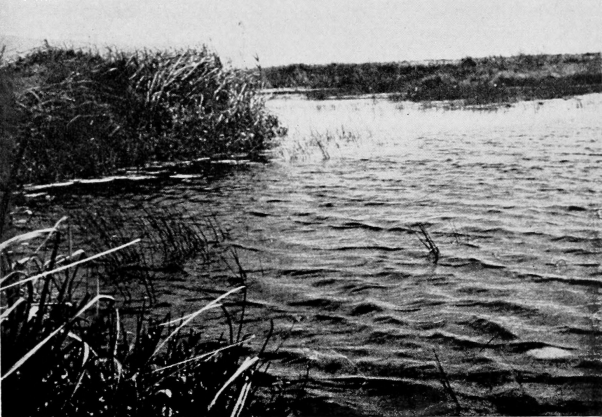
Fig. 2. Type locality of T. ater, Tío Candido, 16 km. S Cuatro Ciénegas, Coahuila, México, July 30, 1959. An adult male of T. s. emoryi was also netted here.
PLATE 50
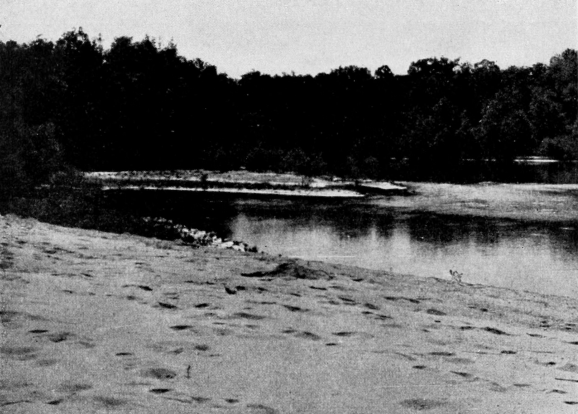
Fig. 1. General habitat of T. s. asper and T. m. calvatus, Escambia River, 2 mi. E, 1/2 mi. N Century, Escambia County, Florida, June 1, 1954. Three nests of calvatus found on sand bar in foreground.
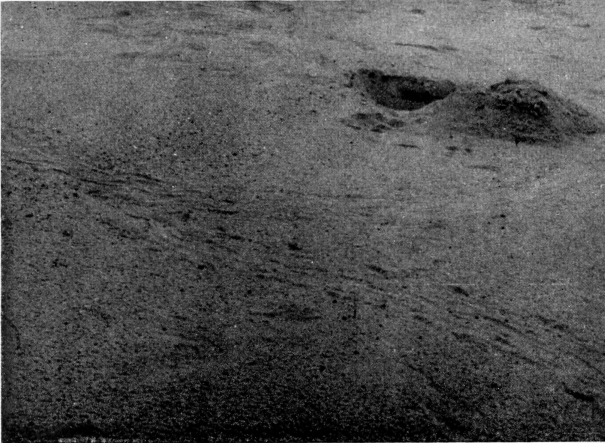
Fig. 2. Nest site of T. m. calvatus (excavated by investigator) on open sand bar shown above in Fig. 1, June 1, 1954. Note tracks of turtle in foreground leading toward and away from disturbed area at left.