{41} Fifthly, Of Plants.
Reading edition
AND
1. Of such Plants as are common with us in ENGLAND.
Hedghog-grass.[106]
Mattweed.[107]
Cats-tail.[108]
Stichwort, commonly taken here by ignorant People for Eyebright; it blows in June.[109]
Blew Flower-de-luce; the roots are not knobby, but long and streight, and very white, with a multitude of strings.[110]
To provoke Vomit and for Bruises.
It is excellent for to provoke Vomiting, and for Bruises on the Feet or Face. They Flower in June, and grow upon dry sandy Hills as well as in low wet Grounds.
Yellow bastard Daffodill; it flowereth in May, the green leaves are spotted with black spots.[111]
Dogstones, a kind of Satyrion, whereof there are several kinds groweth in our Salt Marshes.[112]
{42} To procure Love.
I once took notice of a wanton Womans compounding the solid Roots of this Plant with Wine, for an Amorous Cup; which wrought the desired effect.
Watercresses.[113]
Red Lillies grow all over the Country innumerably amongst the small Bushes, and flower in June.[114]
Wild Sorrel.[115]
Adders Tongue comes not up till June; I have found it upon dry hilly grounds, in places where the water hath stood all Winter, in August, and did then make Oyntment of the Herb new gathered; the fairest Leaves grow amongst short Hawthorn Bushes, that are plentifully growing in such hollow places.[116]
One Blade.[117]
Lilly Convallie, with the yellow Flowers grows upon rocky banks by the Sea.[118]
Water Plantane, here called Water suck-leaves.[119]
For Burns and Scalds, and to draw Water out of swell’d Legs.
It is much used for Burns and Scalds, and to draw water out of swell’d Legs. Bears feed much upon this Plant, so do the Moose Deer.
{43} Sea Plantane, three kinds.[120]
Small-water Archer.[121]
Autumn Bell Flower.[122]
White Hellibore, which is the first Plant that springs up in this Country, and the first that withers; it grows in deep black Mould and Wet, in such abundance, that you may in a small compass gather whole Cart-loads of it.[123]
Wounds and Aches Cured by the Indians. For the Tooth-ach. For Herpes milliares.
The Indians Cure their Wounds with it, annointing the Wound first with Raccoons greese, or Wild-Cats greese, and strewing upon it the powder of the Roots; and for Aches they scarifie the grieved part, and annoint it with one of the foresaid Oyls, then strew upon it the powder: The powder of the Root put into a hollow Tooth, is good for the Tooth-ach: The Root sliced thin and boyled in Vineager, is very good against Herpes Milliaris.
Arsmart, both kinds.[124]
Spurge Time, it grows upon dry sandy Sea Banks, and is very like to Rupter-wort, it is full of Milk.[125]
Rupter-wort, with the white flower.[126]
Jagged Rose-penny-wort.[127]
{44} Soda bariglia, or massacote, the Ashes of Soda, of which they make Glasses.
Glass-wort, here called Berrelia, it grows abundantly in Salt Marshes.[128]
St. John’s-Wort.[129]
St. Peter’s-Wort.[130]
Speed-well Chick-weed.[131]
Male fluellin, or Speed-well.[132]
Upright Peniroyal.[133]
Wild-Mint.[134]
Cat-Mint.[135]
Egrimony.[136]
The lesser Clot-Bur.[137]
Water Lilly, with yellow Flowers, the Indians Eat the Roots, which are long a boiling, they tast like the Liver of a Sheep, the Moose Deer feed much upon them, at which time the Indians kill them, when their heads are under water.[138]
Dragons, their leaves differ from all the kinds with us, they come up in June.[139]
Violets of three kinds, the White Violet which is sweet, but not so strong as our Blew Violets; Blew Violets without sent, and a Reddish Violet without sent; they do not blow till June.[140]
{45} For swell’d Legs.
Wood-bine, good for hot swellings of the Legs, fomenting with the decoction, and applying the Feces in the form of a Cataplasme.[141]
Salomons-Seal, of which there is three kinds; the first common in England, the second, Virginia Salomons-Seal, and the third, differing from both, is called Treacle Berries, having the perfect tast of Treacle when they are ripe; and will keep good along while; certainly a very wholsome Berry, and medicinable.[142]
Doves-Foot.[143]
Herb Robert.[143]
Knobby Cranes Bill.[143]
For Agues.
Ravens-Claw, which flowers in May, and is admirable for Agues.[143]
Cinkfoil.[144]
Tormentile.[144]
Avens, with the leaf of Mountane-Avens, the flower and root of English Avens.[145]
Strawberries.[146]
Wild Angelica, majoris and minoris.[147]
Alexanders, which grow upon Rocks by the Sea shore.[148]
{46} Yarrow, with the white Flower.[149]
Columbines, of a flesh colour, growing upon Rocks.[150]
Oak of Hierusalem.[151]
Achariston is an excellent Medicine for stopping of the Lungs upon Cold, Ptisick, &c.
Oak of Cappadocia, both much of a nature, but Oak of Hierusalem is stronger in operation; excellent for stuffing of the Lungs upon Colds, shortness of Wind, and the Ptisick; maladies that the Natives are often troubled with: I helped several of the Indians with a Drink made of two Gallons of Molosses wort, (for in that part of the Country where I abode, we made our Beer of Molosses, Water, Bran, chips of Sassafras Root, and a little Wormwood, well boiled,) into which I put of Oak of Hierusalem, Cat-mint, Sowthistle, of each one handful, of Enula Campana Root one Ounce, Liquorice scrap’d brused and cut in pieces, one Ounce, Sassafras Root cut into thin chips, one Ounce, Anny-seed and sweet Fennel-seed, of each one Spoonful bruised; boil these in a close Pot, upon a soft Fire to the consumption of one Gallon, then take it off, and strein it gently; you may if you will {47} boil the streined liquor with Sugar to a Syrup, then when it is Cold, put it up into Glass Bottles, and take thereof three or four spoonfuls at a time, letting it run down your throat as leasurely as possibly you can; do thus in the morning, in the Afternoon, and at Night going to Bed.
Goose-Grass, or Clivers.[152]
Fearn.[153]
Brakes.[153]
Wood sorrel, with the yellow flower.[154]
Elm.[155]
Line Tree, both kinds.[156]
A way to draw out Oyl of Akrons, or the like, &c.
Maple; of the Ashes of this Tree the Indians make a lye, with which they force out Oyl from Oak Akorns that is highly esteemed by the Indians.[157]
Dew-Grass.[158]
Earth-Nut, which are of divers kinds, one bearing very beautiful Flowers.[159]
Fuss-Balls, very large.[160]
Mushrooms, some long and no bigger than ones finger, others jagged flat, round, none like our great Mushrooms in England, of these some are of a Scarlet colour, others a deep Yellow, &c.[160]
{48} Blew flowered Pimpernel.[161]
Noble Liver-wort, one sort with white flowers, the other with blew.[162]
Black-Berry.[163]
Dew-Berry.
Rasp-Berry, here called Mul-berry.
Goose-Berries, of a deep red Colour.[164]
Haw-thorn, the Haws being as big as Services, and very good to eat, and not so astringent as the Haws in England.[165]
Toad flax.[166]
Pellamount, or Mountain time.[167]
Mouse-ear Minor.[168]
The making of Oyl of Akrons. To strengthen weak Members. For Scall’d-heads.
There is Oak of three kinds, white, red and black, the white is excellent to make Canoes of, Shallopes, Ships, and other Vessels for the Sea, and for Claw-board, and Pipe-staves, the black is good to make Waynscot of; and out of the white Oak Acorns, (which is the Acorn Bears delight to feed upon): The Natives draw an Oyl, taking the rottenest Maple Wood, which being burnt to ashes, they make a strong Lye therewith, wherein they boyl their white Oak-Acorns until the Oyl swim on the top in great quantity; this {49} they fleet off, and put into bladders to annoint their naked Limbs, which corrobarates them exceedingly; they eat it likewise with their Meat, it is an excellent clear and sweet Oyl: Of the Moss that grows at the roots of the white Oak the Indesses make a strong decoction, with which they help their Papouses or young Childrens scall’d Heads.[169]
Juniper, which Cardanus saith is Cedar in hot Countries, and Juniper in cold Countries; it is hear very dwarfish and shrubby, growing for the most part by the Sea side.[170]
Willow.[171]
Spurge Lawrel, called here Poyson berry, it kills the English Cattle if they chance to feed upon it, especially Calves.[172]
Gaul, or noble Mirtle.[173]
Elder.[174]
Dwarf Elder.[175]
For a Cut with a Bruse.
Alder; An Indian Bruising and Cutting of his Knee with a fall, used no other remedy, than Alder Bark, chewed fasting, and laid to it, which did soon heal it.[176]
To take Fire out of a Burn.
The decoction is also excellent to take {50} the Fire out of a Burn or Scalld.
For Wounds and Cuts.
For Wounds and Cuts make a strong decoction of Bark of Alder, pour of it into the Wound, and drink thereof.
Hasel.[177]
For sore Mouths, falling of the Pallat.
Filberd, both with hairy husks upon the Nuts, and setting hollow from the Nut, and fill’d with a kind of water of an astringent taste; it is very good for sore Mouths, and falling of the Pallat, as is the whole green Nut before it comes to Kernel, burnt and pulverized. The Kernels are seldom without maggots in them.[177]
The Figure of the Walnut.
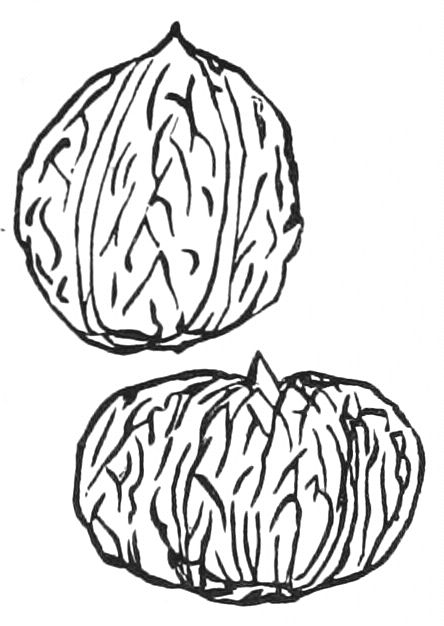
Walnut; the Nuts differ much from ours in Europe, they being smooth, much like a Nutmeg in shape, and not much bigger; some three cornered, all of them but thinly replenished with Kernels.[178]
{51} Chestnuts; very sweet in taste, and may be (as they usually are) eaten raw; the Indians sell them to the English for twelve pence the bushel.[179]
Beech.[180]
Ash.[181]
Quick-beam, or Wild-Ash.[182]
Coals of Birch pulverized and wrought with the white of an Egg to a Salve, is a gallant Remedy for dry scurfy Sores upon the Shins; and for Bruised Wounds and Cuts.
Birch, white and black; the bark of Birch is used by the Indians for bruised Wounds and Cuts, boyled very tender, and stampt betwixt two stones to a Plaister, and the decoction thereof poured into the Wound; And also to fetch the Fire out of Burns and Scalds.[183]
Poplar, but differing in leaf.[184]
Plumb Tree, several kinds, bearing some long, round, white, yellow, red, and black Plums; all differing in their Fruit from those in England.[185]
Wild Purcelane.[186]
Wood-wax, wherewith they dye many pretty Colours.[187]
Red and black Currans.[188]
{52} For the Gout, or any Ach.
Spunck, an excrescence growing out of black Birch, the Indians use it for Touchwood; and therewith they help the Sciatica, or Gout of the Hip, or any great Ach, burning the Patient with it in two or three places upon the Thigh, and upon certain Veins.[189]
2. Of such Plants as are proper to the Country.
To ripen any Impostume or Swelling. For sore Mouths. The New-Englands standing Dish.
Indian Wheat, of which there is three sorts, yellow, red, and blew; the blew is commonly Ripe before the other a Month: Five or Six Grains of Indian Wheat hath produced in one year 600. It is hotter than our Wheat and clammy; excellent in Cataplasms to ripen any Swelling or impostume. The decoction of the blew Corn, is good to wash sore Mouths with: It is light of digestion, and the English make a kind of Loblolly of it {53} to eat with Milk, which they call Sampe; they beat it in a Morter, and sift the flower out of it: the remainder they call Homminey, which they put into a Pot of two or three Gallons, with Water, and boyl it upon a gentle Fire till it be like a Hasty Pudden; they put of this into Milk, and so eat it. Their Bread also they make of the Homminey so boiled, and mix their Flower with it, cast it into a deep Bason in which they form the Loaf, and then turn it out upon the Peel, and presently put it into the Oven before it spreads abroad; the Flower makes excellent Puddens.[190]
Bastard Calamus Aromaticus, agrees with the description, but is not barren; they flower in July, and grow in wet places, as about the brinks of Ponds.[191]
To keep the Feet warm.
The English make use of the Leaves to keep their Feet warm. There is a little Beast called a Muskquash, that liveth in small Houses in the Ponds, like Mole Hills, that feed upon these Plants. Their Cods sent as sweet and as strong as Musk, and will last along time handsomly wrap’d up in Cotton wool; they are very good to lay amongst Cloaths. May is the best {54} time to kill them, for then their Cods sent strongest.
Wild-Leekes, which the Indians use much to eat with their fish.[192]
A Plant like Knavers-Mustard, called New-England Mustard.[193]
Mountain-Lillies, bearing many yellow Flowers, turning up their Leaves like the Martigon, or Turks Cap, spotted with small spots as deep as Safforn, they Flower in July.[194]
One Berry, or Herb True Love. See the Figure.[195]
Tobacco, there is not much of it Planted in New-England. The Indians make use of a small kind with short round leaves called Pooke.[196]
For Burns and Scalds.
With a strong decoction of Tobacco they Cure Burns and Scalds, boiling it in Water from a Quart to a Pint, then wash the Sore therewith, and strew on the powder of dryed Tobacco.
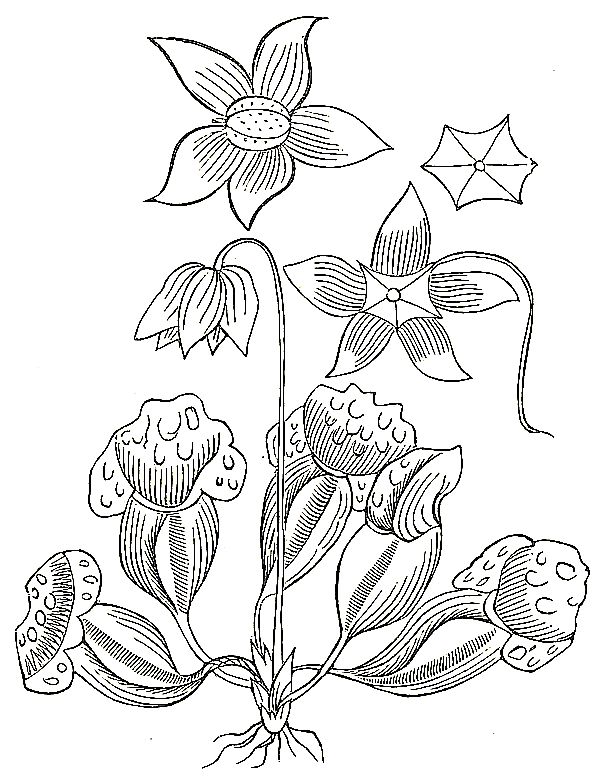
Hollow Leaved Lavender.
Hollow Leaved Lavender, is a Plant that grows in salt Marshes overgrown with Moss, with one straight stalk about the bigness of an Oat straw, better than a Cubit high; upon the top standeth one {55} fantastical Flower, the Leaves grow close from the root, in shape like a Tankard, hollow, tough, and alwayes full of Water, the Root is made up of many small strings, growing only in the Moss, and not in the Earth, the whole Plant comes to its perfection in August, and then it has Leaves, Stalks, and Flowers as red as blood, excepting the Flower which hath some yellow admixt. I wonder where the knowledge of this Plant hath slept all this while, i.e. above Forty Years.[197]
For all manner of Fluxes.
It is excellent for all manner of Fluxes.
Live for ever, a kind of Cud-weed.[198]
Tree Primerose, taken by the Ignorant for Scabious.[199]
A Solar Plant, as some will have it.
Maiden Hair, or Cappellus veneris verus, which ordinarily is half a Yard in height. The Apothecaries for shame now will substitute Wall-Rue no more for Maiden Hair, since it grows in abundance in New-England, from whence they may have good store.[200]
Pirola, Two kinds. See the Figures, both of them excellent Wound Herbs.[201]
Homer’s Molley.[202]
{56} Lysimachus or Loose Strife, it grows in dry grounds in the open Sun four foot high, Flowers from the middle of the Plant to the top, the Flowers purple, standing upon a small sheath or cod, which when it is ripe breaks and puts forth a white silken doun, the stalk is red, and as big as ones Finger.[203]
Marygold of Peru, of which there are two kinds, one bearing black seeds, the other black and white streak’d, this beareth the fairest flowers, commonly but one upon the very top of the stalk.[204]
Treacle-Berries. See before Salomons Seal.
Oak of Hierusalem. See before.
Oak of Cappadocea. See before.
Earth-Nuts, differing much from those in England, one sort of them bears a most beautiful Flower.[205]
For the Scurvy and Dropsie.
Sea-Tears, they grow upon the Sea banks in abundance, they are good for the Scurvy and Dropsie, boiled and eaten as a Sallade, and the broth drunk with it.[206]
Indian Beans, better for Physick use than other Beans.
Indian Beans, falsly called French beans, are better for Physick and Chyrurgery {57} than our Garden Beans. Probatum est.[207]
Squashes, but more truly Squontersquashes, a kind of Mellon, or rather Gourd, for they oftentimes degenerate into Gourds; some of these are green, some yellow, some longish like a Gourd, others round like an Apple, all of them pleasant food boyled and buttered, and season’d with Spice; but the yellow Squash called an Apple Squash, because like an Apple, and about the bigness of a Pome-water is the best kind;[208] they are much eaten by the Indians and the English, yet they breed the small white Worms (which Physitians call Ascarides,) in the long Gut that vex the Fundament with a perpetual itching, and a desire to go to stool.
Water-Mellon, it is a large Fruit, but nothing near so big as a Pompion, colour, smoother, and of a sad Grass green rounder or more rightly Sap-green; with some yellowness admixt when ripe; the seeds are black, the flesh or pulpe exceeding juicy.[209]
For heat and thirst in Feavers.
It is often given to those sick of Feavers, and other hot Diseases with good success.
{58} New-England Daysie, or Primrose, is the second kind of Navel Wort in Johnson upon Gerard; it flowers in May, and grows amongst Moss upon hilly Grounds and Rocks that are shady.[210]
For Burns and Scalds.
It is very good for Burns and Scalds.
An Achariston, or Medicine deserving thanks.
An Indian whose Thumb was swell’d, and very much inflamed, and full of pain, increasing and creeping along to the wrist, with little black spots under the Thumb against the Nail; I Cured it with this Umbellicus veneris Root and all, the Yolk of an Egg, and Wheat flower, f. Cataplasme.
Briony of Peru, (we call it though it grown hear) or rather Scammony; some take it for Mechoacan: The green Juice is absolutely Poyson; yet the Root when dry may safely be given to strong Bodies.[211]
Red and Black Currence. See before.
Wild Damask Roses, single, but very large and sweet, but stiptick.[212]
Sweet Fern,[213] the Roots run one within another like a Net, being very long and spreading abroad under the upper crust of {59} the Earth, sweet in taste, but withal astringent, much hunted after by our Swine: The Scotchmen that are in New-England have told me that it grows in Scotland.
For Fluxes.
The People boyl the tender tops in Molosses Beer, and in Possets for Fluxes, for which it is excellent.
Sarsaparilia, a Plant not yet sufficiently known by the English: Some say it is a kind of Bind Weed; we have, in New-England two Plants, that go under the name of Sarsaparilia: the one not above a foot in height without Thorns, the other having the same Leaf, but is a shrub as high as a Goose Berry Bush, and full of sharp Thorns; this I esteem as the right, by the shape and savour of the Roots, but rather by the effects answerable to that we have from other parts of the World; It groweth upon dry Sandy banks by the Sea side, and upon the banks of Rivers, so far as the Salt water flowes; and within Land up in the Country, as some have reported.[214]
Bill Berries, two kinds, Black and Sky Coloured, which is more frequent.[215]
{60} To cool the heat of Feavers, and quench Thirst.
They are very good to allay the burning heat of Feavers, and hot Agues, either in Syrup or Conserve.
A most excellent Summer Dish.
They usually eat of them put into a Bason, with Milk, and sweetned a little more with Sugar and Spice, or for cold Stomachs, in Sack. The Indians dry them in the Sun, and sell them to the English by the Bushell, who make use of them instead of Currence, putting of them into Puddens, both boyled and baked, and into Water Gruel.
Knot Berry, or Clowde Berry, seldom ripe.[216]
Sumach, differing from all that I did ever see in the Herbalists; our English Cattle devour it most abominably, leaving neither Leaf nor Branch, yet it sprouts again next Spring.[217]
For Colds.
The English use to boyl it in Beer, and drink it for Colds; and so do the Indians, from whom the English had the Medicine.
Wild Cherry, they grow in clusters like {61} Grapes, of the same bigness, blackish, red when ripe, and of a harsh taste.[218]
For Fluxes.
They are also good for Fluxes.
Transplanted and manured, they grow exceeding fair.
Board Pine, is a very large Tree two or three Fathom about.[219]
For Wounds.
It yields a very soveraign Turpentine for the Curing of desperate Wounds.
For Stabbs.
The Indians make use of the Moss boiled in Spring Water, for Stabbs, pouring in the Liquor, and applying the boiled Moss well stamp’d or beaten betwixt two stones.
For Burning and Scalding.
And for Burning and Scalding, they first take out the fire with a strong decoction of Alder Bark, then they lay upon it a Playster of the bark of Board Pine first boyled tender, and beat to a Playster betwixt two stones.
To take Fire out of a Burn.
One Christopher Luxe, a Fisher-man, having burnt his Knee Pan, was healed {62} again by an Indian Webb, or Wife, (for so they call those Women that have Husbands;) She first made a strong decoction of Alder bark, with which she took out the Fire by Imbrocation, or letting of it drop upon the Sore, which would smoak notably with it; then she Playstered it with the Bark of Board Pine, or Hemlock Tree, boyled soft and stampt betwixt two stones, till it was as thin as brown Paper, and of the same Colour, she annointed the Playster with Soyles Oyl, and the Sore likewise, then she laid it on warm, and sometimes she made use of the bark of the Larch Tree.
To eat out proud Flesh in a Sore.
And to eat out the proud Flesh, they take a kind of Earth Nut boyled and stamped, and last of all, they apply to the Sore the Roots of Water Lillies boiled and stamped betwixt two stones, to a Playster.
For Stitches.
The Firr Tree, or Pitch Tree,[220] the Tar that is made of all sorts of Pitch Wood is an excellent thing to take away those desperate Stitches of the Sides, which perpetually afflicteth those poor People that are {63} stricken with the Plague of the Back.
Note, You must make a large Toast, or Cake slit and dip it in the Tar, and bind it warm to the Side.
The most common Diseases in New England.
The Black Pox, the Spotted Feaver, the Griping of the Guts, the Dropsie, and the Sciatica, are the killing Diseases in New-England.
The Larch Tree, which is the only Tree of all the Pines, that sheds his Leaves before Winter; The other remaining Green all the Year: This is the Tree from which we gather that useful purging excrense, Agarick.[221]
For Wounds and Cuts.
The Leaves and Gum are both very good to heal Wounds and Cuts.
For Wounds with Bruises.
I cured once a desperate Bruise with a Cut upon the Knee Pan, with an Ungent made with the Leaves of the Larch Tree, and Hogs Grease, but the Gum is best.
Spruce is a goodly Tree, of which they make Masts for Ships, and Sail Yards: It is generally conceived by those that have {64} skill in Building of Ships, that here is absolutely the best Trees in the World, many of them being three Fathom about, and of great length.[222]
An Achariston for the Scurvy.
The tops of Green Spruce Boughs boiled in Bear, and drunk, is assuredly one of the best Remedies for the Scurvy, restoring the Infected party in a short time; they also make a Lotion of some of the decoction, adding Hony and Allum.
Hemlock Tree, a kind of Spruce, the bark of this Tree serves to dye Tawny; the Fishers Tan their Sails and Nets with it.[223]
To break Sore or Swelling.
The Indians break and heal their Swellings and Sores with it, boyling the inner Bark of young Hemlock very well, then knocking of it betwixt two stones to a Playster, and annointing or soaking it in Soyls Oyl, they apply it to the Sore: It will break a Sore Swelling speedily.
One Berry, Herba Paris, or True Love.[224]
Sassafras, or Ague Tree.[225]
{65} For heat in Feavers.
The Chips of the Root boyled in Beer is excellent to allay the hot rage of Feavers, being drunk.
For Bruises and dry Blowes.
The Leaves of the same Tree are very good made into an Oyntment, for Bruises and dry Blows. The Bark of the Root we use instead of Cinamon; and it is Sold at the Barbadoes for two Shillings the Pound.
And why may not this be the Bark the Jesuits Powder was made of, that was so Famous not long since in England, for Agues?
Cran Berry, or Bear Berry, because Bears use much to feed upon them, is a small trayling Plant that grows in Salt Marshes that are over-grown with Moss; the tender Branches (which are reddish) run out in great length, lying flat on the ground, where at distances, they take Root, over-spreading sometimes half a score Acres, sometimes in small patches of about a Rood or the like; the Leaves are like Box, but greener, thick and glittering; the Blossoms are very like the Flowers of {66} our English Night Shade, after which succeed the Berries, hanging by long small foot stalks, no bigger than a hair; at first they are of a pale yellow Colour, afterwards red, and as big as a Cherry; some perfectly round, others Oval, all of them hollow, of a sower astringent taste; they are ripe in August and September.[226]
For the Scurvy.
They are excellent against the Scurvy.
For the heat in Feavers.
They are also good to allay the fervour of hot Diseases.
The Indians and English use them much, boyling them with Sugar for Sauce to eat with their Meat; and it is a delicate Sauce, especially for roasted Mutton: Some make Tarts with them as with Goose Berries.
Vine, much differing in the Fruit, all of them very fleshy, some reasonably pleasant; others have a taste of Gun Powder, and these grow in Swamps, and low wet Grounds.[227]
{67} 3. Of such Plants as are proper to the Country, and have no Name.
(1.)
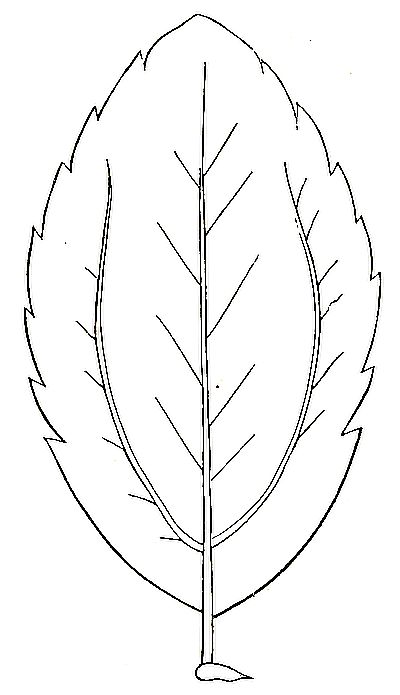
Pirola, or Winter Green, that kind which grows with us in England is common in New-England,[228] but there is another plant which I judge to be a kind of Pirola, and proper to this Country, a very beautiful Plant; The shape of the Leaf and the just bigness of it you may see in the Figure.
The Leaf of the Plant judged to be a kind of Pirola.
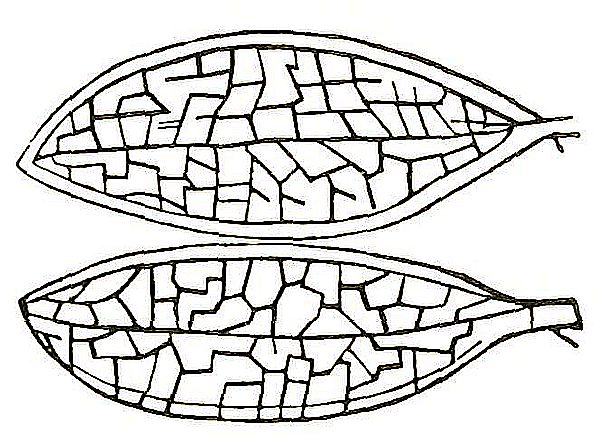
The Ground whereof is a Sap Green, embroydered (as it were) with many pale yellow Ribs, the whole Plant in shape is {68} like Semper vivum, but far less, being not above a handful high, with one slender stalk, adorned with small pale yellow Flowers like the other Pirola. It groweth not every where, but in some certain small spots overgrown with Moss, close by swamps and shady; they are green both Summer and Winter.[229]
For Wounds.
They are excellent Wound Herbs, but this I judge to be the better by far. Probatum est.
(2.)
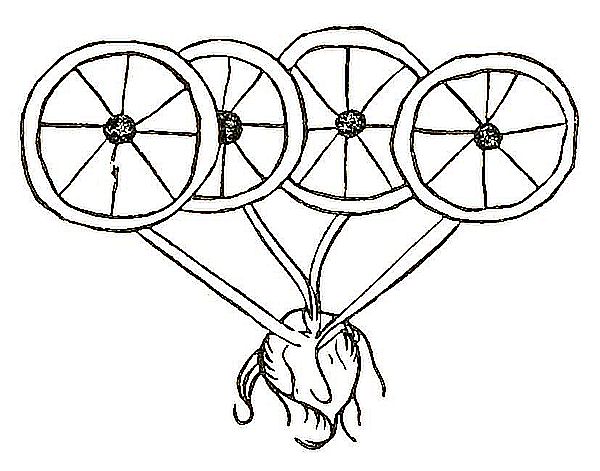
This Plant was brought to me by a neighbour, who (wandering in the Woods to find out his strayed Cattle,) lost himself {69} for two Dayes, being as he ghessed eight or ten Miles from the Sea-side. The Root was pretty thick and black, having a number of small black strings growing from it, the stalks of the Leaves about a handful long, the Leaves were round and as big as a Silver five Shilling piece, of a sap or dark green Colour, with a line or ribb as black as Jeat round the Circumference, from whence came black lines or ribs at equal distance, all of them meeting in a black spot in the Center.[230] If I had staid longer in the Country, I should have purposely made a Journey into those Parts where it was gathered, to discover if possible, the Stalk and Flower; but now I shall refer it to those that are younger, and better able to undergo the pains and trouble of finding it out; for I understood by the Natives, that it is not common, that is, every where to be found, no more then the embroydered Pirola, which also is a most elegant Plant, and which I did endeavour to bring over, but it perished at Sea.
For Wounds.
Clownes all heal, of New-England, is another Wound Herb not Inferiour to {70} ours, but rather beyond it: Some of our English practitioners take it for Vervene, and use it for the same, wherein they are grosly mistaken.
The Leaf is like a Nettle Leaf, but narrower and longer; the stalk about the bigness of a Nettle stalk, Champhered and hollow, and of a dusky red Colour; the Flowers are blew, small, and many, growing in spoky tufts at the top, and are not hooded, but having only four round Leaves, after which followeth an infinite of small longish light brown Seed; the Roots are knotty and matted together with an infinite number of small white strings; the whole Plant is commonly two Cubits high, bitter in taste, with a Rosenie favour.[231]
{71}
(3.)
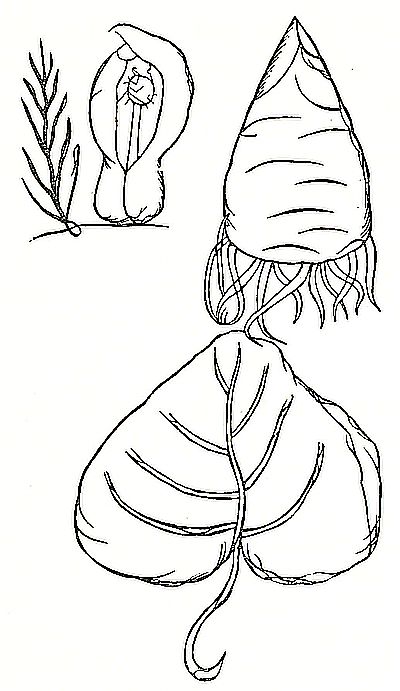
This Plant is one of the first that springs up after White Hellibore, in the like wet and black grounds, commonly by Hellibore, with a sheath or Hood like Dragons, but the pestle is of another shape, that is, having a round Purple Ball on the top of it, beset (as it were) with Burs; the hood shoots forth immediately from the Root, before any Leaf appears, having a Green {72} sprig growing fast by it, like the smaller Horse Tayl, about the latter end of April the Hood and Sprig wither away, and there comes forth in the room a Bud, like the Bud of the Walnut Tree, but bigger; the top of it is of a pale Green Colour, covered with brown skins like an Onion, white underneath the Leaves, which spread in time out of the Bud, grow from the root with a stalk a Foot long, and are as big as the great Bur Dock Leaves, and of the colour; the Roots are many, and of the bigness of the steel of a Tobacco Pipe, and very white; the whole Plant sents as strong as a Fox; it continues till August.[232]
{73}
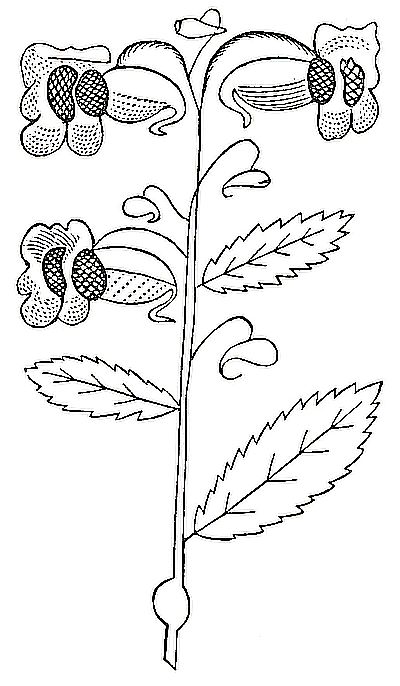
A Branch of the Humming Bird Tree.
{74} (4.)
This Plant the Humming Bird feedeth upon, it groweth likewise in wet grounds, and is not at its full growth till July, and then it is two Cubits high and better, the Leaves are thin, and of a pale green Colour, some of them as big as a Nettle Leaf, it spreads into many Branches, knotty at the setting on, and of a purple Colour, and garnished on the top with many hollow dangling Flowers of a bright yellow Colour, speckled with a deeper yellow as it were shadowed, the Stalkes are as hollow as a Kix, and so are the Roots, which are transparent, very tender, and full of a yellowish juice.[233]
For Bruises and Aches upon stroaks.
The Indians make use of it for Aches, being bruised between two stones, and laid to cold, but made (after the English manner) into an unguent with Hogs Grease, there is not a more soveraign remedy for bruises of what kind soever; and for Aches upon Stroaks.
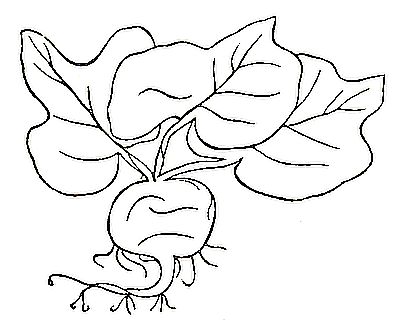
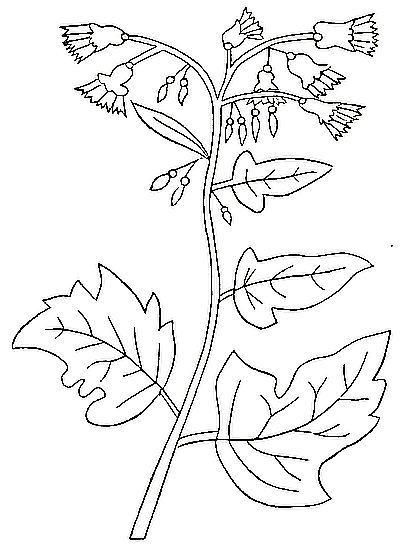
In August, 1670. in a Swamp amongst Alders, I found a fort of Tree Sow Thistle, the Stalks of some two or three Inches, {75} about, as hollow as a Kix and very brittle, the Leaves were smooth, and in shape like Sonchus lævis, i.e. Hares Lettice, but longer, some about a Foot, these grow at a distance one from another, almost to the top, where it begins to put forth Flowers between the Leaves and the Stalk, the top of the stalk runs out into a spike, beset about with Flowers like Sow Thistle, of a blew or azure colour: I brought home one of the Plants which was between twelve and thirteen Foot in length, I wondered at it the more for that so large and tall a Plant should grow from so small a Root, consisting of slender white strings little bigger than Bents, and not many of them, and none above a Finger long, spreading under the upper crust of the Earth; the whole Plant is full of Milk, and of a strong favour.[234]
{76}
The Plant when it springs up first.
{77}
The Figure of the Plant when it is at full growth.
(5.)
This Plant I found in a gloomy dry Wood under an Oak, 1670. the 18th of August, afterwards I found it in open Champain grounds, but yet somewhat scarce: The Root is about the bigness of a French Walnut, the Bark thereof is brown, and rugged, within of a yellowish Colour, from whence ariseth a slender stalk, no bigger than an Oat straw, about two Cubits in height, somewhat better than a handful above the Root shooteth out one Leaf of a Grass Green colour, and an Inch or two above that, another Leaf, and so four or five at a greater distance one from another, till they come within a handful of the top, where upon slender foot stalks grow the Flowers four or five, more or fewer, clustering together in pale long green husks milk white, consisting of ten small Leaves, snipt a little on the edges with purple hair threads in the midst; the whole Plant is of a brakish tast: When it is at its full growth the stalks are as red as Blood.[235]
{78}
{79} (6.)
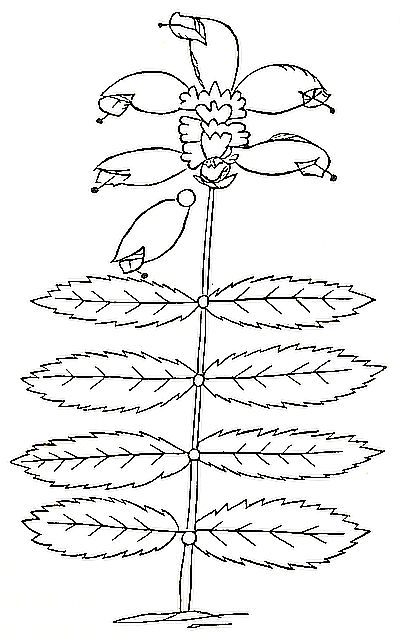
This Plant Flowers in August, and grows in wet Ground; it is about three or four foot in height, having a square slender stalk, chamfered, hollow and tuff, the Leaves grow at certain distances one against another, of the colour of Egrimony Leaves sharpe pointed, broadest in the midst about an Inch and half, and three or four Inches in length, snipt about the edges like a Nettle Leaf, at the top of the Stalk for four or five Inches thick, set with pale green husks, out of which the Flowers grow, consisting of one Leaf, shaped like the head of a Serpent, opening at the top like a mouth, and hollow throughout, containing four crooked pointels, and on the top of every pointel a small, glistering, green button, covered with a little white woolly matter, by which they are with the pointels fastened close together and shore up the tip of the upper chap, the crooked pointels are very stiff and hard, from the bottom of the husks, wherein the Flower stands, from the top of the Seed Vessel shoots out a white thread which runs in at the bottom of the Flower, and so {80} out at the mouth; the whole Flower is milk white, the inside of the chaps reddish, the Root I did not observe.[236]
{81} (7.)
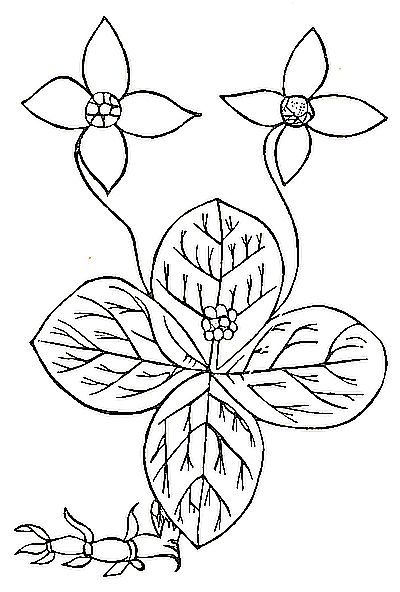
This Plant I take for a varigated Herb Paris, True Love or One Berry, or rather One Flower, which is milk white, and made up with four Leaves, with many black threads in the middle, upon every thread grows a Berry (when the Leaves of the Flower are fallen) as big as a white pease, of a light red colour when they are ripe, and clustering together in a round form as big as a Pullets Egg, which at distance shews but as one Berry, very pleasant in taste, and not unwholsome; the Root, Leaf, and Flower differ not from our English kind, and their time of blooming and ripening agree, and therefore doubtless a kind of Herba Paris.[237]
{82}
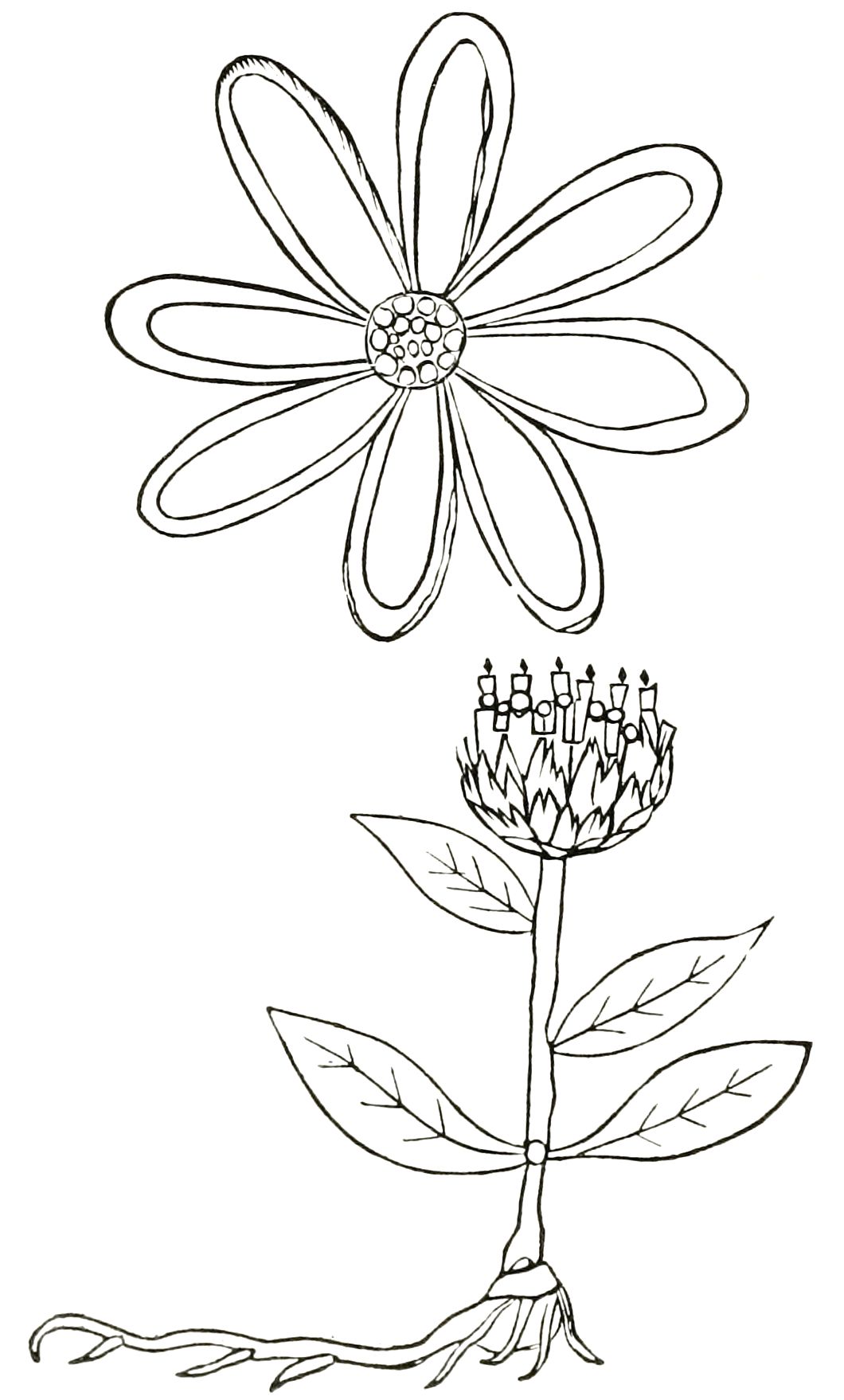
The small Sun Flower, or Marygold of America.
{83}
{84} (8.)
This Plant is taken by our Simplists to be a kind of Golden Rod, by others for Sarazens Consound. I judge it to be a kind of small Sun Flower, or Marygold of the West Indies; the Root is brown and slender, a foot and half in length, running a slope under the upper face of the Earth, with some strings here and there, the stalk as big as the steal of a Tobacco pipe, full of pith, commonly brownish, sometimes purple, three or four foot high, the Leaves grow at a distance one against another, rough, hard, green above, and gray underneath, slightly snipt and the ribs appear most on the back side of the Leaf, the Flower is of a bright yellow, with little yellow cups in the midst, as in the Marygold of Peru, with black threads in them with yellow pointels, the Flower spreads it self abroad out of a cup made up of many green beards, not unlike a Thistle; Within a handful of the top of the stalk (when the Flower is fallen), growes an excrense or knob as big as a Walnut, which being broken yieldeth a kind of Turpentine or rather Rosen.[238]
What Cutchenele is.
The stalk beneath and above the knob, covered with a multitude of small Bugs, about the bigness of a great flea, which I presume will make good Cutchenele, ordered as they should be before they come to have Wings: They make a perfect Scarlet Colour to Paint with, and durable.
{85} 4. Of such Plants as have sprung up since the English Planted and kept Cattle in New-England.[239]
Couch Grass.[240]
Shepherds Purse.[241]
Dandelion.[242]
Groundsel.[243]
Sow Thistle.[244]
Wild Arrach.[245]
Night Shade, with the white Flower.[246]
Nettlestinging, which was the first Plant taken notice of.[247]
Mallowes.[248]
{86} Plaintain, which the Indians call English-Mans Foot, as though produced by their treading.[249]
Black Henbane.[250]
Wormwood.[251]
Sharp pointed Dock.[252]
Patience.[253]
Bloodwort.[254]
And I suspect Adders Tongue.[255]
Knot Grass.[256]
Cheek weed.[257]
Compherie, with the white Flower.[258]
May weed, excellent for the Mother; some of our English Houswives call it Iron Wort, and make a good Unguent for old Sores.[259]
The great Clot Bur.[260]
Mullin, with the white Flower.[261]
Q. What became of the influence of those Planets that produce and govern these Plants before this time!
I have now done with such Plants as grow wild in the Country in great plenty, (although I have not mentioned all) I shall now in the Fifth place give you to under{87}stand what English Herbs we have growing in our Gardens that prosper there as well as in their proper Soil, and of such as do not, and also of such as will not grow there at all.
5. Of such Garden Herbs (amongst us) as do thrive there, and of such as do not.[262]
Cabbidge growes there exceeding well.
Lettice.
Sorrel.
Parsley.
Marygold.
French Mallowes.
Chervel.
Burnet.
Winter Savory.
Summer Savory.
Time.
Sage.
Carrats.
Parsnips of a prodigious size.
Red Beetes.
{88} Radishes.
Turnips.
Purslain.[263]
Wheat.[264]
Rye.
Barley, which commonly degenerates into Oats.
Oats.
Pease of all sorts, and the best in the World; I never heard of, nor did see in eight Years time, one Worm eaten Pea.
Garden Beans.[265]
Naked Oats,[266] there called Silpee, an excellent grain used insteed of Oat Meal, they dry it in an Oven, or in a Pan upon the fire, then beat it small in a Morter.
Another standing Dish in New-England.
And when the Milk is ready to boil, they put into a pottle of Milk about ten or twelve spoonfuls of this Meal, so boil it leasurely, stirring of it every foot, least it burn too; when it is almost boiled enough, they hang the Kettle up higher, and let it stew only, in short time it will thicken like a Custard; they season it {89} with a little Sugar and Spice, and so serve it to the Table in deep Basons, and it is altogether as good as a White-pot.
For People weakned with long Sickness.
It exceedingly nourisheth and strengthens people weakned with long Sickness.
Sometimes they make Water Gruel with it, and sometimes thicken their Flesh Broth either with this or Homminey, if it be for Servants.
Spear Mint.[267]
Rew, will hardly grow.
Fetherfew prospereth exceedingly.
Southern Wood, is no Plant for this Country. Nor,
Rosemary. Nor
Bayes.[268]
White Satten groweth pretty well, so doth
Lavender Cotton.[269] But
Lavender is not for the climate.
Penny Royal.
Smalledge.
Ground Ivy, or Ale Hoof.[270]
Gilly Flowers will continue two Years.[271]
{90} Fennel must be taken up, and kept in a warm Cellar all Winter.
Housleek prospereth notably.
Holly hocks.
Enula Campana, in two Years time the Roots rot.[272]
Comferie, with white Flowers.
Coriander, and
Dill, and
Annis thrive exceedingly, but Annis Seed, as also the Seed of Fennel seldom come to maturity; the Seed of Annis is commonly eaten with a fly.
Clary never lasts but one Summer, the Roots rot with the Frost.
Sparagus thrives exceedingly, so does
Garden Sorrel, and
Sweet Bryer, or Eglantine.[273]
Bloodwort but sorrily, but
Patience,[274] and
English Roses, very pleasantly.[275]
Celandine, by the West Country men called Kenning Wort, grows but slowly.[276]
Muschata, as well as in England.
Dittander, or Pepper Wort, flourisheth notably, and so doth
Tansie.[277]
Musk Mellons are better than our English, and
{91} Cucumbers.
Pompions, there be of several kinds, some proper to the Country,[278] they are dryer then our English Pompions, and better tasted; you may eat them green.
The ancient New-England standing Dish.
But the Houswives manner is to slice them when ripe, and cut them into dice, and so fill a pot with them of two or three Gallons, and stew them upon a gentle fire a whole day, and as they sink, they fill again with fresh Pompions, not putting any liquor to them; and when it is stew’d enough, it will look like bak’d Apples; this they Dish, putting Butter to it, and a little Vinegar, (with some Spice, as Ginger, &c.) which makes it tart like an Apple, and so serve it up to be eaten with Fish or Flesh: It provokes Urin extreamly and is very windy.