Front matter
Reading edition
By
EDNA FERBER IRVIN S. COBB PETER B. KYNE JAMES OLIVER CURWOOD MEREDITH NICHOLSON H. C. WITWER
With an Introduction
by
RAY LONG
Editor of Cosmopolitan
1925
NEW YORK
Copyright 1925, by International Magazine Company New York
FIFTH EDITION Printed November, 1925
THIS BOOK IS DEDICATED TO THAT GREAT NUMBER OF INTELLIGENT AMERICANS WHO ARE CONSTANT READERS OF COSMOPOLITAN MAGAZINE IT IS SENT TO YOU WITH THE CORDIAL GOOD WISHES OF THE WRITERS AND THE EDITOR
CONTENTS
Introduction By Ray Long The Gay Old Dog By Edna Ferber The Escape Of Mr. Trimm By Irvin S. Cobb Point By Peter B. Kyne Kazan By James Oliver Curwood The Third Man By Meredith Nicholson Money To Burns By H. C. Witwer
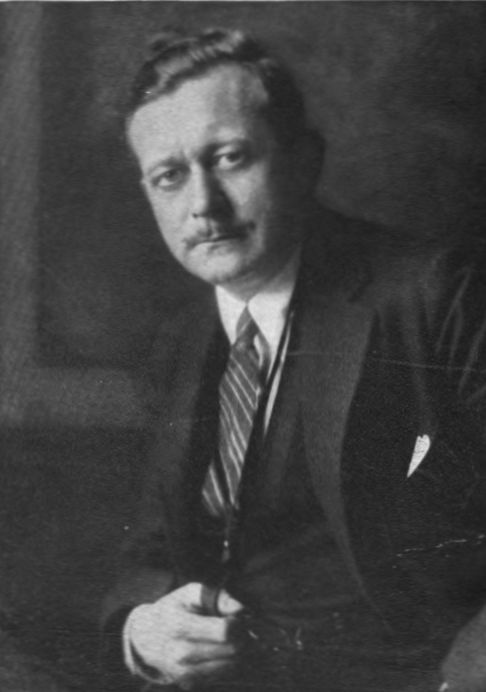
RAY LONG
INTRODUCTION by RAY LONG
In presenting this volume to you I am imagining that I am host for an evening. I have invited six of the distinguished writers of our time and asked them to relax over their coffee and in a mood of friendliness to discuss their own work. They have permitted me to have you sit with me and listen.
An interesting group, surely. Miss Ferber, black-haired, dark-eyed, vivid, animation itself; Irvin Cobb, tall, heavy-set, with, as his daughter says, two chins in front and a spare in the rear; Peter B. Kyne, about five foot six, with the face and figure of a well-fed priest; Jim Curwood, tall, wiry, outdoorsy in every line and movement; Nicholson, my idea of an ambassador to the Court of St. James; Harry Witwer, with the poise and quickness that one learns in the ring. (He did fight as a youngster; that's why he can make you see a prize ring when he describes it.)
Yes, an interesting group. Just as interesting to me today, after years of friendship, as to you, who may meet them for the first time. The sort of folks that wear well. The sort that haven't been spoiled by success. For each of them realizes the simplicity of the recipe that won his success. It can be told in few words: Think better and work harder than your competitor.
If you get to know these authors well, you will see that is all there has been to it: they have thought better and worked harder than the other fellow. And they are still doing it—thinking better and working harder: that's why their success endures. That's why their names are trade-marks for interesting, satisfying reading matter. As the manufacturer who establishes a trade-mark must not let his product deteriorate, lest he lose his customers, just so the successful writer must keep his product to high standard lest he lose his readers.
I have asked each of the six to tell you which of all the stories he has written he likes best, but before they begin let me tell you what inspired my request.
I grow irritated every now and then when some self-appointed critic arises to say that he has selected the best short stories for the year. What he means, of course, is that he has selected the stories which in his opinion are best. More often than not, his opinion is worthless; it may even be harmful. For if those studying for a career in writing accept his views, they may be misled in what really constitutes the story of distinction.
In this discussion there will be no effort to say that these stories excel in any year. What they represent is the selection by each of six authors of his own story which he likes best of all he has written. And inasmuch as each of these writers has been years at his trade, this forms a collection not only interesting to you and myself, but informative and valuable to the student of writing.
Distinction in writing is determined by one test: endurance in public favor. Not the favor of any one or two persons, but of the great mass of readers.
A critic here and there may—and often does—select some writer of freakish material and call him a genius, but that sort of genius is short-lived.
Freakish writing never lasts. Individual manner of telling a story, yes—that is essential to distinction. But individuality that endures results from personality that pleases.
No matter how much it may interest you to see a freak in a side-show, you would not want one as a lifelong friend. No matter how much it may interest you to see a piece of freakish writing, you would not keep it handy on your library shelves or table. As a curiosity, possibly; as a companion, never.
You will want lifelong friendship with the stories of the six writers here. They are real writing by real writers. And I am proud of the privilege of introducing you thus informally to these six writers, just as I am proud of the fact that they are such vital factors in the success of Cosmopolitan Magazine under my editorship. I think I may boast that no editor ever brought together a more distinguished group. But enough of myself and my views. Let's listen to my guests.

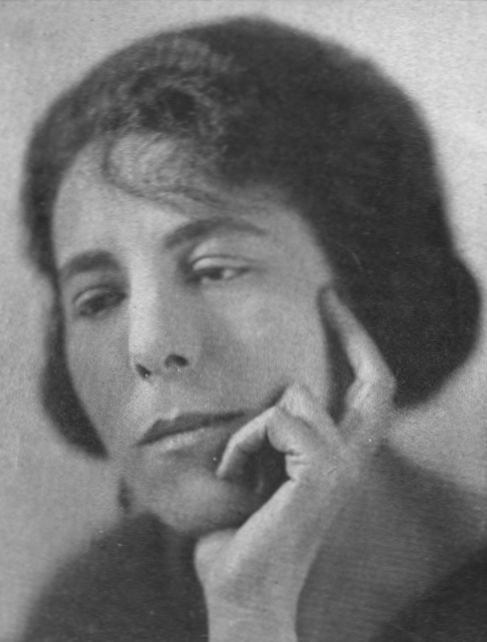
EDNA FERBER
FOREWORD
Most writers lie about the way in which they came to write this or that story. I know I do. Perhaps, though, this act can't quite be classified as lying. It is not deliberate falsifying. Usually we roll a retrospective eye while weaving a fantastic confession that we actually believe to be true. It is much as when a girl says to her sweetheart, "When did you begin to love me?" and he replies, "Oh, it was the very first time I saw you, when——" etc. Which probably isn't true at all. But he thinks it is, and she wants to think it is. And that makes it almost true.
It is almost impossible to tell just how a story was born. The process is such an intricate, painful, and complicated one. Often the idea that makes up a story is only a nucleus. The finished story may represent an accumulation of years. It was so in the case of the short story entitled "The Gay Old Dog."
I like "The Gay Old Dog" better than any other short story I've written (though I've a weakness for "Old Man Minick") because it is a human story without being a sentimental one; because it presents a picture of everyday American family life; because its characters are of the type known as commonplace, and I find the commonplace infinitely more romantic and fascinating than the bizarre, the spectacular, the rich, or the poor; it is a story about a man's life, and I like to write about men; because it is a steadily progressive thing; because its ending is inevitable.
It seems to me that I first thought of this character as short-story material (and my short stories are almost invariably founded on character, rather than on plot or situation) when I read in a Chicago newspaper that the old Windsor Hotel, a landmark, was to be torn down. The newspaper carried what is known as a feature story about this. The article told of a rather sporty old Chicago bachelor who had lived at this hotel for years. Its red plush interior represented home for him. Now he was to be turned out of his hotel refuge. The papers called him The Waif of the Loop. That part of Chicago's downtown which is encircled by the elevated tracks is known as the Loop. I thought, idly, that here was short-story material; the story of this middle-aged, well-to-do rounder whose only home was a hotel. Why had he lived there all these years? Was he happy? Why hadn't he married? I put it down in my note-book (yes, we have them)—The Waif of the Loop. Later I discarded that title as being too cumbersome and too difficult to grasp. Non-Chicagoans wouldn't know what the Loop meant.
So there it was in my note-book. A year or two went by. In all I think that story must have lain in my mind for five years before I actually wrote it. That usually is the way with a short story that is rich, deep, and true. The maturing process is slow. It ripens in the mind. In such cases the actual mechanical matter of writing is a brief business. It plumps into the hand like a juicy peach that has hung, all golden and luscious, on the tree in the sun.
From time to time I found myself setting down odd fragments related vaguely to this character. I noticed these overfed, gay-dog men of middle age whom one sees in restaurants, at the theater, accompanied, usually, by a woman younger than they—a hard, artificial expensively gowned woman who wears a diamond bracelet so glittering that you scarcely notice the absence of ornament on the third finger of the left hand. Bits of characterization went into the note-book . . . "The kind of man who knows head waiters by name . . . the kind of man who insists on mixing his own salad dressing . . . he was always present on first nights, third row, aisle, right." I watched them. They were lonely, ponderous, pathetic, generous, wistful, drifting.
Why hadn't he married? Why hadn't he married? It's always interesting to know why people have missed such an almost universal experience as marriage. Well, he had had duties, responsibilities. Um-m-m—a mother, perhaps, and sisters. Unmarried sisters to support. The thing to do then was to ferret out some business that began to decline in about 1896 and that kept going steadily downhill. A business of the sort to pinch Jo's household and make the upkeep of two families impossible for him. It must, too, be a business that would boom suddenly, because of the War, when Jo was a middle-aged man. I heard of a man made suddenly rich in 1914 when there came a world-wide demand for leather—leather for harnesses, straps, men's wrist watches. Slowly, bit by bit, the story began to set—to solidify—to take shape.
Finally, that happened which always reassures me and makes me happy and confident. The last paragraph of the story came to me, complete. I set down that last paragraph, in lead pencil, before the first line of the story was written. That ending literally wrote itself. I had no power over it. People have said to me: "Why didn't you make Emily a widow when they met after years of separation? Then they could have married."
The thing simply hadn't written itself that way. It was unchangeable. The end of the story and the beginning both were by now inevitable. I knew then that no matter what happened in the middle, that story would be—perhaps not a pleasant story, nor a happy one, though it might contain humor—but a story honest, truthful, courageous and human.

The GAY OLD DOG[1] By Edna Ferber
Those of you who have dwelt—or even lingered—in Chicago, Illinois (this is not a humorous story), are familiar with the region known as the Loop. For those others of you to whom Chicago is a transfer point between New York and San Francisco there is presented this brief explanation:
The Loop is a clamorous, smoke-infested district embraced by the iron arms of the elevated tracks. In a city boasting fewer millions, it would be known familiarly as downtown. From Congress to Lake Street, from Wabash almost to the river, those thunderous tracks make a complete circle, or loop. Within it lie the retail shops, the commercial hotels, the theaters, the restaurants. It is the Fifth Avenue (diluted) and the Broadway (deleted) of Chicago. And he who frequents it by night in search of amusement and cheer is known, vulgarly, as a Loop-hound.
Jo Hertz was a Loop-hound. On the occasion of those sparse first nights granted the metropolis of the Middle West he was always present, third row, aisle, left. When a new Loop café was opened Jo's table always commanded an unobstructed view of anything worth viewing. On entering he was wont to say, "Hello, Gus," with careless cordiality to the head waiter, the while his eye roved expertly from table to table as he removed his gloves. He ordered things under glass, so that his table, at midnight or thereabouts, resembled a hotbed that favors the bell system. The waiters fought for him. He was the kind of man who mixes his own salad dressing. He liked to call for a bowl, some cracked ice, lemon, garlic, paprika, salt, pepper, vinegar, and oil and make a rite of it. People at near-by tables would lay down their knives and forks to watch, fascinated. The secret of it seemed to lie in using all the oil in sight and calling for more.
That was Jo—a plump and lonely bachelor of fifty. A plethoric, roving-eyed and kindly man, clutching vainly at the garments of a youth that had long slipped past him. Jo Hertz, in one of those pinch-waist belted suits and a trench coat and a little green hat, walking up Michigan Avenue of a bright winter's afternoon, trying to take the curb with a jaunty youthfulness against which every one of his fat-incased muscles rebelled, was a sight for mirth or pity, depending on one's vision.
The gay-dog business was a late phase in the life of Jo Hertz. He had been a quite different sort of canine. The staid and harassed brother of three unwed and selfish sisters is an under dog. The tale of how Jo Hertz came to be a Loop-hound should not be compressed within the limits of a short story. It should be told as are the photoplays, with frequent throwbacks and many cut-ins. To condense twenty-three years of a man's life into some five or six thousand words requires a verbal economy amounting to parsimony.
At twenty-seven Jo had been the dutiful, hard-working son (in the wholesale harness business) of a widowed and gummidging mother, who called him Joey. If you had looked close you would have seen that now and then a double wrinkle would appear between Jo's eyes—a wrinkle that had no business there at twenty-seven. Then Jo's mother died, leaving him handicapped by a death-bed promise, the three sisters and a three-story-and-basement house on Calumet Avenue. Jo's wrinkle became a fixture.
Death-bed promises should be broken as lightly as they are seriously made. The dead have no right to lay their clammy fingers upon the living.
"Joey," she had said, in her high, thin voice, "take care of the girls."
"I will, Ma," Jo had choked.
"Joey," and the voice was weaker, "promise me you won't marry till the girls are all provided for." Then as Joe had hesitated, appalled: "Joey, it's my dying wish. Promise!" "I promise, Ma," he had said.
Whereupon his mother had died, comfortably, leaving him with a completely ruined life.
They were not bad-looking girls, and they had a certain style, too. That is, Stell and Eva had. Carrie, the middle one, taught school over on the West Side. In those days it took her almost two hours each way. She said the kind of costume she required should have been corrugated steel. But all three knew what was being worn, and they wore it—or fairly faithful copies of it. Eva, the housekeeping sister, had a needle knack. She could skim the State Street windows and come away with a mental photograph of every separate tuck, hem, yoke, and ribbon. Heads of departments showed her the things they kept in drawers, and she went home and reproduced them with the aid of a two-dollar-a-day seamstress. Stell, the youngest, was the beauty. They called her Babe. She wasn't really a beauty, but someone had once told her that she looked like Janice Meredith (it was when that work of fiction was at the height of its popularity). For years afterward, whenever she went to parties, she affected a single, fat curl over her right shoulder, with a rose stuck through it.
Twenty-three years ago one's sisters did not strain at the household leash, nor crave a career. Carrie taught school, and hated it. Eva kept house expertly and complainingly. Babe's profession was being the family beauty, and it took all her spare time. Eva always let her sleep until ten.
This was Jo's household, and he was the nominal head of it. But it was an empty title. The three women dominated his life. They weren't consciously selfish. If you had called them cruel they would have put you down as mad. When you are the lone brother of three sisters, it means that you must constantly be calling for, escorting, or dropping one of them somewhere. Most men of Jo's age were standing before their mirror of a Saturday night, whistling blithely and abstractedly while they discarded a blue polka-dot for a maroon tie, whipped off the maroon for a shot-silk, and at the last moment decided against a shot-silk, in favor of a plain black-and-white, because she had once said she preferred quiet ties. Jo, when he should have been preening his feathers for conquest, was saying:
"Well, my God, I am hurrying! Give a man time, can't you? I just got home. You girls have been laying around the house all day. No wonder you're ready."
He took a certain pride in seeing his sisters well dressed, at a time when he should have been reveling in fancy waistcoats and brilliant-hued socks, according to the style of that day, and the inalienable right of any unwed male under thirty, in any day. On those rare occasions when his business necessitated an out-of-town trip, he would spend half a day floundering about the shops selecting handkerchiefs, or stockings, or feathers, or fans, or gloves for the girls. They always turned out to be the wrong kind, judging by their reception.
From Carrie, "What in the world do I want of a fan!"
"I thought you didn't have one," Jo would say.
"I haven't. I never go to dances."
Jo would pass a futile hand over the top of his head, as was his way when disturbed. "I just thought you'd like one. I thought every girl liked a fan. Just," feebly, "just to—to have."
"Oh, for pity's sake!"
And from Eva or Babe, "I've got silk stockings, Jo." Or, "You brought me handkerchiefs the last time."
There was something selfish in his giving, as there always is in any gift freely and joyfully made. They never suspected the exquisite pleasure it gave him to select these things; these fine, soft, silken things. There were many things about this slow-going, amiable brother of theirs that they never suspected. If you had told them he was a dreamer of dreams, for example, they would have been amused. Sometimes, dead-tired by nine o'clock, after a hard day downtown, he would doze over the evening paper. At intervals he would wake, red-eyed, to a snatch of conversation such as, "Yes, but if you get a blue you can wear it anywhere. It's dressy, and at the same time it's quiet, too." Eva, the expert, wrestling with Carrie over the problem of the new spring dress. They never guessed that the commonplace man in the frayed old smoking-jacket had banished them all from the room long ago; had banished himself, for that matter. In his place was a tall, debonair, and rather dangerously handsome man to whom six o'clock spelled evening clothes. The kind of man who can lean up against a mantel, or propose a toast, or give an order to a man-servant, or whisper a gallant speech in a lady's ear with equal ease. The shabby old house on Calumet Avenue was transformed into a brocaded and chandeliered rendezvous for the brilliance of the city. Beauty was here, and wit. But none so beautiful and witty as She. Mrs.—er—Jo Hertz. There was wine, of course; but no vulgar display. There was music; the soft sheen of satin; laughter. And he the gracious, tactful host, king of his own domain——
"Jo, for heaven's sake, if you're going to snore, go to bed!"
"Why—did I fall asleep?"
"You haven't been doing anything else all evening. A person would think you were fifty instead of thirty."
And Jo Hertz was again just the dull, gray, commonplace brother of three well-meaning sisters.
Babe used to say petulantly: "Jo, why don't you ever bring home any of your men friends? A girl might as well not have any brother, all the good you do."
Jo, conscience-stricken, did his best to make amends. But a man who has been petticoat-ridden for years loses the knack, somehow, of comradeship with men. He acquires, too, a knowledge of women, and a distaste for them, equaled only, perhaps, by that of an elevator-starter in a department store.
Which brings us to one Sunday in May. Jo came home from a late Sunday afternoon walk to find company for supper. Carrie often had in one of her school-teacher friends, or Babe one of her frivolous intimates, or even Eva a staid guest of the old-girl type. There was always a Sunday night supper of potato salad, and cold meat, and coffee, and perhaps a fresh cake. Jo rather enjoyed it, being a hospitable soul. But he regarded the guests with the undazzled eyes of a man to whom they were just so many petticoats, timid of the night streets and requiring escort home. If you had suggested to him that some of his sisters' popularity was due to his own presence, or if you had hinted that the more kittenish of these visitors were probably making eyes at him, he would have stared in amazement and unbelief.
This Sunday night it turned out to be one of Carrie's friends.
"Emily," said Carrie, "this is my brother, Jo."
Jo had learned what to expect in Carrie's friends. Drab-looking women in the late thirties, whose facial lines all slanted downward.
"Happy to meet you," said Jo, and looked down at a different sort altogether. A most surprisingly different sort, for one of Carrie's friends. This Emily person was very small, and fluffy, and blue-eyed, and sort of—well, crinkly-looking. You know. The corners of her mouth when she smiled, and her eyes when she looked up at you, and her hair, which was brown, but had the miraculous effect, somehow, of being golden.
Jo shook hands with her. Her hand was incredibly small, and soft, so that you were afraid of crushing it, until you discovered she had a firm little grip all her own. It surprised and amused you, that grip, as does a baby's unexpected clutch on your patronizing forefinger. As Jo felt it in his own big clasp, the strangest thing happened to him. Something inside Jo Hertz stopped working for a moment, then lurched sickeningly, then thumped like mad. It was his heart. He stood staring down at her, and she up at him, until the others laughed. Then their hands fell apart, lingeringly.
"Are you a school-teacher, Emily?" he said.
"Kindergarten. It's my first year. And don't call me Emily, please."
"Why not? It's your name. I think it's the prettiest name in the world." Which he hadn't meant to say at all. In fact, he was perfectly aghast to find himself saying it. But he meant it.
At supper he passed her things, and stared, until everybody laughed again, and Eva said acidly, "Why don't you feed her?"
It wasn't that Emily had an air of helplessness. She just made you feel you wanted her to be helpless, so that you could help her.
Jo took her home, and from that Sunday night he began to strain at the leash. He took his sisters out, dutifully, but he would suggest, with a carelessness that deceived no one, "Don't you want one of your girl friends to come along? That little What's-her-name—Emily, or something. So long's I've got three of you, I might as well have a full squad."
For a long time he didn't know what was the matter with him. He only knew he was miserable, and yet happy. Sometimes his heart seemed to ache with an actual physical ache. He realized that he wanted to do things for Emily. He wanted to buy things for Emily—useless, pretty, expensive things that he couldn't afford. He wanted to buy everything that Emily needed, and everything that Emily desired. He wanted to marry Emily. That was it. He discovered that one day, with a shock, in the midst of a transaction in the harness business. He stared at the man with whom he was dealing until that startled person grew uncomfortable.
"What's the matter, Hertz?"
"Matter?"
"You look as if you'd seen a ghost or found a gold mine. I don't know which."
"Gold mine," said Jo. And then, "No. Ghost."
For he remembered that high, thin voice, and his promise. And the harness business was slithering downhill with dreadful rapidity, as the automobile business began its amazing climb. Jo tried to stop it. But he was not that kind of business man. It never occurred to him to jump out of the down-going vehicle and catch the up-going one. He stayed on, vainly applying brakes that refused to work.
"You know, Emily, I couldn't support two households now. Not the way things are. But if you'll wait. If you'll only wait. The girls might—that is, Babe and Carrie——"
She was a sensible little thing, Emily. "Of course I'll wait. But we mustn't just sit back and let the years go by. We've got to help."
She went about it as if she were already a little match-making matron. She corralled all the men she had ever known and introduced them to Babe, Carrie, and Eva separately, in pairs, and en masse. She arranged parties at which Babe could display the curl. She got up picnics. She stayed home while Jo took the three about. When she was present she tried to look as plain and obscure as possible, so that the sisters should show up to advantage. She schemed, and planned, and contrived, and hoped; and smiled into Jo's despairing eyes.
And three years went by. Three precious years. Carrie still taught school, and hated it. Eva kept house, more and more complainingly as prices advanced and allowance retreated. Stell was still Babe, the family beauty; but even she knew that the time was past for curls. Emily's hair, somehow, lost its glint and began to look just plain brown. Her crinkliness began to iron out.
"Now, look here!" Jo argued, desperately, one flight. "We could be happy, anyway. There's plenty of room at the house. Lots of people begin that way. Of course, I couldn't give you all I'd like to, at first. But maybe, after a while——"
No dreams of salons, and brocade, and velvet-footed servitors, and satin damask now. Just two rooms, all their own, all alone, and Emily to work for. That was his dream. But it seemed less possible than that other absurd one had been.
You know that Emily was as practical a little thing as she looked fluffy. She knew women. Especially did she know Eva, and Carrie, and Babe. She tried to imagine herself taking the household affairs and the housekeeping pocket-book out of Eva's expert hands. Eva had once displayed to her a sheaf of aigrettes she had bought with what she saved out of the housekeeping money. So then she tried to picture herself allowing the reins of Jo's house to remain in Eva's hands. And everything feminine and normal in her rebelled. Emily knew she'd want to put away her own freshly laundered linen, and smooth it, and pat it. She was that kind of woman. She knew she'd want to do her own delightful haggling with butcher and vegetable peddler. She knew she'd want to muss Jo's hair, and sit on his knee, and even quarrel with him, if necessary, without the awareness of three ever-present pairs of maiden eyes and ears.
"No! No! We'd only be miserable. I know. Even if they didn't object. And they would, Jo. Wouldn't they?"
His silence was miserable assent. Then, "But you do love me, don't you, Emily?"
"I do, Jo. I love you—and love you—and love you. But, Jo, I—can't."
"I know it, dear. I knew it all the time, really. I just thought, maybe, somehow——"
The two sat staring for a moment into space, their hands clasped. Then they both shut their eyes, with a little shudder, as though what they saw was terrible to look upon. Emily's hand, the tiny hand that was so unexpectedly firm, tightened its hold on his, and his crushed the absurd fingers until she winced with pain.
That was the beginning of the end, and they knew it.
Emily wasn't the kind of girl who would be left to pine. There are too many Jo's in the world whose hearts are prone to lurch and then thump at the feel of a soft, fluttering, incredibly small hand in their grip. One year later Emily was married to a young man whose father owned a large, pie-shaped slice of the prosperous state of Michigan.
That being safely accomplished, there was something grimly humorous in the trend taken by affairs in the old house on Calumet. For Eva married. Of all people, Eva! Married well, too, though he was a great deal older than she. She went off in a hat she had copied from a French model at Field's, and a suit she had contrived with a home dressmaker, aided by pressing on the part of the little tailor in the basement over on Thirty-first Street. It was the last of that, though. The next time they saw her, she had on a hat that even she would have despaired of copying, and a suit that sort of melted into your gaze. She moved to the North Side (trust Eva for that), and Babe assumed the management of the household on Calumet Avenue. It was rather a pinched little household now, for the harness business shrank and shrank.
"I don't see how you can expect me to keep house decently on this!" Babe would say contemptuously. Babe's nose, always a little inclined to sharpness, had whittled down to a point of late. "If you knew what Ben gives Eva."
"It's the best I can do, Sis. Business is something rotten."
"Ben says if you had the least bit of——" Ben was Eva's husband, and quotable, as are all successful men.
"I don't care what Ben says," shouted Jo, goaded into rage. "I'm sick of your everlasting Ben. Go and get a Ben of your own, why don't you, if you're so stuck on the way he does things."
And Babe did. She made a last desperate drive, aided by Eva, and she captured a rather surprised young man in the brokerage way, who had made up his mind not to marry for years and years. Eva wanted to give her wedding things, but at that Jo broke into sudden rebellion.
"No, sir! No Ben is going to buy my sister's wedding clothes, understand? I guess I'm not broke—yet. I'll furnish the money for her things, and there'll be enough of them, too."
Babe had as useless a trousseau, and as filled with extravagant pink-and-blue and lacy and frilly things as any daughter of doting parents. Jo seemed to find a grim pleasure in providing them. But it left him pretty well pinched. After Babe's marriage (she insisted that they call her Estelle now) Jo sold the house on Calumet. He and Carrie took one of those little flats that were springing up, seemingly overnight, all through Chicago's South Side.
There was nothing domestic about Carrie. She had given up teaching two years before, and had gone into Social Service work on the West Side. She had what is known as a legal mind—hard, clear, orderly—and she made a great success of it. Her dream was to live at the Settlement House and give all her time to the work. Upon the little household she bestowed a certain amount of grim, capable attention. It was the same kind of attention she would have given a piece of machinery whose oiling and running had been entrusted to her care. She hated it, and didn't hesitate to say so.
Jo took to prowling about department store basements, and household goods sections. He was always sending home a bargain in a ham, or a sack of potatoes, or fifty pounds of sugar, or a window clamp, or a new kind of paring knife. He was forever doing odd little jobs that the janitor should have done. It was the domestic in him claiming its own.
Then, one night, Carrie came home with a dull glow in her leathery cheeks, and her eyes alight with resolve. They had what she called a plain talk.
"Listen, Jo. They've offered me the job of first assistant resident worker. And I'm going to take it. Take it! I know fifty other girls who'd give their ears for it. I go in next month."
They were at dinner. Jo looked up from his plate, dully. Then he glanced around the little dining-room, with its ugly tan walls and its heavy, dark furniture (the Calumet Avenue pieces fitted cumbersomely into the five-room flat).
"Away? Away from here, you mean—to live?"
Carrie laid down her fork. "Well, really, Jo! After all that explanation."
"But to go over there to live! Why, that neighborhood's full of dirt, and disease, and crime, and the Lord knows what all. I can't let you do that, Carrie."
Carrie's chin came up. She laughed a short little laugh. "Let me! That's eighteenth-century talk, Jo. My life's my own to live. I'm going."
And she went.
Jo stayed on in the apartment until the lease was up. Then he sold what furniture he could, stored or gave away the rest, and took a room on Michigan Avenue in one of the old stone mansions whose decayed splendor was being put to such purpose.
Jo Hertz was his own master. Free to marry. Free to come and go. And he found he didn't even think of marrying. He didn't even want to come or go, particularly. A rather frumpy old bachelor, with thinning hair and a thickening neck. Much has been written about the unwed, middle-aged woman; her fussiness, her primness, her angularity of mind and body. In the male that same fussiness develops, and a certain primness, too. But he grows flabby where she grows lean.
Every Thursday evening he took dinner at Eva's, and on Sunday noon at Stell's. He tucked his napkin under his chin and openly enjoyed the home-made soup and the well-cooked meats. After dinner he tried to talk business with Eva's husband, or Stell's. His business talks were the old-fashioned kind, beginning:
"Well, now, looka here. Take, f'rinstance your rawhides and leathers."
But Ben and George didn't want to "take, f'rinstance, your rawhides and leathers." They wanted, when they took anything at all, to take golf or politics or stocks. They were the modern type of business man who prefers to leave his work out of his play. Business, with them, was a profession—a finely graded and balanced thing, differing from Jo's clumsy, downhill style as completely as does the method of a great criminal detective differ from that of a village constable. They would listen, restively, and say, "Uh-uh," at intervals, and at the first chance they would sort of fade out of the room, with a meaning glance at their wives. Eva had two children now. Girls. They treated Uncle Jo with good-natured tolerance. Stell had no children. Uncle Jo degenerated, by almost imperceptible degrees, from the position of honored guest, who is served with white meat, to that of one who is content with a leg and one of those obscure and bony sections which, after much turning with a bewildered and investigating knife and fork, leave one baffled and unsatisfied.
Eva and Stell got together and decided that Jo ought to marry.
"It isn't natural," Eva told him. "I never saw a man who took so little interest in women."
"Me!" protested Jo, almost shyly. "Women."
"Yes. Of course. You act like a frightened schoolboy."
So they had in for dinner certain friends and acquaintances of fitting age. They spoke of them as "splendid girls." Between thirty-six and forty. They talked awfully well, in a firm, clear way, about civics, and classes, and politics, and economics, and boards. They rather terrified Jo. He didn't understand much that they talked about, and he felt humbly inferior, and yet a little resentful, as if something had passed him by. He escorted them home, dutifully, though they told him not to bother, and they evidently meant it. They seemed capable, not only of going home quite unattended, but of delivering a pointed lecture to any highwayman or brawler who might molest them.
The following Thursday Eva would say, "How did you like her, Jo?"
"Like who?" Jo would spar feebly.
"Miss Matthews."
"Who's she?"
"Now, don't be funny, Jo. You know very well I mean the girl who was here for dinner. The one who talked so well on the immigration question."
"Oh, her! Why, I liked her all right. Seems to be a smart woman."
"Smart! She's a perfectly splendid girl."
"Sure," Jo would agree cheerfully.
"But didn't you like her?"
"I can't say I did, Eve. And I can't say I didn't. She made me think a lot of a teacher I had in the fifth reader. Name of Himes. As I recall her, she must have been a fine woman. But I never thought of her as a woman at all. She was just Teacher."
"You make me tired," snapped Eva impatiently. "A man of your age. You don't expect to marry a girl, do you? A child!"
"I don't expect to marry anybody," Jo had answered.
And that was the truth, lonely though he often was.
The following spring Eva moved to Winnetka. Anyone who got the meaning of the Loop knows the significance of a move to a North Shore suburb, and a house. Eva's daughter, Ethel, was growing up, and her mother had an eye on society.
That did away with Jo's Thursday dinner. Then Stell's husband bought a car. They went out into the country every Sunday. Stell said it was getting so that maids objected to Sunday dinners, anyway. Besides, they were unhealthy, old-fashioned things. They always meant to ask Jo to come along, but by the time their friends were placed, and the lunch, and the boxes, and sweaters, and George's camera, and everything, there seemed to be no room for a man of Jo's bulk. So that eliminated the Sunday dinners.
"Just drop in any time during the week," Stell said, "for dinner. Except Wednesday—that's our bridge night—and Saturday. And, of course, Thursday. Cook is out that night. Don't wait for me to phone."
And so Jo drifted into that sad-eyed, dyspeptic family made up of those you see dining in second-rate restaurants, their paper propped up against the bowl of oyster crackers, munching solemnly and with indifference to the stare of the passer-by surveying them through the brazen plate-glass window.
And then came the War. The war that spelled death and destruction to millions. The war that brought a fortune to Jo Hertz, and transformed him, overnight, from a baggy-kneed old bachelor, whose business was a failure, to a prosperous manufacturer whose only trouble was the shortage in hides for the making of his product—leather! The armies of Europe called for it. Harnesses! More harnesses! Straps! Millions of straps. More! More!
The musty old harness business over on Lake Street was magically changed from a dust-covered, dead-alive concern to an orderly hive that hummed and glittered with success. Orders poured in. Jo Hertz had inside information on the War. He knew about troops and horses. He talked with French and English and Italian buyers—noblemen, many of them—commissioned by their countries to get American-made supplies. And now, when he said to Ben and George "Take f'rinstance your rawhides and leathers," they listened with respectful attention.
And then began the gay-dog business in the life of Jo Hertz. He developed into a Loop-hound, ever keen on the scent of fresh pleasure. That side of Jo Hertz which had been repressed and crushed and ignored began to bloom, unhealthily. At first he spent money on his rather contemptuous nieces. He sent them gorgeous fans, and watch bracelets, and velvet bags. He took two expensive rooms at a downtown hotel, and there was something more tear-compelling than grotesque about the way he gloated over the luxury of a separate ice-water tap in the bathroom. He explained it.
"Just turn it on. Ice-water! Any hour of the day or night."
He bought a car. Naturally. A glittering affair; in color a bright blue, with pale blue leather straps and a great deal of gold fittings, and wire wheels. Eva said it was the kind of thing a soubrette would use, rather than an elderly business man. You saw him driving about in it, red-faced and rather awkward at the wheel. You saw him, too, in the Pompeian room at the Congress Hotel of a Saturday afternoon when doubtful and roving-eyed matrons in kolinsky capes are wont to congregate to sip pale amber drinks. Actors grew to recognize the semi-bald head and the shining, round, good-natured face looming out at them from the dim well of the parquet, and sometimes, in a musical show, they directed a quip at him, and he liked it. He could pick out the critics as they came down the aisle, and even had a nodding acquaintance with two of them.
"Kelly, of the Herald," he would say carelessly. "Bean, of the Trib. They're all afraid of him."
So he frolicked, ponderously. In New York he might have been called a Man About Town.
And he was lonesome. He was very lonesome. So he searched about in his mind and brought from the dim past the memory of the luxuriously furnished establishment of which he used to dream in the evenings when he dozed over his paper in the old house on Calumet. So he rented an apartment, many-roomed and expensive, with a man-servant in charge, and furnished it in styles and periods ranging through all the Louis's. The living-room was mostly rose-color. It was like an unhealthy and bloated boudoir. And yet there was nothing sybaritic or uncleanly in the sight of this paunchy, middle-aged man sinking into the rosy-cushioned luxury of his ridiculous home. It was a frank and naïve indulgence of long-starved senses, and there was in it a great resemblance to the rolling-eyed ecstasy of a schoolboy smacking his lips over an all day sucker.
The War went on, and on, and on. And the money continued to roll in—a flood of it. Then, one afternoon, Eva, in town on shopping bent, entered a small, exclusive, and expensive shop on Michigan Avenue. Exclusive, that is, in price. Eva's weakness, you may remember, was hats. She was seeking a hat now. She described what she sought with a languid conciseness, and stood looking about her after the saleswoman had vanished in quest of it. The room was becomingly rose-illumined and somewhat dim, so that some minutes had passed before she realized that a man seated on a raspberry brocade settee not five feet away—a man with a walking stick, and yellow gloves, and tan spats, and a check suit—was her brother Jo. From him Eva's wild-eyed glance leaped to the woman who was trying on hats before one of the many long mirrors. She was seated, and a saleswoman was exclaiming discreetly at her elbow.
Eva turned sharply and encountered her own saleswoman returning, hat-laden. "Not today," she gasped. "I'm feeling ill. Suddenly." And almost ran from the room.
That evening she told Stell, relating her news in that telephone pidgin-English devised by every family of married sisters as protection against the neighbors and Central. Translated, it ran thus:
"He looked straight at me. My dear, I thought I'd die! But at least he had sense enough not to speak. She was one of those limp, willowy creatures with the greediest eyes that she tried to keep softened to a baby stare, and couldn't, she was so crazy to get her hands on those hats. I saw it all in, one awful minute. You know the way I do. I suppose some people would call her pretty. I don't. And her color! Well! And the most expensive-looking hats. Aigrettes, and paradise, and feathers. Not one of them under seventy-five. Isn't it disgusting! At his age! Suppose Ethel had been with me!"
The next time it was Stell who saw them. In a restaurant. She said it spoiled her evening. And the third time it was Ethel. She was one of the guests at a theater party given by Nicky Overton II. You know. The North Shore Overtons. Lake Forest. They came in late, and occupied the entire third row at the opening performance of "Believe Me!" And Ethel was Nicky's partner. She was growing like a rose. When the lights went up after the first act Ethel saw that her uncle Jo was seated just ahead of her with what she afterward described as a blonde. Then her uncle had turned around, and seeing her, had been surprised into a smile that spread genially all over his plump and rubicund face. Then he had turned to face forward again, quickly.
"Who's the old bird?" Nicky had asked. Ethel had pretended not to hear, so he had asked again.
"My uncle," Ethel answered, and flushed all over her delicate face, and down to her throat. Nicky had looked at the blonde, and his eyebrows had gone up ever so slightly.
It spoiled Ethel's evening. More than that, as she told her mother of it later, weeping, she declared it had spoiled her life.
Eva talked it over with her husband in that intimate, kimonoed hour that precedes bedtime. She gesticulated heatedly with her hair brush.
"It's disgusting, that's what it is. Perfectly disgusting. There's no fool like an old fool. Imagine! A creature like that. At his time of life."
There exists a strange and loyal kinship among men. "Well, I don't know," Ben said now, and even grinned a little. "I suppose a boy's got to sow his wild oats sometime."
"Don't be any more vulgar than you can help," Eva retorted. "And I think you know, as well as I, what it means to have that Overton boy interested in Ethel."
"If he's interested in her," Ben blundered, "I guess the fact that Ethel's uncle went to the theater with someone who wasn't Ethel's aunt won't cause a shudder to run up and down his frail young frame, will it?"
"All right," Eva had retorted. "If you're not man enough to stop it, I'll have to, that's all. I'm going up there with Stell this week."
They did not notify Jo of their coming. Eva telephoned his apartment when she knew he would be out, and asked his man if he expected his master home to dinner that evening. The man had said yes. Eva arranged to meet Stell in town. They would drive to Jo's apartment together, and wait for him there.
When she reached the city Eva found turmoil there. The first of the American troops to be sent to France were leaving. Michigan Boulevard was a billowing, surging mass: Flags, pennants, banners, crowds. All the elements that make for demonstration. And over the whole—quiet. No holiday crowd, this. A solid, determined mass of people waiting patient hours to see the khaki-clads go by. Three years of indefatigable reading had brought them to a clear knowledge of what these boys were going to.
"Isn't it dreadful!" Stell gasped.
"Nicky Overton's only nineteen, thank goodness." Their car was caught in the jam. When they moved at all it was by inches. When at last they reached Jo's apartment they were flushed, nervous, apprehensive. But he had not yet come in. So they waited.
No, they were not staying to dinner with their brother, they told the relieved houseman.
Jo's home has already been described to you. Stell and Eva, sunk in rose-colored cushions, viewed it with disgust, and some mirth. They rather avoided each other's eyes.
"Carrie ought to be here," Eva said. They both smiled at the thought of the austere Carrie in the midst of those rosy cushions, and hangings, and lamps. Stell rose and began to walk about, restlessly. She picked up a vase and laid it down; straightened a picture. Eva got up, too, and wandered into the hall. She stood there a moment, listening. Then she turned and passed into Jo's bedroom. And there you knew Jo for what he was.
This room was as bare as the other had been ornate. It was Jo, the clean-minded and simple-hearted, in revolt against the cloying luxury with which he had surrounded himself. The bedroom, of all rooms in any house, reflects the personality of its occupant. True, the actual furniture was paneled, cupid-surmounted, and ridiculous. It had been the fruit of Jo's first orgy of the senses. But now it stood out in that stark little room with an air as incongruous and ashamed as that of a pink tarleton danseuse who finds herself in a monk's cell. None of those wall-pictures with which bachelor bedrooms are reputed to be hung. No satin slippers. No scented notes. Two plain-backed military brushes on the chiffonier (and he so nearly hairless!). A little orderly stack of books on the table near the bed. Eva fingered their titles and gave a little gasp. One of them was on gardening.
"Well, of all things!" exclaimed Stell. A book on the War, by an Englishman. A detective story of the lurid type that lulls us to sleep. His shoes ranged in a careful row in the closet, with a shoe-tree in every one of them. There was something speaking about them. They looked so human. Eva shut the door on them, quickly. Some bottles on the dresser. A jar of pomade. An ointment such as a man uses who is growing bald and is panic-stricken too late. An insurance calendar on the wall. Some rhubarb-and-soda mixture on the shelf in the bathroom, and a little box of pepsin tablets.
"Eats all kinds of things at all hours of the night," Eva said, and wandered out into the rose-colored front room again with the air of one who is chagrined at her failure to find what she has sought. Stell followed her furtively.
"Where do you suppose he can be?" she demanded. "It's"—she glanced at her wrist—"why, it's after six!"
And then there was a little dick. The two women sat up, tense. The door opened. Jo came in. He blinked a little. The two women in the rosy room stood up.
"Why—Eve! Why, Babe! Well! Why didn't you let me know?"
"We were just about to leave. We thought you weren't coming home."
Jo came in, slowly.
"I was in the jam on Michigan, watching the boys go by." He sat down, heavily. The light from the window fell on him. And you saw that his eyes were red.
And you'll have to learn why. He had found himself one of the thousands in the jam on Michigan Avenue, as he said. He had a place near the curb, where his big frame shut off the view of the unfortunates behind him. He waited with the placid interest of one who has subscribed to all the funds and societies to which a prosperous, middle-aged business man is called upon to subscribe in war time. Then, just as he was about to leave, impatient at the delay, the crowd had cried, with a queer dramatic, exultant note in its voice, "Here they come! Here come the boys!"
Just at that moment two little, futile, frenzied fists began to beat a mad tattoo on Jo Hertz's broad back. Jo tried to turn in the crowd, all indignant resentment. "Say, look here!"
The little fists kept up their frantic beating and pushing. And a voice—a choked, high little voice—cried: "Let me by! I can't see! You man, you! You big fat man! My boy's going by—to war—and I can't see! Let me by!"
Jo scrooged around, still keeping his place. He looked down. And upturned to him in agonized appeal was the face of little Emily. They stared at each other for what seemed a long, long time. It was really only the fraction of a second. Then Jo put one great arm firmly around Emily's waist and swung her around in front of him. His great bulk protected her. Emily was clinging to his hand. She was breathing rapidly, as if she had been running. Her eyes were straining up the street.
"Why, Emily, how in the world——"
"I ran away. Fred didn't want me to come. He said it would excite me too much."
"Fred?"
"My husband. He made me promise to say good-by to Jo at home."
"Jo?"
"Jo's my boy. And he's going to war. So I ran away. I had to see him. I had to see him go."
She was dry-eyed. Her gaze was straining up the street.
"Why, sure," said Jo. "Of course you want to see him." And then the crowd gave a great roar. There came over Jo a feeling of weakness. He was trembling. The boys went marching by.
"There he is," Emily shrilled, above the din. "There he is! There he is! There he——" And waved a futile little hand. It wasn't so much a wave as a clutching. A clutching after something beyond her reach.
"Which one? Which one, Emily?"
"The handsome one. The handsome one. There!" Her voice quavered and died.
Jo put a steady hand on her shoulder. "Point him out," he commanded. "Show me." And the next instant: "Never mind. I see him."
Somehow, miraculously, he had picked him from among the hundreds. Had picked him as surely as his own father might have. It was Emily's boy. He was marching by, rather stiffly. He was nineteen, and fun-loving, and he had a girl, and he didn't particularly want to go to France and—to go to France. But more than he had hated going, he had hated not to go. So he marched by, looking straight ahead, his jaw set so that his chin stuck out just a little. Emily's boy.
Jo looked at him, and his face flushed purple. His eyes, the hard-boiled eyes of a Loop-hound, took on the look of a sad old man. And suddenly he was no longer Jo, the sport; old J. Hertz, the gay-dog. He was Jo Hertz, thirty, in love with life, in love with Emily, and with the stinging blood of young manhood coursing through his veins.
Another minute and the boy had passed on up the broad street—the fine, flag-bedecked street—just one of a hundred service-hats bobbing in rhythmic motion like sandy waves lapping a shore and flowing on.
Then he disappeared altogether.
Emily was clinging to Jo. She was mumbling something, over and over. "I can't. I can't. Don't ask me to. I can't let him go. Like that. I can't."
Jo said a queer thing.
"Why, Emily! We wouldn't have him stay home, would we? We wouldn't want him to do anything different, would we? Not our boy. I'm glad he enlisted. I'm proud of him. So are you glad."
Little by little he quieted her. He took her to the car that was waiting, a worried chauffeur in charge. They said good-by, awkwardly. Emily's face was a red, swollen mass.
So it was that when Jo entered his own hallway half an hour later he blinked, dazedly, and when the light from the window fell on him you saw that his eyes were red.
Eva was not one to beat about the bush. She sat forward in her chair, clutching her bag rather nervously.
"Now, look here, Jo. Stell and I are here for a reason. We're here to tell you that this thing's got to stop."
"Thing? Stop?"
"You know very well what I mean. You saw me at the milliner's that day. And night before last, Ethel. We're all disgusted. If you must go about with people like that, please have some sense of decency."
Something gathering in Jo's face should have warned her. But he was slumped down in his chair in such a huddle, and he looked so old and fat that she did not heed it. She went on. "You've got us to consider. Your sisters. And your nieces. Not to speak of your own——"
But he got to his feet then, shaking, and at what she saw in his face even Eva faltered and stopped. It wasn't at all the face of a fat, middle-aged sport. It was a face Jovian, terrible.
"You!" he began, low-voiced, ominous. "You!" He raised a great fist high. "You two murderers! You didn't consider me, twenty years ago. You come to me with talk like that. Where's my boy! You killed him, you two, twenty years ago. And now he belongs to somebody else. Where's my son that should have gone marching by today?" He flung his arms out in a great gesture of longing. The red veins stood out on his forehead. "Where's my son! Answer me that, you two selfish, miserable women. Where's my son!" Then, as they huddled together, frightened, wild-eyed: "Out of my house! Out of my house! Before I hurt you!"
They fled, terrified. The door banged behind them.
Jo stood, shaking, in the center of the room. Then he reached for a chair, gropingly, and sat down. He passed one moist, flabby hand over his forehead and it came away wet. The telephone rang. He sat still. It sounded far away and unimportant, like something forgotten. I think he did not even hear it with his conscious ear. But it rang and rang insistently. Jo liked to answer his telephone, when at home.
"Hello!" He knew instantly the voice at the other end.
"That you, Jo?" it said.
"Yes."
"How's my boy?"
"I'm—all right."
"Listen, Jo. The crowd's coming over tonight. I've fixed up a little poker game for you. Just eight of us."
"I can't come tonight, Gert."
"Can't! Why not?"
"I'm not feeling so good."
"You just said you were all right."
"I am all right. Just kind of tired."
The voice took on a cooing note. "Is my Joey tired? Then he shall be all comfy on the sofa, and he doesn't need to play if he don't want to. No, sir."
Jo stood staring at the black mouthpiece of the telephone. He was seeing a procession go marching by. Boys, hundreds of boys, in khaki.
"Hello! Hello!" The voice took on an anxious note. "Are you there?"
"Yes," wearily.
"Jo, there's something the matter. You're sick. I'm coming right over."
"No!"
"Why not? You sound as if you'd been sleeping. Look here——"
"Leave me alone!" cried Jo, suddenly, and the receiver clacked onto the hook. "Leave me alone. Leave me alone." Long after the connection had been broken.
He stood staring at the instrument with unseeing eyes. Then he turned and walked into the front room. All the light had gone out of it. Dusk had come on. All the light had gone out of everything. The zest had gone out of life. The game was over—the game he had been playing against loneliness and disappointment. And he was just a tired old man. A lonely, tired old man in a ridiculous, rose-colored room that had grown, all of a sudden, drab.
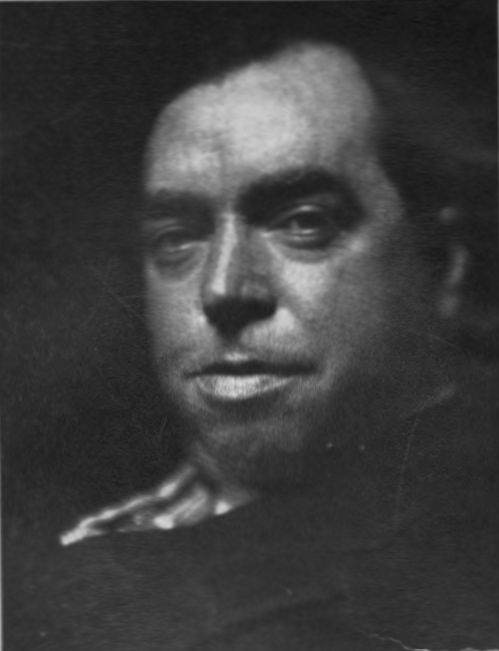
IRVIN S. COBB
FOREWORD
My favorite short story of all the short stories I have written is "The Escape of Mr. Trimm." It was the first piece of avowed fiction I wrote. It was written more than twelve years ago.
At the time, I was on the city staff of the New York Evening World. I was a reasonably busy person in those days. I did assignments, both special and ordinary; I handled my share of the "re-write"—that is, the building, inside the office, of news-stories based on details telephoned in by "leg men" or outside workers; I covered most of the big criminal trials that coincidentally took place; I wrote a page of alleged humor for the color section of the Sunday World and for the McClure syndicate; and every week I turned out a given number of shorter and also supposedly humorous articles for the magazine page of the Evening World.
In the run of my contemporaneous duties I was detailed to report the trial, in Federal Court, of a famous financier. This trial lasted several weeks. What most deeply impressed me was the bearing of the accused man. Although he had distinguished counsel, he practically conducted his own defense. When the jurors came in with a verdict of guilty and the judge sentenced him to a long term of imprisonment at hard labor, he kept his nerve and his wits. I said to myself that this man would never serve out his sentence; he was too smart for that; he would find a way to beat the law, even though his appeals were denied. And he did.
On the concluding day of the trial I fell to wondering just what possibly could defeat the will of such a man as this man was. At once a notion jumped into my head and, then and there, sitting at the reporters' table, I decided to write a story focusing about this central idea.
I had written fiction before—every reporter has—fiction masquerading as the lighter side of the news. But I said to myself that this story should be out-and-out fiction. Such small reputation as I had as a special writer largely was founded on my efforts at humor. But I made up my mind that this story should contain no humor at all.
Not until six months had passed did I get my chance. In the following summer I went on my annual vacation of two weeks. In the concluding two days of that vacation I wrote the first draft of the yarn, and, back at the shop, in odd moments, I wrote it over again, making, though, only a few changes in the original text, and none at all in the sequence of imaginary events.
I sent the manuscript to Mr. George Horace Lorimer, Editor of the Saturday Evening Post. He accepted it and invited me to submit other manuscripts to him. But I had to wait another full year—until vacation time came again—before there was opportunity for any more short-story writing. Then I did two more stories. Mr. Lorimer bought them both, and thereby I was encouraged to give up my newspaper job, with its guarantee of a pay envelope every Saturday, for the less certain but highly alluring rôle of a free-lance contributor to weekly and monthly periodicals.
Maybe I like "The Escape of Mr. Trimm" best of all my stories because it was this story which opened the door for me into magazine work. A writer's estimate of his own output rarely agrees with the judgment of his friends. But, after a period of consideration, after weighing this against that, after trying to forget what some of the professional reviewers have had to say about certain of my efforts, and striving instead to remember only what more gentle critics, out of the goodness of the heart, sometimes have told me, I still find myself committed to the belief that the story which appears in this volume is—so far as my prejudiced opinion goes—the best story I have ever written.
The ESCAPE of MR. TRIMM[2] By IRVIN S. COBB
Mr. Trimm, recently president of the late Thirteenth National Bank, was taking a trip which was different in a number of ways from any he had ever taken. To begin with, he was used to parlor cars and Pullmans and even luxurious private cars when he went anywhere; whereas now he rode with a most mixed company in a dusty, smelly day coach. In the second place, his traveling companion was not such a one as Mr. Trimm would have chosen had the choice been left to him, being a stupid-looking German-American with a drooping, yellow mustache. And in the third place, Mr. Trimm's plump white hands were folded in his lap, held in a close and enforced companionship by a new and shiny pair of Bean's Latest Model Little Giant handcuffs. Mr. Trimm was on his way to the Federal penitentiary to serve twelve years at hard labor for breaking, one way or another, about all the laws that are presumed to govern national banks.
* * * * *
All the time Mr. Trimm was in the Tombs, fighting for a new trial, a certain question had lain in his mind unasked and unanswered. Through the seven months of his stay in the jail that question had been always at the back part of his head, ticking away there like a little watch that never needed winding. A dozen times a day it would pop into his thoughts and then go away, only to come back again.
When Copley was taken to the penitentiary—Copley being the cashier who got off with a lighter sentence because the judge and jury held him to be no more than a blind accomplice in the wrecking of the Thirteenth National—Mr. Trimm read closely every line that the papers carried about Copley's departure. But none of them had seen fit to give the young cashier more than a short and colorless paragraph. For Copley was only a small figure in the big intrigue that had startled the country; Copley didn't have the money to hire big lawyers to carry his appeal to the higher courts for him; Copley's wife was keeping boarders; and as for Copley himself, he had been wearing stripes several months now.
With Mr. Trimm it had been vastly different. From the very beginning he had held the public eye. His bearing in court when the jury came in with their judgment; his cold defiance when the judge, in pronouncing sentence, mercilessly arraigned him and the system of finance for which he stood; the manner of his life in the Tombs; his spectacular fight to beat the verdict, had all been worth columns of newspaper space. If Mr. Trimm had been a popular poisoner, or a society woman named as corespondent in a sensational divorce suit, the papers could not have been more generous in their space allotments. And Mr. Trimm in his cell had read all of it with smiling contempt, even to the semi-hysterical outpourings of the lady special writers who called him The Iron Man of Wall Street and undertook to analyze his emotions—and missed the mark by a thousand miles or two.
Things had been smoothed as much as possible for him in the Tombs, for money and the power of it will go far toward ironing out even the corrugated routine of that big jail. He had a large cell to himself in the airiest, brightest corridor. His meals were served by a caterer from outside. Although he ate them without knife or fork, he soon learned that a spoon and the fingers can accomplish a good deal when backed by a good appetite, and Mr. Trimm's appetite was uniformly good. The warden and his underlings had been models of official kindliness; the newspapers had sent their brightest young men to interview him whenever he felt like talking, which wasn't often; and surely his lawyers had done all in his behalf that money—a great deal of money—could do. Perhaps it was because of these things that Mr. Trimm had never been able to bring himself to realize that he was the Hobart W. Trimm who had been sentenced to the Federal prison; it seemed to him, somehow, that he, personally, was merely a spectator standing at one side watching the fight of another man to dodge the penitentiary.
However, he didn't fail to give the other man the advantage of every chance that money would buy. This sense of aloofness to the whole thing had persisted even when his personal lawyer came to him one night in the early fall and told him that the court of last possible resort had denied the last possible motion. Mr. Trimm cut the lawyer short with a shake of his head as the other began saying something about the chances of a pardon from the President. Mr. Trimm wasn't in the habit of letting men deceive him with idle words. No President would pardon him, and he knew it.
"Never mind that, Walling," he said steadily, when the lawyer offered to come to see him again before he started for prison the next day. "If you'll see that a drawing-room on the train is reserved for me—for us, I mean—and all that sort of thing, I'll not detain you any further. I have a good many things to do tonight. Good night."
"Such a man, such a man," said Walling to himself as he climbed into his car; "all chilled steel and brains. And they are going to lock that brain up for twelve years. It's a crime," said Walling, and shook his head. Walling always said it was a crime when they sent a client of his to prison. To his credit be it said, though, they sent very few of them there. Walling made as high as eighty thousand a year at criminal law. Some of it was very criminal law indeed. His specialty was picking holes in the statutes faster than the legislature could make them and provide them and putty them up with amendments. This was the first case he had lost in a good long time.
* * * * *
When Jerry, the turnkey, came for him in the morning Mr. Trimm had made as careful a toilet as the limited means at his command permitted, and he had eaten a hearty breakfast and was ready to go, all but putting on his hat. Looking the picture of well-groomed, close-buttoned, iron-gray middle age, Mr. Trimm followed the turnkey through the long corridor and down the winding iron stairs to the warden's office. He gave no heed to the curious eyes that followed him through the barred doors of many cells; his feet rang briskly on the flags.
The warden, Hallam, was there in the private office with another man, a tall, raw-boned man with a drooping, straw-colored mustache and the unmistakable look about him of the police officer. Mr. Trimm knew without being told that this was the man who would take him to prison. The stranger was standing at a desk, signing some papers.
"Sit down, please, Mr. Trimm," said the warden with a nervous cordiality. "Be through here in just one minute. This is Deputy Marshal Meyers," he added.
Mr. Trimm started to tell this Mr. Meyers he was glad to meet him, but caught himself and merely nodded. The man stared at him with neither interest nor curiosity in his dull blue eyes. The warden moved over toward the door.
"Mr. Trimm," he said, clearing his throat, "I took the liberty of calling a cab to take you gents up to the Grand Central. It's out front now. But there's a big crowd of reporters and photographers and a lot of other people waiting, and if I was you I'd slip out the back way—one of my men will open the yard gate for you—and jump aboard the subway down at Worth Street. Then you'll miss those fellows."
"Thank you, Warden—very kind of you," said Mr. Trimm in that crisp, businesslike way of his. He had been crisp and businesslike all his life. He heard a door opening softly be hind him, and when he turned to look he saw the warden slipping out, furtively, in almost an embarrassed fashion.
"Well," said Meyers, "all ready?"
"Yes," said Mr. Trimm, and he made as if to rise.
"Wait one minute," said Meyers.
He half turned his back on Mr. Trimm and fumbled at the side pocket of his ill-hanging coat. Something inside of Mr. Trimm gave the least little jump, and the question that had ticked away so busily all those months began to buzz, buzz in his ears; but it was only a handkerchief the man was getting out. Doubtless he was going to mop his face.
He didn't mop his face, though. He unrolled the handkerchief slowly, as if it contained something immensely fragile and valuable, and then, thrusting it back in his pocket, he faced Mr. Trimm. He was carrying in his hands a pair of handcuffs that hung open-jawed. The jaws had little notches in them, like teeth that could bite. The question that had ticked in Mr. Trimm's head was answered at last—in the sight of these steel things with their notched jaws.
Mr. Trimm stood up and, with a movement as near to hesitation as he had ever been guilty of in his life, held out his hands, backs upward.
"I guess you're new at this kind of thing," said Meyers, grinning. "This here way—one at a time."
He took hold of Mr. Trimm's right hand, turned it sideways and settled one of the steel cuffs over the top of the wrist, flipping the notched jaw up from beneath and pressing it in so that it locked automatically with a brisk little click. Slipping the locked cuff back and forth on Mr. Trimm's lower arm like a man adjusting a part of machinery, and then bringing the left hand up to meet the right, he treated it the same way. Then he stepped back.
Mr. Trimm hadn't meant to protest. The word came unbidden.
"This—this isn't necessary, is it?" he asked in a voice that was husky and didn't seem to belong to him.
"Yep," said Meyers, "Standin' orders is play no favorites and take no chances. But you won't find them things uncomfortable. Lightest pair there was in the office, and I fixed 'em plenty loose."
For half a minute Mr. Trimm stood like a rooster hypnotized by a chalkmark, his arms extended, his eyes set on his bonds. His hands had fallen perhaps four inches apart, and in the space between his wrists a little chain was stretched taut. In the mounting tumult that filled his brain there sprang before Mr. Trimm's consciousness a phrase he had heard or read somewhere, the title of a story or, perhaps, it was a headline—The Grips of the Law. The Grips of the Law were upon Mr. Trimm—he felt them now for the first time in these shiny wristlets and this bit of chain that bound his wrists and filled his whole body with a strange, sinking feeling that made him physically sick. A sudden sweat beaded out on Mr. Trimm's face, turning it slick and wet.
He had a handkerchief, a fine linen handkerchief with a hemstitched border and a monogram on it, in the upper breast pocket of his buttoned coat. He tried to reach it. His hands went up, twisting awkwardly like crab claws. The fingers of both plucked out the handkerchief. Holding it so, Mr. Trimm mopped the sweat away. The links of the handcuffs fell in upon one another and lengthened out again at each movement, filling the room with a smart little sound.
He got the handkerchief stowed away with the same clumsiness. He raised the manacled hands to his hat brim, gave it a downward pull that brought it over his face and then, letting his short arms slide down upon his plump stomach, he faced the man who had put the fetters upon him, squaring his shoulders back. But it was hard, somehow, for him to square his shoulders—perhaps because of his hands being drawn so closely together. And his eyes would waver and fall upon his wrists. Mr. Trimm had a feeling that the skin must be stretched very tight on his jawbones and his forehead.
"Isn't there some way to hide these—these things?"
He began by blurting and ended by faltering it. His hands shuffled together, one over, then under the other.
"Here's a way," said Meyers. "This'll help."
He bestirred himself, folding one of the chained hands upon the other, tugging at the white linen cuffs and drawing the coat sleeves of his prisoner down over the bonds as far as the chain would let them come.
"There's the notion," he said. "Just do that-a-way and them bracelets won't hardly show a-tall. Ready? Let's be movin', then."
But handcuffs were never meant to be hidden. Merely a pair of steel rings clamped to one's wrists and coupled together with a scrap of chain, but they'll twist your arms and hamper the movements of your body in a way constantly to catch the eye of the passer-by. When a man is coming toward you, you can tell that he is handcuffed before you see the cuffs.
Mr. Trimm was never able to recall afterward exactly how he got out of the Tombs. He had a confused memory of a gate that was swung open by someone whom Mr. Trimm saw only from the feet to the waist; then he and his companion were out on Lafayette Street speeding south toward the subway entrance at Worth Street, two blocks below, with the marshal's hand cupped under Mr. Trimm's right elbow and Mr. Trimm's plump legs almost trotting in their haste. For a moment it looked as if the warden's well-meant artifice would serve.
But New York reporters are up to the tricks of people who want to evade them. At the sight of them a sentry reporter on the corner shouted a warning which was instantly caught up and passed on by another picket stationed half-way down the block; and around the wall of the Tombs came pelting a flying mob of newspaper photographers and reporters, with a choice rabble behind them. Foot passengers took up the chase, not knowing what it was about, but sensing a free show. Truckmen halted their teams, jumped down from their wagon seats and joined in. A man-chase is one of the pleasantest outdoor sports that a big city like New York can offer its people.
Fairly running now, the manacled banker and the deputy marshal shot down the winding steps into the subway a good ten yards ahead of the foremost pursuers. But there was one delay, while Meyers skirmished with his free hand in his trousers pocket for a dime for the tickets, and another before a northbound local rolled into the station. Shouted at, jeered at, shoved this way and that, panting in gulping breaths, for he was stout by nature and staled by lack of exercise, Mr. Trimm, with Meyers clutching him by the arm, was fairly shot aboard one of the cars, at the apex of a human wedge. The astonished guard sensed the situation as the scrooging, shoving, noisy wave rolled across the platform toward the doors which he had opened and, thrusting the officer and his prisoner into the narrow platform space behind him, he tried to form with his body a barrier against those who came jamming in.
It, didn't do any good. He was brushed away, protesting and blustering. The excitement spread through the train, and men, and even women, left their seats, overflowing the aisles.
There is no cruder thing than a city crowd, all eyes and morbid curiosity. But Mr. Trimm didn't see the staring eyes on that ride to the Grand Central. What he saw was many shifting feet and a hedge of legs shutting him in closely—those and the things on his wrists. What the eyes of the crowd saw was a small, stout man who, for all his bulk, seemed to have dried up inside his clothes so that they bagged on him some places and bulged others, with his head tucked on his chest, his hat over his face and his fingers straining to hold his coat sleeves down over a pair of steel bracelets.
Mr. Trimm gave mental thanks to a Deity whose existence he thought he had forgotten when the gate of the train-shed clanged behind him, shutting out the mob that had come with them all the way. Cameras had been shoved in his face like gun muzzles, reporters had scuttled alongside him, dodging under Meyers' fending arm to shout questions in his ears. He had neither spoken nor looked at them. The sweat still ran down his face, so that when finally he raised his head in the comparative quiet of the train-shed his skin was a curious gray under the jail paleness like the color of wet wood ashes.
"My lawyer promised to arrange for a compartment—for some private place on the train," he said to Meyers. "The conductor ought to know."
They were the first words he had uttered since he left the Tombs. Meyers spoke to a jaunty Pullman conductor who stood alongside the car where they had halted.
"No such reservation," said the conductor, running through his sheaf of slips, with his eyes shifting from Mr. Trimm's face to Mr. Trimm's hands and back again, as though he couldn't decide which was the more interesting part of him; "must be some mistake. Or else it was for some other train. Too late to change now—we pull out in three minutes."
"I reckon we better git on the smoker," said Meyers, "if there's room there."
Mr. Trimm was steered back again the length of the train through a double row of pop-eyed porters and staring trainmen. At the steps where they stopped the instinct to stretch out one hand and swing himself up by the rail operated automatically and his wrists got a nasty twist. Meyers and a brakeman practically lifted him up the steps and Meyers headed him into a car that was hazy with blue tobacco smoke. He was confused in his gait, almost as if his lower limbs had been fettered, too.
The car was full of shirt-sleeved men who stood up, craning their necks and stumbling over each other in their desire to see him. These men came out into the aisle, so that Meyers had to shove through them.
"This here'll do as well as any, I guess," said Meyers. He drew Mr. Trimm past him into the seat nearer the window and sat down alongside him on the side next the aisle, settling himself on the stuffy plush seat and breathing deeply, like a man who had got through the hardest part of a not easy job.
"Smoke?" he asked.
Mr. Trimm shook his head without raising it.
"Them cuffs feel plenty easy?" was the deputy's next question. He lifted Mr. Trimm's hands as casually as if they had been his hands and not Mr. Trimm's, and looked at them.
"Seem to be all right," he said as he let them fall back. "Don't pinch none, I reckon?" There was no answer.
The deputy tugged a minute at his mustache, searching his arid mind. An idea came to him. He drew a newspaper from his pocket, opened it out flat and spread it over Mr. Trimm's lap so that it covered the chained wrists. Almost instantly the train was in motion, moving through the yards.
"Be there in two hours more," volunteered Meyers. It was late afternoon. They were sliding through woodlands with occasional openings which showed meadows melting into wide, flat lands.
"Want a drink?" said the deputy, next. "No? Well, I guess I'll have a drop myself. Travelin' fills a feller's throat full of dust." He got up, lurching to the motion of the flying train, and started forward to the water cooler behind the car door. He had gone perhaps two-thirds of the way when Mr. Trimm felt a queer, grinding sensation beneath his feet; it was exactly as though the train were trying to go forward and back at the same time. Almost slowly, it seemed to him, the forward end of the car slued out of its straight course, at the same time tilting up. There was a grinding, roaring, grating sound, and before Mr. Trimm's eyes Meyers vanished, tumbling forward out of sight as the car floor buckled under his feet. Then, as everything—the train, the earth, the sky—all fused together in a great spatter of white and black, Mr. Trimm was plucked from his seat as though a giant hand had him by the collar and shot forward through the air over the seat-backs, his chained hands aloft, clutching wildly. He rolled out of a ragged opening where the smoker had broken in two, flopped gently on the sloping side of the right-of-way and slid easily to the bottom, where he lay quiet and still on his back in a bed of weeds and wild grass, staring straight up.
How many minutes he lay there Mr. Trimm didn't know. It may have been the shrieks of the victims or the glare from the fire that brought him out of the daze. He wriggled his body to a sitting posture, got on his feet, holding his head between his coupled hands, and gazed full-face into the crowning railroad horror of the year.
There were numbers of the passengers who had escaped serious hurt, but for the most part these persons seemed to have gone daft from terror and shock. Some were running aimlessly up and down and some, a few, were pecking feebly with improvised tools at the wreck, an indescribable jumble of ruin, from which there issued cries of mortal agony, and from which, at a point where two locomotives were lying on their sides, jammed together like fighting bucks that had died with locked horns, a tall flame already rippled and spread, sending up a pillar of black smoke that rose straight, poisoning the clear blue of the sky. Nobody paid any attention to Mr. Trimm as he stood swaying upon his feet. There wasn't a scratch on him. His clothes were hardly rumpled, his hat was still on his head. He stood a minute and then, moved by a sudden impulse, he turned round and went running straight away from the railroad at the best speed his pudgy legs could accomplish, with his arms pumping up and down in front of him and his fingers interlaced. It was a grotesque gait, rather like a rabbit hopping on its hindlegs.
Instantly, almost, the friendly woods growing down to the edge of the fill swallowed him up. He dodged and doubled back and forth among the tree trunks, his small, patent-leathered feet skipping nimbly over the irregular turf, until he stopped for lack of wind in his lungs to carry him another rod. When he had got his breath back Mr. Trimm leaned against a tree and bent his head this way and that, listening. No sound came to his ears except the sleepy calls of birds. As well as Mr. Trimm might judge he had come far into the depths of a considerable woodland. Already the shadows under the low limbs were growing thick and confused as the hurried twilight of early September came on.
Mr. Trimm sat down on a natural cushion of thick green moss between two roots of an oak. The place was clean and soft and sweet-scented. For some little time he sat there motionless, in a sort of mental haze. Then his round body slowly slid down fiat upon the moss, his head lolled to one side and, the reaction having come, Mr. Trimm's limbs all relaxed and he went to sleep straightway.
After a while, when the woods were blade and still, the half-grown moon came up and, sifting through a chink in the canopy of leaves above, shone down full on Mr. Trimm as he lay snoring gently with his mouth open and his hands rising and falling on his breast. The moonlight struck upon the Little Giant handcuffs, making them look like quicksilver.
Toward daylight it turned off sharp and cool. The dogwoods which had been a solid color at nightfall now showed pink in one light and green in another, like changeable silk, as the first level rays of the sun came up over the rim of the earth and made long, golden lanes between the tree trunks. Mr. Trimm opened his eyes slowly, hardly sensing for the first moment or two how he came to be lying under a canopy of leaves, and gaped, seeking to stretch his arms. At that he remembered everything; he hunched his shoulders against the tree roots and wriggled himself up to a sitting position where he stayed for a while, letting his mind run over the sequence of events that had brought him where he was and taking inventory of the situation.
Of escape he had no thought. The hue and cry must be out for him before now; doubtless men were already searching for him. It would be better for him to walk in and surrender than to be taken in the woods like some animal escaped from a traveling menagerie. But the mere thought of enduring again what he had already gone through—the thought of being tagged by crowds and stared at, with his fetters on—filled him with a nausea. Nothing that the Federal penitentiary might hold in store for him could equal the black, blind shamefulness of yesterday; he knew that. The thought of the new ignominy that faced him made Mr. Trimm desperate. He had a desire to burrow into the thicket yonder and hide his face and his chained hands.
But perhaps he could get the handcuffs off and so go to meet his captors in some manner of dignity. Strange that the idea hadn't occurred to him before! It seemed to Mr. Trimm that he desired to get his two hands apart more than he had ever desired anything in his whole life before.
The hands had begun naturally to adjust themselves to their enforced companionship, and it wasn't such a very hard matter, though it cost him some painful wrenches and much twisting of the fingers, for Mr. Trimm to get his coat unbuttoned and his eyeglasses in their small leather case out of his upper waistcoat pocket. With the glasses on his nose he subjected his bonds to a critical examination. Each rounded steel band ran unbroken except for the smooth, almost jointless hinge and the small lock which sat perched on the back of the wrist in a little rounded excrescence like a steel wart. In the flat center of each lock was a small keyhole and alongside of it a notched nub, the nub being sunk in a minute depression. On the inner side, underneath, the cuffs slid into themselves—two notches on each showing where the jaws might be tightened to fit a smaller hand than his—and right over the large blue veins in the middle of the wrists were swivel links, shackle-bolted to the cuffs and connected by a flat, slightly larger middle link, giving the hands a palm-to-palm play of not more than four or five inches. The cuffs did not hurt—even after so many hours there was no actual discomfort from them and the flesh beneath them was hardly reddened.
But it didn't take Mr. Trimm long to find out that they were not to be got off. He tugged and pulled, trying with his fingers for a purchase. All he did was to chafe his skin and make his wrists throb with pain. The cuffs would go forward just so far, then the little humps of bone above the hands would catch and hold them.
Mr. Trimm was not a man to waste time in the pursuit of the obviously hopeless. Presently he stood up, shook himself and started off at a fair gait through the woods. The sun was up now and the turf was all dappled with lights and shadows, and about him much small, furtive wild life was stirring. He stepped along briskly, a strange figure for that green solitude, with his correct city garb and the glint of the steel at his sleeve ends.
Presently he heard the long-drawn, quavering, banshee wail of a locomotive. The sound came from almost behind him, in an opposite direction from where he supposed the track to be. So he turned around and went back the other way. He crossed a half-dried-up runlet and climbed a small hill, neither of which he remembered having met in his flight from the wreck, and in a little while he came out upon the railroad. To the north a little distance the rails bent round a curve. To the south, where the diminishing rails running through the unbroken woodland met in a long, shiny V, he could see a big smoke smudge against the horizon. This smoke Mr. Trimm knew must come from the wreck—which was still burning, evidently. As nearly as he could judge he had come out of cover at least two miles above it. After a moment's consideration he decided to go south toward the wreck. Soon he could distinguish small dots like ants moving in and out about the black spot, and he knew these dots must be men.
A whining, whirring sound came along the rails to him from behind. He faced about just as a handcar shot out around the curve from the north, moving with amazing rapidity under the strokes of four men at the pumps. Other men, laborers to judge by their blue overalls, were sitting on the edges of the car with their feet dangling. For the second time within twelve hours impulse ruled Mr. Trimm, who wasn't given to impulses normally. He made a jump off the right-of-way, and as the handcar flashed by he watched its flight from the covert of a weed tangle.
But even as the handcar was passing him Mr. Trimm regretted his hastiness. He must surrender himself sooner or later; why not to these overalled laborers, since it was a thing that had to be done? He slid out of hiding and came trotting back to the tracks. Already the handcar was a hundred yards away, flitting into distance like some big, wonderfully fast bug, the figures of the men at the pumps rising and falling with a walking-beam regularity. As he stood watching them fade away and minded to try hailing them, yet still hesitating against his judgment, Mr. Trimm saw something white drop from the hands of one of the blue-clad figures on the handcar, unfold into a newspaper and come fluttering back along the tracks toward him. Just as he, starting doggedly ahead, met it, the little ground breeze that had carried it along died out and the paper dropped and flattened right in front of him. The front page was uppermost and he knew it must be of that morning's issue, for across the column tops ran the flaring headline: "Twenty Dead in Frightful Collision."
Squatting on the cindered track, Mr. Trimm patted the crumpled sheet flat with his hands. His eyes dropped from the first of the glaring captions to the second, to the next—and then his heart gave a great bound inside of him and, clutching up the newspaper to his breast he bounded off the tracks back into another thicket and huddled there with the paper spread on the earth in front of him, reading by gulps while the chain, that linked wrist to wrist tinkled to the tremors running through him. What he had seen first, in staring black-face type, was his own name leading the list of known dead, and what he saw now, broken up into choppy paragraphs and done in the nervous English of a trained reporter throwing a great news story together to catch an edition, but telling a clear enough story nevertheless, was a narrative in which his name recurred again and again. The body of the United States deputy marshal, Meyers, frightfully crushed, had been taken from the wreckage of the smoker—so the double-leaded story ran—and near to Meyers another body, with features burned beyond recognition, yet still retaining certain distinguishing marks of measurement and contour, had been found and identified as that of Hobart W. Trimm, the convicted banker. The bodies of these two, with eighteen other mangled dead, had been removed to a town called Westfield, from which town of Westfield the account of the disaster had been telegraphed to the New York paper. In another column farther along was more about Banker Trimm; facts about his soiled, selfish, greedy, successful life, his great fortune, his trial, and a statement that, in the absence of any close kin to claim his body, his lawyers had been notified.