Front matter (continued 2)
Reading edition
Mr. Trimm read the account through to the end, and as he read the sense of dominant, masterful self-control came back to him in waves. He got up, taking the paper with him, and went back into the deeper woods, moving warily and watchfully. As he went his mind, trained to take hold of problems and wring the essence out of them, was busy. Of the charred, grisly thing in the improvised morgue at Westfield, wherever that might be, Mr. Trimm took no heed nor wasted any pity. All his life he had used live men to work his will, with no thought of what might come to them afterward. The living had served him, why not the dead?
He had other things to think of than this dead proxy of his. He was as good as free! There would be no hunt for him now; no alarm out, no posses combing every scrap of cover for a famous criminal turned fugitive. He had only to lie quiet a few days, somewhere, then get in secret touch with Walling. Walling would do anything for money. And he had the money—four millions and more, cannily saved from the crash that had ruined so many others.
He would alter his personal appearance, change his name—he thought of Duvall, which was his mother's name—and with Walling's aid he would get out of the country and into some other country where a man might live like a prince on four millions or the fractional part of it. He thought of South America, of South Africa, of a private yacht swinging through the little frequented islands of the South Seas. All that the law had tried to take from him would be given back. Walling would work out the details of the escape—and make it safe and sure—trust Walling for those things. On one side was the prison, with its promise of twelve grinding years sliced out of the very heart of his life; on the other, freedom, ease, security, even power. Through Mr. Trimm's mind tumbled thoughts of concessions, enterprises, privileges—the back corners of the globe were full of possibilities for the right man. And between this prospect and Mr. Trimm there stood nothing in the way, nothing but——
Mr. Trimm's eyes fell upon his bound hands. Snug-fitting, shiny steel bands irked his wrists. The Grips of the Law were still upon him.
But only in a way of speaking. It was preposterous, unbelievable, altogether out of the question that a man with four millions salted down and stored away, a man who all his life had been used to grappling with the big things and wrestling them down into submission, a man whose luck had come to be a byword—and had not it held good even in this last emergency?—would be balked by puny scraps of forged steel and a trumpery lock or two. Why, these cuffs were no thicker than the gold bands that Mr. Trimm had seen on the arms of overdressed women at the opera. The chain that joined them was no larger and, probably, no stronger than the chains which Mr. Trimm's chauffeur wrapped around the tires of the touring-car in winter to keep the wheels from skidding on the slush. There would be a way, surely, for Mr. Trimm to free himself from these things. There must be—that was all there was to it.
Mr. Trimm looked himself over. His clothes were not badly rumpled; his patent-leather boots were scarcely scratched. Without the handcuffs he could pass unnoticed anywhere. By night then he must be free of them and on his way to some small inland city, to stay quiet there until the guarded telegram that he would send in cipher had reached Walling. There in the woods by himself Mr. Trimm no longer felt the ignominy of his bonds; he felt only the temporary embarrassment of them and the need of added precaution until he should have mastered them.
He was once more the unemotional man of affairs who had stood Wall Street on its esteemed head and caught the golden streams that trickled from its pockets. First making sure that he was in a well-screened covert of the woods he set about exploring all his pockets. The coat pockets were comparatively easy, now that he had got used to using two hands where one had always served, but it cost him a lot of twisting of his body and some pain to his mistreated wrist bones to bring forth the contents of his trousers pockets. The chain kinked time and again as he groped with the undermost hand for the openings; his dumpy, pudgy form writhed grotesquely. But finally he finished. The search produced four cigars somewhat crumpled and frayed; some matches in a gun-metal case, a silver cigar cutter, two five-dollar bills, a handful of silver chicken feed, the leather case of the eyeglasses, a couple of quill toothpicks, a gold watch with a dangling fob, a note-book and some papers. Mr. Trimm ranged these things in a neat row upon a log, like a watchmaker putting out his kit, and took swift inventory of them. Some he eliminated from his design, stowing them back in the pockets easiest to reach. He kept for present employment the match safe, the cigar cutter and the watch.
This place where he had halted would suit his present purpose well, he decided. It was where an uprooted tree, fallen across an incurving bank, made a snug little recess that was closed in on three sides. Spreading the newspaper on the turf to save his knees from soiling, he knelt and set to his task. For the time he felt neither hunger nor thirst. He had found out during his earlier experiments that the nails of his little fingers, which were trimmed to a point, could invade the keyholes in the little steel warts on the backs of his wrists and touch the locks. The mechanism had even twitched a little bit under the tickle of the nail ends. So, having already smashed the gun-metal match safe under his heel, Mr. Trimm selected a slender-pointed bit from among its fragments and got to work, the left hand drawn up under the right, the fingers of the right busy with the lock of the left, the chain tightening and slackening with subdued clinking sounds at each movement.
Mr. Trimm didn't know much about picking a lock. He had got his money by a higher form of burglary that did not require a knowledge of lock-picking. Nor as a boy had he been one to play at mechanics. He had let other boys make the toy fluttermills and the wooden traps and the like, and then he had traded for them. He was sorry now that he hadn't given more heed to the mechanical side of things when he was growing up.
He worked with a deliberate slowness, steadily. Nevertheless, it was hot work. The sun rose over the bank and shone on him through the limbs of the uprooted tree. His hat was on the ground alongside of him. The sweat ran down his face, streaking it and wilting his collar flat. The scrap of gun metal kept slipping out of his wet fingers. Down would go the chained hands to scrabble in the grass for it, and then the picking would go on again. This happened a good many times. Birds, nervous with the spirit that presages the fall migration, flew back and forth along the creek, almost grazing Mr. Trimm sometimes. A rain crow wove a brown thread in the green warp of the bushes above his head. A chattering red squirrel sat up on a tree limb to scold him. At intervals, distantly, came the cough of laboring trains, showing that the track must have been cleared. There were times when Mr. Trimm thought he felt the lock giving. These times he would work harder.
* * * * *
Late in the afternoon Mr. Trimm lay back against the bank, panting. His face was splotched with red, and the little hollows at the sides of his forehead pulsed rapidly up and down like the bellies of scared tree frogs. The bent outer case of the watch littered a bare patch on the log; its mainspring had gone the way of the fragments of the gun-metal match safe which were lying all about, each a worn-down, twisted wisp of metal. The spring of the eyeglasses had been confiscated long ago and the broken crystals powdered the earth where Mr. Trimm's toes had scraped a smooth patch. The nails of the two little fingers were worn to the quick and splintered down into the raw flesh. There were countless tiny scratches and mars on the locks of the handcuffs, and the steel wristbands were dulled with blood smears and pale-red tarnishes of new rust; but otherwise they were as stanch and strong a pair of Bean's Latest Model Little Giant handcuffs as you'd find in any hardware store anywhere.
The devilish, stupid malignity of the damned things! With an acid oath Mr. Trimm raised his hands and brought them down on the log violently. There was a double click and the bonds tightened painfully, pressing the chafed red skin white. Mr. Trimm snatched up his hands close to his near-sighted eyes and looked. One of the little notches on the under side of each cuff had disappeared. It was as if they were living things that had turned and bitten him for the blow he gave them.
* * * * *
From the time the sun went down there was a tingle of frost in the air. Mr. Trimm didn't sleep much. Under the squeeze of the tightened fetters his wrists throbbed steadily and racking cramps ran through his arms. His stomach felt as though it were tied into knots. The water that he drank from the branch only made his hunger sickness worse. His undergarments, that had been wet with perspiration, clung to him clammily. His middle-aged, tenderly cared-for body called through every pore for clean linen and soap and water and rest, as his empty insides called for food.
After a while he became so chilled that the demand for warmth conquered his instinct for caution. He felt about him in the darkness gathering scraps of dead wood, and, after breaking several of the matches that had been in the gun-metal match safe, he managed to strike one and with its tiny flame started a fire. He huddled almost over the fire, coughing when the smoke blew into his face and twisting and pulling at his arms in an effort to get relief from the everlasting cramps. It seemed to him that if he could only get an inch or two more of play for his hands he would be ever so much more comfortable. But he couldn't, of course.
He dozed, finally, sitting crosslegged with his head sunk between his hunched shoulders. A pain in a new place woke him. The fire had burned almost through the thin sole of his right shoe, and as he scrambled to his feet and stamped, the clap of the hot leather flat against his blistered foot almost made him cry out.
* * * * *
Soon after sunrise a boy came riding a horse down a faintly traced footpath along the creek, driving a cow with a bell on her neck ahead of him. Mr. Trimm's ears caught the sound of the clanking bell before either the cow or her herder was in sight, and he limped away, running, skulking through the thick cover. A pendent loop of a wild grapevine, swinging low, caught his hat and flipped it off his head; but Mr. Trimm, imagining pursuit, did not stop to pick it up and went on bareheaded until he had to stop from exhaustion. He saw some dark-red berries on a shrub upon which he had trod, and, stooping, he plucked some of them with his two hands and put three or four in his mouth experimentally. Warned instantly by the harsh, burning taste, he spat the crushed berries out and went on doggedly, following, according to his best judgment, a course parallel to the railroad. It was characteristic of him, a city-raised man, that he took no heed of distances nor of the distinguishing marks of the timber.
Behind a log at the edge of a small clearing in the woods he halted some little time, watching and listening. The clearing had grown up in sumacs and weeds and small saplings and it seemed deserted; certainly it was still. Near the center of it rose the sagging roof of what had been a shack or a shed of some sort. Stooping cautiously, to keep his bare head below the tops of the sumacs, Mr. Trimm made for the ruined shanty and gained it safely. In the midst of the rotted, punky logs that had once formed the walls he began scraping with his feet. Presently he uncovered something. It was a broken-off harrow tooth, scaled like a long, red fish with the crusted rust of years.
Mr. Trimm rested the lower rims of his handcuffs on the edge of an old, broken watering trough, worked the pointed end of the rust-crusted harrow tooth into the flat middle link of the chain as far as it would go, and then with one hand on top of the other he pressed downward with all his might. The pain in his wrists made him stop this at once. The link had not sprung or given in the least, but the twisting pressure had almost broken his wrist bones. He let the harrow tooth fall, knowing that it would never serve as a lever to free him—which, indeed, he had known all along—and sat on the side of the trough, rubbing his wrists and thinking.
He had another idea. It came into his mind as a vague suggestion that fire had certain effects upon certain metals. He kindled a fire of bits of the rotted wood, and when the flames ran together and rose slender and straight in a single red thread he thrust the chain into it, holding his hands as far apart as possible in the attitude of a player about to catch a bounced ball. But immediately the pain of that grew unendurable too, and he leaped back, jerking his hands away. He had succeeded only in blackening the steel and putting a big water blister on one of his wrists right where the shackle bolt would press upon it.
Where he huddled down in the shelter of one of the fallen walls he noticed, presently, a strand of rusted fence wire still held to half-tottering posts by a pair of blackened staples; it was part of a pen that had been used once for chickens or swine. Mr. Trimm tried the wire with his fingers. It was firm and springy. Rocking and groaning with the pain of it, he nevertheless began sliding the chain back and forth along the strand of wire.
Eventually, the wire, weakened by age, snapped in two. A tiny shined spot, hardly deep enough to be called a nick, in its tarnished, smudged surface was all the mark that the chain showed.
Staggering a little and putting his feet down unsteadily, Mr. Trimm left the clearing, heading as well as he could tell eastward, away from the railroad. After a mile or two he came toil dusty wood road winding downhill.
To the north of the clearing where Mr. Trimm had halted were a farm and a group of farm buildings. To the southward a mile or so was a cluster of dwellings set in the midst of more farm lands, with a shop or two and a small white church with a green spire in the center. Along a road that ran northward from the hamlet to the solitary farm a ten-year-old boy came, carrying a covered tin pail. A young gray squirrel flirted across the wagon ruts ahead of him and darted up a chestnut sapling. The boy put the pail down at the side of the road and began looking for a stone to throw at the squirrel.
Mr. Trimm slid out from behind a tree. A hemstitched handkerchief, grimed and stained, was loosely twisted around his wrists, partly hiding the handcuffs. He moved along with a queer, sidling gait, keeping as much of his body as he could turned from the youngster. The ears of the little chap caught the faint scuffle of feet and he spun around on his bare heel.
"My boy, would you——" Mr. Trimm began.
The boy's round eyes widened at the apparition that was sidling toward him in so strange a fashion, and then, taking fright, he dodged past Mr. Trimm and ran back the way he had come, as fast as his slim brown legs could take him. In half a minute he was out of sight round a bend.
Had the boy looked back he would have seen a still more curious spectacle than the one that had frightened him. He would have seen a man worth four million dollars down on his knees in the yellow dust, pawing with chained hands at the tight-fitting lid of the tin pail, and then, when he had got the lid off, drinking the fresh, warm milk which the pail held with great, choking gulps, uttering little mewing, animal sounds as he drank, while the white, creamy milk ran over his chin and splashed down his breast in little, spurting streams.
But the boy didn't look back. He ran all the way home and told his mother he had seen a wild man on the road to the village; and later, when his father came in from the fields, he was soundly thrashed for letting the sight of a tramp make him lose a good tin bucket and half a gallon of milk worth nine cents a quart.
* * * * *
The rich, fresh milk put life into Mr. Trimm. He rested the better for it during the early part of that night in a haw thicket. Only the sharp, darting pains in his wrists kept rousing him to temporary wakefulness. In one of those intervals of waking the plan that had been sketchily forming in his mind from the time he had quit the clearing in the woods took on a definite, fixed shape. But how was he with safety to get the sort of aid he needed, and where?
Canvassing tentative plans in his head, he dozed off again.
* * * * *
On a smooth patch of turf behind the blacksmith shop three yokels were languidly pitching horseshoes—"quaits," they called them—at a stake driven in the earth. Just beyond, the woods shredded out into a long, yellow and green peninsula which stretched up almost to the back door of the smithy, so that late of afternoons the slanting shadows of the nearmost trees fell on its roof of warped shingles. At the extreme end of this point of woods Mr. Trimm was squatted behind a big boulder, squinting warily through a thick-fringed curtain of ripened goldenrod tops and sumacs, heavy-headed with their dark-red tapers. He had been there more than an hour, cautiously waiting his chance to hail the blacksmith, whose figure he could make out in the smoky interior of his shop, passing back and forth in front of a smudgy forge fire and rattling metal against metal in intermittent fits of professional activity.
From where Mr. Trimm watched to where the horseshoe-pitching game went on was not more than sixty feet. He could hear what the players said and even see the little puffs of dust rise when one of them clapped his hands together after a pitch. He judged by the signs of slackening interest that they would be stopping soon and, he hoped, going clear away.
But the smith loafed out of his shop and, after an exchange of bucolic banter with the three of them, he took a hand in their game himself. He wore no coat or waistcoat and, as he poised a horseshoe for his first cast at the stake, Mr. Trimm saw, pinned flat against the broad strap of his suspenders, a shiny, silvery-looking disc. Having pitched the shoe, the smith moved over into the shade, so that he almost touched the clump of undergrowth that half buried Mr. Trimm's protecting boulder. The near-sighted eyes of the fugitive banker could make out then what the flat, silvery disc was, and Mr. Trimm cowered low in his covert behind the rock, holding his hands down between his knees, fearful that a gleam from his burnished wristlets might strike through the screen of weed growth and catch the inquiring eye of the smith. So he stayed, not daring to move, until a dinner horn sounded somewhere in the cluster of cottages beyond, and the smith, closing the doors of his shop, went away with the three yokels.
Then Mr. Trimm, stooping low, stole back into the deep woods again. In his extremity he was ready to risk making a bid for the hire of a blacksmith's aid to rid himself of his bonds, but not a blacksmith who wore a deputy sheriff's badge pinned to his suspenders.
* * * * *
He caught himself scraping his wrists up and down again against the rough, scrofulous trunk of a shellbark hickory. The irritation was comforting to the swollen skin. The cuffs, which kept catching on the bark and snagging small fragments of it loose, seemed to Mr. Trimm to have been a part and parcel of him for a long time—almost as long a time as he could remember. But the hands which they clasped so close seemed like the hands of somebody else. There was a numbness about them that made them feel as though they were a stranger's hands which never had belonged to him. As he looked at them with a sort of vague curiosity they seemed to swell and grow, these two strange hands, while the fetters measured yards across, while the steel bands shrunk to the thinness of piano wire, cutting deeper and deeper into the flesh. Then the hands in turn began to shrink down and the cuffs to grow up into great, thick things as cumbersome as the couplings of a freight car. A voice that Mr. Trimm dimly recognized as his own was saying something about four million dollars over and over again.
Mr. Trimm roused up and shook his head angrily to clear it. He rubbed his eyes free of the clouding delusion. It wouldn't do for him to be getting light-headed.
* * * * *
On a flat, shelving bluff, forty feet above a cut through which the railroad ran at a point about five miles north of where the collision had occurred, a tramp was busy, just before sundown, cooking something in an old washboiler that perched precariously on a fire of wood coals. This tramp was tall and spindle-legged, with reddish hair and a pale, beardless, freckled face with no chin to it and not much forehead, so that it ran out to a peak like the profile of some featherless, unpleasant sort of fowl. The skirts of an old, ragged overcoat dangled grotesquely about his spare shanks.
Desperate as his plight had become, Mr. Trimm felt the old sick shame at the prospect of exposing himself to this knavish-looking vagabond whose help he meant to buy with a bribe. It was the sight of a dainty wisp of smoke from the wood fire curling upward through the cloudy, damp air that had brought him limping cautiously across the right-of-way, to climb the rocky shelf along the cut; but now he hesitated, shielded in the shadows twenty yards away. It was a whiff of something savory in the washboiler, borne to him on the still air and almost making him cry out with eagerness, that drew him forth finally. At the sound of the halting footsteps the tramp stopped stirring the mess in the washboiler and glanced up apprehensively. As he took in the figure of the newcomer his eyes narrowed and his pasty, nasty face spread in a grin of comprehension.
"Well, well, well," he said, leering offensively, "welcome to our city, little stranger."
Mr. Trimm came nearer, dragging his feet, for they were almost out of the wrecks of his patent-leather shoes. His gaze shifted from the tramp's face to the stuff on the fire, his nostrils wrinkling. Then slowly, "I'm in trouble," he said, and held out his hands.
"Wot I'd call a mild way o' puttin' it," said the tramp coolly. "That purticular kind o' joolry ain't gen'lly wore for pleasure."
His eyes took on a nervous squint and roved past Mr. Trimm's stooped figure down the slope of the hillock.
"Say, pal, how fur ahead are you of yore keeper?" he demanded, his manner changing.
"There is no one after me—no one that I know of," explained Mr. Trimm. "I am quite alone—I am certain of it."
"Sure there ain't nobody lookin' fur you?" the other persisted suspiciously.
"I tell you I am all alone," protested Mr. Trimm. "I want your help in getting these—these things off and sending a message to a friend. You'll be well paid, very well paid. I can pay you more money than you ever had in your life, probably, for your help. I can promise——-"
He broke off, for the tramp, as if reassured by his words, had stooped again to his cooking and was stirring the bubbling contents of the washboiler with a peeled stick. The smell of the stew, rising strongly, filled Mr. Trimm with such a sharp and an aching hunger that he could not speak for a moment. He mastered himself, but the effort left him shaking and gulping.
"Go on, then, an' tell us somethin' about yourself," said the freckled man. "Wot brings you roamin' round this here railroad cut with them bracelets on?"
"I was in the wreck," obeyed Mr. Trimm. "The man with me—the officer—was killed. I wasn't hurt and I got away into these woods. But they think I'm dead too—my name was among the list of dead."
The other's peaky face lengthened in astonishment.
"Why, say!" he began. "I read all about that there wreck—seen the list myself—say, you can't be Trimm, the New York banker? Yes, you are! Wot a streak of luck! Lemme look at you! Trimm, the swell financier, sportin' 'round with the darbies on him all nice an' snug an' reg'lar! Mister Trimm—well, if this ain't rich!"
"My name is Trimm," said the starving banker miserably. "I've been wandering about here a great many hours—several days, I think it must be—and I need rest and food very much indeed. I don't—don't feel very well," he added, his voice trailing off.
At this his self-control gave way again and he began to quake violently as if with an ague. The smell of the cooking overcame him.
"You don't look so well an' that's a fact, Trimm," sneered the tramp, resuming his malicious, mocking air. "But set down an' make yourself at home, an' after a while, when this is done, we'll have a bite together—you an' me. It'll be a reg'lar tea party fur jest us two."
He broke off to chuckle. His mirth made him appear even more repulsive than before.
"But looky here, you wuz sayin' somethin' about money," he said suddenly. "Le's take a look at all this here money."
He came over to him and went through Mr. Trimm's pockets. Mr. Trimm said nothing and stood quietly, making no resistance. The tramp finished a workmanlike search of the banker's pockets. He looked at the result as it lay in his grimy palm—a moist little wad of bills and some chicken-feed change—and spat disgustedly with a nasty oath.
"Well, Trimm," he said, "fur a Wall Street guy seems to me you travel purty light. About how much did you think you'd get done fur all this pile of wealth?"
"You will be well paid," said Mr. Trimm, arguing hard; "my friend will see to that. What I want you to do is to take the money you have there in your hand and buy a cold chisel or a file—any tools that will cut these things off me. And then you will send a telegram to a certain gentleman in New York. And let me stay with you until we get an answer—until he comes here. He will pay you well; I promise it."
He halted, his eyes and his mind again on the bubbling stuff in the rusted washboiler. The freckled vagrant studied him through his red-lidded eyes, kicking some loose embers back into the fire with his toe.
"I've heard a lot about you one way an' another, Trimm," he said. "'Tain't as if you wuz some pore down-an'-out devil tryin' to beat the cops out of doin' his bit in stir. You're the way-up, high-an'-mighty kind of crook. An' from wot I've read an' heard about you, you never toted fair with nobody yet. There wuz that young feller, wot's his name?—the cashier—him that wuz tried with you. He went along with you in yore games an' done yore work fur you an' you let him go over the road to the same place you're tryin' to dodge now. Besides," he added cunningly, "you come here talkin' mighty big about money, yet I notice you ain't carryin' much of it in yore clothes. All I've had to go by is yore word. An' yore word ain't worth much, by all accounts."
"I tell you, man, that you'll profit richly," burst out Mr. Trimm, the words falling over each other in his new panic. "You must help me; I've endured too much—I've gone through too much to give up now." He pleaded fast, his hands shaking in a quiver of fear and eagerness as he stretched them out in entreaty and his linked chain shaking with them. Promises, pledges, commands, orders, arguments poured from him. His tormentor checked him with a gesture.
"You're wot I'd call a bird in the hand," he chuckled, hugging his slack frame, "an' it ain't fur you to be givin' orders—it's fur me. An', anyway, I guess we ain't a-goin' to be able to make a trade—leastwise not on yore terms. But we'll do business all right, all right—anyhow, I will."
"What do you mean?" panted Mr. Trimm, full of terror. "You'll help me?"
"I mean this," said the tramp slowly. He put his hands under his loose-hanging overcoat and began to fumble at a leather strap about his waist. "If I turn you over to the Government I know wot you'll be worth, purty near, by guessin' at the reward; an' besides, it'll maybe help to square me up fur one or two little matters. If I turn you loose I ain't got nothin' only your word—an' I've got an idea how much faith I kin put in that."
Mr. Trimm glanced about him wildly. There was no escape. He was fast in a trap which he himself had sprung. The thought of being led to jail, all foul of body and fettered as he was, by this filthy, smirking wretch made him crazy. He stumbled backward with some insane idea of running away.
"No hurry, no hurry a-tall," gloated the tramp, enjoying the torture of this helpless captive who had walked into his hands. "I ain't goin' to hurt you none—only make sure that you don't wander off an' hurt yourself while I'm gone. Won't do to let you be damagin' yoreself; you're valuable property. Trimm, now, I'll tell you wot we'll do! We'll just back you up agin one of these trees an' then we'll jest slip this here belt through yore elbows an' buckle it around behind at the back; an' I kinder guess you'll stay right there till I go down yonder to that town that I passed comin' up here an' see wot kind of a bargain I kin strike up with the marshal. Come on, now," he threatened with a show of bluster, reading the resolution that was mounting in Mr. Trimm's face. "Come on peaceable, if you don't want to git hurt."
Of a sudden Mr. Trimm became the primitive man. He was filled with those elemental emotions that make a man see in spatters of crimson. Gathering strength from passion out of an exhausted frame, he sprang forward at the tramp. He struck at him with his head, his shoulders, his knees, his manacled wrists, all at once. Not really hurt by the puny assault, but caught by surprise, the freckled man staggered bade, clawing at the air, tripped on the washboiler in the fire, and with a yell vanished below the smooth edge of the cut.
Mr. Trimm stole forward and looked over the bluff. Half-way down the cliff on an outcropping shelf of rock the man lay, face downward, motionless. He seemed to have grown smaller and to have shrunk into his clothes. One long, thin leg was bent up under the skirts of the overcoat in a queer, twisted way, and the cloth of the trouser leg looked flattened and empty. As Mr. Trimm peered down at him he saw a red stain spreading on the rock under the still, silent figure's head.
Mr. Trimm turned to the washboiler. It lay on its side, empty, the last of its recent contents sputtering out into the half-drowned fire. He stared at this ruin a minute. Then without another look over the cliff edge he stumbled slowly down the hill, muttering to himself as he went. Just as he struck the level it began to rain, gently at first, then hard, and despite the shelter of the full-leaved forest trees, he was soon wet through to his skin and dripped water as he lurched along without sense of direction and, indeed, without any active realization of what he was doing.
* * * * *
Late that night it was still raining—a cold, steady, autumnal downpour. A huddled figure slowly climbed upon a low fence running about the house-yard of the little farm where the boy lived who got thrashed for losing a milk-pail. On the wet top rail, precariously perching, the figure slipped and sprawled forward in the miry yard. It got up, painfully swaying on its feet. It was Mr. Trimm, looking for food. He moved slowly toward the house, tottering from weakness and because of the slick mud underfoot; peering near-sightedly this way and that through the murk; starting at every sound and stopping often to listen.
The outlines of the lean-to kitchen at the back of the house were looming dead ahead of him when from the corner of the cottage sprang a small terrier. It made for Mr. Trimm, barking shrilly. He retreated backward, kicking at the little dog and, to hold his balance, striking out with short, dabby jerks of his fettered hands—they were such motions as the terrier itself might make trying to walk on its hindlegs. Still backing away, expecting every instant to feel the terrier's teeth in his flesh, Mr. Trimm put one foot into a hotbed with a great clatter of the breaking glass. He felt the sharp ends of shattered glass tearing and cutting his shin as he jerked free. Recovering himself, he dealt the terrier a lucky kick under the throat that sent it back, yowling, to where it had come from, and then, as a door jerked open and a half-dressed man jumped out into the darkness, Mr. Trimm half hobbled, half fell out of sight behind the woodpile.
Back and forth along the lower edge of his yard the farmer hunted, with the whimpering, cowed terrier to guide him, poking in dark corners with the muzzle of his shotgun for the unseen intruder whose coming had aroused the household. In a brushpile just over the fence to the east Mr. Trimm lay on his face upon the wet earth, with the rain beating down on him, sobbing with choking gulps that wrenched him cruelly, biting at the bonds on his wrists until the sound of breaking teeth gritted in the air. Finally, in the hopeless, helpless frenzy of his agony he beat his arms up and down until the bracelets struck squarely on a flat stone and the force of the blow sent the cuffs home to the last notch so that they pressed harder and faster than ever upon the tortured wrist bones.
When he had wasted ten or fifteen minutes in a vain search the farmer went shivering back indoors to dry put his wet shirt. But the groveling figure in the brushpile lay for a long time where it was, only stirring a little while the rain dripped steadily down on everything.
* * * * *
The wreck was on a Tuesday evening. Early on the Saturday morning following, the chief of police, who was likewise the whole of the day police force in the town of Westfield, nine miles from the place where the collision occurred, heard a peculiar, strangely weak knocking at the front door of his cottage, where he also had his office. The door was a Dutch door, sawed through the middle, so that the top half might be opened independently, leaving the lower panel fast. He swung this top half bade.
A face was framed in the opening—an indescribably dirty, unutterably weary face, with matted white hair and a rime of whitish beard stubble on the jaws. It was fallen in and sunken and it drooped on the chest of its owner. The mouth, swollen and pulpy, as if from repeated hard blows, hung agape, and between the purplish parted lips showed the stumps of broken teeth. The eyes blinked weakly at the chief from under lids as colorless as the eyelids of a corpse. The bare white head was filthy with plastered mud and twigs, and dripping wet.
"Hello, there!" said the chief, startled at this apparition. "What do you want?"
With a movement that told of straining effort the lolled head came up off the chest. The thin, corded neck stiffened back, rising from a dirty, collarless neckband. The Adam's apple bulged out prominently, as big as a pigeon's egg.
"I have come," said the specter in a wheezing rasp of a voice which the chief could hardly hear, "I have come to surrender myself. I am Hobart W. Trimm."
"I guess you got another think comin'," said the chief, who was by the way of being a neighborhood wag. "When last seen Hobart W. Trimm was only fifty-two years old. Besides which, he's dead and buried. I guess maybe you'd better think ag'in, grandpap, and see if you ain't Methus'lah or the Wanderin' Jew."
"I am Hobart W. Trimm, the banker," whispered the stranger with a sort of wan stubbornness.
"Go on and prove it," suggested the chief, more than willing to prolong the enjoyment of the sensation. It wasn't often in Westfield that wandering lunatics came a-calling.
"Got any way to prove it?" he repeated as the visitor stared at him.
"Yes," came the creaking, rusted hinge of a voice, "I have."
Slowly, with struggling attempts, he raised his hands into the chief's sight. They were horribly swollen hands, red with the dried blood where they were not black with the dried dirt; the fingers puffed up out of shape; the nails broken; they were like the skinned paws of a bear. And at the wrists, almost buried in the bloated folds of flesh, blackened, rusted, battered, yet still strong and whole, was a tightly locked pair of Bean's Latest Model Little Giant handcuffs.
"Great God!" cried the chief, transfixed at the sight. He drew the bolt and jerked open the lower half of the door.
"Come in," he said, "and lemme get them irons off of you—they must hurt something terrible." "They can wait," said Mr. Trimm very humbly. "I have worn them a long, long while, I think—I am used to them. Wouldn't you please get me some food first?"

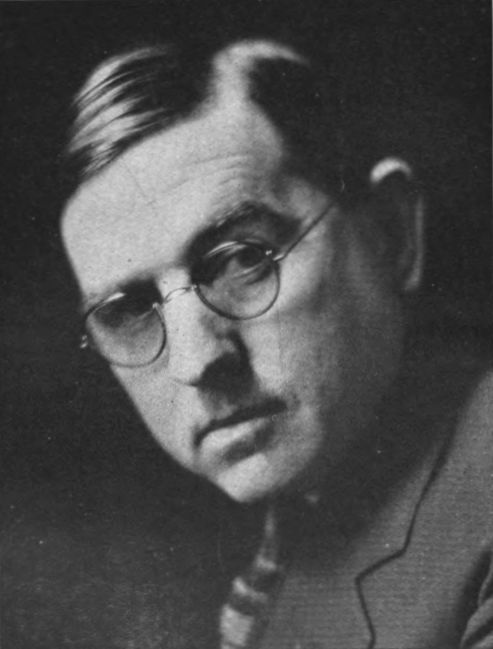
PETER B. KYNE
FOREWORD
In the days of my youth I was happy. I had no money, hence no responsibilities. All I had was a job with wages that never developed into a position with salary. However, out of my stipend I managed to buy a good shotgun and, each fall thereafter, a case of shells with my own special load for quail—one ounce of No. 9 chilled shot with twenty-four grains of Laflin & Rand powder. In "those old days of the lost sunshine" I possessed also two additional treasures—the most wonderful and lovable shooting crony a man ever had and the finest little English setter any man ever killed a quail over. My pal presented me with this dog because he loved me; moreover, he had a weakness for pointers and owned a bitch named Lou.
Lee Clark and his good dog Lou! What memories they evoke! As I write the years fall away and Lee and Lou and Dick and I are quail-hunting in the hills of California. I see a little swale covered with stunted sage, blackberry bushes and dried nettles, and the dogs are questing through it. Lee Clark is on one side of this swale and I am on the other, and for a moment the dogs are invisible to me. Then, borne to me on the crisp October air, comes Lee's voice:
"Point!"
I move fifteen or twenty feet. I am in no hurry, for I know those dogs. It is a matter of personal honor with them not to break point. Presently I see them. Little lemon-and-white Lou has found the bird, and Dicky thorough little gentleman that he was, is honoring her point! Lee walks down to his dog; the quail lies close. "Good old Lou," Lee says, and stoops to give her the caress she craves. Then he kicks out the bird—for me! (Lee was like that. He would never kill a bird over his own dog's point while his field companion stood by, nor could any protest move him from this exhibition of his inherent graciousness and courtesy.) So I fire—and miss—and then at forty yards Lee gets the bird, and Lou trots sedately down and picks the little feathered martyr up very gently, scarcely disturbing a feather, and carries the trophy uphill to Lee. As I write, with twenty years behind me, I tan see her yet, her tail and rear end swishing pridefully and her beautiful eyes abeam with love; she is even trying to smile with the bird in her mouth!
Lee takes the bird from her and tucks it in his hunting-coat pocket. Then he strokes Lou's head and says: "Good girl," and Lou licks his hand and scurries away to find another bird. And this time she points so close to me that Lee calls cheerily to me to kick the bird out and kill it. I do—and again Lou retrieves the bird. But she does not bring it to her master this time. Ah, no! Lou is wiser than that. She brings it to me, for she knows it is my bird!
Meanwhile Dick is frozen on another bird! And so it goes. At noon we rest under an oak beside a creek, and over a barbecued steak and a bottle of good wine, discuss the morning shoot and the prospects of as good shooting in the afternoon. And late that night we drive home in the moonlight in an old side-bar buggy, with Dick curled up in back and Lou in her master's lap, with her muzzle in his hand . . .
Well, there will never be another Dick or another Lou or another gallant, kindly, unselfish, understanding friend and shooting crony like Lee Clark. A fiend stole Dick from me and Lou died in puppy-birth; when Lee told me about it he wept, and I honored him for his tears. And then the pressure of life commenced to be felt. After twelve years of Lou, Lee Clark could not accustom himself to other dogs—and the hopelessness of finding another Lou was quite apparent, for Lou had been one of those rare dogs that do not require training! And I could never find another Dicky and had no place to keep him if I had. I became an author and married, and a multitude of interests claimed us, and we gave up quail-shooting, although every few years we meet and talk bravely about the necessity for renewing our youth afield.
A man who has trained field dogs for me has much of Lee Clark in him, and that man's wife is a rare good sport. One day I went to his kennels, and he showed me a five-year-old setter that had been the unbeautiful runt of his litter. He called this dog Jeff, and Jeff was a failure. His litter mates had made field trial history but Jeff was so little and homely, nobody had ever wanted him, and he had never been trained. He was a stud dog.
He was the reincarnation of my lost Dick! I bought him for a hundred and twenty-five dollars, and ignoring the theory that you cannot teach an old dog new tricks, I had Jeff trained. He was such a bright, cunning, fast little old man of a dog that the trainer, who names my dogs after the heroes and heroines of my stories, renamed him Cappy Ricks and registered him by that name. Cappy Ricks did not win in the field trials that year, but he lost on a hair-line decision and after an exhibition of bird work that made him great, even in defeat, and brought me offers of far more than I had spent on him from men who knew a real dog when they saw one. Well, I have bought many dogs, but I have never sold one, and I never shall . . . too much like selling old Uncle Tom down the river! So Cappy is rounding out his years questing through the alfalfa field at my ranch for quail that aren't there. However, I gave him his chance, for dead Dick's sake, and he made good, and I hope he enjoyed it.
So I wrote a story about Cappy and a fictitious trainer and his wife, because field dog trainers and the field dog "fancy" are different from all other sportsmen. And when my little story had been written and my editor, Ray Long, asked me what I was going to call it, I had a swift and poignant vision of a lovely October morning in the hills of California. There was a little swale grown over with stunted sage, blackberry vines and dried nettles, and in the cover Lou was standing at point, with Dick honoring her; from across the swale I heard again the voice of the best friend and the best field companion any man ever had. And he was calling warningly:
"Point!"
Yes, this story is dedicated to Lee Clark and his good dog, Lou!
POINT[3] BY PETER B. KYNE
Little Old Dan Pelly occupied a position in life analogous to that of a tragedian who aspires to play comedy rôles. By reason of early environment, natural inclination and years of practice, he was a dog trainer; now, in the sunset of his rather futile life, he was a cross between a chicken raiser, farmer and dreamer of old dreams that had to do mostly with dogs and good quail cover. In a word, old Dan was not happy, and this morning as he sat on a fallen scrub oak tree on the highest point on his alleged ranch and gazed off into Little Antelope Valley, he almost wished that a merciful Providence would waft him out of this cold world.
"The Indians had the right idea of a hereafter," mused Dan Pelly. "To them the next world was a happy hunting ground. This world is no longer fit for a white man to live in. It's getting too civilized. Travel as far as you will for good trout-fishing and upland hunting and you'll find some scrub there ahead of you in a flivver. Get out on your own ground at dawn on the day the shooting season opens—and you'll find empty shotgun shells a week old. Tim, old pal, the more I see of some men the more I love you."
Tim—or, to accord him his registered name. Tiny Tim—ran his cool muzzle into Dan Pelly's horny palm and rested it there. Just rested it and spoke never a word, for Tiny Tim was one of those rare dogs who know when their masters are troubled of soul and forbear to weary their loved ones with unnecessary outbursts of affection or sympathy. He leaned his shoulder against Dan's knee and rested his muzzle in Dan's hand as who should say: "Well, man alone is vile. Here I am and I'll stick, depend upon it."
Tiny Tim was an English setter and the last surviving son of Keepsake, the greatest bitch Dan Pelly had ever seen or owned. Dan had wept when an envious scoundrel had poisoned her the night before a field trial up Bakersfield way. All of her puppies out of Kenwood Boy had survived, and all had made history in dogdom. Three of them had been placed—one, two, three—in the Derby. The other two had been the runners-up, and the least promising of these runners-up had been Tiny Tim.
Tim had been the runt of the litter and as if his physical deficiency had not been sufficient handicap, he had grown into a singularly unbeautiful dog. He had a butterfly nose, one black ear, a solid white coat with the exception of a black spot as big as a man's hand just over the root of his tail; and his tail was his crowning misfortune. Dog fanciers like a setter with a merry tail, but Tiny Tim carried his very low when he ran that Derby, and he had never carried it very high since. As if to offset the tragedy of his tail, however, Tiny Tim ran with a high head, for he had, tucked away in that butterfly nose, a pair of olfactory nerves that carried him unerringly to birdy ground. He could always manage to locate a bird lying close in cover that had been thoroughly prospected by other dogs.
Dan Pelly had sold Tiny Tim's litter mates at a fancy figure after that memorable Derby, but for homely Tiny Tim there were no bidders; so Dan Pelly expressed him back to the kennels. He was homely and lacked style and dash in his bird work; he appeared a bit nervous and uncertain and inclined to limit his range, and it seemed to Dan that as a field trial prospect he was so much inferior to other dogs that it was scarcely worth while spending any time or money on his education. However, he did have a grand nose; when he grew older Dan hoped he might outgrow his nervousness and be steadier to shot and wing; in view of his undoubted instinct for birds, it seemed the part of wisdom to make a "plug" shooting dog of him. Every dog trainer keeps such an animal, if not for his own use then for the use of stout old bank presidents and of retired brewers whose idea of the sport of hunting is to come home with "the limit." A grand hunting dog means little in the lives of such "sportsmen"; they want a dog that will work close to the gun, thus enabling them to proceed leisurely, as becomes a fat man. It is no pleasure to them to be forced to walk down a steep hill, clamber across a deep gully and climb the opposite hill to kill a bird their dog has been pointing for fifteen or twenty minutes. It is reserved for idealists like old Dan Pelly to thrill to the work of a dog like that. The dead bird is a secondary consideration.
So Tiny Tim had been sent back to the kennel, and now, in his fifth year, he was still on Dan Pelly's hands. But that was no fault of Tiny Tim's. And he had never again been entered in a field trial. That was no fault of his, either. Dan Pelly had merely gone out of the dog business, and Tiny Tim, his last dog and best beloved, was neither a field trial dog nor yet a potterer for fat bankers and retired brewers who came down to Dan Pelly's place for a week-end shoot in the season. No, Tiny Tim had never achieved that disgrace. Dan Pelly had given up dog training and dog boarding and dog raising and dog trading after his return from that field trial where old Keepsake's litter had brought him more money than he had ever seen at any one time before. Consequently, Tiny Tim was Dan's own shooting dog and Dan had trained him not for filthy lucre but for that love and companionship for a good dog which idealists of the Dan Pelly type can never repress.
Tiny Tim had known but one master, and but one code of sportsmanship; he responded to but one set of signals; he had never been curbed in his range or speed; he had never been scolded or shouted at or beaten, but he had received much of love and caressing and praise. He had been fed properly, housed properly, wormed regularly every three months, bathed every Saturday afternoon and brushed and combed almost every day, and as a result he was an extremely healthy dog, albeit a small dog, even among small, field type English setters. Dan Pelly loved him just a little bit more because he was a runt and because, though royally bred, his bearing was a bit ignoble.
"I'll have none of your bench type setters," Dan was wont to remark when speaking of setters. "I could weep from just lookin' at them—the poor boobs, with their domed foreheads and their sad, bloodshot eyes and dribbling chops. Too heavy and slow for anybody but a fat man. An hour's hard going of a warm day and they're done. I'll have a light, neat little setter for a long, hard, drivin' day of it."
Dan Pelly's choice of dog was an index to his character. He, too, was a light, compact little man, with something of a lost dog's wistfulness about him. Dan didn't like pointers. They were too aggressive, too headstrong, too noisy for him. The sight of a bulldog or a bull terrier or an Airedale made him angry, for such dogs could always be depended upon to pounce upon a shooting dog and worry him. Toy dogs depressed him. They seemed so unworthy of human attention and moreover they had no brains.
This morning Dan Pelly was more than ordinarily unhappy. He needed five hundred dollars worse than he needed salvation . . .
And only the day before while he and Tim had been working a patch of low cover just off the county road, a man in a very expensive automobile driven by a liveried chauffeur had paused in the road to watch them. Presently Tim had made one of those spectacular points which always give a real dog lover a thrill. In mid-air, while leaping over a small bush, he had caught the scent of a quail crouching close under that bush. He had landed with his body half turned toward the bush, his head had swung around and there he had stood, "frozen." Dan had walked up, kicked the bird out, waited until the quail was forty yards away and fired. Meanwhile Tim had broken point and, head up, was following the flushed bird with anxious eyes.
As the gun barked the bird flinched slightly but did not reduce its speed. Wings spread stiffly, it sailed away out of sight and Dan Pelly, seeing himself watched by the man in the motor car, grinned deprecatingly.
"Missed him a mile," he called.
"You let him get too far away before you fired," the stranger replied with that hearty camaraderie which always obtains between lovers of upland shooting.
"My gun is a full choke; I can kill nicely with it at fifty yards, but I like to give the birds a chance for their white alley so I never shoot under forty yards."
"Grand point your little setter made then. Steady to flush and shot, too. Homely little rascal, but man, he's a dog! I must have a look at him, if you don't mind, my friend." And he got out of the car.
"Certainly, sir. Come, Timmy, lad. Shake hands with the gentleman."
But Tiny Tim had other and more important matters to attend to. He was racing at full speed after that departing bird. Dan whistled him to halt, but Tim paid no attention. He crossed a gentle rise of ground and disappeared on the other side. He was out of sight for about five minutes; then he appeared again on the crest and came jogging sedately back to Dan Pelly. In his mouth he held tenderly a wounded quail. Straight to Dan Pelly he came, and as he advanced he twisted his little body sinuously and arched and lowered his shoulders and flipped his tail from side to side and smiled with his eyes. In effect he said: "Dan, you didn't think you hit that bird, but I saw him flinch ever so little. I've had a lot of experience in such matters and experience has taught me that a bird hit like that will fly a couple of hundred yards and then drop. So I kept my eye on this one and sure enough just as he reached the top of that little rise I saw him settle rather abruptly. So I went over and nosed around and picked up his trail. He had an injured wing—numbed, probably—and he was down and running to beat the band. It's sporty to chase a runner, because if we don't get him, Dan, a weasel will."
The stranger looked at the bird in Tim's mouth and then he looked at Dan Pelly. "Well, I'll be swindled!" he declared. "If I live to be a million years old I'll never see a prettier piece of bird work than that. The dog's human."
"Yes, he's a right nice little feller," Dan declared pridefully. "Timmy, boy, take the bird to the gentleman and then shake hands with him."
Timmy looked at the stranger, who smiled at him, so he walked sedately to the latter and gently dropped the frightened bird into his hand. Not a feather had been disturbed; not a tooth had marred the tender flesh.
The stranger reached down and twigged Tiny Tim's nose; then he tugged his ear a little, said "Good dog" and stroked Tim's head. Tim extended a paw to be shaken. They were friends.
"Want to sell this dog, my friend?" the newcomer demanded.
"Oh, no! Timmy's the only dog I have left. He's just my little shooting dog and I'm right fond of him. He has a disposition that sweet, sir, you've never seen the beat of it. If I sold Timmy I'd never dare come home. My wife would take the rolling pin to me."
"I'll give you two hundred and fifty dollars for him."
"Timmy isn't for sale, sir."
"Not enough money, eh? Well, I don't blame you. If Timmy was my dog five thousand dollars wouldn't touch him. It was worth that to me to see him perform. Let me see him work this cover, if you please." To Tiny Tim: "All right, boy. Root 'em out. Lots of birds in here yet."
The dog was off like a streak. Suddenly he paused, sniffing up-wind, swung slowly left and slowly right, trotted forward a few paces and halted, head up, tail swinging excitedly, every muscle aquiver.
"It's dry as tinder and the birds don't lay close. He's on to some running birds now, sir. Watch him road 'em to heavier cover and then point."
Instead, they flushed. Tim watched them interestedly, marked where they had settled, moved gingerly forward—and froze on a single that had failed to flush. Dan Pelly handed the stranger his gun. "Perhaps, sir," he said with his wistful smile, "you might enjoy killing a bird over Timmy's point."
This was the apotheosis of field courtesy. The stranger took the gun, smiling his thanks, walked over to Tiny Tim, kicked out the bird and missed him. Tim glanced once at the bird and promptly dismissed him from consideration. He made a wide cast to come up on the spot where he had seen the flushed covey settle.
"Point!" called Dan Pelly. This time the stranger killed his bird, which Tim retrieved in handsome style.
"He brought the dead bird to me!" the stranger shouted. "Did you notice that? He brought it to me!"
"Of course. It's your bird. You killed it. Timmy knows that. It wouldn't be mannerly of him to bring it to me. I see you appreciate a good shooting dog, sir. I suppose, living in the city and a busy man, you don't get much afield. There's a lot of birds scattered in this cover. Have a little shoot over Timmy. I have four birds and that's enough for our supper. I'll sit down under this oak tree and have a smoke."
"That's devilish sporting of you, my friend. Thank you very much." And the stranger hurried away after Tiny Tim. He was an incongruous figure in that patch of cover, what with his derby hat and overcoat, and he seemed to realize this, for he shed both, stuffed a dozen cartridges into his pockets—he was far too big a man to wear Dan Pelly's disreputable old hunting jacket—and hurried away after Tiny Tim. From the far corner of the field Dan presently heard a merry fusillade, and in about fifteen minutes his guest returned with half a dozen quail and Tiny Tim trotting at his heels.
"I'll give you a thousand dollars for Timmy, my friend," was his first announcement. "Why, he works for me as if I were his master."
"You're the first man except his master who has ever shot over him," Pelly replied proudly. "Sorry, but Timmy is not for sale."
"I'll bet nobody has ever offered you a thousand dollars for him. Here's my card, Mr.— er—er——"
"Dan Pelly's my name, sir."
"Mr. Pelly, and if you change your mind, wire me collect and I'll send a man down with the cash and you can send the dog back by him."
Dan took the card. The stranger thanked him and departed with his quail in his expensive car.
And this morning Dan Pelly sat at the highest point on his so-called ranch and looked down into Little Antelope Valley and was unhappy. He needed five hundred dollars to meet a mortgage; he could get a thousand dollars within twenty-four hours by sending a telegram collect to the man who had admired Tiny Tim—and he didn't have the courage to send the telegram. In fact, he hadn't had sufficient courage to tell Martha, his wife, of the stranger's offer. Martha was made of sterner stuff than her husband and a terrible panic of fear had seized Dan at the mere thought of telling her. What if she should accept the thousand dollars?
Dan loaded his pipe and smoked ruminatively. He thought of his wasted and futile life. Twenty-five years wasted as a professional dog trainer. Faugh! And all he had to show for it was a host of memories, sweet and bitter; sweet as he remembered the dear days afield with good dogs and good fellows, the thrill of many a hard-fought field trial; bitter as he thought of dogs he had loved and which had been sold or poisoned or died of old age or disease; bitterer still as he reflected that he and Martha had come to a childless old age with naught between them and the county poor farm save a thousand acres of rough sage-covered land which, with the exception of about twenty-five acres of rich, sub-irrigated bottom land, was worthless save as a training ground for dogs. It had numerous springs on it, good cover and just enough scrub oaks to form safe roosting places for quail. It was a rather decent little game preserve and occasionally Dan made a few dollars by granting old customers the privilege of a shoot on it. He ran about a hundred head of goats on it, while in the bottom land he and Martha eked out a precarious existence with a few chickens and turkeys, a few hogs, a few stands of bees, three cows, a couple of horses and Tiny Tim. For Tim was known to a few dog fanciers as the last of the old Keepsake-Kenwood Boy strain in the state and not infrequently they sent their bitches to Tiny Tim's court.
Poor Martha! Hers had not been a very happy life with Dan Pelly. A dog trainer is—a dog trainer. He can't very well be anything else because God has made him so. And in his heart of hearts he doesn't want to be. He trains dogs ostensibly for money but in reality because he loves them and the job affords him a legitimate excuse to be afield with them, to enjoy their society and that of the jovial devotees of upland game-shooting. Dan Pelly wasn't an ambitious man. He had no desire to dip coupons or wear fine raiment; his taste in automobiles went no further than an old ruin he had picked up for two hundred dollars for the purpose of carting his dogs around in the days before Martha took over the handling of the Pelly fortunes, when Dan had had dogs to cart around.
The crux of the situation was this. Dog trainers are so busy with their dogs that they neglect to send out bills for board and training, and the men who can afford to buy expensive dogs and have them boarded and trained seldom think of their dogs until fall. Then they pay the bill and sometimes wonder why it is so large. In a word, the income of a dog trainer is never what one might term staggering, and it is more or less uncertain.
Martha had grown weary of this uncertainty and when distemper for the second time had cleaned out Dan Pelly's kennels, taking all of his own dogs with the exception of Tiny Tim and either killing or ruining the dogs of his customers, Mrs. Pelly felt that it was time to act. She knew it would be years before Dan's old customers would send dogs to him again. Friendship and a reputation as a great trainer are undoubtedly first aids to a dog trainer's success, but men who love their dogs hesitate to send them to a kennel where the germs of virulent distemper are known to exist. It was up to Dan Pelly to burn his old kennels and build new ones far removed from the location of the old. He could not afford to do this and since Martha was desirous of seeing him engage in something more constructive, Dan Pelly had gone out of business and become a farmer in the trifling manner heretofore described.
Martha told him she was weary of dogs. She had shed too many tears over dead favorites; she had assisted at too many operations for the cure of canker of the ear, fistula, tumor and cancer, broken legs, smashed toes and cuts from barbed wire. She was already too learned in the gentle art of healing mange and exorcising tapeworms. She loved dogs, but to have thirty pointers and setters set up a furious barking whenever a stranger appeared at the Pelly farm had finally "gotten on her nerves." She understood Dan better than he understood himself and she knew how bitter was the sacrifice she demanded; yet she realized that she must be firm and lead Daniel in the way he must go, else would they come to want and misery in a day when Dan would be too old to tramp over hill and dale training dogs. Dan had readily consented to her direction—particularly after she had wept a little. Poor Martha!
From where he sat Dan Pelly could this morning see great activity on the floor of Little Antelope Valley, just below him. Half a dozen men on horseback were riding backward and forward and at least a dozen white specks that Dan Pelly knew for hunting dogs were ranging here and there among the low sage cover.
"The first arrivals for the Pacific Coast Field Trials, and they're out on the grounds, looking them over and seeing how their dogs behave. Three days from now they'll be running the Derby, and after that the All Age Stake. Ah, Timmy lad, if we two could only go to a field trial again! How like old times it would be, Timmy! We'd be down at the station to greet all the gentlemen coming in for the trials, and then we'd be crowding around the baggage car watching the dogs in their crates bein' lifted out. And we'd be peekin' through the air-holes in the crates to see whether they'd be setters or pointers, and if setters, whether they'd be English or Irish. And then the banquet up at the hotel the night before the Derby and the toastmaster rappin' for order and sayin': 'Gentlemen, we have with us tonight one of the Old Guard, Dan Pelly. Dan is going to tell us something about the field trials of other days—other days and other dogs. Gentlemen—old Dan Pelly.'
"Ah, Tim my lad, we're out of it. Think, Timmy, if we two were driving out to Antelope Valley in the morning, with you in my lap, and the entrance fee up and me wild with excitement, if you were paired say with a dog like Manitoba Rap or Fischel's Frank or Mary Montrose or Ringing Bells or Robert the Devil—any one of the big ones, eh, Timmy? No, Timmy, I wouldn't be excited. They're all great dogs. Didn't Mary Montrose win the All America three times—the only dog in the world that ever proved her championship caliber three times?
"But Timmy lad, you'd run circles around her. You might run with a low head and a dead tail—though your head is high and your tail is none so low as it was in the Derby, when you were a wee puppy and nervous and frightened—but you'd make the judges notice you, Timmy. You'd show them dash and range and speed and style and brains; steady to flush, steady to shot, steady to command, no false pointing, no roading birds to a flush if you could help it, picking up singles on ground the other dog thought he had covered, marking where the flushed coveys settle and picking them up again. Ah, Timmy dog, it's breaking my heart to hide your light under a bushel basket. I owe it to you to let men that know and can appreciate a good dog see you work. Of the hundreds of dogs I've owned, of the thousand I've trained since boyhood, you are the king of them all. God help me, Timmy, I gave Martha my word I'd never attend another field trial or handle another dog in one, either for myself or another. We're whipped, Timmy. Whipped to a frazzle."
Tiny Tim leaned a little closer and licked the palm of Dan's hand. He was an understanding little dog. Even when Dan finally heaved slowly to his feet and started down the hillside toward home, Tiny Tim followed at his heels, forbearing to follow his natural instinct, which was to frisk ahead of Dan far and wide and attend to the business for which he really had been created.
Arrived at the house Dan encountered with a sheepish glance the searching one of his wife.
"Where have you been, Dan?" she queried.
"Oh, takin' a little walk," he replied.
She sat down beside him on the porch and put her arm around his neck. "Hard to be out of it, isn't it, dear?"
"It's hard to think that a dog like Timmy shouldn't have his chance, Martha. Why not make an exception to our agreement in this one case? I'm sure I could win the All Age Stake with him. The entrance fee is twenty-five dollars and there'll be upwards of forty dogs entered. That'll be a thousand-dollar purse, divided five hundred, three-fifty and a hundred and fifty. Might win first prize and be able to pay the mortgage. Somehow I got a notion the bank won't renew the loan."
Martha's eyes were as wistful as her husband's but hers was a far more resolute nature. She kept her bargains and expected others to keep theirs; she knew the weakness of Dan Pelly. If he should go down to the field trials and enter Tiny Tim, he would meet old friends and old customers. It was four years since he had quit the game—long enough for men to forget those distemper germs and take another chance on Dan, for Dan's fame as a trainer was almost national. Somebody would be certain to ask him to train a Derby or Futurity prospect for next fall, or to handle a string of dogs in the Manitoba chicken trials.
And Dan was weak. He was one of those men who could never quite say no as if he meant it. Let him go down to dogdom and he would be back in the game again as deep as ever within a year. Decidedly (thought Martha) they couldn't afford to go over that ground again.
"Yes," Dan sighed, "it's a pity Timmy can't have his chance. He never was a kennel-raised dog. He's been allowed to rove and roam and he's hunted so much on his own I don't really understand why he hasn't been spoiled. But the exercise and experience he's had in one year exceed that of most dogs in a lifetime. He's little, but he's well muscled and tough and can hold his speed long after other dogs have slowed up. I wish he could have his chance, Martha."
Martha felt herself slipping, so, to avoid that catastrophe, she left Dan and entered the house.
All day long Dan sat on the porch, glooming and grieving. Having the field trials held practically at his own door was a sore temptation. Dan dwelt in Gethsemane. All day he suffered until finally, being human, he was tempted beyond his strength and fell. About four o'clock, while Martha was busy feeding the chickens, locking them up and gathering eggs, Dan Pelly sneaked into the house, donned his Sunday suit, abstracted the sum of fifty dollars from Martha's cache in the tomato can back of the jars of preserves on the back porch, cranked his prehistoric automobile and with Tiny Tim on the seat behind him fled to the fleshpots. He left a note on the dining-room table for Martha.
Dear Martha:
Can't stand it any longer. Timmy must have his chance. It's for his sake, dear. I've robbed you of your egg money, but I know you'll have it back tomorrow.
Your loving
DAN.
Dan Pelly felt like a criminal as he rattled down the dusty country lane. But if he could only have seen Martha's face as she read his note! She laughed at first and then her eyes grew moist. "Poor old Dan!" she murmured to the cat. "I'm so glad he defied me. It proves he's a human being. I'm so grateful to him for his weakness. He didn't force me to a decision."
Arrived in town Dan Pelly parked his car at the village square, went to the local hotel and engaged a room. He registered, "Dan Pelly and his dog, Tiny Tim." Before he could go up to the room he was seen and recognized by the secretary of the field trial club, Major Christensen.
"Hello, Dan, you old fossil. When did they dig you up?" the Major saluted him affably. "Back in the game again?"
"Oh, no," Dan replied. "Just blew in to look 'em over. Got a son of old Keepsake and Kenwood Boy here. Thought I'd start him in fast company and see if he has any class. He's just a plug shooting dog."
"Well," the Major answered, looking Tim over with a critical and disapproving glance, "it'll cost you twenty-five dollars to glean that information, Dan." He took out an entry blank; Dan filled it out and returned it together with the entrance fee. Next he visited the hotel kitchen, where he did business with the chef and procured for Tiny Tim a hearty ration of lamb, stew with vegetables, after which he took the little dog up to his room. Tim sprang into bed immediately, curled up and went to sleep.
That night Dan attended the banquet. Old friends were there, fellow trainers, trainers he had never met before, with dogs from Canada to the Gulf, from Maine to California. It was an exceedingly doggy party and poor old starved Dan reveled in it. He was living again, and under the stimulus of the unusual excitement and a couple of nips of contraband Scotch whisky he made the speech of his career, ripped the Fish and Game Commission up the back and ended by going upstairs and bringing Tiny Tim down in his arms to exhibit him to those around the festal board as the only real dog he had ever owned.
"He'll win every heat in which he's entered," Dan bragged, "and he'll win in the finals. He looks like a mutt, but oh, boy, watch his smoke!"
When the drawing for the next day's events took place, Dan discovered that Tiny Tim had been paired with a famous old pointer from Nevada, known as Colonel Dorsey. Dan knew there were better dogs than Colonel Dorsey, but they weren't very plentiful, and under the able handling of a veteran trainer, Alf Wilkes, Dan knew Tiny Tim would have to extend himself to center the attention of the judges on his performance. To have Tim paired with Colonel Dorsey pleased Dan greatly, however, for if Tim merely succeeded in running a dead heat with the Colonel, that meant that Tim and the Colonel would fight it out together in the finals; for Colonel Dorsey was, in the opinion of all present, the class of the entries; he was in excellent form and condition and as full of ginger and go as a runaway horse.
A gentleman who had arrived too late for the banquet came shouldering his way through the crowd in the hotel lobby just after the drawing. Dan recognized in him the gentleman who had offered him a thousand dollars for Tiny Tim that day in the patch of cover by the side of the road. He came smiling up to Dan Pelly and shook his hand heartily.
"I'm the owner of Colonel Dorsey," he announced. "It'll be a barrel of fun to run my dog against Tiny Tim. A sporting dog owned and handled by a sportsman. Mr. Pelly, we're going to have a race."
"I hope so, sir," said Dan simply. "I want Timmy to have a foeman worthy of his steel, as the feller says."
"He will," the other promised.
He did. They were put down in a wide flat with a little watercourse running through the center of it. The cover was low, stunted sage, affording excellent cover for the birds and opportunities for them to sneak away from a dog without being seen, for there was not much open space between the sage bushes. They were away together, headed for the watercourse, Colonel Dorsey in the lead.
Suddenly Tiny Tim stopped dead and commenced to road at right angles, coming up into the wind. The Colonel pressed eagerly on and flushed, but was steady to flush. So was Tiny Tim. A moment later the Colonel pointed and Tiny Tim, standing in the open, honored the Colonel's point beautifully, but broke point after a minute of waiting and scouted off on a wide cast. The Colonel held his point and his handler, coming up, attempted to flush. The point was barren. Undoubtedly the bird had been there but had run out.
The Colonel's owner, who had been following the judges in a buckboard with Dan Pelly in the seat beside him, looked at his guest. "I own a colonel, but you own a general, Mr. Pelly. Your dog is handling his birds better than mine."
"Point!" came a hoarse shout from the direction in which Tim had gone. He had come back on his cast and was down in the watercourse on point. Dan Pelly got out of the buckboard and flushed a double, at the same time firing over the birds. Tim was absolutely stanch to shot and flush. He looked disappointed because no dead bird rewarded his efforts, but immediately pressed on up the gully. Dan Pelly thrilled. He knew the birds would lie close in this cover and that Tim would run up a heavy score. He did. Point after point he scored and always a single was flushed. When he had made nineteen points on single birds the whistle blew and the dogs were taken up.
Colonel Dorsey, ranging wide, had shown speed, style and dash but had found no birds. Tim had made but one cast but it was sufficient to show that he, too, had speed and range, albeit his style was nothing to brag about. But he had performed the function for which bird dogs are bred. He had found game and handled it in a masterly manner. The dogs were down forty minutes and both were fresh when taken up. The judges awarded the heat to Tiny Tim.
Colonel Dorsey's owner slapped old Dan Pelly on the back. "I came a long way for a splendid thrashing," he admitted gallantly. "However, the Colonel was out of luck. He got off into barren territory and rather wasted his time. We'll meet again in the finals."
And it was even so. Three days later Tiny Tim again faced the Colonel, who in the succeeding heats had given marvelous performances and disposed of his antagonists in a most decisive manner. But likewise so had Tiny Tim.
It was a battle from start to finish. Both dogs got on birdy ground at once and worked it thoroughly, and at the finish there was little to choose between them. Tim had two more points to his credit and no flushes; the Colonel had one flush, due to eagerness at the start, and he had failed to honor one of Tim's points. These errors appeared to offset Tim's lack of style, but the latter's marvelous bird work could not be gainsaid; and remembering the decisive manner in which the little setter had disposed of the Colonel in the initial heat, the judges awarded the All Age Stake, which carried with it the Pacific Coast championship, to Tiny Tim and Dan Pelly retired to the hotel richer by five hundred dollars and a silver loving cup. That afternoon he paid two hundred and fifty dollars on the mortgage and had it renewed for another year. Then he wrote a letter to Martha, bought a neat crate for Tiny Tim and—started down the field trial circuit.
In some ways—notably dog ways—Dan Pelly was a weak vessel. He lacked the moral courage to come home and be good forever after. Timmy was so much better in big company than he had anticipated that should it mean death to both of them, Dan Pelly simply had to try him out in Oregon on pheasant. Poor Timmy had never seen a pheasant, and it was such a shame to deny him this great adventure.
So the next Martha heard of Dan was a wire to the effect that Timmy had taken second place in the trials on pheasant at Lebanon, Oregon. A week later came another telegram, informing her that Timmy had taken first money in the Washington field trials, handling Hungarian partridge for the first time. A letter followed and Martha read:
Dear Wife:
I don't suppose you will ever believe me again now that I have broke my word to you and run away. I don't seem to be able to help myself. Timmy is wonderful. I've got to go on to try him on chicken in Manitoba and then the International and the All America. I enclose $500.
With love from Timmy and
Your devoted husband,
DAN PELLY.
Timmy was third on prairie chicken. Everybody said his performance was marvelous in view of his total ignorance of this splendid game, so Dan Pelly did not think it worth while to advertise the fact that he had introduced Timmy to two crippled chickens the day before in order that he might know their scent when he ran on to it. The International in Montana was won by Timmy, and Dan's cup of happiness overflowed when the judges handed him his trophies and a check for a thousand dollars. Colonel Dorsey gave him a stiff run but the best the Colonel could do was second place.
And then came the never to be forgotten day down in Kentucky when Timmy went in on bobwhite quail for the All America, the field trial classic of the Western Hemisphere. Timmy was at home again on quail. He had some bad luck before he learned about bobwhite's peculiarities, but he had enough wins to put him in the finals, and at the finish he was cast off with a little Llewellyn bitch whose performance made Dan Pelly's heart skip a beat or two. Nothing except Timmy's age and years of experience enabled him to win over her; up to the last moments of the race predictions were freely made that it would be a dead heat.
But just before the whistle blew, Timmy roaded a small cover to a stanch point—the sole find made during the heat—and Dan Pelly went home with Timmy and more money than he had ever seen before in his life except in a bank; although better to wistful little Dan was the knowledge that he had bred, raised, trained and handled the most consistent winner and the most spectacularly outstanding bird dog champion in North America. Old Keepsake and her wonderful consort, Kenwood Boy, had transmitted their great qualities to their son, and Dan knew, in view of Tiny Tim's great record over the field trial circuit, how much in demand would be the puppies from that strain. Please God, Timmy might live long enough to perpetuate his great qualities in his offspring.
Dan's return was not a triumphal one. He felt like anything except a conquering hero. Indeed, he felt mean and low and untrustworthy; he had to call on a reserve store of courage in order to face Martha and explain his dastardly conduct in appropriating her fifty dollars, breaking his promise and running away with Timmy.
Martha was sitting on the porch in her rocking-chair as Dan and his dog came up the lane. Tiny Tim romped ahead and sprang up in Martha's lap and kissed her and whimpered his joy at the homecoming—so Martha had ample opportunity to brace herself to meet the culprit.
"Hello, Martha, old girl," Dan cried with a cheerfulness he was far from feeling. "Timmy and I are home again. Are you going to forgive me, Martha?"
Martha looked so glum and serious that Dan's heart sank.
"Oh, Martha!" he quavered and came slowly up the steps and tossed into her lap a huge roll of banknotes. "I know I done wrong, Martha," he declaimed. "I've been gamblin' on the side—you know, honey—side bets on Timmy. I'm afraid we're never going to be real poor again. We've got the mortgage paid off and three thousand in reserve, and I'm going to sell Timmy for seven thousand five hundred dollars, with a half interest in his sire fees for three years——"
Martha stood up, her eyes ablaze with scorn and anger.
"Dan Pelly," she flared at him, "how dare you?"
Dan hung his head.
"Oh, Martha," he pleaded, "can't you realize how terrible it is to keep a good dog down?"
"Who offered to buy Timmy?"
"Mr. Fletcher, the owner of Colonel Dorsey."
"Tell him to go chase himself," Martha suggested slangily. "If you expect to make your peace with me, Dan Pelly, you'll give up all idea of selling Timmy."
"But Martha—seven thousand five hundred dollars! Think what it means to you. No more worry about our old age, everything settled fine and dandy at last after twenty-five years of hard luck."
"Do you really want to sell Timmy, Dan?"
"No, Martha, I don't. It'd break my heart. Bu-bu-but—I'll do it for your sake."
"Dan, come here."
Dan came and flopped awkwardly on his old knees while Martha's arms went around him.
"Sweet old Dan," she whispered. "What a glorious holiday you two have had! I've been so happy just realizing how happy you have been. Dan!"
"Yes, Martha."
"Perhaps we can get back into the dog business again. Don't you think you'd like to buy about half a dozen really fine brood bitches? Timmy's puppies would be spoken for before they were born. The least we could get would be a hundred dollars each for them." She stroked his old head. "I'm afraid, Dan, it's too late to reform you. Once a dog man, always a dog man——"
What else she intended to say remained forever unsaid, for little, weak, foolish, sentimental old Dan commenced to sniffle, as he had the night old Keepsake was poisoned. He wasn't a worldly man or a very ambitious man; he craved but little here below, but one of the things he craved was clean sportsmanship and love and understanding and a small, neat, field type English setter that would be just a little bit better than the other fellow's. And tonight he was so filled with happiness he just naturally overflowed. Tiny Tim, observing that something was wrong, came and leaned his shoulder against Martha's knee and laid his muzzle in her hand and rested it there. It was a big moment!
JAMES OLIVER CURWOOD
FOREWORD
There must be some sentiment attached to an author's choice of what he considers his "best story" if he can reach any such decision at all. Frankly, I cannot, and so I have chosen the story which has always lived closest to my heart. It is really not a short story complete in itself but is one of ten stories, or instalments, which make up my novel "Kazan."
This individual story I like best because in it I bid good-by to Kazan and Gray Wolf, two dogs whose memories will live with me long after the memories of many of my two-legged friends have faded away. Kazan died up near Fort MacPherson, a little this side of the Arctic Circle; Gray Wolf near Norway House. Gray Wolf was a dog with an undoubted strain of wolf in her, and was blinded when very young. She did not belong to me, but was owned by a man who claimed to be a relative of the Bishop of the Yukon. Kazan was mine. He was a one-man dog. It was his friendship for blind Gray Wolf, when we were on one of our adventures near Norway House, that led to the writing of my novel "Kazan."
KAZAN[4] BY JAMES OLIVER CURWOOD
Kazan, the quarter-strain wolf-dog, lay at the end of a fine steel chain, watching little Professor McGill mixing a pail of tallow and bran. A dozen yards from him lay a big Dane, his huge jaws drooling in anticipation of the unusual feast which McGill was preparing. The Dane showed signs of pleasure when McGill approached him with a quart of the mixture, and as he gulped it down the little man with the cold blue eyes and the gray-blond hair stroked his back without fear. But his attitude was different when he turned to Kazan. His movements were filled with caution, and yet his eyes and his lips were smiling, and he gave the wolf-dog no evidence of his fear, if it could be called fear.
The little professor was up in the north country for the Smithsonian Institution and had spent a third of his life among dogs. He loved them, and understood them. He had written a number of magazine articles on dog intellect which had attracted wide attention among naturalists. It was largely because he loved dogs, and understood them more than most men, that he had bought Kazan and the big Dane on a night when Sandy McTrigger and his partner had tried to get them to fight to the death in a Red Gold City saloon. The refusal of the two splendid beasts to kill each other for the pleasure of the three hundred men who had assembled to witness the fight delighted the professor. He had already planned a paper on the incident.
Sandy had told McGill the story of Kazan's capture, and of his wild mate, Gray Wolf, and the professor had asked him a thousand questions. But each day Kazan puzzled him more. No amount of kindness on his part could bring a responsive gleam in Kazan's eyes. Not once did Kazan signify a willingness to become friends. And yet he did not snarl at McGill, or snap at his hands when they came within reach. Quite frequently Sandy McTrigger came over to the little cabin where McGill was staying, and three times Kazan leaped at the end of his chain to get at him, and the wolf-dog's white fangs gleamed as long as Sandy was in sight. Alone with McGill he became quiet.
Something told Kazan that McGill had come as a friend that night when he and the big Dane stood shoulder to shoulder in the cage that had been built for a slaughter pen. Away down in his brute heart he held McGill apart from other men. He had no desire to harm him. He tolerated him, but showed none of the growing affection of the huge Dane. It was this fact that puzzled McGill. He had never before known a dog that he could not make love him.
Today he placed the tallow and bran before Kazan, and the smile in his face gave way to a look of perplexity. Kazan's lips had drawn suddenly back. A fierce snarl rolled deep in his throat. The hair along his spine stood up. His muscles twitched. Instinctively the professor turned. Sandy McTrigger had come up quietly behind him. His brutal face wore a grin as he looked at Kazan.
"It's a fool job—tryin' to make friends with him," he said. Then he added, with a sudden interested gleam in his eyes, "When you startin'?"
"With the first frost," replied McGill. "It ought to come soon. I'm going to join Sergeant Conroy and his party at Fond du Lac by the first of October."
"And you're going up to Fond du Lac—alone?" queried Sandy. "Why don't you take a man?"