Front matter (continued 3)
Reading edition
The little professor laughed softly.
"Why?" he asked. "I've been through the Athabasca waterways a dozen times, and know the trail as well as I know Broadway. Besides, I like to be alone. And the work isn't too hard, with the currents all flowing to the north and east."
Sandy was looking at the Dane, with his back to McGill. An exultant gleam shot for an instant into his eyes.
"You're taking the dogs?"
"Yes."
Sandy lighted his pipe, and spoke like one strangely curious.
"Must cost a heap to take these trips o' yourn, don't it?"
"My last cost about seven thousand dollars. This will cost five," said McGill.
"Gawd!" breathed Sandy. "An' you carry all that along with you! Ain't you afraid—something might happen——"
The little professor was looking the other way now. The carelessness in his face and manner changed. His blue eyes grew a shade darker. A hard smile which Sandy did not see hovered about his lips for an instant. Then he turned, laughing.
"I'm a very light sleeper," he said. "A footstep at night rouses me. Even a man's breathing awakens me, when I make up my mind that I must be on guard. And, besides,"—he drew from his pocket a blue-steel automatic pistol,—"I know how to use this." He pointed to a knot in the wall of the cabin. "Observe," he said. Five times he fired, at twenty paces, and when Sandy went up to look at the knot he gave a gasp. There was one jagged hole where the knot had been.
"Pretty good," he grinned; "most men couldn't do better'n that with a rifle."
When Sandy left, McGill followed him with a suspicious gleam in his eyes, and a curious smile on his lips. Then he turned to Kazan.
"Guess you've got him figgered out about right, old man," he laughed softly. "I don't blame you very much for wanting to get him by the throat. Perhaps——"
He shoved his hands deep in his pockets, and went into the cabin. Kazan dropped his head between his paws, and lay still, with wide-open eyes. It was early in September, and each night brought now the first chill breaths of autumn. Kazan watched the last glow of the sun as it faded out of the southern skies. Darkness always followed swiftly after that, and with darkness came more fiercely his wild longing for freedom. For Kazan was remembering.
Ever since that terrible day when the brute prospector, Sandy McTrigger, had first beaten him sick and then chained him in the wake of his canoe till every splendid muscle in his bruised body seemed bursting with pain and he was choked with water, Kazan had never for one minute ceased to remember and hate and mourn. He hated Sandy McTrigger with all the hatred of a dog and a wolf, and he mourned for his blind mate, Gray Wolf, with as much intensity as he hated. But with all the longing and sorrow in him he could not know how much more awful their separation was for his faithful mate.
Never had the terror and loneliness of blindness fallen upon Gray Wolf as in the days that followed Kazan's capture. For hours after the shot, she had crouched in the bush back from the river, waiting for him to come to her. She had faith that he would come, as he had come a thousand times before, and she lay close on her belly, sniffing the air, and whining when it brought no scent of her mate. Day and night were alike an endless chaos of darkness to her now, but she knew when the sun went down. She sensed the first deepening shadows of evening, and she knew that the stars were out, and that the river lay in moonlight. It was a night to roam, and after a time she had moved restlessly about in a small circle on the plain, and sent out her first inquiring call for Kazan.
Up from the river came the pungent odor of smoke, and instinctively she knew that it was this smoke, and the nearness of men, that was keeping Kazan from her. But she went no nearer than that, first circle made by her padded feet. Blindness had taught her to wait. Since the day of the battle on the Sun Rock, when the lynx had destroyed her eyes, Kazan had never failed her. Three times she called for him in the early night. Then she made herself a nest under a Banksian shrub, and waited until dawn.
Just as she knew when night blotted out the last glow of the sun, so without seeing she knew when day came. Not until she felt the warmth of the sun on her back did her anxiety overcome her caution. Slowly she moved toward the river, sniffing the air, and whining. There was no longer the smell of smoke in the air, and she could not catch the scent of man. She followed her own trail back to the sand bar, and in the fringe of thick bush overhanging the white shore of the stream she stopped and listened.
After a little she scrambled down and went straight to the spot where she and Kazan were drinking when Sandy's shot came. And there her nose struck the sand still wet and thick with Kazan's blood. She sniffed the trail of his body to the edge of the stream, where Sandy had dragged him to the canoe. And then she came upon one of the two clubs that Sandy had used to beat wounded Kazan into submission. It was covered with blood and hair, and all at once Gray Wolf lay back on her haunches and turned her blind face to the sky, and there rose from her throat a cry for Kazan that drifted for miles on the wings of the south wind. Never had Gray Wolf given quite that cry before. It was not the "call" that comes with moonlit nights, and neither was it the hunt cry, nor the she-wolf's yearning for matehood. It carried with it the lament of death. And after that one cry Gray Wolf slunk back to the fringe of bush over the river, and lay with her face turned to the stream.
A strange terror fell upon her. She had grown accustomed to darkness, but never before had she been alone in that darkness. Always there had been the guardianship of Kazan's presence. She heard the clucking sound of a spruce hen in the bush a few yards away, and now that sound came to her as if from out of another world. A ground-mouse rustled through the grass close to her forepaws, and she snapped at it—and closed her teeth on a rock. The muscles of her shoulders twitched tremulously, and she shivered as if stricken by intense cold. She was terrified by the darkness that shut out the world from her, and she pawed at her closed eyes, as if she might open them to light.
Early in the afternoon, she wandered back on the plain. It was different. It frightened her, and soon she returned to the beach, and snuggled down under the tree where Kazan had lain. She was not so frightened here. The smell of Kazan was strong about her. For an hour she lay motionless, with her head resting on the club clotted with his hair and blood. Night found her still there. And when the moon and stars came out she crawled back into the pit in the white sand that Kazan's body had made under the tree.
With dawn she went down to the edge of the stream to drink. She could not see that the day was almost as dark as night, and that the gray-black sky was a chaos of slumbering storm. But she could smell the presence of it in the thick air, and could feel the forked flashes of lightning that rolled up with the dense pall from the south and west. The distant rumbling of thunder grew louder, and she huddled herself again under the tree. For hours the storm crashed over her, and the rain fell in a deluge. When it had finished, she slunk out from her shelter, like a thing beaten. Vainly she sought for one last scent of Kazan. The club was washed clean. Again the sand was white where Kazan's blood had reddened it. Even under the tree there was no sign of him left.
Until now only the terror of being alone in the pit of darkness that enveloped her had oppressed Gray Wolf. With afternoon came hunger. It was this hunger that drew her from the sandbar, and she wandered back into the plain. A dozen times she scented game, and each time it evaded her. Even a ground-mouse that she cornered under a root escaped her fangs.
That night she slept again where Kazan had lain, and three times she called for him without answer. But still through the day that followed, and the day that followed that, blind Gray Wolf clung to the narrow rim of white sand. On the fourth day her hunger reached a point where she gnawed the bark from willow bushes. It was on this day that she made a discovery. She was drinking, when her sensitive nose touched something in the water's edge that was smooth, and bore a faint fleshy odor. It was one of the big northern river clams. She pawed it ashore, sniffing at the hard shell. Then she crunched it between her teeth. She had never tasted sweeter meat than that which she found inside, and she began hunting for other clams. She found many of them, and ate until she was no longer hungry.
For three days more Gray Wolf remained on the bar. And then, one night the Call came to her. It set her quivering with a strange, new excitement—something that may have been a new hope—and in the moonlight she trotted nervously up and down the shining strip of sand, facing now the north, and now the south, and then the east and the west—her head flung up, listening, as if in the soft wind of the night she was trying to locate the whispering lure of a wonderful voice. And whatever it was that came to her, came from out of the south and east. Off there—across the barren, far beyond the outer edge of the northern timber line—was home. And off there, in her brute way, she reasoned that she must find Kazan.
The Call did not come from their old windfall home in the swamp. It came from beyond that, and in a flashing vision there rose through her blindness a picture of the towering Sun Rock, of the winding trail that led to it, and the cabin on the plain where the man and the woman and the baby lived. It was there that blindness had come to her. It was there that day had ended, and eternal night had begun. And it was there that she had given birth to her first-born. Nature had registered these things so that they could never be wiped out of her memory.
And to that Call she responded, leaving the river and its food behind her—straight out into the face of darkness and starvation, no longer fearing death or the emptiness of the world she could not see; for ahead of her, two hundred miles away, she could see the Sun Rock, the winding trail, the nest of her first-born between the two big rocks—and Kazan!
And sixty miles farther north Kazan, night after night, gnawed at his steel chain. Night after night he had watched the stars, and the moon, and had listened for Gray Wolf's call, while the big Dane lay sleeping. Tonight it was colder than usual, and the keen tang of the wind that came fresh from the west stirred him strangely. It set his blood afire with what the Indians call the Frost Hunger. Lethargic summer was gone and the sharp-winded days and nights of hunting were at hand. He wanted to leap out into freedom and run until he was exhausted, with Gray Wolf at his side. He knew that Gray Wolf was off there—where the stars hung low in the clear sky—and that she was waiting.
All that night he was restless—more restless than he had been at any time before. Once, in the far distance, he heard a cry that he thought was the cry of Gray Wolf, and his answer roused McGill from deep sleep. It was dawn, and the little professor dressed himself and came out of the cabin. With satisfaction he noted the exhilarating snap in the air. He wet his fingers and held them above his head, chuckling when he found the wind had swung into the north. He went to Kazan, and talked to him. Among other things he said: "This'll put the black flies to sleep, Kazan. A day or two more of it and we'll start."
Five days later McGill led first the Dane, and then Kazan, to a packed canoe. Sandy McTrigger saw them off, and Kazan watched for a chance to leap at him. Sandy kept his distance, and McGill watched the two with a thought that set the blood running swiftly behind the mask of his careless smile. They had slipped a mile downstream when he leaned over and laid a fearless hand on Kazan's head. Something in the touch of that hand, and in the professor's voice, kept Kazan from a desire to snap at him. He tolerated the friendship with expressionless eyes and a motionless body.
"I was beginning to fear I wouldn't have much sleep, old boy," chuckled McGill ambiguously, "but I guess I can take a nap now and then with you along!"
For three days the journey continued without mishap along the shore of Lake Athabasca. On the fourth night McGill pitched his tent in a clump of Banksian pine a hundred yards back from the water. All that day the wind had come steadily from behind them, and for at least a half of the day the professor had been watching Kazan closely. From the west there had now and then come a scent that stirred Kazan uneasily. Since noon he had sniffed that wind. Twice McGill had heard him growling deep in his throat, and once, when the scent had come stronger than usual, he had bared his fangs, and the bristles stood up along his spine.
For an hour after striking camp the professor did not build a lire, but sat looking up the shore of the lake through his hunting glass. It was dusk when he returned to where he had put up his tent and chained the dogs. For a few moments he stood unobserved, looking at the wolf-dog. Kazan was still uneasy. He lay facing the west. McGill made note of this, for the big Dane lay behind Kazan—to the east.
Behind a rock McGill built a very small fire, and prepared supper. After this he went into the tent, and when he came out he carried a blanket under his arm. He chuckled as he stood for a moment over Kazan.
"We're not going to sleep in there tonight, old boy," he said. "I don't like what you've found in the west wind." He laughed and buried himself in a clump of stunted Banksians thirty paces from the tent. Here he rolled himself in his blanket, and went to sleep.
It was a quiet, starlit night, and hours afterward Kazan dropped his nose between his forepaws and drowsed. It was the snap of a twig that roused him. The sound did not awaken the sluggish Dane, but instantly Kazan's head was alert, his keen nostrils sniffing the air. What he had smelled all day was heavy about him now.
Slowly, from out of the Banksians behind the tent, there came a figure. It was not that of the professor. It approached cautiously, with lowered head and hunched shoulders, and the starlight revealed the murderous face of Sandy McTrigger. Kazan crouched low. He laid his head flat between his forepaws. His long fangs gleamed. But he made no sound that betrayed his concealment under a thick Banksian shrub. Step by step Sandy approached, and at last he reached the flap of the tent. He did not carry a club or a whip in his hand now. In the place of either of those was the glitter of steel. At the door to the tent he paused, and peered in, his back to Kazan.
Silently, swiftly—the wolf now, in every movement—Kazan came to his feet. He forgot the chain that held him. Ten feet away stood the enemy he hated above all others he had ever known. Every ounce of strength in his splendid body gathered itself for the spring. And then he leaped. This time the chain did not pull him back, almost neck-broken. Age and the elements had weakened the leather collar he had worn since the days of his slavery in the traces, and it gave way with a snap. Sandy turned, and in a second leap Kazan's fangs sank into the flesh of his arm. With a startled cry the man fell, and as they rolled over on the ground the big Dane's deep voice rolled out in thunderous alarm.
In the fall Kazan's hold was broken. In an instant he was on his feet, ready for another attack. And then the change came. He was free. The collar was gone from his neck. The forest, the stars, the whispering wind were all about him. Here were men, and off there was—Gray Wolf! His ears dropped, and he turned swiftly, and slipped like a shadow back into the glorious freedom of his world.
A hundred yards away something stopped him for an instant. It was not the big Dane's voice, but the sharp crack—crack—crack of the little professor's automatic. And above that sound there rose the voice of Sandy McTrigger in a weird and terrible cry.
II
Mile after mile Kazan went on. For a time he was oppressed by the shivering note of death that had come to him in Sandy McTrigger's cry, and he slipped through the Banksians like a shadow, his ears flattened, his tail trailing, his hind quarters betraying that curious slinking quality of the wolf and dog stealing away from danger. Then he came out upon a plain, and the stillness, the billion stars in the clear vault of the sky, and the keen air that carried with it a breath of the Arctic barrens brought him alert and questing. He faced in the direction of the wind. Somewhere off there, far to the south and west, was Gray Wolf. For the first time in many weeks he sat back on his haunches and gave the deep and vibrant call that echoed weirdly for miles about him. Back in the Banksians the big Dane heard it, and whined. From over the still body of Sandy McTrigger the little professor looked up with a white, tense face, and listened for a second cry.
But to that first call instinct told Kazan that there would be no answer, and now he struck out swiftly, galloping mile after mile, as a dog follows the trail of its master home. He did not turn back to the lake, nor was his direction toward Red Gold City. As straight as he might have followed a road blazed by the hand of man, he cut across the forty miles of plain and swamp and forest and rocky ridge that lay between him and the McFarlane. All that night he did not call again for Gray Wolf. With him, reasoning was a process brought about by habit—by precedent, and as Gray Wolf had waited for him many times before, he believed that she would be waiting for him now somewhere near the sandbar.
By dawn he had reached the river, within three miles of the sandbar. Scarcely was the sun up when he stood on the white strip of sand where he and Gray Wolf had come down to drink. Expectantly and confidently he looked about him for Gray Wolf, whining softly and wagging his tail. He began to search for her scent, but rains had washed even her footprints from the clean sand. All that day he searched for her along the river and out on the plain. Again and again he sat back on his haunches and sent out his mating cry to her.
And slowly, as he did these things, nature was working in him that miracle of the wild which the Crees have named the "spirit call." As it had worked in Gray Wolf, so now it stirred the blood of Kazan. With the going of the sun, and the sweeping about him of shadowy night, he turned more and more to the south and east. His whole world was made up of the trails over which he had hunted. That world, in his comprehension of it, ran from the McFarlane in a narrow trail through the forest and over the plains to the little valley from which the beavers had driven them. If Gray Wolf was not here—she was there, and tirelessly he resumed his quest of her.
Not until the stars were fading out of the sky again, and gray day was giving place to night, did exhaustion and hunger stop him. He killed a rabbit, and for hours after he had feasted, he lay dose to his kill, and slept. Then he went on.
The fourth night he came to the little valley between the two ridges, and under the stars, more brilliant now in the chill clearness of the early autumn nights, he followed the creek down into their old swamp home. It was broad day when he reached the edge of the great beaver pond that now completely surrounded the windfall under which Gray Wolf's second-born had come into the world. Broken Tooth and the other beavers had wrought a big change in what had once been his home and Gray Wolf's, and for many minutes Kazan stood silent and motionless at the edge of the pond, sniffing the air heavy with the unpleasant odor of the usurpers.
Until now his spirit had remained unbroken. Footsore, with thinned sides and gaunt head, he circled slowly through the swamp. All that day he searched. And his crest lay flat now, and there was a hunted look in the droop of his shoulders and in the shifting look in his eyes. Gray Wolf was gone. Slowly nature was impinging that fact upon him. She had passed out of his world and out of his life, and he was filled with a loneliness and a grief so great that the forest seemed strange, and the stillness of the wild a thing that now oppressed and frightened him.
Once more the dog in him was mastering the wolf. With Gray Wolf he had possessed the world of freedom. Without her, that world was so big and strange and empty that it appalled him.
That night he slunk under a log. Deep in the night he grieved in his slumber, like a child. And day after day, and night after night, Kazan remained a slinking creature of the big swamp, mourning for the one creature that had brought him out of chaos into light, who had filled his world for him, and who, in going from him, had taken from this world even the things that Gray Wolf had lost in her blindness.
III
In the golden glow of the autumn sun there one day came up the stream overlooked by the Sun Rock a man, a woman, and a child. Almost two years had passed since Joan, the girl-wife, had left these regions with her trapper husband for a taste of that distant world which is known as Civilization. All her life, except the years she had passed at a Mission school over at Fort Churchill, she had lived in the forests—a wild flower of nature as truly as the velvety bakneesh flowers among the rocks. And civilization had done for her what it had done for many another wild flower transplanted from the depths of the wilderness. She did not look as she did in the days when she was Kazan's mistress, and when the wolf-dog's loyalty was divided between Gray Wolf, on the Sun Rock, and Joan, in the cabin half a mile away. Her cheeks were thin. Her blue eyes had lost their luster. She coughed, and when she coughed the man looked at her with love and fear in his eyes.
But now, slowly, the man had begun to see the transformation, and on the day their canoe pointed up the stream and into the wonderful valley that had been their home before the call of the distant city came to them, he noted the flush gathering once more in her cheeks, the fuller redness of her lips, and the gathering glow of happiness and content in her eyes. He laughed softly as he saw these things, and he blessed the forests.
"You are happy again, Joan," he said joyously. "The doctors were right. You are a part of the forests."
"Yes, I am happy," she whispered, and suddenly there came a little thrill into her voice, and she pointed to a white finger of sand running out into the stream. "Do you remember—years and years ago, it seems—that Kazan left us here? She was on the sand over there, calling to him. Do you remember?" There came a little tremble to her mouth. "I wonder—where they—have gone."
The cabin was as they had left it. Only the crimson bakneesh had grown up about it, and shrubs and tall grass had sprung up near its walls. Once more it took on life, and day by day the color came deeper into Joan's cheeks, and her voice was filled with its old wild sweetness of song. Joan's husband cleared the trails over his old trap-lines, and Joan and the little Joan, who romped and talked now, transformed the cabin into home. One night the man returned to the cabin late, and when he came in there was a glow of excitement in Joan's blue eyes.
"Did you hear it?" she asked. "Did you hear—the call?"
He nodded, stroking her soft hair.
"I was a mile back in the creek swamp," he said. "I heard it!"
Joan's hands clutched his arms.
"It wasn't Kazan," she said. "I would recognize his voice. But it seemed to me it was like the other—the call that came that morning from the sandbar, his mate's."
The man was thinking. Joan's fingers tightened. She was breathing a little quickly.
"Will you promise me this?" she asked. "Will you promise me that you will never hunt or trap for wolves?"
"I had thought of that," he replied. "I thought of it—after I heard the call. Yes, I will promise."
Joan's arms stole up about his neck.
"We loved Kazan," she whispered. "And you might kill him—or her."
Suddenly she stopped. Both listened. The door was a little ajar, and to them there came again the wailing mate-call of the wolf. Joan ran to the door. Her husband followed. Together they stood silent, and with tense breath Joan pointed over the starlit plain.
"Listen! Listen!" she commanded. "It's her cry, and it came from the Sun Rock!"
She ran out into the night, forgetting that the man was close behind her now, forgetting that little Joan was alone in her bed. And to them, from miles and miles across the plain, there came a wailing cry in answer—a cry that seemed a part of the wind, and that thrilled Joan until her breath broke in a strange sob.
Farther out on the plain she went, and then stopped, with the golden glow of the autumn moon and the stars shimmering in her hair and eyes. It was many minutes before the cry came again, and then it was so near that Joan put her hands to her mouth, and her cry rang out over the plain as of old:
"Kazan! Kazan! Kazan!"
At the top of the Sun Rock, Gray Wolf—gaunt and thinned by starvation—heard the woman's cry, and the call that was in her throat died away in a whine. And to the north a swiftly moving shadow stopped for a moment, and stood like a thing of rock under the starlight. It was Kazan. A strange fire leaped through his body. Every fiber of his brute understanding was afire with the knowledge that here was home. It was here, long ago, that he had lived, and loved, and fought—and all at once the dreams that had grown faded and indistinct in his memory came back to him as real, living things. For, coming to him faintly over the plain, he heard Joan's voice!
In the starlight Joan stood, tense and white, when from out of the pale mists of the moon-glow he came to her, cringing on his belly, panting and wind-run, and with a strange whining note in his throat. To Joan, Kazan was more than mere dog. Next to her husband and baby she loved him. There passed through her mind a day when he had saved her and the baby from the wolves—and again the scene of that other day when he had leaped upon the giant husky that was at the throat of little Joan. . . . As her arms hugged Kazan's great shaggy head up to her, the man heard the whining, gasping joy of the beast.
And then there came once more across the plain Gray Wolf's mate-seeking cry of grief and of loneliness. Swiftly, as though struck by a lash, Kazan was on his feet. In another instant he was gone.
"Now do you believe?" cried Joan pantingly. "Now do you believe in the God of my world—the God I have lived with, the God that gives souls to the wild things, the God that—that has brought—us all—together—once more—home!"
His arms closed gently about her.
"I believe, my Joan," he whispered. Afterward they sat in the starlight in front of the cabin. But they did not hear again that lonely cry from the Sun Rock. Joan and her husband understood. "He'll visit us again tomorrow," the man said at last. "Come, Joan, let us go to bed." Together they entered the cabin. And that night, side by side, Kazan and Gray Wolf hunted again on the moonlit plain.
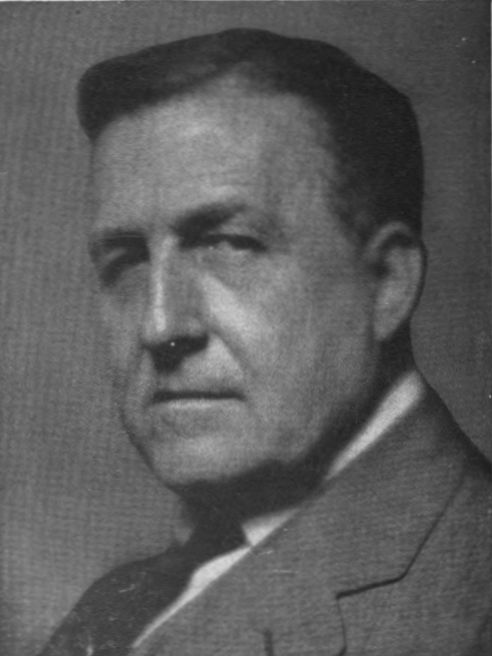
MEREDITH NICHOLSON
FOREWORD
I ALWAYS find myself uncomfortable in the company of those who delight in literary shop-talk. Nothing I have ever heard or read on the subject of writing has seemed to me of any value to a practitioner of the art in so far as methods, hours of work and such matters are concerned. One writes or one doesn't, and that seems to me the end on't. In the domain of style there is, of course, a valuable and fascinating literature, but the ability to write English prose of beauty and power pertains to the higher branches of the craft.
The choice and use of a subject is a thing apart. Here we enter a no-man's land "where all is possible and all unknown." Pretending to no special knowledge of this matter, I will, however, acknowledge myself a firm believer in the operation of subconscious processes that assist in the development of ideas. Once an idea takes root in the mind and has a fertile germ in it, it immediately begins to grow. And as the plant matures it thrusts its way through the crust teasingly from time to time, until finally it stands up in full bloom in the conscious mind. It is obviously difficult for anyone engaged in the creative arts to take himself as a subject for psychological analysis. For the mind's operation is a mystery. The origin of ideas belongs in the realm of the unfathomable. If it were not for arousing the ire of trained psychologists, there are a good many things that I could suggest from my own experience that hint of forces at work in all of us that lure us to a twilight borderland beyond which nothing is quite real but all is touched with mystery.
Nothing is more interesting than the manner in which the inevitable form in which a thing should be written is instantly evident when the idea itself—the device—becomes clear and definite. When I was a newspaper reporter and had got my facts on some assignment, I found myself visualizing the story as it would appear in print, even to the first sentence and the arrangement of paragraphs, on my way back to the office. There is, beyond question, a journalistic sense that enables one instantaneously to appraise material and determine its treatment. I have written almost everything from five-line news items, newspaper editorial, verse, history, essays and short stories to novels of various kinds, and I have always found that first instinctive sense of value and form a pretty safe guide.
When a short-story idea strikes me I draw a line like the flight of a rocket across a piece of paper and write across it a few words indicating the chief incidents of the story. The back of an envelope suffices for this; I never make elaborate notes even for a novel, trusting to the merry little imps in the subconscious cellar to keep me supplied with material. And they are wilful little devils, who are likely to go on a strike at times; but as nothing can be done to stimulate their efforts, it's the wiser plan to try to forget what it is you want to fashion and mold until, some day when you are watching a ball game or hearing a symphony or doing something else utterly unrelated to the particular idea that has tormented you, the whole thing stands there before your eyes quite as unexpectedly as though a magician had waved his wand and wrought a miracle you can't explain—and need not.
"The Third Man" struck me one day in a hotel room where, beside the telephone, was a tablet on which some scribbling of the last guest remained—a curious geometric cal figure roughly outlined all over the sheet. I had often noticed the habit men have—women seem less addicted to it—of marking with a pencil while the mind is engaged with something wholly alien. As I reflected upon this I found not only that I myself drew symbols or scrawled words when preoccupied, but that I constantly repeated the same signs and words. It occurred to me that a man might leave incriminating testimony by such idle pencilings. The idea having interested me for an hour, I forgot all about it until one day the whole story of "The Third Man" rose out of the subcellar and demanded to be written.
I employed in this story a character I have used frequently in short stories—a banker with an adventurous, quixotic strain and a sincere interest in helping the underdog. The idea of giving a dinner and placing at every plate a tablet and pencil and (no one being in the secret) waiting to see whether a certain man, never suspected of a murder, would not from habit draw a certain figure which the host had found on a scrap of paper at the scene of the crime, gives an opportunity for that suspensive interest which is essential to a mystery tale.
I may add that I never have found a device for a story, long or short, when I was consciously seeking it. Others no doubt have a very different experience, and they are luckier than those of us who are obliged to wait for the subconscious imps to throw up the trapdoor and disclose something. There are well-known instances of writers dreaming a plot, but only once have I been so favored. The thing looked quite splendid while I slept, but it dissolved so quickly at the moment of waking that I was unable to piece it together.
It may be of interest to the student of such matters that practically every idea that I have ever developed came to me at some place which I always identify with it. And further, when this has happened on the street or in some room of a house, I never revisit the place without an odd feeling—a curious, disturbing uneasiness. There is a street corner in my home town that I avoid, for there, I remember distinctly, the device for a story occurred to me. The story was, I may say, one of the most successful I ever wrote, and yet by some freakish and inexplicable association of ideas I don't like to pass that corner! I should add that neither the corner nor anything pertaining to it figured in the story or was in any way related to it.
So it will readily be seen that I am unlikely to be of service to students or beginners, for in very plain terms I must admit that I do not know how I do things. It is because the whole business is so enveloped in mystery that I enjoy writing and try to keep myself in a receptive state for those happy surprises, without which I should quickly find myself without material and seeking other occupation.

The THIRD MAN[5] BY MEREDITH NICHOLSON
When Webster G. Burgess asked ten of his cronies to dine with him at the University Club on a night in January they assumed that the president of the White River National had been indulging in another adventure which he wished to tell them about.
In spite of their constant predictions that if he didn't stop hiding crooks in his house and playing tricks on the Police Department he would ultimately find himself in jail, Mr. Burgess continued to find amusement in frequent dallyings with gentlemen of the underworld. In a town of approximately three hundred thousand people a banker is expected to go to church on Sundays and otherwise conduct himself as a decent, orderly, and law-abiding citizen, but the president of the White River National did not see things in that light. As a member of the Board of Directors of the Released Prisoners' Aid Society he was always ready with the excuse that his heart was deeply moved by the misfortunes of those who keep to the dark side of the street, and that sincere philanthropy covered all his sins in their behalf.
When his friends met at the club and found Governor Eastman one of the dinner party, they resented the presence of that dignitary as likely to impose restraints upon Burgess, who, for all his jauntiness, was not wholly without discretion. But the governor was a good fellow, as they all knew, and a story-teller of wide reputation. Moreover, he was taking his job seriously, and, being practical men, they liked this about him. It was said that no governor since Civil War times had spent so many hours at his desk or had shown the same zeal and capacity for gathering information at first hand touching all departments of the State government. Eastman, as the country knows, is an independent character, and it was this quality, which he had shown first as a prosecuting attorney, that had attracted attention and landed him in the seat of the Hoosier governors.
"I suppose," remarked Kemp as they sat down, "that these tablets are scattered around the table so we can make notes of the clever things that will be said here tonight. It's a good idea and gives me a chance to steal some of your stories, governor."
A scratch pad with pencil attached had been placed at each plate, and the diners spent several minutes in chaffing Burgess as to the purpose of this unusual table decoration.
"I guess," said Goring, "that Web is going to ask us to write limericks for a prize and that the governor is here to judge the contest. Indoor winter sports don't appeal to me; I pass."
"I'm going to write notes to the House Committee on mine," said Fanning; "the food in this club is not what it used to be, and it's about time somebody kicked."
"As I've frequently told you," remarked Burgess, smiling upon them from the head of the table, "you fellows have no imagination. You'd never guess what those tablets are for, and maybe I'll never tell you."
"Nothing is so innocent as a piece of white paper," said the governor, eyeing his tablet. "We'd better be careful not to jot down anything that might fly up and hit us afterward. For all we know, it may be a scheme to get our signatures for Burgess to stick on notes without relief from valuation or appraisement laws. It's about time for another Bohemian oats swindle, and our friend Burgess may expect to work us for the price of the dinner."
"Web's bound to go to jail some day," remarked Ramsay, the surgeon, "and he'd better do it while you're in office, governor. You may not know that he's hand in glove with all the criminals in the country: he quit poker so he could give all his time to playing with crooks."
"The warden of the penitentiary has warned me against him," replied the governor easily. "Burgess has a man at the gate to meet convicts as they emerge, and all the really bad ones are sent down here for Burgess to put up at this club."
"I never did that but once," Burgess protested, "and that was only because my mother-in-law was visiting me and I was afraid she wouldn't stand for a burglar as a fellow guest. My wife's got used to 'em. But the joke of putting that chap up here at the club isn't on me, but on Ramsay and Colton. They had luncheon with him one day and thanked me afterward for introducing them to so interesting a man. I told them he was a manufacturer from St. Louis, and they swallowed it whole. Pettit was the name, but he has string of aliases as long as this table, and there's not a rogues' gallery in the country where he isn't indexed. You remember, Colton, he talked a good deal of his travels, and he could do so honestly, as he'd cracked safes all the way from Boston to Seattle."
Ramsay and Colton protested that this could not be so; that the man they had luncheon with was a shoe manufacturer and had talked of his business as only an expert could.
The governor and Burgess exchanged glances, and both laughed.
"He knew the shoe business all right enough," said Burgess, "for he learned it in the penitentiary and proved so efficient that they made him foreman of the shop!"
"I suppose," said Kemp, "that you've got another crook coming to take that vacant chair. You'd better tell us about him so we won't commit any social errors."
At the governor's right there was an empty place, and Burgess remarked carelessly that they were shy a man, but that he would turn up later.
"I've asked Tate, a banker at Lorinsburg, to join us and he'll be along after a while. Any of you know Tate? One of our scouts recently persuaded him to transfer his account to us, and as this is the first time he's been in town since the change I thought it only decent to show him some attention. We're both directors in a company that's trying to develop a tile factory in his town, so you needn't be afraid I'm going to put anything over on you. Tate's attending a meeting tonight from which I am regrettably absent! He promised to be here before we got down to the coffee."
As the dinner progressed the governor was encouraged to tell stories, and acceded good-naturedly by recounting some amusing things that had happened in the course of his official duties.
"But it isn't all so funny," he said gravely after keeping them in a roar for half an hour. "In a State as big as this a good many disagreeable things happen, and people come to me every day with heartbreaking stories. There's nothing that causes me more anxiety than the appeals for pardon; if the pardoning power were taken away from me, I'd be a much happier man. The Board of Pardons winnows out the cases, but even at that there's enough to keep me uncomfortable. It isn't the pleasantest feeling in the world that as you go to bed at night somebody may be suffering punishment unjustly, and that it's up to you to find it out. When a woman comes in backed by a child or two and cries all over your office about her husband who's doing time and tells you he wasn't guilty, it doesn't cheer you much; not by a jugful! Wives, mothers, and sisters: the wives shed more tears, the sisters put up the best argument, but the mothers give you more sleepless nights."
"If it were up to me," commented Burgess, "I'm afraid I'd turn 'em all out!"
"You would," chorused the table derisively, "and when you'd emptied the penitentiaries you'd burn 'em down!"
"Of course there's bound to be cases of flagrant injustice," suggested Kemp. "And the feelings of a man who is locked up for a crime he never committed must be horrible. We hear now and then of such cases and it always shakes my faith in the law."
"The law does the best it can," replied the governor a little defensively, "but, as you say, mistakes do occur. The old saying that murder will out is no good; we can all remember cases where the truth was never known. Mistakes occur constantly, and it's the fear of not rectifying them that's making a nervous wreck of me. I have in my pocket now a blank pardon that I meant to sign before I left my office, but I couldn't quite bring myself to the point. The Pardon Board has made the recommendation, not on the grounds of injustice—more, I'm afraid, out of sympathy than anything else—and we have to be careful of our sympathies in these matters. And here again there's a wife to reckon with. She's been at my office nearly every day for a year, and she's gone to my wife repeatedly to enlist her support. And it's largely through Mrs. Eastman's insistence that I've spent many weeks studying the case. It's a murder: what appeared to be a heartless, cold-blooded assassination. And some of you may recall it—the Avery case, seven years ago, in Salem County."
Half the men had never heard of it and the others recalled it only vaguely.
"It was an interesting case," Burgess remarked, wishing to draw the governor out. "George Avery was a man of some importance down there and stood high in the community. He owned a quarry almost eleven miles from Torrenceville and maintained a bungalow on the quarry land where he used to entertain his friends with quail-hunting and perhaps now and then with a poker party. He killed a man named Reynolds who was his guest. As I remember, there seemed to be no great mystery about it, and Avery's defense was a mere disavowal and a brilliant flourish of character witnesses."
"For all anybody ever knew, it was a plain case, as Burgess says," the governor began. "Avery and Reynolds were business acquaintances and Avery had invited Reynolds down there to discuss the merging of their quarry interests. Reynolds was found dead a little way from the bungalow by some of the quarry laborers. He had been beaten on the head with a club in the most barbarous fashion. Reynolds's overcoat was torn off and the buttons ripped from his waistcoat, pointing to a fierce struggle before his assailant got him down and pounded the life out of him. The purpose was clearly not robbery, as Reynolds had a considerable sum of money on his person that was left untouched. When the men who found the body went to rouse Avery he collapsed when told that Reynolds was dead. In fact, he lay in a stupor for a week, and they could get nothing out of him. Tracks? No; it was a cold December night and the ground was frozen.
"Reynolds had meant to take a midnight train for Chicago, and Avery had wired for special orders to stop at the quarry station, to save Reynolds the trouble of driving into Torrenceville. One might have supposed that Avery would accompany his visitor to the station, particularly as it was not a regular stop for night trains and the way across the fields was a little rough. I've personally been over all the ground. There are many difficult and inexplicable things about the case, the absence of motive being one of them. The State asserted business jealousy and substantiated it to a certain extent, and the fact that Avery had taken the initiative in the matter of combining their quarry interests and might have used undue pressure on Reynolds to force him to the deal to be considered."
The governor lapsed into silence, seemingly lost in reverie. With his right hand he was scribbling idly on the tablet that lay by his plate. The others, having settled themselves comfortably in their chairs, hoping to hear more of the murder, were disappointed when he ceased speaking. Burgess's usual calm, assured air deserted him. He seemed unwontedly restless, and they saw him glance furtively at his watch.
"Please, governor, won't you go on with the story?" pleaded Colton. "You know that nothing that's said at one of Web's parties ever goes out of the room."
"That," laughed the governor, "is probably unfortunate, as most of his stories ought to go to the grand jury. But if I may talk here into the private ear of you gentlemen I will go on a little further. I've got to make up my mind, in the next hour or two about this case, and it may help me to reach a conclusion to think aloud about it."
"You needn't be afraid of us," said Burgess encouragingly. "We've been meeting here—about the same crowd—once a month for five years, and nobody has ever blabbed anything."
"All right; we'll go a bit further. Avery's stubborn silence was a contributing factor in his prompt conviction. A college graduate, a high-strung, nervous man, hard-working and tremendously ambitious; successful, reasonably prosperous, happy in his marriage, and with every reason for living straight: there you have George Avery as I make him out to have been when this calamity befell him. There was just one lapse, one error, in his life, but that didn't figure in the case, and I won't speak of it now. His conduct from the moment of his arrest, a week following the murder, and only after every other possible clue had been exhausted by the local authorities, was that of a man mutely resigned to his fate. I find from the records that he remained at the bungalow in care of a physician, utterly dazed, it seemed, by the thing he had done, until a warrant was issued and he was put in jail. He's been a prisoner ever since, and his silence has been unbroken to this day. His wife assures me that he never, not even to her, said one word about the case more than to declare his innocence. I've seen him at the penitentiary on two occasions, but could get nothing out of him. In fact, I exhausted any ingenuity I may have in attempting to surprise him into some admission that would give me ground for pardoning him, but without learning anything that was not in the State's case. They're using him as a bookkeeper, and he's made a fine record: a model convict. The long confinement has told seriously on his health, which is the burden of his wife's plea for his release, but he wouldn't even discuss that.
"There was no one else at the bungalow on the night of the murder," the governor continued. "It was Avery's habit to get his meals at the house of the quarry superintendent, about five hundred yards away, and the superintendent's wife cared for the bungalow, but the men I've had at work couldn't find anything in that to hang a clue on. You see, gentlemen, after seven years it's not easy to work up a case, but two expert detectives that I employed privately to make some investigations along lines I suggested have been of great assistance. Failing to catch the scent where the trail started, I set them to work backward from a point utterly remote from the scene. It was a guess, and ordinarily it would have failed, but in this case it has brought results that are all but convincing."
The tablets and pencils that had been distributed along the table had not been neglected. The guests, without exception, had been drawing or scribbling; Colton had amused himself by sketching the governor's profile. Burgess seemed not to be giving his undivided attention to the governor's review of the case. He continued to fidget, and his eyes swept the table with veiled amusement. Then he tapped a bell and a waiter appeared.
"Pardon me a moment, governor, till the cigars are passed again."
In his round with the cigar tray the Jap, evidently by prearrangement, collected the tablets and laid them in front of Burgess.
"Changed your mind about the limerick contest, Web?" asked someone.
"Not at all," said Burgess carelessly; "the tablets have fulfilled their purpose. It was only a silly idea of mine anyhow." They noticed, however, that a tablet was left at the still vacant place that awaited the belated guest, and they wondered at this, surmising that Burgess had planned the dinner carefully and that the governor's discussion of the Avery case was by connivance with their host. With a quickening of interest they drew their chairs closer to the table.
"The prosecuting attorney who represented the State in the trial is now a judge of the Circuit Court," the governor resumed when the door closed upon the waiter. "I have had many talks with him about this case. He confesses that there are things about it that still puzzle him. The evidence was purely circumstantial, as I have already indicated; but circumstantial evidence, as Thoreau once remarked, may be very convincing, as when you find a trout in the milk! But when two men have spent a day together in the house of one of them, and the other is found dead in a lonely place not far away, and suspicion attaches to no one but the survivor—not even the tramp who usually figures in such speculations—a jury of twelve farmers may be pardoned for taking the State's view of the matter."
"The motive you spoke of, business jealousy, doesn't seem quite adequate unless it could be established that they had quarreled and that there was a clear showing of enmity," suggested Fullerton, the lawyer.
"You are quite right, and the man who prosecuted Avery admits it," the governor answered.
"There may have been a third man in the affair," suggested Ramsay, "and I suppose the cynical must have suggested the usual woman in the case."
"I dare say those possibilities were thrashed out at the time," the governor replied; "but the only woman in this case is Avery's wife, and she and Reynolds had never met. I have found nothing to sustain any suspicion that there was a woman in the case. Avery's ostensible purpose in asking Reynolds to visit him at that out-of-the-way place was merely that they could discuss the combination of their quarry interests privately, and close to Avery's plant. It seems that Avery had undertaken the organization of a big company to take over a number of quarries whose product was similar, and that he wished to confer secretly with Reynolds to secure his sanction to a selling agreement before the others he wanted to get into the combination heard of it. That, of course, is perfectly plausible; I could make a good argument justifying that. Reynolds, like many small capitalists in country towns, had a number of irons in the fire and had done some promoting on his own hook. All the financial genius and all the financial crookedness aren't confined to Wall Street, though I forget that sometimes when I'm on the stump! I'm disposed to think from what I've learned of both of them that Avery wasn't likely to put anything over on Reynolds, who was no child in business matters. And there was nothing to show that Avery had got him down there for any other purpose than to effect a merger of quarry interests for their mutual benefit."
"There probably were papers to substantiate that," suggested Fullerton; "correspondence and that sort of thing."
"Certainly; I have gone into that," the governor replied. "All the papers remain in the office of the prosecuting attorney, and I have examined them carefully. Now, if Avery had been able to throw suspicion on some one else you'd think he'd have done so. And if there had been a third person at the bungalow that night you'd imagine that Avery would have said so; it's not in human nature for one man to take the blame for another's crime, and yet we do hear of such things, and I have read novels and seen plays built upon that idea. But here is Avery with fifteen years more to serve, and, if he's been bearing the burden and suffering the penalty of another's, sin, I must say that he's taking it all in an amazing spirit of self-sacrifice."
"Of course," said Fullerton, "Reynolds may have had an enemy who followed him there and lay in wait for him. Or Avery may have connived at the crime without being really the assailant. That is conceivable."
"We'll change the subject for a moment," said the governor, "and return to our muttons later."
He spoke in a low tone to Burgess, who looked at his watch and answered audibly:
"We have half an hour more."
The governor nodded and, with a whimsical smile, began turning over the tablets.
"These pads were placed before you for a purpose which I will now explain. I apologize, for taking advantage of you, but you will pardon me, I'm sure, when I tell you my reason. I've dipped into psychology lately with a view to learning something of the mind's eccentricities. We all do things constantly without conscious effort, as you know; we perform acts automatically without the slightest idea that we are doing them. At meetings of our State boards I've noticed that nobody ever uses the pads that are always provided except to scribble on. Many people have that habit of scribbling on anything that's handy. Hotel keepers, knowing this, provide pads of paper ostensibly for memoranda that guests may want to make while at the telephone, but really to keep them from defacing the wall. Left alone with pencil and paper, most of us will scribble something or draw meaningless figures.
"Sometimes it's indicative of a deliberate turn of mind; again it's sheer nervousness. After I had discussed this with a well-known psychologist I began watching myself and found that I made a succession of figure eights looped together in a certain way—I've been doing it here!
"And now," he went on with a chuckle, "you gentlemen have been indulging this same propensity as you listened to me. I find on one pad the word Napoleon written twenty times with a lot of flourishes; another has traced a dozen profiles of a man with a bulbous nose: it is the same gentleman, I find, who honored me by drawing me with a triple chin—for which I thank him. And here's what looks like a dog kennel repeated down the sheet. Still another has sketched the American flag all over the page. If the patriotic gentleman who drew the flag will make himself known, I should like to ask him whether he's conscious of having done that before?"
"I'm guilty, governor," Fullerton responded. "I believe it is a habit of mine. I've caught myself doing it scores of times."
"I'm responsible for the man with the fat nose," confessed Colton; "I've been drawing him for years without ever improving my draftsmanship."
"That will do," said the governor, glancing at the door. "We won't take time to speak of the others, though you may be relieved to know that I haven't got any evidence against you. Burgess, please get these works of art out of the room. We'll go back to the Avery case. In going over the papers I found that the prosecuting attorney in his search of the bungalow the morning after the murder found a number of pieces of paper that bore an odd, irregular sort of sketch. I'm going to pass one of them round, but please send it back to me immediately."
He produced a sheet of letter paper that bore traces of hasty crumpling but had been smoothed out again, and held it up. It bore the lithographed name of the Avery Quarry Company. On it was drawn this device:

"Please note," said the governor as the paper passed from hand to hand, "that same device is traced there five times, sometimes more irregularly than others, but the general form is the same. Now, in the fireplace of the bungalow living-room they found this and three other sheets of the same stationery that bore this same figure. It seems a fair assumption that someone sitting at a table had amused himself by sketching these outlines and then, when he had filled the sheet, tore it off and threw it into the fireplace, wholly unconscious of what he was doing. The prosecutor attached no importance to these sheets, and it was only by chance that they were stuck away in the file box with the other documents in the case."
"Then you suspect that there was a third man in the bungalow that night?" Ramsay asked.
The governor nodded gravely.
"Yes; I have some little proof of it, quite a bit of proof, in fact. I have even had the wastebasket of the suspect examined for a considerable period. Knowing Burgess's interest in such matters, I have been using him to get me certain information I very much wanted. And our friend is a very successful person! I wanted to see the man I have in mind and study him a little when he was off-guard, and Burgess has arranged that for me, though he had to go into the tile business to do it! As you can readily see, I could hardly drag him to my office, so this little party was gotten up to give me a chance to look him over at leisure."
"Tate!" exclaimed several of the men.
"You can see that this is a very delicate matter," said the governor slowly. "Burgess thought it better not to have a smaller party, as Tate, whom I never saw, might think it a frame-up. So you see we are using you as stool-pigeons, so to speak. Burgess vouches for you as men of discretion and tact; and it will be your business to keep Tate amused and his attention away from me while I observe him a little."
"And when I give the signal you're to go into the library and look at picture books," Burgess added.
"That's not fair!" said Fullerton. "We want to see the end of it!"
"I'm so nervous," said Colton, "I'm likely to scream at any minute!"
"Don't do it!" Burgess admonished. "The new House Committee is very touchy about noise in the private dining-rooms, and besides I've got a lot of scenery set for the rest of the evening, and I don't want you fellows to spoil it."
"It begins to look," remarked the governor, glancing at his watch, "as though some of our scenery might have got lost."
"He'd hardly bolt," Burgess replied; "he knows of no reason why he should! I told the doorman to send him right up. When he comes there will be no more references to the Avery case: you all understand?"
They murmured their acquiescence, and a solemn hush fell upon them as they turned involuntarily toward the vacant chair.
"This will never do!" exclaimed the governor, who seemed to be the one tranquil person in the room. "We must be telling stories and giving an imitation of weary business men having a jolly time. But I'm tired of talking; some of the good story-tellers ought to be stirred up."
With a little prodding Fullerton took the lead, but was able to win only grudging laughter. Colton was trying his hand at diverting them when they were startled by a knock. Burgess was at the door instantly and flung it open.
II
"Ah, Tate! Come right in; the party hasn't started yet!"
The newcomer was a short, thick-set man, clean-shaven, with coarse dark hair streaked with gray. The hand he gave the men in succession as they gathered about him for Burgess's introduction was broad and heavy. He offered it limply, with an air of embarrassment.
"Governor Eastman, Mr. Tate; that's your seat by the governor, Tate," said Burgess. "We were just listening to some old stories from some of these fellows, so you haven't missed anything. I hope they didn't need me at that tile meeting; I never attend night meetings: they spoil my sleep, which my doctor says I've got to have."
"Night meetings," said the Governor, "always give me a grouch the next morning. A party like this doesn't, of course!"
"Up in the country where I live we still stick to lodge meeting as an excuse when we want a night off," Tate remarked.
They laughed more loudly than was necessary to put him at ease. He refused Burgess's offer of food and drink and when someone started a political discussion they conspired to draw him into it. He was County Chairman of the party not then in power and complained good-naturedly to the governor of the big plurality Eastman had rolled up in the last election. He talked slowly, with a kind of dogged emphasis, and it was evident that politics was a subject to his taste. His brown eyes, they were noting, were curiously large and full, with a bilious tinge in the white. He met a glance steadily, with, indeed, an almost disconcerting directness.
Where the governor sat became, by imperceptible degrees, the head of the table as he began seriously and frankly discussing the points of difference between the existing parties, accompanied by clean-cut characterizations of the great leaders.
There was nothing to indicate that anything lay behind his talk; to all appearances his auditors were absorbed in what he was saying. Tate had accepted a cigar, which he did not light but kept twisting slowly in his thick fingers.
"We Democrats have had to change our minds about a good many things," the governor was saying. "Of course we're not going back to Jefferson" (he smiled broadly and waited for them to praise his magnanimity in approaching so near to an impious admission), "but the world has spun around a good many times since Jefferson's day. What I think we Democrats do and do splendidly is to keep dose to the changing current of public opinion; sometimes it seems likely to wash us down, as in the free-silver days; but we give, probably without always realizing it, a chance for the people to express themselves on new questions, and if we've stood for some foolish policies at times the country's the better for having passed on them. These great contests dear the air like a storm, and we all go peacefully about our business afterward."
As he continued they were all covertly watching Tate, who dropped his cigar and began playing with the pencil before him, absently winding and unwinding it upon the string that held it to the tablet. They were feigning an absorption in the governor's recital which their quick, nervous glances at Tate's hand belied. Burgess had pushed back his chair to face the governor more comfortably and was tying knots in his napkin.
Now and then Tate nodded solemnly in affirmation of something the governor said, but without lifting his eyes from the pencil. His broad shoulders were bent over the table, and the men about him were reflecting that this was probably an attitude into which his heavy body often relaxed when he was pondering deeply.
Wearying of the pencil—a trifle of the dance-card variety—he dropped it and drew his own from his waistcoat pocket. Then, after looking up to join in a laugh at some indictment of Republicanism expressed in droll terms by the governor, he drew the tablet closer and, turning his head slightly to one side, drew a straight line. Burgess frowned as several men changed position the better to watch him. The silence deepened, and the governor's voice rose with a slight oratorical ring. Through a half-open window floated the click of billiard balls in the room below. The governor having come down to the Wilson Administration, went back to Cleveland, whom he praised as a great leader and a great president. In normal circumstances there would have been interruptions and questions and an occasional gibe; and ordinarily the governor, who was not noted for loquacity, would not have talked twenty minutes at a stretch without giving an opportunity to his companions to break in upon him. He was talking, as they all knew, to give Tate time to draw the odd device which it was his habit to sketch when deeply engrossed.
The pencil continued to move over the paper; and from time to time Tate turned the pad and scrutinized his work critically. The men immediately about him watched his hand, wide-eyed, fascinated. There was something uncanny and unreal in the situation: it was like watching a wild animal approaching a trap and wholly unmindful of its danger. The square box which formed the base of the device was traced clearly; the arcs which were its familiar embellishment were carefully added. The governor, having exhausted Cleveland, went back to Jackson, and Tate finished a second drawing, absorbed in his work and rarely lifting his eyes.
Seeing that Tate had tired of this pastime, the governor brought his lecture to an end, exclaiming:
"Great Scott, Burgess! Why haven't you stopped me! I've said enough here to ruin me with my party, and you hadn't the grace to shut me off."
"I'm glad for one," said Tate, pushing back the pad, "that I got in time to hear you; I've never known before that any Democrat could be so broad-minded!"
"The governor loosens up a good deal between campaigns," said Burgess, rising. "And now, let's go into the library where the chairs are easier."
The governor rose with the others, but remained by his chair, talking to Tate, until the room cleared, and then resumed his seat.
"This is perfectly comfortable; let's stay here, Mr. Tate. Burgess, close the door, will you."
Tate, hesitated, looked at his watch, and glanced at Burgess, who sat down as though wishing to humor the governor, and lighted a cigar.
"Mr. Tate," said the governor unhurriedly, "if I'm not mistaken, you are George Avery's brother-in-law."
Tate turned quickly, and his eyes widened in surprise.
"Yes," he answered in slow, even tones; "Avery married my sister."
"Mr. Tate, I have in my pocket a pardon all ready to sign, giving Avery his liberty. His case has troubled me a good deal; I don't want to sign this pardon unless I'm reasonably sure of Avery's innocence. If you were in my place, Mr. Tate, would you sign it?"
The color went out of the man's face and his jaw fell; but he recovered himself quickly.
"Of course, governor, it would be a relief to me, to my sister, all of us, if you could see your way to pardoning George. As you know, I've been doing what I could to bring pressure to bear on the Board of Pardons: everything that seemed proper. Of course," he went on ingratiatingly, "we've all felt the disgrace of the thing."
"Mr. Tate," the governor interrupted, "I have reason to believe that there was a third man at Avery's bungalow the night Reynolds was killed. I've been at some pains to satisfy myself of that. Did that ever occur to you as a possibility?"
"I suspected that all along," Tate answered, drawing his handkerchief slowly across his face. "I never could believe George Avery guilty; he wasn't that kind of man!"
"I don't think he was myself," the governor replied. "Now, Mr. Tate, on the night of the murder you were not at home, nor on the next day when your sister called you on the long-distance telephone. You were in Louisville, were you not?"
"Yes, certainly; I was in Louisville."
"As a matter of fact, Mr. Tate, you were not in Louisville! You were at Avery's bungalow that night, and you left the quarry station on a freight train that was sidetracked on the quarry switch to allow the Chicago train to pass. You rode to Davos, which you reached at two o'clock in the morning. There you registered under a false name at the Gerber House, and went home the next evening pretending to have been at Louisville. You are a bachelor, and live in rooms over your bank, and there was no one to keep tab on your absences but your clerks, who naturally thought nothing of your going to Louisville, where business often takes you. You were there two days ago, I believe. But that has nothing to do with this matter. When you heard that Reynolds was dead and Avery under suspicion you answered your sister's summons and hurried to Torrenceville."
"I was in Louisville; I was in Louisville, I tell you!" Tate uttered the words in convulsive gasps. He brushed the perspiration from his forehead impatiently and half rose.
"Please sit down, Mr. Tate. You had had trouble a little while before that with Reynolds about some stock in a creamery concern in your county that he promoted. You thought he had tricked you, and very possibly he had. The creamery business had resulted in a bitter hostility between you: it had gone to such an extent that he had refused to see you again to discuss the matter. You brooded over that until you were not quite sane where Reynolds was concerned: I'll give you the benefit of that. You asked your brother-in-law to tell you when Reynolds was going to see him, and he obligingly consented. We will assume that Avery, a good fellow and anxious to aid you, made a meeting possible. Reynolds wasn't to know that you were to be at the bungalow—he wouldn't have gone if he had known it—and Avery risked the success of his own negotiations by introducing you into his house, out of sheer good will and friendship. You sat at a table in the bungalow living-room and discussed the matter. Some of these things only I have guessed at; the rest of it——"
"It's a lie; it's all a damned lie! This was a scheme to get me here: you and Burgess have set this up on me! I tell you I wasn't at the quarry; I never saw Reynolds there that night or any other time. My God, if I had been there,—if Avery could have put it on me, would he be doing time for it?"
"Not necessarily, Mr. Tate. Let us go back a little. It had been in your power once to do Avery a great favor, a very great favor. That's true, isn't it?"
Tate stared, clearly surprised, but his quivering lips framed no answer.
"You had known him from boyhood, and shortly after his marriage to your sister it had been in your power to do him a great favor; you had helped him out of a hole and saved the quarry for him. It cost me considerable money to find that out, Mr. Tate, and not a word of help have I had from Avery: be sure of that! He had been guilty of something just a little irregular—in fact, the forging of your name to a note—and you had dealt generously with him, out of your old-time friendship, we will say, or to spare your sister humiliation."
"George was in a corner," said Tate weakly but with manifest relief at the turn of the talk. "He squared it all long ago."
"It's natural, in fact, instinctive, for a man to protect himself, to exhaust all the possibilities of defense when the law lays its hand upon him. Avery did not do so, and his meek submission counted heavily against him. But let us consider that a little. You and Reynolds left the bungalow together, probably after the interview had added to your wrath against him, but you wished to renew the talk out of Avery's hearing and volunteered to guide Reynolds to the station where the Chicago train was to stop for him. You didn't go back, Mr. Tate——"
"Good God, I tell you I wasn't there! I can prove that I was in Louisville; I tell you——"
"We're coming bade to your alibi in a moment," said the governor patiently. "We will assume—merely assume for the moment—that you said you would take the train with Reynolds and ride as far as Ashton, where the Midland crosses and you would get an early morning train home. Avery went to sleep at the bungalow wholly ignorant of what had happened; he was awakened in the morning with news that Reynolds had been killed by blows on the head inflicted near the big derrick where you and Reynolds—I am assuming again—had stopped to argue your grievances. Avery—shocked, dazed, not comprehending his danger and lying there in the bungalow prostrated and half-crazed by the horror of the thing—waited: waited for the prompt help he expected from the only living person who knew that he had not left the bungalow. He knew you only as a kind, helpful friend, and I dare say at first he never suspected you! It was the last thing in the world he would have attributed to you, and the possibility of it was slow to enter his anxious, perturbed mind. He had every reason for sitting tight in those first hideous hours, confident that the third man at that bungalow gathering would come forward and establish his innocence with a word. As is the way in such cases, efforts were made to fix guilt upon others; but Avery, your friend, the man you had saved once, in a fine spirit of magnanimity, waited for you to say the word that would dear him. But you never said that word, Mr. Tate. You took advantage of his silence; a silence due, we will say, to shock and horror at the catastrophe and to his reluctance to believe you guilty of so monstrous a crime or capable of allowing him, an innocent man, to suffer the penalty for it."
Tate's big eyes were bent dully upon the governor. He averted his gaze slowly and reached for a glass of water, but his hand shook so that he could not lift it, and he glared at it as though it were a hateful thing.
"I wasn't there! Why——" he began with an effort at bravado; but the words choked him and he sat swinging his head from side to side and breathing heavily.
The governor went on in the same low, even tone he had used from the beginning:
"When Avery came to himself and you still were silent, he doubtless saw that, having arranged for you to meet Reynolds at the bungalow—Reynolds, who had been avoiding you—he had put himself in the position of an accessory before the fact and that even if he told the truth about your being there he would only be drawing you into the net without wholly freeing himself. At best it was an ugly business, and being an intelligent man he knew it. I gather that you are a secretive man by nature; the people who know you well in your own town say that of you. No one knew that you had gone there and the burden of the whole thing was upon Avery. And your tracks were so completely hidden: you had been at such pains to sneak down there to take advantage of the chance Avery made for you to see Reynolds and have it out with him about the creamery business, that suspicion never attached to you. You knew Avery as a good fellow, a little weak, perhaps, as you learned from that forgery of your name ten years earlier; and it would have been his word against yours. I'll say to you, Mr. Tate, that I've lain awake nights thinking about this case, and I know of nothing more pitiful, my imagination can conjure nothing more horrible, than the silent suffering of George Avery as he waited for you to go to his rescue, knowing that you alone could save him."
"I didn't do it, I didn't do it!" Tate reiterated in a hoarse whisper that died away with a queer guttural sound in his throat.
"And now about your alibi, Mr. Tate: the alibi that you were never even called on to establish." The governor reached for the tablet and held it before the man's eyes, which focused upon it slowly, uncomprehendingly. "Now," said the governor, "you can hardly deny that you drew that sketch, for I saw you do it with my own eyes. I'm going to ask you, Mr. Tate, whether this drawing isn't also your work?"
He drew out the sheet of paper he had shown the others earlier in the evening and placed it beside the tablet. Tate jumped to his feet, staring wild-eyed, and a groan escaped him. The governor caught his arm and pushed him bade into his chair.
"You will see that is Avery's letterhead that was used in the quarry office. As you talked there with Reynolds that night you played with a pencil as you did here a little while ago and without realizing it you were creating evidence against yourself that was all I needed to convince me absolutely of your guilt. I have three other sheets of Avery's paper bearing the same figure that you drew that night at the quarry office; and I have others collected in your own office within a week! As you may be aware, the power of habit is very strong. For years, no doubt, your subconsciousness has carried that device, and in moments of deep abstraction with wholly unrelated things your hand has traced it. Even the irregularities in the outline are identical, and the size and shading are precisely the same. I ask you again, Mr. Tate, shall I sign the pardon I brought here in my pocket and free George Avery?"
The sweat dripped from Tate's forehead and trickled down his cheeks in little streams that shone in the light. His collar had wilted at the fold, and he ran his finger round his neck to loosen it. Once, twice, he lifted his head defiantly, but, meeting the governor's eyes fixed upon him relentlessly, his gaze wavered. He thrust his hand under his coat and drew out his pencil and then, finding it in his fingers, flung it away, and his shoulders drooped lower.
III
Burgess stood by the window with his back to them. The governor spoke to him, and he nodded and left the room. In a moment he returned with two men and dosed the door quickly.
"Hello, warden; sit down a moment, will you?"
The governor turned to a tall, slender man whose intense pallor was heightened by the brightness of his oddly staring blue eyes. He advanced slowly. His manner was that of a blind man moving cautiously in an unfamiliar room. The governor smiled reassuringly into his white, impassive face.
"I'm very glad to see you, Mr. Avery," he said. He rose and took Avery by the hand.
At the name Tate's head went up with a jerk. His chair creaked discordantly as he turned, looked up into the masklike face behind him, and then the breath went out of him with a sharp, whistling sound as when a man dies, and he lunged forward with his arms flung out upon the table.
The governor's grip tightened upon Avery's hand; there was something of awe in his tone when he spoke.
"You needn't be afraid, Avery," he said. "My way of doing this is a little hard, I know, but it seemed the only way. I want you to tell me," he went on slowly, "whether Tate was at the bungalow the night Reynolds was killed. He was there, wasn't he?"
Avery wavered, steadied himself with an effort, and slowly shook his head. The governor repeated his question in a tone so low that Burgess and the warden, waiting at the window, barely heard. A third time he asked the question. Avery's mouth opened, but he only wet his lips with a quick, nervous movement of the tongue, and his eyes met the governor's unseeingly.
The governor turned from him slowly, and his left hand fell upon Tate's shoulder.
"If you are not guilty, Tate, now is the time for you to speak. I want you to say so before Avery; that's what I've brought him here for. I don't want to make a mistake. If you say you believe Avery to be guilty, I will not sign his pardon."
He waited, watching Tate's hands as they opened and shut weakly; they seemed, as they lay inert upon the table, to be utterly dissociated from him, the hands of an automaton whose mechanism worked imperfectly. A sob, deep, hoarse, pitiful, shook his burly form.
The governor sat down, took a bundle of papers from his pocket, slipped one from under the rubber band which snapped back sharply into place. He drew out a pen, tested the point carefully, then, steadying it with his left hand, wrote his name.
"Warden," he said, waving the paper to dry the ink, "thank you for your trouble. You will have to go home alone. Avery is free."
IV
When Burgess appeared at the bank at ten o'clock the next morning he found his friends of the night before established in the directors' room waiting for him. They greeted him without their usual chaff, and he merely nodded to all comprehendingly and seated himself on the table.
"We don't want to bother you, Web," said Colton, "but I guess we'd all feel better if we knew what happened after we left you last night. I hope you don't mind."
Burgess frowned and shook his head.
"You ought to thank God you didn't have to see the rest of it! I've got a reservation on the Limited tonight: going down to the big city in the hope of getting it out of my mind."
"Well, we know only what the papers printed this morning," said Ramsay; "a very brief paragraph saying that Avery had been pardoned. The papers don't tell the story of his crime as they usually do, and we noticed that they refrained from saying that the pardon was signed at one of your dinner parties."
"I fixed the newspapers at the governor's request. He didn't want any row made about it, and neither did I, for that matter. Avery is at my house. His wife was there waiting for him when I took him home."
"We rather expected that," said Colton, "as we were planted at the library windows when you left the club. But about the other man: that's what's troubling us."
"Um," said Burgess, crossing his legs and clasping his knees. "That was the particular hell of it."
"Tate was guilty; we assume that of course," suggested Fullerton. "We all saw him signing his death warrant right there at the table."
"Yes," Burgess replied gravely, "and he virtually admitted it; but if God lets me live I hope never to see anything like that again!"
He jumped down and took a turn across the room.
"And now—— After that, Web?"
"Well, it won't take long to tell it. After the governor signed the pardon I told the warden to take Avery downstairs and get him a drink: the poor devil was all in. And then Tate came to, blubbering like the vile coward he is, and began pleading for mercy: on his knees, mind you; on his knees! God! It was horrible—horrible beyond anything I ever dreamed of—to see him groveling there. I supposed, of course, the governor would turn him over to the police. I was all primed for that, and Tate expected it and bawled like a sick calf. But what he said was—what the governor said was, and he said it the way they say 'dust to dust' over a grave—'You poor fool, for such beasts as you the commonwealth has no punishment that wouldn't lighten the load you've got to carry around with you till you die!' That's all there was of it! That's exactly what he said, and can you beat it? I got a room for Tate at the club, and told one of the Japs to put him to bed." "But the governor had no right," began Ramsay eagerly; "he had no right——" "The king can do no wrong! And, if you fellows don't mind, the incident is dosed, and we'll never speak of it again."
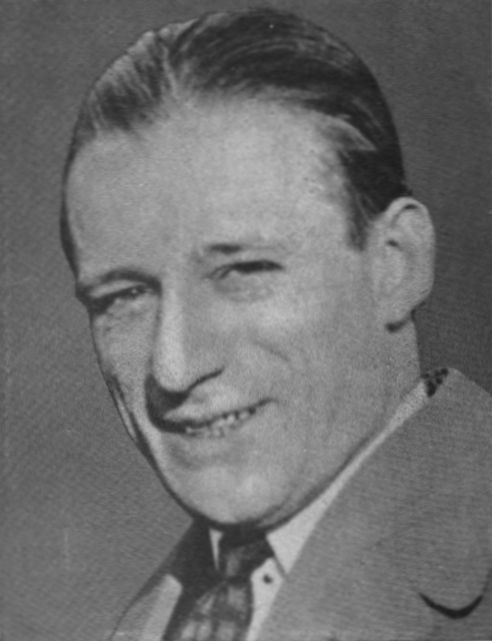
H. C. WITWER
FOREWORD
I have selected "Money to Burns" as my best effort because the situations and characters in that story appealed to me more than any others I've created in some three hundred odd yarns. The "gold-digging" young lady of the chorus, the super-sophisticated bellboy with his hard-boiled philosophy, and the beautiful, cynical Goddess of the Switchboard, are all familiars of mine. Intimate with their habits, characteristics, mannerisms and vocabulary, I had only to create a central plot and push them bodily into it. After that, writing the story was merely a case of conscientious reporting—it almost wrote itself!
The genesis of "Money to Burns" was some envious remarks of a bellboy in discussing the sensational escapades of a certain young millionaire. The boy, bringing ice water to my room in a hotel, pointed to the glaring headlines in a newspaper that told of the gilded youth's latest adventure, and bitterly bemoaned the fate that made him a bellboy and the other a millionaire. He discoursed on what he would do were he the possessor of wealth, etc. I encouraged his conversation, with a story forming itself before my eyes. When he left the room I put his counterpart on paper, gave him wealth, added the other characters and necessary embellishments, carved out the title which I hoped would attract the reader's interest and—there you are!
As to how I work—one word pretty well covers that question. The word is "HARD!" I try to get interesting characters and titles first of all; after that, plots. The characters are always people I know well. The plots may come from any source—things that have happened to me, a chance remark of some individual, a newspaper headline, an adventure I would relish having myself, etc.
To a beginner I would advise a thorough reading of the popular magazines, a shot at the newspaper game if possible, plenty of clean white paper and a resolution to take lots of punishment. Thais all I would presume to advise—and I may have given an overdose already!
MONEY TO BURNS[6] By H. C. WITWER
"When fortune favors a man too much, she makes him a fool!"
Neither Napoleon, Nero, Alexander, Jack Johnson, Mark Antony nor Bill Hohenzollern was the composer of that remark, though, honest, I bet they all thought it about the time the world was giving them the air. However, the boy who originally pulled the above wise crack was Mr. Publius Syrus, a master mind current in dear old Syria during the fiscal year of 77 B.C. Two thousand annums after Publius gave up the struggle, Jimmy Burns, a professional bellhop—age, twenty; color, white; nationality, Broadway-American—decided to find out for himself whether or not Pubby's statement was true. It is! Loll back in the old easy chair for about approximately a half-hour and I'll do my stuff. Perhaps you don't know me, as Eve coyly remarked to Adam, so taking advantage of your good nature I'll introduce myself. I'm Gladys Murgatroyd, a switchboard operator at the Hotel St. Moe. I was slipped into the cradle under the name of Mary Ellen Johnson, but as that smacks more of the kitchen than the drawing-room, I changed that label some time ago to the Gladys Murgatroyd thing, which I admit sounds phony—still, I'm a phone girl, so what could be sweeter?
However, one morning during a slight lull in the daily hostilities between me and the number-seeking guests, I am reading my favorite book—the Morning Squawk, the newspaper that made the expression "It is alleged" famous, or maybe it was the other way around. Spattered all over the front page is a highly sensational account of the latest adventures of one of these modern prodigal sons—in round numbers, Carlton Van Ryker, whose father celebrated his ninety-fifth birthday by entering a tomb in a horizontal position and leaving his only progeny two paltry $500,000 bank notes. The young millionaire with the name like a Pullman car and a soft collar had been stepping high, wide and fast with his pennies and at the time of going to press was the plot of an "alienation of my wife's affections" suit, a badly mismanaged shooting affair, and various other things that would keep his mind off the weather for quite a spell. While I'm drinking all this in with my lustrous orbs, along comes Mons. James Joseph Aloysius Burns, who was either the hero of this episode in my exciting career, or else he wasn't.
Although I've known Jimmy Burns for the worst part of two years, we're still good friends, both of us being refugees from the land of Utah. My home town was the metropolis of Bountiful, where I once won a beauty contest single-handed, and James fled from Salt Lake City, where smoking cigarettes is the same as throwing rocks at the President, in the eyes of the genial authorities.
But to get to the business of the meeting—Jimmy sported a sarcastical sneer as he approached my switchboard on this particular morning.
"Kin you feature a cuckoo like this dizzy Van Ryker havin' all that sugar," he snorts, nodding angrily at the newspaper, "whilst us regular white folks is got to slave like Uncle Tom or we don't eat? Is that fair?"
"Cheer up, Jimmy," I says with a smile. "We don't get much money, that's a fact, but then we can laugh out loud. That's more than Van Ryker can do! Look at the pushing around he's getting because he hauled oil and inherited a million, poor fellow; he——"
"That mug was ru'ned by too much jack!" butts in Jimmy. "He's what you call a weak sister. He wasn't built to handle important money—you got to be born that way! Knowin' how to spend money is a gift. I got the gift, but I ain't got the money!"