The Compositers Trade. (continued 2)
Reading edition
The Compositer therefore first considers what Bodied Letter his Work is to be wrought on: then he carefully peruses the Copy, considering with himself whether it be evenly Written or unevenly Written, viz. whether it be throughout of an equal siz’d Hand, or whether part be close Written and part wide Written; if it be an equal siz’d Hand, that is, equally close Written in general, as well between Letter and Letter, Word and Word, as between Line and Line, he has scarce more trouble to Count it off than Printed Copy.
Wherefore, the Measure being given, he Composes one Line in his Measure: The Matter he Composes he chuses out of that part of his Copy that in his Judgement he admits is most indifferently Written, between Wide and Close, as being such as his whole Copy, one part with another, will likeliest Come-in alike with. This Line being Compos’d, he considers how much of his Copy it takes up, viz. whether it runs Line for Line, or whether two Lines of his Copy make one Line in his Stick; or whether a Line and an half, or a quarter, or half quarter of his Copy, &c. make one Line in his Stick; or whether a Line of his Copy make two Lines in his Stick, or a Line and a half, or a quarter, or half a quarter, &c. and accordingly calculates what just number of Lines will make another just number of Lines in his Stick. For Example.
If his Copy and Measure run Line for Line, then consequently 10, 20, 30 Lines of the Copy will make 10, 20, 30 Lines in the Measure; and accordingly he counts what number of Lines in his Copy will make a Page; and by that, what number of Lines will make two Pages, four Pages, eight Pages, and consequently so many Pages and Sheets as he is to Count off.
If two Lines of Copy make one Line in the Stick, then consequently ten Lines in the Copy will make five Lines in the Stick; twenty Lines in the Copy ten Lines in the Stick, &c.
If a Line and a half of the Copy make one Line in the Stick, then fifteen Lines of Copy makes ten Lines in the Stick, thirty makes twenty, &c.
But a pair of Compasses makes the best expedition in Counting off of Copy, and (by my experience) I have found the surest way. I Compose one Line as aforesaid; if the Line I Compos’d Gets-in part of the next Line, viz. the second Line of the Copy, I place one Foot of a pair of Compasses at the beginning of the First Line, and open the other Foot to what was Got-in of the Second Line, and turn the Compasses about upon the Foot in the Second Line, till the other Foot reach the Third Line of the Copy; then turn about the Foot in the Third Line of the Copy till the other Foot falls in the Fourth Line of the Copy; and so from the Fourth, to the Fifth, Sixth, &c. till the Compasses end with a Line in the Copy, or near the end of a Line, remembring as I go along, how oft I turn’d the Compasses about. Suppose, for Example, seven times: Then I number the Lines of Copy, beginning with the first Line and ending with the last Line, that the Points of the Compasses were turn’d over, and find them Eight, Nine, Ten, &c. and say Eight, Nine, Ten, &c. Lines of the Copy, makes Seven Lines of the Measure.
As now I have shew’d you how I Count off Copy if it come in more than Line for Line, so I shall shew you how I proceed if a Line in the Copy Drive out in the Measure.
It is but placing one Foot of a pair of Compasses at the farther end of the first Line, and opening the other Foot to the place where the Compos’d Line ended, and by turning about the Compasses, as before, to the Second, Third, Fourth Lines, &c. till they end in the beginning of a Line in the Copy; for then (as before) counting the number of Lines, beginning with the first, and ending with the last; Suppose Eight, Nine, Ten, &c. I say Eight, Nine, Ten, &c. Lines of the Copy makes so many Lines as is the number of times the Feet of the Compasses were turned about, between the first Line and the last Line.
Another way Arithmetically perform’d.
Suppose it be requir’d to know how many Sheets 127 Pages of Written Copy will make? I count the number of Letters contained in an ordinary Written Line of Copy, such a Line as I guess is likely to Run Line for Line with the generality of the rest of the Copy: And (for Example) I find 43 Letters in that Line: Then I count the number of Lines in an whole Page, and find 35 Lines, I Multiply 43 by 35, the Product is 1505 for the number of Letters in an whole Page: Then I multiply 1505 by 127, the number of Pages in the whole Written Copy; the Product is 191135, the number of Letters in the whole Written Copy.
If it be now required to know how many Sheets in Quarto, of the English Body this Written Copy will make, agreeable to any Measure already Printed? As for Example, the length of a Page given is 33 Lines, and in one Line is contained 47 Letters: I multiply 47, the number of Letters in one Line, by 33, the number of Lines in a Page, the Product is 1551. With this Product I divide 191135, the number of Letters in the whole Written Copy, and the Product gives 123, that is, 123 Pages in Quarto, which divided by 8, the number of Pages in one Sheet, gives 15 Sheets and 3 Pages.
If it be required to know how many Sheets it will make of Pica in an Octavo, or of Long Primer or Brevier in Twelves, &c. the manner of Working is the same: For Multiplying the number of Letters in one Line by the number of Lines in one Page, and Deviding the number of Letters in the whole Work (suppose, as in the foregoing Operation by 191135) by the number of Letters in one Page, the Product gives the number of Pages in the Quotient: And then at last Deviding the number of Pages by 16 if an Octavo, or 24 if Twelves, &c. you have in the Quotient the number of Sheets, and in the Remain (if any be) the number of Pages.
These two last ways are the surest Rules for Counting off Copy: But yet the Compositer has several Considerations upon his Copy before he dares conclude he has truly and exactly Counted off.
For first, a strict regard must be had to the Breaks that come in the Copy: For long Breaks in the Copy are generally likely to be Got-in, and consequently a Line is Got-in: But short Breaks often Drive-out a Line. Therefore though the Compositer has already in general Cast off his Copy, yet he more particularly considers his Breaks; and indeed they serve as so many Regulators to him, to keep him within the bounds of his Counted off Copy: For every Break he examines by the number of Lines from the last Break, by the length of the Break, and by the close or wide Writing of his Copy, whether it will be Got-in or Drove-out, and accordingly marks it in his Copy, before he reckons he has done Counting off.
A Break to be Got-in he marks thus [, and adjoyns in Numerical Figures, the number of Lines the Matter between the last Break and it will make. A Break to be Drove-out he marks thus - - -, and (as aforesaid) adjoyns Numerical Figures to remember him what number of Lines he accounted that Matter to make from the last Break.
If Chapters, Sections or Paragraphs happens in the Copy, the Compositer takes room enough to set them and their Titles gracefully in; and marks in Numerical Figures what number of Lines he assigns for it.
If as he Counts off his Copy he finds Abreviated Words, he tells the Abreviated Words to the full number of Letters that spells the Word at length, because in Composing he Sets those Words at length: And should he not consider it in his Counting off, he would in Composing find his Matter Run out from his Copy.
Scarce any Copy is so regularly Written (as hath several times before been hinted) but that some places are Wider, and other places Closer Written, than the generality of the Copy, wherefore he considers both these accidents in his Copy, and accordingly allows for them.
If it happens that much Italick comes in the Copy, as sometimes two or three Lines, or more, or half a Page, an whole Page, or several Pages; the Compositer considers Italick is thinner than Roman, and consequently Gets-in more than Roman does, and therefore in his Counting off will allow accordingly for it.
The proportion that I allow for it is as 9 to 10, or which is all one, as 45 Roman Letters is to 50 Italick Letters: So that if a Measure holds 45 Roman Letters, the same Measure will hold 50 Italick Letters.
As Italick is thinner than Roman, so the English Face is thicker than the Roman; wherefore if he meets with the English Face, he considers that accordingly.
I find the proportion to be as 40 to 43, viz. 40 English Faced Letters fill the same Measure that 43 Roman does; and consequently for every 40 Lines to be Set in English he must Count off 43 Lines; and so proportionaply for more or less.
But yet I shall not deliver these my Observations on the Italick and English to hold thus in all Italicks and Englishes, nor all Romans of the same Body to be of an equal Thickness, because some are Cut Thicker or Thinner on the Face: And besides, sometimes Letter Cast, though in the same Matrices, are by the Founder Cast Thicker or Thinner, and consequently in either Circumstance Drive-out or Get-in: Wherefore a Compositer will consider what Fount of Letter it is he Works on, and accordingly Count off his Copy.
¶ 10. Of Papering up of Pages.
Papering up of Pages, or Papering up of Letter, are two phrases indifferently used for the same meaning. Though this Operation seems so sleight and trivial that it may be thought not worth mentioning, yet it being a task incumbent on the Compositer, it becomes mine too to shew how it is performed.
It is thus: When a Book is finisht, and the Compositer is to Work on other Letter afterwards; the Wrought off Letter is to be Papered up. The Press-man therefore having Washt the Wrought-off Forms, the Compositer Rinces them, as was shewed in Section 22. ¶ 3. He Rinces the Letter as well as if it were Rinced for present use, or rather better: for else the Inck that is desolved among the Ly would, with long standing by, harden between the Letter, and make the Letter stick so fast together that when it comes afterwards to be Destributed, the Compositer shall not without great difficulty and trouble get them asunder. This sticking together of the Letter is call’d Baking of the Letter. And Compositers in this Case say, The Letter is Bak’d.
The Compositer having Stript the Form, whips Cords as tight as he can about every Page, not to Tye them up for good and all, but aswell to keep up the Letter on the sides of the Pages that it fall not down, while it stands by for some dayes on the Letter-board to Dry, as to keep the Letter tight together that he may the better with his Hands take an whole Page at once off the Letter-board.
When it is Dry, if the Pages are not too broad for his Grasp, he places his Body against a side of the Pages, and the Balls of his two Thumbs against the side of a Page, one indifferently between the middle and Head of the Page, and the other between the middle and Foot of the Page, and with the three Fore-fingers of each Hand placed on the other side of the Page, grasps the Page between them and his Thumbs; and to keep his Hands the steddier, stretches the insides of his Little-fingers one against the Head the other against the Foot of the Page: And having the Page thus Steddy between his Hands close prest on all the sides of the Page, he with a quick motion nimbly rears one side of the Page upright, and receives the weight of it either on the Balls of his Thumbs or on the Balls of his Fingers, as best likes him; and so carries it to his Galley and Tyes it firmly up; as was shewed ¶ 6. of this Section.
As he took and Tyed up this one Page, so he takes and Tyes up all the Pages. But if a Page be too big for his Grasp, he underlays the Slice of a Galley till it lye within a Scaboard so high as the edge of the Letter-board, and getting some one to hold the Slice steddy against the edge of the Letter-board he slides the Page, with the Head or Foot forwards upon the Slice, and so carries the Page to the Galley and Tyes it up, as aforesaid.
He sends the Boy to the Warehouse-keeper for so much Paper as he finds he shall want; and if the Pages are small, he layes a single Sheet down on the Correcting-Stone or on a Letter-board, and sets a Page down on that Sheet of Paper, so as the farther Side of the Page may stand towards one end of the Sheet; and so far on the Sheet, as that the end of it may lap over the Face of the Letter, and about half way down the Shank of the Letter, on the hither side the Page: And smoothing the Paper tight over the Face of the Letter, and half way down the Shank on the hither Side, and quite down the Shank at the Head and Foot of the Page, he folds the loose Paper that hangs over the ends of the Page, from each corner of the Page, to end in an Angle in the middle of the loose Paper, and then folds the other end of the Sheet of Paper tight over the Paper that covers the Face of the Letter; and also folds the loose Paper at the ends of the Page down into Angles, as he did the former loose ends: Then rearing his Page over the further side, lays the Face downwards, still smoothing the Paper tight, and folding in the un-folded corners, to meet in the same Angles with the former folded Angles in the middle of the loose Paper: And thus so long as he has Paper to spare he turns his Page, wrapping it at least twice, or if he can thrice about in Paper, folding and doubling down the Loose Paper into Angles as before: And at last turns up those Angles or Lappets either over the Face or Bottom of the Letter, and turns the Page upon those folded Lappets, that its weight may press and keep them close under the Page.
If the Pages are large, so as one Sheet will not compass them twice or thrice about, to be strong enough to bear the Letter, which generally sinks downwards into the middle of a Page, he lays two, or sometimes three Sheets under the Page: And as he wrapt up the first Lay of Sheets, adds more to lengthen them out, that they may wrap at least three or four times about the great Page.
Having thus Paper’d up the Pages, and folded the Lappets under them, he writes upon the upper side what Letter it is, viz. Long-Primer Roman, Long-Primer Italick, Pica Roman, Pica Italick, Pica English, English Roman, Italick, &c. and sets them by for the Master-Printer to dispose of.
§. 23. Of the Correcter, and his Office.
A Correcter should (besides the English Tongue) be well skilled in Languages, especially in those that are used to be Printed with us, viz. the Latin, Greek, Hebrew, Syriack, Caldæ, French, Spanish, Italian, High Dutch, Saxon, Low Dutch, Welch, &c. neither ought my innumerating only these be a stint to his skill in the number of them, for many times several other Languages may happen to be Printed, of which the Author has perhaps no more skill than the bare knowledge of the Words and their Pronunciations, so that the Orthography (if the Correcter have no knowledge of the Language) may not only be false to its Native Pronunciation, but the Words altered into other Words by a little wrong Spelling, and consequently the Sense made ridiculous, the purpose of it controvertible, and the meaning of the Author irretrievably lost to all that shall read it in After times.
He ought to be very knowing in Derivations and Etymologies of Words, very sagacious in Pointing, skilful in the Compositers whole Task and Obligation, and endowed with a quick Eye to espy the smallest Fault.
But I shall say no more of his Qualifications; but suppose him endowed with all necessary accomplishments for that Office.
The Compositer either carries him a Proof, or sends the Boy with it to his Appartment, which is commonly some little Closet adjoyning to the Composing-room; And the Master-Printer appoints him some one that is well skill’d in true and quick Reading, to Read the Copy to him, whom I shall call the Reader.
This Reader, as I said, Reads the Copy to him, and the Correcter gives attention; and at the same time carefully and vigilantly examines the Proof, and considers the Pointing, Italicking, Capitalling, or any error that may through mistake, or want of Judgement be committed by the Compositer.
If he finds one Letter Set instead of another, as in this Word tho for the, he dashes out the wrong Letter thus thø, and Writes the Letter it should be on the Right Hand Margin of the Page, right against the same Line, and makes a Dash behind it, as you may see in the Margin. e/
If two or three, or more Words in the same Line have Faults in them, as in these Words, ; where first an o is Set instead of a, e instead of c, t instead of r, and c instead of o: These he marks in an orderly succession towards the Right Hand, against the same Line, as you may see in the Margin. a/ c/ r/ o/

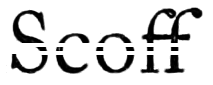
But if one word be Set instead of another, as Scoff instead of Smile, here he marks Scoff out thus , and writes Smile, as in the Margin. Smile /
If a Word or Words, or Letter, or Point be Left out he makes this mark ʌ where it is Left out for a mark of Insertion, and Writes in the Margin what must come in.
If a Space be Left out he makes the former mark of Insertion where it should come in, and makes this mark in the Margin. /
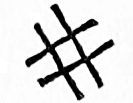
If a whole Sentence be Left out, too long to be Writ in the Margin, he makes the mark of Insertion where it is Left out, and only Writes (Out) in the Margin. If the Sentence Left out be not very long, he Writes it under the Page, or on the Left Hand Margin of the Page: (Out)
But if it be too large to be Writ in the Margin, or under the Page, he Writes in the Margin, See the Copy. (See the Copy)
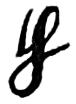
If a Word or Sentence be Set twice, as Him Him, he marks out one Him thus , and makes this mark in the Margin, for Deleo, to take out. /


If a Letter be turned thus , he dashes it out as you see, and makes this mark in the Margin. /


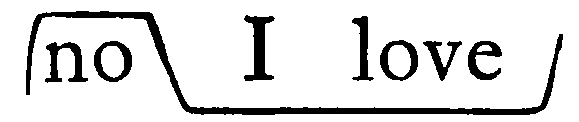
If Words are Transposed, that is, if one Word stand in another Words place, as, no I love Swearing, and it should be, I love no Swearing; he marks this Fault thus, , and makes this mark in the Margin. The like mark he makes in Matter and Margin if two Letters are Transpos’d. /
If a Space or an m or n Quadrat, &c. stick up, and Print Black, as between thesewords, he marks in the Margin thus. |
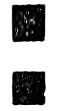
If a Word be Set in Roman Letter instead of Italick or English Letter, he dashes the Word underneath thus, and Writes Ital. or Eng. in the Margin. Ital/ Eng/
In like manner, if a single Let- or more Letters be Set in Roman Letter, and it should be Italick or English Letter; or if in English or Italick, and it should be Roman Letter, he dashes the Letter or Letters thus underneath, and writes Ital. Rom. or Eng. in the Margin: Ital/ Rom/ Eng/
Or if Lower-Case Letters be Set instead of Capitals, he dashes them underneath, and Writes Capt. in the Margin. Capt./
Having Read the Matter of the Proof he examines again if the Form be right Impos’d, for though he before turn’d the Pages in the Proof as he read them according to their orderly places, yet he will scarce trust to that alone, but again examines them on purpose, and distinctly, which he does not only by the Direction Word, but by examining the whole Sentence the Direction comes in, both at the end of the Page, and the beginning of the next Page.
He examines that all the Signatures are right, and all the Titles and Folio’s.
If the Work be large Forms and small Letter, he has a second, and sometimes a third Proof, which he Reads as the first.
After the Second or Third Proof he has a Revise, which is also a Proof-sheet: He examines in this Revise, Fault by Fault, if all the Faults he markt in the last Proof were carefully mended by the Compositer; if not, he marks them in the Revise.
Thus you see it behoves him to be very careful as well as skilful; and indeed it is his own interest to be both: For if by his neglect an Heap be spoiled, he is obliged to make Reparation.