Introductory material (continued 4)
Reading edition
THE WONDERFUL WONDERS OF TOWN.[64]
Good neighbours, pray listen—nay do but come round, I’ve a tale that shall puzzle your heads I’ll be bound; From London I’ve ’scap’d pretty glad to get down, And tell you the wonderful wonders of town. The streets ’luminated I walked every night, And the devil a bit could I see for the light; Such pictures, lamps, feathers, stars, anchors, and jokes, With Boney, the devil, and all sorts of volks. Lords, pickpockets, ladies, lamplighters, girls, boys, I didn’t think Peace could have made such a noise. Push’d, bump’d, lump’d, and thump’d, when I tried to retire, I was out of the frying pan into the fire. Then the Emperor’s fist was at every one’s call, Till princes and kings went for nothing at all; And, English good manners to show so polite, We pulled ’em and hauled ’em, from morning till night. Then the Cossack Horse Soldiers as fought with our foes, We kill’d ’em with kindness, as all the world knows, And gave ’em such welcome and hearty good cheer, They’d no time to get shav’d all the time they were here. Two jolly old lions we must not forget, To Platoff and Blucher, how much we’re in debt; The Mob cried, Come out, like wild beasts, ’twas so droll, I expected to see ’em stirred up with a pole. The Sarpentine river, it looked if so be, All the cock boats i’ Lunnun had put out to sea; Grown up to great ships their gay canvas now swells, As big, pretty near, as at Saddler’s Wells. You never see’d yet a procession so fine, As when into the City the Kings went to dine; I gap’d with mouth open, like many an elf, Till no dinner I got to put in it my self. Next Peace were proclaimed, when King Charles on his horse, Counts the coaches as start from the old Golden Cross; And the Herald, so call’d who cried down wars alarms, Looked like the Kings Head stuck a top of his Arms. Now safely return’d, for lost time I’ll make up, So down with the bacon, and round wi’ the cup; And I’ll drink may Peace also the Yankees subdue, And turn their Merry ca, into our merry cue. One word more—of all sights that in town I did see, There was one sight worth all the whole bundle to me, Great Wellington’s self who has made the world ring, With glory, God bless him, and God save the king.
LAW.[65]
Come, listen to me a minute, A song, I’m going to begin it, There’s something serious in it, So, pray attention draw, A serious thing I thought it, Experience, I have bought it, Will you, or not be taught it, I sing the charms of Law. L—A—W. Law, It’s met with the deuce of a claw.
Chorus.
If you’re fond of pure vexation, And a long procrastination, You’re just in a situation, To enjoy a suit at law. When your cause is just beginning, You only think of winning, Attornies slyly grinning, While your cash they draw. With brief and consultation, Bill and replication, Latin and botheration, While the Counsel loudly jaw, J—A—W. Jaw, Is a very great thing in law Snail like your cause is creeping, It hinders you from sleeping, Attornies only reaping, While your cash they draw. D—R—A—W Draw, It’s the mainspring of the Law. Misery, toil, and trouble, Makes up the hubble bubble, And leaves you nothing but stubble, And makes you a man of straw. L—A—W. Law. It divides the wheat from the straw. When your case is just near ending, Your case is no wise mending, Expense each step attending, And then they find a flaw. Then the Judge, like any Jackdaw, Oh, he lays down, what is law, In a rotten stick your trust is, And though you don’t get Justice, You’re sure to get plenty of Law. L—A—W. Law. It leaves you not worth a straw. So, if life’s all sugar and honey, And fortune has always been sunny, And you want to get rid of your money, I’d advise you to go to law. Like ice in a rapid thaw, Your cash will melt awa’, Comfort, ’tis folly to care for, Life is a lottery—therefore, Without a why, or a wherefore, I’d advise you to go to Law. L—A—W. Law, Oh! ’twill like a blister draw.
JIM CROW.
I cam from ole Kentucky, A long time ago, Where I first larn to wheel about, And jump Jim Crow.
Chorus.
Wheel about and turn about, And do jis so, Ebry time I wheel about I jump Jim Crow. I us’d to take him fiddle, Ebry morn and afternoon, And charm the sole Buzzard, And dance to the Racoon. I landed fust at Liverpool, Dat place of ships and docks, I strutted down Lord Street, And ask’d de price of Stocks. I paid my fare den up to town, On de coach to cut a dash, De axletree soon gave way, And spilt us wid a smash. I lighted den upon my head, All in de nassy dirt, Dey all thought dat I war dead, But I laughed and wasn’t hurt. Dis head you know, am pretty tick, Cause dere it make a hole, On de dam macadmis road, Much bigger dan a bowl. When I got into Lunnon, Dey took me for a savage, But I war pretty well behaved, So I ’gaged with Mr. Davidge. Dem young Jim Crows bout de streets More like a Raven rader, Pray good people, don’t mistake, Indeed, I’m not dare fader. Dem urchin’s what sing my song, Had better mind dar books. For any how dey can’t be Crows, You see d’ar only Rooks.
I have purposely refrained from giving any Nigger songs, although they belong to Street melody, except in the case of “Jim Crow,” which was the first of the flood which has been let loose upon us. There were many versions, but I have here given the copyright words, as sung by the author, and original “Jim Crow,” Thomas D. Rice, or, as he was better known, “Adelphi Rice.” He introduced it, in 1836, into a play called “A Flight to America,” and it so tickled the ears of the groundlings that it became the most popular of all modern street ballads. We may wonder what merit our grandfathers and fathers found in it, but it created an absolute furore.
THE WORKHOUSE BOY.
The cloth was laid in the Vorkhouse hall, The great-coats hung on the white-wash’d wall; The paupers all were blithe and gay, Keeping their Christmas holiday, When the Master he cried with a roguish leer, “You’ll all get fat on your Christmas cheer!” When one by his looks did seem to say, “I’ll have some more soup on this Christmas-day.” Oh the poor Vorkhouse Boy, etc. At length, all on us to bed vos sent, The boy vos missing—in search ve vent: Ve sought him above, ve sought him below, Ve sought him vith faces of grief and woe; Ve sought him that hour, ve sought him that night; Ve sought him in fear, and ve sought him in fright, Ven a young pauper cried “I knows ve shall Get jolly vell vopt for losing our pal.” Oh the Poor Vorkhouse Boy, etc. Ve sought in each corner, each crevice ve knew; Ve sought down the yard, ve sought up the flue; Ve sought in each kettle, each saucepan, each pot, In the water-butt look’d, but found him not. And veeks roll’d on;—ve vere all of us told, That somebody said, he’d been burk’d and sold; Ven our master goes out, the Parishioners vild, Cry “There goes the cove that burk’d the poor child.” Oh the Poor Vorkhouse Boy, etc. At length the soup copper repairs did need, The Coppersmith came, and there he seed, A dollop of bones lay a grizzling there, In the leg of the breeches the poor boy did year! To gain his fill the boy did stoop, And, dreadful to tell, he was boil’d in the soup! And ve all of us say, and ve say it sincere, That he was push’d in there by an overseer. Oh the Poor Vorkhouse Boy, etc.
THE WILD ROVER.
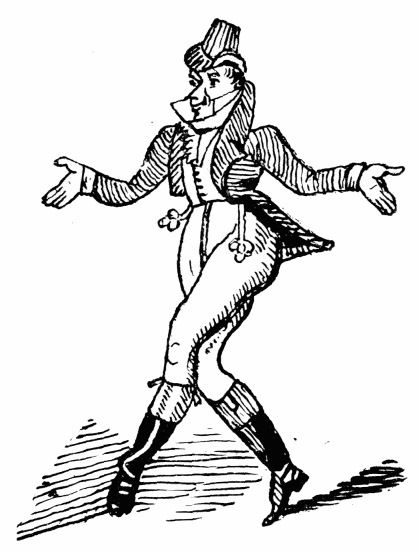
I’ve been a wild rover these seven long years, I’ve spent all my money in ale and strong beers, But the time has come my boys, to take better care, Unless poverty happens to fall to my share.
Chorus.
So therefore I’ll lay up my money in store, And I never will play the wild rover any more; Wild rover, wild rover, wild rover, any more, And then I will play the wild rover no more. I went to an ale house where I used to resort, I began for to tell them my money got short; I asked them to trust me, but their answer was nay, Such customers as you we may have every day. Then my hands from my pockets I pulled out straightway, Pulled a handful of gold out to hear what they’d say, O! here’s ale, wine, and brandy, here’s enough of the best, It was only to try you, I was but in jest. Begone you proud landlord, I bid you adieu, For the devil of one penny will I spend with you; For the money I’ve got boys, I’ll take better care, And I never will play the wild rover any more. So now I’ll go home to my sweet loving wife, In hopes to live happy all the days of my life; From rambling and roving, I’ll take better care, Unless poverty happens to fall to my share.
THE DIGGINS, O![66]
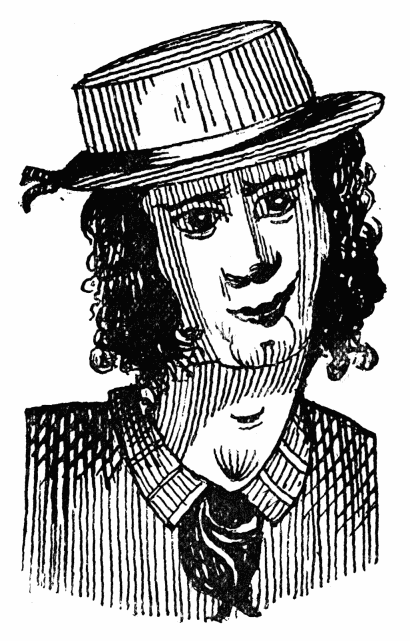
I’ve come back all skin and bone From the diggins, O! And I wish I’d never gone To the diggins, O! Believe me, ’tis no fun, I once weighed fifteen stone, But they brought me down to one, At the diggins, O! I thought a good home could be found At the diggins, O! But soon I found I got aground At the diggins, O! The natives came one day, Burnt my cottage down like hay, With my wife they ran away To the diggins, O! I built a hut with mud, At the diggins, O! That got wash’d away by flood, At the diggins, O! I used to dig, and cry It wouldn’t do to die, Undertakers charge too high At the diggins, O! I paid for victuals with a frown, At the diggins, O! Three potatoes half a crown, At the diggins, O! Sprats five shillings a dish, If for Dutch Plaice you wish, Two dollars buys that fish, At the diggins, O! A Crown a pound for Steaks, At the diggins, O! Ditto Chops, and no great shakes, At the diggins, O! Five “hog”[67] a small pig’s cheek, If a herring red you’d seek, One will keep you dry a week, At the diggins, O! Table beer two bob a quart, At the diggins, O! Get your eyes gouged out for nought, At the diggins, O! Five shillings a four pound brick,[68] Butter a shilling a lick, They never gives no tick, At the diggins, O! They tied me to a tree, At the diggins, O! With my nuggets they made free, At the diggins, O! I escaped from bodily hurt, Tho’ they stole my very shirt, I had to paint myself with dirt, At the diggins, O! I felt quite a ruined man At the diggins, O! Thinks I, I’ll get home, if I can, From the diggins, O! I was always catching cold, And I’ve been both bought and sold, Like many more, for gold, At the diggins, O! But now I’m safe returned From the diggins, O! Never more I mean to roam To the diggins, O! It some people’s fortune mends, Much on the man depends— I’d sooner be here with my friends, Than at the diggins, O!
BOTANY BAY.
Come all you men of learning, And a warning take by me, I would have you quit night walking, And shun bad company. I would have you quit night walking, Or else you’ll rue the day, You’ll rue your transportation, lads, When you’re bound for Botany Bay. I was brought up in London town And a place I know full well, Brought up by honest parents For the truth to you, I’ll tell. Brought up by honest parents, And rear’d most tenderly, Till I became a roving blade, Which proved my destiny. My character soon taken was, And I was sent to jail, My friends they tried to clear me, But nothing could prevail. At the Old Bailey Sessions, The Judge to me did say, “The Jury’s found you guilty, lad, So you must go to Botany Bay.” To see my aged father dear, As he stood near the bar, Likewise my tender mother, Her old grey locks to tear; In tearing of her old grey locks, These words to me did say, “O, Son! O, Son! what have you done, That you’re going to Botany Bay?” It was on the twenty eighth of May, From England we did steer, And, all things being safe on board, We sail’d down the river, clear. And every ship that we pass’d by, We heard the sailors say, “There goes a ship of clever hands, And they’re bound for Botany Bay.” There is a girl in Manchester, A girl I know full well, And if ever I get my liberty, Along with her I’ll dwell. O, then I mean to marry her, And no more to go astray; I’ll shun all evil company, Bid adieu to Botany Bay.
VAN DIEMAN’S LAND.
Come all you gallant poachers, that ramble free from care, That walk out on moonlight nights, with your dog, gun and snare, The jolly hares and pheasants, you have at your command, Not thinking that your last career is to Van Dieman’s Land. Poor Tom Brown from Nottingham, Jack Williams, and poor Joe, We are three daring poachers, the country does well know, At night we are trepanned, by the keepers hid in sand, Who for 14 years transported us unto Van Dieman’s Land. The first day that we landed upon this fatal shore, The planters they came round us, full twenty score or more, They rank’d us up like horses, and sold us out of hand, And yok’d us up to ploughs, my boys, to plough Van Dieman’s Land. Our cottages that we live in, are built of brick and clay, And rotten straw for bedding, and we dare not say nay, Our cots are fenc’d with fire, we slumber when we can, To drive away wolves and tigers (?) upon Van Dieman’s Land. It’s often when in slumber I have a pleasant dream, With my sweet girl a-sitting down, all by a purling stream, Through England I’ve been roaming, with her at command, Now I awake broken hearted upon Van Dieman’s Land. God bless our wives and families, likewise that happy shore, That isle of great contentment, which we shall see no more, As for our wretched females, see them, we seldom can, There’s twenty, to one woman, upon Van Dieman’s land. There was a girl from Birmingham, Susan Summers was her name, For fourteen years transported, we all well know the same, Our planter bought her freedom, and married her out of hand, She gave to us good usage upon Van Dieman’s Land. So all you gallant poachers, give ear unto my song, It is a bit of good advice, although it is not long, Throw by your dogs and snares, for to you I speak plain, For if you knew our hardships, you would never poach again.
FAREWELL TO JUDGES AND JURIES.
Here’s bad luck to you, Mr. Justice Paley, And also to you, Gentlemen of the Jury, For seven years, you’ve sent me from my true love, Seven years, I’m transported, you know. To go to a strange country don’t grieve me, Nor leaving old England behind, It is all for the sake of my Polly, And leaving my parents behind. There’s the Captain that is our commander, The Boatswain, and all the ship’s Crew, There is married men, too, and there’s single, Who knows what we transports do. Dear Polly, I’m going to leave you For seven long years, love, and more, But that time will appear but a moment, When return’d to the girl I adore. If ever I return from the Ocean, Stores of riches I’ll bring for my dear, It’s all for the sake of my Polly, I’ll cross the salt seas for my dear. How hard is the place of confinement, That keeps me from my heart’s delight, Cold chains and irons surround me, And a plank for my pillow at night. How often I wish that the eagle Would lend me her wings, I would fly, Then I’d fly to the arms of my Polly, And on her soft bosom, I’d lie.
MY BONNY BLACK BESS.
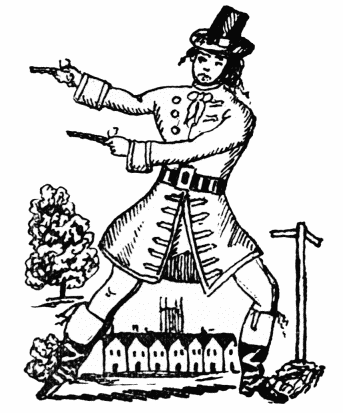
Dick Turpin bold! Dick, hie away, Was the cry of my pals, who were startled, I guess, For the pistols were levelled, the bullets whizzed by, As I leapt on the back of Black Bess. Three Officers mounted, led forward the chase, Resolv’d in the capture to share; But I smil’d on their efforts, tho’ swift was their pace, As I urg’d on my bonny Black Mare. So when I’ve a bumper, what can I do less, Than the memory drink of my bonny Black Bess? Hark away, hark away! still onward they press, As we saw by the glimmer of morn, Tho’ many a mile on the back of Black Bess, That night I was gallantly borne; Hie over, my, pet, the fatigue I must bear Well clear’d! never falter for breath, Hark forward, my girl, my bonny Black Mare, We speed it for life or for death. But when I’ve a bumper, what can I do less, Than the memory drink of my bonny Black Bess? The spires of York now burst on my view, But the chimes, they were ringing her knell, Halt! Halt! my brave mare, they no longer pursue, She halted, she staggered, she fell! Her breathing was o’er, all was hushed as the grave, Alas! poor Black Bess, once my pride, Her heart she had burst, her rider to save, For Dick Turpin, she lived, and she died. Then the memory drink of my bonny Black Bess, Hurrah for poor bonny Black Bess!
LIFE OF THE MANNINGS.
EXECUTED AT HORSEMONGER LANE GAOL ON TUESDAY, 13 NOV., 1849.
See the scaffold it is mounted, And the doomed ones do appear, Seemingly borne wan with sorrow, Grief and anguish, pain and care. They cried, the moment is approaching, When we, together, must leave this life, And no one has the least compassion On Frederick Manning and his wife. Maria Manning came from Sweden, Brought up respectably, we hear, And Frederick Manning came from Taunton, In the county of Somersetshire. Maria lived with noble ladies, In ease and splendour and delight, But on one sad and fatal morning, She was made Frederick Manning’s wife. She first was courted by O’Connor, Who was a lover most sincere, He was possessed of wealth and riches, And loved Maria Roux most dear. But she preferred her present husband. As it appeared, and with delight, Slighted sore Patrick O’Connor, And was made Frederick Manning’s wife. And when O’Connor knew the story, Down his cheeks rolled floods of tears, He beat his breast and wept in sorrow, Wrung his hands and tore his hair; Maria, dear, how could you leave me? Wretched you have made my life, Tell me why you did deceive me, For to be Fred Manning’s wife? At length they all were reconciled, And met together night and day, Maria, by O’Connor’s riches, Dressed in splendour fine and gay. Though married, yet she corresponded, With O’Connor, all was right, And oft he went to see Maria, Frederick Manning’s lawful wife. At length they plann’d their friend to murder, And for his company did crave, The dreadful weapons they prepared, And in the kitchen dug his grave. And, as they fondly did caress him, They slew him—what a dreadful sight, First they mangled, after robbed him, Frederick Manning and his wife. They absconded but were apprehended, And for the cruel deed were tried, When placed at the Bar of Newgate, They both the crime strongly denied. At length the Jury them convicted, And doomed them for to leave this life, The Judge pronounced the awful sentence, On Frederick Manning, and his wife. Return, he said, to whence they brought you, From thence unto the fatal tree, And there together be suspended, Where multitudes your fate may see. Your hours, recollect, are numbered, You betrayed a friend, and took his life, For such there’s not one spark of pity, For Frederick Manning and his wife. See what numbers are approaching, To Horse Monger’s fatal tree, Full of blooming health and vigour, What a dreadful sight to see. Old and young, pray take a warning, Females, lead a virtuous life, Think upon that fatal morning, Frederick Manning and his wife.
THE LIFE AND TRIAL OF PALMER.[69]
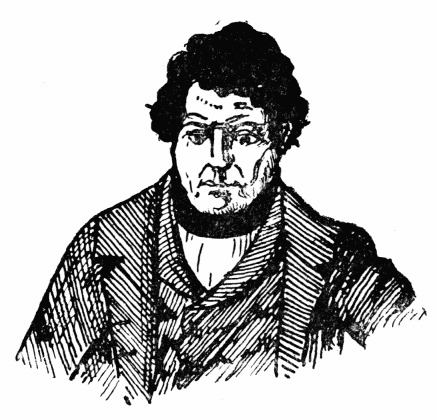
Oh listen unto William Palmer, Who does in anguish sore bewail, Now guilty they at last have found me, And sent me back to Stafford Jail. Every one appears against me, Every person does me hate, What excitement is impending, On guilty William Palmer’s fate.
Chorus.
My trial causes great excitement, In town and country everywhere, Now guilty found is William Palmer, Of Rugeley town in Stafford Shire. Many years I was a sportsman, Many wondrous deeds I’ve done, Many a race I have attended, Many a thousand, lost and won. They say I poisoned my wife’s mother, And took away her precious life, And slew poor Cook and my own brother, And poisoned my own lawful wife. Everything looks black against me, That I really must confess, The very thoughts that do oppress me, Causes me pain and distress, Now the jury did convict me, And prove I did commit the deed, And, sentence passed on William Palmer, To Stafford I was sent with speed. In Rugeley I was once respected, A gentleman, lived at my ease, With noblemen I was connected, And sporting men of all degrees. Although a Doctor no one knew me To do anything amiss, Now each one strives to undo me, I never thought I’d come to this. My poor old mother now at Rugeley, My awful end must now bewail, To know her son must die with scorn, A felon’s death in Stafford Jail. Every charge alleged against me, I have strongly it denied, Twelve long days my trial lasted, And now I am condemned to die. Dreadful is my situation, Before the awful bar I stand, I might have filled a noble station, Unfortunate, unhappy man. Infants yet unborn will mention, When to manhood they appear, The name of Doctor William Palmer, Of Rugeley town, in Staffordshire. Will no one sympathize with Palmer, Who every charge did strong deny, You are all aware I am found guilty, For by a Jury I’ve been tried. My situation makes me tremble, I am borne down with grief and care, All conversation is of Palmer, Of Rugeley town, in Staffordshire.
A COPY OF VERSES ON
MARY ARNOLD, THE FEMALE MONSTER.
Of all the tales was ever told, I now will you impart, That cannot fail to terror strike, To every human heart. The deeds of Mary Arnold, Who does in a jail deplore, Oh! such a dreadful tale as this, Was never told before.
Chorus.
This wretched woman’s dreadful deed, Does every one affright. With black beetles in walnut shells, She deprived her child of sight. Now think you tender parents, What must this monster feel, The heart within her breast must ten Times harder be than steel. The dreadful crime she did commit, Does all the world surprise, Black beetles placed in walnut shells, Bound round her infant’s eyes. The beetles in a walnut shell, This monster she did place, This dreadful deed, as you may read, All history does disgrace, The walnut shell, and beetles, With a bandage she bound tight, Around her infant’s tender eyes, To take away it’s sight. A lady saw this monster, In the street when passing by, And she was struck with terror, For to hear the infant cry. The infant’s face she swore to see, Which filled her with surprise, To see the fatal bandage, Tied round the infant’s eyes. With speed she called an officer, Oh! shocking to relate, Who beheld the deed, and took the wretch, Before the Magistrate. Who committed her for trial, Which did the wretch displease, And she’s now transported ten long years, Across the briny seas. Is there another in the world, Could plan such wicked deed, No one upon this earth before, Of such did ever see. To take away her infant’s sight, ’Tis horrible to tell, Binding black beetles round it’s eyes, Placed in walnut shells.
THE UNDERTAKER’S CLUB.
One night, being pressed by his old friend Chubb, To go to an Undertaker’s Club, I’ll furnish you all, if that I dare. With a mournful account of this grave affair.
Chorus.
For such a black looking lot is this Club of Undertakers, such a black looking set You never did see. This selfsame Club, and House of Call, Was held at Blackheath, or else Blackwall, The landlord’s name it was Blackmore, And an African Chief hung over the door. The Undertakers had all met. They were dress’d in black a dingey set, The picture frames black, and so were the walls, And the window curtains were made of palls. The stove black leaded not long had been, On the table was laid Blackwood’s magazine, The carpet was black and so was each chair, The chairman’d black whiskers and raven hair. The supper was laid, there were lots of black game, With polonies in mourning to match with the same, There were blackbird pies, and nothing but good ’uns, And a quantity of good black puddings. The knives were black, and so were the forks, Black strap in black bottles, with black sealed corks, The rules of the club, were done in black figures, And the waiters and cooks were all of them niggers. The dessert was black grapes, and black heart cherries. Blackcurrants, and mulberries, and blackberries. Prunes and elder wine were there, Which just made up this black bill affair. Mr. Sable sang first, and what should he choose on, But the favourite ballad of black eyéd Susan, The coal black steed, Mr. Hatband choose, And Mr. Merryhall sang coal black rose. The best that was sung and that all did confess, Was the favourite song of My bonny Black Bess, The Chairman then whistled, when his throat was clear, The fav’rite grand march that is played in Black Beard.
A TIDY SUIT FOR ALL THAT.
I remember well,—a slap-up swell— With lots of cash, and all that,— I used to quiz each lady’s phiz, And sport them out, and all that; And all this, and all that, But I’m done brown for all that. With Crockford’s[70] crew my money flew, But I skittles play, for all that. I used to dwell up in Pall Mall: In a house up steps, and all that— With porter tall to mind the hall, To take in notes, and all that. And all this, and all that, My feather beds, and all that, But now I snore upon the floor, And I lay till twelve for all that. I used to wear, I do declare, A slap up coat and all that— I made good for trade, though I never paid, But there’s many swells do all that. And all that, and all that, Yet clothes I’ve got, for all that! The suit I’ve got, cost me a pot, And it’s a tidy suit for all that. I had a cab, ’twas lin’d with drab, With a velvet seat, and all that— My horse was brown, the best in town, With a tiger smart, and all that. And all that, and all that, Yet I cab it still, for all that, For, if one I find, I jump up behind, So, you see, I ride, for all that. I used to dine off goose and wine, And couldn’t eat my meat fat, But it’s turn about, for I go without, I live on air, and all that. And all that, and all that, Faggots, peas pudding, and all that, At the Carlton Club, I used to grub, But I like Cann’s soup for all that. With patent boots like “Romeo Coates.”[71] With nice square toe and all that, With good high heel for spur or steel, To rattle about and all that. And all that, and all that, Yet boots I’ve got for all that, Though they’ve no sole, yet on the whole, The tops look well, for all that. My gloves were black, without a crack, But they’re gone to wrack for all that, With my kerchief silk, as white as milk, When it’s wash’d and all that. And all that, and all that, It saves the cuff for all that, In life says Burns, there’s many turns, But a man’s a man for all that.
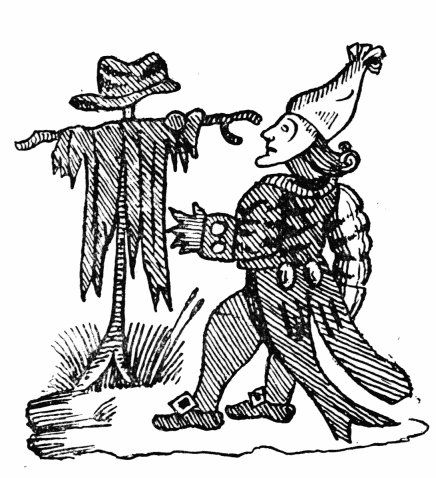
THE RAGGED COAT.
O, what a world of flummery, there’s nothing but deceit in it, So you’ll find all through life, as you travel on, High and low, rich and poor, every one you meet in it, ’Tis the same, I will maintain, and prove it in my song; When I was poor, I found that friends did very seldom heed me, Till true ones came, and left me cash that set me all afloat, So I thought among my friends I’d try who would relieve me, And, to fathom out deception, I put on a ragged coat. I thought my friends I’d try the first, for I had got a many, At least that professed to be—at Kew was Mr. Ford— So I thought a trip by steam would be as cheap as any, Went down to London Bridge, and set my foot on board. I heard a puppy say, though lowly he did breathe it, “It’s a shame, to let such ragged people board a steam boat,” But, says I, My foolish fellow, there’s a good heart beats beneath, So don’t despise a man because he wears a ragged coat. The journey o’er, and safe arrived, I set my foot on shore, Sir, Glad enough from such a crew was I to get relief, So I walk’d up to the house, and knock’d loud at the door, Sir, All the people eyeing me, as if I was a thief. But the door was slammed in my face, with many a bitter snarl, Sir, So I shouted out, Good Mr. Ford, I’ve come to pay that note; O dear, (says Ford) pray step this way, and show’d me to the parlour, Sir, We thought you came a begging in that ragged coat. A chair was quickly placed for me, and down I sat instanter, You came from town, you must be tired, pray stop here and dine, Jane, bring the glasses, and likewise the decanter, Ah, Sir, you’ll find this some excellent port wine. Your wine, Sir, you may keep, although I have no dress on, I have changed my mind, and mean to keep my note. And put it to some better use, so let this be a lesson, Don’t despise a man because he’s got a ragged coat. Next I went courting the brisk widow Moore, Reached the house, gave a tap, and boldly in I goes, My suit I pressed, but she exclaim’d, Here, show the knave the door, For at sight of my appearance, she turn’d up her nose, But, when I show’d a bag of gold, she wish’d to be a talker, At the sound of the rhino she quickly chang’d her note, But, says I, I’m off, dear ma’am, it’s time my name was Walker. So don’t despise a man because he’s got a ragged coat.
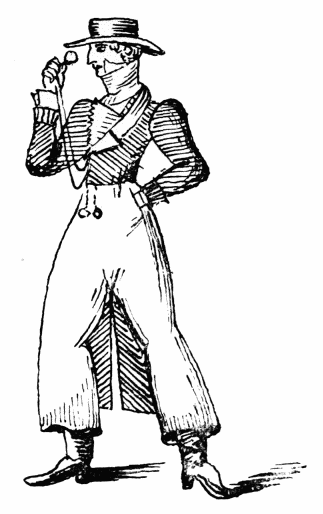
THE COLLIER SWELL.
I used to be a vulgar clown, with cash and money short in, Till my old uncle died in Town, and left me all his fortune, A collier I was by trade, but I’ve chang’d as you may tell, sir, And since a richer purse I’ve got, I’ll be a regular Swell, sir.
Chorus.
But I’m so plagued with vulgar folks, since I’ve got cash to sport in, Why can’t a collier cut a swell, when he’s been left a fortune? I used to go with low bred chaps, and talk to every put low, Get drunk in Tom and Jerry shops, and go a purring foot bo; But now, with all the swells in town, I sport my bobs and tanners, And I am going to London town, to learn some genteel manners. And when I’ve been to London town, I mean to go to France, Sir, To practice two or three times a week, to learn to hop and dance, Sir, Besides, I’ve got a quizzing glass, to see things far and near o, Which caused me the other day, to fall reet o’er a barrow. O my family are a vulgar set, tho’ they’ve got clothes in fashion, They put them on all inside out, which puts me in a passion, The lads when’er we go to church, tho’ they have lots of riches, They all go in their clogs, smock frocks, and leather breeches. My wife she is the worst of all, when we give genteel dinners, She uses neither knife nor fork, but pops in all her fingers, And when they hand the wine about, she tells the gents it stinks, Sir, Gets full her mouth, and squirts it out, and calls for treacle drink, Sir. If I give a dinner to my lord, and bid her make a good ’un, Perhaps she will make some pea soup, or else a great black pudding: And when the tea it is brought in, the tray she always flings, Sir, Stirs up the sugar with her fist, and then she licks her fingers. My lord once ask’d us out to dine, and there we had a rum start, Instead of her new carriage fine, she would ride in a dung cart, And when he sent a horse for her, and wanted her to ride, Sir, But what do you think of the ignorant jade, she would get astride, Sir.
THE LONDON MERCHANT.
It is of a rich merchant near London we hear, Had a comely young daughter most beauteous and fair, Twenty thousand bright guineas was her portion in gold, Till she fell in love with a young sailor bold. O! when that the merchant these tidings did hear, Upon the young sailor, he vengeance did swear; He says, your true love shall no more plough the sea, For before to-morrow morning his butcher I’ll be. O, when that she heard her own father say so, Her mind was o’erwhelmed with sorrow and woe; She thought to herself, If I could see my dear, I quickly would warn him of the danger that’s near. In a suit of bold sailors apparel complete, She dressed herself from the head to the feet, With pumps on her feet, and a cane in her hand, She met her dear William as he walked through the Strand. She says, My dear William, O, instantly flee, For my father doth swear that your butcher he’ll be, So straight unto Dover, I’d have you repair, And in forty-eight hours, I’ll meet you there. As he kiss’d her fair cheek, the tear stood in each eye, She says I will save you, or else I will die. Then straightway she gave him a handful of gold, And she marched up the street like a sailor so bold. She, meeting her father, as she walked up the Strand, He mistook her for William, saying, You are the man, A Sword from his side then he instantly drew, And her beautiful body he pierc’d it quite through. When he found what he’d done, he sunk down in despair, He wringed his hands, and he tore off his hair, Crying, wretched monster, Oh! what have I done? I have killed the flower of fair London town. Then up from the ground he did instantly start, And leaned on his sword, till he pierced his heart; Forgive me, he cried, as he drew his last breath, Then he closed his eyes in the cold arms of death. Now when that young William the tidings did hear, He died broken hearted by grief and despair, Thus father, and daughter, and a young sailor bold, Met an untimely death for the sake of curs’d gold.
RILEY’S FAREWELL.
As I rov’d out one evening down by a river side, I heard a lovely maid complain, the tears fell from her eyes, It is a cold and stormy night, these words she did say, My love is on the raging sea, bound for America. My love, he was a sailor bold, his age was scarce sixteen, He was as nice a young man, as ever you did see, My father he has riches great, and Riley he was poor, Because I loved this sailor, they could not him endure. Riley was my love’s name,—he liv’d down by the sea, My mother took me by the hand, and these words she did say, If you be fond of Riley, let him leave this country, Your father says he’ll take his life, or shun his company. Oh! mother dear, don’t be severe, where shall I find my love, My very heart lies in his breast, as constant as a Dove. Oh, daughter dear, I’m not severe, there is one thousand pound, Send Riley to America, to purchase there some ground. When she got the money, to Riley she did run, This very night, to take your life, my father charged his gun, Here is one thousand pounds in gold, my mother sent to you, Sail off unto America, and there I’ll follow you. When Riley got the money, next day he sail’d away, When he got his foot on board, these words she did say, Here is a token of my love, and we’ll break it in two, You’ll have my heart, and half my ring, until I find out you. It was in twelve months after, she was walking by the sea, When Riley he came back again, and took his love away, The ship was wrecked, all hands were lost, her father grieved full sore, Found her in Riley’s arms, and they were drown’d upon the shore. They found a letter in her breast, and it was wrote in blood, Saying, Cruel was my father that thought to shoot my love; So let this be a warning to all you fair maidens gay, Never to send the man they love upon the raging sea.
YOUNG WILLIAM.
Young William for honour and fame went to sea, And many a battle and storm weathered he, But, the wars being over, he homeward returned, For love of his Mary in his bosom did burn. Faithful and true was the youth. With a heart light and buoyant to Mary did haste, With joy she wept, and her William embraced, Of his parents he asked, and she mournfully sighed, That home, once your joy, is, now, wretched, she cried, Your parents are bowed down in grief. Scarce one short month of your absence was spent, When the Landlord’s vile agent seized on them for rent, Sold their cow, all they had, for a twelve months’ arrears, Nor heeded their anguish, but laughed at their tears, No succour, alas! could I bring. Oh, Mary, cried William, while his tears fast did flow, This night to my parents, disguised I will go, In the morning what rapture through their bosoms will run, When they find that the stranger is William, their son, For they know not from sea, I’ve returned. He went as a stranger, admittance did crave, As a stranger, a welcome from them he received, How chang’d was his father, once healthy and neat, His mother thro’ want, could scarce move from her seat. And want seem’d to dwell in each face. Some gold from his purse on his father he prest, Took his leave for the night and retired to rest, Alas! from his pillow he never rose more, Before morning sun beamed, he was dead in his gore. He died by the hand of his sire. Ah! see, in the morning, poor Mary she came, And asks for her lover, her William, by name, Our William’s not here both the parents replied, Oh yes! smiled Mary, he came here disguised. As a stranger, he’s dwelling with you. Oh God! cried the father, then what have I done? Thro’ gold, cursed gold, I have murdered my son, Then with the same weapon himself did destroy, Saying, thus I avenge thee, Oh, William, my boy! Oh, Mercy! he cried and expired. The mother soon died, and was laid in the tomb, And Mary, a maniac wildly did roam, All did her pity, though none could her save, She was found dead and cold on her true lover’s grave, On the grave of her lover so true.
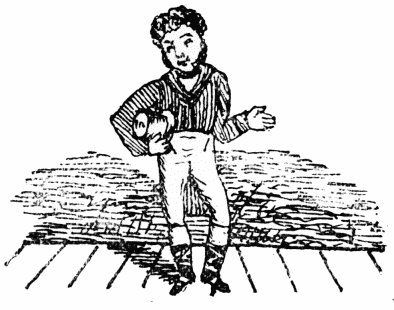
THE BROKEN HEARTED GARDENER.
I’m a broken hearted Gardener, and don’t know what to do, My love she is inconstant, and a fickle jade, too, One smile from her lips will never be forgot, It refreshes, like a shower from a watering pot.
Chorus.
Oh, Oh! she’s a fickle wild rose, A damask, a cabbage, a young China Rose. She’s my myrtle, my geranium, My Sun flower, my sweet marjorum, My honey suckle, my tulip, my violet, My holy hock, my dahlia, my mignonette. We grew up together like two apple trees, And clung to each other like double sweet peas, Now they’re going to trim her, and plant her in a pot, And I’m left to wither, neglected and forgot. She’s my snowdrop, my ranunculus, My hyacinth, my gilliflower, my polyanthus, My heart’s ease, my pink, water lily, My buttercup, my daisy, my daffydown dilly. I’m like a scarlet runner that has lost its stick, Or a cherry that’s left for the dickey to pick, Like a waterpot, I weep, like a paviour I sigh, Like a mushroom I’ll wither, like a cucumber, die. I’m like a humble bee that doesn’t know where to settle, And she’s a dandelion, and a stinging nettle, My heart’s like a beet root choked with chickweed, And my head’s like a pumpkin running to seed. I’m a great mind to make myself a felo-de-se, And finish all my woes on the branch of a tree: But I won’t, for I know at my kicking, you’d roar, And honour my death with a double encore.
BOXING DAY IN 1847.
Of all the days throughout the year, There was never one, I say, That could come up in former times, At all to Boxing Day. But in the windows now you’ll see, How shocking, I declare, Notice! recollect, no Christmas Boxes Will be given here.
Chorus.
In former times, how folks would spree, So lively, brisk and gay, Such jolly games there used to be Upon a Boxing Day. Some folks are mean, as may be seen, Who plenty have in store, And strive outright, with all their might, To trample on the poor. It was not so in former times, For every class together, Stroll to the Play, on Boxing Day, Like Birds of every feather. The beadles out a boxing went, So did old women too, The dustman out a boxing went, A whistling—Dust O! Some would dance, and some would sing, And some a noise would keep, And some would in the watch house go, To get a lodging cheap. In grandfather’s and grandmother’s days, Folks through the streets were led, There were no police with rolling pins, To break the people’s heads; They did not Polka dresses wear, Or bustles on their rumps, And shop boys did not smoke cigars, Made out of Cabbage Stumps. Now up and down old London Town, In windows every where, There are bills that say, No Christmas boxes Will be given here. They may put their Christmas boxes up, Said Bet to her old man, And then she boxed him round the room, And broke the frying pan. Now all old ancient customs will Be quickly done away, Here’s a happy new Year, and may you live Till another Boxing day: But may Old Nick a visit pay To them both far and near, Who in their windows put, No Christmas Boxes given here.
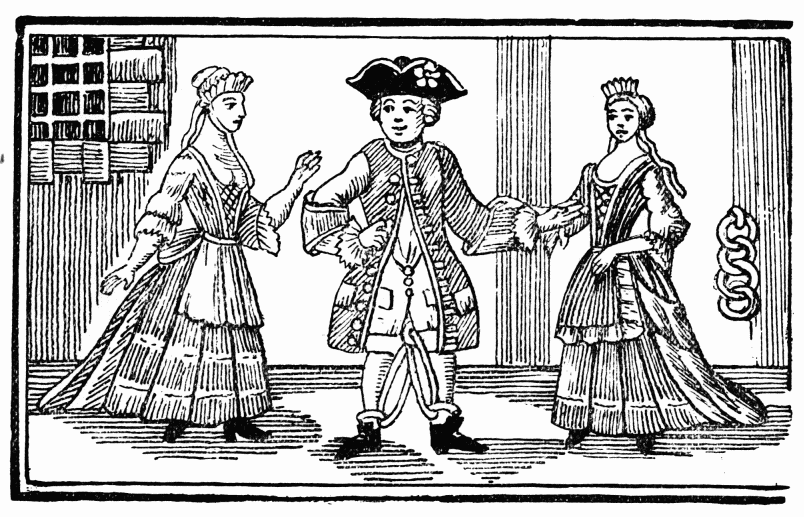
The illustration to this ballad has evidently done duty for a portion (most probably Macheath’s song of “How happy could I be with either”) of the “Beggar’s Opera,” first played at Lincoln’s Inn Fields Theatre, 1728. The Commode, or cap, of the ladies is that of the reign of Queen Anne; but it is probable that highwaymen’s female friends did not dress in the height of the fashion.
ST. JAMES’S AND ST. GILES’S.
To the tourist of London, who’s curious in fact, I’ll point out some things in the principal tracts. Two places there are, where the poor and the rich, Live so like each other, there’s no telling which. One parish, St. James’s, par excellence call’d, The West end of town and the fashionable world; The other St. Giles’s, if true rumour speaks, Is inhabited solely by Emigrant Greeks.
Chorus.
So don’t be astonished at what I shall say, St. James and St. Giles I have seen in my day, In the former they live on the National Debt, In the latter they live on what they can get. In St. James’s there is but one Palace, I swear, In St. Giles’s Gin Palaces everywhere, At the Court of St. James’s they hang out the flags, Up a Court at St. Giles’s they hang out the rags. The Swells at St. James’s go shooting at noon, In St. Giles’s the people go shooting the moon.[72] In St James’s Hotel, boots are welted by nobs, In St. Giles’s the welting is done by the snobs. In St. James’s the nobs to the Opera go, Because they can’t bear anything that is low, In St. Giles’s that being too slap-up, ’tis agreed, To go to the stall of “the Garden” instead. In St. James’s there’s military pensioners dwell, In St. Giles’s there’s lots of Old Soldiers[73] as well; In St. James’s they pay, when a regiment they choose, In St. Giles’s, for nothing, they get “in the Blues.” In St. James’s they keep up their spirits with wine, In St. Giles’s they’re drunk on “blue ruin”[74] by nine, In St. James’s they banquet on Silver, in state, In St. Giles’s the same, with a twopenny plate. In St. James’s the Officers mess at their Club. In St. Giles’s they often have messes for grub; In St. James’s they feed on the highest of game, In St. Giles’s they live on foul air just the same. A Lord in St. James’s his betting book keeps, In the Derby, St. Giles’s has plenty of sweeps; In St. James’s they gamble at hazard for crowns, And they play in St. Giles’s at skittles for browns. In St. James’s the authors, when the Muses inspire, Dash off with a touch of D’Israeli’s fire; In St. Giles’s original ballads by Bunn, Are done by the poet of Moses and Son. In St. James’s Pall Mall is considered polite, In St. Giles’s pell mell in the gutter they fight, In St. James’s Conservative principles run, In St. Giles’s, the principle’s nuffink to none. In St. James’s fraternity goeth ahead, In St. Giles’s they fraternize ten in a bed; In St. James’s the families march out of town, In St. Giles’s Bill Simmons to Brixton goes down. In St. James’s in calling the morning is spent, In St. Giles’s, the landlord calls for his rent, In St. James’s the Queen holds a drawing-room gay. In St. Giles’s Mr. Smith holds a garret all day. In St. James’s the togs are got out very bright, In St. Giles’s they’re got out every Saturday night, In St. James’s they sleep on down pillows and snore, In St. Giles’s the same, but it’s down on the floor. Now, comparisons mostly are odious I’ve heard, And such being the case, I think it absurd To say any more on the subject just now, For fear of offending the high or the low. But next time I travel those parts of the town, Some further particulars, Sir, shall go down. Of the Sweets of St. James’s with bitters mixed in, In St. Giles’s the bitters are mixed up with gin.
THE THREE BUTCHERS.
It was Ips, Gips, and Johnson, as I’ve heard many say, They had five hundred guineas, all on a market day: As they rode over Northumberland, as hard as they could ride, Oh, hark, Oh, hark, says Johnson, I hear a woman cry. Then Johnson, being a valiant man, a man of courage bold, He ranged the woods all over, till this woman he did behold, How came you here? says Johnson, how came you here I pray, I am come here to relieve you, if you will not me betray. There have been ten swaggering blades, have hand and foot me bound, And stripped me stark naked, with my hair pinn’d on the ground; Then Johnson, being a valiant man, a man of courage bold, He took his coat from off his back, to keep her from the cold. As they rode over Northumberland, as hard as they could ride, She put her fingers in her ears, and dismally she cried, Then up start ten swaggering blades, with weapons in their hand, And, riding up to Johnson, they bid him for to stand. It’s I’ll not stand, said Ipson, then no indeed, not I, Nor, I’ll not stand, said Gipson, I’d sooner live than die. Then I will stand, said Johnson, I’ll stand the while I can, I never yet was daunted, nor afraid of any man. Then Johnson drew his glittering sword, with all his might and main, So well he laid upon them, that eight of them were slain: As he was fighting the other two, this woman he did not mind, She took the knife all from his side, and ripped him up behind. Now I must fall, says Johnson, I must fall unto the ground, For relieving this wicked woman, she gave me my death wound; Oh base woman, Oh base woman, whatever hast thou done, Thou hast killed the finest butcher that ever the sun shone on. This happened on a Market Day, as people were riding by, To see this dreadful murder, they gave the hue and cry, It’s now this woman’s taken, and bound in irons strong, For killing the finest butcher that ever the sun shone on.
THE END. PRINTED BY WILLIAM CLOWES AND SONS, LIMITED, LONDON AND BECCLES.
WORKS BY JOHN ASHTON.
Crown 8vo, cloth extra, 7s. 6d. each.
A HISTORY OF THE CHAP-BOOKS OF THE EIGHTEENTH CENTURY. With nearly 400 Illustrations, engraved in facsimile of the originals.
SOCIAL LIFE IN THE REIGN OF QUEEN ANNE. From Original Sources. With nearly 100 Illustrations.
HUMOUR, WIT, AND SATIRE OF THE SEVENTEENTH CENTURY. With nearly 100 Illustrations.
ENGLISH CARICATURE AND SATIRE ON NAPOLEON THE FIRST. With 115 Illustrations.
MODERN STREET BALLADS. With 56 Illustrations.
LONDON: CHATTO & WINDUS, PICCADILLY.
FOOTNOTES: