Introductory material (continued 3)
Reading edition
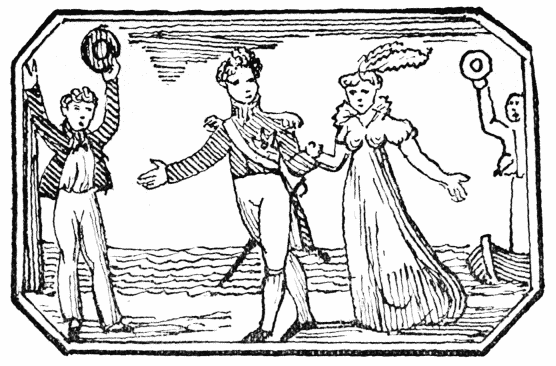
DUKE WILLIAM’S FROLIC.[43]
Duke William and a Nobleman, heroes of England’s nation, One morning, nigh to two o’clock, did take their recreation; Into the country they did go, in sailor’s dress from top to toe, Said Duke William, now let us go and know, how they use the brave sailors. Dressed all in their sailor’s trim, they straightway hastened to an inn, And when they were there, they made all the people stare at their manly appearance; The landlady viewed them; by good words they assail her, Said she, come in, be not afraid, I love the jolly sailor. Then up the stairs they did go, and in a room did enter, The duke did say, Landlady, please, bring wine both white and red, Before the wine was drunk out, a press-gang bold and stout, In the lower rooms for sailors bold did look and search about. The landlady said, go upstairs, if sailors you are seeking, But one’s so fat that I believe, you’ll hardly care to ship him; Ne’er mind, the Press-gang they did say, and went without delay, We’re jolly sailors, brothers, from what ship are you, we pray? We do belong to George, said Will; said they, Where’s your protection? We’ve none at all, they did reply, don’t cast on us reflection; The lieutenant then did say, brothers, come without delay, They shall not make you a prey, our warrant is for sailors. They led them to their leader then, the captain did them meet, The duke, he said, Kind gentleman, take great care of your sheep. With that the Captain he did swear, I am your shepherd, I declare, We’ll make you know you saucy are, get down among the sailors. The Nobleman he did go down, but the duke, he refused, At which the officers did frown, and sadly him abused: Where must I lie? his highness said, may I not have a feather bed, You’re fat enough, they all replied, pig in amongst the sailors. Then straight below the duke did go, unto his comrade, Sir, How he did swear, to see the fate of many a brisk young blade, Sir; Below he tore his trousers, and calling for some tailors, The Captain said, you saucy blade, there’s no one here but sailors. For your bold airs, the Captain said, you’ll surely get a flog, Sir, Quick to the gangway him convey, and whip him like a dog, Sir, Come, strip, he cried; the duke replied, I do not like your law, Sir, I ne’er will strip for to be whipped, so strip me if you dare, Sir. Then instantly the boatswain’s mate began for to undress him, But, presently, he did espy the star upon his breast, sir; Then on their knees they straight did fall, and for mercy soon did call, He replied, You’re base villains, thus using us poor sailors. No wonder that my royal father cannot man his shipping, ’Tis by using them so barbarously, and always them a-whipping, But for the future, sailors all, shall have good usage, great and small, To hear the news, together all cried, May God bless Duke William. He ordered them fresh officers that stood in need of wealth, And with the crew he left some gold, that they might drink his health, And when that they did go away, the sailors loud huzzaéd Crying, blessed be that happy day whereon was born Duke William.
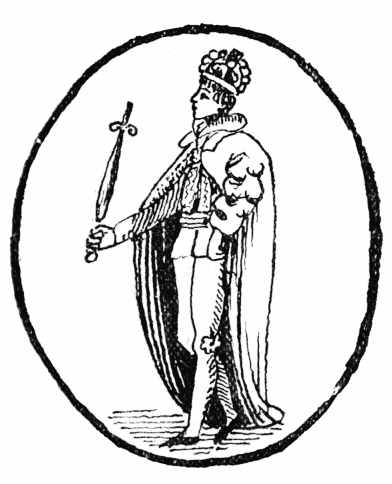
THE KING[44] AND THE SAILOR.
In Portsmouth town, at the sign of the Ship, A jolly Jack Tar sat drinking his flip, A messmate was there, who spun him a yarn, That we’d a new King, he’d soon give him to larn. Says sailor Ben to sailor Jem, He’s a King, and a sailor trim, And ’bout him there’s no palaver or fuss, Acause, don’t you see, he is one of us. Says sailor Ben to his messmate Jem, He knows that I’ve sailed under him, And when our ship’s paid off at Chatham, I’ll go and have a good stare at ’em. Now Ben Block he arriv’d at the Park, And soon the King and Queen did mark, Says Ben, says he, I’ll bet you a tanner, He hails me in a Kinglike manner. Ye ho! says Ben, and he soon brought to, And his boatswain’s whistle out he drew, When the King turn’d round with pride and joy, Halloo! says he, what ship ahoy? Now Ben, he answered with a grin, The Royal Charlotte I’ve sailed in, She was nam’d arter your royal mother, Whose great and glorious son you are. The King the hand of Ben he shook, And said at that time I was a Mid, Then Ben lugged out his ’bacca box, And said to the King, come take a quid. If you won’t, the Queen may like a bit, Mayhap, like one of the Indian squaws; So he scrap’d up to her, and offered his box, No thank ye, says she, I never chaws. The King he gave promotion to Ben So he thought that he’d steer back again, But the Queen, he thought he first would tell her That her husband the king, was a d——d good fellow!
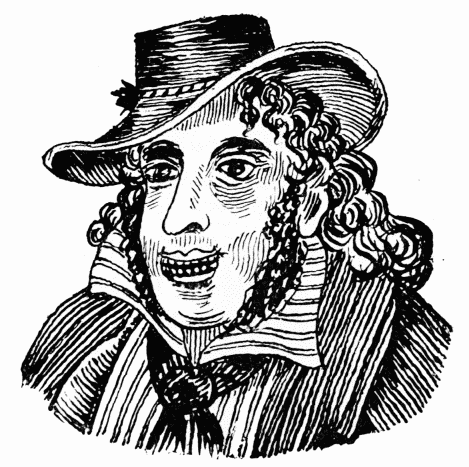
JACK BINNACLE AND QUEEN VICTORIA.[45]
Jack Binnacle just come from sea, As jolly a tar as ever could be, Hearing with many a joyous smile, That Queen Victoria ruled our isle, Weighed anchor for her palace soon, With honest ardour just in time, Declaring loudly, with a grin, That he’d have a shake at the Royal Fin.
Chorus.
Gaily push the grog about, With mirth we’ll make each cabin shout Let pleasure everywhere be seen, Long life to Britain’s youthful Queen! Away Jack Binnacle then sped, With natty hat upon his head, With slacks and jacket blue, so trim, No tar look’d half so well as him. With shiners too, his purse was stor’d, Besides, he had some grog aboard; He reach’d her palace gates with joy, Where loud he shouted—“Ship, Ahoy!” The guards, amazed, without delay, All sought to drive the tar away; Avast! ye lubbers! then he cries, And spits his quid into their eyes, To see her Queenship, I’ve come afar, I know she’ll not despise a tar; Because, don’t ye see, don’t make a fuss, Her uncle Bill was one of us. In vain they tried to hinder Jack, He bolted into the palace, smack! Pass’d all the Yeomen on the stairs, And on to the state chamber steers. With wonder each one did him view, Jack hitch’d his slacks—cried how d’ye do? All right I hope,—no harm I mean, I’ve come to see our Royal Queen. The Courtiers did not like this rout, And would have put the Jack Tar out, But our good Queen with friendly glance, Desir’d our hero to advance, “What! are YOU Victoria?” Jack then cries, “Lord love your pretty twinkling eyes, Exactly like my Poll, that’s flat, Only as how you’re not so fat. Avast!—my jaw I must belay, I hopes you’ll pardon what I say, I sailed with your good Uncle Bill, Whose memory I do honour still, So, as I’ve heard, you’re Captain now, I thought I’d come and make my bow, And, as I have got lots of prog, Would your Queenship take a glass of grog?” Our lovely Queen seemed to enjoy The joke, which did her guests annoy; For Queen Victoria, who can blame, Loves all her subjects just the same. Jack full an hour there did stay, Then cried, as he rose to go away, Poking a quid between his jaws, “I s’pose your Majesty never chaws?” Then off went Jack, to the sign of the Ship, And ordered a galore of flip, Declaring loudly he did mean To swim in grog to the health of the Queen. Many a tar then joined hand, Cans were filled, hands grasp’d each hand, So then they shouted with such glee, To Queen Victoria—three times three.
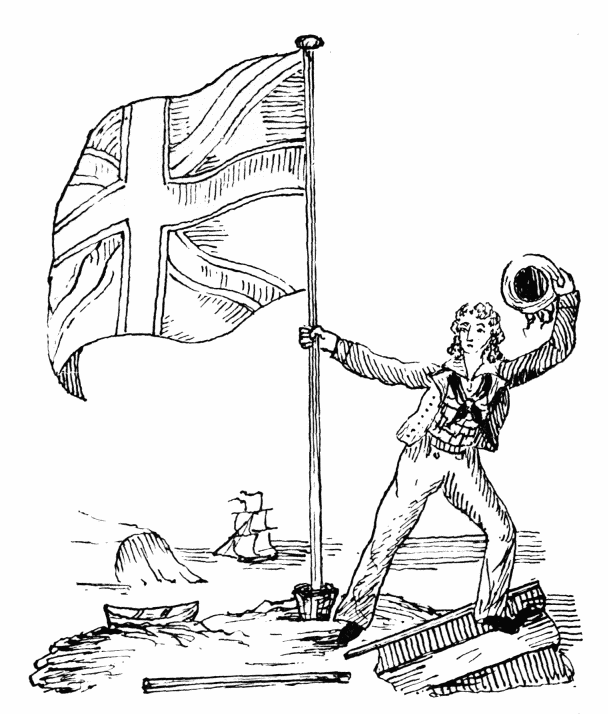
SWEET WILLIAM.
As I was a walking along the sea shore, Where the breezes blow cool and the billows do roar, A ship I espied on the proud swelling main, That brought me my true love to England again. The boat came on shore and my true love did land, With his tarpawling jacket, and bundle in hand; Saying presents I’ve brought you from East and from West, Because you’re the maiden that I love the best. I have shawls and rich laces, and fine golden rings, And rubies and pearls, and fifty fine things; For since you’ve proved loyal and constant to me, I have come back to England to marry with thee. Oh, then round her fair neck his arms he did throw, And glad tears of joy from her eyelids did flow, Saying William, dear William, thou’rt welcome to me, For many long months have I watchéd for thee. O, come my dear Sailor, and let us begone, My father and mother are waiting at home, To see my dear sailor how glad they will be, For they prayed for your safety while you were at sea. Then come, my dear girl, to the Church let’s away, And we shall be wedded without more delay, I’ve riches in store, love, when thou art my wife, To make us contented and happy for life.
THE POOR SMUGGLER’S BOY.
One cloudy morning, as I abroad did steer, By the wide rolling ocean that runs swift and clear, I heard a poor creature, that in sorrow did weep, Saying, O, my poor father is lost in the deep. My father and mother once happy did dwell, In a neat little cottage they rearéd me well; Poor father did venture all on the salt sea, For a keg of good brandy, for the land of the free. For Holland we steer’d while the thunder did roar, And the lightning flash’d vivid when far, far, from shore, Our ship, mast, and rigging, were blown to the wave, And found, with poor father, a watery grave. I jump’d over board in the troubléd main, To save my poor father—but all was in vain, I clasp’d his cold clay, for quite lifeless was he, Then forc’d for to leave him, sink down in the sea. I clung to a plank, and so gained the shore, With sad news for mother, and father no more, For mother, with grief broken hearted did die, And I was left to wander—so pity poor I. A lady of fortune, she heard him complain, And shelteréd him from the wind and the rain, She said, I’ve employment,—no parents have I, I will think of an orphan, till the day that I die. He well did his duty, and gained a good name, Till the lady she died, and he master became, She left him 2000 bright pounds, and some land, So, if you’re ever so poor, you may live to be grand.
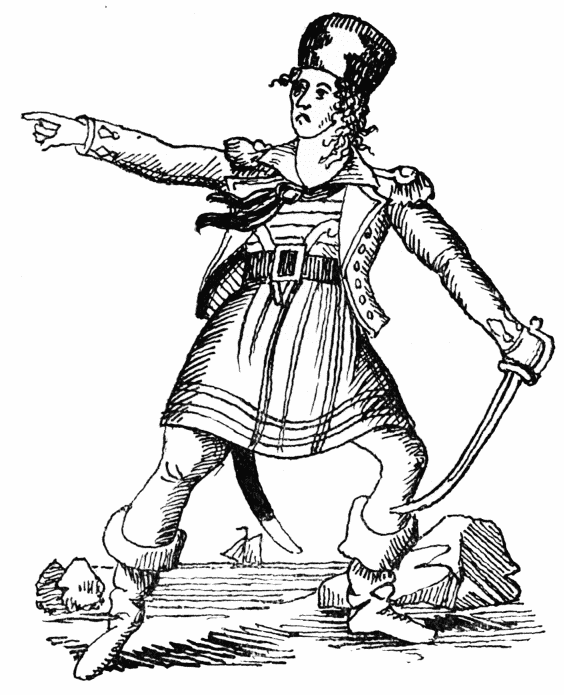
THE SMUGGLER’S BRIDE.
Attention give and a tale I’ll tell, Of a damsel fair that in Kent did dwell, On the Kentish coast, when the tempest rolled, She fell deep in love with a smuggler bold. Upon her pillow she could not sleep, When her valiant smuggler was on the deep, While the winds did whistle she did complain, For her smuggler ploughing the raging main. When Will arrived on his native coast, He would fly to her that he valued most, He would fly to Nancy, his lover true, And forget all hardships he’d lately been through. One bright May morning the sun did shine, And lads and lasses all gay and fine, Along the coast they did trip along, To see the wedding, and sing a cheerful song. Young Nancy then bid her friends adieu, And to sea she went with her lover true, In storms and tempests all hardship braves, With her valiant smuggler upon the waves. One stormy night when the winds did rise, And dark and dismal appeared the skies, The tempest rolled and the waves did roar, And the valiant smuggler was driven from shore. Cheer up, cries William, my valiant wife, Says Nancy—I never valued life, I’ll brave the storms and the tempests through, And fight for William with sword and pistol too. At length a cutter did on them drive, The cutter on them did soon arrive, Don’t be daunted, though we’re but two, We’ll not surrender—like Britons true. Cheer up, says Nancy, with courage true, I will fight, dear William, and stand by you, They like Britons fought, Nancy stood by the gun, They beat their enemies and quick made them run. Another cutter now hove in sight, And joined to chase them with all their might; They were overpowered, and soon disarmed, It was then young Nancy and William were alarmed. A shot that moment made Nancy start, Another struck William to the heart, This shock distressed sweet Nancy’s charms, When she fell and died in William’s arms, Now Will and Nancy to life bid adieu, They lived and died like two lovers true, Young men and maidens, now faithful prove, Like Will and Nancy, who lived and died in love.
THE FEMALE SMUGGLER.
Come, attend a while, and you shall hear, By the Rolling Sea lived a maiden fair, Her father followed the smuggling trade, Like a warlike hero that was never afraid. In Sailor’s clothing, young Jane did go, Dress’d like a sailor from top to toe, Her aged father was the only care Of the female smuggler who did never despair. With her pistols loaded, she went on board, By her side hung a glittering sword, In her belt, two daggers, well arm’d for war, Was the female smuggler, who never fear’d scar. Not far they sailéd from the land, When a strange sail put them all to a stand; Those are the robbers, this maid did cry, The female smuggler will conquer or die. Close along side these two vessels came, Cheer up, said Jane, we’ll board the same, We’ll run all chances to rise or fall, Cried the female smuggler, who never fear’d a ball. They beat the robbers, and took their store, And soon return’d to old England’s shore, With a keg of brandy she walk’d along, Did the female smuggler, and sweetly sang a song. Not far she travell’d, before she espied, A Commodore of the blockade, He said, Surrender, or you must fall, But the female smuggler said, I never fear a ball. What do you mean? said the Commodore. I mean to fight, for my father’s poor, Then she pull’d the trigger, and shot him through, Did the female smuggler, and to her father flew. But she was followed by the blockade, In irons strong they put this fair maid, But when they brought her to be tried, The young female smuggler stood dress’d like a bride. The Commodore against her appeared, His health restored, and from danger cleared, But, when he found, to his great surprize, ’Twas a female smuggler had fought him in disguise. He to the Judge and Jury said, My heart won’t let me prosecute that maid, Pardon I beg for her on my knees, She’s a valiant maiden, so pardon, if you please. If you pardon this maid, said the gentleman, To make her my bride is now my plan, Then I’d be happy for ever more, With my sweet smuggler, said the Commodore. Then the Commodore to her father went, Though he was poor, to ask his consent, He gained consent, so the Commodore, And the female smuggler are joined for evermore.
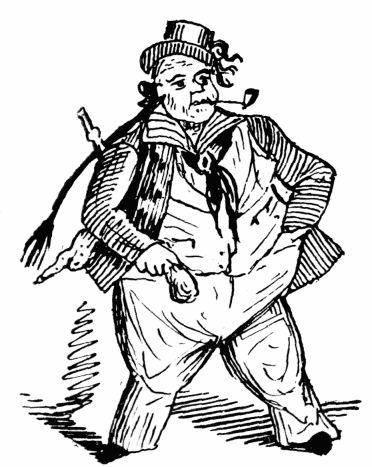
JACK RETURNED FROM SEA.
Here am I, poor Jack, Just come home from Sea, With shiners in my sack, Pray what do you think of me? Eight long years I have been Cruising the wide world over, Many a droll sight have I seen, But I wish the War was over. I’ve sailed in many a flood, Where cans of grog did pour, Fought up to my knees in blood, Where bullets flew in showers, Where the French cried out parblue, The Dutch cried out Peccavi. The Danes and Spaniards too, Went tumbling to old Davy. Sailors have mann’d the gales, Let it rain, blow or fog, The purser often fails To serve us out with grog. I’ve crossed th’ Equinoctial line, Where the sun would scorch your nose off, I’ve sailed in such a clime, Where the frost would bite your toes off. It was off the coast of Spain, Coming from a six months’ cruise, Little did I think to hear Of such glorious news. I heard our people tell, Talking of an invasion, But that I knew full well, Was all a botheration. I next was at the Nore, We cast anchor in the night, Looking towards the shore, A boat appeared in sight. As on the yard we lay, Our topsails for to furl, I heard our pilot say There’s peace with all the world.[46] I wish it was a peace, And all our men on shore, With the shiners in my sack, And go to sea no more. And should war come again, Damme if I don’t enter, And, like a jolly tar, Both life and limb, I’ll venture.
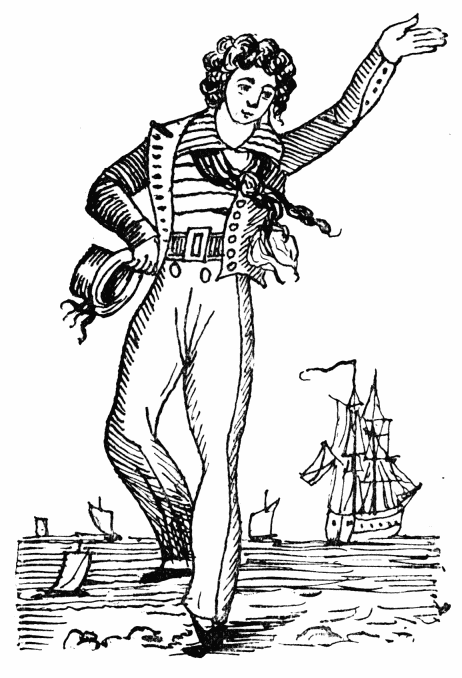
THE JOLLY ROVING TAR.
It was in the town of Liverpool, all in the month of May, I overheard a damsel, alone as she did stray, She did appear like Venus, or some sweet lovely star. As she walked the beach, lamenting for her jolly roving Tar. O, William, gallant William, how can you sail away? I have arrived at twenty one, and I’m a lady gay, I will man one of my father’s ships, and face the horrid war, And cross the briny ocean for my jolly roving Tar. Young William looked so manly, drest all in his sailor’s clothes, His cheeks they were like roses, his eyes as black as sloes, His hair hung down in ringlets, but he is gone afar, And my heart lies in the bosom of my jolly roving Tar. Come all you jolly sailors, and push the boat ashore, That I may see my father’s ships and see they are secure, Provisions we have plenty, and lots of grog in store, So drink good health you sailors, to my jolly roving Tar. She quickly jumped into the boat and merrily left the land, And as the sailors rowed away, she wav’d her lily hand, Farewell ye girls of Liverpool, I fear no wound nor scar, And away went pretty Susan to her jolly roving Tar.
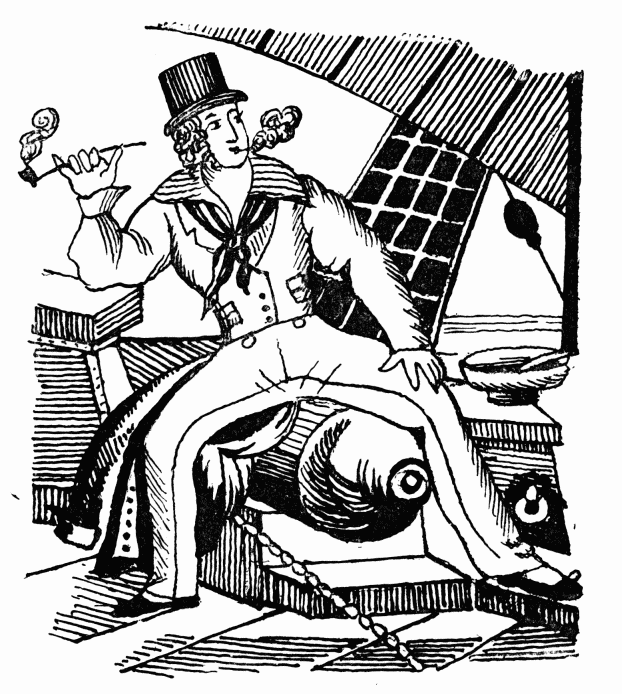
YOUNG HENRY OF THE RAGING MAIN.
On a summer’s morn the day was dawning, Down by the pleasant river side, I saw a brisk and lovely maiden, And a youth called “England’s Pride”! He was a tight and smart young sailor, Tears from his eyes did fall like rain, Saying, adieu, my lovely Emma, I’m going to plough the raging main. Cried Emma—Henry will you leave me Behind, my sorrow to complain? For your sweet features, lovely Henry, I may ne’er behold again! See, Emma dear, our ship’s weighed anchor, Tis folly, Love, for to complain, Though you I leave, I’ll ne’er deceive you, I’m bound to plough the raging main. Said Emma, Stay a little longer, Stay at home with your true love, But, if you enter, I will venture, I swear by all the powers above! I’ll venture with my lovely Henry, Perhaps great honour I may attain, She cried, I’ll enter and boldly venture With Henry on the raging main. Cried Henry,—Love, don’t be distracted, Perhaps you may be cast away, ’Tis for that reason, cried young Emma, That behind I will not stay. I’ll dress myself in man’s apparel, So, dearest Henry, don’t complain, In jacket blue, and tarry trousers, I will plough the raging main. Then on board the brig Eliza, Henry and his Emma went; She did her duty like a sailor, And with her lover was content. Her pretty hands, once soft as velvet, With pitch and tar appeared in pain, Though her hands were soft, she went aloft, And boldly ploughed the raging main. The Eliza brig was bound for India, And ’ere she had three weeks set sail, From land, or light, one stormy night, It blew a bitter, and heavy gale. Undaunted, up aloft went Emma, ’Midst thunder, lightning, wind and rain, With courage true, in a blue jacket, Did Emma plough the raging main. Twelve hours long the tempest lasted, At length quite calm it did appear, And they proceeded on their voyage, Emma, and her true love dear. When just two years they’d been sailing, To England they returned again, And no one did suspect young Emma, Ploughing on the watery main.
In England, and, for the matter of that, on the Continent as well, since this century was born, some trifle has tickled the people, and has been reiterated, until every catch-word has become a nuisance. In the early part of the century, for instance, “Has your mother sold her mangle?” “Does your mother know you’re out?” and, “Before you could say Jack Robinson” (which has passed into a recognized saying), were in everyone’s mouth. It is not often that these catch-words can be traced to their origin, but the latter seems to have arisen in the Ballad of
JACK ROBINSON.
The perils and the dangers of the voyage past, And the ship at Portsmouth arrived at last. The sails all furled and the anchor cast, The happiest of the crew was Jack Robinson. For his Poll he had trinkets and gold galore, Besides Prize Money quite a store, And along with the crew, he went ashore, As Coxwain to the boat, Jack Robinson. He met with a man, and said, “I say, Perhaps you may know one Polly Gray? She lives somewhere hereabout:” the man said, “nay, I do not indeed,” to Jack Robinson. So says Jack to him, “I have left my ship, And all my messmates, they gave me the slip. Mayhap you’ll partake of a good can of flip? For you’re a good sort of fellow,” says Jack Robinson. In a public-house, then, they both sat down, And talked of Admirals of high renown, And drank as much grog as came to half a crown, This here strange man and Jack Robinson. Then Jack call’d out the reckoning to pay, The landlady came in, in fine array, “My eyes, and limbs, why here’s Polly Gray! Who’d thought of meeting here?” says Jack Robinson. The landlady staggered against the wall, And said, at first, she didn’t know him at all, “Shiver me,” says Jack, “why here’s a pretty squall, D——n me, don’t you know me? I’m Jack Robinson! Don’t you remember this handkerchief you giv’d me? ’Twas three years ago, before I went to sea, Every day I’ve looked at it, and then I thought of thee, Upon my soul, I have,” says Jack Robinson. Says the lady, says she “I have changed my state.” “Why! you don’t mean,” says Jack, “that you’ve got a mate? You know you promised——” Says she, “I could not wait, For no tidings could I gain of you, Jack Robinson, And somebody, one day, came up to me and said, That somebody else, had somewhere read In some newspaper, as how you were dead.” “I’ve not been dead at all,” says Jack Robinson. Then he turn’d his quid, and finish’d his glass, Hitch’d up his trousers, “Alas! alas! That ever I should live to be made such an ass! To be bilked by a woman,” says Jack Robinson. “But to fret and to stew about it’s all in vain, I’ll get a ship and go to Holland, France and Spain, No matter where, to Portsmouth I’ll ne’er come again.” And he was off before you could say Jack Robinson.
Here is a variation, such as I never met with before, of the time-honoured Ballad of
BOLD WILLIAM TAYLOR.[47]
I’ll sing you a song about two lovers, Who from Lichfield town did come, The young man’s name was William Taylor, The maiden’s name was Sarah Naylor. Now for a Sailor William enlisted, Now for a Sailor William’s gone, He’s gone and left his charming Sally, All alone, which made her mourn. She dressed herself in man’s apparel, Man’s apparel she put on, And set out to seek her own true lover, For to find him she is gone. One day she was exercising, Exercising among the rest, A silver locket flew from her jacket, And exposed her milk-white breast. O, then the Captain stept up to her, And asked her, what brought her there All for to seek for my own true lover, For he has proved to me severe. If you are come to find your lover, You must tell to me his name, His name it is bold William Taylor, And from Lichfield town he came. If your lover’s name is William Taylor, He has proved to you severe, He is married to a rich lady, He was married the other year. If you’ll rise early in the morning, In the morning by break of day, There you’ll see bold William Taylor, Walking with his lady gay. Then she called for a brace of pistols, A brace of pistols I command, And then she shot bold William Taylor With his bride at his right hand. O, then the captain was well pleaséd, Well pleaséd with what she’d done, And soon she became a bold commander, On board a ship of all her own men. Then the Captain loved her dearly, Loved her dearly as his life, And it was but three days after, Sarah became the Captain’s wife.
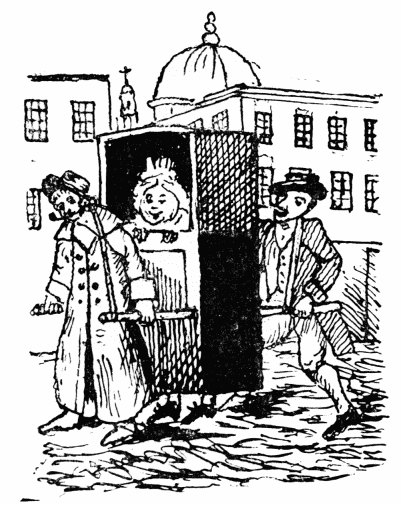
RATCLIFFE HIGHWAY IN 1842.
You jolly sailors list to me, I’ve been a fortnight home from sea, Which time I’ve rambled night and day, To have a lark on the Highway.
Chorus.
Listen, you jovial sailors gay, To the rigs of Ratcliffe Highway. Some lasses their heads will toss, With bustles as big as a brewer’s horse, Some wear a cabbage net called veil, And a boa just like a buffalo’s tail. I married a lass with her face so red, She eat three salt herrings and a bullock’s head, She danced a jig, then began to sing, Drank a gallon of beer, and a pint of gin. I have sailed, indeed, all over the world, And never before my flag unfurled, In India, China, and Bungo bay, As the spot we call Ratcliffe Highway. One night a lady did me drag, To have a spree at the Lamb and Flag. There she got drunk, and got in a row, And sold her shoes at the Barley Mow. There is eels and shrimps as black as fleas, And a covey a selling blue grey peas, There’s ugly Bet, and Dandy Jane, At the King William in Gravel Lane. Yes! you’ll see some girls as smart and neat, As the Dowager Queen of Otaheite, There’s every colour, indeed ’tis true, Green, black and purple, yellow and blue. I went one night to have a reel At the Angel tap in Blue Coat Fields, I danced, and capered, and sung a song, And married a lady they call Miss Long. I fell in with a lady so modest and meek, She eat thirteen faggots, and nine pigs feet, Three pounds of beef, and to finish the meal, Eat eight pounds of tripe, and a large cow heel. I met with another borne down with fear, She guzzled down thirteen pots of beer, She threw up her heels and play’d the deuce, And broke her nose at the Paddy’s Goose. You jovial sailors, one and all, When you in the port of London call, Mind Ratcliffe Highway and the Damsels loose, The William, the Bear, and the Paddy Goose.
Chorus.
You sailors bold my song obtain, And learn it on the raging main.
THE GREENLAND WHALE FISHERY.
We can no longer stay on shore, Since we’re so deep in debt, So a voyage to Greenland we will go, Some money for to get—brave boys. Now, when we lay at Liverpool, Our good-like ship to man, ’Twas there our names were all wrote down, And we’re bound for Greenland—brave boys. In eighteen hundred and twenty-four, On March the twenty third, We hoisted our colours up to our mast head, And for Greenland bore away—brave boys. But when we came to Greenland, Our good-like ship to moor, Oh, then we wished ourselves back again With our friends upon the shore—brave boys. The boatswain went to the mast-head, With his spy-glass in his hand, Here’s a whale, a whale, a whale, he cried, And she blows on every spring—brave boys. The Captain on the quarter deck, (A very good man was he,) Overhaul, overhaul, your boat tackle fall And launch your boats to sea—brave boys. The boats being launch’d, and the hands got in, The whale fishes appeared in view, Resolved was the whole boat’s crew, To steer where the whale fish blew—brave boys. The whale being struck, and the whale paid on, She gave a flash with her tail, She capsized the boat, and lost five men, Nor did we catch the whale—brave boys. Bad news unto our captain brought, That we had lost the ’prentice boys, He, hearing of this dreadful news, His colours down did haul—brave boys. The losing of this whale, brave boys, Did grieve his heart full sore, But losing of his five brave men, Did grieve him ten times more—brave boys.[48] Come, weigh your anchors, my brave boys, For the winter star I see, It’s time we should leave this cold country, And for England bear away—brave boys. For Greenland is a barren place, Neither light, nor day to be seen, Nought but ice and snow where the whale-fish blow, And the daylight seldom seen—brave boys.
THE NEW YORK TRADER.
To a New York Trader, I did belong, She was well built, both stout and strong, Well rigg’d, well mann’d, well fit for sea, Bound to New York in America. On the first of March then did we sail, With a sweet, and a pleasant gale, Like hearts undaunted, we put to sea, Bound to New York in America. Our cruel Captain as we did find, Left half of our provisions behind, Our cruel captain, as we did understand, Meant to starve us all, before we made the land. At length our hunger grew very great, We had but little on board to eat, And we were in necessity, All by our Captain’s cruelty. Our Captain in his cabin lay, A voice came to him, and thus he did say, Prepare yourself and ship’s company, For to-morrow night with me you shall lay. Our Captain woke in a terrible fright, It being about the first watch of the night, Aloud for the boatswain, he straightly did call, And to him related the secret all. Boatswain, said he, it grieves me to the heart, To think that I’ve acted a villain’s part, To take what was not my lawful due To starve my passengers and the ship’s crew. There’s one thing more I have to tell, When I in Waterford town did dwell, I killed my master, a merchant there, All for the sake of his lady fair. I killed my wife and children three, All through that cursed jealousy, And on my servant I laid the blame, And hang’d he was, all for the same. Captain, said he, if that be so, Pray, let none of your ship’s crew know, But keep the secret within your breast, And pray to God to give you rest. Early next morning a storm did rise, Which our seamen did much surprize. The sea was over us, both fore and aft, That scarce a man on deck was left. Then the boatswain he did declare That our Captain was a murderer, It so enraged all the ship’s crew, They overboard the Captain threw. When this was done, a calm was there, Our good-like ship homeward did steer, The wind abated and calmed the sea, And they sailed safe to America. When we came to anchor there, Our good-like ship for to repair, The people wondered much to see What a poor distress’d big wreck were we.
VIVA VICTORIA.
Rouse ye lovers of peace and order, Of true freedom, with honour united, Rally round the old banner of union, And its glory shall never be blighted. We have bold hearts in British dominions, Who dare all a freeman should dare, But the Throne and the Queen be our watchword, And let traitors and foemen beware. Viva Victoria! Viva Victoria! Strength to the throne! health to the Queen! Viva Victoria! We’ll have peace, but it must be with honour, We have no need of new names in story, But if war sounds the tocsin, then Britain, Still has heroes enough for her glory. Shame the Brawlers, who trade in sedition, Misleaders, who traffic in lies, And beware, lest those self-seeking martyrs, Would-be-lions, prove wolves in disguise. Viva Victoria! etc. By the head, or the hand, if it toileth, May the honest man live by his labour, But the drone who can work and won’t work, Shall not rest on the strength of his neighbour. To the Throne, as the safeguard of freedom, By our birthright allegiance we swear, For the Queen is the Monarch of Freedom, To the King of all be our prayer. Viva Victoria! etc.
QUEEN VICTORIA.[49]
Welcome now, Victoria! Welcome to the throne! May all the trades begin to stir, Now you are Queen of England; For your most gracious Majesty, May see what wretched poverty, Is to be found on England’s ground, Now you are Queen of England. While o’er the country you preside, Providence will be your guide, The people then will never chide Victoria, Queen of England. She doth declare it her intent To extend reform in Parliament, On doing good she’s firmly bent, While she is Queen of England. Says she, I’ll try my utmost skill, That the poor may have their fill; Forsake them!—no, I never will, When I am Queen of England. For oft my mother said to me, Let this your study always be, To see the people blest and free, Should you be Queen of England. And now, my daughter, you do reign, Much opposition to sustain, You’ll surely have, before you gain The blessings of Old England. O yes, dear mother, that is true, I know my sorrows won’t be few, Poor people shall have work to do, When I am Queen of England. I will encourage every trade, For their labour must be paid, In this free country then she said, Victoria, Queen of England; That poor-law bill, with many more, Shall be trampled on the floor— The rich must keep the helpless poor, While I am Queen of England. The Royal Queen of Britain’s isle Soon will make the people smile, Her heart none can the least defile, Victoria, Queen of England. Although she is of early years, She is possess’d of tender cares, To wipe away the orphan’s tears, While she is Queen of England. With joy each Briton doth exclaim, Both far and near across the main, Victoria we now proclaim The Royal Queen of England; Long may she live, and happy be, Adorn’d with robes of Royalty, With blessings from her subjects free, While she is Queen of England. In every town and village gay, The bells shall ring, and music play, Upon her Coronation-day, Victoria, Queen of England. While her affections we do win, And every day fresh blessings bring, Ladies, help me for to sing, Victoria, Queen of England.
THE QUEEN’S MARRIAGE.[50]
A subject I want for a song, do you see, So Her Majesty, look you, my subject shall be; Nay there I am wrong, so my Muse here avers, My “subject” she can’t be, because I am hers! Forgive me, I beg, if with words I do play, And hear a plain man in his own queer plain way, And still to my errors in mercy pray lean, While the wedding I sing of our glorious Queen!
Chorus.
Our cups to the dregs in a health let us drain, And with them a long and a prosperous reign, Like good loyal subjects in loud chorus sing, Victoria’s wedding with Albert her King. Many suitors the Queen’s had of class, clime, and creed, But each failed to make an impression, indeed; For, for Albert of Coburg, the rest off she packs, Thus “giving the bag” each, and keeping “the Saxe!” A fortunate fellow he is, all must say, And right well his cards he has managed to play, The game he has won, and no wonder, I ween, When he played “Speculation,” and turn’d up the Queen. A hundred thousand a year he may get, For taking the Queen, which is something to wit; I myself had “proposed” had I known it, that’s flat, For I’d willingly take her for much less than that. Even yet, if her Majesty should chance to scoff At the bargain she’s made, and the matter break off, I’ll instantly seek her, and lay my mind down, And offer to take her, at just—half a crown! Since the Queen did herself for a husband “propose,” The ladies will all do the same I suppose; Their days of subserviency now will be past, For all will speak first, as they always did last! Since the Queen has no equal, “obey,” none she need, So, of course, at the Altar, from such vow she’s freed; And the women will all follow suit, so they say— “Love, honour,” they’ll promise, but never “obey.” Those will now wed, who ne’er wedded before, Those who always wedded, will now wed the more; Clerks will no time have, to lunch, dine, or sup, And parsons, just now will begin to look up! To churches, indeed, this will be a God-send, Goldsmiths be selling off rings without end! For now you’ll not find from Castle to Cot, A single man living, who married is not. But hence with all quibbling, for now I have done, Though all I have said has been purely in fun; May the Queen and the King shine like Venus and Mars, And Heaven preserve them without any jars! Like Danaë of old may we see it plain, Till time is no more, these bright sovereigns rain:[51] May pleasure and joy through their lives know no bounds, So let’s give them a toast, and make it three rounds.
A NEW SONG ON THE BIRTH OF THE PRINCE OF WALES.[52]
There’s a pretty fuss and bother both in country and in town, Since we have got a present, and an heir unto the Crown, A little Prince of Wales so charming and so sly, And the ladies shout with wonder, What a pretty little boy! He must have a little musket, a trumpet and a kite, A little penny rattle, and silver sword so bright, A little cap and feather with scarlet coat so smart, And a pretty little hobby horse to ride about the park. Prince Albert he will often take the young Prince on his lap, And fondle him so lovingly while he stirs about the pap, He will pin on his flannel before he takes his nap, Then dress him out so stylish with his little clouts and cap. He must have a dandy suit to strut about the town, John Bull must rake together six or seven thousand pound, You’d laugh to see his daddy, at night he homewards runs, With some peppermint or lollipops, sweet cakes and sugar plums. He will want a little fiddle, and a little German flute, A little pair of stockings and a pretty pair of boots, With a handsome pair of spurs, and a golden headed cane, And a stick of barley sugar, as long as Drury Lane. An old maid ran through the palace, which did the nobs surprize, Bawling out, he’s got his daddy’s mouth, his mammy’s nose and eyes, He will be as like his daddy as a frigate to a ship, If he’d only got mustachios upon his upper lip. Now to get these little niceties the taxes must be rose, For the little Prince of Wales wants so many suits of clothes, So they must tax the frying pan, the windows and the doors, The bedsteads and the tables, kitchen pokers, and the floors.
THE QUEEN AND THE COAL EXCHANGE.
You lads and you lasses so gay, Now keep yourselves tidy and sober, And never forget the grand day, The thirtieth day of October.[53] When the Queen and Prince Albert so grand, With their dear little sons and their daughter, Will all get in a boat at Whitehall, And go down to the city by water, To open the New Coal Exchange. To tell you about the concern, It is Queen Victoria’s desire then, Her pocket is got very low, Through her journey to Scotland and Ireland.[54] To see them along go so gay, Throw open your doors and your windows, A coal shed they’ve took, so they say, To retail Newcastles and cinders, A coal porter Albert will be. Such a sight sure there has not been seen, Believe me my friends there has never, As there is to see England’s Queen, In a collier so gay on the river. Not a gun must be fired that day, Not a barge nor a boat must be stopping, But they must be all cleared away, Three miles and a half below Wapping. Won’t that be a glorious sight! The Dukes, Lords and Ladies so gay, Will whistle and sing when they’ve started, And when they arrive near the key, They will anchor near Billingsgate Market. And then all on shore they will go, To be gazed at by wise folk and simple, Where they’ll have a good blow out of crabs, Of oysters, red herrings and winkles. Move on and get out of the way. To receive them will be the Lord Mayor, And his lady, as sweet as a myrtle, Lots of Aldermen too will be there, To treat her with salmon and turtle. At the Custom House Pier they will stand, And the citizens gay will receive her, And make Albert, as we understand An out and out stunning coalheaver, Such wonders we never did see. To the brim they will fill up a sack, And drink a good health to the nation, Then clap it on Prince Albert’s back, What a change it will be in his station. There will be dukes and earls too, Coal merchants, silk weavers and wasters, When Al will put on his smock frock, Knee breeches, white stockings and gaiters, A coal porter Albert will be. Let us hope they will have a good trade, And be able to flare up like flinders, There’s many a fortune been made By wetting the coals and the cinders. Prince Albert will not be compelled To carry the sacks, but he’d rather, And the young Prince of Wales will be there, For to measure the coals for his father. Seven pounds for a penny, good weight. So now to conclude, my good friends, If it won’t be a sight, it’s a pity, The Queen and her husband so fine, And her children, all down in the City. The colliers drest all in their best, At the Custom House wait to receive her, Here’s a health to Victoria so grand, And Prince Albert the slashing coalheaver, A dealer in Newcastle coals.
CRYSTAL PALACE.
Britannia’s sons an attentive ear One moment lend to me, Whether tillers of our fruitful soil, Or lords of high degree. Mechanic too, and artizan, Old England’s pride and boast, Whose wondrous skill has spread around, Far, far from Britain’s coast.
Chorus.
For the World’s great Exhibition, Let’s shout with loud huzza, All nations never can forget, The glorious first of May. From every quarter of the Globe, They come across the sea, And to the Chrystal Palace The wonders for to see; Raised by the handiwork of men Born on British ground, A challenge to the Universe It’s equal to be found. Each friendly nation in the world, Have their assistance lent, And to this Exhibition Have their productions sent. And with honest zeal and ardour, With pleasure do repair, With hands outstretch’d, and gait erect, To the World’s Great National Fair. The Sons of England and France And America likewise, With other nations to contend, To bear away the prize. With pride depicted in their eyes, View the offspring of their hand, O, surely England’s greatest wealth, Is an honest working man. It is a glorious sight to see So many thousands meet, Not heeding creed or country, Each other friendly greet. Like children of one mighty sire, May that sacred tie ne’er cease, May the blood stain’d sword of War give way To the Olive branch of Peace. But hark! the trumpets flourish, Victoria does approach, That she may long be spared to us Shall be our reigning toast. I trust each heart, it will respond, To what I now propose— Good will and plenty to her friends, And confusion to her foes. Great praise is due to Albert, For the good that he has done, May others follow in his steps The work he has begun; Then let us all, with one accord, His name give with three cheers, Shout huzza for the Chrystal Palace, And the World’s great National Fair!!
QUEEN’S VISIT TO FRANCE.[55]
You bonny pretty English Girls— Your Mammas I am going to harrass, What a lark I lately have had, Among the young bucks of Paris. A son and daughter I shall have, As fine as ever were seen-y, The boy shall Napoleon be called, And the little girl nam’d Eugenie.
Chorus.
I’ve been to France to learn to dance, With Frenchmen we were mingling, Now Vic and Albert have returned Once more to bonny England. From Osborne boldly we set sail, Our hearts did beat in motion, The wind it blew a pleasant gale, And glorious looked the ocean. And when we landed at Boulogne, Napoleon loud did roar, there, Three times he kiss’d me on the cheek, Then sang “God bless Victoria.” The guns did fire, the bells did ring, The cannon balls did rattle, Young men and maids did sweetly sing, Then the soldiers had a battle. The snips and snobs, so help my bobs, Were mounted on French ponies, Me and Albert had a fracasee, Then a stumping Macaroni. There were blazing lights all through the night, The doors broke off their hinges, When all the pretty maiden’s knees Were covered over with fringes. The men had all got hairy lips, Then whistled sweet marblue, Sirs, They cheered me gaily all the way, Then halloed Parley Vous, Sirs. The Frenchmen used me very well, And shewed me sights and wonders My Albert, he was frightened, and, Eugenie’s bed crept under; I thought with her he was in love, I thought he did adore her, I thought that he had run away, And left his own Victoria. Well, now we’ve had a grand flare up, The like was seen not never, The kind French folk did laugh and joke, With “Anglais for ever.” The sights I’ve seen, believe your Queen, So sweetly did delight her, She went to France to learn to dance, And Bull must pay the piper.
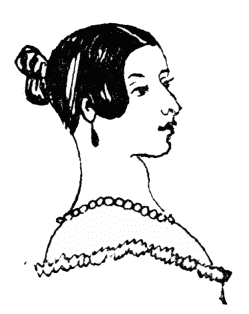
THE QUEEN’S DREAM.
Good people give attention, and listen for a while, To an interesting ditty, which cannot fail to make you smile, So all draw near, and lend an ear, while I relate a theme, Concerning of Victoria, a strange and funny dream.
Chorus.
So these are dreams and visions Of old England’s blooming Queen. At the Isle of Wight, the other night, as Vic lay in her bed, Strange visions did to her appear, and dreams came in her head; She drew Prince Albert by the nose, and gave a dreadful scream, Oh, dear, she said, I’m filled with dread, I’d such a dreadful dream. Says Albert, Vic, what are you at? you’ve made my nose quite sore, I’m in a mind, for half a pin, to kick you on the floor, Such dreams for me will never do, you pepper’d me with blows. I never knew a wife to dream, and pull her husband’s nose. O, don’t be vex’d, the Queen replied, you know I love you well, So listen awhile dear Albert, and my dreams to you I’ll tell: Last night, she said, I had a dream, as soon as I lay down, I thought Napoleon had come o’er, to steal away my crown. The vision of Napoleon appeared at my bed side, He said that by my subjects he had been greatly belied, But now, said he, I’ll be revenged, I’ll quickly make you rue, And I’ll take away the laurels that were won at Waterloo. When the vision of Napoleon, from my view did disappear, To escape the French, I thought that we came to lodge here, I thought that we were so held down, by cursed poverty, That I was forc’d to labour hard in a cotton factory. Prince Albert, he stood quite amazed, and listened to the Queen, And said, dear Vic, I little thought that you had such a dream, Cheer up your heart, don’t look so sad, you need not be afraid, For I’m sure the French will ne’er attempt, Old England to invade. The Queen to Albert then replied, I have not told you all, For I dream’t that Lord John Russell, altho’ but very small, Just like a Briton bold, then so nobly did advance, And with his fist, knocked out the eye, of the Emperor of France. I dreamed that I was weaving on a pair of patent looms, And I thought that you were going through the streets a-selling brooms, And I thought our blooming Prince of Wales was selling milk and cream, But, Albert dear, when I awoke, it was nothing but a dream. Indeed, said Albert, dream no more, you fill my heart with pain, And I hope that you will never have such frightful dreams again, We’ve English and Irish soldiers, we can conquer all our foes, So, whenever you dream again Vic, pray don’t you pull my nose.
LOVELY ALBERT.[56]
The Turkish War, both near and far, Has played the very deuce then, And little Al, the royal pal, They say, he has turned a Russian; Old Aberdeen, as may be seen, Looks woeful pale and yellow, And Old John Bull has his belly full Of dirty Russian Tallow.
Chorus.
We’ll send him home and make him groan, Oh, Al, you’ve played the deuce then, The German lad has acted sad, And turned tail with the Russian. When Al came here, you’re all aware, He brought with him no riches, He had scarce a rag upon his back, And great holes in his breeches; Oh, England on him pity took, And chang’d his sad condition, And soon he plann’d, you understand, The National Exhibition. The Cobourgs came from far and near, With their Dispatches, all dirt, A begging for the Russian Bear, To blooming lovely Albert, To keep old Nick, the devil’s limb, And on to Turkey lead him, To massacre the innocent Turks, And rob them of their freedom. Last Monday night, all in a fright, Al, out of bed did tumble, The German lad was raving mad, How he did groan and grumble! He cried to Vic, I’ll cut my stick, To Petersburgh, go right slap, When Vic, ’tis said, jumped out of bed, And whopp’d him with her night cap. There, with the bolster round the room, Vic gave him dreadful lashes, She scratched his face and broke his nose, And pull’d out his moustaches. You German dog, you shall be flogg’d, She halloed like a Prussian, How could you dare to interfere And turn a cursed Russian? Bad luck they say, both night and day, To the Cobugs and all humbugs, The Wirtembugs and Scarem bugs, And all the German house bugs. And the old bug of Aberdeen, The Peterbugs and Prussians, May Providence protect the Turks, And massacre the Russians. You jolly Turks, now go to work, And show the Bear your power— It’s rumoured over Britain’s isle, That A—— is in the Tower, The Postmen some suspicion had, And openéd two letters, ’Twas pity sad, the German lad, Should not have known much better. Well, now, my friends, to made an end, From tyrants guard your own coast, I’ll tell you what ’tween you and I, The Tower-ditch and the gate post: I think that Al has been used well, Since first he came to England, And had no cause to obstruct the laws, Or in politics be mingling. Let France and England set to work, Shun Austrians and Prussians, Assist the poor and injured Turks, And smother all the Russians. Chain up the Bear, and make him stare, And so I take my Davy, We’ll sing Old England, three times three, The Army and the Navy.
Chorus.
I tell thee Al, we never shall, Although you play’d the deuce then, Allow the Turks to be run down, By the dirty, greasy Russian.
BRAVE NELSON.
The twenty-first day of October, It being a glorious day, The combin’d fleets of Spain and France, They met at Buzeray. Their number it being thirty three, Bertram chanced them to see. There is twenty seven of them for me, Said brave Nelson. We form’d a line of battle, Our cannons loud did roar, Some we sent into the air, And others down below. But Nelson on the deck so high, Aloud unto his men did cry, This day we conquer or we die, Said brave Nelson. On the twenty first of October, At the rising of the sun, We form’d the line for action, At twelve o’clock begun. We manned our rigging and shot away, Besides some thousands on that day, Were killed and wounded in the ’fray, With brave Nelson. Our ship was numbered twenty seven, Her cannon loud did roar, We ships, in number twenty seven, Took from the Spanish shore. But when we’d victory on our side, A musket ball his life destroyed, And in the midst of glory died, Our brave Nelson. To view this hero dying, With his last parting breath, He prayed for England’s glory, At the moment of his death. Farewell my lads, my glass is run, This day will be my setting sun, And providence it must be done, Said brave Nelson. Fare you well brave Nelson, Old England shed a tear, The bravest of her heroes, Has lost his life so dear. Did he not merit much applause, He fought for liberty and laws, He bled and died for England’s cause The brave Nelson.
LORD NELSON.
Come all gallant seamen that unite a meeting, Attend to these lines that I’m going to relate, And, when that you hear, it will move you with pity, To hear how Lord Nelson, he met with his fate. For he was a bold and undaunted commander, As ever did sail on the ocean wide, And he made both the French and the Spaniards surrender, By always pouring into them a broadside.
Chorus.
Mourn, England, mourn; mourn and complain, For the loss of Lord Nelson, who died on the main. From aloft, to aloft, where he was commanding, All by a French gun he received a ball, And, by the contents, he got mortally wounded, And that was the occasion of Lord Nelson’s fall. Like an undaunted hero, exposed to the fire, As he gave the command, on the quarter deck stood, And to hear of his actions, you would much admire, To see the decks covered all with human blood. One hundred engagements he had been into, And never, in his time, was he known to be beat, For he had lost an arm, likewise his right eye, sir, No powers on earth could ever him defeat. His age, at his death, it was forty and seven, And as long as I live, his great praises, I’ll sing, For the whole navigation was given unto him, Because he was loyal and true to his king. Then up steps the doctor in a very great hurry, And unto Lord Nelson these words he did say, Indeed, then, my lord, I am very sorry, To see you lying and bleeding this way, No matter, no matter whatever about me, My time it has come, I’m almost at the worst, And there’s my gallant seamen who’re fighting so boldly, Go and discharge your duty to them first. Then, with a loud voice he called out to his captain, Pray let me know how this battle does go, I think that our guns continue to rattle, Though death approaches, I very well know. The antagonists ship has gone to the bottom, Eighteen we’ve captured, and brought them on board, And there are two of them quite blown out of the ocean, So that is the news I have brought you, my Lord. Come all gallant seamen that unite a meeting, Always let Lord Nelson’s memory go round; For it is your duty, when you unite a meeting, Because he was loyal and true to the Crown; So now to conclude, and to finish these verses, My time it is come, I am quite at the worst, May the heavens go with you, and ten thousand blessings, May rest in the Fleet with you, Lord Collingwood.
BATTLE OF WATERLOO.
Twas on the 18 day of June[57] Napoleon did advance, The choicest troops that he could raise within the bounds of France; Their glittering eagles shone around, and proudly looked the foe, But Britain’s lion tore their wings, on the plains of Waterloo. With Wellington we’ll go, with Wellington we’ll go, For Wellington commanded us on the plains of Waterloo; The fight did last from ten o’clock until the dawn of day, While blood and limbs, and cannon balls in thick profusion lay. The number of the French, that at Waterloo were slain, Was near sixty thousand, all laid upon the plain; Near forty thousand of them fell upon that fatal day, Of our brave British heroes who their prowess did display. It’s now the dreadful night comes on, how dismal is the plain, When the Prussians, and the English found above ten thousand slain, (sic) Brave Wellington, and Blucher, bold, most nobly drove their foes, And Buonaparte’s Imperial Crown was taken at Waterloo. We followed up the rear till the middle of the night, We gave them three cheers as they were on their flight, Says Bony, d——n those Englishmen, they do bear such a name, They beat me here at Waterloo, at Portugal and Spain. Now peace be to their honoured souls who fell that glorious day, May the plough ne’er raise their bones, nor cut the sacred clay; But let the place remain a waste, a terror to the foe, And when trembling Frenchmen pass that way, they’ll think of Waterloo.
The visit of George IV. to Scotland was purely one of pleasure. There being no railways, and posting being fatiguing, he went by sea, embarking at Greenwich on August 10, 1822, and arriving at Leith on the 14th, not landing, however, till the next day. His visit was not remarkable for anything except the multiplicity of his costumes. He embarked dressed as a private individual; he landed as an Admiral; he dined in full Highland costume (when Sir Walter Scott acted as principal Steward); and at another dinner posed as a Field Marshal. He did very little during his stay, leaving Scotland on August 29, arriving at Greenwich on September 1.
A NEW SONG CALLED
KING GEORGE IV.’S WELCOME TO SCOTLAND.
Lang time we’ve waited for our king, That he might caper, rant and fling, And lightly dance and gladly sing, You’re welcome, Royal Geordie.
Chorus.
But oh! you’re lang a-coming, Lang, lang, lang a-coming, O dinna be so lang a-coming, Come awa, King Geordie. Than Glasgow town there is not one, In a’ your great and glorious lan’, Who’d turn out a truer ban’, To guard their Royal Geordie. And, by the powers aboon, we swear If any traitor come you near, The fause loon we’ll in pieces tear, A’ for our love to Geordie. For weel we ken your title’s gude, And shall maintain it with our blude, If any foreign foemen should Dispute the right of Geordie. Then haste ye, Geordie, come awa— We’ll dress our wives and weans fu’ braw, They’ll rend the lift wi’ loud huzza To welcome their ain Geordie. In Edinbro’ too, time will pass sweet, Frae far and near they’ll Geordie greet, And you shall get braw lodgings meet, To house ye, Royal Geordie. Your Court you’ll haud in Holyrood, Where aft your ancestors have stood, All anxious for the public good, As now is Royal Geordie. The Castle’s ancient wa’ you’ll view, The old Scotch Crown and Sceptre too, To wear them nane has right but you, So come awa, King Geordie. And at Dalkeith with Duke Buccleugh, Your people a’ will round ye bow, Wi’ hearty love and fealty true To you their ain kind Geordie. In Perthshire ye’ll get Athole Brose, And Muir fowl frae the great Montrose, Wi’ us, my lad, ye’ll be jocose, So haste ye here, King Geordie. And, by my troth, there’s not a belle, Even ’mangst the rare ones of Pall Mall, To match the ladies of Dunkeld, Then hie ye north, King Geordie. And we shall dance a Highland Reel, ’Twill please you weel my Royal Chiel, On Scotia’s heath to shake your heel, Wi’ some braw lass, King Geordie. Then haste, my cock, and come awa,’ We’ll welcome you with loud huzza! And auld and young shall crouseley craw, “Long live our ain King Geordie.”
THE DEATH OF THE RIGHT HONOURABLE SIR ROBERT PEEL, BART., M.P.
Born February, 1788; died July 2, 1850, aged 62.
Britannia! Britannia! what makes thee complain, O, why so in sorrow relenting, Old England is lost, we are borne down in pain, And the nation in grief is lamenting. That excellent man—the pride of the land, Whom every virtue possessed him, Is gone to that Home, from whence none return, Our dear friend, Sir Robert, God bless him. The Rich and the Poor all did him adore, Admired, beloved, and respected, For his Country’s right, he struggled with might, And nothing by him was neglected. He nobly guided the Helm of State, The poor long have praised and blessed him, Now tears wet each eye, while in sorrow they sigh, He is gone, is Sir Robert, God rest him. Sad, sad was the day, when misfortune that way, From health, strength and vigour had tossed him, Upon the hard ground, to receive his death wound.[58] Oh mourn! mourn! Britannia, we’ve missed him. His equal again sure we never shall find, For every goodness possessed him, Britannia shall weep by the tomb where he sleeps, The patriot, Sir Robert, God rest him. Our Queen sighed in tears, when the tidings she heard, And her children, with hearts full of sorrow, Saying England is done, oh! where shall we run To meet with his equal to-morrow? He’s not to be found upon England’s ground, Already, already, we’ve missed him, Britannia deplore, we’ll behold him no more, The Glory of England, God rest him. Talk of Canning and Pitt, for their talents and wit, And all who upheld that high Station, Oh! has there been e’er, such a noble Premier, As Sir Robert before, in the Nation? He’d by no one be led, he’d by no one be said, No Government feared to trust him, In every way, he carried the sway, For the good of his country: God rest him. At Sixty-two years of Age, cruel death did engage, Britannia to move from her station, From her councils and land, called that excellent man, Sir Robert the pride of the nation. Oh! the tears that were shed by Sir Robert’s death bed, Some hours before life had left him, Caused hearts to complain, in grief sorrow and pain, He is gone, is Sir Robert, God rest him. In the tomb where he sleeps, many thousands will weep, And his virtuous deeds lay before ye, And he will receive, in the regions of bliss, A coronet braided with glory. Though we part from him with pain, it’s no use to complain, He is for ever gone, and we’ve missed him, In peace may he sleep, while Britannia does weep, For her servant, Sir Robert, God bless him.
DEATH OF WELLINGTON.[59]
On the 14th of September, near to the town of Deal, As you may well remember, who have a heart to feel, Died Wellington, a general bold, of glorious renown, Who beat the great Napoleon, near unto Brussels town.
Chorus.
So don’t forget brave Wellington, who won at Waterloo, He beat the great Napoleon, and all his generals, too. He led the British Army on through Portugal and Spain, And every battle there he won, the Frenchman to restrain, He ever was victorious in every battle field, He gained a fame most glorious because he’d never yield. He drove Napoleon from home, in exile for to dwell, Far o’er the sea, and from his home, and all he lov’d so well, He stripped him quite of all his power, and banish’d him away, To St. Helena’s rocks and towers, the rest of his life to stay. Then on the throne of France he placed Louis, the King, by right, In after years he was displaced all by the people’s might; But should the young Napoleon threaten our land and laws, We’ll find another Wellington should ever we have cause. He’s dead, our hero’s gone to rest, and o’er his corpse we’ll mourn, With sadness and with grief oppress’d, for he will not return, But we his deeds will not forget, and should we, e’er again, Follow th’ example that he set, his glory we’ll not stain.
The following, although not a ballad, was popularly sold in the streets, and will serve as a good introduction to the question of Reform. I have omitted passages which were irrelevant to the matter. I find Reform Street Ballads very scarce.
THE CHRONICLES OF THE POPE.
1 Now it came to pass that the land had rest for seventeen years.
2 For the Britons had subdued their enemies, even the French, and restored peace to all the Continent.
3 Nevertheless the people groaned by reason of oppression, and of the multitude of taxes which was laid upon them to support the rich and the great with pensions and rewards.
4 And they cried and petitioned for redress, but their prayers were not heard.
5 And George the Fourth was gathered to his fathers, and William reigned in his stead.
6 Now there was at this time a mighty man of renown called Arthur.
7 And he gained the confidence of the King, and abused his ear with falsities respecting the people.
8 And the people were much displeased with the power of this man of war, for he ruled them as he had done his soldiers.
9 And their eyes were turned towards a certain nobleman whose possessions lieth north of the Tyne.
10 Arthur feeling that he could rule no longer, resigned his authority, and the King elected that nobleman, even Grey, whose possessions lieth north of the Tyne, to be ruler under him over the people.
11 And he stood before the King, and said, O King, live for ever, thy people have been long afflicted with heavy burdens which they cannot bear, and their cries and lamentations ascend to heaven.
12 And the King was troubled in his mind at these sayings, and he caused the records of the realm to be brought before him, and then he found that his subjects were not fairly represented; and he was in much agitation of mind, and trembled exceedingly and cried with a loud voice, What shall I do?
13 And the noble, even Grey, said unto him, We must endeavour to amend these things; and, oh King, if thou wilt give me permission, such a law shall be framed that all the land will rejoice.
14 And the King said, Do as it pleaseth thee best in this matter.
15 Then Grey called all the representatives of the people together, and shewed them the new law which he had framed for the people’s benefit.
16 But several of those who were interested with regard to money, lifted up their voices against it.
17 Nevertheless the thing did prevail, in that house, the Assembly of the People, called the House of Commons.
18 But when this same law was brought before the Lords, they laughed it to scorn, saying amongst themselves, Shall we be deprived of all the good things we have enjoyed so long? Shall we divide the spoil amongst those we despise? And, as it were, with the voice of one man, they said, No!
19 Now the High Priests of the nation consulted amongst themselves, and said, Alas! what will become of us if this law passeth? We must then bid farewell to all that we have held so dear.
20 And the lamentation amongst the High Priests was very great, for every one of them lamented as if he had lost his first born.
21 And they came unto the Council of the Nation, even the House of Lords, and said, We will not have this law to pass.
22 For, although we are paid, and well paid, to teach the people, yet in our wisdom it seemeth good unto us to keep them ignorant.
23 For, be it known unto you, that, unless they are kept ignorant, and deprived of power, no man can govern them.
24 And the Lords listened unto these speeches, and would not allow the good law to pass.
25 Then stood the great and good noble, even Grey, before the King, and said, thou knowest thy nobles and the high priests of the land will not allow this law to pass.
26 Therefore I lay my commission at thy feet.
27 And the king answered and said, do as it seemeth best to thee.
28 And Grey bowed himself to the earth, and departed from the presence of the King.
29 And the King was troubled in spirit, and he sent in haste for Arthur, even the mighty man of renown.
30 And Arthur arose, and girded up his loins, and stood before the King.
31 And the King said unto him, Arthur, I know thee to be a man in whom is the spirit of wisdom and of valour, I am sorely troubled in mind respecting this affair. What shall I do?
32 Arthur answered and said, be not troubled, neither let thy spirit be cast down, for I can rule these people easily, and with a rod of iron must they be ruled: grant unto me the commission, and I will make them obedient.
33 And the King said, do as seemeth good in thine own eyes.
34 But when the people heard these things they were sorely grieved; and became exceedingly enraged.
35 And said, shall this man of war, who is an enemy to liberty, reign over us?
36 And the people from the land’s end, even unto Johnny Groat’s house, rose up, as it were with one consent; and in every village, and every city, and in every town, did they rise up and meet together in the open air to shew their hatred of Arthur, and of his oppression, and their determination to be free.
37 And the multitudes were exceeding great, that no man might number them, and they bore banners, having on them painted various devices.
38 And the cry of the people was great, and the noise of their shouting was like the sound of many waters.
39 And they cried, if Arthur is to rule us, to thy tents, O, Britons!
40 Now, the great, and the just men, and the good amongst the people, stood up, and spake with a loud voice, saying,
41 Be it known unto you, O, Britons, that Arthur can do nothing without money, therefore refuse you to pay taxes till you are made free.
42 And the people shouted, and cried, We will give no money till we are free; and having sung a war-like song, every man went to his own house.
43 Now, when the king heard of these things he was sore afraid, and he told Arthur to depart from his presence, and he called Grey before him.
44 And he said, thy wisdom is great, get this bill passed, else we be all dead men.
45 And the thing was done in haste, for great fear and trembling had fallen upon them.
46 And the Nobles and the high priests agreed unto the bill, for they were sore afraid, and quaked much.
THE HAPPY REFORM.
Let us sing this aloud to the joy shouting crowd, That once were going to arm; Let all parties rejoice, and sing with one voice, And join in the Happy Reform. My name is John Bull, and with joy I am full, I have something to say that will charm; Come, Sandy, along, and with Pat join my song, Let us sing of the Happy Reform. Brother Pat, you and Sandy, I know are quite handy To assist your John Bull in a storm: Brothers Sandy and Paddy, you’ll now be as ready To join me and sing the Reform. But a few years ago, we durst not sing so, Such a song, then, was counted a harm; But now we may sing, O, long live our King, Who has joined in the Happy Reform. But this I must shew, for some do not know, It is proper I should them inform, So I will explain to them in my strain, What’s meant by the present Reform. O, it is to ease, and the people to please, And to keep them from raising a storm: ’Tis that all Ten pound Renters may choose Parliamenters, To give us the happy Reform. This sure they will do, as their hearts will be true, When bribery can do us no harm; They will shew with true spirit what the Corn Bill does merit, And turn it to Happy Reform. Rotten Boroughs all now ’a tottering must fall, And the Corn Bill, the great eating worm; And the bull must be fell’d, and the despots expell’d, To give way to the Happy Reform. Oppressions hard grip will soon get the slip, Which a long time has done us much harm: O, then we will rise from the taxes and tithes, To enjoy all the Happy Reform. This to all will soon give, a good way to live, And the farmer will have a cheap farm; Then the rents will come down in the country and town, By the brave and the Happy Reform. This will happiness bring to the subject and king, And save all from dreadful alarm— Which once gave a peep—but now is asleep In the bosom of Happy Reform. Our king in the fray, the Sceptre did sway, And our foes did completely disarm; Wellington and great Peel to the left he did wheel, For joining us not in Happy Reform. Grey, Russell, and Brougham, our thanks we give to them, For fighting for us in the storm; Round them and our king, we will dance in a ring, And sing—Success to the Happy Reform. Reformation of Laws we will hail with applause, With a hearty grand welcome so warm; And with Heaven to save King William the Brave, For joining us all in Reform. We now need not fear, while the helm he does steer, With a heart for our welfare so warm; For his colours now fast he has nail’d to the mast, And is bound for the Happy Reform.
THE OPERATIVES’ MARCH.
March! march! Comrades in Freedom now, On let us march to the music of Order! Arms we have none—for no one can need ’em now— Peace is the word from John Groat’s to the Border. Long have we wearied, and waited to see it, Now it is come—with its blessing and pride; In the hearts of our Sons unforgotten shall be it, The King and the Country are both on our side. Our banners are glancing—our section advancing, The pipe and the trumpet are pealing above, Shout with the voice of men—yet once again! again! The Cause—and the King that a People can love. March! March! etc. A cheer for the Queen too, and one—be it seen to— For Sussex, who ne’er was to Freedom untrue; Shout away—shout away! ’tis for Russell and Grey, And Lord Harry—and all of our Admiral’s crew! We vow to stand by them—their foes we defy them— For, honestly—firmly—they’ve weathered the storm; And these were their watch words, as they’ll be our catch words, The cause of the People, the King, and Reform! March! March! etc.
At Manchester, on September 18, 1838, an Association called the “Anti-Corn-Law League” was formed, having for its object the abolition of the duties on the importation of corn, avowedly to cheapen the food of the people. The principal agitators were Richard Cobden, John Bright, Charles Villiers, etc., and by holding meetings all over the country, lecturing, and distributing handbills and ballads, the Corn Importation Bill was eventually passed, June 26, 1846, when, there being no further occasion for its existence, the League was dissolved. Cobden was richly rewarded for his efforts, as a national subscription was raised for him, which realized nearly £80,000.
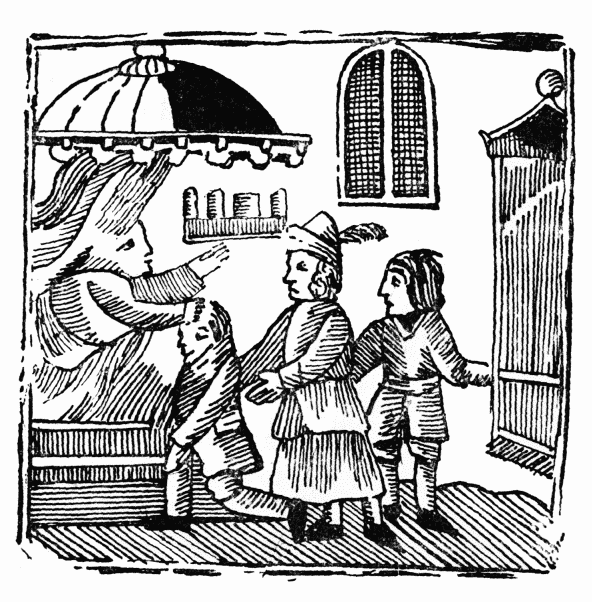
A NEW ALPHABETICAL SONG ON THE CORN LAW BILL.
Good people draw near as you pass along, And listen awhile to my alphabetical song. A. is Prince Albert once buxsom and keen, Who from Jermany came and got spliced to the Queen.
Chorus.
For their all a spinning their cause in triumph springing, And the poor man he is a singing since the Corn bill is repailed. B. Stands for Smith O Brien, he an Irishman so true, He hammered at Coersion till he beat them black and blue. When he got out of prison that bill he did oppose, With the fright he gave old welington, he fell and broke his nose. C. is brave cobden one night it is said, Threw a quarter Loaf at old Buckinghams hed, Concerning the Corn laws he laid it down strong, And he spun out yarn seventeen hour long. D. for the duncomb who helpt the plan, To give full and plenty to each true the land. E. Stands for Evans who would Starve us again, Because he beat 40 thousand old woman in Spain. F. Stands for ferrand a protectiones Tool, He spoke seven hours and raved like a fool; G. Stands for graham who early and late, Breaking seals at the post office a repealer for to take. H. is old hume he is clever do you see, He subtracted 2 from 1 and got the corn duty free; I. is bob Inglis against free trade Blue and blast, He was seven hours in the stericks when the corn bill did pass. J. Stands for jerry who spoke till he was hoarse, In the middle of the fight his fair daughter he lost; She followed a soldier, and off she went slap, With gun and a nap-sack slung over her back. K. is for Kelly, he kept up the jaw, Till he got the corn Free and brought into law; L. Stands for lindhurst with his Brushes, Paints and Pots, Guess how he was born or how that he was got. M. Is Lord Morpeth who nobly fought, Each night in succession for the corn law; N. is old nosey who opposes him its true, For to loose 15 thousands he is quite in the blues. O. Is O Connell to them told the Law, And is still bideing time for old Erin Gobraugh. P. Stands for Peel who is acting upright, And between you and me he has got a long sight. Q. Is the question of Coersion they say, So their stuck in the trap bob cut away. R. Is Lord Russell whoes making all haste, To run down to Windsor to fill Boby’s place. To ride in Peel’s saddle he’l find it a job, For he shakes on his legs like a staggering bob. S. is Lord Stanley, who shaking with fear, For his tenants payed him their rent with a bullet this year. And swore if they catch him he’ll never elope, Till they well oil his body with flails of good oak. T. Is the teasel that comb them all down, U. is for uxbridge who wonders have done. V. Stands for Villiers whom the farmers detest, For to Slaughter the corn law he did do his best; For free trade he struggled by day and by night, He is next in command to cobden and bright. W. Stands for wakley a docter so bold, Who swore on the corn bill an Inquest he’d hold; When the Jury he charged he let them all see, A verdict was returned for the corn to be free. X. Is a letter which puts me in mind Of a ship load of land lords that sail’d against wind; Now over the ocean they must all away To spend their last days in botane bay. Y. Stands for york the archbishop so big, Who loves for to dine on a little tithe pig: Free trade on last Sunday (did) so him perplex, That he sang rule britania and thought it the text. Z. Is for Zetland an old English pere, Who swore he (’d) have bread and potaties so dear. The corn bill is past the landlords are very bad, They must be muzeled in the dog day for fear they might go mad.
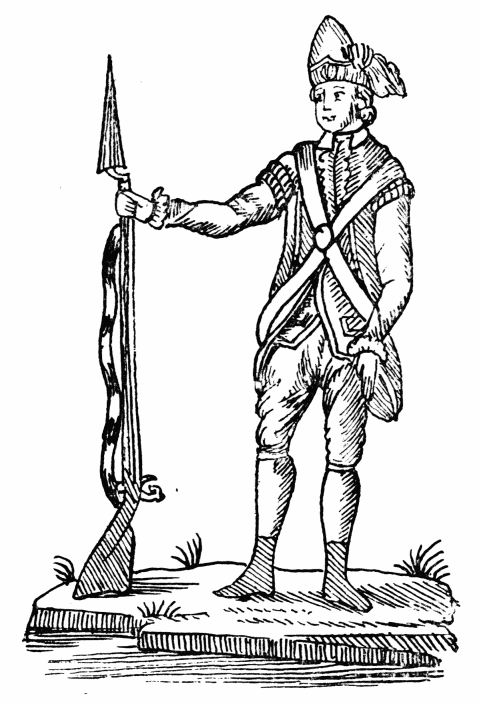
A NEW SONG ON THE CORN BILL.
Hurrah, my boys, a bumper fill, And drink success, with heart and will, To those that pass’d the Corn Bill, Long may they be victorious. Cheap food from every foreign shore, In shiploads will sail in galore, The landlords now are wounded sore; They’ll have to sell both sow and boar, To keep their great big paunches up They’ll scarcely have a bite or sup; Too long, my boys, they’ve sucked the honey cup, But soon they’ll lose the swarm. Hurrah, etc. The landlords cry, Oh, Bobby P——l, You have a heart as hard as any steel, Sure, for the landlords you should feel, And not be so hard hearted. Oh dear, oh dear, the landlords cry, The time is fast approaching nigh, When neither barley, oats, nor rye, The merchants will not from us buy, For they can get both flour and grain From France, America and Spain, Enough to rack us on the brain, And set John Bull distracted. Hurrah, etc. The bread will shortly get a fall, The bakers will go to the wall, No ’taters they must use at all, But sell the best and cheapest. Too long it has been on the rise, But now they’re struck with much surprise They’ll have to look with both their eyes, And with the poor man compromise. Good bread will be a penny a pound, And beef and mutton safe and sound, Well earned, too, that I’ll be bound, Will daily be imported. Hurrah, etc. The monopolists have cause to weep, They cannot lull themselves to sleep, Their rams, and wethers, yews, and sheep, They may send off to market. Too long they have fattened on the spoil, They’d fain to work your bones to oil, Their greasy pots did often boil Upon the poor man’s sweat and toil. The time is now approaching fast, Free trade will fly on every mast, The bonded stores will then, at last, Cry out, the ports are open. Hurrah, etc. Tom Duncombe, Cobden, and Dick Bright In Parliament, on Thursday night, They did kick up the devils fight, And chased the Duke of R——d Poor B——m he did lose his wig, Old Nosey gave him such a dig, And called him an old grunting pig, And Bobby danced the Polka jig; Says Bob, I surely will resign, I tell you, Arthur, now in time, You’d better get a piece of line, And hang the Duke of R——d. Hurrah, etc. May Cromwell’s ghost, of whom they talk, Come jumping with a piece of chalk, And mark a road for Bob to walk, Right to the town of Tamworth. Sure, little John, I’ve heard it said, Is planted now in Bobby’s stead, He’ll give you plenty of cheap bread For ten years after you are dead. The whigs are getting into power, The tories are all looking sour, The very thoughts of foreign flour Will make them cut their wison. Hurrah, etc. Now to conclude and end my song, I hope to see before it’s long, The corn-brokers in a throng All sailing to Hanover. For now they cry out wirnstrew, And damn the duke of Waterloo. Oh dear, oh dear, what shall we do? Free trade will surely make us rue. So, ladies, all come shout huzza, For now comes on the glorious day When plenty of cheap bread, beef, and tea, Will make you smile so charming. Hurrah, etc.
The following is given as a specimen of contemporary “flapdoodle.”
THE CRISIS.
1846.
When fell corruption’s bands conspire To legalize injustice dire; To rob a people, brave and free, What shall resist the Tyranny? To counteract the vile intrigue, The God of truth upraised The League, When grasping Tyrants—greedy elves— Make laws which but enrich themselves; Who shall their power and force withstand, And stay the ’curst oppressor’s hand? The League!—the people’s chosen band, Shall stay the ’curst oppressor’s hand. Tho’ meddling Dukes of vast renown Would cast a noble people down; (The silly tribe affect affright, Tho’ proxies[60] fill their pockets quite.) The League shall lead (as soon ’twill be) A people firm—a people free! What boots it, that we laurels gain On crimson’d field, or on the main, If selfish senators befool us, If the domestic spoilers rule us? The League on such has kept its eye, And Registration is the cry. When a “bold peasantry” decays; When want creeps in a thousand ways; When tenant farmers struggling hard Thro’ toilsome years get—no reward. The League will rescue—come what may; Nor care they for the landlord’s bray. When drooping trade declines its head; When starving thousands cry for bread; When sorrowing age seeks death’s kind gate, And children wail their hapless fate. The League must to the throne appeal, While millions cry “Repeal—Repeal.” Names which were once the nation’s blight, Fair York and Lancaster[61]—unite; Old feuds forgotten—now their pride Is to march onward side by side. The League—their boast—their hope—their joy; Pure sterling ore without alloy. When clouds hung o’er the drama’s name, What gave to Covent Garden Fame? When Stage, Pit, Gallery, Boxes, all Echoed each voice at Freedom’s call; The League supplied each honour’d name That gave to Covent Garden[62] fame. “Give us our daily bread” pray we; “Stop, stop,” cries vile monopoly, “Before you wants are well supplied, For all my sons you shall provide.” The League—the monster doth expose, And burns a torch beneath its nose. Albion—thy wrongs shall disappear; Scotia—hold on—be of good cheer; Erin—thy griefs removed shall be, Justice, tho’ late, shall visit thee. The League doth its assistance lend; Of none the foe—of all the friend. ’Ere long, fair knowledge will unfold Her ample page—brighter than gold; Ere long, the Laws which tyrants used Shall yield to those which Heaven diffused. The League shall then its work have done, And all rejoice o’er victories won. Ye powers divine—who care for all That breathe on this terraqueous ball, Free Trade and every blessing give! “O teach the nations how to live!” Still shall each Leaguer’s motto be, “Justice, Love, Peace, Humanity.”
After any great National movement, the ferment takes some time to subside. Many agitators find their occupation gone, and look around for some other strife to stir up. There is always an advanced Radical school in every nation, and after the Reform Bill was settled, “the People’s Charter” took its place. What was required were the six following “Points”:—Universal Suffrage, Vote by Ballot, Annual Parliaments, Payment of the Members, the Abolition of the Property Qualification, and equal Electoral Districts. In 1838 they made armed demonstrations in several parts of the country, and rioting took place in 1839. In 1848 monster petitions in its favour were presented to Parliament, and on April 10 of that year 200,000 men were invited to assemble on Kennington Common, and march to the Houses of Parliament. About one-tenth of them appeared, and, having full knowledge of the number of troops and special constables who would oppose their progress, they thought “discretion the better part of valour” and dispersed to their homes. This was the last of “the Charter.”
CHARTISTS ARE COMING.
What a row and a rumpus there is I declare, Tens of thousands are flocking from every where, To petition the Parliament, onward they steer, The Chartists are coming, oh dear, oh dear, To demand equal justice, their freedom and right, Pump handles and broom sticks, lawk, how they can fight! The nation they say is o’erwhelmed with grief; A peck loaf for twopence, and four pounds of beef.
Chorus.
Hurrah for old England and liberty sweet, The land that we live in and plenty to eat, We shall ever remember this wonderful day, See the Chartists are coming, get out of the way. Such a number together was never yet seen, Hurrah for the Charter, and God save the Queen! And when that the Charter, Old England has got, We’ll have stunning good beer at three halfpence a pot: A loaf for a penny, a pig for a crown, And gunpowder tea at five farthings a pound: Instead of red herrings, we’ll live on fat geese, And lots of young women at two pence a piece. The bakers and grocers, look how they do laugh, With dustmen and coal heavers armed with a staff. Five thousand old women, oh, how they do sing, With frying pans, fenders, and big rolling pins. There’s Russell, and Bobby, old Nosey, and Hume, With pistols and bayonets, muskets and brooms, Load away, fire away, chatter and jaw, Shoot at a donkey and knock down a crow. See the lads of old Erin for liberty crow, Repeal of the Union and Erin-go-bragh! Peace and contentment, then none can we blame, Plenty of labour, and paid for the same; Some are rolling in riches, and luxury, too, While millions are starving with nothing to do; Through the Nation prosperity soon will be seen, Hurrah for the Charter, and God save the Queen! Such constables there are in London, now mark, Tailors and shoemakers, labourers and clerks, Gas light men, pick pockets, firemen too, Green grocers, hatters, pork butchers, and Jews: Lollipop merchants, and masons a lot, And the covey what hollows “Baked taters all hot.” They are sworn to protect us, and keep well the peace, To frighten the Chartists and help the police.
This is the sort of stuff that was disseminated among the people at the time of the agitation for “the Charter,” and, looking at the convulsion of 1848, which shook Europe to its centre, it speaks volumes for the good sense of the lower classes that they were not stirred up to acts of violence by such inflammatory rubbish as the following.
THE SONG OF THE LOWER CLASSES.
By Ernest Jones.
Music by John Lowry. This song can also be sung to the air of “The Monks of Old.”
We plough and sow—we’re so very, very low That we delve in the dirty clay, Till we bless the plain—with the golden grain, And the vale with the fragrant hay. Our place we know,—we’re so very low, ’Tis down at the landlord’s feet: We’re not too low—the bread to grow, But too low the bread to eat.[63] Down, down we go,—we’re so very low, To the hell of the deep sunk mines, But we gather the proudest gems that glow, When the crown of a despot shines. And whenever he lacks—upon our backs Fresh loads he deigns to lay: We’re far too low to vote the tax, But not too low to pay. We’re low—we’re low—mere rabble, we know, But, at our plastic power, The mould at the lordling’s feet will grow Into palace and church and tower. Then prostrate fall—in the rich man’s hate, And cringe at the rich man’s door; We’re not too low to build the wall, But too low to tread the floor. We’re low—we’re low—we’re very very low, Yet from our fingers glide The silken flow—and the robes that glow Round the limbs of the sons of pride. And what we get—and what we give— We know, and we know our share; We’re not too low the cloth to weave, But too low the Cloth to wear! We’re low—we’re low—we’re very very low, And yet when the trumpets ring, The thrust of a poor man’s arm will go Thro’ the heart of the proudest King. We’re low—we’re low—our place we know, We’re only the rank and file, We’re not too low—to kill the foe, But too low to touch the spoil.
A NEW HUNTING SONG.
Now those that are low spirited I hope won’t think it wrong, While I sing to you a verse or two of a new hunting song; For the hunting season has set in, or else just now begun, Our heroes all will have their fun with the dog and gun.
Chorus.
And a hunting they will go, will go, And a hunting they will go, will go! They’ll use all means, and try all schemes, For to keep the poor man low. With one of our brave huntsmen, I’m going to commence, His name it was bold Bonaparte, he was a man of sense; He hunted off from Corsica upon a game of Chance, And hunted until he became the Emperor of France. The next huntsman was Wellington, he’d the best of luck, He hunted from lieutenant, till he became a Duke, His men did fight well for him, and did his honour gain, He done his best endeavours to have their pensions taken. As for our hero Nelson, he hunted well for fame, He was as bold a huntsman as e’er hunted on the main; And for his warlike valour, he always bore the sway, Till a cannon ball caused his downfall, all in Trafalgar Bay. Prince Albert to this country came hunting for a wife, He got one whom he loved dear as his own life; Oh yes, a blooming little Queen for to dandle on his knee With thirty thousand pounds a year paid from this country. O’Connell he went hunting all through old Ireland’s vale, And says he’ll go on hunting until he gets repeal. They swear they’ll have a Parliament in Dublin once more, And make the trade to flourish all round green Erin’s shore. John Frost in Wales a hunting went, and well knew how to ride He had a fine bred Chartist horse, but got on the wrong side, If he had held the reins quite firm in his own hand, They’d ne’er have hunted him into Van Diemans Land. The Queen she went a hunting thro’ Scotland and France, She hunted foreign countries through to learn the Polka dance; Bobby Peel, he’s a huntsman bold, was never known to fail, He hunted up the Income Tax, and then the Corn Law Bill. They’re hunting up the poor man, he’s hunted every day, And hawkers too, if they do not a heavy licence pay. They won’t allow the poor to beg, it is a crime to steal, For the one there’s the Union, for the other there’s the gaol. So to conclude my hunting song, I hope you’ll all agree While the poor are starved and hunted down, the rich will have their spree. To complain is quite a crime, for poor you’re to remain, The Parson says, if you’re content, Heaven you’re sure to gain.