WOUNDS. (continued 2)
Reading edition
To return to the question, we can readily imagine that a man may receive two wounds at different times or from different persons, and die after the second wound. Taylor[629] mentions the following case in which the question arose as to which of two injuries caused death: In Reg. v. Foreman (C.C.C. February, 1873) the prisoner had struck the deceased some severe blows on the head. A fortnight later, having partially recovered, another man gave him some severe blows on the head. A fortnight later still he had left hemiplegia, and died a few days later of a large abscess in the brain. The question arose which set of blows had been the cause of the abscess. The prisoner, the first assailant, was acquitted, as the deceased had had no serious symptoms until the second assault, and there was no satisfactory medical evidence as to the relation of the two assaults to the abscess formation. The same author also supposes the following case: A man having received a gunshot wound of the shoulder is doing well, when in another quarrel he receives a penetrating stab-wound of the thorax and abdomen. He dies after lingering for a time, under the effects of these wounds. If the wound of the shoulder could be proven to be the cause of death, the second assailant could not be convicted of manslaughter, and so too with the first assailant if it could be shown that the victim died of the stab-wound. It might be possible for a surgeon to decide the question definitely at once if death occurred soon after the stab, which was found to have penetrated the heart, a large blood-vessel, or one of the viscera; or, on the other hand, if the stab-wound was found to be superficial and not penetrating, and the wound in the shoulder had suppurated and caused septicæmia.
In either or any case, everything would depend upon the evidence furnished by the medical witness. His knowledge and judgment are required to distinguish the guilty from the innocent.
Again, sometimes death may appear to be equally the result of either or both wounds, in which case, as far as the medical evidence goes, both assailants would be liable to the charge of manslaughter. Or the second wound may be accidental or suicidal, and again the question would arise as to the cause of death. A case illustrating this is told by Taylor[630] substantially as follows: A grocer’s assistant pursued a thief, who had stolen from a cart, into a coal-shed, where he was stabbed twice in the abdomen. The larger wound suppurated, the smaller wound healed up, and the man died of peritonitis. On post-mortem examination the suppurating wound was found not to involve a vital part, while the small healed wound had wounded the liver and gall bladder and had set up the fatal peritonitis. The large suppurating wound had apparently been inflicted purposely; the fatal wound, directed upward and backward, might have been accidental by the deceased rushing upon the knife held more or less in self-defence. The case never came to trial, as the assailant was never found, but it can be readily imagined what complications might have arisen.
Furthermore, the wounded person may have taken poison or been subsequently ill-treated, and he may have died from these causes rather than the injury. But the question arises as to whether the wound was necessarily the cause of death. Here, in order to exculpate the assailant, the supervening disease or maltreatment must be such as to account for sudden or rapid death under the symptoms which actually preceded death.
Was Death Due to Natural Causes? Again, the injury may be admitted, but it may be claimed that death is due to natural causes. It is not unusual for wounded persons to die from natural causes, though the case may appear otherwise to laymen. This is often seen with suicidal wounds, especially those inflicted during the delirium of a disease, or the disease may supervene later and cause death without relation to the wound. Where the wound was inflicted by another, accurate discrimination is especially important in order to save the accused from imprisonment under false accusation and consequent loss of character. A careful examination is the only way to determine such cases, which depend therefore on the medical testimony.
Again, the question may arise as between DEATH FROM WOUNDS OR LATENT DISEASE, the wound perhaps being admitted, but death being attributed to latent disease. Here a close attention to symptoms and a careful post-mortem examination can alone decide. A man may die from the rupture of an aneurism, from an apoplexy or some other morbid condition after receiving a severe wound. Or a man with a hernia may receive a blow upon it causing a rupture of the contained intestine followed by peritonitis and death, or the recipient of a blow may have a calculus in the kidney which may perforate a blood-vessel or the kidney tissue and set up a fatal hemorrhage as the result of a blow.
Thus, medically speaking, the result of the injury is unusual and unexpected, and due to an abnormal or unhealthy state of body of the wounded person.
If it can be clearly shown by the medical testimony that death was due to the above or any other latent diseases, the responsibility of the assailant may be lessened or removed. The law looks to this point and is lenient in its punishment in the absence of malice on the part of the assailant. The crime is still manslaughter and may even be murder if the assailant was actuated by malice and the abnormal or unhealthy state of the body of the victim was taken advantage of. Generally there is no intention of murder, but the nature of the wound and the means of infliction will help to show this, which is for the jury rather than the medical witness to decide. There is less ground for mitigation of the punishment if the assailant was aware of the peculiar condition of the wounded person, especially in the case of those notoriously ill or of pregnant women.
Closely allied with this subject are those rare cases where ABNORMAL ANATOMICAL CONDITIONS, such as a thin skull or brittle bones, cause a slight injury to be followed by unexpected and untoward results, not to be looked for in the average individual. In such cases the evidence of the abnormal condition furnished by the medical witness may diminish the responsibility and mitigate the punishment.
Furthermore, the responsibility of the assailant may not be altogether removed, for the question naturally arises, Was death accelerated by the wound? This depends upon the circumstances in each case upon which the medical witness must base his opinion. Maliciously accelerating the death of another is regarded as criminal on the principle that that which accelerates causes. The following cases are quoted from Taylor[631] to illustrate the above distinctions. In Reg. v. Timms (Oxford Lent Ass., 1870) the deceased had been struck on the head by the accused with a hatchet, from which injury he had partly recovered under treatment in twelve days. But six weeks later he was seized with inflammation of the brain, with convulsions, and died. At the autopsy disease of the kidneys was found, and death was referred to this and the inflammation of the brain due to the blows. The prisoner was convicted after the judge had charged the jury that it was manslaughter if they believed that the blows conduced in part to the death of the deceased.
In the following cases there was no connection between the violence and the cause of death. A man struck his father on the head with a hammer and was sentenced to two months’ imprisonment, as the injury did not appear serious. The father thought the punishment too little, became much excited, and was hemiplegic six days after the wound was inflicted and died three days later. No injury of the brain was found under a fracture of the inner table at the site of the blow, but a large clot was found in the lateral ventricle which, in the opinion of the medical witnesses, was not dependent on the blow, and the prisoner was acquitted (see Reg. v. Saxon, Lancashire Sum. Ass., 1884). Also in Reg. v. Hodgson (Leeds Sum. Ass., 1876) the prisoner had struck his wife with a belt, a short time after which she fell back and died suddenly. The cause of death was found to be heart disease, and the blow not being causative in producing the fatal result, the prisoner was acquitted. Or again in Reg. v. Thompson (Liverpool Sum. Ass., 1876): The prisoner had stabbed his wife in the cheek. The wound was severe but not mortal. Two days later she was delivered of a child in the infirmary to which she was taken. She died nine days later of puerperal fever. The prisoner was acquitted on the charge of murder, as there was no necessary connection between the wound and the puerperal fever. Acquittals have taken place in cases of death occasioned by terror or dread of impending danger produced by acts of violence, as in the case of Reg. v. Heany (Gloucester Lent Ass., 1875). Here the prisoner in an altercation with his wife, who was suffering from cancer, held up a knife in a threatening manner, but did not touch her. This gave her a shock; she died two days later from fright. As there was no distinct proof that death was accelerated by this act, the prisoner was acquitted of the charge of murder. Taylor[632] found among a large number of cases occurring in England during twenty years that the latent causes of death, as registered in wounded persons, were chiefly inflammation of the thoracic or abdominal viscera, apoplexy, diseases of the heart and large blood-vessels, phthisis, ruptures of the stomach and bowels from disease, internal strangulation, and the rupture of deep-seated abscesses. Sometimes the person was in good health up to the time of injury, while in other cases there was merely a slight indisposition. It was only by carefulness on the part of the medical experts that the true cause of death was ascertained.
Again, it may be claimed that DEATH was not necessarily the result of the wound and was AVOIDABLE BY GOOD MEDICAL TREATMENT. There are many cases of wounds not mortal with proper and skilled treatment which might become so by improper treatment. They may thus become directly mortal by interfering with a source of hemorrhage which had been arrested, or secondarily mortal by infection of the wound by meddlesome treatment. It would depend on the medical witnesses to determine whether and how far the treatment had been responsible for the fatal result. If the wound is not of itself mortal and it has only become so from improper treatment, this should be a mitigating circumstance in favor of the accused. Medically speaking, we can seldom make the sharp distinction which Lord Hale did legally between a wound becoming mortal from improper treatment and one in which improper treatment causes death irrespective of the wound. In case of a slight wound this distinction might be possible, but not so in case of severe wounds. Also there would probably be no conviction, as far as the medical evidence is concerned, if the wound was only mortal in consequence of improper treatment and not mortal as its usual and probable result. This may naturally introduce the question of the COMPARATIVE SKILL IN TREATMENT. If death is entirely or partly due to a wound the responsibility of an assailant is not altered by unskilful treatment. The entire question of the relation of the wound to the fatal result and the effect on this result of the treatment employed is left to be determined by the medical experts, and in its solution great care and judgment must be used. Although a given fatal wound might not have caused death under the best possible treatment and surroundings, yet, according to the above rule, the assailant is held responsible as long as the fatal result is due partly, at least, to the wound. Therefore we see the responsibility of the surgeon not only for the life of his patient, but also for that of the prisoner. He should, therefore, not deviate from the ordinary and most accepted practice in such cases, as any such deviation is taken hold of by the counsel for the defence. In fact, every point of the treatment is subjected to criticism.
In a lacerated wound of the foot, if death occurs from tetanus, it may be claimed that death would not have occurred if the foot had been amputated, or, if the foot were amputated and death followed, it may be claimed that amputation was unnecessary and was the cause of death. The surgeon should, therefore, be able to give the best reasons for every step of treatment.
Again, it may be claimed that DEATH was not a necessary result of the wound and WAS AVOIDABLE BUT FOR IMPRUDENCE OR NEGLECT on the part of the wounded person. A man after being wounded may refuse to receive medical assistance, or, after receiving it, may disobey instructions or refuse to submit to an operation proposed. Thus with a compound depressed fracture of the skull the patient may either refuse to see a surgeon, or he may refuse to submit to an operation proposed, or he may with or without operation disobey the instructions as to diet and quiet, and eat or drink heavily and refuse to go to bed. Such a case we can readily imagine might die of meningitis, etc.
If the symptoms of a wound are unfavorable from the start, or if the wound of itself is likely to prove mortal, the responsibility of the assailant is unmitigated by imprudence or neglect of medical assistance by the wounded person. This is not allowed as mitigatory, as a sane man is a free agent and is not obliged to call in or submit to medical treatment. Moreover, a medical witness in many cases could not swear that an operation or other plan of treatment would certainly save life. Thus an amputation of the leg for wound of the foot causing tetanus is by no means a certain means of cure. But we can readily imagine a case where the refusal to submit to the treatment proposed might be an important element in causing death. Thus in a compound depressed fracture of the skull with compression, the medical witnesses would agree that the operation would in all probability save life. This fact would probably be only mitigatory in diminishing the penalty, and, as stated above, would not secure acquittal. But it is none the less important for the medical witness to bear these facts in mind and bring out the facts and conclusions clearly in his testimony.
Death Following Slight Personal Injuries.—Here again the claim might apparently be justified that death was not necessarily due to the trifling injury. And in reality there is commonly some unhealthy state of the body to explain such an unexpected result. When the disease accounting for this unhealthy state of the body is in some other part than the injury, an examination with ordinary care will explain the case. But if the disease and injury are located in the same part, especially in the head, the case is more perplexing, but may be cleared up by careful and thorough examination. Also the usual results of such an injury should be considered, and whether the disease would be a usual result of the injury, or whether the sum total of the pathological conditions found would be accounted for by the violence. It should be remembered that the presence of chronic disease is no excuse. Thus Taylor[633] cites the case of Reg. v. Hapley (Lewes Aut. Ass., 1860), where a boy with chronic disease of the brain suffered from no unusual symptom until he received a severe flogging, which was followed by death in less than three hours. The same author mentions also the following case to show that fatal results may follow very slight and trivial blows. Annan[634] tells of a healthy four-year-old girl who received a slight blow from the shaft of a wheelbarrow on the skin about three inches below the knee. There was even no external mark of violence, and the injury was thought to be so slight as not to require treatment. There was pain, however, which increased on the following day, marked constitutional symptoms appeared, and the child died on the fourth day. Even to the punishment inflicted by schoolmasters death has been imputed.
When DEATH occurs FROM WOUNDS AFTER LONG PERIODS the injury may be admitted, but it may be claimed that death was not necessarily due to the wound. Medically speaking, death is just as much the result of the injury as if it occurred on the spot. Of course, death must be clearly traceable to the usual and probable results of the injury, and not be dependent on any other cause. An examination of the wounded part and of the whole body will enable the medical witness to determine the cause of death and whether it is clearly traceable to the injury. A doubt on this point may lead to acquittal. Certain forms of wounds or wounds in certain localities are especially liable to end fatally after a long delay, but as the direct result of the wound. These are wounds of the head and of the spine. As to the first class, the injured person may apparently recover and be doing well, when he may suddenly die from a cerebral abscess, for instance. This is the result of the injury, but remains a longer or shorter time latent. In wounds of the spine the patient is generally paralyzed below the point of fracture, but is apparently in good health. In a longer or shorter time he may die of a pneumonia, cystitis, or bedsores, which are the known and regular consequences of the injury or injured condition. Astley Cooper cites the case of a man who was injured on the head and died two years later from the effects of the injury, as was clearly made out by the continuance of brain symptoms during the entire period. An interval of eleven years occurred in another head injury between the injury and the fatal result. The first result of the injury was concussion of the brain, and the case is mentioned by Hoffbauer.[635] This long interval is unusual. There is a rule in English law by which the assailant cannot be indicted for murder if the victim of the assault lives a year and a day. Practically this makes little difference, as nearly all cases would die within that time; but the principle is wrong as looked at from the medical standpoint. The protracted cases concern, as above stated, mostly injuries of the head, spine, and chest, among which there are some cases, like the examples cited, where, according to English law, justice would fail to be done.
III. Was a Wound the Cause of Death Secondarily?
A wound is secondarily the cause of death when the victim, having recovered from the first ill effects, dies from some wound disease or accident or from a surgical operation rendered necessary in the proper treatment of the wound. There may be much difficulty in establishing the proof of death from a wound by means of secondary causes, for, 1st, the secondary cause must be in the natural course of things; and, 2d, there must be no other accidental circumstances to occasion the secondary cause.
The secondary cause may be partly due to the constitution of the deceased from habits of dissipation, which fact would serve as an expiatory circumstance in the case. Among the secondary causes of death may be mentioned septicæmia, pyæmia, erysipelas, tetanus, gangrene, that is, wound diseases, also the wound accident—as we may call delirium tremens, and surgical operations rendered necessary to the treatment of the case. We may add, besides the regular wound diseases, inflammation in and about the wound, septic in character, perhaps not justifying the title of septicæmia, but which, with its accompanying fever, may be the “last straw” in a case which might otherwise recover. Some of these secondary causes will now be considered more at length.
Septicæmia is a general febrile disease due to the absorption into the system from a wound of the products of bacteria or due to the introduction into the blood and tissues of the bacteria themselves. Depending on the two sources of origin, we have two forms of septicæmia: 1. Septic intoxication or sapremia, due to the absorption of a chemical poison, ptomaïnes, and often readily influenced and cured by the removal of the source of these ptomaïnes in decomposing blood-clots, secretions, etc. 2. Septic infection comes on less rapidly but is more serious than the former is, if properly and quickly treated, because the source of the trouble cannot be removed, but is in the blood and the tissues. The latter form is the more common one in wounds, though the former may occur in abdominal wounds, especially when a blood-clot is present. The first form begins acutely, the second form more gradually. The infection in septicæmia takes place through a wound and may be due to the weapon which caused the wound, the unclean condition of the parts wounded, or to the subsequent treatment or want of treatment. It may even take place through the intestinal mucous membrane as in cases of tyrotoxicon poisoning. It is most likely to occur during the first four or five days before the surfaces of the wound granulate, and it consists in the introduction of bacteria, especially staphylococci and streptococci. The disease is characterized by severe constitutional symptoms, acute continuous fever, inflammation of certain viscera and of the wound, and nervous disorders. A pronounced chill ushering in the fever is generally absent. Prostration is especially marked, the patient finally passing into a typhoid condition indifferent to surroundings. Anorexia and headache are usually present; diarrhœa is common, vomiting is not. The skin is pale and dusky, but not commonly icteric; at first it is hot and dry, later moist and finally cold and clammy. The spleen is often enlarged. The pulse becomes weak and rapid and delirium is followed by coma. The prognosis is grave. Antiseptic treatment generally prevents and often cures the disease, as is the case with many other of the wound diseases; hence the failure to employ it may be alleged by the defence in mitigation of the responsibility of the assailant for the fatal result.
Pyæmia is closely allied to septicæmia. It is due to the setting free of bacterial emboli or septic emboli from a broken-down, septic thrombus in the neighborhood of the wound, and the circulation of these emboli in the blood until they are arrested and form the characteristic metastatic abscesses, especially in the lungs, joints, abdominal viscera, and parotid gland. Almost always the source of infection is an infected wound. Granulation does not prevent the occurrence of pyæmia, which, as a rule, commences at a later stage than septicæmia. It is most important, however, for our purpose to remember that there is such a thing as spontaneous pyæmia. An injury not causing a wound may here be the exciting cause, but the resulting pyæmia is an unexpected consequence. A bruise of a bone, for instance, by allowing bacteria, which in certain conditions may be circulating in the blood, to find an exit from the vessels into the bruised part, may develop an acute osteo-myelitis, which may be a starting-point of a pyæmia. It is but proper to state, however, that spontaneous pyæmia is a rare occurrence. In fact, it is so rare that if pyæmia occurs and we find ever so trifling an infected wound, we can safely attribute the pyæmia to the wound and not to a spontaneous origin.
Pyæmia begins, as a rule, in the second week of the healing process or even later. It usually begins with a chill, which may be frequently repeated. The fever is very irregular and exacerbations occur with each metastatic abscess. The skin is icteric, the icterus being hematogenous. The pulse is rapid and becomes weaker. Infective endocarditis may develop, which increases the danger of metastatic abscesses, which may then occur in the brain. Otherwise the mind is clear and unaffected until the final delirium and coma. The disease may become chronic, but usually lasts a week or ten days. The prognosis is very grave.
Erysipelas is a still more frequent complication of medico-legal wounds, and though not so fatal as the two preceding, it is probably more often the secondary cause of death on account of its far greater frequence. It too is an acute infective inflammation due to the presence of a micro-organism, streptococcus erysipelatis. This occurs mostly in the lymphatics of the skin, and effects an entrance through some wound or abrasion of the skin or mucous membrane, which may be almost microscopic in size. Probably there is no such thing as true spontaneous erysipelas, though the wound may be often overlooked and only visible on the closest examination. If a wound has been inflicted, the size and severity of it cannot be alleged as a reason why it was not the starting-point of an erysipelas. The erysipelas must be clearly traced to the injury. That is, it must occur before recovery from the wound or not later than a week after it has healed, for the incubation is probably not longer than this. It is difficult to connect an erysipelas with a wound if it occurs some time after it has healed or if it occurs at a different place and not about the wound. Wounds of certain regions, as, for instance, scalp wounds, are especially liable to develop erysipelas, but this is probably owing to the imperfect antiseptic treatment or delay in applying it. Certain individuals are more prone to it than others; thus it has been stated that blondes and those suffering from Bright’s disease are more susceptible, though how true this is it is hard to say. It is also probably more prevalent at certain times of the year, particularly in the spring. A wound after it has scabbed over or has begun to granulate, that is, after the first four or five days, is very much less apt to serve as the avenue for infection. Erysipelas usually begins with a chill, or a convulsion in children. Nausea and vomiting are the rule. The fever is remittent and ranges from 102° to 104° F., and the temperature may be subnormal when the inflammation is subsiding. Prostration is marked and the pulse more or less weak. There may be delirium while the fever is high. Locally there is rarely anything characteristic until twenty-four hours or so after the chill. Then we have a reddish blush with some tension, burning and itching of the skin. At first the redness is most marked about the wound, later at the edge of the advancing, serpentine margin. It spreads widely and rapidly, and after three or four days the part first attacked begins to improve. Desquamation follows. The duration may be a week or ten days or as long as a month. The inflammation may be much more severe, involving the subcutaneous connective tissue in phlegmonous erysipelas.
Facial erysipelas is a common variety and was once regarded as idiopathic, but a wound on the skin or mucous membrane is probably always present. The prognosis of erysipelas is usually favorable. Since the use of antiseptics it is far less common than formerly, though still the most common of the infective wound diseases.
If a man wounded in an assault is taken to a hospital where erysipelas prevails, the question of responsibility arises, for, medically speaking, he is subjected to great and avoidable risks.
Tetanus is an infective bacterial disease affecting chiefly the central nervous system and almost always, if not always, originating from a wound. Tetanus, like erysipelas, is probably always traumatic and never strictly idiopathic. The wound may be so slight as to escape notice. When it follows such injuries as simple fracture internal infection probably occurs, though such cases are extremely rare. It is said that the weather influences the development of tetanus, and that it is more common in the tropics. There are also certain sections where tetanus is much more common than elsewhere and where it may be said to be almost endemic. Punctured wounds are most likely to be followed by tetanus, for they offer the best opportunity for the development of the bacteria, which are anaërobic. Wounds in dirty parts of the body, like the hands and feet, are more apt to be followed by tetanus than those elsewhere. Tetanus usually appears about the end of the first week after a wound has been received, but it may not appear for a longer period, even three or four weeks, so that the wound may have been some time healed. To connect tetanus with a particular wound, note (1) if there were any symptoms of it before the wound or injury, (2) whether any other cause intervened after the wound or injury which would be likely to produce it, and (3) whether the deceased ever rallied from the effects of the injury. Tetanus comes on suddenly without warning. The injured person first notices that he cannot fully open the mouth, he has lock-jaw, and the back of the neck is stiff. The muscles of the abdomen and back are next involved so that the back is arched in the position known as opisthotonos, and the abdomen presents a board-like hardness. The muscles of the fauces, pharynx, and diaphragm may next become involved, causing difficulty in swallowing and breathing. The thighs may or may not be involved, but the arms and legs almost never. Owing to the spasm of the abdominal muscles, micturition and defecation are difficult and respiration is hindered. The muscles are in the condition of tonic spasm which permits the patient no rest, the face bears the “risus sardonicus,” and the suffering is extreme. If the patient lives more than two or three days the tonic spasm partly gives way to increased reflex irritability, in which a noise, jar, or draught of air may give rise to clonic and tonic spasms in the muscles affected. The patient may die at such times from tonic spasm of the respiratory muscles, or he may die of prostration from want of food and sleep, worn out by the suffering and muscular spasm. The mind is usually clear to the last. Fever is not characteristic of the disease. Tetanus may be rapidly fatal; in two or three days, or it may be or become more chronic. The prognosis of acute tetanus is almost invariably fatal; that of chronic tetanus is grave, but a certain proportion of cases recover.
Diagnosis.—This is easy. It differs from a true neuritis in the peripheral nerves in that no matter where the wound is situated the first symptom is in the muscles of the jaw and the back of the neck, and not at the site of the injury and distally from this point. Trismus is applied to a milder form of the disease in which only the face and neck muscles are involved and “lock-jaw” is a prominent symptom. Some cases of tetany may be mistaken for so-called spontaneous tetanus. Tetany may follow child-bed, fevers, mental shocks, exposure to cold and wet, extirpation of goitre, intestinal irritation, etc. It consists of painful tonic spasms of the muscles of the arms and feet. The attacks last one-half to two hours or more, and may be preceded by a dragging pain. They may be brought on by pressure on the nerve leading to the muscles affected. Striking the facial nerve often causes contraction of the face muscles. There is no trismus but there may be opisthotonos. The patient seems well between the attacks and most cases recover without treatment.
Delirium tremens may occur as a secondary consequence of injuries, or necessary surgical operations in the case of those who are habitually intemperate. Those who habitually use opium, tobacco, cannabis indica, or even tea or coffee to excess are said to be subject to it. It may, therefore, be justly alleged that death is avoidable in very many cases, but for an abnormal and unhealthy state of the body. The disease is characterized by delirium, a peculiar tremor of the muscles, insomnia, and anorexia. Pneumonia may complicate the case. The patients die in fatal cases from exhaustion due to insomnia, lack of nourishment, and their constant activity of body and mind. The prognosis is usually favorable, taking all cases together, but in delirium tremens secondary to surgical injuries or operations the prognosis is serious.
Death from surgical operations performed for the treatment of wounds. The operation is a part of the treatment, and if it is done with ordinary care and skill the accused is responsible for the result. The necessity and mode of operation must be left to the operator’s judgment. As the defence may turn on the necessity for and the skilful performance of the operation, it is well to wait for the advice and assistance of others if practicable, for death is not unusual from severe operations. The patient may die on the operating-table after losing little blood, from fear, pain, or shock. Or he may die from secondary hemorrhage or any of the secondary causes of death from wounds enumerated above. The evidence of the necessity of the operation must, therefore, be presented by the operator. If an operation is necessary and not performed, the defence might allege that death was due to the neglect of the surgeon. Another question for the medical witnesses to determine is whether the operation was rendered necessary because of improper previous treatment, for if it was the responsibility of the assailant may be influenced. The meaning of the term “necessity” is here a matter of importance. Unless an operation is necessary to the preservation of life, if death occurs there is some doubt whether the assailant is responsible. But, medically speaking, we would not hesitate to urge an operation on a wounded man in order to preserve function, or even to save deformity as well as to save life. In the case of operations done under a mistaken opinion, neither necessary to save life nor, as the result proves, to save function or guard against deformity, if death follows the assailant may be relieved from responsibility. Thus an aneurism following an injury might be mistaken for an abscess and opened with skill but with a fatal result. It is also for the medical experts to determine whether an operation was unnecessary or unskilfully performed, for if it were and death resulted from it, the responsibility of the prisoner is affected unless the original wound would be likely to be fatal without operation. According to Lord Hale, if death results from an unskilful operation and not from the wound, the prisoner is not responsible. But yet death may occur as the result of the most skilful operation necessary to the treatment of a wound, and not be dependent at all on the wound itself. If the operation is skilfully performed, and yet the patient dies from secondary causes, such as those above enumerated or any others, the prisoner is still responsible, and the medical testimony is concerned with the performance of the operation and the secondary causes of death. The relative skill of the operator or surgeon is probably not a question for the jury in criminal cases, on the ground that the man who inflicts the injury must take all the consequences, good or bad. In a civil suit, for instance an action for malpractice, the case is otherwise, and all the medical facts and opinions are submitted to the jury. The law regards three circumstances in death after surgical operations: (1) The necessity of the operation, (2) the competence of the operator, and (3) whether the wound would be fatal without operation.
Death may occur from anæsthetics used in an operation without any recognizable contributing disease of the patient, or carelessness or lack of skill in the administration of the anæsthetic. Of course, the question of absence of contributing disease on the part of the patient and of its proper administration must be satisfactorily answered in cases of death from the anæsthetic in an operation rendered necessary in the treatment of a wound. Death from an anæsthetic may occur before, during, or after an operation itself. Medically speaking, the necessity of the use of an anæsthetic in operations cannot be questioned, and in emergencies where an operation becomes necessary, and not a matter of choice, its use, with special care, is justifiable even with existing organic disease, which usually contraindicates it. As death may be alleged to be due to the use of a particular anæsthetic, it is always best in operating on account of an injury which may require a medico-legal investigation, to use that anæsthetic which is most generally used and indorsed in the particular section of country in question. Of course, it is not lawful to operate against the will of a person who preserves consciousness and will. It may be added in this connection that if a medical man be guilty of misconduct, arising either from gross ignorance or criminal inattention, whereby the patient dies, he is guilty of manslaughter, according to Lord Ellenborough. Omissions or errors in judgment, to which all are liable, are not criminal.
IV. Was the Wound made by the Instrument Described?
It is not often necessary to prove that a weapon was used, though it may affect the punishment. For the use of a weapon implies malice and intention and a greater desire to do injury. The prisoner may swear that no weapon was used when the nature of the wound clearly proves that one was used. The explanation of the prisoner of the origin of the wound may thus be discredited. We cannot often swear that a particular weapon was used, but only that the wound was made by one similar to it in shape and size. Thus Schwörer tells of the case of a man stabbed in the face by another. The medical witness testified that the wound was caused by a knife shown at the trial which had a whole blade, but a year later the point of the knife which had really caused the wound was discharged from an abscess in the cheek at the site of the wound. The surgeon thus made a too definite statement in regard to the knife shown.
It is often very difficult to answer the above question. We base our opinion chiefly on two sources: 1st, and most important, by an examination of the wound, and, 2d, by an examination of the instrument said to have been used. Certain particulars of the wound may furnish indications as to the weight, form, and sharpness of the instrument used. There are certain wounds which must have been made by an instrument, namely, incised and punctured wounds. The above question is determined more or less by what has been said in a former section on wounds, but we will now consider what special features of these and other classes of wounds indicate the nature, shape, size, etc., of the weapon used.
Incised wounds must be made by a cutting instrument. We would here exclude those contused wounds of the scalp and eyebrows which closely resemble incised wounds, but we have already seen that we can diagnose between these wounds and incised wounds by careful inspection. But the locality should put us on our guard, so that in case of wounds of these two regions we should be especially careful in making the examination.
In the case of incised wounds we cannot often tell the shape or size of the weapon, but we are able to tell certain characteristics about it. The sharpness of the instrument may be inferred from the clean and regular edges. The depth of the wound may also indicate the sharpness of the weapon. A long “tail” in the wound indicates that the weapon was sharp as well as that this was the part of the wound last made. If the edges of the wound are rough, we may infer that the edges of the weapon were rough and irregular. Wounds caused by bits of china or glass or fragments of bottles, besides having rough and lacerated edges, are characterized by an irregular or angular course in the skin.
Some cutting weapons, like an axe, act as much by means of their weight as by their cutting edges. Wounds caused by such weapons we can often distinguish by the following signs: The edges are not as smooth as is the case with a cutting instrument, and they may be more or less lacerated and show signs of contusion. The wound is often deep in comparison with its length, and the ends of the wound abrupt instead of slanting up from the bottom to the surface. The section of resisting organs and the impression of the edge of the weapon on the bone are further signs of the use of such a weapon.
The form and direction of a wound may possibly give some indication of the form of the instrument—for instance, whether it be straight or curved like a pruning-knife, as in the case cited by Vibert[636] of a wound of the neck which suddenly became deeper toward its extremity and changed its direction; the whole being explained on the supposition that it was made by a pruning-knife.
But it is in punctured wounds especially that we are enabled most often and most accurately to determine the kind of a weapon used. Here from the form of the wound we may judge of the form and size of the weapon. In speaking of punctured wounds in a former section we divided them into four groups, reference to which may here be made. In the first group, or those caused by cylindrical or conical weapons, when the weapon is very fine it may leave no track at all; if a little larger, we may infer from a linear bloody track that the weapon was needle-like in shape. The length of the instrument or the depth to which it penetrated may be found, as a rule, only by dissection. If the weapon were larger and conical, we have seen that the wounds would be linear with two angles, the length of the wound being parallel to the direction of the fibres in the skin.
Here we may judge of the form of the weapon from the following circumstances: From a comparison of the depth with the size of the opening, we know that it was a punctured wound. The edges and angles are not smooth and even enough for a stab-wound with a knife, for the edges are torn and not cut, and a stab-wound would be the only form of wound with which we would be likely to confuse it. Furthermore, the direction of the long axis of the wound parallel to that of the skin fibres in the region in which it occurs and the very slight retraction of the edges distinguish it from a stab-wound. By these signs we can almost always distinguish such wounds from stab-wounds, and thus tell the form of the weapon used. As to the size of weapon used, these wounds if of any size are generally smaller than the weapon, for the skin is put on the stretch by the weapon and yields to a certain extent. The actual wound, therefore, is smaller in circumference than the weapon. The size of the wound is smaller than that part of the weapon occupying the wound when the weapon was arrested; it may be very much smaller than the weapon at its largest point. Small wounds of this kind are generally larger than the instrument producing them.
The second group of punctured wounds, or stab-wounds, are by far the most common and, therefore, the most important variety of punctured wounds. If the stab-wound is perpendicular to the surface the form of the wound may represent pretty closely that of the weapon at the point where the latter was arrested, whether it has a single or double cutting edge. But even here there are exceptions. Frequently a weapon with a broad back and only one cutting edge may produce a wound resembling that of an instrument with two cutting edges, the second angle tearing as in the former class. Here on close examination we can sometimes distinguish the difference between the two angles, and judge correctly of the shape of the weapon. In fact, wounds made by common pocket-knives are regularly slit-like and not wedge-shaped, as the wound is caused only by the cutting edge of the knife. Again, if the single cutting edge is blunt, in rare cases the wound is produced in the same manner as those of the first group, or conical and cylindrical instruments. We would be led to suppose that the wound was produced by such an instrument, as both angles are torn, unless the direction of the wound might not follow that of the fibres of the skin, in which case we would be left in doubt. Stab-wounds are sometimes angular from the knife being withdrawn in a slightly different direction from that in which it was introduced or from an unequal retraction of the skin (see Fig. 9). If the stab-wound is obliquely directed, we can still judge of the general shape of the weapon, with exception of the cases above mentioned. The dimensions and size of the weapon are here much harder to determine. The dimensions of a stab-wound in the skin may be the same as those of the weapon, or of that part of the weapon which is arrested in the wound, but often they are not so. To measure the size of a wound exactly so as to get at the exact size of the instrument, we should place the region of the wound in the same position, etc., that it was when the wound was inflicted, and this we cannot often do. As the skin was tense or relaxed at the time the wound was inflicted, so the wound in the skin appears smaller or larger, just as with a sheet of rubber under similar conditions. If the instrument is very blunt, the wound in the skin may be smaller than the weapon whether the skin near the wound is tense or not. Thus Hofmann saw the wound from a blunt bayonet one centimetre shorter than the weapon.
The wound of the skin may be shorter and broader than the weapon used on account of retraction of the edges of the wound, and this is especially marked when the wound lies transversely to the direction of the skin fibres. On the other hand, the length of the external wound is more often greater than that of the weapon, because the wound is elongated by making pressure toward the cutting edge on withdrawal of the weapon, and an oblique wound measures longer than the weapon. If the blow is from above downward and the cutting edge of the weapon is uppermost, the length of the wound is not so likely to be increased much beyond the measurement of the weapon as when the cutting edge is directed downward. There is but one condition in which a stab-wound is at all likely to correspond in dimensions with that of the weapon, and that is when the wound is perpendicular to the surface. Even here the wound may be lengthened on withdrawal of the weapon, and we have to allow for retraction of the edges and try to put the parts in the same condition of tension or laxity as at the time of wounding. Even in the most favorable case, therefore, we cannot with certainty tell the exact size of the weapon. If a stab-wound be directed obliquely to the surface, then the length of the wound is greater than that of the weapon, unless this increase be exactly counterbalanced by the lateral retraction of the wound. The size of the weapon in such oblique wounds is further obscured by the changes of size due to withdrawal of the weapon, retraction of the edges, and the condition of the tension of the skin at the time the wound was inflicted.
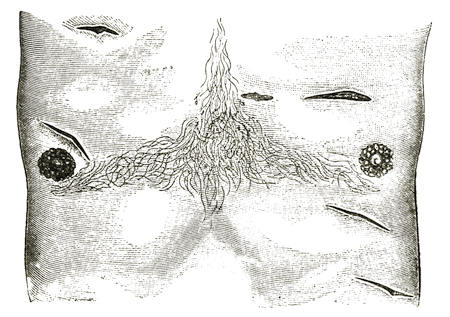
Fig. 9.—Angular Stab-Wounds of the Anterior Chest Wall caused by a Strong Pocket-Knife.
Dupuytren remarks that stab-wounds are smaller than the weapon owing to the elasticity of the skin, but a lateral motion of the weapon may cause considerable enlargement of the wound. If a stab-wound has traversed a part of the body, the wound of exit is smaller than that of entrance.
The depth of a punctured wound may be any part of the length of the weapon, or it may even be deeper than the length of the weapon owing to a depression of the surface by the force of the blow, or the pressure of the handle of the weapon or the hand holding it. We have already seen that this may occur in a marked degree in penetrating wounds of the abdomen involving one of the movable viscera, also in wounds of the thorax, partly from depression of the surface and partly from an expansion of the thorax when opened at the autopsy, thus increasing the measured depth of the wound. Punctured wounds of the third class made by instruments with ridges or edges, like foils, files, etc., present more or less the shape of the weapon if the edges are cutting, but not always so if the direction of the wound be oblique or the parts unevenly stretched. If the edges are not cutting they cause wounds more or less like the first class of punctured wounds, but we can often distinguish them from the latter by little tears in the edges. The entrance and exit wounds may not be alike.
Wounds made by bits of glass and earthenware have irregular and uneven edges. Taylor[637] relates a case, Reg. v. Ankers (Warwick Lent Ass., 1845), where the wound was attributed to a fall on some broken crockery, but the wound was cleanly incised and the prisoner was convicted. As it may be alleged in defence that a given wound was caused by a fall on broken crockery or other substances capable of producing a punctured wound, it is important to notice whether the edges are lacerated and irregular or smooth and clean. The author quoted above cites another case which occurred to Watson, where the prisoner alleged that a deep, clean-cut wound of the genitals of a woman which had caused her death was due to a fall on some broken glass. The character of the wound disproved this defence. Another feature of such wounds, especially if they be deep in comparison to their length, is that they are very apt to contain small particles of the glass or earthenware which caused them. In fact, in all wounds it is well to search for any small fragments which will throw light upon the weapon used.
Wounds caused by scissors are often of characteristic shape. If the scissors were open we find two symmetrical, punctured diverging wounds, presenting more or less clearly the form of the blades of the scissors. If the blades have been approximated there is a triangular interval between the punctures, the apex of which is truncated if any skin remains between the punctures.
Lacerated wounds may not indicate the weapon used as clearly as punctured wounds, but the agent which produced them is often indicated by the appearance of the wound. They are generally accidental. But where they occur, as they not infrequently do, on the bodies of new-born children, they may give rise to the charge of infanticide. In some cases the weapon which caused the wound fits the wound produced, and thus important evidence may be furnished the prosecution. Taylor[638] cites the case of Montgomery (Omagh Sum. Ass., 1873), where a bill-hook which fitted the injuries on the skull of the deceased was found buried in a spot to which the prisoner was seen to go. These facts connected the prisoner with the weapon and the weapon with the murder. In other cases the wounds may be so lacerated or contused that the indications of the weapon are obscured.
Contusions and Contused Wounds.—The shape of a contusing body is sometimes reproduced by the contusion and the ecchymosis. Thus we are enabled to distinguish the marks of a whip, the fingers, the fist, etc. This is best seen when the ecchymosis is fresh, for soon the edges extend and the outline is less clearly marked. Plaques parcheminées, which we have already described as the marks of contused erosions, may show the form of finger-nails, etc. Contused wounds like simple contusions may show the shape of the weapon.
If the contusing body has a large area, the whole of this area cannot often strike the body at once, so that the outline of the contusion does not represent that of the weapon. But in general, severe contusions present greater difficulties than the preceding classes of wounds. We must generally be content if we can determine whether the wound was caused by a weapon, including the fist, or by a fall, and we are often unable to say even this. A fall is often alleged by the defence as the cause of the injury, but of course if the prisoner was responsible for the fall he is responsible for the results of the fall. If there are contusions or contused wounds on several parts of the head, or if the wounds are on the vertex of the head, it is presumptive of the use of weapons. We cannot often swear that each and every wound on the head was due to the use of a weapon. On the other hand, the presence of grass, sand, gravel, etc., in a wound is presumptive of a fall and of the origin of the wound in this manner. In case of a fall from a height the wound or wounds might be in almost any part of the body, on the vertex or elsewhere. Such a fall may be the result of accident, suicide, or murder. It is not unusual for female complainants to ascribe their wounds to a fall to exculpate the prisoner, especially if this happens to be her husband. We should remember that in the scalp or over the eyebrows a contused wound caused by a blunt instrument may resemble an incised wound. As already stated, however, if the wound is fresh careful examination will lead to a correct opinion, and the use of a sharp instrument may be disproved. If the wound is not recent there is great difficulty in judging of the cause. It is well to caution against accepting the interested statements of others in regard to the use of a weapon, unless the character of the wound bears them out very strongly. There may be a bad motive for imputing the use of a certain weapon to the assailant. It is far better to rely solely upon the evidence furnished by the wound in such cases.
It would be useful if we could lay down some general rules to discriminate between wounds caused by the blow of a weapon and those caused by falls, but this we are unable to do so as to cover all cases. Each case must be judged by itself.
If the question is asked which of two weapons caused certain contusions or contused wounds, we are still less likely to be able to answer it. In such a case we must make an accurate examination of the form of the wound and compare it closely with that of the weapon. In such cases also the second source of information on which we base our opinion as to the relation of a weapon to the wound may be of use, namely, the examination of the weapon. The presence of blood, hair, cotton or woollen fibres on one of two weapons indicates that this was the weapon used. The presence of blood is particularly to be looked for, and in those parts of the weapon from which it could be washed off least easily. We should further note the condition of the point and edge of the weapon, and if the edge is broken or nicked at all, whether this condition is old or recent. The sharpness of the edge should further be noted, and if the edge is sharp note whether it has recently been sharpened. All these points have a certain bearing on the case. Also the location, shape, depth, etc., of the wound should be carefully noted to see if an accidental fall would be likely to account for it. For these features of the wound may be such that no fall could cause it.
We see, therefore, that in incised and punctured wounds the use of a weapon may not be hard to make out, but that in general the question whether a particular instrument caused the wound is often difficult or impossible to answer. Often the best we can do is to say that the wound could have been produced by the weapon.
V. Was a Wound Self-Inflicted or was it Inflicted by Another?
In other words, was it suicidal or homicidal? Speaking of suicide in general, its most common cause is alcoholism. It is not infrequent in youth. Lutaud[639] states that in fifteen years, presumably in France, there were 1,065 cases of suicide between the ages of ten and fifteen years. This seems to be only explicable on the ground of heredity or of cerebral affections. Among 27,737 cases of suicide, observed in France, the same author gives the following commonest causes in the order of greatest frequence: Drowning, strangulation, pistol-wounds, incised and punctured wounds, poison. The age, sex, and social conditions influence the choice of means. Thus among males drowning is preferred by the young, pistol-wounds by the adult, and hanging by the aged, while among females asphyxia is the favorite method, as there is no pain and no disfigurement.
While many pathologists consider suicide an act of mental alienation, and though such may be the case in a large number or even in a majority of cases, yet in a considerable number it is a voluntary and rationally planned act. The question, Is it suicide or homicide? may be put in all cases of death by cutting instruments, and in many from other kinds of wounds. It is often, if not generally, impossible to answer it with absolute certainty. It is hardly suitable for the medical witness to try to reconstruct the scene of the crime from the medical facts, for he should abstain from everything not medical and should distinguish that which is positively proven from that which is merely probable.
Suicides often leave a letter or some such indication to show that the wound was self-inflicted. If such is not the case, the question as to the cause of the wound may or may not be medical. If the question is a medical one, there are certain points to notice as to the wound, such as its nature, situation, direction, and the number and extent of the wounds, from which we are to form an opinion. There are also other circumstances which furnish evidence and thus assist us in answering the question. This evidence is furnished by the weapon, the signs of struggle, the examination of the clothes and body of the deceased and the accused, the position and attitude of the body, and any organic lesions, etc., predisposing to suicide.
The nature of the wound bears upon the question of the homicidal or suicidal origin in the following way: Most suicidal wounds are incised or punctured wounds. Incised wounds of the throat are generally presumptive of suicide, but a homicidal wound may be inflicted here to conceal the source of infliction of the wound. Such a wound if homicidal would imply malice, on account of the attempt at deception and concealment, and would convict the assailant of murder. Unless the deceased was asleep or drunk or was otherwise incapable of resistance, such a homicidal wound can often be distinguished from a similar suicidal wound by the form and direction of the wound, by its irregularity, and by other wounds on the hands or person of the deceased. Taylor[640] mentions a case in which the peculiar form of the wound, like that made by butchers in killing sheep, led to the suspicion that homicide had been committed by a butcher, who was subsequently arrested, tried, and convicted of murder. The regularity of the wound has been taken to indicate suicide rather than homicide. That it does so is not questioned, but it is more or less fallacious if resistance is impossible, in which case a murderer may easily make a regular, clean, incised wound here. Contused wounds are seldom suicidal, for they are not sufficiently speedily or certainly fatal. They are also more painful and disfiguring. Contused wounds usually indicate murder or accident, though there are not wanting cases of suicide by such weapons as a hatchet or a hammer. There is more difficulty in the case of a contused wound from a fall instead of from a weapon; for here we have to decide whether the fall was accidental, suicidal, or homicidal. The nature of the wound is of little assistance in the case of insane or delirious patients, who may commit suicide in the most unusual and curious manner.
Taylor[641] relates the case of a delirious patient in Guy’s Hospital, in 1850, who tore away the whole of the abdominal muscles from the lower part of the anterior abdominal wall. If the case had not occurred in the hospital or where there were witnesses of the deed, the nature of the wound would have indicated homicide except for the delirium. The following case, quoted by the same author, illustrates a wound of very unusual nature and situation, which might have been taken for a homicidal wound with intent to conceal as far as the situation of the wound was concerned. The wound was accidental and occurred in the following way. A girl fifteen years old jumped on to her uncle’s knee while he was holding a stick between his legs which she did not notice. The Stick passed up her anus, but she withdrew it and went on playing, though she complained of pain. On the following night acute symptoms of peritonitis set in, and she died of it in forty-eight hours. On post-mortem examination a rent was found in the anterior part of the rectum penetrating the peritoneal cavity.
The Situation or Position of the Wound.—A suicidal wound must be in such a position that the deceased could have inflicted it himself. Such wounds are, therefore, generally anteriorly or laterally situated. The “site of election” for suicidal wounds is the neck for incised wounds and the chest, especially in the region of the heart, for punctured wounds. The situation of suicidal wounds, of lunatics, etc., shows all kinds of fantasies. The mere situation does not suffice to distinguish suicidal wounds, as a murderer may simulate a suicidal wound for purposes of concealment. Some regard a wound in the back as proof against suicidal origin, but it is not so much the situation of a wound as the situation taken in connection with the direction which furnishes the proof against suicide in such wounds.
As a rule, a suicidal wound, besides being in an accessible part of the body, is also in a part commonly known to be rapidly mortal, as the neck and heart. But suicidal wounds are not always in the situation which is anatomically best for being rapidly fatal. Concealed wounds or wounds in inaccessible parts presumptive of murder may be suicidal and so placed to impute them to another and give rise to the suspicion of murder. The blood-vessels of the arms and legs may be selected as the site of a suicidal wound. This situation is often regarded as uncommon, though the writer has met with it in one or more cases of attempted suicide. It is illustrated in the famous case of Abdul Aziz, the Sultan of Turkey. He was found dead under suspicious circumstances with two oblique, ragged wounds at the bend of each elbow, directed from above downward and from within outward. The joint on the left side was penetrated, while only the skin and veins were involved on the right side. Death was due to bleeding from the ulnar artery and the veins. The clothing was soaked with blood and scissors stained with blood were found on the sofa. These wounds were consistent with suicide, though not what would be expected. Nineteen physicians who examined the body agreed in reporting it as suicidal, though one reason given for this opinion, namely, “that the direction and nature of the wounds, as well as the instrument which might have effected them, lead to the conclusion of suicide,” was hardly a valid one, for the wounds were not typical of suicide in nature, direction, or position. Such wounds are rarely homicidal, though at least one such case is mentioned.
Suicidal incised wounds, as has been said, are usually in the neck, where they may sometimes be arrested by the larynx, especially if it be ossified, though the incision often divides the larynx. The situation of the wounds is often between the larynx and the hyoid bone, and then meeting no bony resistance, they may divide the great vessels and even nick the vertebræ. But it is rare to be so deep, at least on both sides at once. As a rule, it is deepest on the side on which it is begun and ends more superficially. As far as the situation of a wound is concerned, there is no wound which a suicide can inflict but what may also be inflicted by a murderer. The reverse, however, is not true. We cannot always certainly distinguish between suicidal and homicidal wounds from their situation.
The direction of the wound is one of the most important points to notice. It is considered by some to furnish presumptive evidence for the medical jurist, and taken in connection with the nature and situation of the wound may often lead us to a positive opinion as to the question of the suicidal or homicidal nature of a wound. The evidence from the direction of wounds is only furnished by incised and punctured wounds, rarely by contused wounds. Suicidal incised wounds of the throat are almost always directed from above downward and from left to right if the suicide be right-handed, and in the same direction from right to left if the person be left-handed. Transverse wounds in this situation without obliquity are also compatible with suicide, though perhaps more common in homicide, while obliquely transverse wounds from above downward and from right to left in a right-handed individual are indicative of their infliction by another. Homicidal incised wounds of the neck inflicted from behind or the right side, if the victim and assailant are right-handed, or from the left side if they are left-handed, may have the same direction as similar suicidal wounds. Such a wound may be inflicted by a murderer to deceive as to the cause of the wound by raising the suspicion of suicide. If an incised wound of the throat be inflicted by another from in front, then its direction is usually the reverse of a similar self-inflicted wound.
Homicidal incisions, especially in the throat, may extend at one or the other end beyond the skin wound. In similar suicidal wounds at both angles of the wound the skin is the first and the last part injured, and in such wounds the spine is seldom reached. It should be borne in mind in this connection that a given suicide may be ambidextrous and this fact may be unknown to the friends of the deceased. This is especially the case in the use of the razor from practice in shaving, and the razor is the usual weapon used in such incised wounds of the throat. Neglect of this point may lead to an unwarranted suspicion of murder. The two following cases cited by Taylor[642] well illustrate this fact:
In the case of Sellis,[643] the man was generally supposed to be right-handed, though he was found dead in bed with his throat cut and the razor on the left side of the bed. In point of fact, he was ambidextrous in the use of the razor. The second case, which occurred in London in 1865, was still more remarkable.
A publican was found dead in bed with his throat cut in a left-handed manner. He was supposed to be right-handed and there was bloody water in a basin in the room. His wife, who gave the alarm, had marks of bruises on her, and though she said she had found her husband dead in bed after having left it for a short time, suspicion fell upon her, especially as they were in the habit of quarrelling. The suspicions were removed, however, by the explanation that he had been brought up as a wood-carver, which required him to use both hands equally, and that he had frequently threatened to kill himself, and further that the bloody water in the basin was due to a daughter washing her hands after having touched her father. It is even conceivable that an ambidextrous person, to avoid suspicion of suicide or to impute murder to another, might inflict a suicidal wound from right to left. Notwithstanding all this, the above cases are very rare exceptions, and the rules stated above as to incised wounds in the throat hold in almost every case.
In the case of stab-wounds of the chest, especially in the cardiac region, the same rule as to the direction holds good, and in these wounds we can often define the direction more accurately than in the case of incised wounds. If the suicide is right-handed the wound is regularly on the front or side of the body and directed obliquely from above downward and from right to left, while it is from left to right in case of a left-handed suicide. A murderer from behind, or from that side the hand of which the victim would use, may inflict a wound in the same situation and direction as a suicidal one. Here again this may be done with the motive of concealment of the nature of the crime. Homicidal stab-wounds inflicted from in front, as they generally are, are usually directed from left to right, and they may be directed from above downward or in the opposite direction. Oblique wounds from above downward may be either suicidal or homicidal; those directed from below upward are almost always homicidal.
When a wound is caused by an instrument both cutting and puncturing, suicide cannot be admitted unless the direction of the wound is compatible with that which the weapon which inflicted the wound, held in the hand of the deceased, might cause. Taylor recommends to place the weapon in the hand of the deceased to see if the direction of the wound could possibly correspond with that which could be taken by the weapon in the hand of the deceased with any position possible for the arm and hand. Therefore certain wounds by position and direction exclude suicide, but if a wound is possibly suicidal it is also possibly homicidal.
Though suicidal wounds vary, the above points are sometimes of real assistance in distinguishing between suicide and homicide, especially if the body has not been moved.
Evidence Furnished by the Number and Extent of Wounds.—Multiplicity of wounds, as a rule, indicates homicide, and indeed the reverse is true in a majority of cases that a single wound points to suicide. There are many exceptions, however, to both statements. Multiple wounds are possible in suicide, and that, too, with different weapons; even drowning or hanging may be resorted to after self-inflicted wounds have failed. If several wounds are found, each one of which or more than one of which may be considered grave, it is usual to conclude that the wounds were not self-inflicted, but the medical expert should not judge too hastily from this fact alone, for most wounds do not kill instantly. With the presence of several wounds in a case of suicide only one of these, as a rule, is “mortal” in character. This being so, some have asserted that if two mortal wounds are present, especially if one of them is stupefying, such as a wound about the head, such wounds are incompatible with suicide. A definite statement of this kind cannot go unchallenged unless the two wounds are in different parts of the body, and both of such a nature as to be immediately or very rapidly fatal. For all cases of suicide or homicide do not die immediately from wounds commonly called mortal; in fact, this may be said to be the exception rather than the rule. We may safely say, however, that if there are several distinct wounds on the throat, each involving the large vessels, the inference is plainly murder.
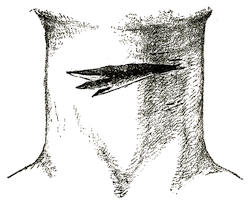
Fig. 10.—Suicidal Cut Throat from Left to Right, showing the Tentative Cuts at the Commencement and the Serrations at the Termination of the Wound.
Several wounds by the same or different weapons cannot, therefore, be proof of homicide. The case of a lunatic suicide is reported who inflicted thirty wounds upon his head. In a case of homicide with multiple wounds the situation or direction of some one or more of them may give evidence as to the origin of the wounds. Ogston, Sr.,[644] states that especially in the case of incised wounds of the throat a suicide may make a number of small or superficial tentative cuts besides the principal one, but these incisions are all usually parallel (see Fig. 10). In the case or multiple homicidal incised wounds of the throat, on the other hand, the wounds are not parallel, owing probably to the resistance of the victim in this case and his remaining passive in the former. The extent of the wound refers to the number and importance of the parts injured. In regard to incised wounds of the neck, this point has been thought by some to furnish presumptive evidence of suicide or homicide—of homicide if the wounds are deep, of suicide if they are not. While it is true that suicidal wounds of the neck are, as a rule, not very deep, and that they seldom reach the vertebræ and generally do not divide the vessels on more than one side, yet sometimes such wounds are as deep and extensive as homicidal ones. This may imply a determined purpose not to be foiled in the attempt at suicide. Thus Marc reports a case of suicide by an incised wound of the neck, where the wound was so deep as to reach the vertebræ or their anterior ligaments and to divide the trachea and œsophagus, both carotids and jugular veins. The extent of this wound was greater than in most suicides, but still we can hardly lay down a hard-and-fast rule of much practical value according to which extensive wounds are evidence of murder. Such wounds are, however, presumptive of murder taken in connection with other signs pointing that way.
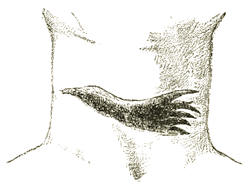
Fig. 11.—Homicidal Cut Throat from Right to Left, showing a Tentative Cut at the Commencement and the Serrations at the Termination of the Wound.
The question may arise in regard to a wound, whether the victim wounded himself by precipitating himself on the weapon. This may be alleged by the defence, but it is difficult to believe if the wound is deep, for the body would naturally repulse the weapon. If the wound is deep the weapon must at least have been strongly held, which may or may not be consistent with the theory of self-defence. If the direction of the wound is oblique from above downward, or if there is one external wound and two separate tracts internally, from a second use of the weapon on the part of the person holding it, then the above allegation is doubtful, if not impossible.
By comparing the relative positions of the deceased and accused, as indicated by the witnesses and accused, with the position and direction of the wound, we may often judge whether the allegation is possible or probable.
Besides the above points derived from the wound itself, there are several other factors which belong to the category of circumstantial evidence, but which come within the province of the medical expert. These latter points of evidence are sometimes almost as important as the former, while taken in connection with them they help to make the evidence far more conclusive.
Evidence furnished by the weapon as to the origin of wounds.
We have already seen in a former section that we can often tell, by various signs of the wound, with what kind of a weapon it was made. We may thus be able to say that a wound was made by a weapon similar to one exhibited. Also by examination of the weapon itself and from the circumstantial evidence of where and how it was found, we may sometimes say that the wound was inflicted almost certainly with a particular weapon. All this evidence may sometimes be made use of in judging between the suicidal and homicidal origin of a wound.
The POSITION of the weapon or the place where it is found is a matter of considerable importance. If it has not been touched, its position should be carefully examined, or inquired about if it has been moved. The presence of a weapon which might have caused the wounds in the hand of the victim is in general proof of suicide. The weapon must not merely lie in the hand, it must be gripped by the hand. One might suppose that the weapon placed and held in the hand until rigor mortis sets in would still be firmly held. Casper says that this is not so, but that the weapon falls from the grasp as soon as the hand is unbound. Also Hofmann’s[645] experiments proved the same point. By the use of ligatures and several artificial means he tried to confine a weapon in the hand of a recently dead body so that it would be as firmly held as by a contraction of the muscles during life. These experiments were entirely unsuccessful, for though the fingers remained closed, the object was simply held and not grasped, and fell from the hand on the release of pressure.
In suicide the weapon is sometimes held so firmly that force is required to dislodge it. It seems as if the muscular spasm or grip persists after death, as cadaveric spasm, until rigor mortis occurs and sets it, as it were. The murderer, therefore, cannot imitate this grip, and an unsuccessful attempt to do so would indicate murder. It should be borne in mind that the weapon in the hand of the deceased may have been for the purposes of defence; therefore it is necessary to note whether the wounds on the body correspond to those which could be made by the weapon. Indeed, this fact is most important to note in all cases of suspected suicide where the weapon is found. If the weapon is not in the hand of the deceased, note carefully where it lies. If death is due to a suicidal or accidental wound which is immediately or very rapidly fatal, the weapon is generally found near the body. If so, it is well to note on which side it lies, and if it lies near, whether it has apparently fallen or been thrown or placed there. If the relation of the body and the weapon has been disturbed by moving either, the position of the weapon as found by the medical witness is of little value. In cases of suicide the weapon may possibly be found at some distance or even concealed, though this is exceptional. Thus Taylor[646] states that the razor in one instance was found shut at the side of the deceased, who had committed suicide by cutting his throat. In another instance the razor was found in the pocket of the deceased, bloody and closed. As a rule, the weapon is found lying at the side of a suicide if it is not grasped in the hand. If the weapon is far from the body and the wound was quickly fatal, especially if the weapon is hid or cannot be found, it is strongly presumptive of murder. If the weapon is found near the body it is well to note whether the edge is sharp or blunt, straight or bent, or notched, as these points may assist us in forming a judgment as to suicide or murder.
A weapon belonging to the victim may be substituted by the murderer for the one really used, and the former may be placed by the side of the body. Therefore the weapon found should correspond to the wounds as to length, depth, sharpness, etc., to be compatible with suicide.
Generally a suicide foiled in the attempt to take his life uses the same weapon over again if he persists in the attempt. But he may not do so; on the contrary, if the first attempt was made with a knife, the second may be made with a pistol, etc. Several wounds by the same or different weapons cannot therefore be an absolute proof of homicide.
The presence of blood, hair, and other substances on the weapon used, or probably used, is a matter of some importance. Blood is not necessarily found on the weapon used to inflict a mortal wound, especially in the case of blunt instruments. In stab-wounds, too, the vessels may be compressed by the blow or the weapon may be wiped as it were on withdrawal by the elasticity of the skin and by the clothing, except for a thin yellowish film. Thus it is that the first stab-wound shows no blood on the outside of the clothes but only on the inside, but the outside of the second is usually bloody but may be but little so. To make sure whether or not there is blood on a knife or other weapon it is necessary to examine all the depressions on the instrument, as the blade itself may have been washed, and only those traces of blood remain which are less accessible to cleaning by washing. Blood coagulated on a blade indicates, as a rule, blood from a living animal, but it may not do so. Furthermore, it may be hard to distinguish between a thin layer or spots of dried blood not coagulated or coagulated and dried blood in a similar form.
If blood is not found on a weapon, hair and other substances which can be identified may be. This is especially the case with blunt weapons, on which, as we have seen, blood usually fails. A fragment of the weapon may break off in the wound, as in stab-wounds, and may be identified as belonging to one in the murderer’s possession.
The signs of a struggle furnish important evidence, as they are not likely to be found in the case of suicide. If the wounds were inflicted by a cutting instrument, the existence of a struggle may be indicated by incisions on the palm of the hand or fingers or on the dorsum (see Fig 12). Such wounds would not be self-inflicted and would indicate a struggle with the murderer. Or if contusions or ecchymoses indicating the form of the foot, fist, fingers, or finger-nails are found on the face, neck, chest, forearm, or hand of the deceased, this again indicates a struggle with the assailant, and goes far to prove murder. The same is true of the imprint of a bloody or dirty hand on the clothes of the victim when the victim’s hands were not bloody. Also such an imprint in a position where the deceased could not have reached with the particular hand indicated, as is the case if the impression of a right hand be found on the victim’s right arm; this indicates a struggle with a murderer, etc. In one case of murder, on the back of the left hand of the deceased there was found the bloody mark of a left hand evidently not that of the victim himself. The presence of marks of violence about the mouth of the deceased, done to close it to prevent the victim from giving an alarm, especially if surprised during sleep, is presumptive of murder. Sometimes hair or fragments of clothing belonging to the accused are found in the grasp of the deceased, indicating a desperate struggle, and they are very suspicious of murder. Thus Taylor[647] cites the case of a murder trial in Ireland, in 1877, where hairs found firmly grasped in the hands of the deceased were found to correspond to the hair of the accused. The clothes of the deceased, as well as those of the accused, often indicate a struggle unless the accused can satisfactorily account for the condition of his own clothes in some other way.
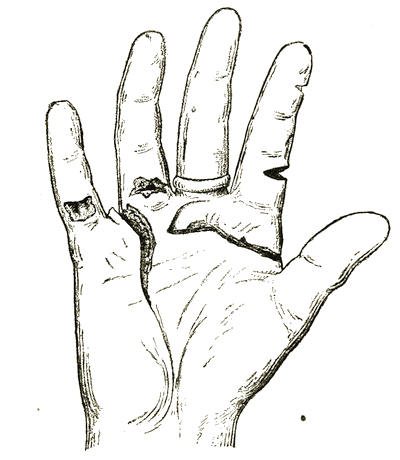
Fig. 12.—Incised Wounds of Right Hand in the Struggle of Defence. Homicide.
The examination of the clothes and body of the deceased and the accused may furnish important evidence.
If suicide is accomplished by a weapon like a knife, it is rare for the hand not to be bloody. If it is not bloody we may well suspect a case of supposed suicide. The presence of blood on the hand does not prove suicide, though its absence may disprove it, as the hand is generally bloody in case of murder by being carried to the wound.
The examination of the clothing of the deceased is of great importance. As we have noticed before, a suicide generally opens them, a murderer rarely. A suicide is often partly or even wholly undressed when he inflicts the wound, while murder is usually committed on those entirely dressed. The wound of the clothes should correspond to that of the body in case of murder. In suicide the wounds of the body and of the clothes may not correspond, especially if there exists a motive to falsely impute the crime. The clothes of the deceased as well as those of the accused may indicate a struggle, as we have already noticed. Of course, in regard to the clothes examined, it is necessary to clearly prove that they were worn at the time by the deceased or accused, otherwise serious mistakes may be and sometimes are made. In examining the blood-spots on the clothing, note whether the blood occurs in large patches or sprinkled as by a spurting vessel or by continued violence.
The body of the accused may present scratches, marks of nails, contusions, bites, or other wounds indicative of a struggle. It would be well to ask the accused how he received the wounds or scars, to see if his explanations tally with the injuries. It is hard to tell when wounds which have cicatrized were inflicted; we can only distinguish between old and recent ones, and thus control the statements of the accused. An examination of the finger-nails of the prisoner soon after the crime may reveal blood underneath when the rest of the hands and person are free from it. Note also the site and shape of the blood-spots, if they exist, and whether or not they came from an arterial jet. These spots may be on the body or clothes of the accused. The account of the accused as to these spots may or may not correspond to the facts as indicated by them. The above leads us to the more or less important question:
Could the Assailant have Escaped without Stains?
It is possible for the murderer to escape without being spotted with blood, but the probability of this occurrence depends on the nature of the wound and the relative positions of the deceased and the assailant at the time the wounds were inflicted. This latter fact is very largely, if not altogether, a matter of speculation as far as the medical evidence goes. It is a popular, though false, idea that a murderer’s clothes must be bloody, and the police may be misled in expecting to find them so in every instance. Taylor[1] cites several cases in which either no blood was found on the murderer’s clothes, or only small spots wholly out of proportion to the amount of blood which must have spurted or flowed from the wound. Absence of blood on the prisoner’s clothes is often made use of by the defence to prove the prisoner’s innocence, whereas, besides the possibilities of having had no spots in the first place, the clothes may have been changed or washed before the examination was made. This has occurred in more than one murder trial. Taylor[648] mentions the following cases in illustration:
It was alleged that the absence of blood-stains on the prisoner’s clothing was a strong proof of his innocence in the trial of Sub-Inspector Montgomery for the murder of Mr. Glasse (Omagh Ass., July, 1873). In this case the weapon was a bill-hook which had produced contused wounds on the head. There was blood on the floor about the body, but the wounds were not likely to have been accompanied by much spurting. Yet it was assumed that the assailant in this case must have been covered with blood. Much stress was laid upon the absence of blood-stains. On the first two trials the jury could not agree, owing chiefly to the absence of blood-stains, but on the third trial he was convicted and afterward admitted that he had removed the blood-stains from the clothes with cold water. Also in the case of Reg. v. Courvoisier (C.C.C., 1840) the accused, who was tried for the murder of Lord William Russel, had no blood-stains on his clothes. All the vessels of the throat of the deceased had been cut to the vertebræ while he was asleep. It was contended most strongly that the accused could not possibly have committed the crime, as he had no blood-stains. But after conviction he confessed that he wore no clothes when he committed the murder, and he only had to wash his hands and the carving-knife he used. Again, in the case of Reg. v. Thompson (Durham Wint. Ass., 1863) the defence mainly relied on the absence of blood on the prisoner’s clothing. The wound in the throat of the wife of the accused was five inches long, directed from left to right, dividing all the vessels and nerves of the neck. The medical witness stated justly that no such wound could be self-inflicted. It was rapidly fatal. No weapon was found near the body. The prisoner was convicted.
The same author cites the case of a prisoner on whose trousers worn soon after the murder no blood-marks were found, but the trousers actually worn by him were found with blood upon them. Juries have even acquitted the prisoner apparently only because no marks of blood were found, though the other circumstances were explicable only on the theory of murder.
It should be remembered in this connection that blood-stains may be found on the clothing of many, especially on the coarse clothing of working-people. This may be accounted for by the occupation, flea-bites, accidental circumstances, or it may occur without definite explanation. Such persons may be accused of murder and yet the blood-stains be consistent with innocence. Too much importance should not, therefore, be attached to them, even if the accused cannot satisfactorily explain them and if he does not attempt to do so in a suspicious way. That blood on the clothing even under suspicious circumstances may be consistent with innocence is illustrated by the case of a suicide by cutting the throat, in 1872, cited by Taylor.[649] In this case the son first found his father dead, and thought that he had broken a blood-vessel. He raised the body, staining his hands and clothes, then went for help. At the inquest he was closely questioned as to the presence of the blood-stains, but there could be no doubt that the case was one of suicide.
In general, we may say that a murderer is much more likely to escape without blood-stains in contused wounds, and more likely in the case of punctured wounds than in incised wounds, for in punctured wounds the bleeding is much less free and is less likely to spurt from the wound. In the case of incised wounds he is most apt to escape without stains if he is behind or to the side of the victim when he inflicts the wound—in other words, when a part of the body of the deceased was between the assailant and the wound inflicted. Furthermore, the assailant is more likely to escape without blood-stains if there is a single wound than if there are several, and each additional wound makes it more likely that he will be spotted with blood.
The examination of the ground or floor and the furniture, etc., may furnish some evidence as to the nature of the crime, and also help the witness to answer the questions which may sometimes be asked, i.e., At what spot was the victim wounded? and Where did he die? This question is sometimes settled by examination of the spot where the deceased lay and the furniture, etc., about. Sometimes the floor or ground and the furniture or surrounding objects at a distance give the requisite evidence. The examination of the cracks and corners of the floor and furniture should not be neglected, and Taylor instances a case where the hair of a dog helped to clear up the case. If the body has not been disturbed the most blood is usually found where the deceased died. If the victim succumbs at the spot where he was wounded, blood is found only in the immediate neighborhood, except for arterial jets, which may be as far distant as two metres. The separate blood-spots of an arterial jet are circular if the jet strikes the object perpendicularly, oval or wedge-shaped with the larger end away from the body if it strikes the object obliquely.
If the blood-stains are more diffused and are found in other places, careful notice should be taken as to whether the different places communicate with one another by traces of blood. If they do not communicate, it goes to show that the body was moved after active bleeding had ceased, that is, after death, but this indication is not absolutely positive. If traces of blood do connect the larger blood-spots, it is of interest and importance to know where the deceased was wounded and where he died, also whether he moved or if he was moved before or after death. This question is not always capable of solution. Some injuries exclude the possibility of active motion. Stupefying contused injuries of the head or an incised wound opening a great artery are both inflicted where there is the greatest hemorrhage, and the spot where the deceased was wounded and died should be identical. In such cases a second large spot of blood, connecting or not with the first wound, indicates that the body has been moved. But if the wound does not bleed much or rapidly, the wounded person may fall at a distance from the spot where he was injured, and death occurs, as a rule, where there is the greatest amount of blood; for a certain amount of bleeding occurs for a short time after the victim falls or even after death. One can find in many places the signs of arterial jets marking the movement of the deceased from one blood-spot to another. This is quite different from the tracks caused by dragging a bleeding body. All this it is important to notice, for the dragging or passive moving of the body strongly indicates murder. Blood at a distance may indicate the occurrence of a struggle, or that the body was moved, or it may show the tracks of a murderer. As to the latter point, the imprints of the hands and feet, whether bloody or not, may indicate murder and establish the identity of the murderer. We have already seen how they may occur on the deceased and indicate a struggle, and thus be presumptive of murder. When the marks are made by the naked foot, it is well to examine it by lining it off in squares, and so to compare it with the imprint of the foot of the accused. Simple inspection can sometimes give the required evidence. We may even get an impression of such imprints in the snow. Imprints of the boots or shoes worn by the accused compared with those imprints found at and near the scene of the crime may sometimes help to clear up the case, but this may perhaps be considered outside of the sphere of the medical witness. Such and other signs of a struggle about one of the blood-spots would indicate that the wound was received there, though death may have occurred at another spot. In such a case it would be well to examine to see if there was much blood where the body was found, for if there was not it would indicate that the body had been moved there after death, and thus be strongly presumptive of murder.