MECHANICAL SUFFOCATION.
Reading edition
Suffocation is the name applied to both the act of and condition resulting from the deprivation of atmospheric air. If the deprivation is due to mechanical interference, the term MECHANICAL SUFFOCATION is used.
Mechanical interference may be by pressure upon or obstruction within some portion of the respiratory tract. Suffocation by pressure upon the neck is called hanging when the constricting force is the weight of the body itself; and strangulation in all other cases. German writers designate strangulation by cords, ropes, and the like as Erdrosselung, and by the hand as Erwürgung; French writers do not make this distinction. In English the word throttling is probably oftener applied to strangulation by the hand than by cords.
The term suffocation is also applied in a special sense to the act and result of pressure on the mouth, nose, or chest and abdomen, stopping the breathing; or of obstruction within the respiratory tract; or of pressure upon the tract from the œsophagus, etc.; or of breathing of irrespirable gases.
Strangulation is almost always homicidal, hanging almost always suicidal, and suffocation (limited) usually accidental, but also often homicidal.
Strangulation may be admitted, therefore, as including all cases of suffocation by pressure on the neck, whether by cords or the hand; but excluding hanging.
It will facilitate the study of the subject if we use the word ligature as a general term to cover the many forms of cords, ropes, etc., used in strangulation and hanging.
The word GARROTING is often used to indicate the forcible compression of the neck by the hands of thieves. The assault is usually made from behind, and the victim is robbed while the throttling proceeds. The brevity of the process explains why death is not more frequent. The word garroting comes from the Spanish; criminal execution in Spain and Italy is usually by means of the GARROTE, a steel collar which is tightened on the neck of the condemned by a screw. The notorious thugs of the East Indies used sometimes a soft loin-cloth, at others a lasso or long thong with a running noose. In Turkey and some other Eastern countries the bowstring is a common mode of execution.
An examination of the reported cases of strangulation and hanging shows a great variety of forms of ligature: cords, ropes, thread, thongs, lassos, flexible twigs, bamboos, leather straps, girdles, turbans, fishing-nets, collars, cravats and other forms of neckwear, bonnet strings, handkerchiefs, sheets, etc. Women have even strangled themselves with their own hair (Case 34). Stones, sticks, coal, and other hard substances have sometimes been inserted in the ligature to increase the pressure (Cases 36, 38, 42, 43, 44). Drunken and otherwise helpless persons have been strangled by falling forward with the neck against a firm substance.
STRANGULATION.
Symptoms and Treatment.
The symptoms and post-mortem appearances in strangulation will vary, according as the deprivation of air is sudden or gradual, partial or complete; and whether there is coincident pressure on the great arteries, veins, and nerves of the neck.
The deprivation of air disposes to asphyxia; pressure on the great arteries by cutting off the supply of arterial blood to the brain disposes to anæmia of the brain and syncope; pressure on the great veins, by preventing the return of blood to the heart, to congestion of the brain and coma; pressure on the great nerves, the pneumogastrics, to syncope. Statistics of hanging show that in about seventy per cent of cases death is by a mixture of asphyxia and coma. While it is probable that the proportion is less in strangulation, yet it is also probable that a mixed result frequently occurs.
Asphyxia is from α priv. and σφίξις, pulse—absence of pulse. Apnœa from α priv. and πνέω, I breathe—absence of breathing. Syncope, συνκοπή, a faint; suspended animation from sudden failure of heart. Coma, κῶμα, deep sleep. Richardson[729] makes the following distinction between asphyxia and apnœa: Asphyxia is difficulty of taking in breath; apnœa is breathlessness. There is asphyxia when the blood from the heart can go to the lungs, but there is no access of air; apnœa, when there is access of air, but the blood fails to reach the lungs. In asphyxia the lungs obstruct the circulation; in apnœa the obstruction is in the heart. In asphyxia the air cannot reach the blood; in apnœa the blood cannot reach the air.
Quinquaud[730] and Fredericq[731] conclude from experiments on animals that asphyxia is due to the deficiency of oxygen, not to the accumulation of carbon dioxide.
Page[732] divides the phenomena witnessed in an animal killed by simply depriving it of air, without interfering with the blood-vessels of the neck, into four stages:
First. A short stage. (In the human subject this stage could scarcely last longer than fifty seconds, which is said to be the extreme limit of the most expert divers. The breath can be held longest if a number of deep breaths have previously been taken, so as to surcharge the blood with oxygen.)
Second. The stage of “besoin de réspirer,” when the want of air begins to be felt; the animal makes vigorous and violent efforts to overcome the obstacle. This stage may continue for three to four minutes.
Third. Unconsciousness supervenes with irregular and spasmodic movements; efforts at respiration continue.
Fourth. Efforts at respiration cease, but the heart still beats. This stage may last from two to four minutes. Hofmann[733] says that it may last a half-hour. In new-born infants, asphyxiated, it may be quite long.
The post-mortem appearances in such an animal were as follows: the lungs were pale, reddish, not much distended; there were a few dilated air-cells toward the anterior border; hemorrhages irregularly dispersed over the surface of the lung, varying in number and size. The right cavities of the heart contained dark fluid blood, the left were empty. The pulmonary artery and systemic veins, even the smallest branches, were gorged with dark blood. Page adds that when the great vessels of the neck are interfered with death may occur “by coma, syncope, and even asthenia.”
Colin[734] made twenty-five experiments on horses, and records three of them as follows: they were all strangled with a hempen cord at the middle of the neck. The first was quiet till the second or third minute, then there were violent movements and strong efforts to dilate the chest; at four minutes, spasms; four and one-half minutes, quiet; six minutes, pupils dilated, tongue hanging out, limbs flaccid; blood black. Second horse: Carotid artery denuded to observe its action. In fifteen seconds, blood nearly black; four and one-quarter minutes, no pulsation in carotids; five and one-half minutes, no respiratory movement; six minutes, heart-beat ceased, except feeble contraction of auricles, which continued till twenty-first minute. Third horse: In five minutes respiration ceased; tracheotomy performed, but there was no attempt to breathe; eight minutes, heart ceased to beat. Similar results were obtained in ruminants and in small animals, except that the larger animals lived longer than the smaller.
Faure[735] made the following experiment on a large dog. He tied a cord tightly round its neck; for fifty-five seconds it was quiet, then suddenly it became agitated, threw itself against the wall, rolled on the ground, twisted itself; bloody mucus escaped from the nose and mouth; the teeth were ground together; urine and fæces were passed. The efforts at respiration became very rapid. It fell dead at the end of three and one-half minutes.
The symptoms of strangulation in the human subject resemble closely those just described as occurring in the dog.
The FIRST or PRELIMINARY STAGE lasts a variable time, according to the suddenness and completeness with which the access of air is prevented; it lasts until there is a demand for the air. In a case of homicide, injuries may be inflicted on the victim in this stage which may have an important bearing on the cause of death. Blows on the head may cause unconsciousness, or even apoplexy; upon the stomach, may cause syncope; stab-wounds may tend to cause death from hemorrhage.
The SECOND STAGE begins with the demand for air and lasts till unconsciousness supervenes. It is characterized by frantic efforts to breathe, efforts in which the entire body takes part. If the subject is conscious, he is intensely so; the expression of the face is intense; the eyes may protrude, the hands be clinched; the memory is unusually active, and the events of a lifetime may rapidly pass before the mind in a few minutes. The tongue may be thrust between the clinched teeth and bitten; and urine, fæces, and semen may be discharged.
The THIRD STAGE usually appears suddenly, and is characterized by unconsciousness and irregular involuntary movements, i.e., spasms; these may end in opisthotonos; the veins become turgid, and hemorrhages may occur from the eyes, nose, mouth, throat, ears, and into the connective tissues of the lungs, pleura, pericardium, etc. The circulation of venous blood in the arteries is shown by the general lividity, especially where the skin is thin, as the lips and tips of fingers. Hofmann[736] states that coincident with the oncoming of unconsciousness and convulsions the respiratory effort becomes expiratory, followed still later by inspiratory efforts.
The FOURTH STAGE begins with the cessation of spasms and of efforts to breathe. The subject is quiet, but the heart still beats. The stage ends with the cessation of the heart-beat.
Discharges of semen, urine, and fæces may occur in the first and second stages, from terror; in the second and third from the general agitation, and in the third and fourth from paralysis.
Strangulation according to Bernard[737] causes a rise in temperature, varying from one to two degrees (Cent.). He thinks that this is due to the changes from arterial to venous blood, especially in the muscles.
Lukomsky[738] concluded from experiments that in asphyxia both arterial and venous pressure is increased in the systemic circulation, but diminished in the pulmonary artery. The highest degree of blood pressure coincides with the strongest respiratory movements, especially expiration. He also concluded that the Tardieu spots (subpleural ecchymoses) directly depended on the efforts of breathing and blood pressure.
Some writers, as Taylor and Tidy, think that death occurs sooner in the human subject than in the lower animals; where the access of air is suddenly and completely prevented death may be immediate. Tardieu says that death follows pressure of the hand sooner than that of a ligature.
Fleischmann[739] placed cords round his own neck between hyoid bone and chin, tied them tightly, sometimes at the side, sometimes at the back, without respiration being interfered with, because there was no pressure on the air passages. But his face grew red, eyes protruded slightly, there was a feeling of great heat in the head, of weight, commencing dizziness, and suddenly a hissing and rustling in his ears. The experiment should stop at this point. The same symptoms occurred from applying the cord over the larynx. The first experiment lasted two minutes, the second a half-minute. The difference was due to the different situation of the cord.
Dr. G. M. Hammond[740] gives an account of a personal experiment in strangulation. He sat down; a towel was passed around his neck, and the ends twisted together, making forcible compression of the neck. At first he had a feeling of warmth and tingling, first in the feet, then passing over the entire body; vision partly lost; his head felt as if it would burst; there was confused roaring in ears, like the sound heard on placing the ear to a shell; he remained conscious. In one minute twenty seconds all sensibility was abolished. After a few minutes’ rest a second similar trial was made, with similar results, except that sensibility was lost in fifty-five seconds. A stab with a knife drawing the blood caused no sensation.
Should the subject recover from the immediate effects of the strangulation there may yet be serious secondary results. Among these are convulsions and paralysis; extreme swelling of face, neck, and chest; loss of voice; lesions of larynx and lungs; abscesses. Death may occur suddenly and remotely from one of the sequelæ.[741]
In the treatment of strangulation the first indication obviously is to remove the pressure from the neck. Artificial respiration will probably be required, and may be aided by ammonia applied to the nostrils, tickling of the fauces, and galvanism. Colin[742] states that artificial respiration is useless after cessation of heart-beat. (See the treatment by galvanism under “Suffocation.”) If the body is cold, artificial heat by means of hot bottles, etc. Venesection may be necessary. Colin strongly advises venesection to relieve the distention of the heart. Stimulants and light food are often required.
Limousin[743] recommends the use of oxygen. Cobos[744] experimented on animals by injecting oxygen hypodermically, as a means of artificial respiration. His conclusions are that the oxygen is absorbed and carbon dioxide eliminated in the same place. The oxygen thus introduced causes no trouble. Testevin[745] cures asphyxia by hypodermic injection of ether.
The after-treatment will depend on the after-conditions.
The prognosis is good if there is no serious injury to the neck and treatment is promptly applied.
Post-Mortem Appearances.
The post-mortem appearances in strangulation are external and internal.
The external appearances are of two kinds: those directly due to violence and accident and those due to asphyxia.
External Appearances Directly Due to Violence or Accident.—The MARKS on the neck. In some fatal cases there are either no marks at all or they are but slight; this is more likely to be the case in suicides than homicides, and is usually due to the ligature being soft and yielding. The victim of a homicide may, however, first be stunned and afterward strangled.
Marks are said to be plainer after the body has become cold and where subjects have recovered from attempts at suicide.
The marks of the ligature in strangulation usually encircle the neck more completely and more horizontally than in hanging. These conditions may, however, be reversed, because a body may be dragged by the neck after strangulation, and there have been suicides by hanging in whom the mark of the cord was horizontal. As a rule, however, a horizontal mark with the knot on the same level as the cord, especially if below the larynx, suggests strangulation rather than hanging; and if there are several marks the probability is even greater. In compression with the fingers the marks are not in a horizontal but oblique line.
The mark of the ligature is usually circular, well defined, and corresponds closely to the breadth of the ligature; rather depressed, and usually below the larynx. As a rule this depression is not deep; the skin at the bottom of the groove is usually very pale, while the adjacent parts are red or livid. Sometimes the bottom of the groove shows ecchymoses. Neyding[746] says that suggillations in the groove made by the ligature on the neck are rare, but are oftener found in strangulation than hanging, because the conditions favoring their formation are oftener found in strangulation. In most cases the skin and connective tissue of the groove and of the parts in the vicinity show, microscopically, hyperæmias and hemorrhages. Liman[747] states that when we find suggillation in the groove or its vicinity, we may know that some other form of violence has been applied at the same time as that of the ligature or hand. He had not seen suggillation in the furrow either in strangulation or in hanging, except when the injured persons had lived some time, and in cases of twisting of the umbilical cord. The absence of suggillation and ecchymosis was due, he thought, to the pressure on the capillaries. Bremme[748] says that in the subcutaneous connective tissue of the mark of the ligature there is no hemorrhage either in strangulation or hanging, if death occurs at once and the cord is removed at once after death; but if the cord remains for some time after death there may be hemorrhage, or if death does not occur at once whether the ligature is removed or not. It is impossible to distinguish ante-mortem from post-mortem hemorrhage.
The parchment skin seen in hanging is seldom seen in strangulation. Neyding[749] says that the dryness and induration called parchment skin depend mainly on the amount of excoriation of the skin, and this is greater in hanging. Tardieu explains this frequency as being due to the fact that the constriction in hanging lasts a longer time. Liman has seen the parchment skin in those strangled.
The violence used may cause ecchymoses and abrasions of the skin of the neck adjacent to the mark of the ligature.
The marks of very different constricting ligatures may be quite similar. Taylor[750] mentions a case in which a soft silk handkerchief was used, and the appearance was the same as that of a narrow cord, due to the tightness with which it was tied.
Where a hard substance like a piece of coal or stone is inserted into the ligature, usually then a soft cloth, and presses directly against some part of the neck, there is usually a corresponding bruise.
Marks of pressure by the thumb and fingers are usually on the front of the neck, and either just above or below the larynx. In many cases these marks are only those of the finger-tips with some scratches. These marks may show definitely the probable size of the assaulting hand, and whether right or left.
Marks of strangulation may disappear rapidly after the removal of the ligature. Assailants usually constrict the neck much more violently than is sufficient to cause death. Marks of violence on the neck are, therefore, greater in strangulation than in hanging.
A great variety of external injuries other than those on the neck have been found in the different cases reported where other forms of violence were used. With few exceptions such additional injuries indicate homicide.
External Appearances Due to Asphyxia.—A few of these have already been given under the caption “Symptoms.” If death occurs quickly there may not be any signs of asphyxia. The general LIVIDITY which comes on in the second stage usually remains after death. The face varies in color from violet to black and may be swollen. Casper[751] says that the face has the appearance of any other corpse. Liman[752] found the face livid in only one of fourteen cases. Hofmann[753] says that the cyanosis appears during the agony because of paralysis of the circulation and gravitation of blood. The cyanosis of the face, projection of the eyes, and congestion of the conjunctivæ are due to the expiratory effort. These signs are also seen in fat persons who do not die of strangulation. Tardieu[754] mentions a dotted redness or minute ecchymosis of the conjunctivæ and skin of face, neck, and chest as constant; but this cannot be considered characteristic, because it has been seen, though not so well marked, in death from other causes. It has been found in suffocation from compression of the chest and belly; and also where there is respiratory interference in the prolonged efforts of tedious labor and in convulsions. Liman[755] found it in those who were hung. It is due, according to Hofmann,[756] to increased blood pressure and consequent hemorrhages. It is of importance as tending to show that there was stasis of blood in the head and face during life. Liman[757] found cyanosis in the conjunctivæ, lips, back of mouth, and in the muscles. Maschka[758] in 234 cases of asphyxia found capillary hemorrhages of the eyes and eyelids 87 times.
Dastre and Morat[759] claim that in asphyxia the cutaneous circulation becomes more active than in the normal state, while at the same time the vessels of the abdominal cavity are contracted. Laffont[760] considers the mechanism of this peripheral dilatation.
Post-mortem stainings (hypostases) are usually darker in strangulation than in other forms of death. They appear soon, as does also putrefaction, because of the quantity and fluidity of the blood.
Signs of HEMORRHAGE from the nose, eyes, and mouth may be visible; as also bloody froth from the mouth and nose. Chevers[761] never saw bleeding from the ears in strangulation. Taylor[762] states that Dr. Geoghegan informed him of a case of suicidal strangulation by a ribbon; the violence was great, there was bleeding from the ear, and the drum was found ruptured. In this case the mark on the neck, which was deep, nearly disappeared after the ligature was removed. Taylor also says Wilde, of Dublin, saw a case of rupture of drum and hemorrhage in strangulation. Pellier[763] says that Littré mentions a case of rupture of tympanic membrane in strangulation by a cord. Zoufal and Hofmann have offered explanations of the occurrence (Case 35).
The FACE usually shows pain and suffering; although sometimes the features are calm. In the latter case there may have been syncope.
The EYES are usually staring, prominent, and congested, and the pupils dilated. Casper[764] doubts their prominence. Budin and Coyne[765] state that in asphyxia the dilation of the pupil progresses to a maximum and then convulsions occur. Ophthalmoscopic examination during the dyspnœa of asphyxia shows a lessened fulness of the retinal vessels.
The TONGUE is often swollen, dark, protruding, and sometimes bitten. Maschka[766] states that if the ligature lies above the hyoid bone, the tongue will be drawn backward; if over or below the bone, the tip of the tongue may appear more or less between the jaws.
The HANDS are usually clinched and may have in their grasp articles which, under the circumstances, have a medico-legal value.
The EXTERNAL GENERATIVE ORGANS are sometimes congested; erection of the penis may have taken place and persisted. The vagina may be moist. Tardieu, Devergie, and Casper[767] deny that these appearances are usual.
Involuntary discharges of urine, fæces, and seminal fluid may have occurred. There is nothing characteristic in their appearance.
All the external appearances of asphyxia are usually more marked in strangulation than in hanging.
Internal Appearances.—The mark. Usually there is hemorrhage into the loose connective tissue under the mark and in the subjacent muscles; in most cases isolated and circumscribed, but sometimes extending beyond the line of the mark. Hemorrhage from compression by the fingers is more marked than that from ligature.[768] Sometimes there is only fulness of the subcutaneous veins.
The CAROTID ARTERIES may suffer rupture of their inner and middle coats, especially in atheromatous subjects and when the compression has been great. Friedberg[769] states that the injury of the carotid, if there is hemorrhage into its middle and internal coats, is a proof that the strangulation occurred during life, and probably from pressure of the fingers on the neck, without any regard to any disease of the artery. He reports two cases. The examiner should be careful not to injure the artery with his forceps. The vessels may contain clots.
The NECK occasionally suffers extreme injury, and, owing to the violence used, this occurs oftener in strangulation than in hanging.[770] Occasionally the neck is broken.
The HYOID bone may be fractured (see Case 5). Maschka[771] saw one case in eighteen of Erdrosselung and five cases in fifteen of Erwürgen.
The TRACHEA is sometimes torn, or may be folded on itself.
The cartilages of the LARYNX, especially if calcareous, may be fractured. This is more likely to affect the thyroid than cricoid. The fracture would appear to occur only as the result of enormous force; especially in the young in whom the cartilages are so elastic. The experiments of Keiller[772] on cadavers led him to conclude that falls on the larynx, even from a height and with superadded force, are unlikely to fracture that organ; that severe pressure or violent blows against the larynx from before backward may cause fracture; but that severe lateral pressure, as in ordinary throttling, is more likely than other forms of violence to fracture the alæ of the thyroid or even the cricoid cartilages and also the hyoid bone. Taylor[773] states that Dr. Inman, of Liverpool, had informed him of a case of splitting of rings of windpipe from pressure (see Cases 5, 13). Maschka[774] in fifteen cases of choking found six fractures of the larynx.
Chailloux[775] has collected eight cases of fracture of larynx in strangulation. They were all made with the fingers. The experiments of Cavasse[776] seem to show that there is no great difficulty in fracturing the thyroid in strangulation.
Internal Appearances Due to Asphyxia.—The VEINS of the entire body are distended with very dark and very fluid blood, while the arteries, especially in the young, are mostly empty. Experiments on the lower animals have shown that the pulmonary artery and systemic veins to the finest ramifications are distended with dark blood.[777]
The Heart.—The right side, especially the auricle, is usually full of dark fluid blood, due to the mechanical impediment to the passage of blood through the lungs. If the heart continues to beat after the respiration has ceased the right ventricle is commonly well contracted, like the left cavities, and nearly empty, the lungs being much congested. Sometimes the left cavities of the heart contain blood. This would be most likely to occur if the heart should stop in the diastole. Sometimes clots are found in the right ventricle. Maschka[778] found clots in the heart 25 times in 234 cases of asphyxia.
The LUNGS are usually much congested, resembling red hepatization, except that the blood is darker. Hemorrhages (apoplexies) into the substance of the lungs are common. Tardieu found patches of emphysema due to rupture of the surface air-vesicles, giving the surface of the lung the appearance of a layer of white false membrane. Ogston admits this occurrence in pure strangulation but to a less extent in mixed cases. Liman[779] found the lung surface uneven, bosselated, the prominences being of a clearer color and due to emphysema. The lungs were in the same condition of congestion and emphysema in strangulation, suffocation, and hanging. He failed to find the apoplexies described.
The lungs are sometimes anæmic. In healthy young subjects, especially children, the blood-vessels of the lungs often empty themselves after the heart stops. The lungs may, therefore, be bloodless, but emphysematous from the violent efforts to breathe. Page’s experiments on the lower animals showed the lungs of a pale reddish color and not much distended; a few dilated air-cells might be seen toward their anterior borders, and there might be small hemorrhages over the surface. His experiments appear to show that subpleural ecchymoses occur as a result of violent and repeated efforts to breathe. Among other experiments[780] he stopped the mouth and nostrils of a young calf long enough to excite violent efforts at respiration; it was then instantly killed by pithing. The lungs were found pale red, not congested, but showed subpleural ecchymoses. Page believed these were due to the changed relation between the capacity of the thorax and volume of lungs. Liman found these ecchymoses in cases of strangulation, hanging, drowning, poisoning, hemorrhage, and œdema of brain, in the new-born, etc. He failed to find them in some cases of suffocation. He believes them due to blood pressure from stasis in the blood-vessels. Ssabinski[781] made many experiments on dogs and cats to ascertain the presence or absence of subpleural ecchymoses in strangulation, drowning, section of pneumogastrics, opening of pleural sac, compression of chest and abdomen, closure of mouth and nose, burial in pulverulent materials, etc. Similar hemorrhages may appear on the mucous and serous membranes, as the respiratory, digestive, and genito-urinary tracts, and pleuræ, pericardium, peritoneum, membranes of brain, and the ependyma. These are sometimes minute and stellate, at others irregular in shape; many are bright-colored. According to Tardieu the punctiform ecchymoses are rarely present except in suffocation. Maschka,[782] in 234 cases of asphyxia, found the lungs congested 135 times, anæmic 10, and œdematous 42. He thinks the subpleural ecchymoses valuable signs of asphyxia.
The BRONCHIAL TUBES are usually full of frothy, bloody mucus, and the mucous membrane is much congested and shows abundant ecchymoses.
The lining membrane of the LARYNX and TRACHEA is always congested and may be livid; the tube may contain bloody froth or blood alone.
Tidy comparing strangulation and hanging concludes that because strangulation is usually homicidal, and greater violence is used, therefore the external marks are more complete in strangulation and the congestion of the air passages is invariably much greater.
Maschka found the PHARYNX cyanotic in 216 of 234 cases of asphyxia.
The other MUCOUS MEMBRANES are generally much congested. Serum is found in the serous cavities.
Maschka[783] considers the rounded, pin-head ecchymoses of the inner surface of the scalp and pericranium valuable evidence of asphyxia.
The BRAIN and membranes are sometimes congested; occasionally apoplectic. Maschka[784] found congestion of brain and membranes 48 times and anæmia 30 times in 234 cases of asphyxia.
The ABDOMINAL ORGANS are generally darkly congested, although Maschka denies this for the liver and spleen in asphyxia.
The congestion of the viscera generally is doubtless due largely to the prior congestion of lungs and engorgement of heart.
Page[785] experimented on six kittens, strangling three of them by the hand, the other three by ligature. The results of the post-mortem examinations were nearly similar: the veins were full of dark fluid blood; the right cavities of the heart were similarly gorged, the left empty; lungs pale red, not congested and not distended. Brain normal. The differences were in the lungs; in the first series there were many small, irregular, circumscribed, dark-red ecchymoses scattered over the general surface; in the second, a small number of bright-red ecchymoses, somewhat larger than a large pin-head.
Langreuter[786] made some experiments on a cadaver from which enough of the posterior part had been removed to enable him to view the throat. He saw that the lateral digital pressure on the larynx closed the glottis; stronger pressure made the vocal cords override each other. Similar pressure between the larynx and hyoid bone caused apposition of the ary-epiglottic folds and occlusion of the air-passages. He experimented on sixteen bodies to ascertain the effect of blows and pressure on the larynx, with the following results: In eight cases, women, the thyroid cartilage was injured three times, the cricoid four; in eight, men, the thyroid eight and cricoid five. Whence he concluded that the larynx is better protected in women. In the sixteen cases the hyoid bone was fractured ten times.
The Proof of Death by Strangulation.
Tidy[787] says that “nothing short of distinct external marks would justify the medical jurist in pronouncing death to be the result of strangulation.” On the other hand, Taylor[788] considers the condition of the lungs described as characteristic. Liman[789] did not think there were any internal appearances which could distinguish suffocation, strangulation, and hanging from each other.
In estimating the value of testimony it will be well to consider the following facts:
A victim may be strangled without distinct marks being found. The practice of the thugs shows that this may be done with a soft cloth and carefully regulated pressure without making marks. Taylor,[790] while admitting the possibility, states that this admission “scarcely applies to those cases which require medico-legal investigation.”
The subject while intoxicated or in an epileptic or hysterical paroxysm may grasp his neck in gasping for air, and leave finger-marks.
Different constricting agents may make quite similar marks. Marks may be made on the neck within a limited time after death, similar to those made during life. Tidy’s experiments led him to fix this limit at three hours for ecchymoses and six hours for non-ecchymosed marks. Taylor,[791] however, doubts if such marks could be made one hour after death. He says that the period cannot be stated positively, and probably varies according to the rapidity with which the body cools.
It is, however, unlikely in such post-mortem attempts at deception that the other conditions usual in strangulation would be found—such as lividity and swelling of face; prominence and congestion of eyes; protrusion of tongue; rupture of surface air-vesicles and apoplexies in the lung; congestion of larynx and trachea, etc.
No conclusion can be drawn from the presence or absence of any single appearance.
A cord may be found near a body or even around its neck; there may even be a mark around the neck. These may be attempts at deception.
Marks much like those of violence may be made by tight collars and handkerchiefs remaining until the body is cold.
Cases are reported of bodies having been first strangled and then burnt or hung to cover the crime; and of partial suffocation by gags, followed by or coincident with strangulation (see Cases 18, 20, 24).
In apoplectics with short and full neck we may find at the borders of the folds of skin in the neck one or more depressions, red or livid, that bear some resemblance to the marks of a ligature; but on section there are no ecchymoses.
Froth, tinged with blood, in the air-passages is considered by Tardieu[792] one of the most constant signs of strangulation.
The marks of topical medical applications, as plasters, sinapisms, etc., must not be confounded with marks of violence.
In strangulation by ligature the marks are usually horizontal; in hanging, oblique. In hanging too they are usually dry and parchmenty. Ecchymoses are more marked in strangulation.
The dotted markings of face, neck, and conjunctivæ described by Tardieu are more characteristic of strangulation.
The principal distinctions between strangulation and suffocation would be the absence in the latter of marks on the neck.
Taylor[793] quotes the case of Marguerite Dixblanc, in which the question was raised whether she had strangled her mistress, Madame Riel, or whether the body had been dragged by a rope around the neck. The question was left unsettled by the medical evidence.
The only motive for attempting to simulate strangulation on a corpse would seem to be to inculpate an innocent person.[794]
Both suicides and murderers are usually more violent than is necessary to destroy life; murderers more than suicides.
Putrefaction may cause external marks to disappear.
All marks on a body should be carefully noted; the cavities of the skull, thorax, and abdomen carefully examined; the possibility of death having occurred from other causes, even in strangulation, must be considered.
As Taylor well says, our judgment must not be swayed to the extent of abandoning what is probable for what is merely possible.
In all cases the cord or strangulating ligature should be carefully examined for marks of blood, for adherent hair or other substances. The precise manner in which the cord has been tied should be noted.
Strangulation: Accidental, Suicidal, Homicidal, Simulated.
The question whether a case of strangulation is accidental, suicidal, or homicidal is very difficult to answer.
Accidental strangulation is rare. If the body has not been disturbed, there is usually no difficulty in arriving at a conclusion; but if disturbed a satisfactory conclusion may not be reached.
It is worthy of mention that the umbilical cord may be twisted around the neck of a new-born infant and may have caused strangulation; the mark may give the appearance of death by violence.
Suicidal strangulation is rare. The experiments of Fleischman (supra) suggest that one may commit suicide by compressing his throat with his fingers (see Case 48).
Where a ligature of any kind has been used it is important to notice the number and position of the knots. In a general way a single knot either in front or at the back of the neck might suggest suicide; more than one would suggest homicide. There are, however, exceptions.
Suicide has been committed by mere pressure of a cord fixed at both ends a short distance from the ground; by twisting a rope several times around the neck and then tying it (the coils may continue to compress even after death); by tightening the cord with a stick or other firm substance; by tightening the cords or knots by means of the hands or feet or some portion of the lower limbs; by the use of a woollen garter passed twice around the neck and secured in front by two simple knots, strongly tied one to another.
It is difficult to simulate suicide; requires great skill and premeditation on the part of a murderer. “The attitude of the body, the condition of the dress, the means of strangulation, the presence of marks of violence or of blood on the person of the deceased, on his clothes or the furniture of the room, or both, rope or ligature, are circumstances from which, if observed at the time, important medical inferences may be drawn.” The assassin either does too little or too much. Taylor[795] cites a number of cases of simulation.
Strangulation is generally HOMICIDAL. The marks of fingers or of a ligature on the neck suggest homicide. This is true even if the mark is slight; because infants and weakly persons may be strangled by the pressure of the hands on the throat. Even a strong man, suddenly assaulted, may lose his presence of mind and, with that, his power of resistance; with approaching insensibility his strength still further diminishes. This is true even if his assailant is the less powerful. It requires more address to place a ligature on the neck than to strangle with the hand.
A victim may be made insensible by drugs or blows and then strangled by a small amount of compression; or suffocation by gags and strangulation may both be attempted.
The importance of considering the position and number of the knots in a cord is mentioned under suicidal strangulation.
In homicide, in addition to the marks on the neck, there is likely to be evidence of a struggle and marks of violence elsewhere on the body. It is important, therefore, to notice any evidence of such a struggle.
The nature of the cord may assist in identifying the assailant.
It must be remembered that homicidal strangulation may be committed without disturbing noise even when other persons are near.
Simulation.—False accusations of homicidal strangulation are on record. Tardieu[796] states that a distinguished young woman (for some political purpose) was found one evening at the door of her room apparently in great trouble and unable to speak. She first indicated by gestures and then by writing that she had been assaulted by a man who tried to strangle her with his hand, and also struck her twice in the breast with a dagger. She was absolutely mute—did not even attempt to speak—quite contrary to what is always observed in unfinished homicidal strangulation. On examination by Tardieu, no sign of attempt to strangle was found, and the so-called dagger-openings in her dress and corset did not correspond in position. She confessed that she had attempted deception.
The celebrated Roux-Armand[797] case was another instance of attempted deception. A servant named Roux was found on the ground in the cellar of his employer Armand; his hands and legs were tied and there was a cord around his neck. He was partly asphyxiated, but after removal of the ligature from his neck he rapidly recovered, except that he was weak and voiceless. He stated by gestures that he had been struck by his employer on the back of the head with a stick and then bound as described. The next day he could speak. Armand was imprisoned. Tardieu examined carefully into the case and the results may be stated as follows: The asphyxia was incipient, else he could not have so rapidly recovered. The cord around his neck had not been tied—simply wound around several times; the mark was slight and there was no ecchymosis. Although the legs and hands were tied, the hands behind the back, there was no doubt but that Roux could and did tie them himself. He had stated that he had been eleven hours in the cellar, in the situation in which he was found. This could not be true, for a very much shorter time, an hour probably at the furthest, would have caused death, in view of the condition of asphyxia in which he was found. Again, if his limbs had been bound for so long, they would have been swollen and discolored; but they were not. Again, if the ligature had been around his neck so long as he said, the impression of it would have been more marked. Again, if his stertorous breathing had lasted long it would have been heard by neighbors. The injury on the back of the head, said to be due to a blow, was believed by Tardieu to be due to dragging him on the ground. He further had stated that when he received the blow on the head he became unconscious, and yet he also described how Armand bound him after knocking him down. Again, he had made no outcry; but if he had been strangled while partly unconscious and afterward recovered his senses, he would have been unable to give an account of the matter; if, however, he had been strangled while conscious, there was no reason why he should not have cried out. His inability to speak the first day was assumed, because what was a simulation of absolute mutism should have been simply a loss of voice. The innocence of Armand was ultimately established.
ILLUSTRATIVE CASES.
Homicide.
1. Cullingworth: Lancet, May 1st, 1875, p. 608.—Woman. Believed to have been intoxicated. Face, especially right side, swollen and livid; a little blood had oozed from mouth, nose, and inner angle of each eye. Immediately over (in front of?) larynx and on each side of middle line were marks of irregular outline such as might be caused by pressure of thumb and fingers. Several dark, bruise-like discolorations on flexor surface of each forearm. Hands clinched. Elbows flexed. Discharge of fæces by rectum. Necroscopy: Brain and membranes normal. Hyoid bone and laryngeal cartilages uninjured. Mucous membrane of larynx and trachea congested and covered with frothy mucus. Lungs intensely congested. Several hemorrhages; masses of tissue of each lung, chiefly toward base, were solidified by effused blood. All the heart cavities empty. Stomach normal, empty. No congestion of abdominal viscera.
2. Taylor: “Med. Jur.,” Am. Ed., 1892, p. 412.—Man and woman. Strangled by cord, tied so tightly that there was hemorrhage from mouth and nose.
3. Harvey: Indian Med. Gaz., December 1st, 1875, p. 312.—Hindoo woman, age 45. Strangled with the right hand. Necroscopy: Two contusions and abrasions on temple. Neck discolored from right to left jugulars; marks of thumb on right side and three fingers on left, extending from jugulars to windpipe. Eyes half protruded. Tongue discolored. Blood-vessels full of clots. Brain congested (?) and showed external hemorrhages (?). Lungs normal. Heart empty. Liver ruptured to the extent of four inches, with adherent blood-clot. Spleen, stomach, and intestines normal. Muscles of chest, both sides, congested, discolored, and there were clots of blood over and under them. First six ribs of left side and first three of right fractured.
4. Harris: Ibid., p. 313.—Boy, age 10. Abrasions over front of neck, especially near left ear, probably from ligature; also abrasion on upper part of chest, probably from forcible pressure. Underneath these marks the veins were much distended. Trachea minutely congested; contained much frothy fluid. Lungs showed rupture of some of the air-vesicles; entire tissues distended with blood and frothy fluid. Dark fluid blood in both sides of heart. Large quantity of fluid in pericardium. Brain much congested. Eyes congested. Tip of tongue between teeth. Other organs normal.
5. Mackenzie: Ibid., February, 1889, p. 44.—Hindoo woman, age not given, strangled by another, stronger woman. Necroscopy: Abrasion on front and lower part of neck just above sternum and clavicles; four inches long, three broad; five superficial lacerated wounds on sides of neck, four on left, one on right, apparently nail scratches. Two contusions below and behind lower jaw. Also contusions on thighs. No spots of ecchymosis on neck. Contusion under skin of lower part of neck and upper part of chest, eight inches long, four broad. Left greater cornu of hyoid bone fractured. Both upper cornua of thyroid cartilage fractured; cricoid fractured on each side. Larynx, trachea, and bronchi contained pink frothy mucus; mucous membrane congested. Lungs much congested; pink frothy mucus in bronchi; no emphysema nor apoplexies. Right side of heart full of dark blood; left side empty. Liver, spleen, and kidneys congested. Stomach and intestines normal. Bladder empty. Internal genitals normal. Brain congested.
6. Mackenzie: Ibid., August, 1888, p. 232.—Hindoo man, age about 30. Strangled by soft cloth cord. Necroscopy: Circular mark of cord, one-fourth inch diameter around lower part of neck; indistinct in front, but distinct at sides and back. Superficial abrasions of lips and right cheek as from a gag. Faint marks of blisters on temples. Fingers not clinched. Face livid, swollen. Eyes closed; conjunctivæ congested; corneæ hazy; pupils normal. Tongue protruding and bitten; not swollen. Fluid blood oozing from mouth and nose. Clotted blood under scalp of left temple. Skin beneath cord had the color and consistence of parchment. Muscles not torn. Hyoid, thyroid, and cricoid not injured. Larynx, trachea, and bronchi empty; congested. Lungs much congested. Some dark fluid blood in right side of heart; left side empty. Liver, spleen, and kidneys congested. Small patch of congestion in stomach. Intestines normal. Bladder normal, contained some urine. Brain congested.
7. Ibid., p. 234.—Hindoo woman, age about 40. Broad, circular, depressed “parchment” mark, one inch broad, around the neck, between hyoid bone and thyroid cartilage; made by two pieces of cloth, each three feet seven inches long and one inch broad, twisted into a single cord and tied tightly by three ordinary knots on right side of neck. Superficial wound on left side of head above ear. Face turgid, swollen. Eyes closed. Tongue between teeth and bitten; not swollen. Muscles of neck uninjured. Trachea uninjured. Lungs congested. Right side of heart full of dark fluid blood; left side empty. Liver and spleen congested. Other organs, including brain, normal.
8. Ibid., p. 235.—Hindoo woman, age about 25. Piece of cloth twisted tightly twice around mouth. Double cord made of two twists of thin coir rope tied tightly around middle of neck just below thyroid cartilage; beneath the cord the skin was “parchment” like. No injury to muscles of neck nor windpipe. Eyes closed. Face not flushed. Tongue not ruptured nor bitten. Hands not clinched. Larynx, trachea, and lungs congested. Right side of heart full of dark fluid blood; a little fluid blood in left. Liver, spleen, and kidneys congested. Other organs, including brain, normal. Dr. Mackenzie considered death to be due to “asphyxia or suffocation.”
9. Harvey: Ibid., January 1st, 1876, p. 2.—Hindoo woman, age 12 or 13. Faint mark on front of neck; none at back. Severe bruise on top of head, under which was much clotted blood, but no fracture. Lungs congested. Clots in right ventricle; left empty. Brain, larynx, and trachea congested. The examiner believed that she had been stunned and then suffocated by pressure of some soft substance against the neck.
10. Ibid.—Hindoo man, age 20. Dead seven days; much decomposition and discoloration. Wrists and ankles were bound. The two corners at one end of a cotton lungi (turban) were passed one on each side of the neck and fastened in a knot under left angle of jaw. The lungi was then passed around the body under the arms, etc., so as to draw upon the neck and be buried deeply in the swollen flesh. Under the bands the skin was blanched; the tissues above the bands were black and much swollen. Lungs, larynx, and trachea much congested. Heart empty.
11. Ibid.—Cases of strangulation by sticks and other hard substances. Boy, age 7 or 8. No external marks of violence. There was hemorrhage from mouth and nose. Face swollen and crepitant. Congestion of subcutaneous tissues and bruising of muscles of right side of neck. Mucous membrane of larynx and trachea covered with blood. Lungs much congested; blood in both pleural cavities. Heart empty; bloody serum in pericardium. Brain congested; slight hemorrhage on surface. Abdominal organs normal. Dr. Harvey states that the boy was no doubt strangled by pressure of a lathi on his neck.
12. Ibid.—In another subject two sticks were tightly tied together, one pressing on the front, the other on the back of the neck, flattening larynx and other soft parts. In the following case some hard substance, like a brick, had been wrapped in a cloth and used for compression. Boy, age 15. Necroscopy: Large dark ecchymosis in subcutaneous tissue of front of neck and upper part of chest. Also marks of violence on chest and left side of face. Dissection of neck showed blood-clot and also laceration of muscles. Trachea folded on itself, showing that compression had lasted several minutes. Tongue protruding and bitten. Eyes closed. Features calm. Trachea much congested. Lungs congested. Great veins of heart and neck full of fluid blood. Heart, dark fluid blood in both sides, mostly in right. Brain and membranes much congested.
13. Pemberton: Lancet, May 22d, 1869, p. 707.—Woman, age 60. Found dead. Nose partly displaced and cartilages injured. Lips pale. Mouth closed. Lividity of front of neck from jaw to sternum. Cricoid cartilage ossified (cretified?) and broken on left side; hemorrhage in surrounding tissues. Lungs and heart as usual in suffocation.
14. Cullingworth: Med. Chron., Manchester, 1884-85, i., p. 577.—Woman, married, found dead. Bruise and ecchymosis beneath the ear; effusion of blood in underlying tissue. Other bruises on face, etc. Several bruises in mouth, on lips and tongue. Blood dark and fluid. Brain and membranes much congested. No marks of injury on throat. Lungs congested; surfaces emphysematous. Heart contained dark fluid blood. Urine and fæces had been discharged.
15. The Gouffé Case.—Murdered by Eyraud and Bompard in 1889. Archiv anthropologie criminelle, Paris, 1890, v., pp. 642-716; vi., 1891, pp. 17 and 179. Reports by Bernard, Lacassagne, and others. Gouffé was decoyed into a room and strangled; afterward his body was tied up, placed in a trunk, and taken some distance away. The murderers fled to America; but eventually Bompard returned to France and Eyraud was captured; both confessed. When found, the body was well advanced in putrefaction; after a very careful examination was identified. He was strangled by the pressure of fingers; the head was afterward wrapped in a cloth which was held in place by five turns of a cord around the neck; traces of the furrows made by these cords were found. Heart empty; no blood in muscles of neck; hyoid bone intact but superior thyroid cornua fractured at base.
16. Horteloup: Ann. d’Hygiène, 1873, xxxix., pp. 408-416.—Man found dead on some leaves in a fountain at bottom of staircase; skull and spine fractured. The murderers stated that they had struck him on the head with a crutch; then, believing him to be dead, carried him and threw him into the fountain. When examined, his face was livid, tongue between teeth and bitten nearly in two; and three parallel abrasions on left side of neck and one on right; slight wounds about the face in addition to the fractures mentioned. No report of examination of lungs or larynx. Horteloup concluded that the man had been strangled to death, and that when thrown into the fountain, alighting on his head, the jaws were brought together and tongue bitten.
17. Laennec: Journ. de med. l’ouest, 1878, xii., pp. 68-71.—Woman, age 53; attempted strangulation by her husband. There were slight ecchymoses on each side of neck under angle of jaw, most marked on left side; when seen, she complained of lassitude and lively pain in hypochondria and region of lower ribs antero-laterally; no sign of lesion. She stated that she was awakened from sleep by pressure on neck and chest and feeling of suffocation; she soon lost consciousness and so remained for some hours. Her statements were corroborated by other testimony. Laennec considered the case one of prolonged syncope from pressure on carotids.
18. Lancet, ii., 1841-42, p. 129.—Woman, found dead, her clothing on fire and lower part of her body burnt. Necroscopy showed face and neck swollen as low as thyroid cartilage, and purple; eyes prominent and congested; mouth closed; tongue not noticed; front of neck below swollen part showed two dark-brown hard marks and slight marks also of pressure; on incision the vessels were engorged. Blood, fluid; brain, congested. There were no vesications from the burns and no sign of inflammation.
19. Alguie: “Étude méd. and exp. de l’homicide réel ou simulé par strangulation, relativement aux attentats dont Maurice Roux a été l’objet,” Montpellier, 1864, p. 121.—This essay contains the reports of many interesting experiments on animals and the cadaver. His conclusions in this case were that the victim had first been struck on the neck by a club; then a ligature was placed on the neck, with many turns, tied tightly, but the knots did not remain tight. [The marks were visible four months afterward.] The assailant then tied the limbs. The victim recovered with temporary loss of voice, memory, etc.
20. Gatscher: Mittheil. d. Wien. med. Doct. Colleg., 1878, iv., p. 45.—A man found hanging. The examiner declared that he had hung himself. Eight years afterward, suspicion of violence. A commission appointed. The protocol had shown the blood fluid; a red-brown dry furrow around the neck; ecchymoses in connective tissues of same; the entire back and posterior parts of limbs showed post-mortem suggillation. The commission declared that the man had been strangled, had lain for at least three hours on his back, and then been hung up. The murderer confessed.
21. Ibid., p. 46.—Woman, age 50, found dead in bed. Blood fluid; two ecchymoses size of beans in crico-thyroid muscles of each side; patch of hepatization size of fist, in lung; injury of body. The examiner declared that she had been strangled by compression of larynx with two fingers, but he could not say how long the pressure had continued, that is, whether she had died of the strangulation or of the pneumonia. The assailant stated that he had choked her and when she seemed to be dead, had left her. The woman lived alone.
22. Waidele: Memorabilien, 1873, xviii., pp. 161-167.—Husband and wife quarrelled and fought; he stated that he choked her with her neck handkerchief, and as she turned round toward him, then choked her with his hand until she died. The examiner declared that she died of asphyxia; there was a brownish-red dry streak on each side of the neck in the laryngeal region corresponding to the handkerchief, and also two small abrasions of skin which might have been made by the hands; he concluded, however, that she had been choked to death by the handkerchief, because there were no ecchymoses.
23. Rehm: Friedreich’s Blätter f. ger. Med., 1883, xxxiv., pp. 325-332.—Woman, age 37. Choked by the hand on the neck, and at the same time assailant’s knee pressed against her abdomen, pressing her against a wall, causing hemorrhage around the pancreas. Death stated as due to asphyxia.
24. Schüppel: Vier. ger. öff. Med., xiii., 1870, pp. 140-156.—Woman, just delivered of child, and boy ten years old, were burnt to death in a fire which consumed their house. Examination of the bodies showed upon the neck of the boy a groove, and his tongue protruded. The husband was charged with murder, was imprisoned, and committed suicide.
25. Weiss: Ibid., xxvii., 1877, pp. 239-244.—Woman strangulated by the bands of her nightcap.
26. Isnard and Dieu: Rev. cas jud., Paris, 1841, p. 101.—Man, age 65. Marks of fingers on face and neck. Opinion that he had been assaulted by two men. The two murderers confessed.
27. Friedberg: Gericht. gutacht., 1875, pp. 211-224.—Woman found hanging to branch of tree, but in half-lying position, feet on ground. Opinion given that she had been strangled and then hung.
26. Tardieu: “Pendaison,” p. 223.—New-born infant. Question whether its death was due to asphyxia from compression of neck by the mother with her hand to hasten delivery. He doubted the possibility of the mother thus assisting her child. But the direction of the seven excoriations on its face contradicted the mother’s statement. The traces of finger-nails were distinct. The lungs and alimentary canal showed that the child had lived. Opinion given, infanticide.
29. Ibid., p. 219.—Woman, advanced in years, habits dissipated; found strangled. Four excoriations on left side of larynx, one on right; blood in subcutaneous tissue. Marks of nails and long scratches on wrist. Injuries on face and left breast. She had been strangled by one hand on her neck while the other was over her mouth and nose. Face livid; eyes congested; frothy bloody liquid flowing from mouth and nose; tongue behind teeth; bloody froth in larynx and trachea; lungs large, much congested, splenized in places, surface emphysematous, looking like white spots; black fluid blood in heart; brain somewhat congested.
30. Ibid., p. 216.—Wife of the celebrated painter Gurneray; found dead in bed, where a fire had been placed and slowly burnt and charred her lower limbs, belly, chest, and right hand. A running noose around her neck. Injuries of head; face livid; tongue between teeth; brain normal; mark of cord slight; subcutaneous tissue infiltrated with blood. Marks of pressure on chest; bloody froth in trachea; lungs congested; heart contained fluid blood. Opinion given that she had been struck on head, causing unconsciousness; then partly stranded and partly suffocated by pressure on neck and chest. Body afterward burnt to cover up the crime.
31. Ibid., p. 211.—Three murders by one man. All women. All injured about the head and then strangled by both hand and ligature. Two died; one had an odor of alcohol and had apparently not resisted. The third was resuscitated. She was strong and stout, and resisted. Marks of fingers and nails on neck. Afterward she had headaches and giddiness for a long time.
Suicide.
32. Francis: Med. Times and Gaz., December 2d, 1876, p. 634.—Hindoo lunatic, a giant, strangled himself. He passed two or three coils of stout thread around his neck, attached the ends securely to his wrists, and then extended his arms to their utmost limit. This occurred during a ten-minute absence of his attendant, who, returning, found the man had fallen to one side from a kneeling position, with his back against a wall, quite dead. No reason to suspect homicide.
33. Badahur: Indian Med. Gaz., December, 1882, p. 330.—Hindoo woman, age about 17, strangled herself with the border of her saree. Necroscopy: Circular depressed mark caused by the border of a band of cloth, which she had passed in three coils around her neck, the coils tightly overlapping each other; the short ends had been knotted together with a “granny” knot at the back of the neck, like the native women tie up their hair. The coils were so tight that they had to be cut off. Face swollen, dark purple; conjunctivæ congested. Tongue between the shut teeth; bloody froth issuing from mouth and nostrils [the examination was in September, thirty hours after death]. Skin of neck reddened in nearly a continuous line all around, both above and below the band, about three-fourths inch wide, evidently caused by the pressure of the three folds. Considerable ecchymosis above and below the coils; the neck underneath the folds was swollen and red. Brain and membranes much congested. Trachea, pharynx, and œsophagus congested. Lungs congested. Right cavity (auricle?) of heart full, left empty. Liver, spleen, and kidneys congested. Intestinal peritoneum congested. Stomach contained half-digested food. Small intestines empty; fæces in large intestine. Bladder empty. Uterus and appendages congested; no evidence of catamenia.
34. Harris: Ibid.—Woman; made a loop of her hair around her neck, knelt down so as to put it on the stretch; when found, was nearly dead.
35. Geoghegan: Taylor’s “Med. Jur.,” Am. Ed., 1892, p. 413.—Informed Dr. Taylor of a suicidal strangulation by a ribbon. The mark on the neck nearly disappeared after removing the ligature. There was bleeding from one ear, from rupture of tympanic membrane. No froth from mouth or nostrils; but little lividity or swelling of face.
36. Taylor: “Med. Jur.,” Am. Ed., 1892, p. 418.—Boy: found dead with handle of pitchfork under necktie; marks of strangulation on larynx; eyes and tongue protruded; tongue livid and marked by teeth; brain congested. Also man found dead with handkerchief tied around neck and twisted by razor strop. Taylor considered both as suicides. Also a third case (Amer. edit., 1880, p. 465). A man of unsound mind twisted a fishing-net firmly around his neck several times; it remained secure without the aid of a knot.
37. Fargues: Rec. de mém. de méd., etc., Paris, 1869, xxii., pp. 443, 444.—Soldier, age 32, while drunk, strangled himself with his handkerchief, wrapping many folds around his neck, making a deep furrow without ecchymosis; face pale, eyes closed, lips partly closed.
38. Borchard: Jour. de méd. de Bordeaux, 1860, v., p. 349 et seq.—Collation of cases of suicide by strangulation: First, an officer who placed his sabre scabbard under his cravat. Second, a woman strangled herself with a silk cravat, tightly tied. Third, a man tied the sleeve of his jacket around his neck and fastened the end to a window, so that the strangulation was partly due to suspension. Fourth, a woman strangled by a cord.
39. Hofmann: Wien med. Presse, 1879, xx., p. 16, et seq. Also Lehrbuch, p. 559.—Woman, age 20, found dead in bath-room, with a thick thread passed three times around the neck, and tied tightly in front at the second and third turns; so tightly that even after cutting the cords the pressure continued. No signs of violence. (Illustration.)
40. Zillner: Wien med. Woch., 1880, xxx., pp. 969, 999.—Woman, age 33; found dead on the floor; a neck-handkerchief tied in a firm knot in front of the neck; and underneath, a cord passed twice around the neck and knotted in front in the middle line between the larynx and hyoid bone. Blood was flowing from the ears. No sign of violence or struggle.
41. Bollinger: Friedreich’s Blätter f. ger. Med., 1889, xl., p. 3.—Man, age 48; melancholic; found dead. Had torn up part of a sheet, fastened it around his neck and the ends around a bed-post, then placed his feet against the farther post and pressed, tightening the ligature. (Illustration.)
42. Roth: Ibid., p. 9.—Man, age 68; melancholic; found dead in bed. Had made loose ligature of cravat, tied into it a piece of wood; the ligature lay in front of larynx. Had attempted suicide once before.
43. Ibid.—Son-in-law at 36 years of age had committed suicide in the same way.
44. Ibid.—Man, age 63; found dead in his bed; cord around neck inclosing piece of wood.
45. Maschka: Vier. ger. öff. Med., 1883, xxxviii., pp. 71-77.—Woman, age 45. A cloth was found wound tightly three times around her neck in front of larynx, and tied in a simple knot. There were also injuries of the head. At first it was thought that she had been murdered, but Maschka concluded that she had committed suicide.
46. Ibid.—Woman; supposed to have been murdered by her son. There were marks on the neck and other injuries, and hemorrhage into the brain. Maschka concluded that the marks on the neck were not due to strangulation.
47. Hackel: Dorpat Diss., 1891, p. 34.—Man, age 48; strangled himself with part of a mattress. Was found lying on his back, dead, holding the ends in his hand. There was a double mark of ligature.
48. Binner: Zeitsch. f. Med-beamte, 1888, i., pp. 364-368.—Woman; suicided by choking herself with her hands.
For other cases, see Tidy, “Med. Jur.,” Cases 20 to 65; Maschka, “Handbuch,” p. 625.
Accident.
49. Bédié: Rec. de mém. de Méd., etc., Paris, 1866, xvi., pp. 482-484.—Soldier, age 39, found dying, lying on his bed; had returned to his room drunk and lay down in his uniform. Face much congested; lips cyanosed; eyes closed. Skin of neck below thyroid cartilage showed deep mark from pressure of collar of uniform where the collar was fastened; had passed urine into his clothing. When examined after death his face was pale yellow, lips cyanosed, eyes closed; large hypostatic patches; traces of pressure on neck still visible; lungs congested; larynx, above level of pressure, congested; below was normal. Fibrin clots in both ventricles of heart. Liver, spleen, stomach, and intestines congested. Brain somewhat congested. Bladder contained urine.
50. Liégey: Jour. de Méd. chir. et pharm., Brussels, 1868, xlvi., pp. 339-342.—Infant, age 8 months, accidentally strangled; it had been placed in its cradle; coverlet over it and held in place by a cord passed across. Some time afterward it was found dead beside the cradle, its head hanging with the right side pressing on the cord. Liégey had the mother replace everything as it had been and satisfied himself that the above statement was correct. When found, the face was pale, eyes and mouth closed; transverse furrow on right side of neck, level of larynx, 3.5 cm. long, one deep; muscles in vicinity congested. Lungs congested. Right side of heart contained clotted blood; left side nearly empty. He concluded that the case was one of accidental strangulation.
51. Friedberg: Gericht. gutacht., p. 240.—New-born child found dead in closet. Mother stated that she had taken the child by the neck and drew it into the world. Opinion given that the child had been accidentally choked to death by the hand.
For other cases, see Tidy, “Med. Jur.,” Cases 15 to 19, 59, and 62; Maschka, “Handbuch,” p. 623.
HANGING.
Hanging is a form of mechanical suffocation by ligature of the neck, in which the constricting force is the weight of the body itself. The French call it “Pendaison” or “Suspension,” preferably the former; the Germans, “Erhängen.” The expression “incomplete hanging” is applied to those cases in which the subject is partially supported; kneeling, sitting, or otherwise. The same expression has also been used for cases which did not prove fatal.
The pathological effects of hanging are partly those of strangulation, to which must be added the effects of the weight or fall of the body, sustained as it is only by some form of ligature around the neck. These additional injuries will, of course, be proportioned to the weight of the body, length of rope, and suddenness of the fall.
In some countries, as the United States, England, Germany, and Austria, hanging is a mode of capital punishment. It is desirable that for judicial purposes it should be divested, as far as possible, of unnecessarily cruel features; the victim should quickly be made insensible, and death be speedy. Many suggestions to this end have been made, among which is that of Haughton. He recommended that the drop be long, say ten feet, so that the cervical vertebræ may be dislocated. He also advised that the knot be placed under the chin. Others advise that it be placed under the left ear; and others yet, as Barker, of Melbourne,[798] near the spine. In any event the rope should be “freely elastic.” G. M. Hammond[799] thinks that the object in judicial hanging should be strangulation, and that the criminal should be pulled up and left to hang thirty minutes; the rope should be soft and flexible so as to closely fit the neck; a weight should be attached to the feet of persons under 150 pounds. Larimore[800] also advocates strangulation instead of attempting dislocation of the vertebræ. Porter[801] suggests that for dislocation the noose be drawn tightly around the neck at the last moment, the knot being either at one side or, still better, in front. Dislocation may be still further assured if a hollow wooden or leaden ball be placed over the knot close to the neck, thus forming a fulcrum to throw the spinal column out of the perpendicular line at the point of pressure.
Hanging is a common mode of suicide, especially in insane asylums and prisons. It is sometimes accidental, and rarely homicidal. It is said to have been attempted for erotic purposes.
The compression of the neck acts in line with the axis of the body; while in strangulation it acts perpendicularly to that axis.
The final cause of death will depend on: 1. The suddenness and completeness of interference with the access of air; asphyxia. 2. Pressure on the large veins of the neck, preventing the return of blood from the head, causing congestion of brain and coma. 3. Pressure on the large arteries of the neck, preventing access of blood to the brain; causing anæmia of the brain and syncope. 4. Injury to spinal cord or pneumogastric nerves or all of them; causing paralysis. A combination of numbers 1 and 2 is usually found in suicidal hanging; and probably all of them in homicidal and judicial hanging. The more protected the air-passages are from pressure the greater part will coma or syncope have in the cause of death.
Mackenzie,[802] as the result of examination of 130 suicidal hangings, says that 119 died of asphyxia, 8 of asphyxia and apoplexy, 2 of syncope, and 1 of apoplexy alone. Coutagne[803] thinks œdema of the lungs, “œdema carminé,” has an important part in causing death.
The following conditions tend to produce asphyxia: a tight ligature, or a loose ligature above the hyoid bone. To produce coma, a loose ligature pressing against the hyoid bone or larynx, especially a cretified larynx. To both asphyxia and congestion of brain, a ligature just beneath the lower jaw, or around lower part of neck.
Hofmann[804] states that when the ligature is placed between the larynx and hyoid bone, the base of the tongue is pushed upward against the posterior wall of the pharynx, completely stopping respiration and causing asphyxia. Taylor[805] states that if the rope presses on or above the larynx, the air-passages are not so completely closed as when pressure is below the larynx. In the latter case death would be immediate; in the former a slight amount of respiration might continue. The instantaneous loss of consciousness is due, not to asphyxia alone, but to compression of the large vessels, especially the carotids, against the transverse processes of the vertebræ, causing rupture of the middle and inner coats, and at the same time compression of the jugular veins and pneumogastric nerves. Immediate unconsciousness will almost certainly follow compression of the pneumogastrics. He also believes that the loss of consciousness and of power of self-help occur at the moment that the noose is tightened around the neck. There is no record of any one who attempted suicide by hanging seeking to recover himself, although no doubt some would have done so if the speedy unconsciousness had not prevented. Hofmann mentions the case of a man who was found hanging, and with a loaded revolver in his hand, apparently having intended to shoot as well as hang himself, but lost consciousness before he had time to discharge the revolver. According to him the causes of death are three: occlusion of the air-passages, interruption of passage of blood to brain, and compression of pneumogastric nerves.
Von Buhl[806] experimented on cadavers and concluded that in hanging, the epiglottis and arytenoids are pressed over the glottis, and the tongue and the œsophagus against the vertebræ, causing death by apnœa. When the trachea was isolated from the vessels and tied, the air-passages below became dilated and the lungs emphysematous and anæmic. The heart continued to beat and blood to circulate.
The vertebral arteries being much smaller than the carotids, the circulatory disturbance in the brain is not adjusted with sufficient promptness. Compression of the pneumogastrics, according to Waller,[807] has caused subjects to fall to the ground as if struck by lightning. He holds that the unconsciousness in hanging is the result of the compression of the pneumogastric nerves and not of the arteries. Thanhöfer[808] knew a student who had acquired a certain dexterity in compressing these nerves. One day he compressed the two nerves, his pulse stopped and he became unconscious. Thanhöfer[809] tried bilateral compression of pneumogastrics in a young man sentenced to be executed. The pulse fell at once and the heart soon stopped; the eyes were fixed and glassy. It was some time before he regained consciousness and for two days there was malaise.
Hofmann says that the compression irritates and, in a higher degree, paralyzes the pneumogastric nerves and causes disturbance of the action of the heart.
Faure[810] denies that the constriction of the vessels of the neck has any effect in the production of symptoms[811].
Coutagne believes that the pressure on the pneumogastric nerve is a factor in causing death. He hung two dogs; in one the pneumogastric nerves were dissected out and placed in front of the ligature; this dog (No. 1) lived a quarter of an hour and died of pure asphyxia with efforts at inspiration continued to the end. The other dog (No. 2), in which the nerves were compressed, died in five minutes. In both, the abdominal organs were congested and the cavities of the heart were full. The lungs of the first were dry and uniformly red; of the second were resisting, crepitant, and quite œdematous. No subpleural ecchymoses in either. The experiments on animals by Corin[812] led him to conclude that pressure on the pneumogastrics caused increased frequency of the heart-beat and slowing of respiration. Pellier[813] considers the subject quite fully. It would appear that the pressure on the pneumogastrics disposes to stop the action of the heart and cause rapid, perhaps instant death. The pressure on the carotids causes cerebral anæmia and is then only a secondary cause. Levy[814] does not think the action of the pneumogastrics is sufficiently well known.
Tidy states that a dog lived for three hours suspended by a rope placed above an opening in the windpipe; and that Smith[815] mentions the case of a criminal who was hung; Chovet tried to save the man by making an opening in the trachea before the execution and introducing a small tube. The man was alive forty-five minutes after the drop, but could not be resuscitated, although the surgeon bled him.
In a small proportion of cases of hanging, homicidal and judicial, death occurs by dislocation of the spine. This is said to have been first noticed by the celebrated Louis, who states that the Paris executioner was in the habit of giving a violent rotary movement to the body of the convict as the trap was sprung, causing a dislocation of the odontoid process and compression of the cord and almost instant death. Taylor[816] says that for dislocation the body must be heavy and the fall long and sudden. Devergie[817] found this to occur in about two per cent of cases. It is said that the Paris hangman placed the slip-knot under the chin in front, which is as Dr. Haughton suggests.
Death may occur from secondary causes after apparent recovery; from congestion of brain and other lesions of the nervous system; these may prove fatal at remote periods.
Fracture of the odontoid process according to M. de Fosse is more common than dislocation, and the giving away of the intervertebral substance more likely than either of the others. The phrenic and other respiratory nerves are likely to be paralyzed; the vertebral and carotid arteries may be ruptured. The medulla oblongata is also likely to be fatally injured. Death may also occur from hemorrhage upon the cord, causing pressure.
Besides the ropes used as ligatures in judicial hanging, almost every conceivable article that could be made into the semblance of a cord has been used by suicides; usually, however, some portion of the bedding or clothing. When one resolves on suicide, all the precautions of the managers of prisons and asylums fail to prevent.
The secondary effects in those who recover involve the respiratory organs—dyspnœa, cough, bloody sputa, bronchial râles, and fever; or the nervous system—aphonia, dysphagia, numbness, chilliness, spasms, pains in neck, face, or shoulder; sometimes paralysis of bladder and rectum, and loss of memory. The marks on the neck slowly disappear.[818] Verse[819] collated a number of cases in which the hanging was not completed and the subjects lived for varying periods afterward. Wagner and Möbius[820] discuss the spasmodic seizures and amnesia, which often appear after the restoration from hanging.
Symptoms in Hanging.
Obviously these will be in some respects identical with those of strangulation. In considering the latter, some of the similarities and dissimilarities of symptoms and post-mortem appearances of strangulation and hanging were mentioned.
Death may be immediate and without symptoms.
There is, of course, no preliminary or “waiting” stage, as in strangulation, except in those rare cases of suicide where the subject inclines his body forward with his neck against the ligature, his body being near the floor or ground. The absence of a drop makes this condition very similar to ordinary strangulation. The body of a victim of homicide might be similarly placed for the purpose of deception, and also that of a subject previously made unconscious; in these cases the symptoms and appearances would resemble those of strangulation.
In other words it is necessary that there should be a drop or fall, or at least the weight of the body, to produce the characteristics of hanging. The jerk of the fall or sudden dependence of the body upon the ligature causes a much greater constriction of the ligature on the neck, and in a different direction, than in strangulation; and also a much greater pressure on the blood-vessels and nerves of the neck.
Tidy divides hanging into three stages:
First stage: Partial stupor lasting thirty seconds to three minutes, according to the length of the drop, the weight of the body, and tightness of the constriction. The testimony seems to be uniform that there is no pain in this stage; indeed, that the feeling is rather one of pleasure.[821] The subjective symptoms described are an intense heat in the head, brilliant flashes of light in the eyes, deafening sounds in the ears, and a heavy numb feeling in the lungs. Sometimes there is a feeling of absence of weight. In many cases efforts to breathe are made for a time after the air-passages are closed. It is doubtful whether there are any voluptuous feelings, as has been suggested.
Chowne[822] reports the case of Hornshawor, “Monsieur Gouffé,” who was in the habit of hanging himself for exhibition. He fixed the noose with a knot that would not slip, sprang into it, the rope coming behind the lower jaw and the two sides passing up behind the ears. He would hang for ten to fifteen minutes, and in addition to his own weight would sustain one hundred and fifty pounds. Three times the rope slipped and he would have died but for the help of spectators. He described his sensations as follows: He lost his senses all at once. The instant the rope got in the wrong place he felt as if he could not get his breath, as if some great weight was at his feet; and could not move only to draw himself up; felt as if he wanted to loosen himself but never thought of his hands. He said: “You cannot move your arms or legs to save yourself; you cannot raise your arms; you cannot think.”
Taylor[823] mentions the case of Scott, the American diver, who was in the habit of making public exhibitions of hanging. The last time he hung for thirteen minutes, the spectators not suspecting that he had died. It is supposed that the ligature had slipped. Taylor also reports a case (from Dr. Elliott) of a boy, age 11, who, to frighten his parents, tied a knot in a handkerchief and put it around a knob and his neck in one continuous ligature. The pressure against the trachea was so effective that he became unconscious and died before he could relieve himself.
Second stage: The subject is unconscious and convulsions usually occur. The convulsed face, however, is a part of the general agitation and does not indicate pain. In judicial cases the face is covered with a cap. Sometimes there are no spasms. Urine, fæces, and semen may be discharged in any stage. Jaquemin, however, in forty-one cases of hanging, noted discharge of urine and fæces only twice. Semen has, however, been found in the urethra where none was ejected externally.[824]
Third stage: All is quiet except the beating of the heart. As a rule, the pulse may be felt for ten minutes.
Blankenship[825] reports an execution of a man by hanging. After the rope was adjusted the pulse was 121; first minute after drop, pulse 54; second minute 52; third 39; fourth 20; fifth 0; sixth 70; seventh 73; eighth 0; ninth 34; not perceptible afterward. Died from strangulation; neck not dislocated. The heart beat once in the nineteenth minute; from the ninth to the nineteenth, only two or three times. No priapism.
In judicial executions, however, the right auricle is found in action when the subject is taken down at the end of the usual period of suspension (see Case 89). Tardieu mentions a case where the heart was beating 80 to the minute one and one-half hours after supposed death. It is probable that in these cases the deprivation of air and compression of the vessels has not been complete. In such cases life may sometimes be restored. Cases are reported where restoration has been possible within a period of a half-hour of suspension; although the fatal period is usually five to eight minutes at most. If, however, the tissues and especially the spinal cord are injured, or the ligature has compressed below the larynx, the chance of recovery is very small, even if the body is cut down at once. According to Faure, animals experimented upon die in twelve to twenty minutes.
Many cases of “incomplete” hanging have been reported; where the feet touch the floor, or would do so if the subject should choose to have it so. Tardieu[826] collected 261 cases, in 168 of which the feet touched the ground, in 42 the subject was on his knees, in 29 the body was lying, in 29 sitting and in 3 squatting. Hackel,[827] in 67 cases of hanging, found it incomplete in 34 per cent.
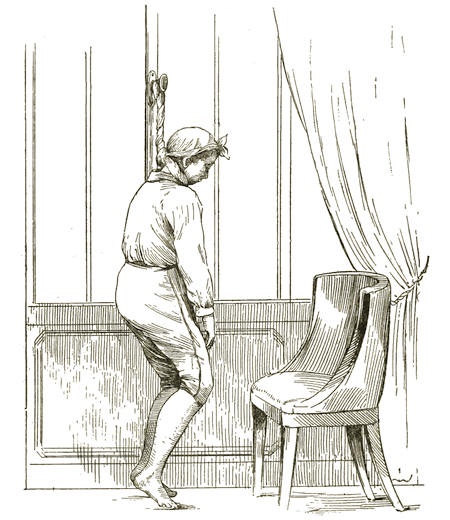
Fig. 22.—Suicide of Prince Condé. (See page 763.)
In one of the experiments of Faure[828] a large dog was hung, his feet touching the ground. For five minutes he was quiet, breathing without difficulty. He then tried to release himself, but instead tightened the knot; he made still greater efforts to release himself, became comatose and fell, apparently dead, at the end of ten minutes; was really dead in twenty-eight minutes.
In incomplete hanging the upper limbs may have any position; the lower limbs are disposed according to the position of the body (Cases 1, 10, 18, 19, 20, 22, 24, 26, 28, 37, 43, 50, 56).
Faure[829] made many observations on dogs which he killed by hanging. He describes the results as follows: The dog remains quiet usually twenty to thirty seconds, sometimes eight to ten minutes; then becomes violently agitated, the body being thrown forward and backward so powerfully that it bounds to a great height; the head is in motion; the jaws parted; the feet extended and flexed; sometimes brought up to the mouth and neck, trying to remove the obstruction; the inside of the mouth is violet-colored; tongue blackish, livid, may be bitten, often falls backward; the teeth are ground together; the eyes sometimes protrude; conjunctivæ congested; urine and fæces discharged. The agitation lasts two to five minutes, and then the dog gradually becomes quiet. Toward death, however, the agitation is renewed but in a different way; the fore feet are raised and put forward, the tongue often has a peculiar spasm, the chest is raised, the eyes drawn back into the orbits, pupils contracted; all of this is over within two seconds. Such paroxysms may be repeated half a dozen times. In dying, the eye oscillates from side to side and the pupil dilates. The heart beats some time longer.
Francis Bacon records that he knew a man who wanted to find out by experience if there was any suffering in hanging. He placed the cord around his neck and stepped off a bench, intending to step back again, but became immediately unconscious and would have died but for the opportune arrival of a friend. He said he saw a light before his eyes.
Treatment.
The first indications obviously are to let the subject down, and remove all constriction of neck and chest. Artificial respiration should then be used, and this may be assisted by the vapor of ammonia to the nose and tickling the fauces. If the body is warm, cold affusions may be applied to the head and chest, and galvanism may be used.
If the body is cold, apply warmth. Friction of the limbs aids in restoring warmth. If the subject can swallow give stimulants; these may also be used by rectum. Venesection may be required to relieve cerebral congestion or distention of the right heart and pulmonary circulation.
The following cases illustrate what may be done to resuscitate one who has been hanged: A man, age 35, in good health, weight one hundred and sixty pounds, was executed with a drop of over six feet; the rope slipped behind the mastoid process. After three minutes his struggles ceased; the radial beat ceased at six and one-half minutes; all signs of life at ten and one-half minutes, and the body was blue. Fourteen and one-half minutes, body let down; mark about one-fourth inch deep on neck; swelling above and below; no fracture of vertebræ. Strong galvanism of the pneumogastrics after sixteen or seventeen minutes at intervals of four seconds caused marked respiratory efforts; sixty-six minutes, galvanism renewed; heart-beat and radial pulse recognized; epiglottis swollen, requiring the tongue to be drawn forward; a few ounces of blood removed; pupils contracted. One hundred and four minutes, galvanism renewed; subject swallowed a little brandy-and-water. One hundred and thirteen minutes, slight muscular action; cornea sensible. One hundred and eighty-six minutes, feet warm, carotid pulsation. Signs of life now increased till six hours after drop, when pupils began to dilate again. Twelve to fifteen ounces of blood were taken and pupils again contracted and pulse beat strong and steady; breathing easy, more regular; eyes followed movements of persons around the room. Died nine hours later, fifteen hours after drop. The experiments were repeatedly interrupted by the sheriff.[830] Taylor[831] reports a case of recovery. Woman, age 44; found hanging from a clothes-line, thrown over a door and fastened to a handle on the other side; her knees on the floor; white froth around the mouth; tongue protruding and swollen; face dusky and swollen; lips dark blue; brown parchment mark on neck; skin abraded over larynx; conjunctiva insensible; pupils dilated and fixed; fingers clinched; limbs flaccid; no reaction from tickling feet; no respiration; faint heart-beat and fine thready pulse. Sylvester’s artificial respiration method used at once and continued for four and one-half hours; tongue held forward by forceps. One hundred and fifteen minutes after body was first seen there was spontaneous movement of legs. One hundred and forty-five minutes, conjunctivæ sensible. One hundred and seventy-five minutes, retching. Two hundred and five minutes, free vomiting. She recovered but remembered nothing of the hanging. Keen[832] reports the results of experiments upon a criminal who was executed by hanging. He was cut down about half an hour after the drop. Faradization and galvanization of pneumogastric and recurrent laryngeal nerves caused movements of left vocal cord, but not the right; there was no reflex motion in the larynx. The left phrenic nerve made no response to stimulus. The internal intercostal nerves caused the raising of the cartilage below them (inspiratory), the external intercostals depressed the upper seven ribs (expiratory), and raised the eighth. The other four not examined. The muscles of the face retained their contractility.
Very few, comparatively, however, have been restored after hanging. For cases of recovery see Medical Times and Gazette, London, 1871, Vol. I., p. 669 (Cases 12, 13, 42, 44, 47, 49, 66).
Post-Mortem Appearances.
The post-mortem appearances are external and internal.
The external appearances are those due to the action of the ligature on the neck and to other violence, if any has been done, and those due to asphyxia or syncope.
The MARKS of the ligature. If the suspension be very brief and the ligature soft and supple, and the body instantly cut down after death, there may be no mark. Allison[833] questions the value of the mark, contending that it is post mortem, and reports cases; says it is present only if the drop be considerable or the suspension continue after death. Tidy says that the mark is, in a measure, independent of the ligature and duration of suspension, and does not usually acquire its color for some hours after death; sometimes, however, it has occurred in a much shorter time. It may be slight because the ligature has been placed over the clothing. The longer a body hangs after death, the more the mark shows. It can be produced upon the cadaver.
Harvey[834] says: “The characteristic mark is sometimes found in non-fatal cases.... In eight instances in the present returns (of nearly 1,500 cases of hanging) there was a distinct mark.”
Coutagne,[835] in twenty-four necroscopies on subjects hung, found only slight or doubtful lesions in five cases; but of these, one was in a condition of advanced putrefaction, another was apparently weakened by loss of blood from wounds, and in the other three there were marks of violence. In seventeen cases the lesions of the neck were plain; hemorrhage in connective tissue or muscle.
The direction of the mark is usually oblique, following the line of the lower jaw upward and backward behind the mastoid processes; it may, however, be horizontal. If the ligature encircles the neck more than once, one mark may be circular, the other oblique. If a running noose is used the mark may be circular, and be seen all the way around the neck, looking like the mark of a strangulation. Taylor[836] states that if the noose should be in front, the mark may be circular, the jaw preventing the ligature from rising upward in front as much as it does behind. If it encircles the neck but once, its continuity is apt to be broken by the prominence of the hyoid bone, thyroid cartilage, sterno-mastoid muscles, etc.
In four-fifths of the cases (117 out of 143, Tardieu) the mark is found between the chin and larynx; in nearly all the remaining fifth, over the larynx; in a very few below the larynx; the last position is due to the protection of the neck by a handkerchief or beard, or where there is some anatomical or pathological peculiarity which prevents the ligature from going higher.
Hofmann[837] had seen two cases of tumor of neck; one in a woman, where the cord was below the larynx; and in a man where it was over the larynx. He quotes[838] as follows: Remer, above larynx, 38; over larynx, 7; below larynx, 2. Devergie, above larynx, 20; over larynx, 7; below larynx, 1. Casper, above larynx, 59; over larynx, 9. Roth[839] in 49 cases found the ligature mark above the hyoid bone in 5; between the bone and the larynx, 31; over the larynx, 8; below the larynx, 1. Hackel found the ligature in forty per cent of cases between hyoid bone and larynx; in sixty per cent lower down. The ligature always appears lower after the body is laid down than it was in suspension. Maschka found the furrow 147 times in 153 cases above the larynx.
The mark will vary in character according to the kind of ligature used, its mode of application, the vitality of the tissues, and the period that has elapsed since death. The result is different according as the knot or loop is single or double, a running or slip knot.
The mark may differ in character in one part of the neck from another. The same furrow may be soft in one part and dry in another. The width of the mark does not necessarily correspond to the diameter of the ligature. A double mark usually means that the ligature has been twice passed around the neck, although the marks may not be continuous or parallel. Tardieu states that a large single leather thong pressing on the neck only by its borders may make a double mark. The mark is usually depressed. The depth of the depression, groove, or furrow, as it is called, is greater the narrower and firmer the ligature, the longer the suspension, and the greater the weight of the body. The mark may be merely a slight depression, without color, or only a red blush, if the subject is young, tissues healthy, and suspension brief. Roth,[840] in 49 cases of hanging, found the furrow of the ligature was brown in 40, red-brown in 6, and 3 times bluish.
In about two-thirds of the cases the bottom of the furrow, the place of greatest pressure, is white, especially so where the knot is tied; while the edges of the furrow are usually slightly raised and red or livid. If the subject is very fat, there may be only a slight depression. Harvey[841] says that this hard, white, shining, translucent band from compression of the connective tissue is the first stage of the parchment or vellum skin, and is chiefly noticed in fresh bodies. The borders are swollen and œdematous, called by Lacassagne “bourrelet de sillon.”
The skin beyond the furrow is usually violet. Authors differ as to whether this is due to congestion or hemorrhage. Roth[842] in 49 cases found swelling below the furrow 27 times. Hackel found ecchymoses above the mark in thirty-five per cent of the cases of hanging. Hofmann thinks that the lividity of the upper border of the furrow is due to the stopping of the venous blood descending from the head.
The dry, hard, yellowish-brown, or reddish-brown “parchment” furrow, described by writers, is said to be common. Ogston[843] found it in one-third of his cases. It is found only when the body has remained suspended for several hours after death; indeed, may be produced by applying the ligature to the cadaver; is not at all, therefore, a proof of suspension during life. Liman states that constriction by a ligature even for some time does not necessarily cause a mummified or excoriated furrow. He saw cases in which the mark was soft, flat, scarcely colored, but little interrupted, and not parchmenty. The parchment skin seems to depend very much upon a previous excoriation of the skin. Its appearance can be prevented or delayed by examining a body soon after death or by rehanging it; and after it has appeared it will disappear on the application of some liquid. Taylor[844] compares this parchment mark to the cutis from which the cuticle has been removed for two or three days.
Slight abrasions and ecchymoses are sometimes found in the furrow. Ecchymoses alone do not indicate whether suspension has been before or after death; but abrasions with hemorrhage strongly suggest suspension during life. Devergie regards ecchymoses of the neck as strongly suggestive of homicide. Neyding[845] says that suggillation in the groove is oftener found in strangulation than hanging. And Bremme[846] that there is no hemorrhage in the subcutaneous tissue of the mark if death occurs at once and the cord is removed at once after death; but if the cord remains for some time after death there may be hemorrhage, or if death does not occur at once, whether the ligature be removed or not.
Roth[847] found ecchymoses or small bladders at the lower margin of the furrow, 9 times in 49 cases. Riechke found only once in 30 cases a hemorrhage beneath and on both sides of the mark. Chevers did not find ecchymoses of the skin of the mark in cases of hanging. Casper found no ecchymoses in 50 of 71 cases. Maschka has seen two cases where burns on the neck resembled mark of ligature.