FIRST DAYS OF THE RECONSTRUCTION
Reading edition
BY
CARL SCHURZ
ILLUSTRATIONS FROM PHOTOGRAPHS
My travels in the interior of the South in the summer and fall of 1865 took me over the track of Sherman's march, which, in South Carolina at least, looked for many miles like a broad black streak of ruin and desolation—fences gone, lonesome smoke-stacks, surrounded by dark heaps of ashes and cinders, marking the spots where human habitations had stood, the fields along the road wildly overgrown by weeds, with here and there a sickly-looking patch of cotton or corn cultivated by negro squatters. In the city of Columbia, the political capital of the State, I found a thin fringe of houses encircling a confused mass of charred ruins of dwellings and business buildings which had been destroyed by a sweeping conflagration.
No part of the South I then visited had, indeed, suffered as much from the ravages of the war as South Carolina—the State which was looked upon by the Northern soldier as the principal instigator of the whole mischief and therefore deserving of special punishment. But even those regions which had been touched but little or not at all by military operations were laboring under dire distress. The Confederate money in the hands of the Southern people, paper money signed by the Confederate government without any security behind it, had by the collapse of the Confederacy become entirely worthless. Only a few individuals of more or less wealth had been fortunate enough to save, and to keep throughout the war, small hoards of gold and silver, which in the aggregate amounted to little. Immediately after the close of the war the people may be said to have been substantially without a "circulating medium" to serve in the transaction of ordinary business. United States money came in to fill the vacuum, but it could not be had for nothing; it could be obtained only by selling something for it, in the shape of goods or of labor. The Southern people, having during four years of war devoted their productive activity, aside from the satisfaction of their current home wants, almost entirely to the sustenance of their army and of the machinery of their government, and having suffered great losses by the destruction of property, had, of course, very little to sell. In fact, they were dreadfully impoverished and needed all their laboring capacity to provide for the wants of the next day; and as agriculture was their main resource, upon which everything else depended, the next day was to them of supreme importance.
The First Crop Without Slaves
But now the men come home from the war found their whole agricultural labor system turned upside down. Slave labor had been their absolute reliance. They had been accustomed to it, they had believed in it, they had religiously regarded it as a necessity in the order of the universe. During the war a large majority of the negroes had stayed upon the plantations and attended to the crops in the wonted way in those regions which were not touched by the Union armies. They had heard of "Mas'r Lincoln's" Emancipation Proclamation in a more or less vague way, but did not know exactly what it meant, and preferred to remain quietly at work and wait for further developments. But when the war was over, general emancipation became a well-understood reality. The negro knew that he was a free man, and the Southern white man found himself face to face with the problem of dealing with the negro as a free laborer. To most of the Southern whites this problem was utterly bewildering. Many of them, honest and well-meaning people, admitted to me, with a sort of helpless stupefaction, that their imagination was wholly incapable of grasping the fact that their former slaves were now free. And yet they had to deal with this perplexing fact, and practically to accommodate themselves to it, at once and without delay, if they were to have any crops that year.
Many of them would frankly recognize this necessity and begin in good faith to consider how they might meet it. But then they stumbled forthwith over a set of old prejudices which in their minds had acquired the stubborn force of convictions. They were sure the negro would not work without physical compulsion; they were sure the negro did not, and never would, understand the nature of a contract; and so on. Yes, they "accepted the situation." Yes, they recognized that the negro was henceforth to be a free man. But could not some method of force be discovered and introduced to compel the negro to work? It goes without saying that persons of such a way of thinking labored under a heavy handicap in going at a difficult task with a settled conviction that it was really "useless to try." But even if they did try, and found that the negro might, after all, be induced to work without physical compulsion, they were apt to be seriously troubled by things which would not at all trouble an employer accustomed to free labor. I once had an argument with a Georgia planter who vociferously insisted that one of his negro laborers who had objected to a whipping had thereby furnished the most conclusive proof of his unfitness for freedom. And such statements were constantly reinforced by further assertion that they, the Southern whites, understood the negro and knew how to treat him, and that we of the North did not and never would.
This might have been true in one sense, but not true in another. The Southerner knew better than the Northerner how to treat the negro as a slave, but it did not follow that he knew best how to treat the negro as a freeman; and just there was the rub. It was perhaps too much to expect of the Southern slaveholders, or of Southern society generally, that a clear judgment of the new order of things should have come to them at once. The total overturning of the whole labor system of a country, accomplished suddenly, without preparation or general transition, is a tremendous revolution, a terrible wrench, well apt to confuse men's minds. It should not have surprised any fair-minded person that many Southern people for a time clung to the accustomed idea that the landowner must also own the black man tilling his land, and that any assertion of freedom of action on the part of that black man was insubordination equivalent to criminal revolt, and any dissent by the black man from the employer's opinion or taste intolerable insolence. Nor should it be forgotten that the urgent necessity of negro labor for that summer's crop could hardly fail to sharpen the nervous tension then disquieting Southern society.
Restless Foot-loose Negroes
It is equally natural that the negro population of the South should at that time have been unusually restless. I have already mentioned the fact that during the Civil War the bulk of the slave population remained quietly at work on the plantations, except in districts touched by the operations of the armies. Had negro slaves not done so, the Rebellion would not have survived its first year. They presented the remarkable spectacle of an enslaved race doing slaves' work to sustain a government and an army fighting for the perpetuation of its enslavement. Some colored people did, indeed, escape from the plantations and run into the Union lines where our troops were within reach, and some of their young men enlisted in the Union army as soldiers. But there was nowhere any commotion among them that had in the slightest degree the character of an uprising in force of slaves against their masters. Nor was there, when, after the downfall of the Confederacy, general emancipation had become an established fact, a single instance of an act of vengeance committed by a negro upon a white man for inhumanity suffered by him or his while in the condition of bondage. No race or class of men ever passed from slavery to freedom with a record equally pure of revenge. But many of them, especially in the neighborhood of towns or of Federal encampments, very naturally yielded to the temptation of testing and enjoying their freedom by walking away from the plantations to have a frolic. Many others left their work because their employers ill-treated them or in other ways incurred their distrust. Thus it happened that in various parts of the South the highroads and byways were alive with foot-loose colored people.
I did not find, so far as I was informed by personal observation or report, that their conduct could, on the whole, be called lawless. There was some stealing of pigs and chickens and other petty pilfering, but rather less than might have been expected. More serious depredations rarely, if ever, occurred. The vagrants were throughout very good-natured. They had their carousals with singing and dancing, and their camp-meetings with their peculiar religious programs. But, while these things might in themselves have been harmless enough under different circumstances, they produced deplorable effects in the situation then existing. Those negroes stayed away from the plantations just when their labor was most needed to secure the crops of the season, and those crops were more than ordinarily needed to save the population from continued want and misery. Violent efforts were made by white men to drive the straggling negroes back to the plantations by force, and reports of bloody outrages inflicted upon colored people came from all quarters. I had occasion to examine personally into several of those cases, and I saw in odious hospitals negroes, women as well as men, whose ears had been cut off, or whose bodies were slashed with knives, or bruised with whips or bludgeons, or punctured with shot-wounds. Dead negroes were found in considerable numbers in the country roads or on the fields, shot to death, or strung on the limbs of trees. In many districts the colored people were in a panic of fright, and the whites in a state of almost insane irritation against them. These conditions in their worst form were only local, but they were liable to spread, for there was plenty of inflammable spirit of the same kind all over the South. It looked sometimes as if wholesale massacres were prevented only by the presence of the Federal garrisons which were dispersed all over the country.
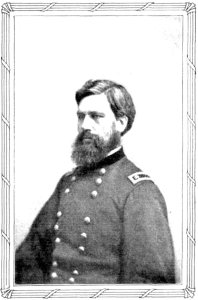
MAJOR-GENERAL O. O. HOWARD
FROM A PHOTOGRAPH TAKEN IN DECEMBER, 1862, JUST AFTER HIS PROMOTION TO MAJOR-GENERAL OF VOLUNTEERS
The Freedmen's Bureau
Indeed, nothing could have been more necessary at that time than the active interposition of the Federal power between the whites and the blacks of the South, not only to prevent or repress violent collisions, but to start the former masters and the former slaves on the path of peaceful and profitable coöperation as employers and free laborers. This was a difficult task. Northern men who had come to the South to purchase or lease plantations enjoyed the great advantage of having money, so that they could pay the wages of their negro laborers in cash, which the negroes preferred. The Southern men, having been stripped almost naked by the war, had, aside from current sustenance, only prospective payment to offer, consisting mostly of a part of the crop. While many planters were just and even liberal in the making of cash contracts, others would take advantage of the ignorance of the negroes and try to tie them down to stipulations which left to the laborer almost nothing, or even obliged him to run in debt to his employer, and thus drop into the condition of a mere peon, a debt-slave. It is a very curious fact that some of the forms of contract drawn up by former slaveholders contained provisions looking to the probability of a future restoration of slavery. There was, not unnaturally, much distrust of the planters among the negroes, who, in concluding contracts, feared to compromise their rights as freemen or to be otherwise overreached. To allay that distrust and, in many cases, to secure their just dues, they stood much in need of an adviser in whom they had confidence and to whom they could look for protection, while, on the other hand, the employers of negro labor stood in equal need of some helpful authority to give the colored people sound instruction as to their duties as freemen and to lead them back to the path of industry and good order when, with their loose notions of the binding force of agreements, they broke their contracts, or indulged themselves otherwise in unruly pranks.
To this end the "Freedmen's Bureau" was instituted, an organization of civil officials who were, with the necessary staffs, dispersed all over the South to see that the freedmen had their rights and to act as intermediaries between them and the whites. The conception was a good one, and the institution, at the head of which General O. O. Howard was put, did useful service in many instances.
Thus the strain of the situation was somewhat relieved by the interposition of the Federal authority between clashing elements, but by no means as much as was required to produce a feeling of security. The labor puzzle, aggravated by race antagonism, was indeed the main distressing influence, but not the only one. To the younger Southerners who had grown up in the heated atmosphere of the political feud about slavery, to whom the threat of disunion as a means to save slavery had been like a household word, and who had always regarded the bond of Union as a shackle to be cast off, the thought of being "reunited" to "the enemy," the hated Yankee, was distasteful in the extreme. Such sentiments of the "unconquered" found excited and exciting expression in the Southern press, and were largely entertained by many Southern clergymen of different denominations and still more ardently by Southern women. General Thomas Kilby Smith, commanding the southern districts of Alabama, reported to me that when he suggested to Bishop Wilmer, of the Episcopal diocese of Alabama, the propriety of restoring to the Litany that prayer which includes the President of the United States, the whole of which he had ordered his rectors to expurge, the bishop refused, first, upon the ground that he could not pray for a continuance of martial law, and, secondly, because he would, by ordering the restoration of the prayer, stultify himself in the event of Alabama and the Southern Confederacy regaining independence.
Pickles and Patriotism
The influence exercised by the feelings of the women of the South upon the condition of mind and the conduct of the men was, of course, very great. Of those feelings I witnessed a significant manifestation in a hotel at Savannah. At the public dinner-table I sat opposite a lady in black, probably mourning. She was middle-aged, but still handsome, and of an agreeable expression of countenance. She seemed to be a lady of the higher order of society. A young lieutenant in Federal uniform took a seat by my side, a youth of fine features and gentlemanly appearance. The lady, as I happened to notice, darted a glance at him which, as it impressed me, indicated that the presence of the person in Federal uniform was highly obnoxious to her. She seemed to grow restless, as if struggling with an excitement hard to restrain. To judge from the tone of her orders to the waiter, she was evidently impatient to finish her dinner. When she reached for a dish of pickles standing on the table at a little distance from her, the lieutenant got up and, with a polite bow, took it and offered it to her. She withdrew her hand as if it had touched something loathsome, her eyes flashed fire, and in a tone of wrathful scorn and indignation she said: "So you think a Southern woman will take a dish of pickles from a hand that is dripping with the blood of her countrymen?" Then she abruptly left the table, while the poor lieutenant, deeply blushing, apparently stunned by the unexpected rebuff, stammered some words of apology, assuring the lady that he had meant no offense.
The mixing of a dish of pickles with so hot an outburst of Southern patriotism could hardly fail to evoke a smile; but the whole scene struck me as gravely pathetic, and as auguring ill for the speedy revival of a common national spirit.
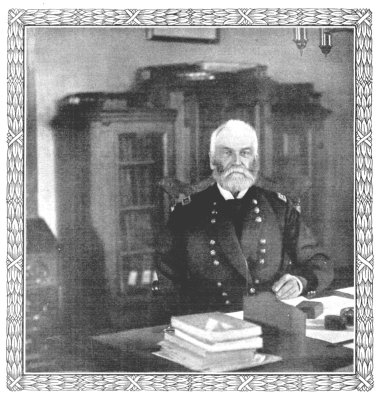
A PHOTOGRAPH OF GENERAL HOWARD, TAKEN AT GOVERNOR'S ISLAND IN 1893
AT THE CLOSE OF THE WAR GENERAL HOWARD WAS APPOINTED CHIEF OF THE FREEDMEN'S BUREAU
The South's Hopeless Poverty
Southern women had suffered much by the Civil War, on the whole far more than their Northern sisters. There was but little exaggeration in the phrase which was current at the time, that the Confederacy, in order to fill its armies, had to "draw upon the cradle and the grave." Almost every white male capable of bearing arms enlisted or was pressed into service. The loss of men, not in proportion to the number on the rolls, but in proportion to the whole white population, was far heavier in the South than in the North. There were not many families unbereft, not many women who had not the loss of a father, or a husband, or a brother, or a friend to deplore. In the regions in which military operations had taken place the destruction of property had been great, and while most of that destruction seemed necessary in the opinion of military men, in the eyes of the sufferers it appeared wanton, cruel, malignant, devilish. The interruption of the industries of the country, the exclusion by the blockade of the posts of all importations from abroad, and the necessity of providing for the sustenance of the armies in the field, subjected all classes to various distressing privations and self-denials. There were bread riots in Richmond. Salt became so scarce that the earthen floors of the smoke-houses were scraped to secure the remnants of the brine-drippings of former periods. Flour was at all times painfully scarce. Coffee and tea were almost unattainable. Of the various little comforts and luxuries which by long common use had almost become necessaries, many were no longer to be had. Mothers had to ransack old rag-bags to find material with which to clothe their children. Ladies accustomed to a life of abundance and fashion had not only to work their old gowns over and to wear their bonnets of long ago, but also to flit with their children from one plantation to another in order to find something palatable to eat in the houses of more fortunate friends who had in time provided for themselves. And when at last the war was over, the blockade was raised, and the necessaries and comforts so long and so painfully missed came within sight again, the South was made only more sensible of her poverty. It was indeed an appalling situation, looking in many respects almost hopeless. And for all this the Southern woman, her heart full of the mournful memories of the sere past and heavy with the anxieties of the present, held the "cruel Yankee" responsible.
From time to time, traveling from State to State, I reported to President Johnson my observations and the conclusions I drew from them. Not only was I most careful to tell him the exact truth as I saw it; I also elicited from our military officers and from agents of the Freedmen's Bureau stationed in the South, as well as from prominent Southern men, statements of their views and experiences, which formed a mighty body of authoritative testimony, coming as it did from men of high character and important public position, some of whom were Republicans, some Democrats, some old anti-slavery men, some old pro-slavery men. All these papers, too, I submitted to the President. The historian of that time will hardly find more trustworthy material. They all substantially agreed upon certain points of fact. They all found that the South was at peace in so far as there was no open armed conflict between the government troops and organized bodies of insurgents. The South was not at peace inasmuch as the different social forces did not peaceably coöperate, and violent collisions on a great scale were prevented or repressed only by the presence of the Federal authority supported by the government troops on the ground for immediate action. The "results of the war," recognized in the South in so far as the restoration of the Union and the Federal Government, were submitted to by virtue of necessity, and the emancipation of the slaves and the introduction of free labor were accepted in name; but the Union was still hateful to a large majority of the white population of the South, the Southern Unionists were still social outcasts, the officers of the Union were still regarded as foreign tyrants ruling by force. And as to the abolition of slavery, emancipation, although "accepted" in name, was still denounced by a large majority of the former master class as an "unconstitutional" stretch of power, to be reversed if possible; and that class, the ruling class among the whites, was still desiring, hoping, and striving to reduce the free negro laborer as much as possible to the condition of a slave. And this tendency was seriously aggravated by the fact that the South, exhausted and impoverished, stood in the most pressing need of productive agricultural labor, while the landowners generally did not yet know how to manage the former slave as a free laborer, and the emancipated negro was still unused to the rights and duties of a freeman. In short, Southern society was still in that most confused, perplexing, and perilous of conditions—the condition of a defeated insurrection leaving irritated feelings behind it, and of a great social revolution only half accomplished, leaving antagonistic forces face to face. The necessity of the presence of a restraining and guiding higher authority could hardly have been more obvious.
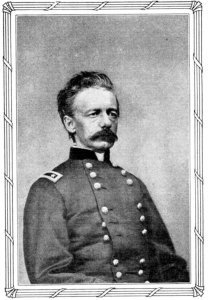
MAJOR-GENERAL H. W. SLOCUM
FROM A WAR-TIME PHOTOGRAPH
Johnson's Haste for Reconstruction
During the first six weeks of my travels in the South I did not receive a single word from the President or any member of the administration; but through the newspapers and the talk going on around me I learned that the President had taken active measures to put the "States lately in rebellion" into a self-governing condition—that is to say, he had appointed "provisional governors"; he had directed those provisional governors to call conventions, to be elected, according to the plan laid down in the North Carolina proclamation, by the "loyal" white citizens, an overwhelming majority of whom were persons who had adhered to the Rebellion and had then taken the prescribed oath of allegiance. On the same basis, the provisional governors were to set in motion again the whole machinery of civil government as rapidly as possible. When, early in July, I had taken leave of the President to set out on my tour of investigation, he, as I have already mentioned, had assured me that the North Carolina proclamation was not to be regarded as a plan definitely resolved upon; that it was merely tentative and experimental; that before proceeding further he would "wait and see"; and that to aid him by furnishing him information and advice while he was "waiting and seeing" was the object of my mission. Had not this been the understanding, I should not have undertaken the wearisome and ungrateful journey. But now he did not wait and see; on the contrary, he rushed forward the political reconstruction of the Southern States in hot haste—apparently without regard to consequences.
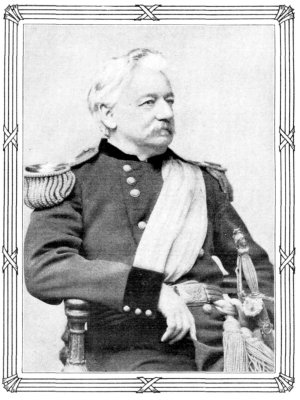
MAJOR-GENERAL H. W. SLOCUM
FROM A PHOTOGRAPH TAKEN SHORTLY BEFORE HIS DEATH IN 1894
Every good citizen most cordially desired the earliest practicable reëstablishment of the constitutional relations of the late "rebel States" to the national government; but, before restoring those States to all the functions of self-government within the Union, the national government was in conscience bound to keep in mind certain debts of honor. One was due to the Union men of the South who had stood true to the republic in the days of trial and danger; and the other was due to the colored people who had furnished 200,000 soldiers to our army at the time when enlistments were running slack, and to whom we had given the solemn promise of freedom at a time when that promise gave a distinct moral character to our war for the Union, fatally discouraging the inclination of foreign governments to interfere in our civil conflict. Not only imperative reasons of statesmanship, but the very honor of the republic seemed to forbid that the fate of the emancipated slaves be turned over to State governments ruled by the former master class without the simplest possible guaranty of the genuineness of their freedom. But, as every fair-minded observer would admit, nothing could have been more certain than that the political restoration of the "late rebel States" as self-governing bodies on the North Carolina plan would, at that time, have put the whole legislative and executive power of those States into the hands of men ignorant of the ways of free labor society, who sincerely believed that the negro would not work without physical compulsion and was generally unfit for freedom, and who were then pressed by the dire necessities of their impoverished condition to force out of the negroes all the agricultural labor they could with the least possible regard for their new rights. The consequences of all this were witnessed in the actual experiences of every day.
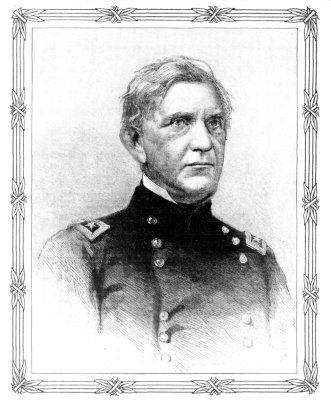
MAJOR-GENERAL E. R. S. CANBY
COMMANDER OF THE DEPARTMENT OF LOUISIANA
Arming the Young Men of the South
At last I came again into contact with the President. Late in August I arrived in Vicksburg, Mississippi, and visited the headquarters of Major-General Slocum, who commanded the Department of the Mississippi. I found the General in a puzzled state of mind about a proclamation recently issued by Mr. W. L. Sharkey, whom President Johnson had appointed provisional governor of that State, calling "upon the people, and especially upon such as are liable to perform military duty and are familiar with military discipline," and more especially "the young men of the State who have so distinguished themselves for gallantry," to organize as speedily as possible volunteer companies in every county of the State, at least one company of cavalry and one of infantry, for the protection of life, property, and good order in the State. This meant no more nor less than the organization under the authority of one of the "States lately in rebellion" of a large armed military force consisting of men who had but recently surrendered their arms as Confederate soldiers.
Two days before my arrival at Vicksburg, General Slocum had issued a "general order" in which he directed the district commanders under him not to permit within their districts the organization of such military forces as were contemplated by Governor Sharkey's proclamation. The reasons for such action, given by General Slocum in the order itself, were conclusive. While the military forces of the United States sent to the State of Mississippi for the purpose of maintaining order and of executing the laws of Congress and the orders of the War Department had performed their duties in a spirit of conciliation and forbearance and with remarkable success, the provisional governor, on the alleged ground that this had not been done to his satisfaction, and without consulting the department commander, had called upon the late Confederate soldiers, fresh from the war against the national government, to organize a military force intended to be "independent of the military authority now present, and superior in strength to the United States powers on duty in the States." The execution of this scheme would bring on collisions at once, especially when the United States forces consisted of colored troops. The crimes and disorder the occurrence of which the provisional governor adduced as his reason for organizing his State volunteers had been committed or connived at, as the record showed, by people of the same class as that to which the governor's volunteers would belong. The commanding general, as well as every good citizen, earnestly desired to hasten the day when the troops of the United States could with safety be withdrawn, but that day would "not be hastened by arming at this time the young men of the South."
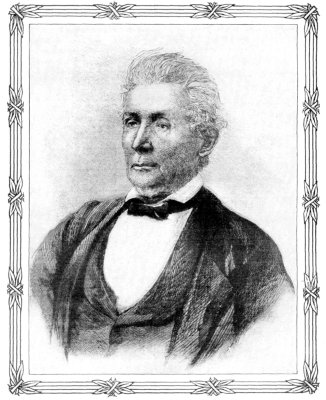
SENATOR WILLIAM LEWIS SHARKEY
APPOINTED PROVISIONAL GOVERNOR OF MISSISSIPPI BY PRESIDENT JOHNSON
General Slocum—by the way, be it said, not at all an old anti-slavery man, but a Democrat in politics—was manifestly right. He showed me reports from his district commanders which substantially anticipated his order. But the General was anxious to know whether the President had authorized or approved Governor Sharkey's action. This he asked me to ascertain, and I telegraphed to President Johnson the following despatch:
"General Slocum has issued an order prohibiting the organization of the militia in this State. The organization of the militia would have been a false step. All I can see and learn in the State convinces me that the course followed by General Slocum is the only one by which public order and security can be maintained. To-day I shall forward by mail General Slocum's order with a full statement of the case."
The President Defends Southern Militia
It is hard to imagine my amazement when, at two o'clock on the morning of September 1, I was called up from my berth on a Mississippi steamboat carrying me from Vicksburg to New Orleans, off Baton Rouge, to receive a telegraphic despatch from President Johnson, to which I cannot do justice without quoting it in full:
Washington, D. C., August 30, 1865.
To Major-General Carl Schurz, Vicksburg, Mississippi.
I presume General Slocum will issue no order interfering with Governor Sharkey in restoring functions of the State Government without first consulting the Government, giving the reasons for such proposed interference. It is believed there can be organized in each county a force of citizens or militia to suppress crime, preserve order, and enforce the civil authority of the State and of the United States which would enable the Federal Government to reduce the Army and withdraw to a great extent the forces from the state, thereby reducing the enormous expense of the Government. If there was any danger from an organization of the Citizens for the purpose indicated, the military are there to detect and suppress on the first appearance any move insurrectionary in its character. One great object is to induce the people to come forward in the defense of the State and Federal Government. General Washington declared that the people or the militia was the Army of the Constitution or the Army of the United States, and as soon as it is practicable the original design of the Government must be resumed and the Government administrated upon the principles of the great chart of freedom handed down to the people by the founders of the Republic. The people must be trusted with their Government, and, if trusted, my opinion is they will act in good faith and restore their former Constitutional relations with all the States composing the Union. The main object of Major-General Carl Schurz's mission to the South was to aid as far as practicable in carrying out the policy adopted by the Government for restoring the States to their former relations with the Federal Government. It is hoped such aid has been given. The proclamation authorizing restoration of State Governments requires the military to aid the Provisional Governor in the performance of his duties as prescribed in the proclamation, and in no manner to interfere or throw impediments in the way of consummating the object of his appointment, at least without advising the Government of the intended interference.
Andrew Johnson, Prest. U. S.
As soon as I reached New Orleans, I telegraphed my reply. The President having apparently supposed that I had ordered General Slocum to issue his order, I thought it due to myself to inform the President that the order had been out before I saw the General, but that I decidedly approved of it.
According to the President's own words, I had understood the President's policy to be merely experimental and my mission to be merely one of observation and report. I had governed myself strictly by this understanding, seeking to aid the President by reliable information, believing that it could not be the President's intention to withdraw his protecting hand from the Union people and freedom before their rights and safety were secured. I entreated him not to disapprove General Slocum's conduct and to give me an indication of his purposes concerning the Mississippi militia case.
The next day, September 2, after having seen Major-General Canby, the commander of the Department of Louisiana, an uncommonly cool-headed and cautious man, I telegraphed again as follows:
"To the President: General Canby authorizes me to state that the organization of local militia companies was tried in his department, but that he found himself obliged to disband them again because they indulged in the gratification of private vengeance and worked generally against the policy of the Government. Sheridan has issued an order in Texas embracing the identical points contained in General Slocum's order."
Criticism and Personal Discomfort
Thereupon I received on September 6 a telegram simply announcing the receipt of my "despatch of the 30th ultimo," probably meaning my letter from Vicksburg; and then nothing more—not a word indicating the President's policy, or his wishes, or his approval or disapproval of my conduct. But meanwhile I had found a short paragraph in a New Orleans paper telegraphed from Washington, only a few lines, stating that the President was dissatisfied with me, and that I was especially blamed for having written to the newspapers instead of informing him. I believed I saw in this news paragraph an inspiration from the White House. Acting upon that supposition, I at once wrote to the President, reminding him that I had not sought this mission to the South, but had accepted it thinking that I might do the country some service. I pointed out to him that the charge that I had reported to the newspapers instead of to the President was simply absurd; that I had written to the President a series of elaborate reports; and, though I had, indeed, written a few letters to a newspaper, that it was well understood by the Secretary of War that I would do this when he made the arrangements for my journey. The compensation set out for me, I reminded the President, was a mere War Department clerk's salary, utterly insufficient to cover the expenses incidental to my travels, aside from transportation and subsistence, among which incidentals was a considerable extra premium on my life-insurance on account of my travels so far South during the summer, and consequently, as the Secretary of War understood and appreciated, I had to earn something in some way to make my journey financially possible. My newspaper letters contained nothing that should have been treated as official secrets, but incidents of travel, anecdotes, picturesque views of Southern conditions with some reflections thereon, mostly things which would not find proper elaboration in official reports—and all this quite anonymous, so as not to have the slightest official character; and, finally, I wrote, I had a right to feel myself entitled to protection against such imputations as the newspaper paragraph in question contained.
My first impulse was to resign my mission at once and return home. But then I considered that the duty to the public which I had assumed obliged me to finish my work as well as I could, unless I were expressly recalled by the President. I would, therefore, at any rate, go on with my inquiries, in expectation of an answer from him to my letter. I was outraged at the treatment I was receiving. I had undertaken the journey in obedience to an urgent request of the President and at serious sacrifice, for I was on the point of returning to my Western home when the President called me. My journey in the South during the hottest part of the year was in the highest degree laborious and fatiguing, but it was hardly worse than the sweltering nights in the wretched country taverns of those days—nights spent in desperate fights with ravenous swarms of mosquitos. The upshot of it was that, when I arrived at New Orleans, the limits of my endurance were well-nigh reached, and a few days later I had a severe attack of the "break-bone fever," an illness which by the sensations it caused me did full justice to its ill-boding name. I thought I might fight the distemper by leaving New Orleans and visiting other parts in pursuit of my inquiries. I went to Mobile for the purpose of looking into the conditions of southern Alabama, returned to New Orleans, and then ran up Bayou Teche in a government tug-boat as far as New Iberia, where I was literally driven back by clouds of mosquitos of unusual ferocity. At New Orleans I despatched an additional report to the President, and then, relentlessly harassed by the break-bone fever, which a physician advised me I should not get rid of as long as I remained in that climate, I set my face northward, stopping at Natchez and Vicksburg to gather some important information.
The End of an Aristocracy
At Natchez I witnessed a significant spectacle. I was shown some large dwelling-houses which before the Civil War had at certain seasons been occupied by families of the planting aristocracy of that region. Most of those houses now looked deserted and uncared for, shutters unhinged, window-panes broken, yards and gardens covered with a rank growth of grass and weeds. In the front yard of one of the houses I observed some fresh stumps and stacks of cordwood and an old man busy cutting down with an ax a magnificent shade-tree. There was something distinguished in his appearance that arrested my attention—fine features topped with long white locks; slender, delicate hands; clothes shabby, but of a cut denoting that they had originally been made for a person above the ordinary wood-chopper. My companion, a Federal captain, did not know him. I accosted him with the question to whom that house belonged. "It belongs to me," he said. I begged his pardon for asking the further question why he was cutting down that splendid shade-tree. "I must live," he replied, with a sad smile. "My sons fell in the war; all my servants have left me. I sell fire-wood to the steamboats passing by." He swung his ax again to end the conversation. A warm word of sympathy was on my tongue, but I repressed it, a look at his dignified mien making me apprehend that he might resent being pitied, especially by one of the victorious enemy.
At Vicksburg I learned from General Slocum that Governor Sharkey himself had, upon more mature reflection, given up the organization of his State militia as too dangerous an experiment.
I left the South troubled by great anxiety. Four millions of negroes, of a race held in servitude for two centuries, had suddenly been made free men. That an overwhelming majority of them, grown up in the traditional darkness of slavery, should at first not have been able to grasp the duties of their new condition, together with its rights, was but natural. It was equally natural that the Southern whites, who had known the negro laborer only as a slave, and who had been trained only in the habits and ways of thinking of the master class, should have stubbornly clung to their traditional prejudice that the negro would not work without physical compulsion. They might have concluded that their prejudice was unreasonable; but, such is human nature, a prejudice is often the more tenaciously clung to the more unreasonable it is. There was, therefore, a strong tendency among the whites to continue the old practices of the slavery system to force the negro freedmen to labor for them. Thus the two races, whose well-being depended upon their peaceable and harmonious coöperation, confronted each other in a state of fearful irritation, aggravated by the pressing necessity of producing a crop that season, and embittered by race antagonism. The Southern whites wished and hoped to be speedily restored to the control of their States by the reëstablishment of their State governments. To this end they were willing to recognize "the results of the war," among them the abolition of slavery, in point of form. The true purpose was to use the power of the State governments, legislative and executive, to reduce the freedom of the negroes to a minimum and to revive as much of the old slave code as they thought necessary to make the blacks work for the whites.
Now President Johnson stepped in and, by directly encouraging the expectation that the States would without delay be restored to full self-control even under present circumstances, distinctly stimulated the most dangerous reactionary tendencies to more reckless and baneful activity.
An Ungracious Reception
This was my view of Southern conditions when I returned from my mission of inquiry. Arrived at Washington, I reported myself at once at the White House. The President's private secretary, who seemed surprised to see me, announced me to the President, who sent out word that he was busy. When would it please the President to receive me? The private secretary could not tell, as the President's time was much occupied by urgent business. I left the anteroom, but called again the next morning. The President was still busy. I asked the private secretary to submit to the President that I had returned from a three months' journey made at the President's personal request; that I thought it my duty respectfully to report myself back; and that I should be obliged to the President if he would let me know whether, and if so when, he would receive me to that end. The private secretary went in again, and brought out the answer that the President would see me in an hour or so. At the appointed time I was admitted. The President received me without a smile of welcome. His mien was sullen. I said that I had returned from the journey which I had made in obedience to his demand, and was ready to give him, in addition to the communications I had already sent him, such further information as was in my possession. A moment's silence followed. Then he inquired about my health. I thanked him for the inquiry and hoped the President's health was good. He said it was. Another pause, which I brought to an end by saying that I wished to supplement the letters I had written to him from the South with an elaborate report giving my experiences and conclusions in a connected shape. The President looked up and said that I need not go to the trouble of writing out such a general report on his account. I replied that it would be no trouble at all, but that I should consider it a duty. The President did not answer. The silence became awkward, and I bowed myself out.
President Johnson evidently wished to suppress my testimony as to the condition of things in the South. I resolved not to let him do so. I had conscientiously endeavored to see Southern conditions as they were. I had not permitted any political considerations or any preconceived opinions on my part to obscure my perception and discernment in the slightest degree. I had told the truth, as I learned it and understood it, with the severest accuracy, and I thought it due to the country that the truth should be known.
Why the President Reversed his Policy
Among my friends in Washington there were different opinions as to how the striking change in President Johnson's attitude had been brought about. Some told me that during the summer the White House had been fairly besieged by Southern men and women of high social standing, who had told the President that the only element of trouble in the South consisted of a lot of fanatical abolitionists who excited the negroes with all sorts of dangerous notions, and that all would be well if he would only restore the Southern State government as quickly as possible according to his own plan as laid down in the North Carolina proclamation, and that he was a great man to whom they looked up as their savior. It was now thought that Mr. Johnson, the plebeian who before the war had been treated with undisguised contempt by the slaveholding aristocracy, could not withstand the subtle flattery of the same aristocracy when they flocked around him as humble suppliants cajoling his vanity.
I went to work at my general report with the utmost care. My statements of fact were invariably accompanied by the sources of my information, my testimony being produced in the language of my informants. I scrupulously avoided exaggeration and cultivated sober and moderate forms of expression. It gives me some satisfaction now to say that none of those statements of fact has ever been effectually controverted. I cannot speak with the same assurance of my conclusions and recommendations, for they were matters, not of knowledge, but of judgment.
In the concluding paragraph of my report I respectfully suggested to the President that he advise Congress to send one or more investigating committees into the Southern States to inquire for themselves into the actual condition of things before taking final and irreversible action, I sent the completed document to the President on November 22, asking him at the same time to permit me to publish it, on my sole responsibility and in such a manner as would preclude the imputation that the President approved the whole or any part of it. To this request I never received a reply.
Congress and General Grant's Report
Congress met early in December. At once the Republican majority in both houses rose in opposition to President Johnson's plan of reconstruction. Even before the President's message was read, the House of Representatives, upon the motion of Thaddeus Stevens of Pennsylvania, passed a resolution providing for a joint committee of both houses to inquire into the condition of the "States lately in rebellion," which committee should thereupon report, "by bill or otherwise," whether, in its judgment, those States, or any of them, were entitled to be represented in either House of Congress. To this resolution the Senate subsequently assented. Thus Congress took the matter of the reconstruction of the late rebel States as to its final consummation into its own hands.
On December 12, upon the motion of Mr. Sumner, the Senate resolved that the President be directed to furnish to the Senate, among other things, a copy of my report. A week later the President did so, but he coupled it with a report from General Grant on the same subject. The two reports were transmitted with a short message from the President in which he affirmed that the Rebellion had been suppressed; that, peace reigned throughout the land; that, "so far as could be done," the courts of the United States had been restored, post-offices reëstablished, and revenues collected; that several of those States had reorganized their State governments, and that good progress had been made in doing so; that the constitutional amendment abolishing slavery had been ratified by nearly all of them; that legislation to protect the rights of the freedmen was in course of preparation in most of them; and that, on the whole, the condition of things was promising and far better than might have been expected. He transmitted my report without a word of comment, but called special attention to that of General Grant.
The appearance of General Grant's report was a surprise, which, however, easily explained itself. On November 22 the President had received my report. On the 27th General Grant, with the approval of the President, started on a "tour of inspection through some of the Southern States" to look after the "disposition of the troops," and also "to learn, as far as possible, the feelings and intentions of the citizens of those States toward the general government." On December 12 the Senate asked for the transmission of my report. General Grant's report was dated the 10th, and on the 17th it was sent to the Senate together with mine. The inference was easily drawn, and it was generally believed that this arrangement was devised by President Johnson to the end of neutralizing the possible effect of my account of Southern conditions. If so, it was cleverly planned. General Grant was at that time at the height of his popularity. He was since Lincoln's death by far the most imposing figure in the popular eye. Having forced the surrender of the formidable Lee, he was by countless tongues called "the savior of the Union." His word would go very far toward carrying conviction. But in this case the discredit which President Johnson had already incurred proved too heavy for even the military hero to carry. As to the practical things to be done General Grant's views were not so very far distinct from mine; but President Johnson's friends insisted upon representing him as favoring the immediate restoration of all "the States lately in rebellion" to all their self-governing functions, and this became the general impression, probably much against Grant's wish. My report after its publication as an "executive document" became widely known in the country. A flood of letters of approval and congratulation poured in upon me from all parts of the United States.