ONCE ABOARD THE LUGGER.
Reading edition
By “Q.”
Early last fall there died in Troy an old man and his wife. The woman went first, and the husband took a chill at her grave’s edge, when he stood bareheaded in a lashing shower. The loose earth crumbled under his feet, trickling over, and dropped on her coffin-lid. Through two long nights he lay on his bed without sleeping, and listened to this sound. At first it ran in his ears perpetually, but afterwards he heard it at intervals only, in the pauses of acute suffering. On the seventh day he died, of pleuro-pneumonia; and on the tenth (a Sunday) they buried him. For just fifty years the dead man had been minister of the Independent chapel on the hill, and had laid down his pastorate two years before, on his golden wedding day. Consequently there was a funeral sermon, and the young man, his successor, chose II. Samuel, i. 23, for his text: “Lovely and pleasant in their lives, and in their death they were not divided.” Himself a newly married man, he waxed dithyrambic on the sustained affection and accord of the departed couple. “Truly,” he wound up, “such marriages as theirs were made in heaven.” And could they have heard, the two bodies in the cemetery had not denied it; but the woman, after the fashion of women, would have qualified the young minister’s assertion in her secret heart.
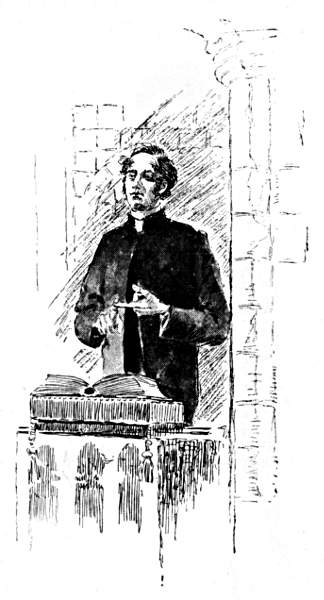
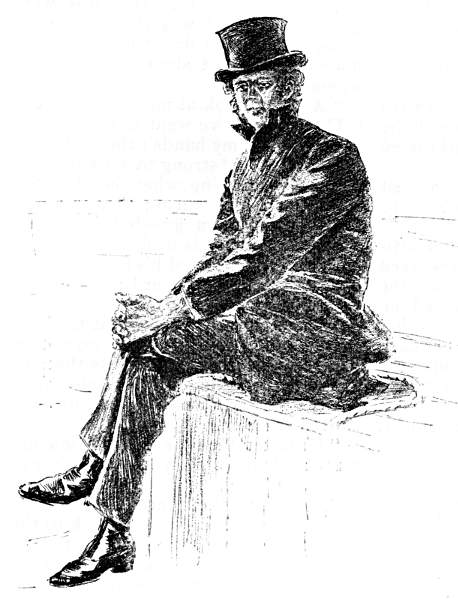
When, at the close of the year 1839, Reverend Samuel Bax visited Troy for the first time, to preach his trial sermon at Salem chapel, he arrived by Bontigo’s van, late on a Saturday night, and departed again for Plymouth at seven o’clock on Monday morning. He had just turned twenty-one, and looked younger, and the zeal of his calling was strong upon him. Moreover, he was shaken with nervous anxiety for the success of his sermon; so that it is no marvel if he carried away but blurred and misty impressions of the little port, and the congregation that sat beneath him that morning, ostensibly reverent, but actually on the lookout for heresy or any sign of weakness. Their impressions, at any rate, were sharp enough. They counted his thumps upon the desk, noted his one reference to “the original Greek,” saw and remembered the flush of his young face and the glow in his eye as he hammered the doctrine of the redemption out of original sin. The deacons fixed the subject of these trial sermons, and had chosen original sin, on the ground that a good beginning was half the battle. The maids in the congregation knew beforehand that he was unmarried, and came out of the chapel knowing also that his eyes were brown, that his hair had a reddish tinge in certain lights, that one of his cuffs was frayed slightly, but his black coat had scarcely been worn a dozen times, with other trifles. They loitered by the chapel door until he came out, in company with Deacon Snowden, who was conveying him off to dinner. The deacon, on week days, was harbor-master of the port, and on Sundays afforded himself roasted duck for dinner. Lizzie Snowden walked at her father’s right hand. She was a slightly bloodless blonde, tall, with a pretty complexion, and hair upon which it was rumored she could sit if she were so minded. The girls watched the young preacher and his entertainers as they moved down the hill, the deacon talking, and his daughter turning her head aside as if it were merely in the section of the world situated on her right hand that she took the least interest.
“That’s to show ’en the big plait,” commented one of the group behind. “He can’t turn his head hes way, but it stares ’en in the face.”
“An’ her features look best from the left side, as everybody knows.”
“I reckon, if he’s chosen minister, that Lizzie’ll have ’en,” said a tall, lanky girl. She was apprenticed to a dressmaker and engaged to a young tinsmith. Having laid aside ambition on her own account, she flung in this remark as an apple of discord.
“Tenifer Hosken has a chance. He’s fair-skinned hissel’, and Lizzie’s too near his own color. Black’s mate is white, as they say.”
“There’s Sue Tregraine. She’ll have more money than either, when her father dies.”
“What, marry one o’ Ruan!” the speaker tittered, despitefully.
“Why not?”
The only answer was a shrug. Ruan is a small town that faces Troy across the diminutive harbor, or, perhaps, I should say that Troy looks down upon it at this slight distance. When a Trojan speaks of it he says, “Across the water,” with as much implied contempt as though he meant Botany Bay. There is no cogent reason for this, except that the poorer class at Ruan earns its livelihood by fishing. In the eyes of its neighbors the shadow of this lonely calling is cast upwards upon its wealthier inhabitants. Troy depends on commerce, and employs these wealthier men of Ruan to build ships for it. Further it will hardly condescend. In the days of which I write intermarriage between the towns was almost unheard-of, and even now it is rare. Yet they are connected by a penny ferry.
“Her father’s a shipbuilder,” urged Sue Tregraine’s supporter.
“He might so well keep crab-pots, for all the chance she’ll have.”
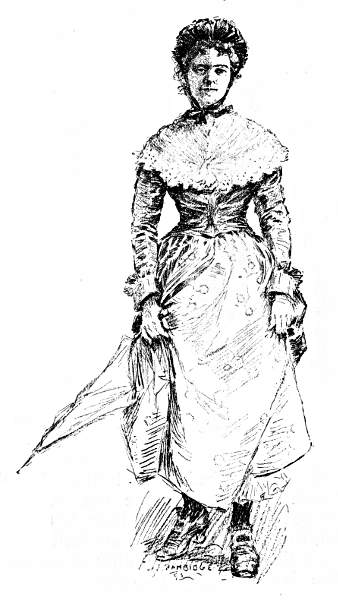
Now there was a Ruan girl standing just outside this group, and she heard what was said. Her name was Nance Trewartha, and her father was a fisherman, who did, in fact, keep crab-pots. Moreover, she was his only child, and helped him at his trade. She could handle a boat as well as a man, she knew every sea-mark up and down the coast for forty miles, she could cut up bait, and her hands were horny with handling ropes from her childhood. But on Sundays she wore gloves, and came across the ferry to chapel, and was as wise as any of her sex. She had known before coming out of her pew that the young minister had a well-shaped back to his head, and a gold ring on his little finger with somebody’s hair in the collet, under a crystal. She was dark, straight, and lissome of figure, with ripe lips and eyes as black as sloes, and she hoped that the hair in the minister’s ring was his mother’s. She was well aware of her social inferiority; but—the truth may be told—she chose to forget it that morning, and to wonder what this young man would be like as a husband. She had looked up into his face during sermon time, devouring his boyish features, noticing his refined accent, marking every gesture. Certainly, he was comely and desirable. As he walked down the hill by Deacon Snowden’s side, she was perfectly conscious of the longing in her heart, but prepared to put a stop to it, and go home to dinner as soon as he had turned the corner and passed out of sight. Then came that unhappy remark about the crab-pots. She bit her lip for a moment, turned, and walked slowly off towards the ferry, full of thought.
Three weeks later Reverend Samuel Bax received his call.
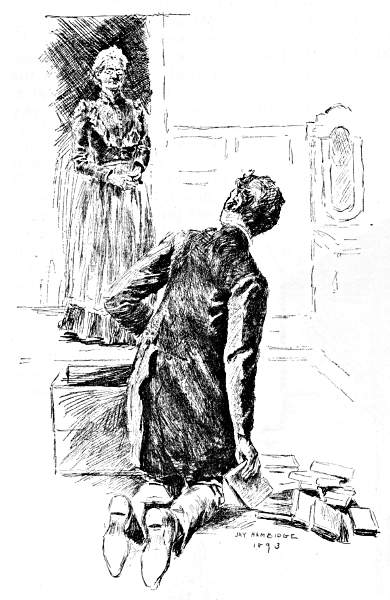
He arrived, to assume his duties, in the waning light of a soft January day. Bontigo’s van set him down, with a carpet-bag, bandbox, and chest of books, at the door of the lodgings which Deacon Snowden had taken for him. The house stood in the North Street, as it is called. It was a small, yellow-washed building, containing just half a dozen rooms, and of these the two set apart for the minister looked straight upon the harbor. Under his sitting-room window was a little garden, and at the end of the garden a low wall, with a stretch of water beyond it and a bark that lay at anchor but a stone’s throw away, as it seemed, its masts overtopping the misty hillside that closed the view. A green painted door was let into the garden wall—a door with two flaps, the upper of which stood open; and through this opening he caught another glimpse of gray water.
The landlady, who showed him into this room and at once began to explain that the furniture was better than it looked, was hardly prepared for the rapture with which he stared out of the window. His boyhood had been spent in a sooty Lancashire town, and to him the green garden, the quay door, the bark, and the stilly water seemed to fall little short of Paradise.
“I reckoned you’d like it,” she said. “An’, to be sure, ’tis a blessing you do.”
He turned his stare upon her for a moment. She was a benign-looking woman of about fifty, in a short-skirted gray gown and widow’s cap.
“Why do you say that?”
“Because, leavin’ out the kitchen, there’s but four rooms, two for you an’ two for me; two facin’ the harbor, an’ two facin’ the street. Now, if you’d took a dislike to this look-out I must ha’ put you over the street an’ moved in here mysel’. I do like the street, too, there’s so much more doin’.”
“I think this arrangement will be better in every way,” said the young minister.
“I’m main glad. Iss, there’s no denyin’ that I’m main glad. From upstairs you can see right down the harbor, which is prettier again. Would’ee like to see it now? O’ course you would—an’ it’ll be so much handier for answerin’ the door, too. There’s a back door at the end o’ the passage. You’ve only to slip a bolt an’ you’m out in the garden—out to your boat, if you choose to keep one. But the garden’s a tidy little spot to walk up an’ down in an’ make up your sermons, wi’ nobody to overlook you but the folk next door, an’ they’m churchgoers.”
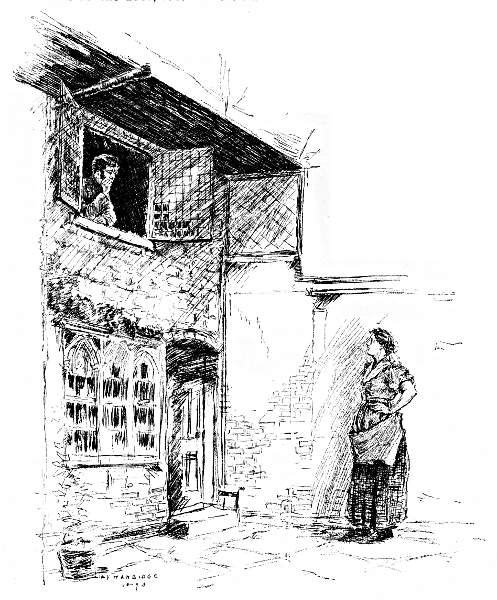
After supper that evening the young minister unpacked his books and was about to arrange them, but drifted to the window instead. He paused for a minute or two, with his face close to the pane, and then flung up the sash. A faint north wind breathed down the harbor, scarcely ruffling the water. Around and above him the frosty sky flashed with innumerable stars, and behind the bark’s masts, behind the long chine of the eastern hill, a soft radiance heralded the rising moon. It was the new moon, and while he waited, her thin horn pushed up, as it were, through the furze brake on the hill’s summit, and she mounted into the free heaven. With upturned eyes the young minister followed her course for twenty minutes, not consciously observant, for he was thinking over his ambitions, and at his time of life these are apt to soar with the moon. Though possessed with zeal for good work in this small seaside town, he intended that Troy should be but a stepping-stone in his journey. He meant to go far. And while he meditated his future, forgetting the chill in the night air, it was being decided for him by a stronger will than his own. More than this, that will had already passed into action. His destiny was actually launched on the full spring tide that sucked the crevices of the gray wall at the garden’s end.
A slight sound drew the minister’s gaze down from the moon to the quay-door. Its upper flap still stood open, allowing a square of moonlight to pierce the straight black shadow of the garden wall.
In this square of moonlight were now framed the head and shoulders of a human being.
The young man felt a slight chill run down his spine. He leaned forward out of the window and challenged the apparition, bating his tone, as all people bate it at that hour.
“Who are you?” he demanded, “and what is your business here?”
There was no reply for a moment, though he felt sure his voice must have carried to the quay-door. The figure paused for a second or two, then unbarred the lower flap of the door and advanced across the wall’s shadow to the centre of the bright grassplot under the window. It was the figure of a young woman. Her head was bare and her sleeves turned up to the elbows. She wore no cloak or wrap, to cover her from the night air, and her short-skirted, coarse frock was open at the neck. As she turned up her face to the window, the minister could see by the moon’s rays that it was well-favored.
“Be you the new preacher?” she asked, resting a hand on her hip and speaking softly up to him.
“I am the new Independent minister.”
“Then I’ve come for you.”
“Come for me?”
“Iss; my name’s Nance Trewartha, an’ you ’en wanted across the water, quick as possible. Old Mrs. Slade’s a-dyin’ to-night, over yonder.”
“She wants me?”
“She’s one o’ your congregation, an’ can’t die easy till you’ve seen her. I reckon she’s got something ’pon her mind; an’ I was to fetch you over, quick as I could.”
As she spoke the church clock down in the town chimed out the hour, and immediately after, ten strokes sounded on the clear air.
The minister consulted his own watch, and seemed to be considering.
“Very well,” said he, after a pause. “I’ll come. I suppose I must cross by the ferry.”
“Ferry’s closed this two hours, an’ you needn’t wake up any in the house. I’ve brought father’s boat to the ladder below, an’ I’ll bring you back again. You’ve only to step out here by the back door. An’ wrap yourself up, for ’tis a brave distance.”
“Very well. I suppose it’s really serious.”
“Mortal. I’m glad you’ll come,” she added, simply.
The young man nodded down in a friendly manner, and going back into the room, slipped on his overcoat, picked up his hat, and turned the lamp down carefully. Then he struck a match, found his way to the back door, and unbarred it. The girl was waiting for him, still in the centre of the grassplot.
“I’m glad you’ve come,” she repeated, but this time there was something like constraint in her voice. As he pulled to the door softly, she moved and led the way down to the water side.
From the quay-door a long ladder ran down to the water. At low water one had to descend twenty feet and more; but now the high tide left but three of its rungs uncovered. At the young minister’s feet a small fishing-boat lay ready, moored by a short painter to the ladder. The girl stepped lightly down and held up her hand.
“Thank you,” said the young man, with dignity, “but I do not want help.”
She made no answer to this; but, as he stepped down, went forward and unmoored the painter. Then she pushed gently away from the ladder, hoisted the small foresail, and, returning to her companion, stood beside him for a moment with her hand on the tiller.
“Better make fast the foresheet,” she said, suddenly.
The young man looked helplessly at her. He had not the slightest idea of her meaning, did not, in fact, know the difference between a foresheet and a mainsail. And it was just to find out the depth of his ignorance that she had spoken.
“Never mind,” she said, “I’ll do it myself.”
She made the rope fast and took hold of the tiller again. The sails shook, and filled softly as they glided out from under the wall. The soft breeze blew straight behind them, the tide was just beginning to ebb. She slackened the mainsheet a little, and the water hissed as they spun down under the gray town towards the harbor’s mouth.
A dozen vessels lay at anchor below the town quay, their lamps showing a strange orange-yellow in the moonlight; between them the minister saw the cottages of Ruan glimmering on the eastern shore, and above them the coastguard station, with its flagstaff, a clear white upon the black hillside. It seemed to him that they were not shaping their course for the little town.
“I thought you told me,” he said at length, “that Mrs.—the dying woman—lived across there.”
The girl shook her head. “Not in Ruan itsel’—Ruan parish. We’ll have to go round the point.”
She was leaning back and gazing straight before her, towards the harbor’s mouth. The boat was one of the class that serves along that coast for hook and line as well as drift-net fishing, clinker built, about twenty-seven feet in the keel and nine in the beam. It had no deck beyond a small cuddy forward, on top of which a light hoarfrost was gathering as they moved. The minister stood beside the girl, and withdrew his eyes from this cuddy roof to contemplate her.
“Do you mean to say,” he asked, “that you don’t take cold wearing no wrap or bonnet on frosty nights like this?”
She let the tiller go for a moment, took his hand by the wrist and laid it on her own bare arm. He felt the flesh, but it was firm and warm. Then he withdrew his hand hastily, without finding anything to say. His eyes avoided hers. When, after half a minute, he looked at her again, her gaze was fixed straight ahead upon the misty stretch of sea beyond the harbor’s mouth.
In a minute or two they were sweeping between the tall cliff and the reef of rocks that guard this entrance on either side. On the reef stood a wooden cross, painted white, warning vessels to give it a wide berth; on the cliff a gray castle, with a battery before it, under the guns of which they spun seaward, still with the wind astern.
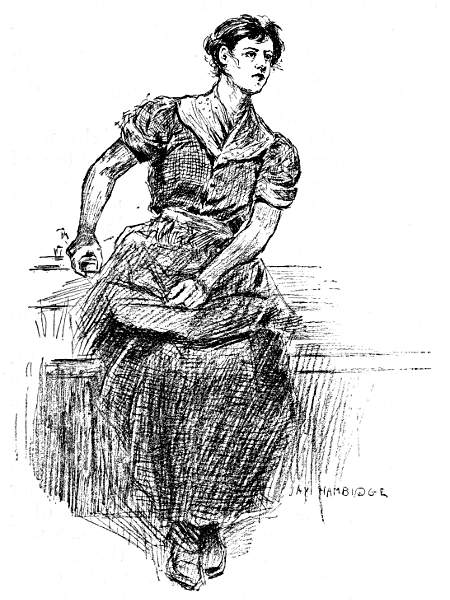
Outside the sea lay as smooth as within the harbor. The wind blew steadily off the shore, so that, close-hauled, one might fetch up or down channel with equal ease. The girl began to flatten the sails, and asked her companion to bear a hand. Their hands met over a rope, and the man noted with surprise that the girl’s was feverishly hot. Then she brought the boat’s nose round to the eastward, and, heeling gently over the dark water, they began to skirt the misty coast, with the breeze on their left cheeks.
“How much farther?” asked the minister.
She nodded towards the first point in the direction of Plymouth. He turned his coat-collar up about his ears, and wondered if his duty would often take him on such journeys as this. Also he felt thankful that the sea was smooth. He might, or might not, be given to seasickness; but somehow he was sincerely glad that he had not to be put to the test for the first time in this girl’s presence.
They passed the small headland, and still the boat held on its way.
“I had no idea you were going to take me this distance. Didn’t you tell me the house lay beyond the point we’ve just passed?”
To his amazement the girl drew herself up, looked him straight in the face, and said:
“There’s no such place.”
“What?”
“There’s no such place. There’s nobody ill at all. I told you a lie.”
“You told me a lie—then why in the name of common sense am I here?”
“Because, young minister—because, sir, I’m sick o’ love for you, an’ I want ’ee to marry me.”
“Great heaven!” the young minister muttered, recoiling, “is the girl mad?”
“Ah, but look at me, sir.” She seemed to grow still taller as she stood there, resting one hand on the tiller and looking at him with perfectly serious eyes. “Look at me well before your fancy lights ’pon some other o’ the girls. To-morrow they’ll be all after ’ee, an’ this’ll be my only chance; for my father’s no better’n a plain fisherman, an’ they’re all above me in money an’ rank. I be but a common Ruan girl, an’ my family is counted for naught. But look at me well; there’s none stronger nor comelier, nor that’ll love thee so dear!”
The young man positively gasped. “Set me ashore at once!” he commanded, stamping his foot.
“Nay, that I will not till thou promise, an’ that’s flat. Dear lad, listen—an’ consent, consent—an’ I swear to thee thou’ll never be sorry for’t.”
“I never heard such awful impropriety in my life. Turn back; I order you to steer back to the harbor at once!”
She shook her head. “No, lad, I won’t. An’ what’s more, you don’t know how to handle a boat, an’ couldn’t get back by yoursel’, not in a month.”
“This is stark madness. You—you abandoned woman, how long do you mean to keep me here?”
“Till thou give in to me. We’m goin’ straight t’wards Plymouth now, an’ if th’ wind holds—as ’twill—we’ll be off the Rame in two hours. If you haven’t said me yes by that, maybe we’ll go on; or perhaps we’ll run across to the coast o’ France——”
“Girl, do you know that if I’m not back by daybreak I’m ruined?”
“And oh, man, man! can’t ’ee see that I’m ruined, too, if I turn back without your word? How shall I show my face in Troy streets again, tell me?”
At this sudden transference of responsibility the minister staggered.
“You should have thought of that before,” he said, employing the one obvious answer.
“O’ course I thought of it. But for love o’ you I made up my mind to risk it. An’ now there’s no goin’ back.” She paused a moment and then added, as a thought struck her, “Why, lad, doesn’t that prove I love ’ee uncommon?”
“I prefer not to consider the question. Once more—will you go back?”
“I can’t.”
He bit his lips and moved forward to the cuddy, on the roof of which he seated himself sulkily. The girl tossed him an end of rope.
“Dear, better coil that up an’ sit upon it. The frost’ll strike a chill into thee.”
With this she resumed her old attitude by the tiller. Her eyes were fixed ahead, her gaze passing just over the minister’s hat. When he glanced up he saw the rime twinkling on her shoulders and the starshine in her dark eyes. Around them the firmament blazed with constellations, up to its coping. Never had the minister seen them so multitudinous or so resplendent. Never before had heaven seemed so alive to him. He could almost hear it breathe. And beneath it the little boat raced eastward, with the reef-points pattering on its tan sails.
Neither spoke. For the most part the minister avoided the girl’s eyes, and sat nursing his wrath. The whole affair was ludicrous; but it meant the sudden ruin of his good name, at the very start of his career. This was the word he kept grinding between his teeth: “ruin,” “ruin.” Whenever it pleased this madwoman to set him ashore he must write to Deacon Snowden for his boxes and resign all connection with Troy. But would he ever get rid of the scandal? Could he ever be sure that, to whatever distance he might flee, it would not follow him? Had he not better abandon his calling once and for all? It was hard!
A star shot down from the Milky Way and disappeared in darkness behind the girl’s shoulder. His eyes, following it, encountered hers. She left the tiller and came slowly forward.
“In three minutes we’ll open Plymouth Sound,” she said, quietly; and then, with a sharp gesture, flung both arms out towards him. “Oh, lad, think better o’t, an’ turn back wi’ me. Say you’ll marry me, for I’m perishin’ o’ love.”
The moonshine fell on her throat and extended arms. Her lips were parted, her head was thrown back a little, and for the first time the young minister saw that she was a beautiful woman.
“Ay, look, look at me,” she pleaded. “That’s what I’ve wanted ’ee to do all along. Take my hands; they’m shapely to look at and strong to work for ’ee.”
Hardly knowing what he did, the young man took them; then in a moment he let them go—but too late; they were about his neck.
With that he sealed his fate for good or ill. He bent forward a little, and their lips met.
So steady was the wind that the boat still held on her course; but no sooner had the girl received the kiss that she knew to be a binding promise than she dropped her arms, walked off, and shifted the helm.
“Unfasten the sheet here,” she commanded, “and duck your head clear o’ the boom.”
As soon as their faces were set for home, the minister walked back to the cuddy roof and sat down to reflect. Not a word was spoken till they reached the harbor’s mouth again, and then he pulled out his watch. It was half-past four in the morning.
Outside the battery point the girl hauled down the sails and got out the sweeps; and together they pulled up under the still sleeping town to the minister’s quay-door. He was clumsy at this work, but she instructed him in whispers, and they managed to reach the ladder as the clocks were striking five. The tide was far down by this time, and she held the boat close to the ladder while he prepared to climb. With his foot on the first round he turned. She was white as a ghost, and trembling from top to toe.
“Nance—did you say your name was Nance?”
She nodded.
“What’s the matter?”
“I’ll—I’ll let you off if you want to be let off.”
“I’m not sure that I do,” he said, and stealing softly up the ladder stood at the top and watched her boat as she steered it back to Ruan.
Three months after they were married, to the indignant amazement of the minister’s congregation. It almost cost him his pulpit, but he held on and triumphed. There is no reason to believe that he ever repented of his choice, or, rather, of Nance’s. To be sure, she had kidnapped him by a lie; but perhaps she had wiped it out by fifty years of honest affection. On that point, however, I, who tell the tale, will not dogmatize.