Volume 16 — RICHARD WATSON GILDER
Reading edition
(1844-)
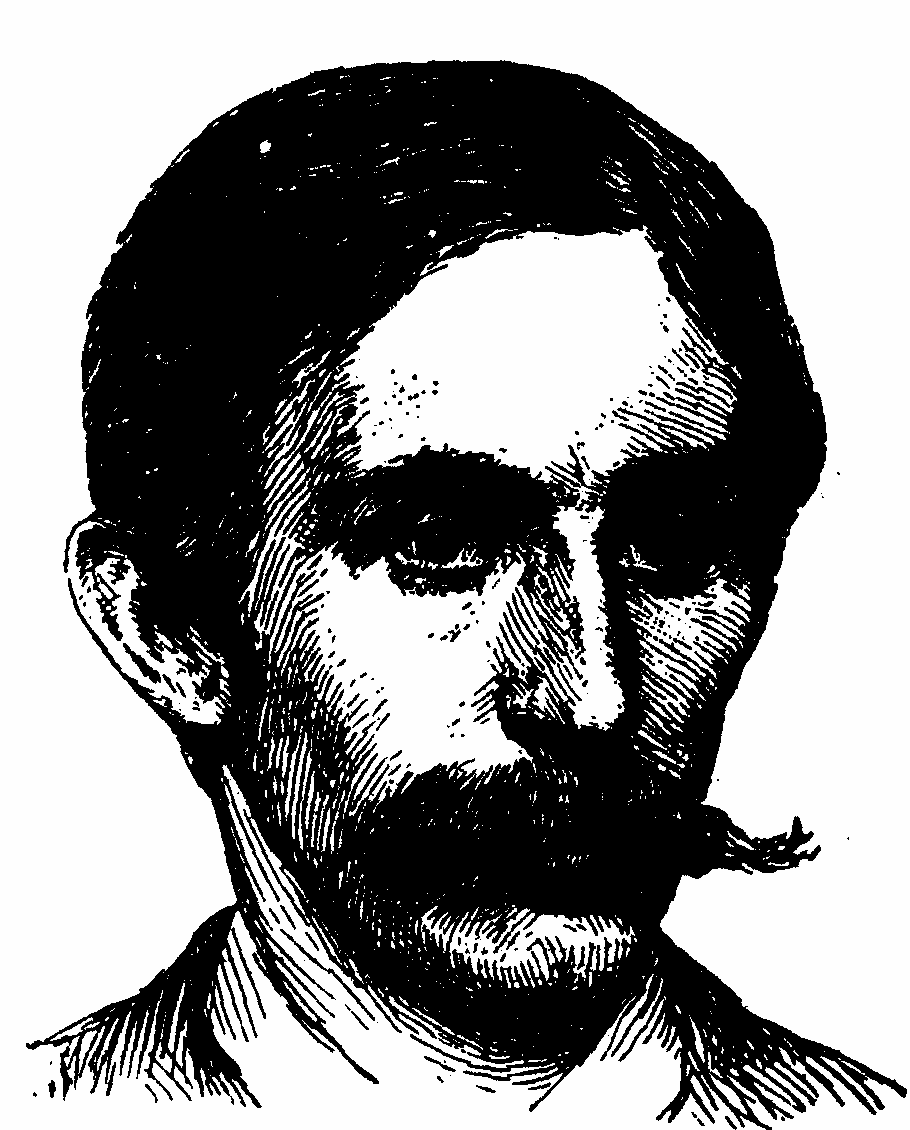
ichard Watson Gilder is the son of a clergyman, the Rev. William H. Gilder, who published two literary reviews in Philadelphia. He was born in Bordentown, New Jersey, February 8th, 1844, and with such ancestry and home influence came easily to journalism and literary work. He got his schooling in the Bellevue Seminary, which was founded by his father. As with so many young Americans of the time, the war came to interrupt his studies; and in 1863 he served in the "Emergency Corps," in the defense of Carlisle, Pennsylvania. Mr. Gilder is one of the American writers who have successfully combined journalism and literature. He began by doing newspaper work, and then by a natural transition became in 1869 editor of Hours at Home, and shortly thereafter associate editor of Scribner's Magazine with Dr. J. G. Holland. This representative monthly was changed in name to The Century, and upon the death of Dr. Holland in 1881 Mr. Gilder became its editor-in-chief. His influence in this conspicuous position has been wholesome and helpful in the encouraging of literature, and in the discussion of current questions of importance through a popular medium which reaches great numbers of the American people. The Century under his direction has been receptive to young writers and artists of ability, and many since known to fame made their maiden appearance in its pages.
Richard W. Gilder
In addition to his influence on the literary movement, Mr. Gilder has been active in philanthropic and political work. He has secured legislation for the improvement of tenements in cities; he has taken interest in the formation of public kindergartens; and given of his time and strength to further other reforms. His influence in New York City, too, has been a factor in developing the social aspects of literary and art life there. From Dickinson College he has received the degree of LL.D., and from Princeton that of L.H.D.
Mr. Gilder's reputation as a writer is based upon his verse. Only very occasionally does he publish an essay, though thoughtful, strongly written editorials from his pen in his magazine are frequent. But it is his verse-writing that has given him his place—a distinct and honorable one—in American letters. The fine quality and promise of his work was recognized upon the publication of 'The New Day' in 1875, a first volume which was warmly received. It showed the influence of Italian studies, and contained lyric work of much imaginative beauty. The musicalness of it and the delicately ideal treatment of the love passion were noticeable characteristics. In his subsequent books—'The Celestial Passion,' 1887; 'Lyrics,' 1885 and 1887; 'Two Worlds, and Other Poems,' 1891; 'The Great Remembrance, and Other Poems,' 1893: the contents of these being gathered finally into the one volume 'Five Books of Song,' 1894—he has given further proof of his genuine lyric gift, his work in later years having a wider range of themes, a broadening vision and deepening purpose. He remains nevertheless essentially a lyrist, a maker of songs; a thorough artist who has seriousness, dignity, and charm. His is an earnest nature, sensitive alike to vital contemporaneous problems and to the honey-sweet voice of the Ideal.
[All the following citations from Mr. Gilder's poems are copyrighted, and are reprinted here by special permission of the author and his publishers.]
TWO SONGS FROM 'THE NEW DAY'
I
Not from the whole wide world I chose thee, Sweetheart, light of the land and the sea! The wide, wide world could not inclose thee— For thou art the whole wide world to me.
II
Years have flown since I knew thee first, And I know thee as water is known of thirst; Yet I knew thee of old at the first sweet sight, And thou art strange to me, Love, to-night.
"ROSE-DARK THE SOLEMN SUNSET"
Rose-dark the solemn sunset That holds my thought of thee; With one star in the heavens And one star in the sea. On high no lamp is lighted, Nor where the long waves flow. Save the one star of evening And the shadow star below. Light of my life, the darkness Comes with the twilight dream; Thou art the bright star shining, And I but the shadowy gleam.
NON SINE DOLORE
What, then, is Life,—what Death? Thus the Answerer saith; O faithless mortal, bend thy head and listen: Down o'er the vibrant strings, That thrill, and moan, and mourn, and glisten, The Master draws his bow. A voiceless pause: then upward, see, it springs, Free as a bird with unimprisoned wings! In twain the chord was cloven, While, shaken with woe, With breaks of instant joy all interwoven, Piercing the heart with lyric knife, On, on the ceaseless music sings, Restless, intense, serene;— Life is the downward stroke; the upward, Life; Death but the pause between. Then spake the Questioner: If 't were only this, Ah, who could face the abyss That plunges steep athwart each human breath? If the new birth of Death Meant only more of Life as mortals know it, What priestly balm, what song of highest poet, Could heal one sentient soul's immitigable pain? All, all were vain! If, having soared pure spirit at the last, Free from the impertinence and warp of flesh We find half joy, half pain, on every blast; Are caught again in closer-woven mesh— Ah! who would care to die From out these fields and hills, and this familiar sky; These firm, sure hands that compass us, this dear humanity? Again the Answerer saith:— O ye of little faith, Shall then the spirit prove craven, And Death's divine deliverance but give A summer rest and haven? By all most noble in us, by the light that streams Into our waking dreams, Ah, we who know what Life is, let us live! Clearer and freer, who shall doubt? Something of dust and darkness cast forever out; But Life, still Life, that leads to higher Life, Even though the highest be not free from immortal strife. The highest! Soul of man, oh be thou bold, And to the brink of thought draw near, behold! Where, on the earth's green sod, Where, where in all the universe of God, Hath strife forever ceased? When hath not some great orb flashed into space The terror of its doom? When hath no human face Turned earthward in despair, For that some horrid sin had stamped its image there? If at our passing Life be Life increased, And we ourselves flame pure unfettered soul, Like the Eternal Power that made the whole And lives in all he made From shore of matter to the unknown spirit shore; If, sire to son, and tree to limb, Cycle on countless cycle more and more We grow to be like him; If he lives on, serene and unafraid, Through all his light, his love, his living thought, One with the sufferer, be it soul or star; If he escape not pain, what beings that are Can e'er escape while Life leads on and up the unseen way and far? If he escape not, by whom all was wrought, Then shall not we, Whate'er of godlike solace still may be,— For in all worlds there is no Life without a pang, and can be naught. No Life without a pang! It were not Life, If ended were the strife— Man were not man, nor God were truly God! See from the sod The lark thrill skyward in an arrow of song: Even so from pain and wrong Upsprings the exultant spirit, wild and free. He knows not all the joy of liberty Who never yet was crushed 'neath heavy woe. He doth not know, Nor can, the bliss of being brave Who never hath faced death, nor with unquailing eye Hath measured his own grave. Courage, and pity, and divinest scorn— Self-scorn, self-pity, and high courage of the soul; The passion for the goal; The strength to never yield though all be lost— All these are born Of endless strife; this is the eternal cost Of every lovely thought that through the portal Of human minds doth pass with following light. Blanch not, O trembling mortal! But with extreme and terrible delight Know thou the truth, Nor let thy heart be heavy with false ruth. No passing burden is our earthly sorrow, That shall depart in some mysterious morrow. 'Tis His one universe where'er we are— One changeless law from sun to viewless star. Were sorrow evil here, evil it were forever, Beyond the scope and help of our most keen endeavor God doth not dote, His everlasting purpose shall not fail. Here where our ears are weary with the wail And weeping of the sufferers; there where the Pleiads float— Here, there, forever, pain most dread and dire Doth bring the intensest bliss, the dearest and most sure. 'Tis not from Life aside, it doth endure Deep in the secret heart of all existence. It is the inward fire, The heavenly urge, and the divine insistence. Uplift thine eyes, O Questioner, from the sod! It were no longer Life, If ended were the strife; Man were not man, God were not truly God.
"HOW PADEREWSKI PLAYS"
I
If songs were perfume, color, wild desire; If poets' words were fire That burned to blood in purple-pulsing veins; If with a bird-like thrill the moments throbbed to hours; If summer's rains Turned drop by drop to shy, sweet, maiden flowers; If God made flowers with light and music in them, And saddened hearts could win them; If loosened petals touched the ground With a caressing sound; If love's eyes uttered word No listening lover e'er before had heard; If silent thoughts spake with a bugle's voice; If flame passed into song and cried, "Rejoice! Rejoice!" If words could picture life's, hope's, heaven's eclipse When the last kiss has fallen on dying eyes and lips; If all of mortal woe Struck on one heart with breathless blow on blow; If melody were tears, and tears were starry gleams That shone in evening's amethystine dreams; Ah yes, if notes were stars, each star a different hue, Trembling to earth in dew; Or if the boreal pulsings, rose and white, Made a majestic music in the night; If all the orbs lost in the light of day In the deep, silent blue began their harps to play; And when in frightening skies the lightnings flashed And storm-clouds crashed, If every stroke of light and sound were but excess of beauty; If human syllables could e'er refashion That fierce electric passion; If other art could match (as were the poet's duty) The grieving, and the rapture, and the thunder Of that keen hour of wonder,— That light as if of heaven, that blackness as of hell,— How Paderewski plays then might I dare to tell.
II
How Paderewski plays! And was it he Or some disbodied spirit which had rushed From silence into singing; and had crushed Into one startled hour a life's felicity, And highest bliss of knowledge—that all life, grief, wrong, Turn at the last to beauty and to song!
THE SONNET
What is a sonnet? 'Tis the pearly shell That murmurs of the far-off murmuring sea; A precious jewel carved most curiously; It is a little picture painted well. What is a sonnet? 'Tis the tear that fell From a great poet's hidden ecstasy; A two-edged sword, a star, a song—ah me! Sometimes a heavy-tolling funeral bell. This was the flame that shook with Dante's breath; The solemn organ whereon Milton played, And the clear glass where Shakespeare's shadow falls: A sea this is—beware who ventureth! For like a fiord the narrow floor is laid Mid-ocean deep to the sheer mountain walls.
AMERICA
From 'The Great Remembrance'
Land that we love! Thou Future of the World! Thou refuge of the noble heart oppressed! Oh, never be thy shining image hurled From its high place in the adoring breast Of him who worships thee with jealous love! Keep thou thy starry forehead as the dove All white, and to the eternal Dawn inclined! Thou art not for thyself, but for mankind, And to despair of thee were to despair Of man, of man's high destiny, of God! Of thee should man despair, the journey trod Upward, through unknown eons, stair on stair, By this our race, with bleeding feet and slow, Were but the pathway to a darker woe Than yet was visioned by the heavy heart Of prophet. To despair of thee! Ah no! For thou thyself art Hope; Hope of the World thou art!
ON THE LIFE-MASK OF ABRAHAM LINCOLN
This bronze doth keep the very form and mold Of our great martyr's face. Yes, this is he: That brow all wisdom, all benignity; That human, humorous mouth; those cheeks that hold Like some harsh landscape all the summer's gold; That spirit fit for sorrow, as the sea For storms to beat on; the lone agony Those silent, patient lips too well foretold. Yes, this is he who ruled a world of men As might some prophet of the elder day— Brooding above the tempest and the fray With deep-eyed thought and more than mortal ken. A power was his beyond the touch of art Or armèd strength—his pure and mighty heart.
"CALL ME NOT DEAD"
Call me not dead when I, indeed, have gone Into the company of the ever-living High and most glorious poets! Let thanksgiving Rather be made. Say:—"He at last hath won Rest and release, converse supreme and wise, Music and song and light of immortal faces; To-day, perhaps, wandering in starry places, He hath met Keats, and known him by his eyes. To-morrow (who can say?) Shakespeare may pass, And our lost friend just catch one syllable Of that three-centuried wit that kept so well; Or Milton; or Dante, looking on the grass Thinking of Beatrice, and listening still To chanted hymns that sound from the heavenly hill."
AFTER-SONG
From 'The New Day'
Through love to light! Oh, wonderful the way That leads from darkness to the perfect day! From darkness and from sorrow of the night To morning that comes singing o'er the sea. Through love to light! Through light, O God, to thee, Who art the love of love, the eternal light of light!