Volume 1 — LECTURE VIII. On the Practical Study of Gothic Architecture.
Reading edition
Evident ignorance or neglect of those who practise Gothic architecture—Faithfulness of others—The styles should be learned from ancient buildings—Our knowledge to be continually revived and added to—Hints to students—The study of Lincoln Cathedral, Canterbury Cathedral, and examples in London—Libraries and museums in London—Foreign travel—Examples in Paris, and other parts of France—Germany, Italy, Spain, etc. etc.
AS it is six years since I last delivered a lecture in this place, and nine years since the first of the short series which I gave, it is in the highest degree improbable that any one of the students whom I have the pleasure of addressing was present on any of those occasions. Had that series been a complete one, I might possibly have done better by, in some degree, repeating it; but as it was not so, and as there is an inconsistency in offering supplementary lectures to a new audience, I have adopted the expedient of printing my former lectures, and distributing them to the architectural students, and of re-exhibiting the illustrations which accompanied them; so that, knowing that those who have thought it worth while may have read what I have already said, I am free to proceed as if my audience were unchanged.
I will here mention that I only come before you at all owing to my friend Mr. Smirke (who for five years has so ably and indefatigably fulfilled the duties of Professor of Architecture), having felt it necessary, for this year at least, to retire from those duties, and to my having been asked to do something—be it ever so little—to prevent the class of architecture from falling into abeyance for the year. I have, therefore, undertaken two lectures, as a mere apology during the interregnum for the more onerous duties of a professor, and I must beg to be excused if the manner in which I perform this temporary duty is of the same dubious kind with the duty itself.
In my former lectures I endeavoured, first, to state the claims of Gothic architecture upon our special study and attention; I next, in a series of four lectures, traced out with some minuteness the history of its development from the earlier and ruder forms of Romanesque—through the various processes of refinement which brought that style to its highest state of perfection—and, through the great process of transition by which it became gradually and systematically changed into the Pointed style: not, as I showed, from a mere change of taste or fashion, but from strictly logical and practical causes, accompanied by an ardent unresting determination to raise the art to the highest perfection which the circumstances of the age would permit; and I then showed how the Pointed style—when once generated—developed itself into the perfected and glorious architecture of the middle of the thirteenth century.
I did not follow out the history of Gothic architecture in its succeeding stages, as my object was rather moral than merely historical, and I desired rather to exhibit the glorious earnestness of a people, who, while developing a new civilisation, pressed ardently forward, side by side with it, the generation of a new style of architecture, than to give a history of the successive changes through which that architecture passed. When, therefore, I had traced out the style to its culminating point, I quitted mere history, and closed with two lectures on the rationale of the style, showing how every form which characterised it in its best days was dictated, not by fashion or caprice, but by reason.
Being now, after a lengthened interval, called upon to add two lectures to my series, I take for my subjects the practical study of Gothic architecture, and its actual practice and adaptation to the requirements of our own day.
Commencing, then, with the study of the style, nothing seems at first sight so obvious as how to gain knowledge of such a subject; indeed, you may feel puzzled to think what there is to say on so simple a matter. “Surely,” you might say, “if a person wants to obtain a knowledge of a subject so thoroughly investigated, so popular, and brought so prominently before the public as for many years past has been the case with Gothic architecture, there is no difficulty in the world about it, nor is it worth while to waste an hour in listening to a lecture on so patent a question.” How is it, then, we may ask in return, that such a multitude of architects erect Gothic buildings, one glance at which is sufficient to show that they are ignorant of the style in which they are pretending to work?—that we see at every turn attempts at advanced development of the style which betray an utter innocence of all acquaintance with its A B C?—and that worst of all, we find the precious remnants of Mediæval art restored—Oh, shame on the misnomer!—by men who have never given thought enough to the subject to enable them to appreciate, even in the faintest degree, the value of the treasures committed in such false confidence to their keeping, or to form the most distant idea of their own ignorance? Surely, this is enough to prove that the study of Gothic architecture is not understood, or is grievously neglected by those who assume a knowledge of and presume to practise it.
And the converse is equally true: that the success, more or less perfect, of many others proves that the true road is known, and by a certain number is faithfully followed. My object in what I have to say is more, perhaps, to urge upon each of you to be of that number than to make any but what will appear most trite and self-evident suggestions as to what the true road is in which I ask you to walk.
In the first place, it is self-evident that Gothic architecture is only to be learned from the old examples. I notice, absurd as it may seem, that many young architects appear to think that it may be learned from books and by looking at modern buildings, and really pay little attention to the original sources of all our information. True, it is the part of every student to make use of all the resources within his reach, and it would be absurd to undervalue the aid of books; it is also wise to look at the works of such modern architects as are worthy of confidence; but there is no source from which the style can be really learned but the ancient examples, and to these it is impossible to devote too great an amount of study.
I would next observe that this study of old examples must be continuous. It is not a course of study to be followed up for a certain time and then brought to a close, but must be continued indefinitely throughout your whole course, so as to be ever reviving and ever adding to your knowledge. In the study of Classic architecture, though it is from the original examples that knowledge and inspiration are drawn, these examples are so far removed from us, in this country at least, that it is as a rule only possible to study from them once or twice during a whole life. The case is, happily, very different with the examples of Mediæval art: we are surrounded by them wherever we go;—they are the early monuments of our own country, the works of our forefathers, and our study of them is not the work of one strong effort at a single period of our lives, but a constantly renewing study, a fountain to which we may return again and again whenever we feel to need its refreshing influences. This, though an inestimable advantage, may prove a temptation to negligence, as we are apt to let go opportunities which are ever at hand, so that we must not trust to these desultory sippings for our main supply, but must drink deep and long when we have the opportunity; and more especially I would urge upon you to do so now—in the days of your youth, while yet unencumbered by the cares of business, while your feelings are fresh and your thoughts unshackled. This is the time for laying in the great stores of knowledge which must be the main supply of your future lives, and without which the scant and hasty draughts obtained on chance opportunities will be of no avail, but after which they will be the means of constantly refreshing and adding ever new life to the knowledge already possessed. We may say of this as of other branches of study,
“A little learning is a dangerous thing. Drink deep, or taste not the Pierian spring.”
The conditions under which the study has to be pursued seem in some degree to preclude its being followed in a strictly systematic manner. We are obliged to study buildings, of whatever date, as they may come in our way; and every building we visit is likely to be of many periods and to have undergone alterations more or less radical; so that we are almost forbidden to systematise our studies on any principle, chronological or otherwise. We must, in fact, take our examples pretty much as we happen to find them; and the best method when we set out on a sketching tour is, probably, to devote our attention to a particular district, and to follow it up, town by town and village by village, as convenience or previous information may suggest, visiting and thoroughly studying all objects worthy of it which come in our way.
Nothing can be more delightful than these excursions. If you know beforehand what you are likely to meet with, the very anticipation of what each day will bring before you will add zest to your appetite for architectural enjoyment; while if you do not know what objects of interest may lie in your course, the very speculation will give relish to the search.
Here, perhaps, you come to the site of some famous monastery, less happy in its days of ruin and desertion than some which have become the favourite haunts of the artist. It has, perhaps, been for ages the stone-quarry of the district, and now only some one gable-end with its lofty lancets shows the noble scale of the ancient church. Here, it may be, nothing stands aboveground but the bases of the pillars; farther on the wall rises to the height of the window-jambs, and shows the arcading of the walls; and there the aisle wall retains the doorways leading through into the cloister—now a farm-yard—on the eastern side of which you find the three beautiful arches, the central one of which formed the approach to the chapter-house, and round this cloister you still trace the plan of the refectory and other monastic buildings. But, scanty and now humble as are the ruins, you find the details to be of the highest order of artistic refinement. The bases of the lost columns are profiled with the most studied delicacy, the few remaining doorways are perfect models of rich though unostentatious detail, the archways, perhaps, of the chapter-house entrances are of the most elegant and studied beauty. On tracing out and measuring the plan, you find its arrangement and proportions to be of the most perfect kind; and, though so little comparatively stands in situ, the ground is strewn here and there with masses from the superstructure, from which you may trace out the design of much which has fallen down, while the fences and agricultural buildings around are perfect storehouses of mouldings, capitals, and fragments of tracery or of groining, from which you can study the detail almost as profitably as from a perfect building.
In the next village you find, perhaps, a church of the humblest dimensions and of the most unambitious architecture, yet you trace in its simple details the proofs of its having been erected by the monks of the neighbouring convent, and you feel that, plain and unpretending as they are, they were designed by as masterly a hand as the abbey church itself, and deserve to be as carefully studied and as minutely sketched and measured. Again, farther on, you find a church of noble scale, in which you trace the work of many periods. The internal pillars and arcades show a period just emerging from the Romanesque, though its rudeness has been quite cast aside, and its mouldings are, on the contrary, of the greatest refinement. The chancel, perhaps, is of more advanced Early Pointed, the aisles, the clerestory, and the tower of later periods; and the screens and the few remaining old seats are specimens of the oak-work of the fifteenth century. Here and there in corners you find encaustic tiles, in some of which you recognise patterns you had observed in the site of the ruined abbey. In the upper parts of the window-lights and scattered among the plain glazing you find fragments of glass which would do honour to any age, and such as our glass painters would do well to study, instead of turning them out with scorn to make way for a memorial to some recently departed squire.[65] The sedilia in the chancel, and the piscinæ both there and in the aisles, are any of them alone objects worthy of the most careful study, and every doorway and every window possesses more or less claim upon your attention.
In another place you find less, perhaps, to interest you in the church, for it has passed through the hands of some architect famed in the county for his successful destructiveness, but you find other objects of interest. There is an old manor-house which, though mostly of Jacobean date, retains traces of early and scarce periods of domestic architecture. Nor are its later portions unworthy of your study: its brick chimneys have a beauty about them which modern architects have striven in vain to emulate; the half-timber gable fronts are models of timber construction; within there are remnants of oak panelled ceilings, of wall linings, of doors perhaps with moulded oak door-cases, of simple but well-designed chimney-piers, and all sorts of little odds and ends, all worthy of being carefully and minutely noted, whatever may be their age; for our old house architecture is often most valuably suggestive, even down to very late periods. The cottages around, too, seem to do homage to the more dignified residence, by showing here a good timbered gable-end, there a well proportioned brick chimney; indeed, I would advise the architectural tourist never to despise the cottage architecture of our villages, but to note as they pass every fragment which has escaped the hand of time, for they are most useful and instructive, and, you may depend upon it, they will not much longer exist.[66]
In another village you will, perhaps, find that the church has been the burial-place of some famous family of olden times. Under low arches in the aisles, and now almost hidden by the high pewing, you find the cross-legged effigies of the earlier members of the house, perhaps of oak, and hollowed out beneath, to prevent their warping out of shape; and if you examine these effigies, you will find them far from being the rude specimens of sculpture which our modern critics may suppose. You find in their attitude a dignity and stern nobility which our sculptors would find it not so very easy to emulate, while the chain armour, with its rigid lines, and the linen surcoat, with its more delicate foldings, are executed with a truthfulness and feeling which show that the man who worked them possessed both the soul and the hand of an artist. These are worthy of being carefully drawn, though to do this well demands much time. I have heard of Stoddart giving a week to one such figure! There are, perhaps, in the same church, one or two female effigies whose drapery and pose remind you of that of Queen Eleanor at Westminster, and one or two brasses well worthy of being copied, rather than rubbed off; for the object of these tours is not only to obtain possession of representations of the objects of art which you meet with, but to practise and tutor your hand and eye by practically studying from them.
Then, again, as you pass through the county, you find other objects equally worthy of note; as, for instance, the old bridges which here and there the county magistrates have permitted to remain, and which travellers but rarely see because they pass over them. The village or churchyard cross, the lych-gate, sometimes even the dovecote—all have claims upon your attention; and where a church is generally humble, and perhaps denuded by the mutilations of older ignorance or of modern conceit, there may yet remain a doorway, a pillar, a window or two worthy of attention. In one place it will be the tower which most excites your interest; in another the timber roofs; in a third you may luxuriate in carved screen-work, in chancel stalls, and rich nave seating; and in a fourth the great attraction may be the painted glass. In one tour you may take a homely series of churches like those of Essex, which, under an unpretending exterior often contain some of the most useful and valuable work; or going on farther in the eastern counties, you may visit the fine churches of Suffolk and Norfolk, with their noble timber roofs, their beautiful seating, and in many cases their richly and artistically coloured and embossed screens; or, taking another direction, you may follow the noble course of churches of Northamptonshire and Lincolnshire, with their charming towers and spires. Indeed, in whatever direction you go, some new and differing characteristics will reward your labour; and in every one I would urge upon you to sketch everything which strikes you as worthy of notice, whether in the church, the castle, or the cottage, not omitting the humble brick chimney-shaft, or the brick or stone or timber gable, or even the stamped plaster of the eastern counties.
In all this course of study you will be much facilitated by the remembrance of your practical office work. You will remember puzzling questions which have occurred to you while making working details, and watch to find them solved in original work. How is the gable of an aisle connected with the eaves? and how with the parapet? How are timber overhanging eaves brought in contact with a stone gable? and how is the same done with stone eaves, or where the eaves are wood, and the roof timbers show through the gable?[67] All sorts of little questions such as these will have occurred to you in practice, and rested as doubtful points on your minds, but may be solved in many natural and pleasant ways while travelling among old examples—except, indeed, where the modern “restorer,” innocent as a babe of all such doubts, has levelled everything to his own office tariff. In such tours, be most careful accurately to sketch all the scarcer classes of examples you meet with, such as remnants of thirteenth and fourteenth century roofs and other wood-work, fragments of painted glass, specimens of iron-work, early screens and stalls, choice specimens of carved foliage or figure sculpture, traces of wall decorations, illuminations of screens, etc., and colouring on roofs. The unsparing hand of the so-called restorer has devastated and is still eagerly devastating whole districts, and clearing them of these invaluable records of ancient art; and this alone, independently of their high intrinsic value, renders it doubly important that the few remaining relics should be carefully represented. And be it ever remembered that such representations, to be really valuable, should not be mere hasty memoranda, but, if possible, careful measured drawings.
I have hitherto supposed your sketching expedition to be one of a purely rural kind, and the examples from which you study to be mainly on the scale which we find in villages. I will now transfer the imaginary tourist to the opposite extreme, and suppose him to be devoting himself to one of our greatest cathedrals, as, for example, Lincoln. Here the case is greatly changed, for he will get no great good unless he seats himself down, determinedly and long, and goes through a lengthened course of careful and minute study, not necessarily of the entire cathedral, but at least of the parts selected for special attention. It is best at once, on your arrival, to take lodgings near at hand, and to enter into some arrangement with the verger for your admission at all reasonable hours, obtaining, if needful, a carte blanche from the authorities to go where you like, and at proper times to do what you like.
Should you set yourselves the task of tracing out and studying, step by step, the course of architectural change from the Norman Conquest to the close of the Mediæval periods, there are few places more suited than Lincoln for the purpose: indeed, I only remember a single link up to the middle of the fourteenth century which is missing from the chain, and that not wholly so.
In the towers of two churches in the lower city you have specimens of what may be fairly called Saxon, though of the date of the Conqueror; for when he drove out the old inhabitants from the upper city, to make way for his cathedral and castle, they erected for themselves churches in their own old architecture below the hill, while his people were at work in “the new manner of building” above. Of that “new manner” you will find specimens looking anything but new (excepting for the endeavours of the present chapter to impart that look to them[68]) in the west front; and if their surface shakes your faith in their authenticity, you will find within some parts, once external, but for six centuries enclosed in an early English appendage, which you will not doubt to be the work of old Remigius.
In the central doorway you have Norman of later date, and in the side ones truly exquisite specimens of the latest and most refined period of Romanesque, just before its transition into the Pointed style; and you will find the same work extending upward through the lower stages of the towers.
Here occurs, so far as I recollect, the only hiâtus. I do not remember any of that early variety of the Early Pointed of which the special characteristic is the square abacus, and on which I have dwelt so much at length in former lectures, such as that which prevails in Byland Abbey, and is seen in such high perfection in the entrance to the chapter-house of St. Mary’s Abbey at York.[69] The two late Norman doorways I have just mentioned tread close upon it, and the work which I shall next mention follows so closely after it as to differ only in the shape of the abacus, but the exact style is absent, its place being supplied by an almost unique variety of Early Pointed, which I would advise you specially to study. I refer to the work of Bishop Hugh, which forms the staple of the eastern transept with its appendages, the choir, and half of the east side of the great transept. At first sight this work looks like the fully-developed Early Pointed, and its date, which closes in 1200, seems an anachronism; but on closer inspection it will be found that this antedate quality is limited to the abaci of the shafts, which are nearly all circular. In every other particular the details agree with their date, and belong clearly to the early variety of the style. The mouldings are of that peculiarly beautiful and studied profile which we find at no other period, and are worthy of your most careful study; indeed, I know of no work which will better repay the laborious and accurately measured drawing of its details.
I had intended to have gone carefully into a description of the varied beauties of Lincoln. I recollect, however, that in one of my early lectures I dwelt long on this cathedral, and I must not repeat myself; but having spent lately nearly a week in the careful study of its details, I wish, from personal and recent experience, to urge its claims upon you. As I said in the lecture referred to, you will find in the nave one of the finest examples we have of the fully developed and typical Early English, and in its eastern parts perhaps the very finest of its latest form. The Easter Sepulchre is a fine specimen of Early decorated of about the period of the Eleanor Crosses, and the sleeping soldiers beneath it are charming pieces of sculpture; the choir screen is an excellent specimen of later Decorated, and the stall-work of fine early Perpendicular work.
In studying these various authorities, each among the highest of its class, I would suggest that they, particularly the productions of the three great periods
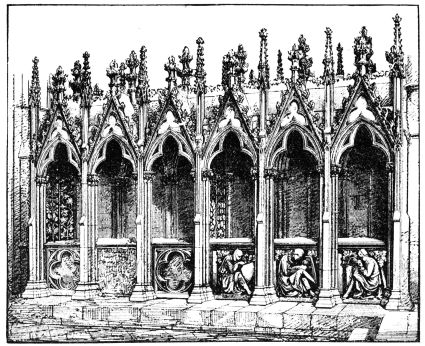
Fig. 174.—Easter Sepulchre, Lincoln Cathedral.
of Early Pointed architecture, should be followed out systematically and relatively; comparing them part by part, by means of drawings not only carefully measured, but plotted down accurately on the spot. Thus, I would compare bay with bay of each period both within and without, and then follow up this more general comparison by comparing the details, as, for example, pillar with pillar, base with base, capital with capital, string-course with string-course, and so on through the arch-moulds, the triforium, the windows, the vaulting, the wall arcading, and other features. By such a comparison you would obtain a very accurate knowledge of the whole course of thirteenth century architecture, as exemplified by one of the finest series of works that this or any other country can boast.
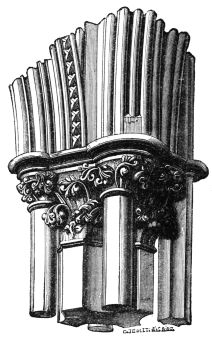
Fig. 175.—Capitals, north side of Choir Lincoln Cathedral.
You must not, however, rest here: you must draw artistically and carefully from the more decorative portions of the several works. There is a perfect study of carved foliage in each of the divisions of the work. There are noble portals,[70] one of which, in particular, is itself worthy of a special visit to Lincoln, and of the devotion to it of a considerable amount of time. There is also a great amount of very fine figure sculpture, not only in the triforium of the “angel choir,” but in the portal just mentioned, and on a few of the buttresses around it. These merit your most careful drawing, as they are some of the finest examples in this country. There is also a good deal of beautiful figure carving of a rather later date in the wooden bosses in the cloister, and some of a still later age in the stall work of the choir. I have already mentioned the sleeping soldiers under the Easter Sepulchre.
There are also a few remains of early wall painting. The largest amount is to be found in a chapel at the south-western angle of the nave, where a wall, the result of an alteration almost contemporary with the Early English chapel, has been richly decorated with bands of foliage, etc. These are now oddly intermixed with some decorations of the seventeenth century, but are readily distinguishable, and are a very useful series. Traces of decoration may also be found in the vaulting of the church itself and elsewhere. The stained glass in the circular window of the north transept is very fine, and merits close study, as also do the remains of that which once filled windows of the eastern part of the church, as well as remnants in other parts. All these, and a hundred other features, should be most carefully and studiously drawn from; indeed, there are few cities in Europe from which so vast an amount of information and instruction can be drawn—lessons not limited to the cathedral, but extending throughout the town, and consisting of domestic as well as ecclesiastical buildings.
I have only taken Lincoln as a specimen. The same course applies cæteris paribus, to all of our cathedrals. Look, for instance, at Canterbury.[71] What a magnificent and instructive series of objects of study does it offer! The Early Norman of Lanfranc and his immediate successors; the gorgeous later Norman of Conrad, including, probably, the beautifully ornamented shafts in the north-eastern part of the older crypt, and in the cloister-like building lying to the north of the same; the work of William of Sens (without studying which no one can thoroughly understand the English transition), and that of his English successor and pupil, which carries on the change a little farther. The charming developed Early English in the walls of the cloister; the early Decorated of Peckham’s tomb and the later Decorated of the lower stage of the chapter-house, of the enclosure of the choir and of St. Anselm’s Chapel; followed up as they are by fine works of later styles and accompanied by collateral work of the greatest value, both around the cathedral itself, in the remains of St. Augustine’s Abbey, and in other buildings in the city; form of themselves the groundwork for a course of study which would, if earnestly pursued, give the student a complete foundation on which all his future knowledge might well be based.
A comparison of William the Englishman’s work with that in the Castle Chapel and Castle Church at Dover would be interesting, as probably showing the works of the same hand; and a comparison of these, on another occasion, with the more thoroughly English work of the same period at St. Cross, and other buildings in which the English and French transition seem to work hand in hand, as Glastonbury and the rather later work at Chichester, followed up, again, by a study of the Northern transitional examples, would give a pretty perfect knowledge of this most instructive, perhaps, of all periods of English architecture.
I will not, however, weary you with barren bills of fare and outline tours, but will content myself with saying that the same course of close all-gathering study must be followed up wherever you go, whether making a tour of village churches or of the great northern abbeys, or seating yourselves down before a majestic cathedral.
Architecture properly so called, wood-work, metal-work, decorations, stained glass, and every form of art and workmanship, must be studied as if you had to perform like work for yourselves; and you must make yourselves perfect masters of it in every way; and, moreover, you must study the object and meaning of everything so as in every way perfectly to understand its motive, whether ritual, constructive, iconographic, artistic, or simply utilitarian.
I will make one other suggestion as to your English studies. You cannot be always making tours, but you need to be always studying. Do not, then, neglect those objects which surround you while at home. You have at your doors, if you live in London, abundant objects to occupy such incidental hours as you may have at your command.
To begin with, you have Westminster Abbey, the study of which may supply your leisure moments for life. What an inexhaustible fund of material of all kinds we have here! Of the earlier periods we have objects which—if not artistically important—possess at least a deep antiquarian interest; for we retain extensive remnants of that work of Edward the Confessor which a contemporary writer tells us was the very first erected in England in the “new manner of building;” meaning the Norman Romanesque as distinguished from the Saxon, which latter, curiously enough, had been viewed by those who practised it as being Roman. Then, we have the Late Norman of St. Catherine’s or the Infirmary Chapel. These are but incidental objects of interest, but how different is the case with the abbey church itself!
We have there the foremost work of its period in this country—a work distinctly intended to surpass all others, and in which the most advanced developments of its period were introduced. True, the exterior has been pared down and renewed in the last century till little is left but its mass and proportions which invites your study; but what an interior! I know of none more beautiful. Its uniformity may at first sight make it seem unprolific in variety of detail; but I would only say, try it, by commencing a systematic series of sketches, carefully measuring every part, making accurate sections of the mouldings and studied drawings from the foliage and the remains of the figure sculpture; and you will soon find that it is a mine of the most valuable examples of every kind of detail. Its workmanship, too, is of a very superior kind, and suggests lessons to those who carefully examine into it of the utmost importance. The chapter-house is as valuable an example as the church and its vestibule, and the early portions of the cloisters offer studies of the utmost value always open to the student.
The comparison between the works of Henry III. and of Edward I. form an interesting study, as showing the one step onward in the second stage of the work.
Of the age of this second work, you have several gorgeous specimens in the monuments of Queen Eleanor, of Crouchback, and of his Countess Aveline. The two latter are invaluable studies of coloured decoration in its most sumptuous form, and I specially commend them to your attention.
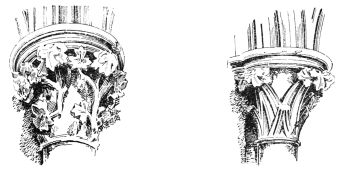
Fig. 176.—Westminster Abbey. Fig. 177.—Westminster Abbey.
Of foliated carving you have admirable specimens, both of the most refined form of the conventional kind, and of the earliest form in which natural foliage was made use of (Figs. 176, 177). You have, in the tombs of Eleanor, Crouchback, and Aveline, and in the bosses of Edward I.’s work, the same carried on into a more systematic form; and I may here mention that generally the bosses in the vaulting are worthy of most careful study. Then, again, you have noble examples of figure sculpture in the earlier monuments, especially those of Henry III., Queen Eleanor, Crouchback, Aveline, and Aymer de Valence. Also some admirable relics of it in connection with the architecture; as, for example, in the angles of the triforium of the transepts (Figs. 178, 179), in the bosses of the western aisle of the north transept, and over the doorway of the chapter-house. Of later figure-sculpture there is an endless catalogue, winding up nobly with Torrigiano’s works in Henry VII.’s Chapel.
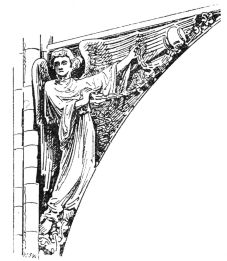
Fig. 178.—Angel Triforium of the South Transept, Westminster Abbey.
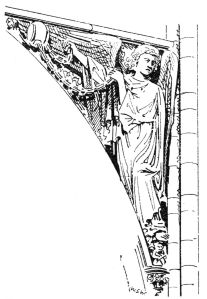
Fig. 179.—Angel Triforium of the South Transept, Westminster Abbey.
Of enamel-work you have splendid relics in the monument of William de Valence and in the shields on Edward III.’s. Of mosaic-work, whether of porphyry or enamel, you will find abundant examples, as you so well know: of the finer forms of painting you will find most exquisite relics in the wonderful retabulum of the altar[72] (now preserved in the ambulatory of the choir) and in the chapter-house; of iron-work you have a splendid example over the tomb of Queen Eleanor; and of bronze-work (though late in date) in the exquisite gates of Henry VII.’s Chapel and in his tomb, with its surrounding screen, also in the accompaniments of the bronze effigies already alluded to; while of later styles of architecture you have as splendid a series as this country can produce, ranging from the very earliest perpendicular in the cloisters, dating not much after the middle of the fourteenth century, to the gorgeous chapel of Henry VII.
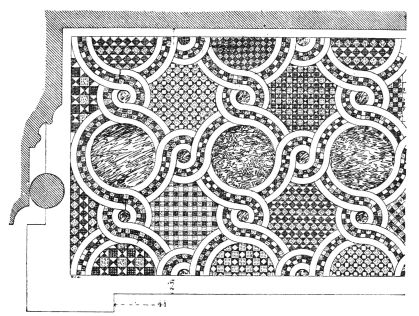
Fig. 180.—Mosaic from the Tomb of the Children of Henry III. and Edward I., Westminster Abbey.
With such a storehouse of art at your doors, you need never want work. You have, however, in London many minor works of great value. To place them in chronological order: you have the chapel of the Tower, a work dating back almost to the Conquest;[73] St. Bartholomew’s Priory Church in Smithfield, a beautiful specimen of the later Norman;[74] the Temple Church, consisting of one of the finest
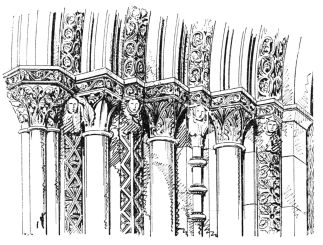
Fig. 181.—Temple Church, London. Capitals, West Door.
examples of the transitional[75] united with one of the finest of the fully-developed Early Pointed style; the remains which the modern Vandals have left us of St. Saviour’s Church, a noble Early Pointed work; the chapel of Lambeth Palace, in the same style; Ely Place Chapel, a work contemporary with the Eleanor Crosses;[76] the crypt of St. Stephen’s, Westminster; the hall of Lambeth Palace; Westminster Hall, and many an interesting object of minor importance. You have, if you want a day’s or a week’s trip, St. Alban’s Abbey, a never-failing and inexhaustible treasury; Waltham Abbey, with what remains unspoiled of the Cross; Stone Church, Hampton Court, Eltham Palace, Croydon Palace, Beddington Hall, Eastbury House, the ruins of Nether Hall, the Rye House, and many old churches now brought within an hour’s ride of London; not to mention the rapidly failing relics of the old churches of Middlesex, now the mere sport of destructive and ignorant committees, and—with shame I say it—sometimes of equally destructive but more culpable, because only wilfully ignorant, clergymen.
But London supplies other facilities for the study of Mediæval art in addition to its ancient buildings. In the first place, I may mention its libraries, in which the student may devote his spare hours in studying every work which has ever been published bearing upon the subject. The library of the British Museum (including the print-room and the manuscript-room) contains everything of that kind which the student could desire, and I strongly recommend you to gain the privilege of admittance and to make full use of that privilege. Your own library, too, at the Royal Academy, and those of the Institute of British Architects and of the Department of Art at South Kensington, offer every facility for study. I would especially mention that last named as being open in the evenings, and as being one of the most complete libraries of works on art in existence. The Architectural Museum[77] and the South Kensington Museum are absolutely invaluable as aids to the student; so that you have ample employment for the dead season of the year in which sketching tours are impossible, and it is your own fault if you do not make full and ample use of the privileges you possess; for, believe me, they are such as in former times it was impossible to obtain. I need hardly mention the British Museum, which, though not rich in Mediæval works, is the repository of those wondrous stores of Greek and other art which the Mediæval artist knows as well how to value as those who devote to them their more exclusive study.
You will perhaps wonder that I have said nothing as yet of foreign travel. I have delayed this intentionally, and for this reason: the facilities for travelling abroad are now so abundant, and so great a stress has of late years been laid on the study of foreign examples, that there is great danger of the student rushing headlong into foreign travel before he has made himself acquainted, in any but the most superficial manner, with the architecture of his own country.
You may possibly be disposed, after reading my former lectures, to say that, as most of the developments of our art seem to have originated abroad, it would be more systematic to study them in the first instance where they originated, and then to trace their ramifications in other countries. I would reply that, though when writing on a subject one is obliged to be systematic, it is by no means necessary that we should be rigorously so in our studies. Effects have in all sciences to be examined into before their causes are discovered, and it is often better that each student should for himself go through the process of tracing back familiar developments of art through the long course of circumstances which led to them, rather than, beginning at the original germ (which he must learn from others), to proceed—in a course not his own—till he arrives at the result with which he is familiar from its being at his own door.
However this may be, I hold it to be most unnatural for the English student of Gothic architecture to plunge into the study of its productions in other lands before he has made himself perfectly acquainted with those of his own. Our language is mainly derived from German and French, but who would wish his children to be taught those languages before they could speak correctly their mother tongue? We love Gothic architecture in the first instance, not because of the buildings we have heard of or seen pictures of as existing in foreign countries, but from those which we see around us—our own village churches, our own cathedrals, and a hundred objects which we have known from our childhood. From these we learn the native language of the art, and it behoves us to pursue the study of that language, and to perfect ourselves in it, before we turn our attention to foreign dialects, even though they may be of older date than our own.
When, however, you are well grounded in our own architecture, nothing can be more delightful or more instructive than to follow up your studies in foreign countries; though here, again, you must ever keep a watch over yourselves—a guard to your patriotism—lest you should be tempted to forget or to undervalue your mother tongue.[78]
The first country to visit is unquestionably France. A question may occur whether it is best to begin with the old royal domain—the great central province of the Pointed style, the fountain-head of our art—or with Normandy as the connecting link between ourselves and that fountain-head. On this question I would not offer any very strong opinion, though I incline towards the former. I do not think that, after the Romanesque period, the developments of the French came to us in any very great, or at least any very exclusive, degree through Normandy; and we know that very shortly afterwards that link of communication was cut off by our loss of that province, and that immediately after this the architecture of Normandy became more distinctly French, and that of England more exclusively English. I think, therefore, that you would be better prepared to understand the architecture of Normandy by having first studied that of the central province of France.
This, however, is a secondary question. The great matter is, wherever you go, thoroughly to study, thoroughly to sketch; not to hasten over the ground to get through an extensive programme, but to seat yourselves down where you find good material, and work on patiently at it. Where you begin is comparatively of little matter, excepting that it is undesirable to take the abnormal before the normal—the mere dialect before the language.
If you begin at Paris, as the great centre, you will find, amidst the Napoleonic modernisms of that centre of fashion, a very perfect series of typical Mediæval remains, over-restored and otherwise often sadly damaged, but nevertheless of the utmost value. I have mentioned most of them in my former lectures, but I will just enumerate them to refresh your memory, and roughly in chronological order.
I know little of purely Romanesque date unless it be the eastern part of the abbey church of St. Martin. This is curious and worthy of attention. The earliest object, however, of paramount importance is the older part of the church of St. Denis. I have said a good deal about it before, and will now content myself with pressing its importance as the grand typical example of transition. The Byzantine foliage here displays itself in a most marked form. You will find it in the string-courses and other parts of the west end very finely developed.[79] The great portal of the north transept is a noble specimen of this early style. The foliated carving on it is of very high merit. The eastern chapels, both of the church and crypt, are well worthy of the closest study, and there are many fine remains both stowed away in the churchyard and preserved in a temporary museum close by. These, however, do not all belong to this church, some having been brought here, under what circumstances I do not know, from St. Germain des Près. I will just mention that you must get permission to sketch (so long as the works of restoration are going on) from M. Viollet le Duc, and, having obtained, pray use it to the utmost.
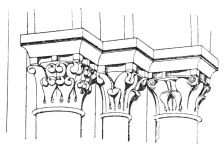
Fig. 182.—Capitals, Montmartre.
Next in date, so far as I know, comes St. Germain des Près. Here you will find, especially in the choir and its aisles, a most noble series of studies of the Byzantinesque foliage. The architecture, too, is very excellent; but you will perceive that the present form of the triforium is altered from the original.
Perhaps about the same age is the church of Montmartre. Here the Byzantinesque foliage is nearly all of the plain unraffled form, and is very curious and worthy of study.
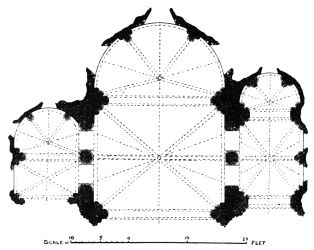
Fig. 183.—St. Julien le Pauvre, Paris. Plan of Choir.
In the same class may be placed the little church of St. Julien le Pauvre, now the chapel of the Hôtel Dieu. The choir and its aisles form a perfect work on a very small scale in the transitional style, with Byzantinesque foliage. The church is but little known, but is well worthy of attention. It shows how mistaken is the idea that the Early French style is not suited to small buildings. The clear width of the side bays is actually under four feet, and the other dimensions in proportion, yet the whole not only has not a miniature, but has a decidedly dignified air, while its details offer considerable varieties, even the two apsidal chapels being wholly different in their design and plan. What remains of the nave and the fragments of the fine western portal are good specimens of the succeeding style.
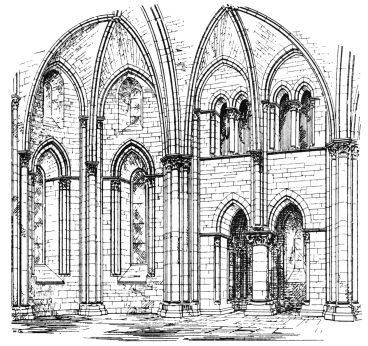
Fig. 184.—St. Julien le Pauvre, Paris. Choir.
We now come to the church of Nôtre Dame, which offers an almost perfect series of objects of study from the same period on into the fourteenth century. In the eastern parts is transitional work with Byzantine foliage, showing some very curious varieties. One of the western portals, too, contains two exquisite corbels belonging to its predecessor of the transitional period (Figs. 187, 188). The nave with its truly glorious portals is a most noble illustration of two immediately succeeding periods; as fine, indeed, in its details as anything can be. The iron-work of one of the west doors is unequalled. The upper portions of the façade go off into later yet still noble work. The transepts, now sadly over-restored, belong to the latter half of the thirteenth century, and have been fine though somewhat attenuated works.
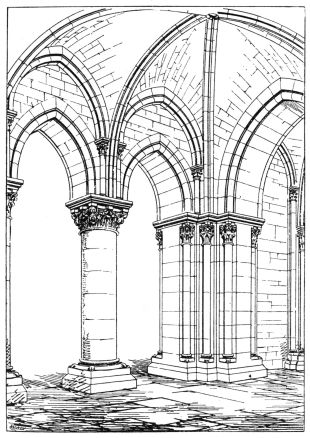
Fig. 185.—St. Julien le Pauvre, Paris. South Aisle of Choir.
The porte rouge is a model of a small and elegant doorway, while the eastern chapels, which nevertheless possess great elegance, show how the massive and masculine Early French style had become thinned down before the close of the first quarter of the fourteenth century.
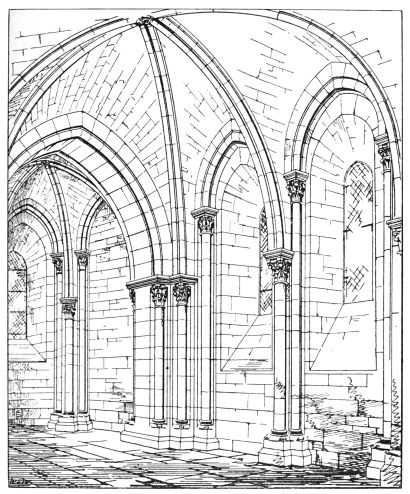
Fig. 186.—St. Julien le Pauvre, Paris. Chapel, south side of Choir.
The refectory of the abbey of St. Martin aux Champs is a most noble apartment of the first half of the thirteenth century, and some of the foliated carving is among the finest of its period (Figs. 189, 190, 191) while the
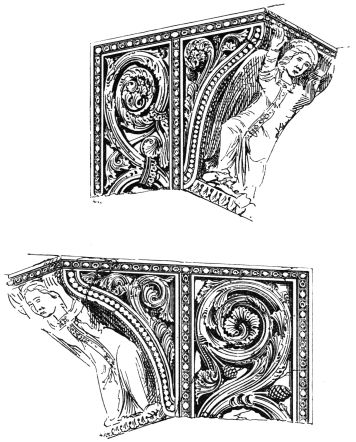
Figs. 187, 188.—Corbels, Western Portals, Nôtre Dame, Paris.
Sainte Chapelle, said to be the work of the same architect, carries on the style a little farther, and is too well known to need any remark from me.[80] Of later architecture there are also many specimens, though my tastes and leisure have not allowed me to go much into them. There are also several minor works of the early styles, of most of which I do not remember the names. The Hôtel Cluny, itself a charming specimen of the domestic architecture of the fifteenth century, contains, besides its invaluable collection of movables, a most interesting mass of fragments of architectural detail well worthy of several days’ careful devotion.
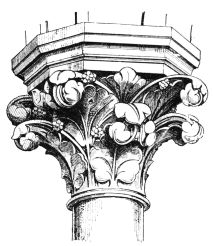
Fig. 189.—Capital, St. Martin aux Champs.
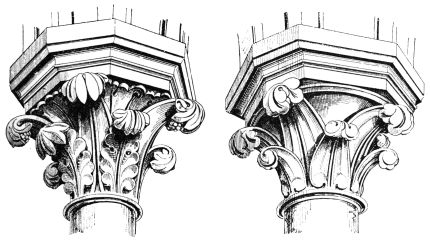
Figs. 190, 191.—Capitals, St. Martin aux Champs.
Quitting Paris, no city in France has, perhaps, stronger claims on your attention than Chartres. I will not go into any description of what you will find there, further than to say that it contains some of the very finest and richest examples both of the transitional and of the fully-developed Early Pointed styles. You might seat yourselves down there for a month and work hard every day, and be glad to go again and again and do the same, and yet find ample scope for study. In all these works the figure sculpture claims equal attention with the architecture, and no place offers a nobler field for this study than Chartres. A short run farther brings you to Le Mans, where the same two styles are again gloriously displayed, the one in the nave and the other in the choir, etc.; but this takes us out of the regions of the old royal domain and trenches on the Angevine district.
Between Paris and Amiens, and both near to and wide of the road to the right and left, you will find an admirable series of village churches worthy of being made the object of an entire tour, while among them are many more gorgeous monuments, as the abbey church of St. Luc d’Esserent with its exquisite series of capitals, and the cathedral and other churches of Senlis. Amiens and Beauvais need no recommendation from me, nor need I call your attention to that glorious group consisting of Noyen, Soissons, Laon, and Rheims, with the Château de Coucy, the monastery of Ourscamp, etc. This group should be the subject of a distinct tour, though too extensive to be thoroughly studied in one of short duration.
I should have mentioned that at Creil, which you pass in going to almost any of these places, are the ruins of the exquisite transitional church of St. Evremont, another instance of the way in which the early French builders fitted their architecture to works of small size. I know few more valuable examples of its period than this.
In another direction you reach Sens—a church so closely allied with the English transition—and Auxerre—a mine of fine detail, and farther on the venerable abbey of Vezelay, and several others less in scale but of great interest; but here again we get out of our province: only let me beg you, if you go to Vezelay, to give plenty of time to the chapter-house, a truly exquisite work of the transitional period.
Each district of France, however, has its own special objects, all interesting and instructive, and all claiming your careful study, though the central district bears most directly upon ourselves, excepting only Normandy, with its Romanesque identical with our own, and its host of charming village churches, which remind one so much of those of England. Wherever you go, be particular to give attention to the rarer objects, such as timber roofs of early date, chancel stalls, wall decorations, with those relating to groining, etc., to metal-work, jewellery, shrines, illuminated manuscripts, and more especially to stained glass; and, perhaps, almost more than all, to figure sculpture. I would also suggest that you should generally give preference to objects which are really beautiful rather than to those which are odd and extravagant. I confess I have not myself seen much of the latter class in France; but some of my friends who have a keener eye have, if one may judge of causes by effects, come home loaded with eccentricities such as I have failed to meet with.
Germany is almost as delightful to the architectural tourist as France itself, and is much more so in one respect. I mean the general retention of the movables of churches, even to the jewellery.
The architecture in Germany which is, perhaps, the most valuable is that of the transition, which, as I have before pointed out, took here a line of its own. After this, the most valuable is, perhaps, the brick architecture of the North. The timber buildings, however, are almost equally important, were it not that it is a material not much in use for external architecture in our own day.
The movables, however, are the richest inheritance of the German churches, and to these I would recommend your devoted attention. They form a special and most important subject of study, and one for which no country offers such facilities. Besides the more ordinary objects, such as chancel fittings, reredoses, bronze gates, metal and other screens, lamps, coronæ, fonts (whether of stone or of brass), tabernacles for the reservation of the host, ancient organs, paintings, and a hundred others of parallel classes, almost every great church has its Schatzzimmer, or treasury, and these usually contain valuables of the highest interest and of the most splendid art. These are not always easy of access, and it is difficult to obtain permission to sketch in them; but it is worth every exertion to do so. The treasuries at Aix-la-Chapelle and Cologne are known to every traveller, and their claims upon the student are apt to be passed over from very familiarity; but a few days devoted to each would be invaluable. I know no ancient work more glorious or more exquisite, so far as it remains intact, than the shrine of the Three Kings at Cologne. I have on two occasions obtained permission for a brief period to draw from it, and have been filled with wonder at the exquisite art which a close examination unfolds. At Hildesheim are numberless objects of early art of the same class. At Brunswick, again, are a few; while the treasury of the cathedral at Halberstadt is a complete museum of Mediæval art. Sacred vessels, reliquaries containing the finest early workmanship, books with glorious jewelled covers, mitres of all degrees of richness, tapestries from the earliest periods, altar coverings both of embroidery and linen of early periods, and exquisite works of every class we can imagine are to be found in that charmed enclosure.[81] At Marburg there are also many such objects, and among them the shields of the old Teutonic knights and the perfectly wonderful shrine of St. Elizabeth. I do not refer to the beautiful stone structure which contained it, and which is figured by Moller, but to the gorgeous jewelled shrine which it contained. All through Germany, however, the case is the same: wherever you go you find the great churches replete with the movable works of Mediæval art. It is for you to study them with the care which they deserve.
I have in a previous lecture said a good deal about the study of Italian architecture, and I will not now repeat it. Suffice it to say that Italy is the land in which to study the use of rich materials, of mosaic-work, and of architectural decoration in its highest forms. It is the land in which to give the finishing touch to your architectural training, to learn the last and loftiest lessons—those which show us how to link architecture with the sister arts in their highest perfection. If you are artists when you go there, you may be much more advanced artists when you return. We learn, too, there much that is most useful in respect of the domestic architecture of towns. It is, however, a seductive country, and we have to keep on our guard there, and not to forget that we are members of a Northern nation.
Mr. Street has told us a great deal that is deeply interesting about Spanish architecture, so I will not (as I have never seen it) enter upon that subject; and will close what I have to say on foreign travel by urging you to the diligent use of it, but urging you also when you return home, not to forget that you are Englishmen, and that English is your proper language. I would also advise that your foreign tours should be followed up or alternated with English ones, so that your own native architecture may always be kept prominently before your mind.
I have offered to you in this lecture what may appear to you but the dry bones of the subject. In my next I hope to follow it up by suggestions, both as to the spirit in which this course of study should be undertaken, and the personal training both of the mind, the eye, and the hand necessary to fit you for such studies; and as to the practical uses which you should subsequently make of the lessons you will have thus learned.