OTHER MINERAL RESOURCES
Reading edition
In the future, new uses will be made of the Illinois industrial minerals already discussed. In addition, other mineral resources of the state that are not now being used may be the bases of new mineral industries. Some of these minerals are at present too costly to mine because the deposits are deeply buried or are 42 not sufficiently rich to be worked at a profit. Others are not convenient to markets, and still others have no present commercial use. In years to come, however, changes may occur that will make it practical to mine, process, and use some of these resources. Furthermore, some other mineral deposits that are now being utilized in a limited way may have greater future use. The Illinois Geological Survey continues to study the location, character, and composition of many such mineral materials and is alert for the development of new uses. Some of the materials are discussed briefly below.
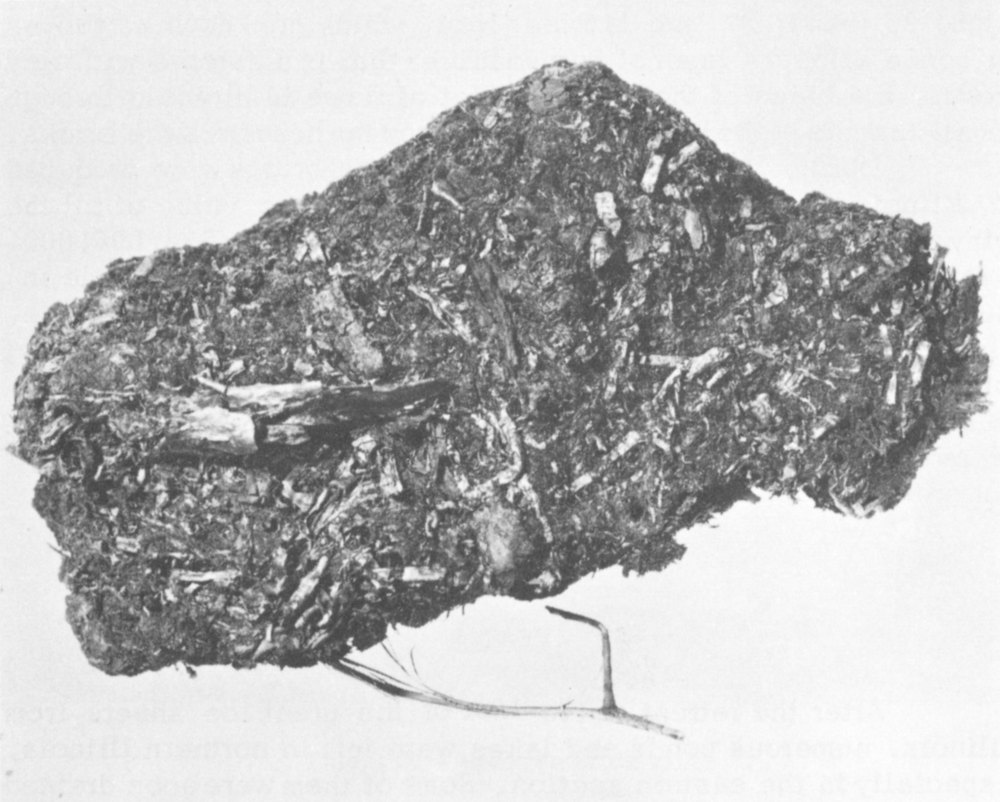
Figure 22—Peat from Kane County showing its fibrous nature and remains of plants.
Gypsum and Anhydrite
Gypsum is a mineral that consists of calcium sulfate plus two molecules of water (CaSO₄·2H₂O). By suitably heating it, the amount of water can be reduced, and a product called calcined gypsum (plaster of paris) results. This material changes back to gypsum if mixed with an appropriate quantity of water. The ability of calcined gypsum to “set” when water is added makes it 43 important in the manufacture of a variety of plasters and related products, especially building materials. Gypsum also is used in cement making and in agriculture.
Anhydrite (CaSO₄) is like gypsum except that it contains no water and hence cannot be made into plaster of paris. Its uses are limited in the United States.
Wells that were drilled for oil, water, or coal have encountered gypsum and/or anhydrite in some parts of south-central Illinois, but the gypsum and anhydrite are not known to crop out at the surface. A study of diamond drill cores and well cuttings on file at the Survey showed that the shallowest gypsum and anhydrite reported occurred at a depth of 470 feet in Madison County. The greatest continuous thickness of gypsum found was 2 feet; but in one well, over 6 feet of strata was penetrated that averaged almost 75 percent gypsum. It is possible that thicker deposits of gypsum might be found if drilling were done especially in search of it.
Feldspar-Bearing Sands
Feldspar is the name applied to a group of minerals that are mainly silicates of potassium, sodium, and calcium. Various kinds of feldspar are used industrially in making glass, enamels, pottery, and other products. All the feldspar now used in Illinois is shipped into the state. The discovery by the Illinois Survey that some Illinois sands contain considerable feldspar led Survey geologists and chemists to find where deposits highest in feldspar occur, what kinds of feldspar they contain, and whether it could be separated from the sand in which it occurs. Beach sands, river sands, dune sands, and sands from other kinds of deposits were studied.
It was found that many sands contain more than 15 percent feldspar and some as much as 25 percent. Means of separating the feldspar from the sand are believed to exist, but problems relating to the purity of the separated spar remain to be solved.
Brines
No salt is now produced in Illinois, but at one time the state was a major salt producer. Salt works were in operation near Equality, Central City, Murphysboro, St. John, Danville, and possibly other places. The salt was obtained by evaporating salt water (brine) that came from natural springs or from wells. The Equality area was a particularly important producer of salt in 44 the 1800’s. Discovery elsewhere in the Middle West of deposits of rock salt and brines that contained more salt than those of Illinois is said to have been responsible for the discontinuance of salt making in the state.
No salt beds crop out in Illinois, nor are any known to have been encountered in the many wells that have been drilled for coal, oil, or water. However, most oil well drilling encounters brines containing various amounts and kinds of salts, including the common table salt, sodium chloride.
For reasons relating to the production of oil, Survey geologists and chemists have collected and analyzed many samples of Illinois oil field brines, and data are therefore available on their salt content. No commercial use is being made of the brines as sources of salt.
Oil Shale
Illinois has a large oil-producing industry that obtains oil from wells. The state also contains beds of shale that yield oil when the shale is heated.
In order to estimate the present and future importance of the oil shale resources, the Survey collected and tested more than 100 shale samples from 41 Illinois counties. A few samples contained more than 25 gallons of oil per ton of shale, but most contained less than 15 gallons per ton. A study of the crude oil distilled from selected shale samples showed it to be somewhat different from the oil that comes from wells. It could, nevertheless, be made to yield gasoline, fuel oil, and other products if suitably processed.
The shale strata generally the richest in oil are found above coal seams, are black, and are sometimes called slate by coal miners. They are rarely more than 3 feet thick, but they extend over large areas.
Sandstone
Sandstone has a long history of use in Illinois. Pioneers built foundations for their houses and barns and curbs around their wells from it. Slabs of sandstone were once a popular material for sidewalks, some of which are still in use. Churches and other sizable buildings have been constructed from it, and at one time an Illinois sandstone was used to make grindstones. Except for the St. Peter Sandstone, which was discussed under “Silica Sand,” the use of sandstone has decreased, although comparatively small quantities are still used as building stone.
45
Most Illinois sandstones may be thought of as a mass of sand whose grains are more or less firmly cemented together by clay, iron oxide, and quartz, either singly or in combination, or, less commonly, by calcite. The grains are particles of various minerals, but most of them are quartz.
Sandstones are especially common in the hill country of extreme southern Illinois. The Survey’s investigations in this area revealed that if they are suitably processed some of the sandstones may have possibilities for commercial use. Sandstones in other parts of the state also have been studied, with similar conclusions.
Barite
Barite (barium sulfate, BaSO₄) is a deceptive mineral—it is much heavier than it looks. Barite found in Illinois is generally white or light colored, and, although some of it looks rather like white limestone, it is more than half again as heavy as limestone. Barite’s unusual weight is responsible for one of its major uses—as a constituent of drilling muds for the oil industry. These muds are a mixture of clay, water, and a weighting material such as barite. They are used in various ways in the drilling of oil wells by rotary drills. Barite also is an important raw material for the manufacture of chemicals.
Barite is found in Hardin and Pope Counties, the site of the fluorspar industry. According to studies made by Survey geologists, the barite occurs both as veins and beds associated with fluorspar, but its distribution is irregular and the deposits are of limited size. A barite mine is said to have been worked years ago, and more recently comparatively small tonnages have been taken from open pits. Future exploration in southern Illinois may reveal deposits of barite that will be profitable to mine.
Greensand
In some parts of Illinois occur sands or sandstone that contain numerous grains of the green mineral glauconite. If the sands are not discolored by iron compounds or other substances, they too have a greenish color and, therefore, are called greensands. Glauconite varies in composition but contains potassium, magnesium, iron, aluminum, silicon, and water. Greensand is said to be used in relatively small amounts as a soil conditioner and as a water-softening agent.
Greensand is known to occur in the general vicinity of Olmsted in southern Illinois. Near Oregon in northern Illinois an old quarry exposed 10 feet of greenish brown sandstone that contains glauconite. Samples from southern Illinois and from the sandstone at Oregon contained more than 6 percent potassium oxide.
46
Marl
In some of the lakes and ponds left by the glaciers lived numerous small mollusks with calcium carbonate shells. As the animals died, their shells formed a deposit on the bottom of the lakes and ponds. Certain plants, especially algae, may have added a mudlike precipitate of calcium carbonate to the deposits, and varying amounts of clay washed from the shores mixed with both these materials. The resultant deposit is called marl. Some marl deposits have peat mixed with them, and peat also overlies some marl deposits.
Only comparatively small amounts of marl are known to have been dug in Illinois. One deposit containing many shells and shell fragments, some of it associated with peat, was worked in southeastern Livingston County as a source of agricultural liming material. Other deposits have been reported at other places in northeastern Illinois. The available information indicates that the marl deposits are likely to be principally of local importance.
Tufa and Travertine
The tufa (fig. 23) and travertine occurring as surficial deposits in Illinois were formed by springs. The deposits usually occur at or near the outcrop of a layer of porous water-bearing earth material, such as gravel, sandstone, or fissured limestone, that is underlain by a nonporous clay or shale formation. Water moving down through the porous layer cannot sink through the clay or shale and so is forced to move laterally. Where valleys have cut into the layers of gravel or rock, the water emerges as springs.
If the material through which the water has passed is limestone, or gravel containing limestone as most Illinois gravels do, some of the limestone is likely to have dissolved in the water. When the water issues as a spring, conditions may be such as to cause precipitation of the dissolved limestone as tufa or, more rarely, travertine.
Tufa is generally highly porous and more or less impure, whereas travertine is harder and less porous.
The middle or lower slopes of bluffs are common sites for spring-deposited tufa or travertine. Deposits have been seen in various parts of Illinois, but are not known to have been worked, except in Calhoun County where small quantities of tufa were produced for use as agricultural limestone. It is thought that the tufa and travertine deposits of Illinois are relatively small, but they may be of local importance.
47
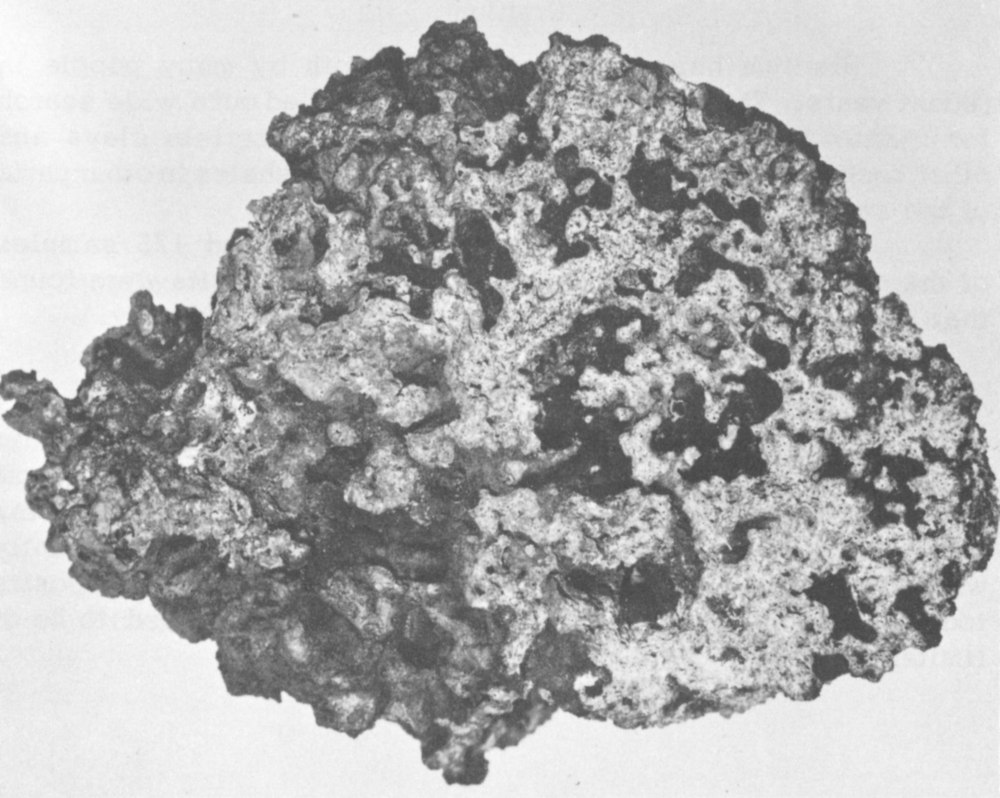
Figure 23—Calcareous tufa from Pike County. In addition to the large visible pores there are numerous tiny ones.
Pyrite and Marcasite
The mineral pyrite consists of iron and sulfur as the compound iron sulfide (FeS₂) and, because of its shiny, brassy yellow color, is sometimes called fool’s gold. Marcasite has the same composition as pyrite, but its crystals have a different shape and it is often lighter colored. Both minerals occur in various parts of the state; they are particularly prevalent in some coal seams, and when so occurring are in some cases called coal brasses or “sulfur.”
Pyrite and marcasite are used commercially as raw materials for making sulfuric acid, although sulfur itself is more extensively used for that purpose. At one time coal brasses recovered during coal-cleaning operations at a northwestern Illinois coal mine were sold for acid making. A large quantity of coal brasses probably could be recovered from such operations at Illinois coal mines.
48
Uranium
Uranium has been sought in Illinois by many people in recent years. The Geological Survey also carried out a wide search for uranium and particular attention was paid to certain clays and other rocks in Hardin County and certain black shales in other parts of the state.
About 200 samples from Hardin County and 175 samples of the shales were tested by the Survey. No deposits were found that are known to be of the required richness and quantity.
Iron Ore
About the middle of the 19th century two furnaces in Hardin County in extreme southern Illinois for a time produced iron from local limonite ores. The ore is said to have occurred as pellets, chunks, and masses scattered through soil and clay and apparently was of irregular distribution. Little can be seen of the deposits today. Their extent is not known, but they are believed to be of limited size.
49
The Illinois State Geological Survey carries on a continuous program of research on the industrial minerals and metals of Illinois and their uses.
In addition to the investigations mentioned in this booklet, many others have been made or are in progress. Such studies are necessarily a continuing activity if the full potentialities of Illinois mineral resources are to be realized, for industry continually demands new raw materials and changes its requirements for those now used.
The Survey has issued numerous reports that deal with the resources discussed here and mimeographed lists of these are available upon request.
If reproduction is made of the material herein, acknowledgment of the Illinois State Geological Survey is requested.