APPENDIX
Reading edition
The following plates comprise complete courses for applied art problems in thin metal (copper and silver), and clay. The problems are based upon what is known as the "group system." The process forms the basis for each group in each course. The stated problem in each group is merely one of many that might be selected which involves the process of the group.
The design rule that should be applied to each problem has been indicated by its proper figure and letter on each plate, as 10a, etc. The plates are sequentially arranged in order of the difficulty of the process and may be summarized as follows.
Thin Metal
Plate 67: Bending. Sawing. Riveting. Plate 68: Bending. Soft Soldering. Plate 69: Raising. Piercing. Etching. Plate 70: Raising and Planishing. Plate 71: Bending. Piercing. Etching. Hard Soldering. Plate 72: Hinge Construction. Plate 73: Raising. Planishing. Hard Soldering. Plate 74: Raising. Planishing. Plate 75: Champleve Enamelling. Plate 76: Precious Stone Mounting; Pins. Plate 77: Precious Stone Mounting; Rings. Plate 78: Precious Stone Mounting; Pendants.
Pottery
Plate 79: Hand Built Tile. Plate 80: Hand Built Bowl, Coil and Strip Method. Plate 81: Same with Appendage Added. Plate 82: Hand Building; Spouts, Lids, Handles. Plate 83: Poured Forms and Mould Making. Plate 84: Slip Painting. Plate 85: Glaze Testing.
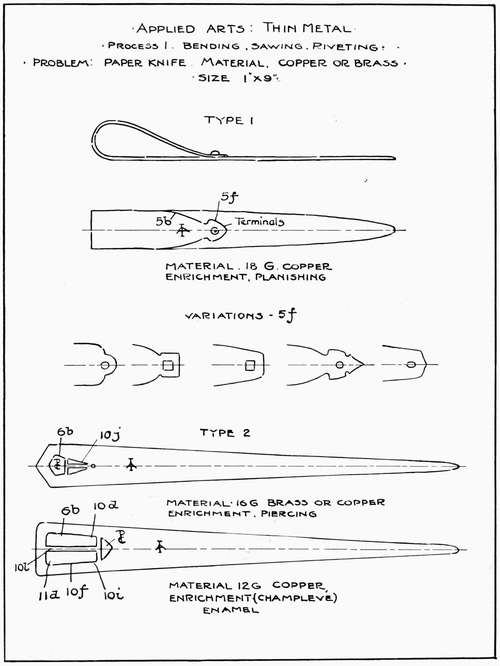
Plate 67
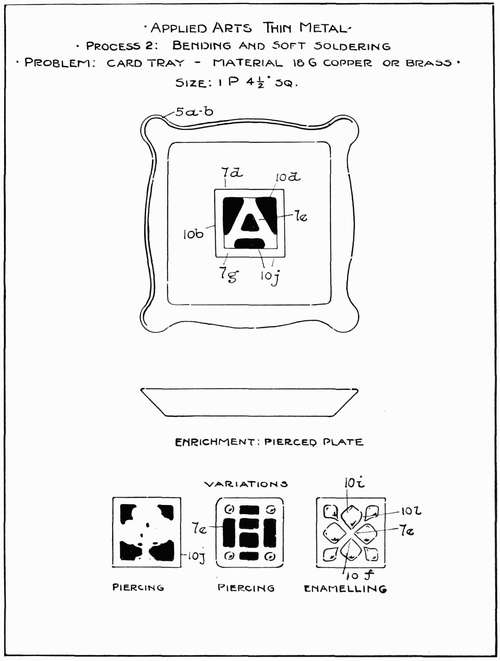
Plate 68
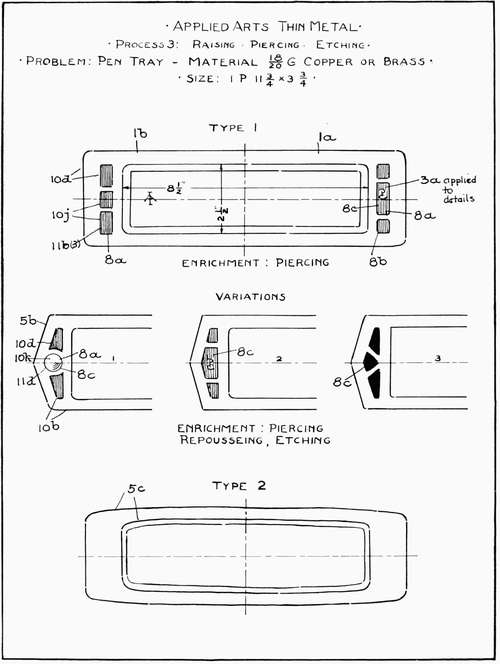
Plate 69
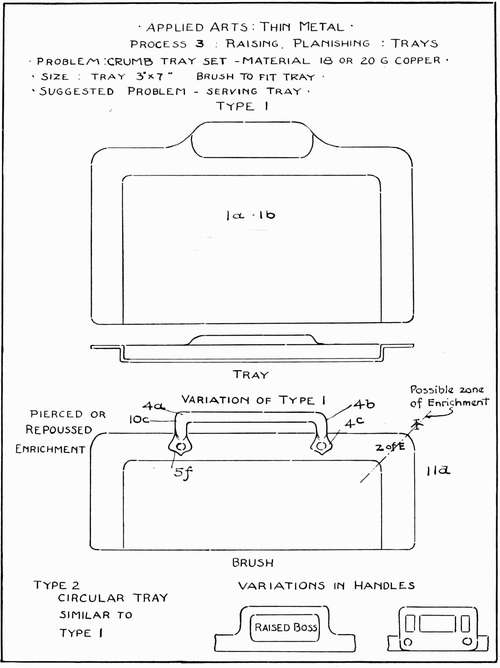
Plate 70
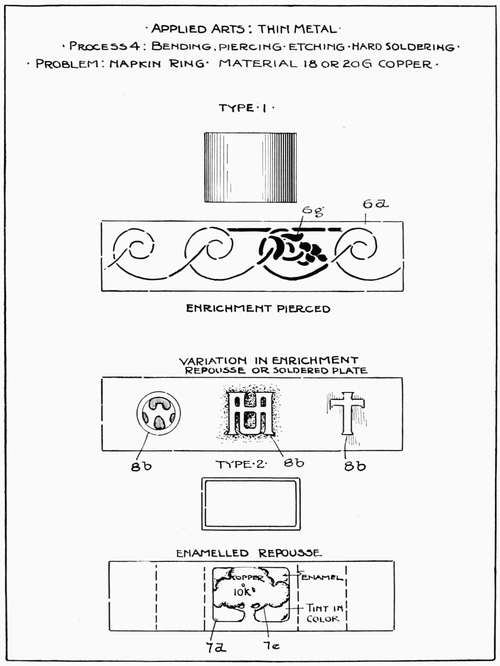
Plate 71
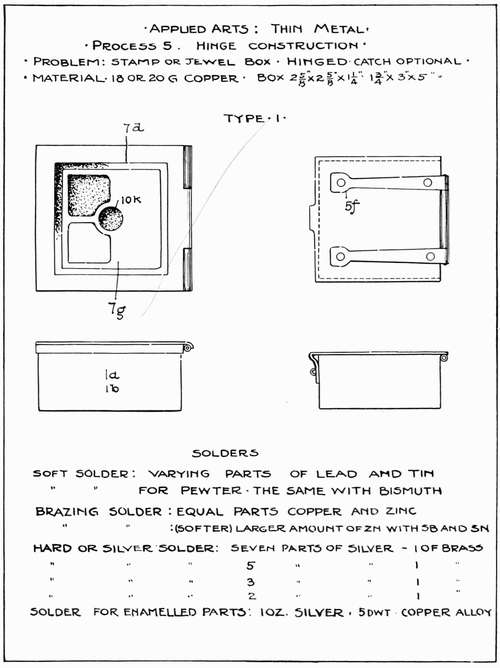
Plate 72
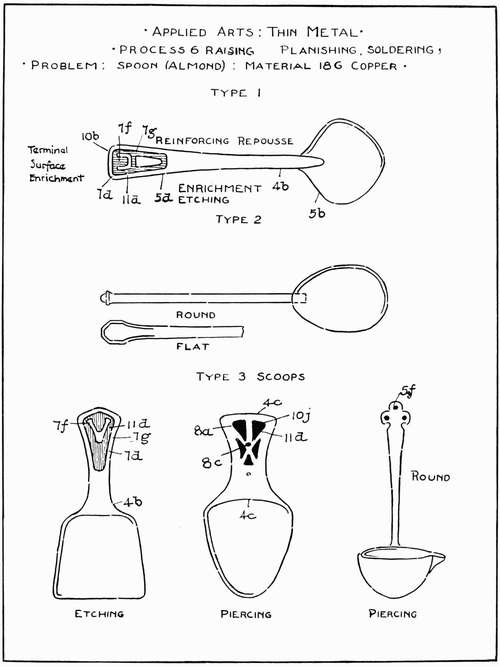
Plate 73
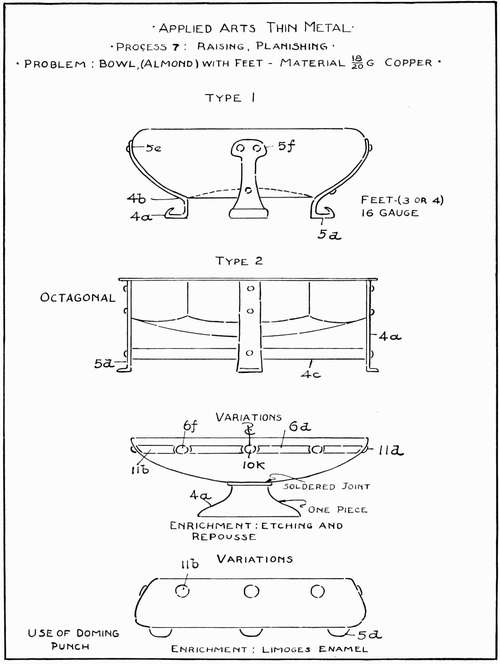
Plate 74
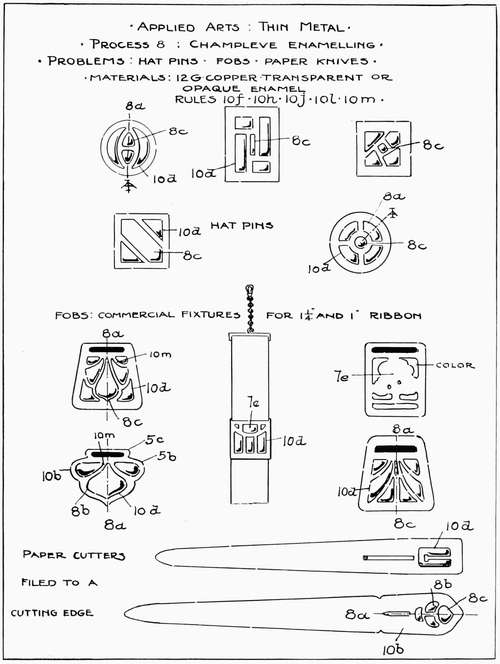
Plate 75
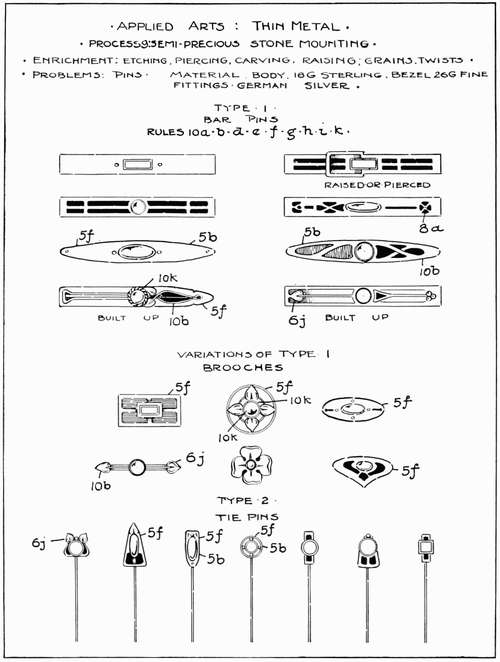
Plate 76
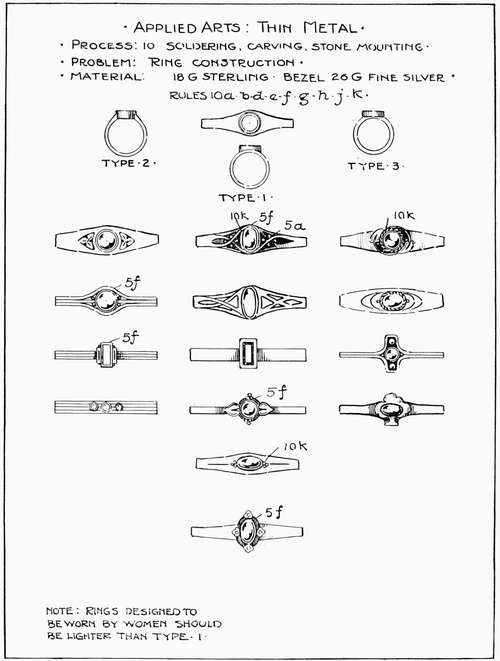
Plate 77
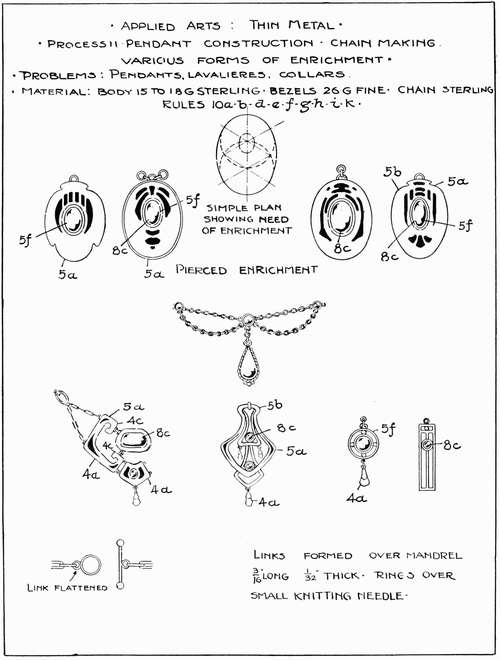
Plate 78
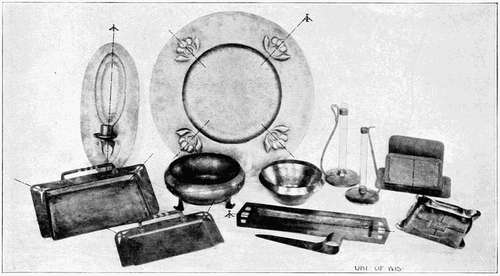
Figure 470.—Inceptive Axes. Partial Illustration of the Metal Course.
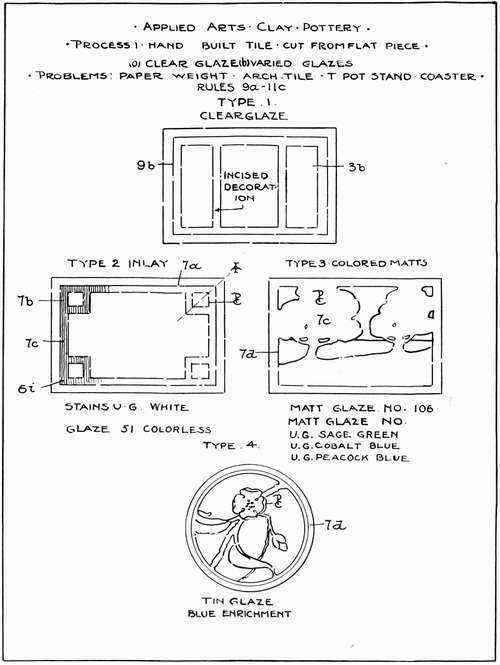
Plate 79
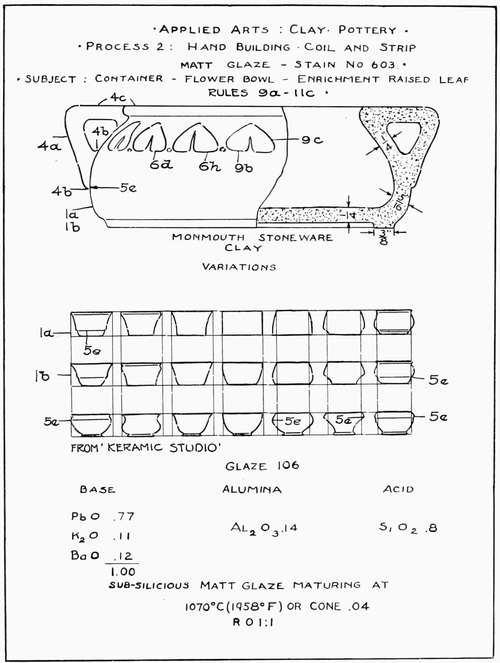
Plate 80
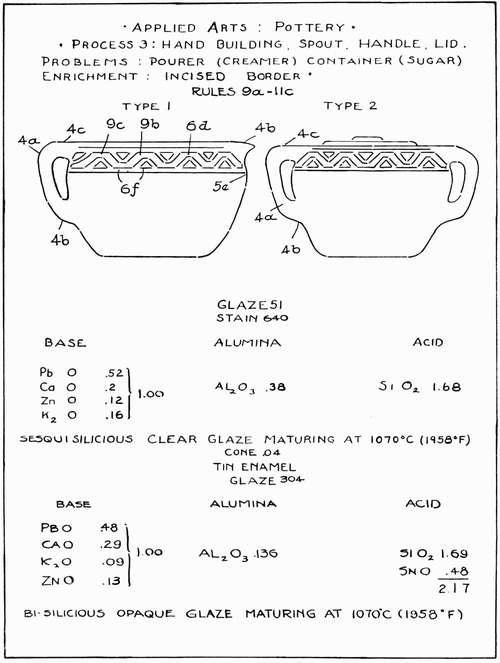
Plate 81
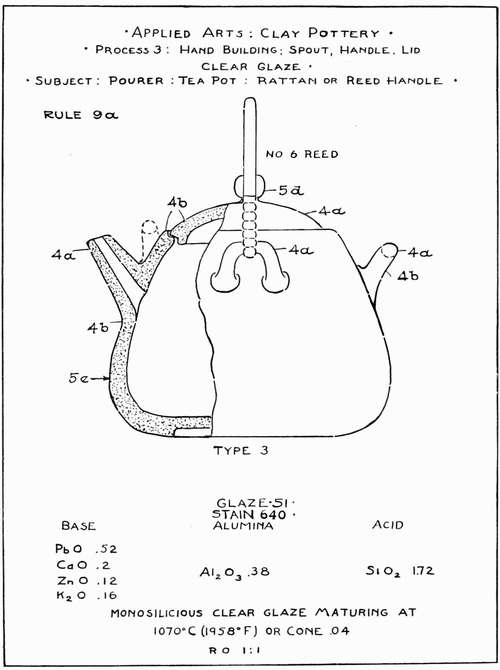
Plate 82
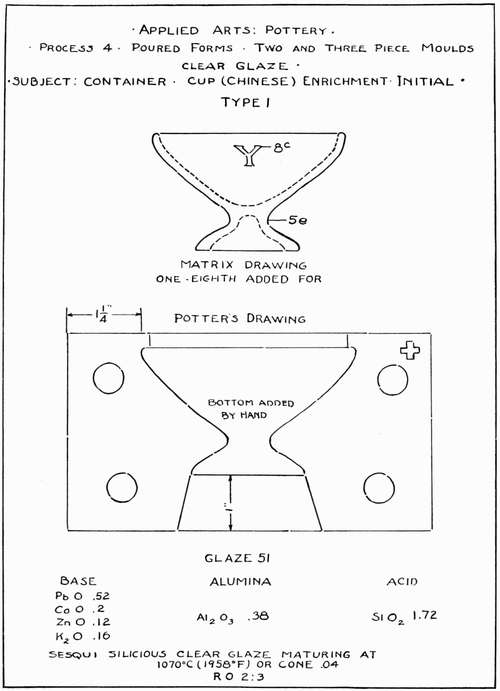
Plate 83
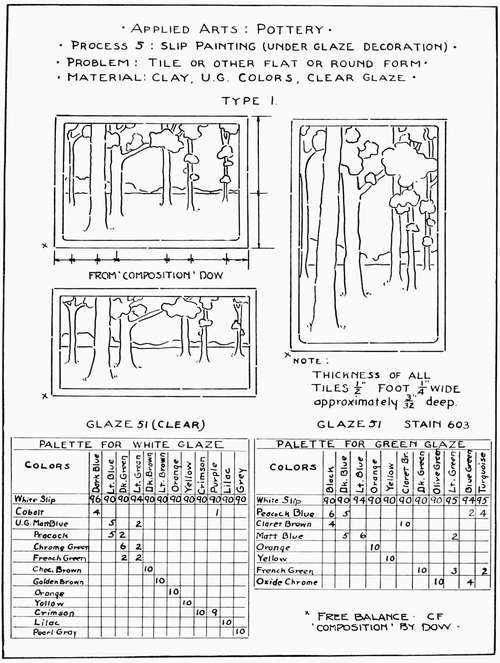
Plate 84
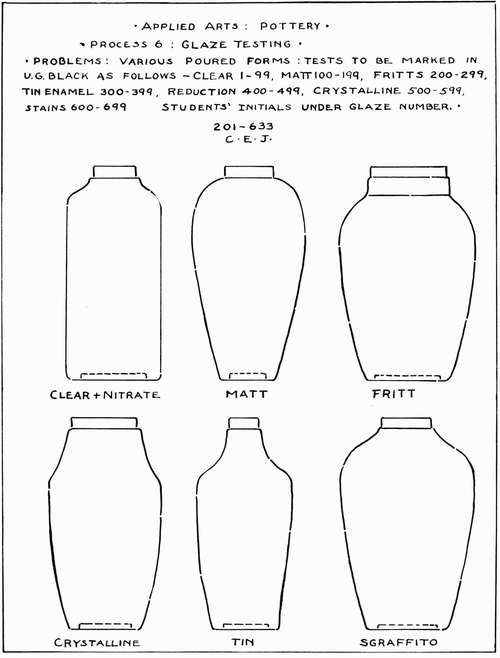
Plate 85
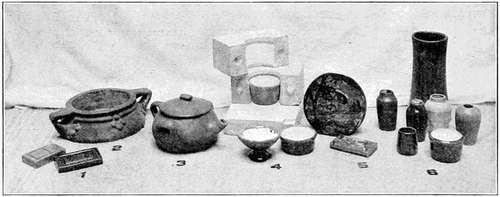
Figure 471.—Results of the Pottery Course
Figure 471 shows the actual results produced by the preceding course. The process to which the individual pieces belong is indicated by the small figure placed on the table and in front of the ware. The preceding sheets should be regarded in the light of suggestions for original thinking on the part of the student. They merely suggest technical guidance, in order that his progress may be sequential and fitted to his increasing skill.
The glazes are stated in the terms of the ceramist with the proportions of base, alumina, and acid content of each glaze clearly stated. By referring to the textbooks mentioned in the preface, these glazes may be developed into the potter's formulae.
In both metal and pottery courses, two or more types are frequently represented upon one plate. These types will allow the teacher to assign a more difficult problem to the student with some previous experience.