The Descending Star.
Reading edition
(A CHIPPEWA LEGEND.)
The Chieftain sat in his wigwam door And smoked his evening pipe, While a crowd of Indian boys and girls, Knowing his wisdom ripe, Were begging him to a story tell, For votive offering brought, The tobacco loved by the aged sage; So he told the tale they sought. "There was once a time when the world was filled With a people happy," he said: "The crimson tide of war rolled not, Nor against each other led, Each rival tribe their warriors brave: For the nations were as one, The frightful scourge that has wasted us Had, happily, not begun. "With game in plenty forest and plain Abounded. None were in want And ghastly famine never touched The tribes with its finger gaunt.
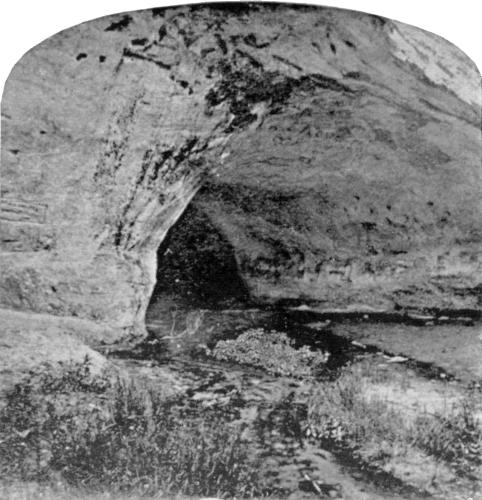
CARVER'S CAVE.
At the bidding of man the beasts of the field All meekly went and came; For they feared him not, nor reason had, But all were harmless and tame. "Unending spring for winter's blasts And chills gave never a place; Each tree and bush bowed low with fruit So they needed not the chase. A carpet of flowers covered the earth, While the air with their perfume Was laden. The songs of mated birds Rose ever in sweetest tune. "The earth was indeed a paradise, And man was worthy to live 'Mong these delights in tranquil peace That merit alone can give. The Indians—sole possession then— Roamed here and there at will, O'er plains and lakes and wilderness— Ah, that it were so still! "They numbered millions, as nature designed, Enjoying her many gifts. The sports of the field were their delight; Such life the soul uplifts. They watched the stars with loving gaze, And thought that they must be The homes of the good, with the Great Spirit In the heavens roaming free. "One night a star shone strangely bright, Out-shining all the rest. At first they deemed it far away, Its nearness never guessed. Then some declared they believed it stood Just over the tree-tops tall. To solve the doubt a council of The wisest men they call. "These went one night and found the star Was something like a bird. It hovered just above the trees— They feared, for they had heard From their forefathers that it might A bloody war foretell, And over them a silent dread Of some disaster fell. "One moon had waned—the mystery No one could solve or tell If the omen of their heavenly guest Foreboded ill or well: When a warrior had a wondrous dream, A lovely maiden came And stood by his side—in sweetest tones, She called him by his name. "'I love your beautiful lakes,' said she, 'Your mountains clothed in green, In yonder sky, shining above, My sisters still are seen. But I have left them to come and live Among your race, young brave: To find a suitable home for me Go ask your sages grave.' "'And pray what form shall I assume To be best loved by you?' The youth awoke and stepped from his lodge The ominous star to view. It shone with undimmed luster where It had stood for many a day: Yet he firmly believed it the visitor His waking had driven away. "At early dawn the crier was sent Around the camp to call The warriors at once to the Council Lodge, And there before them all, The young brave told his dream so strange. For love, they said, no doubt For love of man the star had come And wandered thereabout. "To welcome her to earth next night Five noble braves were sent. She took the pipe of peace, which herbs A sweet aroma lent. Then with expanded wing she came And hovered near their homes, Like one who wished to be at rest But still unwilling roams. "In dreams she asked the youth again: 'Pray tell where I shall live, And what form now must I assume To most enjoyment give?' He could not decide, so she was told For herself 'twere best to choose. The tribe might through their ignorance Her heavenly wisdom lose. "On the mountains first in the pure white rose She dwelt; but all unseen By the tribe she loved: so next she went To be the prairie's queen. She trembled with fear, with ceaseless dread, At the hoof of the buffalo; For safety then a rocky cliff She sought and glanced below. "'I know where I will live,' she said, 'Where glides the swift canoe Of the race I most admire, and where, Dear children, always you My playmates can be. I will kiss your cheeks As you slumber by the lake. Here with you all, my best beloved, My home I will ever make.' "These words she spoke and alighted soon On the water's limpid breast. Looked down at her image reflected there, At last she was at rest.
"THESE WORDS SHE SPAKE AND ALIGHTED SOON ON THE WATERS' LIMPID BREAST."
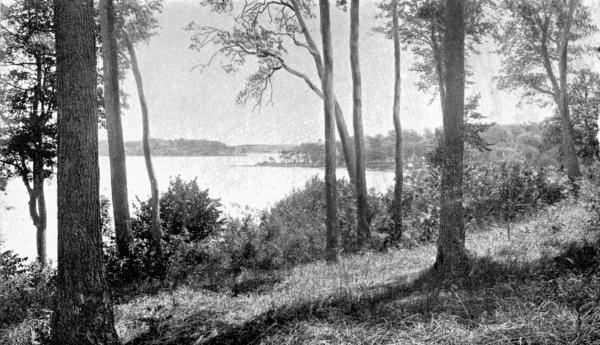
In the morning sun, as pure as heaven, A thousand lilies basked; For Wah-be-gwan-nee, water lily, The Indian children asked. "In the southern sky this bright star lived; Her brethren can be seen Far off in the cold North, hunting the bear: Meanwhile, with ardor keen, Her sisters watch from East and West, And here, an exile lone, She sees her heavenly kindred fair In the home that was her own. "My children, when the lilies pure You pluck from the placid lake, Hold them toward heaven, their rightful home, Abandoned for your sake. So they may be happy here on earth As any sister star That, stationed in the summer sky, Gleams brightly from afar."
IDA SEXTON SEARLS.