LOUISE IMOGEN GUINEY (continued 4)
Reading edition
Froude supplied, at most, but four of what George Eliot called The Tracts Against the Times, if we are to count as his only what he wrote out with his own hand. Of these, the earliest, briefest, and most comprehensive is No. 8, The Gospel a Law of Liberty, the authorship of which was, and is, frequently assigned to Newman.[155] It somewhat complicates matters that in Newman’s printed correspondence are various remarks addressed to him as responsible for No. 8, which bear no 125 disclaimer in any note or parenthesis supplied by himself. It is also noticeable that he writes to Hurrell on November 13, 1833: ‘Evangelicals, as I anticipated, are struck with The Law of Liberty, and The Sin of the Church. The subject of Discipline, too, I cannot doubt, will take them. Surely my game lies among them.’[156] He might have said ‘our game,’ but he does not. Nor does The Gospel a Law of Liberty appear in Froude’s Remains. Dean Burgon, however, prints in the Appendix to his Twelve Good Men an extract from a letter of the Rev. Charles Marriott to the Rev. A. Burn of Chichester, Jan. 29, 1840. ‘You ought to know,’ says that gentle and unimpeachable authority, ‘that Froude was the author of the Tract, The Gospel a Law of Liberty, which is the subject of No. 8.’ Froude and Newman may well have devised this No. 8 in concert. So far as the wording goes, Newman’s light galloping touch is certainly upon it. In idea it is intensely Froude-like in its concentrated suggestiveness: in it we see the very pupa, as it were, of the wide-winged theory of Dogmatic Development, broached at Littlemore so long after. No. 8, with its staccato marcato form, is perhaps the most typical of the early Tracts, and most expressive of the spirit in which they were conceived. These shared in common (in the opinion of Dr. Pusey’s conjoint biographers, men who usually see things as they are) a ‘startling and peremptory language.’ ‘First rouse,’ ran Hurrell’s business-like programme, ‘then modify.’ Newman certainly, in his office of rouser, availed to set gentle and simple by the ears. Briefly, pungently, he did his inimitable work. Dr. Pusey, with his serious grasp, his moral weight, his immense learning, by contributing to the series his great signed Tract on Baptism, changed the fashion as we know. To ‘modify’ began with him, and progressed with him. He had the genius of explicit statement. It might even be said that his whole influence and care, especially from 1845 on, were on the side of expounding and applying, as Newman’s and Froude’s had been preponderately on that of naked presentment, full of novelty, excitement, and ‘danger.’ The little guided Israel which had followed the pillar of fire by night, 126 found it well, in due course, to follow the pillar of cloud by day.
Froude’s other contributions to the Tracts were No. 9, On Shortening the Church Services; No. 59, Church and State (incorporated in the Remains as the concluding section of State Interference in Matters Spiritual); and No. 63, on The Antiquity of Existing Liturgies. The last-named was intended to display the novel features of the Communion Service in the Book of Common Prayer, as contrasted with those Uses having inter-resemblance and an unbroken Apostolic derivation. It is shown that every Ordo except the English contains a memento of the dead; a sacrificial oblation; and a prayer ‘that God may make the bread and wine the Body and Blood of Christ.’ The method adopted by Froude in printing the Forms of Consecration is that of the parallel column: an early instance of the employment of that practical and sometimes deadly modern device. He calls the Tract, elsewhere, ‘my analysis of Palmer,’ and it was certainly fitted to concentrate fresh attention on Mr. Palmer’s Origines Liturgicæ, as well as on the norm of the matter it deals with.
Hurrell’s hands were full of writing in 1833; and being so busied with larger matters, he ceased to compose and preach sermons. Two very fine sombre ones, on S. John Baptist, and Riches a Temptation, date from June of this year; but they were his last. His true work lay in a less trodden field. The strong essays signed ‘F.’ in The British Magazine are in a happier vein than any of the sermons, and far more spontaneously worded. Like Dr. Johnson, Hurrell had a writing language, and a talking language which made faces at it. The only papers of his which approach in animation the unconventional utterances of his living voice and of all his letters, are just those upon historic-ecclesiastical, not secular subjects. There he sends up rockets too, though with a certain resigned decorum, and would have filled the sky had he not been curbed, as time went on, both by Rose and by Newman.
He came up to Oriel on October 5. Newman, now in the thick of affairs, and overjoyed to have him close at hand, writes privately to Keble, whom it ‘grieved to the heart’: ‘I 127 fear that Calvert,[157] whom you may recollect here, and a physician now, has pronounced about Froude (not to him) a judgment so unfavourable that I cannot bear to dwell upon it, or to tell it. Pray exert your influence to get him sent to the West Indies. I know he has a great prejudice against it; but, still, what other place is hopeful? They say Madeira is not. He might take a cargo of books with him. N.B.—Could you not manage to send Isaac Williams too?’ On Oct. 26, Hurrell left Oxford for home, Keble going with him as far as Bath. He sailed away on his second long voyage a month later. During the interval, he takes up his tireless pen.
To the Rev. J. H. Newman, Oct. 29, 1833.
‘Thank I[saac Williams] for a Thomas à Kempis he sent me, and tell him to know more about the other Sanctus Thomas before he draws invidious comparisons. I have got here without increasing my cough at all…. We will have a vocabularium apostolicum, and I will start it with four words: “pampered aristocrat,” “resident gentlemen,” “smug parsons,” “pauperes Christi.”[158] I shall use the first on all occasions: it seems to me just to hit the thing…. Love to C[hristie] the prefect, and all the sub-Apostolicals. I am like the man[159] 128 who “fled full soon on the first of June, but bade the rest keep fighting.”… Mind and write me all the news as it comes to hand; else I shall go to sleep at Barbados entirely…. Tony Buller[160] was here yesterday. He is a capital fellow, and is anxious to assist us with trouble and money in any way he can. I told him it was better not to say anything about money yet, till we had given people a longer trial of us. It is no use to form expectations of people, but I am willing to hope that he is a most zealous fellow, and will not start aside like some other broken bows.’
By early November the address of the clergy to the Archbishop (Howley) of Canterbury, which covered much ground, took many revisions, and ultimately was so well received, was afoot. Hurrell was ready, with his own uncompromising diction, to help it into being, leaving it to others to ‘supply the etiquette about “the undersigned clergy, etc.”’ Rhetorical drapery was hardly in his line. He sends to Newman some pithy sentences about ‘the misapplication to which some of the Services [of the Church of England] are exposed by the practical disuse of the Rubrics prefixed to them, and the inefficiency of attempting to act on these Rubrics without first completing the ecclesiastical system they presuppose.’ Also, he would have the reformers declare their conviction that ‘measures such as these, affecting the spiritual welfare of the Church, ought to originate only with its spiritual rulers, and that in such matters they deprecate every kind of extra-ecclesiastical interference.’ ‘Satis hæc lusisse,’ he breaks off. ‘I am very well indeed;—not had so little cough as to-day and yesterday, since the Lazaretto at Malta.’
So on Nov. 4; and on the 14th, some affectionate abuse: ‘Ἀγείων ὄχ’ ἄριστε. Have you not been a spoon to allow the Petition to have nothing about “the system presupposed in the Rubrics,” and to leave out your key-words “completing” and “extra-ecclesiastical”? The last word I would introduce thus: “They take this opportunity of expressing their conviction that the powers with which God has entrusted the spiritual 129 rulers of the Church are sufficient for its spiritual government, and that all extra-ecclesiastical interference in its spiritual concerns is both unnecessary and presumptuous.” My father is annoyed at its being such milk-and-water. Do make a row about it. I see already that I shall find in your book[161] sentences which I am sure stood, when they were first written, after some other sentence than that which affects to introduce them now, and seem conscious of being in the neighbourhood of a stranger: “buts” where there should have been “ands,” etc., of which I shall make a catalogue, and pay you off for all the workings you have given me before now. However, it looks very pretty; and when I puff it, and people turn over the pages, they have a very imposing effect. People say, “Ah! I dare say, a very interesting work.”… Love and luck to all the Apostolicals. Why do you say “yours usque ad cineres”? If I am wrecked on Ash-Wednesday you will be the cause of it….’
‘My father’ was usually the bridle, not the spur, to his young high-pacing ‘Apostolical.’ ‘I have often told Hurrell he was going too fast,’ the Archdeacon writes a little later to Newman. ‘He alarms people by his speculations, and is incautious in talking to persons who cannot enter into the purity of his motives. I dare say he laid himself completely open on his visit to Archdeacon Lyall.’[162]
Hurrell could not but enjoy his too quickly-ended months at the Parsonage. However, he was never, even in full health, very social, because having tested society, he feared the effect of it upon himself. Much of it, he thought, would wake in him pettiness of various sorts, and lead him to be ‘flash and insincere,’ and tempt him also to value those who thought him clever and charming, and to form ‘wild schemes about becoming popular.’ But he ‘made himself agreeable,’ as it is called, to please his father. He even rode to hounds, though on principle he objected to hunting; and he put up generally, 130 without visible grimaces, with the customs, viands, amusements and conversation of his class. He hated eccentricity, most of all in himself, and very likely from his native fastidiousness, as well as from the supernatural motive. Conscious idiosyncrasy is so cheap! a deliberate escape from the vulgar being essential vulgarity. ‘Any eccentric pleasure we have a fancy for, particularly if we think it a proof of genius,’ had small chances with Froude. His very difficult ideal, borrowed unconsciously from S. Benedict and S. Bernard, was moderation, the mean of things, the spiritual adornment of the ordinary. He would attain to the ‘humdrum.’ ‘Whatever is disagreeable,’ he formulates to himself at twenty-three, ‘whatever, at the same time, makes us like other people, is an opportunity for self-denial,’ and through self-denial he meant, if possible, to remodel Hurrell Froude. That was his fine art and his religion. To ‘make a few saints,’ as he told his friend Rickards, was the way for each man to build up Christianity again for all.
‘I have heard from dear Froude, who is certainly downcast,’ Newman confides to Keble towards the middle of this month of November, in an undated letter. ‘He left home to-day, and was to be with Canon Rogers till Saturday, when the packet sails. He is full of disappointment at the address; but then, say I, it effects two things: first, it addresses the Archbishop as the head of the anti-innovators, and it addresses him, and not the King or Parliament: which has a doctrinal meaning, and is a good precedent. However, Froude calls me names, and bids me stir you up into a fury, if I can.’
Newman’s thoughts continued to play pensively about his friend ‘ordered South.’ He reverts to him, without naming him, on the 22nd, when he writes to Mr. Rickards, in reply to a letter of censure: ‘Nor can I wish anyone a happier lot than to be himself unfortunate, yet to urge on a triumphant cause: like Laud and Ken in their day, who left a name which after ages censure or pity, but whose works do follow them. Let it be the lot of those I love to live in the heart of one or two in each succeeding generation, or to be altogether forgotten, while they have helped forward the Truth.’
Hurrell put to sea, again from Falmouth, this time without 131 Newman or his father. ‘Blowing a full gale … and I to start to-morrow morning!’ And, by way of hygienic consolation: ‘A sailing vessel is as nearly the cleanest thing in the world as a steamer is the dirtiest.’
Mr. Keble, who may have chiefly influenced his decision to go to Barbados, would be intimately interested, for a dozen reasons, to hear of Hurrell’s welfare in a field where he himself might once have found his lifework. As long before as 1824, he had been offered the Archdeaconry of Barbados (worth £2000 a year), and declined his only ecclesiastical dignity, as he declined or accepted pretty much everything, for a pious domestic reason: his father was too infirm.
To the Rev. John Keble, Jan. 9, 1834. Barbados.
‘With hands bitten sore by mosquitoes, I set to, upon a sheet of paper which will witness many fresh bites before I get through it. The wretches are flitting about me on all sides, and every moment I am forced to put down my pen and hit at them. People soon cease to care for them: that is my only consolation. The weather here is most delicious, the thermometer averaging eighty-three degrees, and showers flying in all directions. When it rains here, they say: “What a fine day!”… The room I am in has seven windows and four doors, with a thorough draught every way; everything is contrived for getting up thorough draughts: long passages open at both ends, for the everlasting east wind to blow through, and windows on every side of a room where it is possible, or immense doors opposite them, where it is not. I suppose before the hurricane[163] this must have been a house fit for a resident gentleman of high pretensions; now it consists only of two rooms, and a number of sheds erected round them against the walls that remain standing…. The sum which was set aside by Government to repair the injury done here is not allowed to go to the repair of Churches, even though 24,000l. of it is still in hand, which they do not know how to dispose of, and seven Churches are in complete ruins….
‘I have heard some facts which seem to show a good spirit among the clergy…. Mr. ——, about whom you may remember 132 the great row that took place some years since for admitting a black to the Communion in company with whites, has now so completely broken down that feeling, that last Sunday, when I received the Sacrament at his Church, at which near two hundred people were present, all colours were mixed indiscriminately. In the Roman Catholic islands this was always insisted on, and carried with a high hand…. This island is very green, and its plants very exotic-looking, but there is a total want of beauty. For all I have yet seen, the coasts of the Mediterranean are the places “mortalibus ægris munere concessæ Divom.” Also, the negro features are so horridly ugly, at least the generality of them: now and then indeed one sees finely-chiselled Egyptian features, and among the others one can distinctly trace the difference of caste in all shades from man to monkey…. You will be shocked at my avowal, that I am every day becoming a less and less loyal son of the Reformation. It appears to me plain that in all matters that seem to us indifferent or even doubtful, we should conform our practices to those of the Church which has preserved its traditionary practices unbroken. We cannot know about any seemingly indifferent practice of the Church of Rome that it is not a development of the Apostolic ἦθος; and it is to no purpose to say that we can find no proof of it in the writings of the six first centuries; they must find a disproof if they would do anything…. I have been reading the controversy between Law and Hoadly for the first time. Law’s brilliance quite astonished me: I think it the most striking specimen of writing I ever saw. Yet I own now and then he seems rather wild. Surely one could get such splendid compositions into circulation by puffing them? It was a noble end of Convocation to be put down for censuring Hoadly, and the censure looks well as the last record in Wilkins’s Concilia. The sun that set so bright must have a rising!… I have translated all the Becket correspondence, and should go [on] at once to Anselm, if I was not on the point of starting with the Bishop[164] on his Visitation. All I hear makes me wish to go 133 to America, though I do not conceive the views of the clergy in general there to be very high. Preaching goes for everything, and a person that cannot fill his Church gets dismissed. I think that in the present state of religion preaching should be quite disconnected from the Services, and looked on as an address to the unconverted.[165]… We ought to employ itinerant talkers in England; I am sure I could stir up people very much in Devonshire and Cornwall in that way.’
To the Rev. J. H. Newman, Jan. 25, 1834.
‘… I have a very poor account to give you of my studies. I have been here near a month, and have not set to work regularly on anything. Although I have not done anything like regular work, I have picked up a good deal. I have been looking about, here and there…. Does not the Archbishop of Canterbury claim patriarchal authority (qualem qualem) over as large a portion of the globe as ever the Bishop of Rome did? and are not the Colonial Bishops just as much exonerated from their oath of canonical obedience, by proving that there is no universal Bishop recognised in Scripture, as ever Cranmer was?… I have been much surprised to find that the first Latitudinarians were Tories: e.g., Hales, Chillingworth, and that set. How Whiggery has by degrees taken up all the filth that has been secreted in the fermentation of human thought! Puritanism, Latitudinarianism, Popery, Infidelity; they have it all now, and good luck to them.[166] I see the reason Convocation was put down in 1717 was the remonstrance of the Lower House against the Upper, to make them censure Hoadly’s Preservative. The Upper House had a very little while before taken part with the Socinianising Bishops against the Lower. Also, what a curious thing it is to see the popularity of High Churchism among the lower orders at the time of Sacheverell’s trial! These matters have opened to my weak mind a field of thought and inquiry which I have no great chance of following 134 up. If I had 5000l., I would pay all the clever fellows I could find to analyse the pamphlets, etc., of that time, and make a good History of Protestantism. A continuation of Collier[167] would just take in all I desiderate, and if done well, most curious and amusing it would be…. The most sensible people here seem to think it certain, that, after the emancipation of the slaves, no estate will be profitable enough to pay for a manager, so that all English proprietors who from age or habit, etc., are not able to come out and reside on their own property, must sell at a reduced price; also that since this climate, state of society, etc., suits the coloured people better than the whites, it will answer to them to buy at a higher rate than others, so that the islands will by degrees become what they call “brown” islands, and relapse into a semi-savage state by the gradual withdrawal of those who now keep up the tone of acquirement, etc.; that this will happen without any bloodshed, but will destroy the commercial value of the islands, for that not more than one-fifth of the sugar will be grown, and the rest of the land employed in growing sustenance for the idle population.’
To the Ven. Archdeacon Froude, Feb. 6, 1834.
‘… The weather has been very boisterous since I have been here: people say that they should have called the night of Friday 17th [January] a hurricane, if it had been in August or September…. I don’t know whether I may lay any blame on the weather, but certainly my cough has made no progress for the better since I landed. I don’t mean that I am worse, for I certainly have gained flesh, but my cough is exactly where it was when I first got into the warm latitudes: an improvement on what it was in England, but no more. The temperature of the air is quite delightful, but there is nothing to interest one out-of-doors: horridly ugly faces, most uninteresting scenery, an extremely shabby town, the population of which may, in point of morals, be called almost the sink of humanity; and then the vulgar names of all the places (I forget them as fast as I hear them), and money-making associations, which intrude into everything one sees and hears, offer a sad contrast 135 to last winter’s work. But I don’t mention this out of grumbling, only as a reason why I am not more out-of-doors: the fact is, I spend my time in-doors very agreeably indeed. The Bishop stands very high in my estimation as a man of imperturbable equanimity among great trials to his temper, and the footing on which all his clergy are with him is a model.… The Bishop’s library is capital—much better than I expected; and as the daily expectation of setting off on the Visitation has kept me from going to work on anything regular, I have been dipping about, to my great amusement.… They say that if the growth of sugar were discontinued the island would produce sustenance enough for a very much larger population, almost without any cultivation. The vegetation is really wonderful. The guinea corn grows near fifteen feet high: and in the sugar crop there seems to be a mass of solid vegetable matter thrown up, as much as there is in a copse of ten years’ growth. It is an impenetrable thicket of rank iris: the cane part is just like the knotty root of an iris straightened out, and rising six or seven feet out of the ground; its colour is the richest yellow-green that can be conceived.
‘Feb. 6.—At anchor off Nevis,—between it and St. Christopher’s, which the Protestants have vulgarised into St. Kitt’s. The Bishop is ashore confirming, and I have stayed to fetch up leeway. Since Monday, Jan. 26, when we started on our voyage, I have been in quite a new state of things…. I have a very uncomfortable hot, dark berth, which I could go into amusing details about, if it was worth the trouble; but “beggars must not be choosers,” as they say, so I may think myself well off to have any berth at all. The first place we got to was Antigua. About seven in the morning I came on deck, and found we were close to it: quite unlike Barbados; it put me in mind of Ithaca, or bits of the Sicilian coast: very beautiful, but on a small scale. While we stood off and on before what seemed an iron-bound coast, a pilot-boat emerged from one-could-not-say-where; and when the pilot was on board, we tacked, and sailed straight against a rock. As we got quite close, it began to appear that the shore was not a continuous 136 line, but that one rock overlapped another, and between these there turned out to be an entrance about a gun-shot wide, which took us into a beautiful little lake, where there was just room to anchor. You will find it in the map, under the name English Harbour. And now I will not go on bothering with descriptions. We landed at the dockyard, where a file of soldiers were drawn up in compliment to the Bishop, and as he stepped out of the boat the batteries saluted. That part of Antigua is exquisitely beautiful; very deep bays and rocks, and pasture and wood and mountains, put the sugar and the niggers quite out of one’s head. The people seem a superior set to what you have elsewhere. I liked some of the clergy much, and the resident proprietors are said to be, with some exceptions, intelligent gentlemen…. We were at Antigua six days; since that we have been at Montserrat and Nevis, both mountainous on a large scale, and generally lost in cloud. Nevis is not unlike Pantelaria. Yesterday we dined at the President’s,[168] and had turtle for the first time.
To the Rev. John Keble, Feb. 8, 1834.
‘Here I am with the Bishop on his Visitation, so that I have the advantage of a good long sea-voyage and some variety of scenery, both [of] which are good for me, though I cannot say they have as yet produced any perceptible effect. I seem to be just as well and no better than I was last summer; in fact, this is nothing else than a protracted summer, and it is unreasonable to expect more from climate here than from the same climate in England. You will see in my letter to [Newman] how I have employed my time in Barbados, and the length that I am being pulled on in anti-Protestantism. Would not Hammond, and Fell, and the rest of those holy humble men of God have altered the Articles?[169]
137 ‘… [Rose?] seems to think anything better than an open rupture with the State, as sure to entail loss of caste on the clergy. Few men can receive the saying that the clergy have no need to be gentlemen….
‘… We have just left St. Christopher’s; it is the most beautiful of any of the islands I have yet seen. Mount Miserere is quite fine; a precipitous granite crag, quite bare, and of a very great height, rising out of the rich woods with which the mountain is clothed up to the top, and stooping over a very deep hollow, which has once been the crater of a volcano. I should have liked much to get up there, but had not time, and besides, they say it is very difficult. The people here seem to have very little curiosity: in fact, few tastes except acquisitiveness…. I see the papers have begun to talk; addresses to the Archbishop are said to be pouring in. I wish I could get my lungs right again to make preachments, and give the Yanks a talking over. We shall be back at Barbados the second week in March, and about then the weather in New York brightens up. I think I have made up my mind not to be in England till the latter end of May, whatever news we have, so I shall certainly have time on my hands, and if I can’t preach I can prose; so I may as well go at any rate. Do ply the people with Tracts on the “safest course” principle: the more I think of it, the more important it seems as the intellectual basis of Church authority…. We have now got a north-west wind, which a few years since would have been almost a miracle in these latitudes. It is generally said that the trade-winds are becoming yearly more irregular, and have been for this last fifty years. It will make a curious change if they cease altogether; certainly nothing can be more irregular than we have had them, both in quantity and direction; it goes from a storm to a calm in no time, and the other night went all round the compass. This puts me in mind of an adventure we had the other evening at Nevis. There is no harbour there, but only a beach to land on, and sometimes a heavy surf. We landed in the morning, in still weather. In the course of the day it came to blow on shore, and we had to embark in the dark, 138 in a very heavy sea breaking on the sands most furiously. The Bishop slept on shore, but the Commodore, the Captain, the Chaplain, and myself were carried on men’s shoulders to the boat, which was lying as near the shore as it could, in the midst of the breakers. I was put in second, and was only wetted by the water in the bottom of the boat, but the two last were fairly soused…. I am sure this stuff is not worth sending across the Atlantic.’
To William Froude, Feb. 12, 1834.
‘… I will try to scrape together stuff for a letter to you. We are becalmed with Saba off our starboard quarter, in the Forte frigate, forty-six guns, Commodore P…. Somehow, this frigate is beyond my comprehension. I am not up to taking an interest in its movements; it is 1150 tons and the sails are so large, and the masts so high, and such an immense lot of ropes, that I see no hope of learning anything about it. When they get up the anchor they have 100 men at the capstan, and if they want to tack quickly they put 300 men to work at once. They do their work to the sound of two fiddles and a fife, instead of the gibber that one is accustomed to in the Ranger and elsewhere; so, as the [Provost?] would say, “I don’t comprehend the style of things.” The day before yesterday we had two adventures. (1) A man was to be flogged, and as I knew that he would be let off out of compliment to the Bishop, I went on deck to see the preliminary ceremony. The whole ship’s crew were mustered, while the fellow stood under guard; then a grating was lashed to the gangway, and his wrists and ankles made fast to it, his jacket having been stripped off in readiness; the officers stood in full dress on one side of him, and the boatswain’s mates on the other; and the Commodore read over the articles of war. I watched the fellow’s countenance closely. At first he seemed very unconcerned, but the ceremony seemed by degrees to work on his imagination, and just before his pardon was announced he seemed in considerable dismay. The thing has stuck in my mind deeper than I expected, and I feel rather sick at thinking of it. The officers say that letting him off did 139 a great deal of harm. Last night ever such a lot were drunk, and I suppose they will catch it in a day or two! Twenty-four hours must elapse between the offence and the punishment. (2) The other adventure was falling in with a man-of-war by night, so that we could not distinguish each other’s colours. On nearing them we heard them pipe to quarters, and on coming up we found them, contrary to etiquette, with their main-deck lighted up, their guns and rigging manned, and with every demonstration of readiness for action; so we had to make similar preparations with all speed: powder was got up, and both sides loaded and shotted, exactly as if we intended to fight. On passing them the Commodore asked what they were, and they would not tell, and nothing more came of it: a beautiful mare’s nest. The officers say it was a Dutch frigate, and that since our ill behaviour to them they have made a point of showing our ships disrespect; however, if a gun had gone off by accident, which might easily have been, as they all have flint and steel locks, it would have ended in a fight, most likely…. From St. Thomas’s we go to Santa Cruz, and from thence to La Guayra, so I shall have a fine cruise altogether; yet somehow I take no interest in the places I see: there is something so unromantic among the English, and so unpleasing about the niggers, that they spoil the scenery altogether. The thing that strikes me as most remarkable in the cut of these niggers is excessive immodesty; a forward, stupid familiarity, intended for civility, which prejudices me against them worse even than Buxton’s[170] cant did…. I want much to hear about your steam-engine…. I begin to think that the Nonjurors were the last of English divines, and that those since are twaddlers. The more I read, the more I am reconciled to the present state of things in England, and prospects of the Church. It seems to be only the fermentation of filth which has long been in existence, and could not be got rid of otherwise…. And now my ideas run slow, and take more trouble writing 140 than they are worth reading; so, with best love to J[ack].’[171]
To the Ven. Archdeacon Froude, April 2, 1834.
‘… We left the island [Santa Cruz] at four o’clock on Thursday, the Bishop having been conveyed to Fredericstadt in the Governor’s carriage and four, escorted by an aide-de-camp, and embarking under a salute. We were under weigh in about an hour, with a breeze east-north-east. On Saturday evening we saw, like a pale blue mist rising above the clouds, the outline of the South American mountains. The next morning, when I came on deck, we were within nine miles of the coast, and the gigantic features of the scenery produced the same effect that we observed between Salerno and Amalfi, viz., of making distant objects seem so near each other. The mountains rose boldly out of the sea, as far as the eye could reach before us and behind us, as we sailed along the coast. Their height varies from 5000 to 9000 feet. One of them (the highest) is a perpendicular precipice for 8000 feet: Humboldt describes it as the most remarkable precipice in the world. However, the effect, as a whole, cannot be compared to that of the Italian or Sicilian coast. The mountains are richly covered with wood from the very bottom to the top, except the peaks of the very highest, which are naked granite, but so high that the rocky features, when diminished by the great distance and rendered indistinct by the haze of the hot air, lose all their raciness; so that there is no variety of colour, but a mass of uniform green, or rather gray, more or less pale according to the distance. We coasted along about twelve miles almost under the shadow of the rocks, yet near nine miles from them. Early in the morning they were visible from top to bottom, but indistinct from the dazzle of the sun, which was behind them. About ten o’clock a line of little misty dots formed at a uniform height above the sea, perhaps 3000 feet. This became denser and denser, till it became one impenetrable cloud, above which we could see nothing. About twelve we anchored at La Guayra, which Humboldt says is the hottest place in the world. The thermometer in the cabin window 141 was ninety degrees. The Bishop and Commodore disembarked that evening and rode over the mountains to Caraccas; I and some of the officers were to follow before daylight. Accordingly, having ordered mules over-night, we got up at half-past three, breakfasted on board, and set out for the shore, two boat-loads. There was a very heavy rolling swell, and the landing-place is a wooden stage upon piles, which does not keep off the sea at all. We lay by anxiously waiting for a lull, and all of us in the first boat succeeded in landing dry on the stage, and running off before a wave had time to reach us; but when the second boat was lying on its oars, in hopes of a lull like ours, a wave far above the size of the rest broke just ahead of them; and really, I never saw such a nervous sight! The boat, in which were ten rowers and several officers, seemed to stand quite upright on its stern, so as to leave us doubtful which way it would fall. The whole was hid for a moment in a mass of spray, except that we could see the blades of the oars sticking out, all in confusion, as the water took them. When the wave passed and the boat righted, they say it was full up to the thwarts. On seeing this Captain H. ordered them to pull off, and sent a shore boat for them, i.e., two niggers in a canoe, which took them out one or two at a time. The last load consisted of the Commodore’s steward, an old Italian for whom I have an affection, and a midshipman. As they were alongside the stage a wave broke outside them; the mid was lucky enough to catch hold in time, but the poor Italian, canoe, niggers, and all, totally disappeared, and were seen again about thirty yards off progressing with the crest of the wave towards the beach, on which all were deposited safe, after a dive of near 600 yards. N.B.—The niggers and Spaniards, when landing themselves, never think of going to the stage, but sitting very steadily in their canoes, wait where the waves begin to break, and only taking care to keep the boat straight, and paddling a little to assist it in getting way at first, they are shot in without any effort, on the crest of the wave, with wonderful velocity, keeping on the downhill side of it all the time, and at last are deposited high and dry. When I saw this first, I could hardly believe my eyes.
‘I shall stay here a fortnight longer at least, and then set 142 off for New York. I am very grateful for your long letters, which come by every packet.’
There follows a letter on April 8, 1834, conjointly addressed:
‘Joannibus Keble et Newman: fratres ignavissimi, ut quid fecisti nobis sic? as St. Thomas says to the Bishop of Poictiers…. The Bishop [of Barbados] is a thorough Z;[172] and I can make no impression on him, though I think I have frightened him. If he had not been as kind to me as one man can be to another, I should be terribly provoked with him sometimes…. You may like to know of my health: I really think I am getting well. I left England in the impression that I was μινυνθάδιος, as you may see in a scratched-out passage in one of my letters; since I have conceived hopes, I have become much more careful. I should not wonder, if I stayed here, till[173] I get quite rid of my cough. The Bishop’s library is a great piece of luck. I don’t think I am wasting my time here, independent of my health. I don’t ask how anyone is, for I shall certainly be gone before I can have an answer; and when I shall go to Yankland I do not know…. Valete, et confortamini in Domino.’
The Rev. J. Keble to the Rev. J. H. Newman, April, 1834.
‘… As to Froude, I know, of course, no more than the letters have told us both, and the first was so flattering that I was disappointed at the other; yet, on consideration, I see no additional reason for alarm. It seems much as it used to be, and we cannot be wrong in hoping the best. Anyone who remembers him three or four years ago must acknowledge that to have him now is much more than we could have been sure about. I wish him strong enough, please God, to take duty and wait on some flock. I think he would get more calm and less young in his notions, or rather in his way of putting them, which makes people who do not know him think him 143 not a practical man. What a wise old[174] letter! Well, good-bye.’
On May 2, Hurrell makes to Mr. Keble the frank confession that he is not well enough to return to England, or to travel at all. He never saw the United States. He adds, referring to clauses in the Oriel Statutes, which he seems to have known by heart, ‘Try to satisfy the College that though my ægritudo is diutina, it may not be incurabilis.’ And he goes on to say that a mathematical instructor is wanted at Codrington College,[175] ‘so I mean to offer myself, on condition of having a room given me, and being allowed to battel.[176] Mind, this is mere castle-building as yet, but it is ten to one it will be realised. In fact, unless I get suddenly and decidedly well before the end of this month, I see no chance against it; so will your worships have the goodness to get together a few sets of the [Oxford] Tracts; also three or four copies of a work[177] which I see much praised in The British Magazine, as coming from the pen of “a scholar, a man of refined taste, and above all, a Christian”; also a copy of an anonymous work called The Christian Year, which I forgot to bring with me; also the parts Autumnalis and Hyemalis of my Breviary; also any newspapers or reviews, or anything else which will throw light on your worships’ proceedings; and send the package to [my father]: let it be a good big one; and mind to send lots of Tracts, for I shall try hard to poison the minds of the natives out here…. There is a most commendable 144 production in the supplemental December number, signed C.[178] Whose is it? he should be cultivated. I should like to see a good one on clergy praying with their faces to the Altar and backs to the congregation. In a Protestant Church the parson seems either to be preaching the prayers or worshipping the congregation…. The climate out here is certainly delicious, though it alters one’s metaphors a little: e.g., the shady side of the hedge would be the cheerful one. The only nuisance is that everything is so inelegant: money and luxury are the people’s sole objects, and their luxuries are only of the kind that can be enjoyed on the instant: no one counts on living here, so there are no porticos, no fountains, no avenues, nothing that makes the south of Europe such a fairyland. Windmills and boiling-houses, treeless fields and gardenless houses, are the only things one sees; except at my dreamed-of residence, Codrington College, where there is a grand avenue of gigantic palms,[179] a delicious spring of the freshest (nothing is cold here) clearest water, and a very tolerably nice flower-garden with mowed turf, and roses that smell, and almost complete seclusion. If I go there I shall turn sentimental, and sit παρὰ θῖνα θαλάσσης ἀτρυγέτοιο δακρυχέων. I wish I could be in England now, and see a little of “Nature’s tenderest, freshest green,” etc. Out here it is the leafless time….’
One circumstance which would turn Hurrell’s thoughts the more readily to a tutorship was that he could no longer be domestic Chaplain. The Bishop of Barbados had gone on a long visit to England.
Beginning in June of this year, and lasting into October, appeared in The British Magazine,[180] copious excerpts from the ancient Parish Books of Dartington. There is a very high value put now upon all such publications, and a very general 145 interest in them; but one wonders how many readers of the time, brought up on controversy, begrudged the space given to the statistics of bygone village people. Archdeacon Froude sent up copies of his registers to London, in response to the behest of that busy antiquary in the making, his eldest son: that seems an obviously safe deduction.
Newman has something to say to the absentee on June 15.
‘Was it not a strange mishap, that much as you abused me for making you a cat’s paw, yet when the time of danger came, you should get out of the way, and leave innocent me to trouble? So it was: only think how mildly I have always spoken of Arnold, and how bitterly you! Never did I use a harsh word against him, I think, except that once, and then at Rome, and with but one or two friends.[181] Yet even from Rome those few words are dragged forth, and I have to answer for them…. In the next place, my Tracts are abused as Popish; as for other things, so especially for expressions about the Eucharist. Here, as you well know, it was you who were apt to be unguarded, not I. I could tell you much, only it is renewing sorrows, and nothing else, of the plague the Tracts have been to us, and how we have removed them to Rivington’s. That the said Tracts have been of essential benefit it is impossible to doubt. Pamphlets, sermons, etc. on the Apostolic Succession are appearing in every part of the kingdom…. H[enry] Wilberforce engaged to marry Miss S[argent] last December, was afraid to tell me, and left Oxford without; spread abroad I had cut R[yder][182] for marrying. Yet he has not ratted,[183] and will not: so be it. Marriage, when a crime, is a crime which it is criminal to repent of.’
Poor Henry Wilberforce, caught red-handed, did not repent. 146 He had poured forth various misgivings in the ear of the ever sympathetic Rogers. ‘Indeed, though I did not tell Neander (as who would?) yet I did tell his sister, and gave her leave to tell him…. I suppose, however, he will cut me. I cannot help it. At any rate, you must not…. Nor again, am I without a feeling of the danger, as you know, of married priests in these days of trouble and rebuke; but I have taken my line.’
‘It is needless to say,’ adds Miss Mozley in her narrative notes, ‘that “Neander” did not “cut” the writer of this letter, whose firstborn was subsequently his godson.’
But to return to Newman’s letter to Froude, which goes on:
‘I have long come to the conclusion that our time is not come, i.e., that other persons can do the day’s work as well as, or better than we can, our business being only to give them a shove now and then. You send home flaming papers, but, after all, I fall back to what I said last year on your articles about the Præmunire. Not that it is not right, very right, to accustom men’s imaginations to the prospect of changes; but they cannot realise the arguments: they are quite beyond them…. This is our gain, and I intend to make use of it…. Meanwhile let us read, and prepare ourselves for better things…. As to Rose, he is a fine fellow, certainly he is, and complains that he has no one, all through London, in whom he can confide. O that you were well enough to assist him in London! You are not fit to move of yourself, but you would act through Rose as spirit acts on external matter through a body. He has everything which you are without, and is so inflammable that not even muscles are more sensitive of volition than he would be of you.’
The ‘flaming papers,’ as Newman calls them, were the disconnected, wide-branching chapters dealing with various aspects of Rationalism in relation to doctrine, composed entirely at Barbados during 1834, and pieced together and published in 1839 from four incomplete manuscripts. Fragmentary as they are, they would, under careful editing, and coupled with the State Interference and Church Discipline, display Froude’s tangential and remorseless intelligence at its very best.
The proposed conjunction of Froude with Rose was less than a dream: a flat impossibility. It is wonderful that 147 Newman, who loved Rose truly in a measure, should never have quite sounded the reasons why he and Froude were not in closer accord and amity. When they were both in their untimely graves, Newman associated their memories as fellow-workers of the Will of God, in his comforting letter to Mr. Rose’s widow. But the two, clearly, were temperamental antipodes, partners in nothing but their stainless zeal, and their uncomplaining battle with long disease.
Once settled as instructor of mathematics to his young theologians, Hurrell pays epistolary dues to his father, and offers some ghostly counsel of a then drastic kind.
To the Ven. Archdeacon Froude, August 22, 1834.
‘… I am now at Codrington College, where Mr. P[inder][184] the Principal, and his wife, have made me very comfortable indeed. I am quite ashamed to think how much trouble they have taken. I have two rooms about thirteen by fourteen each, twelve high; the sitting room looks out on the Atlantic, which is about half a mile off at the bottom of a very steep hill to which the Babbacombe[185] one is nothing. The view is very pretty: the foreground is the Principal’s garden, which is the most English thing in the West Indies, they say: then comes some very rough uncultivated ground, some part of which is quite parkish; and at the bottom a beautiful little bay which just now, while the wind is south, is as still as a millpond.
‘I give two Lectures a day, which is an amusement, and helps me to avoid thinking, which is ruination, I am sure. Some of the youngsters are very stupid, some passable, and one rather clever; so that the work is not monotonous. I have commons from the College kitchen very comfortably, and since I have had the ordering of my own dinner, I have entirely left off animal food. My dinner is a sort of slimy vegetable, the name of which I forget, but which tastes something like an oyster; and custard pudding, and a tumbler of water. At breakfast I eat two eggs, and put lots of butter 148 to my bread; it is only lately that I have got over my dislike to Barbados butter. The first hour after daylight, I work myself with dumb-bells, which is very dull, but they say a good thing; and washing afterwards is a great treat. Also I sometimes undress in the middle of the day, and have a bout at the same dull occupation to get an appetite for dinner; and about half-past five in the evening I get an hour’s walk: so I am doing all I can for myself if nature will but help me, and if my patience will hold out. The disheartening thing is, that if I ate a beefsteak and drank a bottle of porter and six glasses of wine a day, I don’t believe my pulse would rise or my cough increase an atom. However, I hope to give this abstemious plan a fair trial; for unless it weakens me, which I have not yet found, it can do no harm.
‘I wish you did not set your face so pertinaciously against any alteration in the mode of appointing Bishops; that is the real seat of the disorder of the Church: the more I think of it, the more sure I am that unless something is done about it, there must be a separation in the Church before long, and that I shall be one of the separatists. It will not do to say that you see great evils in any proposed new plan: that is a very good argument when the present state of things is good; but when a man is dying, it is poor wisdom in him to object that the plans the surgeons propose for his relief are painful and dangerous. There is another reform, which I have been thinking of lately more than I did before, though I have long thought something should be done about it; and it is one which every clergyman can make for himself without difficulty. I believe it to be the most indispensable of all the duties of external religion, that every one should receive the Communion as often as he has opportunity; and that if he has such opportunity every day of the week, it is his duty to take advantage of it every day of the week. And further, as an immediate corollary from this, I think it the duty of every clergyman to give the serious members of his congregation this opportunity as often as he can without neglecting other parts of his duty. Now at [Dartington] if you had the Communion every Sunday you might make sure of a sufficient number of communicants: and I don’t know of any other duty that you 149 would have to neglect in consequence. Or, at any rate, you might have it every month without the slightest difficulty, and need assign no reason for the change; indeed, people would not find out at first that there was any change. I wish you would turn this over in your mind. I dare say you will think my view overstrained, and very likely it may be a little. Yet the more I think of it, the less doubtful it seems to me. I know that neither N[ewman][186] nor K[eble], when I left England, saw the thing in the light in which it now strikes me; they thought that it was desirable to have the Communion as often as possible, but still that the customs of particular places ought not to be changed without particular reason. But it really does seem to me that the Church of England has gone so very wrong in this matter, that it is not right to keep things smooth any longer. The administration of the Communion is one of the very few religious duties now performed by the clergy for which Ordination has ever been considered necessary. Preaching, and reading the Scriptures, is what a layman can do as well as a clergyman. And it is no wonder the people should forget the difference between ordained and unordained persons, when those who are ordained do nothing for them but what they could have done just as well without Ordination! If you are determined to have a pulpit in your Church, which I would much rather be without, do put it at the west end of the Church, or leave it where it is: every one can hear you perfectly; and what can they want more? But whatever you do, pray don’t let it stand in the light of the Altar, which, if there is any truth in my notions of Ordination, is more sacred than the Holy of Holies was in the Jewish Temple.
‘I have just heard that the postman is going, and so must write for my life. The College is about fourteen miles from Bridge Town, and about in the same latitude on the east side of the island. It is a long handsome stone building, which has been very ill-repaired since the hurricane. It consists of a 150 Hall and Chapel, each about fifty feet long, with a handsome porch between them, and two wings in which the rooms are. I will give you a sketch in my next. The Principal’s house, which is a separate building at the west end, is a very good specimen of a Queen Anne house, only without chimneys. The carving of the staircase and doors is very costly, in cedar. It is so well built that the hurricane hardly hurt it at all. I generally drink tea there; but breakfast and dine in my rooms. I get out of bed as soon as it is light, if they bring me my coffee so soon; else I wait for it. You can’t think how odd one feels at getting up without a cup of it. I did not feel this at first, and perhaps it is only habit now. I breakfast at half-past eight, dine at three: give Lectures from twelve to two; and the rest of the day give my body as much exercise, and my mind as little, as I can. There are about fourteen students here: very little for so expensive an establishment. If I was the Bishop, I should not make it a place for the exclusive education of gentlemen, but should let the respectable coloured people, who had time and inclination to study divinity, come here and prepare for Orders, without insisting on Latin and Greek. These colonies are not ripe for supporting a learned clergy; the wealthy are too irreligious to pay towards the maintenance of anything like a sufficient number to look after the population. The Bishop should take people of the caste in life that the Wesleyan ministers come from, and taking care to keep a tight hand over them, should ordain all who have sufficient zeal and knowledge to undertake the burden. I will not even insist on their giving up their trades; for if a parish priest can keep a school, I am sure he may make shoes without giving up more of his time: and if St. Paul could maintain himself by tent-making while he discharged the duties of an Apostle, I don’t see why other people should not be able to maintain themselves as well, while they do the duties of a parish priest. The notion that a priest must be a gentleman is a stupid exclusive Protestant fancy, and ought to be exploded. If they would educate a lower caste here, they would fill the College directly.’
It was not long after the date of this letter that a restoration, 151 not ‘an addition,’ as Mr. Thomas Mozley says,[187] was made, from Hurrell’s designs and under his superintendence, of Codrington College. The hurricane which had wrought the original havoc spent itself in August, 1831. The great porch between Chapel and Hall, an open passage locally known as the Belfry, was rebuilt, retaining the triple arch below, but not the cupola or small dome which formerly lifted itself over the palm-trees and the bridged waters. The whole remains as our amateur architect left it. Busy as he was, he thirsted for fuller news from home.
To Frederic Rogers, Esq.,[188] Sept. 25, 1834.
‘… By the time you get this, it will be near a year since I have heard a word about you…. Of N[ewman] I heard as late as December 15, 1833: I have just referred to the rascal’s letter. But as to K[eble] and C[hristie] and you and the M[ozleys], I am in utter ignorance on which side the Styx you are all residing…. I have entirely left off animal food, which has cooled me without weakening me; and I have left off writing radicalism, which did myself harm, and no one else any good: for I see neither N[ewman] nor [Rose] will take any of it. Also, above all, I have left off thinking, which, on matured reflection, I am convinced is the great evil of human life…. If the sun was not so intensely hot as to make sitting in the open air intolerable (N.B., there is no shade here), I should take to drawing; but, somehow, there is not much to tempt one in that department. The lights and shades are here a third proportional to the lights and shades of an English summer day, and those on a moonlight night. Everything is one mass of brightness, except for the first and last half-hours of the day. The skies, too, are entirely deficient in that glow which one’s English imagination associates with heat; pale transparency, which one can hardly look at for its brilliance, stares at one on every side, and every part of the sky reflects 152 so much light on every part of the landscape, that you may apply to day what Virgil says of night:
‘“——cœlum condidit [igne] Jupiter, et rebus [lux] abstulit [alma] colorem.”
‘The two things which I should like to make drawings of are the bread-fruit tree, and the particular kind of palm which, in the poetical language of the country, they call the cabbage-tree; both of which are certainly very beautiful, the former most especially so; and both so unlike anything English, that I don’t yet understand how to touch the foliage…. I have two very pleasant rooms in the pleasantest spot in the whole island, and battel just as at Oxford, which serves to keep up a pleasant illusion. The College is about four hundred feet above the sea, which is about two-thirds of a mile off, and the aspect of my sitting-room is straight towards England; so that when I am sentimental and dumpish,
πόντον ἐπ’ ἀτρύγετον δερκέσκομαι ἀχνύμενος κήρ.
‘This windward coast is for ever exposed to the full roll of the Atlantic, and its monotonous perturbation wearies one’s imagination, as well as the mud and sand, neither of which does it suffer to repose for a moment. I often wish for what I used to think no very interesting object, the motionless calms of Torbay or Dartmouth.’
‘Rogers heard from Froude yesterday,’ runs a postscript of Newman to Keble on Nov. 10. ‘He says nothing about his health, but is evidently homesick and lonely.’ And two days after, Newman tenderly explains to Hurrell himself: ‘I am not surprised you should be so unjust to me, for I should be so to you under the same circumstances. You see we expected you here with the Bishop of Barbados till the middle of May, and therefore did not send letters. When we found him here without you, we instantly began to write; by accidents which we could not help (e.g., the box was a fortnight on the road to Dartington), it was August before it was off. However, you had news of Oxford up to the minute of its 153 going…. Keble’s father has taken to his bed, and is so ill that Keble does not leave him.’
Meanwhile, Hurrell had pursued his grievance, attacking Mr. Keble with wistful humour, during October. ‘I wish I knew Horace’s receipt for giving the sound of a swan to mute fishes,[189] and I most certainly should administer you a dose. I know you must have a great deal on your hands, so I should be contented with extracting only two pages in as big a hand as an idle undergraduate’s theme: but I really do wish to hear something of you…. Concerning your worship’s self, I have been able to collect that you were in existence on or about the 12th of June last…. [Davison’s?] death was a great surprise to me, and I may almost say a shock, as I had always looked to him to do something great for us…. Do you know, I partly fear that you … are going to back out of the conspiracy and leave me and [Newman] to our fate? I mean to ally myself to him in a close league, and put as much mischief into his head as I can. He has sent me a great many of his pamphlets, etc., which I admire greatly for their ἦθος and execution; and I have written back to him, pointing out wherein I think him too conservative.’
The deceased colleague may well have been John Davison, who had died on the sixth day of May, 1834; but Hurrell would not have seen the announcement before July. Davison is commonly reckoned as one of the old school, the Oriel Noetics, or Liberals; but there is a contrary impression of him to be drawn from some charming pages in Mozley’s Reminiscences.[190] Newman twice names him with Rose as a steadfast encourager of the earliest Tracts.[191] There is no doubt that he sympathised with the Tractarians more than his indecisive habit would suffer him to testify by deed, and he was much beloved by them. Hurrell’s expectation of ‘something great’ from him would almost inevitably centre about the Scripture Commentary which he was known to be writing and rewriting, but his fastidious self-criticism got the better of that and him, after a most Oxonian fashion, as he directed his widow to burn all 154 his manuscripts. Besides, he was fifty-seven, and naturally preferred an evening siesta on Troy Wall to any chances of war. Newman, looking back, wrote feelingly of him in April, 1842: ‘It is surely mysterious, considering what the world is, how it needs improvement, and, moreover, that this life is the appropriate time for action, or, what is emphatically called in Scripture, work, that they who seem gifted for the definite purpose of influencing and edifying their brethren, should be allowed to do so much less than might be expected…. Left to ourselves, we are apt to grudge that the powers of such a mind as [Mr. Davison’s] have not had full range in his age and country, and that a promise of such high benefits should, owing to circumstances beyond man’s control, have been but partially accomplished.’[192]
Hurrell’s playful use of the word ‘conspiracy’ to indicate the Movement, will be noted. It was habitual with him from the first. It irritated many excellent persons at the time; it irritated Dean Burgon fifty years later. In the chapter devoted to Mr. Rose, in Twelve Good Men, Dean Burgon administers to Hurrell an oblique rebuke. ‘Froude, a man of splendid abilities and real genius, but sadly wanting in judgment and of fatal indiscretion, rendered the good cause the greatest disservice in his power by speaking of the Hadleigh Conference in a letter to a friend as “the conspiracy”: which letter was soon afterward published.’ Yet the word was really employed, and it may have been even invented, a fortnight before the meeting at Hadleigh, by none other than Mr. William Palmer! ‘Now I hope you will be able to join in this little plan and conspiracy,’ he wrote to Mr. Perceval on July 10, 1833. A more recent, and an equally historic use of the word (not ironic in the least, this time), is Archbishop Tait’s, in condemning the publications of the Society of the Holy Cross:[193] ‘to counteract what I feel obliged to call a CONSPIRACY within our own body against the doctrine, the discipline and the practice of our Reformed Church.’
155 In this later Newman correspondence, as Miss Mozley the Editor of it remarks, ‘R. H. Froude appears more as critic than originator or author. His more intimate friends required his criticism, and rested on his judgment. In his own person, this faculty acted mainly as a check. He often speaks of trial and failure in his own attempts to bring out what was working in his mind; as, for instance: “I have tried to write a criticism on the Apollo [Belvedere], but cannot bring out my meaning, which is abstruse and metaphysico-poetical. I always get bombastic, and am forced to scratch out.” His critical faculty was too masterful to be practised upon himself, but when exercised for the benefit of friends to whom he looked up, he could give free license to a pungent pen, and yet leave the modern reader to understand how anxious those friends might well be to secure his comments, as long as they were attainable. Keble, in his own simple way, sends his papers to his old pupil to be overlooked by him; and Mr. Newman was more at ease with Froude’s imprimatur. Thus, he sends him draughts of papers; for example, “No. 2, Keble’s, No. 1, mine”; with the order: “criticise the whole very accurately in matter and style, and send it back by return of post.” Of course the state of Froude’s health made criticism more possible than authorship, but, also, different intellectual powers and functions are called into play.’[194]
It is certainly noticeable enough, in all the intercourse of these years, between Keble, Newman and Froude, how the ordinary business of the University is completely ignored. It is like necromancy to remember that men were really still hastily reading the Ethics by the fire, and emptying bottles, and, with their pipes, racing off to Shotover, through the white salve-like mud, for a constitutional. ‘The Tracts,’ says Mr. Mark Pattison sadly, ‘desolated Oxford life, and suspended, for an indefinite period, all science and humane letters, and the first strivings for intellectual freedom which had moved in the bosom of Oriel.’ Such æsthetic havoc was never caused in a city, unless under Savonarola, when all the wonted social graces went to the dust-bin, and works of art made acceptable fagots, and Christ was hailed, without legal precedent, King of Florence.
156 On November 18, 1834, Newman resumes, in reference to complaints from Hurrell, ‘suffering under intolerable delays incident to distant correspondence in those days’:
‘I am so angry with you, I cannot say! Have we not sent you a full box? That up to Sept. 29 you had not received it, is as hard for us to bear as for you. Why will you not have a little faith?… I suppose all this is for your good. You want a taming in various ways. It is to wean you from your over-interest in politics … so you see you are being taught to unlearn the world, the ecclesiastical as well as the worldly world. A strange thought came across me about you some six weeks ago, when I saw a letter from Tucker[195] of C. C. C., giving an account of his prospects in India. He is not at all an imaginative or enthusiastic man; but really, a religious spirit has sprung up among military men at our stations, and having no angel to direct them to Joppa, they have turned Evangelicals. The various sects there have a leaning towards the Church, and the men of colour are forming centres of operation. My thought was, if your health would not let you come home, you ought to be a Bishop in India….’
What Newman did not confess to his friend was that he had dreamed of their fates as one: he, too, would be a Bishop in India. To his sister Jemima he had written from Tunbridge Wells on October 2: ‘I have been much struck with a most sensible account of the state of India just received here from Mr. Tucker, in almost every word of which (it is full of practical and doctrinal matters), I agree. Though he is a Calvinist, I do believe our differences would, in India, almost be a matter of a few words. He gives a most exciting account of his field of labour, without intending it. At this moment, could I choose, and have all circumstances and providences at my disposal, I would go as an independent Bishop to his part of India, and found a Church there. This, you will say, is an ambitious flight. I am sure some one ought to be sent as Bishop; but the State, the State! we are crippled. I can fancy the day coming when India might be a refuge, if our game was up here.’ Froude agreed. He 157 says elsewhere: ‘The present Church system is an incubus upon the country. It spreads its arms in all directions, claiming the whole surface of the earth for its own, and refusing a place to any subsidiary system to spring upon. Would that the waters would throw up some Acheloides, where some new Bishop might erect a See beyond the blighting influence of our upas trees.[196] Yet I suppose that before he could step in, an Act of Parliament would put its paw upon the κρησφύγετον, and include it within the limits of some adjacent diocese. I admire [Mozley’s?] hit about our being united to the State as Israel was to Egypt.’
To return to the letter sent to Barbados on November 18. Around this half-quaint suggestion of young mitred revolutionaries in unhampered Sees, Newman’s love and genius break forth together.
‘It quite amused[197] me for awhile, and made me think how many posts there are in His Kingdom, how many offices, who says to one “Do this, and he doeth it,” etc. It is quite impossible that some way or other you are not destined to be the instrument of God’s purposes. Though I saw the earth cleave and you fall in, or Heaven open, and a chariot appear, I should say just the same. God has ten thousand posts of service. You might be of use in the central elemental fire; you might be of use in the depths of the sea.’
To the editor of the Letters and Correspondence to 1845 we owe, again, this enriching footnote:
‘In Vol. ii. of the Parochial Sermons (Ascension Day, p. 214) there is a passage which throws light on this ardent confident strain, prompted as it is evidently by the failure of hope in his friend’s recovery for service in this present scene. “Moreover, 158 this departure of Christ and coming of the Holy Ghost leads our minds with great comfort to the thought of many lower dispensations of Providence towards us…. This is a thought which is particularly soothing as regards the loss of friends, or of especially gifted men who seem, in their day, the earthly support of the Church…. Doubtless, ‘it is expedient’ they should be taken away; otherwise some great mercy will not come to us. They are taken away, perchance, to other duties in God’s service equally ministrative to the salvation of the elect as earthly service. Christ went to intercede with the Father: we do not know, we may not boldly speculate, yet it may be that Saints departed intercede, unknown to us, for the victory of the Truth upon earth … they are taken away for some purpose surely; their gifts are not lost to us; their soaring minds, the fire of their contemplations, the sanctity of their desires, the vigour of their faith, the sweetness and gentleness of their affections, were not given without an object.”’
Lastly, the long letter closes with a little budget of news welcome to the exile, and with its crowded mention of names unforgotten, familiar fifty years after as they were then.
‘The Tracts now form a thick volume. We have put a title-page and preface to them, and called them Tracts for 1833-4. I think you will like them, as a whole. You go too fast yourself. Williams has been so unwell, we were going to send him out to you; but he has lately mended. I have just engaged with Rivington to publish another volume of Sermons. The first volume was nearly sold off in the course of nine months: one thousand copies. I have not dared all along to indulge the hope that I should be favoured with having you here again; but now really the prospect seems clearing. I do not like to say so, lest I break a spell! Rogers’ eyes are little or not at all better. Gladstone is turning out a fine fellow. Harrison has made him confess that the doctrine of the Apostolical Succession is irresistible.’
A long letter to Newman, on Nov. 23, opens: ‘Do you know, I am hungry and thirsty to hear about you, and whether your health stands, in the midst of your occupations? 159 My father tells me your Sermons are talked of in all directions…. I have entirely left off meat; my dinner is toast, and a basin of very weak chicken broth. Breakfast is my chief meal, and consists of a vast joram[198] of milk and arrow-root. It is an odd thing, [as] milk never used to agree with me, but I find that by putting a good lot of cinnamon into it, I can digest any quantity. I find I must not take exercise so as to put me out of breath, as that increases my cough, yet the more I take the stronger I get; so that I am in a dilemma, which I shall cut by borrowing one of the Bishop’s horses instead of walking. I am perforce as idle as possible, my chief occupation being to keep thoughts out of my head. In this respect I find my friend Sanctus Thomas[199] of infinite use. Dawdling over translations, and picking facts out of allusions just keep one going for the time, without supplying any materials to brood over. If you see Keble, congratulate him on the Yank edition of The Christian Year,[200] which has gone on Oakeley’s[201] plan of putting the fine passages in italics. It is amusing to see the selection which he[202] has made…. As to sentiment, I am heartily tired of this place and climate. I am sure it has been too hot for me, particularly during August, September, and October, the hurricane months. I fancy, too, if there was something more to interest one, I should have been benefited by it. Niggerland is a poor substitute for the limen Apostolorum! However, I do verily believe that if I had stayed in England I should have had a 160 confirmed disease on my lungs by this time…. I have not written a verse since I have been out here, and could not, for the life of me…. If I had the necessary books here, I should like much to get together materials for the Lives of Bishops Andrewes, Cosin, and Overall. They might be made into a nice first volume for a series of Lives of Apostolical Divines of the Church of England: a genus which seems to me to have come into existence about the beginning of James I., and to have become extinct with the Nonjurors…. I wish I could say, as John of Salisbury of Saint Thomas: “Domino Cantuarensi, quoad literaturam et mores, plurimum profuit exilium illud.” But somehow I think I have become even more uncharitable and churlish than I was!’
Hurrell addressed both Christie and Newman on Saint Stephen’s Day. The letter to the former caused immense laughter at Oriel. ‘Even Froude is beginning to joke about matrimony!’ writes James Mozley to his sister. Never was a joke in less danger of becoming practical.
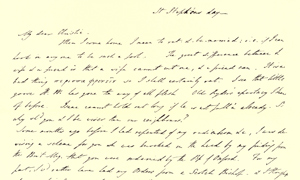
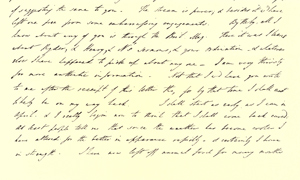
‘When I come home, I mean to rat-and-be-married: i.e., if I can hook in anyone to be such a fool. The great difference between a wife and a friend is that a wife cannot cut one, and a friend can. It is a bad thing περισσὰ φρονεῖν, so I shall certainly rat.[203] I see that … [Henry Wilberforce][204] has … Old [Ryder’s] apostacy I knew of before. [Isaac][205] cannot hold out long, if he is not fallen already. So why should you and I be wiser than our neighbours?[206] Some months ago, before I had repented of my radicalism, I was devising a scheme for you, which was knocked on the head by 161 my finding from The British Magazine that you were ordained by the Bishop of Oxford.[207] For my part, I would rather have had my orders from a Scotch Bishop, and I thought of suggesting the same to you. The stream is purer, and, besides, it would have left one free from some embarrassing engagements.[208] By the by, all I know about any of you is through The British Magazine…. I am very thirsty for more authentic information. Not that I would have you write to me after the receipt of this letter, though; for by that time I shall most likely be on my way back. I shall start as early as I can in April, and I really begin now to think that I shall come back cured. At least people tell me that since the weather has become cooler I have altered for the better in appearance rapidly, and certainly I have in strength…. For the last three weeks, I have had a horse, which I have been cool enough to smug from the Bishop’s stables in his absence;[209] and this, I think, has been of use to me.’
The letter to Newman, as usual, goes deeper, and touches sadly on more intimate matters.
‘… There was a passage in a letter I have just received from my father that made me feel so infinitely dismal, that I must write to you about it. He says you have written to him to learn something about me, and to ask what to do with my money. It really made me feel as if I was dead, and you were sweeping up my remains; and, by the by, if I was dead, why should I be cut off from the privilege of helping on the Good Cause? I don’t know what money I left: little enough 162 I suspect; but, whatever it was, I am superstitious enough to think that any good it could do “in honorem Dei et sacrosanctæ Matris Ecclesiæ,” would have done something too “in salutem animæ meæ.”
‘… My father’s letter was a dismal one altogether. He tells me Isaac[210] is far from well, and Sir George and Lady Prevost obliged to leave England. Also that my poor sister [Phillis] has just sailed for Madeira to escape the winter, for fear of an affection just like mine…. Also that Mr. Keble[211] is supposed to be on his death-bed. About you personally I hear nothing. As for myself, it really seems as if I was going to have a respite. I have still some symptoms which make me fear it may turn out moonshine, e.g., great irritability of pulse, and shortness of wind in walking up hill. But everyone says, and I cannot help observing, that my looks are greatly altered for the better…. Sometimes I seem to myself very ridiculous to give way to such doleful thoughts, considering how very little there is apparently the matter with me; and if it was not for the effect consumption had taken on my … family, I should be ashamed of myself. But the pertinacity of my trifling ailment has sometimes seemed to me like a warning that fate had put its hand on me for the next [world].
‘When I get your letter, I expect a rowing for my Roman Catholic sentiments. Really, I hate the Reformation and the Reformers more and more,[212] and have almost made up my mind that the Rationalist spirit they set afloat is the ψευδοπροφήτης of the Revelations. I have a theory about the Beast and Woman too, which conflicts with yours; but which I will not inflict on you now. I have written nothing for a long time, and only read in a desultory, lounging way; but really, it is not out of idleness, for I find that the less I do the 163 better I am, and so on principle resist doing a good deal that I am tempted to. One of the Bishop’s horses has contributed much to my recovery, as well as amusement. To my great satisfaction, I have found that just beyond the range of my longer walks there is a range of real fine scenery that I had not a dream of.
Οὕρεά τε σκιόεντα θάλασσά τε ἠχήεσσα.
‘I start sometimes between three and four, and come back between six and seven, in which interval the thermometer averages between 78° and 76°, and there is generally a roaring wind from the sea…. I wish I knew how you were, and what you are about.’
To the Rev. John Henry Newman, Jan., 1835.
‘I am ashamed of myself for having grumbled at you; your letter[213] almost made me cry! My dumps are my only excuse, and you may guess I have had a good dose of them. Now I am in much better spirits about myself, and flooded with letters to boot, so I ought to be in a good humour; yet I don’t know whether the prospect of being home again soon, and the knowledge of what is going on there, has not made me less contented…. I am sorry to hear such poor accounts of you and Isaac. Keble says you are overworked. So does Christie; yet I would not have you leave any of it except the Deanship. On one or two points I am inclined to grumble at you. You seem to be finessing too deep. Why publish poor Bishop Cosin’s Tract on Transubstantiation?[214] Surely no member of the Church of England is in any danger of overrating the miracle of the Eucharist?… I am more and more indignant at the Protestant doctrine on the subject of the Eucharist, and think that the principle on which it is founded is as proud, irreverent, and foolish as that of any heresy, even Socinianism. I must write you out a sentence 164 of Pascal on this. (My edition is differently arranged from most, so I cannot refer you to it.[215]) Speaking of Isa. xlv. 15, he says: “Il a demeuré caché sous la voile de la nature qui nous le couvre, jusqu’à l’Incarnation; et quand il a fallu qu’il ait paru, il s’est encore plus caché, en se couvrant de l’humanité…. Enfin, quand il a voulu accomplir la promesse qu’il fit à ses apôtres de demeurer avec les hommes jusqu’à son dernier avènement, il a choisi demeurer dans le plus étrange et le plus obscur secret de tous: savoir, sous les espèces de l’Eucharistie.” And then he goes on to say that deists penetrate the veil of Nature, heretics that of the Incarnation; “mais pour nous, nous devons nous estimer heureux de ce que Dieu nous éclaire jusqu’à le reconnaître sous les espèces du pain et du vin.” I believe you will agree with me that this is orthodox…. Also, why do you praise Ridley?[216] Do you know sufficient good about him to counterbalance the fact that he was the associate of Cranmer, Peter Martyr, and Bucer? (N.B.—How beautifully the Edinburgh Review[217] has shown up Luther, Melancthon, and Co.! What good genius has possessed them to do our dirty work?) I have also to grumble at you for letting Pusey call the Reformers “the Founders of our Church,” in that excellent and much-to-be-studied paper on Fasting.[218] Pour moi, I never mean, if I can help it, to use any phrases even, which can connect me with such a set. I shall never call the Holy Eucharist “the Lord’s Supper,” nor God’s priests “Ministers of the Word,” nor the Altar “the Lord’s Table,” etc., etc.; innocent as such phrases are in themselves, they have 165 been dirtied: a fact of which you seem oblivious on many occasions. Nor shall I even abuse the Roman Catholics as a Church for anything except excommunicating us. So much for fault-finding…. I am amused to see among your Sermons the Naples one and the Dartington one. I can see the train of thought which suggested the latter.[219] Since then I have never been well, and then came my poor sister’s business, who, by the bye, is now at Madeira…. I have two schemes about the Tracts…. 1st, I should like a series of the Apostolical Divines of the Church of England…. 2nd, I think one might take the Jansenist saints, Francis de Sales,[220] the nuns of Port Royal, Pascal, etc., who seem to me to be of a more sentimental imaginative cast than any of our own, and to give more room for writing ad captandum…. Must it not be owned that the Church of England Saints, however good in essentials, are, with a few rare exceptions, deficient in the austere beauty of the Catholic ἦθος? K[eble] will be severe on me for this, but I cannot deny that Laud’s architecture seems to me typical.’
This is the letter so charmingly annotated for us by Lord Blachford’s anecdote. ‘There’s a Basil for you!’ said Newman, with humorous deprecation, when he read the grudging advice to lay by, in his great weariness, ever so little of his accustomed work. The comparison rose readily to his lips, for he had been busy writing the chapters of his Church of the Fathers, month by month, and he was fresh from the beautiful portraiture of SS. Basil and Gregory Nazianzum.[221] He had called Hurrell his Basil under no mere momentary sense of a certain ineradicable blithe hardness in his friend. Newman, as sensitive and seeing as S. Gregory himself, must have been conscious at the time how mysteriously fragments of modern 166 biography were getting lodged into his Early Christian exegetics: for in truth he and Hurrell were as like Gregory and Basil as their impersonators in a miracle play. The analogy is not irrelevant, and it is the more attractive the more it is followed out, especially as there is in it nothing akin to the painful difference which long severed the loving-hearted great Saints from each other. ‘Basil’ at Dartington pitied no one much, himself least of all; the personal consideration affected him at all times as little as it had affected his mighty archetype, a man of yea and nay, of cloudless vision and unstinted enterprise.
Newman had written: ‘One of the more striking points of Basil’s character was his utter disregard of mere human feeling where the interests of religion were concerned…. This self-sacrifice, which he observed in his own case for the good of the Church, he scrupled not to extend to the instance of those to whom he was related, and for whom he had to act. His brother and his intimate friend, the two Gregories of Nyssa and Nazianzum, felt the keenness and severity of his zeal as well as the comfort of his affection.’ And again: ‘Gregory disliked the routine intercourse of society, he disliked ecclesiastical business, he disliked publicity, he disliked strife …; he loved the independence of solitude, the tranquillity of private life, leisure for meditation, reflection, self-government; study and literature. He admired, yet he playfully satirised Basil’s lofty thoughts and heroic efforts. Yet upon Basil’s death, Basil’s spirit, as it were, came into him…. Was it Gregory or was it Basil that blew the trumpet in Constantinople, and waged a successful war in the very seat of the enemy, in despite of all his fluctuations of mind, misgivings, fastidiousness, disgust with self, and love of quiet? Such was the power of the great Basil, triumphing in his death, though failing throughout his life. Within four or five years of his departure to his reward, all the objects were either realised, or in the way to be realised, which he had vainly attempted and sadly waited for. His eyes had failed in longing: they waited for the Morning, and death closed them ere it came.’ All this amounts to a strange and touching forecast.
167 Newman writes again most tenderly on Jan. 18, from London.
‘… I could say much, were it of use, of my own solitariness, now you are away. Not that I would undervalue that great blessing, which is what I do not deserve, of so many friends about me: dear Rogers, Williams, ὁ πάνυ Keble, and the friend in whose house I am staying (whom I wish with all my heart you knew as Apostolicorum princeps, Bowden); yet, after all, as is obvious, no one can enter into one’s mind except a person who has lived with one. I seem to write things to no purpose, as wanting your imprimatur. Perhaps it is well to cultivate the habit of writing as if for unseen companions; but I have felt it much, so that I am getting quite dry and hard. My dear Froude, come back to us as soon as you safely can; and then next winter, please God, you shall go to Rome, and tempt Isaac, who is very willing, to go with you. But wherever you are (so be it!) you cannot be divided from us.’
Hurrell held an irregular correspondence with some old friends to whom he was warmly attached, and remembered them in his winter leisure.
To the Rev. Robert Isaac Wilberforce, Feb. 25, 1835.
‘I would give twopence if circumstances should ever so turn up that you could make an occasional residence in Oxford compatible with your clerical duties,[222] and that we could concoct a second edition of old times again. It makes me laugh when I think of your old clipped horse, and how I was choused[223] by John G.; and sundry other matters which come into one’s head when more serious matters ought to be there. I wonder if you are the same fellow now that you used to be? I am afraid my old self is determined to stick by me till the last. But to talk sense: I really do indulge the hope that sometime we may be thrown together 168 again. Undoubtedly you owe a debt to your destinies, which as a mere parish priest you can never repay. Your old project about the Mendicant Orders was the sort of thing: though perhaps something connected with later times would tell more just at present. As to myself, θεῶν ἐν γούνασι κεῖται whether I am ever to be of any use, though I now begin to entertain serious hopes that I shall recover. Perhaps you know that I have been out here, in exile inter nigridas, for this year and a quarter. The first winter I got very little good; and in the summer the heat kept me in a feverish state, which low diet could not counteract; so I began to think it was up with me; ὅταιν ὕδωρ πνίγῃ, etc., and I own I felt very doleful: but since the cool weather set in I have made a decided start, which has put me in a better humour; and the cooler it is the better I am; so that I dare say if I had gone to Madeira, or to Rome a second time, I might have been well. I shall not be sorry for an excuse for spending another winter in the south of Europe.
‘While out here I have stuck to my old prejudices as tight as I could; yet I fairly own that I think the niggers less incapable of being raised in the scale of being than I used. I don’t mean that, generally speaking, they are at all fit for the situation in which the law has placed them; but that here and there you see specimens which prove them, unequivocally enough, to be of the race of Adam, is not to be denied. Many of them are clever, and some affectionate and even honest, and if a more judicious system had been pursued, I should not have despaired of seeing them become generally so. As it is, the prospect is even in this island a very gloomy one, and in the others, the state of things seems next to hopeless. In Antigua, where they are quite let loose, they have been playing a very clever trick in many places: which is very characteristic of the negro intellect, sharp enough as to the moment, and absolutely without thought as to the next. In making sugar it is very important that the canes should be squeezed as soon as possible after they are cut: a few hours hurts them, and twenty-four spoils them; so our friends Quakoo and Co. cut away very diligently, and then strike for wages. Here in Barbados they cannot play the same trick, as the magistrates 169 would flog them; and indeed flogging is scarcely less common, and more severe now, than under the old system. In this island, the most melancholy result of the change yet discernible is the condition of the emancipated children under six. The mothers, who have gone on hitherto in their lax amours with a certainty that any consequences that might result would be rather in their favour than otherwise, have been bringing a host of wretched urchins into the world and consigning them over to the estate nurses, sans soin; and now the produce of the last six years is returned upon their hands, unless they will consent to apprentice them; this they will not do, out of spite to their masters, but take the trouble on themselves they will not: so the squalid little wretches starve and die off shockingly; and those that live are locked up in their mother’s house while she is at work, doing nothing but quarrel, growing up in absolute uselessness, and with no chance of improving…. As to the religious prospects of these colonies, I think them very bad indeed. If the Church was thrown on the voluntary system, and left to make its way as the Wesleyans do among the poorer classes, it would make sure as it went, though perhaps the progress might at first seem slow; but now all is mere show and rottenness…. Another difficulty arises from the views of the Clergy: those who have any deference for Church authority are too generally mere Z’s…. Religious instruction out here means marrying the niggers, baptizing them, and teaching them to read.