FLOWER DESCRIPTIONS (continued 2)
Reading edition
Boneset. Thoroughwort. Eupatorium perfoliatum. Composite Family (p. 13).
Stem.—Stout and hairy, two to four feet high. Leaves.—Opposite, widely spreading, lance-shaped, united at the base around the stem. Flower-heads.—Dull white, small, composed entirely of tubular blossoms borne in large clusters.
To one whose childhood was passed in the country some fifty years ago the name or sight of this plant is fraught with unpleasant memories. The attic or wood-shed was hung with bunches of the dried herb which served as so many grewsome warnings against wet feet, or any over-exposure which might result in cold or malaria. A certain Nemesis, in the shape of a nauseous draught which was poured down the throat under the name of “boneset tea,” attended such a catastrophe. The Indians first discovered its virtues, and named the plant ague-weed. Possibly this is one of the few herbs whose efficacy has not been over-rated. Dr. Millspaugh says: “It is prominently adapted to cure a disease peculiar to the South, known as break-bone fever (Dengue), and it is without doubt from this property that the name boneset was derived.”
White Snakeroot. Eupatorium ageratoides. Composite Family (p. 13).
About three feet high. Stem.—Smooth and branching. Leaves.—Opposite, long-stalked, broadly ovate, coarsely and sharply toothed. Flower-heads.—White, clustered, composed of tubular blossoms.
Although this species is less common than boneset, it is frequently found blossoming in the rich Northern woods of late summer.
107
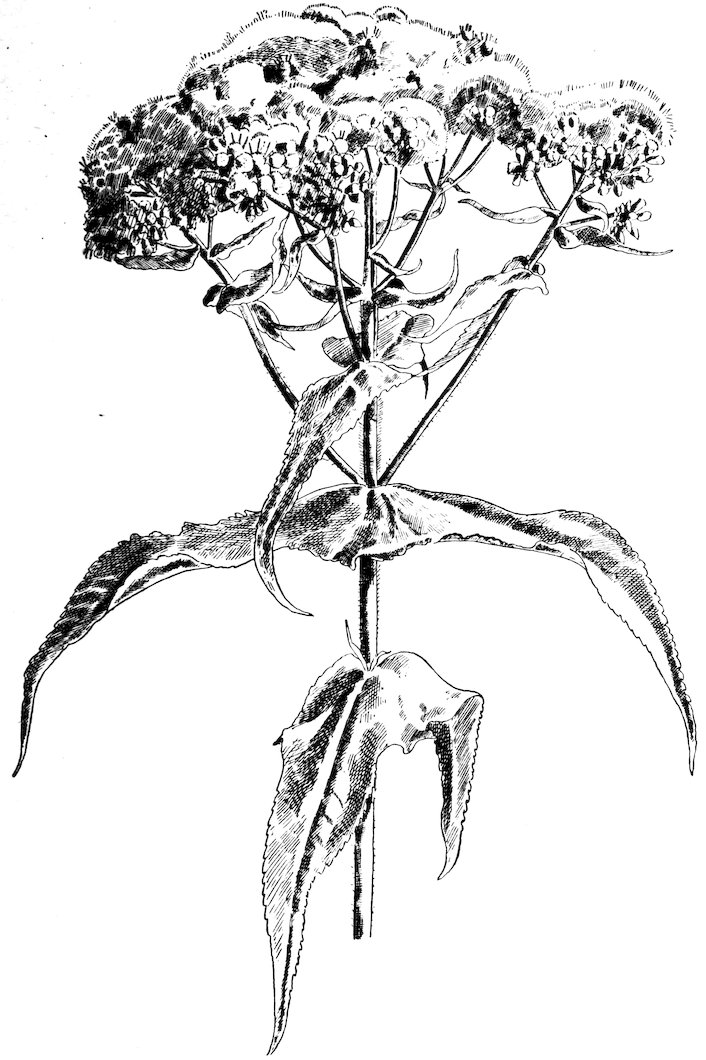
PLATE XXXII BONESET.—E. perfoliatum.
108
Climbing Hemp-weed. Mikania scandens. Composite Family (p. 13).
Stem.—Twining and climbing, nearly smooth. Leaves.—Opposite, somewhat triangular-heart-shaped, pointed, toothed at the base. Flower-heads.—Dull white or flesh-color, composed of four tubular flowers; clustered, resembling boneset.
In late summer one often finds the thickets which line the slow streams nearly covered with the dull white flowers of the climbing hemp-weed. At first sight the likeness to the boneset is so marked that the two plants are often confused, but a second glance discovers the climbing stems and triangular leaves which clearly distinguish this genus.
Ladies’ Tresses. Spiranthes cernua. Orchis Family (p. 17).
Stem.—Leafy below, leafy-bracted above, six to twenty inches high. Leaves.—Linear-lance-shaped, the lowest elongated. Flowers.—White, fragrant, the lips wavy or crisped; growing in slender spikes.
This pretty little orchid is found in great abundance in September and October. The botany relegates it to “wet places,” but I have seen dry upland pastures as well as low-lying swamps profusely flecked with its slender, fragrant spikes. The braided appearance of these spikes would easily account for the popular name of ladies’ tresses; but we learn that the plant’s English name was formerly “ladies’ traces,” from a fancied resemblance between its twisted clusters and the lacings which played so important a part in the feminine toilet. I am told that in parts of New England the country people have christened the plant “wild hyacinth.”
The flowers of S. gracilis are very small, and grow in a much more slender, one-sided spike than those of S. cernua. They are found in the dry woods and along the sandy hill-sides from July onward.
109
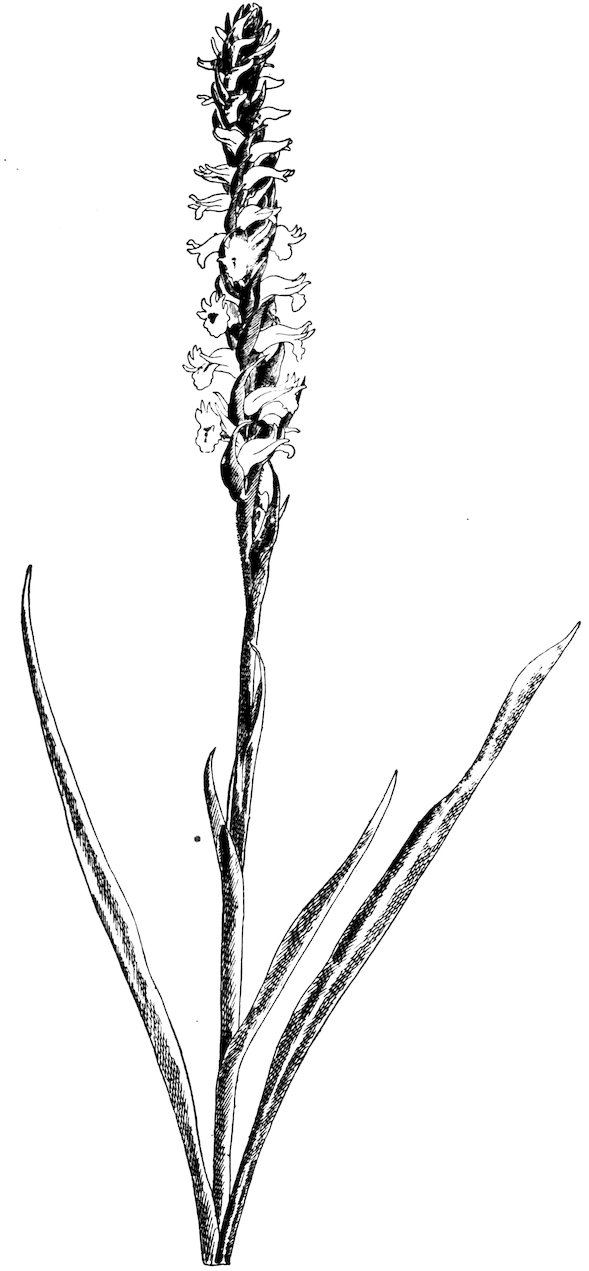
PLATE XXXIII LADIES’ TRESSES.—S. cernua.
110
Green-flowered Milkweed. Asclepias verticillata. Milkweed Family.
Stem.—Slender, very leafy to the summit. Leaves.—Very narrow, from three to six in a whorl. Flowers.—Greenish-white, in small clusters at the summit and along the sides of the stem. Fruit.—Two erect pods, one often stunted.
This species is one commonly found on dry uplands, especially southward, with flowers resembling in structure those of the other milkweeds. (Pl. .)
Groundsel Tree. Baccharis halimifolia. Composite Family (p. 13).
A shrub from six to twelve feet high. Leaves.—Somewhat ovate and wedge-shaped, coarsely toothed on the upper entire. Flower-heads.—Whitish or yellowish, composed of unisexual tubular flowers, the stamens and pistils occurring on different plants.
Some October day, as we pick our way through the salt marshes which lie back of the beach, we may spy in the distance a thicket which looks as though composed of such white-flowered shrubs as belong to June. Hastening to the spot we discover that the silky-tufted seeds of the female groundsel tree are responsible for our surprise. The shrub is much more noticeable and effective at this season than when—a few weeks previous—it was covered with its small white or yellowish flower-heads.
Grass of Parnassus. Parnassia Caroliniana. Saxifrage Family.
Stem.—Scape-like, nine inches to two feet high, with usually one small rounded leaf clasping it below; bearing at its summit a single flower. Leaves.—Thickish, rounded, often heart-shaped, from the root. Flower.—White or cream-color, veiny. Calyx.—Of five slightly united sepals. Corolla.—Of five veiny petals. True Stamens.—Five, alternate with the petals, and with clusters of sterile gland-tipped filaments. Pistil.—One, with four stigmas.
111
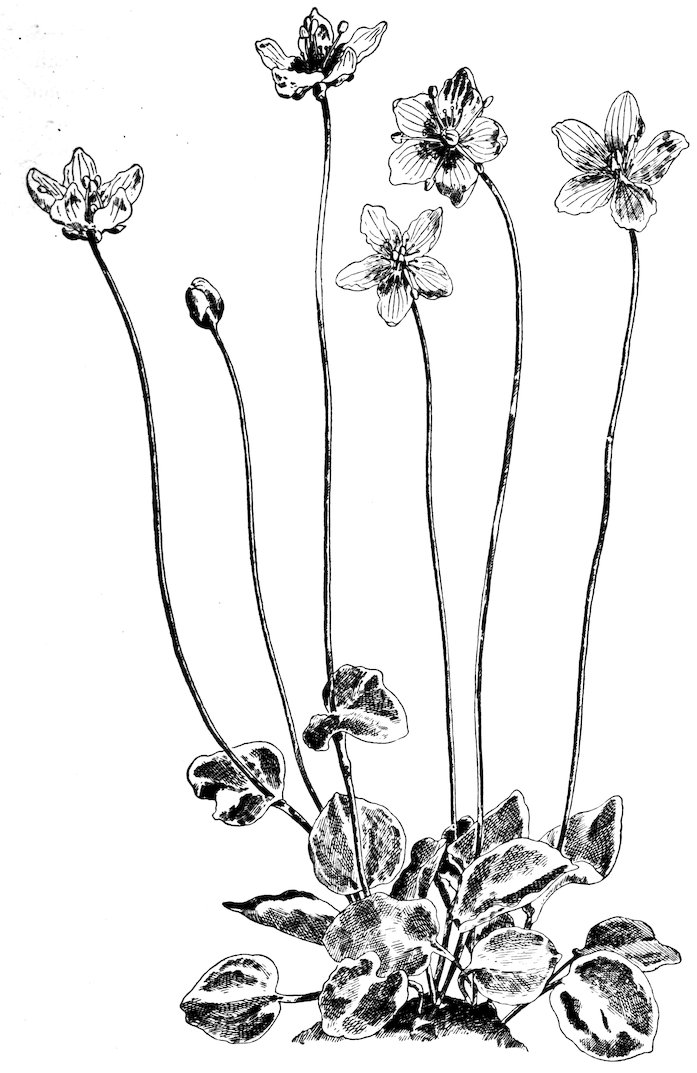
PLATE XXXIV GRASS OF PARNASSUS.—P. Caroliniana.
112Gerarde indignantly declares that this plant has been described by blind men, not “such as are blinde in their eyes, but in their understandings, for if this plant be a kind of grasse then may the Butter-burre or Colte’s-foote be reckoned for grasses—as also all other plants whatsoever.” But if it covered Parnassus with its delicate veiny blossoms as abundantly as it does some moist New England meadows each autumn, the ancients may have reasoned that a plant almost as common as grass must somehow partake of its nature. The slender-stemmed, creamy flowers are never seen to better advantage than when disputing with the fringed gentian the possession of some luxurious swamp.
Pearly Everlasting. Anaphilis margaritacea. Composite Family (p. 13).
Stem.—Erect, one or two feet high, leafy. Leaves.—Broadly linear to lance-shaped. Flower-heads.—Composed entirely of tubular flowers with very numerous pearly white involucral scales.
This species is common throughout our Northern woods and pastures, blossoming in August. Thoreau writes of it in September: “The pearly everlasting is an interesting white at present. Though the stems and leaves are still green, it is dry and unwithering like an artificial flower; its white, flexuous stem and branches, too, like wire wound with cotton. Neither is there any scent to betray it. Its amaranthine quality is instead of high color. Its very brown centre now affects me as a fresh and original color. It monopolizes small circles in the midst of sweet fern, perchance, on a dry hill-side.”
Fragrant Life-everlasting. Gnaphalium polycephalum. Composite Family (p. 13).
Stem.—Erect, one to three feet high, woolly. Leaves.—Lance-shaped. Flower-heads.—Yellowish-white, clustered at the summit of the branches, composed of many tubular flowers.
This is the “fragrant life-everlasting,” as Thoreau calls it, of late summer. It abounds in rocky pastures and throughout the somewhat open woods.
Note.—Flowers so faintly tinged with color as to give a white effect in the mass or at a distance are placed in the White section: greenish or greenish-white flowers are also found here. The Moth Mullein (p. 152) and Bouncing Bet (p. 196) are found frequently bearing white flowers: indeed, white varieties of flowers which are usually colored, need never surprise one.
113
II YELLOW
Marsh Marigold. Caltha palustris. Crowfoot Family.
Stem.—Hollow, furrowed. Leaves.—Rounded, somewhat kidney-shaped. Flowers.—Golden-yellow. Calyx.—Of five to nine petal-like sepals. Corolla.—None. Stamens.—Numerous. Pistils.—Five to ten, almost without styles.
Hark, hark! the lark at Heaven’s gate sings,
And Phœbus ’gins arise,
His steeds to water at those springs,
On chaliced flowers that lies:
And winking Mary-buds begin
To ope their golden eyes;
With everything that pretty is—
My lady sweet, arise!
Arise, arise.—Cymbeline.
We claim—and not without authority—that these “winking Mary-buds” are identical with the gay marsh marigolds which border our springs and gladden our wet meadows every April. There are those who assert that the poet had in mind the garden marigold—Calendula—but surely no cultivated flower could harmonize with the spirit of the song as do these gleaming swamp blossoms. We will yield to the garden if necessary—
The marigold that goes to bed with the sun
And with him rises weeping—
of the “Winter’s Tale,” but insist on retaining for that larger, lovelier garden in which we all feel a certain sense of possession—even if we are not taxed on real estate in any part of the country—the “golden eyes” of the Mary-buds, and we feel strengthened in our position by the statement in Mr. Robinson’s “Wild Garden” that the marsh marigold is so abundant along certain English rivers as to cause the ground to look as though paved with gold at those seasons when they overflow their banks.
114These flowers are peddled about our streets every spring under the name of cowslips—a title to which they have no claim, and which is the result of that reckless fashion of christening unrecognized flowers which is so prevalent, and which is responsible for so much confusion about their English names.
The derivation of marigold is somewhat obscure. In the “Grete Herball” of the sixteenth century the flower is spoken of as Mary Gowles, and by the early English poets as gold simply. As the first part of the word might be derived from the Anglo-Saxon mere—a marsh, it seems possible that the entire name may signify marsh-gold, which would be an appropriate and poetic title for this shining flower of the marshes.
Spice-bush. Benjamin-bush. Fever-bush. Lindera Benzoin. Laurel Family.
An aromatic shrub from six to fifteen feet high. Leaves.—Oblong, pale underneath. Flowers.—Appearing before the leaves in March or April, honey-yellow, borne in clusters which are composed of smaller clusters, surrounded by an involucre of four early falling scales. Fruit.—Red, berry-like, somewhat pear-shaped.
These are among the very earliest blossoms to be found in the moist woods of spring. During the Revolution the powdered berries were used as a substitute for allspice; while at the time of the Rebellion the leaves served as a substitute for tea.
Yellow Adder’s Tongue. Dog’s Tooth Violet. Erythronium Americanum. Lily Family.
Scape.—Six to nine inches high, one-flowered. Leaves.—Two, oblong-lance-shaped, pale green mottled with purple and white. Flower.—Rather large, pale yellow marked with purple, nodding. Perianth.—Of six recurved or spreading sepals. Stamens.—Six. Pistil.—One.
The white blossoms of the shad-bush gleam from the thicket, and the sheltered hill-side is already starred with the blood-root and anemone when we go to seek the yellow adder’s tongue. We direct our steps toward one of those hollows in the wood which is watered by such a clear gurgling brook as must appeal to every country-loving heart; and there where the pale April sunlight filters through the leafless branches, nod myriads of these lilies, each one guarded by a pair of mottled, erect, sentinel-like leaves.
115
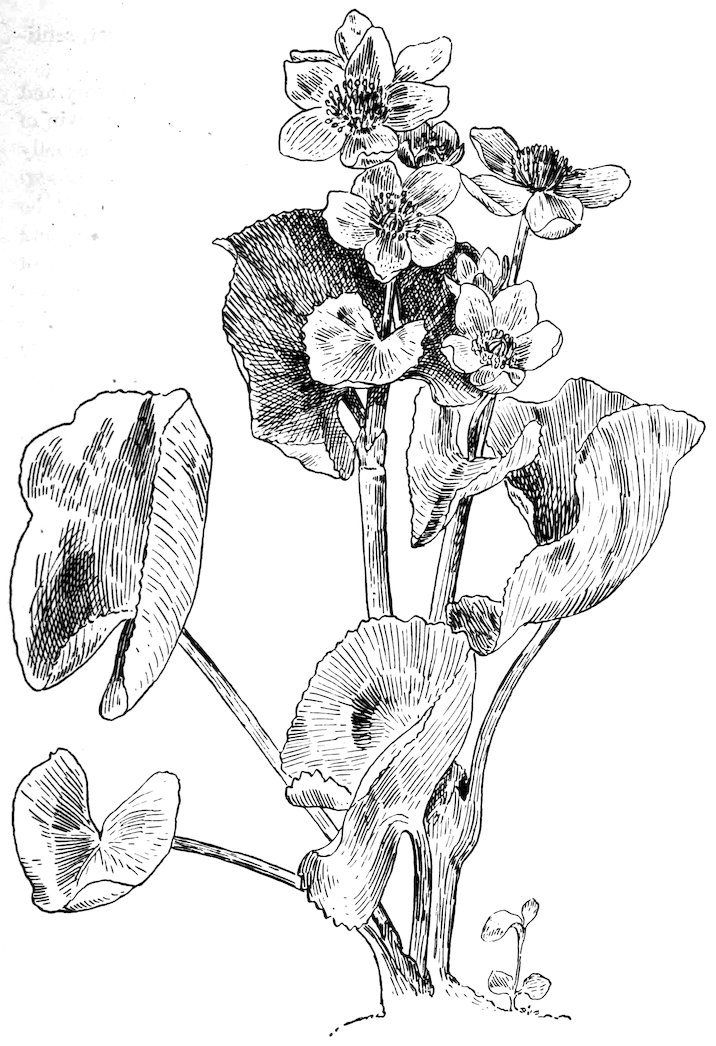
PLATE XXXV MARSH MARIGOLD.—C. palustris.
116The two English names of this plant are unsatisfactory and inappropriate. If the marking of its leaves resembles the skin of an adder why name it after its tongue? And there is equally little reason for calling a lily a violet. Mr. Burroughs has suggested two pretty and significant names. “Fawn lily,” he thinks, would be appropriate, because a fawn is also mottled, and because the two leaves stand up with the alert, startled look of a fawn’s ears. The speckled foliage and perhaps its flowering season are indicated in the title “trout-lily,” which has a spring-like flavor not without charm. It is said that the early settlers of Pennsylvania named the flower “yellow snowdrop,” in memory of their own “harbinger-of-spring.”
The white adder’s tongue, E. albidum, is a species which is usually found somewhat westward.
Celandine. Chelidonium majus. Poppy Family.
Stem.—Brittle, with saffron-colored, acrid juice. Leaves.—Compound or divided, toothed or cut. Flowers.—Yellow, clustered. Calyx.—Of two sepals falling early. Corolla.—Of four petals. Stamens.—Sixteen to twenty-four. Pistil.—One, with a two-lobed stigma. Pod.—Slender, linear.
The name of celandine must always suggest the poet who never seemed to weary of writing in its honor:
Pansies, lilies, kingcups, daisies,
Let them live upon their praises;
Long as there’s a sun that sets,
Primroses will have their glory;
Long as there are violets,
They will have a place in story;
There’s a flower that shall be mine,
’Tis the little celandine.
And when certain yellow flowers which frequent the village roadside are pointed out to us as those of the celandine, we feel a sense of disappointment that the favorite theme of Wordsworth should arouse within us so little enthusiasm. So perhaps we are rather relieved than otherwise to realize that the botanical name of this plant signifies greater celandine; for we remember that the poet never failed to specify the small celandine as the object of his praise. The small celandine is Ranunculus ficaria, one of the Crowfoot family, and is only found in this country as an escape from gardens.
117
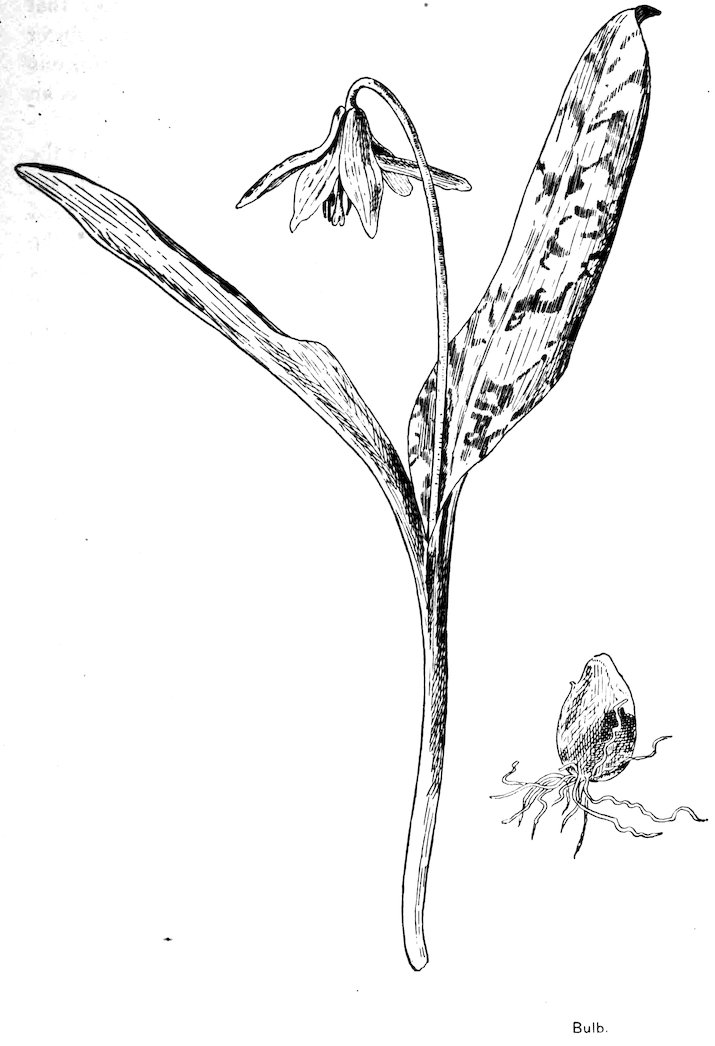
PLATE XXXVI YELLOW ADDER’S TONGUE.—E. Americanum.
118Gray tells us that the generic name, Chelidonium, from the ancient Greek for swallow, was given “because its flowers appear with the swallows;” but if we turn to Gerarde we read that the title was not bestowed “because it first springeth at the coming in of the swallowes, or dieth when they go away, for as we have saide, it may be founde all the yeare; but because some holde opinion, that with this herbe the dams restore sight to their young ones, when their eies be put out.”
Celandine Poppy. Stylophorum diphyllum. Poppy Family.
Stem.—Low, two-leaved. Stem-leaves.—Opposite, deeply incised. Root-leaves.—Incised or divided. Flowers.—Deep yellow, large, one or more at the summit of the stem. Calyx.—Of two hairy sepals. Corolla.—Of four petals. Stamens.—Many. Pistil.—One, with a two to four-lobed stigma.
In April or May, somewhat south and westward, the woods are brightened, and occasionally the hill-sides are painted yellow, by this handsome flower. In both flower and foliage the plant suggests the celandine.
Downy Yellow Violet. Viola pubescens. Violet Family.
Stems.—Leafy above, erect. Leaves.—Broadly heart-shaped, toothed. Flowers.—Yellow, veined with purple, otherwise much like those of the common blue violet.
When beechen buds begin to swell,
And woods the blue-bird’s warble know,
The yellow violet’s modest bell
Peeps from the last year’s leaves below,
sings Bryant, in his charming, but not strictly accurate poem, for the chances are that the “beechen buds” have almost burst into foliage, and that the “bluebird’s warble” has been heard for some time when these pretty flowers begin to dot the woods.
119
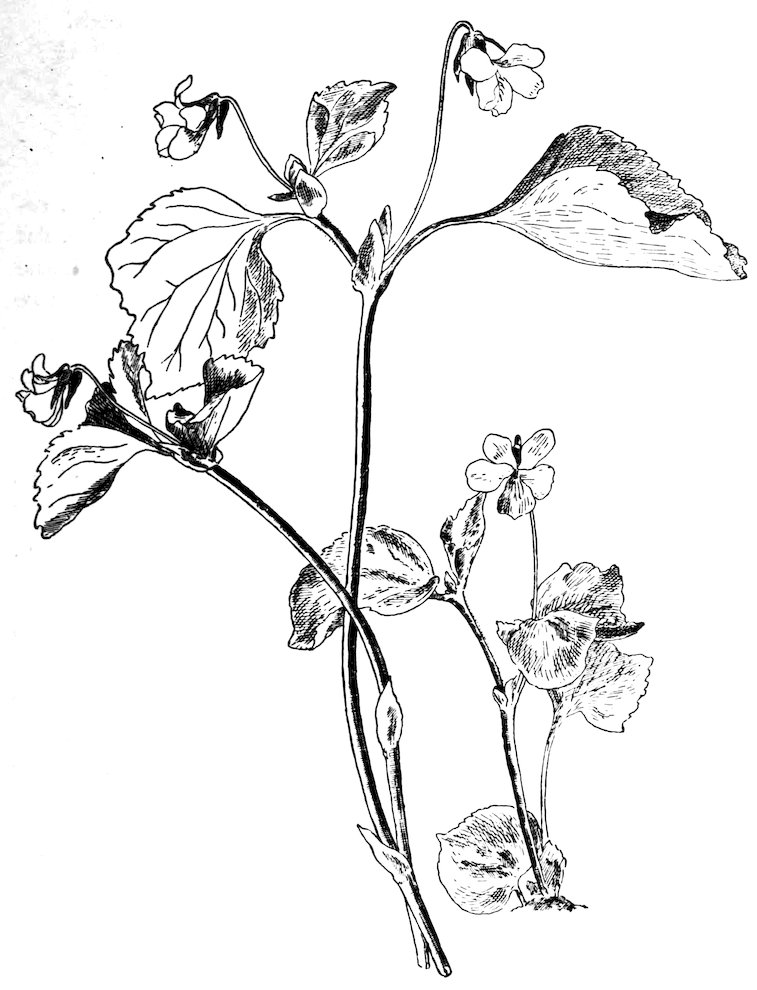
PLATE XXXVII DOWNY YELLOW VIOLET.—V. pubescens.
120The lines which run:
Yet slight thy form, and low thy seat,
And earthward bent thy gentle eye,
Unapt the passing view to meet,
When loftier flowers are flaunting nigh,
would seem to apply more correctly to the round-leaved, V. rotundifolia, than to the downy violet, for although its large, flat shining leaves are somewhat conspicuous, its flowers are borne singly on a low scape, which would be less apt to attract notice than the tall, leafy flowering stems of the other.
Common Cinquefoil. Five Finger. Potentilla Canadensis. Rose Family.
Stem.—Slender, prostrate, or sometimes erect. Leaves.—Divided really into three leaflets, but apparently into five by the parting of the lateral leaflets. Flowers.—Yellow, growing singly from the axils of the leaves. Calyx.—Deeply five-cleft, with bracts between each tooth, thus appearing ten-cleft. Corolla.—Of five rounded petals. Stamens.—Many. Pistils.—Many in a head.
From spring to nearly midsummer the roads are bordered and the fields carpeted with the bright flowers of the common cinquefoil. The passer-by unconsciously betrays his recognition of some of the prominent features of the Rose family by often assuming that the plant is a yellow-flowered wild strawberry. Both of the English names refer to the pretty foliage, cinquefoil being derived from the French cinque feuilles. The generic name, Potentilla, has reference to the powerful medicinal properties formerly attributed to the genus.
Shrubby Cinquefoil. Five Finger. Potentilla fruticosa. Rose Family.
Stem.—Erect, shrubby, one to four feet high. Leaves.—Divided into five to seven narrow leaflets. Flowers.—Yellow, resembling those of the common cinquefoil.
121
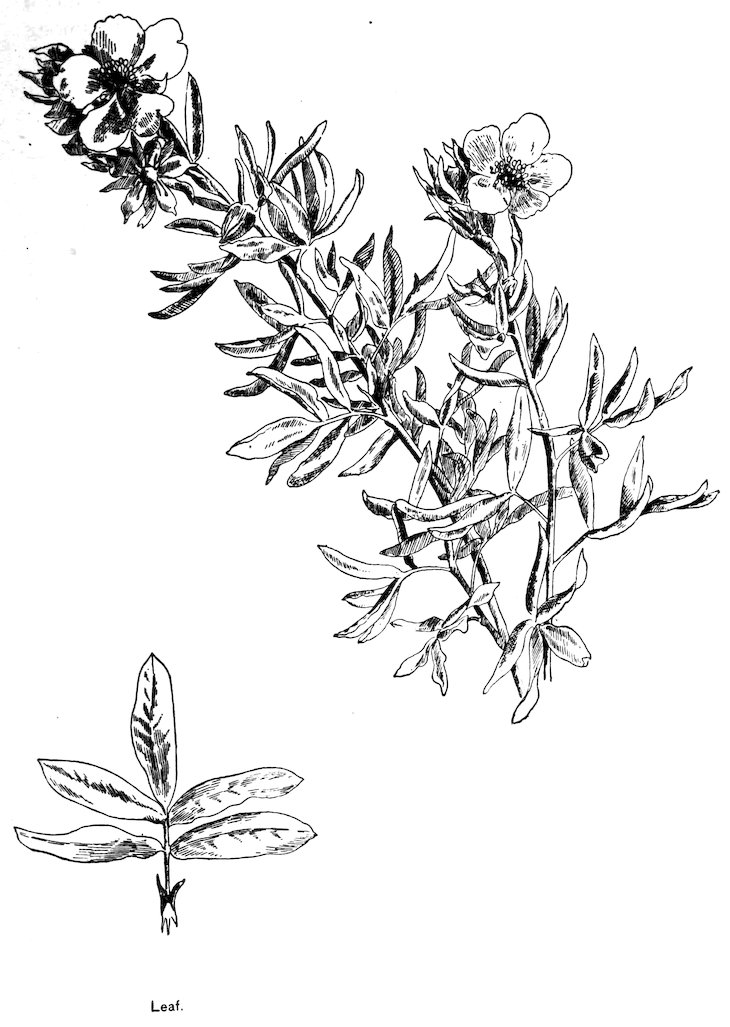
PLATE XXXVIII SHRUBBY CINQUEFOIL.—P. fruticosa.
122Of all the cinquefoils perhaps this one most truly merits the title five finger. Certainly its slender leaflets are much more finger-like than those of the common cinquefoil. It is not a common plant in most localities, but is very abundant among the Berkshire Hills.
Silvery Cinquefoil. Potentilla argentea. Rose Family.
Stems.—Ascending, branched at the summit, white, woolly. Leaves.—Divided into five wedge-oblong, deeply incised leaflets, which are green above, white with silvery wool, beneath.
The silvery cinquefoil has rather large yellow flowers which are found in dry fields throughout the summer as far south as New Jersey.
Golden Ragwort. Squaw-weed. Senecio aureus. Composite Family (p. 13).
Stem.—One to three feet high. Root-leaves.—Rounded, the larger ones mostly heart-shaped, toothed, and long-stalked. Stem-leaves.—The lower lyre-shaped, the upper lance-shaped, incised, set close to the stem. Flower-heads.—Yellow, clustered, composed of both ray and disk-flowers.
A child would perhaps liken the flower of the golden ragwort to a yellow daisy. Stain yellow the white rays of the daisy, diminish the size of the whole head somewhat, and you have a pretty good likeness of the ragwort. There need be little difficulty in the identification of this plant—although there are several marked varieties—for its flowers are abundant in the early year, at which season but few members of the Composite family are abroad.
The generic name is from senex—an old man—alluding to the silky down of the seeds, which is supposed to suggest the silvery hairs of age.
Closely allied to the golden ragwort is the common groundsel, S. vulgaris, which is given as food to caged birds. The flower-heads of this species are without rays.
——— ——— Clintonia borealis. Lily Family.
Scape.—Five to eight inches high, sheathed at its base by the stalks of two to four large, oblong, conspicuous leaves. Flowers.—Greenish-yellow, rather large, rarely solitary. Perianth.—Of six sepals. Stamens.—Six, protruding. Pistil.—One, protruding. Fruit.—A blue berry.
123
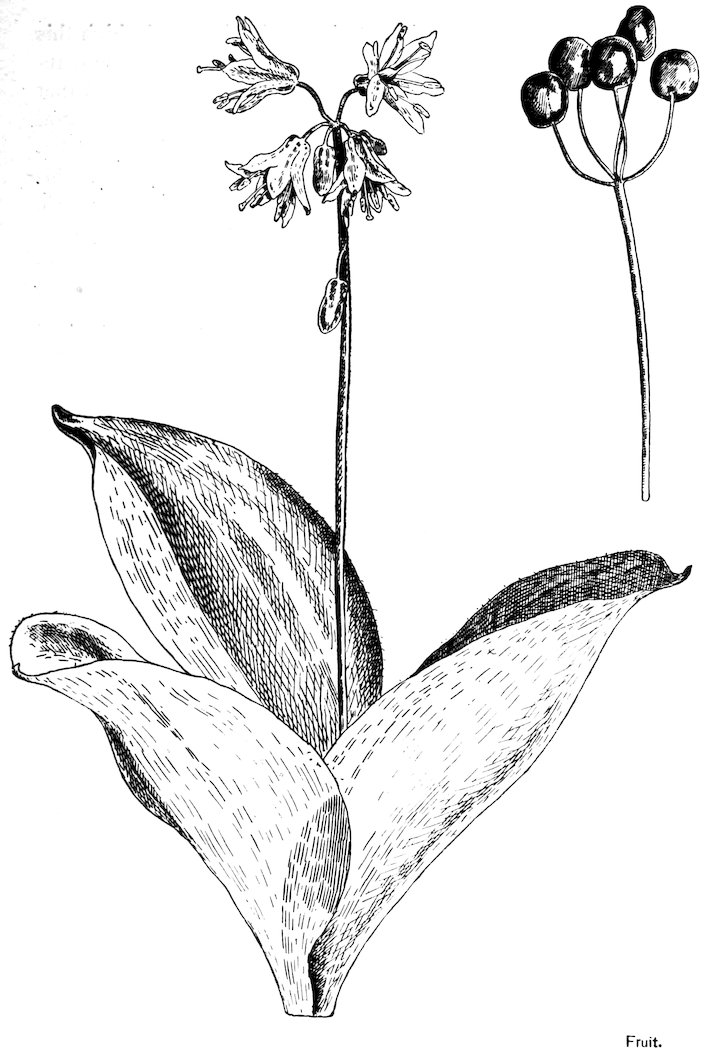
PLATE XXXIX Clintonia borealis.
124When rambling through the cool, moist woods our attention is often attracted by patches of great dark, shining, leaves; and if it be late in the year we long to know the flower of which this rich foliage is the setting. To satisfy our curiosity we must return the following May or June, when we shall probably find that a slender scape rises from its midst bearing at its summit several bell-shaped flowers, which, without either high color or fragrance, are peculiarly charming. It is hard to understand why this beautiful plant has received no English name. As to its generic title we cannot but sympathize with Thoreau. “Gray should not have named it from the Governor of New York,” he complains; “what is he to the lovers of flowers in Massachusetts? If named after a man, it must be a man of flowers.... Name your canals and railroads after Clinton, if you please, but his name is not associated with flowers.”
C. umbellata is a more Southern species, with smaller white flowers, which are speckled with green or purplish dots.
Yellow Lady’s Slipper. Whip-poor-Will’s Shoe. Cypripedium pubescens. Orchis Family (p. 17).
Stem.—About two feet high, downy, leafy to the top, one to three-flowered. Leaves.—Alternate, broadly oval, many-nerved and plaited. Flowers.—Large, yellow. Perianth.—Two of the three brownish, elongated sepals united into one under the lip; the lateral petals linear, wavy-twisted, brownish; the pale yellow lip an inflated pouch. Stamens.—Two, the short filaments of each bearing a two-celled anther. Stigma.—Broad, obscurely three-lobed, moist and roughish.
The yellow lady’s slipper usually blossoms in May or June, a few days later than its pink sister, C. acaule. Regarding its favorite haunts, Mr. Baldwin[3] says: “Its preference is for maples, beeches, and particularly butternuts, and for sloping or hilly ground, and I always look with glad suspicion at a knoll covered with ferns, cohoshes, and trilliums, expecting to see a clump of this plant among them. Its sentinel-like habit of choosing ‘sightly places’ leads it to venture well up on mountain sides.”
The long, wavy, brownish petals give the flower an alert, startled look when surprised in its lonely hiding-places.
125
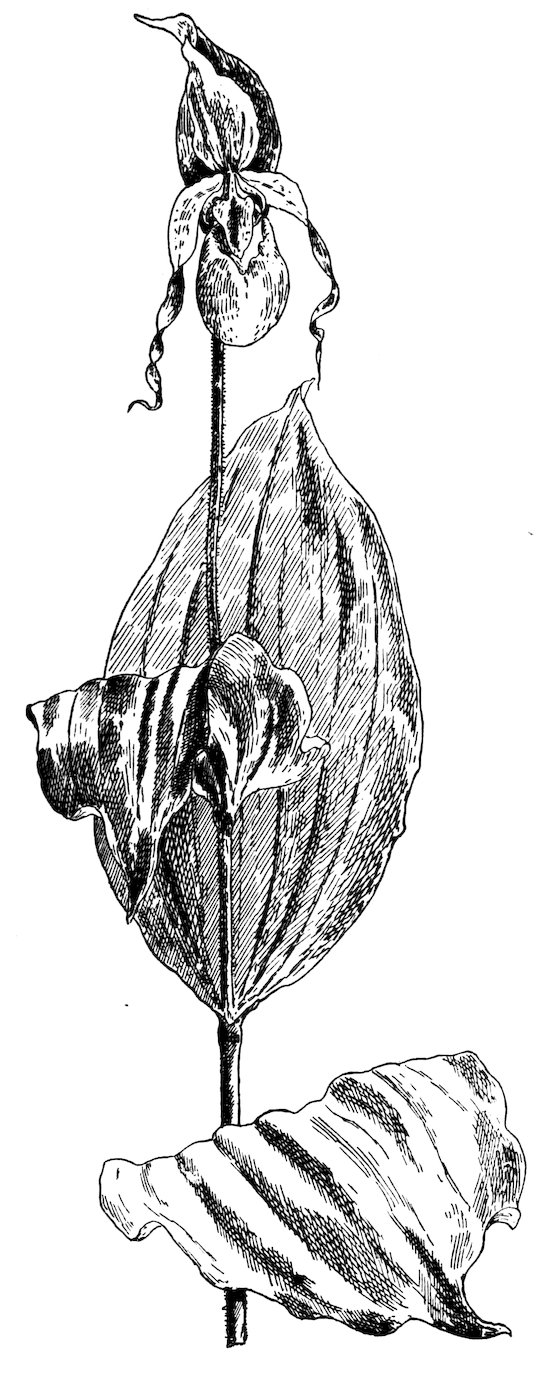
PLATE XL SMALLER YELLOW LADY’S SLIPPER.—C. parviflorum.
126C. parviflorum, the small yellow lady’s slipper, differs from C. pubescens in the superior richness of its color as well as in its size. It also has the charm of fragrance.
Early Meadow Parsnip. Zizia aurea. Parsley Family (p. 15).
One to three feet high. Leaves.—Twice or thrice-compound, leaflets oblong to lance-shaped, toothed. Flowers.—Yellow, small, in compound umbels.
This is one of the earliest members of the Parsley family to appear. Its golden flower-clusters brighten the damp meadows and the borders of streams in May or June and closely resemble the meadow parsnip, Thaspium aureum, of which this species was formerly considered a variety, of the later year.
The tall, stout, common wild parsnip, Pastinaca sativa, is another yellow representative of this family in which white flowers prevail, the three plants here mentioned being the only yellow species commonly encountered. The common parsnip may be identified by its grooved stem and simply compound leaves. Its roots have been utilized for food at least since the reign of Tiberius, for Pliny tells us that that Emperor brought them to Rome from the banks of the Rhine, where they were successfully cultivated.
Golden Club. Orontium aquaticum. Arum Family.
Scape.—Slender, elongated. Leaves.—Long-stalked, oblong, floating. Flowers.—Small, yellow, crowded over the narrow spike or spadix.
When we go to the bogs in May to hunt for the purple flower of the pitcher-plant we are likely to chance upon the well-named golden club. This curious-looking club-shaped object, which is found along the borders of ponds, indicates its relationship to the jack-in-the-pulpit, and still more to the calla lily, but unlike them its tiny flowers are shielded by no protecting spathe.
Kalm tells us in his “Travels,” “that the Indians called the plant Taw-Kee, and used its dried seeds as food.”
127
Spearwort. Ranunculus ambigens. Crowfoot Family.
Stems.—One to two feet high. Leaves.—Oblong or lance-shaped, mostly toothed, contracted into a half-clasping leaf-stalk. Flowers.—Bright yellow, solitary or clustered. Calyx.—Of five sepals. Corolla.—Of five to seven oblong petals. Stamens.—Indefinite in number, occasionally few. Pistils.—Numerous in a head.
Many weeks after the marsh marigolds have passed away, just such marshy places as they affected are brightly flecked with gold. Wondering, perhaps, if they can be flowering for the second time in the season, we wade recklessly into the bog to rescue, not the marsh marigold, but its near relation, the spearwort, which is still more closely related to the buttercup, as a little comparison of the two flowers will show. This plant is especially common at the North.
Indian Cucumber-root. Medeola Virginica. Lily Family.
Root.—Tuberous, shaped somewhat like a cucumber, with a suggestion of its flavor. Stem.—Slender, from one to three feet high, at first clothed with wool. Leaves.—In two whorls on the flowering plants, the lower of five to nine oblong, pointed leaves set close to the stem, the upper usually of three or four much smaller ones. Flowers.—Greenish-yellow, small, clustered, recurved, set close to the upper leaves. Perianth.—Of three sepals and three petals, oblong and alike. Stamens.—Six, reddish-brown. Pistil.—With three stigmas, long, recurved, and reddish-brown. Fruit.—A purple berry.
One is more apt to pause in September to note the brilliant foliage and purple berries of this little plant than to gather the drooping inconspicuous blossoms for his bunch of wood-flowers in June. The generic name is after the sorceress Medea, on account of its supposed medicinal virtues, of which, however, there seems to be no record.
The tuberous rootstock has the flavor, and something the shape, of the cucumber, and was probably used as food by the Indians. It would not be an uninteresting study to discover which of our common wild plants are able to afford pleasant and 128nutritious food; in such a pursuit many of the otherwise unattractive popular names would prove suggestive.
Common Bladderwort. Utricularia vulgaris. Bladderwort Family.
Stems.—Immersed, one to three feet long. Leaves.—Many-parted, hair-like, bearing numerous bladders. Scape.—Six to twelve inches long. Flowers.—Yellow, five to twelve on each scape. Calyx.—Two-lipped. Corolla.—Two-lipped, spurred at the base. Stamens.—Two. Pistil.—One.
This curious water-plant may or may not have roots; in either case it is not fastened to the ground, but is floated by means of the many bladders which are borne on its finely dissected leaves. It is commonly found in ponds and slow streams, flowering throughout the summer. Thoreau calls it “a dirty-conditioned flower, like a sluttish woman with a gaudy yellow bonnet.”
The horned bladderwort, U. cornuta, roots in the peat-bogs and sandy swamps. Its large yellow helmet-shaped flowers are very fragrant, less than half a dozen being borne on each scape.
Yellow Pond-lily. Spatter Dock. Nuphar advena. Water-lily Family.
Leaves.—Floating or erect, roundish to oblong, with a deep cleft at their base. Flowers.—Yellow, sometimes purplish, large, somewhat globular. Calyx.—Of five or six sepals or more, yellow or green without. Corolla.—Of numerous small, thick, fleshy petals which are shorter than the stamens and resemble them. Stamens.—Very numerous. Pistil.—One, with a disk-like, many-rayed stigma.
Bordering the slow streams and stagnant ponds from May till August may be seen the yellow pond-lilies. These flowers lack the delicate beauty and fragrance of the white water-lilies; having, indeed, either from their odor, or appearance, or the form of their fruit, won for themselves in England the unpoetic title of “brandy-bottle.” Owing to their love of mud they have also been called “frog-lilies.” The Indians used their roots for food.
129
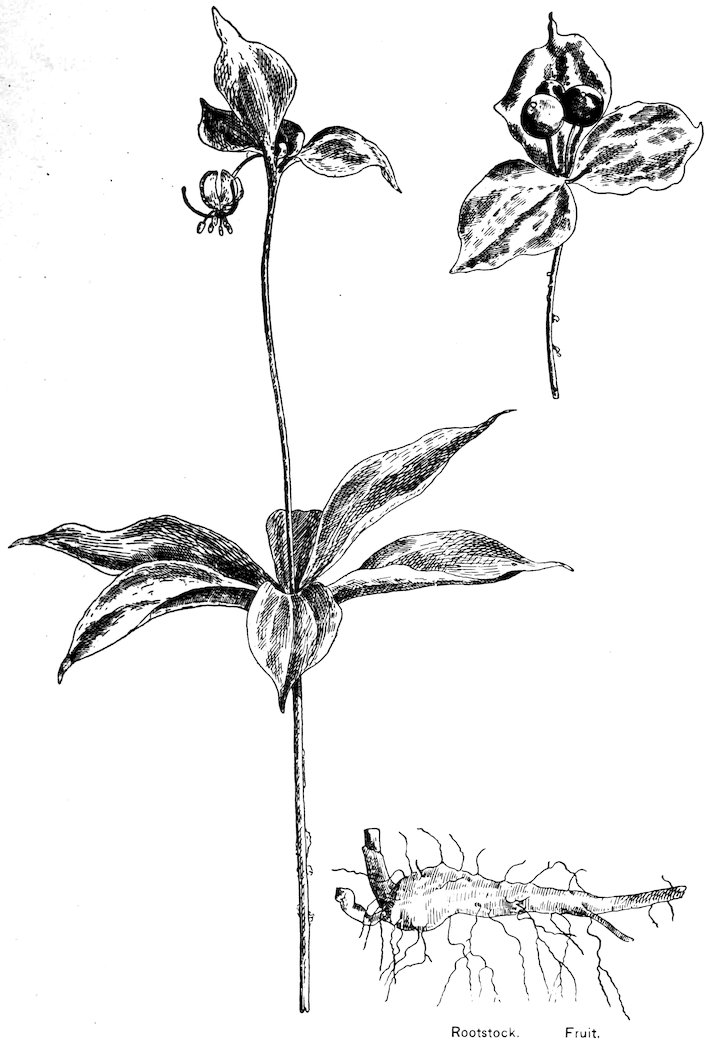
PLATE XLI INDIAN CUCUMBER-ROOT.—M. Virginiana.
130
Winter-cress, Yellow Rocket. Herb of St. Barbara. Barbarea vulgaris. Mustard Family (p. 17).
Stem.—Smooth. Leaves.—The lower lyre-shaped; the upper ovate, toothed or deeply incised at their base. Flowers.—Yellow, growing in racemes. Pod.—Linear, erect or slightly spreading.
As early as May we find the bright flowers of the winter-cress along the roadside. This is probably the first of the yellow mustards to appear.
Black Mustard. Brassica nigra. Mustard Family (p. 17).
Often several feet high. Stem.—Branching. Leaves.—The lower with a large terminal lobe and a few small lateral ones. Flowers.—Yellow, rather small, growing in a raceme. Pods.—Smooth, erect, appressed, about half an inch long.
Many are familiar with the appearance of this plant who are ignorant of its name. The pale yellow flowers spring from the waste places along the roadside and border the dry fields throughout the summer. The tall spreading branches recall the biblical description: “It groweth up, and becometh greater than all herbs, and shooteth out great branches; so that the fowls of the air may lodge under the shadow of it.”
This plant is extensively cultivated in Europe, its ground seeds forming the well-known condiment. The ancients used it for medicinal purposes. It has come across the water to us, and is a troublesome weed in many parts of the country.
Wild Radish. Raphanus Raphanistrum. Mustard Family (p. 17).
One to three feet high. Leaves.—Rough, lyre-shaped. Flowers.—Yellow, veiny, turning white or purplish; larger than those of the black mustard, otherwise resembling them. Pod.—Often necklace-form by constriction between the seeds.
This plant is a troublesome weed in many of our fields. It is the stock from which the garden radish has been raised.
131
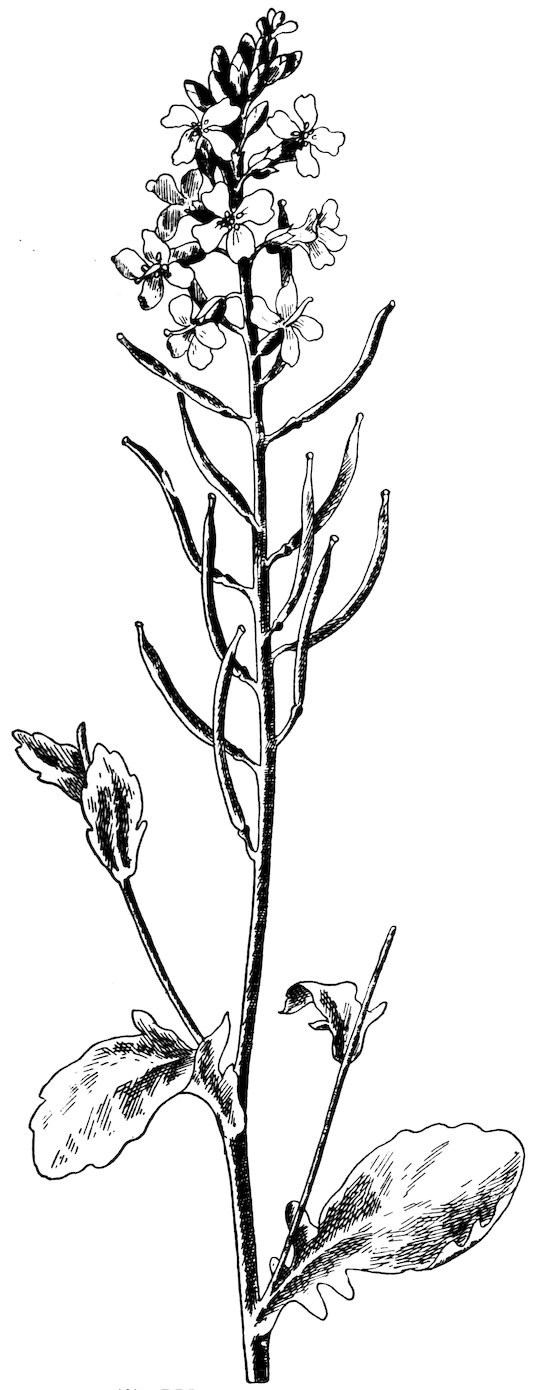
PLATE XLII WINTER-CRESS.—B. vulgaris.
132
Cynthia. Dwarf Dandelion. Krigia Virginica. Composite Family (p. 13).
Stems.—Several, becoming branched, leafy. Leaves.—Earlier ones roundish; the latter narrower and often cleft. Flower-heads.—Yellow, composed entirely of strap-shaped flowers.
In some parts of the country these flowers are among the earliest to appear. They are found in New England, as well as south and westward.
The flowers of K. amplexicaulis appear later, and their range is a little farther south. Near Philadelphia great masses of the orange-colored blossoms and pale green stems and foliage line the railway embankments in June.
Rattlesnake-weed. Hieracium venosum. Composite Family (p. 13).
Stem or Scape.—One or two feet high, naked or with a single leaf, smooth, slender, forking above. Leaves.—From the root, oblong, often making a sort of flat rosette, usually conspicuously veined with purple. Flower-heads.—Yellow, composed entirely of strap-shaped flowers.
The loosely clustered yellow flower-heads of the rattlesnake-weed somewhat resemble small dandelions. They abound in the pine-woods and dry, waste places of early summer. The purple-veined leaves, whose curious markings give to the plant its common name, grow close to the ground and are supposed to be efficacious in rattlesnake bites. Here again crops out the old “doctrine of signatures,” for undoubtedly this virtue has been attributed to the species solely on account of the fancied resemblance between its leaves and the markings of the rattlesnake.
H. scabrum is another common species, which may be distinguished from the rattlesnake-weed by its stout, leafy stem and unveined leaves.
Dandelion. Taraxacum officinale. Composite Family (p. 13).
133
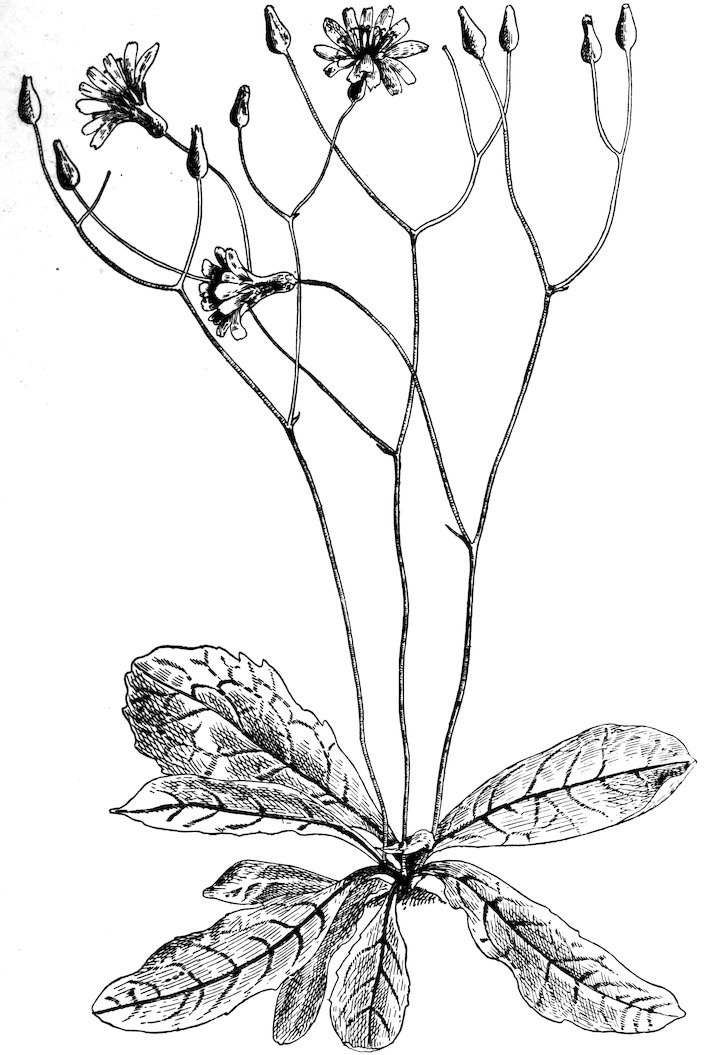
PLATE XLIII RATTLESNAKE-WEED.—H. venosum.
134If Emerson’s definition of a weed, as a plant whose virtues have not yet been discovered, be correct, we can hardly place the dandelion in that category, for its young sprouts have been valued as a pot-herb, its fresh leaves enjoyed as a salad, and its dried roots used as a substitute for coffee in various countries and ages. It is said that the Apache Indians so greatly relish it as food, that they scour the country for many days in order to procure enough to appease their appetites, and that the quantity consumed by one individual exceeds belief. The feathery-tufted seeds which form the downy balls beloved as “clocks” by country children, are delicately and beautifully adapted to dissemination by the wind, which ingenious arrangement partly accounts for the plant’s wide range. The common name is a corruption of the French dent de lion. There is a difference of opinion as to which part of the plant is supposed to resemble a lion’s tooth. Some fancy the jagged leaves gave rise to the name, while others claim that it refers to the yellow flowers, which they liken to the golden teeth of the heraldic lion. In nearly every European country the plant bears a name of similar signification.
Poverty-grass. Hudsonia tomentosa. Rock-rose Family.
“Bushy, heath-like little shrubs, seldom a foot high.” (Gray.) Leaves.—Small, oval or narrowly oblong, pressed close to the stem. Flowers.—Bright yellow, small, numerous, crowded along the upper part of the branches. Calyx.—Of five sepals, the two outer much smaller. Corolla.—Of five petals. Stamens.—Nine to thirty. Pistil.—One, with a long and slender style.
In early summer many of the sand-hills along the New England coast are bright with the yellow flowers of this hoary little shrub. It is also found as far south as Maryland and near the Great Lakes. Each blossom endures for a single day only. The plant’s popular name is due to its economical habit of utilizing sandy unproductive soil where little else will flourish.
Bush-honeysuckle. Diervilla trifida. Honeysuckle Family.
An upright shrub from one to four feet high. Leaves.—Opposite, oblong, taper-pointed. Flowers.—Yellow, sometimes much tinged with red, clustered usually in threes, in the axils of the upper leaves and at the summit of the stem. Calyx.—With slender awl-shaped lobes. Corolla.—Funnel-form, five-lobed, the lower lobe larger than the others and of a deeper yellow, with a small nectar-bearing gland at its base. Stamens.—Five. Pistil.—One.
135
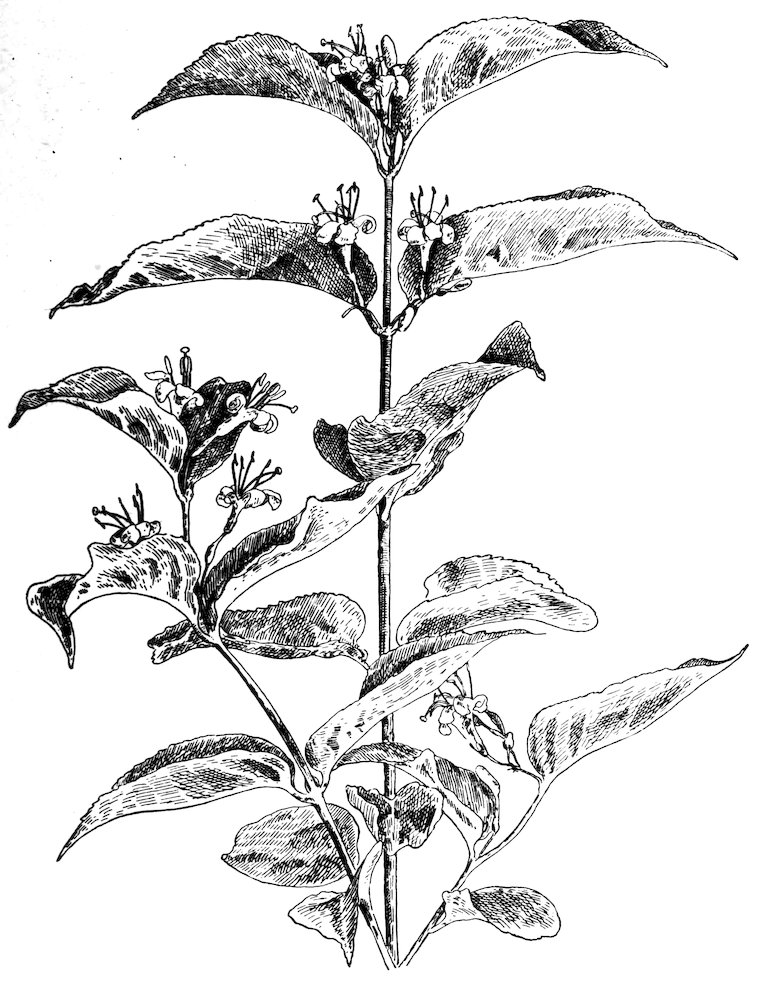
PLATE XLIV BUSH-HONEYSUCKLE.—D. trifida.
136This pretty little shrub is found along our rocky hills and mountains. The blossoms appear in early summer, and form a good example of nectar-bearing flowers. The lower lobe of the corolla is crested and more deeply colored than the others, thus advising the bee of secreted treasure. The hairy filaments of the stamens are so placed as to protect the nectar from injury by rain. When the blossom has been despoiled and at the same time fertilized, for the nectar-seeking bee has probably deposited some pollen upon its pistil, the color of the corolla changes from a pale to a deep yellow, thus giving warning to the insect world that further attentions would be useless to both parties.
Cow Wheat. Melampyrum Americanum. Figwort Family.
Stem.—Low, erect, branching. Leaves.—Opposite, lance-shaped. Flowers.—Small, greenish-yellow, solitary in the axils of the upper leaves. Calyx.—Bell-shaped, four-cleft. Corolla.—Two-lipped, upper lip arched, lower three-lobed and spreading at the apex. Stamens.—Four. Pistil.—One.
In the open woods, from June until September, we encounter the pale yellow flowers of this rather insignificant little plant. The cow wheat was formerly cultivated by the Dutch as food for cattle. The Spanish name, Trigo de Vaca, would seem to indicate a similar custom in Spain. The generic name, Melampyrum, is from the Greek, and signifies black wheat, in reference to the appearance of the seeds of some species when mixed with grain. The flower would not be likely to attract one’s attention were it not exceedingly common in some parts of the country, flourishing especially in our more eastern woodlands.
Meadow Lily. Wild Yellow Lily. Lilium Canadense. Lily Family.
Stem.—Two to five feet high. Leaves.—Whorled, lance-shaped. Flowers.—Yellow, spotted with reddish-brown, bell-shaped, two to three inches long. Perianth.—Of six recurved sepals, with a nectar-bearing furrow at their base. Stamens.—Six, with anthers loaded with brown pollen. Pistil.—One, with a three-lobed stigma.
What does the summer bring which is more enchanting than a sequestered wood-bordered meadow hung with a thousand of these delicate, nodding bells which look as though ready to tinkle at the least disturbance and sound an alarum among the flowers?
137
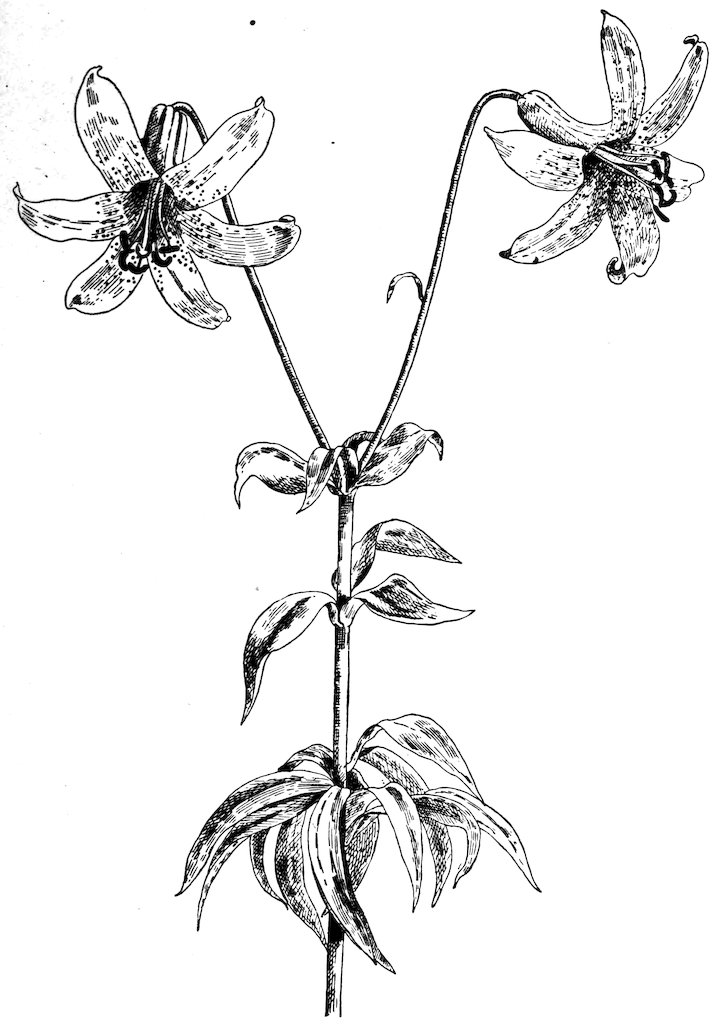
PLATE XLV MEADOW LILY.—L. Canadense.
138These too are true “lilies of the field,” less gorgeous, less imposing than the Turks’ caps, but with an unsurpassed grace and charm of their own. “Fairy-caps,” these pointed blossoms are sometimes called; “witch-caps,” would be more appropriate still. Indeed they would make dainty headgear for any of the dim inhabitants of Wonder-Land.
The growth of this plant is very striking when seen at its best. The erect stem is surrounded with regular whorls of leaves, from the upper one of which curves a circle of long-stemmed, nodding flowers. They suggest an exquisite design for a church candelabra.
Prickly Pear. Indian Fig. Opuntia Rafinesquii. Cactus Family.
Flowers.—Yellow, large, two and a half to three and a half inches across. Calyx.—Of numerous sepals. Corolla.—Of ten or twelve petals. Stamens.—Numerous. Pistil.—One, with numerous stigmas. Fruit.—Shaped like a small pear, often with prickles over its surface.
This curious-looking plant is one of the only two representatives of the Cactus family in the Northeastern States. It has deep green, fleshy, prickly, rounded joints and large yellow flowers, which are often conspicuous in summer in dry, sandy places along the coast.
O. vulgaris, the only other species found in Northeastern America, has somewhat smaller flowers, but otherwise so closely resembles O. Rafinesquii as to make it difficult to distinguish between the two.
Four-leaved Loosestrife. Lysimachia quadrifolia. Primrose Family.
Stem.—Slender, one or two feet high. Leaves.—Narrowly oblong, whorled in fours, fives, or sixes. Flowers.—Yellow, spotted or streaked with red, on slender, hair-like flower-stalks from the axils of the leaves. Calyx.—Five or six-parted. Corolla.—Very deeply five or six-parted. Stamens.—Four or five. Pistil.—One.
139
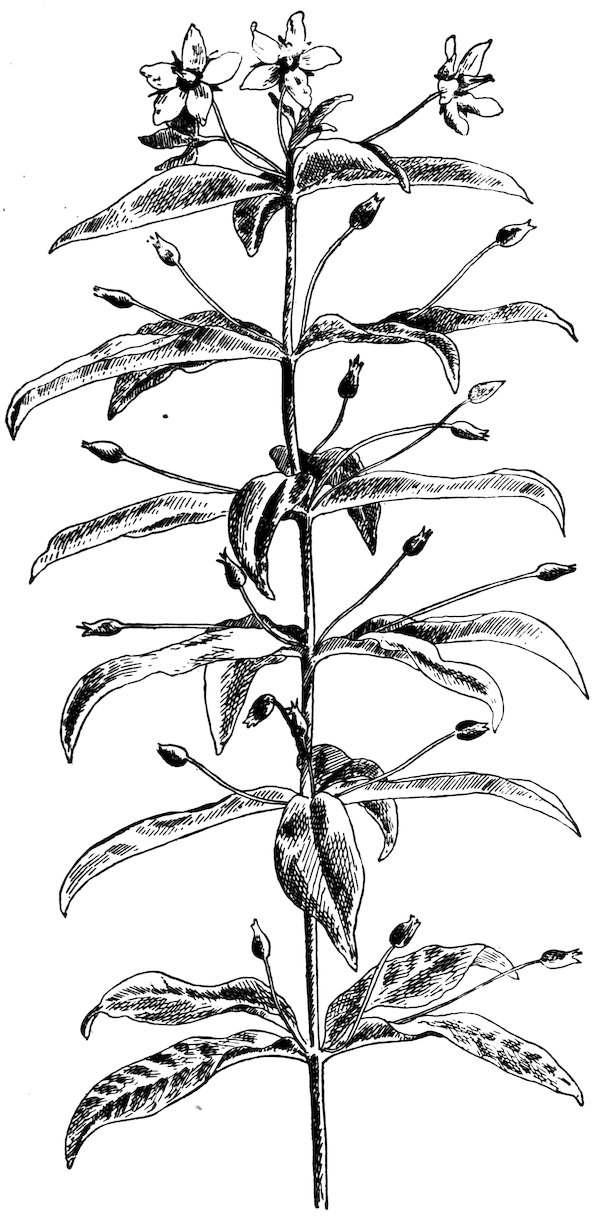
PLATE XLVI FOUR-LEAVED LOOSESTRIFE.—L. quadrifolia.
140This slender pretty plant grows along the roadsides and attracts one’s notice in June by its regular whorls of leaves and flowers. Linnæus says that this genus is named after Lysimachus, King of Sicily. Loosestrife is the English for Lysimachus; but whether the ancient superstition that the placing of these flowers upon the yokes of oxen rendered the beasts gentle and submissive arose from the peace-suggestive title or from other causes, I cannot discover.
Yellow Loosestrife. Lysimachia stricta. Primrose Family.
The yellow loosestrife bears its flowers, which are similar to those of L. quadrifolia, in a terminal raceme; it has opposite lance-shaped leaves. Its bright yellow clusters border the streams and brighten the marshes from June till August.
Rock-rose. Frost-weed. Helianthemum Canadense. Rock-rose Family.
About one foot high. Leaves.—Set close to the stem, simple, lance-oblong. Flowers.—Of two kinds: the earlier, more noticeable ones, yellow, solitary, about one inch across; the later ones small and clustered, usually without petals. Calyx.—(Of the petal-bearing flowers) of five sepals. Corolla.—Of five early falling petals which are crumpled in the bud. Stamens.—Numerous. Pistil.—One, with a three-lobed stigma.
These fragile bright yellow flowers are found in gravelly places in early summer. Under the influence of the sunshine they open once; by the next day their petals have fallen, and their brief beauty is a thing of the past. On June 17th Thoreau finds this “broad, cup-like flower, one of the most delicate yellow flowers, with large spring-yellow petals, and its stamens laid one way.”
In the Vale of Sharon a nearly allied rose-colored species abounds. This is believed by some of the botanists who have travelled in that region to be the Rose of Sharon which Solomon has celebrated.
The name of frost-weed has been given to our plant because of the crystals of ice which shoot from the cracked bark at the base of the stem in late autumn.
141
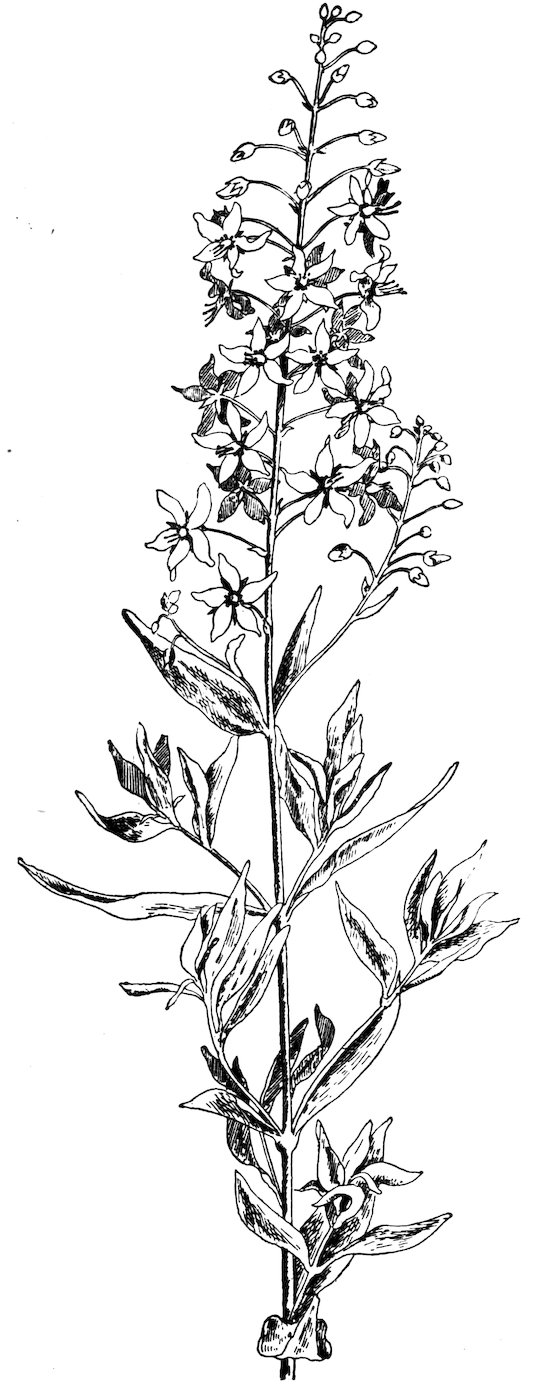
PLATE XLVII YELLOW LOOSESTRIFE.—L. stricta.
142
——— ——— Steironema ciliatum. Primrose Family.
Stem.—Erect, two to four feet high. Leaves.—Opposite, narrowly oval, on fringed leaf-stalks. Flowers.—Yellow, on slender stalks from the axils of the leaves. Calyx.—Deeply five-parted. Corolla.—Deeply five-lobed, wheel-shaped, yellow, with a reddish centre. Stamens.—Five. Pistil.—One.
This plant is nearly akin to the yellow loosestrifes, but unfortunately it has no English name. It abounds in low grounds and thickets, putting forth its bright wheel-shaped blossoms early in July.
Common Barberry. Berberis vulgaris. Barberry Family.
A shrub. Leaves.—Oblong, toothed, in clusters from the axil of a thorn. Flowers.—Yellow, in drooping racemes. Calyx.—Of six sepals, with from two to six bractlets without. Corolla.—Of six petals. Stamens.—Six. Pistil.—One. Fruit.—An oblong scarlet berry.
This European shrub has now become thoroughly wild and very plentiful in parts of New England. The drooping yellow flowers of May and June are less noticeable than the oblong clustered berries of September, which light up so many overgrown lanes, and often decorate our lawns and gardens as well.
The ancients extracted a yellow hair-dye from the barberry; and to-day it is used to impart a yellow color to wool. Both its common and botanical names are of Arabic origin.
Yellow Star-grass. Hypoxis erecta. Amaryllis Family.
Scapes.—Slender, few-flowered. Leaves.—Linear, grass-like, hairy. Flowers.—Yellow. Perianth.—Six-parted, spreading, the divisions hairy and greenish outside, yellow within. Stamens.—Six. Pistil.—One.
When our eyes fall upon what looks like a bit of evening sky set with golden stars, but which proves to be only a piece of shaded turf gleaming with these pretty flowers, we recall Longfellow’s musical lines:
Spake full well in language quaint and olden,
One who dwelleth on the castled Rhine,
When he called the flowers so blue and golden,
Stars, which in earth’s firmament do shine.
The plant grows abundantly in open woods and meadows, flowering in early summer.
143
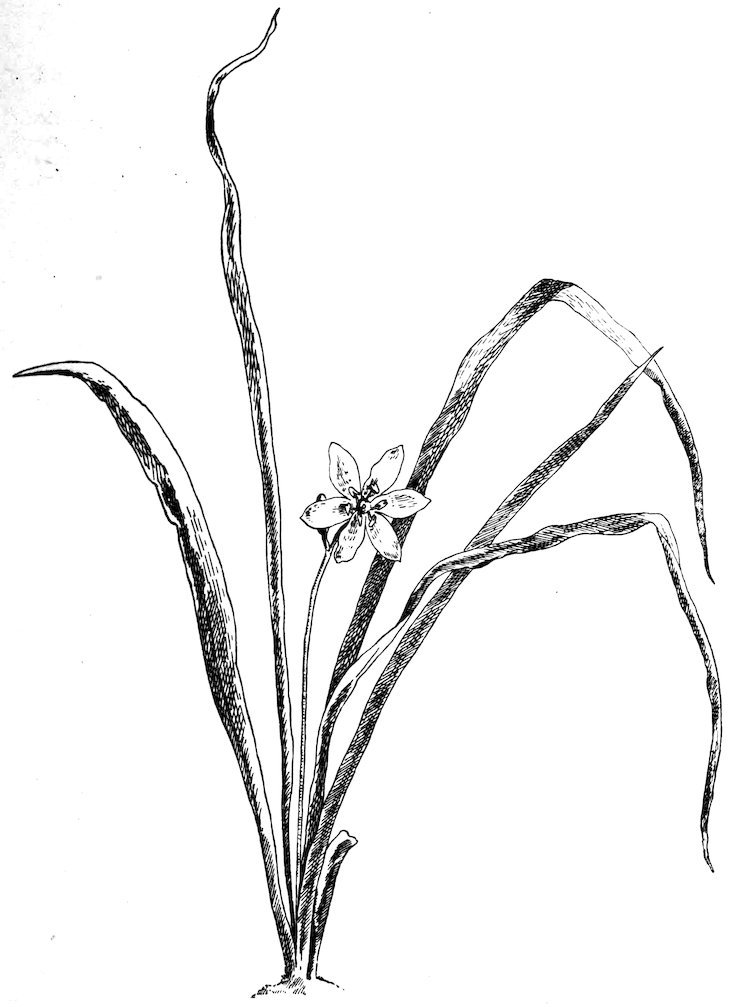
PLATE XLVIII YELLOW STAR-GRASS.—H. erecta.
144
Wild Indigo. Baptisia tinctoria. Pulse Family (p. 16).
Two or three feet high. Stems.—Smooth and slender. Leaves.—Divided into three rounded leaflets, somewhat pale with a whitish bloom, turning black in drying. Flowers.—Papilionaceous, yellow, clustered in many short, loose racemes.
This rather bushy-looking, bright-flowered plant is constantly encountered in our rambles throughout the somewhat dry and sandy parts of the country in midsummer. It is said that it is found in nearly every State in the Union, and that it has been used as a homœopathic remedy for typhoid fever. Its young shoots are eaten at times in place of asparagus. Both the botanical and common names refer to its having yielded an economical but unsuccessful substitute for indigo.
Yellow Clover. Hop Clover. Trifolium agrarium. Pulse Family (p. 16).
Six to twelve inches high. Leaves.—Divided into three oblong leaflets. Flowers.—Papilionaceous, yellow, small, in close heads.
Although this little plant is found in such abundance along our New England roadsides and in many other parts of the country as well, comparatively few people seem to recognize it as a member of the clover group, despite a marked likeness in the leaves and blossoms to others of the same family.
The name clover probably originated in the Latin clava-clubs, in reference to the fancied resemblance between the three-pronged club of Hercules and the clover leaf. The clubs of our playing-cards and the trèfle (trefoil) of the French are probably an imitation of the same leaf.
The nonesuch, Medicago lupulina, with downy, procumbent stems, and flowers which grow in short spikes, is nearly allied to the hop clover. In its reputed superiority as fodder its English name is said to have originated. Dr. Prior says that for many years this plant has been recognized in Ireland as the true shamrock.
145
Dyer’s Green-weed. Wood-waxen. New England Whin. Genista tinctoria. Pulse Family (p. 16).
A shrubby plant from one to two feet high. Leaves.—Lance-shaped. Flowers.—Papilionaceous, yellow, growing in spiked racemes.
This is another foreigner which has established itself in Eastern New York and Massachusetts, where it covers the barren hill-sides with its yellow flowers in early summer. It is a common English plant, formerly valued for the yellow dye which it yielded. It is an undesirable intruder in pasture-lands, as it gives a bitter taste to the milk of cows which feed upon it.
Yellow Sweet Clover. Yellow Melilot. Melilotus officinalis. Pulse Family (p. 16).
Two to four feet high. Stem.—Upright. Leaves.—Divided into three toothed leaflets. Flowers.—Papilionaceous, yellow, growing in spike-like racemes.
This plant is often found blossoming along the roadsides in early summer. It was formerly called in England “king’s-clover,” because, as Parkinson writes, “the yellowe flowers doe crown the top of the stalkes.” The leaves become fragrant in drying.
Rattlebox. Crotalaria sagittalis. Pulse Family (p. 16).
Stem.—Hairy, three to six inches high. Leaves.—Undivided, oval or lance-shaped. Flowers.—Papilionaceous, yellow, but few in a cluster. Pod.—Inflated, many-seeded, blackish.
The yellow flowers of the rattlebox are found in the sandy meadows and along the roadsides during the summer. Both the generic and English names refer to the rattling of the loose seeds within the inflated pod.
146
Butter-and-Eggs. Toadflax. Linaria vulgaris. Figwort Family.
Stem.—Smooth, erect, one to three feet high. Leaves.—Alternate, linear or nearly so. Flowers.—Of two shades of yellow, growing in terminal racemes. Calyx.—Five-parted. Corolla.—Pale yellow tipped with orange, long-spurred, two-lipped, closed in the throat. Stamens.—Four. Pistil.—One.
The bright blossoms of butter-and-eggs grow in full, close clusters which enliven the waste places along the roadside so commonly, that little attention is paid to these beautiful and conspicuous flowers. They would be considered a “pest” if they did not display great discrimination in their choice of locality, usually selecting otherwise useless pieces of ground. The common name of butter-and-eggs is unusually appropriate, for the two shades of yellow match perfectly their namesakes. Like nearly all our common weeds, this plant has been utilized in various ways by the country people. It yielded what was considered at one time a valuable skin lotion, while its juice mingled with milk constitutes a fly-poison. Its generic name, Linaria, and its English title, toadflax, arose from a fancied resemblance between its leaves and those of the flax.
Wild Senna. Cassia Marilandica. Pulse Family.
Stem.—Three or four feet high. Leaves.—Divided into from six to nine pairs of narrowly oblong leaflets. Flowers.—Yellow, in short clusters from the axils of the leaves. Calyx.—Of five sepals. Corolla.—Of five slightly unequal, spreading petals, usually somewhat spotted with reddish-brown. Stamens.—Five to ten, unequal, some of them often imperfect. Pistil.—One. Pod.—Long and narrow, slightly curved, flat.
This tall, striking plant, with clusters of yellow flowers which appear in midsummer, grows abundantly along many of the New England roadsides, and also far south and west, thriving best in sandy soil. Although a member of the Pulse family its blossoms are not papilionaceous.
147
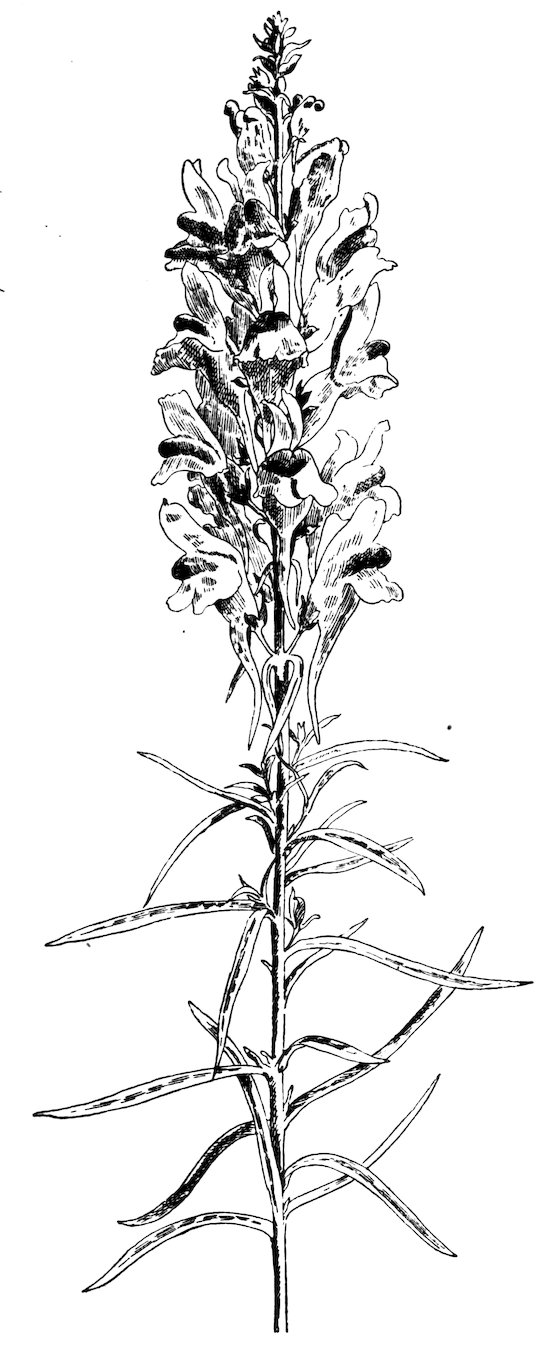
PLATE XLIX BUTTER-AND-EGGS.—L. vulgaris.
148
Partridge-pea. Cassia Chamæcrista. Pulse Family.
Stems.—Spreading, eight inches to a foot long. Leaves.—Divided into from ten to fifteen pairs of narrow delicate leaflets, which close at night and are somewhat sensitive to the touch. Flowers.—Yellow, rather large and showy, on slender stalks beneath the spreading leaves; not papilionaceous. Calyx.—Of five sepals. Corolla.—Of five rounded, spreading, somewhat unequal petals, two or three of which are usually spotted at the base with red or purple. Stamens.—Ten, unequal, dissimilar. Pistil.—One, with a slender style. Pod.—Flat.
The partridge-pea is closely related to the wild senna, and a pretty, delicate plant it is, with graceful foliage, and flowers in late summer which surprise us with their size, abounding in gravelly, sandy places where little else will flourish, brightening the railway embankments and the road’s edge. It is at home all over the country south of Massachusetts and east of the Rocky Mountains, but it grows with a greater vigor and luxuriance in the south than elsewhere. The leaves can hardly be called sensitive to the touch, yet when a branch is snapped from the parent-stem or is much handled, the delicate leaflets will droop and fold, displaying their curious mechanism.
Common St. John’s-wort. Hypericum perforatum. St. John’s-wort Family.
Stem.—Much branched. Leaves.—Small, opposite, somewhat oblong, with pellucid dots. Flowers.—Yellow, numerous, in leafy clusters. Calyx.—Of five sepals. Corolla.—Of five bright yellow petals, somewhat spotted with black. Stamens.—Indefinite in number. Pistil.—One, with three spreading styles.
“Too well known as a pernicious weed which it is difficult to extirpate,” is the scornful notice which the botany gives to this plant whose bright yellow flowers are noticeable in waste fields and along roadsides nearly all summer. Its rank, rapid growth proves very exhausting to the soil, and every New England farmer wishes it had remained where it rightfully belongs—on the other side of the water.
149
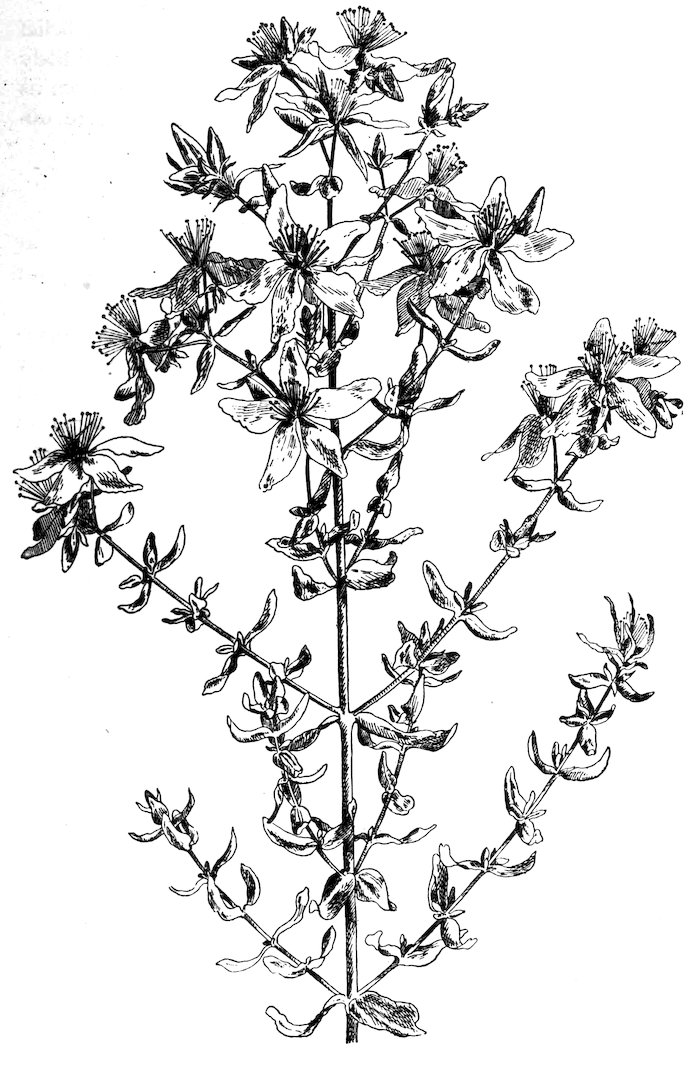
PLATE L COMMON ST. JOHN’S-WORT.—H. perforatum.
150Perhaps more superstitions have clustered about the St. John’s-wort than about any other plant on record. It was formerly gathered on St. John’s eve, and was hung at the doors and windows as a safeguard against thunder and evil spirits. A belief prevailed that on this night the soul had power to leave the body and visit the spot where it would be finally summoned from its earthly habitation, hence the all-night vigils which were observed at that time.
The wonderful herb whose leaf will decide
If the coming year shall make me a bride,
is the St. John’s-wort, and the maiden’s fate is favorably forecast by the healthy growth and successful blossoming of the plant which she has accepted as typical of her future.
In early times poets and physicians alike extolled its properties. An ointment was made of its blossoms, and one of its early names was “balm-of-the-warrior’s-wound.” It was considered so efficacious a remedy for melancholia that it was termed “fuga dæmonum.” Very possibly this name gave rise to the general idea that it was powerful in dispelling evil spirits.
St. Andrew’s Cross. Ascyrum Crux-Andreæ. St. John’s-wort Family.
Stem.—Low, branched. Leaves.—Opposite, narrowly oblong, black-dotted. Flowers.—Light-yellow. Calyx.—Of four sepals, the two outer broad and leaf-like, the inner much smaller. Corolla.—Of four narrowly oblong petals. Stamens.—Numerous. Pistil.—One, with two short styles.
From July till September these flowers may be found in the pine-barrens of New Jersey and farther south and westward, and on the island of Nantucket as well.
Common Mullein. Verbascum Thapsus. Figwort Family.
Stem.—Tall and stout, from three to five feet high. Leaves.—Oblong, woolly. Flowers.—In a long dense spike. Calyx.—Five-parted. Corolla.—Yellow, with five slightly unequal rounded lobes. Stamens.—Ten, the three upper with white wool on their filaments. Pistil.—One.
151
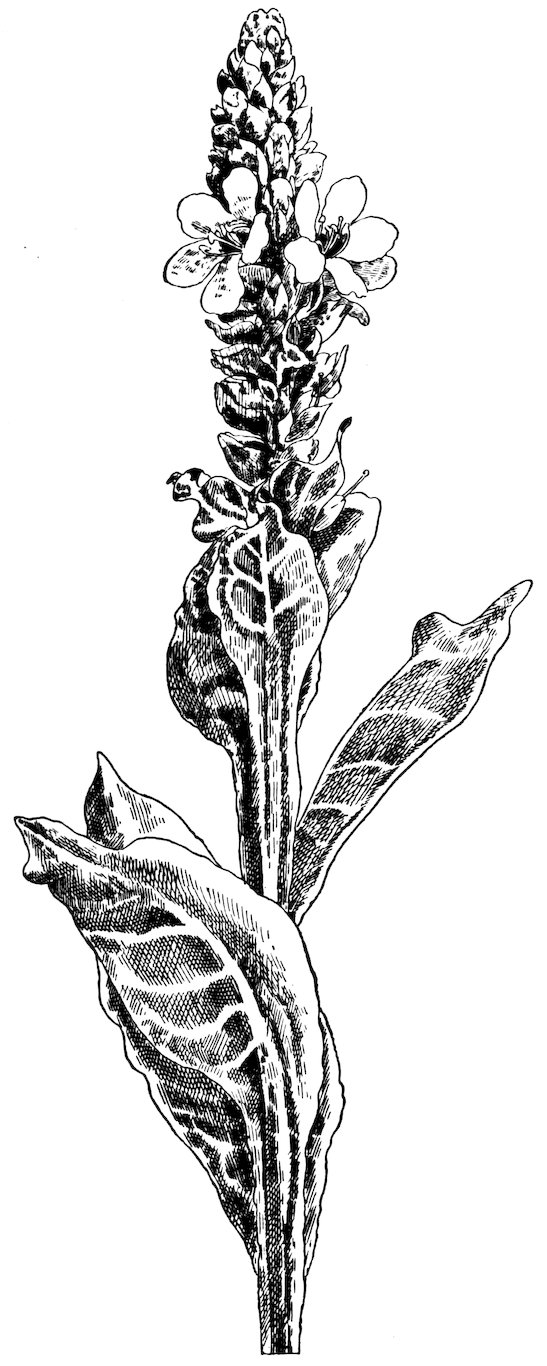
PLATE LI COMMON MULLEIN.—V. Thapsus.
152The common mullein is a native of the island of Thapsos, from which it takes its specific name. It was probably brought to this country from Europe by the early colonists, notwithstanding the title of “American velvet plant,” which it is rumored to bear in England. The Romans called it “candelaria,” from their custom of dipping the long dried stalk in suet and using it as a funeral torch, and the Greeks utilized the leaves for lamp-wicks. In more modern times they have served as a remedy for the pulmonary complaints of men and beasts alike, “mullein tea” being greatly esteemed by country people. Its especial efficacy with cattle has earned the plant its name of “bullocks’ lungwort.”
A low rosette of woolly leaves is all that can be seen of the mullein during its first year, the yellow blossoms on their long spikes opening sluggishly about the middle of the second summer. It abounds throughout our dry, rolling meadows, and its tall spires are a familiar feature in the summer landscape.
Moth Mullein. Verbascum Blattaria. Figwort Family.
Stem.—Tall and slender. Leaves.—Oblong, toothed, the lower sometimes lyre-shaped, the upper partly clasping. Flowers.—Yellow or white, tinged with red or purple, in a terminal raceme. Calyx.—Deeply five-parted. Corolla.—Butterfly-shape, of five rounded, somewhat unequal lobes. Stamens.—Five, with filaments bearded with violet wool and anthers loaded with orange-colored pollen. Pistil.—One.
Along the highway from July till October one encounters a slender weed on whose erect stem it would seem as though a number of canary-yellow or purplish-white moths had alighted for a moment’s rest. These are the fragile, pretty flowers of the moth mullein, and they are worthy of a closer examination. The reddened or purplish centre of the corolla suggests the probability of hidden nectar, while the pretty tufts of violet wool borne by the stamens are well fitted to protect it from the rain. A little experience of the canny ways of these innocent-looking flowers lead one to ask the wherefore of every new feature.
Yellow Fringed Orchis. Orange Orchis. Habenaria ciliaris. Orchis Family (p. 17).
Stem.—Leafy, one to two feet high. Leaves.—The lower oblong to lance-shaped, the upper passing into pointed bracts. Flowers.—Deep orange color, with a slender spur and deeply fringed lip; growing in an oblong spike.
153
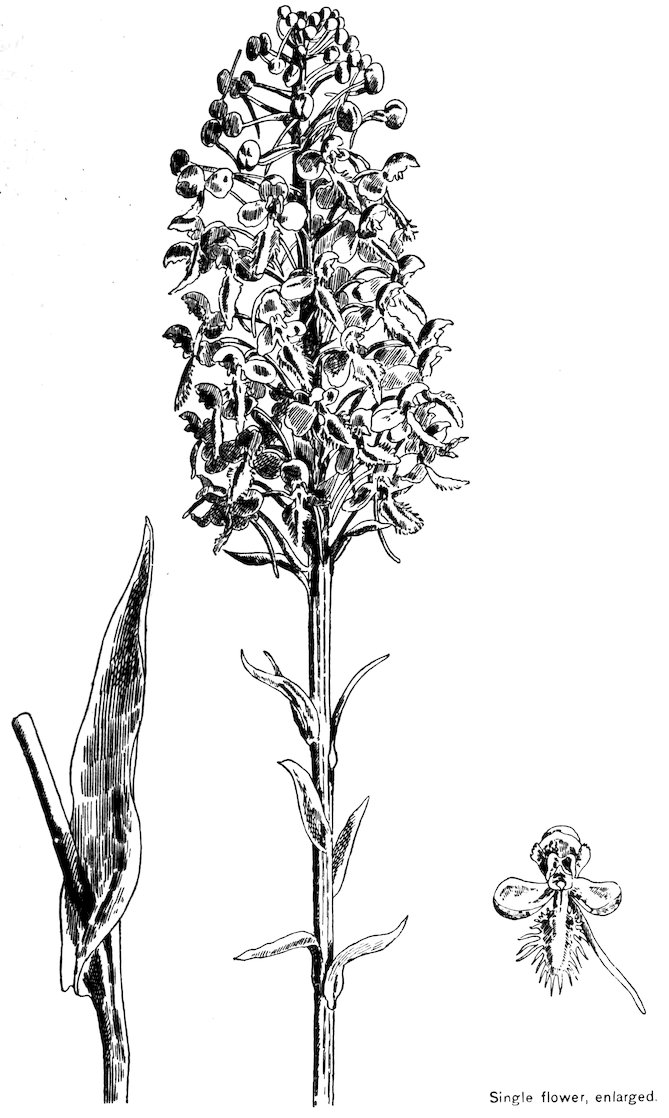
PLATE LII YELLOW FRINGED ORCHIS.—H. ciliaris.
154Years may pass without our meeting this the most brilliant of our orchids. Suddenly one August day we will chance upon just such a boggy meadow as we have searched in vain a hundred times, and will behold myriads of its deep orange, dome-like spires erecting themselves in radiant beauty over whole acres of land. The separate flowers, with their long spurs and deeply fringed lips, will repay a close examination. They are well calculated, massed in such brilliant clusters, to arrest the attention of whatever insects may specially affect them. Although I have watched many of these plants I have never seen an insect visit one, and am inclined to think that they are fertilized by night moths.
Mr. Baldwin declares: “If I ever write a romance of Indian life, my dusky heroine, Birch Tree or Trembling Fawn, shall meet her lover with a wreath of this orchis on her head.”
Jewel-Weed. Touch-me-not. Geranium Family.
Impatiens pallida. Pale Touch-me-not.
Flowers.—Pale yellow, somewhat spotted with reddish-brown; common northward.
Impatiens fulva. Spotted Touch-me-not.
Flowers.—Orange-yellow, spotted with reddish-brown; common southward.
Two to six feet high. Leaves.—Alternate, coarsely toothed, oval. Flowers.—Nodding, loosely clustered, or growing from the axils of the leaves. Calyx and Corolla.—Colored alike, and difficult to distinguish; of six pieces, the largest one extended backward into a deep sac ending in a little spur, the two innermost unequally two-lobed. Stamens.—Five, very short, united over the pistil. Pistil.—One.
These beautiful plants are found along shaded streams and marshes, and are profusely hung with brilliant jewel-like flowers during the summer months. In the later year they bear those closed inconspicuous blossoms which fertilize in the bud and are called cleistogamous flowers. The jewel-weed has begun to appear along the English rivers, and it is said that the ordinary showy blossoms are comparatively rare, while the cleistogamous ones abound. Does not this look almost like a determination on the part of the plant to secure a firm foothold in its new environment before expending its energy on flowers which, though radiant and attractive, are quite dependent on insect-visitors for fertilization and perpetuation?
155
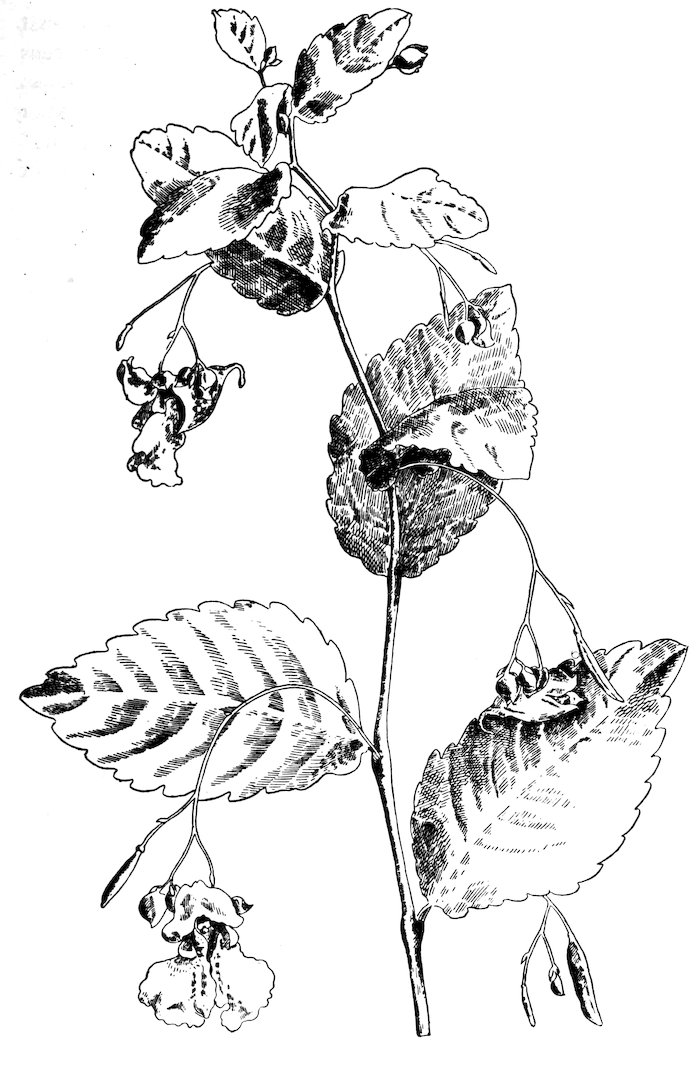
PLATE LIII PALE JEWEL-WEED.—I. pallida.
156The name touch-me-not refers to the seed-pods, which burst open with such violence when touched, as to project their seeds to a comparatively great distance. This ingenious mechanism secures the dispersion of the seeds without the aid of the wind or animals. In parts of New York the plant is called “silver-leaf,” from its silvery appearance when touched with rain or dew, or when held beneath the water.
Agrimony. Agrimonia Eupatoria. Rose Family.
One or two feet high. Leaves.—Divided into several coarsely toothed leaflets. Flowers.—Small, yellow, in slender spiked racemes. Calyx.—Five-cleft, beset with hooked teeth. Corolla.—Of five petals. Stamens.—Five to fifteen. Pistils.—One to four.
The slender yellow racemes of the agrimony skirt the woods throughout the later summer. In former times the plant was held in high esteem by town physician and country herbalist alike. Emerson longed to know
Only the herbs and simples of the wood,
Rue, cinquefoil, gill, vervain, and agrimony.
Up to a recent date the plant has been dried and preserved by country people and might be seen exposed for sale in the shops of French villages. It has also been utilized in a dressing for shoe-leather. When about to flower it yields a pale yellow dye.
Chaucer calls it egremoine. The name is supposed to be derived from the Greek title for an eye-disease, for which the juice of a plant similarly entitled was considered efficacious. The crushed flower yields a lemon-like odor.
Yellow Wood Sorrel. Oxalis stricta. Geranium Family.
Stem.—Erect. Leaves.—Divided into three delicate clover-like leaflets. Flowers.—Golden-yellow. Calyx.—Of five sepals. Corolla.—Of five petals. Stamens.—Ten. Pistil.—One, with five styles.
All summer the small flowers of the yellow wood sorrel show brightly against their background of delicate leaves. The plant 157varies greatly in its height and manner of growth, flourishing abundantly along the roadsides. The small leaflets are open to the genial influence of sun and air during the hours of daylight, but at night they protect themselves from chill by folding one against another.
Sundrops. Œnothera fruticosa. Evening Primrose Family.
This is a day-blooming species of the evening primrose, with large, pale yellow blossoms and alternate oblong or narrowly lance-shaped leaves, and of a much less rank habit. In early summer our roadsides are illuminated with these flowers.
Œnothera pumila is also a diurnal species. Its loosely spiked blossoms are much smaller than those of the sundrops.
Evening Primrose. Œnothera biennis. Evening Primrose Family.
Stout, erect, one to five feet high. Leaves.—Alternate, lance-shaped to oblong. Flowers.—Pale yellow, in a leafy spike, opening at night. Calyx.—With a long tube, four-lobed. Corolla.—Of four somewhat heart-shaped petals. Stamens.—Eight, with long anthers. Pistil.—One, with a stigma divided into four linear lobes.
Along the roadsides in midsummer we notice a tall, rank-growing plant, which seems chiefly to bear buds and faded blossoms. And unless we are already familiar with the owl-like tendencies of the evening primrose, we are surprised, some dim twilight, to find this same plant resplendent with a mass of fragile yellow flowers, which are exhaling their faint delicious fragrance on the evening air.
One brief summer night exhausts the vitality of these delicate blossoms. The faded petals of the following day might serve as a text for a homily against all-night dissipation, did we not know that by its strange habit the evening primrose guards against the depredations of those myriad insects abroad during the day, which are unfitted to transmit its pollen to the pistil of another flower.
We are impressed by the utilitarianism in vogue in this floral 158world, as we note that the pale yellow of these blossoms gleams so vividly through the darkness as to advertise effectively their whereabouts, while their fragrance serves as a mute invitation to the pink night-moth, which is their visitor and benefactor. Why they change their habits in the late year and remain open during the day, I have not been able to discover.
Horse Balm. Rich-weed. Stone-root. Collinsonia Canadensis. Mint Family (p. 16).
One to three feet high. Leaves.—Opposite, large, ovate, toothed, pointed. Flowers.—Yellowish, lemon-scented, clustered loosely. Calyx.—Two-lipped, the upper lip three-toothed, the lower two-cleft. Corolla.—Elongated, somewhat two-lipped, the four upper lobes nearly equal, the lower large and long, toothed or fringed. Stamens.—Two (sometimes four, the upper pair shorter), protruding, diverging. Pistil.—One, with a two-lobed style.
In the damp rich woods of midsummer these strong-scented herbs, with their loose terminal clusters of lemon-colored, lemon-scented flowers are abundant. The plant was introduced into England by the amateur botanist and flower-lover, Collinson, after whom the species is named. The Indians formerly employed it as an application to wounds.
Black-eyed Susan. Cone-flower. Rudbeckia hirta. Composite Family (p. 13).
Stem.—Stout and hairy, one to two feet high. Leaves.—Rough and hairy, the upper long, narrow, set close to the stem; the lower broader, with leaf-stalks. Flower-heads.—Composed of both ray and disk-flowers; the former yellow, the latter brown and arranged on a cone-like receptacle.
By the middle of July our dry meadows are merry with black-eyed Susans, which are laughing from every corner and keeping up a gay midsummer carnival in company with the yellow lilies and brilliant milkweeds. They seem to revel in the long days of blazing sunlight, and are veritable salamanders among the flowers. Although now so common in our eastern fields they were first brought to us with clover-seed from the West, and are not altogether acceptable guests, as they bid fair to add another anxiety to the already harassed life of the New England farmer.
159
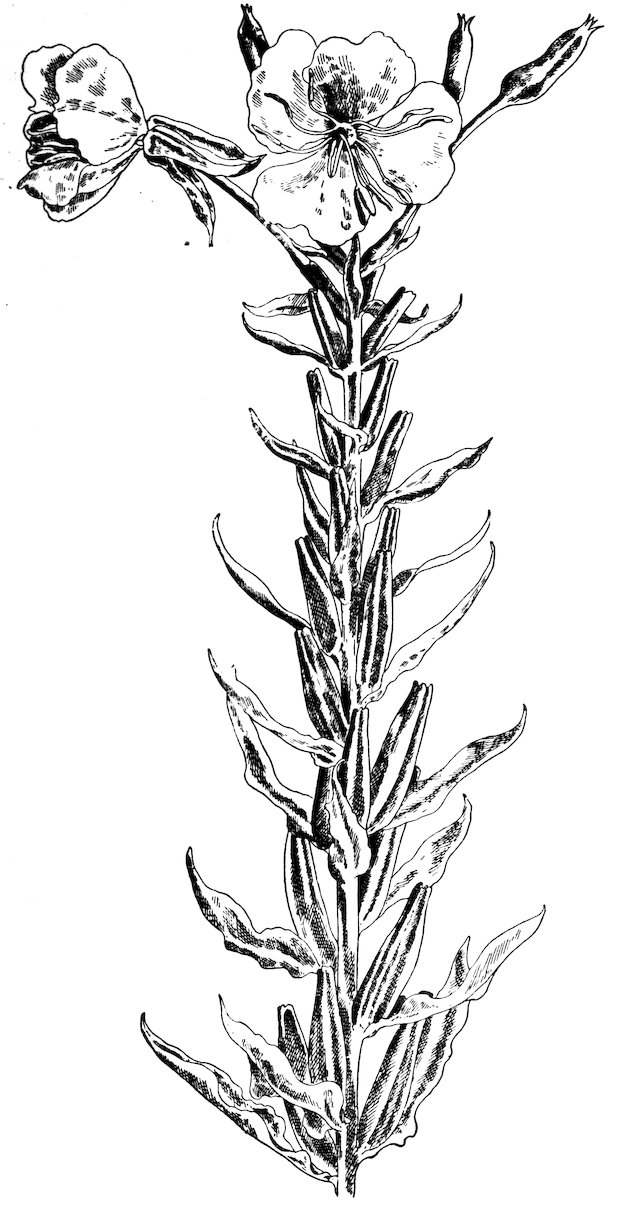
PLATE LIV EVENING PRIMROSE.—Œ. biennis.
160
——— ——— Rudbeckia laciniata. Composite Family (p. 13).
Two to seven feet high. Stem.—Smooth, branching. Leaves.—The lower divided into lobed leaflets, the upper irregularly three to five-parted. Flower-heads.—Yellow, rather large, composed of both ray and disk-flowers, the former drooping and yellow, the later dull greenish and arranged on a columnar receptacle.
This graceful, showy flower is even more decorative than the black-eyed Susan. Its drooping yellow rays are from one to two inches long. It may be found throughout the summer in the low thickets which border the swamps and meadows.
Golden Aster. Chrysopsis Mariana. Composite Family (p. 13).
Stem.—Silky, with long weak hairs when young. Leaves.—Alternate, oblong. Flower-heads.—Golden-yellow, rather large, composed of both ray and disk-flowers.
In dry places along the roadsides of Southern New York and farther south, one can hardly fail to notice in late summer and autumn the bright clusters of the golden aster.
C. falcata is a species which may be found in dry sandy soil as far north as Massachusetts, with very woolly stems, crowded linear leaves, and small, clustered flower-heads.
Golden-rod. Solidago. Composite Family (p. 13).
Flower-heads.—Golden-yellow, composed of both ray and disk-flowers.
About eighty species of golden-rod are native to the United States: of these forty-two species can be found in our Northeastern States. Many of them are difficult of identification, and it would be useless to describe any but a few of the more conspicuous forms.
161
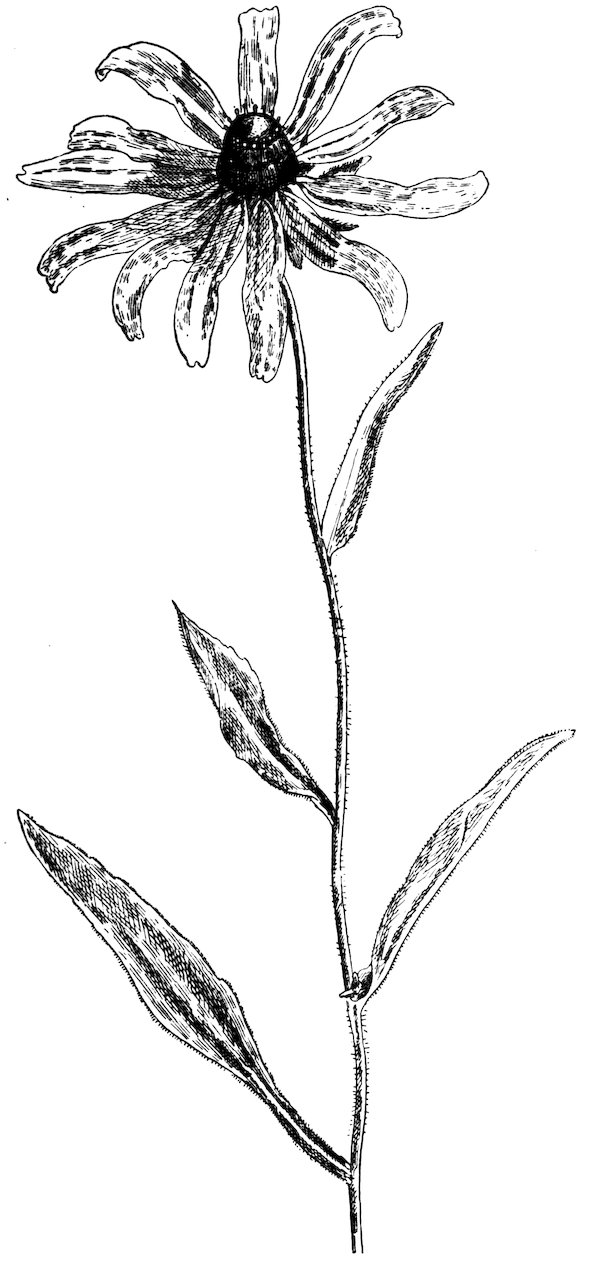
PLATE LV BLACK-EYED SUSAN.—R. hirta.
162A common and noticeable species which flowers early in August is S. Canadensis, with a tall stout stem from three to six feet high, lance-shaped leaves, which are usually sharply toothed and pointed, and small flower-heads clustered along the branches which spread from the upper part of the stem.
Another early flowering species is S. rugosa. This is a lower plant than S. Canadensis, with broader leaves. Still another is the dusty golden-rod, S. nemoralis, which has a hoary aspect and very bright yellow flowers which are common in dry fields.
S. lanceolata has lance-shaped or linear leaves, and flowers which grow in flat-topped clusters, unlike other members of the family; the information that this is a golden-rod often creates surprise, as for some strange reason it seems to be confused with the tansy.
The sweet golden-rod, S. odorata, is easily recognized by its fragrant, shining, dotted leaves. S. cæsia, or the blue-stemmed, is a wood-species and among the latest of the year, putting forth its bright clusters for nearly the whole length of its stem long after many of its brethren look like brown wraiths of their former selves. The silver rod, S. bicolor, whose whitish flowers are a departure from the family habit, also survives the early cold and holds its own in the dry woods.
The only species native to Great Britain is S. Virga-aurea.
The generic name is from two Greek words which signify to make whole, and refer to the healing properties which have been attributed to the genus.
Elecampane. Inula Helenium. Composite Family (p. 13).
Stem.—Stout, three to five feet high. Leaves.—Alternate, large, woolly beneath, the upper partly clasping. Flower-heads.—Yellow, large, composed of both ray and disk-flowers.
163
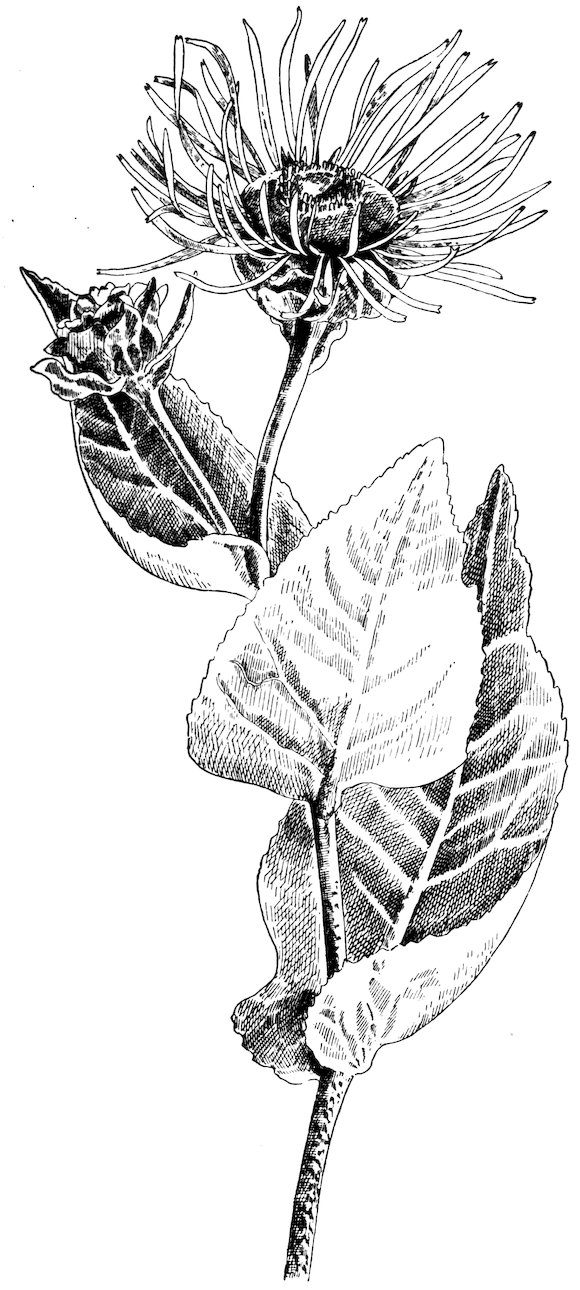
PLATE LVI ELECAMPANE.—I. Helenium.
164When we see these great yellow disks peeping over the pasture walls or flanking the country lanes, we feel that midsummer is at its height. Flowers are often subservient courtiers, and make acknowledgment of whatever debt they owe by that subtlest of flatteries—imitation. Did not the blossoms of the dawning year frequently wear the livery of the snow which had thrown its protecting mantle over their first efforts? And these newcomers—whose gross, rotund countenances so clearly betray the results of high living—do not they pay their respects to their great benefactor after the same fashion?—with the result that a myriad miniature suns shine upward from meadow and roadside.
The stout, mucilaginous root of this plant is valued by farmers as a horse-medicine, especially in epidemics of epizootic, one of its common names in England being horse-heal.
In ancient times the elecampane was considered an important stimulant to the human brain and stomach, and it was mentioned as such in the writings of Hippocrates, the “Father of Medicine,” over two thousand years ago.
The common name is supposed to be a corruption of ala campania, and refers to the frequent occurrence of the plant in that ancient province of Southern Italy.
Fall Dandelion. Leontodon autumnalis. Composite Family (p. 13).
Scape.—Five to fifteen inches high, branching. Leaves.—From the root, toothed or deeply incised. Flower-heads.—Yellow, composed entirely of strap-shaped flowers; smaller than those of the common dandelion.
From June till November we find the fall dandelion along the New England roadsides, as well as farther south. While the yellow flower-heads somewhat suggest small dandelions the general habit of the plant recalls some of the hawkweeds.
Wild Sunflower. Helianthus giganteus. Composite Family (p. 13).
Stem.—Rough or hairy, from three to ten feet high, branched above. Leaves.—Lance-shaped, pointed, rough to the touch, set close to the stem. Flower-heads.—Yellow, composed of both ray and disk-flowers.
165
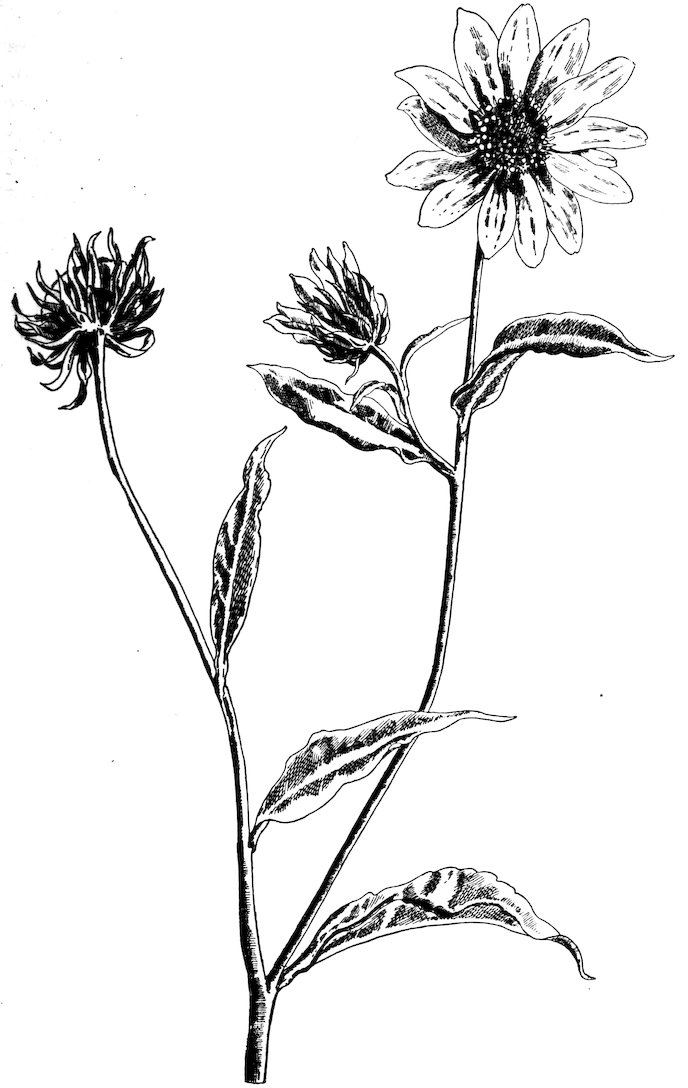
PLATE LVII WILD SUNFLOWER.—H. giganteus.
166In late summer many of our lanes are hedged by this beautiful plant, which, like other members of its family, lifts its yellow flowers sunward in pale imitation of the great life-giver itself. We have twenty-two different species of sunflower. H. divaricatus is of a lower growth, with opposite, widely spreading leaves and larger flower-heads. H. annuus is the garden species familiar to all; this is said to be a native of Peru. Mr. Ellwanger writes regarding it: “In the mythology of the ancient Peruvians it occupied an important place, and was employed as a mystic decoration in ancient Mexican sculpture. Like the lotus of the East, it is equally a sacred and an artistic emblem, figuring in the symbolism of Mexico and Peru, where the Spaniards found it rearing its aspiring stalk in the fields, and serving in the temples as a sign and a decoration, the sun-god’s officiating handmaidens wearing upon their breasts representations of the sacred flower in beaten gold.”
Gerarde describes it as follows: “The Indian Sun or the golden floure of Peru is a plant of such stature and talnesse that in one Sommer, being sowne of a seede in April, it hath risen up to the height of fourteen foot in my garden, where one floure was in weight three pound and two ounces, and crosse overthwart the floure by measure sixteen inches broad.”
The generic name is from helios—the sun, and anthos—a flower.
Sneezeweed. Swamp Sunflower. Helenium autumnale. Composite Family (p. 13).
One to six feet high. Stem.—Angled, erect, branching. Leaves.—Alternate, lance-shaped. Flower-heads.—Yellow, composed of both ray and disk-flowers, the rays being somewhat cleft.
As far north as Connecticut we see masses of these bright flowers bordering the streams and swamps in September.
Stick-tight. Bur Marigold, Beggar-ticks. Bidens frondosa. Composite Family (p. 13).
Two to six feet high. Stem.—Branching. Leaves.—Opposite, three to five-divided. Flower-heads.—Consisting of brownish-yellow tubular flowers, with a leaf-like involucre beneath.
167
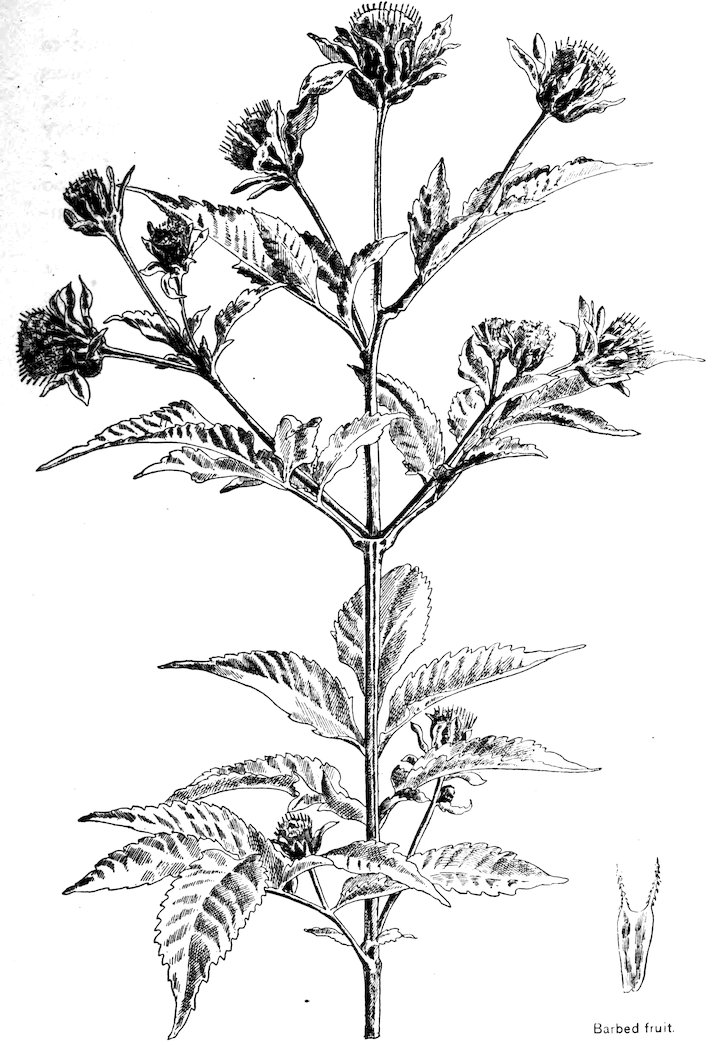
PLATE LVIII STICK-TIGHT.—B. frondosa.
168If one were only describing the attractive wild flowers, the stick-tight would certainly be omitted, as its appearance is not prepossessing, and the small barbed seed-vessels so cleverly fulfil their destiny in making one’s clothes a means of conveyance to “fresh woods and pastures new” as to cause all wayfarers heartily to detest them. “How surely the desmodium growing on some cliff-side, or the bidens on the edge of a pool, prophesy the coming of the traveller, brute or human, that will transport their seeds on his coat,” writes Thoreau. But the plant is so constantly encountered in late summer, and yet so generally unknown, that it can hardly be overlooked.
The larger bur marigold, B. chrysanthemoides, does its best to retrieve the family reputation for ugliness, and surrounds its dingy disk-flowers with a circle of showy golden rays which are strictly decorative, having neither pistils nor stamens, and leaving all the work of the household to the less attractive but more useful disk-flowers. Their effect is pleasing, and late into the autumn the moist ditches look as if sown with gold through their agency. The plant varies in height from six inches to two feet. Its leaves are opposite, lance-shaped, and regularly toothed.
Smooth False Foxglove. Gerardia quercifolia. Figwort Family.
Stem.—Smooth, three to six feet high, usually branching. Leaves.—The lower usually deeply incised, the upper narrowly oblong, incised, or entire. Flowers.—Yellow, large, in a raceme or spike. Calyx.—Five-cleft. Corolla.—Two inches long, somewhat tubular, swelling above, with five more or less unequal, spreading lobes, woolly within. Stamens.—Four, in pairs, woolly. Pistil.—One.
These large pale yellow flowers are very beautiful and striking when seen in the dry woods of late summer. They are all the more appreciated because there are few flowers abroad at this season save the Composites, which are decorative and radiant enough, but usually somewhat lacking in the delicate charm we look for in a flower.
The members of this genus, which is named after Gerarde, the author of the famous “Herball,” are supposed to be more or less parasitic in their habits, drawing their nourishment from the roots of other plants.
169
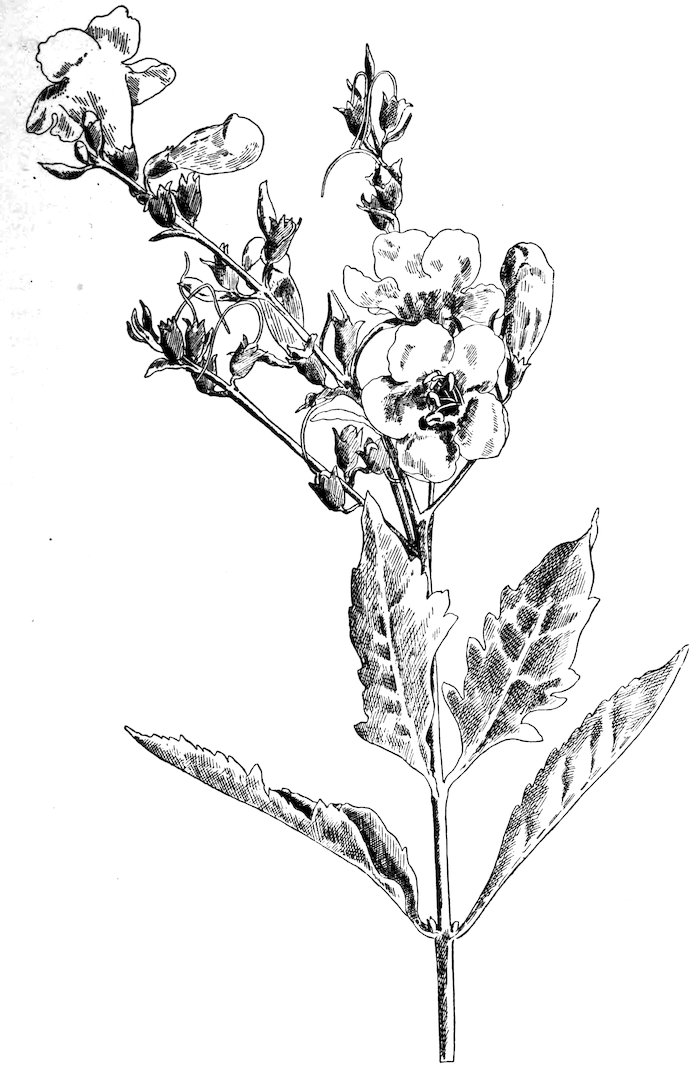
PLATE LIX SMOOTH FALSE FOXGLOVE.—G. quercifolia.
170The downy false foxglove, G. flava, is usually a somewhat lower plant, with a close down, a less-branched stem, more entire leaves, and smaller, similar flowers.
Tansy. Tanacetum vulgare. Composite Family (p. 13).
Stem.—Two to four feet high. Leaves.—Divided into toothed leaflets. Flower-heads.—Yellow, composed of tiny flowers which are nearly, if not all, tubular in shape; borne in flat-topped clusters.
With the name of tansy we seem to catch a whiff of its strong-scented breath and a glimpse of some New England homestead beyond whose borders it has strayed to deck the roadside with its deep yellow, flat-topped flower-clusters. The plant has been used in medicine since the Middle Ages, and in more recent times it has been gathered by the country people for “tansy wine” and “tansy tea.” In the Roman Church it typifies the bitter herbs which were to be eaten at the Paschal season; and cakes made of eggs and its leaves are called “tansies,” and eaten during Lent. It is also frequently utilized in more secular concoctions.
The common name is supposed to be a corruption of the Greek word for immortality.
Witch-hazel. Hamamelis Virginiana. Witch-hazel Family.
A tall shrub. Leaves.—Oval, wavy-toothed, mostly falling before the flowers appear. Flowers.—Honey-yellow, clustered, autumnal. Calyx.—Four-parted. Corolla.—Of four long narrow petals. Stamens.—Eight. Pistils.—Two. Fruit.—A capsule which bursts elastically, discharging its large seeds with vigor.
171
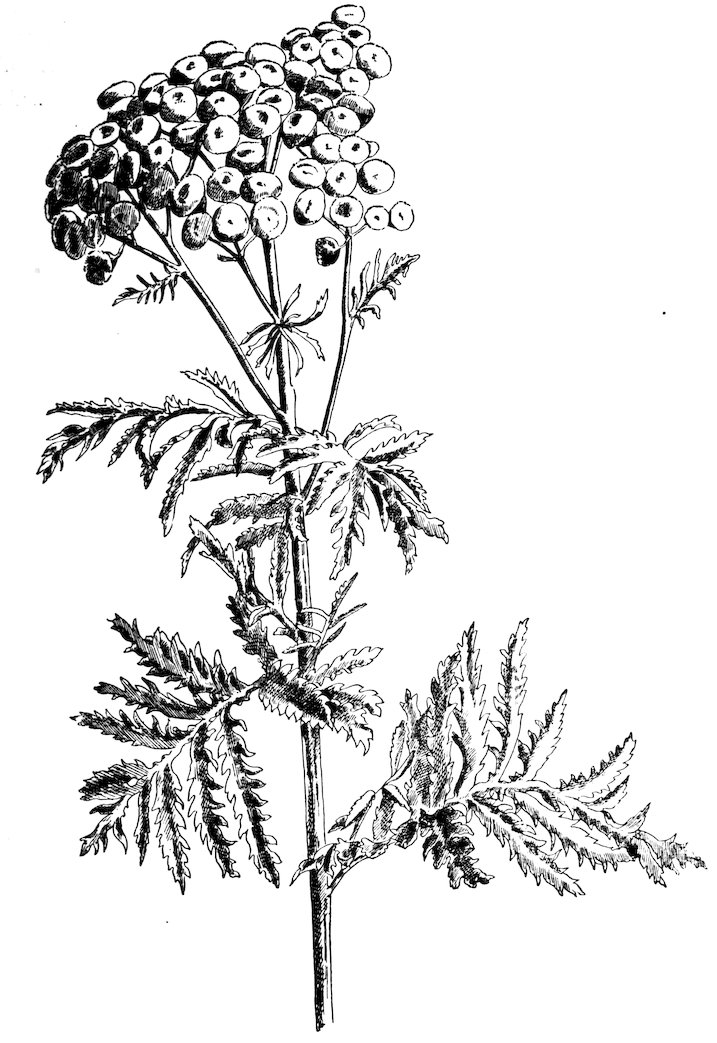
PLATE LX TANSY.—T. vulgare.
172It seems as though the flowers of the witch-hazel were fairly entitled to the “booby-prize,” of the vegetable world. Surely no other blossoms make their first appearance so invariably late upon the scene of action. The fringed gentian often begins to open its “meek and quiet eye” quite early in September. Certain species of golden-rod and aster continue to flower till late in the year, but they began putting forth their bright clusters before the summer was fairly over; while the elusively fragrant, pale yellow blossoms of the witch-hazel need hardly be expected till well on in September, when its leaves have fluttered earthward and its fruit has ripened. Does the pleasure which we experience at the spring-like apparition of this leafless yellow-flowered shrub in the autumn woods arise from the same depraved taste which is gratified by strawberries at Christmas, I wonder? Or is it that in the midst of death we have a foretaste of life; a prophecy of the great yearly resurrection which even now we may anticipate?
Thoreau’s tastes in such directions were certainly not depraved, and he writes: “The witch-hazel loves a hill-side with or without woods or shrubs. It is always pleasant to come upon it unexpectedly as you are threading the woods in such places. Methinks I attribute to it some elfish quality apart from its fame. I love to behold its gray speckled stems.” Under another date he writes: “Heard in the night a snapping sound, and the fall of some small body on the floor from time to time. In the morning I found it was produced by the witch-hazel nuts on my desk springing open and casting their seeds quite across my chamber, hard and stony as these nuts were.”
The Indians long ago discovered the value of its bark for medicinal purposes, and it is now utilized in many well-known extracts. The forked branches formerly served as divining-rods in the search for water and precious ores. This belief in its mysterious power very possibly arose from its suggestive title, which Dr. Prior says should be spelled wych-hazel, as it was called after the wych-elm, whose leaves it resembles, and which was so named because the chests termed in old times “wyches” were made of its wood—
His hall rofe was full of bacon flytches,
The chambre charged was with wyches
Full of egges, butter, and chese.[4]
Note.—The flowers of the American Woodbine and of the Fly Honeysuckle (p. 228), and of the Golden Corydalis (p. 192) are also yellow.
173
III PINK
Trailing Arbutus. Mayflower. Ground Laurel. Epigæa repens. Heath Family.
Stem.—With rusty hairs, prostrate or trailing. Leaves.—Rounded, heart-shaped at base, evergreen. Flowers.—Pink, clustered, fragrant. Calyx.—Of five sepals. Corolla.—Five-lobed, salver-shaped, with a slender tube which is hairy within. Stamens.—Ten. Pistil.—One, with a five-lobed stigma.
Pink, small, and punctual,
Aromatic, low,
describes, but does scant justice to the trailing arbutus, whose waxy blossoms and delicious breath are among the earliest prophecies of perfume-laden summer. We look for these flowers in April—not beneath the snow—where tradition rashly locates them—but under the dead brown leaves of last year; and especially among the pines and in light sandy soil. Appearing as they do when we are eager for some tangible assurance that
—the Spring comes slowly up this way,
they win from many of us the gladdest recognition of the year.
In New England they are called Mayflowers, being peddled about the streets of Boston every spring, under the suggestive and loudly emphasized title of “Ply-y-mouth Ma-ayflowers!” Whether they owe this name to the ship which is responsible for so much, or to their season of blooming, in certain localities, might remain an open question had we not the authority of Whittier for attributing it to both causes. In a note prefacing “The Mayflowers,” the poet says: “The trailing arbutus or Mayflower grows abundantly in the vicinity of Plymouth, and 174was the first flower to greet the Pilgrims after their fearful winter.” In the poem itself he wonders what the old ship had
Within her ice-rimmed bay
In common with the wild-wood flowers,
The first sweet smiles of May?
and continues—
Yet “God be praised!” the Pilgrim said,
Who saw the blossoms peer
Above the brown leaves, dry and dead,
“Behold our Mayflower here!”
God wills it, here our rest shall be,
Our years of wandering o’er,
For us the Mayflower of the sea
Shall spread her sails no more.
O sacred flowers of faith and hope,
As sweetly now as then,
Ye bloom on many a birchen slope,
In many a pine-dark glen.
· · · · ·
So live the fathers in their sons,
Their sturdy faith be ours,
And ours the love that overruns
Its rocky strength with flowers.
If the poet’s fancy was founded on fact, and if our lovely and wide-spread Mayflower was indeed the first blossom noted and christened by our forefathers, it seems as though the problem of a national flower must be solved by one so lovely and historic as to silence all dispute. And when we read the following prophetic stanzas which close the poem, showing that during another dark period in our nation’s history these brave little blossoms, struggling through the withered leaves, brought a message of hope and courage to the heroic heart of the Quaker poet, our feeling that they are peculiarly identified with our country’s perilous moments is intensified:
The Pilgrim’s wild and wintry day
At shadow round us draws;
The Mayflower of his stormy bay
Our Freedom’s struggling cause.
But warmer suns erelong shall bring
To life the frozen sod;
And, through dead leaves of hope shall spring
Afresh the flowers of God!
175
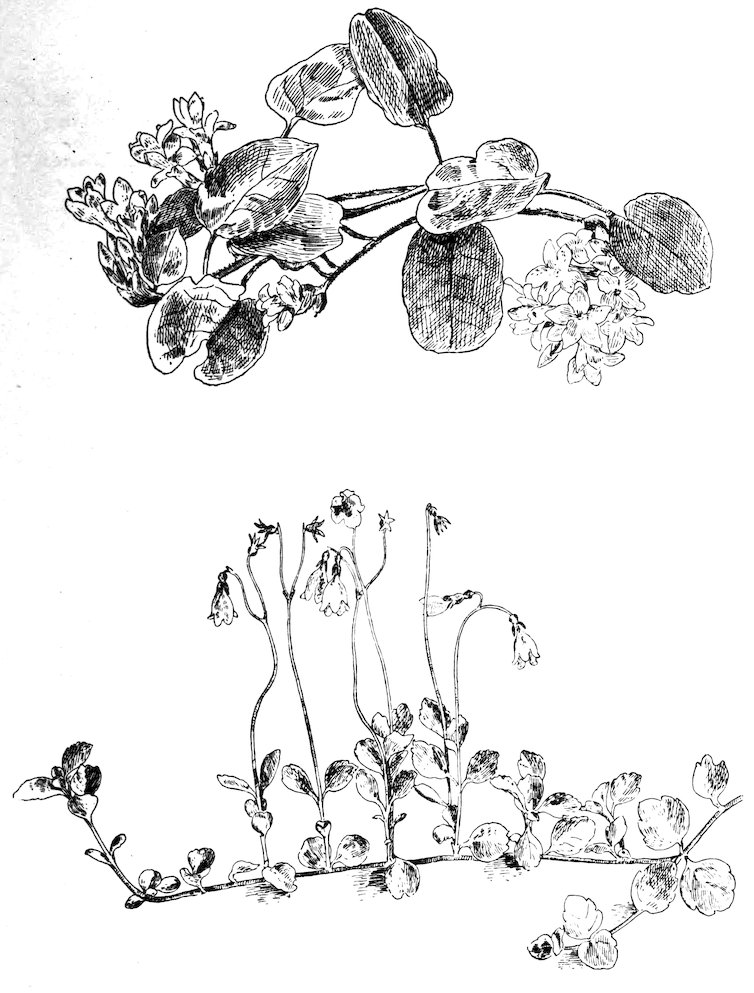
PLATE LXI TRAILING ARBUTUS.—E. repens. TWIN-FLOWER.—L. borealis.
176
Twin-flower. Linnæa borealis. Honeysuckle Family.
Stem.—Slender, creeping and trailing. Leaves.—Rounded, shining and evergreen. Flowers.—Growing in pairs, delicate pink, fragrant, nodding on thread-like, upright flower-stalks. Calyx.—Five-toothed. Corolla.—Narrowly bell-shaped, five-lobed, hairy within. Stamens.—Four, two shorter than the others. Pistil.—One.
Whoever has seen
—beneath dim aisles, in odorous beds,
The slight Linnæa hang its twin-born heads,[5]
will not soon forget the exquisite carpeting made by its nodding pink flowers and dark shining leaves; or the delicious perfume which actually filled the air and drew one’s attention to the spot from which it was exhaled, tempting one to exclaim with Richard Jefferies, “Sweetest of all things is wild-flower air!” That this little plant should have been selected as “the monument of the man of flowers” by the great Linnæus himself, bears testimony to his possession of that appreciation of the beautiful which is supposed to be lacking in men of long scientific training. I believe that there is extant at least one contemporary portrait of Linnæus in which he wears the tiny flowers in his buttonhole. The rosy twin-blossoms are borne on thread-like, forking flower-stalks, and appear in June in the deep, cool, mossy woods of the North.
Showy Orchis. Orchis spectabilis. Orchis Family (p. 17).
Stem.—Four-angled, with leaf-like bracts, rising from fleshy, fibrous roots. Leaves.—Two, oblong, shining, three to six inches long. Flowers.—In a loose spike, purple-pink, the lower lip white.
This flower not only charms us with its beauty when its clusters begin to dot the rich May woods, but interests us as being usually the first member of the Orchis family to appear upon the scene; although it is claimed in certain localities that the beautiful Calypso always, and the Indian moccason occasionally, precedes it.
177
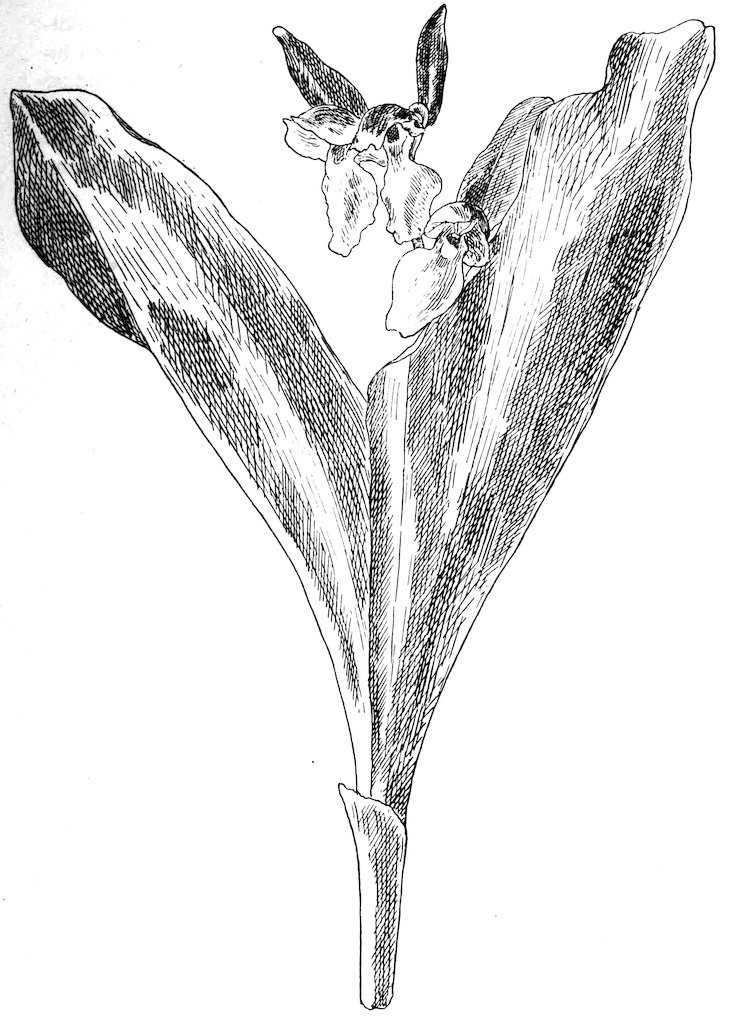
PLATE LXII SHOWY ORCHIS.—O. spectabilis.
178A certain fascination attends the very name of orchid. Botanist and unscientific flower-lover alike pause with unwonted interest when the discovery of one is announced. With the former there is always the possibility of finding some rare species, while the excitement of the latter is apt to be whetted with the hope of beholding a marvellous imitation of bee or butterfly fluttering from a mossy branch with roots that draw their nourishment from the air! While this little plant is sure to fail of satisfying the hopes of either, it is far prettier if less rare than many of its brethren, and its interesting mechanism will repay our patient study. It is said closely to resemble the “long purples,” O. mascula, which grew near the scene of Ophelia’s tragic death.
Twisted Stalk. Streptopus roseus. Lily Family.
Stems.—Rather stout and zigzag, forking and diverging. Leaves.—Taper-pointed, slightly clasping. Flowers.—Dull purplish-pink, hanging on thread-like flower-stalks from the axils of the leaves. Perianth.—Somewhat bell-shaped, of six distinct sepals. Stamens.—Six. Pistil.—One, with a three-cleft stigma.
This plant presents a graceful group of forking branches and pointed leaves. No blossom is seen from above, but on picking a branch one finds beneath each of its outspread leaves one or two slender, bent stalks from which hang the pink, bell-like flowers. In general aspect the plant somewhat resembles its relations, the Solomon’s seal, with which it is found blossoming in the woods of May or June. The English title is a translation of the generic name, Streptopus.
Wild Pink. Silene Pennsylvanica. Pink Family.
Stems.—Four to eight inches high. Leaves.—Those from the root narrowly wedge-shaped, those on the stem lance-shaped, opposite. Flowers.—Bright pink, clustered. Calyx.—Five-toothed. Corolla.—Of five petals. Stamens.—Ten. Pistil.—One, with three styles.
179
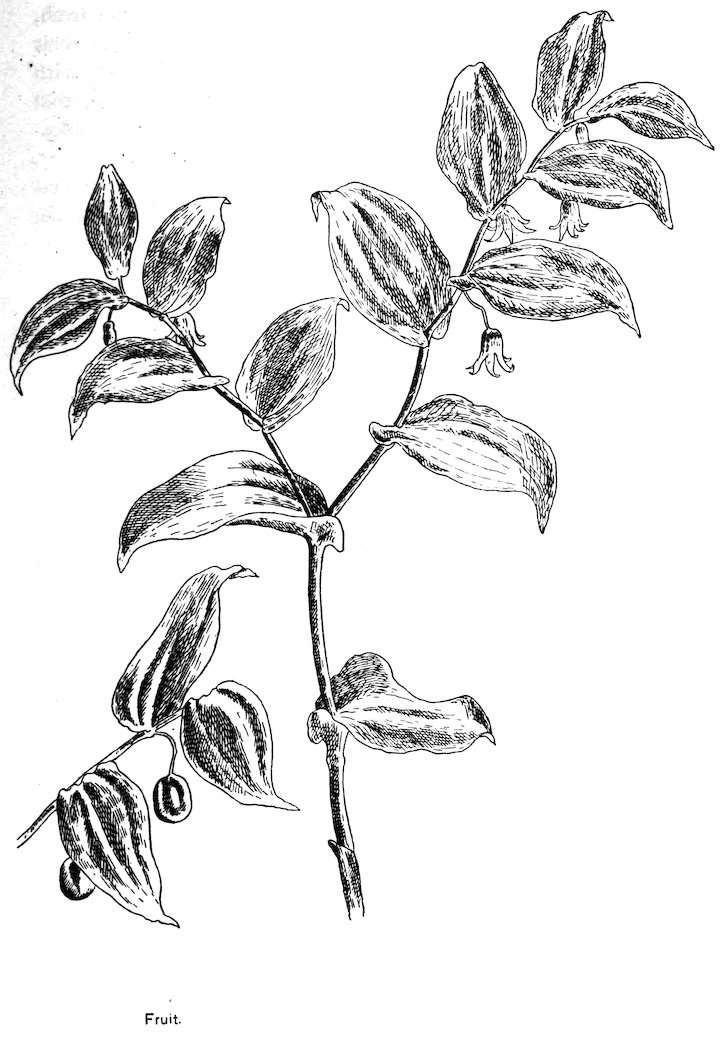
PLATE LXIII TWISTED STALK.—S. roseus.
180When a vivid cluster of wild pinks gleams from some rocky opening in the May woods, it is difficult to restrain one’s eagerness, for there is something peculiarly enticing in these fresh, vigorous-looking flowers. They are quite unlike most of their fragile contemporaries, for they seem to be already imbued with the glowing warmth of summer, and to have no memory of that snowy past which appears to leave its imprint on so many blossoms of the early year.
In waste places, from June until September or later, we find the small clustered pink flowers, which open transiently in the sunshine of the sleepy catchfly, S. antirrhina.
Pink Lady’s Slipper. Moccason-flower. Cypripedium acaule. Orchis Family (p. 17).
Scape.—Eight to twelve inches high, two-leaved at base, downy, one-flowered. Leaves.—Two, large, many-nerved and plaited, sheathing at the base. Flower.—Solitary, purple-pink. Perianth.—Of three greenish spreading sepals, the two lateral petals narrow, spreading, greenish, the pink lip in the shape of a large inflated pouch. Stamens.—Two, the short filaments each bearing a two-celled anther. Stigma.—Broad, obscurely three-lobed, moist and roughish.
Graceful and tall the slender, drooping stem,
With two broad leaves below,
Shapely the flower so lightly poised between,
And warm her rosy glow,
writes Elaine Goodale of the moccason-flower. This is a blossom whose charm never wanes. It seems to be touched with the spirit of the deep woods, and there is a certain fitness in its Indian name, for it looks as though it came direct from the home of the red man. All who have found it in its secluded haunts will sympathize with Mr. Higginson’s feeling that each specimen is a rarity, even though he should find a hundred to an acre. Gray assigns it to “dry or moist woods,” while Mr. Baldwin writes: “The finest specimens I ever saw sprang out of cushions of crisp reindeer moss high up among the rocks of an exposed hill-side, and again I have found it growing vigorously in almost open swamps, but nearly colorless from excessive moisture.” The same writer quotes a lady who is familiar with it in the Adirondacks. She says: “It seems to have a great fondness for decaying wood, and I often see a whole row perched like birds along a crumbling log.” While I recall a mountain lake where the steep cliffs rise from the water’s edge, here and there, on a tiny shelf strewn with pine-needles, can be seen a pair of large veiny leaves, above which, in early June, the pink balloon-like blossom floats from its slender scape.
181
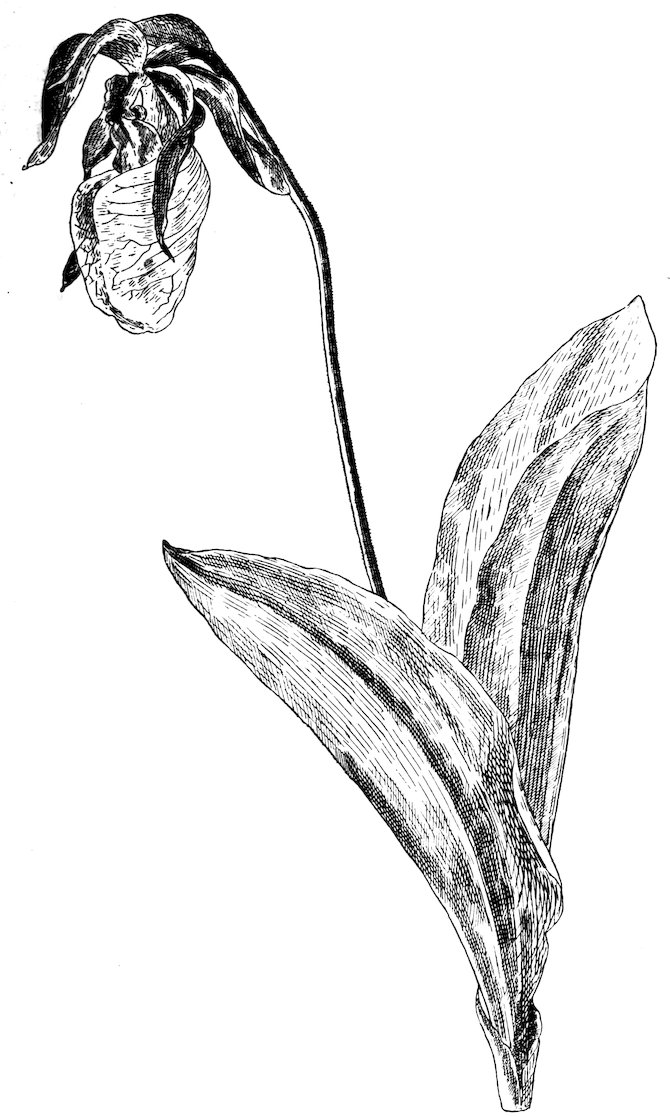
PLATE LXIV PINK LADY’S SLIPPER.—C. acaule.
182
——— ——— Calopogon pulchellus. Orchis Family (p. 17).
Scape.—Rising about one foot from a small solid bulb. Leaf.—Linear, grass-like. Flowers.—Two to six on each scape, purple-pink, about one inch broad, the lip as if hinged at its insertion, bearded toward the summit with white, yellow, and purple hairs. The peculiarity of this orchid is that the ovary is not twisted, and consequently the lip is on the upper instead of the lower side of the flower.
One may hope to find these bright flowers growing side by side with the glistening sundew in the rich bogs of early summer. Mr. Baldwin assigns still another constant companion to the Calopogon, an orchid which staggers under the terrifying title of Pogonia ophioglossoides. The generic name of Calopogon is from two Greek words signifying beautiful beard and has reference to the delicately bearded lip.
Pink Azalea. Wild Honeysuckle. Pinxter Flower. Swamp Pink. Rhododendron nudiflorum. Heath Family.
A shrub from two to six feet high. Leaves.—Narrowly oblong, downy underneath, usually appearing somewhat later than the flowers. Flowers.—Pink, clustered. Calyx.—Minute. Corolla.—Funnel-shaped, with five long recurved lobes. Stamens.—Five or ten, long, protruding noticeably. Pistil.—One, long, protruding.
Our May swamps and moist woods are made rosy by masses of the pink azalea which is often known as the wild honeysuckle, although not even a member of the Honeysuckle family. It is in the height of its beauty before the blooming of the laurel, and heralds the still lovelier pageant which is even then in rapid course of preparation.
183
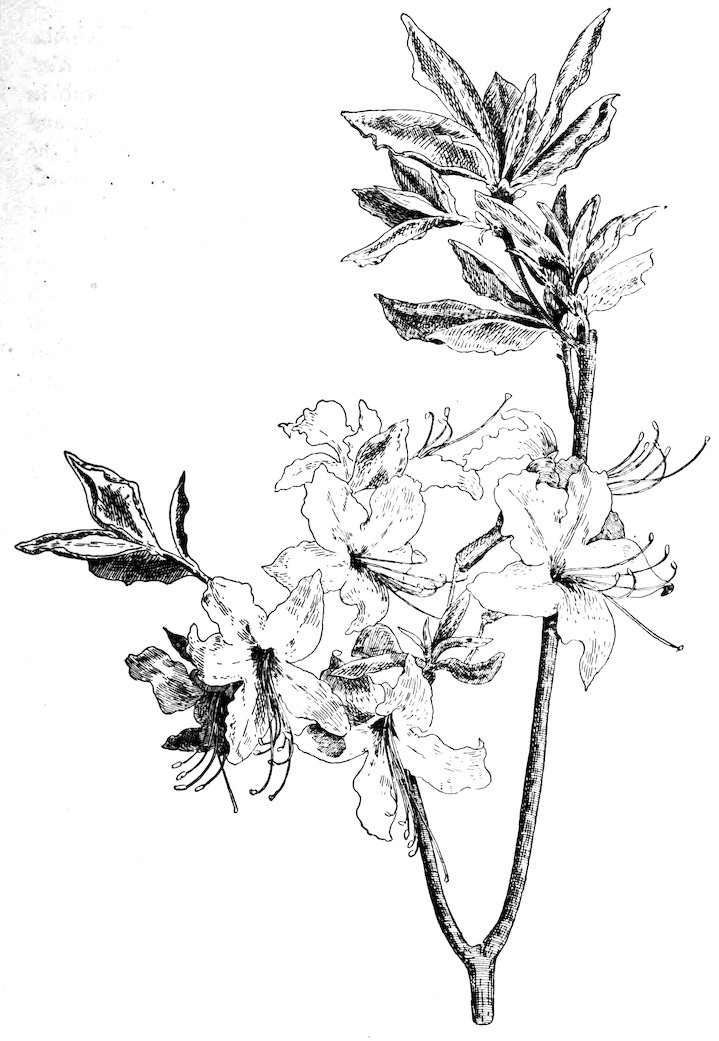
PLATE LXV PINK AZALEA.—R. nudiflorum.
184In the last century the name of Mayflower was given to the shrub by the Swedes in the neighborhood of Philadelphia. Peter Kalm, the pupil of Linnæus, after whom our laurel, Kalmia, is named, writes the following description of the shrub in his “Travels,” which were published in English in 1771, and which explain the origin of one of its titles: “Some of the Swedes and Dutch call them Pinxter-bloem (Whitsunday-flower) as they really are in bloom about Whitsuntide; and at a distance they have some similarity to the Honeysuckle or ‘Lonicera.’... Its flowers were now open and added a new ornament to the woods.... They sit in a circle round the stem’s extremity and have either a dark red or a lively red color; but by standing for some time the sun bleaches them, and at last they get to a whitish hue.... They have some smell, but I cannot say it is very pleasant. However, the beauty of the flower entitles them to a place in every flower-garden.” While our pink azalea could hardly be called “dark red” under any circumstances, it varies greatly in the color of its flowers.
The azalea is the national flower of Flanders.
——— ——— Rhododendron Rhodora. Heath Family.
A shrub from one to two feet high. Leaves.—Oblong, pale. Flowers.—Purplish-pink. Calyx.—Small. Corolla.—Two-lipped, almost without any tube. Stamens.—Ten, not protruding. Pistil.—One, not protruding.
In May, when sea-winds pierced our solitudes,
I found the fresh Rhodora in the woods,
Spreading its leafless blooms in a damp nook,
To please the desert and the sluggish brook.
The purple petals, fallen in the pool,
Made the black water with their beauty gay;
Here might the red-bird come his plumes to cool,
And court the flower that cheapens his array.
Rhodora! if the sages ask thee why
This charm is wasted on the earth and sky,
Tell them, dear, that if eyes were made for seeing,
Then Beauty is its own excuse for being;
Why thou wert there, O rival of the rose!
I never thought to ask, I never knew;
But in my simple ignorance, suppose
The self-same Power that brought me there, brought you.[6]
185
Sheep Laurel. Lambkill. Kalmia angustifolia. Heath Family.
A shrub from one to three feet high. Leaves.—Narrowly oblong, light green. Flowers.—Deep pink, in lateral clusters. Calyx.—Five-parted. Corolla.—Five-lobed, between wheel and bell-shaped, with stamens caught in its depressions as in the mountain laurel. Stamens.—Ten. Pistil.—One.
This low shrub grows abundantly with the mountain laurel, bearing smaller deep pink flowers at the same season, and narrower, paler leaves. It is said to be the most poisonous of the genus, and to be especially deadly to sheep, while deer are supposed to feed upon its leaves with impunity.
American Cranberry. Vaccinium macrocarpon. Heath Family.
Stems.—Slender, trailing, one to four feet long. Leaves.—Oblong, obtuse. Flowers.—Pale pink, nodding. Calyx.—With short teeth. Corolla.—Four-parted. Stamens.—Eight or ten, protruding. Fruit.—A large, acid, red berry.
In the peat-bogs of our Northeastern States we may look in June for the pink nodding flowers, and in late summer for the large red berries of this well-known plant.
Adder’s Mouth. Pogonia ophioglossoides. Orchis Family (p. 17).
Stem.—Six to nine inches high, from a fibrous root. Leaves.—An oval or lance-oblong one near the middle of the stem, and a smaller or bract-like one near the terminal flower, occasionally one or two others, with a flower in their axils. Flower.—Pale pink, sometimes white, sweet-scented, one inch long, lip bearded and fringed.
Mr. Baldwin maintains that there is no wild flower of as pure a pink as this unless it be the Sabbatia. Its color has also been described as a “peach-blossom red.” As already mentioned, the plant is found blossoming in bogs during the early summer in company with the Calopogons and sundews. Its violet-like fragrance greatly enhances its charm.
186
Common Milkwort. Polygala sanguinea. Milkwort Family.
Stem.—Six inches to a foot high, sparingly branched above, leafy to the top. Leaves.—Oblong-linear. Flowers.—Growing in round or oblong heads which are somewhat clover-like in appearance, bright pink or almost red, occasionally paler. Calyx.—Of five sepals, three of which are small and often greenish, while the two inner ones are much larger and colored like the petals. Corolla.—Of three petals connected with each other, the lower one keel-shaped. Stamens.—Six or eight. Pistil.—One. (Flowers too difficult to be analyzed by the non-botanist.)
This pretty little plant abounds in moist and also sandy places, growing on mountain heights as well as in the salt meadows which skirt the sea. In late summer its bright flower-heads gleam vividly through the grasses, and from their form and color might almost be mistaken for pink clover. Occasionally they are comparatively pale and inconspicuous.
——— ——— Polygala polygama. Milkwort Family.
Stems.—Very leafy, six to nine inches high, with cleistogamous flowers on underground runners. Leaves.—Lance-shaped or oblong. Flowers.—Purple-pink, loosely clustered in a terminal raceme. Keel of Corolla.—Crested. Stamens.—Eight. Pistil.—One.
Like its more attractive sister, the fringed polygala, this little plant hides its most useful, albeit unattractive, blossoms in the ground, where they can fulfil their destiny of perpetuating the species without danger of molestation by thievish insects or any of the distractions incidental to a more worldly career. Exactly what purpose the little above-ground flowers, which appear so plentifully in sandy soil in July, are intended to serve, it is difficult to understand.
Fringed Polygala. Polygala paucifolia. Milkwort Family.
Flowering stems.—Three or four inches high, from long, prostrate or underground shoots which also bear cleistogamous flowers. Leaves.—The lower, small and scale-like, scattered, the upper, ovate, and crowded at the summit. Flowers.—Purple-pink, rarely white, rather large. Keel of Corolla.—Conspicuously fringed and crested. Stamens.—Six. Pistil.—One.
187
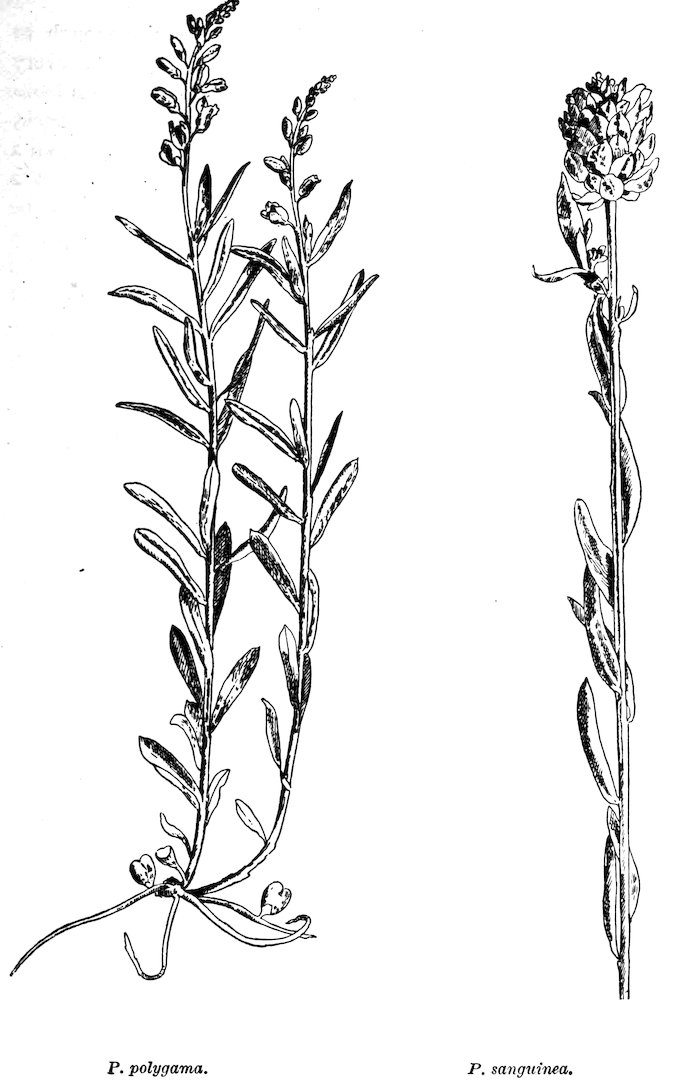
PLATE LXVI MILKWORT.
188“I must not forget to mention that delicate and lovely flower of May, the fringed polygala. You gather it when you go for the fragrant showy orchis—that is, if you are lucky enough to find it. It is rather a shy flower, and is not found in every wood. One day we went up and down through the woods looking for it—woods of mingled oak, chestnut, pine, and hemlock,—and were about giving it up when suddenly we came upon a gay company of them beside an old wood-road. It was as if a flock of small rose-purple butterflies had alighted there on the ground before us. The whole plant has a singularly fresh and tender aspect. Its foliage is of a slightly purple tinge and of very delicate texture. Not the least interesting feature about the plant is the concealed fertile flower which it bears on a subterranean stem, keeping, as it were, one flower for beauty and one for use.”
It seems unnecessary to tempt “odorous comparisons” by endeavoring to supplement the above description of Mr. Burroughs.
Moss Polygala. Polygala cruciata. Milkwort Family.
Stems.—Three to ten inches high, almost winged at the angles, with spreading opposite leaves and branches. Leaves.—Linear, nearly all whorled in fours. Flowers.—Greenish or purplish-pink, growing in short, thick spikes which terminate the branches.
There is something very moss-like in the appearance of this little plant which blossoms in late summer. It is found near moist places and salt marshes along the coast, being very common in parts of New England.
Spreading Dogbane. Indian Hemp. Apocynum androsæmifolium. Dogbane Family.
Stems.—Erect, branching, two or three feet high. Leaves.—Opposite, oval. Flowers.—Rose-color veined with deep pink, loosely clustered. Calyx.—Five-parted. Corolla.—Small, bell-shaped, five-cleft. Stamens.—Five, slightly adherent to the pistil. Pistil.—Two ovaries surmounted by a large, two-lobed stigma. Fruit.—Two long and slender pods.
189
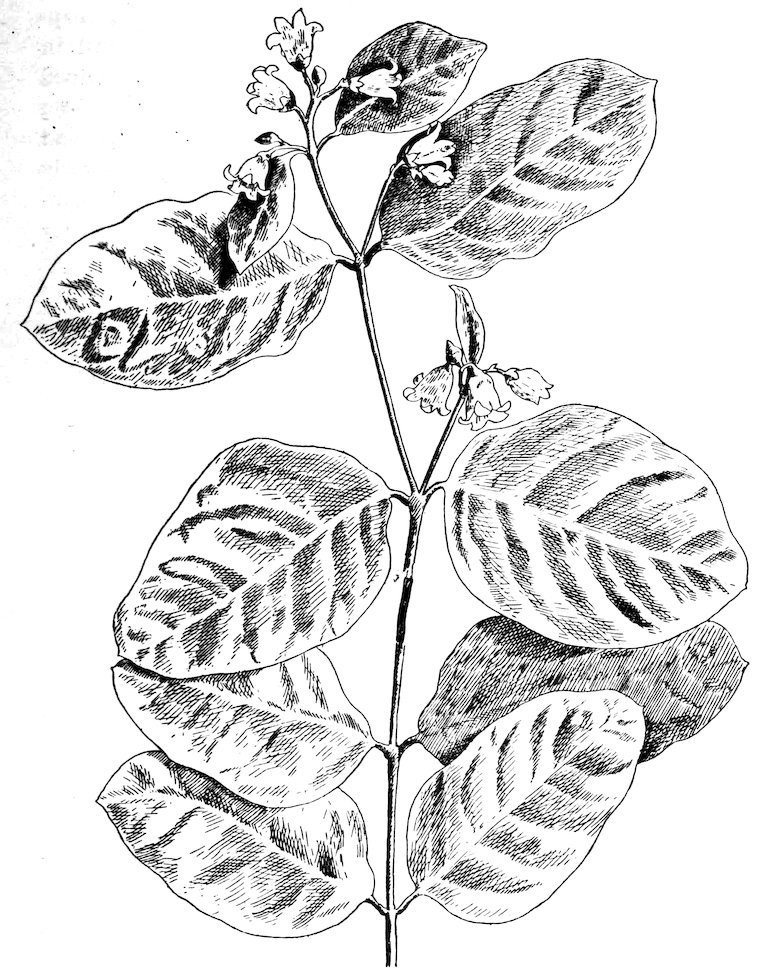
PLATE LXVII SPREADING DOGBANE.—A. androsæmifolium.
190The flowers of the dogbane, though small and inconspicuous are very beautiful if closely examined. The deep pink veining of the corolla suggests nectar, and the insect-visitor is not misled, for at its base are five nectar-bearing glands. The two long, slender seed-pods which result from a single blossom seem inappropriately large, often appearing while the plant is still in flower. Rafinesque states that from the stems may be obtained a thread similar to hemp which can be woven into cloth, from the pods, cotton, and from the blossoms, sugar. Its generic and one of its English titles arose from the belief, which formerly prevailed, that it was poisonous to dogs. The plant is constantly found growing in roadside thickets, with bright, pretty foliage, and blossoms that appear in early summer.
Hedge Bindweed. Convolvulus Americanus. Convolvulus Family.
Stem.—Twining or trailing. Leaves.—Somewhat arrow-shaped. Flowers.—Pink. Calyx.—Of five sepals enclosed in two broad leafy bracts. Corolla.—Five-lobed, bell-shaped. Stamens.—Five. Pistil.—One, with two stigmas.
Many an unsightly heap of rubbish left by the roadside is hidden by the delicate pink bells of the hedge bindweed, which again will clamber over the thickets that line the streams and about the tumbled stone-wall that marks the limit of the pasture. The pretty flowers at once suggest the morning-glory, to which they are closely allied.
The common European bindweed, C. arvensis, has white or pinkish flowers, without bracts beneath the calyx, and a low procumbent or twining stem. It has taken possession of many of our old fields where it spreads extensively and proves troublesome to farmers.
Purple-flowering Raspberry. Rubus odoratus. Rose Family.
Stem.—Shrubby, three to five feet high; branching, branches bristly and glandular. Leaves.—Three to five-lobed, the middle lobe prolonged. Flowers.—Purplish-pink, large and showy, two inches broad. Calyx.—Five-parted. Corolla.—Of five rounded petals. Stamens and Pistils.—Numerous. Fruit.—Reddish, resembling the garden raspberry.
191
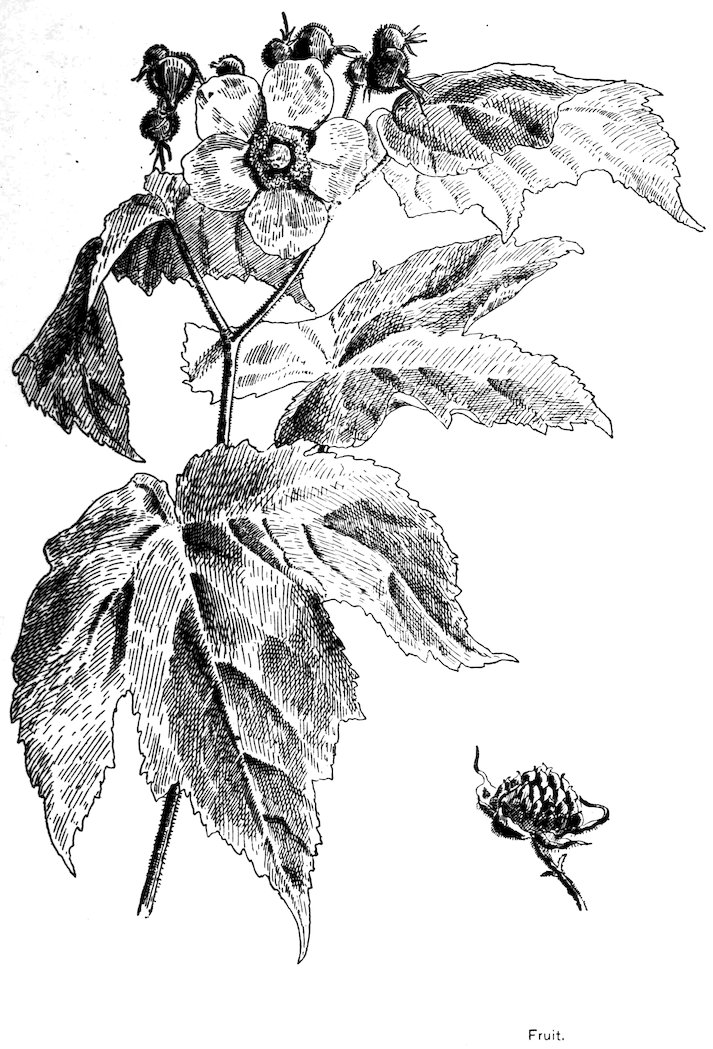
PLATE LXVIII PURPLE-FLOWERING RASPBERRY.—R. odoratus.
192This flower betrays its relationship to the wild rose, and might easily be mistaken for it, although a glance at the undivided leaves would at once correct such an error. The plant is a decorative one when covered with its showy blossoms, constantly arresting our attention along the wooded roadsides in June and July.
Pale Corydalis. Corydalis glauca. Fumitory Family.
Stem.—Six inches to two feet high. Leaves.—Pale, divided into delicate leaflets. Flowers.—Pink and yellow, in loose clusters. Calyx.—Of two small, scale-like sepals. Corolla.—Pink, tipped with yellow; closed and flattened, of four petals, with a short spur at the base of the upper petal. Stamens.—Six, maturing before the pistil, thus avoiding self-fertilization. Pistil.—One.
From the rocky clefts in the summer woods springs the pale corydalis, its graceful foliage dim with a whitish bloom, and its delicate rosy, yellow-tipped flowers betraying by their odd flat corollas their kinship with the Dutchman’s breeches and squirrel corn of the early year, as well as with the bleeding hearts of the garden. Thoreau assigns them to the middle of May, and says they are “rarely met with,” which statement does not coincide with the experience of those who find the rocky woodlands each summer abundantly decorated with their fragile clusters.
The generic name, Corydalis, is the ancient Greek title for the crested lark, and said to refer to the crested seeds of this genus. The specific title, glauca, refers to the pallor of leaves and stem.
The golden corydalis, C. aurea, is found on rocky banks somewhat westward.
Common Milkweed. Asclepias Cornuti. Milkweed Family.
Stem.—Tall, stout, downy, with a milky juice. Leaves.—Generally opposite or whorled, the upper sometimes scattered, large, oblong, pale, minutely downy underneath. Flowers.—Dull, purplish-pink, clustered at the summit and along the sides of the stem. (These flowers are too difficult to be successfully analyzed by the non-botanist.) Calyx.—Five-parted, the divisions small and reflexed. Corolla.—Deeply five-parted, the divisions reflexed; above them a crown of five hooded nectaries, each containing an incurved horn. Stamens.—Five, inserted on the base of the corolla, united with each other and enclosing the pistils. Pistils.—Properly two, enclosed by the stamens, surmounted by a large five-angled disk. Fruit.—Two pods, one of which is large and full of silky-tufted seeds, the other often stunted.
This is probably the commonest representative of this striking and beautiful native family. The tall, stout stems, large, 193pale leaves, dull pink clustered flowers which appear in July, and later the puffy pods filled with the silky-tufted seeds beloved of imaginative children, are familiar to nearly everyone who spends a portion of the year in the country. The young sprouts are said to make an excellent pot-herb; the silky hairs of the seed-pods have been used for the stuffing of pillows and mattresses, and can be mixed with flax or wool and woven to advantage; while paper has been manufactured from the stout stalks.
The four-leaved milkweed, A. quadrifolia, is the most delicate member of the family, with fragrant rose-tinged flowers which appear on the dry wooded hill-sides quite early in June, and slender stems which are usually leafless below, and with one or two whorls and one or two pairs of oval, taper-pointed leaves above.
The swamp milkweed, A. incarnata, grows commonly in moist places. Its very leafy stems are two or three feet high, with narrowly oblong, pointed leaves. Its intense purple-pink flowers gleam from the wet meadows nearly all summer. They are smaller than those of the purple milkweed, A. purpurascens, which abounds in dry ground, and which may be classed among the deep pink or purple flowers according to the eye of the beholder.
Herb Robert. Geranium Robertianum. Geranium Family.
Stem.—Forking, slightly hairy. Leaves.—Three, divided, the divisions again dissected. Flowers.—Purple-pink, small. Calyx.—Of five sepals. Corolla.—Of five petals. Stamens.—Ten. Pistil.—One, with five styles which split apart in fruit.
From June until October many of our shaded woods and glens are abundantly decorated by the bright blossoms of the herb Robert. The reddish stalks of the plant have won it the name of “red-shanks” in the Scotch Highlands. Its strong scent is caused by a resinous secretion which exists in several of the geraniums. In some species this resin is so abundant that the stems will burn like torches, yielding a powerful and pleasant perfume. The common name is said to have been given the 194plant on account of its supposed virtue in a disease which was known as “Robert’s plague,” after Robert, Duke of Normandy. In some of the early writers it is alluded to as the “holy herb of Robert.”
In fruit the styles of this plant split apart with an elasticity which serves to project the seeds to a distance, it is said, of twenty-five feet.
Bush Clover. Lespedeza procumbens. Pulse Family (p. 16).
Stems.—Slender, trailing, and prostrate. Leaves.—Divided into three clover-like leaflets. Flowers.—Papilionaceous, purplish-pink, veiny. Pod.—Small, rounded, flat, one-seeded.
The flowers of this plant often have the appearance of springing directly from the earth amid a mass of clover leaves. They are common in dry soil in the late summer and autumn, as are the other members of the same genus.
L. reticulata is an erect, very leafy species with similar blossoms, which are chiefly clustered near the upper part of the stem. The bush clovers betray at once their kinship with the tick-trefoils, but are usually found in more sandy, open places.
L. polystachya has upright wand-like stems from two to four feet high. Its flowers grow in oblong spikes on elongated stalks. Those of L. capitata are clustered in globular heads.
Tick-trefoil. Desmodium Canadense. Pulse Family (p. 16).
Stem.—Hairy, three to six feet high. Leaves.—Divided into three somewhat oblong leaflets. Flowers.—Papilionaceous, dull purplish-pink, growing in densely flowered racemes. Pod.—Flat, deeply lobed on the lower margin, from one to three inches long, roughened with minute hooked hairs by means of which they adhere to animals and clothing.
Great masses of color are made by these flowers in the bogs and rich woods of midsummer. They are effective when seen in the distance, but rather disappointing on closer examination, and will hardly bear gathering or transportation. They are by far the largest and most showy of the genus.
195
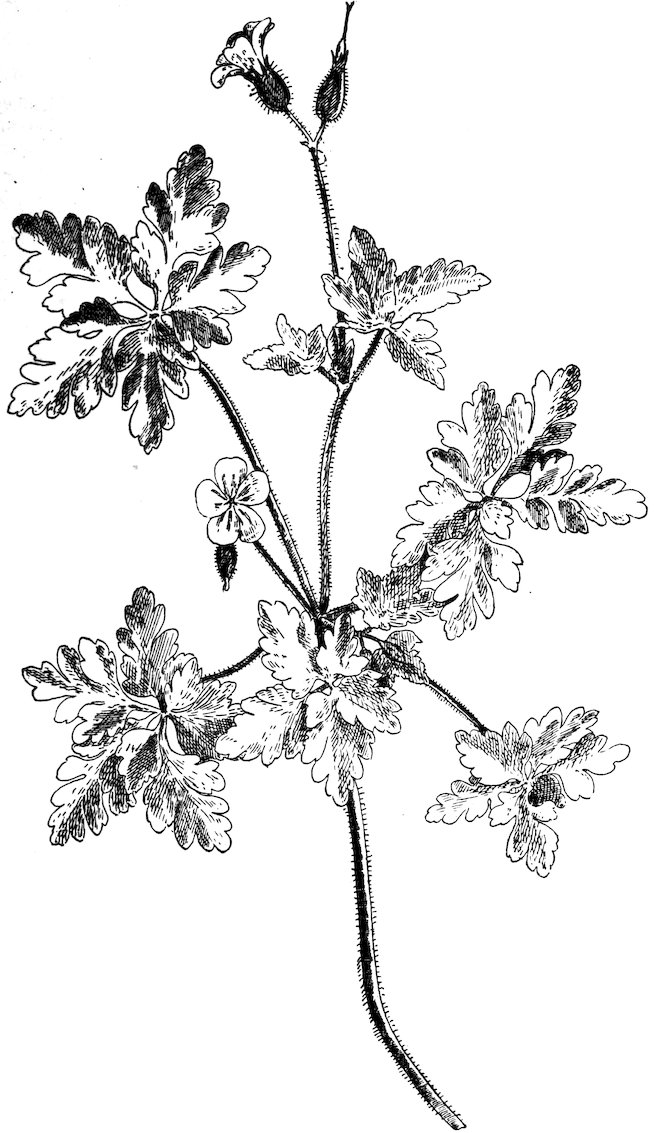
PLATE LXIX HERB ROBERT.—G. Robertianum.
196