Volume 1 — INDEX TO VOLUME I.
Reading edition
Abdy, Major A. J., 184. Abon's Dam, 246, 309. Achtertang, 275, 400, 404. Acton Homes, 157, 158. Adelaide Farm, 140, 181. Aden, 91. Adjutant-General's Department, 8, 10, 16. Admiralty, 6, 16, 97-122; acts as agent for War Office for shipping army, 98, 107; assistance on shore ordered by, 117; conference between War Office and, 110; contracts, 105; control of transport service, 99; conveyance of mules by, 23; early measures taken by the, 100; embarkation arrangements between War Office and, 111; Messrs. Hogg & Robinson, shipping agents of the, 98; office accommodation, additions to, 101; Royal Commission, as to the success of the, 110; statement that stock of horse-fittings and water-tanks was inadequate, 110; Transport Department, 98; transports engaged by the, 109; transport work carried out by the, 97, 98. See also Navy. Advance Hill, 367, 368. Adye, Major W., 186, 188, 194, 195. Afrikanders, the, 68. Airlie, Lieut.-Col. the Earl of, 323. Albert (district), 275, 285, 382. Albrecht, Major, 234, 256, 308. Aldershot, brigades direct from, 204. Alderson, Lieut.-Col. E. A. H., 387, 439. Aliwal (district), 275. Aliwal North, 48, 50, 208, 285, 382. Allenby, Major E. H. H., 402. Aller Park, 183. Amajuba, or Majuba, 72, 426. America, 443. Ammunition (British):— rifle, 31; gun, 31; reserves of, 32. Ammunition columns, 437, 438. Anderton, Lieut. T., 121. Animals purchased abroad, 20. Annexed districts, 382. Ardagh, Sir J. C., K.C.I.E., C.B., 14, 422. See also Intelligence Department (British, Home). Argyll and Sutherland Highlanders (1st). See Regular Units. Armed forces of the British Empire, 92-95. Army, British. See British Army. Army Board, 26. Army Corps, 26, 110. Army Medical Department, 26, 30. See also Royal Army Medical Corps. Army Orders, 12, 414, 420. Army remounts. See Remount Department. Army reserves. See Reserves. Army Service Corps. See Regular Units. Army Veterinary Department, 27. Artillery. See Regular and Colonial Units. Artillery equipment, 422. Arundel, 277-284, 389, 391. Atlantic Transport Co., 103. Australia, 34, 443. See also the various Australian Colonies. Australian Mounted Infantry. See Colonial Units. Auxiliary troops of the United Kingdom, 93.
Babington, Maj.-Gen. J. M., 321, 322, 327, 387, 441, 442. Babtie, Major W., C.M.G., M.B., 365; awarded the V.C., 366. Baden-Powell, Colonel R. S. S., 2, 39, 42, 44, 48-49, 197, 207, 409; influence of, on the Boer dispositions, 50. Bailward, Major A. C., 360, 361. Bamboosberg Spruit, 294, 299. Bannatine-Allason, Major R., 322, 323, 330, 331. Barbados, 89, 91. Barkly East, 53, 208, 275, 285, 287, 288, 382. Barkly West, 214, 382. Barrett, Lieut. N., 121. Barter, Lieut.-Col. C. St. L., 224, 254, 255, 325. Barton, Major.-Gen. G., C.B., 203, 269, 273, 333, 345, 347, 357-373. Bastard's Nek, 400, 405. Basutoland, 36, 37, 48, 56-59, 61, 64, 94, 197, 306. Basutos, 40. Batteries. See Royal Artillery and Naval Batteries. Bates, Captain A., 382. Battalions, average strength of, in February, 1900, 438. Bayley's Corps. See Colonial Units. Beacon Hill, 271, 272. Bearcroft, Captain J. E., R.N., 120, 308, 321, 438. Bearer companies. See Royal Army Medical Corps. Beaufort West, 53, 210. Bechuanaland, 52, 65, 95, 207, 417. Bedfordshire regiment (2nd). See Regular Units. Beith, 147, 148. Belfort, 422. Bell, Captain F. J. H., 298. Bell Spruit, 173, 177, 183, 186, 188-191. Belmont, 52, 63, 212, 213, 215-217, 218-228, 229, 231, 232, 241, 258, 308, 310, 332, 386, 432. Benson, Major G. E., 309, 317. Berkshire regiment, Royal (2nd). See Regular Units. Bermuda, 89, 91. Besters station, 158, 171. Bethel commando. See Commandos. Bethlehem commando. See Commandos. Bethulie commando. See Commandos. Bethulie, 40, 50, 275, 411-413, 431. Bethulie bridge, 39, 48, 50, 198, 202, 210, 413, 425, 435. Bethulie road, 404. Bethune, Lieut.-Col. E. C., 206, 262. Bethune's Mounted Infantry. See Colonial Units. Bevan, Lieut. F., 213. Bewicke-Copley, Major R. C. A. B., 372. Bezuidenhout's Pass, 49, 58, 157. Biggarsberg Range, 37, 38, 58, 59, 125, 147, 159, 335. Black Watch (2nd). See Regular Units. "Black week," the, 380. Blesboklaagte, 147. Bloemfontein, 5, 48, 85, 197, 202, 210, 290, 385, 388, 410-413, 428, 429, 431, 435. Bloemfontein commando. See Commandos. Bloemhof commando. See Commandos. Blue Mountains, 81. Board of Trade, 101, 105. Boers: advance on Colesberg, 275; advance on Kimberley, 50, 52; advance on Mafeking, 49, 50, 52; advance into Northern Natal, 124; advance into Southern Natal, 265; advance on Stormberg, 285; annexations by, 382; armament of, 79-85; enterprise of, in use of heavy guns, 422; initial numerical superiority of, 2, 35, 49, 50; leaders of, deceived by Lord Roberts' movements and secrecy, 435; methods of warfare of, 69-75, 402; military system of, 75-79; proclamations by, 52, 275; strength of, 1, 49, 334, 335, 409, 410. Boer commandos: assembly of, behind the Drakensberg, 47; preliminary distribution of, at beginning of war, 49, 50; waiting in July, 1899, till grass fit to invade Colonies, 116. See also Commandos. Boer Intelligence Department. See Intelligence Department. Boksburg commando. See Commandos. Boomplaats, 70. Border Horse. See Colonial Units. Border Mounted Rifles. See Colonial Units. Border regiment (1st). See Regular Units. Boshof commando. See Commandos. Bosman's Drift, 244, 247. Botha, Commandant Christian, 342. Botha, General Louis, 264, 265, 332-375, 389. Botha, Commandant (Mafeking), 409. Botha's Drift, 405. Botha's Pass, 49, 58, 124. Bottomley, Captain H., 272. Brabant, Brig.-General E. Y., C.M.G., 415, 435; raises mounted corps, 206, 286. Brabant's Horse. See Colonial Units. Brabazon, Major-General J. P., C.B., 282, 394, 405, 406. Brackenbury, Lieut.-General Sir H., K.C.B., K.C.S.I., 7, 16, 18, 19, 26, 28, 29, 32, 33. Brakfontein Nek, 335. Brett, Captain C. A. H., 398. Bridge, Colonel C. H., C.B., 416, 417. Bridle Drift (Colenso), 310, 314, 341, 342, 346, 348, 352-354, 356. Bridle Drift (Magersfontein). See Voetpad's Drift. Brigades. See Cavalry and Infantry Brigades. British Agent at Pretoria, 1; leaves, 123. British Army, 87-95; distribution of the, previous to the war, 89; composition of the, 91; effective strength of the armed land forces of the Empire, 92-95; number of troops in South Africa when war began, 1, 2, 89; regiments of the, see Regular Units; short service system in the, see Short Service System and Reserves; organisation of, as affected by conditions of shipping, 115. British Government. See Cabinet. British Intelligence Department. See Intelligence Department. British Kaffraria, 385. British Navy, duties of the, 96. See also Admiralty and Navy. British Regular Army (European), effective strength of the, 92; (Colonial), 92; (India), 92. British Regular Units. See Regular Units. British South Africa Police. See Colonial Units. Broadwood, Brig.-General R. G., 437, 442. Brocklehurst, Major-General J. F., M.V.O., 181. Brooke, Colonel L. G., 353. Brown's Drift, 246, 308, 309, 322. Brynbella Hill, 271-273. Buchanan-Riddell, Lieut.-Col. R. G., 372. Buffalo River (Cape Colony), 57. Buffalo River (Natal), 38, 59, 124, 137, 140, 335. Bulfin, Captain E. S., 253, 254. Buller, The Right Hon. Sir Redvers H., V.C., G.C.B., G.C.M.G., 17, 18, 42, 43, 120, 262, 415, 416, 419, 425, 426, 434, 438; appointed to command army for South Africa, 2; arrival at Cape Town, 196; arrival at Durban, 332; arrival at Maritzburg, 332; arrival at Frere, 332; Colenso, battle of, 351-375; decision to go to Natal, 200, 209; decision to relieve Ladysmith viâ Potgieters Drift, 338; decision to make direct attack on Colenso, 339; informs General White of his intention to attack Colenso, 339; informed that Lord Roberts is appointed Commander-in-Chief in South Africa, 381; Lord Roberts gives him "free hand" to try Potgieters or Trickhardts Drifts, 411; measures on arrival at Cape Town, 200-207; memorandum of his views awaits Lord Roberts at Cape Town, 410; message after Colenso, to Secretary of State for War, 377; message after Colenso to General White, 378; orders to generals in Cape Colony, 207-210, 277, 288; orders for battle of Colenso, 345-350; receives news of Stormberg and Magersfontein, 339; reports he is about to renew attempt to relieve Ladysmith, viâ Potgieters or Trickhardts Drifts, 411; Secretary of State for War replies to telegram announcing result of Colenso, 379; situation in South Africa on arrival of, 197-200; Spion Kop, failure at, 438. Bullock, Lieut.-Col. G. M., 364, 371, 374. Buluwayo, 36. Bulwana, or Umbulwana, 150, 176, 181, 182. Bulwer bridge, 340, 346. Burger, General Schalk, 50, 343. Burghers, mobilisation of, 49; number of, under arms at outbreak of war, 50. Burghersdorp, 39, 208-210, 281, 282, 285, 287. Burghersdorp commando. See Commandos. Burma, 87. Burnett, Captain C. K., 142. Burn-Murdoch, Lieut.-Col. J. F., 354. Burrell, Major W. S., 364, 371. Bushman Land, 66. Bushman's Hoek, 287, 288, 290, 291, 301. Bushman's river, 273. Bush veld, 62. Butcher, Major E. E. A., mounts two 15-prs. on Coles Kop, 401, 402. Butler, Lieut.-Gen. Sir W. F., K.C.B., 35, 37-39, 42, 45, 46. Byng, Lieut.-Col. the Hon. J. H. G., 367.
Cabinet: date of choice of plan of campaign by, 5; dates of successive sanctions of expenditure and of mobilisation by, 6; date of decision by, appointing Lord Roberts, 380, 389; decision by, as to this history, 1; decision by, not to employ coloured troops, 89; effect of wish of, not to provoke war, in delaying preparation, 3, 6, 16-19, 207; effect of wish of, in postponing plan of campaign, 4; misunderstanding of decision of, in re 5th division, 377; reply by, to Sir R. Buller in re Ladysmith, 379; selects Sir R. Buller as Commander-in-Chief, 2. Cæsar's camp (Ladysmith), 335. Caledon commando. See Commandos. Campbell, 2nd Lieut. A. N., 337. Campbell (Town, Cape Colony), 214. Canada, 31, 88, 89, 91, 93; offers assistance, 34. Canadian regiment, Royal. See Colonial Units. Cape Colony, 2, 14, 22, 36, 94, 197, 199, 206, 262, and appendices; distribution of British troops in, at the outbreak of war, 44; President Steyn orders invasion of N.E. of, 285. Cape Garrison artillery. See Colonial Units. Cape Government, 14; howitzers of, 422; railways of, 424, 425. Cape Medical Staff Corps. See Colonial Units. Cape Police. See Colonial Units. Cape Mounted Rifles. See Colonial Units. Cape Town, 43, 52, 53, 57, 106, 111, 113, 197, 206, 211, 276, 406, 408, 436, 442, 443. Cape Town Highlanders. See Colonial Units. Cape Volunteer forces. See Colonial Units. Capper, Lieut.-Col. J. E., 425. Carbineers, See Regular Units. Carbineers, Natal. See Colonial Units. Carinthea (freight ship), loss of the, 107. Carleton, Lieut.-Col. F. R. C., 132, 149, 174-177, 183, 186-195. Carolina commando. See Commandos. Carter, Lieut. A. J., 238. Cathcart, 53, 286. Cathkin Castle, 58, 59. Cattle ships, 111. Cavalry Brigades:— 1st Cavalry brigade (Porter), 283, 396-398, 436. 2nd Cavalry brigade (Fisher, later Broadwood), composition of, at Arundel, 283; composition of, at Modder river, 437. 3rd Cavalry brigade (Gordon), formation of, 437. 4th Cavalry brigade, despatch of, advisable owing to failure at Spion Kop, 438; embarkation of, 9; orders for mobilisation of, 9; to be sent out as soon as ships ready, 379. Cavalry Division:— Assembly of, at Orange river, 444; bearer companies and Field hospitals of, 25; composition of, at Arundel, 283-284; composition of, at Modder river, 436-437; to form part of expeditionary force, 6, 90; to go to South Africa, 43; to take the field by middle of December, 51; war equipment complete for, 29. Cavalry in Ladysmith. See Appendix 10, page 489. Ceres, 383. Ceylon, 91; offers assistance, 34. Champagne Castle, 58, 59. Channel Isles militia, 93. Chapman, Mr. (guide at Willow Grange), 271. Charlestown, 36. Chermside, Major-Gen. Sir H. C., G.C.M.G., C.B., 437. Chesham, Lieut.-Col. Lord, 414. Cheshire regiment (2nd). See Regular Units. Chiazzari, Lieut. N., 121. Chichester, Captain Sir E., Bart., R.N., C.M.G., 106. Chieveley, 267, 338, 340, 343, 345, 347, 378, 411. China, 89, 91. Chisholme, Colonel J. J. Scott, 163, 164. Churchill, Mr. W. L. S., 268. Churchward, Major P. R. S., 235. City of London Imperial Volunteers, 414, 437. Clark, Rear-Admiral Bouverie F., R.N., 106. Clarke, Lieut.-Gen. Sir Charles M., Bart., K.C.B., 111. See also Quarter-Master-General's Department. Clements, Major-Gen. R. A. P., D.S.O., 404, 405, 407, 430, 433-436, 439, 443. Clements' brigade. See Infantry Brigades. Clery, Lieut.-General Sir C. F., K.C.B., 197, 199, 200, 202, 205, 208, 266, 270, 334, 347, 357, 364, 365, 373. Climate of South Africa, 61. Clothing, changes made in, for South African campaign, 30. Coal, consumption of, by high speed vessels, 105. Coaling of transports, etc., 105. Codrington, Lieut.-Col. A. E., 225, 249, 250. Coldstream Guards (1st and 2nd). See Regular Units. Colenso, 44, 122, 159, 197, 200, 216-263, 265, 267, 273, 332-375, 389, 410. Colenso bridge, 200; Colonial troops hold, 261. Coleridge, Major H. F., 254, 256. Colesberg, 39, 48, 209, 275-284, 376, 382, 389-409, 412, 429, 430, 431-436. Colesberg road bridge, 48, 283, 391, 392, 396, 402. Colesberg Junction, 275. Coles Kop, 390, 392, 395, 397, 401, 404, 405. Colley, Major-General Sir George P., K.C.B., 426. Colonial corps, work of, 375. Colonial forces, 414. Colonial troops in previous campaigns, 33. Colonial Units:— Australian Mounted Infantry, 407. Baden-Powell's contingent, 50. Bayley's Corps, 415. Bethune's M.I., 206, 269, 332, 367, 373. Border Horse, 415. Border Mounted Rifles, 34. Brabant's Horse, 206, 286, 288, 291, 383, 415. British South Africa Police, 94. Cape Garrison artillery, 53. Cape Medical Staff Corps, 53, 215. Cape Police, 42, 94, 276, 286-288, 290-292, 382. Cape Mounted Rifles, 208, 286, 288, 290, 291, 415. Cape Town Highlanders, 53. Colonial division, 435. Colonial Scouts, 491. Duke of Edinburgh's Volunteer Rifles, 53. Durban Light Infantry, 34, 262, 267, 268, 271, 333. Frontier Mounted Rifles, 53, 286. Grahamstown Volunteer M.I., 437. Hore's regiment, 51. Imperial Light Horse, 155, 158-160, 163, 165, 167, 169, 170, 175, 183, 184, 262, 272, 332, 367. Imperial Light Infantry, 159, 175, 183, 265, 333. Kaffrarian Mounted Rifles, 53, 286, 287, 415. Kimberley Corps, 53. Kitchener's Horse, 415, 437. Komgha Mounted Rifles, 53. Mafeking Corps, 53. Murray's Scouts, 266, 337. Natal Carbineers, 34, 157-159, 180, 262, 332, 367. Natal Field Artillery, 34, 160, 171, 175, 262, 264, 269, 333. Natal Mounted Rifles, 34, 124, 153, 155, 159, 164, 171. Natal Naval Volunteers, 34, 121, 262, 264, 266, 332. Natal Police, 44, 45, 94, 124, 262, 267, 332, 367. Natal Royal Rifles, 34, 262, 333. Nesbitt's Horse, 415, 437. New South Wales Lancers, 34, 214, 233, 276-283, 316, 400, 404, 436. New South Wales Mounted Rifles, 437. New Zealand Mounted Rifles, 279, 280, 282, 284, 390, 393, 402-404, 437. Orpen's Corps, 415. Pioneer Corps of Artisans, 265. Plumer's regiment, 51. Port Elizabeth Volunteers, 278, 280. Prince Alfred's Own Cape Field Artillery, 52, 53. Prince Alfred's Volunteer Guard, 53, 278. Protectorate regiment, 94. Queensland Mounted Infantry, 386, 387, 437. Queenstown Rifle Volunteers, 286, 415. Railway Pioneer regiment, 384, 425. Rhodesian regiment, 94. Rimington's Guides, 200, 212-214, 220, 227, 233, 241, 246, 248, 255, 311, 314, 391, 393, 404, 438. Roberts' Horse, 415, 437. Royal Canadian Regiment, 308, 386, 387, 438. South African Light Horse, 206, 332, 367, 368, 373, 383. South Australian Infantry, 309. Tasmanian Infantry, 309. Thorneycroft's M.I., 206, 261, 269, 273, 332, 367-369, 373. Town Guards, 51, 266. Uitenhage Rifles, 53. Umvoti Mounted Rifles, 34, 261, 274. Victorian Infantry, 309. Victorian Mounted Infantry, 407. Victorian Mounted Rifles, 308. West Australian Infantry, 309. Colonies, offers of assistance from the, also in previous campaigns, 33, 34; strength of armed forces in the, 93-95. Colvile, Major-General Sir H. E., K.C.M.G., C.B., 211, 215, 218-225, 232, 236, 248-257, 259, 311-330, 437. Commandeering, impossible in Cape Colony, 417. Commander-in-Chief. See under respective heads: Buller, Harris, Roberts, Wolseley. Commandos:— Bethel, 49, 126, 128, 274. Bethlehem, 49, 152, 156, 158, 306, 344. Bethulie, 50, 275, 295. Bloemfontein, 50, 220, 234. Bloemhof, 50, 306, 307. Boksburg, 49, 124, 343. Boshof, 50, 220, 307. Burghersdorp, 299. Caledon, 50. Carolina, 49, 50. De la Rey's, 216, 234. Edenburg, 275. Ermelo, 49, 124, 128, 172-3, 342-344. Fauresmith, 50, 220, 234, 307. Fordsburg, 50. German Corps, 49, 125, 159, 162, 167. Germiston, 49. Grobelaar's, 281, 394. Harrismith, 49, 152, 155, 158. Heidelberg, 49, 124, 343, 435. Heilbron, 49, 152, 156, 158, 306, 334. Hollander Corps, 49, 125, 166. Hoopstad, 50, 220, 234, 307. Irish Corps, 49, 370, 371. Jacobsdal, 50, 220, 234, 308, 325. Johannesburg, 49, 125, 162, 191, 342. Joubert's, 269. Jourdaan's, 214. Kock's, 124. Kroonstad, 49, 152-155, 158, 220, 306, 307, 334. Krugersdorp, 49, 126, 128, 343, 361. Ladybrand, 50, 307, 441. Lichtenburg, 49, 308. Liebenberg's, 442. Lydenburg, 49, 50. Marico, 49. Middelburg, 49, 124, 128, 342-344, 370. Orange Free Staters, 158-159, 161, 171, 173, 191-192, 207, 229, 247, 306, 370, 390, 413. Philippolis, 50, 275. Piet Retief, 49, 128, 274. Potchefstroom, 49, 307, 329. Pretoria, 49, 124, 191. Rouxville, 50, 295. Rustenburg, 49, 50. Scandinavian Corps, 50, 307, 319, 320. Smithfield, 295. Standerton, 49, 124, 343, 344, 355. Swaziland, 49, 342. Transvaalers, 174, 234, 247-248, 390. Trüter's, 125. Utrecht, 49, 128. Van der Merwe's, 241. Vrede, 49, 152, 155, 156, 158, 162. Vryheid, 49, 128, 343. Wakkerstroom, 49, 124, 128, 343, 344. Waterberg, 50. Winburg, 49, 152, 155, 158, 214, 220, 234, 342, 370. Wolmaranstad, 49, 306-307. Zoutpansberg, 50, 342, 344. Compass Peak, 56. Composite regiment, 332, 367. Composite regiment (Household Cavalry). See Regular Units. Concentration stations for animals, 22, 25. Congreve, Captain W. N., 365; awarded the V.C., 366. Connaught Rangers (1st). See Regular Units. Conner, Captain R., 194. Cookhouse, 53. Cooper, Colonel C. D., 262-264, 353. Cooper, Major F. C., 357, 366. Cove Redoubt, 177. Cox, Lieut. E., 319. Cox, Major-General G., 44-45. Coxhead, Lieut.-Colonel J. A., 149-151, 161, 166, 172, 177-178, 184. Crabbe, Lieut.-Colonel E. M. S., 222. Cradock, 206, 278, 280, 287-380. Crete, 2, 91. Creusot guns, 49, 82-83, 128, 146, 177, 179, 185, 272, 422. Crimea, 380. Crocodile river (Limpopo), 60. Cromer, Major the Right Hon. Viscount, G.C.B., G.C.M.G., K.C.S.I., C.I.E., 415. Cronje, General A. P., 153, 172, 308. Cronje, General P., 50, 248, 305-310, 320, 378, 385-389, 409-412, 429-431, 434, 438-442, 444. Cundycleugh Pass, 58. Cypher Gat, 301, 408. Cyprus, 91, 93.
Dannhauser Road, 142, 143. Dartnell, Colonel J. G., C.M.G., 146. De Aar, 22, 39, 42, 43, 52, 207, 209-211, 276, 379, 386-387, 391, 421, 439. Dean, Lieut. F. W., R.N., 233, 236. De Beers Co., 44. De Beers Pass, 58, 158. De Jager, Field-Cornet, 162. De Jager's Drift, 123-127. Delagoa Bay, 50, 60, 116. De la Rey, General J. H., 50, 216, 220, 229, 234, 239, 243-244, 247, 305, 308. de Lisle, Captain H. de B., D.S.O., 395, 400, 405. Denton Grange, loss of the, 107. Depôts, 421. Derbyshire regiment (1st). See Regular Units. De Villiers, General C. J., 153. Devonshire regiment (1st and 2nd). See Regular Units. Dewaas, 147. Dewar, Captain E. J., 287, 292. Dewdrop, 157. De Wet, General Christian R., 151, 192, 386, 409, 435, 440. Dick, Captain D. H. A., 360. Dick-Cunyngham, Lieut.-Col. W. H., V.C., 167. Director-General of Ordnance. See Brackenbury. Dirksen, Commandant, 343. Divisions. See Cavalry and Infantry Divisions. Donald, Lieut.-Col. C. G., 369. Donegan, Major J. F., 147. Donkerpoort, 50. Doornberg, 123-124, 126-127, 137. Doornkop Spruit, 341, 345, 346, 348, 352-354, 357, 369-371. Doris, H.M.S., 117. Dordrecht, 287-288, 290, 408, 435. Douglas (Town, Cape Colony), 214, 386, 387, 439, 442. Douglas, Colonel C. W. H., 311, 312, 315. Douglas, Lieut. H. E. M., awarded the V.C., 327. Downing, Colonel C. M. H., 177-178, 180-181. Downman, Lieut.-Col. G. T. F., 326, 327. Dragoon Guards, 5th. See Regular Units. Dragoon Guards, 6th. See Regular Units. Dragoons, 1st (Royal). See Regular Units. Dragoons, 2nd (Royal Scots Greys). See Regular Units. Dragoons, 6th (Inniskilling). See Regular Units. Drakensberg Mountains, 37, 38, 40, 47, 54-67, 125, 157, 174, 335. Dublin Fusiliers, Royal (1st and 2nd). See Regular Units. Duck, Vety.-Colonel F., C.B., 27. Duke of Cornwall's Light Infantry (2nd). See Regular Units. Duke of Edinburgh's Volunteer Rifles. See Colonial Units. Duncan, Captain S., 193-194. Dundee, 35, 44, 47, 49, 58, 125-141, 429; retreat from, 142-151. See also Glencoe. Dundonald, Colonel the Earl of, C.B., M.V.O., 273, 332, 347, 352, 366-368, 373-374. Durban, 48, 57, 113, 117-121, 200, 209, 262; Boer raid contemplated on, 158, 206; locomotive works assist mounting Naval guns at, 119; protection at, from land attack, 197; scanty means of defence at, 117. Durban Light Infantry. See Colonial Units. Durham Light Infantry (1st). See Regular Units. Du Toit, Acting-General, 425.
Eagar, Lieut-Col. H. A., 296, 298, 301. East and Central Africa, 95. Eastern Cape Colony, 62. East Kent regiment (The Buffs) (2nd). See Regular Units. East Lancashire regiment (1st). See Regular Units. East London, 43, 52, 53, 57, 106, 113, 119, 120, 197, 200, 261, 286, 290, 378. East Surrey regiment (2nd). See Regular Units. Edenburg, 248. Edenburg commando. See Commandos. Egypt, 2, 88-89, 92, 415, 443. Elandslaagte, 127, 144-145, 148, 151-152, 157-172, 182-183, 192. Elandslaagte road, 179, 182. Elliott, Major Sir H. G., K.C.M.G., 208, 288, 290, 385. Elliott, Mr. C. B., General Manager, Cape Government Railways, 424. Elswick battery, 414. Elton, Captain F. A., 361. Ely, Lieut. T. B., 356. Embarkation, dates of, for South Africa, 9, 101, 107; importance of Army being practised in, 112; numbers embarked from South Africa, 107; not delayed by mobilisation, 115; political situation greatly delays, 115; ports of, 100. Empire, British, 1, 13, 32, 87, 89, 380. Engineers, Royal. See Regular Units. Englebrecht, Commandant, 128. Enslin, 229-242, 247, 309, 386, 444. See also Graspan. Enteric fever, 64. Equipment and clothing, 30, 417; boots, 30; camp, 31; hospital, 26; in previous campaigns, 17; khaki drill, 30; serge clothing, 30. Erasmus, General, 124-127, 131, 148, 151, 170, 172, 341. Ermelo, 124. Ermelo commando. See Commandos. Erskine, Captain W. C. C., 245. Escombe, The Right Hon. H., 14-15. Eshowe, 378. Essex regiment (1st). See Regular Units. Estcourt, 44, 59, 197, 208, 261, 262, 268, 273, 378. Ethelston, Commander A. P., R.N., 120, 205, 238. Eustace, Lieut.-Col. F. J. W., 284, 390, 396, 397, 399. Ewart, Lieut.-Col. J. S., 317, 440.
Falkland Isles, 95. Fauresmith, 387, 388. Fauresmith commando. See Commandos. Ferreira, Commandant, 274. Ferreira, General J. S., 409. Festing, Lieut. F. L., 223. Fetherstonhaugh, Maj.-Gen. R. S. R., 200, 203, 211, 215, 224, 248. Field artillery, Royal, 52, 332, 414, 417. See also Regular Units. Field Cornets, 75-76. Field hospitals, 25, 26, 31, 289, 290, 292, 421, 437, 438. See also Royal Army Medical Corps. Fiji, 94. Financial Secretary, 28-29. Fincham's farm, 216. Fingo tribe, 208. Fisher, Captain W. B., R.N., 116. Fisher, Lieut.-Col. R. B. W., 283, 391-396. Flag Hill, 176. Food supplies, 17, 209, 421. See also Supplies. Forage: and horse-gear, 106; in freight ships, and in transports, 106; supplied from Government stores, 106, 421. Fordsburg commando. See Commandos. Forestier-Walker, Lieut.-General Sir F. W. E. F., K.C.B., C.M.G., 2, 42, 43, 45, 53, 204, 207, 209, 279, 288, 377-379, 383, 409-411, 413, 417, 418, 424. Forestier-Walker, Capt. G. T., 254, 256. Forster, Major W. G., 366. Forte, H.M.S., 116, 120, 121, 263-265, 332, 333. Fort Molyneux, 264. Fort Napier, 263, 265. Fort Wylie, 264, 340, 342, 343, 351, 358-361, 365, 367. Foster's Farm, 292, 300. Fourie, Commandant P., 234. Fourteen Streams, 39, 50. Fourteen Streams Bridge, 36. Fox, Lieut. R. M. D., 254. Fraserburg Road, 53. Fraser's Drift, 439. Fraser's Farm, 255. Free State. See Orange Free State. Freight ships: contracts for, nature of, 98; engaged by Colonial governments, 97; forage supplied by owners of, 106; for mules, 109; for troops, 109; full cargoes of, 109; hired by Remount Department, 98; stores from England carried in, 104. French, Lieut.-Gen. J. D. P., 159-171 (Elandslaagte), 172-174, 176, 181, 182, 183, 186, 200-203, 208-210, 215, 275-284 (Colesberg), 287, 332, 376, 378, 382, 389-407 (Colesberg), 408, 409, 411, 430, 432-436, 444. Frere, 121, 265, 267, 268, 273, 332, 333, 358, 410. Froneman, Commandant, 441. Frontiers of British South Africa, 36-41. Frontier Mounted Rifles. See Colonial Units. Fuse, time, 423. Fyffe, Captain B. O., 186, 193.
Gatacre, Lieut.-Gen. Sir W., K.C.B., D.S.O., 197, 199, 202, 203, 208-210, 285-303 (Stormberg), 332, 376, 378, 383, 408, 411, 429, 435. German Corps. See Commandos. Germiston commando. See Commandos. Giants Castle, 58, 59. Gibraltar, 89, 92. Girouard, Lieut.-Col. E. P. C., D.S.O., 385, 413, 424, 432, 433, 443. Glencoe, 38, 44, 46, 47, 58, 145, 159, 172. See also Dundee. Gloucestershire regiment (1st and 2nd). See Regular Units. Godley, Captain H. C., 309. Goff, Lieut.-Colonel G. L. J., 319. Goldie, Captain A. H., 361. Gomba Spruit, 367, 373. Goodenough, Lieut.-Gen. Sir W. H., K.C.B., 35, 44. Goodwin, Mr. (later Major) C. A., 425. Gordon, Brig.-General J. R. P., 437. Gordon, Captain W. E., V.C., 327. Gordon Highlanders (1st and 2nd). See Regular Units. Gore, Lieut.-Col. St. J. C., 163, 167-169, 171. Gosset, Lieut. F. J., 286. Gough, Col. B., 220, 221, 232, 240, 241. Gough, Captain H. de la P., 337. Graaf Reinet, 56. Graff, Mr. S. J., 106, 110. Grahamstown, 384. Grahamstown Volunteer Mounted Infantry. See Colonial Units. Granet, Major E. J., 258, 441. Grant Committee, 32. Grant, Major S. C. N., 14. Graspan, 63, 120, 216, 229-242, 243, 332, 432, 442, 444. See also Enslin. Grassy (later "Suffolk") Hill, 394, 396-399, 404, 406. Great Fish River, 56. Great Karroo, 55. Great Kei River, 56. Great Winterberg, 56. Green Hill, 368. Grenadier Guards (3rd). See Regular Units. Greytown, 147, 159, 261, 378. Grimshaw, Lieut. C. T. W., 128-131. Grimwood, Col. G. G., 174-176, 178-182, 184. Griqualand East, 36, 208, 288. Griqualand West, 52, 62, 207, 382. Griquatown, 214. Grobelaar, Commandant E. R., 50, 281, 282, 295, 299, 394, 409. Grobelaars Kloof, 59, 263, 340, 354. Grylls, Lieut. J. B., 366. Guards' Brigade. See Infantry Brigades. Guns, 6-in. Boer, 422; British, 422, 423; heavy, 433. Gun Hill (Belmont), 219-221, 223-238. Gun Hill (Ladysmith), 172, 174, 176, 180, 334. Gunning, Colonel R. H., 132, 136.
Hague Convention, 31. Haig, Major D., 276, 281. Haldane, Capt. J. A. L., D.S.O., 267, 268. Halifax, 139, 140. Hall, Lieut.-Col. F. H., 203, 211, 214, 217, 239, 258, 321. Hall, Lieut. H. C., 213. Halsey, Lieut. A., R.N., 121, 266. Hamilton, Colonel B. M., 346, 350. Hamilton, Lieut.-Col. E. O. F., 366, 371 Hamilton, Col. Ian S. M., C.B., D.S.O., 159, 163, 168-170, 172, 175-177, 183, 185. Hamilton, Major H. I. W., D.S.O., 433. Hammersley, Major F., 133. Hampshire regiment (2nd). See Regular Units. Hannah, Lieut. W. M. J., 143. Hannay, Colonel O. C., 437, 444. Hanover Road, 212, 277, 280, 390. Harding, Mr., 330. Harness, 19, 31; mule, 417. Harris, Rear-Admiral Sir R. H., K.C.M.G., Commander-in-Chief of Cape of Good Hope and West Coast of Africa Station, 53, 116-119, 121, 185, 205, 263, 422; in July, 1899, sees that Boers are only waiting for the grass to invade Natal, 116. Harrismith, 44, 58, 157. Harrismith commando. See Commandos. Hart, Major-Gen. A. FitzRoy, C.B., 203, 204, 210, 333, 346, 348, 352-357, 362, 369-372. Hart's brigade. See Infantry Brigades. Hartley, Lieut.-Col. E. B., V.C., 215. Hartebeestfontein Farm, 280. Hatting, Commandant, 128. Hatting Spruit, 126-127. Hartzogsrand (mountain), 56. Headquarter Hill, 306, 310-312, 316, 321, 323, 326, 327. Hebron Farm, 404. Heidelberg commando. See Commandos. Heilbron commando. See Commandos. Helpmakaar, 261, 274, 334. Helpmakaar Road, 146-147, 150, 181. Hely-Hutchinson, The Honourable Sir W. F., G.C.M.G., 45, 123, 207, 261-262. Henderson, Colonel G. F. R., 15, 433. Henniker-Major, Lieut.-Col. the Hon. A. H., 324. Henshaw, Major C. G., 367, 374. Herbert, Captain G. F., 361, 362, 365. Herschel, 382. Her Majesty's Government. See Cabinet. Higgins, Lieut. J. F. A., 184. High Commissioner. See Milner, Sir Alfred. Highland Brigade. See Infantry Brigades. Highland Light Infantry (1st). See Regular Units. Highlands, 59, 269-270. High Veld, 62, 63, 66, 67. Hildyard, Maj.-Gen. H. J. T., C.B., 202, 204, 266, 269-273, 333, 346, 347, 363, 364, 371, 372. Hime, Lieut.-Col. the Hon. Sir Albert H., K.C.M.G., 144, 263. Hinde, Colonel J. H. E., 270, 353. His Majesty's Commissioners. See Royal Commission on South African War. His Majesty's Government. See Cabinet. Hlangwhane (mountain), 340, 341, 343-345, 347, 348, 358, 363, 367-369. Hlatikulu, 269. Hogg & Robinson, Messrs., 98. Hollander Corps. See Commandos. Home, Colonel, 7. Honey Nest Kloof, 213, 231, 240, 245, 258, 310, 385, 386, 432; railway proposed from, to Jacobsdal, 385. Hong Kong, 89, 91; offers assistance, 34. Honourable Artillery Company of London, 93. Hoopstad commando. See Commandos. Hopetown Road bridge, 52. See also Orange River bridge. Hore, Bt. Lieut.-Colonel C. O., 51. Horse Artillery Hill (Magersfontein), 306, 322, 324, 326, 327, 329, 331. Horses, 16, 434, 443, 444, 447; Argentina, 20; Australian, 21; embarking, 113; for infantry regiments, grant in 1897, 17; in South Africa, 21; Royal Commission's report on system of supply of, 23; supply of, in excess of demands, 23. Horse-shoes, deficiency of, 31. Hospitals, equipment of, 26, 31; general, 31; stationary, 31; stores for, 31; veterinary, 27. Hospital ships, 103. Household Cavalry. See Regular Units. Howard, Colonel F., C.B., C.M.G., 174. Howitzers, 9; 6·3-in. Cape Government, 422, 423; Boer, 422. Hughes, Captain M. L., 364. Hughes-Hallett, Lieut.-Col. J. W., 319, 327, 441. Humphery, Major S., 192. Hunt, Lieut.-Col. H. V., 203, 332, 351, 358-360. Hunter, Major-General Sir A., K.C.B., D.S.O., 123, 144, 171, 184, 197, 198. Hunter, Sir D., K.C.M.G., 424. Hunter-Weston, Major A. G., 400. Hussar Hill (Colenso), 368. Hussars (10th). See Regular Units. Hussars (13th). See Regular Units. Hussars (14th). See Regular Units. Hussars (18th). See Regular Units. Hussars (19th). See Regular Units. Hutchinson. See Hely-Hutchinson. Hyderabad contingent, 92.
Impati, 124, 126, 131, 137, 138, 140, 142-147. Imperial Commonwealth, 33. Imperial Light Horse. See Colonial Units. Imperial Light Infantry. See Colonial Units. Imperial Service troops, 92. Imperial Yeomanry, 10, 414, 415, 443. India, 31, 34, 41, 54, 89, 92, 443. Indian Government, 20. Indian Marine, Director of, 97. Indian Military Police, 93. Indian Volunteers, 93. Indumeni, 142-146. Indwe, 286, 287. Infantry Brigades:— 1st brigade (Guards) (Colvile), 200, 211, 212, 215, 219-228, 232, 235, 236, 242, 248-260, 311-315, 316-330, 438. 2nd brigade (Hildyard), 202, 204, 266, 272, 333, 346, 348, 357-373. 3rd brigade (Highland) (Wauchope, later MacDonald), 203, 207, 211, 215, 308, 310-315, 316-330, 415, 437, 439-442, 444. 4th brigade (Lyttelton), 202, 204, 333, 347, 348, 351-373. 5th brigade (Hart), 203, 204, 210, 333, 346, 348, 351-373. 6th brigade (Barton), 203, 269, 273, 333, 345, 347, 348, 351-373. 7th brigade (Ian Hamilton), 163-171, 172-195. 8th brigade (Yule, later Howard), 123-141, 142-151, 172-195. 9th brigade (Fetherstonhaugh, later Pole-Carew), 203, 211, 212, 215, 219-228, 229-242, 248-260, 311-315, 316-330, 438. 12th brigade (Clements), 404, 407, 430, 433, 435, 443. 13th brigade (C. E. Knox), 437. 14th brigade (Chermside), 437. 15th brigade (Wavell), 437. 18th brigade (Stephenson), 437, 444. 19th brigade (Smith-Dorrien), 438, 444. Infantry Divisions:— 1st division (Methuen), at Belmont, 218-228; at Graspan, 229-242; at Magersfontein, 316-331; at Modder river, 243-260; change in composition of, 202-203; detailed fresh composition of, 214-215; equipped with drill clothing, 30; final decision as to employment of, 200; Lord Roberts' instructions to G.O.C., 433; march of, from Orange river, 216; Naval brigade joins, 120; on Modder before Magersfontein, 304-315; retained on Modder as a screen, 385; Sir R. Buller's instructions to G.O.C., 201; Sir R. Buller's instructions, before leaving for Natal, to G.O.C., 209-213; to be employed in relief of Kimberley, 199; to disembark at Cape Town, 197. 2nd division (Clery), arrives in Natal, 266-267; at Colenso, 351-375; change in composition of, 203; equipped with drill clothing, 30; final decision as to employment of, 200; Sir R. Buller issues orders through Divisional staff of, 205; to be employed in relief of Kimberley, 199; to disembark at Port Elizabeth, 197. 3rd division (Gatacre), change in composition of, 203-204; destination changed to Natal, 199; equipped with drill clothing, 30; final decision as to employment of, 200; G.O.C. and staff arrive at East London, 285; instructions to G.O.C., 202; portion of, at Stormberg, 285-303; Sir R. Buller's instructions, before leaving for Natal, to G.O.C., 209-210; to disembark at East London, 197; to operate towards Jamestown, 435. 4th division, Naval brigade joins, 120, 185; troops under Sir G. White considered as, 9. 5th division (Warren), Buller informed that it is to be sent to South Africa, 201; Buller thinks division assigned to relief of Kimberley, 377; departure of, involves policy of bluff in Cape Colony, 381; due at Cape Town, 376; embarkation of, 9; lands in Natal, 409; ordered to Natal, 379; orders for mobilisation of, 9; proposal to support 1st division with, 378. 6th division (Kelly-Kenny), brought to Modder river, 444; Buller advised of embarkation of, 379, 380; composition of, 437; despatched to Naauwpoort, 433-435; embarkation of, 9; on point of embarkation, 376; orders for mobilisation of, 9. 7th division (Tucker) at Graspan and Enslin, 444; composition of, 437; embarkation of, 9; embarkation of, to begin on 4th January, 1900, 379, 380, 414, 417; mobilisation of, ordered, 376; orders for mobilisation of, 9. 8th division (Rundle), despatch of, advisable owing to failure at Spion Kop, 438; embarkation of, 10; embarkation of, if required, about 20th February, 1900, 415; Lord Roberts hopes division not necessary, 415; orders for mobilisation of, 9. 9th division (Colvile), assembled on the Riet and at Graspan, 444; composition of, 437, 438. Infantry, Mounted:— Mounted Brigades and Mounted Infantry Brigades:— Mounted brigade (Dundonald), 332, 351-375. 1st Mounted Infantry brigade (Hannay), 437, 444. 2nd Mounted Infantry brigade (Ridley), 437. Mounted infantry in Ladysmith. See Appendix 10, page 489. Ingagane, 38, 125. Ingogo, 58. Inniskilling Dragoons. See Regular Units. Inniskilling Fusiliers, Royal (1st). See Regular Units. Inspector-General of Fortifications, 27, 28, 32. Inspector-General of Remounts, 20-23. Intelligence Department (British, Home), 7, 8, 13, 17, 40, 276, 292, 422, 429; (British, Field), 15, 47, 48, 157, 198, 213, 231, 263, 270, 276, 289, 291, 302, 330, 335, 337, 343, 388, 410; (Boer), 73, 216, 334. International law, 96. Intintanyoni, 152-156, 172, 173, 190. Intonganeni or Emtonjaneni, 36. Irish Corps. See Commandos. Irish Fusiliers, Royal (1st and 2nd). See Regular Units. Irish regiment, Royal (1st). See Regular Units. Irish Rifles, Royal (2nd). See Regular Units. Irvine, Captain T., 256. Ismailia, 113. Ismore (transport), 107, 111, 119, 391.
Jacobsdal, 50, 63, 216, 241, 243, 245, 246, 248, 305, 309, 385, 387, 388. Jacobsdal commando. See Commandos. Jacobsdal to Bloemfontein railway project, 410, 413. Jagersfontein, 63. Jamaica, 89, 92. James, Lieut. H. W., R.N., 120, 266, 360. Jameson raid, 3, 81. Jameson, Surg.-Gen. J., M.D., C.B., Q.H.S., 26. Jamestown, 435. Japanese disembarkations, 114. Jasfontein farm, 393, 404. Jeffreys, Lieut.-Col. H. B., 297, 299. Jeppe, Mr. C., 15. Johannesburg commando. See Commandos. Johannesburg police, 394. Johannesburg, Uitlanders in, 38, 385. Johnstone, Capt. R., awarded the V.C., 170. Jones, Capt. E. P., R.N., 120, 121, 122, 332, 351, 359, 363, 365, 369, 371, 373. Jonono's Kop, 152, 161-163. Joubert, Commandant D., 269, 270. Joubert, Commandant J. J., 128, 344. Joubert, Field Cornet, 162. Joubert, Comt.-Gen. Piet, 49, 117, 124, 125, 148, 151-2, 185, 191, 202, 265, 267-270, 272, 273, 344, 409, 410, 425, 427, 434; circular memorandum of, 425-427. Joubert siding, 400. Jourdaan, Commandant, 214, 234. Junction Hill, 176.
Kaalspruit, 388. Kaffrarian Mounted Rifles. See Colonial Units. Kainguba height, 186-189, 191. Kankana mountain, 149. Karree Bergen, 56. Karroos, 55. Katberg Pass, 383. Keerom, 404, 405. Keith-Falconer, Lieut.-Col. C. E., 213. Kekewich, Colonel R. G., 44, 304. Kelham, Lieut.-Col. H. R., 320, 440. Kelly-Kenny, Lieut.-Gen. T., C.B., 432-435, 437, 444. Kenrick, Lieut. G. E. R., 142. Khama's country, 60. Kimberley, 5, 36-40, 42, 43, 44, 48, 50, 52, 53, 120, 197, 198-207, 209, 211, 212-216, 218, 229, 243, 244, 276, 304-5, 310, 334, 377-8, 382, 384, 388, 408, 409, 411-413, 428, 430, 431, 433, 435, 439, 442, 443. Kimberley Corps. See Colonial Units. Kincaid, Major C. S., 186. King's African Rifles, 95. King's (Liverpool regiment) (1st). See Regular Units. King's Own Scottish Borderers (1st). See Regular Units. King's Own Yorkshire Light Infantry (2nd). See Regular Units. King's Royal Rifle Corps (1st, 2nd, and 3rd). See Regular Units. King William's Town, 53, 384, 422. Kinloch, Major D. A., 223. Kissieberg, 289-292, 294-300, 302. Kitchener, Colonel F. W., 271-272. Kitchener of Khartoum, Major-Gen. The Lord, G.C.B., K.C.M.G., 420, 433, 436, 443, 448; (Sirdar of the Egyptian Army), appointed Chief of Staff, 381. Kitchener's Horse. See Colonial Units. Kleinfontein (near Ladysmith), 173. Kleinfontein farm (near Colesberg), 404, 405. Klip Valley, 341. Kloof camp, 394, 396, 399, 400, 405. Knight, Bombardier W., 366. Knox, Major-General C. E., 437. Knox, Lieut. C. S., 193. Knox, Major E. C., 138-141. Knox, Colonel W. G., C.B., 183, 185. Kock, General, 124-127, 159, 170. Koffyfontein, 63, 216, 387. Komati Poort, 50. Komgha Mounted Rifles: See Colonial Units. Koodoesberg, 387, 439-442. Koodoesberg Drift, 439. Kopjes, description of, 63, 64. Koranaberg, 59. Krijgsraad (council of war), 77, 229, 264, 285, 341, 343-344. Kroonstad commando. See Commandos. Kruger, President S. J. P., ultimatum of, 1; commandeers his burghers, 34; designs of, 48; telegraphs to Botha to hold on to Hlangwhane, 343; to President Steyn to commandeer everyone in annexed districts, 382. Krugersdorp, 60. Krugersdorp commando. See Commandos. Kuilfontein farm, 281, 282. Kuruman, 207, 382.
Ladybrand Commando. See Commandos. Lady Grey, 208. Ladysmith, 9, 38, 44-47, 58, 118, 120, 123, 144, 146-147, 150-153, 157-202, 205-210, 262-265, 334-340, 377, 379, 380, 411, 415, 434, 443; arrival of Sir G. White at, 157; attack on, of 6th January, 1900, repulsed, 409; communication with Dundee cut, 127; invested, 197, 198, 262; Naval reinforcements for, 120. Ladysmith Naval Brigade. See Naval Brigades. Lagos, 33. Laing's Nek, 37, 44-46, 58, 124-125; action of, 1881, Australia offers help after, 33. Lake St. Lucia, 59. Lambton, Captain The Hon. H., R.N., 120, 185-186, 205. Lambton, Major The Hon. C., 224, 255. Lancers (5th). See Regular Units. Lancers (9th). See Regular Units. Lancers (12th). See Regular Units. Lancers (16th). See Regular Units. Lancer's Hill, 338. Landman's Drift road, 128, 139. Landrosts, 382. Langeberg farm, 305, 307, 309. Langewacht Spruit, 264, 340. Lansdowne, The Most Hon. the Marquis of, K.G., G.C.S.I., G.C.M.G., G.C.I.E., 4, 05, 11, 29, 32-34, 98, 110, 197, 199-201, 338, 377, 384, 414, 443. Lawrence, Captain the Hon. H. A., 276. Leckie, Lieut. H. S., R.N., 116. Leicestershire regiment (1st). See Regular Units. Lennox Hill, 129-140. Leuchars, Major G., 274. Leverson, Major G. F., 259. Lichtenburg commando. See Commandos. Liebenberg, Commandant, 439, 442. Limit Hill, 176, 177, 183-184, 186. Limpopo (river), 50, 56, 57, 59, 60. Limpus, Commander A. H., R.N., 111, 115, 120, 265. Lincolnshire regiment (2nd). See Regular Units. Lisaine, 422. Little, Major M. O., 246-247, 325, 440. Little Karroo, 55. Little Namaqualand, 62, 66. Liverpool regiment (1st). See Regular Units. Lobombo Mountains, 59. Lombards Kop, 120, 150, 172-195, 196, 261. Long, Colonel C. J., 266, 351, 352, 358-365, 369, 372-374. Long Hill, 173-177, 180, 183-184. Lord Mayor of London, 414. Lourenço Marques, 116. Low Veld, 62-63. Loyal North Lancashire regiment (1st). See Regular Units. Lubbe, Commandant, 234. Lydenburg, 59. Lydenburg commando. See Commandos. Lyttelton, Major-Gen. the Hon. N. G., C.B., 202, 204, 333, 352, 357-373.
Macbean, Lieut.-Colonel F., 326, 327. McCracken, Major F. W. N., 281, 284, 391-393, 405. McCracken's Hill, 392, 393, 395. MacDonald, Major-General H. A., C.B., D.S.O., 437, at Koodoesberg, 439-442. Macfarlan, Captain W., 319. McGrigor, Major C. R. R., 355. Madocks, Captain W. R. N., 402, 403. Madura, loss of the, 107. Maeder's farm, 391, 394, 395. Mafeking, 38, 39, 42, 44, 48-53, 197, 207, 248, 382, 384, 408, 409, 412, 443. Mafeking Corps. See Colonial Units. Magaliesberg, 60. Magersfontein, 63, 245, 260, 283, 304-331, 339, 376, 385, 389, 413, 428. Magersfontein position, 304-331, 428, 436, 438, 439. Magicienne, H.M.S., 116. Malaboch, 81. Malay States, 33, 95. Malta, 2, 89, 92, 93, 443. Malungeni, 141. Maluti Mountains, 57. Manchester regiment (1st). See Regular Units. Maps. See Military Maps. Marchant, Major A. E., 238, 252. Marico commando. See Commandos. Marico valley, 60. Marine Artillery, Royal. See Regular Units. Marine Light Infantry, Royal. See Regular Units. Maritzburg, 46, 47, 120, 158, 175, 197, 199-200, 208, 261-266, 270, 288, 332; conference at, 123; scanty means of defence of, 117; threatened by Boer raid, 206; topographical environment of, 263. Maritz Drift, 336. Mark's Drift, 387. Martial law, 417. Martyr, Lieut.-Col. C. G., D.S.O., 272. Mashonaland, 60. Massy, Major H. H., 353. Massy-Dawson, Lieut. F. E., R.N., 116. Matabele, 70. Matoppo Hills, 60. Mauch Berg, 59. Mauritius, 2, 52, 59, 89, 92. Maybole farm, 128. Medical Staff Corps, Royal. See Regular Units. Meiklejohn, Captain M. F. M., awarded the V.C., 170. Memorandum, Mr. Stanhope's, of 1st June, 1888, 5, 12, 13, 89. Merwe, Commandant T. van der, 229, 241. Merwe, Commandant van der, 342. Methuen, Lt.-Gen. The Lord, K.C.V.O., C.B., C.M.G., 120, 197, 199-203, 205, 207, 209-220, 223, 231, 232, 235-237, 240-242, 252-255, 257-260, 276, 279, 286, 288, 332, 334-339, 376, 386-387, 410, 428-431; advance from Orange river, Belmont, Graspan, and Modder river, 211-260; at Magersfontein, 304-331; camp of, Lord Roberts arrives at, 443; division (1st), strength of, 214, 215, 308; ordered to throw reinforcements into Kimberley, 211-213; to attack Cronje again or fall back (order cancelled), 378, 385; ordered by Lord Roberts to remain on defensive, 433, 436, 438, 439. Meyer, General Lukas, 49, 124, 126-128, 134, 137, 148, 172-173. Meyricke, Lieut. R. E., 364. Middelburg commando. See Commandos. Middleburg, 206, 210, 276. Milbanke, Lieut. Sir J. P., Bart., awarded the V.C., 396. Miles, Colonel H. S. G., M.V.O., 386. Military maps, 13-15. Military Secretary's department, 16. Militia (home), 10, 12, 93-95, 379-380, 414-415, 443, 444. For names of Militia units which landed up to 13th February, 1900, see Appendix 9, page 483. Milner, Captain A. E., 148. Milner, Sir A., G.C.M.G., K.C.B., High Commissioner for South Africa and Governor of Cape Colony, 17, 117, 196, 198, 200, 207, 263, 383, 384, 425. Milton, Major P. W. A. A., 233, 240, 241, 323, 324. Mobilisation, complete success of, 8; danger lest political considerations shall postpone, 115; date of, 6; development of scheme, 7, 8; details of later stages of, 9; extent of, limited by Mr. Stanhope's Memorandum, 5, 6; must be based on shipping available, 115; war establishments for, 418; section and sub-division, 8, 10. See also Short Service and Reserves. Mobilisation of burghers, 49. Mobility of Boers, 66, 336. "Modder position" (also called "Modder River camp" and "Lord Methuen's camp"), 229, 279, 304, 313, 385, 413, 428, 441, 443, 444. Modder river, 63, 211-214, 231, 243-260, 304-316, 325, 412, 421, 436, 439, 443, 444. Modder Spruit, 148, 151-153, 161-162, 172-173, 178-180. Mohawk, S.S., 209. Möller, Lieut.-Col. B. D., 131, 138-140. Molteno, 39, 53, 210, 286, 288, 290-294, 300-301, 408. Money, Lieut.-Col. C. G. C., 52, 225, 232, 237, 239, 248. Monarch, H.M.S., 117. Mont Aux Sources, 36, 57. Mont Blanc, 218-228. Mooi river, 200, 208, 266, 269, 270, 273, 332. Moore, Major M. G., 356. Morgan, Sergeant, 292-293, 295. Mossamedes, 55. Moss Drift, 306, 307, 309, 322, 325, 328. Mounted infantry, 131, 138-140, 148, 157, 203, 214, 233, 240-241, 278, 280-283, 287, 291, 292, 310, 313, 316, 332, 391-392, 402, 405, 407, 415, 416, 437, 439, 444. See also Infantry, Mounted. Mount Hamilton, 58. Mount Hampden, 60. Mount Tintwa, 58. Mowatt Committee, 32. Mozambique current, 61. Mules, 18, 21-23, 155, 176, 416-422. Mule wagons and harness, 417, 418. Müller's Pass, 58, 125, 158. Mullins, Captain C. H., awarded the V.C., 170. Munger's Drift, 336. Munster Fusiliers, Royal (1st). See Regular Units. Murchison Range, 59. Murray, Major A.J., 142. Murray, Major D., 433. Murray, Lieut. F. D., 142. Murray, Brig.-Gen. J. Wolfe, 261-264, 266. Murray, the Hon. T. K., C.M.G., 266, 337.
Naauwpoort, 22, 39, 42, 43, 57, 198, 199, 201, 203, 207, 209, 210, 275, 276, 282, 287, 290, 332, 378, 390, 391, 430, 431, 433-435. Namaqualand, 55. Natal, 4-34, 36-94, 196-210, 261-274, 334, 351, 381, 384, 409, 411, 413, 417, 422, 429, 438, 443; strength of local forces in, 94; Natal Government Railway staff, 424. Natal Carbineers. See Colonial Units. Natal Field Artillery. See Colonial Units. Natal (South) Field Force, 350. Natal Mounted Rifles. See Colonial Units. Natal Naval Brigade. See Naval Brigades. Natal Naval Volunteers. See Colonial Units and Navy. Natal Police. See Colonial Units. Natal Royal Rifles. See Colonial Units. Navy, Royal: assistance of, required, 116, 117; delay in preparation due to Cabinet's unwillingness to cause war throws exceptional responsibility on, 97; guns and improvised carriages, 116-121; Natal Naval Volunteers' connection with the, 121, 122; mutual aid between Army and, 97; necessity of special practice together of Army and, 114; number of troops, etc., carried by, 108; ready for landing, 116; Royal Commission, report on success of, 115; statistics of transport work of the, 106-109; stoppage of contraband by the, 115, 116; triumph of the Admiralty administration of sea transport, 111; votes, cost of sea transport not charged to the, 99; conditions of, and use of mercantile marine, by fixed Army organisation, 115. Naval brigades, 116-122, 185-186, 205, 214, 218-260, 266, 267, 304-375, 438. Naval Commander-in-Chief. See Harris. Naval Gun Hill, 357, 362, 363. Naval staffs, 106. Nel, Commandant, 154. Nesbitt's Corps. See Colonial Units. Newcastle, 44, 58, 123-126, 160, 170, 175. New South Wales, 93; offers help, 33, 34. New South Wales Lancers and Mounted Rifles. See Colonial Units. New Zealand, 94; offers help, 34. New Zealand Mounted Rifles. See Colonial Units. Nicholson's Nek, 9, 174, 186-195. See also Lombards Kop. Nicholson, Major-General Sir W. G., K.C.B., 13, 420, 422, 433, 436. Nieuwveld Mountains, 55, 383. Nodashwana, 152-153, 155. Norfolk regiment (2nd). See Regular Units. Northamptonshire regiment (2nd). See Regular Units. Northcott, Lieut.-Col. H. P., C.B., 257. North Staffordshire regiment (2nd). See Regular Units. Northumberland Fusiliers (1st and 2nd). See Regular Units. Nottingham Road, 208, 269. Norval's Pont, 50, 198, 202, 210, 275, 396, 399, 400, 405, 412, 413, 425, 428-431, 434, 435. Norwood, 2nd Lieut. J., awarded the V.C., 177. Nurse, Corporal G. E., 365; awarded the V.C., 366.
Observation Hill, 183. Ogilvy, Lieut. F. C. A., R.N., 351, 358-360, 365, 373. Oliphant river, 59. Olivier, Commandant, 50, 208, 285, 289, 295. Olivier's Hoek Pass, 49, 58, 157. Onderbrook, 159, 340. Onderbrook Spruit, 338-340. Orange Free State, 3-85, 157, 196, 229, 275, 276, 306, 335, 382, 388, 411-413, 421, 431-435; advance through, 196; armament of, 79, 85; frontier of, 36; railway staff of, 424; regular forces of, 85. Orange river, 37-40, 56, 60, 61, 197-198, 201, 203, 207, 211-218, 258, 259, 382, 383, 386-388, 409, 411-413, 421, 430, 431, 434, 436, 439, 443. Orange River station, 39, 42, 43, 50, 52, 203, 207, 211, 213, 231, 258, 387, 429, 434, 444. Ordnance department, 28-33; committee, 423. See also Brackenbury. Ordnance factories, administration of, 28, 29. Orr, Captain M. H., 402. Orpen's Corps. See Colonial Units. Outbreak of war, 35-53. Owen-Lewis, Lieut. F., 231. Oxfordshire Light Infantry (1st). See Regular Units. Ox transport, 22, 416-422.
Paarl, District of, 383. Paget, Colonel A. H., 222, 249, 259. Painter's Drift, 441, 442. Palmietfontein farm, 400. Park, Major C. W., 165. Parsons, Lieut.-Col. L. W., 202, 333, 352, 357, 369, 371. Pearse, Major H. W., 372. Penhoek, 287, 289-291. Pepworth Hill, 161, 172-175, 177, 178, 182, 184-186, 191. Perceval, Major E., 299-300. Philippolis commando. See Commandos. Philipstown, 39. Philomel, H.M.S., 120, 121, 263, 333. Pickwoad, Colonel E. H., 135, 177, 178. Pienaar, Field Cornet, 159, 162. Pietermaritzburg. See Maritzburg. Pieters, 58, 173. Piet Retief commando. See Commandos. Pilcher, Lieut.-Col. T. D., 386-388. Pitt, Captain F. J., R.N., 106, 110, 111. Plessis Poort, 400, 405, 406. Plumbe, Major J. H., 238. Plumer, Bt.-Lieut.-Col. H. C. O., C.B., 51, 409. Pohlmann, Lieut., 192. Pole-Carew, Major-General R., C.B., 248, 252-259, 311, 314-315, 326, 328, 329. Pom-poms (37-m/m Vickers-Maxim Q.F. guns), sent out from England, 267, 423. Pondo tribe, 208. Pongola river, 59. Pontoons, 27. Port Elizabeth, 43, 53, 57, 58, 106, 113, 119, 197, 278, 284, 378, 434. Port Elizabeth Volunteers. See Colonial Units. Porter, Colonel T. C., 280, 282, 283, 391, 393, 400, 404, 405, 436. Porter's Hill, 391, 393-396, 400, 405. Portuguese East Africa, 65. Potchefstroom commando. See Commandos. Potfontein farm, 404. Potgieter, Field Cornet, 128, 159. Potgieters Drift, 334-339, 411. Potong (Mont Aux Sources), 57. Powerful, H.M.S., 52, 117, 118, 120, 121, 185. Preparation for war, 1-34. Pretoria, 1, 38, 40, 48, 60, 123, 413. Pretoria commando. See Commandos. Pretorius, Captain, 342. Price, Mr. T. R., traffic manager, Cape Government railways, 424, 443. Prieska, 213, 386, 387, 439. Prince Alfred's Own Cape Field Artillery. See Colonial Units. Prince Alfred's Volunteer Guard. See Colonial Units. Princess of Wales. See Hospital Ships. Prinsloo, Commandant-General J., 216, 220, 229, 234, 239, 247, 309. Prinsloo, General, 341. Protectorate regiment. See Colonial Units. Prothero, Captain R. C., R.N., 120, 205, 214, 232, 238. Pulteney, Bt.-Lieut.-Col. W. P., 222, 225, 249. Putterskraal, 287, 288, 290, 291.
Quartermaster-General, 16, 17, 19, 20, 24, 27, 99, 100, 111, 421. Quathlamba (mountain range), 56. Queen Alexandra, H.M., 103. Queen's (Royal West Surrey regiment) (The) (2nd). See Regular Units. Queensland, 93; offers assistance, 33; renews offer, 34. Queensland Mounted Infantry. See Colonial Units. Queenstown (Cape Colony), 22, 53, 120, 202, 210, 285-287, 332, 383. Queenstown Rifle Volunteers. See Colonial Units.
Railway Pioneer Regiment. See Colonial Units. Railways, 36, 37, 39, 56, 57, 61, 63, 390, 413, 428-436; Bloemfontein, 428, 429; cross from Naauwpoort, 430; essential condition of Lord Roberts' scheme, 430, 431; proposed to Jacobsdal, 385; railway troops (R.E.), 424; staff of, 421, 424; system of, 421, 424. Ramah, 61. Ramdam, 229, 235, 241, 245. Rands, 59. Ravenhill, Private C., awarded the V.C., 366. Rawson, Colonel C. C., 265. Razor Back Hill, 218, 225. Reade, Major R. N. R., 213, 330. Red Hill ("Vertnek"), 342. Reed, Captain H. L., 366, 369; awarded the V.C., 366. Reeves, Colonel H. S. E. (Army Service Corps), 18. Reeves, Lieut.-Col. J. (Royal Irish Fusiliers), 350, 358. Regular Units. Cavalry:— Household Cavalry, Composite regiment of, 394, 400, 404, 437, 441, 442. 5th (Princess Charlotte of Wales's) Dragoon Guards, 2, 161, 163, 164, 169, 171, 175, 177, 181, 186. 6th Dragoon Guards (Carabiniers), 210, 280, 283, 390, 393, 400, 404, 436, 444. 1st (Royal) Dragoons, 203, 332, 353, 354, 367, 373. 2nd Dragoons (Royal Scots Greys), 387, 436, 441. 5th (Royal Irish) Lancers, 46, 124, 149, 150, 153, 157, 159, 161, 163, 165, 167, 169, 171, 174, 180, 181. 6th (Inniskilling) Dragoons, 281, 283, 391, 392, 395, 396, 400, 402, 405, 407, 436, 443. 9th (Queen's Royal) Lancers, 2, 52, 203, 211, 213, 214, 216, 220, 231, 233, 245, 246, 248, 251, 310, 313, 316, 322, 325, 437, 439, 440. 10th (Prince of Wales's Own Royal) Hussars, 210, 281, 283, 391, 392, 395, 396, 402, 405, 437, 441. 12th (Prince of Wales's Royal) Lancers, 203, 279, 308, 309, 311, 315, 316, 321-325, 437, 441. 13th Hussars, 203, 332, 365, 367, 368, 373. 14th (King's) Hussars, 436, 444. 16th (Queen's) Lancers, 437, 441. 18th Hussars, 46, 124, 126, 131, 138, 140, 143, 145, 148, 149, 175, 181. 19th (Princess of Wales's Own) Hussars, 124, 153, 157, 158, 174, 180, 181. Artillery:— Royal Horse Artillery, 9, 91, 210, 284, 390-393, 395, 396, 399, 400, 402, 405. G. battery, 308, 310, 313, 321-323, 327, 329, 330, 387, 437. J. battery, 407, 443. O. battery, 279, 407, 437, 441. P. battery, 308, 386, 437. Q. battery, 436. R. battery, 278, 281, 282, 407, 437, 441. T. battery, 436. U. battery, 436. Royal Field Artillery:— 4th battery, 394, 396, 401, 406, 407, 443. 7th battery, 203, 271, 332, 352, 366, 367, 369, 373, 374. 13th battery, 131, 133, 182-184. 14th battery, 203, 332, 351, 361. 18th battery, 203, 214, 217, 220, 225-2 27, 233, 235-239, 248, 251, 252, 254, 256-259, 310, 321, 327, 329, 437. 21st battery, 150, 163, 164, 173, 178, 182, 186. 37th (Howitzer) battery, 404, 407, 443. 42nd battery, 153-155, 161, 163, 164, 173, 178, 182. 53rd battery, 153, 154, 173, 177, 178, 182, 184. 62nd battery, 52, 203, 214, 258, 259, 309, 310, 321, 327, 330, 437, 439, 441. 63rd battery, 202, 210. 64th battery, 202, 210, 332, 357, 369. 65th (Howitzer) battery, 308, 310, 321, 329, 438. 66th battery, 203, 332, 351, 361, 366. 67th battery, 130, 131, 145, 148, 182. 69th battery, 130, 131, 133, 145, 148, 181, 182, 186. 73rd battery, 202, 210, 333, 357, 369, 371. 74th battery, 204, 289, 290, 292, 293, 297, 300. 75th battery, 52, 203, 214, 217, 220, 224, 233, 235-237, 251, 252, 259, 310, 321, 323, 327, 329, 437. 76th battery, 437. 77th battery, 204, 289, 290, 292, 293, 297, 299. 79th battery, 204. 81st battery, 437. 82nd battery, 438. Royal Garrison Artillery, 42, 91, 276, 284, 286, 287, 423, 433, 438; 10th Mountain battery, 153, 154, 174-177, 183, 186, 188. Ammunition columns, 315, 349, 361, 437, 438. Royal Marine Artillery, 214, 232, 238. Royal Malta Artillery, 91, 92. Engineers:— Royal Engineers, 42, 91, 183, 202, 211, 214, 215, 217, 232, 236, 237, 255, 257, 259, 279, 280, 284, 286, 289, 290, 292, 293, 301, 305, 311, 313, 314, 316, 326, 333, 336, 347, 349, 350, 353, 364, 373, 385, 400, 401, 404, 424, 425, 437-439, 440. Foot Guards:— Grenadier Guards (3rd), 215, 221-223, 225-228, 236, 249, 251, 323-325. Coldstream Guards (1st), 215, 221, 225, 226, 228, 236, 249-251, 323-325. Coldstream Guards (2nd), 215, 221, 225, 226, 228, 236, 249-252, 257, 259, 260, 323-325, 329. Scots Guards (1st), 215, 221-223, 225-227, 231, 232, 236, 249-251, 323, 326, 328-330. Infantry:— Royal Scots, Lothian (1st) [formerly 1st Foot], 203, 289, 291. The Queen's (Royal West Surrey) (2nd) [formerly 2nd Foot], 271, 333, 363, 364, 366, 371, 372. The Buffs (East Kent regiment) (2nd) [formerly 3rd], 437. Northumberland Fusiliers (1st) [formerly 5th], 2, 43, 52, 203, 214, 215, 223, 224, 225, 232, 233, 235, 237, 240, 252, 253, 255, 259, 311, 326. Northumberland Fusiliers (2nd) [formerly 5th], 203, 287, 290, 292, 296-298, 300, 301. Royal Warwickshire (2nd) [formerly 6th], 379. Royal Fusiliers (City of London regiment) (2nd) [formerly 7th], 333, 358, 367-369. The King's (Liverpool) (1st) [formerly 8th], 124, 153, 154, 157, 158, 173-175. Norfolk (2nd) [formerly 9th], 437. Lincolnshire (2nd) [formerly 10th], 437. Devonshire (1st) [formerly 11th], 124, 153, 154, 161, 163-168, 172, 175, 186. Devonshire (2nd) [formerly 11th], 333, 363, 364, 371, 372, 374. Suffolk (1st) [formerly 12th], 279, 281, 391, 394, 396-399, 408. The Prince Albert's (Somersetshire Light Infantry) (2nd) [formerly 13th], 333. Prince of Wales's Own (West Yorkshire) (2nd) [formerly 14th], 266, 270, 271, 333, 364. Bedfordshire (2nd) [formerly 16th], 404, 407. Leicestershire (1st) [formerly 17th], 46, 131, 143, 144, 146, 151, 174-180, 185. Royal Irish (1st) [formerly 18th], 404, 407. Princess of Wales's Own Yorkshire (1st) [formerly 19th], 379, 394, 400, 402-405, 407, 437. Royal Scots Fusiliers (2nd) [formerly 21st], 333, 358, 360, 363, 364, 366, 372-374. Cheshire (2nd) [formerly 22nd], 437. Royal Welsh Fusiliers (1st) [formerly 23rd], 333, 357, 363. South Wales Borderers (2nd) [formerly 24th], 437. King's Own Scottish Borderers (1st) [formerly 25th], 437. The Cameronians (Scottish Rifles) (2nd) [formerly 90th], 333, 351, 363, 372, 373. Royal Inniskilling Fusiliers (1st) [formerly 27th], 333, 353, 356. Gloucestershire (1st) [formerly 28th], 153-155, 174-176, 186-194. Gloucestershire (2nd) [formerly 61st], 437. Worcestershire (2nd) [formerly 36th], 402, 404, 407. East Lancashire (1st) [formerly 30th], 437. East Surrey (2nd) [formerly 70th], 271, 333, 364, 372. Duke of Cornwall's Light Infantry (2nd) [formerly 46th], 308, 386, 387, 438. Duke of Wellington's (West Riding) (1st) [formerly 33rd], 437. Border (1st) [formerly 34th], 2, 52, 204, 261, 264, 270, 271, 333, 353, 355, 356, 370. Hampshire (2nd) [formerly 67th], 437. Welsh (1st) [formerly 41st], 402, 407, 437. Black Watch (Royal Highlanders) (2nd) [formerly 73rd], 203, 276, 279, 308, 312, 317-319, 329, 437, 440, 441. Oxfordshire Light Infantry (1st) [formerly 43rd], 437. Essex (1st) [formerly 44th], 391, 394, 399, 401, 404, 405, 407, 437. Sherwood Foresters (Derbyshire) (1st) [formerly 45th], 376. Loyal North Lancashire (1st) [formerly 47th], 44, 203, 212, 214, 215, 223, 231-233, 235, 237-239, 242, 252-256, 259, 311, 326. Northamptonshire (2nd) [formerly 58th], 203, 215, 223, 224, 232, 233, 236-239, 247, 255, 309, 311, 326. Princess Charlotte of Wales's (Royal Berkshire) (2nd) [formerly 66th], 276, 281, 282, 284, 286, 291, 292, 391-393, 395, 396, 407. Royal Marine Light Infantry, 52, 99, 205, 214, 232, 238, 239, 242, 422. King's Own (Yorkshire Light Infantry) (2nd) [formerly 105th], 2, 52, 203, 214, 215, 223, 224, 226, 232, 233, 237-239, 252-256, 259, 310, 313, 321, 325, 328. King's (Shropshire Light Infantry) (2nd) [formerly 85th], 308, 438. King's Royal Rifle Corps (1st) [formerly 60th], 46, 127, 131-136, 138, 140, 143, 144, 147, 151, 174-176, 178, 179. King's Royal Rifle Corps (2nd) [formerly 60th], 153, 154, 158, 174-176, 179, 185, 367. King's Royal Rifle Corps (3rd) [formerly 60th], 333, 363, 364, 372. Duke of Edinburgh's (Wiltshire) (2nd) [formerly 99th], 404-407. Manchester (1st) [formerly 63rd], 46, 150, 160, 163-167, 171, 173, 175, 183, 186. Prince of Wales's (North Staffordshire) (2nd) [formerly 98th], 437. Durham Light Infantry (1st) [formerly 68th], 333, 363, 370, 372. Highland Light Infantry (1st) [formerly 71st], 215, 308, 312, 318-320, 327, 437, 440. Seaforth Highlanders (Ross-shire Buffs, The Duke of Albany's) (2nd) [formerly 78th], 308, 312, 316, 318, 319, 327, 438, 440, 441. Gordon Highlanders (1st) [formerly 75th], 308, 311, 315, 326, 327, 438. Gordon Highlanders (2nd) [formerly 92nd], 124, 150, 163-167, 169, 170, 173, 175, 176. Royal Irish Rifles (2nd) [formerly 86th], 10, 204, 286, 287, 290, 292, 296-298, 301. Princess Victoria's (Royal Irish Fusiliers) (1st) [formerly 87th], 2, 131-136, 142-144, 147, 149, 173, 174, 186-192, 195. Princess Victoria's (Royal Irish Fusiliers) (2nd) [formerly 89th], 333, 358, 360, 363, 364. Connaught Rangers (1st) [formerly 88th], 333, 353-356. Princess Louise's (Argyll and Sutherland Highlanders) (1st) [formerly 91st], 247, 252-256, 259, 308, 318, 319, 330, 438, 441. Royal Munster Fusiliers (1st) [formerly 101st], 43, 212, 215, 223, 226, 231, 232, 258, 308, 326, 386. Royal Dublin Fusiliers (1st) [formerly 102nd], 333. Royal Dublin Fusiliers (2nd) [formerly 103rd], 46, 123, 124, 127-129, 131, 132, 135, 139, 140, 143-145, 148, 149, 174, 175, 180, 262, 267, 268, 333, 353-356, 367. Rifle Brigade (The Prince Consort's Own) (1st), 333, 363, 370, 372. Rifle Brigade (The Prince Consort's Own) (2nd), 2, 175, 177. Army Service Corps:— 8, 23-25, 91, 211, 289, 404, 417-421, 437, 438. Royal Army Medical Corps (includes Bearer companies, Field hospitals, etc.):— 25, 91, 134, 147, 148, 211, 215, 228, 242, 284, 289, 290, 292, 313-315, 327, 330, 333, 347, 349, 364-366, 374, 421, 437, 438. Remount department, 19-23, 24, 27. Rensburg, 280, 390, 391, 395, 399, 400, 407, 443. Reserves: necessity of announcement in Parliament before summoning, 6; date of proclamation calling out, 6; numbers who obeyed the call and were fit, 8; value in the field of, 375; supply of, furnished during war, 10; inconvenience of Act requiring all classes A. B. C. to be exhausted before D. was summoned, 12; not numerous enough, 11; number in 1899, in British Islands, 90; great assistance rendered to army in field, 67, 11; a real reserve for war, not a mere substitution, 90; no delay caused by necessity for filling up ranks by, 115. Retreat from Dundee. See Dundee. Rhenoster farm, 404. Rhodes, The Right Hon. Cecil J., 17, 44. Rhodesia, 16, 36, 39, 94, 409. Rhodesian regiment. See Colonial Units. Ricardo, Lieut.-Col. P. R., 386. Richardson, Colonel W. D., C.B., 417, 420, 422. Richmond farm, 442. Richmond road, 276. Ridley, Colonel C. P., 433, 437. Rietfontein, 142, 151-156, 172. Riet River, 63, 243, 244, 246-248, 250, 251, 253, 256, 259, 260, 304, 378, 385, 387, 388, 430, 439, 441, 444. Rifle Brigade (1st and 2nd). See Regular Units. Rimington, Major M. F., 220, 227, 246. Rimington's Guides. See Colonial Units. Roberts, Field Marshal the Right Hon. F. S. Lord, V.C., K.P., G.C.B., G.C.S.I., G.C.I.E., Army Corps reconstituted, 436-438; appointed to command in South Africa, 376, 381, 386, 389; appoints his staff, 381; arrives at Cape Town, 408; Buller reports fresh attempt to relieve Ladysmith, 411; plan of campaign, 411-413, 428-436, 439; railways in Cape Colony, 425, 426; railways in Cape Colony, strategic value of, 430, 431; raises more local corps, 415, 416; reinforcements promised of troops, 414, 415; reinforcements promised of guns, 422-424; situation on his arrival, 408-411; transport reorganised, 416-421; telegram from Gibraltar, 385. Roberts, Lieut. the Hon. F. H. S., 365; awarded the V.C. (posthumous), 366. Roberts' Horse. See Colonial Units. Roberts', Mr. J., farm, 293-295. Robertson, Sergt.-Major W., awarded the V.C., 170. Robinson's Drift, 336. Robinson's farm, 340, 341, 352. Rogers, Major C. R., 360. Roggeveld mountains, 383. Rooi Kop, 289, 290, 291, 295. Rooilaagte, 216, 230. Rorke's Drift, 274. Rosmead, 244, 247-260. Rosmead Junction, 278, 378, 435. Rouxville commando. See Commandos. Royal Army Medical Corps. See Regular Units. Royal Berkshire regiment (2nd). See Regular Units. Royal Canadian regiment. See Colonial Units. Royal Commissions, on South African hospitals, 26; on South African war, 13, 110, 411, 412. Royal Dragoons. See Regular Units. Royal Dublin Fusiliers (1st and 2nd). See Regular Units. Royal Engineers. See Regular Units. Royal Field Artillery. See Regular Units. Royal Fusiliers (2nd). See Regular Units. Royal Garrison Artillery. See Regular Units. Royal Horse Artillery. See Regular Units. Royal Inniskilling Fusiliers (1st). See Regular Units. Royal Irish Fusiliers (1st). See Regular Units. Royal Irish regiment (1st). See Regular Units. Royal Irish Rifles (2nd). See Regular Units. Royal Malta Artillery. See Regular Units. Royal Marine Artillery. See Regular Units. Royal Marine Light Infantry. See Regular Units. Royal Munster Fusiliers (1st). See Regular Units. Royal Scots Fusiliers (2nd). See Regular Units. Royal Scots regiment (1st). See Regular Units. Royal Warwickshire regiment (2nd). See Regular Units. Royal Welsh Fusiliers (1st). See Regular Units. Royal West Surrey regiment (2nd). See Regular Units. Royston, Colonel W., 174. Ruggles-Brise, Captain H. G., 225. Rustenburg, 59, 60. Rustenburg commando. See Commandos.
St. Helena, 92, 95. St. Vincent, 105. Salisbury (Rhodesia), 60. Salisbury plain, 2. Sand river, 140. Sand Spruit, 128, 129, 131, 133, 135, 138, 140. Sangars, 73. Scandinavian commando. See Commandos. Schanzes, 71. Scheme, Lord Roberts', 428. Schietberg, 393. Schiel, Colonel, 125, 167. Schoeman, Commandant, 275, 276, 280, 281, 389, 390, 393-395, 400, 409, 443. Schofield, Captain H. N., 365; awarded the V.C., 366. Scholtz Nek, 245, 409, 426, 440. Schreiber, Lieut. C. B., 366. Schreiner, The Hon. Mr. W. P., C.M.G., Q.C. (Premier of Cape Colony), 206. Schultz' farm, 139, 140. Scots Greys, Royal. See Regular Units. Scots Guards (1st). See Regular Units. Scott, Captain P., R.N., 117-121, 205, 265. Scottish Rifles (2nd). See Regular Units. Seacow river, 402. Seaforth Highlanders (2nd). See Regular Units. Secrecy, 414; essential to Lord Roberts' scheme, 431. Secretary of State for War. See respectively, Lansdowne, Smith, Stanhope. Senior, Captain G., R.M.A., 238. Seton, Major H. J., 298. Seymour, Mr. (later Major) L.I., 425. Shannon, Sergeant-Major J., 360. Sharpe, Lieut.-Col. J. B., 215, 217. Shaul, Corporal J., awarded the V.C., 327. Sheridan, General, 75. Shipping, necessary dependence of nature of effective British army organisation on, 115; patriotic conduct of owners of, 107; success of Admiralty administration of, 110, 111; small quantity of, available at given moment, 103, 104, 105; statistics of, 108, 109; time required for getting ready, 100, 101, 102, 104. See also Admiralty and Navy. Shooter's Hill, 347, 373. Short Service, the system as worked in the Boer War, 90; how it supplied fresh drafts during war, 90; comparison with other wars, 91; effect of, on strength in the field, 11; caused no delay, 115; See also Reserves and Mobilisation. Shropshire Light Infantry (2nd). See Regular Units. Shute, Major H. G. D., 225, 324. Sierra Leone, 91. Simon's Bay, 117, 119, 120. Simon's Town, 52, 118. Slade-Wallace tools, 250. Slingersfontein, 400, 402, 404, 405. Sluits, 61. Skiet's Drift, 334, 336, 337. Smith, Major Granville, R. F., 250. Smith, The Right Hon. W. H., 7. Smith, Major W. Apsley, 365. Smith-Dorrien, Colonel H. L., D.S.O., 438. 444. Smithfield commando. See Commandos. Smith's farm, 129, 132, 135. Smith's Nek, 129, 133, 137. Sneeuw Bergen (mountain), 56. Snyman, General, 50, 409. Somaliland, 95. Somerset East, 206. Somersetshire Light Infantry (2nd). See Regular Units. South Africa: absence of roads in, 18, 65; agriculture in, 62; as a theatre of war, 64; climatic influences on, 61; cool nights in, 65; dearth of bridges in, 61, 65; drifts of, 61; eminently healthy, 64; harbours of, 57, 65, 113; hill systems of, 55; nature of the country in, 18; physiological features of, 61; rainfall in, 66; rivers of, 60, 61, 65; scarcity of well-built towns in, 65; special clothing prescribed for, 30; tableland of, 54. South African Light Horse. See Colonial Units. South African Republic Police (Zarps), 49, 81, 84. South African War. See War in South Africa. South Australia, 93; offers assistance, 34. South Australian Infantry. See Colonial Units. South Natal raid, 261-274. Southern Rhodesia. See Rhodesia. South Wales Borderers (2nd). See Regular Units. Spartan. See Hospital Ships. Spion Kop (mountain), 58, 438. Spitz Kop, 400. Springfield, 338. Springfontein Junction, 411. Springs, 60. Spruits, 60. Spytfontein, 63, 245, 305, 310, 329. Standerton commando. See Commandos. Stanhope, The Right Hon. E. (Secretary of State for War in 1888), his memorandum of June 1st, 1888, 5, 12, 13, 20, 89. Steenkamp, Commandant, 192, 195. Steinkamp, Commandant L. F., 439. Steinkamp, Commandant, 295, 299. Stellenbosch, 22, 43, 383. Stephenson, Brig.-General T. E., 405, 406, 437, 444. Sterkstroom, 53, 301, 408. Sterkstroom Junction, 287. Sterling, Captain J. T., 225. Steyn, President M. T., 48, 285, 295, 306, 382, 388; outwitted by Lord Roberts, 435. Steynsburg, 295. Steynsburg road, 292, 293, 299, 302. Stockenstroom, 383. Stopford, Colonel the Hon. F., C.B., 209, 357, 362. Stopford, Lieut.-Col. H. R., 225, 260. Stores, deficiency of, 31, 32; in freight ships, 104; tonnage of, 108, 109; those wanted first placed at bottom of ships, 113. Stormberg, 39, 42, 43, 52, 57, 66, 120, 198, 199, 205, 210, 283, 285-303, 339, 376, 389, 408, 409, 412, 435. Stormbergen, 56, 57. Straits Settlements, 89, 92. Strength of army in South Africa, at various dates, 1, 2, 443, and Appendices. Strength of Boers, estimated, 1, 2, 38, 265, 377, 409, 410, 459. Strength of regular army and armed forces of the British Empire, 89-95. Strength of various arms, average, 438. Suffolk Hill. See Grassy Hill. Suffolk regiment (1st). See Regular Units. Sugar Loaf Hill, 218, 225. Sunday's river, 59, 127, 149, 335. Sunday's River Passes, 58. Sunnyside, 387, 442. Supplies, 19, 43, 44, 67, 106, 108, 200, 206, 209, 210, 216, 310, 315, 418, 421, 443; supply department, 422. Surprise Hill, 188, 190, 334, 335. Survey department of Cape Colony, 14. Swaatbouys Kop (or Nodashwana), 152. Swanepoel, Commandant, 50, 295, 298, 301. Swaziland, 50, 65. Swaziland commando. See Commandos. Swaziland Police, 49, 81, 84. Swinkpan, 227, 231, 232. Symons, Major-General Sir W. Penn. K.C.B., 45-47, 123-137, 160.
Taaiboschlaagte, 280. Taal language, 121. Tabanyama (mountain), 58, 335, 338. Tabanhlope, 269. Table Bay, 119, 206. Table Mountain (Cape Town), 48. Table Mountain (Belmont), 218-228. Tactics, Lord Roberts' instructions for, 445-450. Talana, 123-142. Tarkastad, 287. Tartar, H.M.S., 120, 263, 265, 332. Tasmania, 309; offers assistance, 34. Tasmanian Infantry. See Colonial Units. Taungs, 382. Telegraph, essential to Lord Roberts' scheme, 431. Tembu tribe, 208. Teneriffe, 105. Terrible, H.M.S., 117, 120, 205, 263, 265, 332. Thaba Bosigo, 72. Thackeray, Lieut.-Col. T. M. G., 353. Theatre of war, 54-67. Thetis, H.M.S., 120, 265. Thomas' farm, 216, 217. Thompson, Sir Ralph, K.C.B., 7. Thorneycroft, Major A. W., 206, 261, 368, 369, 373. Thorneycroft's Mounted Infantry. See Colonial Units. Thornhill farm, 387. Thwaites, Captain W., 184. Tintwa Pass, 49, 58, 123, 157. Touw's river, 53. Town Guards. See Colonial Units. Townsend, Colonel E., M.D., C.B., 242. Towse, Captain E. B., awarded the V.C., 327. Transport (land), 413, 416-421; delay imposed by peace wishes, during time needed for getting, 19; difficulty because of, in having British army ready for war, 18; early attempts made by Sir Evelyn Wood, Lord Wolseley, and Sir A. Milner to provide, 16, 17; harness for, 19; impossibility of keeping British ready for war, 17; in previous campaigns, 17; mules for, purchased abroad, 20; mules in South Africa, 22; native drivers needed for, 24; necessary change of vehicles for South Africa for, 18; necessity for, 18; peculiarities of South African, 416, 417; reorganised by Lord Roberts, 416-421; respective advantages of ox and mule, 416, 417; successive demands for, 18; transport by rail, 424; transport companies, 421, 437; transport department, 422; transport, regimental, 418, 419; transport staff, 417; transport (sea). See Navy; varied character of British, 17; vehicles for, 19. Transvaal, 3-85, 335. Transvaalers. See Commandos. Transvaal Police. See South African Republic Police. Transvaal Staats Artillerie, 49, 81-84. Trichardt, Commandant, 128, 140. Trichardt's Drift, 411. Trojan. See Hospital Ships. Trüter's commando. See Commandos. Tucker, Lieut.-Gen. C., C.B., 437. Tudway, Lieut.-Col. R. J., 278. Tugela Ferry, 274, 334. Tugela river, 14, 58, 208, 261, 263-265, 267, 273, 332-376, 410. Tulbagh district, 383. Tuli, 42. Tunnel Hill, 176. Tweedale siding (or station), 277, 281.
Uganda, 95. Uitenhage Rifles. See Colonial Units. Uitlanders, 38, 385. Ultimatum of October 9th, 1899, 01, 86. Umbulwana (or Bulwana), 150, 172, 176, 181, 182. Umvoti Mounted Rifles. See Colonial Units. Union Castle, S.S. Co., 100, 107. Urmston, Major E. B., 441. Utrecht, 124. Utrecht commando. See Commandos.
Vaal Kop, 281, 282. Vaal river, 36, 37, 61, 387. Van Dam, 191, 192, 394. Van der Merwe's commando. See Commandos. Van der Merwe, Commandant. See Merwe. Van Reenen's Pass, 37, 38, 44, 45, 49, 58, 125, 157, 158, 171, 173. Van Staaden, Commandant, 128. Van Tenders Pass, 147, 148. Vant's Drift, 128. Van Zyl, Lieut. See Zyl. Van Zyl's farm, 292-295, 300. Van Zyl Siding, 405. Venter, Comdt. H. van der, 234. Verner, Lieut.-Colonel W. W. C., 216, 245. Versamelberg (mountain), 59. Vertnek (Red Hill), 342. Veterinary Department. See Army Veterinary Department. Viceroy of India, 1. Vickers-Maxim, 37 m/m Q.F. guns. See Pom-poms. Victoria, 94; offers assistance, 33, 34. Victorian Infantry, Mounted Infantry, and Mounted Rifles. See Colonial Units. Victualling of troops at sea, 99, 105. Vierkleur, 48. Viljoen, General Ben, 125, 127, 159, 342. Visser's homestead, 440. Voetpads Drift, 310, 314, 325. Volksrust, 124. Volunteers: Home, 10, 12, 93-95, 380, 414. See also Colonial Units. Vrede commando. See Commandos. Vryburg, 382. Vryheid, 124. Vryheid commando. See Commandos.
Wakkerstroom Commando. See Commandos. Wakkerstroom Nek, 49. Walker, Lieut.-Gen. Sir F. Forestier-. See Forestier-Walker. Walter, Major R. L., 367. Wapenschouws, 80. War Department of Pretoria, 38. "War Establishments," 418. War in South Africa: British preparations for, 1-34; outbreak of, 35-53; theatre of, 54-67. War Office, 6, 15, 22, 28, 35, 38, 44, 89, 100, 110, 111, 117, 199-201, 353, 379-381, 384, 410, 412-415, 418, 421, 422, 438, 443. Wardle, Midshipman T. F. J. L., R.N., 238. Warley Common, 269. Warren Lieut.-Gen. Sir C., G.C.M.G., K.C.B., 201, 377, 379. Warrenton, 39. Warwickshire regiment, Royal (2nd). See Regular Units. Waschbank, 58, 127. Waschbank bridge, 334. Waschbank river, 147-151. Water, story of, at Graspan, 432; carts, 421. Waterberg commando. See Commandos. Watson, Lieut.-Colonel A. J., 281, 396-399. Wauchope, Major-Gen. A. G., C.B., C.M.G., 203, 207, 211, 212, 215, 276-279, 308, 311, 312, 316-319, 323, 324. Wavell, Major-General A. G., 437. Weenen, 269, 273. Weenen road, 336. Weil, Messrs., 16. Welman, Major H. L., 298. Welsh regiment (1st). See Regular Units. Wessels, Commandant, 409. West Africa and various African protectorates, 91, 95. West Australia, 94; offers assistance, 34. West Australian Infantry. See Colonial Units. West Indies, 95. West Riding regiment (1st). See Regular Units. West Yorkshire (2nd). See Regular Units. White, Lieut.-General Sir George S., V.C., G.C.B., G.C.S.I., G.C.I.E., 9, 46-48, 51, 52, 123, 126, 127, 143, 144, 148, 149, 205, 208, 210, 261-264, 335, 377, 378, 410, 415, 422; arrived in Natal, 46; at Elandslaagte, 157-171; at Lombards Kop, 172-184; at Rietfontein, 151-156; his knowledge of Buller's plans, 338, 339; isolated, 200; suggests that Navy should be consulted, 117, 118, 120; unable to protect southern Natal, 196-198. White, Captain H. S., 371. Wickham, Major W. J. R., 146. Widgeon, H.M.S., 116. Wilford, Colonel E. P., 154, 155. Willcock, Captain S., 193. Willow Grange, 269, 270, 272. Willmott, Captain W. A., 298. Wilson, Lieutenant R. S., 319, 320. Wilson, Lieut.-Colonel A., 441. Wiltshire regiment (2nd). See Regular Units. Winburg commando. See Commandos. Windmill camp, 395. Wing, Major F. D. V., 181. Winterberg mountains, 383. Wire fences, 71, 155, 166, 167, 221, 256, 320, 442. Witfontein Berg (mountain), 59. Witmoss, 53. Witteberg (mountain), 59. Wittekop, 245. Witteputs, 213, 216, 223, 386. Witwaters Rand, 60. Wodehouse district, 382. Wolmaranstad commando. See Commandos. Wolseley, Field Marshal the Right Honourable G. J. Viscount, K.P., G.C.B., G.C.M.G., 7, 17, 39, 101, 197, 207. Wolseley-Jenkins, Brig.-Gen. C. B. H., 158, 159. Wolve Kop, 400. Wolvekraal farm, 388. Wood, Lieutenant C. C., 213. Wood, General Sir H. Evelyn, V.C., G.C.B., G.C.M.G., 16, 17. Wood, Major-General E., C.B., 386-388. Woodcote farm, 160, 161, 167. Wools Drift, 124. Worcester district, 383. Worcestershire regiment (2nd). See Regular Units. Wyk, 75.
Yeomanry, 12, 93, 379, 380. See also Imperial Yeomanry. Yorkshire Light Infantry (2nd). See Regular Units. Yorkshire regiment (1st). See Regular Units. Yule, Major-Gen. J. H., 123, 131, 133, 137, 138, 142-156, 161, 172.
Zambesi, 48, 60. Zandspruit, 49, 124. Zarps. See South African Republic Police. Zibenghla (transport), 203. Zoutpansberg commando. See Commandos. Zoutpansberg Range, 59. Zoutpan's Drift, 387, 388. Zululand, 36, 65, 94, 158, 274. Zulus, 70. Zuurbergen (mountain), 56. Zwarte Bergen (mountain), 55. Zyl, Lieutenant Van, 272.
Printed by The Chapel River Press, Kingston, Surrey.
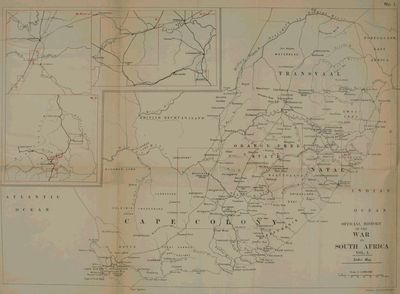
Index Map
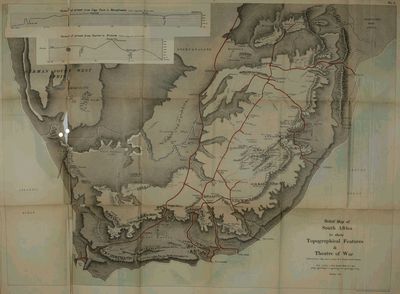
Relief Map of South Africa, to show Topographical Features and Theatre of War.
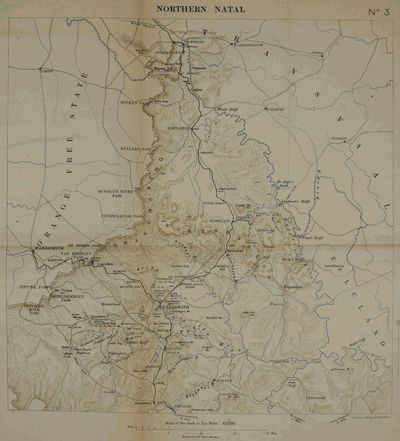
Northern Natal.
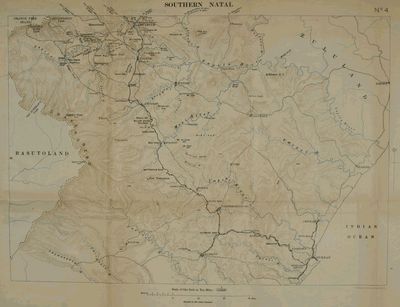
Southern Natal.
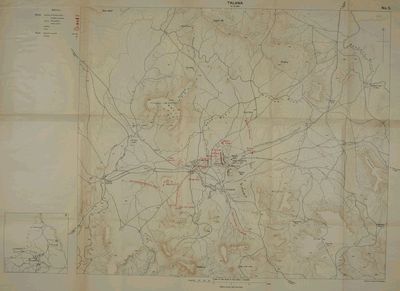
Talana. October 20th, 1899.
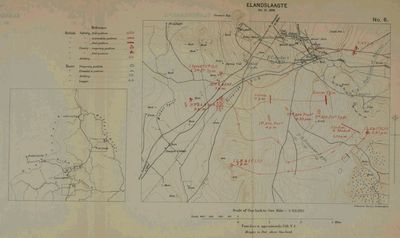
Elandslaagte. October 21st, 1899.
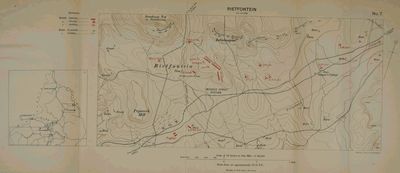
Rietfontein. October 24th, 1899.
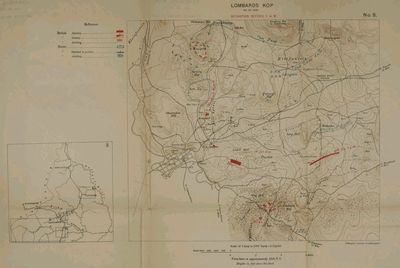
Lombards Kop. October 30th, 1899. Situation before 7 a.m.
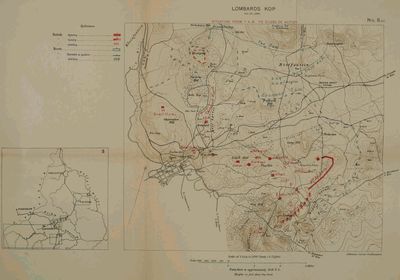
Lombards Kop. October 30th, 1899. Situation from 7 a.m. to Close of Action.
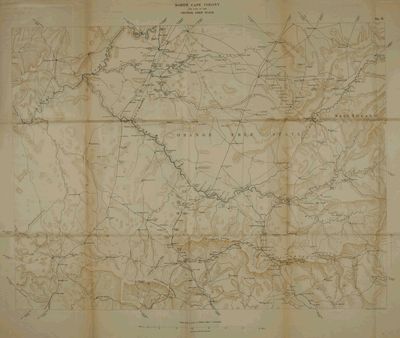
North Cape Colony and Part of the Orange Free State.
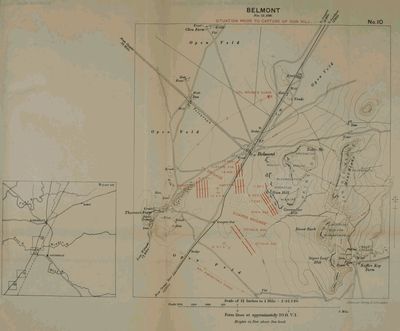
Belmont. November 23rd, 1899. Situation prior to Capture of Gun Hill.
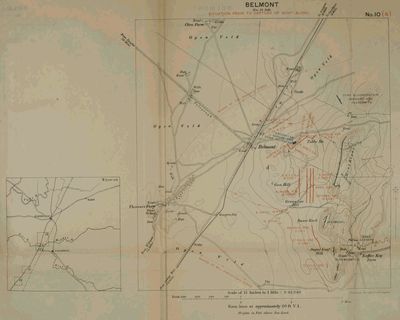
Belmont. November 23rd, 1899. Situation prior to Capture of Mont Blanc.
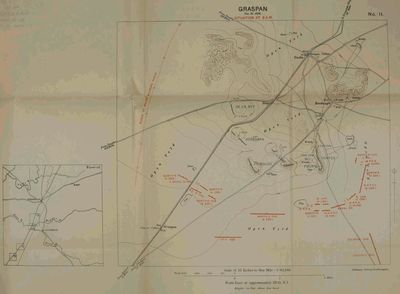
Graspan. November 25th, 1899. Situation at 9 a.m.
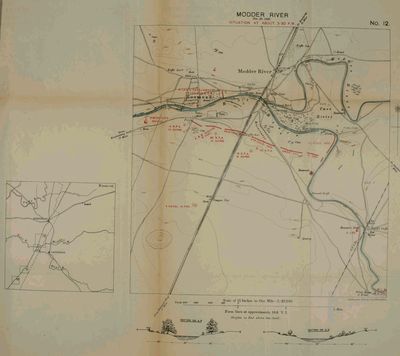
Modder River. November 28th, 1899. Situation at about 3.30 p.m.
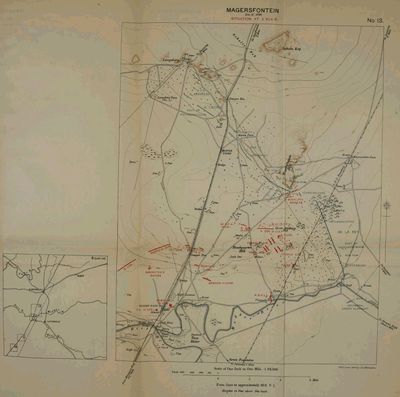
Magersfontein. December 11th 1899. Situation at 4.30 a.m.
(a) The effective support of the civil power in all parts of the United Kingdom.
(b) To find the number of men for India, which has been fixed by arrangement with the Government of India.
(c) To find the garrisons for all our fortresses and coaling stations, at home and abroad, according to a scale now laid down, and to maintain these garrisons at all times at the strength fixed for a peace or war footing.
(d) After providing for these requirements, to be able to mobilise rapidly for home defence two army corps of regular troops, and one partly composed of regulars and partly of militia; and to organise the auxiliary forces, not allotted to army corps or garrisons, for the defence of London and for the defensible positions in advance, and for the defence of mercantile ports.
(e) Subject to the foregoing considerations, and to their financial obligations, to aim at being able, in case of necessity, to send abroad two complete army corps, with cavalry division and line of communication. But it will be distinctly understood that the probability of the employment of an army corps in the field in any European war is sufficiently improbable to make it the primary duty of the military authorities to organise our forces efficiently for the defence of this country."—(Report of Royal Commission on the War in South Africa, p. 225.)[Back to Main Text]
"21. While the embarkation of the field force was proceeding, news of the loss of the greater part of two battalions of infantry and a mountain battery at Nicholson's Nek reached England. Orders were accordingly given on 31st October for the despatch of one mountain battery and three battalions of infantry, to make good this loss. All this reinforcement went from England, except one battalion. The embarkation from England was finished on 16th November.
"22. On 3rd November it was decided to organise and send out a siege train. It embarked on 9th December.
"23. Orders for the mobilisation of a 5th infantry division (the troops under Sir G. White, in Ladysmith, being counted as the 4th division) were issued on 11th November. An extra brigade division of artillery (three batteries horse artillery) was added on 20th November.
"The embarkation of this 5th division began on 24th November, and was completed on 13th December. That of the three batteries horse artillery took place between 19th and 21st December.
"24. Orders were given for the mobilisation of a 6th infantry division on 2nd December, i.e., as soon as the embarkation of the 5th division was well under way. Mobilisation began on 4th December, and was completed by 11th December. All combatant units were embarked between 16th December and 1st January, 1900.
"25. The order to mobilise the 7th infantry division was issued on 16th December. Mobilisation began on the 18th, and was completed on 27th December.
"Embarkation began on 3rd January, and was completed on 18th January.
"26. Meanwhile, on 16th and 22nd December, it had been decided to mobilise and prepare for embarkation four additional brigade divisions (twelve batteries) of field artillery, one brigade division being armed with howitzers. These were all embarked between 21st January and 27th January, 1900.
"28. The order to mobilise an additional brigade of cavalry (the 4th cavalry brigade) was issued on 26th December. Mobilisation began on 28th December, and was completed on 2nd January, 1900.
"The embarkation of this brigade was held back pending the arrival of Lord Roberts in South Africa, and the receipt of a communication from him.
"Embarkation began on 8th February, and was completed on 17th February.
"29. Orders were issued for the mobilisation of the 8th infantry division on 19th January, 1900. Mobilisation began on 20th January. Embarkation began on 12th March, and the last unit embarked on 18th April, 1900.
"30. With the despatch of the 8th division, the last organised and mobilised regular formation left this country, and the work of the Mobilisation sub-division, in connection with the despatch of reinforcements to South Africa, came to an end."
The executive work of organising, equipping, and despatching drafts of Militia, Volunteers, and Imperial Yeomanry was carried out entirely by the Adjutant-General, Quartermaster-General, and Director-General of Ordnance.[Back to Main Text]
The number of horses actually purchased from the registered reserve, and in the open market at home, amounted to 73,000 by the end of 1901.[Back to Main Text]
Horses. Mules and Donkeys. Total.
With units. Remounts.
20,251 450,223 149,648 620,122[Back to Main Text]
(I.) Youths under 18 and men over 50.
(II.) Men between 18 and 34.
(III.) Men between 34 and 50.
In the event of war, Class II. was first liable to service, then Class III., and, as a last resort, Class I.[Back to Main Text]
Mausers 53,375
Martini-Henry 35,875
Westley-Richards 9,780
Guedes 6,049
Lee-Metfords 2,850
Krag-Jörgensen 200
————
108,129
Besides the above, there were about 6,000 Webley pistols in store.[Back to Main Text]
Commandant £700 per annum.
Major 600 "
Captain 500 "
First Lieutenant 350 "
Second Lieutenant 275 "
All ranks received a horse from the Government, a special board supervising the purchase and issue of remounts. Rations and uniforms were also free issues, and on a most generous scale to officers and men alike.
The pay of non-commissioned officers and men was as follows:—
Warrant Officers £180 and £150 per annum.
Farriers and Sergeants 6s. 6d. a day.
Corporals 5s. 6d."
Gunners 5s. 0d."[Back to Main Text]
18th 1,029 rounds
62nd 247 "
75th 1,008 "
The Naval guns 260 "[Back to Main Text]
"I cannot neglect to reiterate pointing out to you and begging you to insist sternly with the officers and men against wild firing at long and almost impossible distances. Our greatest good fortune in the Freedom war was the immediate nearness (of positions), so that the smoke from the two forces made one cloud through which our men were better enabled to defeat the enemy. It was always my endeavour as long as the enemy blustered with his guns to conceal my men as much as possible and to strengthen them in their positions till the enemy's guns were tired and they then advanced and attacked us; then and not before, when they were between their own guns and our men, the burghers sprang forwards and shot them away by batches. Now our burghers with their rapid-fire rifles begin to shoot at so great a distance, and it is much to be feared that in a fierce fight lasting a whole day, they fire away all their ammunition to no purpose without hurting the enemy, and the enemy is then able to make use of lance and sword after exhausting their ammunition. Warn your men thus and work against this error. You must also take good thought for your reserve ammunition, and its position and the way it can be brought up to firing line. You know yourself how often we have already captured the English ammunition mules; do not let the same take place with ours. Now secondly, I am certain Buller will not operate against you with his whole force at once; he will place supports in his rear and again and again bring up fresh men. His cavalry will wait as far as possible, to make their attack from the rear, or to try to move round to our rear. So be on your guard. Place your supports so that at such times new forces can advance; let some one be just on some high and visible place so as to send support in time to the spot where it is required. It is bitter to lie here on my back and think and advise from such a distance, but God's Will be done, just in Heaven as on Earth. Best wishes." [Back to Main Text]
10th Hussars, 6th (Inniskilling) Dragoons, eight guns R.H.A.
4th battery Royal Field artillery, three companies M.I.
Detachments 1st Suffolk and 2nd Royal Berkshire regiments.[Back to Main Text]
Killed: Five Officers; thirty-two N.C.O.s and men.
Wounded and taken prisoners: Three Officers; twenty-six N.C.O.s and men.
Unwounded and taken prisoners: Two Officers; sixty-eight N.C.O.s and men.
Wounded and returned to camp: One Officer; twenty-two N.C.O.s and men.
The Boers stated their losses as one officer and eight men killed, seventeen men wounded.[Back to Main Text]
Killed, six N.C.O.s and men; wounded, one officer, five N.C.O.s and men.
Boer losses: twenty-one killed: about forty wounded. [Back to Main Text]
Two squadrons 6th (Inniskilling) Dragoons.
J. battery, R.H.A.
4th battery, R.F.A.
A section, 37th Howitzer battery, Royal Field Artillery.
The Australian M.I. (490 men).
The Victorian M.I. (175 men).
Mounted infantry (450 men).
2nd Bedfordshire regiment.
1st Royal Irish regiment.
2nd Worcester regiment.
Half battalion 2nd Royal Berkshire regiment.
2nd Wiltshire regiment. [Back to Main Text]
The employment of the Service companies of the Volunteers was regulated by a Special Army Order, dated 2nd January, 1900.[Back to Main Text]
Tablenote 1: Wardha returned to Durban damaged and the squadron was transferred to Nevassa.[Back to Table]
Tablenote 2: Includes seven machine.[Back to Table]
Tablenote 3: Subsequently went to Natal.[Back to Table]
Tablenote 4: The 1st battn. Royal Irish Fusiliers, and one section, 23rd coy., R.E., arrived at Dundee during 15th and 16th October.[Back to Table]
Tablenote 5: Exclusive of police.[Back to Table]
Tablenote 6: Boer evidence.[Back to Table]
Tablenote 7: Intelligence statistics on conclusion of peace.[Back to Table]
Tablenote 8: E.g., those under S. Eloff, W. Mears, J. Hindon, etc.[Back to Table]
Tablenote 9: Includes 67 rounds captured by the enemy.[Back to Table]
Tablenote 10: Includes 37,400 rounds lost in ammunition carts, and 86,560 rounds in the pouches of the killed and prisoners.[Back to Table]
Tablenote 11: Battery subsequently went to Natal.[Back to Table]
Tablenote 12: Arrived Cape Town, 6.12.99.[Back to Table]
Tablenote 13: Persia broke down at St. Vincent.[Back to Table]
Tablenote 14: Started from Gibraltar.[Back to Table]
Tablenote 15: Guns lost.[Back to Table]
Tablenote 16: The battalion transhipped to S.S. Orcana, which arrived at Durban 24.11.99.[Back to Table]
Tablenote 17: Two of these guns were en route to Mooi River.[Back to Table]
Tablenote 18: En route to Pietermaritzburg.[Back to Table]
Tablenote 19: Maj.-Gen. Talbot Coke embarked at Mauritius, 1.12.99.[Back to Table]
Tablenote 20: The battalion was transhipped to Mongolian, which arrived at Durban on 1.1.00.[Back to Table]
Tablenote 21: The battalion was transhipped to Roslin Castle, which arrived at Durban on 23.12.99.[Back to Table]
Tablenote 22: Accident to propeller twice during voyage.[Back to Table]
Tablenote 23: Strength includes mounted infantry company in America.[Back to Table]
Tablenote 24: Strength includes mounted infantry company in British Prince.[Back to Table]
Tablenote 25: Strength includes mounted infantry company in Pindari.[Back to Table]