Volume 2 / Part 4 — CHAPTER XXIII ROMAN POTTERY (continued); PROVINCIAL FABRICS (continued 2)
Reading edition
A finer variety of this clay, often of a rosy tint, or white and micaceous, was used for making the smaller vases, which are thin and light, and all turned on the wheel.[3623] They are sometimes ornamented with bands, lines, hatching, or leaves, slightly indicated in dull ochre, laid on and fired with the vase. Some specimens are covered with a flat white slip, of a more uniform character than that employed on the Athenian vases. In others the clay is largely mixed with grains of quartz. In Britain little jars of a very white clay have sometimes been found, as well as small bottles and dishes, painted inside with patterns in a dull red or brown. They seem to have formed a kind of finer ware for ornamental purposes, as well as for the table.
The second class, that of the red wares, forms by far the largest division of Roman plain pottery, and comprises most of the kinds used for domestic purposes; it is found in all forms and sizes, all over Europe, often covered with a coating or slip, white, black, or red. This class may be considered to include all varieties of red and reddish-brown ware, but as a rule the clay varies in colour from pale rose to deep coral, and in quality from a coarse gritty composition to a fine compact and homogeneous paste. It is usually without a glaze, and sometimes the clay is largely micaceous. To enumerate all the shapes which illustrate this ware is unnecessary, but the Romano-British and Morel Collections in the British Museum—and in fact any representative collection of Roman pottery—exhibit all the principal varieties, from the cinerary urn to the so-called “tear-bottle” or unguent vase. The principal shapes are also illustrated in the treatises of Hölder and Koenen.
Among sepulchral vases of this ware were the ollae in which the ashes of slaves were placed in the columbaria at Rome, tall jars with moulded rims and flat saucer-shaped covers.[3624] In Roman tombs in Gaul and Britain these ollae are usually placed inside large dolia or amphorae, to protect them from the weight of the superincumbent earth.[3625] In Britain they have been found at Lincoln, on the sites of Roman settlements along the Dover Road, at Colchester, and in other places, and as many as twenty thousand are recorded as having been found at Bordeaux.[3626] After the introduction of Christianity this practice seems to have been abandoned, but vases of smaller size continued to be placed round the bones of the dead.
The grey wares were usually made of fine clay, of which there were two varieties: a sandy loam like that of which bricks are made on the borders of the chalk formations in England, and a heavy stone-coloured paste, sonorous when struck, which has been compared to the clay of modern Staffordshire ware. The colour of the first-named is light and its texture brittle, and it was chiefly used for mortaria, or for cooking-vessels which were exposed to the heat of the fire. The mortaria resemble modern milk-pans, being flat, with overlapping edges and a grooved spout opening in front. They appear to have been used both for cooking, many bearing traces of the action of fire, and for grinding food or other commodities, the latter purpose probably explaining the presence, in the interior of many examples, of small pebbles, or a hard coating of pounded tile, to counteract the effects of trituration. They are usually of a hard coarse texture, but compact and heavy, and their colour varies from pale red to bright yellow or creamy white.
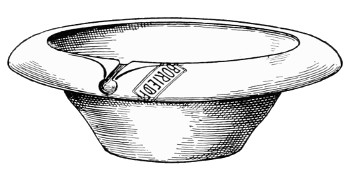
FIG. 230. ROMAN MORTARIUM FROM RIBCHESTER (BRITISH MUSEUM).
They are frequently stamped with the name of the potter, placed in a square or rectangular panel on the rim and often arranged in two lines. The names are either single, denoting the work of slaves, as Albinus, Brixsa, Catulus, Sollus, and Marinus, or double and occasionally even triple, for the work of freedmen, as Q. Valerius, Sex. Valerius, Q. Averus Veranius, and so on.[3627] The example given in Fig. 230 is from Ribchester in Lancashire, and bears the stamp BORIED(us) F(ecit). A mortarium recently dug up in Bow Lane, London, now in the Guildhall Museum, has the name of Averus Veranius with O · GARR · FAC in smaller type between the words, apparently referring to the place of manufacture.[3628] One of the commonest names is that of Ripanus Tiberinus, who gives the name of the place where he worked: RIPANVS · TIBER · F · | LVGVDV FACT, Ripanus Tiber(inus) f(ecit); Lugudu(ni) fact(um).[3629] The potters’ names are usually accompanied by the letters OF or F. The mortaria vary from seven to twenty-three inches in diameter, and are found in England, France, Germany, and Switzerland. Of the second or heavier variety a curious vase in the form of a human head was found at Castor[3630]; much of the New Forest ware also comes under the same heading,[3631] including the small cups with pinched-in sides, some being covered with a slip of micaceous consistency.
Of black ware many varieties have been found in Gaul and Britain, besides the special local wares which have already been described. Some were employed as funerary urns, but the majority are of small size, and in quality they vary from the extremest coarseness to a fine polished clay, producing an effect almost equal to the Greek or Etruscan black wares. The finest specimens of plain black ware are to be seen in the vases with a highly polished surface, presenting a metallic appearance and an olive hue which almost approximates to that of bronze. Examples of this ware are found in Gaul at Lezoux, in Britain at Castor, and elsewhere.[3632]
In the first century after Christ a superior kind of black ware seems to have been made in Northern Gaul and Germany, described by Dragendorff as “Belgic black ware.”[3633] The clay is bluish-grey, with black polished surface produced like that of the bucchero ware by smoke, not like the black glaze of later Roman ware. A similar variety of grey ware exists, but without glaze or polish. The forms of the vases vary very much from the Roman, including a typical high, slim urn and other more squat forms, closely imitating metal; they bear some relation to those of the La Tène period, and are Celtic or Gaulish rather than German.[3634] Such ornamentation as they bear is exclusively linear, and never in relief. There is, however, a Roman form of plate which often occurs, and, generally speaking, the fabric may be described as a continuation of pre-Roman pottery influenced by Italy. It is well represented at Xanten and Andernach, but is not found on the Limes, and is rare in Britain; it does not seem to have been made after the beginning of the Flavian epoch, when it was largely superseded by the ordinary Roman black glazed wares.
A special kind of black ware seems to have been made in the valley of the Rhone, consisting of pots of a coarse, gritty paste with micaceous particles, breaking with a coarse fracture of a dark red colour. They have been mostly found at Vienne, where they seem to have been made. The bottom of the vase is usually impressed with a circular stamp with the potter’s name in late letters, as L · CASSI · O, F(ir)MINVS · F, SEVVO · F, SIMILIS · F (from Aix).[3635] The well-known name of Fortis has also been found on black ware from Aix.
In Britain black ware is, as elsewhere, exceedingly common, and a typical group of the smaller varieties is afforded by a series of five found in a sarcophagus at Binsted in Hampshire, now in the British Museum,[3636] consisting of two calices, a jar (olla), an acetabulum, and a kind of candlestick. The Upchurch ware largely belongs to this category, and much of the same kind has been found at Weymouth.
Brown ware of a very coarse style is often found with other Roman remains, consisting of amphorae and other vessels for domestic use. Examples of amphorae and jugs with female heads modelled on the necks have been found at Richborough and elsewhere.[3637]
At Wroxeter the excavations yielded two new classes of pottery, one consisting of narrow-necked jugs and mortaria,[3638] very beautifully made from a white local clay, which has been identified with that found at Broseley in the neighbourhood, nowadays supplying material for the manufacture of tobacco-pipes. The surface is decorated with red and yellow stripes. The other kind is a variety of red ware which has been styled “Romano-Salopian,” made from clay obtained in the Severn valley, and differing from the common Roman ware.[3639] It is, however, exceedingly doubtful whether these types should be classed under the heading Roman.
In conclusion, it may be noted that although all provincial museums contain more or less complete collections of the ordinary plain fabrics, they are for the most part of strictly local origin, and not in themselves sufficient for general study. But since the acquisition of the Morel Collection by the British Museum the student has ample facilities for investigating there not only the fabrics of Britain, but also those of Gaul, of which an exhaustive series is now incorporated in our national collection.
With this review of the ceramic industries of the Roman Empire, we conclude our survey of the pottery of the classical world. We have followed its rise from the rough, almost shapeless products of the Neolithic and earliest Bronze Age, when the potter’s wheel was as yet unknown (on classical soil), and decoration was not attempted, or was confined to the rudest kinds of incised patterns. We have traced the development of painted decoration from monochrome to polychrome, from simple patterns to elaborate pictorial compositions, and so to its gradual decay and disappearance under the luxurious and artificial tendencies of the Hellenistic Age, when men were ever seeking for new artistic departures, and a new system of technique arose which finally substituted various forms of decoration in relief for painting. And lastly, we have seen how this new system established itself firmly in the domain of Roman art, until with the gradual decay of artistic taste and under the encroachments of barbarism, it sank into neglect and oblivion. We observe, too, with a melancholy interest, that while other arts, such as architecture, painting, and metal-work, have left some sort of heritage to the later European civilisations, and like the runners in the Greek torch-race
vitai lampada tradunt,
this is not so in the case of pottery. This art had, it would seem, completely worn itself out, and had, in fact, returned to the level of its earliest beginnings. The decorative element disappears, and pottery becomes, as in its earliest days, a mere utilitarian industry, the secrets of its former technical achievements irrevocably lost, its ornamentation reduced to the simplest and roughest kinds of decoration, and its status among the products of human industry once more limited to the mere supplying of one of the humblest of men’s needs.
But this was inevitable, and we must perforce be content; for have we not seen, in the course of its rise and fall, a reflection of the whole history of Greek art, from the humble beginnings in which Pausanias descried the touch of something divine which presaged its future greatness? It is unnecessary to recapitulate the manner in which the successive stages of Greek art are mirrored in the pottery, from the first efforts of the Athenian potter down to the eclecticism of the Arretine ware. Let it suffice to say that the object of this work has been twofold: firstly, to show the many-sided interests of the historical study of ancient pottery; secondly, to point out its value to the student of ancient art and mythology: and that it is the modest hope of the writer that this object has been in some measure fulfilled.