Volume 2 — VIII. MEDICAL HINTS.
Reading edition
By the late William Henry Crosse, M.D.
Revised and brought up to date by Andrew Balfour, C.B., C.M.G., M.D.
The following hints, which were compiled by the late Dr. W. H. Crosse, formerly the experienced medical adviser of the Royal Niger Company, based upon previous editions of this work, have been edited so as to bring them up to date. A good deal remains as Dr. Crosse wrote it, but several sections have been almost entirely re-written, in order to bring them into line with modern views. New sections have been introduced and there have been numerous additions and corrections.
Introduction.
In the following pages the chief emphasis has been laid upon the care of the health in the tropics; but it must be remembered, that whilst by far the greater proportion of travellers go to the tropics, most of these hints for the preservation of health apply equally well for all climates.
Though many subjects have been briefly dealt with, certain matters have been rather more fully written up, such as the treatment of wounds. It is, in the author’s opinion, so important that the traveller should thoroughly understand what is meant by ‘surgical cleanliness’ that the usual methods observed by surgeons to ensure it have been plainly set forth. The author, of course, understands that in many cases it would be quite impossible to carry out the instructions in every detail, but it is hoped that a thorough knowledge of the principles underlying the correct treatment of wounds will assist the traveller in doing the best possible for his patient in any emergency, and under even the most unfavourable circumstances.
It is hardly necessary to observe that travellers in remote regions, and especially in tropical climates, are much more exposed to physical ills and diseases than most residents at home, and that they are more likely to be placed beyond the reach of skilled medical and surgical aid when it is most required. It is chiefly for the use of the non-professional traveller that the following pages have been written, and with this aim in view the symptoms and general treatment of the diseases and injuries with which he is most likely to be brought in contact are dealt with in simple, non-technical language.
Every traveller should supply himself with either Bernard Myer’s ‘Atlas of First Aid Treatment’ or Hastings Young’s ‘First Aid to the Sick,’ books of general utility. Travellers visiting countries with hot climates will find Garry’s ‘Some Factors Influencing Health in Tropical and Sub-tropical Climates’ a useful book, despite a few errors, while the small ‘Primer of Tropical Hygiene’ by Colonel R. J. Blackham, is a valuable guide to things hygienic as is Professor Simpson’s ‘Maintenance of Health in the Tropics.’
A few books may be mentioned as specially suitable for those travelling in the countries with which they deal, such as ‘Hints for Residents and Travellers in Persia’ by A. R. Neligan, ‘Health Preservation in West Africa’ by J. C. Ryan, ‘Hygiene and Disease in Palestine’ by Masterman, and ‘The Epidemics of Mauritius’ by Anderson.
Those who read German will find the ‘Gesundheitlicher Ratgeber für Auswanderer,’ issued under the auspices of the Institut für Schiffs- und Tropenkrankheiten in Hamburg, of considerable service, and if they intend visiting South America it is worth noting that from the same source a series of small books to guide the traveller in different parts of that continent will soon be forthcoming. This series will also include works on Mexico, Angola and Siberia. These German guides are obtainable from L. Friederichsen & Co., Hamburg.
Persons who intend to travel should undergo a thorough medical examination, in order to ascertain if they are likely to be able to stand the fatigues, exposures and privations to which they will probably be subjected.
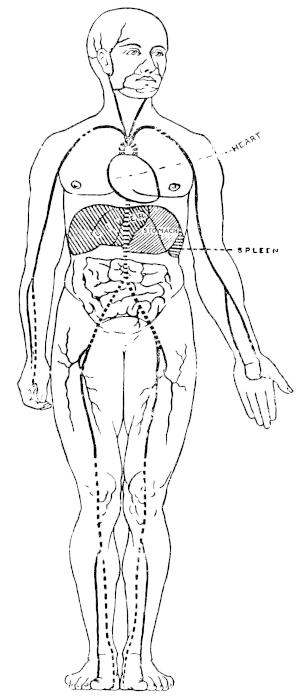
Fig. 1.—Diagram showing some of the Principal Organs of The Body, and the Course of the Main Blood-vessels.
Most people of good constitutions and regular temperate habits can, with care, maintain a good state of health in the tropics, and many of those who have been by no means strong at home are able with some extra caution to do well even in the hottest climates.
The intending traveller should attend a course of ambulance lectures in order to prepare himself for the responsibilities which he will have to undertake. As much time as possible should be devoted to discussing with some professional friend the uses, correct doses, and proper methods of prescribing and combining the drugs which are to be taken on the journey, and in becoming familiar with the position of the principal bones, vessels and other important structures of the human body.
A traveller should understand how to use the clinical thermometer, how to twist or tie a bleeding vessel, how to use the hypodermic syringe and the syphon stomach tube. He should learn how to cleanse a wound, how to treat a case of snake-bite, and should know the best way in which to set a broken limb. Such things are not easily learnt from books, and experience alone will give the necessary skill and confidence. Many valuable lives have been saved by travellers who have fairly mastered the rudiments of medical and surgical treatment, and who have been able in an emergency to give the necessary drugs, administer an antidote, or to stop severe bleeding.
The ideal traveller is a temperate man, with a sound constitution, a digestion like an ostrich, a good temper, and no race prejudices. He is capable of looking after details, e.g., seeing that drinking water has really been boiled, and is willing to take advice from those who have made journeys in countries similar to the one in which he is about to travel.
A traveller should be supplied with suitable housing, food and clothing, and should have a proper supply of medicines, dressings, and medical comforts.
In selecting the drugs with which the traveller should be provided before leaving home care should be taken to see that only reliable products be purchased. In the tropics, and in exploration generally, the medical outfit is subjected to very severe tests, and it is a mistaken policy to economise on medicines. The latter should be as portable as possible and be properly packed.
Risks to Health in a Tropical Climate.
Seeing that these hints will be chiefly required by travellers in tropical or sub-tropical climates, it may be well to indicate some of the chief risks which are to be met with in warm climates, and the best methods of meeting them.
It will be noted that any detailed reference to questions of outfit, such as the supply of proper food or clothing, is omitted, as these matters have been fully dealt with in ‘Hints on Outfit,’ published by the Royal Geographical Society uniformly with this ‘Hints to Travellers,’ and it is understood that this work will be consulted by all who read these hints.
Chill.—The most prominent feature of a tropical climate is undoubtedly heat, and yet the greatest risk arises not so much from excessive high temperature as from a risk of chill, which is due mainly to the excessive perspiration which takes place. This must be guarded against by the use of proper clothing, the most important point being that the underclothing should be partly of absorbent material. For general use cotton is best, and the vest or undershirt should in the tropics be of the Aertex Cellular type. It is a mistake to wear wool next the skin in hot countries, for it soon gets sodden with perspiration and is irritating. A light flannel shirt worn over the open cotton mesh is probably the best arrangement though a mixture of wool and cotton may be employed for the shirting. This question is fully dealt with in ‘Hints on Outfit.’ It is particularly important to avoid sudden changes of temperature, and if exposed to the cooling sea breeze, special care must be taken as to proper clothing. Parke laid great stress on the importance of avoiding chills, draughts, or wettings. He remarked “In crossing Equatorial Africa the Relief Expedition found that every wetting meant an attack of fever.” The sea breeze, which is so refreshing and cool, by checking the perspiration, frequently acts as the exciting cause of an attack of fever. There is special liability to chill and subsequent fever when ascending an eminence, as the exertion causes profuse perspiration, and the cool breeze encountered on arrival at the top is very likely to produce ill effects.
On completing a day’s journey, the underclothing, at least, should be changed without delay, and the skin should be well dried by the free use of a rough towel. If at all possible a warm bath should be taken.
The cummerbund is a useful article of clothing, especially for men in the evening. It does away with the need for a waistcoat, which often proves hot and uncomfortable, and yet provides the necessary safeguard against chill to the abdominal organs.
A word as to the use of a flannel cholera belt, about which opinions differ. Experience in many tropical countries leads the writer to recommend its use at night, and at night only. Even so, it is unnecessary and uncomfortable in places where the nights are invariably hot and steamy, and is chiefly of value in dry, desert climates where there is a great difference between the day and night temperatures.
Effects of the Sun.—It is difficult to overestimate the importance of the protection of the head from the direct rays of the sun. It is best, where possible, to avoid going out in the heat of the day, but where this is necessary the head should be protected by a suitable helmet, which should be light in weight and colour, which should be ventilated, and which should have a good protection for the back of the head. A large green leaf inside the helmet might be an additional protection, and a sun umbrella should also be used wherever practicable. A helmet should as a rule be worn when going out during the day-time in the tropics. Sometimes, however, the helmet is found very troublesome, as, for example, by the sportsman in the bush. He may then have recourse to a double Terai hat, or even to an ordinary wide-brimmed felt hat provided he inserts a crumpled-up handkerchief in its crown. This will usually afford a reasonable protection.
Errors of Diet.—The lassitude which is often so much felt by Europeans resident in the tropics too frequently tempts them to the abuse of alcoholic stimulants and highly-spiced foods. The habit is a most pernicious one, for such indulgence is one of the most fruitful causes of the permanent ill-health so often wrongly attributed to the mere residence in a hot climate. There is no doubt that food should be taken with greater moderation in hot than in cold climates; heat-producing articles of diet, such as fat, should be taken in far smaller quantity, but an ample supply of vegetables is essential. The meals should never be heavy, especially during the heat of the day, and intervals of about four hours should always separate consecutive meals.
Cooking should always be conducted with great care in the tropics, for the stomach and liver are less able to bear any extra strain, such as would be induced by the attempt to digest imperfectly-cooked food. Parasites are often introduced into the system by insufficiently cooked food.
Natural milk must be boiled; condensed milk should be mixed with boiled water.
Excess in the use of alcoholic stimulants is one of the most fatal errors into which the tropical resident can fall, and their habitual use as beverages is totally unnecessary, tea, coffee and cocoa being the best beverages for ordinary use. A small supply of brandy, champagne, and port wine may be of service in certain cases of illness, but they are better regarded as belonging strictly to the medical equipment.
Avoid native drinks, as they will probably have been diluted with dirty water, or prepared in unclean vessels.
Great moderation in the use of alcohol is quite as necessary in arctic as in tropical climates. In the latter no alcohol should be taken till the sun has set, and even then the quantity should be strictly limited. There is no reason why a glass of light beer, a whisky and soda, or a little light wine should not be drunk with the evening meal. Alcohol taken at this time often promotes appetite and aids digestion, but alcohol between meals is bad, chiefly perhaps because the habit of exceeding the daily allowance is thereby apt to be engendered. It is largely a question of self-control, and it must be remembered that in the tropics self-control, so far as drinks are concerned, is very apt to weaken. Apart from the question of its habitual use alcohol is often of great service as a restorative, as, for example, after a fatiguing march, and especially if one has got wet and chilled. Champagne is possibly the best form to take on such occasions and it should be used as an apéritif or drunk along with food.
Risks due to Drinking Water.—The use of water for drinking purposes must be attended with great care in all tropical climates. As the water of the lakes, streams and pools of these countries usually contains a large proportion of impurities, and the germs or parasites of many diseases, it should be strained and subsequently boiled before being used.
As, however, it is not always possible or convenient to incur the delay of boiling the drinking water and allowing it to cool, it is advisable that a reliable filter should be taken.
Most filters—charcoal or otherwise—are merely death-traps, as the accumulation of germs and injurious matter within the filtering substance soon renders the water more dangerous than if unfiltered. There are, however, a few filters which, with ordinary care in cleansing, are in themselves efficient safeguards. The most highly recommended of these are the Pasteur Chamberland and the Doulton filters. In any case, spare filtering candles should be taken, and these should be cleaned and boiled at least every three days. It is recommended that the filter-makers should be consulted immediately the probable requirements of any expedition are known. It should be remembered that no filter combines rapid delivery of water with efficient sterilization. A mistake commonly made is to boil water and then filter it. This should never be done.
The drinking of very cold water, to which there is great temptation when one is exhausted by prolonged heat and copious perspiration, should be carefully avoided; thirst often induces tropical residents to have recourse to iced water, which is always apt to be dangerous if taken when one is heated. The drinking of copious draughts of water is also a habit to be deprecated; it certainly weakens the muscular energy, and as the water is rapidly lost by perspiration, the feeling of exhaustion is increased. Hot or cold weak tea, without milk or sugar, is one of the least injurious of all beverages.
Precautions on the Voyage.
The traveller should endeavour to land in a perfectly healthy condition, and to this end he should on the voyage out take plenty of exercise, drink little or no alcohol, be moderate as to diet, and avoid much meat and rich dishes. Neglect of these obvious rules frequently ends in the traveller arriving in a flabby, bilious condition, in which state he is predisposed to attacks of malaria, dysentery, and other diseases.
Constipation is frequent at sea, and a seidlitz powder, a dose of fruit salt, or one or two cascara tabloids may be necessary. If constipation is severe, then one or two four-grain blue pills should be taken at bedtime, followed in the early morning by a seidlitz powder or some other saline aperient.
In order to avoid chill the traveller should be properly clothed during the evening or when there is a cool breeze, and should not stand in draughty doorways and passages on board. If he is proceeding to a country where there is endemic malaria he should begin his course of prophylactic quinine on ship-board, because even a single night spent ashore in a malarious locality may result in his acquiring infection. It is therefore advisable to begin taking quinine in the manner described on p. 207 at least two days before arrival at the place of disembarkation.
What is true of the journey out is of even greater importance on the voyage home. There is a serious danger of illness owing to chills contracted on board ship when leaving a hot climate. Quinine should be systematically taken as recommended on p. 208.
General Hints.
Never take a cold bath in the Tropics unless ordered to do so by a doctor.—In the case of persons who have already suffered from many attacks of fever, dysentery, or any disease of the liver or other important organs, warm bathing should alone be used. Bathing should never be resorted to during the period of digestion, i.e., three to four hours after meals. Wear warm clothes at night. Avoid the direct rays of the sun. Do not take too much animal food. Never begin work on an empty stomach. Never neglect a slight attack of fever or diarrhœa. Keep the bowels gently opened—once a day is quite enough—but avoid strong purgatives.
Vaccination.
It is essential that all the members of an expedition should be re-vaccinated if they have not suffered from small-pox or been vaccinated within two years. A proper supply of vaccine should be carried on the journey. Heat and bright sunlight are very detrimental to vaccine lymph. Hence the proper transport of such lymph in hot climates is a matter of great importance and by no means always easy to arrange. Where a thermos flask is available it may be used for storing and carrying the capillary tubes, or they may be wrapped up in green leaves and inserted into a hollow bamboo, the ends of which are closed with cotton wool.
Inoculation.
Owing to the prevalence of typhoid and paratyphoid fevers in hot countries it is essential that all persons, and more especially young adults, proceeding to tropical countries should undergo preventive inoculation. Two injections of the so-called triple vaccine, at ten days’ interval, are necessary, and both should be given shortly before leaving or, if arrangements can be made, one or both may be given on ship-board.
Isolation.
On the outbreak of an infectious complaint, such as small-pox (which is very common amongst negro carriers), the sufferer should be promptly isolated, and one or more attendants should take charge of the case and not be allowed to come to camp. It is wise to select as attendants those who have either had the disease, or who are protected (as by vaccination) against it.
In Nigeria it was found most convenient to build grass huts, which were burnt to the ground, together with the clothing and bedding of the patient and attendants, on the termination of the outbreak.
All vessels which are not destroyed must be boiled thoroughly. The motions, etc., of patients suffering from typhoid fever, cholera and dysentery should be disinfected, preferably by boiling, or, better still, destroyed by fire.
Transmission of Infection.
The traveller should remember that of late years the rôle of the healthy human “carrier” in the transmission of many communicable diseases has been established. This is true of such diseases as enteric fever and cholera, and when engaging servants, porters, and camp followers it is important to inquire into their previous history and, if necessary, to make certain that they do not harbour the specific organisms of such diseases.
Diseases and their Prevention and Treatment.
In the tropics, as elsewhere, the diseases to which the traveller is liable are due to widely differing causes, but in hot countries climatic conditions and parasites play a predominant part. Insects are very frequently to blame for the transference of the latter from the sick to the sound, both insects which are not themselves parasitic on man, e.g., the mosquito and the tsetse fly, and those which make man their host, e.g., lice and fleas.
It is useful for the traveller to bear diseases in mind from the standpoint of their etiology, as in this way he can more readily grasp the measures necessary for their prevention.
Accordingly, the following classification is given, merely as a guide, together with a few examples. The diseases themselves, for the sake of convenience of reference, are grouped alphabetically and are not classified in any way.
Table of Diseases Classed according to Etiology.
A.—Parasitic.
(i.) Due to “contact” either direct or through the agency of clothes, bedding, etc. Also due to direct inoculation through the skin or mucous membrane.
Examples: Many skin diseases, venereal diseases, small-pox, tetanus, and blood-poisoning (septicæmia).
(ii.) Due to “mouth to mouth” infection, through the agency of so-called “droplet” infection, expectoration, coughing, sneezing, etc.
Examples: Influenza, pneumonia, and pneumonic plague.
(iii.) Due to “droplet” infection, as above, or to infected scales from the skin, or to infected discharges from the nose, throat, or ear.
Examples: Measles, scarlet fever, small-pox, chicken-pox, diphtheria.
(iv.) Due to excremental infection through the agency of water, food, flies, fingers, dust, and soil.
Examples: Enteric (typhoid) fever, dysentery, diarrhœa, cholera, worm infections of many kinds.
(v.) Due to inoculation through the bites of insects, or the entry through skin abrasions of the infected excreta or infected crushed tissues of insects rubbed or scratched into these lesions.
Examples: Malaria, yellow fever, tick fever, sleeping sickness, filariasis, relapsing fever, typhus fever, bubonic plague.
(vi.) Due to invasion of the body by insects in their adult or larval stages.
Examples: Chigger, myiasis of various kinds.
B.—Non-Parasitic.
(i.) Due to climatic conditions.
Examples: Heat stroke, diarrhœa in some instances, constipation in many cases, rheumatism, prickly heat, chilblains.
(ii.) Due to errors in diet.
Examples: Diarrhœa, beri-beri, scurvy, sprue(?).
(iii.) Due to poisons.
Examples: Scorpion sting, snake-bite, vegetable poisons.
(iv.) Miscellaneous.
Examples: Bed-sores, epilepsy, apoplexy, concussion of the brain, hay fever, and other conditions into the cause of which a mechanical element frequently enters.
It will be seen that some of these diseases, such as small-pox and diarrhœa, come under more than one heading, but this does not detract from the general utility of the above classification.
Bed-sore.
When a patient is confined to his bed for a long time it is necessary to support the lower part of the back on something soft, such as a pad of wool, or an extra pillow, in order to prevent the formation of a bed-sore; pillows should also be placed under the hips and heels.
To harden the skin it is well to rub it with alcohol or to treat it with oil or white of an egg three parts, and spirits one part; zinc ointment is also useful for this purpose.
Besides pressure, the most frequent cause of bed-sores is constant moisture from the passage of urine and motions and consequent damping of the sheets. Great care must be taken to thoroughly dry the back after any evacuation; the lower part of the back should be dusted with a powder of boric acid and zinc oxide.
If a bed-sore is present the patient should lie on a circular pad with a hole in the middle, to take pressure off the bed-sore. The sore should be thoroughly cleaned twice a day with some antiseptic lotion, such as chinosol or permanganate, and subsequently dressed with zinc ointment or vaseline.
If the bed-sore is on the back, the patient should lie if possible on each side alternately, to relieve the pressure.
Beri-beri.
In most cases this is a disease due to some deficiency in the dietary, which leads to a form of what is called peripheral neuritis. The name is possibly derived from a Cingalese word signifying “I cannot.”
Symptoms.—Weakness of the legs and digestive troubles, abnormal sensations in the legs, frequently associated with swelling. The gait alters, and the arms and fingers may be affected. The condition is one of spreading paralysis, and in bad cases the heart is affected. In so-called wet beri-beri the patient becomes bloated as in dropsy, while in dry beri-beri he wastes away until he is little better than a skeleton. There is a “squatting test” which may enable one to recognize the disease at an early stage. The patient, with his hands on the top of his head, is unable to assume a squatting position and to rise from it unaided. If he is squatting and has to rise he accomplishes the act by climbing, as it were, up his own legs.
Prophylaxis.—Avoid overcrowding, as this seems in some cases to predispose to the disease. Give the yeast extract known as “Marmite,” which is supplied in small cubes one-quarter ounce in weight. One should be taken twice a week, either alone or with bread or biscuit, or dissolved in warm water in the form of a soup. Lentils, other legumes, and oatmeal are useful. Eggs and fresh meat, when obtainable, are very valuable.
Treatment.—This is chiefly dietetic. Give yeast, two ounces daily, along with milk and sugar, or marmite in one-cube doses twice a day. Eggs are specially useful, while fresh milk, legumes, and nourishing soups are all indicated. Only small quantities of food should be given at a time. Rest in bed is very important, and the patient must be careful when he is allowed to get up owing to the danger of heart failure. Tonics are required during convalescence.
Blackwater Fever.
Blackwater fever is probably a pernicious complication of malarial fever, and derives its name from the colour of the urine. It must be remembered that dark-coloured urine is usual in all fevers; it is scanty during the height of the fever, especially if there is much sweating. If, however, it is obviously “bloody,” the case is more grave, but as a rule it is only men broken down in health, and those who have resided in blackwater countries, e.g., Tropical Africa, parts of India, the West Indies, etc., for at least a year, especially those who have taken their prophylactic quinine irregularly, who suffer from this complication.
The reason for the occurrence of this condition is not fully known. Some have ascribed the symptoms entirely to the taking of quinine, but as the fever often occurs where no quinine has been given this is impossible. At the same time it appears likely that in certain cases of malaria, owing perhaps to some idiosyncrasy, quinine may help to bring on the symptoms. It is possible that chill occurring during the course of a fever may lead to the production of blackwater fever. Those who have had one attack are particularly liable to a recurrence, and after two consecutive attacks return to a temperate climate is required.
Symptoms.—In addition to the ordinary symptoms of malarial fever, the urine is dark, blood-like, and eventually porter-coloured; it is often scanty, and may become entirely suppressed. The skin is yellow, often a bright orange, there is frequent vomiting, often hiccough, and the vomited matter is usually of a green colour.
Prophylaxis.—With our present knowledge all that can be said is that malaria prophylaxis is also the method to prevent blackwater. Such prophylaxis, so far as quinine is concerned, must be properly carried out. Those who take quinine regularly, and in sufficient doses, do not contract blackwater fever. Chill and excesses of all kinds must be avoided.
Treatment.—Much the same treatment should be adopted as that fully described later for malaria. It is especially important to give an aperient at the beginning, and perhaps five grains of calomel is the best form. In every case, no matter how slight, it is essential to ensure, wherever possible, absolute rest in bed and skilled and careful nursing. If it can possibly be avoided a blackwater patient should never be moved from the place where he is taken ill. So long as he has a bed to lie on, a roof to cover him, and some sensible person to look after him who will carry out the doctor’s orders, he should be treated on the spot. It is better, when it can be arranged, for the nurse to go to the patient than for the patient to come to the nurse.
The chief aim should be to support the strength by fluid nourishment, and to secure free action of the kidneys. The former should be maintained by fluid nourishment given in small quantities at frequent intervals, such as milk, Plasmon, Benger’s food, Allenbury’s foods, invalid Bovril, Brand’s fever food, or Brand’s essence, Maggi’s consommé. A little Plasmon added to any of the meat preparations would be useful, while raisin tea is a valuable preparation.
In order to maintain free action of the kidneys, plenty of fluid should be given, such as barley-water made from Robinson’s prepared barley, flavoured slightly with lime-juice or lemons. Weak tea is useful.
Diuretics which stimulate the kidneys must be avoided. The most effective method of flushing the kidneys is by giving saline injections by the bowel, but these, as a rule, can be administered only by a medical man or by a trained nurse under a doctor’s supervision. It may, however, be stated that the amount usually given is six ounces of physiological salt solution (seven and a half grains of sodium chloride to the ounce of warm water). This is administered every hour, or even oftener, if necessary, in bad cases. In mild cases enemata every four or six hours will suffice. Other measures are the application of poultices or hot fomentations to the loins when suppression threatens, or when there is severe lumbar pain. Diaphoretics, so long as they do not depress the heart, are useful, and so is frequent sponging. Cold applications to the head and especially behind the ears alleviate headache.
The question of giving or of withholding quinine is an important one, but recent work on the subject indicates that in the absence of a medical man who can carry out blood examinations, it is advisable to give quinine as in the case of malaria.
Vomiting is often a serious complication, and the directions for its treatment, given under the head of malaria, should be carefully followed. If it cannot be speedily checked, feeding by the bowel must be carried out. See Nutrient Enema, p. 259.
So long as plenty of urine is passed and sufficient nourishment is taken there is little cause for anxiety, though wherever possible skilled assistance should be obtained at the earliest opportunity.
After an attack the patient is very weak and anæmic. He requires careful feeding and tonics, especially iron and arsenic. It is advisable that he should be invalided out of the endemic area, and he should be specially warned as to the danger of getting chilled or wet.
Bronchitis, or Inflammation of the Branches of the Windpipe.
Symptoms.—When bronchitis exists, there is a good deal of coughing—at first dry, but afterwards accompanied by frothy expectoration—with a sensation of rawness and tenderness at the upper part of the breastbone.
Treatment.—In the early stages of this condition, opium in some form or other will be found beneficial, and will often cut short an attack; for this purpose, ten grains of Dover’s powder, or fifteen to twenty minims of chlorodyne, may be given every eight hours for twenty-four hours, and then be gradually diminished.
If the breathing is difficult, poultices should be applied to the chest and ipecacuanha, half to two grains, and ammonia, should be given three times a day. Later, stimulating expectorants, such as ammonium carbonate, should be administered.
Inhalation of steam often gives great relief; and the effect is much improved if thirty drops of Friar’s balsam are added to a pint of hot water.
In tropical climates even an ordinary feverish cold very often tends to become malarial in character, therefore the use of quinine, in addition to the other treatment, is usually desirable, and five grains may be given thrice a day.
Burns and Scalds.
Where an extensive burn or scald has occurred, the clothing of the injured part should be removed by cutting, so as to cause as little irritation as possible. If the burn is only slight, the surface may be covered over with lint smeared with zinc or boric ointment, or oil. If there is much blistering, or the surface is charred, the skin should be cleaned up as well as possible with boric acid lotion, and hot fomentations of the same applied for twenty-four hours. After this, the burn may be dressed twice a day with boric ointment spread on lint. Great cleanliness is an important factor in the successful treatment of burns. In a severe burn, stimulants must be given, and the patient put to bed with hot-water bottles, and active treatment of the burn should be left till the patient has somewhat recovered from the shock.
When there is great pain, chlorodyne or laudanum in full doses will be required.
Cerebro-Spinal Fever.
This disease, also known as “spotted fever,” is of special importance at the present time to the traveller in Central Africa, where it is very prevalent amongst the natives, especially in Uganda. It may, however, be encountered in all parts of the world, and in the tropics is very frequently a malady of the dusty months.
Causes.—The disease is very often transmitted from some carrier of the causative organism, which occurs in the throat and nose, and is distributed by coughing, spitting, or sneezing. Infected material, such as handkerchiefs, may play a part, and the spread of the disease is greatly favoured by overcrowding, especially of sleeping quarters.
Symptoms.—In very acute cases the onset may be very sudden, the patient rapidly losing consciousness. As a rule the disease begins with headache, stiffness of the neck and chilly sensations. There may be vomiting, and the temperature is raised. The mind is often confused, and the patient may be delirious. The skin eruption, which occurs especially on the back and about the joints, and which is responsible for the name “spotted fever,” is not very frequently seen, and can hardly ever be detected on a dark skin. In very bad cases there is violent delirium, laboured breathing, and a purulent discharge from the nostrils. One of the most characteristic features is retraction of the head, while a dislike to light is common.
Prophylaxis.—Avoid unnecessary fatigue and guard against overcrowding, faulty conditions of ventilation and those which tend to cause naso-pharyngeal catarrh. Persons who have been in contact with cases of the disease are probably well advised to wash out their noses with a dilute solution of permanganate of potash 1 in 1,000.
Treatment.—In the absence of a medical man this can merely be symptomatic. Hot baths relieve pain and restlessness. Ice to the head, antipyrin, caffeine or aspirin relieve headache, and sedatives may be given for the insomnia and delirium. The patient’s mouth is foul, and should be carefully swabbed and kept clean.
Chicken-Pox.
In the tropics this disease is very largely one of adults.
Incubation period, a fortnight to three weeks. Rash appears first day.
Rash.—Pink spots, upon which blebs form after twelve to twenty-four hours. The blebs are at first transparent, but subsequently become yellowish, and after two to three days shrivel and separate, leaving a pink scar.
The symptoms are usually very mild, perhaps only slight fever, and possibly headache. The appearance of the rash is often the first symptom.
Treatment.—Isolation, and light diet. Bed may not be necessary.
Chilblains and Frostbite.
Chilblains are usually found on the fingers or toes—after exposure to severe cold—especially when tight gloves or boots have been worn. Certainly the best way to promote the formation of chilblains is to toast the semi-frozen fingers or toes at a fire or stove, before the circulation has been re-established.
When chilblains are threatened, the part should be well rubbed with snow, or with camphorated spirit. Sponging with hot vinegar is very effective. Chilblains are checked in the early stages by painting with tincture of iodine. Once they have developed a preparation containing carbolic acid is useful in allaying pain and causing them to disappear. Ulcerated chilblains should be dressed with boric ointment spread on lint.
Prolonged exposure to intense cold leads to development of frostbite. If the case is a bad one, or injudiciously treated, gangrene or death of the part always follows; if this is extensive, amputation may be necessary.
Frostbite should be treated first by vigorous friction with snow or pounded ice. The affected parts should then be well wrapped with cloths wet with cold water. It is extremely dangerous to bring them near a fire. Afterwards, the part should be wrapped in cotton-wool.
Cholera.
Cholera is a serious acute disease, characterised by frequent watery motions, vomiting, cramp and collapse.
Cause.—It is often contracted by drinking contaminated water.
Research has shown the importance of the cholera “carrier,” that is to say the person, usually a native, who harbours in his bowel the specific organism of the disease. He may be perfectly healthy and yet be able to transmit cholera to other people by infecting water or food. The rôle of flies, infected clothes and rags, and faulty conservancy methods must be kept in mind.
Symptoms.—Giddiness, faintness, persistent vomiting and diarrhœa, great prostration, feeble pulse, cold perspiration, colic, intense thirst, and constant desire to pass urine. The vomit and motions rapidly become like rice-water in appearance, and the urine is more or less suppressed. There are severe cramps in the legs, belly, and other parts of the body. If then the pulse becomes weak, the temperature low, and the countenance dusky, the patient will probably sink. On the other hand, reaction may set in, all the symptoms abating, and the pulse, temperature, and colour becoming natural; the water is passed more freely, vomiting is less frequent, and the motions become more natural in colour.
Prophylaxis.—Anti-choleraic inoculations are now practised. They not only afford a considerable degree of protection but lessen the risk of a fatal issue in the inoculated. Hence it is advisable to be vaccinated against cholera whenever there is risk of infection. The inoculation must be repeated after the lapse of four months if the epidemic still persists, as the protection afforded is only temporary. Persons travelling in regions where cholera is present in an endemic form should take a little lactic acid in tea, or add a little vinegar or thirty drops of dilute hydrochloric acid to every ounce of drinking water.
At times of epidemic prevalence it is essential that all water should be boiled. The practice of hand-shaking should be discouraged, indigestible diet should be avoided, and raw fruit, raw vegetables, and meat jellies should not be eaten. Lettuces and celery, being moist and eaten uncooked, are specially dangerous. Patients and contact cases must be isolated, and the former should be protected from flies. It is very necessary to maintain a strict supervision of cooks and cooking arrangements. All kitchen cloths should be washed in permanganate solution or boiled. Milk should always be boiled.
Cholera stools may be disinfected by adding a five per cent. cresol solution to them and allowing it to remain in contact with the stool for at least one hour. Quicklime is excellent as a disinfectant. Add together equal parts of fresh quicklime and water, dilute with three times as much water as previously used, add a quantity of this slaked lime equal to the amount of stool to be disinfected and allow it to remain in contact with the stool for one hour. When the ground has been fouled by dejecta or vomit, disinfect with cresol, or rake hot ashes over it or pour kerosene oil upon it and set the latter alight. Cholera-soiled clothing, bed linen and blankets should be soaked in a two and a half per cent. cresol solution.
Treatment.—Isolate the patient, keep him warm, and give ice to suck. Apply hot bottle to the feet, and mustard leaves to the pit of the stomach.
It is advisable to clear the bowel of irritating material at the outset by giving half an ounce of castor oil with a teaspoonful of brandy. Drugs are of little use in cholera, but some like to give one drop of carbolic acid, together with twenty drops of spirit of camphor (or peppermint, or a little brandy), five grains of bismuth, and ten grains of soda, suspended in one ounce of gum water, every four hours. Chlorodyne may be given to allay severe pain.
Even in the mildest cases absolute rest in bed is essential, and a warm bed-pan should be provided.
In the early stages no food at all should be given, but plenty of fluid should be allowed, though it must be administered only in sips. Stimulants may be necessary. Later on fluid food such as milk should be given carefully, and the quantity gradually increased.
The special treatment for cholera can only be carried out by a medical man, and recourse should be had to his help at the earliest possible moment, as everything depends upon immediate treatment. If, after the acute symptoms subside, diarrhœa continues a dose of bismuth is often useful.
Colic.
This is the name given to the well-known severe twisting or griping pains in the belly, usually due to excessive flatulence, and resulting from constipation, or some error of diet.
Treatment.—Hot fomentations should be applied to the belly, or better still, the Instra, which is the best means of applying continuous heat to any part of the body. A turpentine enema (a tablespoonful to a pint of warm water) will nearly always cut short the symptoms; in the absence of turpentine, give warm water alone. A full dose of opium (20 minims) should also be given if the pain is severe, preferably in a tablespoonful of castor oil.
Bicarbonate of soda, carbonate of ammonia and ginger should be freely given in full doses, and the bowels should be well opened as soon as the severe pain has passed off.
Concussion of the Brain.
This term is applied to the partial suspension of the functions of the brain, produced by the severe shaking of its substance by a fall or blow.
Symptoms.—At first the patient lies in an unconscious condition, skin cold and clammy, pulse and breathing very feeble, and temperature extremely low; he can be slightly roused by shouting; he cries out if he is moved, or when painful applications are made, but quickly relapses into insensibility. The stage of unconsciousness may pass off almost at once, it may be prolonged for hours or days, or the patient may never recover from it. The second stage—that of reaction—is marked by returning consciousness and frequently by vomiting, the skin becomes warm, and gradually the patient recovers; on the other hand, inflammation of the brain may set in, or he may again become unconscious and die.
Treatment.—Keep the patient perfectly quiet in bed, in a darkened room, give a milk diet, and if he is much excited, apply cold cloths or an ice-bag to the head. If there is much prostration apply a hot-water bottle, and restore the circulation by rubbing the limbs. When reaction sets in, give five grains of calomel.
Stimulants should be avoided in cases of concussion of the brain, unless the collapse is very alarming (when ammonia should be given), as they tend to cause too violent reaction, which might be followed by inflammation of the brain and its coverings.
Constipation.
This condition is very frequent in tropical climates, where it is associated with sluggishness of the liver. One of the best remedies is the two-grain tablet of cascara, of which one may be taken three times a day. Rhubarb is also a very useful drug. In addition to this, an occasional dose of a saline purge should be used, or a large enema of soap and water may be given. Five grains of blue pill or three grains of calomel will be found to act as a very efficient aperient, especially if followed in about six hours by a saline such as fruit salt. Castor oil is a valuable remedy, but it must be remembered that in the tropics its effects are sometimes rather severely felt, and hence it is well to give it in somewhat smaller doses than those usually employed in temperate climates. Three-quarters of an ounce may be given where an ounce would otherwise be employed.
As a rule, the general health of people suffering from simple constipation is not seriously affected.
In cases of chronic constipation one of the anti-constipation products, otherwise known as the Aloin Co., given three times a day and gradually reduced, will be found useful.
In most acute diseases, such as malaria, pneumonia, etc., if constipation is present, it should be treated at once by means of suitable aperients.
Note.—In peritonitis, i.e., inflammation of the bowels, hernia, and in some cases of typhoid, constipation is a leading symptom, and is accompanied by severe pain in the belly. On no account should an aperient be given by the mouth in these cases. If it is necessary to clear the bowels, this should be done by means of an enema.
Coryza, or Cold in the Head.
When a cold is confined to the head it can usually be cut short by retiring to bed early, taking a ten-grain dose of Dover’s powder, followed by hot drinks to encourage the perspiration which the action of this drug produces, together with the use of as many additional bed-clothes as can be borne. Care must be taken to avoid chill on the following morning. Once it is established the condition is difficult to cure, but marked relief will often be afforded by washing out the nose with a solution made from naso-pharyngeal products. In fact, a simple nasal glass douche should form part of the traveller’s outfit, at least, if he is liable to bad colds in the head. In tropical regions five grains of quinine should be added to the dose of Dover’s powder. When there is a liability to colds in the head the use of preventive vaccines is recommended, but these should not be employed without the advice of a medical man.
Cystitis, or Inflammation of the Bladder.
Causes.—Injury or the result of operations, extension of inflammations such as gonorrhœa, retention and decomposition of urine; debilitated or gouty persons are especially liable to this affection.
Symptoms.—Intense pain in the lower part of the belly, and in the crutch, continual desire to pass water, with frequent passage of small quantities. The urine is scanty, high-coloured, foul-smelling, and occasionally blood-stained, and there may be some fever.
Treatment.—Hot baths, leeches, or fomentations to the crutch, and a sedative, such as opium (preferably given by the bowel), will be required. If the disease continues the bladder should be washed out through a catheter with weak boric acid solution, five grains to the ounce, or chinosol (1 in 2000), twice a day. Urotropin, ten grains, and copaiba or sandal-wood oil in ten-drop doses.
The diet should be restricted to milk.
Dengue.
This disease, also known as dandy fever and break-bone fever, occurs in many parts of the world, and it is most common along littorals, probably because the Stegomyia mosquito which carries the infection is usually numerous in sea-coast places.
Cause.—The organism of dengue fever is unknown, but the infection has been proved to be carried by at least one species of mosquito.
Symptoms.—The incubation period varies from about five to ten days. The onset is very sudden, the temperature rising rapidly. Within an hour or two an initial rash appears, which varies in appearance and is transient. The patient suffers from severe headache and pain in the joints and back. Indeed, the condition closely resembles a sharp attack of influenza, but, as a rule, there are no signs of coryza. The eyes are very painful and insomnia is present. The high temperature lasts for three or four days, then drops, continues low from twelve hours to three days and rises again sharply. During the interval the patient feels better but the symptoms start again when the temperature rises for the second time. In the second stage the true rash of dengue appears, which is rather like that of measles, and it is followed by desquamation of the skin. The disease, though often causing great weakness, is very rarely fatal.
Prophylaxis.—Protect against mosquito bites by using a proper mosquito net or by employing mosquito repellents such as “sketofax.”
Treatment.—Light diet, rest in bed, phenacetin and aspirin for the relief of pain and headache. Cold sponging helps the febrile condition and the insomnia. During convalescence there is often much depression, and the patient benefits by being ordered tonics and a sound wine.
Diarrhœa.
Diarrhœa, or looseness of the bowels, is one of the most common and one of the most serious ailments of the tropics, and should never be neglected. In many cases it is a sign of enteric fever, dysentery, cholera, or sprue, the symptoms of which are given below. Ordinary attacks are usually due to the presence of some irritant in the bowels, such as irritating sand, bad food, unripe fruit, or other poisonous material. Amongst African and other natives diarrhœa is often due to a faulty or ill-cooked dietary. The importance of flies in fouling food should not be overlooked.
Treatment.—Begin the treatment by administering castor oil, fruit salt, cascara, or other mild aperient, to clear out the cause of the diarrhœa. If castor oil is used the following note as to its administration is likely to be of service. Place an ounce of brandy in a glass or cup. Carefully pour the oil into the centre of the brandy and then add one ounce of water. The mass of oil will then resemble the yolk of an egg enclosed in the white. Lime juice may be used instead of brandy. Failing these, black coffee helps to cover the taste and “feel” of the oil. Sometimes three grains of calomel with fifteen grains of sodium bicarbonate act better than castor oil. A warm-water enema of about a pint is useful.
If the diarrhœa continues, give chlorodyne (20 minims) and tincture of ginger (10 minims) in an ounce of water two or three times a day.
This treatment should not be persisted in for more than two days.
If the diarrhœa is persistent, an astringent is needed: five grains of tannin, or two or three grains of sulphate of iron may be given three times a day. Ten grains of quinine should be given each day.
All food should be semi-solid and tepid; milk diet, as recommended below for enteric fever, is the safest food, but soup thickened with rice or arrowroot is good. The patient should keep in bed and wear a flannel band round the belly. Sometimes in the tropics, as the result of excessive purgation, diarrhœa is very acute and may be alarming. In such cases a hot bath, stimulants and the administration of astringents are indicated.
If the trouble continues for more than a few days it is probably due to dysentery, or typhoid.
Diphtheria.
Diphtheria is an acute infectious disease, the essential feature of which is a peculiar inflammation of the lining membrane of the mouth, nose, throat, and windpipe, characterised by the formation of a membrane upon the inflamed surface. Diphtheria occurs in the tropics but happily does not spread much in hot countries.
Causes.—It may be contracted from some person suffering from the disease, from a healthy “carrier” harbouring the specific micro-organism (Bacillus diphtheriæ) in his throat or nose, or from infected milk, etc.
As the disease is a very grave one, and skilled treatment is often an absolute necessity, measures should be immediately taken to summon medical assistance on the first appearance of diphtheria, or the patient should be sent as speedily as possible to a place where medical aid is likely to be obtained; for if the breathing becomes so difficult that the patient gets blue in the face, an operation for opening the windpipe will be necessary.
Incubation period, two to six days or even longer.
Symptoms.—Headache, discomfort, loss of appetite, sore throat, and sickness, with swelling of the glands at the angle of the jaw. On examination the palate and tonsils are seen to be swollen, with a white deposit of membrane upon the surface. The membrane may be thick and tough, and if stripped off will leave numerous small bleeding points.
The temperature may run up, and is irregular in type. The pulse is rapid and feeble, and the bodily strength is quickly lost.
If the nose be affected there is copious discharge from the nostrils, with difficulty of breathing and much discomfort. If the windpipe is affected the voice will become hoarse or absent, and there will be greater difficulty in breathing, accompanied by a loud crowing noise.
Diphtheria may be accompanied by cough and pneumonia.
Treatment.—Isolation. Bed. If diphtheria anti-toxin is obtainable, it should be administered at the earliest opportunity, but this should only be carried out by a doctor.
Nourishing foods and stimulants should be given frequently in small quantities. The throat should be thoroughly and frequently washed out with chinosol (1 in 1000) or other antiseptic lotion. If the difficulty in breathing is marked, warm baths should be given at intervals of about four hours. A steam kettle should be placed near the bed. The expulsion of the membrane may often be aided and great relief afforded by the administration of emetics, such as ipecacuanha, but these must be given with care owing to the risk of heart failure.
Complications.—Diphtheria may be followed by paralysis of the windpipe with loss of voice, or paralysis of other parts of the body, therefore great care should be taken not to allow convalescents to get up too soon, no matter how well they may appear.
Dysentery.
This disease, which is due to an inflammatory condition limited as a rule to the lower or large bowel, may be the result of a variety of causes, but there are two chief types which must be clearly distinguished: (1) Amœbic dysentery, due to a protozoon or animal organism, (2) Bacillary dysentery, caused by certain micro-organisms belonging to the vegetable world.
Amœbic dysentery is much more of a tropical complaint than is bacillary dysentery, but the latter is also common both in tropical and temperate climates. Both forms are transmitted in much the same way and their symptoms are very similar. Hence from the layman’s point of view no good purpose is served by considering them separately, at least so far as methods of transmission and symptoms go. The treatment of the two forms, however, differs, and to carry out such treatment effectively medical skill is required.
Causes.—Dysentery is conveyed by impure drinking water, contaminated food, infected flies, and possibly also by infected dust. In both forms, but especially in the amœbic variety, the so-called “carrier” plays an important part, because in the latter case the organism produces cysts which are passed by the bowel, and these cysts are frequently found in the dejecta of persons who have suffered from amœbic dysentery and who are either convalescent or possibly in quite good health. If these cysts find their way into food or water and are then swallowed they are capable of developing in the human intestine and producing dysentery. Carriers are also met with in the bacillary form of the disease. Dysentery may be provoked by chills, general debility and exhausting conditions, such as chronic malaria.
Symptoms.—Diarrhœa with pains in the belly, straining and frequent desire to go to stool. The motions soon become small in amount, slimy, lose their natural colour, and contain more or less blood; when there is ulceration of the coats of the bowel, the motions are extremely offensive, and bleeding may be very free. There is heat, tenderness, and bearing down about the outlet of the bowel, with considerable prostration and probably some fever; there is frequently a constant desire to pass water. All these symptoms may be due to severe ordinary diarrhœa; but in the tropics it is best to treat them as if they were dysenteric. Some guide may be obtained as to the form of dysentery from which the patient is suffering by taking his temperature. As a rule there is little or no fever associated with the amœbic form, while in the case of the bacillary type the temperature is always raised and in severe cases may be considerably elevated. It is in this form that the small intestine is apt to become involved and then the condition is more serious.
One help in diagnosis, though not a very reliable one, is the character of the stool. In amœbic dysentery the blood is apt to be mixed with the dejecta and to be dark in colour, while the whole mass looks brown or greyish green. The stool of bacillary dysentery, on the other hand, has a whitish appearance, the blood in it is bright coloured and is often in the form of streaks or spots. The amœbic form is apt, if not promptly and efficiently treated, to be followed by inflammation of the liver, which may go on to liver abscess.
Prophylaxis.—Avoid chill and debilitating causes of all kinds. In countries where there is a great difference between the day and the night temperature wear a cholera belt. Carefully protect food and water from contamination of any kind, and especially from flies. Doubtful water should be boiled or rendered sterile by some chemical method. All milk should be boiled. Care should be taken not to employ as cooks natives who have recently suffered from dysentery, and scrupulous cleanliness should be observed in the preparation of food. Unripe fruit and other materials apt to cause diarrhœa should be avoided. Camp conservancy methods should be carried out on approved sanitary principles which prevent the access of flies to human excrement and prevent the latter from being disseminated by wind or in any other way. All dysenteric stools should be carefully disinfected or burnt.
Treatment.—The general treatment is common to both forms, the essentials being rest, warmth and suitable food. Put the patient to bed, apply a cholera belt and get the bowels open by an initial dose of castor oil. If there is much pain ten drops of tincture of opium may be added to the oil. The usual dose of the oil is an ounce, but if the patient is feeble or exhausted half an ounce will be sufficient.
As regards diet do not give any milk at first, and indeed if the case is recognized as being one of bacillary dysentery milk should not be given at all as it tends to favour putrefaction. Albumin water, rice water, chicken broth are required during the first twenty-four hours. Thereafter in the amœbic form milk diluted with barley water or with citrate of soda (three grains to the ounce) can be given. Soups are often useful, and at a later period custard, arrowroot and jellies are indicated. In the bacillary type arrowroot, meat and fruit jellies and beef-tea can be given from the outset. In both types the food should be given in small quantities frequently, and it should be neither too hot nor too cold. Alcohol is deleterious.
Fortunately we now have a specific drug for treating amœbic dysentery and that is emetine, which is the active principle of ipecacuanha. It is best given in the form of emetine bismuthous iodide, which is supplied in capsules and the dose of which is three grains per day for twelve consecutive days. The dose is best given in the evening along with a cup of hot tea on a full stomach when the patient is in bed. If it causes much vomiting it is well to give ten or fifteen drops of tincture of opium before administering the emetine. The latter can also be given by subcutaneous injection, but this method of treatment should only be carried out by a physician. Where emetine is not available ipecacuanha itself may be used and is given as follows:—
Treatment by Ipecacuanha.—When the bowels have been opened, give twenty grains of ipecacuanha, either solid or mixed with a wineglass of water, or less; arrowroot, starch, or gum-water, which will help to suspend the drug. Of course, ipecacuanha will act more quickly if it can be taken suspended in a liquid, instead of in the solid form. To prevent vomiting, put a mustard leaf to the pit of the stomach. Absolute quiet must now be observed; darken the room, and allow no moving in bed or talking. Withhold food and liquid for at least two hours if possible, but if there is much thirst, teaspoonful doses of water may be given.
If there is no vomiting for an hour, probably a good part of the ipecacuanha has been digested; if it has been vomited, wait for half-an-hour, and then give another full dose. If vomited again, wait for two hours, and give twenty drops of chlorodyne, followed by twenty grains of ipecacuanha; the chlorodyne is to quiet the stomach, enabling it to retain the ipecacuanha. In about twelve hours from the first dose, repeat it in exactly the same way. If thirty grains are too much at a time, give twenty, three times a day, for not less than sixty grains should be given in twenty-four hours. The drug is not a dangerous one, and, if the patient can take it, too much can hardly be given. Between the doses feed the patient, giving but little at a time. If the ipecacuanha is going to do good, marked improvement should be apparent in four or five days; failure of the drug is often due to its not being given or retained in sufficiently large quantities.
In addition to the emetine or ipecacuanha treatment it is well, save in mild or trivial cases, to give a saline mixture once a day, for example one ounce of sodium or magnesium sulphate. Other methods which are helpful are enemata of warm water, hot hip baths, or a soothing injection made by soaking an ounce of linseed for several hours in two pints of warm water. Sedatives, such as laudanum or chlorodyne, should be used only in cases where there is severe pain, sickness and great distress. The full dose in ordinary cases is twenty drops three times a day, but if less is sufficient so much the better, and it is advisable to avoid these remedies wherever possible.
The object of treatment is not to block up the bowel—as might be done by giving large doses of opium or tannin—it is to cure the disease of which the looseness is only one symptom. The most favourable sign during an attack is a return of the colouring matter to the motions; this shows that the liver is again acting, and that the treatment is doing good. With the return of colour (which at first may be intermittent), the other symptoms, such as pain and bloody discharge, will abate, and the motions will become more solid and healthy.
In dysentery, as in severe diarrhœa, the patient should not be allowed to get up to stool. A box cut across obliquely will make a rough slipper bed-pan; put sand in it, and pad the edges.
In bacillary dysentery emetine is nearly or quite useless, and recourse should be had to a saline treatment. A mixture containing sixty grains of sodium or magnesium sulphate, fifteen drops of dilute sulphuric acid, and five drops of tincture of ginger can be given in half an ounce of peppermint water, if necessary, every two hours at first, and then every four or six hours, until the stools are watery and bile-stained. An alternative method of treatment, but one which is not so satisfactory, is to give half-grain doses of calomel every hour for twelve hours on three successive days. The patient must, however, be watched for such symptoms as tenderness of the gums, salivation (i.e., great increase of the saliva), and a metallic taste in the mouth. Should such symptoms arise the doses must be reduced or the drug discontinued.
The general treatment is the same as that for amœbic dysentery. As colic is often very severe, turpentine stupes or poultices to the abdomen are often indicated.
A specific anti-dysenteric serum is now employed in cases of bacillary dysentery, but its administration requires medical skill.
When the acute dysenteric attack is over, bismuth may be given, and various astringent enemata may be tried, but these should not be administered in the absence of a physician. A simple form of enema, however, is one containing a teaspoonful of alum or ten grains of sulphate of iron to the pint.
Enteric or Typhoid Fever, including the Paratyphoid Fevers.
It is impossible to give a full account of the enteric fevers here, and moreover the presence of a medical man, still more of a good nurse, is absolutely necessary for their proper treatment. The chief early symptoms, however, will be given, and a few hints as to their treatment. For all practical purposes paratyphoid fever may be considered as a mild variety of typhoid.
The disease is characterised by ulceration of the small bowel, with continued high fever, and is usually accompanied by diarrhœa.
Causes.—It is generally caused by the drinking of impure water, but may also be transmitted by all the causes operative in the case of dysentery (see p. 185).
The incubation period is from ten to fifteen days.
Symptoms.—The early symptoms of the disease are often so slight that the patient will not believe he is really ill; he may just feel out of sorts, or complain of headache, but still go about his work. There may be diarrhœa, or occasionally constipation. After five or six days the patient is generally compelled to give up and go to bed, headache or diarrhœa, or both, being the chief complaint. The temperature goes up in a characteristic manner, rising a little more every evening till it eventually reaches 103° or 104° F. There may be some cough, and often this symptom is a very troublesome one.
The belly is usually distended and slightly tender, and there may or may not be the characteristic typhoid rash, consisting of rose-pink circular, slightly raised spots, about the size of a large pin’s head. They occur chiefly on the chest and abdomen, and come out on successive days, often only three or four at a time. These spots are frequently absent, and then one must be guided by the presence of other symptoms. They are difficult to be seen upon a dark skin.
The possibility of enteric fever should always be remembered in cases where there is constant fever, unaccompanied by any definite symptoms, such as the recurrent shiverings of malaria, or the spitting of blood in pneumonia.
Prophylaxis.—As for dysentery (see p. 186). Preventive inoculation is very important and confers immunity for a considerable period (see “Inoculation,” p. 168).
Treatment.—Absolute quiet in bed. If constipated, bowels should be kept open by soap and water enema only.
Milk only (three to four pints daily) should be given during the whole course of the illness and till ten days after the temperature has descended to, and remained, normal. Stimulants, if pulse is feeble and rapid; opium only if there is much pain. If bleeding occurs from the bowel, an ice poultice or cold-water cloths should be applied to the belly; ice may be given to suck; opium and an astringent, such as tannin, administered by the mouth, or an opium enema be given. Milk should be given in small quantities only, and to each half-pint five grains of bicarbonate of soda should be added.
The motions must be burned, or carefully disinfected.
Epilepsy.
Symptoms.—This is the most common form of fits. There are three stages. 1st stage—The patient falls down completely unconscious and without warning, the face is pale, the limbs become stiff and rigid, and the breathing ceases. 2nd stage—Convulsive movements take place, the tongue being often bitten, the breathing becomes heavy and laboured, and the motions may be passed unconsciously. 3rd stage—A confused mental condition, sometimes acute mania, usually sleepy for some time. In some cases the fit may only last a few minutes. They almost always recur.
Treatment.—During the attack nothing can be done beyond loosening all tight clothing, and gently preventing the sufferer from injuring himself in his struggles. It is especially important to keep the teeth apart with a piece of cork or rubber to prevent the tongue from being bitten.
Bromide of potassium (ten to twenty grains) may be given three times a day as a preventive.
Faintness.
Bending the head firmly down between the knees is the best and most rapid way of dealing with an attack. Another method is to lay the patient on a couch, loosen any clothing which is round the neck, bathe his face and arms with cold water, and fan him vigorously. Give three grains of carbonate of ammonia in an ounce of water. Alcohol may be given if the pulse is very weak, but sal volatile or carbonate of ammonia is more efficacious.
Filariasis.
This term connotes several pathogenic conditions, but the most important form of filariasis in man is that due to a small blood-worm which is conveyed by the bite of one or other species of mosquito. The most important symptom of filariasis is the condition known as elephantiasis, but the presence of filaria in the blood also causes a febrile state and various other symptoms which need not be detailed.
Prophylaxis.—Protect from the bites of mosquitoes, especially those which breed in the vicinity of human habitations. The most effective method of doing this is the careful use of a mosquito net.
Gonorrhœa.
Gonorrhœa, or clap, is an acute inflammation of the urethra or pipe, attended with a discharge of more or less matter. It is nearly always due to direct contagion.
Symptoms.—At first there is some itching about the end of the pipe, which is followed by a yellowish-white discharge. This lasts from three to five days. Then great pain is noticed on passing water, and the discharge becomes thick and yellowish-green in colour, with redness and swelling about the lips of the opening of the pipe. After a time the pain on making water disappears, and the discharge becomes thin and watery, a condition known as “gleet.”
Treatment.—Forbid alcohol in any form. Give large quantities of liquid—water, weak tea, or milk—to thoroughly flush the system. Light diet and as complete rest as possible. Keep bowels well open with saline and other purges. Give sandal-wood oil or copaiba, twenty drops three times a day, and urotropin, ten grains twice a day.
If there is much pain in the acute stage, a mixture containing fifteen grains of bicarbonate of soda, and five drops of chlorodyne or laudanum, in an ounce of water, may be given twice a day. Except in very acute cases the pipe should be syringed out with a very weak solution of permanganate of potash, or better, a solution of protargol (quarter to two per cent.); later on, a lotion containing four grains of sulphate of zinc to one ounce of water may be used as an injection.
If the glands in the groin become tender and inflamed, they should be painted with tincture of iodine. If, in spite of this, the pain and swelling increase, they should be poulticed frequently, and treated as ordinary abscesses.
Hay Fever.
This is a very severe catarrh which attacks certain individuals yearly, when grasses and other plants are flowering. It is most probably due to the irritation of the nose by pollen grains in the air.
Treatment.—Exposure to the irritating substances which are known to provoke an attack should be avoided.
The nose may be syringed out with a lotion containing boric acid and bicarbonate of soda (five grains of each in four ounces of water), or one containing bicarbonate of soda and salt (five grains of each in four ounces of water), to which has been added two to four drops of carbolic acid. The interior of the nostrils may be anointed with vaseline. Menthol snuff is of great value. A substance called “Pollantin” has a specific action in many cases, but it should be employed only under medical supervision.
Influenza.
Influenza has been introduced into many tropical countries, in which it has spread rapidly and caused in many instances a very heavy mortality. The actual cause of the disease is still a matter of dispute, but there can be no doubt that it is chiefly spread by personal contact.
Symptoms.—What may be called the respiratory type is pretty well known to everyone, but it should not be forgotten that sometimes the main stress of the disease falls either on the alimentary or the nervous system, while there is also a type of what is known as febrile influenza in which the heat-regulating centre is greatly upset. In this latter form the temperature may be intermittent and it is then apt to be mistaken for malaria.
The respiratory type is the most important. Its incubation period is short, one or two days. The onset is sudden and is characterized by shivering, pains in the back and limbs, severe headache and a feeling of malaise. The patient may be giddy and suddenly collapse, his throat is often dry and sore and he has an irritating cough. His temperature rises and runs up to 102° to 104° F. His face becomes flushed, his eyes reddened and his tongue is furred. Constipation is common. Uncomplicated influenza, if promptly attended to, is not a very serious disease, and improvement usually sets in about the third day. The most serious complication of influenza is bronchial pneumonia, and in some forms of the disease the heart is very apt to be affected.
Prophylaxis.—Isolation of cases; free ventilation; treat patients as much as possible in the open air. Nurses and those attending the sick should be careful about contracting infection from the patient’s invisible mouth spray. Indeed in some epidemics the use of face masks has been recommended.
Treatment.—Rest in bed as soon as possible; free purgation at the outset; an early dose of twenty to thirty drops of laudanum (Tinct. opii) is often very beneficial but the drug must be administered with care. Aspirin in ten-grain doses thrice daily frequently relieves the more urgent symptoms. In cases where there is vomiting and collapse with high temperature a dose of fifteen grains of aspirin with half to one ounce of brandy and three drachms of liquor ammon. acetat. may act like a charm. According to our present knowledge, however, it would seem that drugs are of little use in influenza, and that the important thing is to ensure good nursing and to keep up the patient’s strength. Quinine in effervescing form is very useful for convalescent cases.
Insect Pests.
(See also Myiasis and Skin Diseases.)
These are best divided into the Winged and Wingless forms. Of the winged pests Mosquitoes are undoubtedly the most important in the tropics, as they are known to transmit such diseases as malaria, yellow fever, dengue fever and filariasis. The anopheline mosquitoes are those responsible for transmitting malaria, and they can easily be recognized by the facts that their wings are usually spotted and that they appear as it were to stand on their heads when resting on any flat surface. The culicine mosquitoes, which include Stegomyia fasciata, the carrier of yellow fever, do not as a rule have spotted wings and they rest parallel to the surface on which they alight. There are also marked differences in the water stages of these insects which cannot, however, be here considered.
The best way of protecting oneself against mosquitoes is the proper use of an effective mosquito net, the mesh of which should contain at least sixteen holes to the linear inch. Mosquito boots or buskins are also useful, and in certain places hoods for the face and neck, such as the “Mosquinette” variety, will be found of value.
Repellent substances applied to the skin may also be employed. Cassia oil, with brown oil of camphor in vaseline, is useful. Vermijelli, containing a little citronella oil, is fairly effective but is not so pleasant to use. The irritating effect of mosquito bites may be diminished by the application of tincture of iodine. The same measures are effective in the case of some of the biting midges.
The insects generally known as Sand-flies are really owl midges or moth flies, tiny and hairy insects which have been proved to transmit sand-fly fever (see page 221). These flies breed in damp places where there is rotting vegetation, dark and damp cellars, cracks and fissures in the soil, tunnels, etc., and they are often very troublesome. The repellents mentioned above may be used to drive them away, as may eucalyptus oil, camphor and tobacco smoke. The ordinary mosquito net is useless against their attacks, and one containing twenty-two holes to the linear inch is required.
Buffalo gnats, which are often called sand-flies, are insects which breed in running water and amongst cataracts and rapids. They are formidable biters although they are not known to cause any disease. The same protective measures are indicated in their case as in that of owl midges.
House Flies.—There are several species of these. They are definitely known to distribute certain harmful bacteria and protozoa and to contaminate food by carrying the organisms on their bodies, wings and legs, or depositing them by regurgitation or in their droppings. Hence it is very important to protect all food and drink from flies and to destroy these insects wherever possible. The subject of their destruction is too large a question to be dealt with here, so all that need be said is that the traveller should provide himself with wire mesh fly covers to screen food and also with pieces of mesh or calico weighted with beads, which can be utilized for covering vessels containing milk or other liquids. It is worth noting that ordinary fish netting hung over a tent door or used to screen the windows or doors of a house will effectively exclude flies, despite its large mesh.
Tsetse Flies.—These are considered under Sleeping Sickness (see page 234).
The Congo Floor-maggot Fly.—It is the maggot or larva of this fly which is important, as in many parts of Africa it infests the floors of native huts and it is a blood-sucker feeding at night. So far as is known it does not convey any disease but it is an unpleasant visitor, and if its numbers are great they may extract comparatively large quantities of blood from their unconscious victims.
Prophylaxis.—General cleanliness and enforcement of sanitary measures, the use of high beds, the scrutiny of sleeping mats and blankets in which eggs or larvæ may be concealed. Infected huts can be rendered habitable by firing the ground or by removing the surface soil, which can then be disinfected.
Wingless Pests.—Lice.—These are known to transmit typhus fever. Further, they often cause great cutaneous irritation and are loathsome companions. It is no easy matter to get rid of lice when infection is on a large scale, but very often this is not the case and it is possible to detect their presence only by careful examination. There is no real difference between head lice and body lice; they are simply varieties of the same insect. The presence of head lice may be recognized by the discovery of their eggs, which are known as nits and are minute, yellowish-white, goblet-shaped bodies about the size of a full-stop on this page. Examination for head lice is much facilitated by the use of a fine tooth comb. Persons suspected of harbouring body lice should be examined first for the actual bites of the insect on the skin. Their clothes, and especially their under-garments, should then be carefully examined, attention being more particularly directed to the seams and folds where the eggs, if present, are most likely to be found.
The best preventive measure against lice is strict personal cleanliness. Clothes should be frequently changed, and as frequently washed. The hair should be kept cropped short, especially at the sides and back of the head, and in the tropics it is very advisable to shave all hairy parts of the body.
Space does not permit a full account of how to deal with verminous persons and verminous clothing, but it may be said that the only reliable methods of destroying lice are by hot air, steam, boiling water, or hydrocyanic acid gas. At the same time it should be noted that the heads of those infested with head lice should be thoroughly combed and treated with paraffin, petrol, or white precipitate ointment, and then well washed with carbolic soap. The nits may be loosened by treatment with warm vinegar or acetic acid. In the case of body lice possibly the most satisfactory grease for application to the underclothing is one composed of crude unwhizzed naphthalene from the coke oven, four parts, and soft soap, one part. It is important that the proper type of naphthalene be used.
A useful palliative method is the ironing of clothing, especially along the seams, with heavy hot irons.
Fleas.—Bubonic plague is known to be transmitted by fleas, and it is possible that they play a part in the transmission of that form of leishmaniasis which is known as kala-azar (see p. 202). Fleas dislike powdered naphthalene and pyrethrum powder, and either of these may be applied to the clothes to ward them off.
A note on the troublesome Chigger flea or Jigger will be found under “Skin Diseases” (see p. 228).
Bed-Bugs.—The traveller sleeping in hotels or inns abroad is very apt to be attacked by bed-bugs, which harbour in wooden beds and bedding, crevices in walls, floors and ceilings, and other places which are dark and sheltered. Fortunately, so far as is known, the bed-bug does not carry any disease, but its bites are annoying, and its presence is a sign of insanitary conditions. It is difficult to protect oneself against bed-bugs without instituting a campaign against their hiding-places and breeding-places, but a skin ointment like vermijelli is useful, and powdered naphthalene or Keating’s powder may deter the insects to some extent.
Note.—Keating’s powder, which contains pyrethrum, is slow in its effects, and therefore, if possible, should be shaken over the sleeping bag or blankets some hours before bedtime. If not, the pests will struggle through it and find renewed vigour on the sleeper. It is best in very bad quarters to rub the powder on the skin as well as to dust it over the bed. It will not kill a full-grown bug under an hour, but it is extraordinarily effective with fleas. It is important to obtain a good pyrethrum powder, as such preparations are frequently adulterated.
The Itch Insect is the cause of the skin disease known as scabies. It is a mite, the female of which burrows under the skin to lay her eggs. The favourite site for her operations is between the fingers, but other parts of the body may be affected, and the rash produced may assume various forms, so that it is well in the case of any skin eruption in the tropics to remember the possibility of scabies.
Treatment.—Its effective treatment is by no means easy, and would take much too long to detail here. All that can be said is that the skin should be washed well with soap and hot water, and that thereafter a liberal quantity of sulphur ointment should be thoroughly rubbed into the skin twice daily for three days. On the fourth day recourse should be had again to soap and hot water, if possible in the form of a hot bath. Meanwhile, clothing and bedding should be boiled or destroyed.
Ticks.—The most important tick from the traveller’s point of view, at least, in Africa, is the species responsible for the transmission of tick fever (see p. 242). It would seem that the fowl tick may occasionally attack man, and some believe that it may spread the infection of certain kinds of relapsing fever (see p. 218). The larval stages of certain ticks are often very troublesome in many parts of the world, owing to their habit of burrowing into the skin of persons coming into contact with them.
Treatment.—When a larval tick is found half buried in the skin, force should not be used in an attempt to remove it, because either the surrounding skin is unnecessarily damaged or, as is most probable, the head of the tick is ruptured, its rostrum or beak remaining buried in the skin. The result is severe irritation which may lead to septic infection. The best way, therefore, of dealing with a tick larva lodged in the skin is to dip a small camel’s hair brush in turpentine, benzene, petrol or paraffin, and apply it between the skin and the under surface of the tick. In a short time the tick will let go its hold and may be swept from the skin with the brush. Vaseline is also effective if smeared over the tick. To remove a rostrum which remains in the skin after a tick has been forcibly ejected, cocaine should be applied to the spot, and the rostrum extracted with needle forceps, iodine being thereafter applied. A special form of tick-case devised for dealing with this condition is upon the market, and is a useful addition to the traveller’s outfit.
Ants.—These are often very troublesome owing to their depredations on foodstuffs, and it must be remembered that experimentally ants have been shown capable of carrying the organisms of typhoid fever and cholera, though under ordinary conditions they are not likely to be very dangerous in this respect. Some form of pyrethrum powder, such as Keating’s, will be found useful in checking the depredations of ants, or they can be prevented from getting at food on tables by tying paraffin-soaked rags round the legs of the latter. Powdered borax or paraffin are useful in dealing with so-called “ant-routes” into tents or houses.
Iritis, or Inflammation of the Eyeball Itself.
Symptoms.—In this there is pain, the vision is dimmed, and the transparent part of the eye is found to be cloudy. Skilled assistance is necessary.
Treatment.—Apply hot fomentations and boric acid lotion; leeches or a blister to the temples are of service, and the pupil, which is contracted, should be dilated by dropping two or three drops of a one per cent. solution of atropine on to the eye twice a day or oftener till it is well dilated; only enough drops should be applied afterwards to prevent the pupil from contracting. Dark glasses may be worn with advantage. The bowels should be kept well open, and one grain of calomel may be given three times a day for a week, or longer if it does not cause a coppery taste in the mouth, with tenderness of the gums and excessive flow of the saliva. As the inflammation subsides a shade may be adopted.
Fig. 2.
Night blindness and snow blindness are due to exposure to the glare either of the sun or of the snow. To avoid these complaints tinted glasses should be worn. Travellers in snowy regions should be provided with smoked glasses; if these get broken or lost, some opaque substance may be smeared over the surface of an ordinary pair, leaving a narrow horizontal slit of clear glass—in the Esquimaux fashion, as shown in the accompanying illustration. On snow it must be remembered that the perforated wire gauze sides are essential for protection from the reflected rays of the sun. Elastic may be substituted with advantage for the ordinary metallic attachments, between the glasses as well as around the head.
Jaundice.
Jaundice, which is a condition in which the skin and mucous membranes assume a yellow colour, may be due to various causes. One of the commonest forms is that known as catarrhal jaundice, which is induced by chill, exposure, dietetic disturbances, etc. It should be treated by calomel and salines. Violent purges are to be avoided. Bismuth and bicarbonate of soda should be given, and the diet should be regulated and should consist of simple and bland articles of food, free, as far as possible, from fats.
There is a form of jaundice associated with infective conditions, such as the enteric fevers, dysentery, malaria, relapsing fever and yellow fever. In these cases the jaundice is to be treated like the catarrhal form, and the accompanying condition requires attention.
In addition to the above there is a camp or infectious jaundice, the nature of which is somewhat obscure, but which is associated with a considerable degree of illness.
Symptoms.—The condition commonly begins with shivering, a rise of temperature, headache, giddiness, general malaise, sleeplessness, loss of appetite, nausea, and it may be vomiting. The tongue is coated, and there may be pains in the back and legs. The jaundice usually lasts from seven to nine days, and about the fifth day the temperature falls, though there may be a secondary fever.
Prophylaxis.—So far as we know at present this is a question of enforcing good sanitary surroundings, and paying special attention to the hygiene of food and drinks, which should be guarded from the access of flies.
Treatment.—This is entirely symptomatic and should be that of any ordinary febrile attack, together with the measures employed in catarrhal jaundice. There is a severe form of jaundice of an infective nature which is associated with the presence of a parasite in the blood, very like that of yellow fever, and which apparently is derived from infected rats. This form of jaundice is, however, not very common and need not be further considered, especially as it requires skilled medical attendance.
Laryngitis, or Inflammation of the Upper Part of the Windpipe.
The organ of the voice is called the “larynx.”
When the windpipe is affected it is somewhat tender on pressure, there is hoarseness, cough, and pain in swallowing. Treatment similar to that for cold in the head may be adopted; in addition, the upper part of the front of the throat should be kept well poulticed for a day or two, and then wrapped up in cotton wool for some days longer. A piece of mustard leaf covered with six layers of a handkerchief and secured by a bandage, can usually be borne for a considerable time, and is often more efficacious than the poultice; when the smarting is great the mustard leaf should be removed and the tender part smeared with oil or vaseline.
Inhalations of steam are of use in promoting expectoration. Carbonate of ammonia, three grains, or bicarbonate of potash, five grains, with half to two grains of ipecacuanha, will help to promote secretion from the affected part. A teaspoonful of Friar’s balsam in a pint of hot water makes a good inhalation.
Leeches.
Persons travelling in India, Ceylon, the Far East generally, and the Philippine Islands, are likely to make the acquaintance of the Asiatic leech, which is a very troublesome and indeed dangerous species of vermin. It is very small, only about an inch long, and of the thickness of a knitting-needle. It is able to penetrate through the interstices in clothing, and when in vast numbers it is a foe difficult to combat. The bites of these leeches are painless and much blood may be lost before their presence is discovered. It is very difficult to obtain any kind of boot or puttee which will keep these creatures at bay, and the traveller in these countries should be provided with a solution of salt or weak acid which, on application, causes the leeches to loose their hold. It is a mistake to try and drag them off the skin, as parts of their biting apparatus are apt to be left behind and set up inflammation and suppuration. Tincture of iodine should be applied to the site of a leech bite. In forest regions where these leeches abound protective measures must be taken at night, the best being the use of a properly adjusted mosquito net of very fine mesh.
The tropical water leech is found in the Azores, the Canary Islands, Africa, Palestine, Syria, Armenia and Turkestan. It may reach a length of four inches, and if swallowed with drinking water usually fastens on the mucous membrane of the mouth or throat. As a preventive measure drinking water should be passed through a piece of muslin or similar form of sieve.
Leishmaniasis.
This condition is named after Sir William Leishman, who discovered the parasite producing it. There is a general and febrile form of the disease and also a form attacking the skin and mucous membrane of the mouth and nose, which is considered under Skin Diseases.
The systemic form of the disease is commonly known as kala-azar, which signifies “black sickness.” It is common in certain parts of India, notably Assam, but is found also throughout the Far East, and it occurs in Arabia, in the Anglo-Egyptian Sudan and in the Mediterranean area. A case has also been described in South America, in parts of which it is possibly more common than is generally supposed.
Cause.—The parasite, which lives in the blood and tissues, is known, but its exact method of transmission to man is still in the realm of uncertainty.
Symptoms.—The disease begins in an indefinite manner and then assumes the form of a continued fever, associated with enlargement of the spleen and liver and progressive emaciation. Bleeding from the nose is not uncommon, and in Europeans the peculiar earthy-grey colour of the skin is very striking. The disease lasts for months and even years and is very frequently fatal.
Prophylaxis.—As we do not know how the disease is spread it is not easy to recommend preventive measures, and all that can be said is that every care should be taken to isolate the sick, to live under healthy conditions and to avoid contact with vermin of all kinds. As dogs may possibly be carriers of the disease they should be destroyed if proved infected.
Treatment.—Antimony is the best and indeed the sole remedy, but it can be given only by a medical man, so that nothing further need be said here regarding it.
Liver, Congestion of:—
The Liver, which is mainly on the right side, lies below the right lung, and is protected by the lower ribs. In health it extends vertically from one-and-a-half inches below the right nipple to the lower edge of the ribs; in certain diseases it is enlarged, and its edge can be felt well below the ribs.
Congestion of the liver is frequent in the tropics, and is often due to malaria or dysentery. Very frequently it is caused by abuse of alcohol, over-indulgence in food, and the excessive use of hot condiments, or by constipation and want of exercise. In the tropics the liver is more easily affected by excesses than in temperate climates.
Symptoms.—A furred tongue, sallowness of the face, headache, lassitude, disinclination for work, loss of appetite, tendency to vomit, occasional slight jaundice, and a sense of oppression about the region of the liver.
Treatment.—Light diet, abstinence from alcohol and spices, and the use of calomel or other aperient will usually effect a cure. Ammonium chloride, five to ten grains, three times a day, should be given.
Liver, Acute Inflammation of:—
In this complaint there is severe pain, some fever, and frequently jaundice. The complaint is serious, as abscess of the liver frequently follows it, at least if it is due to amœbic dysentery.