Chapter IV · : Kralyevitch Marko; or, the Royal Prince Marko (continued 2)
Reading edition
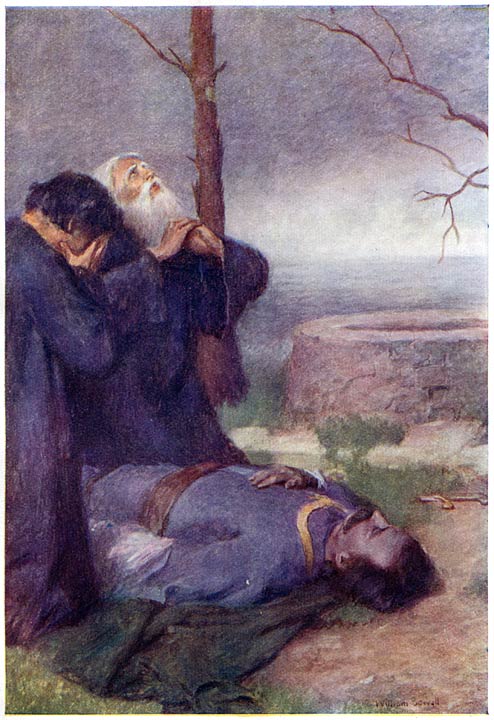
He lamented loudly the fate of Marko
There the aged igouman buried Marko but he raised no monument over the tomb, lest foes should learn the whereabouts of the hero’s grave and take vengeance on the dead.
Notes in this chapter
Note 1 · An instrument which emits droning monotonous sounds, and which resembles in many points the hurdy-gurdy. In olden times, in Serbia, this insNote 2 · In order to illustrate how firmly rooted is that belief throughout Serbia, the author quotes from his article (condensed): “How a FourteenthNote 3 · Tabor is a Turkish word meaning an army, or a camp.Note 4 · Other bards mention ‘Gratchanitza.’Note 5 · Despot was an honorary title of the Byzantine emperors, then of members of their families, and was later conferred as a title of office on vNote 6 · Divan, a Turkish word for “senate.”Note 7 · Koula is a Serbo-Turkish word for “castle.”Note 8 · Istamboul is the Turkish name for Constantinople.Note 9 · Firman is a Turkish word for an imperial “letter” or “decree.”Note 10 · Tovar is a Serbian measure, representing what a normal horse can carry on its back. It is now an obsolete term.Note 11 · Dervish is an ecclesiastic official amongst the Mohammedans. When applied to the laity it is used as a term of reproach.Note 12 · Literally, “until thy good luck calls thee,” and means in Serbia until she marries.Note 13 · This is a reference to Lazar, who fell at the battle of Kossovo.Note 14 · Kessedjiya means ‘fighter’ or ‘bully,’ and is the nickname of an Albanian chevalier-brigand Moussa, who defied for years the distant power oNote 15 · Arbanass is another appellation for Albanian.Note 16 · Dyugoom, a water vessel made of copper and enamelled inside.