A NEW YEAR.
Reading edition
Here you are, little Year. Did you come in the night, When I was asleep in my bed? And how did you find your way in before light, With no sun shining out overhead? Did you pass the old Year as he rushed out of sight With a pack that was heavy as lead? He looked just like you, oh! so shining and slim, When he made his bow twelve months ago; We all said "Good-morning" politely to him— It was manners, dear Year, as you know, And his hand was outstretched, and his eye was not dim, As he stood in his first morning glow. But his fifty-two weeks were so crowded with work, And he had such a handful of days, That you couldn't expect, since he was not a shirk, He'd be chipper and cheery always; His story was mixed up with brightness and mirk, And we'll speak of him only with praise. As for you, little Year, you are growing so fast As you stand in the other Year's place, That already the shadow that falls from the past Is weaving its veil o'er your face. Oh! happy new Year, may your happiness last, As you trot at the century's pace.

The All-New-York interscholastic football team for 1895 is as follows:
F. M. Brissel, Pratt Instituteleft end.
Jasper Bayne, Berkeley Schoolleft tackle.
Sands, Cutler Schoolleft guard.
Marshall Page, Trinity Schoolcentre.
H. J. Brown, St. Paul's Schoolright guard.
Parsons, Poly. Prep. Inst.right tackle.
Young, Berkeley Schoolright end.
S. V. M. Starr, St. Paul's Schoolquarter-back.
J. R. Higgins, Pratt Instituteleft half-back.
Carey, Col. Gram. Schoolright half-back.
F. Bien, Jun., Berkeley Schoolfull-back.
S. V. M. STARR, Quarter-back.
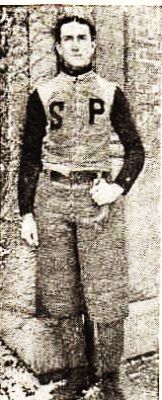
J. BAYNE, Tackle.
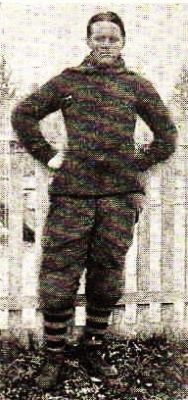
YOUNG, End.
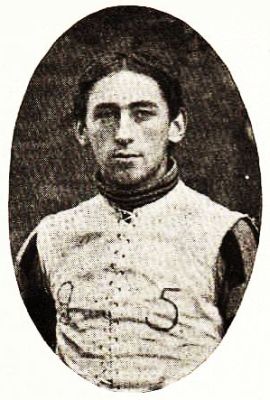
F. M. BRISSEL, End.
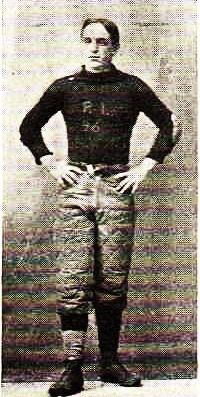
H. J. BROWN, Guard.
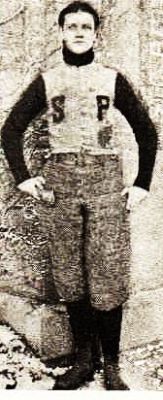
M. PAGE, Centre.
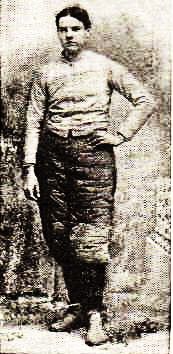
BANNERMAN, Substitute.
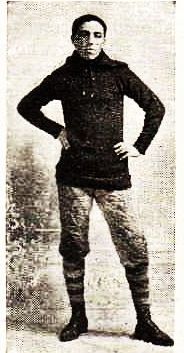
F. BIEN, JUN., Full-back.
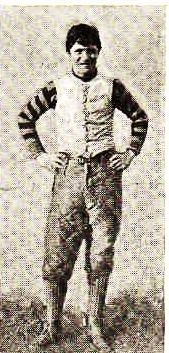
J. R. HIGGINS, Half-back.
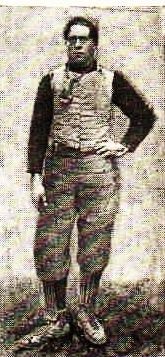
The substitutes for this team are Hasbrouck, Berkeley, and Loraine, St. Paul's, ends; Jesup, Cutler's, and Bowie, Pratt, tackles; Ruppold, Pratt, and Perry, Cutler's, guards; Rand, Berkeley, centre: Scott, Berkeley, quarter; Homans, Cutler's, Bannerman, and Lutkins, Brooklyn Latin, half-backs; O'Rourke, Trinity, or Mason, Poly. Prep., full-back.
The make-up of this All-New-York eleven for 1895 has called for careful consideration of the characteristics of each individual player, their amenability to discipline, and aptitude for team instead of individual play. Only under the most rigid discipline, and cheerful submission to it by the players themselves, can harmonious and successful team-play be hoped for. Science, muscle, and sand are the three absolute requisites necessary to the make-up of a winning team. That spirit of dogged determination to win under adverse conditions, and against overwhelming odds—that spirit which inspires a man to stubbornly contest every inch of ground, win or lose—is called sand. Without it in each individual player and in the team as a whole no eleven can be considered in championship form.
The All-New-York eleven for 1895 embody these characteristics in a great degree; and while it has been a task of no small moment to select the team from among so large a number of candidates as are represented in the New York and Brooklyn schools, there seems little doubt, all things being considered, that this team will stand on its merits alone, and truly represent championship form.
The choice of ends has been a hard one, but Brissel of Pratt for left and Young of Berkeley for right make a pair that, with one exception, overshadow all others seen this season. The exception is Hasbrouck of Berkeley, who must rank as first substitute. Brissel is eighteen years of age, and weighs 151 pounds. His work this year has shown great improvement over former achievements. He is strong on his feet, runs and tackles well, and is in every play. His powerful chest and shoulder muscles greatly aid him in breaking up interference with a dash and abandon that have made him a terror to backs who try plays around his end. Rarely is he hurt, and he is equally at home in offensive or defensive work. At running with the ball in criss-cross plays he has been a great success this season, and his dogged determination to gain ground for his team or prevent the advance of the ball by opponents has been conspicuous in every game played.
The choice of right end for a time lay between Young and Hasbrouck. The merits of each were fully considered, and Young was selected for the reason that he was less liable than Hasbrouck to be drawn into a play too soon, and thus put out of it. This has been Hasbrouck's greatest fault this year, and with the improvement made this season it is safe to predict that he will be in a class by himself next year. Young is nineteen years old, and weighs 164 pounds. He came to Berkeley from Lawrenceville, where he played end in 1894. He is an all-round man with few equals, rarely misses a tackle, and is very speedy down the field on kicks. He follows the ball with undaunted persistency, is cool and courageous, and thoroughly understands the game. Both on the offensive and defensive he is aggressive, and every moment of a game plays good hard football.
Jasper Bayne, of Berkeley, at left, and Parsons, of Poly. Prep., at right, are the tackles. Bayne was captain of the Berkeley team this season. He is eighteen years old, and weighs 192 pounds. He is a plodding football-player, and makes every ounce of his weight and strength tell. His breaking through, tackling, and running with the ball place him beyond question in the championship class. He plays steady and hard from start to finish, and is calculated to hold down and steady the entire line by his hard, brilliant work. Parsons is also a strong player. He blocks well, is a sure tackle, and runs very well with the ball. He is good in breaking through and in stopping plays, and has the knack of getting into every play.
Sands and Brown as guards make an almost invincible pair, and while they are both aggressive forwards, play only clean, hard football. Sands is from Cutler's, eighteen years of age, weighs 175 pounds, and is over six feet in height. He is built in proportion. His great strength makes, with his weight, a combination hard to get through, and to this must be added fleetness in running with the ball. Brown of St. Paul's is certainly a wonderful player for a boy. He is only fifteen years old, yet stands over six feet in height, and weighs 178 pounds. Possessed of great strength, he has learned to use it well and judiciously, and thus far has not met his equal on the gridiron. Cool, courageous, and determined, he plays steady and hard, and follows the ball very closely. At stopping centre plays he is a wonder. With Page in the centre this trio would put up a stone-wall defence, and on the offensive could not be held down or prevented from opening up big holes in the line for their backs.
Marshall Page, from Trinity, makes a gritty, sandy player, and is well calculated to give a good account of himself. He is another young man, being only fifteen years of age. His weight is only 165 pounds, but he makes up for his lightness by agility and strength. Under all conditions he is a cool and heady player, aggressive and determined, and by his quickness alone outplayed Rand in the final game for the N.Y.I.S.A.A. championship. He will be pounds better next year.
Behind the line the All-New-York team shows great strength in her ground-gainers and generalship. S. Starr, of St. Paul's, at quarter, is the right man in the right place. Had he played quarter-back for his team the entire season, taking into consideration the later changes in the team, St. Paul's would probably have retained the championship. His work is of a high order, and he is most conscientious in doing it. He is nineteen years old, and weighs 166 pounds. His passing is steady and true, and he is sure to get the ball promptly to the runner, and just at the proper time. He follows the ball closely, gets into every play, and tackles well.
At right half no one can displace Carey of Columbia Grammar. He is seventeen years old, and weighs 165 pounds. His playing this season, on a team that failed to make any showing other than to demonstrate its sportsmanship and sand, drew the attention of the entire League to him. Fleet of foot, strong, and aggressive, and withal a very heady player, he has honestly won a place on the All-New-York team. Higgins of Pratt, at left half, is in a class by himself. He is twenty years of age, weighs 170 pounds, and is over six feet in height. As a line-backer he has few equals, and with such a line in front of him as this year's team proves itself to be, could, with the aid of his other backs, tear up opponents in great shape. He has a record of .10³ for 100 yards, and is a good general athlete.
The substitute half-backs are clever players too. Lutkins should be ranked first, with Bannerman and Homans following. Lutkins is stockily built, and reminds me of a pocket-edition of McClung. He resembles the Yale man in the peculiar way in which he runs, seeming to go faster with one foot than the other. He runs very low and hard, and when tackled has a trick of twisting himself away from the tackler and eventually shaking him off.
The all-important position of full-back goes to Franklin Bien, Jun., of Berkeley. His work this year stands out in clear contrast to that of his opponents as superior in every detail. His development has been very fast, and for the simple reason that he has been willing to learn, and has listened to the advice given him. He is seventeen years old, and weighs 155 pounds. Captain Bayne has entrusted to him several times this season the giving of the signals and running of the team, and in every instance he has proved himself to be a general who thoroughly appreciated the strength of his own team and the weakness of his opponents. Not only is he a sure tackle, but he is one of the most dogged line-breakers, and a most valuable man in interference. His catching is sure, and his punting of a very high order. With Bien giving the signals it is safe to predict that no interscholastic team of this season in the New York or Brooklyn League could score against the All-New-York eleven for 1895. For substitute full-back I should choose Mason of Poly. Prep. He is the best man that has played the position in Brooklyn for some time. His kicking, running, and plunging are of a high order. He is large for his age, and weighs 165 pounds. The average weight of the team is 170 pounds, most uniformly divided. Add to this the playing-strength of each member of the team, and it will very readily be seen that the eleven is a remarkable one to represent the composite playing-strength of New York and Brooklyn preparatory schools.
Of the formation of the National Interscholastic Amateur Athletic Association I can only say a few words this week, but I shall go into it more extensively at an early date. For the benefit of the many readers of this Department who may have no other means of learning what progress was made at the convention held in this city on December 28th, we give here the constitution which was adopted on that occasion by the delegates present from the New York, Massachusetts, Long Island, New Jersey, and Maine associations:
CONSTITUTION OF THE N.I.S.A.A.A.
Article 1.—This organization shall be known as the National Interscholastic Amateur Athletic Association of the United States.
Article 2.—The objects of this association shall be to foster and promote physical exercise among all public, private, and preparatory schools of the United States.
Article 3.—Any interscholastic league, association, or club, composed of at least two schools, shall be eligible to membership.
Article 4.—The management of this association shall be entrusted to an Executive Committee, of which the President shall be a member ex-officio. They shall be elected for a term of one year, and no league, association, or club shall have more than one representative in the Executive Committee. Vacancies in the membership of the Executive Committee arising from any cause whatever shall be filled by the league, association, or club of which said student is a member.
Article 5.—Any league, association, or club desiring to join this association shall send to the Secretary a written application for membership, said application to be acted upon by the Executive Committee at the next Convention.
Article 6.—The annual Convention of this association shall be held on the evening of the annual meet at 8 o'clock, in the same city where the annual meet is held. The annual field meeting shall be held on the afternoon of the last Saturday in June of each year.
Article 7.—A special meeting may be called by the Secretary at a written request of any league, association, or club belonging to the National Interscholastic Athletic Association, provided that notice of such meeting be sent to every league, association, or club at least fifteen days before the date assigned for such meeting.
Article 8.—At all meetings each league, association, or club may be represented by no more than three delegates, each of whom may take part in a discussion, but in the discussion of any matter each league, association, or club shall be entitled to only one vote. No voting by proxies shall be allowed.
Article 9.—The annual dues shall be $25, payable at the annual meeting, but no league, association, or club shall be considered a member until its first annual dues have been paid.
Article 10.—Any violation of the rules of this association by members shall render them liable to suspension by the Executive Committee until the next meeting of the association, and to expulsion by a two-thirds vote of the league, association, or club representing such meeting.
Article 11.—No one should represent any league, association, or club at the annual field meeting who has attained the age of twenty-one years.
Article 12.—The Constitution may be amended by a two-thirds vote of the members present only.
In addition to this constitution the following by-laws were adopted:
The Executive Committee shall assume entire control of the annual games, and shall decide all the protests.
The annual meeting of the Executive Committee shall be held the evening before the annual field meeting.
Winners and second men in each event in the field meeting in the league, association, or club may compete at the annual field meeting of this association.
These few paragraphs, which look so simple as printed on this page, represent a vast amount of work and thought, and the young men who formulated them at the convention, and spent many hours in discussing them, deserve the gratitude and support of all their sport-loving fellows. There may be some points upon which all scholastic sportsmen will not agree; but instead of picking out these weak points, let me urge them rather to overlook them, and to devote their energies toward insuring the prosperity of the new association.
In the next number of the Round Table we shall continue the series of illustrations of "Field Sports in Detail" begun in No. 822, with a description and commentary upon throwing the hammer.
The Graduate.
Walter Baker & Co., Limited, Dorchester, Mass., the well-known manufacturers of Breakfast Cocoa and other Cocoa and Chocolate preparations, have an extraordinary collection of medals and diplomas awarded at the great international and other exhibitions in Europe and America. The house has had uninterrupted prosperity for nearly a century and a quarter, and is now not only the oldest but the largest establishment of the kind on this continent. The high degree of perfection which the Company has attained in its manufactured products is the result of long experience combined with an intelligent use of the new forces which are constantly being introduced to increase the power and improve the quality of production, and cheapen the cost to the consumer.
The full strength and the exquisite natural flavor of the raw material are preserved unimpaired in all of Walter Baker & Company's preparations; so that their products may truly be said to form the standard for purity and excellence.
In view of the many imitations of the name, labels, and wrappers on their goods, consumers should ask for and be sure that they get the genuine articles made at Dorchester, Mass.—[Adv.]
SICKNESS AMONG CHILDREN
is prevalent at all seasons of the year, but can be avoided largely when they are properly cared for. Infant Health is the title of a valuable pamphlet accessible to all who will send address to the New York Condensed Milk Co., N. Y. City.—[Adv.]