CAMERA CLUB PRIZE COMPETITION.
Reading edition
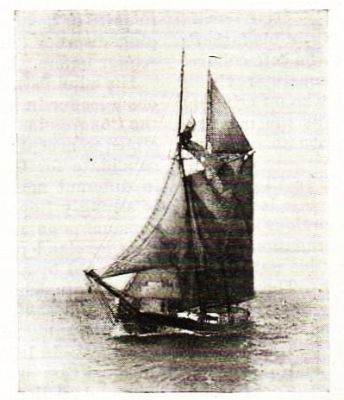
Never since the Round Table first offered prizes for best specimens of photographic work has the competition been so widespread or so many pictures submitted for prizes. The pictures sent have been, as a rule, much finer than in former years, showing that our club is raising its standard of work, and that the members profit by the hints given in the Camera Club Department. This was shown especially in the finishing and mounting, very few pictures being sent in on small cards. The picture which won first prize in marines had no name. This picture is well finished and mounted, and justly merits first prize. The second prize for marines was won by a Lady of the Round Table, and this also having no name, it has been called "A Good Take," and is a picture of a number of fishermen just shaking out the last fishes from their net on a huge pile which lies on the ground; the boat is drawn up on the beach, and a number of interested spectators, fishermen, are looking on.
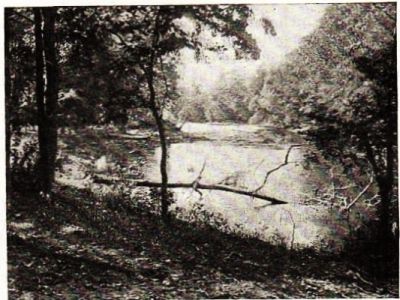
In landscapes the first prize was given to a Maryland landscape. A wooded hill slopes down to a winding river, glimpses, of which can be seen through the trees, and perspective and distance are given by the range of mountains on the horizon. A large log marks the foreground, and near the edge of the river can be seen figures of several boys about to build a camp fire, the figures being quite small, and not so conspicuous as to first attract the eye when looking at the picture. The point of view was well chosen, and the picture would make an excellent color study. The second-prize picture was entitled, "Here are cool Mosses deep," and was a fine picture.
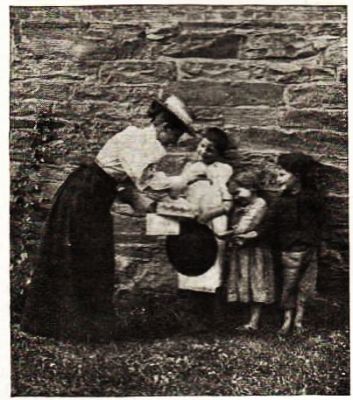
The first prize for figure studies was given to a picture entitled, "Would you like a Piece?" and represents a young lady offering candy from a box of fine bonbons to three little children whom she has evidently met on her walk. The expressions on the faces of the children as they bashfully accept the proffered sweets are excellent, and, if they were posed for the picture, evidently entered into the spirit of the scene. The second prize was given to a picture entitled, "I won't stand still." The finishing of this picture showed much artistic taste and originality. The artist made a crayon drawing of a scroll, pinned a butterfly, a lace-winged fly, and two or three bugs on it, and photographed the whole. He then printed the picture in the centre of the scroll.
In the senior or "Open to All" competition the first prize in landscapes was awarded to a picture entitled, "Sun and Shade," and the second prize to a picture with no name, but showing a small stream in the foreground, with a road leading off into a wood. Both prize-winners sent in many other excellent specimens of work.
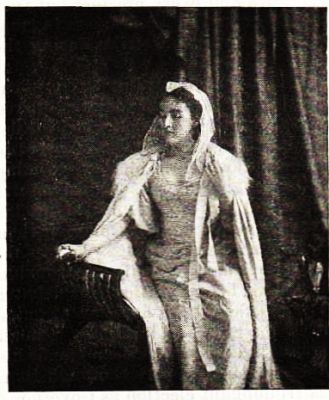
The first prize picture in figure studies was awarded to one entitled, "He cometh not." A young lady in evening costume, with opera cloak and a scarf, sits holding a watch, at which she is looking, evidently much annoyed at the non-appearance of her promised escort. The subject, though rather a hackneyed one, is well treated, the lighting, pose, and expression being above the average of photographic work. The mounting and finish of the picture are also very fine. The second prize was awarded to a picture entitled, the "Checker-Players." An elderly man is playing checkers with a young boy, perhaps his grandson. He has made a move which puts the younger one in an unfortunate position, and the puzzled look on the boy's face as he studies the game is very good. A little girl, the boy's sister, sits at the side of the table, looking up into her brother's face, as much as to say, "Now you are in a box sure!"
THE CAMERA CLUB FIRST-PRIZE WINNERS.
First Prize, Senior Class—Figure Studies. By H. E. Murdock.
First Prize, Junior Class—Marine Views. By Sir Knight Joseph Lovering.
First Prize, Junior Class—Figure Studies. By Sir Knight Andrew M. Phillips.
First Prize, Junior Class—Landscapes. By Sir Knight Frank Smith.
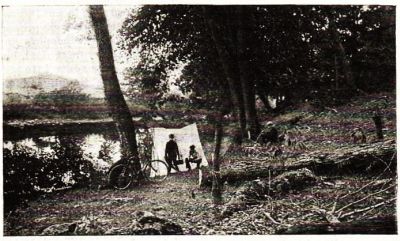
First Prize, Senior Class—Landscapes. By R. Hamilton Craig.

Ice-boating is the sport that appeals most strongly at the present season to those of us who live near a lake or a river and have even the slightest knowledge of sailing. It is a sport that many people discourage because of the danger supposed to be connected with it, but as a matter of fact it is less dangerous to sail and handle an ice-boat than it is to sail and handle a cat-boat. The only two things to be guarded against while running an ice-boat are sailing upon weak ice or near the edge of open water, and getting the runners caught in a crevice. In the one case you risk drowning, in the second you will very probably smash your machine and get mixed up in the wreckage yourself. But, compared with the chances for a ducking when sailing a cat-boat, the probabilities of a plunge from an ice-boat are very remote; and as for getting the runners into a crevice, only the most careless or incompetent helmsman need fear such a mishap.
The idea prevails among those unacquainted with the sport that, because ice-boats skim along so rapidly over the frozen river, it is therefore particularly dangerous. This, however, is an incorrect conclusion to draw, for ice-boats are so easily controlled that they can be brought to a stop almost instantly, and they answer their helms so rapidly that they can be most easily steered and turned out of danger. As in everything else of this nature, however, the sportsman, whether he be young or old, must use judgment and care in the handling of his machine, otherwise he is bound to come to grief. But such an individual would undoubtedly come to grief on a bicycle or on skates, or even in walking through the crowded streets of a busy city.
PLAN FOR HOME MADE ICE BOAT.
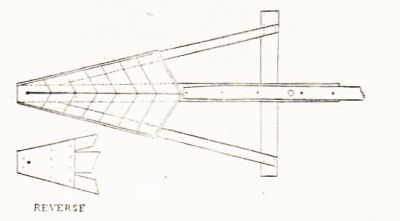
The construction of an ice-boat is the point I want to touch on here, rather than upon the improbability of suffering bodily harm from taking part in the sport. Of course it is always possible to buy an ice-boat, new or second-hand; but it is much cheaper and certainly more pleasing and profitable to build your own craft, and it is by no means a difficult task. The boat proper is a triangular wooden frame, partly covered at the apex or stern. This covering, or deck, is necessary for the accommodation of the crew. The frame is built to rest on three skatelike runners, two of which are at the front—at either end of the base-line of the triangle—and one at the stern, the latter being the rudder. This rudder is controlled by a tiller, similar to the tiller of a sail-boat, and it is with this that all the handling of the machine is done, for the sails are seldom touched after they have once been set.
Many rigs have been tried on ice-boats, but experience has shown that the simple balanced jib-and-mainsail rig is the best. As a rule the jib sheet is set on a traveller, so that no trimming down is required for going about. If it is possible to avoid it, an ice-boat should never be made to run before the wind, because the craft cannot be made to behave well under such conditions. There being no resistance to speak of, such as a cat-boat meets in the water, the ice-boat behaves badly when sailing free, runs up against the wind, and falls back continually. The best plan when sailing one of these machines off the wind is to take a zigzag course back and forth in the general direction of the wind, instead of running directly before it.
The best material for the construction of an ice-boat is oak, but good yellow pine will do for the frame if oak is found to be too expensive. The platform should be built of light pine, with a low railing around the edge. It is well to screw a few cleats and eye-bolts to this deck, to which it may be found convenient to fasten straps and ropes to hold on by when running fast or making turns. I give no proportions for construction, because it is best for amateur carpenters to adapt these to their resources. The general proportionate relation of the various parts of the machine can be easily seen from the diagrams.
The frame of an ice-boat is subject to severe strain, and ought, therefore, to be made as strong as possible. It should be put together with bolts and screws. Nails may be used for the platform, but screws are preferable. The mast should be of pine, and must be rigged with strong stays—of wire, if possible. The bowsprit in the same way. When it comes to the making of the rudder a blacksmith will have to be called in. The tiller and rudder-post will have to be forged of iron, as shown in the diagram, and should be carefully made, because much depends upon their strength and durability. The head of the rudder-post must be squared off, and the tiller fixed firmly upon it. The steering runner, or rudder proper, underneath, is secured to the iron rudder-post by a bolt, and it is advisable to slip a large iron washer over the post to give it a smooth bearing.
RUNNER AND BLOCKS.
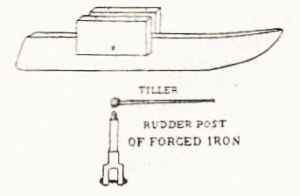
For the runner shoes I should recommend soft iron. This becomes very much heated, to be sure, when the boat is running, but the soft metal chills rapidly as soon as the machine comes to a stop. This alternate heating and chilling soon give the runner's edge a degree of hardness fully equal to that of steel. (Let me caution novices at ice-boating against touching their runners, for the metal becomes so heated that it can inflict painful burns.) The runners proper—that is, the wooden part before the metal shoe is put on—should be cut of stiff, heavy oak. They should be carefully bored, and attached to the frame with bolts. The blocks that hold the two forward runners should be firmly bolted to the forward plank of the frame—the one that forms the base of the triangle—and set so as to hold the runners firmly. The iron shoes are screwed to the runners. The metal must previously be drilled, and the screws which hold the shoes to the wood must be counter-sunk so that their heads may not touch the ice.
To steer an ice-boat well considerable practice is required. There is no perceptive "feel" to the helm as there is to that of a water craft. The tiller turns so easily that great care and patience are required to attain the proper "touch," but when this is once acquired it is delightful to feel the power of a finger-touch over so great an engine. The manner of stopping an ice-boat is similar to that of stopping a sail-boat, in that you round up into the wind; but an ice-boat rounds up much more quickly, and is held fast by jamming the helm hard down so that the rudder lies parallel to the fore cross-beam—the base of the triangle.
The majority of pictures of ice-boats that I have seen show the machines keeled over and speeding along over the ice on two runners, with a lot of terrified-looking passengers gripping beams and ropes. This is all very well for purposes of illustration, but it is not in exact conformity with fact. Ice-boats do sometimes "rear" as the pictures show us, but it is not because the steersman desires such conduct. Rearing is a thing to be prevented and not to be encouraged. Ice-boats have three runners, and they are intended to run on three runners, not on two. A good sailor will keep his boat down on all three runners all the time. If the wind is so strong as to lift the windward runner, send a man out on the end to hold it down with his weight. There is no danger in this position, and considerable sport.
The speed of an ice-boat is greater than that of anything but a locomotive, and under favorable conditions the boat can even distance the engine. A mile a minute has frequently been made by such boats on the Hudson River. I should not advise young ice-yachtsmen to attempt too great speed, however, until they have become thoroughly familiar with their craft; until they have learned every trick of the machine, and have secured such control over the tiller that they are masters of the ice-boat, and the ice-boat never master of them. Above all things, shun thin ice as you would the open sea, and keep a constant lookout for cracks and rough spots. Under such conditions you are beyond danger, and you have at your command one of the finest of sports, and one of the keenest of sensations—rapid travel.
OFFICERS OF THE NATIONAL INTERSCHOLASTIC ATHLETIC ASSOCIATION.
C. G. McDAVITT, President.
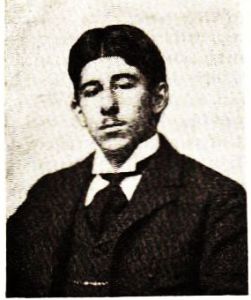
H. I. PRATT, Vice-President.
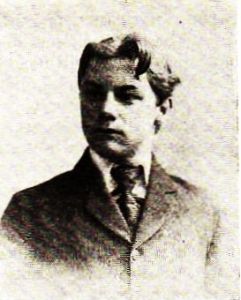
H. N. DUNBAR, Secretary.
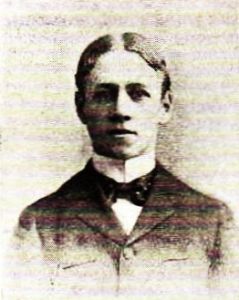
O. E. MICHAELIS, Treasurer.
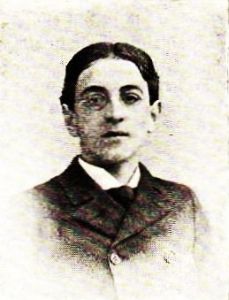
The officers or the National Interscholastic Athletic Association, whose portraits appear this week, are all prominent workers in their respective organizations. Mr. McDavitt, in addition to being president of the National Association, is president of the New York I.S.A.A.; Mr. Pratt is president of the Long Island I.S.A.A.; Mr. Dunbar is president of the New England I.S.A.A.; and Mr. Michaelis is secretary of the Maine I.S.A.A.
The address of the secretary of the National I.S.A.A. is H. Nelson Dunbar, Esq., 552 Shawmut Avenue, Boston, Massachusetts. All communications on matters connected with the association should be addressed to him.
Dr. White, of the Berkeley School, says that he feels sure "the head-masters of the preparatory schools throughout the country will look with anxiety upon the formation of a National Interscholastic Athletic Association," and he gives his reasons for this belief in a letter to a New York paper; but I believe a great many of his objections, if looked at from a slightly different point of view, can be turned to the favor of the new organization. Dr. White has, to a certain extent, condemned the weaknesses of the young association, instead of suggesting improvements and remedies. He begins, for instance, by saying that "the avidity for athletic competitions among boys has already been fostered too keenly," and he adds that "we already have so many contests of a competitive nature that the schools cannot without danger stand the pressure of still another and more engrossing series."
In advocating and encouraging the formation of a National Association, the main object of this Department was to secure the organization of a parent or controlling body that would bring order out of the present chaotic state of interscholastic contests. The holding of an annual field meeting was purely a secondary consideration, the principal desire in urging the formation of the association being to secure uniformity in the schedule of events contested at minor meets, establish a standard of record, and to fix a cast-iron definition of what constitutes an amateur with regard to athletic competition among schools. In favoring the holding of a field day this Department believed, and still believes, that the many smaller school meetings would be done away with, and that interscholastic sport would thus be rid of one of its worst features. Take New York city as an example. Almost every school in the local League holds a field day previous to the big meet in May controlled by the I.S.A.A. These little meetings could be done away with altogether. I am heartily in accord with Dr. White when he says that "the avidity for athletic competitions among boys has already been fostered too keenly."
That a National Association of schools can never be a representative one I think is not true. It is certainly not true if the object of the association is to be the promotion of pure sport, and the regulation of events that interscholastic associations in every part of the country shall compete in. And that, I hold, is the object of the association. I repeat that an annual field meeting is purely a secondary consideration. If it should be found convenient to hold one, the contest would be beneficial, and would doubtless be attended by representative athletes from widely separated localities; but such a contest would merely be a small evidence of the good work the association had done. It would also serve to establish a definite standard of record, which it is certainly advisable to have. But I cannot say too emphatically that in urging all these arguments I consider them as purely secondary to the main and fundamental objects of the association. When Dr. White says that the date fixed for the meeting (the last Saturday in June) would of necessity exclude a large percentage of the best athletes from the preparatory schools, I agree with him fully. This Department has already gone on record as being opposed to that date, and has suggested to the Executive Committee that an earlier time be chosen. This Department's objection, however, was not based upon the probable absence of a "large percentage of the best athletes," but on the ground that the date of the meeting would come at a time when senior school-boys must be giving all their time and attention to the college entrance examinations. Dr. White refers to this, too; and I don't think he would find any more evil in the holding of a national meet in May than in a league meet at about the same date.
Where this Department fully agrees with Dr. White is in his objection to the newspaper notoriety connected with a big meet, and to the evil results of too much politics in the executive work. The latter is by all means the worse of the two, but I have hoped it could be vastly diminished by having the work distributed at centres so widely separated from one another that the petty jealousies of local efforts would be entirely done away with. As for the newspapers, they are a condition and not a theory. It is the mode of the century to treat events by columns rather than by lines, and I doubt if in the end (the small meetings being eliminated) there would be more type set about interscholastic matters to describe one great occasion than to record a swarm of lesser events. It is well for the principals of schools to take an honest interest in this new movement, and if the preponderance of opinion is that the objects desired cannot be attained along these lines, there ought to be enough wisdom among the older heads to point out the better way.
A new track-athletic league has been formed by the larger boarding-schools of the Eastern States, and it is proposed now to hold an annual field meeting in the spring, alternately at New Haven and Princeton. The present members of the new association are Lawrenceville, The Hill School, Westminster, and Hotchkiss; and it is probable that Worcester and Andover will join at the next convention of the managers, which is to be held during the Easter recess. This league ought to prove a very strong one, for the schools in it are all prominent in track sports. If they should become members of the National Association, as they doubtless will, they would send one of the strongest teams of any association excepting New York and Boston.
Interest in the National I.S.A.A. seems to be general among these large schools. The Phillipian, of Andover, has an editorial on the subject, and urges the track athletes to go into training at once, closing with the statement that a strong team is necessary this year, for "it means not only competing in Boston, but also the chance of winning laurels for Andover in the All-America competition in New York." If these large schools, such as Andover, and Worcester, and Lawrenceville, and the most important Boston schools, determine that a national championship is something worth working for—as it certainly is—-they will give the New York athletes a hard tussle for supremacy, and the latter may as well realize at once that it is none too early for them to begin hard training.
Training for baseball has already begun in many quarters, especially at the large schools in the country. As soon as space permits, this Department will offer some suggestions for training and preparation which may prove of assistance to captains and players.
The Long Island League has already arranged its baseball schedule for this spring as follows:
April 18—Brooklyn Latin School vs. St. Paul School.
April 22—High-School vs. Adelphi Academy.
April 25—Pratt Institute vs. Polytechnic Preparatory.
April 29—Brooklyn High-School vs. Brooklyn Latin School.
May 2—Pratt Institute vs. Brooklyn Latin School.
May 6—Brooklyn High-School vs. St. Paul.
May 6—Polytechnic Preparatory vs. Brooklyn Latin School.
May 9—Pratt Institute vs. Adelphi Academy.
May 16—Pratt Institute vs. Brooklyn High-School.
May 16—Adelphi Academy vs. Brooklyn Latin School.
May 16—Polytechnic Preparatory vs. St. Paul.
May 23—Polytechnic Preparatory vs. Brooklyn High-School.
May 23—Pratt Institute vs. St. Paul.
May 27—Adelphi Academy vs. Polytechnic Preparatory.
June 3—Adelphi Academy vs. St. Paul.
It will be seen that their season begins early, this being necessitated by the number of teams in the League. I hope the schedule will be carried out completely, and that the unfortunate system of forfeiting games—usually through fear of defeat—will not be carried on this spring as it was last fall in football.
Dick Gorham.—Maroon is the college color of St. John's, Fordham.
The Graduate.
A GOOD CHILD
is usually healthy, and both conditions are developed by use of proper food. The Gail Borden Eagle Brand Condensed Milk is the best infant's food; so easily prepared that improper feeding is inexcusable and unnecessary.—[Adv.]