QUESTIONS FOR YOUNG MEN.
Reading edition
ON COURTESY TO WOMEN AND GIRLS.
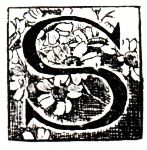
omebody once said that you could tell how civilized a nation was at any one time by learning how that nation treated its women at that particular period. You go to some of the towns in Europe to-day, and you find women doing the hard labor, drawing carts beside dogs, carrying bundles and heavy articles about. Go among savages in Africa, and you find women doing the hard labor of life, the men reserving for themselves the hunting, the loafing, and the fighting. As nations grow more civilized, the women become more the objects of care and solicitude, and in England and the United States to-day they are treated with an amount of forethought and attention never known before. And yet even in America to-day many a young man, who would instantly deny any charge of discourtesy to a lady, will do little things, half unconsciously, that are neither courteous nor becoming a gentleman.
This comment does not refer to such acts as taking off one's hat to every woman or girl one knows, nor to any of the ordinary acts of politeness. Such are understood in these days. It does refer, however, to slight matters that mark the man or boy who knows what good manners are, and who invariably bears himself well in the presence of others. Such a boy never speaks to a girl or woman, if she is standing, without rising himself. I saw at a large restaurant, a short time ago, a man approach three women and three men who were eating supper. No one of the three men knew the fourth personally, but as he approached and spoke to a friend among the women, all three arose, and remained standing until the new-comer was gone. It was not a mark of courtesy to the fourth man. It was a signification to the three ladies that for the time being the new arrival was allowed the privilege of speaking to any of them if they chose to invite it. That is merely an example of a small point, which, perhaps, was not necessary, but the action not only pleased the women, but certainly stamped the men as gentlemen.
Many a boy fails to rise from his chair when his mother enters the room, while he would get up at once if a stranger entered, and one would suppose that his mother, who is more to him than the rest of womankind put together, should, to say the least, have from him the same marks of courtesy as strangers. In fact, you can tell a boy's character pretty accurately by the way in which he treats his mother; for as a mother has probably done and will do more for her son than any other woman—with perhaps one exception—will ever do, so he ought, in return, to treat her as his most valuable possession. His courtesy, his chivalrous and knightly bearing towards her are never thrown away.
She sees it all, and thinks more of it than any one else, and he need never fear that his thoughtfulness is thrown away. Perhaps, occasionally, such conduct may to a certain extent go unnoticed by some other women, but by his mother never.
In the same way one's conduct to one's sister is a test of good breeding. Sisters are not mothers, by any means, but still they demand courtesy from their brothers. Perhaps a sister can be pretty hard to get on with at times, but nevertheless she is a woman, and she can do certain things without any fear of retaliation, because the nobility of the man in the boy is bound to respect the woman in his sister.
Let her tease and tantalize, but remember that the best way to cure her is to treat her so like a lady who could never descend to such methods that she will soon be forced to stop in order to live up to the character you have given her. Mothers come first, therefore, over all the world, and sisters next. Treat them as carefully, with as much thoughtfulness, as you do anything else in your life, and with even more care, and then we can discuss the rest of womankind.
LINCOLN AND THE POOR WIDOW.
The 12th of February, Abraham Lincoln's birthday, brings to our thoughts stronger than ever reminiscences of this noble man's life. Hundreds of books have recorded and will perpetuate his good deeds for centuries to come; but it is a pleasure to read now and then of some little act of kindness that will stand alone illustrating the breadth of this man's sympathies and the nobility of his character. During all that dreadful period when the civil war was ravaging the country Lincoln held the reins of the government, and although worn out with unceasing toil, he never neglected an opportunity to help those who suffered.
One day a poor woman, whose tears had worn furrows down her cheeks, gained an audience with Lincoln, and in a few words related the sad tale of her husband, who had fought in the Union army only to lose his life, and of her three boys who were then fighting. She requested the discharge of her eldest boy, that she might have some one to support her. Lincoln's heart responded to the appeal, and he replied, "Certainly, if you have given us all, and your prop has been taken away, you are justly entitled to one of your boys."
The poor woman went away light of heart, only to return later, tearfully begging the release of her second son. The discharge of the first son had come too late. He was killed before it reached him. Sadly Lincoln sat down and wrote the requisite order for the release of the second son, and rising, handed the paper to the afflicted woman, saying, "Now you have one and I have one of the two boys left; that is no more than right." Weeping with joy, the poor mother blessed Lincoln, and hurried out to send her precious order.
WILFRID'S WISH.
The wild fantastic snow-drifts Upon the orchard hill Look like a lot of billows Asleep and lying still. I wish they'd take to rolling, And then, wind-buffeted, I'd be a jolly sailor Upon my scarlet sled. R. K. M.
DISCOVERY OF COPPERPLATE ENGRAVING.
Every one has noticed on his visiting-card the extremely delicate lines of his name, and most every one knows that they are produced by printing from an engraved copperplate. Like many other things of use and beauty, this art of copperplate engraving was discovered through the merest accident, by the goldsmiths of Florence, in the fifteenth century. It is a historical fact, however, that, one day, an engraver on gold, wishing to take a proof of his work, made the usual sulphur cast, and then filled up the lines with lamp-black, thus enabling him to see exactly how his work looked. While occupied in doing this it occurred to him that possibly the same results could be obtained by filling up the original engraving with lamp-black instead of making an impression of it, and filling up that. Struck with the idea, he put it into practical use, and with a little damp paper succeeded in getting a fair impression from the engraving. The discovery was communicated to other workers in this art, and they hailed it with joy, as it saved all the arduous trouble of making sulphur casts, but they never saw the full value of the discovery, and consequently the art of plate-engraving lay for almost a century before its true import was discovered and brought out in all its great and beautiful results. To-day collectors of plate-engravings rave over the crude results of earlier times, and search the world for examples of these early masters to add to their collections. Many of these collections have been presented to museums, where they may be seen and appreciated by the people.
This Department is conducted in the interest of stamp and coin collectors, and the Editor will be pleased to answer any question on these subjects so far as possible. Correspondents should address Editor Stamp Department.
Almost every mail brings me a batch of inquiries as to which stamps are sure to advance in value in the near future, and asking advice as to buying up a quantity of certain stamps. To all such inquirers I would say that collecting stamps for pleasure and speculating in stamps for profit are entirely distinct things. Harper's Round Table is not concerned about speculators. They may make money or lose it, as the case may be, but collectors asking advice or information in the making up of an album are always welcome. Of course philatelists rejoice when they find that a stamp bought ten years ago for 25c. is now worth $25, and that a collection on which a $100 had been spent in ten years is now worth $1000. That is simply our common humanity. But the true philatelist rejoices less in the money value of his collection than in the fact that he possesses complete sets of certain countries, has beautiful copies, or unusual shades of common stamps, etc.
Thirty-five years ago collecting began in the U.S. Almost every boy had access to the family letters or those of some business house. The great ambition of every boy was to get more kinds than any other boy of his acquaintance could boast. Stamps had little value, and many a rare stamp has been traded for an absolutely worthless common stamp. For instance, the writer had literally hundreds of 18 kreuzer Würtembergs in strips of three, four, or five copies, and hundreds of Western Australia—sixpences and shillings. These were all exchanged for 20 or 25 centimes, French; 1d, 2d, 4d, and 6d, English; 1, 3, 6, and 9 kreuzer, German, etc.—an exchange of diamonds for pebbles, according to the present stamp standards. And yet I sometimes think we early collectors got a great deal more pleasure from our stamps than the present army of collectors. Even when we got to know that some stamps were scarcer than others the speculative element was not predominant.
G. A. Hall.—Any U.S. printed in two colors in which the centre is reversed is valuable.
R. Wostom.—The Danish coin is no longer current, and is worth bullion only. The 5c. piece can be bought for 10c.
R. S. Chase.—You have not allowed time enough for your Japanese correspondent. It takes three and sometimes four months to exchange letters in ordinary course.
N. Welfare.—The Samoan Express is a reprint. The post-card is worth face only.
E. Kjan.—See advertising columns for stamps or albums.
Francis Paul, 95 Nott Ave., Long Island City, wants to exchange U.S. unused stamps for foreign unused stamps.
N. G. Van Cise.—The U.S. stamps are printed in sheets of 200 or 400, and are cut apart after printing. The guide lines are printed heavily to show where to cut.
G. W. B.—Many of the 1869 blue 3c. stamp can be found with very faint marks of grill, and some with none at all. The rare reprints are on a different paper, and are distinguished by paper only. The New Zealand revenue stamps can be used for postage, but I fancy very few high values are really used for that purpose. Caveat emptor.
Philatus.