Book 3 — CHAPTER II. WHAT MAY BE SEEN ON THE EARTH. (continued 2)
Reading edition
Perhaps, therefore, we must not blame the farmer for the hostility with which he pursues it, especially if we are to accept as a true picture of its doings the sketch recently drawn by a popular writer:—
"It is easy to understand that an insect which undermines land in this way must cause great damage to cultivation (!). Whether the crops serve it for food or not, they are not the less destroyed by its underground burrowings. Lands infested by the mole-cricket are recognisable by the colour of the vegetation, which is yellow and withered; and the rubbish which these miners heap up at the side of the openings leading to their galleries, resembling mole-hills in miniature, betrays their presence to the farmer."
If, I say, this be a true picture, we cannot wonder at the means employed by the farmer to clear his fields of such dangerous tenants. The plan generally adopted is to dig, at intervals, a number of little trenches, which are filled up with cow-dung, well trodden down. The supposed root-eaters assemble in these warm nests; and every fourth or fifth day, a labourer, armed with a pitchfork, scoops up the manure at a single stroke, and scatters it over the ground, while another crushes the unfortunate Gryllotalpæ as fast as they make their appearance.
The Earwig.
Next to the domestic fly, the earwig is, perhaps, one of our commonest, and, let us add, one of our most troublesome, insects. Whence comes its popular appellation? From a mere fable. To amuse the silly—alas! how great their number!—marvelling, without doubt, at the spectacle of an insect's tail armed with strong pincers, some jester wished to transform it into a terrible animal; and therefore he pretended that it introduced itself into the human ear, and from thence penetrated to the brain, with the view of driving out its proprietor,—i.e., the mind or spirit which animates it. Only, the originator of this absurd bugbear forgot one little fact: there is no opening by which the ear can communicate with the brain! As for the pincers, they are not so formidable as they appear. This character, however, has been considered a sufficient foundation by the naturalists, even by Linnæus himself, for the insect's scientific name, Forficula auricularia, which is almost literally translated by the French oreille-pince,—our English earwig or ear-piercer. (Fig. 64.)
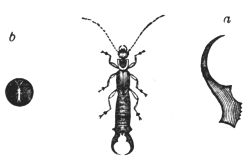
Fig. 64.—The Earwig (Forficula auricularia).
What dress is to man, their wings are to insects; by these we distinguish them, at the first glance, from one another. The elytra,—those horny sheaths which protect the membranous wings,—embrace, in the Coleoptera, the entire upper surface of the long annulated abdomen, and resemble vari-coloured chlamydes. But now, look for the elytra of our Forficula. You will hardly believe that they are represented by this kind of abbreviated light-brown jacket, which does not extend below the middle of the back. Do you observe yonder whitish spots? They indicate the tips of the wings, which are longer than their covers. Lift up one of the elytra with your penknife, and you will find that the wing which it partly screens is worth your attention. The fore part (we should call it the upper, if the animal walked erect like a man) is straight, and without a fold. Raise it with a pin to see the posterior or lower part. Observe, it curves underneath so as to bind the intermediate portion like a fan. But this flabelliform wing,—of tolerable dimensions when unfolded,—seems intended by the Creative Thought only to mark its unity of plan: the earwig does not fly,—it secures its food by crawling.
The elytra and the wings, inconspicuous as they are, produced so great an impression on the early naturalists, that they made them the principal characteristics of an entire order of insects. De Geer, a celebrated Swedish naturalist, named them the Dermaptera (from δέρμα, skin, and πτερόν, wing), in allusion to the transparent skin-like appearance of the elytra. This name, though adopted by Kirby, has not been preserved. A French entomologist suggested the designation which is now in use,—Orthoptera (from ὀρθός, straight, and πτερόν),—referring to the manner in which the wings are folded underneath the elytra.
Here we must pause to recapitulate for the benefit of our younger readers, and to avoid confusion, the various orders into which the insect world is divided.
1. Aptera (from α, without, and πτερόν, a wing),—wingless. Examples—Flea, louse, chigo.
2. Diptera (δίς, two, and πτερόν),—two-winged. Sub-divided into Nemocera, having six-jointed antennæ; Brachycera, having three-jointed antennæ. Examples—Gnat, tipula; May-fly, gad-fly.
3. Hemiptera (ἕμι, half, and πτερόν),—half-winged. Sub-divided into Heteroptera, with wings of different textures; Homoptera, with wings of one substance. Examples—Land-bug, water-bug; cicada, lantern-fly.
4. Lepidoptera (λεπίς, a scale, and πτερόν),—scaly-winged. Examples—Tiger-moth, butterfly, silkworm.
5. Orthoptera (ὀρθός, straight, and πτερόν),—straight-winged. Examples—Earwig, cockroach, locust.
6. Stymenoptera (ὑμήν, a membrane, and πτερόν),—membranous-winged. Examples—Bee, wasp, ant.
7. Neuroptera (νευρόν, nerve, and πτερόν),—nerve-marked wings. Examples—Dragon-fly, caddis-fly, ant-lin.
8. Strepsiptera (στρεψις, a twisting, and πτερόν),—curled or twisted wings. Examples—Xenos, elenchus.
9. Coleoptera (κολεός, a sheath, and πτερόν;),—sheathed wings. Examples—Beetle, cockchafer.
The order of Orthoptera, with which we are now concerned, is not very well known. The reason is, perhaps, that the insects belonging to it—earwigs, cockroaches, grasshoppers, crickets—are not less disagreeable than useless, so far as man is concerned. Being nearly all of them omnivorous, like man himself, they frequently aid him, very much against his inclination, in the consumption of natural products of every kind.
It has been remarked that the species of great animals are far fewer in number than those of the little. This remark applies with peculiar force to the Orthoptera, which do not include nearly so many small species as the Coleoptera.
The earwig is the type of the tiny group of the Forficulidæ, of which two species only are known to the common world—the Forficula auricularia and the Forficula minor.
The first species everybody is acquainted with. We have already spoken of its elytra and its wings; but we now say a word upon the two extremities of its body. The two antennæ, which crown the head, are extremely mobile, owing, of course, to the numerous articulations of which they are made up. These are fourteen in number (if we include the base, which is itself composed of two movable parts). In reality, however, there are but twelve; for we ought to eliminate the base,—because, in form and size, it differs greatly from articulations properly so called,—and, at the same time, to regard as one the articulation or joint inserted in it. In fine, I am of opinion, contrary to the general conclusion, that the antennæ of the earwig consist but of twelve articulations, bristling with hairs, and easily counted almost by the unassisted eye. With the help of a microscope, the observer can easily distinguish the large nervure traversing them from top to bottom, and communicating to the antennæ their characteristic sensibility and mobility.
The brownish-coloured abdomen, composed of imbricated rings, forms, in itself alone, upwards of half the body. The animal can move itself in every direction; can bend and twist like a young eel. To the last of its rings, which is larger than the others, are attached the two curved branches of the forceps (forficula). These are weapons of defence rather than of attack. At the same time, they are useful as a sexual distinction. The forceps of the male are strongly arched, and furnished with indentations perfectly visible to the naked eye (see Fig. 64, a); those of the female are scarcely bent at all, and their indentations can only be seen with the microscope. In numerous individuals, the last ring of the abdomen is provided with four tubercles, one in each side and two in the middle; but this is not a uniform characteristic.
The earwig is a trimeral insect; that is, its tarsi are each composed of three joints. Its mandibles are comparatively weak. The moment you touch it, the insect raises, with great quickness, the extremity of its supple body, and endeavours to defend itself with its pincers. The female lays her eggs chiefly in the chinks and crannies of time-worn timber, and the larvæ issuing from them do not differ, in any material respect, from the perfect insect. (See Fig. 64, b.)
The small species, known as Forficula minor, is not very common. It is about half the size of its better-known congener, and is also distinguished from it by its joints, ten in number,—by its legs, of a very pale yellow,—and by its pincers, which are not only very short, but almost straight, and scarcely marked, even in the male, with any indentations. More, the wings are of the colour of the elytra, and without any white spots. This species is chiefly met with in the spring-time, and then in damp sandy localities, near ponds and rivers.
Another, and still rarer species, to which we may permit ourselves an allusion, has yellow pincers, rather black at the extremity, and garnished inside, towards the middle, with a horny tubercular projection. In the Pyrenees a species has been found which has no wings at all, and has therefore been named Forficula aptera.
Our readers will now inquire, What is the use of this curiously constructed animal? Is it not an abomination to the gardener? Well, we admit that it eats up the leaves of his plants, and the petals of his flowers, especially of the dahlia; but, on the other hand, it destroys those far more injurious insects, thrips, aphis, and the like.
But it has a peculiar interest for the scientific student from the point of view of what we may call its muscular dynamometry,—its power of traction, which is far superior to that of our strongest quadrupeds.
Do you doubt the truth of this assertion? Try, then, the following experiment.
Fasten to the insect's pincer, or forceps, with a thread, a halfpenny, which will weigh about two grains, while the weight of its body, on an average, will not exceed five centigrammes. Give the insect free course over a sheet of paper, and you will see it drag along the coin like a light chariot. Our animal is, therefore, capable of drawing a burden fifty times heavier than its own body. A man of eleven stone would, in the same ratio, be able to drag 7700 lbs. Neither man nor horse can enter, in this respect, into competition with the earwig. If all the members of the animal kingdom were classified according to their power of traction, it is probable that the post of honour at the top of the list would be occupied by our despised Forficula auricularia.
The idea of a muscular dynamometry of insects is not so new as one might be tempted to think it. From time immemorial men have been struck, without being able to account for it, by the enormous disproportion existing between the weight of a flea and the force or energy displayed by its extraordinary bounds. Hence the popularity of a recent exhibition in London of Performing Fleas. Pliny, eighteen centuries ago, asserted that the muscular strength of the ants exceeded that of all other animals, if we compared the burden they were able to carry with the diminutiveness of their bodies. "Si quis comparet onera corporibus earum, fateatur nullis portione vires esse majores."[71]
In the seventeenth and eighteenth centuries, this interesting question was taken up by Borelli, Lahire, Buffon, and Gueneau de Montbeliard. Recently it has been revived, with much ability, by Felix Plateau, whose experiments have proved that the insects, in comparison with their weight, possess an uncommon muscular force, far beyond that of vertebrate animals; that in the same group of insects this force varies in different species; and that in the small species it is often of astounding energy.
The muscles are enclosed in solid sheaths (so to speak), which constitute the jointed limbs of insects, and the thickness of the sides of these sheaths seems to decrease in ratio with the size. No relation, therefore, exists between the stature of individuals and the volume and strength of their muscles. A giant may be weaker than a dwarf. Here is another mystery for science to reveal!
But we must take leave of our earwig. Its English name is derived by some authorities from ear, and the old English wiega, a worm or grub,—identical with the German oberwurm, and based, of course, on the fiction which we have already exploded.
Newman, however, suggests a somewhat different name, and, consequently, a different etymology:[72]—"The shape of the hind wings," he says, "when fully opened, is nearly that of the human ear; and from this circumstance it seems highly probable that the original name of this insect was earwing." But we cannot agree with Mr Newman.
It remains to be added, that the female earwig sits upon her eggs, and hatches them like a hen; and like a hen, too, she gathers her young around her with evident affection.
Fig. 65.—Landscape.