Coats-of-Arms (continued 2)
Reading edition
Several of the older book-stamps of George III. were, however, frequently used by George IV.
[Inventories of plate at Windsor, etc.]
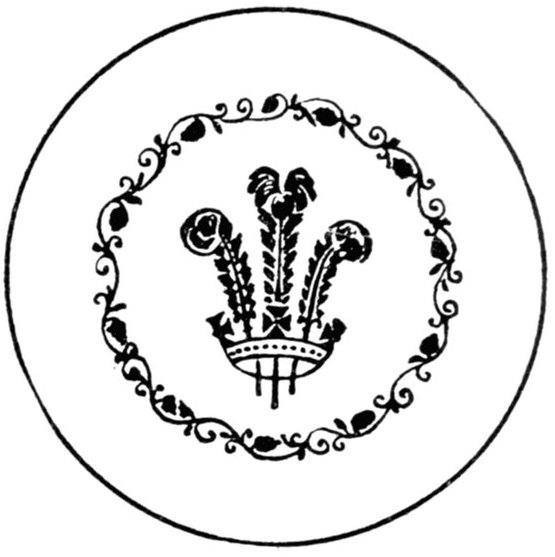
Used when Prince of Wales. A Prince of Wales' plume within a princely coronet.
[London and its Environs described. London, 1761.]
George IV. used the same coat-of-arms as the last one of George III., that is to say, first and fourth grand quarters, England; second grand quarter, Scotland; and third grand quarter, Ireland; on an escutcheon of pretence the arms of the Dominions of the Crown in Germany, ensigned with the Hanoverian Royal Crown.
When George IV. inherited the large library made by his father, he very soon found that it was a very costly and troublesome legacy, and at one time he was inclined to sell it to the Emperor, Alexander I. of Russia. This idea, however, was very displeasing to English feeling, and the Premier, Lord Liverpool, was able to convince the King that any such sale would be highly unpopular. After considerable trouble the matter was amicably arranged, and Ministers were able to satisfy the King by means of a fund called "Droits of Admiralty," which they could dispose of without troubling Parliament. The King then wrote a letter, 15th January 1823, to Lord Liverpool, in which he says:—
"The King, my late revered and excellent father, having formed during a long series of years, a most valuable and extensive Library, I have resolved to present this collection to the British Nation."
The library was consequently removed from Buckingham House to the British Museum in 1828, and arranged in the beautiful room built for it. In this room the books are kept by themselves, apart from the rest of the library. It is probable that some idea of the ultimate destination of this library existed as long ago as 1791, as in that year a German preacher, Frederick Wendeborn, wrote that the books in the King's private library, "it is said, will be one time or another joined to those of the British Museum."
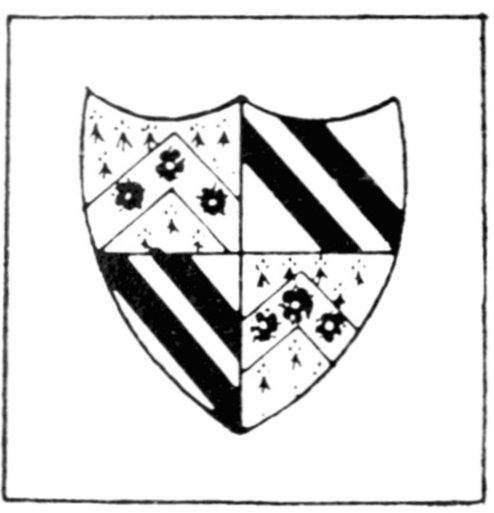
GILBERT, JOHN, ARCHBISHOP OF YORK
Arms.—Quarterly.
1st and 4th; erm., on a chevron sa., 3 roses arg. Gilbert.
2nd and 3rd; arg., 2 bendlets sa. Bradshaw.
Note.-Used before 1726.
[Tesauro. Patriarchae Genealogia. Mediolani, 1645.]
John Gilbert (born circ. 1693, died 9th August 1761) was a son of John Gilbert, Prebendary of Exeter. He was educated at Oxford, and ordained about 1718.
In 1722 Gilbert succeeded to his father's Prebendal stall at Exeter, and two years later he was made Dean. In 1726 Dr. Gilbert was consecrated Bishop of Llandaff, and was afterwards translated to Salisbury. In 1757 he became Archbishop of York. Gilbert was not a man of much learning, and his preferment in the Church is remarkable as being due more to influence than character. He published several sermons.
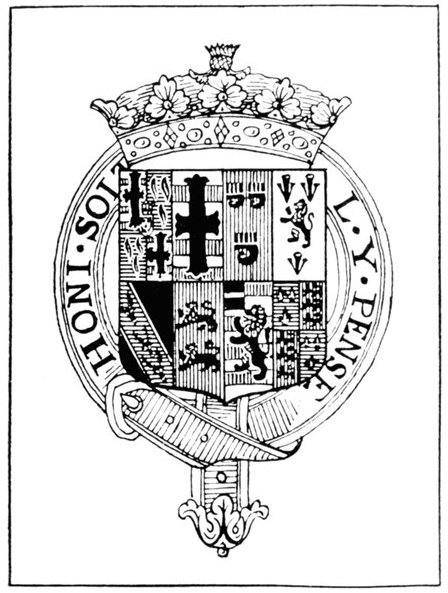
GOWER, GEORGE GRANVILLE LEVESON, DUKE OF SUTHERLAND
Arms.—Within the Garter. Quartered.
1. Quarterly;
1st and 4th, barry of 8, arg. and gu., over all a cross patonce sa. Gower.
2nd and 3rd, az., 3 laurel leaves or. Leveson.
2. Barry of 8, arg. and gu., over all a cross patonce sa. Gower.
3. Gu., 3 clarions or. Granville.
4. Arg., a lion rampant gu., between 3 pheons, sa. Egerton.
5. Arg., on a bend az., 3 bucks' heads cabossed or. Stanley.
6. Gu., 2 lions passant arg. Strange.
7. Barry of 10, arg. and gu., a lion rampant or, on a canton sa., a fess arg. Brandon.
8. Quarterly;
1st and 4th, France.
2nd and 3rd, England; being the arms of England, borne by right of descent from the Princess Mary, daughter of Henry VII.
Coronet.—That of a Duke.
[Jewel. Defense of the Apologie, etc. London, 1576.]
George Granville Leveson-Gower (born 9th January 1758, died 19th July 1833) was the son of Granville, Marquis of Stafford. Lord George was summoned to the House of Lords as Baron Gower during his father's lifetime, and succeeded to the Marquisate in 1803.
The Marquis was a Member of the Privy Council and a Knight of the Garter, and in 1833 he was created Duke of Sutherland. The Earldom of Sutherland came into the Gower family by right of Elizabeth, Countess of Sutherland in her own right, who married the Duke in 1785. It is said to be the most ancient Earldom in North Britain, and to date back as far as 1057. The Duke's successors all used a quartering on their coat-of-arms for this ancient Earldom, namely, gu., 3 mullets or, within a bordure of the last, charged with a double tressure, flory counterflory of the field.
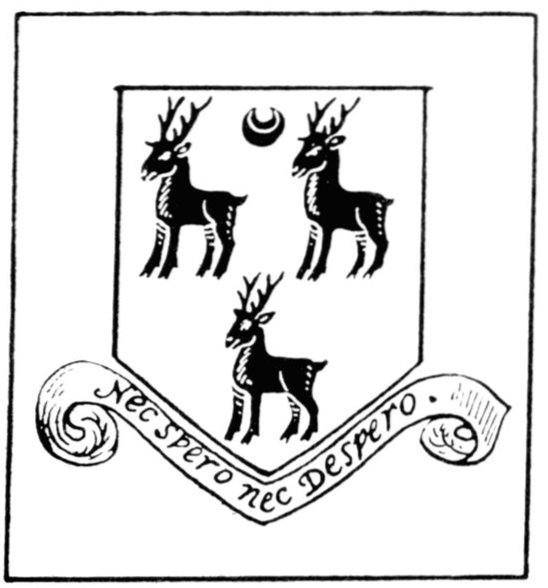
GREEN, JOSEPH HENRY
Arms.—Az., 3 bucks statant or. A crescent for difference. Green.
Motto.—Nec spero nec despero.
[Bacon. Of the Advancement and Proficience of Learning. Oxford, 1640.]
Joseph Henry Green of Barnet (born 1st November 1791, died 13th December 1863) was the second son of Joseph Green of London. He was an eminent surgeon, and commenced his medical studies in Germany. Returning to London, Green worked at St. Thomas's Hospital, where he eventually held important office, becoming chief surgeon in 1820. In 1824, Green was appointed Professor of Anatomy at the College of Surgeons. He was Professor of Surgery at King's College, a Fellow of the Royal Society, and twice President of the College of Surgeons. Professor Green was a friend and literary executor to S. T. Coleridge.
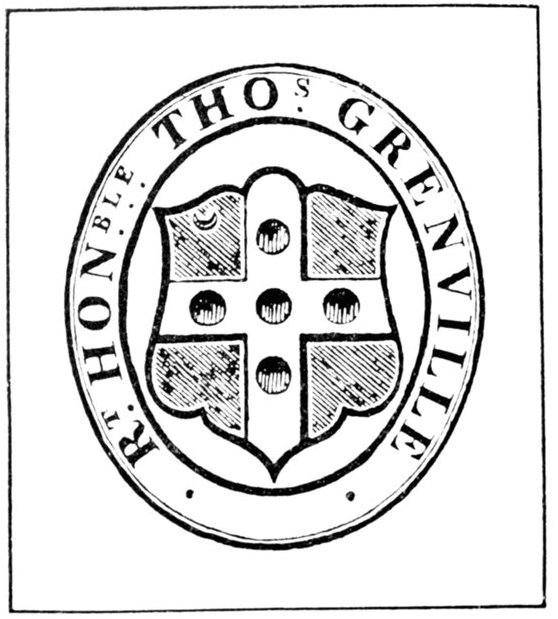
GRENVILLE, RT. HON. THOMAS
Arms.—Vert., on a cross arg., 5 torteaux. A crescent for difference. Grenville.
[Tristan, Chlr. de la Table Ronde. Paris.]
Thomas Grenville (born 31st December 1755, died 17th December 1846) was the second son of George Grenville of Wotton Hall, Bucks, and was educated at Oxford. He served for a short time in the army. In 1780 Grenville was Member of Parliament for Buckinghamshire, and interested himself much in political matters. In 1790 he was Member for Aldborough, and in 1794 he was Minister Extraordinary at Vienna. His younger brother William, Baron Grenville, was Premier in 1806.
Grenville was a Member of the Privy Council, and in 1799 Ambassador to Berlin, and was the last person to hold the office of Chief-Justice in Eyre south of Trent. He was for a time First Lord of the Admiralty. In 1818 Grenville left public life. He was always an eager collector of fine books, and bequeathed his magnificent library to the nation. It is now kept at the British Museum, of which Mr. Grenville was a Trustee, in a room especially kept for it, and known as the Grenville Room.
Among the Grenville books are still a few fine old bindings, but the majority have been rebound by George Lewis, one of the most eminent of the later English trade binders.
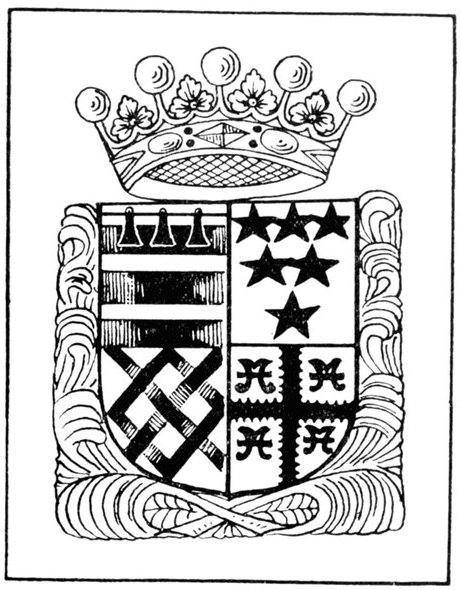
GREY, HENRY, EARL OF STAMFORD
Arms.—Quartered.
1. Barry of 6, arg. and az. A label for difference. Grey.
2. Sa., 6 mullets or, 3, 2, and 1. Bonvile.
3. Arg., a fret sa. Tollemache.
4. A cross engrailed between 4 water bougets sa. Bourchier.
Coronet.—That of an Earl.
[L'Histoire de France. Paris, 1581.]
Henry Grey (born c. 1599, died 23rd August 1673) was the son of Sir John Grey, and grandson of Henry, first Baron Grey of Groby, to whom he succeeded in the barony in 1614. In 1628 Lord Grey was created Earl of Stamford. He was a soldier, and held a command in the Parliamentary Army, but proved a bad General. He was Lord Lieutenant of Leicestershire, and served for a time as Member of Parliament for that county. In 1645 he was impeached in the House of Commons for an assault on Sir Arthur Haselrig.
Many of the books which had belonged to Lord Stamford subsequently came into the possession of Robert Harley, Earl of Oxford, and now form part of the Harleian Library.
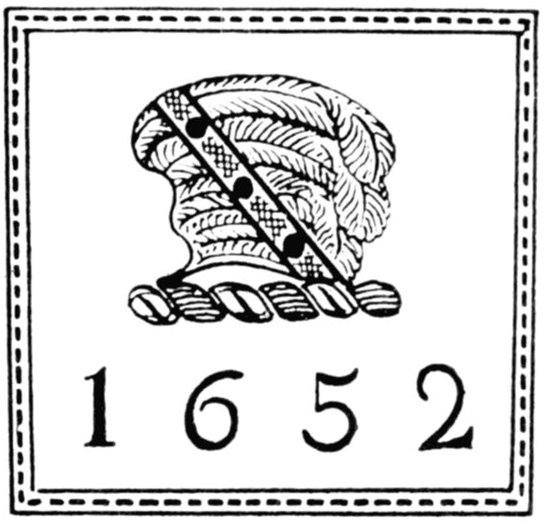
GULSTON, WILLIAM, BISHOP OF BRISTOL
Crest.—An ostrich wing, the feathers alternately arg. and gu., charged with a bend sa., charged with 3 plates. Gulston.
[Boccaccio. Decamerone. Firenze, 1516.]
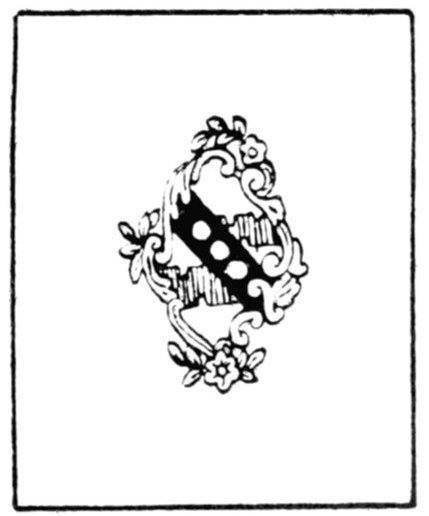
Arms.—Arg., 3 bars nebuly gu., over all a bend sa., charged with 3 plates. Gulston.
Note.—Used by a lady of the Gulston family.
[Coqville. Histoire du Pays et Duché de Nivernois. Paris, 1612.]
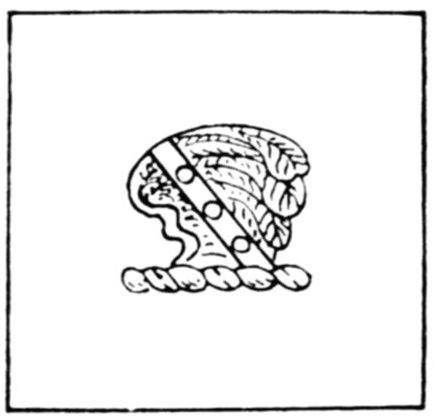
Variety of crest in smaller size.
[Tirante il Bianco valorissimo Cavaliere. Vinegia, 1538.]
William Gulston was Rector of Symondsbury in Dorsetshire. In 1679 he was consecrated Bishop of Bristol, a preferment he held until his death in 1684.
The Gulston coat-of-arms is shown on the screen in Bristol Cathedral. The coat shown on a lozenge is that of a lady of the Gulston family, possibly a daughter of the Bishop. In most of the books on which this coat occurs there is a book-plate of "Elize Gulston," so the book-stamp was in all probability hers also. Both the small coat and the small crest are usually added on the backs of finely bound books, but the large crest occurs on the side in the usual manner.
HAMILTON, JOHN, ARCHBISHOP OF ST. ANDREWS
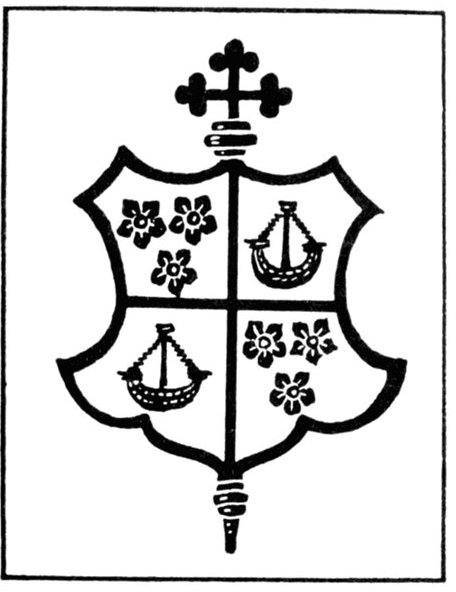
Arms.—On an archiepiscopal cross. Quarterly.
1 and 4. Gu., 3 cinquefoils erm. Hamilton.
2 and 3. Arg., a lymphad sa. Arran.
[Celsus. De arte Medicina. Basileae.]
John Hamilton (born c. 1510, died 1st April 1570) at an early age became a Benedictine monk at Kilwinning, and in time went to study at Paris. The Regent Arran was his half-brother, and the priest had considerable influence with him. Hamilton's preferment in the Church was rapid. In 1545 he was made Bishop of Dunkeld, and in 1546 succeeded David Beaton as Archbishop of St. Andrews and Primate of Scotland. He was also Keeper of the Privy Seal and Lord Treasurer of Scotland.
The Archbishop was a strong adherent of Mary, Queen of Scotland, and was a Member of her Privy Council; he actively helped her escape from Loch Leven, as well as taking the field on her behalf. He was accused of complicity in the murders of Darnley and of the Regent Moray. Archbishop Hamilton wrote several theological works. He was hanged at Stirling in 1570.
HARBORNE, WILLIAM
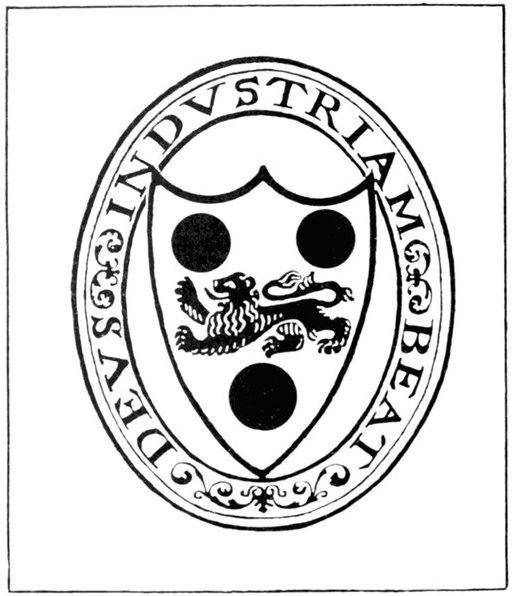
Arms.—Gu., a lion passant or, between 3 bezants. Harborne.
Motto.—Devs indvstriam beat.
[Passe. Hortus Floridus. Utrecht, 1615.]
William Harborne (born circ. 1550, died 9th September 1617) was the son of William Harborne of Great Yarmouth. He was a great traveller. In 1582 Harborne was appointed the Queen's Ambassador to Turkey, and remained at Constantinople until 1588. His tenure of this office was beneficial to trade, and he also procured several privileges from the Sultan as to English travellers in the East. Mr. Harborne wrote an account of his voyage to Constantinople, and other books about his stay there. His manuscripts are mostly at the British Museum or at the Bodleian Library at Oxford.
HARLEY, ROBERT, EARL OF OXFORD AND EARL OF MORTIMER
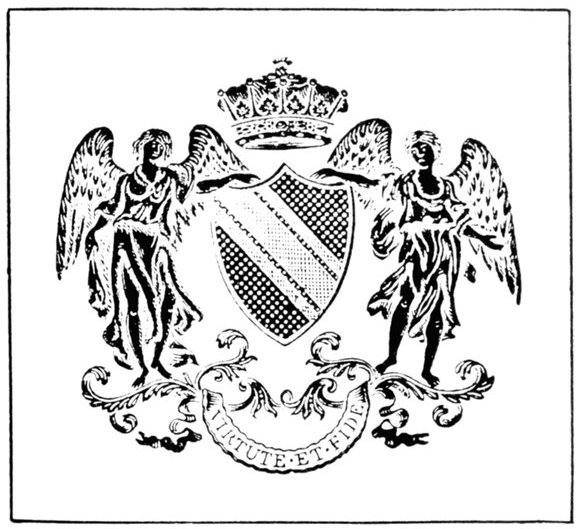
Arms.—Or, a bend cotised sa. Harley.
Coronet.—That of an Earl.
Supporters.—Two angels ppr.
Motto.—Virtute et fide.
[Survey of Manors in various Counties. Harl. MS. 2192.]
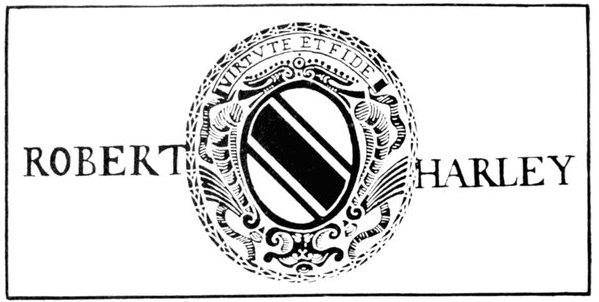
Arms.—Or, a bend cotised sa. Harley.
Motto.—Virtvte et fide.
Legend.—Robert Harley.
[The Annals of King James and King Charles the First. London, 1681.]
Robert Harley (born 5th December 1661, died 21st May 1724) was the son of Sir Edward Harley of Brampton Bryan, Herefordshire. Robert Harley was Member of Parliament for Tregony, and afterwards for New Radnor, and was distinguished for his knowledge of finance. In 1701 he became Speaker of the House of Commons, and had a considerable share in the passing of the Act for the Protestant succession to the Throne of England.
In 1704, Mr. Speaker Harley became a Member of the Privy Council, and also was made one of the Principal Secretaries of State. Owing to various jealousies and plots against him, Harley resigned office in 1707. In 1710 he was made Chancellor of the Exchequer; in 1711 he was nearly assassinated by Antoine de Guiscard, a French adventurer, and his escape increased his popularity, and he was created Earl of Oxford, and Lord High Treasurer, an office he held until 1714.
In 1715 Lord Oxford was impeached for betrayal of duty and other matters, twenty-two articles in all, and in 1717 he was acquitted after a long trial.
Through all his many political troubles, Harley continued the collection of manuscripts, which was his dearest hobby. He brought together many of the most famous collections, among them those of Sir Thomas Smith, Sir Symonds D'Ewes, and the Earl of Stamford. In the Harleian Library were about six thousand volumes of manuscripts, as well as about fifteen thousand separate rolls and charters, and this collection was largely added to by the second Earl. The entire collection was purchased by Parliament in 1753, and is now in the British Museum. The printed books were dispersed.
Many of the Harleian books were bound, generally in red morocco, by Thomas Eliot and Christopher Chapman, with broad, gold-tooled borderings, and this style is known as the "Harleian." Several of Lord Oxford's favourite books have a facsimile signature "Robert Harley," impressed inside on the paper in gold. A member of the Harley family always holds one of the six family trusteeships of the British Museum.
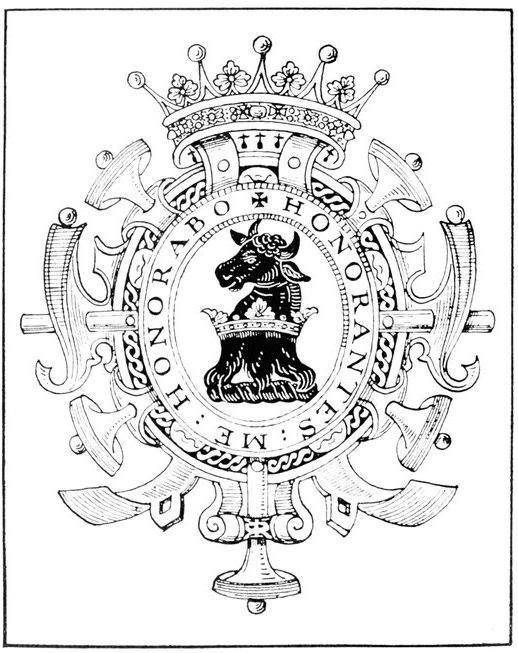
HASTINGS, FERDINANDO, SIXTH EARL OF HUNTINGDON
Crest.—A bull's head erased sa., armed and ducally gorged or. Hastings.
Coronet.—That of an Earl.
Motto.—Honorantes me honorabo.
[Camden. Tomus alter Annalium Rerum Anglicarum ... regnante Elizabetha. Londini, 1627.]
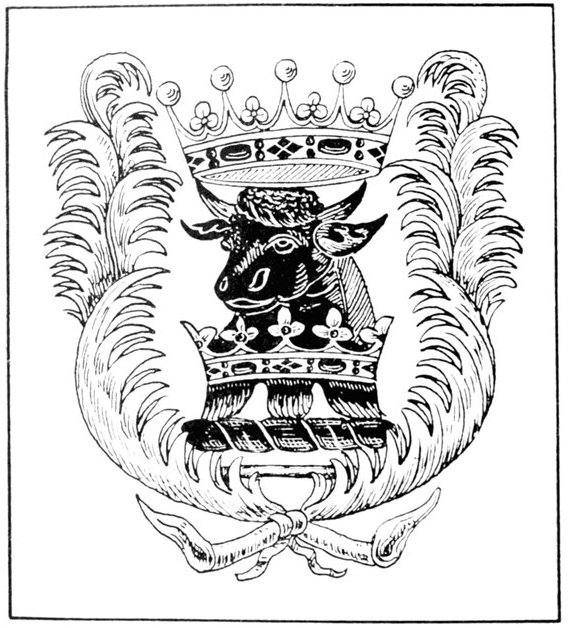
Crest.—A bull's head erased sa., armed and ducally gorged or. Hastings.
Coronet.—That of an Earl.
[Reusner. ΒΑΣΙΛΙΚΩΝ operis Genealogici Catholici Auctarium, illustres Stirpes Comitum continens, etc. Francofurti, 1592.]
Ferdinando Hastings (born 18th January 1608, died 13th February 1655) was the son of Henry, fifth Earl of Huntingdon, and his wife Elizabeth, daughter of Ferdinando, Earl of Derby. He succeeded his father in the Earldom in 1643. Lord Huntingdon married Lucy, daughter of Sir John Davis of Englefield, Berks.
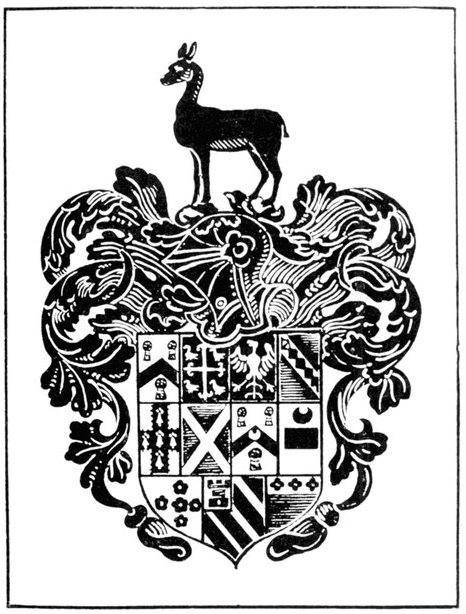
HATTON, SIR CHRISTOPHER, KNIGHT
Arms.—Quartered.
1. Az., a chevron between 3 garbs or. Hatton.
2. Arg., a cross flory between 4 cornish choughs, ppr. Offley.
3. Arg., an eagle displayed sa. Browne.
4. Arg., a bend lozengy gu. Bradeston.
5. Az., a cross engrailed erm. Stanton.
6. Gu., a saltire arg. Nevill of Raby.
7. Az., a chevron between 3 garbs or; a crescent for difference. Hatton.
8. Arg., a fess sa., in chief a crescent of the last. York.
9. Az., 5 cinquefoils in cross arg., 1, 3, and 1. Holdenby.
10. Bendy, arg. and sa., on a canton of the second a castle of the first. Carrell.
11. Gu., on a chief or, 3 quatrefoils vert. Wedson.
Crest.—A hind passant or.
Helmet.—That of an Esquire.
[Bible. London, 1588.]
Christopher Hatton (born c. 1540, died 20th November 1591) was the youngest son of William Hatton of Holdenby, Northamptonshire. He was educated at Oxford and entered the Middle Temple.
Queen Elizabeth noticed Hatton at a masque, and was struck by his good looks and graceful dancing. He was shortly afterwards attached to the Court, and became a Gentleman of the Privy Chamber, Captain of the Guard, Vice-Chamberlain, and a Member of the Privy Council. In 1587 he was made Lord Chancellor, and also a Knight of the Garter. From 1588 until he died, Hatton was Chancellor of the University of Oxford. He wrote a few books on law or the drama, and had a considerable library.
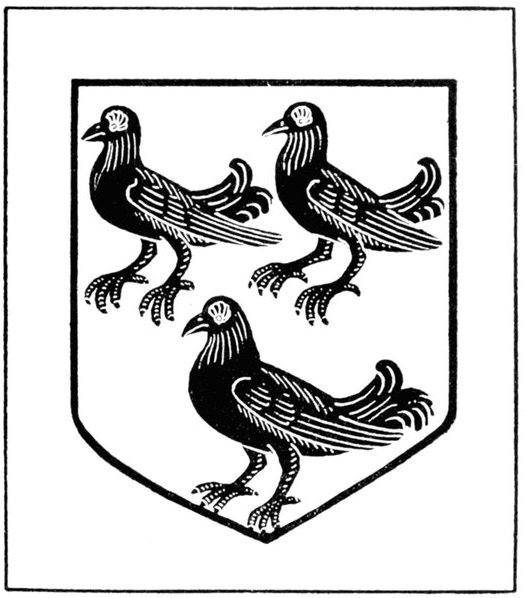
HEATH, BENJAMIN
Arms.—Sa., 3 heathcocks arg., membered gu. Heath.
[Colle. Medicina Practica. Pisauri, 1617.]
Benjamin Heath (born 20th April 1704, died 13th September 1766) was a son of Benjamin Heath, a merchant of Exeter. He inherited a considerable fortune from his father, and as a young man travelled much on the Continent.
Mr. Heath spent all his life in the pursuit of literature and the collection of books. Among his writings is one of some importance, "Notæ sive Lectiones ad Æschyli, quæ supersunt dramata," published at Oxford in 1762. He was a D.C.L. of Oxford. He also wrote some political pamphlets, and others concerning Shakespeare. Dr. Heath left a large family, and one of his sons became headmaster of Eton. His library was very extensive, and he gave a large portion of it to his sons during his lifetime, and the remainder was sold in 1810.
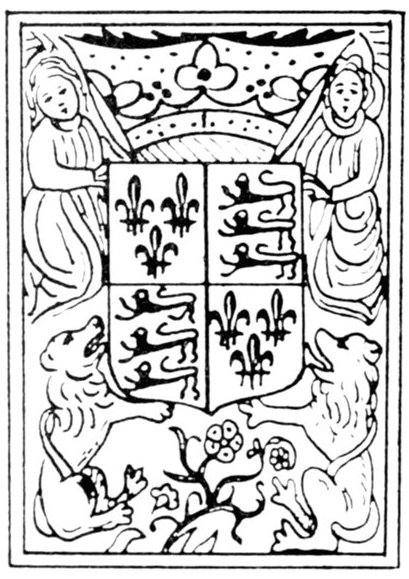
HENRY VII., KING OF ENGLAND AND FRANCE, AND LORD OF IRELAND
Arms.—Quarterly.
1st and 4th; az., 3 fleurs-de-lys or. France.
2nd and 3rd; gu., 3 lions passant or, langued and unguled az. England.
Crown.—Royal, but of a type used before the time of Henry VI. and supported by two angels.
Supporters.—Two lions sejant arg. Mortimer, Earls of March.
Note.—This stamp is sometimes said to have belonged to Edward IV. The crown as shown here is that which appears on groats of Henry VII.; but the crown which appears on his great seal, a higher authority, has the crosses pattée and fleurs-de-lys alternately as now used. The crosses pattée were first used as the seal for foreign affairs of Henry VI.
[Impressed in blind, upon a loose cover in the Library of Westminster Abbey. C., 1490.]
Henry Tudor (born 26th June 1456, died 1509) was the son of Edmund Tudor, Earl of Richmond, and Margaret Beaufort. In 1486 the Earl of Richmond married Elizabeth of York, daughter of Edward IV., the first King of the Yorkist line, and as the Earl himself represented the Lancastrian line, by way of Catherine Swinford, this marriage united the two houses of York and Lancaster, and gave rise to the beautiful Tudor badge of the Red and White Rose. The two colours are shown sometimes per pale, sometimes quartered, or there may be simple rows of alternate petals, or, as is most usual, the inner petals are all white and the outer petals all red; the centre is always gold, and the little leaves between the outer petals, if showing at all, are green. The portcullis and gateway, also commonly used as badges by our Sovereigns until the time of Charles I., are both used as emblems of the De Beaufort alliance. The portcullis is or, nailed az., chained and ringed of the first.
The Earl of Richmond defeated Richard III. at the battle of Bosworth Field in 1485, and the king was killed. Henry VII. was crowned king on the battlefield. He possessed a considerable number of manuscripts, and also a small library of printed books, which, as far as is known, were bound in velvet. Judging from the leather binding in Westminster Abbey Library, Henry also had some commoner books stamped with his coat-of-arms.
Several bindings that were made for Henry VII. still exist; they are either at the Record Office, the Library of Westminster Abbey, or the British Museum, and are all bound in the same way. The binding is of red velvet, beautifully bossed with silver or other metal; the bosses are ornamented with the Royal coat-of-arms, with the red dragon of Cadwallader as a dexter supporter, and the white greyhound of the Nevills, or, when used by Henry VII., of the De Beauforts, as sinister supporter.
But before using the dragon and greyhound Henry VII. had used two white lions. A white lion was the badge of the Earls of March, who were distantly connected with the King.
The coat-of-arms used by Henry VII., i.e. France and England quarterly, was the same as had been used by all the English kings since Henry IV. in 1408, when the fleurs-de-lys semées, which had been hitherto used, were reduced to three, in accordance with the change made in the French coat by Charles VI., King of France.
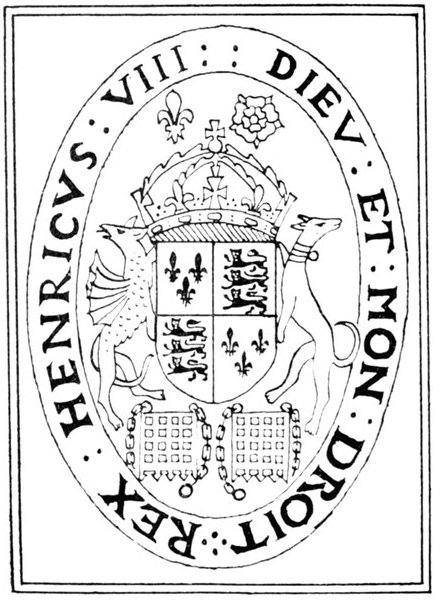
HENRY VIII., KING OF ENGLAND AND FRANCE, AND LORD OF IRELAND—AFTERWARDS KING OF ENGLAND, FRANCE, AND IRELAND.
Arms.—Quarterly.
1st and 4th; az., 3 fleurs-de-lys, 2 and 1, or. France.
2nd and 3rd; gu., 3 lions passant guardant, in pale or, langued and unguled az. England.
Crown.—Royal.
Supporters.—Dexter, a dragon gu. Cadwallader.
Sinister, a greyhound arg., gorged or. Nevill or De Beaufort.
Badges.—Dependent from the shield 2 portcullises or, nailed az., chained of the first. De Beaufort.
At the top, a fleur-de-lys or, France; and a double rose gu. and arg., centred or, and leaved vert, Tudor.
Motto.—Diev et mon droit.
Legend.—Rex henricvs viii.
[Opus eximium de vera differentia regiae potestatis et ecclesiasticae. London, 1534.]
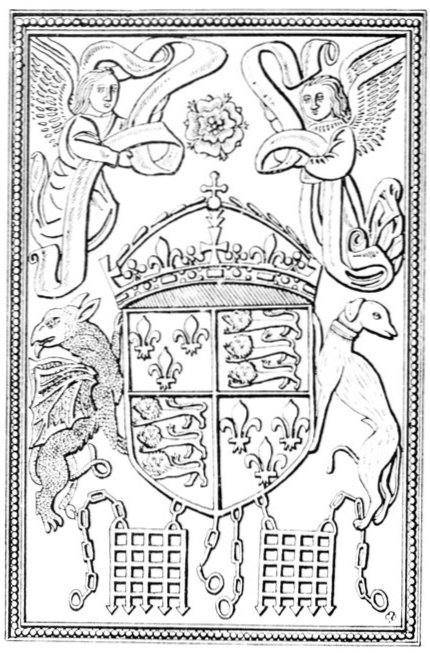
Variety.—Arms as before. Panel stamp with 2 angels bearing scrolls. At the top a Tudor rose, and 2 portcullises dependent from the base of the shield, which is ensigned with a Royal crown, and supported by a dragon and a greyhound.
[Holkot. Opus revera insignissimum in librum Sapietie Salomonis editum. Parisiis, 1518.]
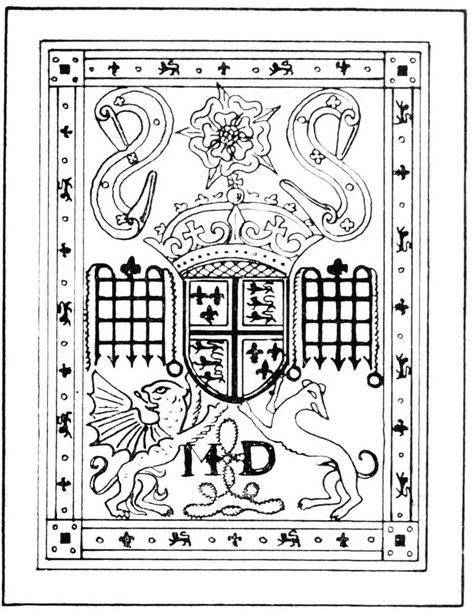
Variety.—Arms as before. With two scrolls and a Tudor rose on the top, and "M. D.," probably the initials of the designer, below. A dragon and a greyhound support the shield, which is ensigned with a Royal crown and flanked by two portcullises chained.
On the border are lions passant guardant and fleurs-de-lys alternately.
[Dialogues in English. London, 1532.]
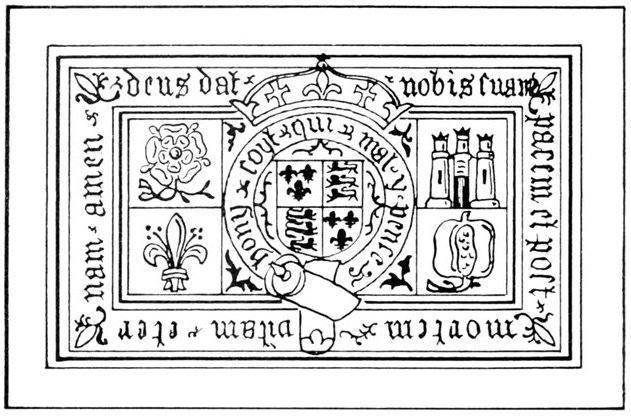
Variety.—Arms as before. Within the Garter, ensigned with a Royal crown and flanked by the Tudor emblems of a Tudor rose, a fleur-de-lys, the gateway of the Castle of De Beaufort, and the cleft pomegranate of Aragon.
Legend.—On the rectangular borders. Deus dat nobis tuam pacem et post mortem vitam eternam amen.
[England. Le bregement des Estatuts. London, 1521.]
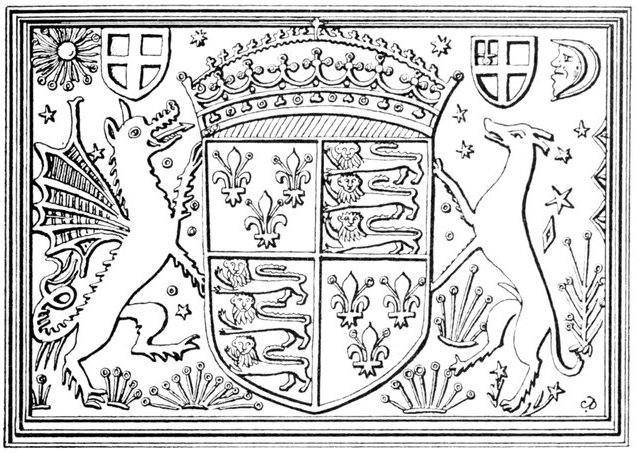
Variety.—Arms and supporters as before. With the sun and moon in the two upper corners and the shields of St. George and the City of London. Ensigned with a Royal crown of incorrect pattern.
This design was probably used by Royal consent by members of the Stationers' Company of London, and there are many examples of it on which are also engraved the initials of London printers and publishers, e.g. "J. R.," probably John Reynes; "J. N.," probably Jean Norins; "G. G.," probably Garret Godfrey; "R. L.," probably Richard Lant, and several more.
These initials are usually shown at the base of the shield. Cf. under heading Tudor.
Prince Henry (born 28th June 1491, died 28th January 1547) was the second son of Henry VII., and in 1509 succeeded his father on the throne of England. Henry VIII. always lived in much luxury and loved finery and splendour, and to a certain extent this feeling shows in the many beautiful bindings which were made for him. The King was certainly fond of his books, and he had several of them beautifully bound in velvet and embroidered with pearls and inlays of coloured silks and satins, finished with gold thread. Others are of gold, richly worked and enamelled.
For his Queens also several fine bindings were made; these, however, were generally armorial panel stamps, impressed without gold. He married six times. For Catherine of Aragon bindings were made which still exist, for Anne Bullen and Catherine Parr, the same, but for Jane Seymour, Anne of Cleves, or Katherine Howard I know of no bindings recorded or in existence. Katherine Parr is said to have herself embroidered a beautiful armorial velvet-bound copy of Petrarch with her own arms, and at the Bodleian Library at Oxford there is a book said to have been embroidered for her by the Princess Elizabeth, on which are the initials "K. P."
Thomas Berthelet, the first English bookbinder to use gold tooling was made Royal Printer and Bookbinder to Henry VIII. in 1530, and he bound the greater number of the Royal books in leather, velvet, or satin.
Henry VIII. used the same coat-of-arms and supporters as his father, namely, the red dragon of Cadwallader as a dexter supporter and the white greyhound of the Nevills as a sinister supporter, until 1528, when he adopted a golden lion rampant royally crowned as his dexter supporter, and moved the dragon to the sinister side, leaving out the greyhound altogether. This change, however, does not, as far as I know, show on any book, but it can be seen on the gold coins of the period, and also on a sculptured compartment at Caerhays, is common at the house of a member of the Trevanion family, and again on the keystone of the ceiling over the organ-loft at St. George's Chapel, Windsor, and here, moreover, the date 1528 is also given.
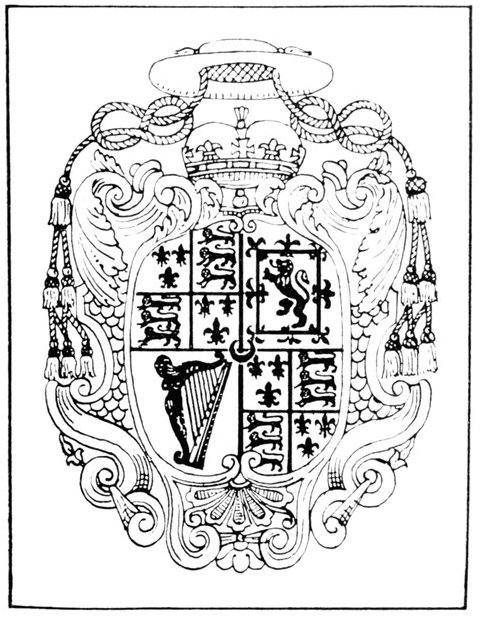
HENRY BENEDICT, CARDINAL YORK
Arms.—Quarterly.
1st and 4th grand quarters, France and England quarterly.
2nd grand quarter, Scotland.
3rd grand quarter, Ireland.
All as used by James I. (q.v.). Over all a crescent for difference. Ensigned with a Royal crown and the tasselled hat of a cardinal.
Note.—This stamp was probably designed and cut after 1788, at which date the Cardinal entitled himself King of England.
[Stellato. Ad frequentem in fidei controversiis interrogationem, etc. Viennae, 1752.]
Henry Benedict (born 5th March 1725, died 13th July 1807) was the second son of James Francis Edward, called the Chevalier St. George, son of James II., King of England, and Mary of Modena, who married Mary Clementina, daughter of James Sobieski, in 1719.
Prince Henry, who occasionally used the Royal Crown of England over his coat-of-arms, is called sometimes Henry IX., King of England. He entered the Romish Church as a priest at an early age, and in 1747 he was made a Cardinal by Benedict XIV., and held several Bishoprics and the Archbishopric of Corinth, but was usually known as Cardinal York. He assumed certain airs of dignity abroad in consequence of his Royal ancestry and claims, and in 1788, on the death of his elder brother, he had a medal made and inscribed "Henricus nonus magnae britanniae rex."
The Cardinal lived almost always abroad, and suffered much by loss of revenue caused by the French Revolution; he had to part with much of his private property, jewels, and plate. At this juncture George III. generously assisted Cardinal York, and made him a handsome allowance, in gratitude for which His Eminence bequeathed to the Prince of Wales, afterwards George IV., many of the Crown Jewels which James II. had taken with him to France. Some of the most important of these stones now adorn the English Imperial Crown. The Cardinal had a large library, and several of his books are at Windsor and at the British Museum. The majority of these are in leather, but some are embroidered.
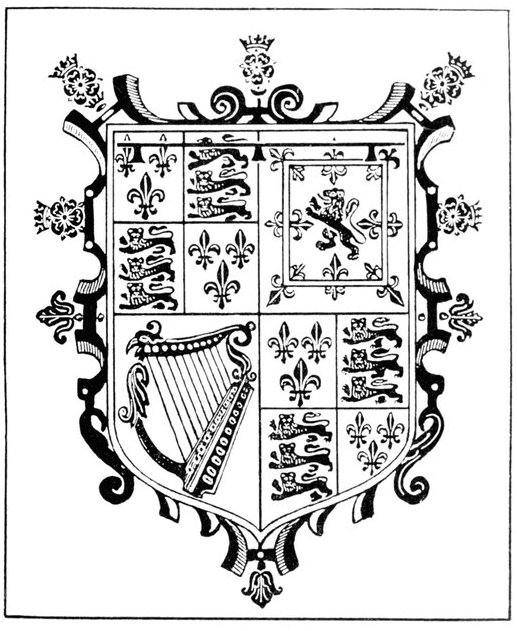
HENRY FREDERICK, PRINCE OF WALES
Arms.—Quarterly; 1st and 4th grand quarters, France and England quarterly; 2nd grand quarter, Scotland; 3rd grand quarter, Ireland. All as used by James I. (q.v.); and over all a label arg. of three points.
A variety of this stamp has thistles instead of roses in the border.
[Apollonius Gallus. Exsuscitata Apollonii Pergaei ΠΕΡΙ ΕΠΛΦΩΝ Geometria. Parisiis, 1600.]
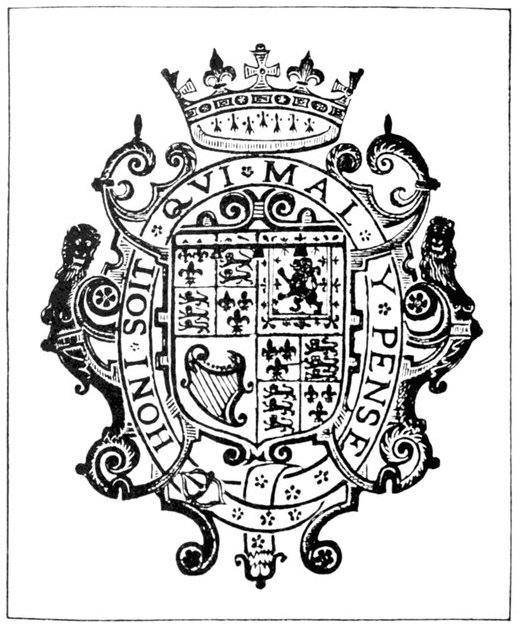
Variety.—Arms as before. Within the garter, and ensigned with a Princely coronet.
[Vittori. Tesoro de las tres lenguas Francesa, Italiana, ej Española. Geneve, 1609.]
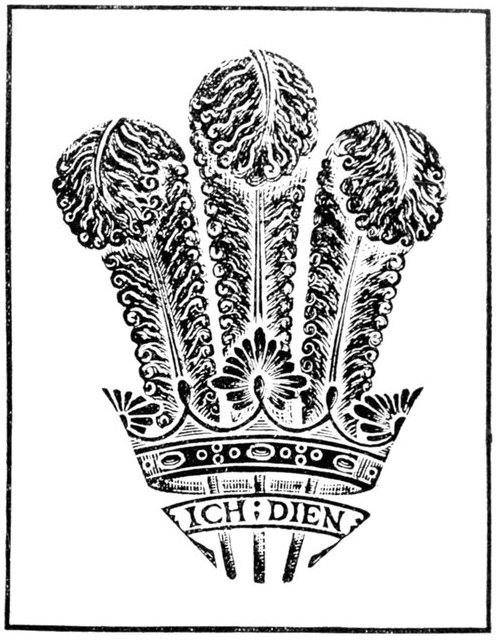
A Prince of Wales's triple ostrich plume, commonly used as a corner stamp, all impressed in silver.
[Alunno. Della Fabrica del Mondo. Venetia, 1575.]
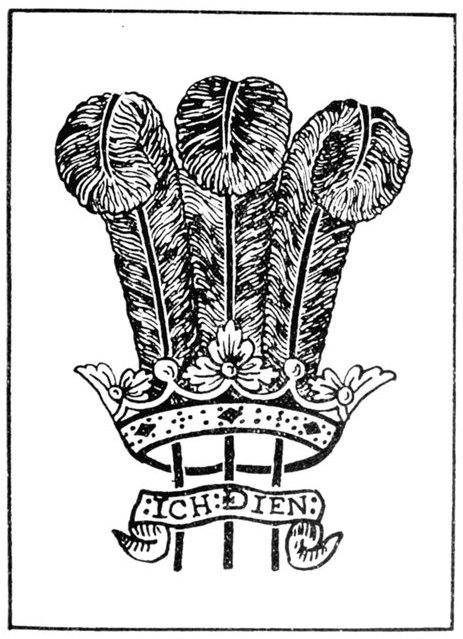
A Prince of Wales's triple ostrich plume; the coronet, ribs of feathers, and motto generally impressed in gold, the feathers in silver. Used mostly as a centre stamp.
[Lipsius. Admiranda. Antverpiae, 1599.]
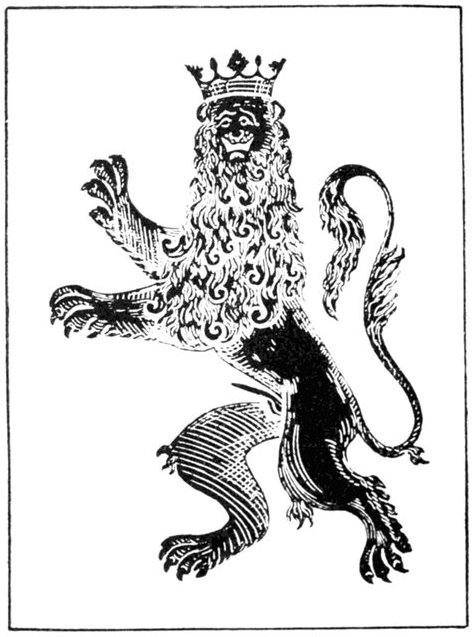
A Badge of a lion rampant guardant, with princely coronet, always impressed entirely in gold.
[Reusnerus. ΒΑΣΙΛΙΚΩΝ opus genealogicum Catholicum de praecipuis familiis Imperatorum. Francofurti, 1592.]
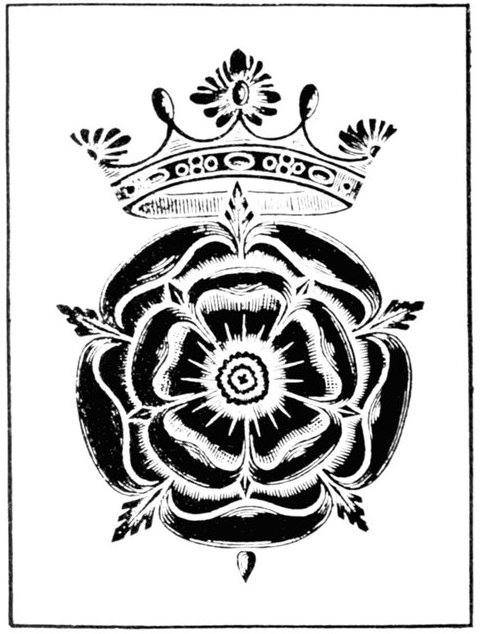
A Badge of a Tudor rose, with princely coronet.
[Boccaccio. I casi degl' Huomini Illustri. Fiorenza, 1598.]
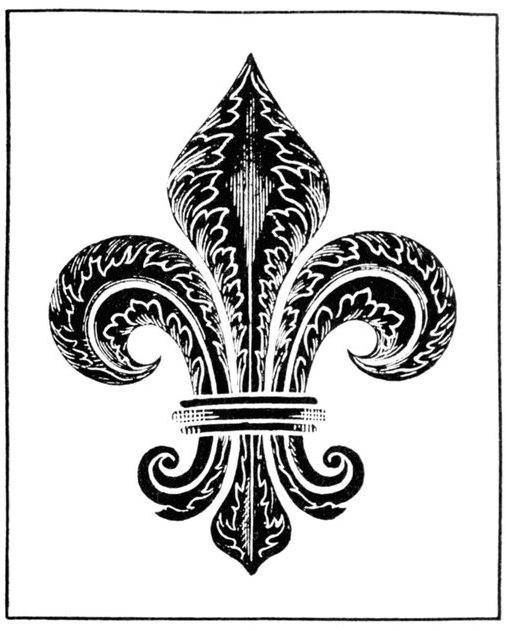
A Badge of a fleur-de-lys.
[Baretus. An Alvearie, or triple Dictionarie. London, 1573.]
Henry Frederick, Prince of Wales (born 19th February 1594, died 6th November 1612), was the eldest son of James I., and from his childhood showed studious and literary inclinations, as well as sporting tastes. In 1609 he purchased the library of John, Lord Lumley, a great part of which had previously belonged to his father-in-law, Henry Fitz-Alan, Earl of Arundel, and another large proportion to Thomas Cranmer, Archbishop of Canterbury. He also acquired a number of books which had belonged to a Welshman, John Maurice or Morris.
On the Prince's death his library became the property of James I., and it was added to the existing Royal Library, then under the care of Patrick Young.
Prince Henry had his books bound in calf, and probably destroyed numbers of valuable old bindings which were originally used. The new bindings were ornamented with stamps bearing the Prince's coat-of-arms, without supporters, and others showing a lion rampant, with princely coronet; a Tudor rose, with princely coronet; a fleur-de-lys, and two stamps, with slight variations, of the Prince of Wales's plume of three ostrich feathers. These latter stamps are normally used as corner-pieces, but they also show now and then as centres. Smaller corner stamps are found showing coroneted Tudor roses, coroneted thistles, coroneted fleurs-de-lys, and Prince of Wales's feathers in gold. On the panels of the backs of Prince Henry's books are found small stamps of a lion rampant, with princely coronet; a unicorn rampant; a Tudor rose; a portcullis, sometimes chained, and a Royal Crown. These are arranged in various combinations.
The greater number of Prince Henry's bindings are simple, having the coat-of-arms in the centre and the badges in the corners, but several are very handsomely ornamented with accessory gold tooling. The label shown on Prince Henry's coat-of-arms is the cadency mark of the eldest son; it is generally impressed in silver, as it ought always to be. The feathers in the Prince of Wales's plume are always impressed in silver, which has now oxidised black. Prince Henry's library came to the British Museum with the rest of the Old Royal Library of England in 1757.
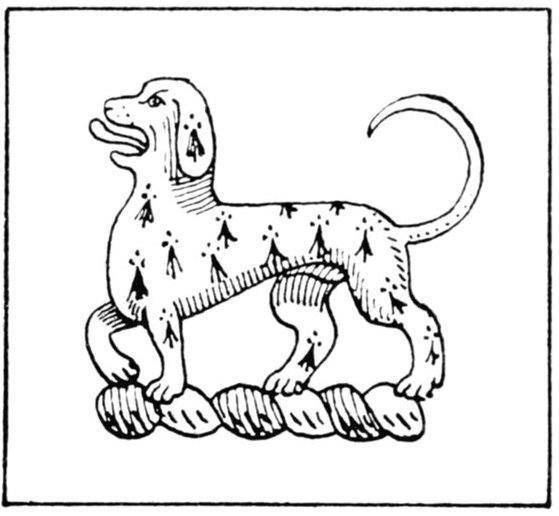
HEYDON, SIR CHRISTOPHER, KNIGHT
Crest.—A talbot statant erm. Heydon.
Note.—Painted.
[Cicero. Orationum volumen primum, etc. Venetiis, 1540.]
Christopher Heydon (born circ. 1550, died circ. 1623) was the son of Sir William Heydon of Bacousthorpe, Norfolk. He was educated at Cambridge. In 1588 he represented Norfolk in the House of Commons, and in 1596 he was knighted by the Earl of Essex. Sir Christopher Heydon wrote some treatises on astrology. He married first Mirabel Rivet, and secondly Anne Dodge, and left a large family.
HOARE, SIR RICHARD COLT, BARONET
Crest.—An eagle's head erased arg. Hoare.
[Hoare. Catalogue of Books on Italian Topography, etc. London, 1812.]
Richard Colt Hoare (born 9th December 1758, died 19th May 1838) was the son of Sir Richard Hoare of Barn Elms, Surrey, a banker. Mr. Hoare worked for a time in the family bank, and then, having a competent fortune, he travelled much on the Continent. In 1787 he succeeded his father in the baronetcy. Sir Richard Hoare wrote a large number of works on antiquities and travel, the most important of which is the Ancient History of North and South Wiltshire, published at London in 1810. He was a Fellow of the Royal Society and of the Society of Antiquaries. At his house "Stourhead" Sir Richard had a large library, much of which he catalogued himself.
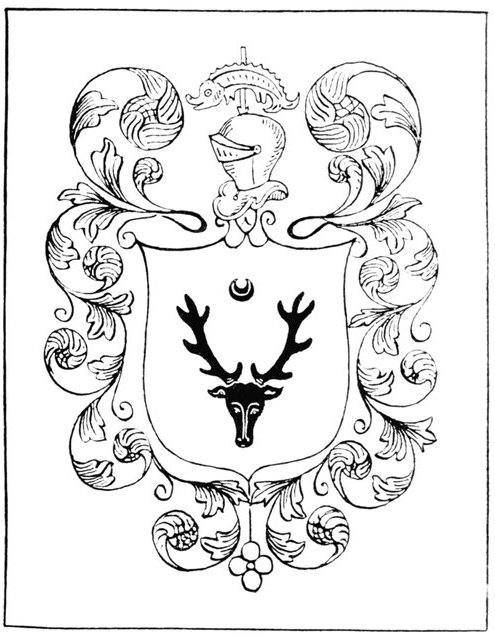
FRANCIS HORTON
Arms.—Sa., a stag's head cabossed arg., attired or. A crescent for difference. Horton.
Crest.—A spear erect or, headed arg., enfiled with a dolphin of the first.
Helmet.—That of an Esquire.
[Songs by Several Masters. 1704, etc.]
Francis Horton, a member of an old family belonging to Catton, county Derby, was a collector of musical works in the eighteenth century.
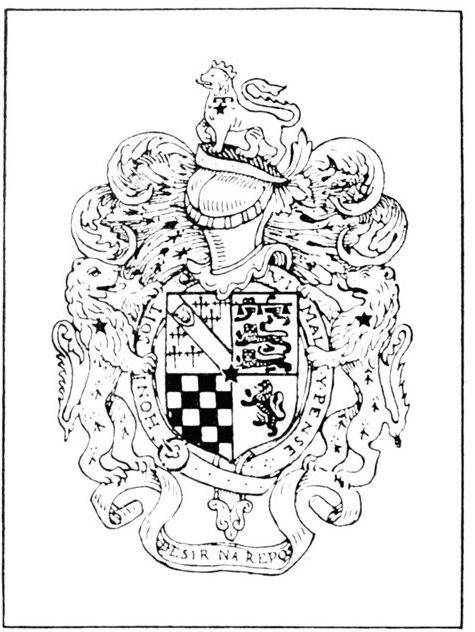
HOWARD, CHARLES, SECOND BARON HOWARD OF EFFINGHAM
Arms.—Within the Garter. Quarterly.
1. Gu., on a bend between 3 cross crosslets fitchée arg., an escutcheon or, charged with a demi lion rampant, pierced through the mouth with an arrow, within a tressure flory counterflory of the first. Howard.
2. Gu., 3 lions passant guardant in pale or, in chief a label of 3 points arg. Brotherton.
3. Chequy, or and az. Warren.
4. Gu., a lion rampant or, armed and langued az. Fitz-Alan.
A mullet for difference.
Crest.—On a chapeau gu., turned up erm., a lion passant, ducally crowned or, and charged on the neck with a label and a mullet.
Helmet.—That of a Peer.
Supporters.—Two lions erm., each charged with a mullet.
Motto.—Desir n'a repos.
[Caradoc. Historie of Cambria. London, 1584.]
Charles Howard (born c. 1536, died 14th December 1624) was the eldest son of William Howard, Baron Howard of Effingham, Lord High Admiral of England. Charles Howard was a person of importance from an early age, and was sent by Queen Elizabeth on an Embassy to France. He was Member of Parliament for Surrey, and a general officer in the army as well as being a sailor. In 1574 he was made a Knight of the Garter and Lord Chamberlain of the Household, and in 1573 he succeeded to his father's barony.
Lord Howard of Effingham became Lord High Admiral of England in succession to the Earl of Lincoln, and in 1588 he defeated and dispersed the Spanish Armada. At the time of the coronation of James I. Lord Howard became Lord High Steward of England.
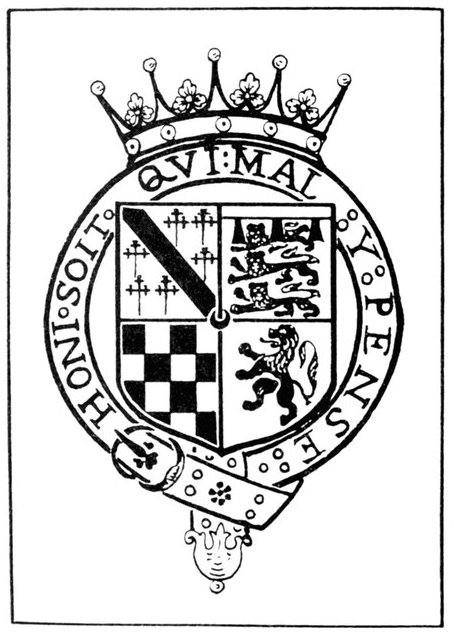
HOWARD, HENRY, EARL OF NORTHAMPTON
Arms.—Within the Garter. Quarterly.
1. Gu., a bend between six crosses crosslet fitchée arg. Howard.
2. Gu., 3 lions passant guardant in pale or, in chief a label of 3 points arg. Brotherton.
3. Chequy, or and az. Warren.
4. Gu., a lion rampant or, langued and armed az. Fitz-Alan.
A crescent for difference.
Coronet.—That of an Earl.
[Marsilius. Interpretatione, etc. Jenae, 1586.]
Henry Howard (born 25th February 1539, died 15th June 1614) was the second son of Henry Howard, Earl of Surrey, who was beheaded in 1547. Henry Howard the younger was restored in blood by Queen Elizabeth, and on the accession of James I. he quickly became a person of much importance. He was made a Member of the Privy Council, Warden of the Cinque Ports, and Constable of Dover Castle.
In 1604 Mr. Howard was created Earl of Northampton and a Knight of the Garter, and in 1608, Lord Privy Seal. Lord Northampton was a man of much learning, and wrote several treatises on astrology and theology. He had much taste in knowledge as to architecture, and built Northumberland House from the designs of Moses Glover.
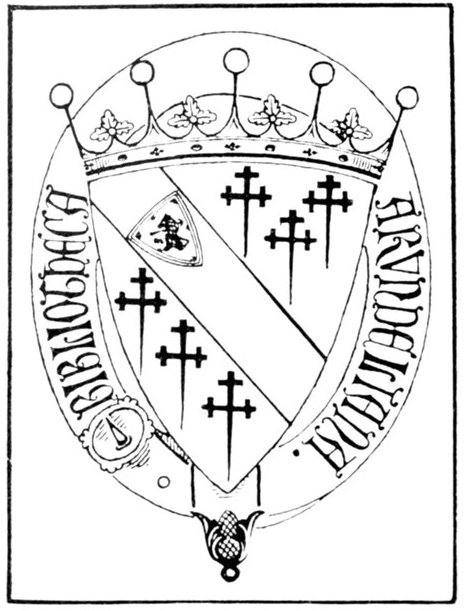
HOWARD, THOMAS, EARL OF ARUNDEL, SURREY, AND NORFOLK
Arms.—Gu., on a bend between six crosses crosslet fitchée arg., an escutcheon or, thereon a demi lion rampant, pierced through the mouth with an arrow, within a double tressure flory counterflory of the first. Howard.
Coronet.—That of an Earl.
Legend.—Bibliotheca arvndeliana.
Note.—A nineteenth-century stamp.
[Lydgate. Siege of Troy. Arundel MS. 99.]
Thomas Howard (born c. 1585, died 24th September 1646) was the son of Philip, Earl of Arundel, who was attainted and died in 1595. James I. restored his father's titles to Thomas Howard, but not the property, much of which, however, he subsequently purchased; and in 1644 he was created Earl of Norfolk in addition. He was a descendant of Henry Fitz-Alan, Earl of Arundel, who had also been a great book collector, and whose library had been largely acquired by Henry, Prince of Wales.
Lord Arundel travelled largely and made very valuable collections of all sorts of antiquities, manuscripts particularly; but as well as these he acquired marbles, coins, gems, and pictures. Among the more notable of the collections of manuscripts purchased by Lord Arundel was that made by the Pirckheimer family of Nüremberg. The manuscripts were for some time kept at Arundel House, where they suffered much from neglect, and in 1666 most of them were given to the Royal Society and others to the Heralds' College.
In 1831 the Arundelia MSS. in the Royal Society's library were transferred, by arrangement, to the British Museum. Lord Arundel was made a Knight of the Garter in 1611; in 1616 he became a Member of the Privy Council; and in 1621 he was restored to his hereditary post of Earl Marshal. He was also High Steward of England.
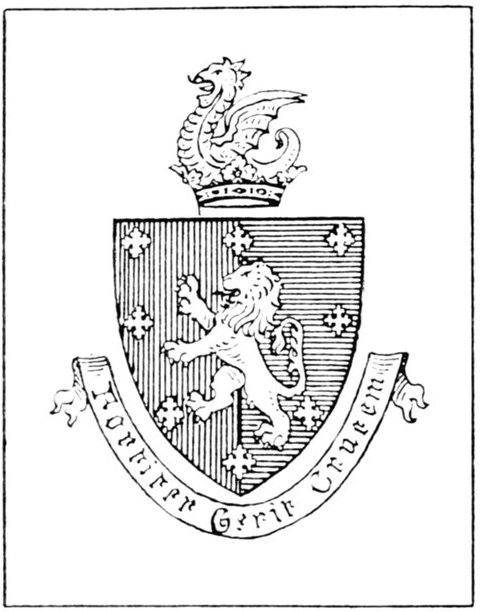
HUTCHINSON, THOMAS
Arms.—Per pale gu. and az., a lion rampant between three crosses crosslet arg. Hutchinson.
Crest.—A cockatrice, wings expanded az., comb, wattles, and members or, issuing from a heraldic coronet.
Motto.—Fortiter gerit crucem.
[D * * *. Satyres sur les Femmes. 1718.]
Thomas Hutchinson (born May 1698, died February 1769) was a son of Peter Hutchinson of Cornforth, Durham. He was educated at Oxford, and entered the Church about 1730. In 1731 he was Rector of Lyndon in Rutland, and in 1748 he was Vicar of Horsham, Rector of Cocking, and a Prebendary of Chichester.
Dr. Hutchinson edited a few editions of the classics, and published several sermons and a few essays, particularly one on Demoniacal Possession.
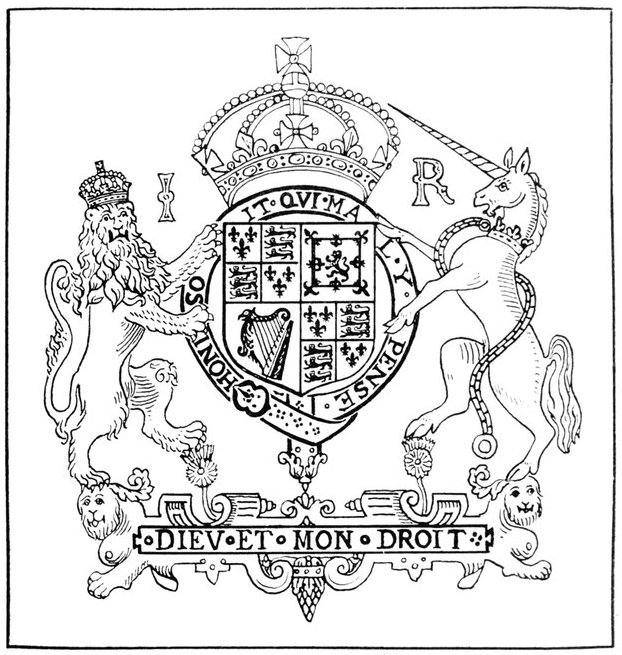
JAMES I., KING OF ENGLAND, SCOTLAND, FRANCE, AND IRELAND
Arms.—Within the Garter. Quarterly.
1st and 4th grand quarters, quarterly.
1 and 4. Az., 3 fleurs-de-lys, 2 and 1, or. France.
2 and 3. Gu., 3 lions passant guardant in pale or, langued and unguled az. England.
2nd grand quarter; or, a lion rampant within a double tressure flory counterflory gu. Scotland.
3rd grand quarter; az., a harp or, stringed arg. Ireland.
Ensigned with a Royal Crown.
Supporters.—Dexter, a lion or, royally crowned ppr. England.
Sinister, a unicorn arg., armed, crined, unguled or, gorged with a princely coronet, a chain affixed thereto, passing between the forelegs, and reflexed over the back of the last. Scotland.
Motto.—Diev et mon droit.
Initials.—I. R. (Jacobus Rex).
The thistle, the badge of Scotland, shows at the base.
[Coquaeus. Apologia pro summis ecclesiae Romanae Pontificibus, etc. Mediolani, 1619.]
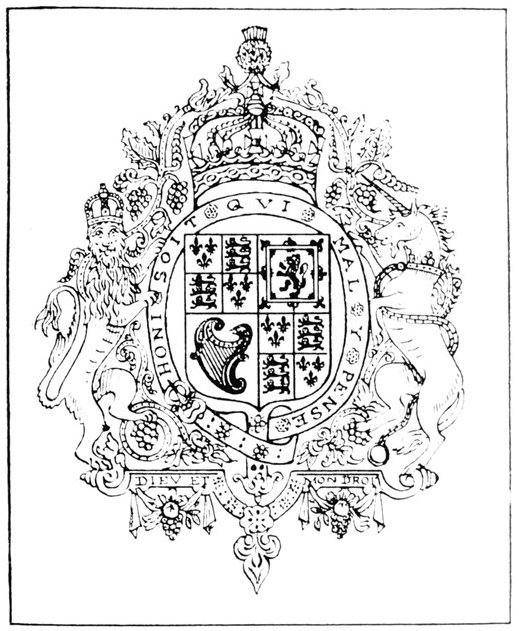
Variety.—With vine spray and a thistle at the top.
[Godwin. Rerum Anglicarum Annales. London, 1616.]
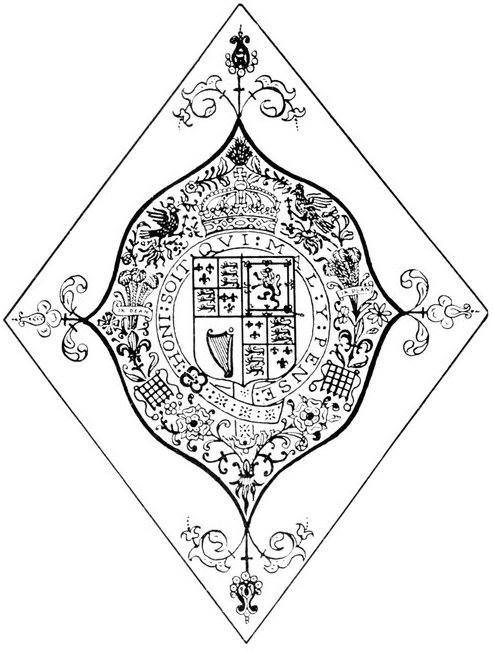
Variety.—With an ornamental border containing the falcon badge of Queen Anne Bullen and Queen Elizabeth, the triple ostrich plume of the Prince of Wales, the fleur-de-lys of France, the portcullis of the De Beauforts, and the Tudor rose. A thistle of Scotland at the top.
[Du Bellay. Mémoires. Parisiis, 1569.]
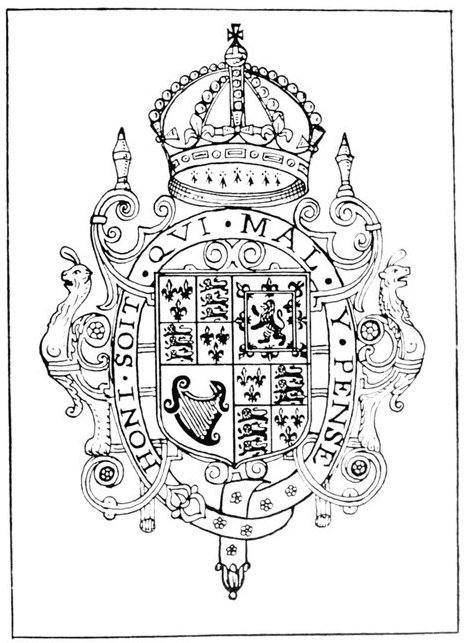
Variety.—Without supporters.
[T. Bradwardini. Arch. Cantuariensis de causa Dei contra Pelagium. London, 1618.]
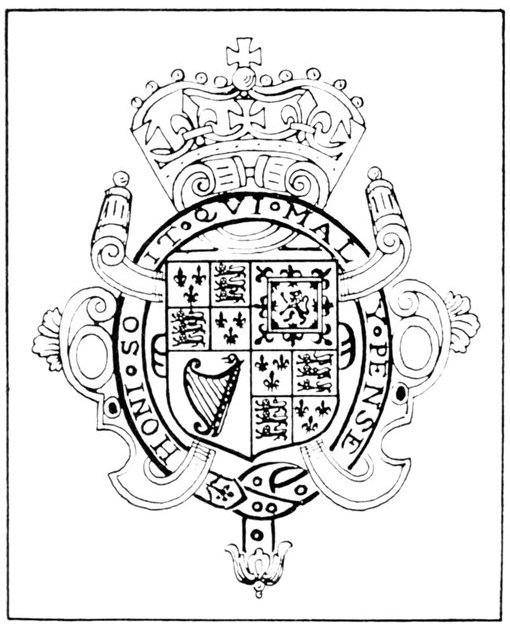
Variety.—Without supporters.
[Boverius. Orthodoxa Consultatio. Matriti, 1623.]
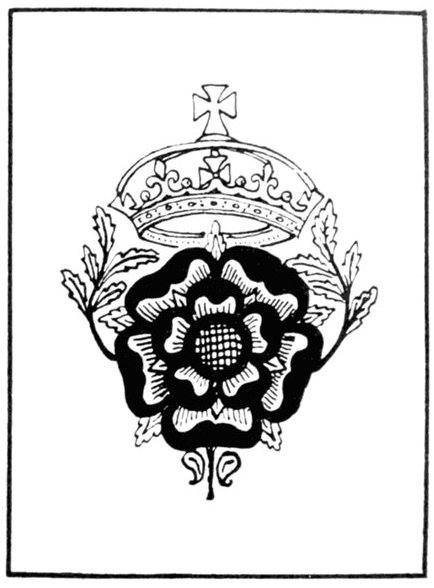
The badge of a Tudor rose, arg. and gu., reeded or and leaved vert, royally crowned, with sprays of rose leaves.
[Perkins. Works. Cambridge, 1603.]
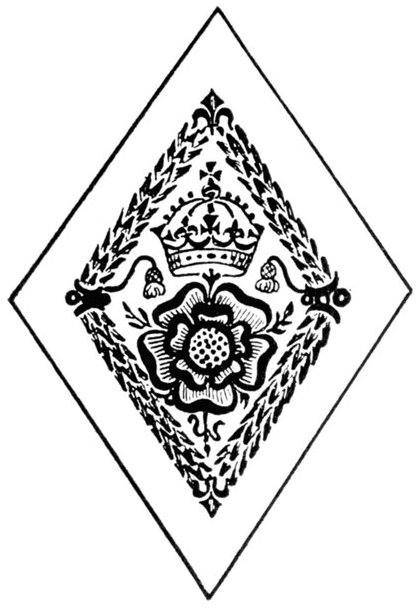
The badge of a Tudor rose, as before, royally crowned, within a lozenge of laurel leaves.
[Christian Dictionarie. London, 1612.]
James Stuart (born 19th June 1566, died 27th March 1625) was the son of Mary, Queen of Scotland, and Henry Stuart, Lord Darnley. He was great-grandson of the Princess Margaret, eldest daughter of Henry VII., who had married James IV., King of Scotland, in 1502, and by right of this descent James came into the line of succession of the English throne. On the dethronement of Queen Mary in 1569, under the Regency of the Earl of Murray, James became King of Scotland under the title of James VI., and reigned for thirty-four years until the death of his cousin, Queen Elizabeth, in 1603, when he inherited the English crown and came to England as James I.
On the accession of James I., a greater change took place in the English Royal coat-of-arms than had ever occurred before. The old coat, France and England quarterly, which had practically been in use ever since the time of Edward III., now became only a quartering, and was shown in the first and fourth quarters, then in the second quarter James put the ancient coat-of-arms of Scotland, or, a lion rampant, within a double tressure flory counterflory gu.
The lion appears for the first time on the shield of Alexander II., and it is supposed to have been derived from the ancestors of the Scottish kings, the Earls of Northumberland and of Huntingdon, whose device it was. The tressure is also of doubtful origin, and is also very ancient; it is popularly supposed to have been given by Charlemagne in recognition of a league between that monarch and Achaius, King of Scotland. The double tressure is presumed to indicate that there were two treaties.
In the third quarter is the coat-of-arms of Ireland, az., a harp or, stringed arg. This harp appears on an illuminated manuscript that belonged to Elizabeth, and is said to have been granted to Ireland by Henry VIII. as a mark of his admiration for the musical qualities of the Irish. It also is used as a badge on Irish coins of and after 1526, and this single harp was increased to three in similar coins made during Elizabeth's reign. The harp was sacred to Apollo Grian or Beal, an ancient Irish deity. Irish silver groats of 1478 show the device of three crowns in pale, and this was probably the coat-of-arms of Ireland at that time, and before that, in 1422, a single crown is found as a badge.
It is curious to note the strong tendency of single devices or badges to merge into threes. It occurs first in the case of the single crown, which presently gets tripled, then the single harp does the same, and the three castles, the arms of Dublin, very likely began as one.
James I. made one more important change; he substituted one of the Scottish unicorn supporters for the red dragon of Cadwallader, used as a dexter supporter by Henry VIII., Edward VI., Mary, and Elizabeth. The ancient Scottish supporters were two unicorns arg., armed, maned, and unguled, gorged with a princely coronet and chained or. The origin of the unicorn supporters is lost, but the creature is generally considered to be an emblem of purity and of freedom; the horn, moreover, was credited with medical powers as a remedy against poisons. The idea of an animal bearing a single horn arose probably from the horn of the narwhal, which has diagonal striations upon it resembling those generally shown on the horn of a unicorn, and certainly does not look like the tooth of a fish. On the other hand cups made of rhinoceros horn are credited with the same magical powers as that of the unicorn. The chain attached to a princely coronet on the neck of the unicorn is not easy to explain; it is said that it alludes to an early king of Scotland, who, as a young man, accidentally killed his father, and bore the chain ever afterwards on his supporters as a sign of grief.
The lion and the unicorn have remained ever since the time of James I. as the supporters of the English Royal coat-of-arms, without any change whatever.
In Scotland James VI. had John Gibson for his bookbinder. He was appointed under the Privy Seal, and was "Our Soverane Lordis Buikbinder," but there is no binding left that can with certainty be attributed to him. On James's advent to England John and Roger Norton and Robert and Christopher Barker were made Royal binders and printers, and in 1604 John and Abraham Bateman were made "Bookbinders to the King."
The many fine armorial bindings which were used by James I. were probably made by one or other of these binders, but for the present no signed binding has been found, so the authorship of any one of them is only conjectural.
The main characteristic of the finer bindings made for James I. is the form of ornamentation known as a semis, that is to say, a powdering all over the field of small stamps arranged symmetrically near together. The commonest of these small stamps show stars, flaming hearts, ermine spots, roses, thistles, pineapples, tridents, fleurs-de-lys, and lions, but there are several others. Another characteristic is the presence of large corner stamps. These are cut in arabesque designs, and many of them are very handsome. The idea of corner ornamentation of this sort began late in Queen Elizabeth's reign, but it did not reach its highest excellence in stamp form until well into the reign of James I.
James I. was the first sovereign to have his books mainly bound in morocco, and this leather is found in most quiet colours—greens and browns and blues, but not red. Several beautiful volumes are also bound in vellum, and others in velvet and satin. The Jacobean period was a decorative one, but not one of the highest level of the art of bookbinding. The greater number of James I.'s books came to the British Museum by gift of George II. in 1757, with the rest of the Old Royal Library of England.
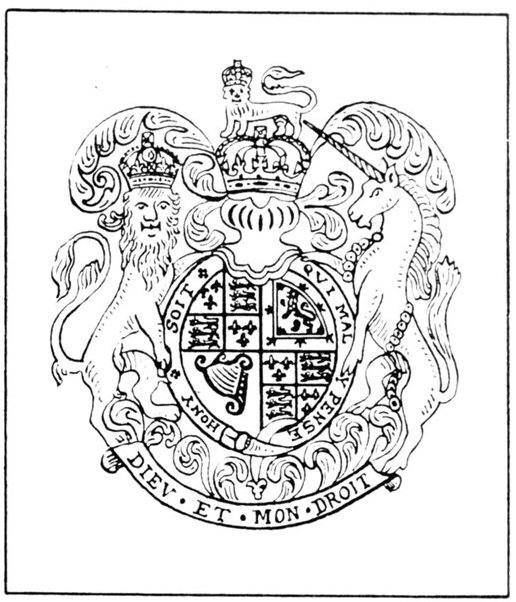
JAMES II., KING OF GREAT BRITAIN, FRANCE, AND IRELAND
Arms.—Within the Garter. Quartered.
1st and 4th grand quarters, quarterly, France and England.
2nd grand quarter, Scotland.
3rd grand quarter, Ireland.
As used by James I. (q.v.).
Crest.—A Royal crown ppr., thereon a lion statant guardant or, crowned ppr.
Helmet.—Royal.
Supporters.—A lion and a unicorn as used by James I. (q.v.).
Motto.—Diev et mon droit.
Used from 1685 until 1689, when James II. was deposed.
[Ordnance Rules. 1683-1685. Stowe MS. 442.]
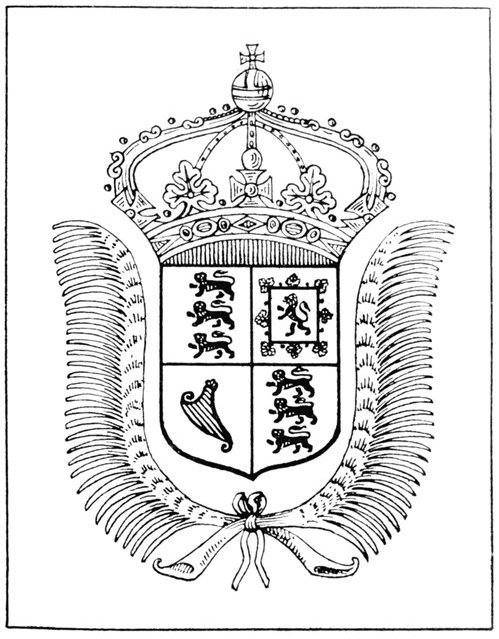
Variety.—Used in France from 1689 until 1701.
Arms.—Quarterly.
1st and 4th, England.
2nd, Scotland.
3rd, Ireland.
Colours as used by James I. (q.v.). Ensigned with the Royal Crown, and between two palm branches.
In this coat James has left out the coat of France, probably out of courtesy to the French King, Louis XIV., who had given him asylum at St. Germains. It is remarkable that this coat-of-arms subsequently became that used by Queen Victoria in 1837.
[La Renommée qui publie le Bonheur de l'Europe sous le regne de Jacques ... Roy de la Grande Bretagne. 1688.]
[E. Almack, Esq., F.S.A., Brighton.]
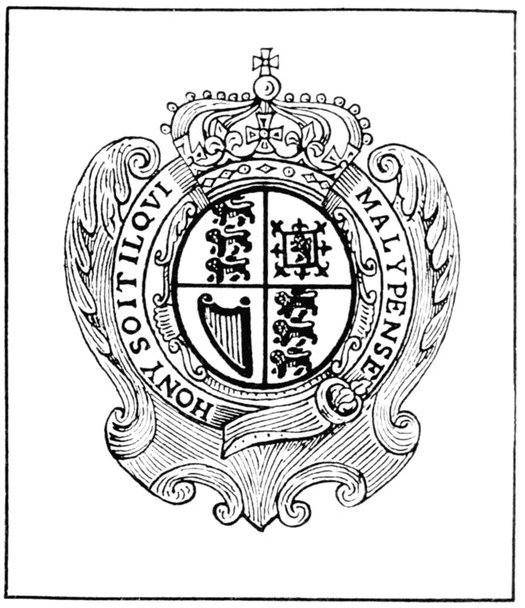
Variety.—Within the Garter. Used in France from 1689 until 1701. The same curious coat-of-arms as in the preceding plate.
[Traité des obligations des Chrétiens. Paris, 1699.]
[E. Almack, Esq., F.S.A., Brighton.]
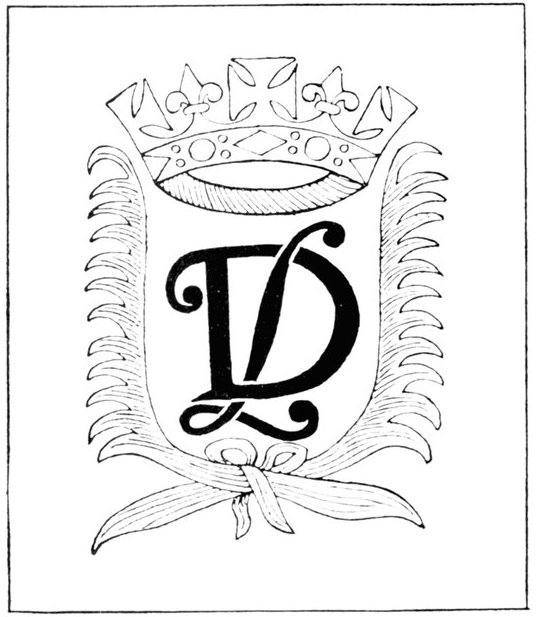
Used as Duke of York.
Initials.—J. D. (Jacobus Dux). Ensigned with a princely coronet, and within two palm branches.
This cypher occurs in corners of books, and it appears to have been designed so that either the D or the J is always properly visible. It is found in conjunction with the two C's of Charles II., which also show clearly either way up.
[Ser. Jacobi Stuarti et Mariae Beatricis Estiae ... epithalamium. Londini, 1673.]
James, Duke of York (born 14th October 1633, died 16th September 1701), was the second son of Charles I. He succeeded his brother Charles II. in 1685. James II. had a short and troubled reign, chiefly because he had Roman Catholic tendencies, and ultimately joined that faith. The feeling in favour of Protestantism in England was very determined, and the nation ultimately invited William, Prince of Orange, who had married James's elder daughter Mary and was a strong Protestant, to come and accept the throne. This he did, and in 1689 James was deposed and William became King in his stead.
James fled to France where he lived for the rest of his life, and the book-stamps that he had made at this time do not include the French coat. He was known as the Duke of York, but nevertheless his book-stamps show a Royal Crown. James's second wife, Mary of Modena, was a Roman Catholic and strongly influenced his views. He died at St. Germains, Paris, at the age of seventy.
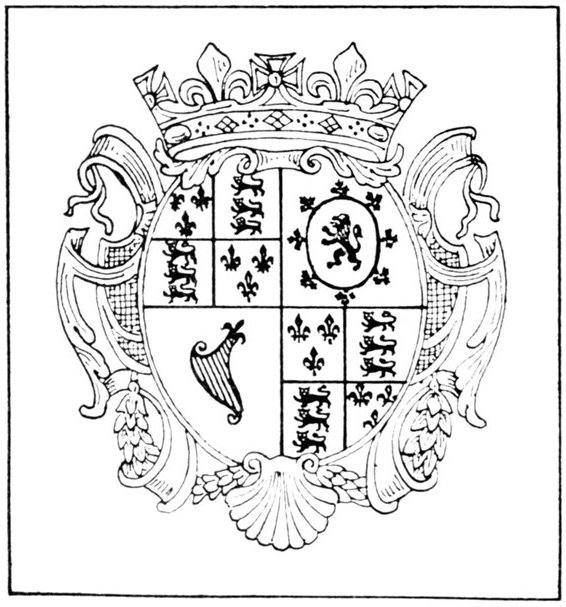
JAMES FRANCIS EDWARD, PRINCE OF WALES
Arms.—Quartered.
1st and 4th grand quarters, quarterly, France and England.
2nd grand quarter, Scotland.
3rd grand quarter, Ireland.
As used by James I. (q.v.). Ensigned with a princely coronet.
Note.—A foreign stamp.
[Gervaise. La vie de Saint Martin, Evêque de Tours. Tours, 1699.]
James Francis Edward (born 10th June 1688, died 1st January 1766) was the eldest son of James II. and his second wife, Mary of Modena. He was born before his father became King of England. Prince James, who is known as the Old Pretender in distinction to his son Charles Edward, the Young Pretender, is also known as the Chevalier St. George. His history is an unhappy one from his birth. On his father's death in 1701 at St. Germains he was proclaimed James III. of England and VIII. of Scotland, but by the Act of Settlement made in the same year the Stuarts were cut out of the succession to the English throne.
The Chevalier St. George spent his life in fruitless endeavours to make good his claim to the English throne. His character appears to have been wanting in most of the qualities that make for success, and towards the latter part of his life his misfortunes so preyed upon him that he gave way to unworthy dissipations.
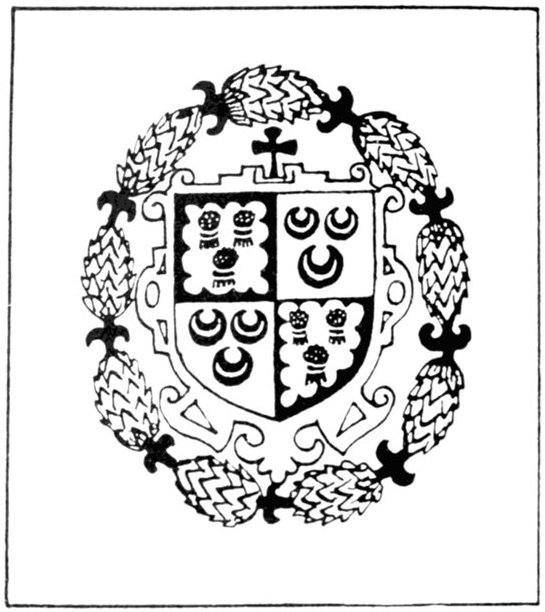
KEMP, THOMAS READ
Arms.—Quarterly.
1st and 4th; gu., 3 garbs within a bordure engrailed or. Kempe.
2nd and 3rd; sa., 3 crescents arg., 2 and 1. Read.
[Alliances généalogiques de France. Paris, 1561.]
Thomas Read Kemp (born c. 1781, died 20th December 1844) was the son of Thomas Kemp, Member of Parliament for Lewes, who married Ann Read of Brookland. Mr. Kemp was educated at Cambridge, and in 1811 he represented Lewes in the House of Commons. He sold his castles at Lewes and at Hurstmonceaux and built largely near Brighton, where the district known as Kemp Town was founded by him. He spent all his fortune in this speculation, which, however, in time became of great value.
The family of Kemp or Kempe is one of great antiquity in Kent. John Kempe, Archbishop of Canterbury in the fifteenth century, and his nephew Thomas Kempe, Bishop of London, both belonged to it. The immediate ancestor of Mr. T. R. Kemp was Sir Thomas Kempe of Olantigh, near Ashford, an estate which had belonged to the family since the time of Edward I.
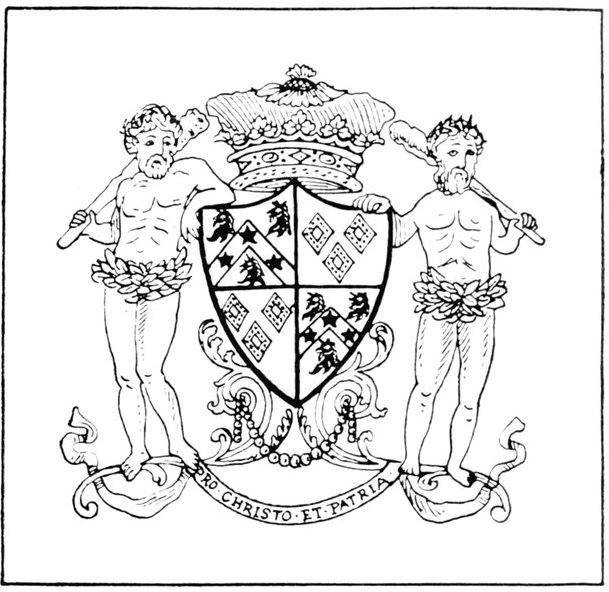
KER, JOHN, THIRD DUKE OF ROXBURGHE
Arms.—Quarterly.
1st and 4th; vert., on a chevron between 3 unicorns' heads erased arg., armed and maned or, as many mullets sa. Ker.
2nd and 3rd; gu., 3 mascles or. Weapont.
Coronet.—That of a Duke.
Supporters.—Two savage men, wreathed about the head and waist with laurel, each holding, with the exterior hand, a club resting upon the shoulder, all ppr.
Motto.—Pro christo et patria.
[The Roxburghe Ballads.]
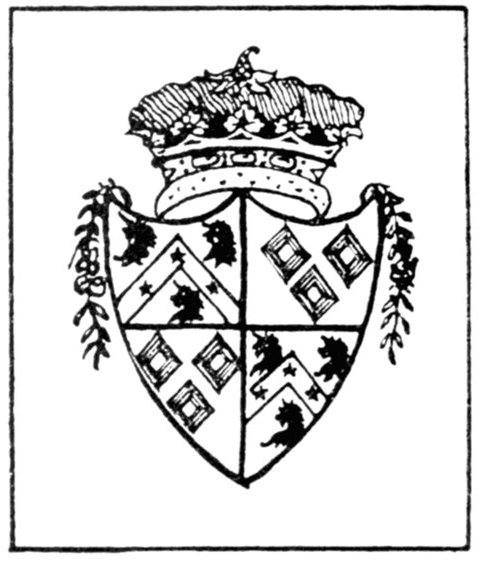
Variety.—Without Supporters.
[Onosander. Strategicus. Lut. Parisiorum, 1599.]
John Ker (born 23rd April 1740, died 19th March 1804) was the elder son of Robert Ker, second Duke of Roxburghe. He succeeded his father in the title in 1755. The Duke brought together a splendid library, among which was the special collection of ballads which are now known by his name. The ballads were at first collected by Robert Harley, and they were largely added to by a Mr. West and by Major T. Pearson, and after the entire collection had been purchased by the Duke of Roxburghe he continued adding to it himself.
In 1812 the Duke's library was sold and the books widely scattered; the ballads, however, in 1845 were acquired for the British Museum at the sale of the books of Mr. B. H. Bright. The Duke of Roxburghe was a Knight of the Garter, and also a Knight of the Thistle. He was a Lord of the Bedchamber and a Privy Councillor.
The Roxburghe Club of Edinburgh was founded in honour of the Duke in 1812.
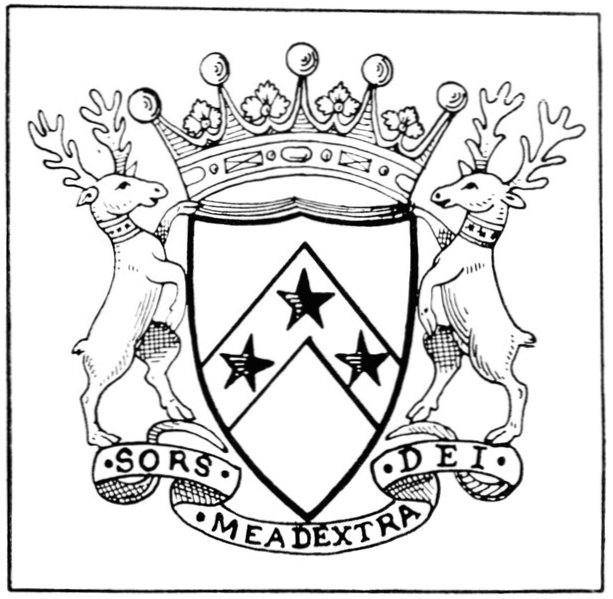
KERR, WILLIAM, EARL OF LOTHIAN
Arms.—Gu., on a chevron arg., 3 mullets of the field. Kerr.
Coronet.—That of an Earl.
Supporters.—Two bucks, each gorged with a collar arg., charged with 3 mullets gu.
Motto.—Sors mea dextra dei.
[Bacon. Of the advancement and proficience of Learning. Oxford, 1640.]
William Kerr (born c. 1605, died October 1675) was the son of Robert Kerr, first Earl of Ancrum, and in 1631 he was created Earl of Lothian. In that year he had married Anne, Countess of Lothian in her own right, and there was some litigation about the title. The Earl was at the Battle of Newbury in 1643; he was Governor of Newcastle, and a man of much political importance. He was a Commissioner of the Treasury in Scotland, and Lieutenant-General of the Scottish army in Ireland. In 1642 he went to France for the purpose of considering the position of the Scottish Guard at the French Court.
Lord Lothian was one of the commissioners sent by the Scottish Parliament to protest against the proceedings against Charles I., and he also served on several of the commissions which were appointed about that time concerning the Restoration of Charles II.
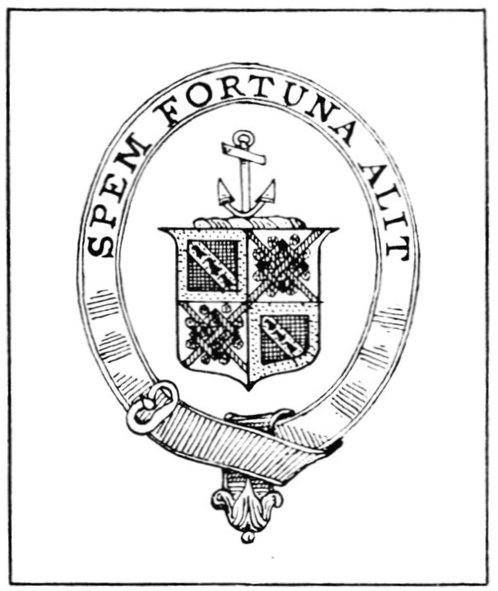
KINNEAR, JOHN GARDINER
Arms.—Quarterly.
1st and 4th; sa., on a bend or, 3 martlets vert., a bordure of the second. Kinnear.
2nd and 3rd; arg., on a fret gu., 4 hearts, one in each angle, gu., and in every interstice a rose of the second. Gardiner.
Crest.—An anchor in pale az.
Motto.—Spem fortuna alit.
[Bannatyne Club. The Palice of Honour. Edinburgh, 1827.]
John Gardiner Kinnear was a banker of Edinburgh. He was a member of the Bannatyne Club, to which he was admitted in 1826.
The Kinnears were well known as a family of bankers, and they also had literary tastes. The particular book from which I have taken the accompanying coat-of-arms is one that was presented to the Bannatyne Club in 1827, and reprinted in that year for Mr. J. G. Kinnear. The text is taken from a rare book written by Gawyn Douglas, Bishop of Dunkeld, called The Palice of Honour, and "Imprentit at Edinburgh be Johne Ros, for Henric Charteris, Anno 1579."
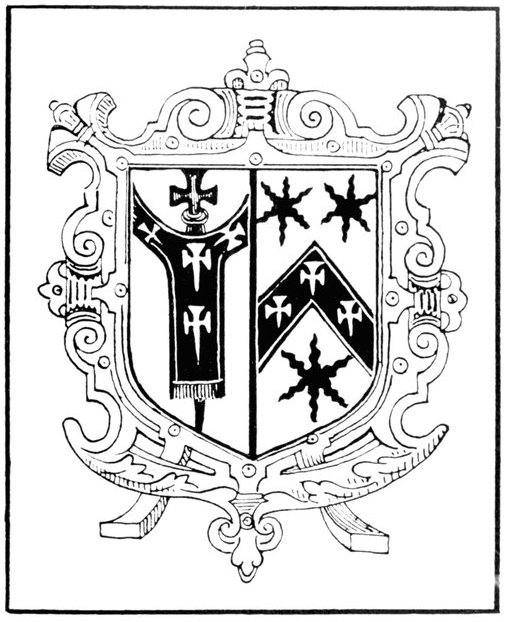
LAUD, WILLIAM, ARCHBISHOP OF CANTERBURY
Arms.—Impaled.
Dexter: Az., an archiepiscopal staff, headed with a cross pattée or, surmounted by a pall arg., charged with 4 crosses pattée fitchée sa., fringed and edged or. See of Canterbury.
Sinister: Sa., on a chevron or, between 3 estoiles of 6 points of the second, as many crosses pattée fitchée gu. Laud.
[Laud. A relation of the Conference between William Lawd ... and Mr. Fisher the Jesuite, etc. London, 1639.]
William Laud (born 7th October 1573, died 10th January 1645) was the son of William Laud of Reading. After leaving Reading he went to Oxford and entered the Church, and quickly came into notice as a theologian. He was supposed to favour Romish doctrines. After enjoying several minor appointments, Laud was made Dean of Gloucester in 1616, and by this time he was high in the favour of James I., who in 1621 promoted him to the Bishopric of St. David's.
Under Charles I. Laud acquired still more importance. In 1626 he was made Dean of the Chapel Royal, and next year a member of the Privy Council, and in 1628 he became Bishop of London. In 1629 Laud was Chancellor of the University of Oxford, and in 1633 he was made Archbishop of Canterbury. Archbishop Laud was impeached for treason in 1641; he underwent his trial in 1644, and an ordinance of attainder was passed in the next year. Although Laud had in his possession a pardon from the king, he was beheaded on Tower Hill in 1645. He wrote a large number of books, mainly theological or historical. Several of his books are in the library at Lambeth Palace, and others are in the British Museum.
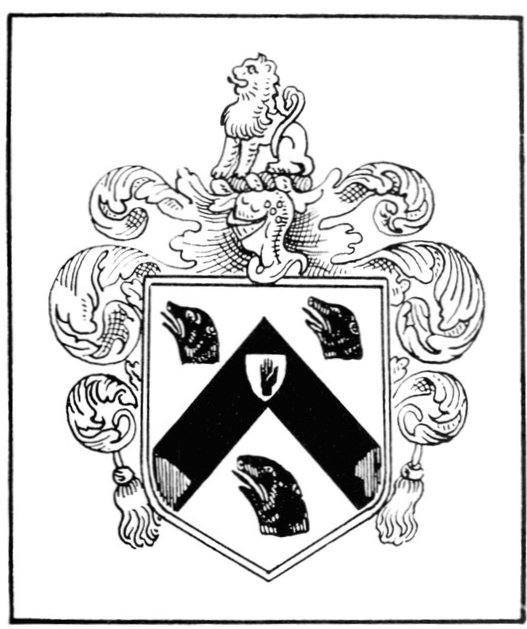
LEY, JAMES, EARL OF MARLBOROUGH
Arms.—Arg., a chevron between 3 seals' heads couped sa. Ley.
The Ulster hand gu., on an escutcheon arg., in the chief point of the chevron.
Crest.—A lion sejant or.
Helmet.—That of an Esquire.
Used between 1620 and 1625.
[Brutus Abbreviatus. Add. MS. 34,266.]
James Ley (born c. 1550, died 14th March 1628) was the son of Henry Ley of Teffont Ewias, Wilts. He was educated as a lawyer, and attained great eminence in that profession. In 1605 he became Chief-Justice of the King's Bench in Ireland, and in 1620 he was made a Baronet, and next year Chief-Justice of the King's Bench in England.
In 1625 Sir James Ley was created Baron Ley, and became Lord Treasurer of England, and in 1626 he was created Earl of Marlborough and President of the Council. Lord Marlborough had a high reputation as a lawyer and as a judge, and he was the author of several works on history and law.
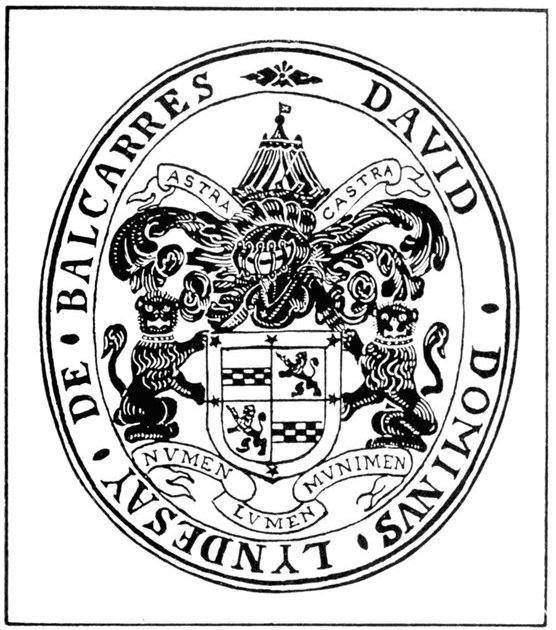
LINDSAY, DAVID, BARON LINDSAY OF BALCARRES
Arms.—Quarterly.
1st and 4th; gu., a fess chequy, arg. and az. Lindsay.
2nd and 3rd; or, a lion rampant gu., debruised of a ribbon in bend sa. Abernethy.
All within a bordure of the third, semée of stars or.
Crest.—A tent ppr., semée of stars or, with ASTRA CASTRA on a fillet.
Helmet.—That of a Peer.
Supporters.—Two lions sejant guardant gu., gorged or.
Motto.—Nvmen lvmen mvnimen.
Legend.—David dominvs lyndesay de balcarres.
[Books at Haigh Hall, Wigan.]
[The Earl of Crawford, Haigh Hall, Wigan.]
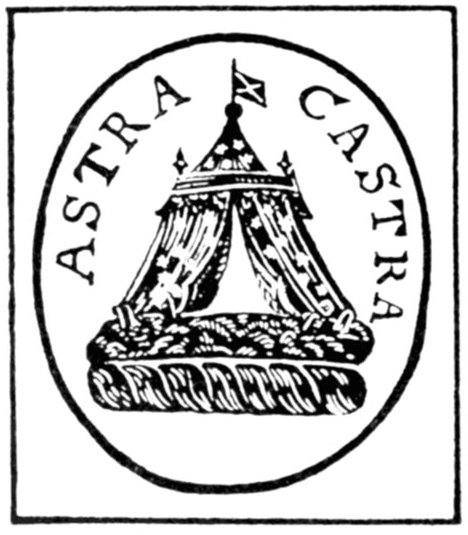
Crest.—A tent ppr., semée of stars or, with ASTRA CASTRA.
[Books at Haigh Hall, Wigan.]
[The Earl of Crawford, Haigh Hall, Wigan.]
David Lindsay (born c. 1586, died March 1640) was the son of John Lindsay, Lord Menmuir, second son of the ninth Earl of Crawford. David Lindsay succeeded his brother John in 1601, and in 1612 he was knighted. In 1633 he was created Baron Lindsay of Balcarres. He was the ancestor of the present Earl of Crawford. Lord Lindsay was a firm adherent of Charles I. He was fond of books and literature, besides being a man of science and scientific pursuits generally.
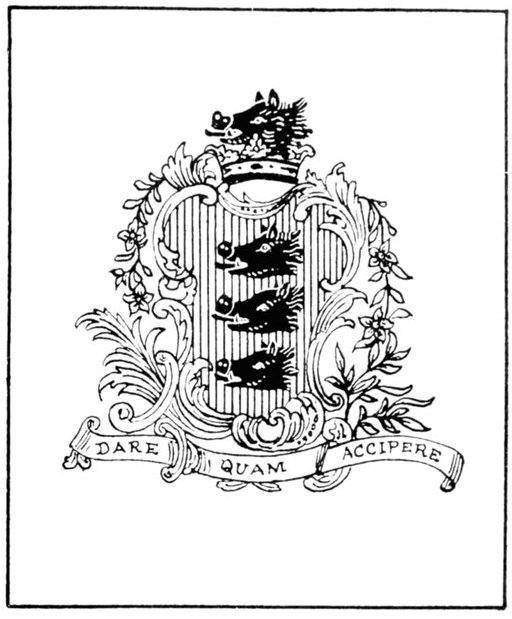
LLOYD, DAVID, DEAN OF ST. ASAPH
Arms.—Gu., 3 boars' heads erased in pale arg. Lloyd.
Crest.—Out of an heraldic coronet a boar's head erased arg.
Motto.—Dare quam accipere.
[Porta. Natural Magick. London, 1658.]
David Lloyd (born 1597, died 7th September 1663) was the son of David Lloyd of Llanidloes, Montgomery. He was educated at Oxford, and took orders about 1628. Dr. Lloyd was chaplain to the Earl of Derby, and held several benefices in Wales, and in 1660 was made Dean of St. Asaph. He wrote a well-known book called The Legend of Captain Jones, which was published in London in 1631. This remarkable work went through several editions, many of which were curiously added to and altered by successive editors or re-writers.
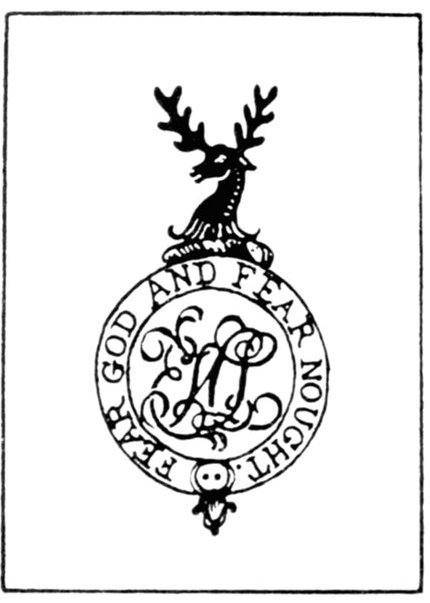
LOCKER, EDWARD HAWKE
Crest.—A buck's head erased ppr. Locker.
Motto.—Fear God and fear not.
Initials.—E. H. L. (Edward Hawke Locker).
[Descrizione delle Pitture che trovansi in alcune città dello Stato Ligure. Genova, 1780.]
Edward Hawke Locker (born 9th October 1777, died 16th October 1849) was the son of William Locker, Captain R.N. He was educated at Eton, and occupied several positions of trust, until in 1819 he was made Secretary to Greenwich Hospital. Mr. Locker was a Fellow of the Royal Society, an artist and an author, and has left a few books, chiefly biographical or historical. At Greenwich he inaugurated the scheme of making a collection of naval pictures, which has proved of the greatest value. His son Frederick, who assumed the additional surname of Lampson in 1885, afterwards became a well-known book collector.
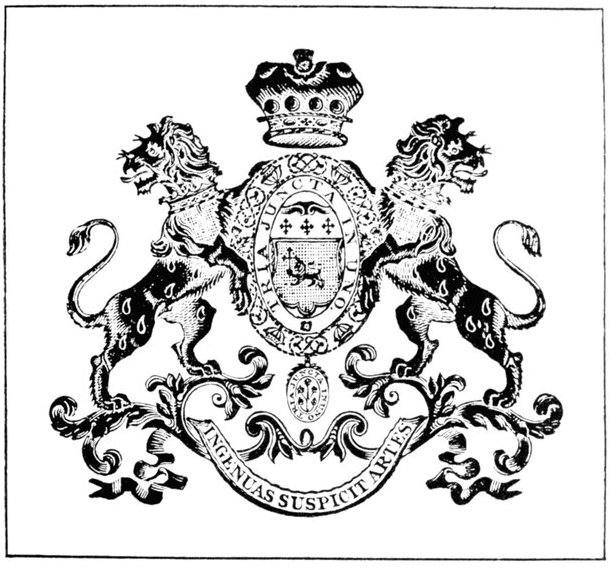
LONG, CHARLES, BARON FARNBOROUGH
Arms.—Sa., a lion passant arg., holding in the dexter paw a cross crosslet fitchée or, on a chief of the second 3 crosses crosslet of the field.
Coronet.—That of a Baron.
Supporters.—Two lions reguardant arg., gouttées de sang, each gorged with a ducal coronet or, thereto pendent an escutcheon sa., charged with a cross crosslet arg.
Motto.—Ingenuas suspicit artes.
The coat is enclosed with a fillet bearing the legend "Tria juncta in uno," being the motto of the Order of the Bath. This is again enclosed within the collar of the said Order, as worn by a Knight Grand Cross, from which depends the badge of the Order.
[Letters of German Authors, etc. Egerton MS. 2407.]
Charles Long (born circ. 1760, died 17th January 1838) was the son of Beeston Long of Carshalton Park, Surrey. He was educated at Cambridge, and was successively Member of Parliament for Rye, Midhurst and Wendover, and Haslemere, and held many important offices.
In 1800 Mr. Long became joint Secretary of the Treasury, and presently one of the Lords of the Treasury, and was Paymaster-General from 1817 until 1826, when he was created Baron Farnborough of Bromley Hill Place. He was a Knight Grand Cross of the Bath, and a member of the Privy Council. Lord Farnborough took an important part in the negotiations with George IV., with regard to his gift to the Nation of the Library of George III., and he also bequeathed a considerable sum of money to the Trustees of the British Museum, to augment the Bridgewater Fund. He was a Trustee of the British Museum, a Fellow of the Royal Society and of the Society of Antiquaries, and possessed a valuable collection of pictures and antiquities at his house, Bromley Hill Place, in Kent.
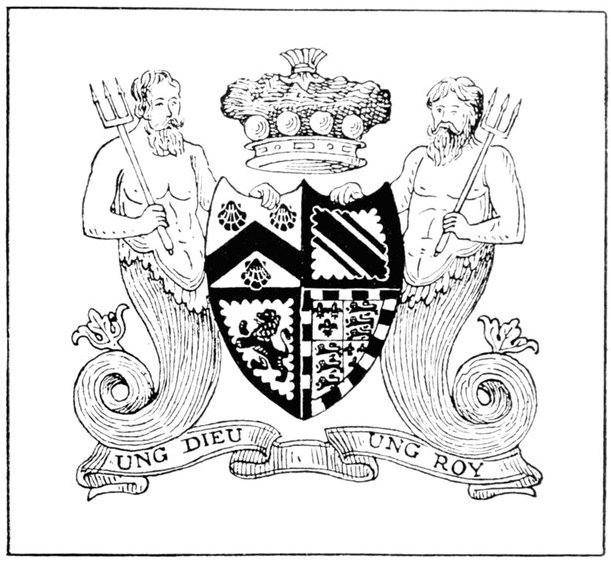
LYTTELTON, WILLIAM HENRY, BARON LYTTELTON
Arms.—Quarterly.
1. Arg., a chevron between 3 escallops sa. Lyttelton.
2. Arg., a bend cotised sa., within a bordure engrailed gu. (bezantée). Westcote.
3. Gu., a lion rampant within a bordure engrailed or. Burley.
4. France and England quarterly, within a bordure gobony, arg. and az. By right of descent from Elizabeth, daughter of Sir Gilbert Talbot, and great-great-granddaughter of John of Gaunt, Duke of Lancaster. Plantagenet.
Coronet.—That of a Baron.
Supporters.—On either side a merman ppr., in his exterior hand a trident or. But in several instances of early use, a dexter Supporter alone is found.
Motto.—Ung dieu ung roy.
[Littleton. The first part of the Institutes of the Lawes of England. London, 1794.]
[The Viscount Cobham, Hagley Hall, Stourbridge.]
William Henry Lyttelton (born 24th December 1724, died 14th September 1808) was the fifth son of Sir Thomas Lyttelton, Baronet, who was created Viscount Cobham in 1718. In 1776 Mr. Lyttelton was created Baron Westcote in the Peerage of Ireland, and on the death of his nephew, Sir Thomas Lyttelton, second Baron Lyttelton, he succeeded to the Baronetcy and the English peerage expired.
Lord Westcote was Governor of South Carolina and of Jamaica, and Envoy Extraordinary to the Court of Portugal. In 1794 he was created Baron Lyttelton in the Peerage of England, assuming the same title as had become extinct by the death of his nephew in 1779. Lord Lyttelton was a descendant of the great lawyer, Sir Thomas Lyttelton, Judge of the Court of Common Pleas, who wrote the celebrated treatise on Tenures, in the fifteenth century.
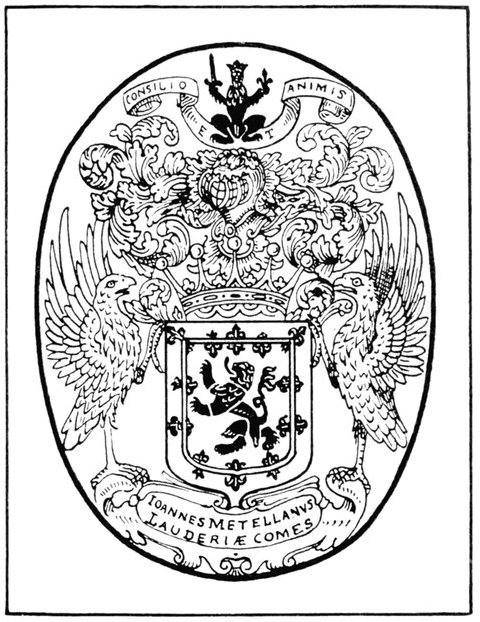
MAITLAND, JOHN, EARL OF LAUDERDALE
Arms.—Or, a lion rampant dechaussé, within a double tressure flory counterflory of fleurs-de-lys gu. Maitland.
Crest.—A lion sejant affrontée gu., ducally crowned or, holding in the dexter paw a sword ppr., pommelled and hilted or, in the sinister paw a fleur-de-lys az., on a fillet "Consilio et animis."
Coronet.—That of an Earl.
Helmet.—That of a Peer.
Supporters.—Two eagles, wings expanded, ppr.
Legend.—Ioannes metellanvs lauderiæ comes.
[La Bigne. Magna Bibliotheca Veterum Patrum et Antiq. Scriptorum Ecclesiasticorum. Coloniae Agrippinae, 1618.]
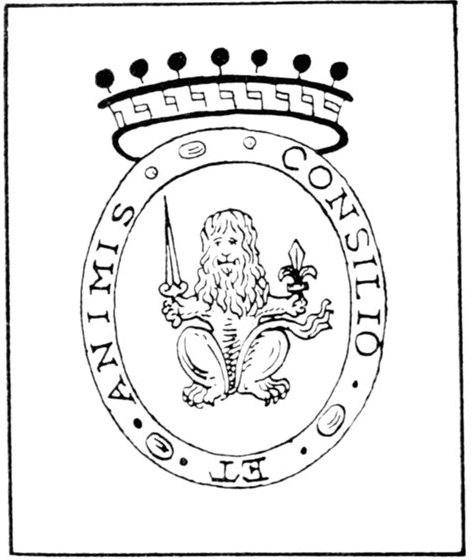
Crest.—A lion sejant affrontée gu., holding in his dexter paw a sword ppr., pommelled and hilted or, and in the sinister paw a fleur-de-lys az.
Coronet.—That of a Viscount.
Motto.—Consilio et animis.
Note.—Used between 1616 and 1624.
[Tacitus. Opera. 1595.]
John Maitland (born circ. 1580, died 18th January 1645) was the only son of John Maitland, Lord Maitland of Thirlestane, and succeeded to his father's peerage in 1595. In 1616 Lord Maitland was created Viscount Lauderdale, and in 1624, Earl of Lauderdale. Lord Lauderdale was a Lord of Session in Scotland.
MANNERS, FRANCIS, SEVENTH EARL OF RUTLAND
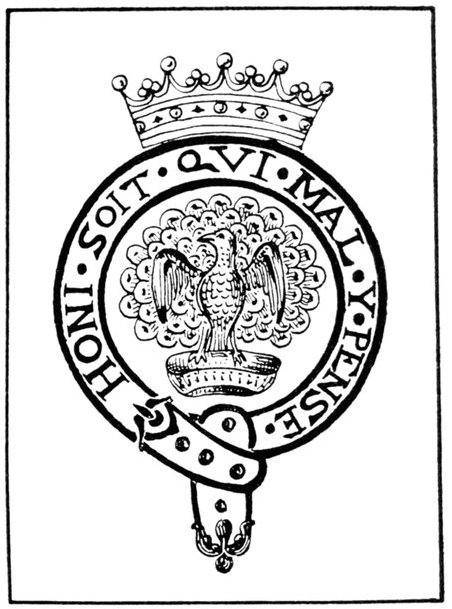
Crest.—Within the Garter. On a chapeau gu., turned up erm., a peacock in pride ppr. Ros afterwards Manners.
Coronet.—That of an Earl.
[Ruvius. Commentarii in Octo libros Aristotelis de Physico. Col. Agrippinae, 1616.]
Francis Manners (born 1578, died 17th December 1632) was the son of John Manners, Earl of Rutland. He was educated at Cambridge, and studied law at the Inner Temple. Mr. Manners was made a Knight of the Order of the Bath in 1604, and in 1612, on the death of his elder brother, Roger, he succeeded to his father's peerage.
Lord Rutland was Lord Lieutenant of Lincolnshire, Constable of Nottingham Castle, and in 1612 he entertained James I. at Belvoir Castle. In consequence of certain legal decisions adverse to his claim to an older title he was, in 1616, made Lord Ross of Hamlake. In the same year he was made a Knight of the Garter. He carried the sceptre with the dove at the coronation of Charles I., was Chief-Justice of Eyre north of Trent, and in 1623 he commanded the fleet sent to escort Prince Charles back from Spain.
The beautiful crest of a peacock in pride upon a chapeau was adopted by the Manners family after the marriage, in the fifteenth century, of Sir Robert Manners of Etal, Northumberland, with Eleanor, daughter and heiress of Thomas, 10th Lord Ros, whose crest it was. The family crest of Sir Robert Manners was a bull's head erased gu., ducally gorged and chained or.
MANNERS, JOHN, DUKE OF RUTLAND
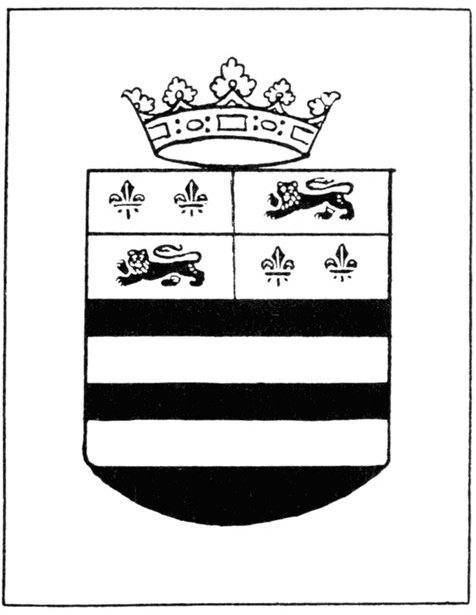
Arms.—Or, 2 bars az., a chief quarterly of the second and gu.; the first and fourth quarters each charged with 2 fleurs-de-lys or, the second and third quarters each charged with a lion of England or. Manners.
This chief was originally gu., and the change made in it, incorporating the fleurs-de-lys of France and the lion of England, was an augmentation granted in consideration of descent from Edward IV.
Coronet.—That of a Duke.
[Settle. Fears and Dangers fairly display'd. London, 1706.]
John Manners (born 29th May 1638, died 10th January 1710) was the son of John Manners, ninth Earl of Rutland, and succeeded his father in the Earldom in 1679.
Before this, however, he had been created Lord Manners of Haddon. He carried the Queen's sceptre with the cross at the coronation of James II. He supported the Protestant cause, and the Princess Anne at one time took refuge at Belvoir Castle, and when she presently became Queen she created Lord Manners Marquis of Granby and Duke of Rutland.
MARY, QUEEN OF ENGLAND, FRANCE, AND IRELAND
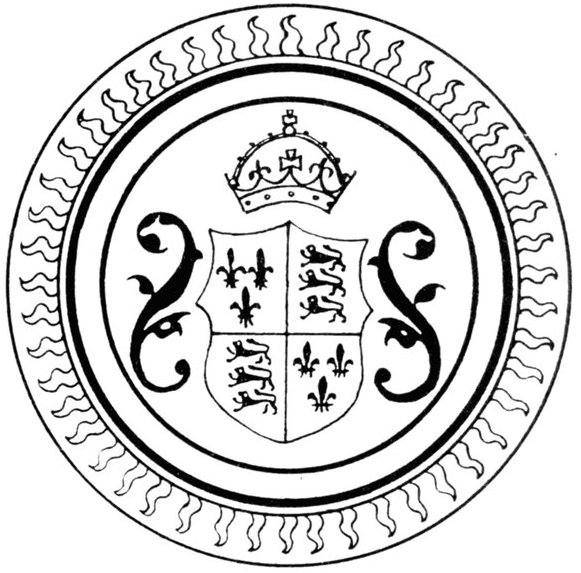
Arms.—Quarterly.
1st and 4th, France.
2nd and 3rd, England.
As used by Henry VIII. (q.v.).
Crown.—Royal.
[Epitome operum divi Augustini. Cologne, 1549.]
The Princess Mary (born 18th February 1516, died 17th November 1558) was the daughter of Henry VIII. and his first wife, Catherine of Aragon. In 1553 she succeeded her brother Edward VI. on the throne of England.
In 1554 Queen Mary married Prince Philip, afterwards Philip II., King of Spain, but the marriage was neither happy nor popular.
The bindings made for Queen Mary often show her coat-of-arms encircled by flames. They were bound by Thomas Berthelet, who had been Royal Bookbinder to Henry VIII. Most of the books are bound in calf, but some are in embroidered velvet, and show the pomegranate flower. Mary also used the badges of the fleur-de-lys and the portcullis of the De Beauforts. Her initials, "M. I.," are sometimes used on her bindings. Queen Mary used the same supporters as Henry VIII. in the latter part of his reign, namely, the lion and the red dragon, but they do not show on any of her books. Queen Mary's books came to the British Museum in 1757.
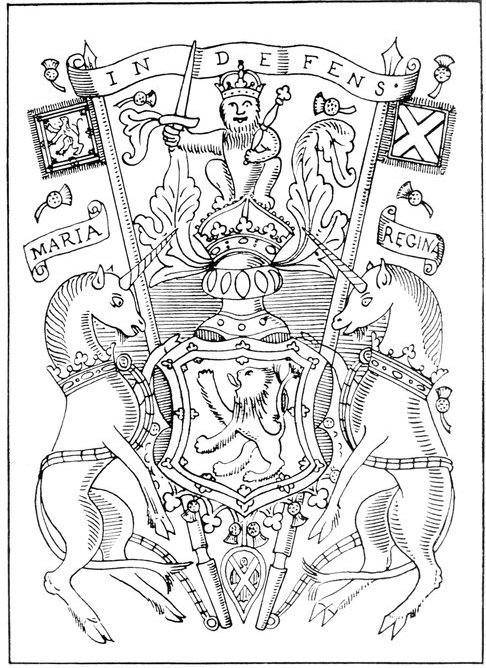
MARY, QUEEN OF SCOTLAND
Arms.—Or, a lion rampant within a double tressure flory counterflory gu. Scotland.
As used by James I. (q.v.).
Crest.—The Scottish Royal Crown, ppr., thereon a lion sejant or, holding in his dexter paw a sword and in his sinister paw a sceptre, all ppr.
Helmet.—Royal.
Supporters.—Two unicorns arg., armed, unguled, each gorged with a princely coronet and chained or, as used by James I. (q.v.).
Motto.—In defens.
Behind the shield are two spears, on the dexter of which is a banner bearing the arms of Scotland, and on the sinister a banner bearing the cross of St. Andrew arg., on a field az.
The shield is enclosed within the collar of the Order of the Thistle, from which depends the badge of the Order.
Legend.—Maria Regina.
[The Black Acts. Edinburgh, 1556.]
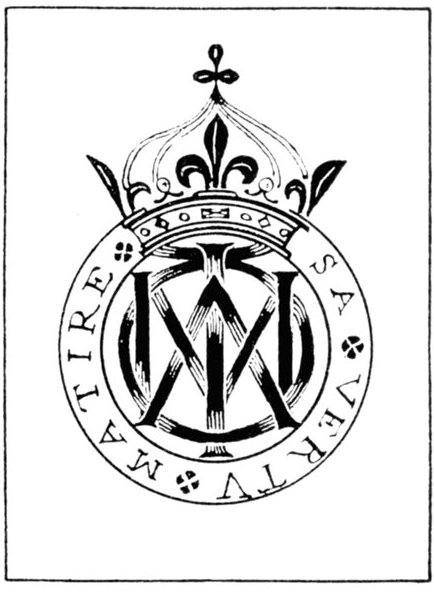
Cypher Μ., i.e. "Marie," and Φ, i.e. "Francis," used about 1559 or 1560, when Mary was Queen of Francis II., King of France.
The motto "Sa vertv matire" is an anagram on the name Marie Stuuarte.
The crown is the crown of France.
Note.—A foreign stamp.
[Ptolemy. Geographia. Rome, 1490.]
[The late Sir Wollaston Franks, K.C.B.]
Mary, Princess of Scotland (born 8th December 1542, died 8th February 1587), was the daughter of James V., King of Scotland, and on his death in 1542, when she was eight days old, she succeeded to his crown. Mary was the granddaughter of the Princess Margaret, eldest daughter of Henry VII., who had married James IV., King of Scotland, in 1502.
In 1558 she married the Dauphin of France, who shortly afterwards became king as Francis II. He died in 1560, and Mary returned to Scotland, and in 1565 married Henry Stuart, Earl of Darnley, who was proclaimed King of Scotland on the day of his marriage.
Lord Darnley was murdered in 1567, and Queen Mary dethroned in favour of her son, James VI., and in the same year she married John Hepburn, Earl of Bothwell, who is supposed to have been Darnley's murderer. Troubles multiplied round the unfortunate queen. Her husband had to take refuge abroad, and she herself was made a prisoner and shut up at Loch Leven. Queen Mary asked Queen Elizabeth's help in the discords which became incessant in Scotland, and at last Mary was induced to put herself in her rival's power, and took refuge at Carlisle.
The end was that after a long imprisonment in England she was tried, condemned, and beheaded at Fotheringay in 1587, the plea being that she had conspired against Queen Elizabeth's life.
Queen Mary was very intellectual and a notable linguist. Many of her books are bound in black and have black edges. This is supposed to have been intended as a mark of mourning for her first husband. Mary's only son, James VI., succeeded to the throne of England on the death of Queen Elizabeth in 1603, his title in England being James I.
The present official coat-of-arms of Scotland is, quarterly:
1st and 4th, Scotland.
2nd, England.
3rd, Ireland.
Colours as used by James I. (q.v.).
Supporters.—Dexter: A unicorn arg., maned, horned, hoofed, and gorged with a princely coronet and chained or.
Sinister: A lion or, royally crowned.
Crest.—The crest of Scotland as used by Mary, Queen of Scotland, but on an English Royal Crown. Behind the shield are two standards bearing respectively the crosses of St. Andrew and St. George, and the helmet, collar of the Order of the Thistle, and motto are all as used by Queen Mary.
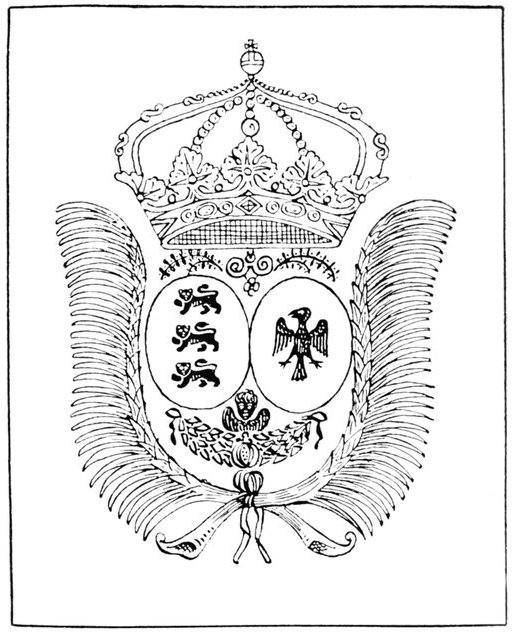
MARY OF MODENA, QUEEN CONSORT OF JAMES II.
Arms.—Two shields side by side.
Dexter shield: Gu., 3 lions passant guardant, in pale, or, langued and unguled az. England.
Sinister shield: Arg., an eagle displayed sa. D'Este.
Ensigned with a Royal Crown of foreign design, and enclosed between two palm branches.
Note.—This stamp was probably made in France after 1689.
[Desporcellets. Regne de Jacques II. MS.]
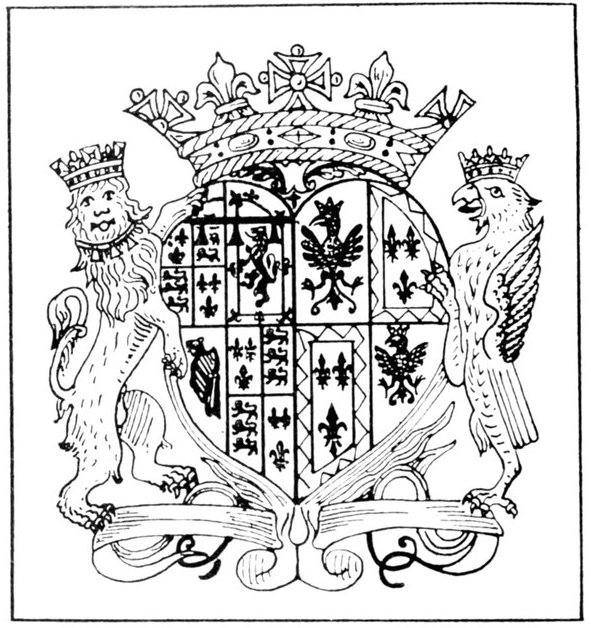
Arms.—Impaled.
Dexter: Quarterly.
1st and 4th grand quarters, quarterly; France and England.
2nd grand quarter; Scotland.
3rd grand quarter; Ireland.
As used by James I. (q.v.). Over all the label, with three points arg., of an eldest son.
Sinister: Quarterly.
1st and 4th; arg., an eagle displayed sa., coroneted ppr. D'Este.
2nd and 3rd; az., 3 fleurs-de-lys or, within a bordure counter-indented, or and gu. Ferrara.
Ensigned with a princely coronet.
Supporters.—Dexter: A lion of England or, wearing a princely coronet ppr., and charged on the neck with a label of three points arg.
Sinister: An eagle of D'Este sa., wearing a ducal coronet or.
Note.—This stamp was made while James was still Duke of York, that is to say, between 1673 and 1685.
[Waller. Poems. London, 1668.]
Mary Beatrice of Modena (born 5th October 1658, died 7th May 1718) was a daughter of Alphonso IV., D'Este, Duke of Modena. She was a strong Roman Catholic. In 1673 she married James, Duke of York, whom she presently converted to the Roman Catholic religion, and when she became queen in 1685, her influence over the king continued to be very great. There were many disquieting rumours about the birth of the Prince of Wales, and Queen Mary was never liked in England. She seems, however, to have been a devoted and affectionate wife.
Her trouble culminated about 1688, when she fled to France with her little son, and was well and honourably received by Louis XIV. James II. presently joined her at the Palace of St. Germain, which the French king had put at his disposal on his deposition from the throne of England in 1689. After James's death in 1701 Queen Mary continued to live at St. Germain, and remained there for the rest of her life.
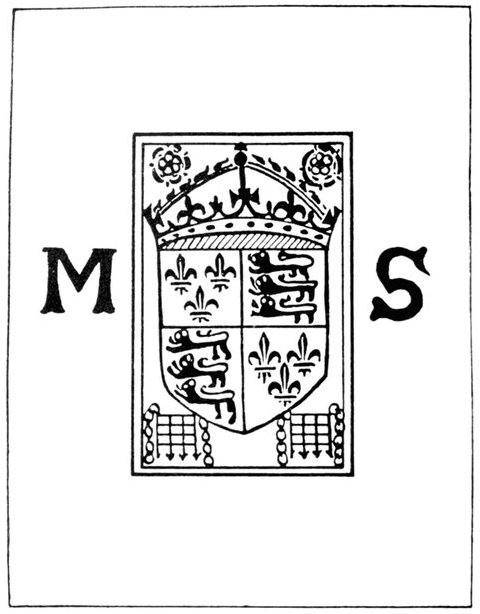
MARY, PRINCESS OF ENGLAND, AFTERWARDS QUEEN OF FRANCE AND DUCHESS OF SUFFOLK.
Arms.—Quarterly, France and England, as used by Henry VIII. (q.v.).
Badges.—Tudor roses, gu. and arg., and portcullis arg., chained or.
Initials.—M. S. (Mary Suffolk).
Note.—The book bears the arms of Henry VIII., and the initials have been added. It is one of the earliest gold-tooled English bindings in existence, and was probably made by John Taverner for an earlier inside than that which it now covers.
[Herbarum Imagines. Francofurti, 1535.]
Mary Tudor (born 1497, died 23rd June 1534) was the youngest daughter of Henry VII. At an early age she was enamoured of Charles Brandon, afterwards Duke of Suffolk. Henry VIII., however, decided that her marriage with Louis XII. of France was more expedient, and in 1514 she became his Queen. Next year she was left a widow, and almost immediately she married the Duke of Suffolk abroad, and the marriage was afterwards re-solemnised in England.
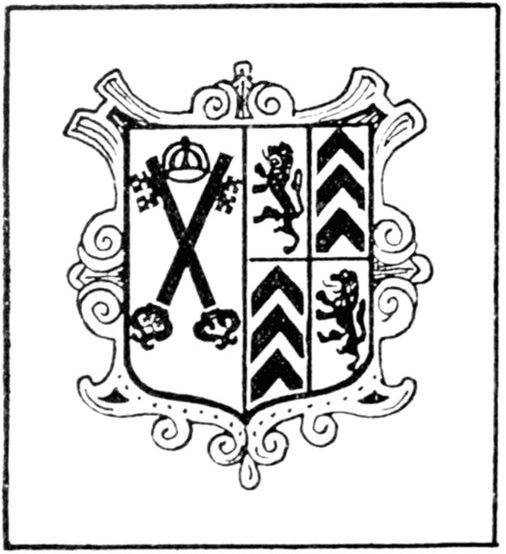
MATTHEW, TOBIAS, ARCHBISHOP OF YORK
Arms.—Impaled.
Dexter: Gu., two keys in saltire arg., in chief a Royal Crown or. See of York, after 1515.
Sinister: Quarterly.
1st and 4th; sa., a lion rampant arg.
2nd and 3rd; gu., 3 chevrons arg. Matthew.
[Novum Testamentum. 1580.]
Tobias Matthew (born circ. 1546, died 29th March 1628) was the son of John Matthew of Ross in Herefordshire. He was educated at Oxford and ordained in 1566. He preached before Queen Elizabeth at St. Mary's Church in the High Street at Oxford, and attracted Her Majesty's attention by his eloquence and his handsome appearance. He was made a Canon of Christchurch Cathedral in 1570, and Dean in 1576. In 1583 he was Dean of Durham. In 1595 he was consecrated Bishop of Durham, and in 1606 Archbishop of York. Archbishop Matthew took a prominent part in the political as well as the theological affairs of his time. Lady Arabella Stuart was imprisoned in his house, and she escaped from it in 1611.
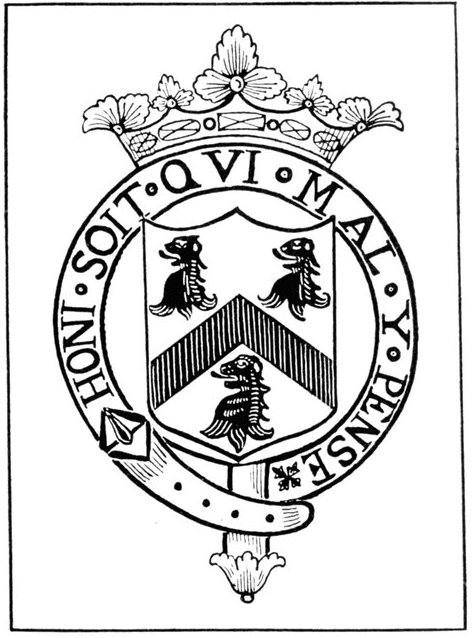
MONCK, CHRISTOPHER, SECOND DUKE OF ALBEMARLE
Arms.—Within the Garter. Gu., a chevron between 3 lions' heads erased arg. Monck.
Coronet.—That of a Duke.
[Heylyn. Ecclesia Restaurata. London, 1674.]
Christopher Monck (born circ. 1653, died 6th October 1688) was the son of General George Monck, who, in recognition of his services concerning the restoration of Charles II., was by that monarch created Duke of Albemarle in 1660. Christopher Monck succeeded his father in the Dukedom in 1669. He was made a Knight of the Garter in the same year, and in 1687 he was appointed Governor of Jamaica.
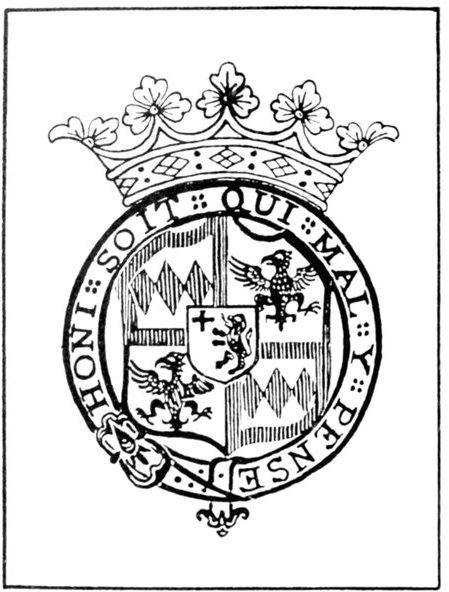
MONTAGU, JOHN, SECOND DUKE OF MONTAGU
Arms.—Within the Garter. Quarterly.
1st and 4th; arg., 3 lozenges conjoined in fess gu., within a bordure sa. Montagu.
2nd and 3rd; or, an eagle displayed vert., beaked and membered gu. Monthermer.
On an escutcheon of pretence. Sa., a lion rampant arg., on a canton of the last a cross gu. Churchill.
Coronet.—That of a Duke.
[Bacon. The Historie of the Reigne of King Henry the Seventh. London, 1641.]
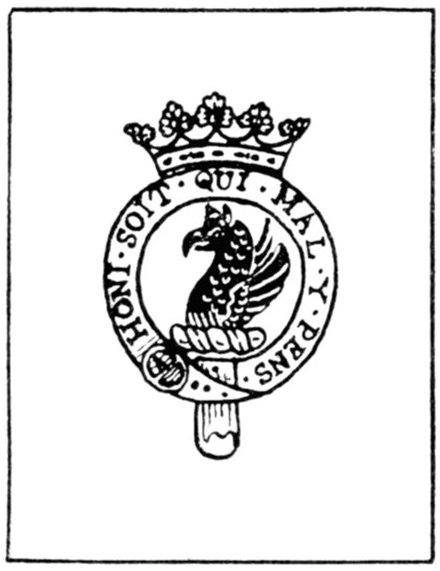
Crest.—Within the Garter. A griffin's head couped or, beak and wings endorsed sa. Montagu.
[Berkeley. Siris. London, 1744.]
John Montagu (born circ. 1688, died 6th July 1749) was the son of Ralph Montagu, Duke of Montagu, whom he succeeded in 1709. At the coronation of George I. the Duke of Montagu was High Constable, and he was Governor of St. Lucia and St. Vincent, both of which islands were given to him by the king.
The Duke of Montagu carried the sceptre with the cross at the coronation of George II., and in 1740 he was made Master-General of the Ordnance. He raised a regiment of cavalry, known as "Montagu's Carabineers." In 1719 he was made a Knight of the Garter, and in 1725 Grand Master of the Order of the Bath, and he also held several military appointments. He was a Fellow of the Royal Society and of the Royal College of Physicians.
The Duke's town residence, Montagu House, originally occupied the site now covered by the British Museum, and at his death it was acquired by the Government. Many alterations were carried out for the better housing of the collections which were placed in it, and eventually it was entirely rebuilt in a more convenient form. It had been originally built for Ralph, the first Duke of Montagu. The Duke married Mary Churchill, daughter of John Churchill, Duke of Marlborough, the great General. Lady Mary Churchill's only brother having died as a boy, she and her sisters became heraldic heiresses, so their coat-of-arms were borne on an escutcheon of pretence in the centre of the coats-of-arms of their respective husbands.
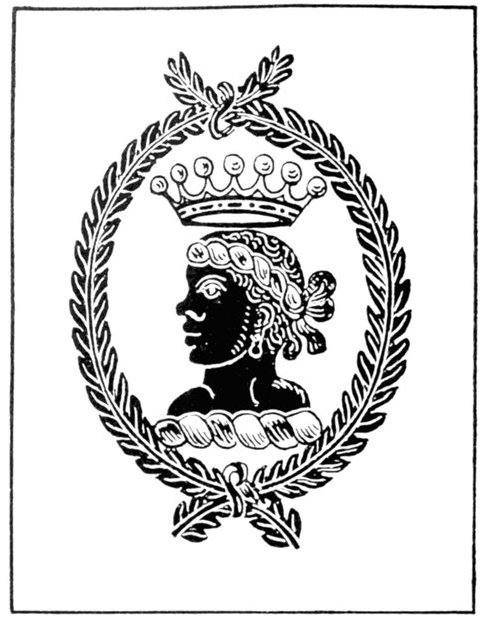
MORDAUNT, JOHN, VISCOUNT MORDAUNT
Crest.—A Saracen's head in profile ppr., wreathed about the temples, arg. and sa. Mordaunt.
Coronet.—That of a Viscount.
[Buchonius. Primitiae gnomonicae Catoptricae, etc. Avenione, 1635.]
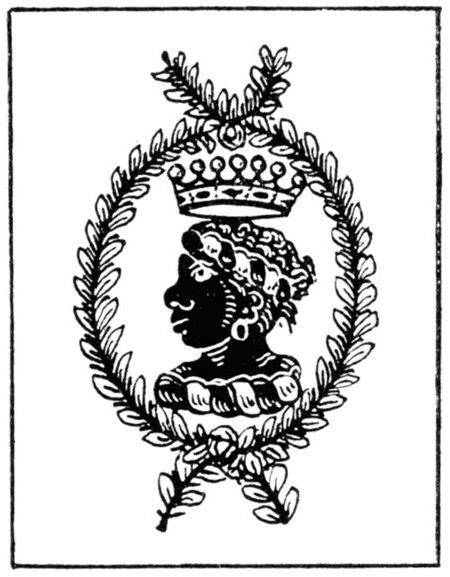
Variety.—In a smaller size.
[Recueil general des Caquets de l'Acouchée. 1623.]
John Mordaunt (born 18th June 1626, died 5th June 1675) was the second son of John Mordaunt, Earl of Peterborough. He was educated at Oxford and was a strong Royalist. In 1658 he was in consequence tried for his life, and only escaped death by one vote. He was with Charles II. on the Continent, and in 1659 was created Viscount Mordaunt of Avalon. In 1660, on the Restoration, Lord Mordaunt was knighted. He commanded a troop of horse and a regiment of foot, and was Constable of Windsor Castle and Keeper of the Great Park. He was also Lord Lieutenant of Surrey.
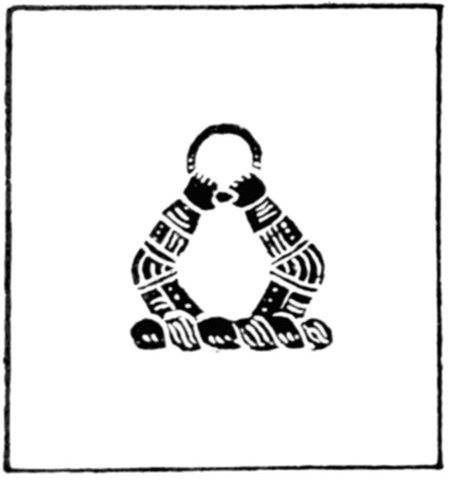
MUSGRAVE, SIR WILLIAM, BARONET
Crest.—Two arms in armour, gauntleted ppr., holding an annulet or. Musgrave.
[Saint German. Doctor and Student. In the Savoy, 1751.]
William Musgrave (born 8th October 1735, died 16th January 1800) was the second son of Sir Richard Musgrave of Hayton Castle, and succeeded to the family Baronetcy in 1755, on the death of his elder brother.
Sir William was a Commissioner of Customs and of Accounts, a Fellow and Vice-President of the Royal Society, a lawyer of much distinction, and a Bencher and Treasurer of the Middle Temple. He was author of a very useful compilation known as Musgrave's Obituary; it gives reference to places where the various persons deceased are mentioned, and also further particulars. The obituary was published by the Harleian Society in 1899-1901.
Sir William Musgrave made large collections of manuscripts on the subject of portrait-painting in England, and also concerning the history of England. He bequeathed these manuscripts, as well as a considerable number of printed books, to the British Museum, of which he was a Trustee. He had already given several books to the library during his lifetime, many of which contain an autograph note of the presentation.
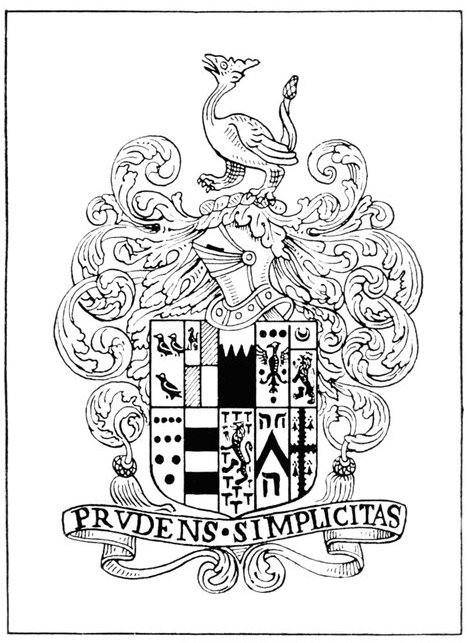
NAUNTON, SIR ROBERT
Arms.—Quartered.
1. Gu., 3 martlets or. Naunton.
2. Quarterly, or and gu., in the first quarter a lion rampant of the second. Inglish.
3. Arg., a chief indented sa. Hillock.
4. Sa., an eagle displayed arg., between 6 bezants, 3, 2, and 1. Busserard.
5. Arg., a lion rampant sa., a chief gu., a crescent for difference. Ashby.
6. Gu., 10 bezants, 4, 3, 2, and 1. Zouch.
7. Arg., 2 bars gu. Martin.
8. Gu., a lion rampant between 14 tau crosses or. Powell (?).
9. A chevron between 3 Hebrew letters "Cheth," probably standing for "Jehovah." Unknown.
10. Erm., a cross engrailed sa. Houghton.
Crest.—A basilisk ppr.
Helmet.—That of an Esquire.
Motto.—Prvdens simplicitas.
[Common Prayer. London, 1612.]
Robert Naunton (born circ. 1563, died 27th March 1635) was the son of Henry Naunton of Alderton. He was educated at Cambridge, where in 1594 he was elected Public Orator, and travelled largely on the Continent for the purpose of studying politics. He was Member of Parliament for Helston in 1606, then for Camelford and for Suffolk, and sat in three Parliaments as Member for Cambridge. In 1614 he received the honour of Knighthood, and in 1617 became Secretary of State, and afterwards Master of the Court of Wards. Sir Robert was an earnest Protestant, and the Catholics considered that he was too strongly opposed to their interests. The latter part of his life was troubled, chiefly because he was too free in expressing his own views as to matters of public interest. Although he held several important official offices, he does not appear to have been a man of much talent, but his management of the matters entrusted to him was marked by strong common sense and trustworthiness. He wrote several valuable books on travel, biography, and history.
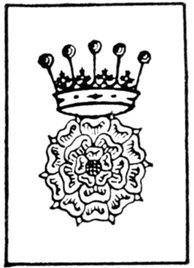
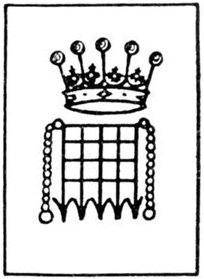
NEVILL, GEORGE, EARL OF ABERGAVENNY
Badges.—1. A Lancastrian rose gu., seeded or, and leaved vert. 2. A portcullis of De Beaufort arg., chained and ringed or, nailed az. Both ensigned with an Earl's Coronet.
[C. Suetonius. Tranquillus ex recensione F. Oudendorpii. Lugduni Batavorum, 1751.]
George Nevill (born 24th June 1727, died 9th September 1785) was the son of William Nevill, Lord Abergavenny. He was a godson of George II., and succeeded his father in the Barony in 1744. Lord Abergavenny was Lord Lieutenant of Sussex, and in 1784 he was created Earl of Abergavenny.
The use of the badges shown is not confined to any particular earl, but had been generally used by the Nevill family for a long time. The Red Rose of Lancaster was adopted as a badge by Richard Nevill, Earl of Warwick, whose daughter Anne married Edward, Prince of Wales, only son of Henry VI., the last of the Lancastrian Kings, in 1470. The Princess Anne afterwards married Richard III., the last of the Yorkist Kings. The portcullis was used as a badge of descent from the house of De Beaufort, and both badges are still used by the family of Nevill.
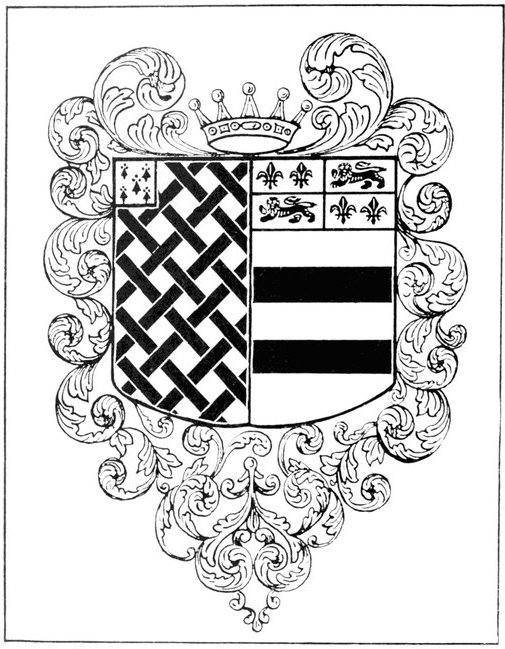
NOEL, BAPTIST, THIRD EARL OF GAINSBOROUGH
Arms.—Impaled.
Dexter: Or, fretty gu., a canton erm. Noel.
Sinister: Or, two bars az., a chief quarterly of the last and gu., in the first and fourth quarters 2 fleurs-de-lys or, and in the second and third quarters a lion passant guardant, of the last langued and unguled az. Manners.
Coronet.—That of an Earl.
[Settle. Thalia Lacrymans. London, 1714.]
Baptist Noel (born 1684, died 17th April 1714) was the son of Baptist Noel of Luffenham, Rutland, who was the eldest son, by his fourth marriage, of Baptist Noel, second Baron Noel and third Viscount Campden. The eldest son of Lord Campden succeeded to his father's title in 1682, and in 1681 he was created Earl of Gainsborough with special remainder to his younger brothers. In consequence of this remainder, on the death of Wriothesley Noel, second Earl of Gainsborough, in 1691, without male heir, the Earldom reverted to Baptist Noel, his cousin, who succeeded as third Earl.
Lord Gainsborough married, about 1706, his first cousin, Dorothy Manners, daughter of John, first Duke of Rutland.
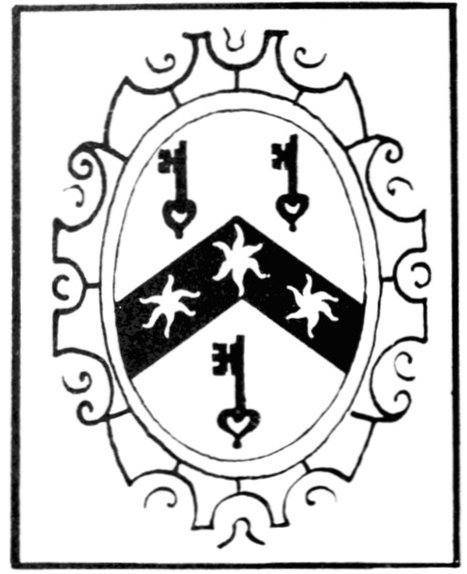
PARKER, MATTHEW, ARCHBISHOP OF CANTERBURY
Arms.—Gu., on a chevron between 3 keys erect arg., as many estoiles of the field. The estoiles were an augmentation added in 1559. Parker.
[New Testament. London, 1574.]
Matthew Parker (born 6th August 1504, died 17th May 1575) was educated at Cambridge, and in 1527 he took orders and became a Fellow of his College, and quickly made a name as a powerful preacher. In 1537 he was made Chaplain to the King and a Prebendary of Ely. He became Master of his old College, St. Benet's (Corpus Christi), in 1544. In 1552 he was Dean of Lincoln, but on Mary's accession he lost that and his other preferments on the ground of his being married.
During all Queen Mary's reign Dr. Parker kept himself well out of the way, but when Elizabeth came to the throne he was sought out and in 1559 consecrated Archbishop of Canterbury, being the second Protestant Archbishop of that See.
Archbishop Parker concerned himself much with literature, and wrote several valuable books. He had much to do with the Book of Common Prayer, and also with the revisal of the then existing translation of the Bible, the edition finally issued by him being known as the "Bishop's Bible." He founded the Society of Antiquaries of London in 1572, and bequeathed a large number of books and manuscripts to the University of Cambridge and to his old College.
Archbishop Parker had a staff of workmen in his own house, part of which was fully equipped for their use. His work De Antiquitate Britannicae Ecclesiae, of which it is said no two copies are alike, as the Archbishop made some alterations in the proofs every time they were submitted to him, is said to have been printed at the Archbishop's press by John Day. Some of his books are beautifully bound in embroidered velvet, also supposed to have been done in his own house. In one of his letters to Lord Burghley, he says that he has in his house "Paynters, Lymners, Wryters, and Book-Bynders." It is possible that several of the fine bindings made for Queen Elizabeth and for Lord Burghley were really made in the Archbishop's workshop.
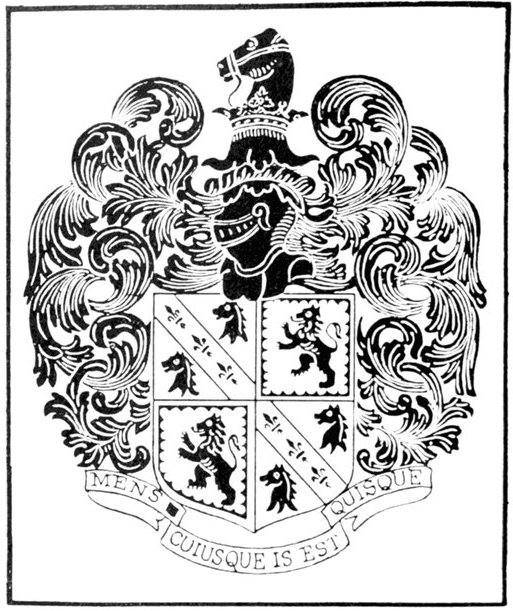
PEPYS, SAMUEL, SECRETARY TO THE ADMIRALTY
Arms.—Quarterly.
1st and 4th; sa., on a bend or, between 2 nags' heads erased arg., 3 fleurs-de-lys of the field. Pepys.
2nd and 3rd; gu., a lion rampant within a bordure engrailed arg. Gray.
Crest.—A camel's head erased or, bridled, lined, ringed, and gorged with a ducal coronet or.
Helmet.—That of an Esquire.
Motto.—Mens cuiusque is est quisque.
[Several books in the Pepys Library at Magdalene College, Cambridge.]
[The Pepys Library at Magdalene College, Cambridge.]
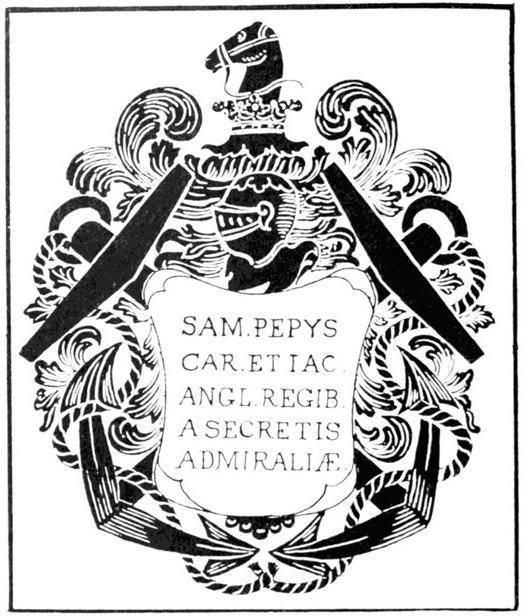
Variety.—A shield lettered "SAM. PEPYS CAR. ET IAC. ANGL. REGIB. A SECRETIS ADMIRALIÆ."
Behind the shield are two fouled anchors.
Crest and helmet as in the preceding example.
[Books at Magdalene College, Cambridge.]
[The Pepys Library at Magdalene College, Cambridge.]
Samuel Pepys (born 23rd February 1632, died 26th May 1703) was the son of John Pepys of Cottenham, in Cambridgeshire. He was educated at Magdalene College, Cambridge, and became clerk of the Acts of the Navy in 1660.
In 1673 Mr. Pepys was Secretary to the Admiralty, and he introduced several admirable reforms in the management of that office, which he retained until 1689. He accompanied Lord Dartmouth to Tangier, and made several expeditions to the Continent and about the coasts of England.
In 1690 he published his Memoirs concerning the navy of England, a very important work. In 1684 Mr. Pepys was President of the Royal Society. He left a considerable library to his old College at Cambridge, manuscripts as well as printed books, and also several prints. Pepys kept a curious Diary in cypher from 1659 to 1669. It has been deciphered and published several times, but the best edition is that issued by Mr. H. B. Wheatley in 1893.
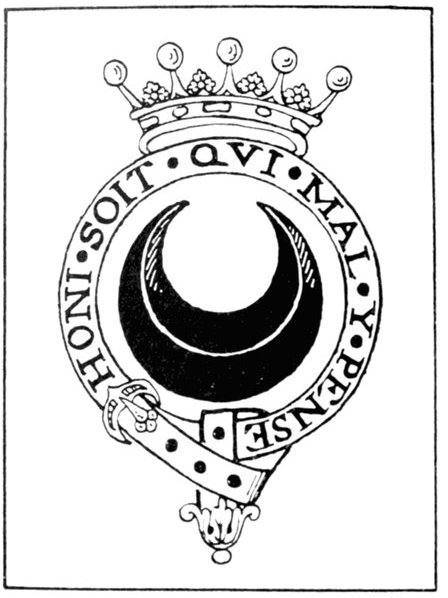
PERCY, HENRY, NINTH EARL OF NORTHUMBERLAND
Badge.—Within the Garter.
A crescent arg., ensigned with an Earl's coronet.
[James I. Triumphs, etc. London, 1610.]
Henry Percy (born April 1564, died 5th November 1632) was the son of the eighth Earl of Northumberland and succeeded his father, who was murdered in the Tower, in 1585. Lord Northumberland was fined and imprisoned in the Tower in consequence of an alleged complicity in the Gunpowder Plot. In 1593 he was made a Knight of the Garter, and in 1603 he was Captain of the Corps of Gentlemen Pensioners.
Northumberland was in distant remainder to the Crown of England, and at one time it was probable that his claims might be strengthened by a marriage with Lady Arabella Stuart, niece of Lord Darnley, and great-granddaughter of Margaret, elder daughter of Henry VII., but the negotiation came to nothing. The Earl was fond of scientific pursuits and was known as "The Wizard Earl," and was a great smoker. The badge of the silver crescent was used by the Percy family generally and not exclusively by any particular member of it.
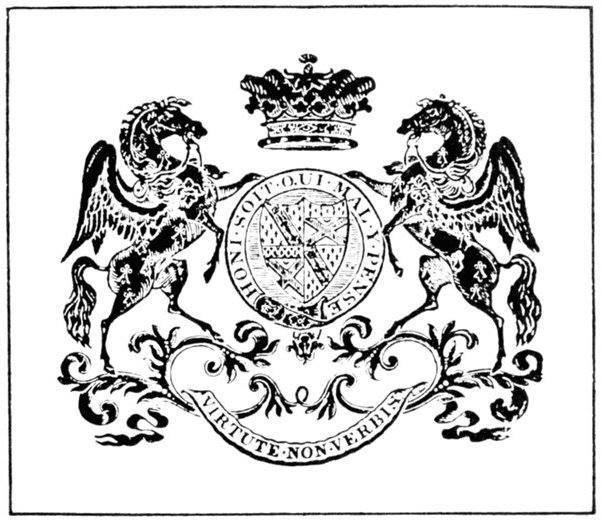
PETTY, WILLIAM FITZMAURICE, MARQUIS OF LANSDOWNE
Arms.—Within the Garter. Quarterly.
1st and 4th; erm., on a bend az., a magnetic needle pointing at a Pole Star or. Petty.
2nd and 3rd; arg., a saltire gu., a chief erm. Fitzmaurice.
Coronet.—That of a Marquis.
Supporters.—Two pegasi erm., bridled, crined, winged, and unguled or., each charged on the shoulder with a fleur-de-lys az.
Motto.—Virtute non verbis.
[Pontificale. Lansdowne MS. 451.]
William Fitzmaurice Petty (born 1737, died 7th May 1805) was the son of John, Earl of Shelburne. He was educated at Oxford, and then entered the army, and fought at Campen and at Minden, eventually becoming a general officer. He represented High Wycombe in Parliament. In 1761, on the death of his father, William Petty became Earl of Shelburne, and quickly made his mark in the House of Lords, and became head of the Board of Trade. In 1766 he became a Secretary of State for the Southern Department. On the death of Lord Rockingham in 1782, Lord Shelburne succeeded as Premier, and held this position until 1783. In 1784 Lord Shelburne was created Marquis of Lansdowne, and he spent the remainder of his life at his beautiful Wiltshire seat of Bowood.
About 1765 he began collecting books, particularly those concerning history and politics. Among the books collected by Lord Shelburne were several which had belonged to Sir Julius Cæsar, and also many of Lord Burghley's. Lord Lansdowne's manuscripts were acquired for the British Museum by purchase after his death.
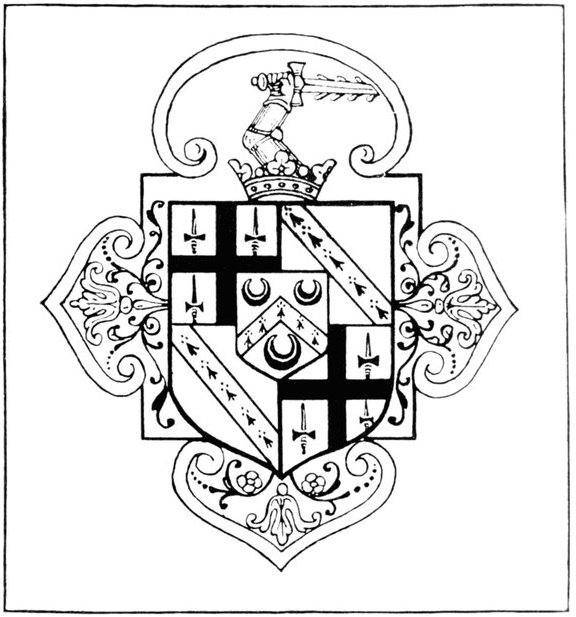
PHILPOT, JOHN, SOMERSET HERALD
Arms.—Quarterly.
1st and 4th; gu., a cross arg., between four swords erect of the second, pommelled and hilted or. Philpot.
2nd and 3rd; sa., a bend ermine. Philipot.
On an escutcheon of pretence. Az., a chevron erm., between 3 crescents arg. Glover.
Crest.—Out of a ducal coronet, a dexter arm embowed in armour holding in the hand a sword guttée de sang, all ppr.
(College of Arms, Queen Victoria Street, E.C.)
[Books at the College of Arms.]
John Philpot (born c. 1587, died 20th November 1645) was the son of Henry Philpot, at one time Mayor of Folkestone. He married Susan Glover, niece of the Somerset Herald, Robert Glover. In 1618 Philpot was appointed Blanch Lion Pursuivant, and a little later Rouge Dragon. He was deputy for William Camden in the visitations of Kent, Hampshire, Berkshire, Gloucestershire, Sussex, Buckingham, Oxfordshire, and Rutlandshire.
In 1624 he became Somerset Herald, and held also the office of Steward of the Manors of Gillingham and Grain. Philpot supported the cause of Charles I., and fought for him, and in 1644 he was made prisoner by the Parliamentarians. Besides his several Visitations, Philpot published several other valuable historical and genealogical works, and left many more in manuscript. Several of his books are at the College of Arms.
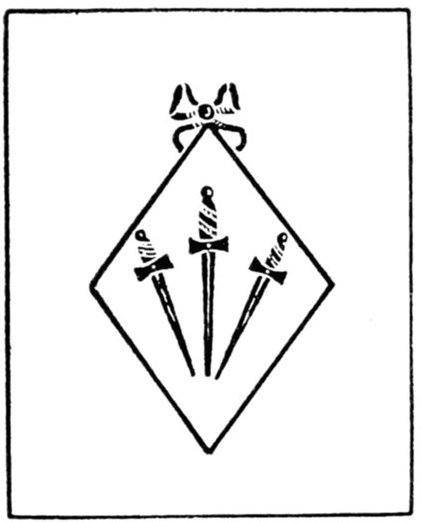
POULETT, THE LADY BRIDGET
Arms.—On a lozenge. Sa., 3 swords in pile arg., hilts or.
[Dryden. Fables. London, 1745.]
Bridget Poulett (born c. 1720, died c. 1780) was the eldest daughter of John Poulett, Earl Poulett. Lady Bridget married Pollexpen Bastard of Kitly in Devon. She had three sisters, one of whom married John Parker, and these two would have used the same coat-of-arms within a lozenge before their marriage. The other two sisters died unmarried, so they would always have used it.
It is not now safe to say, without further information, to which of these sisters any particular book bearing this coat belonged.
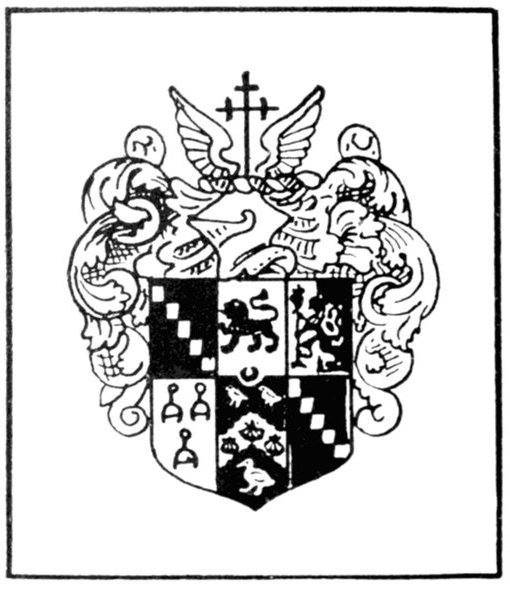
PYE, SIR ROBERT, KNIGHT
Arms.—Quartered.
1 and 6. Erm., a bend fusilly, gu. Pye.
2. A lion passant.
3. Per pale, gu. and az., a lion rampant supporting a tree eradicated vert. Wynstone.
4. Gu., 3 stirrups leathered and buckled or. Scudamore.
5. Arg., on a chevron engrailed sa., between 3 ravens ppr., as many escallops or. Croker.
Crest.—A cross crosslet fitchée gu., between two wings expanded arg., over all a crescent for difference.
Helmet.—That of an Esquire.
[Allen. An antidote against Heresy, etc. London, 1648.]
Robert Pye (born 1585, died 1662) was Remembrancer of the Exchequer in 1618, and received the honour of Knighthood in 1621. He was a strong Parliamentarian, and his son Robert married a daughter of John Hampden. Sir Robert Pye acquired the property of Faringdon in Berkshire, where his descendants lived for a long time. He represented Woodstock in Parliament.
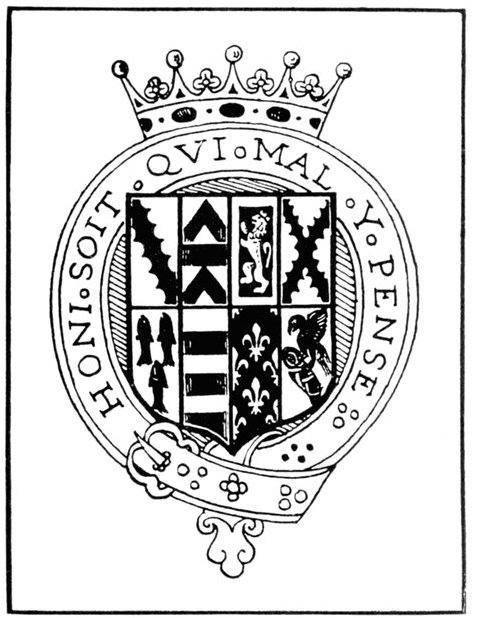
RADCLIFFE, ROBERT, FIFTH EARL OF SUSSEX
Arms.—Within the Garter. Quartered.
1. Arg., a bend engrailed sa. Radcliffe.
2. Or, a fess between 2 chevrons gu. Fitz-Walter.
3. Arg., a lion rampant sa., crowned or, a bordure az. Burnell.
4. Arg., a saltire engrailed az. Harding.
5. Gu., 3 lucies hauriant arg. Lucy.
6. Barry of six, arg. and az. Grey.
7. Arg., semée of fleurs-de-lys sa. Bereford.
8. Arg., an eagle carrying off a child swathed gu., banded or. Culcheth.
Coronet.—That of an Earl.
[Lonicer. Chronicorum Turcicorum Liber, etc. Francoforti ad Moenum, 1578.]
Robert Radclyffe (born c. 1560, died 22nd September 1629) was the only son of Henry Radclyffe, fourth Earl of Sussex. In 1593 Robert, styled Viscount Fitzwalter, succeeded to his father's earldom. In 1594 he went to Scotland as Ambassador for the christening of Prince Henry, and he commanded a regiment of infantry at Cadiz in 1596, when he was knighted by the Earl of Essex. Lord Sussex twice acted as Earl Marshal, and in 1599 he was made a Knight of the Garter. In 1599 he was Colonel General of Foot, and in 1626 he carried the orb at the coronation of Charles I. Lord Sussex served as Lord Lieutenant of Essex and Governor of Harwich.
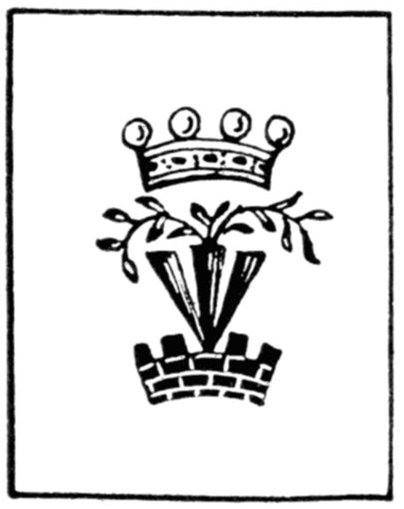
RAWDON, JOHN, BARON RAWDON
Crest.—On a mural coronet arg., a pheon sa., with a laurel branch issuant thereout ppr. Rawdon.
[Recueil general des Caquets de l'Acouchée. 1623.]
John Rawdon (born c. 1710, died 20th June 1793) was the son of Sir John Rawdon, Baronet, of Moira, Member of Parliament for County Down. He succeeded his father in the baronetcy in 1723, and in 1750 was raised to the peerage as Baron Rawdon. In 1761 he was created Earl of Moira in the peerage of Ireland.
The same crest would have been borne for a time by the son of Lord Moira, Francis Rawdon-Hastings, who was an eminent soldier. He was in 1783 created an English Peer by the same title as was enjoyed by his father, Baron Rawdon, by which he was known until 1793, when he succeeded to the Earldom of Moira. The additional surname of Hastings was assumed by Lord Rawdon in 1790, in accordance with the will of his maternal uncle Francis Hastings, tenth Earl of Huntingdon.
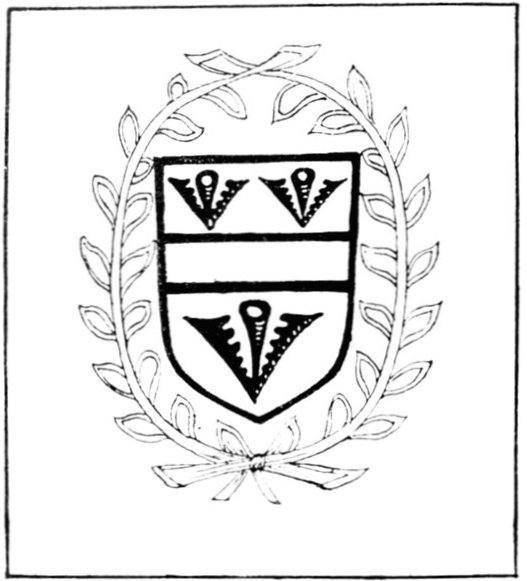
RAWDON, MARMADUKE
Arms.—Arg., a fess between 3 pheons sa. Rawdon.
[Life of Marmaduke Rawdon of York. MS.]
Marmaduke Rawdon (born March 1609, died 7th February 1668) belonged to an old Yorkshire family, and was the son of Laurence Rawdon of York. Mr. Rawdon entered the employ of an uncle who was a merchant, and travelled about the world in his service. He was for a long time in the Canary Islands, and he made an ascent of the Peak of Teneriffe. Rawdon was a noted antiquary, and he made valuable notes of his travels. His "Life" has been edited for the Camden Society by Mr. Robert Davies.
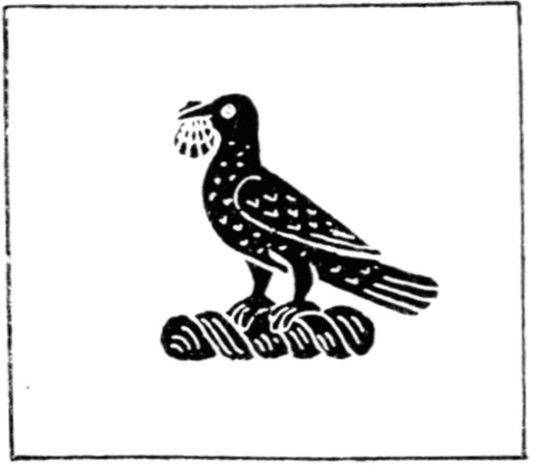
RAWLINSON, RICHARD
Crest.—A sheldrake ppr., in his beak an escallop arg. Rawlinson.
Badge.—An escallop arg., being an excerpt from the Rawlinson coat-of-arms which is gu., 2 bars gemelles between 3 escallops arg.
[Bible, Greek. Antwerp, 1566.]
Richard Rawlinson (born 3rd January 1690, died 6th April 1755) was the fourth son of Sir Thomas Rawlinson, Lord Mayor of London. He was educated at Oxford and took Orders in 1716. In 1728 he was consecrated nonjuring Bishop, but never accepted the duties of the position. Dr. Rawlinson was a Fellow of the Royal Society and of the Society of Antiquaries. He was a great collector of books and manuscripts, the greater part of which he bequeathed to Oxford, where they are now kept in the Bodleian Library. Others were sold by auction. Dr. Rawlinson wrote a number of books on antiquarian and topographical subjects, and he left his heart to his old college, St. John's, at Oxford, where it is still kept in the chapel in a marble urn.
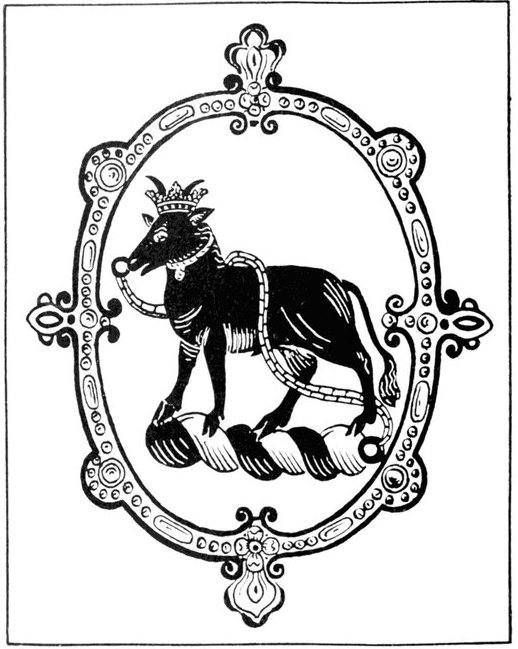
RIVERS, SIR JOHN, BART.
Crest.—A bull statant arg., ducally crowned, collared, ringed and armed or. Rivers.