VOLUME VIII SLICE X Echinoderma to Edward (continued 5)
Reading edition
Population.—The indigenous population of Ecuador was originally composed of two distinct races—the Quitus and Caras, the former being the older, and the latter presumably of Quichua origin. The Caras, according to tradition, entered the country from the coast, and had thoroughly established themselves there long before the conquest by the Inca rulers Tupac-Yupanqui and his son Huayna-Capac. This conquest was comparatively easy because the Caras spoke a dialect of the same language, and were not greatly unlike their conquerors in manners and customs. The present Indian population of Ecuador, excepting those of the trans-Andean region, may be considered as descendants of these two races. They are subjected to incredible abuses under Spanish colonial rule, their numbers being reduced to a fraction of the former population, and even yet they are subjected to a kind of debt-bondage which is slavery in all but the name. Notwithstanding all this they still represent from two-thirds to three-fourths of the actual population of Ecuador. East of the Andes the forests are inhabited by tribes of what are termed “aucas” or “infieles” (infidels)—Indians who are independent of both church and political control. Missions have been established among some of the tribes, but their influence reaches only a small part of the wild inhabitants of this extensive region.
The principal tribes are the Quijos or Canelos, who are settled about the headwaters of the Napo, on the eastern slopes of the Andes, and are in great part grouped about the missions; the Jivaros who inhabit the valley of the Pastaza; the Zaparos who occupy the forest region between the Pastaza and Napo; the Piojes of the middle Napo, and eastward to the Putumayo; and the Iquitos and Mazanes of the lower Napo and Tigre, chiefly in territory occupied by Peru. The Jivaros are the best known of these tribes because of their successful resistance to the Spanish invaders. They are still independent of political control, live in permanent settlements, till the soil (producing Indian corn, beans, yucca and plantains), and have developed some rude manufactures. The Zaparos are less homogeneous, some of their hordes living in a state of complete savagery. They are classified with the Guaranis of Brazil, whom they resemble in many particulars. The Piojes live in permanent communities and cultivate the soil. The total number of “aucas” or uncivilized Indians in the republic has been estimated at about 200,000, but this estimate covered a larger area than Ecuador actually occupies and is evidently too high. Their settlements are usually small and very much scattered, and their aggregate number is evidently much under the earlier estimates. An official estimate given to Mr Whymper in 1880, however, places the population of Oriente (the eastern territory) at 80,000, which is probably more nearly correct.
No general census has ever been taken in Ecuador, and estimates are little better than vague conjectures. One of these estimates, that published by P.F. Cevallos for 1889, which has been generally accepted, gave the total population as 1,272,161, and these figures have been used with but slight changes for various later estimates. A later official estimate appeared in 1900 in La République de l’Équateur et sa participation à l’Exposition Universelle de 1900, which gives for the provinces practically the same figures as those of Cevallos, and at the same time assumes the total for the whole republic to be 1,500,000. The white population is estimated at 100,000 to 120,000, which probably includes many of mixed ancestry, and the mixed bloods at 300,000 to 450,000. The tendency is for the mestizo who dwells in Indian communities to revert to the Indian type, and it is probable that the larger estimate is nearer the truth. On the other hand mestizos who live among the whites and form new alliances with them eventually class themselves as whites wherever their social condition has been improved. As a rule, the mestizos of Ecuador are ignorant, indolent and non-progressive. As in Colombia they are the artizans and small traders and the Indians are the farm labourers. The land is held by a few proprietors, and caste sentiment is strong among those who claim unmixed European descent; consequently the mestizos have limited opportunities to improve their condition.
The whites form an exclusive governing caste, as in Chile. The territory of the republic is divided among a very few of them, and its government is in their hands.
In the hot seaboard districts there are a small number of negroes, and a somewhat larger number of their crosses with the other two races. The majority of these are to be found in the northern provinces. There are comparatively few negroes and mulattoes on the colder plateaus. Villavicencio estimated their numbers at 7831 pure negroes and 36,592 mixed bloods, which is probably not far from the correct totals.
The foreign population is small, the total being estimated at about 6000, of which 5000 are natives of the neighbouring Latin republics, 700 Europeans and Americans, and 300 Chinese.
Territorial Divisions and Towns.—The republic is divided into 15 provinces and one territory. The Galapagos Islands were declared a dependency of the province of Guayas in 1885, but are practically independent and constitute a second territory under the administration of jefe territorial appointed by the national executive.
The official estimate (La République de l’Équateur et sa participation à l’Exposition Universelle de 1900) gives the data for the provinces and their capitals, which are shown on the next page.
These population figures are very nearly the same as those given by Cevállos for 1889. If the population of the Oriente be taken as 80,000, the aggretate is very nearly the same. The population of the provincial capitals is in some cases over-estimated, especially for Guayaquil and Quito, neither of which could have had 50,000 at the date of this estimate. The population of Quito in May 1906 was 50,841, of which 1365 were foreigners. As for the areas of the provinces the figures need not be questioned except those for the Oriente territory, which are much too large for the region actually occupied by Ecuador, and for the Galapagos Islands which are described by competent authorities as 2400 sq. m. The population of these islands was 400 (principally convicts) on Chatham Island in 1901, about 115 on Albemarle and 3 on Charles Island in 1903. Besides the provincial capitals already noted, there are no large and important towns in the country. The largest of the smaller towns is probably Jipijapa, in the province of Manabi, which is the centre of the Panama hat industry and had in 1900 an estimated population of 6000, nearly all Indians.
Provinces. Area. Population. Capital. Population.
sq. m.
Carchi 1495 40,000 Tulcan 5,000
Imbabura 2416 68,000 Ibarra 5,000
Pichincha 6219 205,000 Quito 80,000
Léon 2595 109,600 Latacunga 12,000
Tunguragua 1686 103,000 Ambato 8,000
Chimborazo 2990 122,000 Riobamba 12,000
Bolivar 1260 43,000 Guaranda 6,000
Cañar 1519 64,000 Azogues 4,000
Azuay 3874 132,400 Cuenca 30,000
Loja 3707 66,000 Loja 10,000
El Oro 2340 32,600 Machala 3,200
Guayas 8216 98,100 Guayaquil 60,000
Los Rios 2296 32,800 Babahoyo 3,000
Manabi 7893 64,100 Portoviejo 5,000
Esmeraldas 5465 14,600 Esmeraldas 6,000
Oriente (ter.) unknown
Galapagos Is. 2865 2,000 · · · ·
Communications.—The first railway to be completed in Ecuador was the line between Guayaquil and Quito, 290 m. in length, the last section of which was formally opened at Quito on the 25th of June 1908. It belongs to an American company, and had been under construction for many years. Lines from Puerto Bolívar to Machala, province of El Oro, and another from Bahia de Caráquez to Chone, were under construction in 1908. Several lines were also projected, two to penetrate the Ecuadorean montana. There is only one highway in the country on which vehicles can be used, the paved road extending southward from Quito 115 m. on the Guayaquil route, which was begun by Garcia Moreno but has been allowed to fall into neglect. Other roads have been projected to the coast and one to the eastern territory. The ordinary roads are rough mule-tracks. These are difficult at all times, and in the rainy season are quite impassable. On the Pacific lowlands the rivers Guayas, Daule, Vinces and Yaguachi have about 200 m. of navigable channels in the rainy season, and are used for the transportation of produce and merchandise. There are also several short river channels along the coast which are used by planters for the same purpose. A great part of the country, however, is still compelled to use the most primitive means of communication—mule paths, fords in the smaller streams in the dry season, and rude suspension bridges across deep gorges and swift mountain torrents. The latter are usually constructed from the tough fibre of the Agave americana and consist of one or more cables. When of one cable, called the taravita, the passenger and his luggage are drawn across in a rude kind of basket suspended from it; but when two or more cables are used, transverse sticks of bamboo and reeds are laid upon them, forming a rude prototype of the regular suspension bridge. Such a bridge is called a chimba-chaca, and is very hazardous for an unpractised foot. In 1907 there were 2564 m. of telegraph lines in operation, connecting Quito with all the principal towns. The national capital is connected with the submarine cable at Santa Elena (via Guayaquil) and at Tumaco, in Colombia. Guayaquil is provided with tramway and telephone lines. These public services are under the general supervision of the Minister of Public Instruction, Posts and Telegraphs.
Commerce.—Ecuador has no merchant marine beyond a few small vessels engaged in the coastwise traffic, some eighteen or twenty river steamers on the Guayas and its tributaries, and a number of steam launches, towboats and various descriptions of barges engaged in the transportation of produce and goods on the rivers. The ocean-going foreign trade of the country is carried wholly in foreign vessels, for the regular lines of which Guayaquil is a principal port of call. Less frequent calls are made at Esmeraldas and some of the other small ports on the coast, of which there are nine in all. Most of these are difficult of access and their trade is unimportant. The total trade of the republic in 1905, according to returns published by the Guayaquil Chamber of Commerce, amounted to only £3,429,955, of which £1,573,389 (15,733,891 sucrés) were credited to imports, and £1,856,566 (18,565,668 sucrés) to exports. Of these totals, all but £127,532 of the imports and £441,679 of the exports passed through the port of Guayaquil. The great poverty of the people has been a serious obstacle to the development of a larger commerce.
Agriculture.—The agricultural industries on which the export trade depends are almost wholly restricted to the western lowlands, and include cacao, coffee, cotton, sugar, tobacco, rice, yucca and sweet potatoes. The Guayas basin and the district about Machala are celebrated for their cacao, and produce about one-third of the world’s supply. It is the staple product of the country. Coffee is produced on the lower slopes of the Cordilleras and is of excellent quality. The production is small, but would be increased at remunerative prices. During the American civil war the planters of Ecuador entered largely into the production of cotton, which at that time yielded large profits, but the industry has declined to very insignificant proportions since then because of inability to compete with the lower cost of production in the United States. The output of sugar and tobacco is small, but could be largely increased, as the conditions of soil and climate are favourable. Much of the sugar-cane produced is turned into rum, which is consumed in the country. The tobacco grown is of excellent quality. Efforts have been made to promote the cultivation of indigo, but without much success. On the uplands, wheat, Indian corn, oats, barley, potatoes and vegetables of many kinds are successfully cultivated, but wholly for home consumption. The vine is successfully grown in the warm upland valleys, both for its fruit and for the production of wine. The staple foods for the common people are potatoes on the plateau (which are chiefly consumed in the form of locro, or potato-soup) and yucca- or cassava-meal in the warmer regions. Although cattle and horses were not known before the Spanish conquest, they have become since then important products of the country. The best grazing lands are on the lower elevations west of the Cordilleras in certain districts of the plateau and on the slopes of some of the higher Andes, as on Chimborazo and Antisana. Horses and mules are reared for export on a small scale, and sheep for their wool, which is used in home manufactures.
Forest Products.—The forest and other natural products include rubber, cinchona bark, ivory-nuts, mocora and toquilla fibre for the manufacture of hats, hammocks, &c., cabaya fibre for shoes and cordage, vegetable wool (Bombax ceiba), sarsaparilla, vanilla, cochineal, cabinet woods, fruit, resins, &c. The original source of the Peruvian bark of commerce, the Cinchona calisaya, is completely exhausted, and the “red bark” derived from C. succirubra, is now the principal source of supply from Ecuador. Guaranda is the centre of the industry, but bark gatherers are to be found everywhere in the forest regions. The rubber-gathering industry is comparatively new. The product is derived from the Castilloa elastica, the Heveas not being found west of the Andes.
Minerals.—The mineral resources are much inferior to those of Colombia and Peru. Gold is found in the province of El Oro, where the great Zaruma and other companies have opened a number of mines. It is also found in the provinces of Loja, Esmeraldas, and in the river-beds along the eastern slopes of the Andes. Quicksilver has been mined at Azogues, in the province of Cañar, and is also to be found in Azuay. Iron ores and lead are credited to several provinces, and platinum has been found in Esmeraldas, where emerald mines have been worked ever since the Spanish conquest. Coal of good quality has been found in Azuay and at other points, and petroleum is known to exist in several localities. Salt springs near Riobamba and at Salinas, in Imbabura, have long been used by the natives in the manufacture of salt.
Manufactures.—The manufacturing industries are chiefly of a primitive character and have been developed to meet local necessities. There are some cotton factories and sugar mills provided with modern machinery, but the cotton and woollen cloths of the country are commonly coarse and manufactured in the most primitive manner. Some of these goods are sent into southern Colombia, but they are chiefly made for the local market. Hats and hammocks are made from the fibres of the mocora and toquilla palms, and sandals from the fibre of the Agave americana. The hats are an article of export, and are known abroad as Panama hats. Hand-made laces of admirable workmanship are made in some localities, especially on the plateau about Quito. Among other manufactories, all for the home market, may be mentioned: flour-mills, sugar refineries, rum distilleries, breweries, chocolate factories, a candle factory, saw-mills and tanneries.
Government.—Constitutionally, the government of Ecuador is that of a centralized republic, whose powers are defined by a written constitution and whose chief organs are an executive consisting of a president and vice-president, and a national congress consisting of two houses, a senate and a chamber of deputies. Revolutionary changes, however, have been very frequent in Ecuador, and no less than eleven constitutions were adopted between 1830 and 1909.
The constitution adopted in 1906 succeeded that of 1884 (amended in 1887 and 1897), and its terms may be given here, subject to what may be regarded as the extra-constitutional powers vested in the executive. Executive power is vested in a president and vice-president elected for periods of four years by a direct vote of the people. (Under the constitution of 1884 the official terms of these two officers were not wholly synchronous, the vice-president’s term beginning with the president’s third year.) These officials cannot be re-elected to succeed themselves. The president, whose salary is 12,000 sucrés per annum, has a limited veto power, and may convene extraordinary sessions of Congress for a specified purpose, but he has no further authority over that body. He appoints the diplomatic and consular representatives of the republic and the governors of the provinces, exercises a limited control over the administration of justice and public instruction through the appointment of officials, and is chief of the small military force maintained by the republic. The construction of railways with public funds and under government supervision also places him at the head of a very important public service. The president is assisted by a cabinet of five ministers:—foreign relations and justice; interior and public works; finance; war; public instruction, posts and telegraphs—all of whom may be impeached by congress. The executive authority is also partially exercised by a council of state composed of 15 members, including the five cabinet ministers, of which the vice-president is ex-officio president. The council has important advisory functions, and must be consulted by the president on every important measure or appointment. The provinces are administered by governors chosen by the national executive; the departments by jefes politicos (political chiefs); and the municipalities by tenientes politicos (political lieutenants). The Galapagos Islands are under a jefe territorial (territorial chief), Chatham Island being a penal colony and governed by special laws.
The congressional organization is similar to that of the majority of South American states. The senate is composed of 32 members (2 from each province) elected for two years, one-half the number being renewed each two years. The chamber is composed of 42 deputies, who are elected by the provinces for a period of two years, on a basis of one representative for each 30,000 inhabitants and one supplementary representative for an additional 15,000. A senator must be at least 35 years of age, and a deputy 25. The elections are direct, and members of both houses may be re-elected. The immunities of legislators begin 30 days before the opening session of congress, and terminate 30 days after its dissolution. Congress meets at Quito on the 10th of August, and remains in session for a period of 60 days, but its sessions may be extended or extraordinary sessions called for specified purposes. The right of suffrage is restricted to literate male adults.
The judicial branch of the government is composed of a supreme court, located at Quito, consisting of 5 judges and a fiscal (public prosecutor) appointed by the executive; six superior courts (in Quito, Guayaquil, Cuenca, Riobamba, Loja and Portoviejo) with a total of 9 judges; a Tribunal de Cuentas of seven members at Quito; and various municipal courts, or alcaldes, in the chief towns of the departments. There are civil courts of first and second instance in the larger towns, and consular courts in Quito, Guayaquil and Cuenca with jurisdiction in commercial cases. There are also police commissaries in the departments and justices of the peace in the municipalities, the latter having jurisdiction in civil cases where the amount involved does not exceed 200 sucrés. The laws of Ecuador are based on the old Spanish laws and procedure, and include civil, criminal and commercial codes.
Army.—The army, according to an official report of 1900, consisted of 4 battalions of infantry (about 3690 strong), 3 brigades of artillery (1362), and 2 regiments of cavalry (468), in all, about 5520 men, rank and file. In 1908 this force was reported to comprise 4350 men. The national guard is composed of three classes: actives—all enrolled citizens of 20 to 38 years; auxiliaries—enrolled citizens of 38 to 44 years; and passives—enrolled citizens of 44 to 50 years. These were estimated at 95,329 men. There is a military school at Quito and a naval school at Guayaquil.
Education.—Although primary instruction is free, and is obligatory for children of 6 to 12 years, a considerable part Of the population is unprovided with schools and is indifferent in regard to them. An official report for 1900 gives the number of primary schools as 1297, and the number of pupils in attendance as about 80,000. The secondary schools numbered 37, with 371 teachers and about 4500 pupils. Higher instruction includes the technical and professional schools with the three universities of Quito, Guayaquil and Cuenca, and 6 schools of “trades and professions” (artes y oficios) in as many provinces. The old University of Quito has a staff of 32 professors divided into 5 faculties: Philosophy and Belles-Lettres, Law, Medicine, Physical and Natural Sciences and Mathematics. There are also in Quito a school of agriculture, astronomical observatory, botanical garden, museum and national printing office, all apparently under the supervision of the University.
Church.—According to the constitution of 1884, “the religion of the Republic is the Roman Catholic Apostolic, and all others are excluded.” The only opposition which the Church has ever had to encounter has been from the “liberal” element within itself, and thus has arisen, seemingly from political motives, a desire to restrict clerical influence in political affairs. This influence has been exercised to an extreme in Ecuador, so much so, in fact, that its government at times was more nearly a theocracy than a republic. The growth of liberalism finally began to produce results. In 1889 the tithes from which the Church revenues had been derived were abolished, and a tax of 3 per mil. on real estate was substituted. In 1902 a signal victory was won in a law permitting civil marriage, but in 1904 a social revolution was effected by legislation, which placed the Church under State control, forbade the foundation of new religious orders and admission into the country of new religious communities, and provided that the members of the episcopate must be citizens of Ecuador. The higher dignitaries of the Church are an archbishop at Quito, and six suffragan bishops at Cuenca, Loja, Ibarra, Riobamba, Guayaquil and Manabi.
Finance.—The revenues of the republic are derived from import and export duties, liquor, tobacco and stamp taxes, inheritance tax, salt, gunpowder and playing cards monopolies, consular charges, and sundry miscellaneous receipts, including those from posts, telegraphs and railways. Up to 1907 the customs duties were increased by surtaxes amounting at that time to 100%. The minister of finance proposed to abolish these surtaxes and double all the rates of duties involved. On exports, however, all the duties were to be abolished except those on cacao, coffee, hides, rubber, tagua (ivory nuts), hat fibre, hammock fibre and tobacco. For 1907 the revenues were £1,424,770 and the expenditures £1,383,122.
On the 10th of October 1906, when the report of the provisional government created by the revolution of the preceding January presented its financial report to a national assembly, the total obligations of the country were stated to be:—
Sucrés.
Railway bonds, 12,282,000 sucrés gold at 107% premium 25,423,740
Banco del Ecuador, advances 3,000,000
Banco Comercial y Agrocola, idem 2,400,000
Internal debt 739,575
Condor bonds 757,000
French Finance Corporation 887,000
————
Total 33,207,315
In £ sterling at 10 sucrés per £ 3,320,731
The foreign debt of the republic, which in 1898 stood at £693,160 in bonds, was assumed by the Guayaquil & Quito Railway Co. under contracts of 1897, 1898, 1899 and 1900, the government guaranteeing interest on the sum of £2,520,000 railway mortgage bonds for 33 years and recognizing the external debt at 35% of its face value. This debt originated in 1830, when Ecuador seceded from the Colombian confederacy and was charged with 21½% of the indebtedness of the three states. In 1855 the amount was fixed at £1,824,000, and in 1892 it was converted into a new consolidated debt of £750,000. Payments of interest and amortization had been very irregular, and its transfer to a foreign company as the price of a railway concession put an end to a transaction which had been a serious discredit to the country. The amount outstanding on the 31st of December 1907 was 10,808,000 sucrés (£1,080,800). It should be said that the difficulties in regard to this debt arose from a feeling in Ecuador that the part assigned to it in 1830 was much too large, and that it was contracted almost wholly for the benefit of the two northern republics, Colombia and Venezuela.
Money and Measures.—Under the law of 1898, which came into effect on the 4th of June 1900, gold is made the monetary standard in Ecuador, the legal tender of silver being limited to 10 sucrés, and banks of issue being required to hold at least one-half their metallic reserves in gold coin. Previously there had been much confusion in the circulating medium because of the depreciated value of the Quito currency in comparison with that of Guayaquil, but the new law has corrected the anomaly and has given a simple and uniform medium for the whole country. The coinage under the law of 1898 consists of the gold condor, of 10 sucrés, which weighs 8.136 grams, contains 7.3224 grams of fine gold, and is equal to the English pound sterling in value; the silver sucré, of 100 centavos, equivalent to 24d. in value; and smaller coins of silver, nickel and copper, the denominations being decimal parts of the sucré. The sucré received its name from the portrait of General Sucré engraved on the coin, and is legal tender up to 10 sucrés. The paper money circulation consists of the issues of two Guayaquil banks—the Banco del Ecuador, and the Banco Comercial y Agricola, whose united issues on June 30th, 1906, amounted to 7,414,140 sucrés (£741,414). The Bank of Quito at one time issued notes which, according to Whymper, were not current at and south of Riobamba, but it does not appear that this bank is authorized to issue its notes under the new law. The metallic money nominally in circulation on the 30th of June 1906, amounted to 2,587,667 sucrés gold and 2,522,802 sucrés silver. Although the metric system was adopted in 1856, the old Spanish weights and measures—the quintal, libra, vara and fanega—are still in use, the quintal being equivalent to about 101 ℔
Antiquities.—Throughout Ecuador there are still considerable remains of the architectural and artistic skill of the ante-European period. At Cañar, to the north-east of Cuenca, stands the Incapirca, a circular rampart of finely hewn stone, enclosing an open area with a roofless but well-preserved building in the centre; not far off is the Inca-chungana, a very much smaller enclosure, probably the remains of a pavilion; and in the same neighbourhood the image of the sun and a small cabinet are carved on the face of a rock called Intihuaicu. On one of the hills running from Pichincha to the Esmeraldas there are remains at Paltatamba of a temple and a conical tower, the buttresses of a bridge composed of stone and bitumen, portions of a great causeway, and numerous tombs from which mummies and plates of silver have been obtained. At Hantuntaqui similar sepulchral mounds, called tolas, may be seen, as well as traces of military structures. On the plain of Callo, near Cotopaxi, at a height of 8658 ft., the ruins of an Incarial palace, Pachusala, are utilized by the hacienda; and a conical hill at its side is supposed to be of artificial construction. The remains of another fortress and palace are preserved at Pomallacta, and in the neighbouring pueblo of Achupallas an ancient temple of the sun now serves as parish church. In many localities, especially in Imbabura, pottery and various objects are found belonging to the pre-Colombian period, among which five and six rayed stars (casse-têtes) are very numerous.
(A. J. L.)
History.—The territory of the republic of Ecuador, when first it becomes dimly visible in the grey dawn of American history, appears to be inhabited by upwards of fifty independent tribes, among which the Quitus seem to hold the most important position. About A.D. 280 a foreign tribe is said to have forced their way inland up the valley of the Esmeraldas; and the kingdom which they founded at Quito lasted for about 1200 years, and was gradually extended, both by war and alliance, over many of the neighbouring dominions. In 1460, during the reign of the fourteenth Caran Shyri, or king of the Cara nation, Hualcopo Duchisela, the conquest of Quito was undertaken by Tupac Yupanqui, the Inca of Peru; and his ambitious schemes were, not long after his death, successfully carried out by his son Huayna-Capac, who inflicted a decisive defeat on the Quitonians in the battle of Hatuntaqui, and secured his position by marrying Pacha, the daughter of the late Shyri. By his will the conqueror left the kingdom of Quito to Atahuallpa, his son by this alliance; while the Peruvian throne was assigned to Huascar, an elder son by his Peruvian consort. War soon broke out between the two kingdoms, owing to Huascar’s pretensions to supremacy over his brother; but it ended in the defeat and imprisonment of the usurper, and the establishment of Atahuallpa as master both of Quito and Cuzco. The fortunate monarch, however, had not long to enjoy his success; for Pizarro and his Spaniards were already at the door, and by 1533 the fate of the country was sealed. As soon as the confusions and rivalries of the first occupation were suppressed, the recent kingdom of Quito was made a presidency of the Spanish viceroyalty of Peru, and no change of importance took place till 1710. In that year it was attached to the viceroyalty of Santa Fé; but it was restored to Peru in 1722. When, towards the close of the century, the desire for independence began to manifest itself throughout the Spanish colonies of South America, Quito did not remain altogether indifferent. The Quitonian doctor Eugenio Espejo, and his fellow-citizen Don Juan Pio Montufar, entered into hearty co-operation with Nariño and Zea, the leaders of the revolutionary movement at Santa Fé; and it was at Espejo’s suggestion that the political association called the Escuela de Concordia was instituted at Quito. It was not till 1809, however, that the Quitonians made a real attempt to throw off the Spanish yoke; and both on that occasion and in 1812 the royal general succeeded in crushing the insurrection. In 1820 the people of Guayaquil took up the cry of liberty; and in spite of several defeats they continued the contest, till at length, under Antonio José de Sucré, who had been sent to their assistance by Bolivar, and reinforced by a Peruvian contingent under Andres de Santa Cruz, they gained a complete victory on May 22, 1822, in a battle fought on the side of Mount Pichincha, at a height of 10,200 ft. above the sea. Two days after, the Spanish president of Quito, Don Melchor de Aymeric, capitulated, and the independence of the country was secured. A political union was at once effected with New Granada and Venezuela on the basis of the republican constitution instituted at Cucuta in July 1821—the triple confederation taking the name of Colombia.
A disagreement with Peru in 1828 resulted in the invasion of Ecuador and the temporary occupation of Cuenca and Guayaquil by Peruvian forces; but peace was restored in the following year after the Ecuadorian victory at Tarqui. In the early part of 1830 a separation was effected from the Colombian federation, and the country was proclaimed an independent republic. General Juan José Flores was the first president, and in spite of many difficulties, both domestic and foreign, he managed to maintain a powerful position in the state for about 15 years. Succeeded in 1835 by Vicente Rocafuerte, he regained the presidency in 1839, and was elected for the third time in 1843; but shortly afterwards he accepted the title of generalissimo and a sum of 20,000 pesos, and left the country to his rivals. One of the most important measures of his second presidency was the establishment of peace and friendship with Spain. Roca, who next attained to power, effected a temporary settlement with Colombia, concluded a convention with England against the slave trade, and made a commercial treaty with Belgium. Diego Noboa, elected in 1850 after a period of great confusion, recalled the Jesuits, produced a rupture with New Granada by receiving conservative refugees, and thus brought about his own deposition and exile. The democratic Urbina now became practically dictator, and as the attempt of Flores to reinstate Noboa proved a total failure, he was quickly succeeded in 1856 by General Francisco Robles, who, among other progressive measures, secured the adoption of the French system of coinage, weights and measures. He abdicated in 1859 and left the country, after refusing to ratify the treaty with Peru, by which the defender of Guayaquil had obtained the raising of the siege. Dr Gabriel Garcia Moreno, professor of chemistry, the recognized leader of the conservative party at Quito, was ultimately elected by the national convention of 1861. Distrust in his policy, however, was excited by the publication of some of his private correspondence, in which he spoke favourably of a French protectorate, and the army which he sent under Flores to resist the encroachments of Mosquera, the president of New Granada, was completely routed. His first resignation in 1864 was refused; but the despotic acts by which he sought to establish a dictatorship only embittered his opponents, and in September 1865 he retired from office. While he had endeavoured to develop the material resources of the country, he had at the same time introduced retrograde measures in regard to religion and education. The principal event in the short presidency of his successor, Gerónimo Carrion (May 1865-Nov. 1867), was the alliance with Chile and Peru against Spain, and the banishment of all Spanish subjects. Several important changes were made by congress in the period between his resignation and the election of Xavier Espinosa, January 1868: the power of the president to imprison persons regarded as dangerous to public order was annulled; and the immediate naturalization of Bolivians, Chilians, Peruvians and Colombians was authorized. Espinosa had hardly entered on his office when, in August 1868, the country was visited by an earthquake, in which 30,000 people are said to have perished throughout South America. The public buildings of Quito were laid in ruins; and Ibarra, Otavalo, Cotacachi and several other towns were completely destroyed. Next year a revolution at Quito, under Moreno, brought Espinosa’s presidency to a close; and though the national convention appointed Carvajal to the vacant office, Moreno succeeded in securing his own election in 1870 for a term of six years. His policy had undergone no alteration since 1865: the same persistent endeavour was made to establish a religious despotism, in which the supremacy of the president should be subordinate only to the higher supremacy of the clergy.
President Moreno was eventually assassinated at Quito, in August 1875, and Dr Borrero was elected to the presidency, but his tenure of power was short. A revolution headed by General Veintemilla, the Radical leader, then military commandant at Guayaquil, broke out in 1876, and on the 14th of December of that year the government forces under General Aparicio were completely routed at Galte. Veintemilla was proclaimed president, and in 1877 was duly elected by the cortes. He altered the constitution in a more Liberal direction, and struck various blows at the Clerical party, among other things abolishing the concordat with Rome. In 1878 Veintemilla caused himself to be declared elected as president for a term of four years. At the expiration of this period the president assumed dictatorial powers and remained in office as chief of the executive. This action on the part of General Veintemilla led to a union between the Clericals and Moderate Liberals, and resulted in a popular rising throughout the republic, ending in his defeat and overthrow. His power was first restricted to Guayaquil and Esmeraldas, and finally General Rinaldo Flores drove him from Guayaquil, and Veintemilla fled (July 1883) to Peru. Dr Placido Caamaño was then called upon to take charge temporarily, and on the 17th of February 1884 was definitely elected for the presidential period terminating in 1888. Several revolutionary outbreaks occurred during the Caamaño administration, but were successfully suppressed. In 1888 Dr Antonio Flores succeeded Caamaño, the four years following being passed in peaceful conditions. In 1892 Dr Luis Cordero was elected, his administration again plunging the country into an epoch of internal disturbance.
The cause of the troubles under President Cordero was the assistance lent by Ecuador to Chile in the matter of the sale of the cruiser Esmeralda to the Japanese government in 1894, in the middle of the Japanese-Chinese War. The government of Chile arranged the sale of the Esmeralda, but wished to be free from all danger of international complications in the affair. To this end the transfer of the vessel was made to Ecuador, and she proceeded to Ecuadorian waters. On arriving at the Galapagos Islands the flag of Ecuador was replaced by that of Japan and the vessel handed over to the representatives of that nation sent for the purpose. When the part played by President Cordero in this transaction became known, an outburst of popular indignation occurred. An insurrection, headed by General Eloy Alfaro, followed; and after desultory skirmishing extending over a period of nearly a year the government forces were finally routed, President Cordero abandoning his office and escaping from the country.
General Alfaro then assumed dictatorial powers as supreme chief of the nation, continuing in this capacity until the 6th of February 1897, on which date he was declared to be elected president of the republic. A series of revolutionary movements against the administration of President Alfaro occurred in the course of the next few years. Many of these risings were due to the intrigues of the Church party, and in view of these circumstances President Alfaro curtailed the influence of the clergy in several directions. On the 31st of August 1901 General Alfaro peacefully handed over the presidency to his elected successor, General Leonidas Plaza.
General Plaza continued the anticlerical policy of his predecessor. Civil marriage and divorce were introduced, and in 1904 all religions were placed on a position of equality in the eye of the law, and the foundation of new monasteries and convents was forbidden. The final year of Plaza’s tenure of office was marked by a still stronger measure, all the property of the church being declared to be national property, and let to the highest bidders. In 1905 the Opposition made an effort to effect a change of policy, and were successful in obtaining the election of Lizaro Garcia, a well-to-do merchant and a director of the Banco commercial y Agricola. General Alfaro, however, appealed to arms, ejected Garcia from office, and made himself ruler with practically dictatorial powers.
The more recent history of Ecuador would not be complete without a reference to the work of Mr Archer Harman (b. 1860), an American railway builder and financier whose connexion with the construction of the Guayaquil and Quito railway began in 1897. To his personal energy and enterprise, as manager of the railway company, was largely due the continued prosecution of this difficult engineering undertaking, in connexion with which he was responsible for a thorough reconstruction of Ecuador finance. He thus came to exercise a powerful influence on the internal progress of the country.
See C.E. Akers, History of South America, 1854-1904 (London, 1904); H.W. Bates, Central and South America (London, 1882); Pedro F. Cevallos, Resumen de la historia del Ecuador (Guayaquil, 1886); Hans Meyer, In den Hoch-Anden von Ecuador (Berlin 1907); A.H. Keane, Stanford’s Compendium, vol. i. (1904); W. Reiss and A. Stübel, Das Hochgebirge der Republik Ecuador (Berlin, 1892-1898); Edward Whymper, Travels amongst the Great Andes of the Equator (London, 1892); T. Wolf, Geografia y geologia del Ecuador (Leipzig, 1892); A. Stübel, Skizzen aus Ecuador (Berlin, 1886); Die Vulkanberge von Ecuador (Berlin, 1897); Handbook of Ecuador (Bureau of the American Republics, Washington, 1892); The World’s Work, vol. ii. pp. 1271-1277; Engineering News (New York), vol. 52, pp. 117-119; Bulletin of Internat. Bureau of American Republics for July 1900, p. 26, and for August 1908, pp. 280-282; Thirty-fifth Annual Report of the Council of Foreign Bondholders, pp. 115, 117.
1 See J. Siemiradzki, “Geologische Reisenotizen aus Ecuador,” Neues Jahrb. f. Min., Beil. Band iv. (1886, pp. 195-227, pl. vii.); Th. Wolf, Geografia y geologia del Ecuador, publicada por orden del Supremo Gobierno de la Republica (Leipzig, 1892); W. Reiss and A. Stübel, Reisen in Sud-America. Das Hochgebirge der Republik Ecuador (Berlin, 1892-1902).
ECZEMA (Gr. ἔκζεμα, a cutaneous eruption), one of the most common and important of all skin diseases, consisting of a catarrhal inflammation of the skin originating without visible external irritation, and characterized in some stage of its evolution by a serous exudation. This definition excludes all those forms of inflammation of the skin (dermatitis), which though they may be identical in course and manifestation are yet caused by chemical or mechanical irritants. For an attack of eczema two conditions are necessary: a predisposition or special irritability of the skin, and a directly exciting cause. The first of these conditions is usually inherited or depends on some underlying constitutional state. Thus any organic lesion which may produce oedema and malnutrition of the cutis and epidermis as in kidney diseases, any condition of imperfect metabolism as in dyspepsia or malnutrition, or seborrhoea, may be the predisposing cause. Another influence that has received increasing attention from skin specialists is that of any nervous shock or prolonged mental strain. A “chill” is followed in most people by an ordinary cold, but in some by an attack of eczema. Again, it may be caused by reflex nervous irritation from the uterus, stomach, &c. In some women it always accompanies menstruation, and in others pregnancy. It is of common occurrence in infancy, being attributed by some specialists to dentition, but by others to seborrhoea. Also there is an undoubted relationship between eczema and certain forms of functional neurosis, of which perhaps asthma is the most striking illustration, some physicians considering the latter trouble to be eczema of the bronchial tubes. Sufferers from rheumatism and gout are also specially prone to eczema, though the exact relationship is a much disputed point. There are yet other cases that are undoubtedly microbic, but the micro-organism cannot produce the lesion unless the soil is suitable. As a rule it is not contagious, though when complicated by micro-organisms it may be auto-inoculable, or more rarely inoculable from one patient to another. Except between the ages of ten and twenty years when menstruation is becoming established, and again at the menopause, males are more liable to be attacked than females. In old age the sex influence is lost.
An attack of eczema is usually described as acute or chronic, but the only distinction lies in the greater or less intensity of the inflammation at the time of description: it has nothing to do with the length of time that the disease has lasted. The illness usually begins with a feeling of itching and burning at the site of the lesion. The skin becomes covered with an erythematous blush, on which numerous tiny vesicles form. Swelling, heat, redness and tension are all present. The vesicles grow larger, run together, and either burst or are broken by the patient’s scratching, a clear fluid exuding which stiffens linen. The discharge does not dry up at once, but continues to exude—hence the name of “weeping eczema” when this is a prominent symptom. In mild cases the symptoms begin to subside in a few days, the exudation growing less and scales and scabs forming, under which new skin is formed. But where the attack is more acute fresh crops of vesicles spring up and the process repeats itself. In some cases papules are the predominant lesions, but in others, especially when the face is attacked, the erythematous condition is more marked. A severe attack of eczema is usually accompanied by some slight constitutional disturbance, but the general health seldom suffers appreciably, unless, as occasionally, the itching is so bad as to make sleep impossible. The irritation and local heat may be out of all proportion to visible changes in the skin, and in neurotic patients the nervous excitement may be extreme. The attack may centre itself on any part of the body, but there are certain places where it more usually begins, such as the bends of the elbows, the backs of the knees and the groins; the groove behind the ears, the scalp, the palms or the soles, and the breasts of women. According to its position the form of the eczema is somewhat modified. On the front of the legs and arms, from the uniform redness it exhibits in these positions, it is known as eczema rubrum. On the scalp it is generally of the seborrhoeic type, and in children, especially when pediculi are present, it will become pustular from microbic infection. On the palms and soles it brings about a thickening of the epidermis which leads to the formation of cracks, and is hence called eczema rimosum.
The disease can best be treated by a combination of internal and external remedies. Internally, when the inflammation is acute, nothing is so good as antimony, since this relieves the arterial tension and thus reduces the local inflammation. But this must never be given when the patient is suffering from depression. In other cases, especially for babies and children, small doses of calomel are very beneficial; strychnine, phosphorus and ergot are all useful at times. When nervous excitement is marked it must be treated with sedatives. Arsenic and iron are both contra-indicated in this disease, since they increase blood formation and hence stimulate the eczematous process. Internal treatment is always best when combined with local treatment, but as a preliminary to this all crusts and scales must first be removed to allow the remedy free access to the disease. Locally the aim is (1) to overcome any source of irritation, (2) to protect the inflamed surface from the air and from microbic infection, and (3) to relieve the itching. The diet should be simple but nourishing, and all hygienic precautions must be taken.
EDAM, a town of Holland in the province of North Holland, close to the Zuider Zee, about 13 m. N.N.E. of Amsterdam by steam tramway. It is connected with the Zuider Zee by a fine canal protected by a large sea-lock (1828), and has regular steam-boat communication in various directions. Pop. (1900) 6444. The many quaint old brick houses form the chief feature of interest in the town. The façades are frequently adorned with carvings and inscriptions, one of which records the legend of the capture of a siren in 1403, who lived for some time among the people of Edam, but escaped again to the sea. The Great Church of St Nicholas, probably founded in the 14th century, was largely rebuilt after a fire in 1602, which, originating in the church, destroyed nearly the whole town. It contains some fine stained glass and carved woodwork of this period. The Little Church (15th century) was demolished in 1883, except for a portion of the nave and the old tower and steeple, from which the bells curiously project. The town hall dates from 1737, and there is a museum founded in 1895. Edam has some trade in timber, while shipbuilding, rope-spinning and salt-boiling are also carried on. It gives its name to the description of “sweet-milk cheese” (zoetemelks kaas) made throughout North Holland, which is familiar on account of its round shape and red rind.
Edam took its name and origin from the dam built on the little river Ye which joined the great Purmer lake close by. Free access to the Zuider Zee was obtained by the construction of a new dock in 1357, in which year the town also received civic rights from William V. of Bavaria, count of Holland. Owing to the danger of the extension of the Purmer and Beemster lakes, Philip II. of Spain caused a sluice to be built into the dock in 1567. In the next century Edam was a great shipbuilding centre, and nearly the whole of Admiral de Ruyter’s fleet was built here; but in the same century the harbour began to get blocked up, and the importance and industrial activity of the city slowly waned.
EDDA, the title given to two very remarkable collections of old Icelandic literature. Of these only one bears that title from antiquity; the other is called Edda by a comparatively modern misnomer. The word is unknown to any ancient northern language, and is first met with in Rigspula, a fragmentary poem at the end of Codex Wormianus, dated about 1200, where it is introduced as the name or title of a great-grandmother. From the 14th to the 17th century, this word—but no one has formed a reasonable conjecture why—was used to signify the technical laws of Icelandic court metre, Eddu regla, and “Never to have seen Edda” was a modest apology for ignorance of the highest poetic art. The only work known by this name to the ancients was the miscellaneous group of writings put together by Snorri Sturlason (q.v.; 1178-1241), the greatest name in old Scandinavian literature. It is believed that the Edda, as he left it, was completed about 1222. Whether he gave this name to the work is doubtful; the title first occurs in the Upsala Codex, transcribed about fifty years after his death. The collection of Snorri is now known as the Prose or Younger Edda, the title of the Elder Edda being given to a book of ancient mythological poems, discovered by the Icelandic bishop of Skálaholt, Brynjulf Sveinsson, in 1643, and erroneously named by him the Edda of Saemund.
1. The Prose Edda, properly known as Edda Snorra Sturlusonar, was arranged and modified by Snorri, but actually composed, as has been conjectured, between the years 1140 and 1160. It is divided into five parts, the Preface or Formáli, Gylfaginning, Bragaraeður, Skáldskaparmál and Háttatal. The preface bears a very modern character, and simply gives a history of the world from Adam and Eve, in accordance with the Christian tradition. Gylfaginning, or the Delusion of Gylfi, on the other hand, is the most precious compendium which we possess of the mythological system of the ancient inhabitants of Scandinavia. Commencing with the adventures of a mythical king Gylfi and the giantess Gefion, and the miraculous formation of the island of Zealand, it tells us that the Aesir, led by Odin, invaded Svithjod or Sweden, the land of Gylfi, and settled there. It is from the Ynglingasaga and from the Gylfaginning that we gain all the information we possess about the conquering deities or heroes who set their stamp upon the religion of the North. Advancing from the Black Sea northwards through Russia, and westward through Esthonia, the Aesir seem to have overrun the south lands of Scandinavia, not as a horde but as an immigrant aristocracy. The Eddaic version, however, of the history of the gods is not so circumstantial as that in the Ynglingasaga; it is, on the other hand, distinguished by an exquisite simplicity and archaic force of style, which give an entirely classical character to its mythical legends of Odin and of Loki. The Gylfaginning is written in prose, with brief poetic insertions. The Bragaraeður, or sayings of Bragi, are further legends of the deities, attributed to Bragi, the god of poetry, or to a poet of the same name. The Skáldskaparmál, or Art of Poetry, commonly called Skálda, contains the instructions given by Bragi to Aegir, and consists of the rules and theories of ancient verse, exemplified in copious extracts from Eyvindr Skáldaspillir and other eminent Icelandic poets. The word Skáldskapr refers to the form rather than the substance of verse, and this treatise is almost solely technical in character. It is by far the largest of the sections of the Edda of Snorri, and comprises not only extracts but some long poems, notably the Thorsdrapa of Eilifr Guðrúnarson and the Haustlaung of Thjóðólfr. The fifth section of the Edda, the Háttatal, or Number of Metres, is a running technical commentary on the text of Snorri’s three poems written in honour of Haakon, king of Norway. Affixed to some MS. of the Younger Edda are a list of poets, and a number of philological treatises and grammatical studies. These belong, however, to a later period than the life of Snorri Sturlason.
The three oldest MSS. of the prose Edda all belong to the beginning of the 14th century. The Wurm MS. was sent to Ole Wurm in 1628; the Codex Regius was discovered by the indefatigable bishop Brynjulf Sveinsson in 1640. The most important, however, of these MSS. is the Upsala Codex, an octavo volume written probably about the year 1300. There have been several good editions of the Edda Snorra Sturlusonar, of which perhaps the best is that published by the Arne-Magnaean Society in Copenhagen in 1848-1852, in two vols., edited by a group of scholars under the direction of Jón Sigurdsson. There are English translations by T. Percy, Northern Antiquities, from the French by P.H. Mallet (1770); by G. Webbe Dasent (Stockholm, 1842); by R.B. Anderson (Chicago, 1880).
2. The Elder Edda, Poetic Edda or Saemundar Edda hins froða was entirely unknown until about 1643, when it came into the hands of Brynjulf Sveinsson, who, puzzled to classify it, gave it the title of Edda Saemundi multiscii. Saemund Sigfusson, who was thus credited with the collection of these poems, was a scion of the royal house of Norway, and lived from about 1055 to 1132 in Iceland. The poems themselves date in all probability from the 10th and 11th centuries, and are many of them only fragments of longer heroic chants now otherwise entirely lost. They treat of mythical and religious legends of an early Scandinavian civilization, and are composed in the simplest and most archaic forms of Icelandic verse. The author of no one of them is mentioned. It is evident that they were collected from oral tradition; and the fact that the same story is occasionally repeated, in varied form, and that some of the poems themselves bear internal evidence of being more ancient than others, proves that the present collection is only a gathering made early in the middle ages, long after the composition of the pieces, and in no critical spirit. Sophus Bugge, indeed, one of the greatest authorities, absolutely rejects the name of Saemund, and is of opinion that the poetic Edda, as we at present hold it, dates from about 1240. There is no doubt that it was collected in Iceland, and by an Icelander.
The most remarkable and the most ancient of the poems in this priceless collection is that with which it commences, the Völuspá, or prophecy of the Völva or Sibyl. In this chant we listen to an inspired prophetess, “seated on her high seat, and addressing Odin, while the gods listen to her words.”
She sings of the world before the gods were made, of the coming and the meeting of the Aesir, of the origin of the giants, dwarfs and men, of the happy beginning of all things, and the sad ending that shall be in the chaos of Ragnarök. The latter part of the poem is understood to be a kind of necromancy—according to Vigfusson, “the raising of a dead völva”; but the mystical language of the whole, its abrupt transitions and terse condensations, and above all the extinct and mysterious cosmology, an acquaintance with which it presupposes, make the exact interpretation of the Völuspá extremely difficult. The charm and solemn beauty of the style, however, are irresistible, and we are constrained to listen and revere as if we were the auditors of some fugual music devised in honour of a primal and long-buried deity. The melodies of this earliest Icelandic verse, elaborate in their extreme and severe simplicity, are wholly rhythmical and alliterative, and return upon themselves like a solemn incantation. Hávamál, the Lesson of the High One, or Odin, follows next; this contains proverbs and wise saws, and a series of stories, some of them comical, told by Odin against himself. The Vafprúðnismál, or Lesson of Vafprúðnir, is written in the same mystical vein as Völuspá; in it the giant who gives his name to the poem is visited by Odin in disguise, and is questioned by him about the cosmogony and chronology of the Norse religion. Grimnismál, or the Sayings of The Hooded One, which is partly in prose, is a story of Odin’s imprisonment and torture by King Geirrōd. För Skirnis, or the Journey of Skirnir, Harbarðslióð, or the Lay of Hoarbeard, Hymiskviða, or the Song of Hymir, and Aegisdrekka, or the Brewing of Aegir, are poems, frequently composed as dialogue, containing legends of the gods, some of which are so ludicrous that it has been suggested that they were intentionally burlesque. Thrymskviða, or the Song of Thrym, possesses far more poetic interest; it recounts in language of singular force and directness how Thor lost his hammer, stolen by Thrym the giant, how the latter refused to give it up unless the goddess Freyia was given him in marriage, and how Thor, dressed in women’s raiment, personated Freyia, and, slaying Thrym, recovered his hammer. Alvíssmál, or the Wisdom of Allwise, is actually a philological exercise under the semblance of a dialogue between Thor and Alvis the dwarf. In Vegtamskviða, or the Song of Vegtam, Odin questions a völva with regard to the meaning of the sinister dreams of Balder. Rígsmál, or more properly Rígspula, records how the god Heimdall, disguised as a man called Rig, wandered by the sea-shore, where he met the original dwarf pair, Ai and Edda, to whom he gave the power of child-bearing, and thence sprung the whole race of thralls; then he went on and met with Afi and Amma, and made them the parents of the race of churls; then he proceeded until he came to Faðir and Moðir, to whom he gave Jarl, the first of free men, whom he himself brought up, teaching him to shoot and snare, and to use the sword and runes. It is much to be lamented that of this most characteristic and picturesque poem we possess only a fragment. In Hyndluljóð, the Lay of Hyndla, the goddess Freyia rides to question the völva Hyndla with regard to the ancestry of her young paramour Ottar; a very fine quarrel ensues between the prophetess and her visitor. With this poem, the first or wholly mythological portion of the collection closes. What follows is heroic and pseudo-historic. The Völundarkviða, or Song of Völundr, is engaged with the adventures of Völundr, the smith-king, during his stay with Nidud, king of Sweden. Völundr, identical with the Anglo-Saxon Wêland and the German Wieland (O.H.G. Wiolant), is sometimes confused with Odin, the master-smith. This poem contains the beautiful figure of Svanhvít, the swan-maiden, who stays seven winters with Völundr, and then, yearning for her fatherland, flies away home through the dark forest. Helgakviða, Hiörvarðs sonar, the Song of Helgi, the Son of Hiörvarð, which is largely in prose, celebrates the wooing by Helgi of Svava, who, like Atalanta, ends by loving the man with whom she has fought in battle. Two Songs of Helgi the Hunding’s Bane, Helgakviða Hundingsbana, open the long and very important series of lays relating to the two heroic families of the Völsungs and the Niblungs. Including the poems just mentioned, there are about twenty distinct pieces in the poetic Edda which deal more or less directly with this chain of stories. It is hardly necessary to give the titles of these poems here in detail, especially as they are, in their present form, manifestly only fragments of a great poetic saga, possibly the earliest coherent form of the story so universal among the Teutonic peoples. We happily possess a somewhat later prose version of this lost poem in the Völsungasaga, where the story is completely worked out. In many places the prose of the Völsungasaga follows the verse of the Eddaic fragments with the greatest precision, often making use of the very same expressions. At the same time there are poems in the Edda which the author of the saga does not seem to have seen. But if we compare the central portions of the myth, namely Sigurd’s conversation with Fafnir, the death of Regin, the speech of the birds and the meeting with the Valkyrje, we are struck with the extreme fidelity of the prose romancer to his poetic precursors in the Sigurðarkviða Fafnisbana; in passing on to the death of Sigurd, we perceive that the version in the Völsungasaga must be based upon a poem now entirely lost. Of the origin of the myth and its independent development in medieval Germany, this is not the place for discussion (see Nibelungenlied). Suffice to say that in no modernized or Germanized form does the legend attain such an exquisite colouring of heroic poetry as in these earliest fragments of Icelandic song. A very curious poem, in some MSS. attributed directly to Saemund, is the Song of the Sun, Sólarlióð, which forms a kind of appendix to the poetic Edda. In this the spirit of a dead father addresses his living son, and exhorts him, with maxims that resemble those of Hávamál, to righteousness of life. The tone of the poem is strangely confused between Christianity and Paganism, and it has been assumed to be the composition of a writer in the act of transition between the old creed and the new. It may, however, not impossibly, be altogether spurious as a poem of great antiquity, and may merely be the production of some Icelandic monk, anxious to imitate the Eddaic form and spirit. Finally Forspjallsljóð, or the Preamble, formerly known as the Song of Odin’s Raven, is an extremely obscure fragment, of which little is understood, although infinite scholarship has been expended on it. With this the poetic Edda closes.
The principal MS. of this Edda is the Codex Regius in the royal library at Copenhagen, written continuously, without regard to prose or verse, on 45 vellum leaves. This is that found by Bishop Brynjulf. Another valuable fragment exists in the Arne-Magnaean collection in the University of Copenhagen, consisting of four sheets, 22 leaves in all. These are the only MSS. older than the 17th century which contain a collection of the ancient mythico-heroic lays, but fragments occur in various other works, and especially in the Edda of Snorri. It is believed to have been written between 1260 and 1280. The poetic Edda was translated into English verse by Amos Cottle in 1797; the poet Gray produced a version of the Vegtamskviða; but the first good translation of the whole was that published by Benjamin Thorpe in 1866. An excellent edition of the Icelandic text has been prepared by Th. Möbius, but the standard of the original orthography will be found in the admirable edition of Sophus Bugge, Norroen Fornkvaeði, published at Christiania in 1867.
The Eddaic poems were rearranged, on a system of their own which differs entirely from that of the early MSS., by Gudbrand Vigfusson and F. York Powell, in their Corpus poeticum boreale (Oxford, 1883). This is a collection, not of Edda only but of all existing fragments of the vast lyrical literature of ancient Iceland. It supplies a prose translation.
(E. G.)
EDDIUS (Aeddi), a Kentish choirmaster, summoned by Wilfrid (c. 634-709), bishop of York, to help in organizing church services in Northumbria. He wrote the Life of his patron, and this biography of St Wilfrid is the earliest extant historical work compiled by an Anglo-Saxon author. He is a strong partisan and very credulous, but the Vita Wilfridi is nevertheless invaluable for the period it treats. Its date is little after the first decade of the 8th century, and it was used by Bede in compiling his Historia.
See Eddius, Vita Wilfridi (Raine, Historians of Church of York, London, 1879-1894), 14; Bede, Hist. Eccl. (Plummer, Oxford, 1896), iii. 2.
EDELINCK, GERARD (1649-1707), Flemish copper-plate engraver, was born at Antwerp. The rudiments of the art, which he was to carry to a higher pitch of excellence than it had previously reached, he acquired in his native town under the engraver Cornelisz Galle. But he was not long in reaching the limits of his master’s attainments; and then he went to Paris to improve himself under the teaching of De Poilly. This master likewise had soon done all he could to help him onwards, and Edelinck ultimately took the first rank among line engravers. His excellence was generally acknowledged; and having become known to Louis XIV. he was appointed, on the recommendation of Le Brun, teacher at the academy established at the Gobelins for the training of workers in tapestry. He was also entrusted with the execution of several important works. In 1677 he was admitted member of the Paris Academy of Painting and Sculpture. The work of this great engraver constitutes an epoch in the art. His prints number more than four hundred.
Edelinck stands above and apart from his predecessors and contemporaries in that he excelled, not in some one respect, but in all respects,—that while one engraver attained excellence in correct form, and another in rendering light and shade, and others in giving colour to their prints and the texture of surfaces, he, as supreme master of the burin, possessed and displayed all these separate qualities, in so complete a harmony that the eye is not attracted by any one of them in particular, but rests in the satisfying whole. Edelinck was the first to break through the custom of making prints square, and to execute them in the lozenge shape. Among his most famous works are a “Holy Family,” after Raphael; a “Penitent Magdalene,” after Charles le Brun; “Alexander at the Tent of Darius,” after Le Brun; a “Combat of Four Knights,” after Leonardo da Vinci; “Christ surrounded with Angels”; “St Louis praying”; and “St Charles Borromeo before a crucifix,”—the last three after Le Brun. Edelinck was especially good as an engraver of portraits, and executed prints of many of the most eminent persons of his time. Among these are those of Le Brun, Rigaud, Philippe de Champagne (which the engraver thought his best), Santeuil, La Fontaine, Colbert, John Dryden, Descartes, &c. He died at Paris in 1707. His younger brother John, and his son Nicholas, were also engravers, but did not attain to his excellence.
EDELWEISS, known botanically as Leontopodium alpinum, a member of the family Compositae, a native of the Alps of Central Europe. It is a small herb reaching about 6 in. high, with narrow white woolly leaves, and terminal flower-heads enveloped in woolly bracts. The woolly covering enables the plant to thrive in the exposed situations in which it is found, by protecting it from cold and from drying up through excessive loss of moisture. It is grown in Britain as a rock-plant.
EDEN, SIR ASHLEY (1831-1887), Anglo-Indian official and diplomatist, third son of Robert John Eden, third Lord Auckland and bishop of Bath and Wells, was born on the 13th of November 1831, and was educated at Rugby, Winchester and the East India Company’s college at Haileybury, entering the Indian civil service in 1852. In 1855 he gained distinction as assistant to the special commissioner for the suppression of the Santal rising, and in 1860 was appointed secretary to the Bengal government with an ex officio seat on the legislative council, a position he held for eleven years. In 1861 he negotiated, as political agent, a treaty with the raja of Sikkim. His success led to his being sent on a similar mission to Bhutan in 1863; but, being unaccompanied by any armed force, his demands were rejected and he was forced under circumstances of personal insult to come to an arrangement highly favourable to the Bhutias. The result was the repudiation of the treaty by the Indian government and the declaration of war against Bhutan. In 1871 Eden became the first civilian governor of British Burma, which post he held until his appointment in 1877 as lieutenant-governor of Bengal. In 1878 he was made a K.C.S.I., and in 1882 resigned the lieutenant-governorship and returned to England on his appointment to the council of the secretary of state for India, of which he remained a member till his death on the 8th of July 1887. The success of his administration of Bengal was attested by the statue erected in his honour at Calcutta after his retirement.
EDEN, the name of the region in which, according to the Hebrew paradise-tradition in its present form, God planted a garden (or park), wherein he put the man whom he had formed (Gen. ii. 8). Research into primitive beliefs, guided by the comparative method, leads to the view that the “garden” was originally a celestial locality (see Paradise), and we cannot therefore be surprised if, now that paradise has been brought down to earth, the geographical details given in the Bible are rather difficult to work into a consistent picture. The fantastic geography of the (Indian) Vishnu Purana and the (Iranian) Bundahish will, in this case, be a striking parallel.
Let us now take the details of Eden as they occur. In Gen. ii. 8 we read that the garden lay “in Eden eastward,” where “eastward” is generally taken to mean “in the east of the earth.” This, however, seems inconsistent with Isa. xiv. 13, where the “mountain of God,” which corresponds (see Ezek. xxviii. 13, 14 and the article Adam) to the “garden in Eden,” is said to have been “in the uttermost parts of the north” (so R.V.). The former statement (“eastward”) suits Babylonia, where Friedrich Delitzsch1 places Eden; the latter does not. We are further told (v. 10) that “a river went out from Eden to water the garden,” and that “from thence it parted itself (?), and became four heads (?),” which is commonly understood to mean that the river was so large that, soon after leaving the garden (“from thence” is all that the text says), it could still supply four considerable streams (the text says, not “streams,” but “heads,” i.e. perhaps “beginnings” or “starting-points”). In vv. 11-14 the names of four rivers are given, but in spite of the descriptive supplements attached to three of them, only that one which has no supplement can be identified with much probability. In fact, Pĕrāth may without any obvious difficulty be “Euphrates,” except in Jer. xiii., where a more southerly stream seems indicated, but to the identification of “Hiddekel” with “Tigris” (Babylonian Diglat) the presence of the initial Hi in the Hebrew is an objection. Now as to “Pishon” and “Gihon.” If a moderately early tradition may be trusted, the “Gihon” is another name for the “Shihor,” which was either in or beside “Mizraim” (= Egypt) or Mizrim (= the North Arabian Muṣri), and indeed according to most scholars means the Nile in Jer. ii. 18, where the Septuagint substitutes for it Gēōn, i.e. Gihon. For “Pishon” few plausible suggestions have been made; it is not, however, a hopeless problem from the point of view which recognizes Eden in Arabia.
For details of the interesting descriptive supplements of the names Pishon, Giḥon, and Ḥiddeḳel, on which there is much difference of opinion, it must suffice to refer to the Encyclopaedia Biblica and Hasting’s Dictionary of the Bible. We must, however, mention a widely held explanation of the name Eden. Plausible as it is to interpret this name as “delight”—indeed, the Septuagint translates in Gen. iii. 23 f. ὁ παράδεισος τῆς τρυφῆς—this cannot have been the original meaning. Hence Delitzsch (Wo lag das Paradies? p. 79) suggested that “Eden” might be a Hebraized form of the Babylonian ēdinu, “field, plain, desert.” But whereas Delitzsch takes “Eden” to be the entire plain of Babylonia, Hommel thinks that it is rather the plain about the sacred city of Eridu. It is the latter scholar to whom the “Arabian theory” of Paradise in its best-known form is due. The rivers (apart from Pĕrāth, “Euphrates”) he locates in northern and central Arabia, the “Cush” and “Asshur” of Genesis being, according to him, central Arabia and Edom respectively (Ancient Hebrew Traditions, pp. 314-316; Aufsätze u. Abhandlungen, iii. 281-284, 335-339). These rivers, in short, become Arabian wadis, on which see Hast. D.B. i. 132a (foot). Cheyne, on the other hand, rejects the Babylonian explanation of Eden as = “field, plain,” on the ground that “Eden” was originally regarded as a mountainous tract.
See further Driver, Book of Genesis (1904), pp. 57-60; Ency. Bib. “Paradise”; and the commentaries of Gunkel (2nd ed., 1902), and Cheyne (1907).
(T. K. C.)
1 Wo lag das Paradies? p. 66. A Sumerian name of Babylon was Tin-ter, “dwelling of life.” Cf. Bābīlu, Bābīli, “gate of God.”
EDENBRIDGE, a market town in the south-western parliamentary division of Kent, England, 26 m. S.S.E. of London, on the South-Eastern & Chatham, and the London, Brighton & South Coast railways. Pop. (1901) 2546. It is pleasantly situated on the river Eden, an affluent of the Medway, in a valley between the Ragstone Hills and the Forest Ridges. The church of St Peter and St Paul is principally Perpendicular. The town, which has considerable agricultural trade, possesses a chalybeate spring, but this is little used. Two miles from the town is Hever Castle, a beautiful moated mansion dating from the 15th and 16th centuries, but occupying the site of an earlier structure. This was rebuilt by Sir Geoffrey Boleyn, whose grandson, Sir Thomas, was father of Anne, second wife of Henry VIII., who here spent much of her life before her marriage, and was visited several times by the king. There is a chapel of her family in the fine parish church of Hever. Not far distant is the modern Chiddingstone Castle, on an ancient site. A block of sandstone in the park is called the “chiding stone,” tradition asserting it to be a prehistoric seat of judgment.
EDEN HALL, LUCK OF, an old painted drinking goblet preserved at Eden Hall, Cumberland, the seat of the Musgrave family. It is of enamelled or painted glass and is believed to date from the 10th century. It is of fair size and has the letters I.H.S. on the top. Round the vase is the famous verse given below. A legend involving the fortunes of the Musgraves attaches to this cup. In the grounds of Eden Hall is a spring called St Cuthbert’s Well, and the story is that one of the earliest of the Musgraves surprised the fairies feasting and making merry round the well. He snatched at the goblet from which the Fairy King was drinking and made off with it. The fairies pursued him to his castle, but failed to catch him. The Fairy King acknowledged his defeat and gave the cup as a prize to Musgrave, but warned him that the gift carried with it a condition:—
“When this cup shall break or fall. Farewell the luck of Eden Hall.”
There are variants of this legend, but substantially they agree. Possessed of the lucky cup the knight of Musgrave is said to have at once prospered in a love-suit which had till then gone against him. There is a curious poem on the cup called “The Drinking Match at Eden Hall,” by Philip, duke of Wharton, a parody on the ballad of Chevy Chase. This is reprinted in full in Edward Walford’s Tales of Great Families (1877, vol. 11), under the heading, “The witty Duke of Wharton.” In Longfellow’s famous poem the goblet is represented as having been broken.
EDENKOBEN, a town of Germany, in the Bavarian Palatinate, 6 m. N. from Landau, on the railway to Weissenburg. Pop. 5300. It has a Roman Catholic and a Protestant church, several high-grade schools and a sulphur-spring. Its industries comprise linen- and damask-weaving, ironworks, and the manufacture of machinery, furniture and cigars. It has also a considerable trade in wine.
EDENTATA, the name assigned by Cuvier to an order of placental mammals apparently typified by the South American anteater, but likewise including the sloths and armadillos of the same country, and the Old World aard-varks and pangolins. Only the anteaters and pangolins are absolutely without teeth (Lat. e, out, dens, tooth), and the name is strictly applicable only to those two groups; but in all the existing representatives of the order teeth are absent from the front of the jaws, while the cheek-teeth are devoid of roots and of enamel, and only very exceptionally have deciduous predecessors. Practically this is all the definition that can be given to the assemblage, which is possibly an artificial one. It may be mentioned, however, that there is not unfrequently a separate coracoid bone.
Edentates may be divided into three distinct sections or suborders, firstly the Xenarthra, or Edentata Vera, of America, secondly the Tubulidenta, represented by the African aard-varks, and thirdly the Pholidota, which includes only the pangolins common to Africa and Asia. The Xenarthra are essentially a South and Central American group, some of the members of which have effected an entrance into North America. The three families by which they are now represented are widely sundered, both as regards habits and structure; but two of them—the sloths and the anteaters—are intimately connected by means of the extinct ground-sloths. As regards the presumed relationship of the Old World to the New World types, it is noteworthy that in the early Tertiary deposits of France and Germany are found certain fossil remains apparently referable to armadillos, aard-varks and pangolins, some of the armadillos coming very close to South American forms. This assemblage of three groups of edentates in the countries fringing northern Africa is suggestive that the latter continent may have been the original home of the group, which reached South America by means of a direct land connexion.
Xenarthra.—The typical American edentates, or Xenarthra, are characterized by the circumstance that the last dorsal and all the lumbar vertebrae carry additional articular facets, or abnormal articulations (xenarthral). Teeth may be absent or present, and when developed either all similar (homaeodont) or to some extent differentiated. The bodily covering may take the form either of coarse hairs, or of bony plates, with a larger or smaller intermixture of hairs.
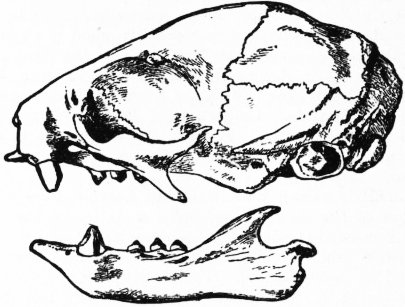
Fig. 1.—Skull of Unau or Two-toed Sloth (Choloepus didactylus).
Of the three existing families of this group, the first is that of the Bradypodidae, or sloths, characterized by the presence of five pairs of upper and four of lower teeth, the normally-formed tongue and the rudimentary tail. The species are arboreal and feed on leaves; all being confined to the forests of tropical America. Externally sloths are clothed with long coarse, crisp hair; the head is short and rounded, and the external ears inconspicuous. The teeth are subcylindrical, of persistent growth, consisting of a central axis of vasodentine, with a thin investment of hard dentine, and a thick outer coating of cement; without any succession. Fore-limbs greatly longer than the hind-limbs; the extremities terminating in narrow, curved feet; with the digits never exceeding three in number, and encased for nearly their whole length in a common integument, and armed with long, strong claws. Stomach complex. No caecum. Placenta deciduate and dome-like, composed of an aggregation of numerous discoidal lobes.
A remarkable feature connected with sloths is the development of a green colour in their hair, due to the growth of an alga. According to Dr W.G. Ridewood, in the three-toed sloth the hair is invested with a thick extra-cortical layer. “The hair has a tendency to crack in a transverse direction, and in the cracks there come to lodge unicellular algae, to which Kühn has given the name Pleurococcus bradypi. The moisture of the climate in which Bradypus lives enables the alga to live and propagate in this curious position, and the sloth acquires a general green tint which must render it very difficult to distinguish as it hangs among the green foliage.” In the two-toed sloth, on the other hand, the bulk of the hair is composed of an outer coat, or cortex, which is longitudinally fluted or grooved, the grooves being filled with strands of extra-cortex in which flourishes an alga (Pleurococcus choloepi) distinct from the one infesting the hairs of the three-toed species. Of quite a different type are the hairs of the extinct ground-sloths (see Mylodon), which are smooth and solid, Dr Ridewood rejecting the idea that they were originally coated with a cortex that has disappeared.
The typical genus Bradypus is represented by the various species of ai, or three-toed sloth, in which none of the teeth project greatly beyond the others; the first in the upper jaw is much smaller than any of the others, while the first in the lower jaw is broad and compressed, and the grinding surfaces of all are much cupped. Vertebrae: C 9, D and L 20 (of which 15 to 17 bear ribs), S 6, Ca 11. All the species present the peculiarity of possessing nine cervical vertebrae; but the ninth, and sometimes the eighth, bears a pair of short movable ribs. The fore-limbs are considerably longer than the hind-legs, and the bones of the fore-arm are complete, free and capable of pronation and supination. The fore-feet are long, very narrow, habitually curved and terminate in three pointed curved claws, in close apposition to each other; they are, in fact, incapable of being divaricated, so that the foot is reduced to the condition of a triple hook, fit only for the function of suspension from the boughs of trees. The hind-foot closely resembles the fore-foot in general structure and mode of use, and has the sole habitually turned inwards so that it cannot be applied to the ground in walking. The tongue is short and soft, and the stomach large and complex, bearing some resemblance to that of ruminants. The windpipe or trachea has the remarkable peculiarity—not unfrequent among birds and reptiles—of being folded on itself before it reaches the lungs. The two teats are pectoral in position. The premaxilla is rudimentary and loosely attached to the maxilla. Except in B. torquatus, there is no perforation in the lower end of the humerus. Some of the species are covered uniformly with a grey or greyish-brown coat; others have a dark collar of elongated hairs around the shoulders (B. torquatus); some have the hair of the face shorter than that of the rest of the head and neck; and others have a remarkable-looking patch of soft, short hair on the back between the shoulders, consisting, when best marked, of a median stripe of glossy black, bordered on each side by bright orange, yellow or white. There are also structural differences in the skulls, as in the amount of inflation of the pterygoid bones. The habits of all are apparently alike. They are natives of Guiana, Brazil and Peru, and two species (B. infuscatus and B. castaneiceps) extend north of the Isthmus of Panama as far as Nicaragua. Of the former of these a specimen in captivity uttered a shrill sound like a monkey when forcibly pulled away from the tree to which it was holding.
In the species of unau, or two-toed sloths, Choloepus, the front tooth in both jaws is separated by an interval from the others, and is large and caniniform, wearing to a sharp bevelled edge against the opposing tooth, the upper shutting in front of the lower when the mouth is closed, unlike true canines. Vertebrae: C 6 or 7, D 23-24, L 3, S 7-8, Ca 4-6. One species (C. didactylus) has the ordinary number of vertebrae in the neck; but an otherwise closely allied form (C. hoffmanni) has but six. The tail is very rudimentary. The fore-feet generally resemble those of Bradypus, but there are only two functional digits, with claws; these answering to the second and third of the typical five-toed limb. The structure of the hind-limb generally resembles that of Bradypus, the appellation “two-toed” referring only to the anterior limb, for in the foot the three middle toes are functionally developed and of nearly equal size. The premaxilla is well developed, and firmly attached to the maxilla; and there is always a perforation, or foramen, on the inner side of the lower end of the humerus. C. didactylus, which has been longest known, and is commonly called by the native name of unau, inhabits the forests of Brazil. C. hoffmanni has a more northern geographical range, extending from Ecuador through Panama to Costa Rica. Its voice, which is seldom heard, is like the bleat of a sheep, and if the animal is seized it snorts violently. Both species are very variable in external coloration (see Sloth).
The second family is that of the anteaters, Myrmecophagidae, distinguished from the last by the absence of teeth, the elongated tongue and the long tail. The long and slender head has a tubular mouth, with a small terminal aperture through which the worm-like tongue, covered with the sticky secretion of the enormous submaxillary salivary glands, is rapidly protruded in feeding, and withdrawn again with the adhering particles of food which are then sucked into the gullet. In the foot the third toe is greatly developed, and has a long sickle-like claw; the others are reduced or suppressed. The hind-foot has four or five subequal digits with claws. The long tail is sometimes prehensile. Placenta dome-like or discoidal. Externally the body is covered with hair. Anteaters feed exclusively on animal substances, mostly insects. One species is terrestrial, the others arboreal; none burrow in the ground. They are all inhabitants of tropical America. In the typical genus Myrmecophaga the skull is remarkably elongated and narrow, with its upper surface smooth and cylindriform. Anteriorly the face is produced into a long tubular rostrum, rounded above and flattened below, with terminal nostrils, and composed of the mesethmoid (ossified for more than half its length), the vomer, the maxillae, and the long and narrow nasal bones, the premaxillae being extremely short and confined to the margin of the nostrils. The zygomatic arch is incomplete, the rod-like jugal only articulating with the maxilla in front, and not reaching the short zygomatic process of the squamosal. The lachrymal foramen is in front of the margin of the orbit. There are no post-orbital processes to the frontals or any other demarcation between the orbits and the temporal fossae. Palate extremely elongated, and produced backwards as far as the level of the external auditory meatus by the meeting in the middle line of the largely developed pterygoids. The glenoid fossa for the lower jaw, a shallow oval facet, with its long diameter from before backwards. Lower jaw long and slender, with an exceedingly short symphysis, no distinct coronoid process, and a slightly elevated, elongated, flattened, condylar articular surface. Vertebrae: C 7, D 15-16, L 3-2, S 6, Ca 31. Clavicles rudimentary. In the fore-foot the first digit is very slender, the second also slender, with compressed phalanges of nearly equal length, but the third is immensely developed, though its first phalanx is extremely short, while the terminal one is so long that the entire length of the digit exceeds that of the second. The fourth has a long and rather slender metacarpal, and three phalanges diminishing in size, the terminal phalange being very small. The fifth has the metacarpal nearly as long, but not so stout as the fourth, and followed by two small phalanges, the last rudimentary and conical. Claws are developed upon all but the fifth. In walking the toes are kept bent, with their points turned upwards and inwards, the weight being supported on a pad over the end of the fifth digit, and the upper surfaces of the third and fourth digits. The hind feet are short and rather broad, with five subequal claws, the fourth rather longest, the first shortest; the whole sole is placed on the ground in walking. Body rather compressed, clothed with long, coarse hair. Tail about as long as the body, and covered with very long hair; not prehensile. Ears small, oval, erect. Eyes very small. Stomach consisting of a sub-globular, thin-walled, cardiac portion, and a muscular pyloric gizzard with dense epithelial lining. No ileocolic valve; but a short, wide, ill-defined caecum. The two teats are pectoral.
The tamandua anteaters (Tamandua, or Uroleptes), of which several species (or races) are now recognized, are smaller animals than the last, in which the head is much less elongated, the fur short and bristly, and the tail, tapering, prehensile, with the under side throughout, and the whole of the terminal portion naked and scaly. The stomach is similar to that of Myrmecophaga, but with the muscular pyloric gizzard less strongly developed. There is a distinct ileocolic valve and short globular caecum. The fore-foot has a very large claw on the third toe, moderate-sized claws on the second and fourth, a minute one on the first, and none on the fifth, which is entirely concealed within the skin. The hind-foot has five subequal claws. Vertebrae: C 7, D 17, L 2, S 5, Ca 37. There are very rudimentary clavicles.
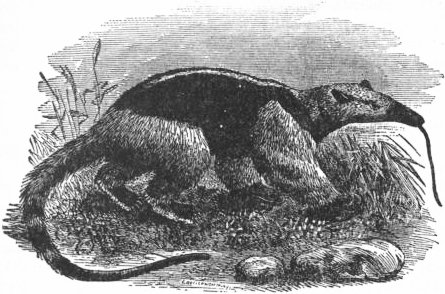
Fig. 2.—Tamandua Anteater (Tamandua tetradactyla).
The last representative of the family is the tiny golden-haired pigmy or two-toed anteater, Cyclopes (or Cycloturus) didactylus, in which the skull is much shorter even than in the preceding genus, and arched considerably in the longitudinal direction. It differs from that of the other members of the family mainly in the long canal for the posterior nostrils not being closed by bone below, as the greater part of the palatines and the pterygoids do not meet in the middle line. The lower jaw has a prominent, narrow, recurved coronoid, and a well-developed angular process, and is strongly decurved in front. Vertebrae: C 7, D 16, L 2, S 4, Ca 40. Ribs remarkably broad and flat. Clavicles well developed. Fore-foot remarkably modified, having the third digit greatly developed at the expense of all the others; it has a short stout metacarpal and but two phalanges, of which the terminal one is large, compressed, pointed and much curved, with a strong hook-like claw. The second digit has the same number of phalanges, and bears a claw, but is much more slender than the third. The fourth is represented only by the metacarpal, and one nailless phalange, the first and fifth only by rudimentary metacarpals. The hind-foot is also modified into a climbing organ, the first toe being rudimentary and consisting of a metatarsal and one phalange concealed beneath the skin, but the other four toes subequal and much curved, with long, pointed, compressed claws. The tuberosity of the heel-bone or calcaneum is directed towards the sole, and parallel with it and extending to about double its length is a greatly elongated sesamoid ossicle. These together support a prominent cushion to which the nails are opposed in climbing. Stomach pyriform, with muscular walls, but no distinct gizzard-like portion. The commencement of the colon provided with two small caeca, narrow at the base, but rather dilated at their terminal blind ends, and communicating with the general cavity by very minute apertures. Tail longer than the body, tapering, bare on the under surface and prehensile. Fur soft and silky.
The third and last existing family of the Xenarthra is that of the armadillos, or Dasypodidae, in which there are at least seven pairs of teeth in each jaw, while the tongue is normal, the tail generally long, and the body covered with an armour of bony plates overlain by horny scales. All the species are terrestrial, and insectivorous or more or less omnivorous.
The union of the numerous polygonal bony shields on the back and sides forms a hard shield, usually consisting of an anterior (scapular) and posterior (pelvic) solid portion (which overhang on each side the parts of the body they respectively cover, forming chambers into which the limbs are withdrawn), and a variable number of rings between, connected by soft flexible skin so as to allow of curvature of the body. The top of the head has also a similar shield, and the tail is usually encased in bony rings or plates. The outer or exposed surfaces of the limbs are protected by irregular bony plates, not united at their margins; but the skin of the inner surface of the limbs and under side of the body is soft and more or less clothed with hair. Hairs also in many species project through apertures between the bony plates of the back. The bony plates are covered by a layer of horny epidermis. Teeth numerous, simple, of persistent growth and usually without milk predecessors. Zygomatic arch of skull complete. Cervical vertebrae with extremely short, broad and depressed bodies; the first free, but the second and third, and often several of the others united together both by their bodies and arches. Clavicles well developed. A third trochanter on the femur. Tibia and fibula united at their lower extremities. Fore-feet with strongly developed, curved claws, adapted for digging and scratching, three, four or five in number. Hind-feet plantigrade, with five toes, all provided with nails. Tongue long, pointed and extensile, though to a less degree than in the anteaters. Submaxillary glands largely developed. Stomach simple. Placenta discoidal and deciduate.
The typical genus Dasypus, with several others, represents the subfamily Dasypodinae, which usually have all five toes developed and with nails, though the first and fifth may be suppressed. The first and second are long and slender, with the normal number and relative length of phalanges, the others stout, with short broad metacarpals, and the phalanges reduced in length and generally in number by coalescence; the terminal phalange of the third being large, that of the others gradually diminishing to the fifth. Dasypus has the most normal form of fore-foot, but the modifications developed in all the others (culminating in Tolypeutes) are foreshadowed. Ears wide apart. Teats, one pair, pectoral. In Dasypus the teeth are 9⁄10 or 8⁄9, of which the first in the upper jaw is usually implanted in the premaxillary bone. The series extends posteriorly some distance behind the anterior root of the zygoma, almost level with the hind edge of the palate. The teeth are large, subcylindrical, slightly compressed, diminishing in size towards each end of the series; the anterior two in the lower jaw smaller and more compressed than the others. Cranial portion of the skull broad and depressed, facial portion triangular, broad in front and depressed. Auditory bulla completely ossified, perforated on the inner side by the carotid canal, and continued externally into an elongated bony meatus auditorius, with its aperture directed upwards and backwards. (In all the other genera of Dasypodinae the tympanic bone is a mere half-ring, loosely attached to the cranium.) Lower jaw with a high ascending branch, broad transversely placed condyle, and high slender coronoid process. Vertebrae: C 7, D 11-12, L 3, S 8, Ca 17-18. Head broad and flat above, with the muzzle obtusely pointed. Ears of moderate size or rather small, placed laterally far apart. Body broad and depressed. Armour with six or seven movable bands between the scapular and pelvic shields. Tail shorter than the body, tapering, covered with plates forming distinct rings near the base. Fore-feet with five toes; the first much more slender than the others, and with a smaller ungual phalange and nail; the second, though the longest, also slender. The third, fourth and fifth gradually diminishing in length, all armed with strong, slightly curved compressed claws, sloping from an elevated, rounded inner border to a sharp, outer and inferior edge. The hind-foot is rather short, and has all five toes armed with stout, compressed, slightly curved, obtusely pointed claws—the third the longest, the second nearly equal to it, the fourth the next, the first and fifth shorter and nearly equal.