VOLUME VIII SLICE X Echinoderma to Edward (continued 3)
Reading edition
Hansen’s method differs from that of Bessel in that the ecliptic is taken as the fundamental plane instead of the equator. The axis of X on the fundamental plane is parallel to the plane of the ecliptic; that of Y perpendicular to it. The other elements are nearly the same in the two theories. As to their relative advantages, it may be remarked that Hansen’s co-ordinates follow most simply from the data of the tables, and are necessarily used in eclipse tables, but that the subsequent computation is simpler by Bessel’s method.
Several problems are involved in the complete computation of an eclipse from the elements. First, from the values of the latter at a given moment to determine the point, if any, at which the shadow-axis intersects the surface of the earth, and the respective outlines of the umbra and penumbra on that surface. Within the umbral curve the eclipse is annular or total; outside of it and within the penumbral curve the eclipse is partial at the given moment. The penumbral line is marked from hour to hour on the maps given annually in the American Ephemeris. Second, a series of positions of the central point through the course of an eclipse gives us the path of the central point along the surface of the earth, and the envelopes of the penumbral and umbral curves just described are boundaries within which a total, annular or partial eclipse will be visible. In particular, we have a certain definite point on the earth’s surface on which the edge of the shadow first impinges; this impingement necessarily takes place at sunrise. Then passing from this point, we have a series of points on the surface at which the elements of the shadow-cone are in succession tangent to the earth’s surface. At all these points the eclipse begins at sunrise until a certain limit is reached, after which, following the successive elements, it ends at sunrise. At the limiting point the rim of the moon merely grazes that of the sun at sunrise, so that we may say that the eclipse both begins and ends at that time. Of course the points we have described are also found at the ending of the eclipse. There is a certain moment at which the shadow-axis leaves the earth at a certain point, and a series of moments when, the elements of the penumbral cone being tangent to the earth’s surface, the eclipse is ending at sunset. Three cases may arise in studying the passage of the outlines of the shadow over the earth. It may be that all the elements of the penumbral cone intersect the earth. In this case we shall have both a northern and a southern limit of partial eclipse. In the second case there will be no limit on the one side except that of the eclipse beginning or ending at sunrise or sunset. Or it may happen, as the third case, that the shadow-axis does not intersect the earth at all; the eclipse will then not be central at any point, but at most only partial.
The third problem is, from the same data, to find the circumstances of an eclipse at a given place—especially the times of beginning and ending, or the relative positions of the sun and moon at a given moment. Reference to the formulae for all these problems will be given in the bibliography of the subject.
Authorities.—The richest mine of information respecting eclipses of the sun and moon is T.R. von Oppolzer’s “Kanon der Finsternisse,” published by the Vienna Academy of Sciences in the 52nd volume of its Denkschriften (Vienna, 1887). It contains elements of all eclipses both of the sun and moon, from 1207 B.C. to A.D. 2161, a period of more than thirty centuries. Appended to the tables is a series of charts showing the paths of all central eclipses visible in the northern hemisphere during the period covered by the table. The points of the path at which the eclipse occurs, at sunrise, noon and sunset, are laid down with precision, but the intermediate points are frequently in error by several hundred miles, as they were not calculated, but projected simply by drawing a circle through the three points just mentioned. For this reason we cannot infer from them that an eclipse was total at any given place. The correct path can, however, be readily computed from the tables given in the work. Eduard Mahler’s memoir, “Die centralen Sonnenfinsternisse des 20. Jahrhunderts” (Denkschriften, Vienna Academy, vol. xlix.), gives more exact paths of the central eclipses of the 20th century, but no maps. General tables for computing eclipses are Oppolzer’s “Syzygientafeln für den Mond” (Publications of the Astronomische Gesellschaft, xvi.), and Newcomb’s, in Publications of the American Ephemeris, vol. i. part i. Of these, Oppolzer’s are constructed with greater numerical accuracy and detail, while Newcomb’s are founded on more recent astronomical data, and are preferable for computing ancient eclipses. F.K. Ginzel’s Spezieller Kanon der Sonnen- und Mondfinsternisse (Berlin, 1899) contains, besides the historical researches already mentioned, maps of the paths of central eclipses visible in the lands of classical antiquity from 900 B.C. to A.D. 500, but computed with imperfect astronomical data. Maguire, “Monthly Notices,” R.A.S. xlv. and xlvi., has mapped the total solar eclipses visible in the British Islands from 878 to 1724. General papers of interest on the same subject have been published by Rev. S.J. Johnson. A résumé of all the observations on the physical phenomena of total solar eclipses up to 1878, by A.C. Ranyard, is to be found in Memoirs of the Royal Astronomical Society, vol. xli. A very copious development of the computation of eclipses by Bessel’s method is found in W. Chauvenet’s Spherical and Practical Astronomy, vol. i. The Theory of Eclipses, by R. Buchanan (Philadelphia, 1904), treats the subject yet more fully. Hansen’s method is developed in the Abhandlungen of the Leipzig Academy of Sciences, vol. vi. (Math.-Phys. Classe, vol. iv.). The formulae of computation by this method are found in the introductions to Oppolzer’s two works cited above.
(S. N.)
ECLIPTIC, in astronomy. The plane of the ecliptic is that plane in or near which the centre of gravity of the earth and moon revolves round the sun. The ecliptic itself is the great circle in which this plane meets the celestial sphere. It is also defined, but not with absolute rigour, as the apparent path described by the sun around the celestial sphere as the earth performs its annual revolution. Owing to the action of the moon on the earth, as it performs its monthly revolution in an orbit slightly inclined to the ecliptic, the centre of the earth itself deviates from the plane of the ecliptic in a period equal to that of the nodal revolution of the moon. The deviation is extremely slight, its maximum amount ranging between 0.5′ and 0.6″. Owing to the action of the planets, especially Venus and Jupiter, on the earth, the centre of gravity of the earth and moon deviates by a yet minuter amount, generally one or two tenths of a second, from the plane of the ecliptic proper. Owing to the action of the planets, the position of the ecliptic is subject to a slow secular variation amounting, during our time, to nearly 47″ per century. The rate of this motion is slowly diminishing.
The obliquity of the ecliptic is the angle which its plane makes with that of the equator. Its mean value is now about 23° 27′. The motion of the ecliptic produces a secular variation in the obliquity which is now diminishing by an amount nearly equal to the entire motion of the ecliptic itself. The laws of motion of the ecliptic and equator are stated in the article Precession of the Equinoxes.
Attempts have been made by Laplace and his successors to fix certain limits within which the obliquity of the ecliptic shall always be confined. The results thus derived are, however, based on imperfect formulae. When the problem is considered in a rigorous form, it is found that no absolute limits can be set. It can, however, be shown that the obliquity cannot vary more than two or three degrees within a million of years of our epoch.
The formula for the obliquity of the ecliptic, as derived from the laws of motion of it and of the equator, may be developed in a series proceeding according to the ascending powers of the time as follows: we put T, the time from 1900, reckoned in solar centuries as a unit. Then,
Obliquity = 23° 27′ 31.68″ − 46.837″ T − 0.0085″ T² + 0.0017″ T³.
From this expression is derived the value of the obliquity at various epochs given in the following table. The left-hand portion of this table gives the values for intervals of 500 years from 2000 B.C. to A.D. 2500 as computed from modern data. For dates more than three or four centuries before or after 1850 the result is necessarily uncertain by one or more tenths of a minute, and is therefore only given to 0.1′.
B.C. 2000; obl. = 23° 55.5″ A.D. 1700; obl. = 23° 28′ 41.91″
1500 ” = 23 52.3 1750 ” = 23 28 18.51
1000 ” = 23 48.9 1800 ” = 23 27 55.10
500 ” = 23 45.4 1850 ” = 23 27 31.68
0 ” = 23 41.7 1900 ” = 23 27 8.26
A.D. 500 ” = 23 38.0 1950 ” = 23 26 44.84
1000 ” = 23 34.1 2000 ” = 23 26 21.41
1500 ” = 23 30.3 2050 ” = 23 25 57.99
2000 ” = 23 26.4 2100 ” = 23 25 34.56
2500 ” = 23 22.5
(S. N.)
ECLOGITE (from Gr. ἐκλογή, a selection), in petrology, a typical member of a small group of metamorphic rocks of special interest on account of the variety of minerals they contain and their microscopic structures and geological relationships. Typically they consist of pale green or nearly colourless augite (omphacite), green hornblende and pink garnet. Quartz also is usually present in these rocks, but felspar is rare. The augite is mostly a variety of diopside and is only occasionally idiomorphic. The garnet sometimes forms good dodecahedra, but may occur as rounded grains, and encloses quartz, rutile, kyanite, and other minerals very frequently. The hornblende is usually pale green and feebly dichroic, but, in some eclogites which are allied to garnet-amphibolites, it is of dark brown colour. Among the commoner accessory minerals are kyanite (of blue or greyish-blue tints), rutile, biotite, epidote and zoisite, sphene, iron oxides, and pyrites. The rutile is invariably in small brown prisms; the kyanite forms bladed crystals, with perfect cleavage; felspar, if present, belongs to basic varieties rich in lime. Other minerals which have been found in eclogites are bronzite, olivine and glaucophane. The last mentioned is a bright blue variety of hornblende with striking pleochroism. The eclogites in their chemical composition show close affinities to gabbros; they often exhibit relationships in the field which show that they were primarily intrusive rocks of igneous origin, and occasionally contact alteration can be traced in the adjacent schists. Examples are known in Saxony, Bavaria, Carinthia, Austria, Norway. A few eclogites also occur in the north-west highlands of Scotland. Glaucophane-eclogites have been met with in Italy and the Pennine Alps. Specimens of rock allied to eclogite have been found in the diamantiferous peridotite breccias of South Africa (the so-called “blue ground”), and this has given rise to the theory that these are the parent masses from which the Kimberley diamonds have come.
(J. S. F.)
ECLOGUE, a short pastoral dialogue in verse. The word is conjectured to be derived from the Greek verb ἐκλέγειν, to choose. An eclogue, perhaps, in its primary signification was a selected piece. Another more fantastic derivation traces it to αἴξ, goat, and λόγος, speech, and makes it a conversation of shepherds. The idea of dialogue, however, is not necessary for an eclogue, which is often not to be distinguished from the idyll. The grammarians, in giving this title to Virgil’s pastoral conversations (Bucolica), tended to make the term “eclogue” apply exclusively to dialogue, and this has in fact been the result of the success of Virgil’s work. Latin eclogues were also written by Calpurnius Siculus and by Nemesianus. In modern literature the term has lost any distinctive character which it may have possessed among the Romans; it is merged in the general notion of pastoral poetry. The French “Églogues” of J.R. de Segrais (1624-1701) were long famous, and those of the Spanish poet Garcilasso de La Vega (1503-1536) are still admired.
See also Bucolics; Pastoral.
ECONOMIC ENTOMOLOGY, the name given to the study of insects based on their relation to man, his domestic animals and his crops, and, in the case of those that are injurious, of the practical methods by which they can be prevented from doing harm, or be destroyed when present. In Great Britain little attention is paid to this important branch of agricultural science, but in America and the British colonies the case is different. Nearly every state in America has its official economic entomologists, and nearly every one of the British crown colonies is provided with one or more able men who help the agricultural community to battle against the insect pests. Most, if not all, of the important knowledge of remedies comes from America, where this subject reaches the highest perfection; even the life-histories of some of the British pests have been traced out in the United States and British colonies more completely than at home, from the creatures that have been introduced from Europe.
Some idea of the importance of this subject may be gained from the following figures. The estimated loss by the vine Phylloxera in the Gironde alone was £32,000,000; for all the French wine districts £100,000,000 would not cover the damage. It has been stated on good evidence that a loss of £7,000,000 per annum was caused by the attack of the ox warble fly on cattle in England alone. In a single season Aberdeenshire suffered nearly £90,000 worth of damage owing to the ravages of the diamond back moth on the root crops; in New York state the codling moth caused a loss of $3,000,000 to apple-growers. Yet these figures are nothing compared to the losses due to scale insects, locusts and other pests.
The most able exponent of this subject in Great Britain was John Curtis, whose treatise on Farm Insects, published in 1860, is still the standard British work dealing with the insect foes of corn, roots, grass and stored corn. The most important works dealing with fruit and other pests come from the pens of Saunders, Lintner, Riley, Slingerland and others in America and Canada, from Taschenberg, Lampa, Reuter and Kollar in Europe, and from French, Froggatt and Tryon in Australia. It was not until the last quarter of the 19th century that any real advance was made in the study of economic entomology. Among the early writings, besides the book of Curtis, there may also be mentioned a still useful little publication by Pohl and Kollar, entitled Insects Injurious to Gardeners, Foresters and Farmers, published in 1837, and Taschenberg’s Praktische Insecktenkunde. American literature began as far back as 1788, when a report on the Hessian fly was issued by Sir Joseph Banks; in 1817 Say began his writings; while in 1856 Asa Fitch started his report on the “Noxious Insects of New York.” Since that date the literature has largely increased. Among the most important reports, &c., may be mentioned those of C.V. Riley, published by the U.S. Department of Agriculture, extending from 1878 to his death, in which is embodied an enormous amount of valuable matter. At his death the work fell to Professor L.O. Howard, who constantly issues brochures of equal value in the form of Bulletins of the U.S. Department of Agriculture. The chief writings of J.A. Lintner extend from 1882 to 1898, in yearly parts, under the title of Reports on the Injurious Insects of the State of New York. Another author whose writings rank high on this subject is M.V. Slingerland, whose investigations are published by Cornell University. Among other Americans who have largely increased the literature and knowledge must be mentioned F.M. Webster and E.P. Felt. In 1883 appeared a work on fruit pests by William Saunders, which mainly applies to the American continent; and another small book on the same subject was published in 1898 by Miss Ormerod, dealing with the British pests. In Australia Tryon published a work on the Insect and Fungus Enemies of Queensland in 1889. Many other papers and reports are being issued from Australia, notably by Froggatt in New South Wales. At the Cape excellent works and papers are prepared and issued by the government entomologist, Dr Lounsbury, under the auspices of the Agricultural Department; while from India we have Cotes’s Notes on Economic Entomology, published by the Indian Museum in 1888, and other works, especially on tea pests.
Injurious insects occur among the following orders: Coleoptera, Hymenoptera, Lepidoptera, Diptera, Hemiptera (both heteroptera and homoptera), Orthoptera, Neuroptera and Thysanoptera. The order Aptera also contains a few injurious species.
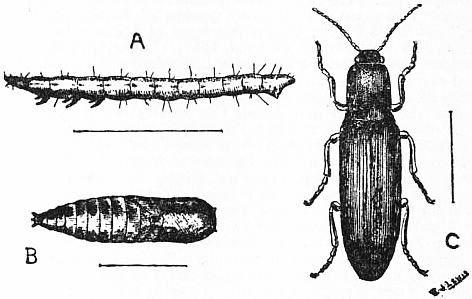
Fig. 1.—A, Wireworm; B, pupa of Click Beetle; C, adult Click Beetle (Agriotes lineatum).
Among the Coleoptera or beetles there is a group of world-wide pests, the Elateridae or click beetles, the adults of the various “wireworms.” The insects in the larval or wireworm stage attack the roots of plants, eating them away below the ground. The eggs deposited by the beetle in the ground develop into yellowish-brown wire-like grubs with six legs on the first three segments and a ventral prominence on the anal segment. The life of these subterranean pests differs in the various species; some undoubtedly (Agriotes lineatum) live for three or four years, during the greater part of which time they gnaw away at the roots of plants, carrying wholesale destruction before them. When mature they pass deep into the ground and pupate, appearing after a few months as the click beetles (fig. 1). Most crops are attacked by them, but they are particularly destructive to wheat and other cereals. With such subterranean pests little can be done beyond rolling the land to keep it firm, and thus preventing them from moving rapidly from plant to plant. A few crops, such as mustard, seem deleterious to them. By growing mustard and ploughing it in green the ground is made obnoxious to the wireworms, and may even be cleared of them. For root-feeders, bisulphide of carbon injected into the soil is of particular value. One ounce injected about 2 ft. from an apple tree on two sides has been found to destroy all the ground form of the woolly aphis. In garden cultivation it is most useful for wireworm, used at the rate of 1 ounce to every 4 sq. yds. It kills all root pests.
In Great Britain the flea beetles (Halticidae) are one of the most serious enemies; one of these, the turnip flea (Phyllotreta nemorum), has in some years, notably 1881, caused more than £500,000 loss in England and Scotland alone by eating the young seedling turnips, cabbage and other Cruciferae. In some years three or four sowings have to be made before a “plant” is produced, enormous loss in labour and cost of seed alone being thus involved. These beetles, characterized by their skipping movements and enlarged hind femora, also attack the hop (Haltica concinna), the vine in America (Graptodera chalybea, Illig.), and numerous other species of plants, being specially harmful to seedlings and young growth. Soaking the seed in strong-smelling substances, such as paraffin and turpentine, has been found efficacious, and in some districts paraffin sprayed over the seedlings has been practised with decided success. This oil generally acts as an excellent preventive of this and other insect attacks.
In all climates fruit and forest trees suffer from weevils or Curculionidae. The plum curculio (Conotrachelus nenuphar, Herbst) in America causes endless harm in plum orchards; curculios in Australia ravage the vines and fruit trees (Orthorrhinus klugii, Schon, and Leptops hopei, Bohm, &c.). In Europe a number of “long-snouted” beetles, such as the raspberry weevils (Otiorhynchus picipes), the apple blossom weevil (Anthonomus pomorum), attack fruit; others, as the “corn weevils” (Calandra oryzae and C. granaria), attack stored rice and corn; while others produce swollen patches on roots (Ceutorhynchus sulcicollis), &c. All these Curculionidae are very timid creatures, falling to the ground at the least shock. This habit can be used as a means of killing them, by placing boards or sacks covered with tar below the trees, which are then gently shaken. As many of these beetles are nocturnal, this trapping should take place at night. Larval “weevils” mostly feed on the roots of plants, but some, such as the nut weevil (Balaninus nucum), live as larvae inside fruit. Seeds of various plants are also attacked by weevils of the family Bruchidae, especially beans and peas. These seed-feeders may be killed in the seeds by subjecting them to the fumes of bisulphide of carbon. The corn weevils (Calandra granaria and C. oryzae) are now found all over the world, in many cases rendering whole cargoes of corn useless.
The most important Hymenopterous pests are the sawflies or Tenthredinidae, which in their larval stage attack almost all vegetation. The larvae of these are usually spoken of as “false caterpillars,” on account of their resemblance to the larvae of a moth. They are most ravenous feeders, stripping bushes and trees completely of their foliage, and even fruit. Sawfly larvae can at once be recognized by the curious positions they assume, and by the number of pro-legs, which exceeds ten. The female lays her eggs in a slit made by means of her “saw-like” ovipositor in the leaf or fruit of a tree. The pupae in most of these pests are found in an earthen cocoon beneath the ground, or in some cases above ground (Lophyrus pini). One species, the slugworm (Eriocampa limacina), is common to Europe and America; the larva is a curious slug-like creature, found on the upper surface of the leaves of the pear and cherry, which secretes a slimy coating from its skin. Currant and gooseberry are also attacked by sawfly larvae (Nematus ribesii and N. ventricosus) both in Europe and America. Other species attack the stalks of grasses and corn (Cephus pygmaeus). Forest trees also suffer from their ravages, especially the conifers (Lophyrus pini). Another group of Hymenoptera occasionally causes much harm in fir plantations, namely, the Siricidae or wood-wasps, whose larvae burrow into the trunks of the trees and thus kill them. For all exposed sawfly larvae hellebore washes are most fatal, but they must not be used over ripe or ripening fruit, as the hellebore is poisonous.
The order Diptera contains a host of serious pests. These two-winged insects attack all kinds of plants, and also animals in their larval stage. Many of the adults are bloodsuckers (Tabanidae, Culicidae, &c.); others are parasitic in their larval stage (Oestridae, &c.). The best-known dipterous pests are the Hessian fly (Cecidomyia destructor), the pear midge (Diplosis pyrivora), the fruit flies (Tephritis Tyroni of Queensland and Halterophora capitata or the Mediterranean fruit fly), the onion fly (Phorbia cepetorum), and numerous corn pests, such as the gout fly (Chloropstaeniopus) and the frit fly (Oscinis frit). Animals suffer from the ravages of bot flies (Oestridae) and gad flies (Tabanidae); while the tsetse disease is due to the tsetse fly (Glossina morsitans), carrying the protozoa that cause the disease from one horse to another. Other flies act as disease-carriers, including the mosquitoes (Anopheles), which not only carry malarial germs, but also form a secondary host for these parasites. Hundreds of acres of wheat are lost annually in America by the ravages of the Hessian fly; the fruit flies of Australia and South Africa cause much loss to orange and citron growers, often making it necessary to cover the trees in muslin tents for protection. Of animal pests the ox warbles (Hypoderma lineata and H. bovis) are the most important (see fig. 2). The “bots” or larvae of these flies live under the skin of cattle, producing large swollen lumps—“warbles”—in which the “bots” mature (fig. 2). These parasites damage the hide, set up inflammation, and cause immense loss to farmers, herdsmen and butchers. The universal attack that has been made upon this pest has, however, largely decreased its numbers. In America cattle suffer much from the horn fly (Haematobia serrata). The dipterous garden pests, such as the onion fly, carrot fly and celery fly, can best be kept in check by the use of paraffin emulsions and the treatment of the soil with gas-lime after the crop is lifted. Cereal pests can only be treated by general cleanliness and good farming, and of course they are largely kept down by the rotation of crops.
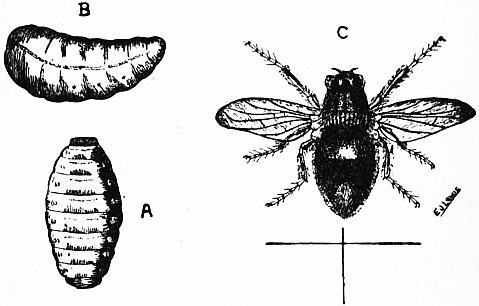
Fig. 2.—A, Ox Bot Maggot; B, puparium; C, Ox Warble Fly (Hypoderma bovis).
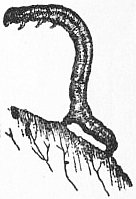
Fig. 3.—Looper-larva of Winter Moth (Cheimatobia brumata).
Lepidopterous enemies are numerous all over the world. Fruit suffers much from the larvae of the Geometridae, the so-called “looper-larvae” or “canker-worms.” Of these geometers the winter moth (Cheimatobia brumata) is one of the chief culprits in Europe (fig. 3). The females in this moth and in others allied to it are wingless. These insects pass the pupal stage in the ground, and reach the boughs to lay their eggs by crawling up the trunks of the trees. To check them, “grease-banding” round the trees has been adopted; but as many other pests eat the leafage, it is best to kill all at once by spraying with arsenical poisons. Among other notable Lepidopterous pests are the “surface larvae” or cutworms (Agrotis spp.), the caterpillars of various Noctuae; the codling moth (Carpocapsa pomonella), which causes the maggot in apples, has now become a universal pest, having spread from Europe to America and to most of the British Colonies. In many years quite half the apple crop is lost in England owing to the larvae destroying the fruit. Sugar-canes suffer from the sugar-cane borer (Diatioca sacchari) in the West Indies; tobacco from the larvae of hawk moths (Sphingidae) in America; corn and grass from various Lepidopterous pests all over the world. Nor are stored goods exempt, for much loss annually takes place in corn and flour from the presence of the larvae of the Mediterranean flour moth (Ephestia kuniella); while furs and clothes are often ruined by the clothes moth (Tinea trapezella).
By far the most destructive insects in warm climates belong to the Hemiptera, especially to the Coccidae or scale insects. All fruit and forest trees suffer from these curious insects, which in the female sex always remain apterous and apodal and live attached to the bark, leaf and fruit, hidden beneath variously formed scale-like coverings. The male scales differ in form from the female; the adult male is winged, and is rarely seen. The female lays her eggs beneath the scaly covering, from which hatch out little active six-legged larvae, which wander about and soon begin to form a new scale. The Coccidae can, and mainly do, breed asexually (parthenogenetically). One of the most important is the San José scale (Aspidiotus perniciosus), which in warm climates attacks all fruit and many other trees, which, if unmolested, it will soon kill (fig. 4). These scales breed very rapidly; Howard states one may give rise to a progeny of 3,216,080,400 in one year. Other scale insects of note are the cosmopolitan mussel scale (Mytilaspis pomorum) and the Australian Icerya purchasi. The former attacks apple and pear; the latter, which selects orange and citron, was introduced into America from Australia, and carried ruin before it in some orange districts until its natural enemy, the lady-bird beetle, Vedalia cardinalis, was also imported.
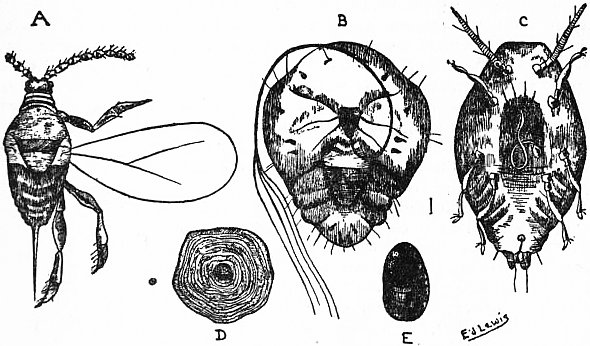
Fig. 4.—San José Scale (Aspidiotus perniciosus). A, Male scale insect; B, female; C, larva; D, female scale; E, male scale.
After the Coccidae the next most important insects economically are the plant lice or Aphididae. These breed with great rapidity under favourable conditions: one by the end of the year will be accountable, according to Linnaeus, for the enormous number of a quintillion of its species. Aphides are born, as a rule, alive, and the young soon commence to reproduce again. Their food consists mainly of the sap obtained from the leaves and blossom of plants, but some also live on the roots of plants (Phylloxera vastatrix and Schizoneura lanigera). Aphides often ruin whole crops of fruit, corn, hops, &c., by sucking out the sap, and not only check growth, but may even entail the death of the plant. Reproduction is mainly asexual, the females producing living young without the agency of a male. Males in nearly all species appear once a year, when the last female generation, the ovigerous generation, is fertilized, and a few large ova are produced to carry on the continuity of the species over the winter. Some aphides live only on one species of plant, others on two or more plants. An example of the latter is seen in the hop aphis (Phorodon humuli), which passes the winter and lives on the sloe and damson in the egg stage until the middle of May or later, and then flies off to the hops, where it causes endless harm all the summer (fig. 5); it flies back to the prunes to lay its eggs when the hops are ripe. Another aphis of importance is the woolly aphis (Schizoneura lanigera) of the apple and pear: it secretes tufts of white flocculent wool often to be seen hanging in patches from old apple trees, where the insects live in the rough bark and form cankered growths both above and below ground. Aphides are provided with a mealy skin, which does not allow water to be attached to it, and thus insecticides for destroying them contain soft soap, which fixes the solution to the skin; paraffin is added to corrode the skin, and the soft soap blocks up the breathing pores and so produces asphyxiation.
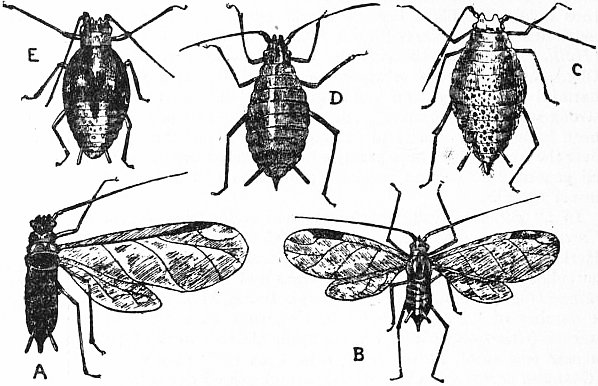
Fig. 5.—The Hop Aphis (Phorodon humuli). A, Winged female; B, winged male; C, ovigerous wingless female; D, viviparous wingless female from plum; E, pupal stage.
Amongst Orthoptera we find many noxious insects, notably the locusts, which travel in vast cloud-like armies, clearing the whole country before them of all vegetable life. The most destructive locust is the migratory locust (Locusta migratoria), which causes wholesale destruction in the East. Large pits are dug across the line of advance of these great insect armies to stop them when in the larval or wingless stage, and even huge bonfires are lighted to check their flight when adult. So dense are these “locust clouds” that they sometimes quite darken the air. The commonest and most widely distributed migratory locust is Pachytylus cinerascens. The mole cricket (Gryllotalpa vulgaris) and various cockroaches (Blattidae) are also amongst the pests found in this order.
Of Neuroptera there are but few injurious species, and many, such as the lace wing flies (Hemerobiidae), are beneficial.
The Treatment of Insect Pests.—One of the most important ways of keeping insect pests in check is by “spraying” or “washing.” This method has made great advances in recent years. All the pioneer work has been done in America; in fact, until the South-Eastern Agricultural College undertook the elucidation of this subject, little was known of it in England except by a few growers. The results and history of this essential method of treatment are embodied in Professor Lodemann’s work on the Spraying of Plants, 1896. In this treatment we have to bear in mind what the entomologist teaches us, that is, the nature, habits and structure of the pest.
For insects provided with a biting mouth, which take nourishment from the whole leaf, shoot or fruit, the poisonous washes used are chiefly arsenical. The two most useful arsenical sprays are Paris green and arsenate of lead. To make the former, mix 1 oz. of the Paris green with 15 gallons of soft water, and add 2 oz. of lime and a small quantity of agricultural treacle; the latter is prepared by dissolving 3 oz. of acetate of lead in a little water, then 1 oz. of arsenate of soda in water and mixing the two well together, and adding the whole to 16 gallons of soft water; to this is added a small quantity of coarse treacle. For piercing-mouthed pests like Aphides no wash is of use unless it contains a basis of soft soap. This soft-soap wash kills by contact, and may be prepared in the following way:—Dissolve 6 to 8 ℔ of the best soft soap in boiling soft water and while still hot (but of course taken off the fire) add 1 gallon of paraffin oil and churn well together with a force-pump; the whole may then be mixed with 100 gallons of soft water. The oil readily separates from the water, and thus a perfect emulsion is not obtained: this difficulty has been solved by Mr Cousin’s paraffin naphthalene wash, which is patented, but can be made for private use. It is prepared as follows:—Soft soap, 6 ℔ dissolved in 1 quart of water; naphthalene, 10 oz. mixed with 1½ pint of paraffin; the whole is mixed together. When required for use, 1 ℔ of the compound is dissolved in 5 to 10 gallons of warm water.
These two washes are essential to the well-being of every orchard in all climates. Not only can we now destroy larval and adult insects, but we can also attack them in the egg stage by the use of a caustic alkali wash during the winter; besides destroying the eggs of such pests as the Psyllidae, red spider, and some aphides, this also removes the vegetal encumbrances which shelter numerous other insect pests during the cold part of the year. Caustic alkali wash is prepared by dissolving 1 ℔ of crude potash and 1 ℔ of caustic soda in soft water, mixing the two solutions together, adding to them ¾ ℔ of soft soap, and diluting with 10 gallons of soft water when required for use. Another approved insecticide for scale insects is resin wash, which acts in two ways: first, corroding the soft scales, and second, fixing the harder scales to stop the egress of the hexapod larvae. It is prepared as follows:—First crush 8 ℔ of resin in a sack, and then place the resin in warm water and boil in a cauldron until thoroughly dissolved; then melt 10 ℔ of caustic soda in enough warm water to keep it liquid, and mix with the dissolved resin; keep stirring until the mixture assumes a clear coffee-colour, and for ten minutes afterwards; then add enough warm water to bring the whole up to 25 gallons, and well stir. Bottle this off, and when required for use dilute with three times its bulk of warm soft water, and spray over the trees in the early spring just before the buds burst. For mites (Acari) sulphur is the essential ingredient of a spray. Liver of sulphur has been found to be the best form, especially when mixed with a paraffin emulsion. Bud mites (Phytoptidae, fig. 6) are of course not affected. Sulphur wash is made by adding to every 10 gallons of warm paraffin emulsion or paraffin-naphthalene-emulsion 7 oz. of liver of sulphur, and stirring until the sulphur is well mixed. This is applied as an ordinary spray. Nursery stock should always be treated, to kill scale, aphis and other pests which it may carry, by the gas treatment, particularly in the case of stock imported from a foreign climate. This treatment, both out of doors and under glass, is carried out as follows:—Cover the plants in bulk with a light gas-tight cloth, or put them in a special fumigating house, and then place 1 oz. of cyanide of potassium in lumps in a dish with water beneath the covering, and then pour 1 oz. of sulphuric acid over it (being careful not to inhale the poisonous fumes) for every 1000 cub. ft. of space beneath the cover. The gas generated, prussic acid, should be left to work for at least an hour before the stock is removed, when all forms of animal life will be destroyed.
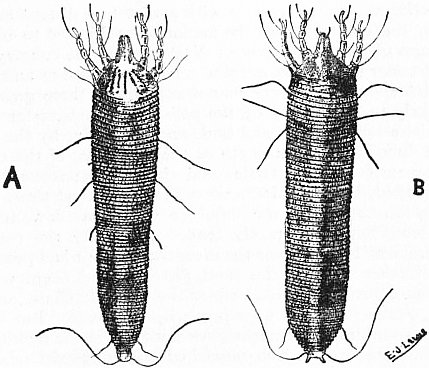
Fig. 6.—Bud Mites (Phytoptidae). A, Currant Bud Mite (Phytoptus ribis); B, Nut Bud Mite (P. avellanae).
For spraying, proper instruments must be used, by means of which the liquid is sent out over the plants in as fine a mist as possible. Numerous pumps and nozzles are now made by which this end is attained. Both horse and hand machines are employed, the former for hops and large orchards, the latter for bush fruit and gardens. In America, where trees in parks as well as orchards and gardens are treated, steam-power is sometimes used. Among the most important sprayers are the Strawson horse sprayers and the smaller Eclair and Notus knapsack pumps, carried on the back (fig. 7). The nozzles for “mistifying” the wash most in use are known as the Vermorel and Riley’s, which can be fitted to any length of tubing, so as to reach any height, and can be turned in any direction. The pumps in the machine keep the insecticide constantly mixed, and at the same time force the wash with great strength through the nozzle, and so to the exterior, as a fine mist; every part of the plant is thus affected.
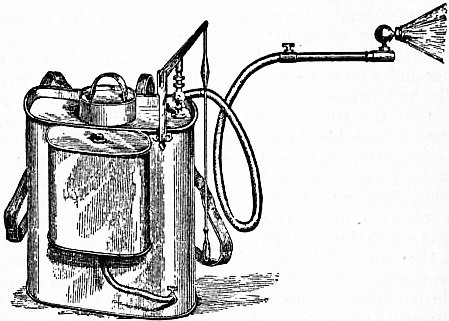
Fig. 7.—Knapsack Sprayer for Liquid Insecticides.
Beneficial Insects have also to be considered in economic entomology. They are of two kinds—(1) those that help to keep down an excess of other insects by acting either as parasites or by being insectivorous in habit; and (2) insects of economic value, such as the bee and silkworm. Amongst the most important friends to the farmer and gardener are the Hymenopterous families of ichneumon flies (Ichneumonidae and Braconidae); the Dipterous families Syrphidae and Tachinidae; the Coleopterous families Coccinellidae and Carabidae; and the Neuropterous Hemerobiidae, or lace-wing flies. Ichneumon flies lay their eggs either in the larvae or ova of other insects, and the parasites destroy their host. In this way the Hessian fly is doubtless kept in check in Europe, and the aphides meet with serious hindrance to their increase. If a number of plant-lice are examined, a few will be found looking like little pearls; these are the dried skins of those that have been killed by Ichneumonidae. The Syrphidae, or hover flies, are almost exclusively aphis-feeders in their larval stage. Tachina flies attack lepidopterous larvae. One of the most notable examples of the use of insect allies is the case of the Australian lady-bird, Vedalia cardinalis, which, in common with all lady-birds, feeds off Aphidae and Coccidae. The Icerya scale (Icerya purchasi) imported into America ruined the orange groves, but its enemy, the Vedalia, was also imported from Australia, and counteracted its abnormal increase with such great results that the crippled orange groves are now once more profitable.
(F. V. T.)
ECONOMICS (from the Gr. οἰκονομική, sc. τέχνη, from οἶκος, a house, and νόμος, rule,—the “art of household management”), the general term, with its synonym “political economy,” for the science or study of wealth (welfare) and its production, applicable either to the individual, the family, the State, or in the widest sense, the world. How far the same considerations apply to all these spheres is one of the problems of economic thought in its widest sense. The term “economy” (q.v.) by itself, which should strictly mean the art of applying money (or wealth) wisely, has commonly come to mean the art of saving money, or spending as little as possible. In practice the study of “political” economy is mainly devoted to the sphere of the State; the welfare of the individual as a member of the State, and of the State in its relation to the world, being internal aspects of the prosperity of the State itself. Economics thus includes the discussion of all the numerous factors which make life profitable, whether to the nation or to the business, or to the individual man. It may be conceived either as an historical science (What principles have in fact paid?), or as an abstract science (What are the true principles which must pay, presupposing an ideal?). Economists at different times have studied both aspects, according to their lights, and influenced by historical conditions of philosophic thought. A text-book on economics necessarily deals, therefore, with the whole subject in a manner which need not here be followed, since separate articles are devoted in this work to the biographies of writers on economics, and also to the principal economic questions involved, under their own headings. In this article we propose therefore to confine ourselves to discussing the character and subject-matter of the science, indicating its relation to other sciences, and explaining the methods by which economists reach their conclusions.
We understand by economics the science which investigates the manner in which nations or other larger or smaller communities, and their individual members, obtain food, clothing, shelter and whatever else is considered desirable or necessary for the maintenance and improvement of the conditions of life. It is thus the study of the life of communities with special reference to one side of their activity. It necessarily involves the scientific examination of the structure and organization of the community or communities in question; their history, their customs, laws and institutions; and the relations between their members, in so far as they affect or are affected by this department of their activity.
At the root of all economic investigation lies the conception of the standard of life of the community. By this expression we do not mean an ideal mode of living, but the habits and requirements of life generally current in a community or grade of society at a given period. The standard of life of the ordinary well-to-do middle class in England, for example, includes not only food, clothing and shelter of a kind different in many respects from that of a similar class in other countries and of other classes in England, but a highly complicated mechanism, both public and private, for ministering to these primary needs, habits of social intercourse, educational and sanitary organization, recreative arrangements and many other elements. Many influences operating for a long period of time on the character and the environment of a class go to determine its standard of life. In a modern industrial community it is possible to express this standard fairly accurately for the purposes of economic investigation in terms of money (q.v.). But it is doubtful whether the most complete investigation would ever enable us to include all the elements of the standard of life in a money estimate. The character, tastes and capacity for management of different individuals and groups differ so widely that equal incomes do not necessarily imply identity of standard. In the investigation of past times, the incommensurate elements of well-being are so numerous that merely money estimates are frequently misleading. The conception of the standard of life involves also some estimate of the efforts and sacrifices people are prepared to make to obtain it; of their ideals and character; of the relative strength of the different motives which usually determine their conduct. But no carefully devised calculus can take the place of insight, observation and experience. The economist should be a man of wide sympathies and practical sagacity, in close touch with men of different grades, and, if possible, experienced in affairs.
It is evident that no permanent classification is possible of what is or is not of economic significance. No general rules, applicable to all times, can be laid down as to what phenomena must be examined or what may be neglected Character of subject-matter. in economic inquiry. The different departments of human activity are organically connected, and all facts relating to the life of a community have a near or remote economic significance. For short historical periods, indeed, many phenomena are so remotely connected with the ordinary business of life that we may ignore them. But at any moment special causes may bring into the field of economic inquiry whole departments of life which have hitherto been legitimately ignored. In times past, biblical exegesis, religious ideals, and ecclesiastical organization, the purely political aims of statesmen, chance combinations of party politics and the intrigues of diplomatists, class prejudice, social conventions, apparently sudden changes of economic policy, capricious changes of fashion—all these causes and many others have exerted a direct and immediate influence on the economic life of the community. In our own day we have had many illustrations of the manner in which special circumstances may at once bring an almost unnoticed series of scientific investigations into direct and vital relation with the business world. The economist must, therefore, not only be prepared to take account of the physical features of the world, the general structure and organization of the industry and commerce of different states, the character of their administration and other important causes of economic change. He must be in touch with the actual life of the community he is studying, and cultivate “that openness and alertness of the mind, that sensitiveness of the judgment, which can rapidly grasp the significance of at first sight unrelated discoveries or events.”
Some people are of opinion that the factors to be taken account of in economic investigation are so numerous that progress on these lines is impossible. It would certainly be impossible if we had to begin de novo to construct the whole fabric of economic science. But, as we shall see, it is no more necessary to do this in the world of science than it is in the world of business or politics. There is in existence a vast store of accumulated knowledge, and few, if any, departments of economics have been left quite unilluminated by the researches of former generations. Progress is the result of adaptation rather than reconstruction. It must be remembered also that economic work in modern times is carried on by consciously or unconsciously associated effort, and although it must always require high qualities of judgment, capacity and energy, many of the difficulties which at first sight appear so insuperable give way when they are attacked. In some ways also the study of highly developed organizations like the modern industrial state is simpler than that of earlier forms of society.
In the earliest times for which we have abundant material the economic life of England had already reached in certain directions a high degree of complexity. Even in the rural districts, manorial records reveal the existence of a great variety of classes and groups of persons engaged in the performance of economic functions. The lord of the manor with his officials and retainers, the peasantry bound to him by ties of personal dependence and mutual rights and obligations, constituted a little world, in which we can watch the play of motives and passions not so dissimilar as we are sometimes led to believe Ancient and modern conditions in England. from those of the great modern world. In many a country district the gradations of social rank were more continuous, the opportunities of intercourse more frequent, and the capacity for organization greater than in modern times. The manorial accounts were kept with precision and detail, and we are told that a skilled official could estimate to the utmost farthing the value of the services due from the villein to his lord. The manor was indeed self-sufficient and independent in the sense that it could furnish everything required by the majority of the inhabitants, and that over the greater part of rural England production was not carried on with a view to a distant market. But in the earliest times the manor was subjected to external influences of great importance. Vast areas of the country were in fact under the single control of a territorial lord or an ecclesiastical foundation. Every manor composing these great fiefs was likely to be affected by the policy or the character of the administration of the feudal lord, and he, again, by the policy or the difficulties, the strength or the weakness, of the central government. Foreign trade and foreign intercourse were undeveloped, but their influence was in historical times never entirely absent, while the influence of Roman law and the Christian Church constantly tended to modify the manorial organization. In the towns the division of labour had proceeded much further than in the rural districts, and there were in existence organized bodies, such as the Gild Merchant and the crafts, whose functions were primarily economic. But one of the most striking characteristics of town life in the middle ages was the manner in which municipal and industrial privileges and responsibilities were interwoven. In modern times the artisan, however well trained, efficient and painstaking he may be, does not, in virtue of these qualities, enjoy any municipal or political privileges. By means of his trade union, co-operative society or club he may gain some experience in the management of men and business, and in so far as the want of a sufficient income does not constitute an insuperable difficulty, he may share in the public life of the country. But in his character as artisan he enjoys no municipal or political privileges. In the middle ages this differentiation of the industrial, municipal and political life had not taken place, and in order to understand the working of at first sight purely economic regulations it is necessary to make a close study of the functions of local government. But this, after all, does not carry us very far. From the very nature of the records in which we study the town life of the middle ages, it follows that we obtain from them only a one-sided view. No one knows what proportion of the industrial population was included in the organized gilds, or how complete was the control exercised by these bodies over their members. Elaborate regulations were in force, but no one knows how elastic they were in practice. Medieval Englishmen were particularly apt to put their aspirations into a legal form, and then rest satisfied with their achievement. The number of regulations is scarcely to be regarded as a test of their administrative success. Further, as the country became more consolidated and the central government extended its authority over economic affairs, new regulations came into force, new organs of government appeared, which were sometimes in conflict, sometimes in harmony, with the existing system, and it becomes for a time far more difficult to obtain a clear view of the actual working of economic institutions. Thus the study of the economic life of the middle ages is one of the most complicated subjects which can engage the attention of man. It is impossible to carry the process of isolation very far. The different threads of social activity are so closely interwoven that we cannot follow any one for very long without forming wrong impressions, and it becomes necessary to turn back and study others which seemed at first sight unrelated to the subject of our investigations. Under an apparently uniform and stable system of social regulation there was much variation and movement, the significance of which it is impossible to estimate. Materials for forming such an estimate no doubt exist, but before doing so we have to study in infinite detail a vast number of separate manors, municipalities or other separate economic areas. This involves great industry on the part of many scientific workers. Meanwhile we can illustrate the economic life of the middle ages, describe its main features, indicate the more important measures of public policy and draw attention to some of the main lines of development.
It is only as we approach more modern times that the conditions of economic study are realized and economic science, as we understand it, becomes possible. Those conditions are: (i.) the life of the state or other community Conditions of economic science. or communities we are studying must be so differentiated that we can isolate those functions which are wholly or predominantly economic. The “separation of employments” is not only a condition of economic efficiency; it was necessary before we could have an economic science. (ii.) We must be in a position so far to understand and estimate the character and motives of different classes and groups in these communities that we can rightly interpret their action. This condition cannot be realized without great difficulty, for “economic motives” are very different in different periods, nations and classes, and even for short periods of time in the same country are modified by the influence of other motives of an entirely different order. In studying the economic history of the 18th century, for example, it is not enough to assume with Defoe that “gain is the design of merchandise.” We have to be saturated, as it were, with 18th-century influences, so that we can realize the conditions in which industry and trade were carried on, before we can rightly explain the course of development. In our own day labour disputes, to take another example, can scarcely ever be resolved into a question of merely pecuniary gain or loss. The significance of the amount of money involved varies greatly for different trades, and can only be understood by reference to the character and habits of the people concerned. But questions of sentiment, shop-feeling and trade customs invariably play an important part. (iii.) Economics can never lead to anything but hypothetical results unless we not only realize that we must “take account of” other than the purely economic factors, but also give due weight and significance to these factors. No explanation of the industrial situation in Germany, for example, would be intelligible or satisfactory even from the economic point of view which ignored the significance of the political conditions which Germans have to deal with. So, again, it is impossible to make a useful comparative estimate of the advantages and disadvantages of the transport systems of England, the United States and Germany, unless we keep constantly in view the very different geographical, military and political conditions which these systems have to satisfy. (iv.) Sufficient information must be available to enable us to test the validity of our hypotheses and conclusions. Whatever “method” of economic investigation we employ, we must at every stage see how far our reasoning is borne out by the actual experience of life. This obvious condition of scientific inquiry is very far from being completely realized even at the present time. It implies the existence of a well-trained class engaged in the work of collecting information, and much organization both by the state and private bodies. These four conditions can be reduced to two. The community we are studying must have reached such a stage of development that its economic functions and those immediately cognate to them form a well-defined group, and adequate means must be available so that we can, as it were, watch the performance of these functions and test our hypotheses and conclusions by observation and experience.
It is easy to understand, therefore, why we trace the beginnings of economics, so far as England is concerned, in the 16th century, and why the application of strict scientific tests in this subject of human study has become possible only in comparatively recent times. Medieval economics was little more than a casuistical system of elaborate and somewhat artificial rules of conduct. From the close of the middle ages until the middle of the 18th century thousands of pamphlets and other works on economic questions were published, but the vast majority of the writers have little or no scientific importance. Their works frequently contain information given nowhere else, and throw much light on the state of opinion in the age in which they wrote. It is also possible to find in them many anticipations of the views of the economists of later times; but such statements were as a rule generated merely by the heat of controversy on some measure or event of practical importance, and when the controversy died down were seldom regarded or incorporated in a scientific system. Trade bias, personal impressions and guesswork took the place of scientific method. This was inevitable in the absence of trustworthy information on an adequate scale, and from the immediately practical aims of the writers. But from the end of the 17th century economics has been definitely recognized as a subject of scientific study.
In modern times the conditions which have made economic science possible have also made it necessary. While it is impossible to give a strictly economic interpretation of the earlier history of nations, economic interests Necessity of economic science. so govern the life and determine the policy of modern states that other forces, like those of religion and politics, seem to play only a subsidiary part, modifying here and there the view which is taken of particular questions, but not changing in any important degree the general course of their development. This may be, in the historical sense, merely a passing phase of human progress, due to the rapid extension of the industrial revolution to all the civilized and many of the uncivilized nations of the world, bringing in its train the consolidation of large areas, a similarity of conditions within them, and amongst peoples and governments a great increase in the strength of economic motives. When the world has settled down to the new conditions, if it ever does so, we may be confronted with problems similar to those which our forefathers had to solve. But, for the time, if we know the economic interests of nations, classes and individuals, we can tell with more accuracy than ever before how in the long run they will act. Public policy therefore requires the closest possible study of the economic forces which are moulding the destinies of the great nations of the world. In most civilized countries except England this is recognized, and adequate provision is made for the study of economic science. But the subject is not only of immediate concern to the state in its corporate and public capacity. The neglect of it in the domain of private business can now only lead to disastrous results. To quote from a useful work (National Education: a Symposium, 1901), “the commercial supremacy of England was due to a variety of causes, of which superior intelligence, in the ordinary business sense, was not the most important. Her insular position, continuity of political development and freedom from domestic broils played an important part in bringing about a steady and continuous growth of industry and manufactures for several generations before the modern era. The great wars of the 18th and the beginning of the 19th century, which arrested the growth of continental nations, gave England the control of the markets of the world. When peace was restored, England enjoyed something in the nature of a monopoly. The competition of France ceased for a time to be an important factor. What is now the German empire was a mere congeries of small states, waging perpetual tariff wars upon each other. In the old Prussian provinces alone there were fifty-three different customs frontiers, and German manufactures could not develop until the growth of the Zollverein brought with it commercial consolidation, internal freedom and greater homogeneity of economic conditions. The industries of the United States were in their infancy. Thus the productive power of England was unrivalled, and her manufactures and business men, under a régime rapidly approximating to complete freedom of trade, could reap the full advantages to be derived from the possession of great national resources and production by machinery. Commercial supremacy required not so much highly trained intelligence amongst manufacturers and merchants as keen business instinct and a certain rude energy. In the last generation all that has changed, and the change is of a permanent character. The struggle of the future must inevitably be between a number of great nations, more or less equally well equipped, carrying on production by the same general methods, each one trying to strengthen its industrial and commercial position by the adoption of the most highly developed machinery, and all the methods suggested by scientific research, policy or experience. Under these conditions, it is no longer possible for the individual merchant, or for small groups of merchants, to acquaint themselves, by personal experience alone, with more than a fractional part of the causes which affect the business in which they are engaged. The spread of the modern industrial system has brought with it the modern state, with its millions of consumers, its vast area, its innumerable activities, its complicated code of industrial and commercial law. At the same time, the revolution in the means of transport and communication has destroyed, or is tending to destroy, local markets, and closely interwoven all the business of the world. Events in the most distant countries, industrial and commercial movements at first sight unrelated to the concerns of the individual merchant, now exert a direct and immediate influence upon his interests. The technical training of the factory or the office, the experience of business, the discharge of practical duties, necessary as they are, do not infallibly open the mind to the large issues of the modern business world, and can never confer the detailed acquaintance with facts and principles which lie outside the daily routine of the individual, but are none the less of vital importance.” Economics, therefore, under modern conditions, is not only a subject which may usefully occupy the attention of a leisured class of scientific men. It should form part of the training of educated men of all classes, on grounds of public policy and administrative and business efficiency.
The relations between economics and other sciences cannot be stated in a very general form. They vary for different periods, and are not the same for all branches of economics. There is no subject of human study which Relations between economics and other sciences. may not be at some time or other of economic significance, and anything which affects the character, the ideals or the environment of man may make it necessary to modify our assumptions and our reasoning with regard to his conduct in economic affairs. But if the economist, while studying one side of man’s activities, must also cultivate all other branches of human learning, it is obvious that no substantial progress can be made. The economist frankly assumes the reality of the existing world and takes men as they are, or as they have been if he is studying past times. His assumptions are based upon ordinary observation and experience, and are usually accurate in proportion to his practical shrewdness and sagacity, so that he is not interested in the speculative flights of philosophy, except in so far as they influence or have influenced conduct. In times past, and to a less extent in our own day, philosophical conceptions have formed the basis of great systems of politics and economics. The historical relations between philosophy and economics are of great importance in tracing the development of the latter, and have done much to determine its present form. But the modern conception of society or the state owes more to biology than philosophy, and actual research has destroyed more frequently than it has justified the assumptions of the older philosophical school. Experimental psychology may in course of time have an important bearing on economics, but the older science cannot be said to be of much significance except in its historical aspects. Ethics is in much the same position. That is, it is possible to conceive of an ethical science which would extend considerably our knowledge of economic affairs, but no important new principle or original discovery, relevant to economic investigation, has come from that quarter in recent years, and at present ethics has more to learn from economics than the latter has from ethics. It is in the adaptation of biological conceptions and methods, in the positive contributions of jurisprudence, law and history, in the rigorous application, where possible, of quantitative tests, that the explanation of the present position of economics is to be found. Mathematics has influenced the form and the terminology of the science, and has sometimes been useful in analysis; but mathematical methods of reasoning, in their application to economics, while possessing a certain fascination, are of very doubtful utility.
There is no method of investigation which is peculiarly economic or of which economics has the monopoly. In every age economists have applied the methods ordinarily in use amongst scientific men. There would probably Method of economic investigation. have been no controversy at all on this subject but for the fact that economics was elaborated into systematic form, and made the basis of practical measures of the greatest importance, long before the remarkable development in the 19th century of historical research, experimental science and biology. The application of the a priori method in economics was an accident, due to its association with other subjects and the general backwardness of other sciences rather than any exceptional and peculiar character in the subject-matter of the science itself. The methods applied to economics in the 18th and the early part of the 19th century were no more invented with a special view to that subject than the principles of early railway legislation, in the domain of practical policy, were devised with a special view to what was then a new means of transport. As a matter of fact, discussions of method and the criticism of hypotheses and assumptions are very rarely found in early economic works. It is only by reference to the prevailing ideas in philosophy and politics that we can discover what was in the minds of their authors. The growth of a science is much like the growth of a constitution. It proceeds by adaptation and precedent. The scientific and historical movement of the 19th century was revolutionary in character. When it began to affect economics, many people were afraid that the whole fabric of science would be destroyed and the practical gains it had achieved, jeopardized. These fears were justified, in so far as those who entertained them shut their eyes to everything new and assumed an attitude of no compromise. Where the newer methods were assimilated, the position of economics was strengthened and its practical utility increased. General discussion of method, however, is rarely profitable. In all branches of economics, even in what is called the pure theory, there is an implied reference to certain historical or existing conditions of a more or less definite character; to the established order of an organized state or other community, at a stage of development which in its main features can be recognized. In all economic investigation assumptions must be made, but we must see that they are legitimate in view of the actual life and character of the community or communities which are the subject of investigation. In common with other sciences, economics makes use of “abstractions”; but if for some problems we employ symbolic processes of reasoning, we must keep clearly in view the limits of their significance, and neither endow the symbols with attributes they can never possess, nor lose sight of the realities behind them. Every hypothesis must be tested by an appeal to the facts of life, and modified or abandoned if it will not bear examination, unless we are convinced on genuine evidence that it may for a time be employed as a useful approximation, without prejudice to the later stages of the investigation we are conducting.
We shall best illustrate the character and method of economic reasoning by examples, and for that purpose let us take first of all a purely historical problem, namely, the effect on the wage-earners of the wages clauses of the Statute of An illustration of economic method. Apprenticeship (1563). It is at once obvious that we are dealing not with an abstract scheme of regulation in a hypothetical world, but with an act of parliament nominally in force for two hundred and fifty years, and applicable to a great variety of trades whose organization and history can be ascertained. The conclusions we reach may or may not modify any opinions we have formed as to the manner in which wages are determined under modern conditions. For the time being such opinions are irrelevant to the question we are investigating, and the less they are in our minds the better. There is no reason why we should apply to this particular act a different method of inquiry from that we should apply to any other of the numerous acts, of more or less economic importance, passed in the same session of parliament. The first step is to see whether there is a prima facie case for inquiry, for many acts of parliament have been passed which have never come into operation at all, or have been administered only for a short time on too limited a scale to have important or lasting results. The justices were authorized to fix wages at the Easter quarter sessions. Did they exercise their powers? To answer this question we must collect the wages assessments sanctioned by the magistrates. This is a perfectly simple and straightforward operation, involving nothing more than familiarity with records and industry in going through them. Without having recourse to any elaborate process of economic reasoning, by confining our attention to one simple question, namely, what happened, we can establish conclusions of the greatest interest to economic historians and, further, define the problem we have to investigate. We can show, for example: (1) that the Statute of Apprenticeship did not stand alone; it was one of a long series of similar measures, beginning more than two centuries before, which in their turn join on to the municipal and gild regulations of the middle ages; one of an important group of statutes, more or less closely interwoven throughout their history, administered by local authorities whose functions had grown largely in connexion with this legislation and the gradual differentiation of the trades and callings to which it related. (2) That wages were regulated with much greater frequency during the reigns of Elizabeth, James I. and Charles I. than at any later period. (3) That they were regulated in some counties and not in others. (4) That in the counties and towns where they were regulated the action of the magistrates was in general spasmodic, and rarely continuous for a long series of years. (5) That the magistrates used their powers sometimes to raise wages, sometimes to force them down. (6) That the local variations of wages and prices were what we should call excessive, so that the standard of comfort in one district was very different from that of others. (7) That the wages assessments group themselves round certain short periods, coincident in many instances with high prices, increase of poverty, and other causes of exceptional action. (8) That what we may call, with the above limitations, the effective period of the act terminates with the outbreak of the Civil War. (9) That subsequent to that period organic changes in the industries affected, coupled with the incompetence of parliament to adapt the old legislation to new conditions, and the growing acceptance of the doctrine of laissez faire, brought about a general disuse of the statute, though isolated attempts to enforce it were made and new acts applicable to certain trades were passed in the 18th century. (10) For more than one hundred years before the repeal of the act, trade unions and other forms of voluntary association amongst wage-earners, combinations amongst employers, collective agreements, customary regulations, were established in many of the important trades of the country. But these conclusions, after all, suggest more difficulties than they remove, for they show that our inquiry, instead of presenting certain well-marked features which can be readily dealt with, has to be split up into a number of highly specialized studies: the investigation of rates of wages, prices and the standard of comfort in different localities, bye-industries, regularity of employment, the organization of particular trades, the economic functions of local authorities, apprenticeship and a host of other subjects. Moreover, all these subjects hang together, so that it seems impossible to come to a decision about one of them without knowing all about the others.
It is a comparatively simple thing to state the question to which we want an answer, but extremely difficult to define the exact nature of the evidence which will constitute a good answer; easy enough to say we must try hypothesis after hypothesis, and test each one by an appeal to the facts, but a man may easily spend his life in this sort of thing and still leave to his descendants nothing more than a legacy of rejected hypotheses. Every volume of records we look through contains a mass of detailed information on the economic life of England in the period we are studying. How much of it is relevant to the subject of inquiry? What is to be the principle of selection? How shall we determine the relative weight and importance of different kinds of relevant evidence? As in modern problems, so in those of past times, a man requires for success qualities quite distinct from those conferred by merely academic training and the use of scientific methods. A correct sense of proportion and the faculty of seizing upon the dominant factors in an historical problem are the result partly of the possession of certain natural gifts in which many individuals and some nations are conspicuously wanting, partly of general knowledge of the working of the economic and political institutions of the period we are studying, partly of what takes the place of practical experience in relation to modern problems, namely, detailed acquaintance with different kinds of original sources and the historical imagination by which we can realize the life and the ideals of past generations. These qualities are required all the more because, in order to make any further progress with such an inquiry as we have suggested, we have deliberately to make use of abstraction as an instrument of investigation.
Let us see how this will work out. Suppose we have selected one of the numerous subsidiary problems suggested by the general inquiry, and obtained such full and complete information about one particular industry that we The plan of a general theory. can tabulate the wages of the workers for a long series of years. We may do the same for other industries, some of them coming under the Statute of Apprenticeship, others not. If all the industries belong to one economic area over which, so far as we can tell from general statistics of wages and prices, and other information, fairly homogeneous conditions prevailed, we may be able to reach some useful conclusions as to the operation of the act. But it would be absurd to suppose that we could reach those conclusions by simple reference to the trades themselves. We cannot assume that the fluctuations in wages were due to the action or inaction of magistrates without the most careful examination of the other influences affecting the trades. In economic affairs the argument post hoc propter hoc never leads to the whole truth, and is frequently quite misleading. We cannot suppose that the policy of the Merchant Adventurers’ Company had nothing to do with the woollen industry; that the export trade in woollen cloth was quite independent of the foreign exchanges and international trade relations in those times; that the effect on wages of the state of the currency, the influx of new silver, the character of the harvests, and many other influences can be conveniently ignored. In studying, therefore, such an apparently simple question as the effect of an act of parliament on wages in a small group of trades we want a general theory which we can use as a kind of index of the factors we have to consider.
Assuming that we have in our minds this safeguard against loose thinking and neglect of important factors, the investigation of the special problems arising out of the general inquiry resolves itself into a careful definition of each Difficulties due to want of evidence. problem we wish to deal with, and the collection, tabulation and interpretation of the evidence. In most cases the interpretation of the facts is far from obvious, and we have to try several hypotheses before we reach one which will bear the strain of a critical examination in the light of further evidence. But at this stage in historical investigation it is generally the want of evidence of a sufficiently complete and continuous character, rather than difficulties of method, which forces us to leave the problem unsolved. It is, for instance, practically impossible to obtain reliable evidence as to the regularity of employment in any industry in the 17th century, and the best approximations and devices we can invent are very poor substitutes for what we really want. For this reason guesswork must continue to play an important part in economic history. But every genuine attempt to overcome its difficulties brings us into closer touch with the period we are examining; and though we may not be able to throw our conclusions into the form of large generalizations, we shall get to know something of the operation of the forces which determined the economic future of England; understand more clearly than our forefathers did, for we have more information than they could command, and a fuller appreciation of the issues, the broad features of English development, and be in a position to judge fairly well of the measures they adopted in their time. By comparing England with other countries we may be able in the distant future to reach conclusions of some generality as to the laws of growth, maturity and decay of industrial nations. But like the early statisticians of the 17th century, economic historians are the “beginners of an art not yet polished, which time may bring to more perfection.”
When we come to exclusively modern questions, there is no reason or necessity for a fundamental change of method. We cannot suppose that there occurred, at or about the commencement of the 19th century, a breach of The investigation of modern questions. historical continuity of such a character that institutions, customs, laws and social conventions were suddenly swept away, the bonds of society loosened, and the state and people of England dissolved into an aggregate of competing individuals. The adoption of machinery gradually revolutionized the methods of production; but in the first instance only certain industries were affected, and those not at the same time or in the same degree; old laws grown obsolete were repealed, but other laws affecting wage-earners and employers took their place, more complicated and elaborate than the Elizabethan code. Trade unions, so far from disappearing, were legalized, gathered strength from the changes in industrial organization, and nowhere became so powerful as in the most progressive industries; while other forms of combination appeared, incomparably stronger, for good or evil, than those of earlier times. But while we recognize these facts, we must not suppose that we have to study the action of men as though they were all enrolled in organized associations, or covered by stringent laws which were always obeyed. There has never been in the history of English industry such licence as we find in certain directions in the earlier part of the 19th century.
It is not in the decay of combination and monopoly or in the growth of competition that we must look for the distinctive characteristics of modern problems. A 17th-century monopoly was a very weak and ineffective instrument compared The distinctive features of modern problems. with a modern syndicate; the Statute of Apprenticeship was certainly not so widely enforced as the “common rules” of trade unions; and many of the regulations of past times, which look so complicated to modern eyes, were conditions of free enterprise rather than restraints upon it. It is due to the influence of the laisser faire doctrine that we regard law and regulation as a restraint on liberty. As a maxim for guidance in public affairs, laisser faire was genuinely relevant at the end of the 18th and the beginning of the 19th century, when the Statute Book was cumbered with vexatious and obsolete laws. As an explanation of what has taken place in later years, or of the actual economic life of the present day, it is ludicrously inadequate. Competition, in the sense in which the word is still used in many economic works, is merely a special case of the struggle for survival, and, from its limitation, does not go far towards explaining the actual working of modern institutions. To buy in the cheapest market and sell in the dearest; to secure cheapness by lowering the expenses of production; to adopt the less expensive rather than the more expensive method of obtaining a given result—these and other maxims are as old as human society. Competition, in the Darwinian sense, is characteristic not only of modern industrial states, but of all living organisms; and in the narrower sense of the “higgling of the market” is found on the Stock Exchange, in the markets of old towns, in medieval fairs and Oriental bazaars. In modern countries it takes myriads of forms, from the sweating of parasitic trades to the organization of scientific research. Economic motives, again, are as varied as the forms of competition, and their development is coeval with that of human society. They have to be interpreted in every age in relation to the state of society, the other motives or ideals with which they are associated, the kind of action they inspire, and the means through which they operate. Apparently the same economic motives have led in the same age and in the same nation to monopoly and individual enterprise, protection and free trade, law and anarchy. In our own time they have inspired both the formation of trade combinations and attempts to break them up, hostility to all forms of state interference and a belief in collectivism.
The conditions which are peculiar to the modern world are the large numbers we have to deal with, the vast and fairly homogeneous areas in which justice is administered and property secured, and the enormously increased facilities for transport and communication. These conditions are of course not independent of each other, and they have brought in their train many consequences, some good and some bad. But they supply the bases for that general theory which, as we have seen, is indispensable in economic investigation. From the standpoint of general theory economic movements assume an impersonal character and economic forces operate like the forces of nature. Although economic motives have become more complex, they have just as much and no more to do with general economic reasoning and analysis than the causes of death with the normal expectation of life, or domestic ideals with the birth-rate. So far as we have anything to do with psychology at all, it is the psychology of crowds and not of individuals which we have to consider. If we study the economy of a village, the idiosyncrasies of every individual in it are of importance. If the village is replaced by a large area, inhabited by millions, with modern facilities of communication, it is a matter of observation and experience that for the purposes of general reasoning the idiosyncrasies of individuals may be neglected. Whether such large numbers have the character of the “economic man” of the early economists matters very little. All the assumptions we require are furnished by observation of people in the mass and the larger generalizations of statistics. Thus we can construct a kind of envelope of theory, which, by careful testing as we proceed, can be made to indicate in a general manner the reactions of one part of the activities of the economic world upon the others, and the interdependence of the several parts. From its very nature this general theory can never correspond strictly to the actual life and movement of any given state. It is useful and necessary, and plays somewhat the same part in economic investigation as ton-mile statistics do in the administration of a railway. To express in any language or to illustrate by any images, from a purely objective standpoint, the infinitely complicated movements of the actual world, is a task far beyond human capacity.
With the aid of this general theory the methods we have sketched in relation to historical problems apply with greater force to the special problems of modern times, and are rewarded with results more accurate, more fruitful, Application to modern problems. more relevant to difficulties which all civilized nations have to face, than those of historical research. To many minds the interest and usefulness of economics depend entirely on the application of these methods, for it is the actual working of economic institutions about which the statesman, the publicist, the business man and the artisan wish to know. Under the conditions we have described, many of the most interesting problems of our own time, when they are once defined, resolve themselves into statistical inquiries. But in most cases such an inquiry cannot be successfully carried out by a mere statistician. Definite economic problems can very rarely be dealt with by merely quantitative methods. In the tabulation and interpretation of statistical evidence, as in its collection, it is scarcely possible to overrate the importance of wide knowledge and experience. There is another very important instrument of investigation which can be used in our own time, but cannot be employed in historical research. Historical documents, however detailed, rarely show all the factors we have to deal with or fully explain a given situation. No sane person would suppose that the minutes of a modern legislative body explain the steps by which legislation has been passed, or the issues really involved. The ostensible cause of a modern labour dispute is frequently not the real or the most important cause. In modern problems we can watch the economic machine actually at work, cross-examine our witnesses, see that delicate interplay of passions and interests which cannot be set down or described in a document, and acquire a certain sense of touch in relation to the questions at issue which manuscripts and records cannot impart. We can therefore substitute sound diagnosis for guesswork more frequently in modern than in historical problems.
What then, it may be asked, becomes of the “old Political Economy”? Of what possible use are the works of the so-called classical writers, except in relation to the history of economics and the practical influence of theory in past times? If we take the mere popular view of what is meant by the “old Political Economy,” that is, that a generation or so ago economics was comprised in a neatly rounded set of general propositions, The “old political economy.” universally accepted, which could be set forth in a text-book and learnt like the multiplication table, it is not incumbent on the present generation to define its attitude at all. In this sense of the words, there was no faith delivered to our fathers which we are under any obligation to guard or even explain. If by the “old Political Economy” we mean the methods and conclusions of certain great writers, who stood head and shoulders above their contemporaries and determined the general character of economic science, we are still under no obligation to define the attitude of the present generation with regard to them. The fact that Adam Smith, with the meagre materials of the 18th century at his disposal, saw his way to important generalizations which later research has established on a firm basis, may enhance greatly the reputation of Adam Smith, but does not strengthen the generalizations. They stand or fall by the strength of the evidence for or against them. In the history of economics or the biography of Ricardo it is of interest to show that he anticipated later writers, or that his analysis bears the test of modern criticism; but no economist is under any obligation to defend Ricardo’s reputation, nor is the fact that a doctrine is included in his works to be taken as a demonstration of its truth. The appeal to authority cannot be permitted in economics any more than in chemistry, physics or astronomy. But the cases stated above suggest more or less false issues. There has been no revolution in economic science, and is not likely to be any. The question we have really to determine is how we can make the best use of the accumulated knowledge of past generations, and to do that we must look more closely into the economic science of the 19th century.
Any one who has taken the trouble to trace the history of one of the modern schools of economists, or of any branch of economic science, knows how difficult it is to say when it began. “Anticipations” of method and doctrine can generally be found by the diligent investigator in the economic literature of his own or a foreign country. So that cross-sections of the stream of economic thought will reveal the existence, at different times, in varying proportions and at different stages of development, of most of the modern “schools.” Again, the classification of an economic bibliography at once shows how varied has been the character of economic investigation, ranging from the most abstract speculation on the one hand to almost technical studies of particular trades on the other. Of the great army of writers who flourished in the first half of the 19th century some were closely identified with the utilitarian school, and the majority were influenced in a greater or less degree by the prevailing ideas of that school. Others, however, were hostile to it. In many works, such as those of a statistical or historical character, there are frequently to be found passages which could have been written in no other period, but are only of the nature of ejaculations and do not affect the argument. In stating the position of economics during this time we cannot ignore all writers, except these who belonged to one group, however eminent that group may have been, simply because they did not represent the dominant ideas of the period, and exercised no immediate and direct influence on the movement of economic thought. We must include the pioneers of the historical school, the economic historians, the socialists, the statisticians, and others whose contributions to economics are now appreciated, and without whose labours the science as we know it now would have been impossible. If we take this broadly historical view of the progress of economics, it is obvious that even in England there was no general agreement, during the 19th century, as to the methods most appropriate to economic investigation.
Suppose, now, we ignore the writers who were inaugurating new methods, investigating special problems or laboriously collecting facts, and concentrate attention on the dominant school, with its long series of writers from Adam Smith to John Stuart Mill. It is the work of these writers which people have in mind when they speak of the “old Political Economy.” There are several quite distinct questions we can ask with regard to them. That they must be studied closely by every one who wishes to follow the history of economics goes without saying. That they must be studied by the economic historian is equally clear, owing to their practical influence and the fact that they furnished the theoretical bases of much of the economic policy of the 19th century. This is true whether their method is good or bad, whether their conclusions are true or false. It is not so easy to determine their relevance and usefulness in relation to distinctively modern problems, or to indicate within what limits their work is of permanent value, and we can only deal with these questions in their more general aspects.
It must be clear to every observer that the economists of the classical period, with the one exception of Adam Smith, will speedily share the fate of nearly all scientific writers. They will be forgotten, and their books will not be read. Adams Smith’s Wealth of Nations, if it has ever been, has long ceased to be a scientific text-book. Whether a modern economist accepts his views or not is of no importance. There is probably not a single chapter in the Wealth of Nations which would be thoroughly endorsed by any living economist. But the reputation of the book and its author is quite independent of considerations of this kind. The Wealth of Nations is one of the great books of the world, many of the sayings of which are likely to be more frequently quoted in the future than they have been in the 19th century. Malthus is already an author whose name is probably more widely known than that of any other economist, but whose works are rarely read, and studied only by a small proportion of the few people who write books on the history of economic theory. Of economic students, many are unaware of the fact that he wrote any other book than the Essay on the Principle of Population, and what is of permanent importance in that work is contained in the generalization which it suggested to Darwin. Moreover, modern economists, while accepting in the main the general tenor of Malthus’s theory of population, would not agree with his statement of it. Like Malthus, Ricardo owes his reputation very largely to the theory associated with his name, though it has long ceased to be stated precisely in the terms he employed. But there are very few people in the world who have made a careful study of his works; and although his theory of rent has a wide and increasing application in economics, it is not comparable in general scientific importance with Malthus’s theory of population. It is already impossible to take J.S. Mill’s Principles of Political Economy as a text-book. Important as it was for thirty or forty years, it will soon be as little read as M’Culloch’s Principles. For the rest of the economists of this period, it is difficult to see how they can escape oblivion. When the generation whose economic training was based upon J.S. Mill has died out, the relevance of the “old Political Economy” is not likely to be a question of any interest to ordinary educated men and women, or even to the great mass of economic students.
The explanation of this decay of interest does not lie upon the surface. It is frequently supposed that the influence of the “old Political Economy” has been gradually undermined by the attacks of the historical school. But great as the achievements of this school have been, it has not developed any scientific machinery which can take the place of theory in economic investigation. If our view is correct that, broadly speaking, the two ways of regarding economic questions are complementary rather than mutually exclusive, there does not seem to be any reason why the growth of the historical school should have been destructive of the “old Political Economy” if it had been well founded. The use of the historical method has, in fact, raised more reputations than it has destroyed, because by keeping carefully in view the conditions in which economic works have been written, it has shown that many theories hastily condemned as unsound by a priori critics had much to be said for them at the time when they were propounded. This observation is true not only of old-world writers like the Mercantilists, but also of Ricardian economics. No one is concerned to prove that the Ricardian economics applies to the manorial system, and it is generally supposed at any rate that the world has been approximating more and more nearly during the last century to the conditions assumed in most of the reasoning of that school. On the principles we have explained, therefore, the Ricardian economics should supply just that body of general theory which is required in the investigation of modern economic problems, and the reputation of at any rate the leading writers should be as great as ever. It would be of immense advantage from a scientific point of view if this could be taken for granted, if for a time the work of the classical economists could be considered final so far as it goes, and for the purposes of investigation regarded as the theoretical counterpart of the modern industrial system. This assumption, however, has been made quite impossible, not by the historical school, but by the criticism and analysis of economists in the direct line of the Ricardian succession.