The Printing of the Books
Reading edition
The stage was set for the production of the Doctrinas. That there were Chinese xylographic models upon which the books could be based is evidenced by the account of Mendoza of the considerable number of Chinese books brought to Manila by Martin de Rada as early as 1575. A more likely model was a bilingual text in Spanish and Chinese which Cobo describes in his letter of July 13, 1589, where speaking of the Jesuits in China he says: [37]
There is no direct evidence to support our belief that it was during the brief period after Castro returned, probably late in 1590, and relieved Cobo of his executive responsibilities, and June 1592 when he left for Japan, that Cobo began intensive plans for the production of bilingual texts. His recorded interest in such books, his influence with the Chinese, his energy and his own linguistic aptitude would naturally have stimulated him to undertake the task. Whether he actually began work on the blocks from which the books were printed, or merely suggested the feasibility of the idea, we do not know, but we feel sure that Juan Cobo was the father of the production of books in the Philippines.
To turn over a manuscript copy of a book to a Chinaman who had already some familiarity with the production of books in China, or who with a given text could carve the blocks according to tradition, was then not a matter of great difficulty. There were Chinese books which showed what the result would be; there were Spanish books, definitely some from Mexico, which provided samples of European characters and format.
Who cut the blocks—that is exactly what Chinaman—we do not know, nor do we know who handled the presswork, but it is logical to assume that the whole process took place under the supervision of the fathers of San Gabriel, Juan Cobo if work had begun before 1592, and certainly Nieva and San Pedro Martyr. One further aide may have been the lay brother, Pedro Rodriguez, who had been sent to San Gabriel with Nieva, and who was a handyman or skilled mechanic, for Aduarte credits him with rebuilding and restoring the hospital.
It is interesting to note that this narrative, which is in substance similar to that about the books of Blancas de San José, nowhere mentions the name of the priest in connection with Vera. It is probable that Juan de Vera was, as Retana believed, the first typographer, and it may be that he also printed the Doctrinas of 1593. It is impossible to say with certainty, but it is not too fanciful to suppose that Juan de Vera tried xylographic printing under the supervision of Nieva and San Pedro Martyr, and after some experimenting achieved typography in the time of Blancas de San José.
The full story of the early typographical products of the Philippines must wait upon another occasion, for the questions posed by the scanty records and the handful of surviving books are extremely knotty. Where did the type come from? Medina suggested it was imported from Macao; Retana believed it to have been cut in the Philippines. Fernández said that the first works of Blancas de San José were printed at Bataan and the two 1610 books have that place of printing, yet in 1604 the Ordinationes issued from Binondo. Remesal wrote that this book was printed by Francisco de Vera, and the book itself bears the name of Juan. Indeed, the history of the early typographers and the output of their presses, as it has so far been written, presents many problems, but they are problems which we feel are outside the scope of this study.
To summarize what we have learned of the earliest printing in the Philippines: we have the possibility, but not a likely one, that an Arte by Juan de Quiñones was printed xylographically in 1581; we know that in the first half of the year 1593 two Doctrinas were printed xylographically—although we have no way of telling which came first—one in Tagalog from the Talavera-Plasencia-Oliver text, and one in Chinese written by Juan Cobo, both edited and printed under the supervision of Domingo de Nieva and Juan de San Pedro Martyr; we surmise that between 1593 and 1602 other works were also printed xylographically, such as the small tracts of Juan de Villanueva and some of the books of Blancas de San José, Nieva and others; and in 1602 was printed by Juan de Vera, in all likelihood from movable type, the book of Our Lady of the Rosary by Blancas de San José. The known facts are not many, and we can only hope that time and further research will discover new ones to make the history of the earliest Philippine imprints more complete and more satisfactory.
Philadelphia, January 20, 1947 Edwin Wolf 2nd.
[41]
The most frequently cited authorities will be referred to as follows:
ADUARTE—Diego Aduarte, Historia de la Provincia del Sancto Rosario de la Orden de Predicadores en Philippinas, Iapon, y China, Manila, 1640.
B. & R.—Emma Helen Blair and James Alexander Robertson, The Philippine Islands 1493–1898, Cleveland, 1903–09.
CANO—Gaspar Cano, Catalogo de los Religiosos de N.P.S. Agustin de la Provincia del Smo. Nombre de Jesus de Filipinas, Manila, 1864.
CHIRINO—Pedro Chirino, Relacion de las Islas Filipinas, Rome, 1604.
COLÍN—Francisco Colín, Labor Evangélica, Ministerios Apostólicos de los Obreros de la Compañia de Jesus, Fundacion, y Progressos de su Provincia en las Islas Filipinas (ed. Pablo Pastells), Barcelona, 1900–02.
HUERTA—Felix de Huerta, Estado Geográfico, Topográfico, Estadístico, Histórico-Religioso, de la Santa y Apostólica Provincia de S. Gregorio Magno ... de N.S.P.S. Francisco, en las Islas Filipinas, Binondo, 1865.
MEDINA—José Toribio Medina, La Imprenta en Manila desde sus Orígenes hasta 1810, Santiago de Chile, 1896.
MEDINA (Juan de)—Juan de Medina, Historia de los Sucesos de la Orden de N. Gran P. S. Agustin de estas Islas Filipinas, Manila, 1893.
P. & G.—Angel Pérez and Cecilio Güemes, Adiciones y Continuacion de “La Imprenta en Manila” de D.J.T. Medina, Manila, 1904.
PÉREZ—Elviro Jorde Pérez, Catálogo Biobibliográfico de los Religiosos Agustinos de la Provincia del Santísimo Nombre de Jesús de las Islas Filipinas, Manila, 1901.
REMESAL—Antonio de Remesal, Historia de la provincia de S. Vincente de Chyapa y Guatemala de la orden de nro glorioso padre Sancto Domingo, Madrid, 1619.
RETANA—Wenceslao Emilio Retana y Gamboa, La Imprenta en Filipinas Adiciones y Observaciones á La Imprenta en Manila de D.J.T. Medina, Madrid, 1897.
SAN AGUSTIN—Gaspar de San Agustin, Conquistas de las Islas Philipinas, Madrid, 1698.
SAN ANTONIO—Juan Francisco de San Antonio, Chronicas de la Apostolica Provincia de S. Gregorio de Religiosos Descalzos de N.S.P. Francisco en las Islas Philipinas, Manila, 1738–44.
SANTA INÉS—Francisco de Santa Inés, Crónica de la Provincia de San Gregorio Magno de Religiosos descalzos de N.P. San Francisco en islas Filipinas, China, Japón, etc. escrita ... en 1676, Manila, 1892.
SANTIAGO VELA—Gregorio de Santiago Vela, Ensayo de una Biblioteca Ibero-Americana de la Orden de San Agustin, Madrid, 1913–31.
SCHILLING—Dorotheus Schilling, Vorgeschichte des Typendrucks auf den Philippen, Gutenberg-Jahrbuch, 1937, pp. 202–16.
TORRES—Pedro Torres y Lanza, Catálogo de los documentos relativos á las Islas Filipinas existentes en el Archivo de Indias de Seville, Barcelona, 1925–34.
VIÑAZA—Cipriano Muñoz y Manzano, Conde de la Viñaza, Escritos de los Portugueses y Castellanos referentes á las lenguas de China y el Japón, Lisbon, 1892.
This facsimile of the Doctrina Christiana printed at Manila in 1593 was printed by Edward Stern & Company, Inc., Philadelphia, in an edition of twenty-five hundred copies, and published by the Library of Congress, February 1947. The type used on the title page and for headings is Forum, and that in the text Italian Old Style. [1]
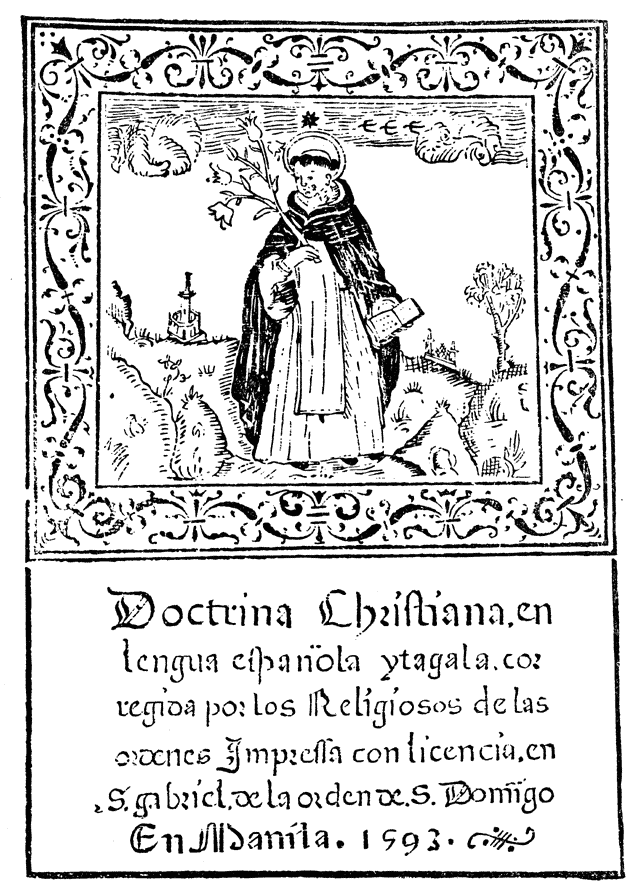
Doctrina Christiana, en lengua española ytagala, cor regida por los Religiosos de las ordenes Impressa con licencia, en S. gabriel. de la orden de. S. Domigo En Manila. 1593 [2]
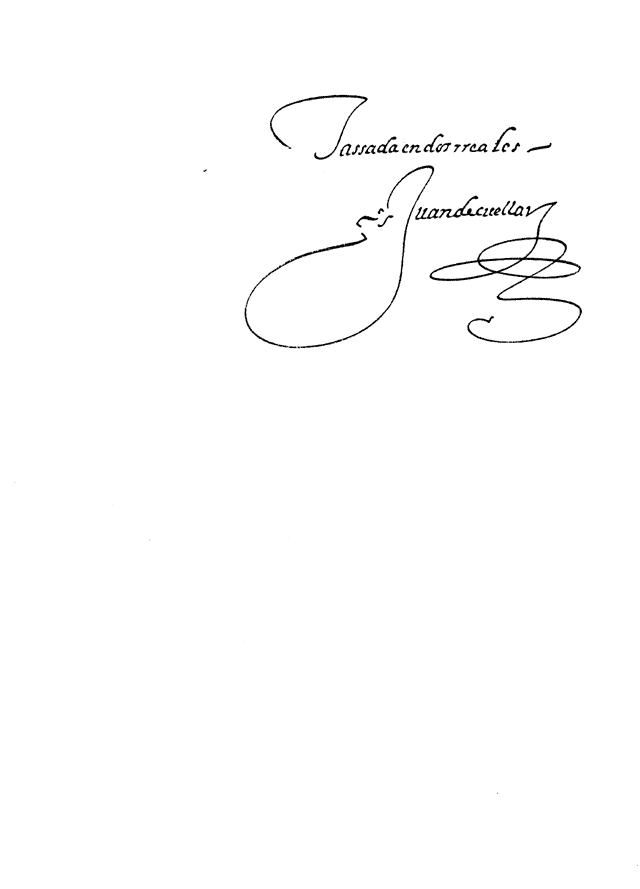
Tassada endos rreales Juandecuellaz [3]
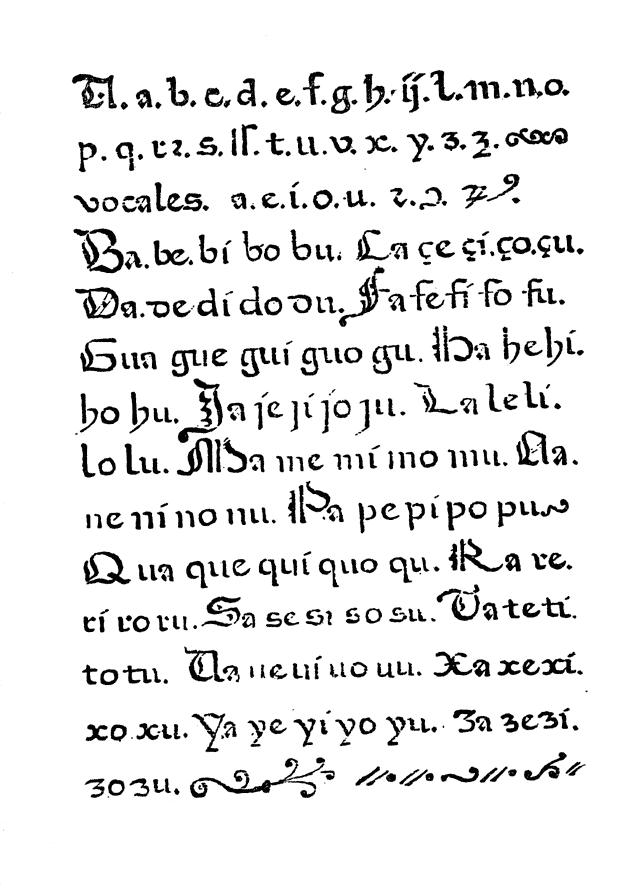
A. a. b. c. d. e. f. g. h. ij. l. m. n. o. p. q. rr. s. s. t. u. v. x. y. z. z. vocales. a. e. i. o. u. Ba. be. bi bo bu. Ça çe çi. ço. çu. Da. de di do du. Fa fe fi fo fu. Gua gue gui guo gu. Ha he hi. ho hu. Ja je ji jo ju. La le li. lo lu. Ma me mi mo mu. Na. ne ni no nu. Pa pe pi po pu. Qua que qui quo qu. Ra re. ri ro ru. Sa se si so su. Ta te ti. to tu. Ua ue ui uo uu. Xa xe xi. xo xu. Ya ye yi yo yu. Za ze zi. zo zu. [4]
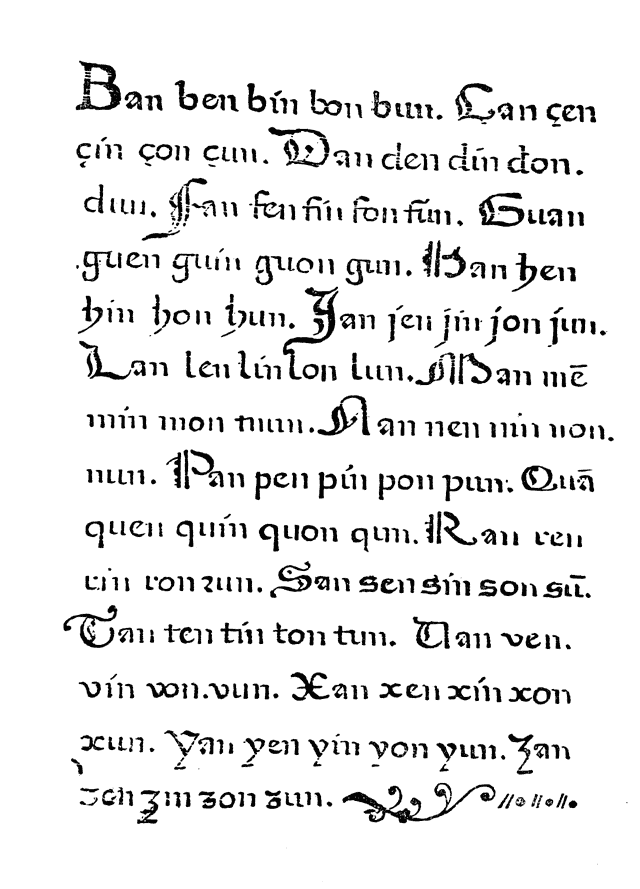
Ban ben bin bon bun. Çan çen çin çon çun. Dan den din don. dun. Fan fen fin fon fun. Guan guen guin guon gun. Han hen hin hon hun. Jan jen jin jon jun. Lan len lin lon lun. Man mẽ min mon mun. Nan nen nin non. nun. Pan pen pin pon pun. Quã quen quin quon qun. Ran ren rin ron run. San sen sin son sũ. Tan ten tin ton tun. Uan uen. uin uon. uun. Xan xen xin xon xun. Yan yen yin yon yun. Zan zen zin zon zun. [5]
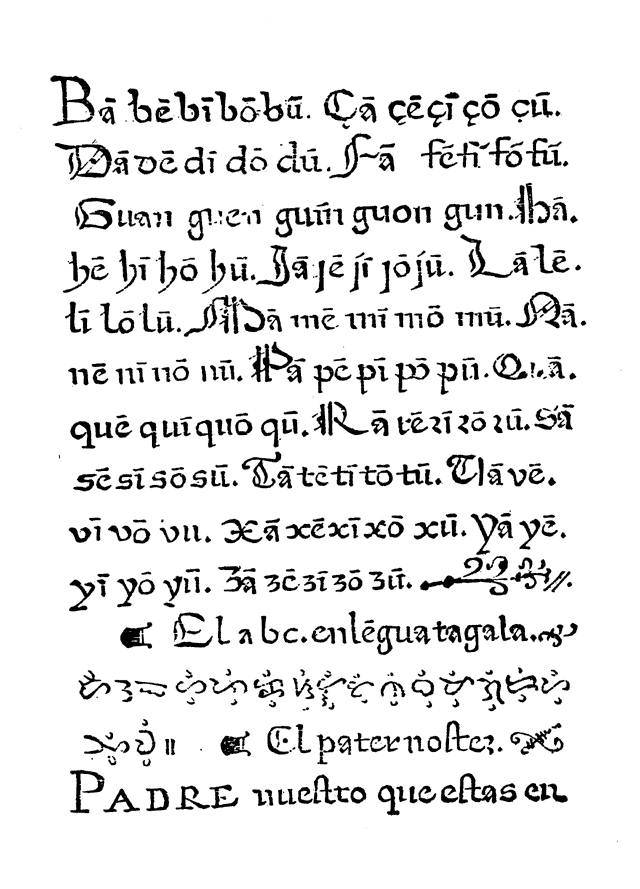
Bã bẽ bĩ bõ bũ. Çã çẽ çĩ çõ çũ. Dã dẽ dĩ dõ dũ. Fã fẽ fĩ fõ fũ. Guan guen guin guon gun. Hã. hẽ hĩ hõ hũ. Jã jẽ jĩ jõ jũ. Lã lẽ. lĩ lõ lũ. Mã mẽ mĩ mõ mũ. Nã. nẽ nĩ nõ nũ. Pã pẽ pĩ põ pũ. Quã. quẽ quĩ quõ qũ. Rã rẽ rĩ rõ rũ. Sã. sẽ sĩ sõ sũ. Xã xẽ xĩ xõ xũ. Yã yẽ. yĩ yõ yũ. Zã zẽ zĩ zõ zũ.
¶El abc. en lẽgua tagala.
ᜀ ᜂ ᜁ ᜑᜒᜓ ᜉᜒᜓ ᜃᜒᜓ ᜐᜒᜓ ᜎᜒᜓ ᜆᜒᜓ ᜈᜒᜓ ᜊᜒᜓ ᜋᜒᜓ ᜄᜒᜓ ᜇᜒᜓ ᜌᜒᜓ ᜅᜒᜓ ᜏᜒᜓ᜶
¶El paternoster. PADRE nuestro que estas en [6]
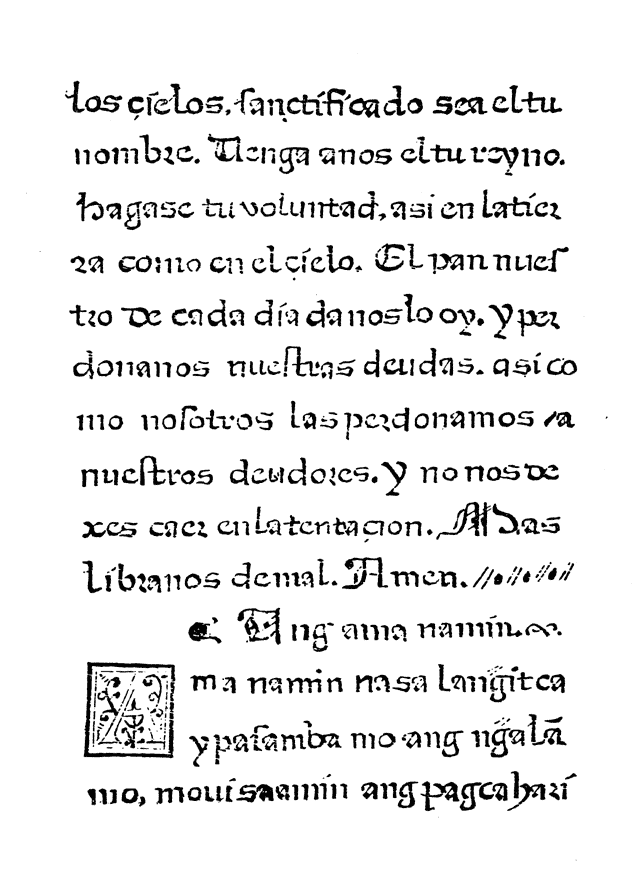
Los cielos, sanctificado sea el tu nombre. Venga anos el tu reyno. hagase tu voluntad, asi en la tierra como en el cielo. El pan nuestro de cada dia da noslo oy. Y per donanos nuestras duedas. asi como nosotros las perdonamos á nuestros deudores. Y no nos de xes caer en la tentacion. Das libranos de mal. Amen.
Ang ama namin. Ama namin nasa lang̃it ca y pasamba mo ang ng̃alã mo, mouisa amin ang pagcahari [7]
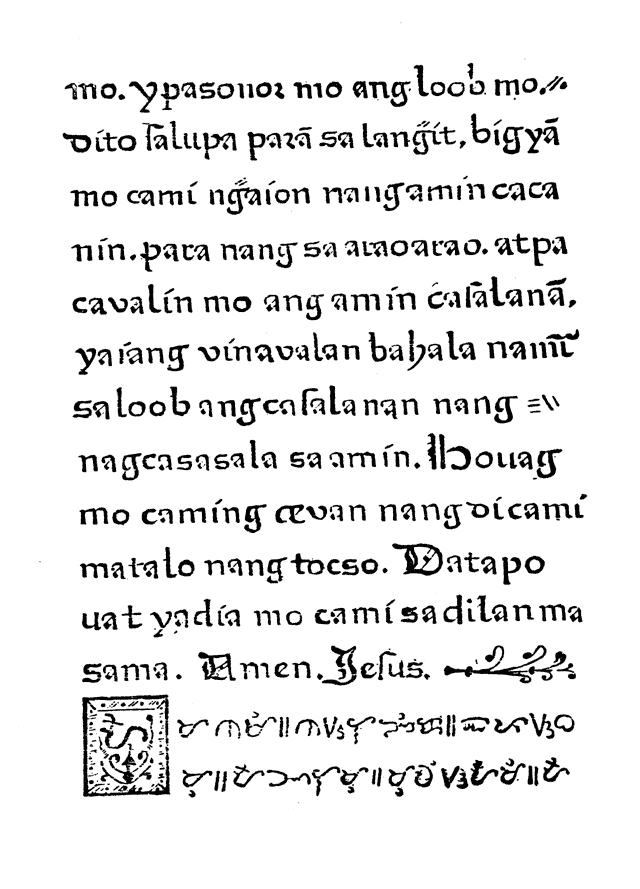
mo. Y pasonor mo ang loob mo. dito sa lupa parã sa lang̃it, bigyã mo cami ng̃aion nang amin caca nin. para nang sa araoarao. at pa caualin mo ang amin casalanã, yaing uinaualan bahala namĩ sa loob ang casalanan nang nagcasasala sa amin. Houag mo caming ceuan nang di cami matalo nang tocso. Datapo uat ya dia mo cami sa dilan ma sama. Amen Jesus.
ᜀ ᜋ ᜈ ᜋᜒ᜶ ᜈ ᜐ ᜎ ᜅᜒ ᜃ᜶ ᜁ ᜉ ᜐ ᜊ ᜋᜓ᜶ ᜀ ᜅ ᜎ ᜋᜓ᜶ ᜋᜓ ᜏᜒ ᜐ ᜀ ᜋᜒ᜶ ᜀ [8]
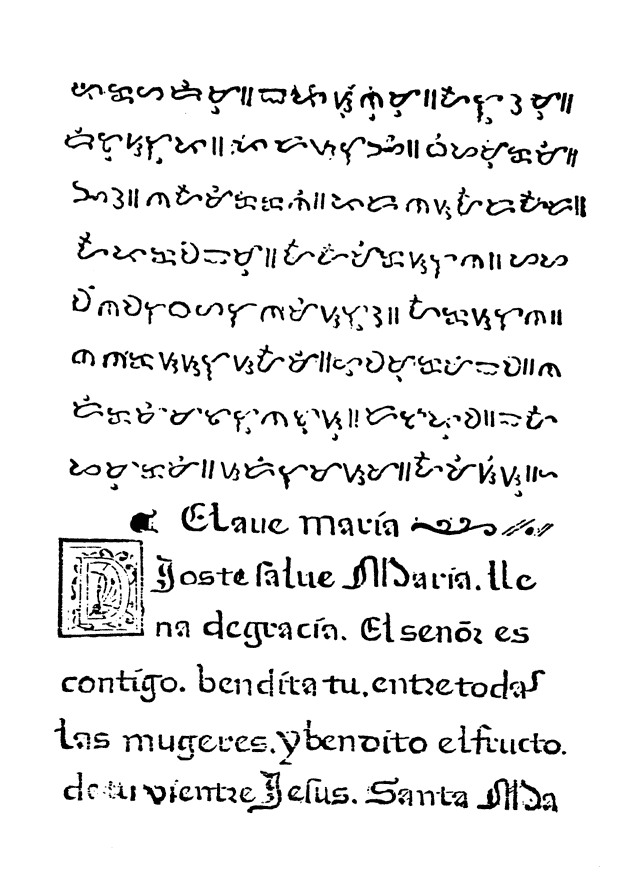
ᜉᜒ ᜃ ᜑ ᜇᜒ ᜋᜓ᜶ ᜁ ᜉᜒ ᜐᜓ ᜈᜓ ᜋᜓ᜶ ᜀ ᜎᜓ ᜂ ᜋᜓ᜶ ᜇᜒ ᜆᜓ ᜐ ᜎᜓ ᜉ᜶ ᜉ ᜇ ᜐ ᜎ ᜅᜒ᜶ ᜊᜒ ᜌ ᜋᜓ ᜃ ᜋᜒ᜶ ᜅ ᜂ᜶ ᜈ ᜀ ᜋᜒ ᜃ ᜃ ᜈᜒ᜶ ᜉ ᜇ ᜈ ᜐ ᜀ ᜇ ᜀ ᜇ᜶ ᜀ ᜉ ᜃ ᜏ ᜁ ᜋᜓ᜶ ᜀ ᜀ ᜋᜒ ᜃ ᜐ ᜎ ᜈ᜶ ᜌ ᜌ ᜏᜒ ᜈ ᜏ ᜎ ᜊ ᜑ ᜎ ᜈ ᜋᜒ ᜐ ᜎᜓ ᜂ᜶ ᜀ ᜃ ᜐ ᜎ ᜈ᜶ ᜈ ᜈ ᜃ ᜐ ᜐ ᜎ ᜐ ᜀ ᜋᜒ᜶ ᜑᜓ ᜏ ᜋᜓ ᜃ ᜋᜒ ᜁ ᜏ᜶ ᜈ ᜇᜒ ᜃ ᜋᜒ ᜋ ᜆ ᜎᜓ ᜈ ᜆᜓ ᜐᜓ᜶ ᜇ ᜆ ᜉᜓ ᜏ᜶ ᜁ ᜀ ᜌ ᜋᜓ ᜃ ᜋᜒ᜶ ᜐ ᜇᜒ ᜎ ᜋ ᜐ ᜋ᜶ ᜀ ᜋᜒ ᜐᜒ ᜐᜓ᜶
El aue Maria. Dios te salue Maria. lle na degracia. El senõr es contigo. bendita tu, estretodas las mugeres. Y bendito el fructo. deus vientre Jesus. Santa Ma [9]
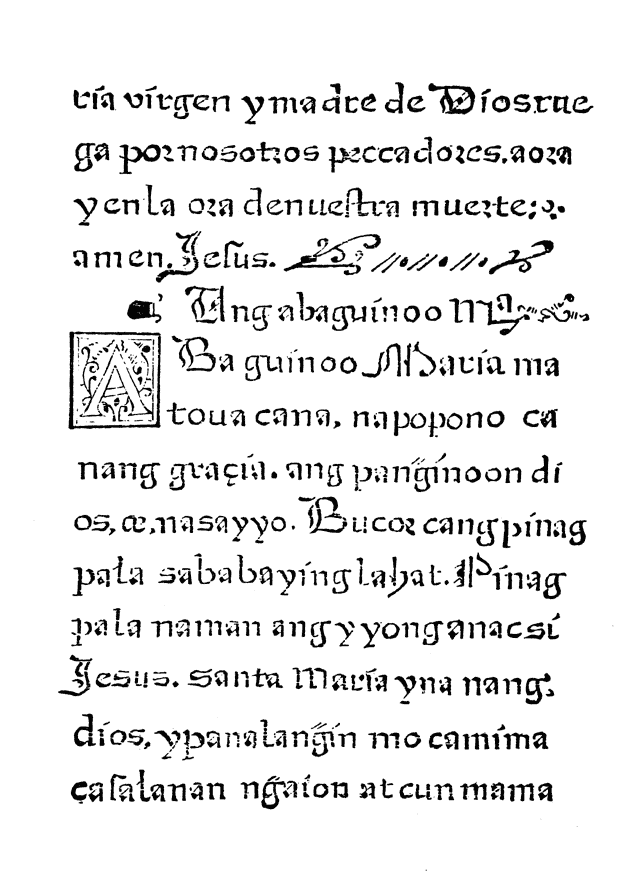
ria uirgen y madre de Dios rue ga por nosotros peccadores. aora y en la ora denuestra muerte amen. Jesus.
Ang aba guinoo Ma Aba guinoo Maria ma toua cana, napopono ca nang graçia. ang pang̃inoon di os, ce, nasayyo. Bucor cang pinag pala sa babaying lahat. Pinag pala naman ang yyong anac si Jesus. Santa Maria yna nang, dios, ypanalang̃in mo camima çasalanan ng̃aion at cun mama [10]
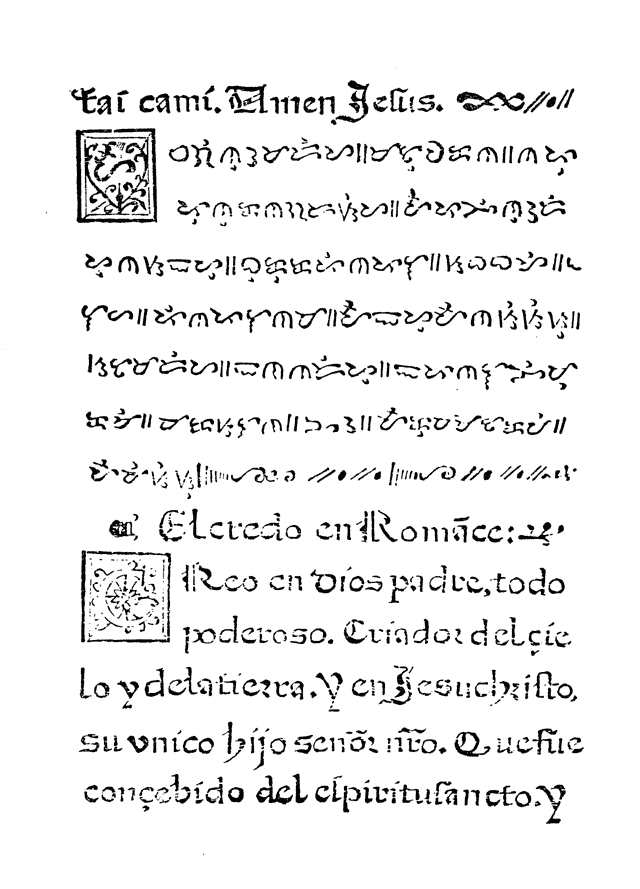
tai cami. Amen Jesus.
ᜀ ᜊ ᜄᜒ ᜈᜓ ᜂ ᜋ ᜇᜒ ᜌ᜶ ᜋ ᜆᜓ ᜏ ᜃ ᜈ᜶ ᜈ ᜉᜓ ᜉᜓ ᜈᜓ ᜃ ᜈ ᜄ ᜇ ᜐᜒ ᜌ᜶ ᜀ ᜉ ᜅᜒ ᜈᜓ ᜂ ᜇᜒ ᜌᜓ ᜈ ᜐ ᜁ ᜌᜓ᜶ ᜊᜓ ᜃᜓ ᜃ ᜉᜒ ᜈ ᜉ ᜎ᜶ ᜐ ᜊ ᜊ ᜌᜒ᜶ ᜎ ᜑ᜶ ᜉᜒ ᜈ ᜉ ᜎ ᜈ ᜋ᜶ ᜀ ᜁ ᜌᜓ ᜀ ᜈ ᜐᜒ ᜐᜒ ᜐᜓ᜶ ᜐ ᜆ ᜋ ᜇᜒ ᜌ᜶ ᜁ ᜈ ᜈ ᜇᜒ ᜌᜓ᜶ ᜁ ᜉ ᜈ ᜎ ᜅᜒ ᜋᜓ ᜃ ᜋᜒ᜶ ᜋ ᜃ ᜐ ᜎ ᜈ᜶ ᜅ ᜂ᜶ ᜀ ᜃᜓ ᜋ ᜋ ᜆ ᜃ ᜋᜒ᜶ ᜀ ᜋᜒ ᜐᜒ ᜐᜓ᜶
El credo en Romãce
Creo en dios padre, todo poderoso. Criador del çie lo y dela tierra. Y en Jesuchristo, su unico hijo senõr nro. Que fue conçebido del elpiritusancto. Y [11]
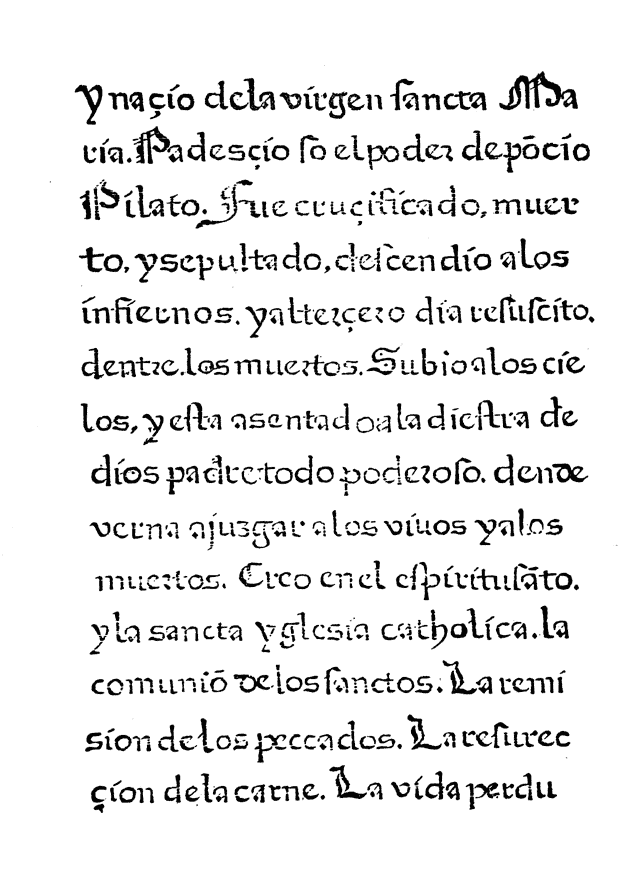
Y naçio de la uirgen sancta Ma ria. Padesçio so el poder depõcio Pilato. Fue crucificado, muer to, y sepultado, descendio alos infiernos, y alterçero dia resuscito, dentre, los muertos. Subio a los cie los, y esta asentado ala diestra de dios padre todo poderoso, dende uerna ajuzgar alos uiuos y alos muertos. Creo en el espiritusãto. y la sancta yglesia catholica, la comuniõ de los sanctos. La remi sion de los peccados. La refuree çion de la carne. La uida perdu [12]
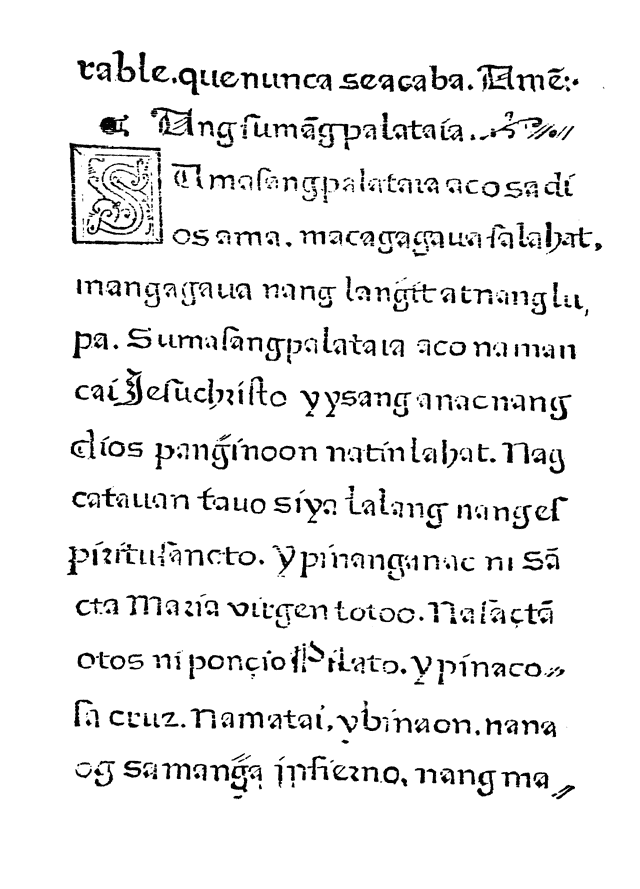
rable, que nunca seacaba. Amẽ.
Ang sumãgpalataia
Sumasangpalataia aco sa di os ama, macagagaua sa lahat, mangagaua nang lang̃it at nang lu, pa. Sumasangpalataia aco naman cai Jesuchristo yysang anac nang dios pang̃inoon natin lahat. Nag catauan tauo siya salang nang es piritusancto. Ypinanganac ni Sã cta Maria uirgen totoo. Nasactã otos ni poncio Pilato. Ypinaco sa cruz. Namatai, ybinaon, nana og sa mang̃a infierno, nang ma [13]
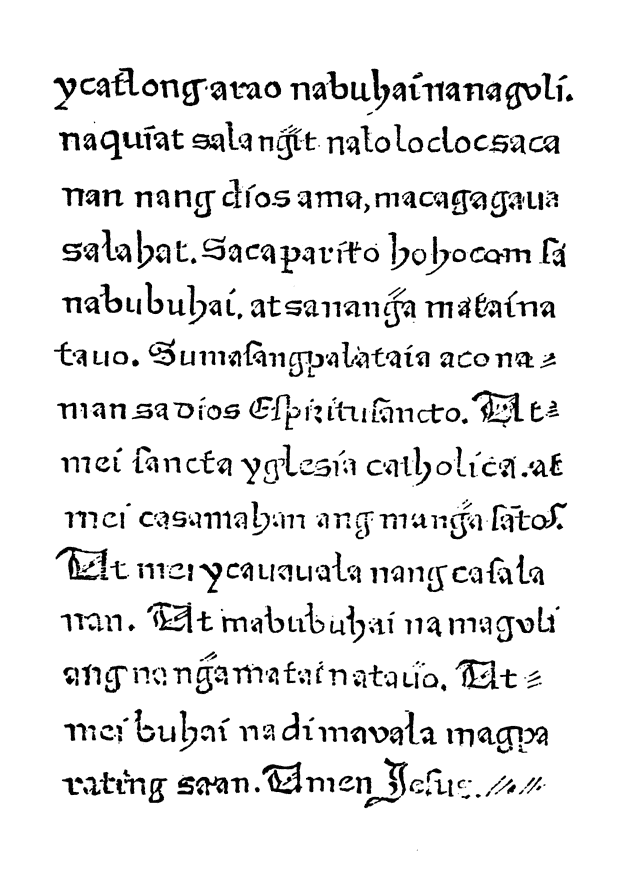
ycatlong arao nabuhai na naguli. naquiat sa lang̃it nalolocloc sa ca nan nang dios ama, macagagaua sa lahat. Sa caparito hohocom sa nabubuhai, at sa nang̃a matai na tauo. Sumasangpalataia aco na man sa dios Espiritusancto. At mei sancta yglesia catholica, at mei casamahan ang mang̃a sãtos. At mei ycauauala nang casala nan. At mabubuhai na maguli ang na ng̃a matai na tauo. At mei buhai na di mauala mag pa rating saan. Amen Jesus. [14]
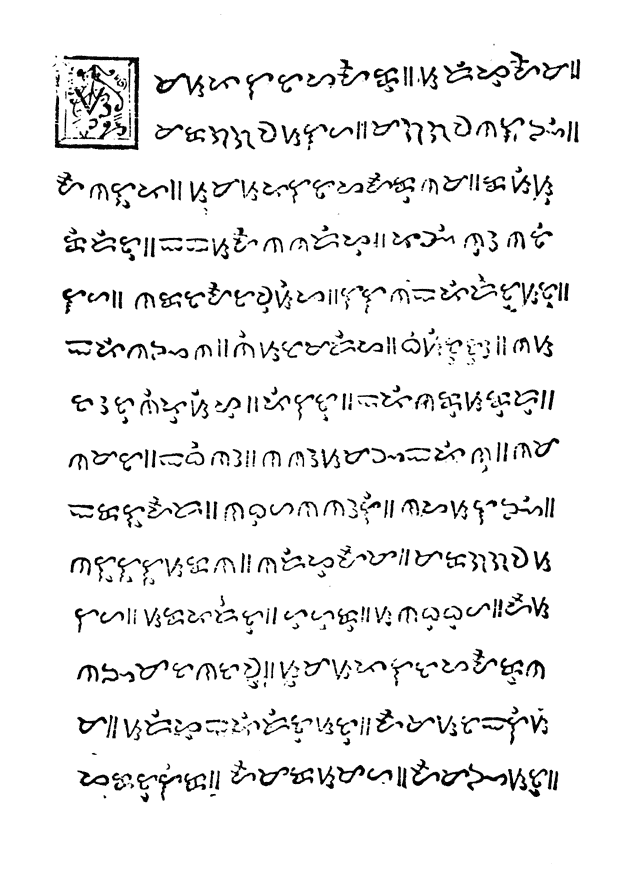
ᜐᜓ ᜋ ᜐ ᜉ ᜎ ᜆ ᜌ ᜀ ᜀᜃᜓ᜶ ᜐ ᜇᜒ ᜌᜓ ᜀ ᜋ᜶ ᜋ ᜃ ᜄ ᜄ ᜏ ᜐ ᜎ ᜑ᜶ ᜋ ᜄ ᜄ ᜏ ᜈ ᜎ ᜅᜒ᜶ ᜀ ᜈ ᜎᜓ ᜉ᜶ ᜐᜓ ᜋ ᜐ ᜉ ᜎ ᜆ ᜌ ᜀ ᜃᜓ ᜈ ᜋ᜶ ᜃ ᜐᜒ ᜐᜓ᜶ ᜃᜒ ᜇᜒ ᜆᜓ᜶ ᜁ ᜁ ᜐ ᜀ ᜈ ᜈ ᜇᜒ ᜌᜓ᜶ ᜉ ᜅᜒ ᜈᜓ ᜂ ᜈ ᜆᜒ ᜎ ᜑ᜶ ᜈ ᜃ ᜆ ᜀ ᜆ ᜏᜓ ᜐᜒ ᜌ᜶ ᜎ ᜎ ᜈ ᜁ ᜉᜒ ᜇᜒ ᜆᜓ ᜐ ᜆᜓ᜶ ᜁ ᜉᜒ ᜈ ᜅ ᜈ᜶ ᜈᜒ ᜐ ᜆ ᜋ ᜇᜒ ᜌ᜶ ᜊᜒ ᜐᜒ ᜆᜓ ᜆᜓ ᜂ᜶ ᜈ ᜐ ᜆ ᜂ ᜆᜓ ᜈᜒ ᜉᜓ ᜐᜒ ᜌᜓ᜶ ᜉᜒ ᜎ ᜆᜓ᜶ ᜁ ᜉᜒ ᜈ ᜃᜓ ᜐ ᜃᜓ ᜇᜓ᜶ ᜈ ᜋ ᜆ᜶ ᜁ ᜊᜒ ᜈ ᜂ᜶ ᜈ ᜈ ᜂ ᜐ ᜋ ᜅ ᜁ ᜉᜒ ᜈᜓ᜶ ᜈ ᜋ ᜁ ᜃ ᜎᜓ ᜀ ᜇ᜶ ᜈ ᜊᜓ ᜑ ᜈ ᜈ ᜂ ᜎᜒ᜶ ᜈ ᜌ ᜐ ᜎ ᜅᜒ᜶ ᜈ ᜎᜓ ᜎᜓ ᜎᜓ ᜐ ᜃ ᜈ᜶ ᜈ ᜇᜒ ᜌᜓ ᜀ ᜋ᜶ ᜋ ᜃ ᜄ ᜄ ᜏ ᜐ ᜎ ᜑ᜶ ᜐ ᜃ ᜉ ᜇᜒ ᜆᜓ᜶ ᜑᜓ ᜑᜓ ᜃᜓ᜶ ᜐ ᜈ ᜊᜓ ᜊᜓ ᜑ᜶ ᜀ ᜐ ᜈ ᜅ ᜋ ᜆ ᜈ ᜆ ᜏᜓ᜶ ᜐᜓ ᜋ ᜐ ᜉ ᜎ ᜆ ᜌ ᜀ ᜃᜓ ᜈ ᜋ ᜐ ᜇᜒ ᜌᜓ ᜁ ᜉᜒ ᜇᜒ ᜆᜓ ᜐ ᜆᜓ᜶ ᜀ ᜋ ᜐ ᜆ ᜁ ᜎᜒ ᜐᜒ ᜌ ᜃ ᜆᜓ ᜎᜒ ᜃ᜶ ᜀ ᜋ ᜃ ᜐ ᜋ ᜑ᜶ ᜀ ᜋ ᜅ ᜐ ᜆᜓ᜶ [15]
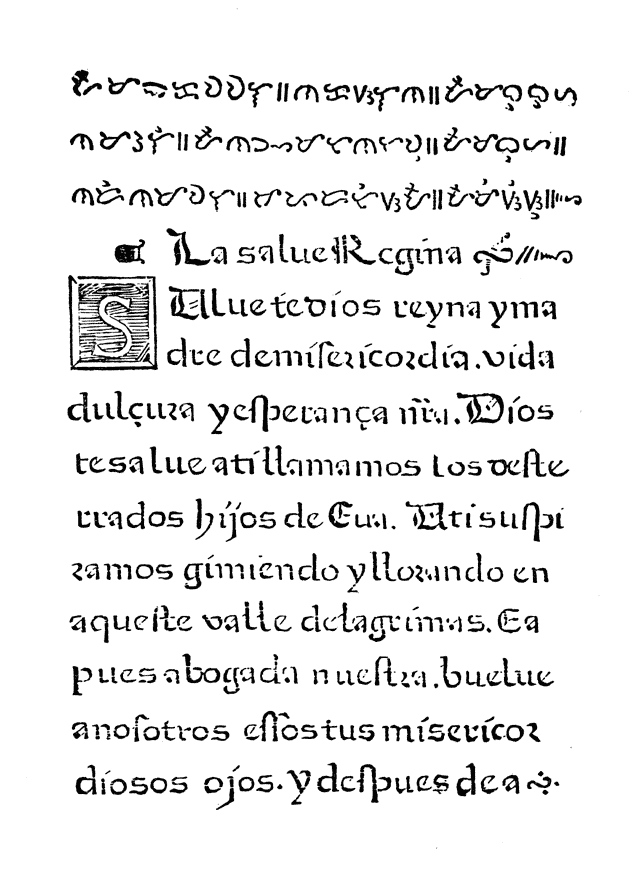
ᜀ ᜋ ᜁ ᜃ ᜏ ᜏ ᜎ᜶ ᜈ ᜃ ᜐ ᜎ ᜈ᜶ ᜀ ᜋ ᜊᜓ ᜊᜓ ᜑ ᜈ ᜋ ᜂ ᜎᜒ᜶ ᜀ ᜈ ᜅ ᜋ ᜆ ᜈ ᜆ ᜏᜓ᜶ ᜀ ᜋ ᜊᜓ ᜑ ᜈ ᜇᜒ ᜈ ᜋ ᜏ ᜎ᜶ ᜋ ᜉ ᜇ ᜆᜒ ᜐ ᜀ᜶ ᜀ ᜋᜒ ᜐᜒ ᜐᜓ᜶
La salue Regina
Salue te dios reyna y ma dre demisericordia, uida dulçura y esperança nra. Dios te salue atillamamos los deste ruados hijos de Gua. Atisuspi ramos gimiendo yllorando en aqueste ualle de lagrimas. Ga pues abogada nuestra, buelue anostros ellos tus misericor diosos ojos. Y despues dea. [16]
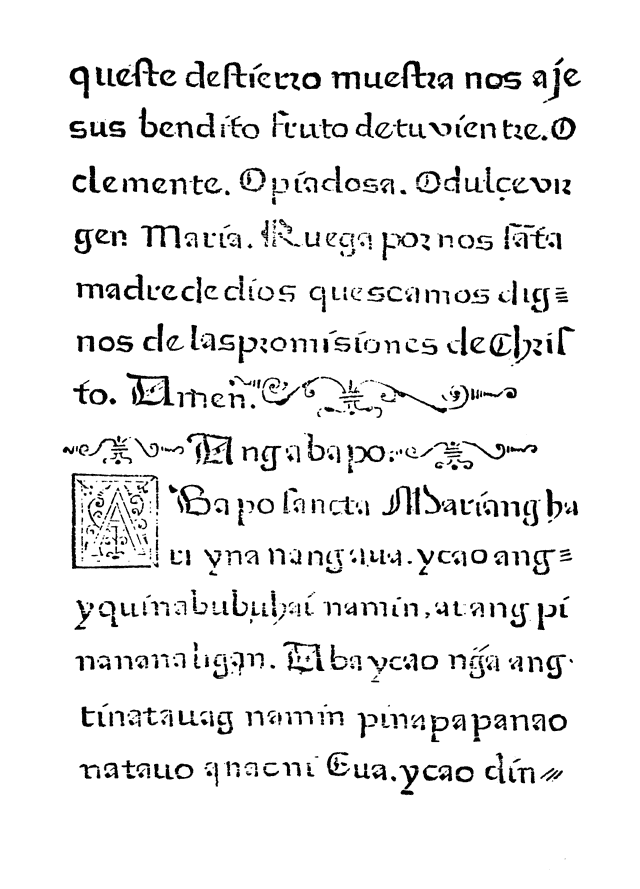
queste destierro muestra nos aje sus bendito fruto de tu ueintre. O clemente. O piadosa. O dulce uir gen Maria. Ruega por nos sãta madre de dios quescamos dig nos de las promisiones de Chris to Amen.
Ang aba po.
Aba po sancta. Mariang ha ri yna nang aua. Ycao ang yquinabubuhai namin, at ang pi nananaligan. Aba ycao ng̃a ang tinatauag namin pinapapanao na tauo anac ni Gua. ycao din [17]
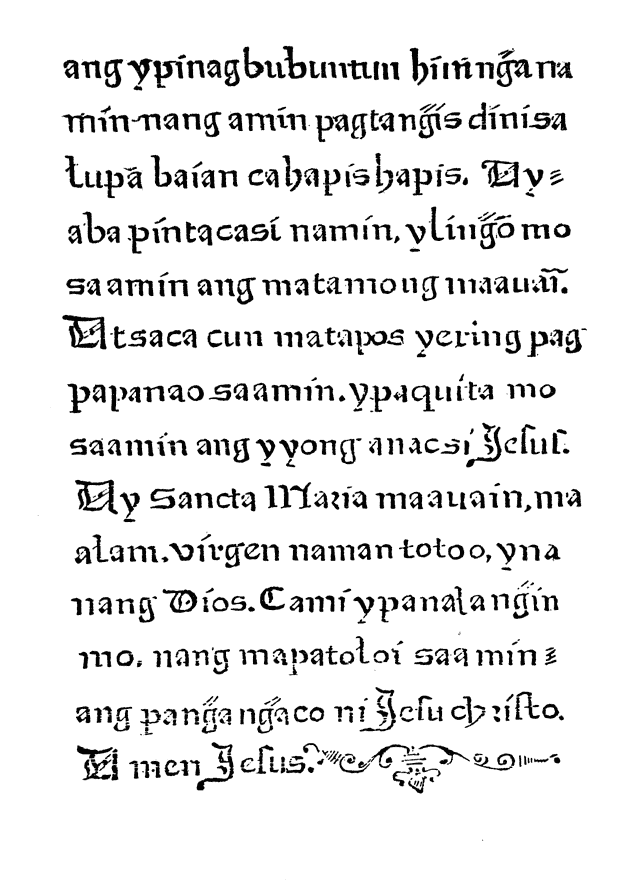
ang ypinagbubuntun hining̃a na min nang amin pagtang̃is dini sa lupã baian cahapishapis. Ay aba pintacasi namin, yling̃o mo sa amin ang mata mong maauaĩ. At saca cun matapos yering pag papanao sa amin. ypaquita mo sa amin ang yyong anac si Jesus. Ay Sancta Maria maauain, ma alam, uirgen naman totoo, yna nang Dios. Cami ypanalang̃in mo, nang mapatoloi sa amin ang pang̃a ng̃aco ni Jesuchristo. Amen Jesus. [18]
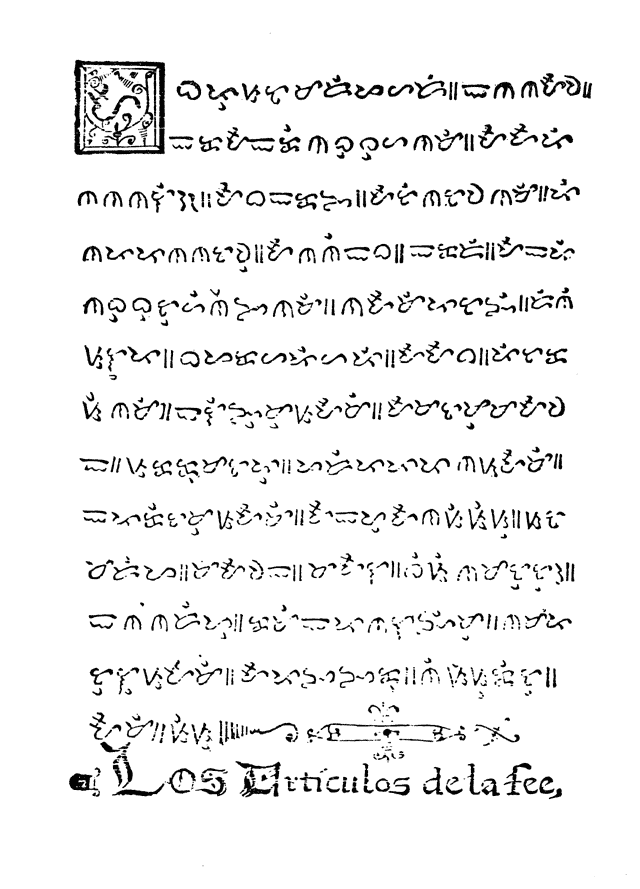
ᜀ ᜊ ᜉᜓ ᜐ ᜆ ᜋ ᜇᜒ ᜌ ᜑ ᜇᜒ᜶ ᜁ ᜈ ᜈ ᜀ ᜏ ᜁ ᜃ ᜀ ᜁ ᜃᜒ ᜈ ᜊᜓ ᜊᜓ ᜑ ᜈ ᜋᜒ᜶ ᜀ ᜀ ᜉᜒ ᜈ ᜈ ᜈ ᜎᜒ ᜄ᜶ ᜀ ᜊ ᜁ ᜃ ᜅ᜶ ᜀ ᜆᜒ ᜈ ᜆ ᜏ ᜈ ᜋᜒ᜶ ᜉᜒ ᜈ ᜉ ᜉ ᜈ ᜈ ᜆ ᜏᜓ᜶ ᜀ ᜈ ᜈᜒ ᜁ ᜊ᜶ ᜁ ᜃ ᜇᜒ᜶ ᜀ ᜁ ᜉᜒ ᜈ ᜊᜓ ᜊᜓ ᜆᜓ ᜑᜒ ᜈᜒ ᜅ ᜈ ᜋᜒ᜶ ᜈ ᜀ ᜋᜒ ᜉ ᜆ ᜅᜒ᜶ ᜇᜒ ᜈᜒ ᜐ ᜎᜓ ᜉ᜶ ᜊ ᜌ ᜃ ᜑ ᜉᜒ ᜑ ᜉᜒ᜶ ᜀ ᜀ ᜊ᜶ ᜉᜒ ᜆ ᜃ ᜐᜒ ᜈ ᜋᜒ᜶ ᜁ ᜎᜒ ᜅᜓ ᜋᜓ ᜐ ᜀ ᜋᜒ᜶ ᜀ ᜋ ᜆ ᜋᜓ ᜋ ᜀ ᜏ ᜁ᜶ ᜐ ᜃ ᜃᜓ ᜋ ᜆ ᜉᜓ᜶ ᜌ ᜇᜒ ᜉ ᜉ ᜉ ᜈ ᜐ ᜀ ᜋᜒ᜶ ᜁ ᜉ ᜃᜒ ᜆ ᜋᜓ ᜐ ᜀ ᜋᜒ᜶ ᜀ ᜁ ᜌᜓ ᜀ ᜈ ᜐᜒ ᜐᜒ ᜐᜓ᜶ ᜐ ᜆ ᜋ ᜇᜒ ᜌ᜶ ᜋ ᜀ ᜏ ᜁ᜶ ᜋ ᜀ ᜎ᜶ ᜊᜒ ᜐᜒ ᜈ ᜋ ᜆᜓ ᜆᜓ ᜂ᜶ ᜁ ᜈ ᜈ ᜇᜒ ᜌᜓ᜶ ᜃ ᜋᜒ ᜁ ᜉ ᜈ ᜎ ᜅᜒ ᜋᜓ᜶ ᜈ ᜋ ᜉ ᜆᜓ ᜎᜓ ᜐ ᜀ ᜋᜒ᜶ ᜀ ᜉ ᜅ ᜅ ᜃᜓ᜶ ᜈᜒ ᜐᜒ ᜐᜓ ᜃᜒ ᜆᜓ᜶ ᜀ ᜋᜒ ᜐᜒ ᜐᜓ᜶
Los Articulos dela fee, [19]
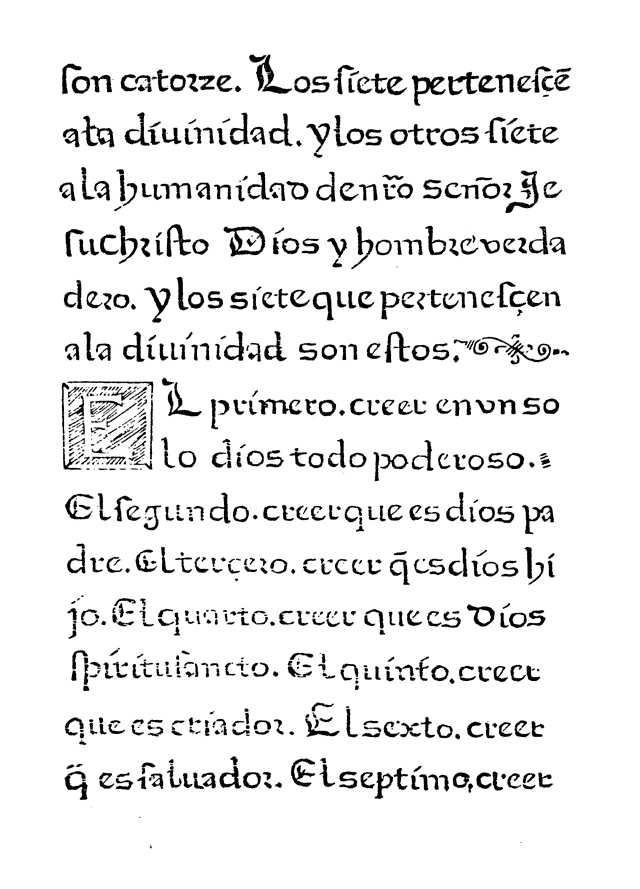
son catorze. Los siete pertenesçẽ ata diuinidad, ylos otros siete a la humanidad denrõ senõr Je suchristo Dios y hombre uerda dero. ylos siete que pertenesçen ala diuinidad son estos.
El primero, creer en un so lo dios todo poderoso. El segundo creer que es dios pa dre. El tercero, creer q̃es dios hi jo. El quarto, creer que es Dios Espiritusancto. El quinto, creer que es criador. El sexto, creer q̃es satuador. El septimo, creer [20]
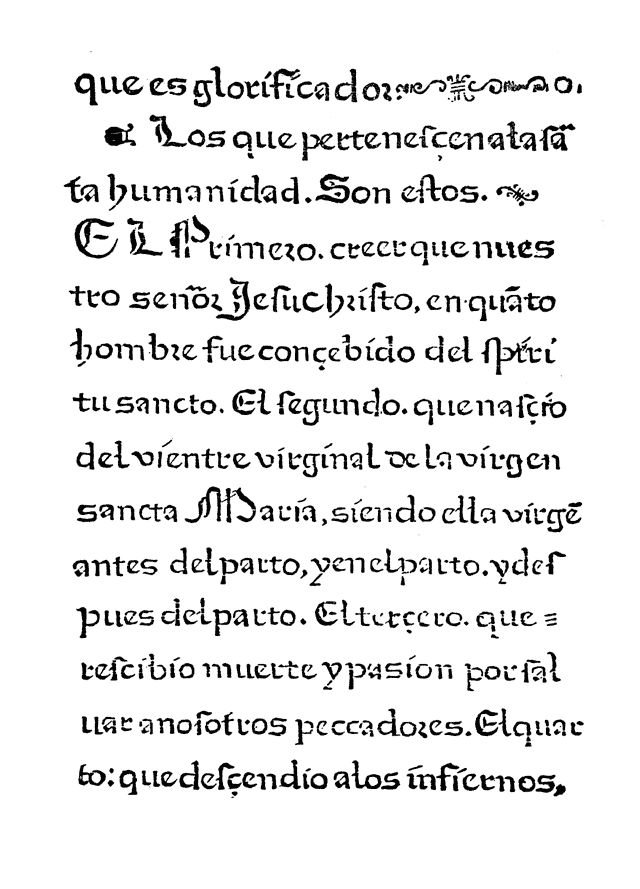
que es glorificador.
Los que pertenesçenatasa ta humanidad. Son estos.
El Primero, creer que nues tro senõr Jesuchristo, en quãto hombre fue conçebido del sptri tu sancto. El segundo, que nasçro del uientre uirginal de la uirgen sancta Maria, siendo ella uirgẽ antes del parto, yenelparto, y des pues del parto. El terçero, que rescibio muerte y pasion porsal uar anosotros peccadores. El quar to: que desçendio alos infiernos, [21]
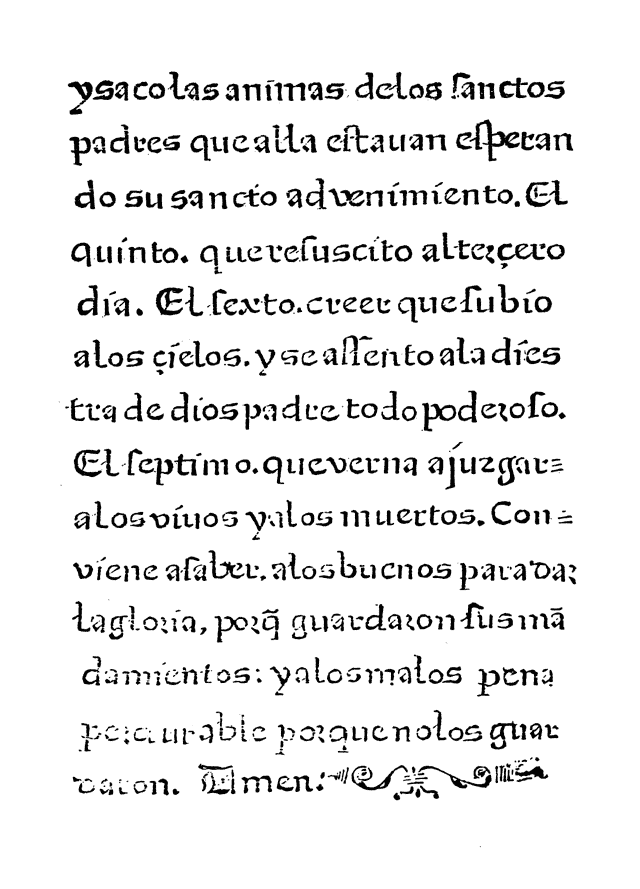
ysacolas animas de los sanctos padres que asta estauan esperan do su sancto aduenimiento. El quinto, que resuscito alterçero dia. El sexto, creer que subio alos cielos, yseassento ala dies tra de dios padre todo poderoso. El septimo, que uerna ajuzgar alos uinos y alos muertos. Con uiene asaber, alos buenos paradar la gloria, porq̃ guardaron susmã damientos: yalos malos pena percurable porque nolos guar daron. Amen: [22]
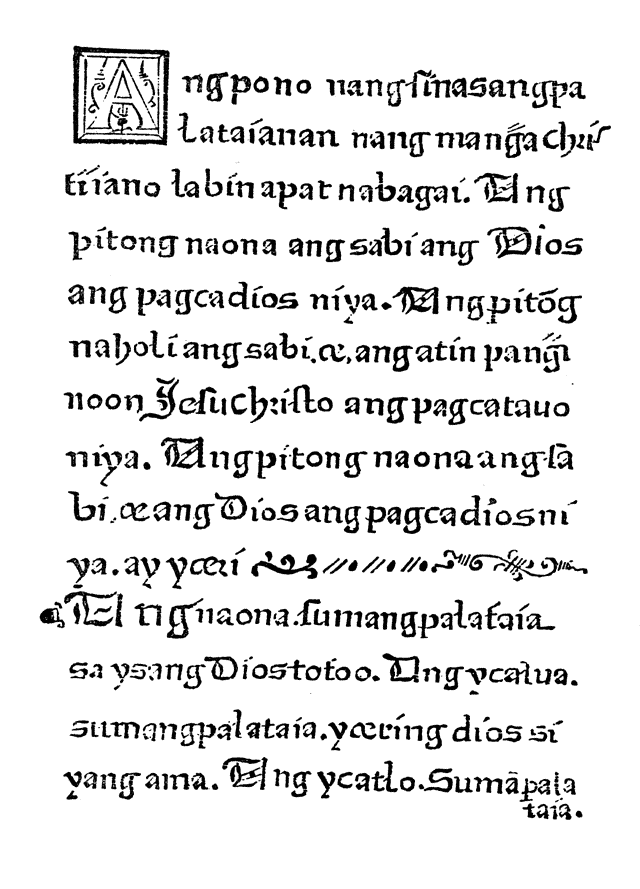
Ang pono nang sinasangpa lataianan nang mang̃a chris tiano labin apat na bagai. Ang pitong naona ang sabi ang Dios ang pagcadios niya. Ang pitõg naholi ang sabi,a, ang atin pang̃i noon Jesuchristo ang pagcatauo niya. Ang pitong naona ang sa bi, ce ang Dios ang pagca dios ni ya ay yceri.
Ang naona sumangpalataia sa ysang Dios totoo. Ang ycalua, sumangpalataia, ycering dios si yang ama. Ang ycatlo, Sumãpalataia. [23]
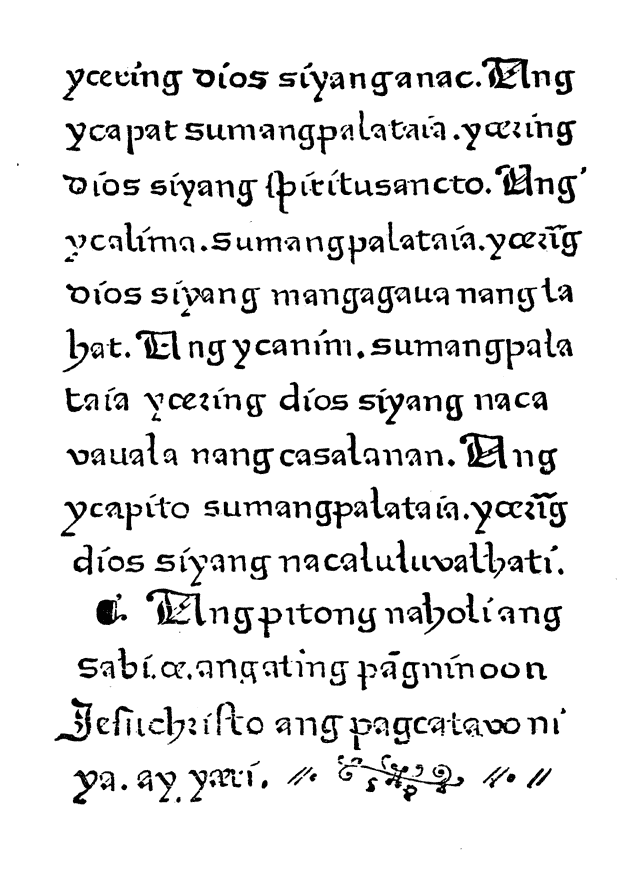
ycering dios siyang anac. Ang ycapat sumangpalataia, ycering dios siyang spiritusancto. Ang ycalima, sumangpalataia, ycerĩg dios siyang mangagaua nang la hat. Ang ycanim, sumangpala taia ycering dios siyang naca uauala nang casalanan. Ang ycapito sumangpalataia ycering dios siyang nacalulualhati.
Ang pitong naholi ang sabi ce ang ating pãgninoon Jesuchristo ang pagcatauo ni ya ay yari. [24]
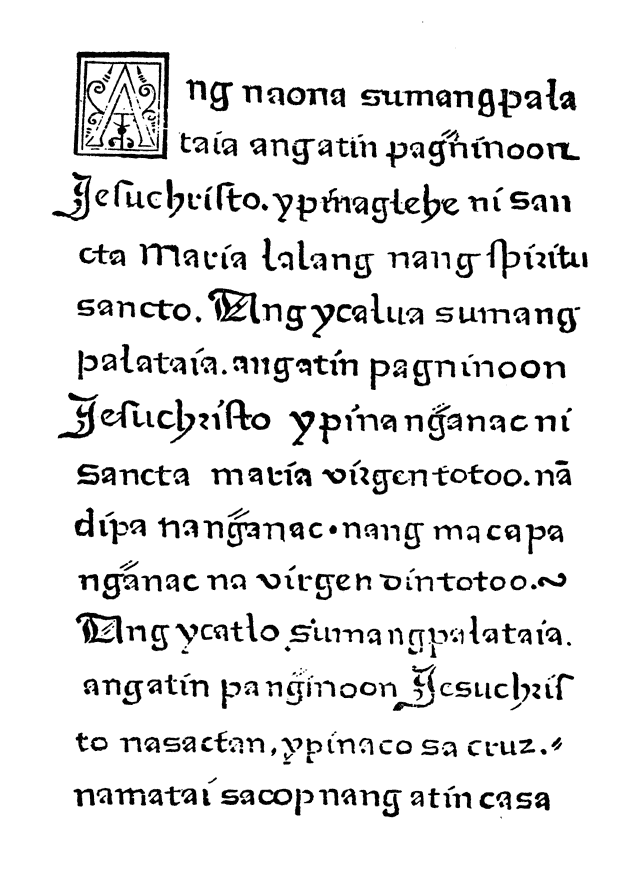
Ang naona sumangpala taia ang atin pag̃ninoon Jesuchristo, ypinaglehe ni San cta Maria lalang nang spiritu sancto. Ang ycalua sumang palataia, ang atin pagninoon Jesuchristo y pinang̃anac ni sancta maria uirgen totoo, nã dipa nang̃anac, nang macapa ng̃anac na uirgen din totoo. Ang ycatlo sumangpalataia, ang atin pang̃inoon Jesuchris to nasactan, ypinaco sa cruz. namatai sacop nang atin casa [25]
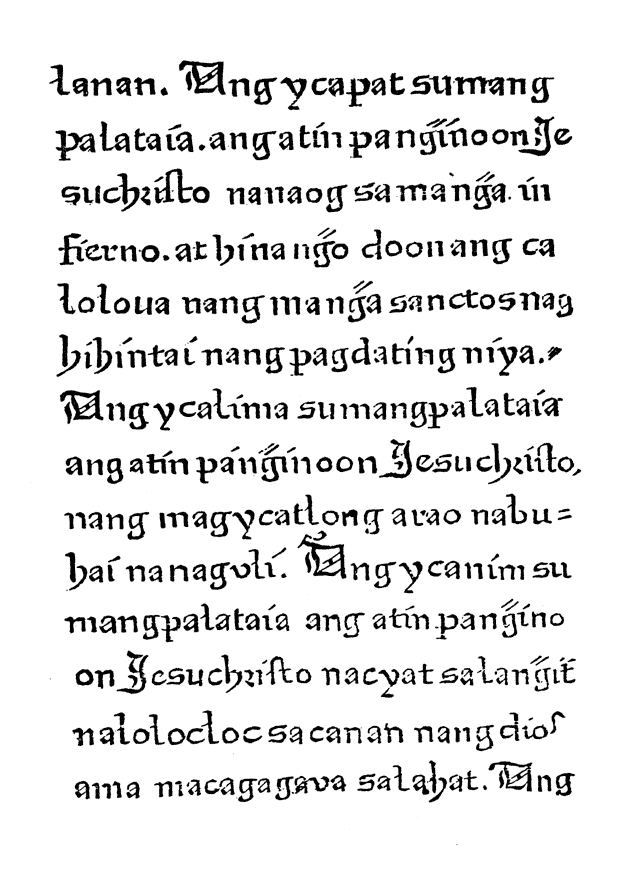
lanan. Ang ycapat sumang palataia, ang atin pang̃inoon Je suchristo nanaog sa mang̃a in fierno, at hinang̃o doon ang ca loloua nang mang̃a sanctos nag hihintai nang pagdating niya. Ang ycalima sumangpalataia ang atin pang̃inoon Jesuchristo, nang magycatlong arao nabu hai nanaguli. Ang ycanim su mangpalataia ang atin pang̃ino on Jesuchristo nacyat sa lang̃it nalolocloc sa canan nang dios ama macagagaua sa lahat. Ang [26]
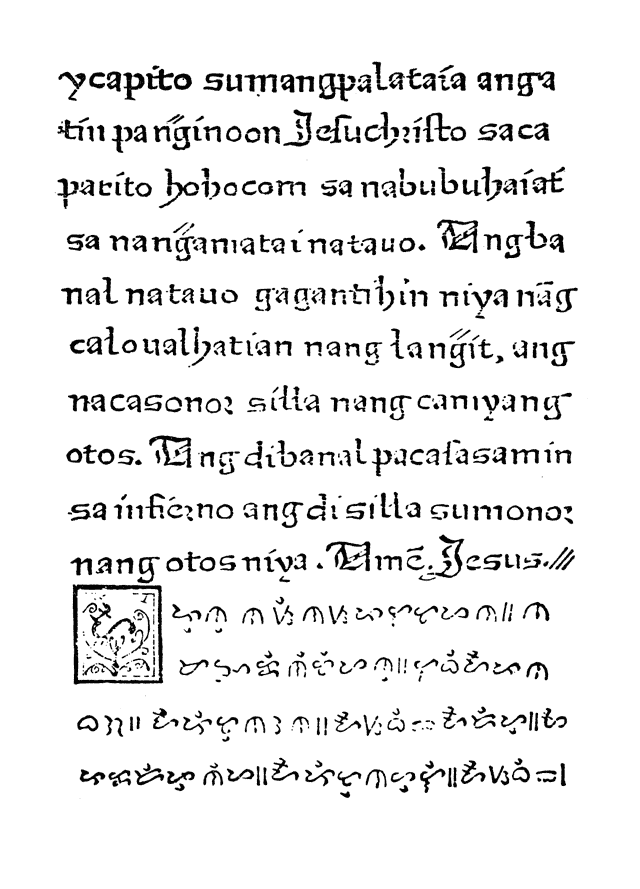
ycapito sumangpalataia ang a tin pang̃inoon Jesuchristo saca parito hohocom sa nabubuhai at sa nang̃amatai na tauo. Ang ba nal na tauo gagantihin niya nãg caloualhatian nang lang̃it, ang nacasonor silla nang caniyang otos. Ang di banal pacasasamin sa infierno ang di silla sumonor nang otos niya. Amẽ. Jesus.
ᜀ ᜉᜓ ᜈᜓ ᜈ ᜐᜒ ᜈ ᜐ ᜉ ᜎ ᜆ ᜌ ᜈ᜶ ᜈ ᜋ ᜅ ᜃᜒ ᜈᜒ ᜆᜒ ᜌ ᜈᜓ᜶ ᜎ ᜊᜒ ᜀ ᜉ ᜈ ᜊ ᜄ᜶ ᜀ ᜉᜒ ᜆᜓ ᜈ ᜂ ᜈ᜶ ᜀ ᜐ ᜊᜒ ᜁ ᜀ ᜇᜒ ᜌᜓ᜶ ᜀ ᜉ ᜃ ᜇᜒ ᜌᜓ ᜈᜒ ᜌ᜶ ᜀ ᜉᜒ ᜆᜓ ᜈ ᜑᜓ ᜎᜒ᜶ ᜀ ᜐ ᜊᜒ ᜁ᜶ [27]
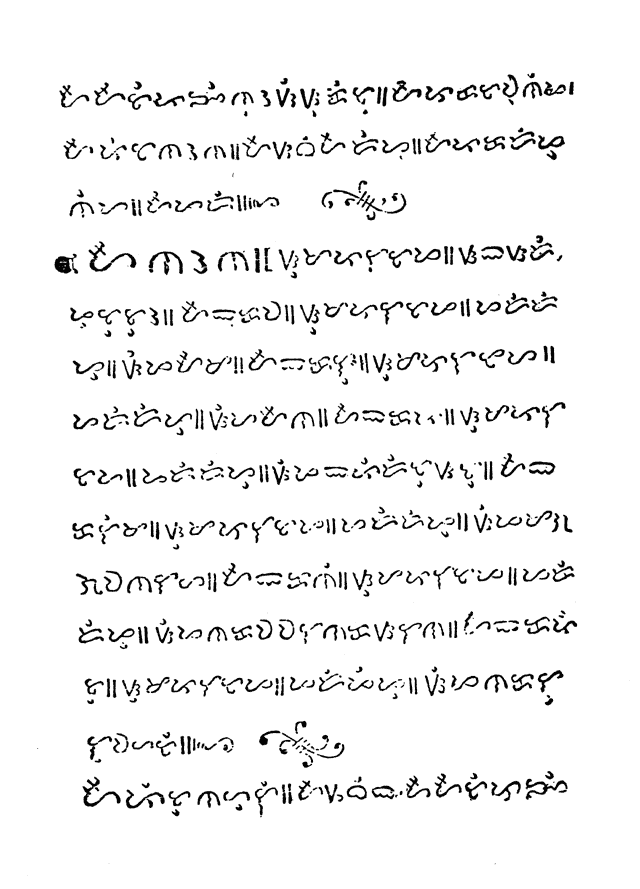
ᜀ ᜀ ᜆᜒ ᜉ ᜅᜒ ᜈᜓ ᜂ ᜐᜒ ᜐᜓ ᜃᜒ ᜆᜓ᜶ ᜀ ᜉ ᜃ ᜆ ᜏᜓ ᜈᜒ ᜌ᜶ ᜀ ᜉᜒ ᜆ ᜈ ᜂ ᜈ᜶ ᜀ ᜐ ᜊᜒ ᜀ ᜇᜒ ᜌᜓ᜶ ᜀ ᜉ ᜃ ᜇᜒ ᜌᜓ ᜈᜒ ᜌ᜶ ᜀ ᜉ ᜇᜒ᜶
ᜀ ᜈ ᜂ ᜈ᜶ ᜐᜓ ᜋ ᜉ ᜎ ᜆ ᜌ ᜐ ᜁ ᜐ ᜇᜒ ᜌᜓ ᜆᜓ ᜆᜓ ᜂ᜶ ᜀ ᜁ ᜃ ᜏ᜶ ᜐᜓ ᜋ ᜉ ᜎ ᜆ ᜌ᜶ ᜌ ᜇᜒ ᜇᜒ ᜌᜓ᜶ ᜐᜒ ᜌ ᜀ ᜋ᜶ ᜀ ᜁ ᜃ ᜎᜓ᜶ ᜐᜓ ᜋ ᜉ ᜎ ᜆ ᜌ᜶ ᜌ ᜇᜒ ᜇᜒ ᜆᜓ᜶ ᜐᜒ ᜌ ᜀ ᜈ᜶ ᜀ ᜁ ᜃ ᜉ᜶ ᜐᜓ ᜋ ᜉ ᜎ ᜆ ᜌ᜶ ᜌ ᜇᜒ ᜇᜒ ᜌᜓ᜶ ᜐᜌ ᜁ ᜉᜒ ᜇᜒ ᜆᜓ ᜐ ᜆᜓ ᜀ ᜁ ᜃ ᜎᜒ ᜋ᜶ ᜐᜓ ᜋ ᜉ ᜎ ᜆ ᜌ᜶ ᜌ ᜇᜒ ᜇᜒ ᜆᜓ᜶ ᜐᜒ ᜌ ᜋ ᜄ ᜄ ᜏ ᜈ ᜎ ᜑ᜶ ᜀ ᜁ ᜃ ᜈᜒ᜶ ᜐᜓ ᜋ ᜉ ᜎ ᜆ ᜌ᜶ ᜌ ᜇᜒ ᜇᜒ ᜆᜓ᜶ ᜐᜒ ᜌ ᜈ ᜃ ᜏ ᜏ ᜎ ᜈ ᜃ ᜐ ᜎ ᜈ᜶ ᜀ ᜁ ᜃ ᜉᜒ ᜆᜓ᜶ ᜐᜓ ᜋ ᜉ ᜎ ᜆ ᜌ᜶ ᜌ ᜇᜒ ᜇᜒ ᜌᜓ᜶ ᜐᜒ ᜌ ᜈ ᜃ ᜎᜓ ᜎᜓ ᜏ ᜑ ᜆᜒ᜶
ᜀ ᜉᜒ ᜆᜓ ᜈ ᜑᜓ ᜎᜒ᜶ ᜀ ᜐ ᜊᜒ ᜁ ᜀ ᜀ ᜆᜒ ᜉ ᜅᜒ [28]
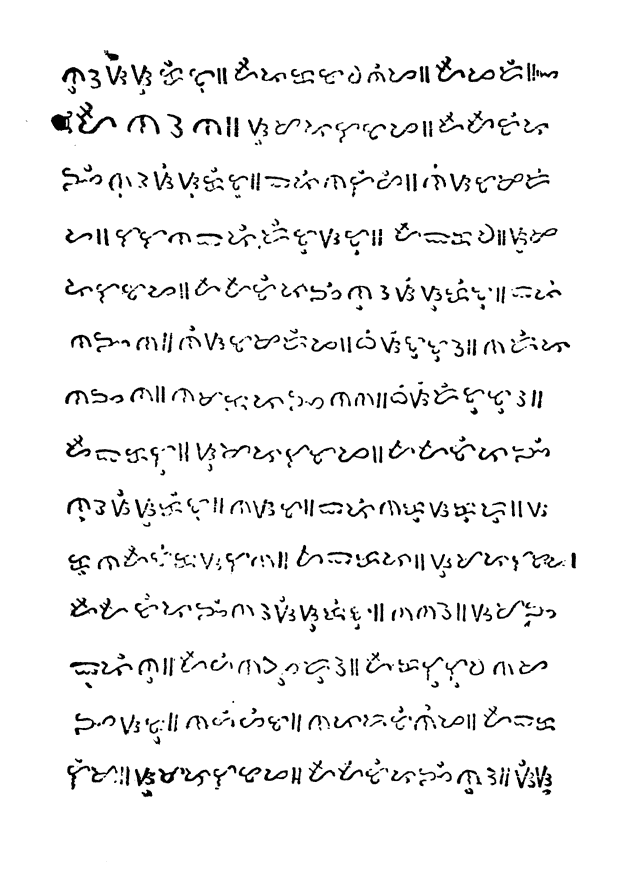
ᜈᜓ ᜂ ᜐᜒ ᜐᜓ ᜃᜒ ᜆᜓ᜶ ᜀ ᜉ ᜃ ᜆ ᜏ ᜈᜒ ᜌ᜶ ᜀ ᜌ ᜇᜒ᜶ ᜀ ᜈ ᜂ ᜈ᜶ ᜐᜓ ᜋ ᜉ ᜎ ᜆ ᜌ᜶ ᜀ ᜀ ᜆᜒ ᜉ ᜅᜒ ᜈᜓ ᜂ ᜐᜒ ᜐᜓ ᜃᜒ ᜆᜓ᜶ ᜁ ᜉᜒ ᜈ ᜎᜒ ᜑᜒ᜶ ᜈᜒ ᜐ ᜆ ᜋ ᜇᜒ ᜌ᜶ ᜎ ᜎ ᜈ ᜁ ᜉᜒ ᜇᜒ ᜆᜓ ᜐ ᜆᜓ᜶ ᜀ ᜁ ᜃ ᜏ᜶ ᜐᜓ ᜋ ᜉ ᜎ ᜆ ᜌ᜶ ᜀ ᜀ ᜆᜒ ᜉ ᜅᜒ ᜈᜓ ᜂ ᜐᜒ ᜐᜓ ᜃᜒ ᜆᜓ᜶ ᜁ ᜉᜒ ᜈ ᜅ ᜈ᜶ ᜈᜒ ᜐ ᜆᜓ ᜋ ᜇᜒ ᜌ᜶ ᜊᜒ ᜐᜒ ᜆᜓ ᜆᜓ ᜂ᜶ ᜈ ᜇᜒ ᜉ ᜈ ᜅ ᜈ᜶ ᜈ ᜋ ᜃ ᜉ ᜅ ᜈ ᜈ᜶ ᜊᜒ ᜐᜒ ᜇᜒ ᜆᜓ ᜆᜓ ᜂ᜶ ᜀ ᜁ ᜃ ᜎᜓ᜶ ᜐᜓ ᜋ ᜉ ᜎ ᜆ ᜌ᜶ ᜀ ᜀ ᜆᜒ ᜉ ᜅᜒ ᜈᜓ ᜂ ᜐᜒ ᜐᜓ ᜃᜒ ᜆᜓ᜶ ᜈ ᜐ ᜆ᜶ ᜁ ᜉᜒ ᜈ ᜃᜓ ᜐ ᜃᜓ ᜇᜓ᜶ ᜐ ᜃᜓ ᜈ ᜀ ᜆᜒ ᜃ ᜐ ᜎ ᜈ᜶ ᜀ ᜁ ᜃ ᜉ᜶ ᜐᜓ ᜋ ᜉ ᜎ ᜆ ᜌ᜶ ᜀ ᜀ ᜆᜒ ᜉ ᜅᜒ ᜈᜓ ᜂ ᜐᜒ ᜐᜓ ᜃᜒ ᜆᜓ᜶ ᜈ ᜈ ᜂ᜶ ᜐ ᜋ ᜅᜓ ᜁ ᜉᜒ ᜈᜓ᜶ ᜀ ᜑᜒ ᜈ ᜅᜓ ᜇᜓ ᜂ᜶ ᜀ ᜃ ᜎᜓ ᜎᜓ ᜏ ᜈ ᜋ ᜅ ᜐ ᜆᜓ᜶ ᜈ ᜑᜒ ᜑᜒ ᜆ᜶ ᜈ ᜉ ᜇ ᜆᜒ ᜈᜒ ᜌ᜶ ᜀ ᜁ ᜃ ᜎᜒ ᜋ᜶ ᜐᜓ ᜋ ᜉ ᜎ ᜆ ᜌ᜶ ᜀ ᜀ ᜆᜒ ᜉ ᜅᜒ ᜈᜓ ᜂ᜶ ᜐᜒ ᜐᜓ [29]
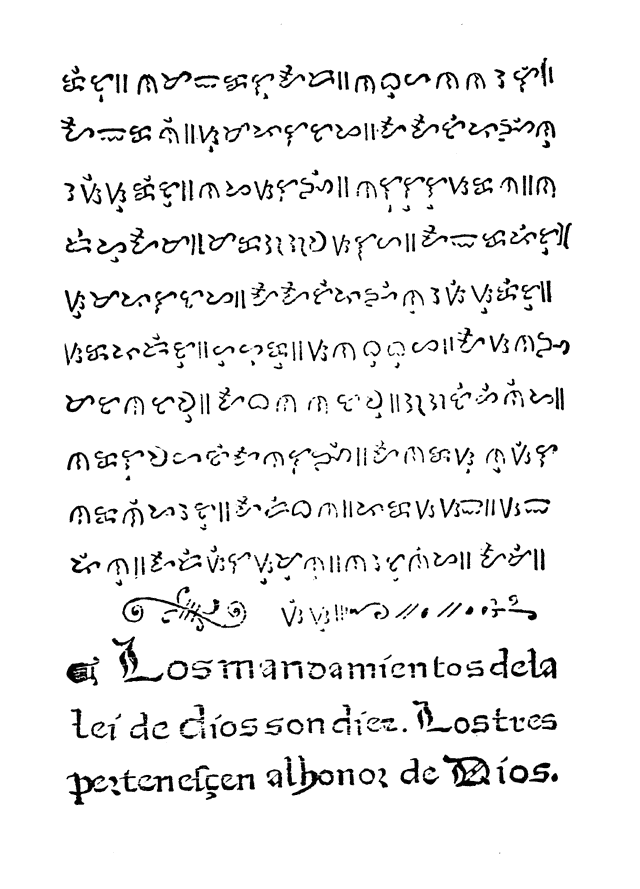
ᜃᜒ ᜆᜓ᜶ ᜈ ᜋ ᜁ ᜃ ᜎᜓ ᜀ ᜇ᜶ ᜈ ᜊᜓ ᜑ ᜈ ᜈ ᜂ ᜎᜒ᜶ ᜀ ᜁ ᜃ ᜈᜒ᜶ ᜐᜓ ᜋ ᜐ ᜉ ᜎ ᜆ ᜌ᜶ ᜀ ᜀ ᜆᜒ ᜉ ᜅᜒ ᜈᜓ ᜂ ᜐᜒ ᜐᜓ ᜃᜒ ᜆᜓ᜶ ᜈ ᜌ ᜐ ᜎ ᜅᜒ᜶ ᜈ ᜎᜓ ᜎᜓ ᜎᜓ ᜐ ᜃ ᜈ᜶ ᜈ ᜇᜒ ᜌᜓ ᜀ ᜋ᜶ ᜋ ᜃ ᜄ ᜄ ᜏ ᜐ ᜎ ᜑ᜶ ᜀ ᜁ ᜃ ᜉᜒ ᜆᜓ᜶ ᜐᜓ ᜋ ᜉ ᜎ ᜆ ᜌ᜶ ᜀ ᜀ ᜆᜒ ᜉ ᜅᜒ ᜈᜓ ᜂ ᜐᜒ ᜐᜓ ᜃᜒ ᜆᜓ᜶ ᜐ ᜃ ᜉ ᜇᜒ ᜆᜓ᜶ ᜑᜓ ᜑᜓ ᜃᜓ᜶ ᜐ ᜈ ᜊᜓ ᜊᜓ ᜑ᜶ ᜀ ᜐ ᜈ ᜅ ᜋ ᜆ ᜈ ᜆ ᜏᜓ᜶ ᜀ ᜊ ᜈ ᜈ ᜆ ᜏᜓ᜶ ᜄ ᜄ ᜆᜒ ᜑᜒ ᜈᜒ ᜌ᜶ ᜈ ᜃ ᜎᜓ ᜏ ᜑ ᜆᜒ ᜀ ᜈ ᜎ ᜅᜒ᜶ ᜀ ᜈ ᜃ ᜐᜓ ᜈᜓ ᜐᜒ ᜎ ᜈ ᜃ ᜈᜒ ᜌ ᜂ ᜆᜓ᜶ ᜀ ᜇᜒ ᜊ ᜈ ᜉ ᜃ ᜐ ᜐ ᜁ᜶ ᜐ ᜁ ᜉᜒ ᜈᜓ᜶ ᜀ ᜇᜒ ᜐᜒ ᜎ ᜐᜓ ᜋᜓ ᜈᜓ᜶ ᜈ ᜂ ᜆᜓ ᜈᜒ ᜌ᜶ ᜀ ᜋᜒ᜶ ᜐᜒ ᜐᜓ᜶
Los mandamientos de la lei de dios son diez. Los tres pertenesçen alhonor de Dios. [30]
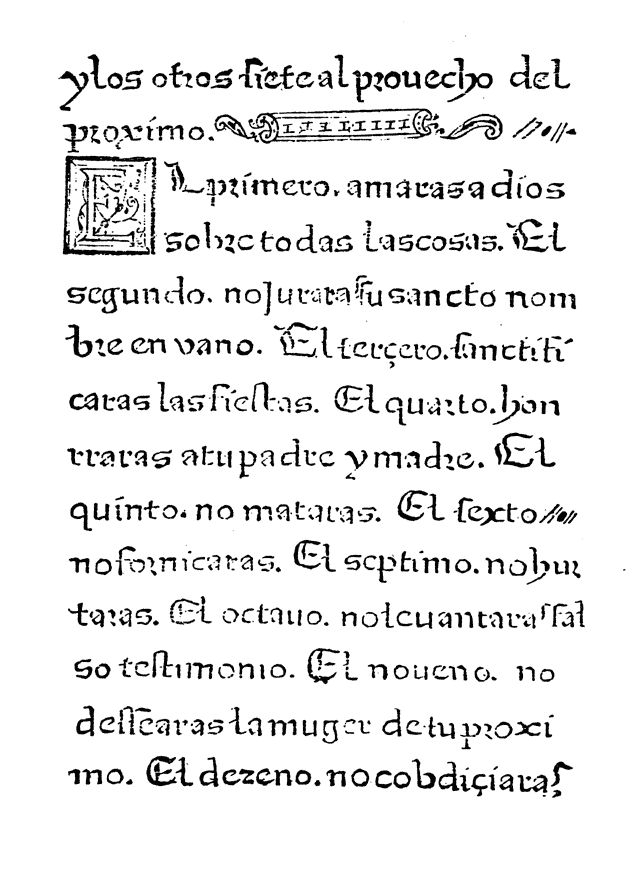
ylos otros siete al prouecho del proximo.
El primero, amarasa dios sobre todas las cosas. El segundo, no jurarasu sancto nom bre en uano. El terçero, sanctisi caras las siestas. El quarto, hon rraras atu padre y madre. El quinto, no mataras. El sexto nofornicaras. El septimo, no hur taras. El octauo, noscuantarafal* so testimonio. El noueno, no dessearas la muger de suproxi mo. El dezeno, nocobdiçiaras, [31]
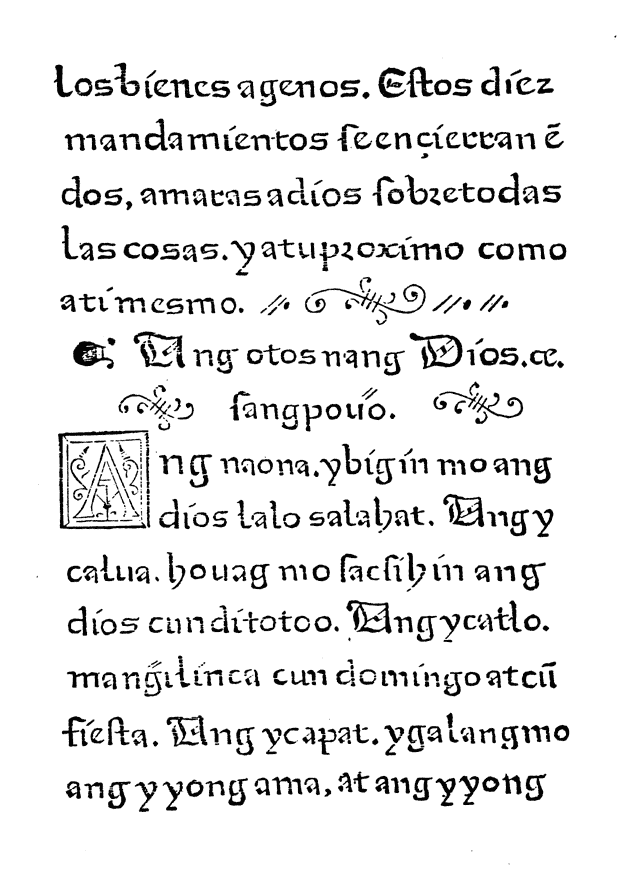
los bienes agenos. Estos diez mandamientos se ençierran ẽ dos, amarasa dios sobre todas las cosas. y atu proximo como ati mesmo.
Ang otos nang Dios,ce, sangpouo.
Ang naona, ybigin mo ang dios lalo sa lahat. Ang y calua, houag mo sacsihin ang dios cundi totoo. Ang ycatlo mang̃ilin ca cun domingo at cũ siesta. Ang ycapat, ygalang mo ang yyong ama, at ang yyong [32]
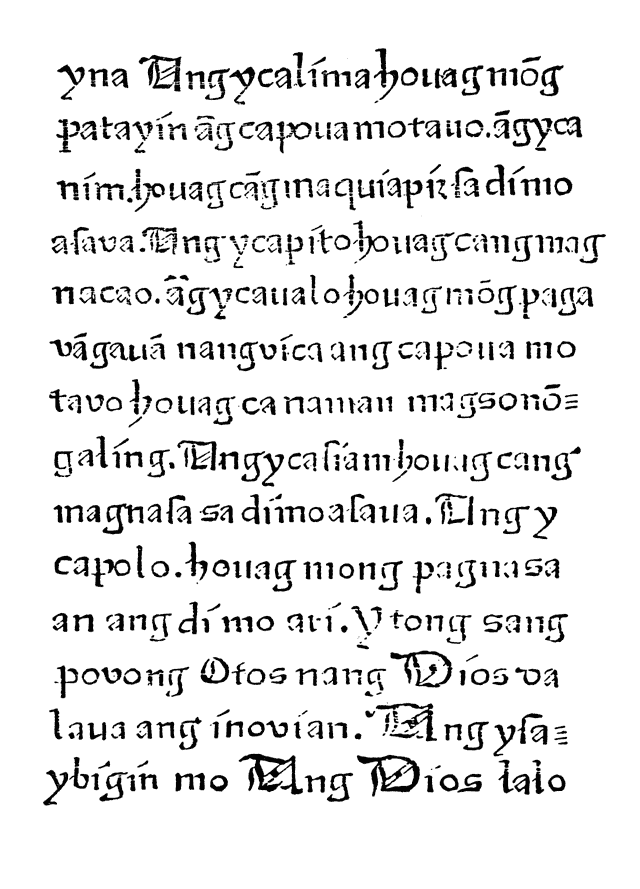
yna. Ang ycalima houag mõg patayin ãg capoua mo tauo. ãg yca nim, houag cãg maquiapir sa di mo asaua. Ang ycapito houag cang mag nacao, ãg ycaualo houag mõg paga uãgauã nanguica ang capoua mo tauo houag ca naman magsonõ galing. Ang ycasiam houag cang mag nasa sa di mo asaua. Ang y capolo, houag mong pagnasa ang di mo ari. Ytong sang pouong Otos nang Dios da laua ang inouian. Ang ysa ybigin mo Ang Dios lalo [33]
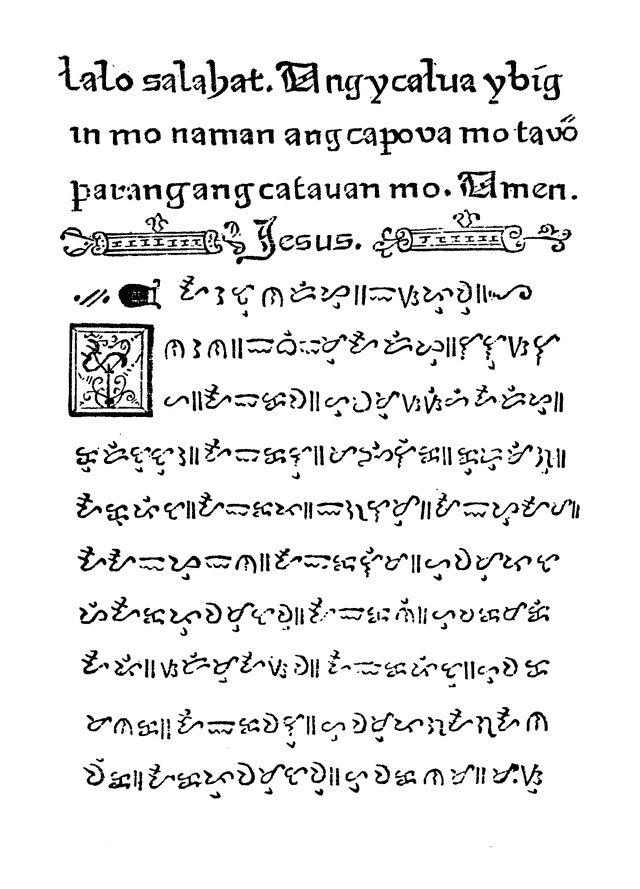
lalo sa lahat. Ang ycalua ybig in mo naman ang capoua mo tauo parang ang catauan mo. Amen. Jesus.
ᜀ ᜂ ᜆᜓ ᜈ ᜇᜒ ᜌᜓ᜶ ᜁ ᜐ ᜉᜓ ᜏᜓ ᜀ ᜈ ᜂ ᜈ᜶ ᜁ ᜊᜒ ᜁ ᜋᜓ ᜀ ᜇᜒ ᜌᜓ᜶ ᜎ ᜎᜓ ᜐ ᜎ ᜑ᜶ ᜀ ᜁ ᜃ ᜏ᜶ ᜑᜓ ᜏ ᜋᜓ ᜐ ᜐᜒ ᜑᜒ ᜀ ᜇᜒ ᜌᜓ ᜃᜓ ᜇᜒ ᜆᜓ ᜆᜓ ᜂ᜶ ᜀ ᜁ ᜃ ᜎᜓ᜶ ᜋ ᜅᜒ ᜎᜒ ᜃ᜶ ᜃᜓ ᜇᜓ ᜋᜒ ᜄᜓ᜶ ᜀ ᜃᜓ ᜉᜒ ᜆ᜶ ᜀ ᜁ ᜃ ᜉ᜶ ᜁ ᜄ ᜎ ᜋᜓ᜶ ᜀ ᜁ ᜌᜓ ᜀ ᜋ᜶ ᜀ ᜀ ᜁ ᜌᜓ ᜁ ᜈ᜶ ᜀ ᜁ ᜃ ᜎᜒ ᜋ᜶ ᜑᜓ ᜏ ᜋᜓ ᜉ ᜆ ᜌᜒ ᜀ ᜃ ᜉᜓ ᜏ ᜋᜓ ᜆᜓ ᜏᜓ᜶ ᜀ ᜁ ᜃ ᜈᜒ᜶ ᜑᜓ ᜏ ᜃ ᜋ ᜃᜒ ᜀ ᜉᜒ ᜐ ᜇᜒ ᜋᜓ ᜀ ᜐ ᜏ᜶ ᜀ ᜁ ᜃ ᜉᜒ ᜆᜓ᜶ ᜑᜓ ᜏ ᜃ ᜋ ᜈ ᜃ᜶ ᜀ ᜁ ᜃ ᜏ ᜎᜓ᜶ ᜑᜓ ᜏ ᜋᜓ ᜉ ᜄ ᜀ ᜄ ᜀ ᜈ ᜏᜒ ᜃ᜶ ᜀ ᜃ ᜉᜓ ᜏ ᜋᜓ ᜆ ᜏᜓ᜶ ᜑᜓ ᜏ ᜃ ᜈ ᜋ ᜋ ᜐᜓ᜶ [34]
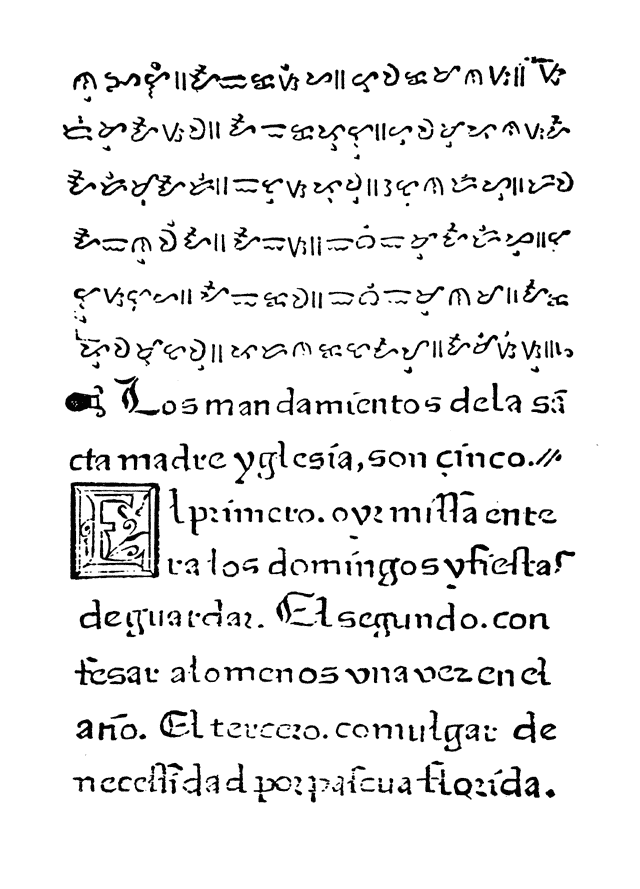
ᜈᜓ ᜅ ᜎᜒ᜶ ᜀ ᜁ ᜃ ᜐᜒ ᜌ᜶ ᜑᜓ ᜏ ᜃ ᜋ ᜈ ᜐ᜶ ᜐ ᜇᜒ ᜋᜓ ᜀ ᜐ ᜏ᜶ ᜀ ᜁ ᜃ ᜉᜓ ᜎᜓ᜶ ᜑᜓ ᜏ ᜋᜓ ᜉ ᜈ ᜐ ᜑᜒ ᜀ ᜇᜒ ᜋᜓ ᜀ ᜇᜒ᜶ ᜁ ᜆᜓ ᜐ ᜉᜓ ᜏᜓ᜶ ᜂ ᜆᜓ ᜈ ᜇᜒ ᜌᜓ᜶ ᜇ ᜏ ᜀ ᜁ ᜈᜓ ᜏᜒ ᜀ᜶ ᜀ ᜁ ᜐ᜶ ᜁ ᜊᜒ ᜁ ᜋᜓ ᜀ ᜇᜒ ᜌᜓ᜶ ᜎ ᜎᜓ ᜐ ᜎ ᜑ᜶ ᜀ ᜁ ᜃ ᜏ᜶ ᜁ ᜊᜒ ᜁ ᜋᜓ ᜈ ᜋ᜶ ᜀ ᜃ ᜉᜓ ᜏ ᜋᜓ ᜆ ᜏᜓ᜶ ᜉ ᜇ ᜈ ᜃ ᜆ ᜀ ᜋᜓ᜶ ᜀ ᜋᜒ ᜐᜒ ᜐᜓ᜶
Los mandamientos de las sã cta madre yglesia, son cinco.
El primero. ourmissa ente ra los domingos y siestas de guardar. El segundo, con fesar alomenos una vez en el anõ. El tercero, comulgar de necessidad por pascua florida. [35]
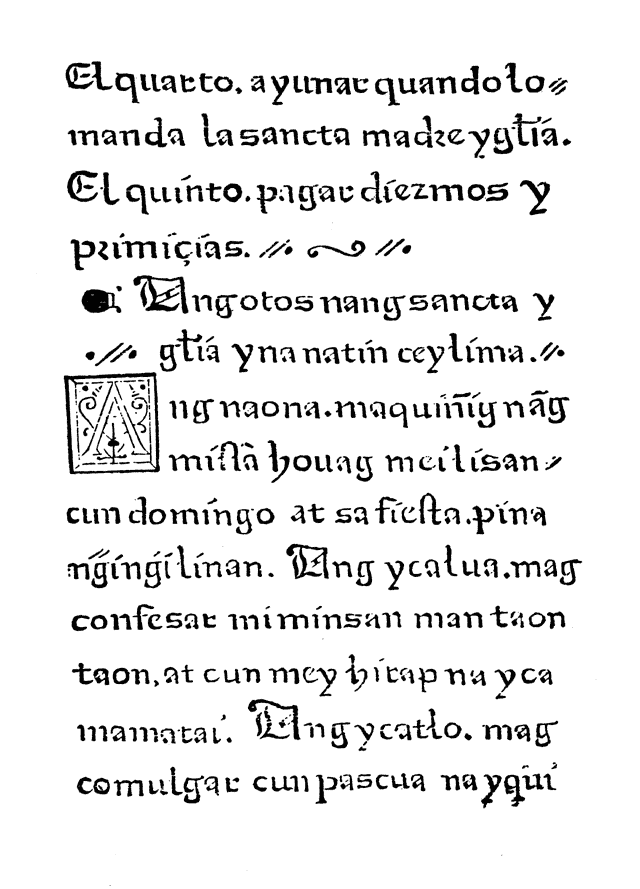
El quarto, ayunar quando lo manda la sancta madre ygtiã. El quinto, pagar diezmos y primiçias.
Ang otos nang sancta y gtiã yna natin ceylima.
Ang naona, maqui~nig nãg missa houag meilisan cun domingo at sa siesta, pina ng̃ingilinan. Ang ycalua, mag confesar miminsan man taon taon, at cun mey hirap na yca mamatai. Ang ycatlo, mag comulgar cun pascua na yqui [36]
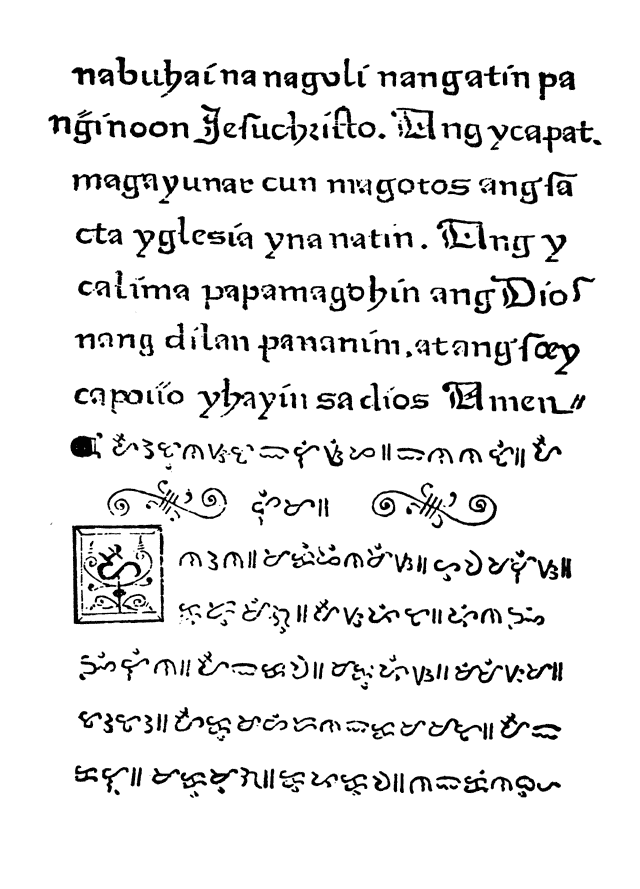
nabuhai na naguli nang atin pa ng̃inoon Jesuchristo. Ang ycapat, magayunar cun magotos ang sa cta yglesia yna natin. Ang y calima papamagohin ang Dios nang dilan pananim, at ang scey capoua yhayin sa dios. Amen.
ᜀ ᜂ ᜆᜓ ᜈ ᜐ ᜆ ᜁ ᜎᜒ ᜐᜒ ᜌ᜶ ᜁ ᜈ ᜈ ᜆᜒ ᜀ ᜀ ᜎᜒ ᜋ᜶ ᜀ ᜈ ᜂ ᜈ᜶ ᜋ ᜃᜒ ᜌᜒ ᜈ ᜋᜒ ᜐ᜶ ᜑᜓ ᜏ ᜋ ᜎᜒ ᜐ᜶ ᜃᜓ ᜇᜓ ᜋᜒ ᜄᜓ᜶ ᜀ ᜐ ᜉᜒ ᜆ᜶ ᜉᜒ ᜈ ᜅᜒ ᜅᜒ ᜎᜒ ᜈ᜶ ᜀ ᜁ ᜃ ᜏ᜶ ᜋ ᜃᜓ ᜉᜒ ᜐ᜶ ᜋᜒ ᜋᜒ ᜐ ᜋ᜶ ᜆ ᜂ ᜆ ᜂ᜶ ᜀ ᜃᜓ ᜋ ᜑᜒ ᜇ ᜈ ᜁ ᜃ ᜋ ᜋ ᜆ᜶ ᜀ ᜁ ᜃ ᜎᜓ᜶ ᜋ ᜃᜓ ᜋᜓ ᜄ᜶ ᜃᜓ ᜉ ᜃᜓ ᜏ᜶ ᜈ ᜁ ᜃᜒ ᜈ ᜊᜓ ᜑ [37]
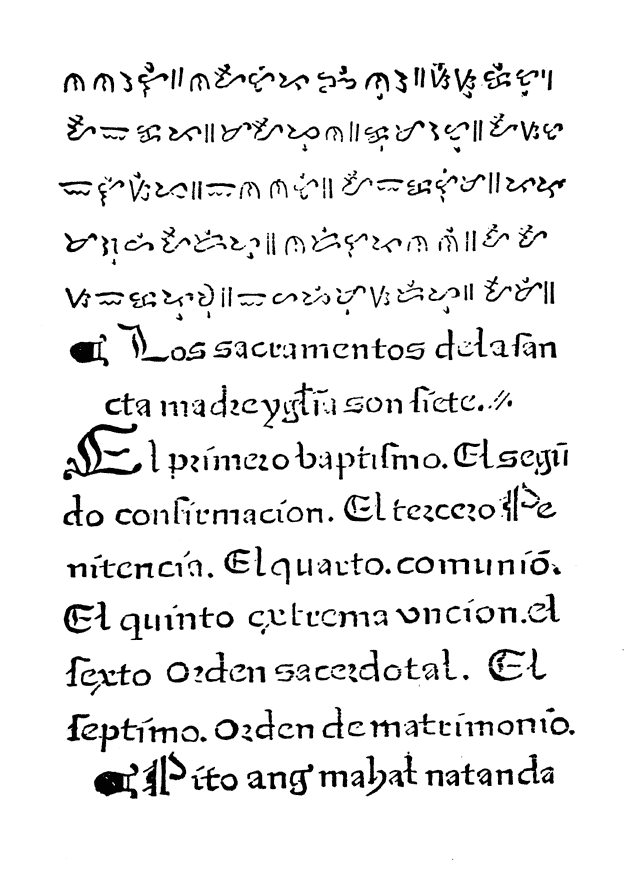
ᜈ ᜈ ᜂ ᜎᜒ᜶ ᜈ ᜀ ᜆᜒ ᜉ ᜅᜒ ᜈᜓ ᜂ᜶ ᜐᜒ ᜐᜓ ᜃᜒ ᜆᜓ᜶ ᜀ ᜁ ᜃ ᜉ᜶ ᜋ ᜀ ᜌᜓ ᜈ᜶ ᜃᜓ ᜋ ᜂ ᜆᜓ᜶ ᜀ ᜐ ᜆ ᜁ ᜎᜒ ᜐᜒ ᜌ᜶ ᜁ ᜈ ᜈ ᜆᜒ᜶ ᜀ ᜁ ᜃ ᜎᜒ ᜋ᜶ ᜉ ᜉ ᜋ ᜄᜓ ᜑᜒ ᜀ ᜇᜒ ᜌᜓ᜶ ᜀ ᜇᜒ ᜎ ᜉ ᜈ ᜈᜒ᜶ ᜀ ᜀ ᜐ ᜁ ᜃ ᜉᜓ ᜏᜓ᜶ ᜁ ᜑ ᜌᜒ ᜋᜓ ᜐ ᜇᜒ ᜌᜓ᜶ ᜀ ᜋᜒ᜶
Los sacramentos de la san cta madre ygtiã son siete.
El primero baptismo. El segũ do confirmacion. El tercero Pe nitencia. El quarto, comuniõ. El quinto extrema uncion. El septimo, orden de matrimonio.
Pito ang mahal natanda [38]
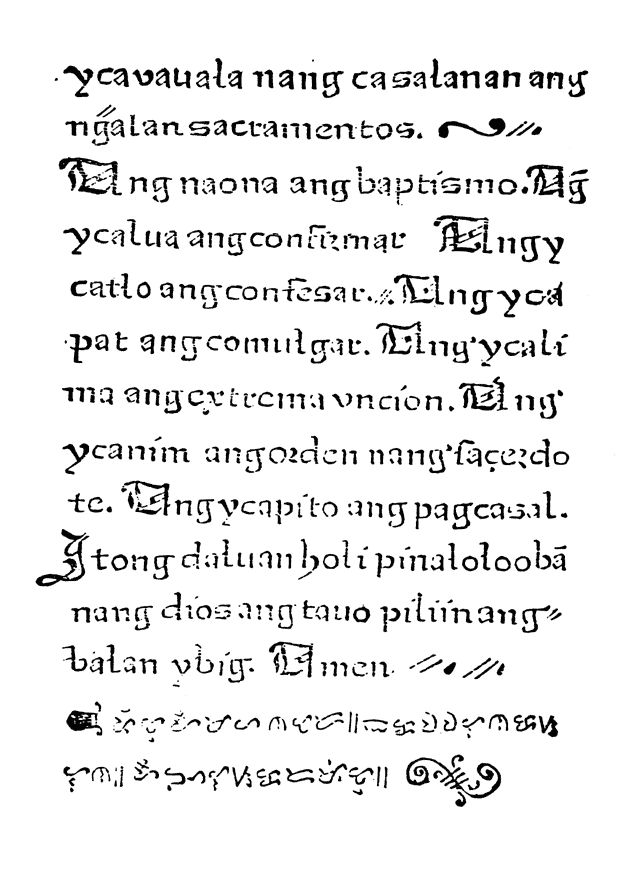
ycauauala nang casalanan ang ng̃alan sacramentos.
Ang naona ang baptismo. Ag̃ ycalua ang confirmar. Ang y catlo ang confesar. Ang yca pat ang comulgar. Ang ycali ma ang extrema uncion. Ang ycanim ang orden nang saçerdo te. Ang ycapito ang pagcasal. Itong daluan holi pinatotoobã nang dios ang tauo piliin ang balan ybig. Amen.
ᜉᜒ ᜆᜓ ᜀ ᜋ ᜑ ᜈ ᜆ ᜇ᜶ ᜀ ᜃ ᜏ ᜏ ᜎ ᜈ ᜃ ᜐ ᜎ ᜈ᜶ ᜀ ᜅ ᜎ ᜐ ᜃ ᜇ ᜋᜒ ᜆᜓ᜶ [39]
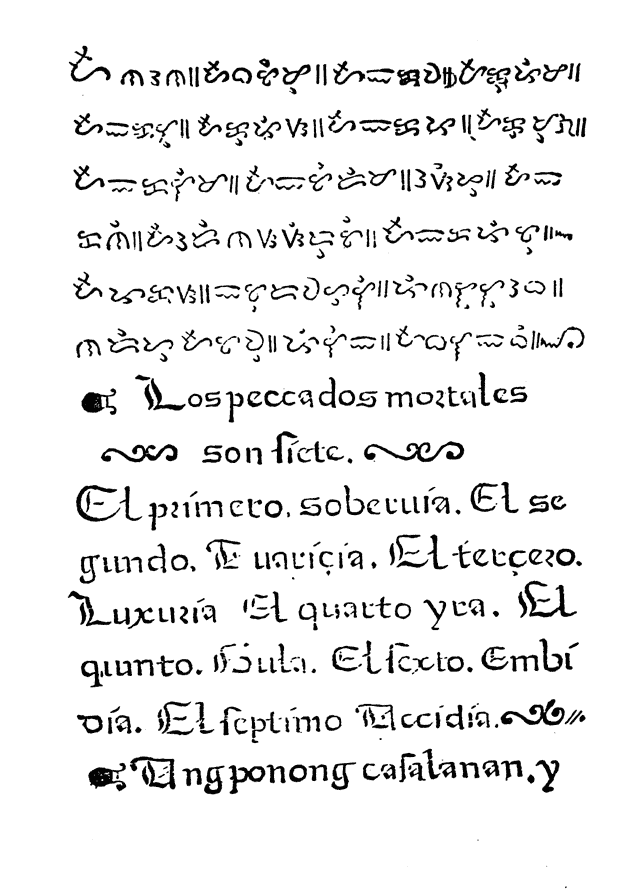
ᜀ ᜈ ᜂ ᜈ᜶ ᜀ ᜊ ᜆᜒ ᜋᜓ᜶ ᜀ ᜁ ᜃ ᜏ᜶ ᜀ ᜃᜓ ᜉᜒ ᜋ᜶ ᜀ ᜁ ᜃ ᜎᜓ᜶ ᜀ ᜃᜓ ᜉᜒ ᜐ᜶ ᜀ ᜁ ᜃ ᜉ᜶ ᜀ ᜃᜓ ᜋᜓ ᜄ᜶ ᜀ ᜁ ᜃ ᜎᜒ ᜋ᜶ ᜀ ᜁ ᜆᜒ ᜇᜒ ᜋ᜶ ᜂ ᜐᜒ ᜌᜓ᜶ ᜀ ᜁ ᜃ ᜈᜒ᜶ ᜀ ᜂ ᜇᜒ ᜈ ᜐ ᜐᜒ ᜇᜓ ᜆᜒ᜶ ᜀ ᜁ ᜃ ᜉᜒ ᜆᜓ᜶ ᜀ ᜉ ᜃ ᜐ᜶ ᜁ ᜆᜓ ᜇ ᜏ ᜑᜓ ᜎᜒ᜶ ᜉᜒ ᜈ ᜎᜓ ᜎᜓ ᜂ ᜊ᜶ ᜈ ᜇᜒ ᜌᜓ ᜀ ᜆ ᜏᜓ᜶ ᜉᜒ ᜎᜒ ᜁ᜶ ᜀ ᜊ ᜎ ᜁ ᜊᜒ᜶
Los peccados mortales son siete.
El primero soberuia. El se gundo Euaricia. El tercero, Luxuria. El quarto yra. El quinto, Gula*. El sexto Embi dia. El septimo Accidia.
Ang ponong casalanan, y [40]
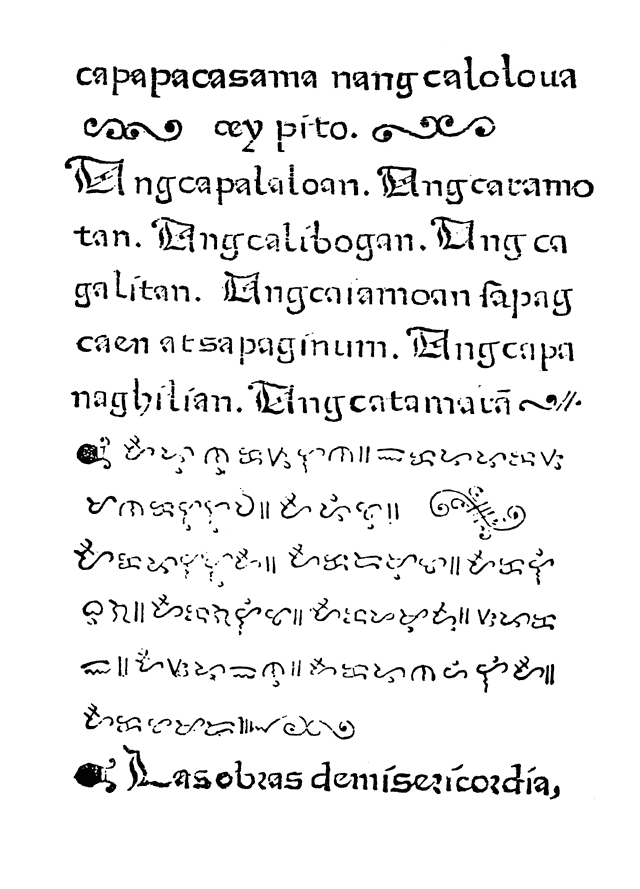
capapacasama nang caloloua cey pito.
Ang capalaloan. Ang caramo tan. Ang calibogan. Ang ca galitan. Ang caiamoan sapag caen at sapag inum. Ang capa naghilian. Ang catamarã.
ᜀ ᜉᜓ ᜈᜓ ᜃ ᜐ ᜎ ᜈ᜶ ᜁ ᜃ ᜉ ᜉ ᜃ ᜐ ᜋ ᜈ ᜃ ᜎᜓ ᜎᜓ ᜏ᜶ ᜀ ᜉᜒ ᜆᜓ᜶ ᜀ ᜃ ᜉ ᜎ ᜎᜓ ᜀ᜶ ᜀ ᜃ ᜇ ᜋᜓ ᜆ᜶ ᜀ ᜃ ᜎᜒ ᜊᜓ ᜄ᜶ ᜀ ᜃ ᜄ ᜎᜒ ᜆ᜶ ᜀ ᜃ ᜌ ᜋᜓ ᜀ᜶ ᜐ ᜉ ᜃ ᜁ᜶ ᜀ ᜐ ᜉ ᜁ ᜈᜓ᜶ ᜀ ᜃ ᜉ ᜈ ᜑᜒ ᜎᜒ ᜀ᜶ ᜀ ᜃ ᜆ ᜋ ᜇ᜶
Las obras demisericordia, [41]
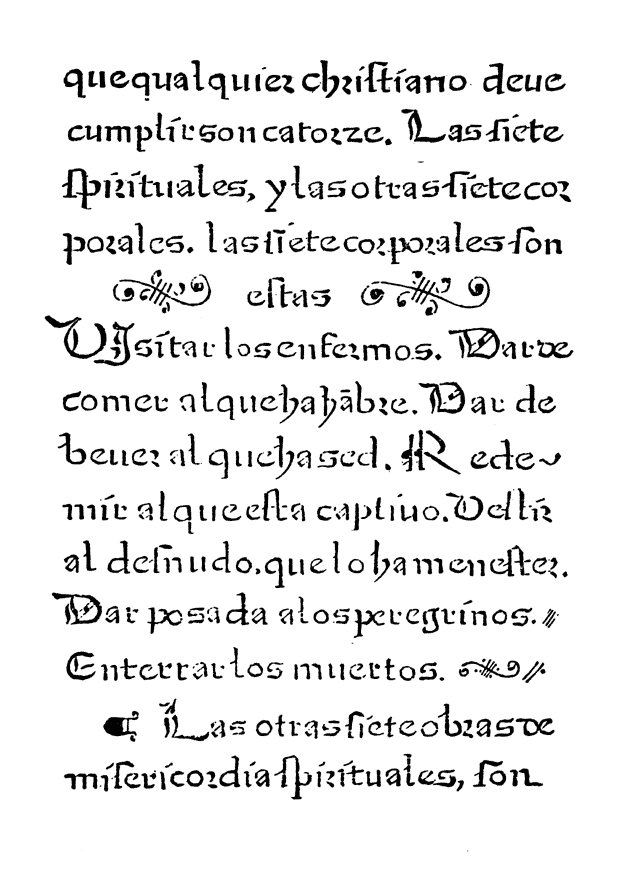
que qualquier chistiano deue cumplirson catorze. Las siete spirituales, y las otras siete cor porales. las siete corporales son estas.
Ujsitar los enfermos. Dar de comer al que hahãbre. Dar de beuer al que hased. Recte mir al que esta captiuo. Deltir al desnudo, que lo hamenester. Dar posada a los peregrinos. Enterrar los muertos.
Las otras siete obras de misericordia spirituales, son [42]
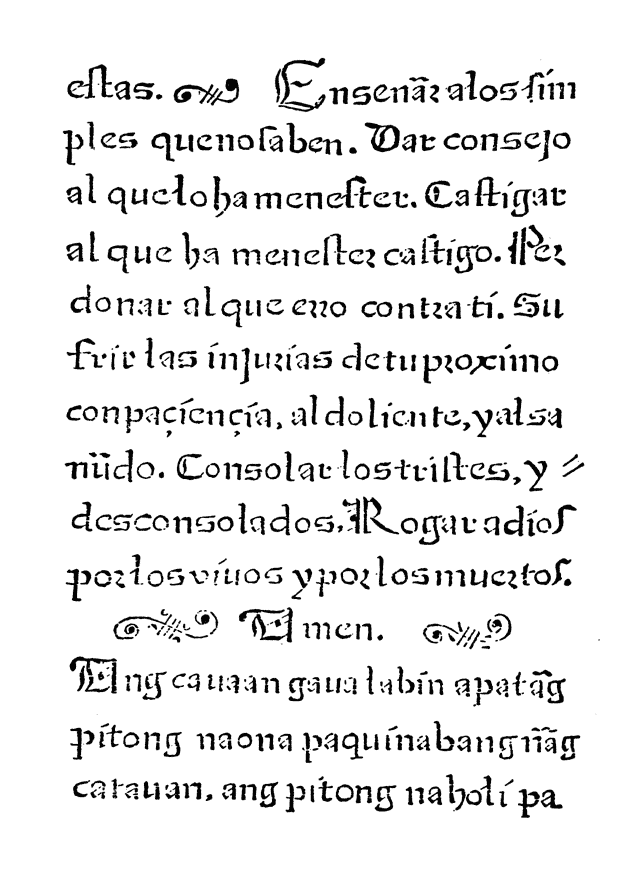
estas. Ensenãs alos sim ples queno saben. Dar consejo al quelo hamenester. Castigar al que hamenester castigo. Per donar al que erro contrati. Su friutas injurias de tu proximo conpaciencia, al doliente, yatsa nüdo. Consolar los tristes, y desconsolados, Rogardios por los uiuos y por los muertos. Amen.
Ang cauaan gaua labin apat ãg pitong naona paquinabang nãg catauan, ang pitong naholi pa [43]
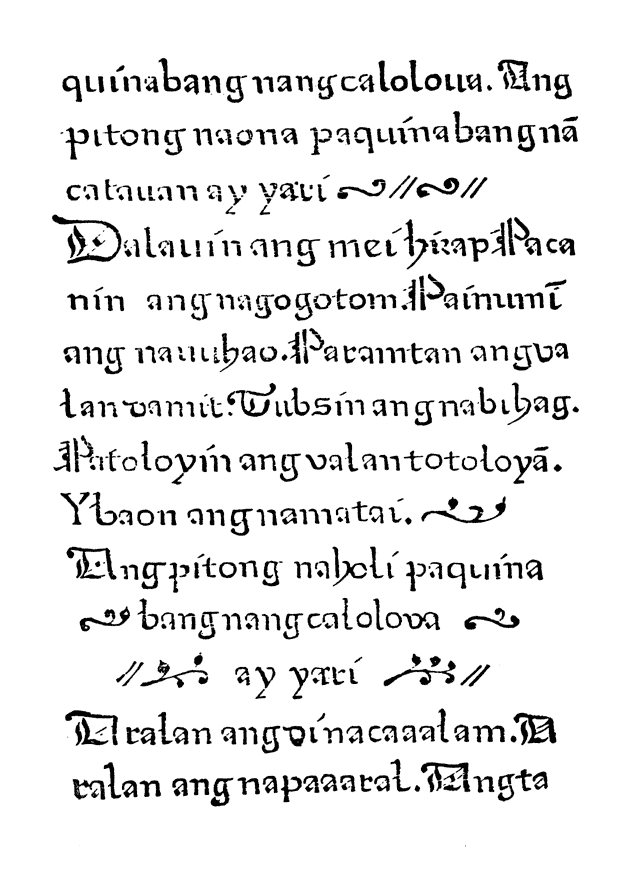
quinabang nang caloloua. Ang pitong naona paquinabang nã catauan ay yari.
Dalauin ang mei hirap. Paca nin ang nagogotom. Painumĩ ang nauuhao. Paramtan ang ua lan damit. Tubsin ang nabihag. Patoloyin ang ualan totoloyã. Ybaon ang namatai.
Ang pitong naholi paquina bang nang caloloua ay yari.
Aralan ang di nacaaalam. A ralan ang napaaaral. Ang ta [44]
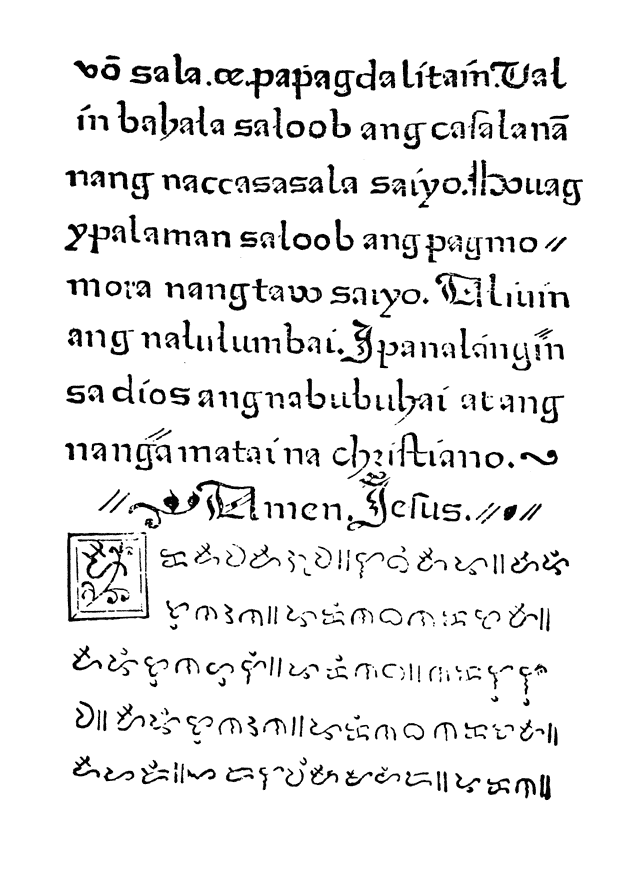
bõ sala, ce, papagdalitain. Ual in bahala sa loob ang casalanã nang naccasasala sa iyo. Houag ypalaman sa loob ang pagmo mora nang tauo sa iyo. Aliuin ang nalulumbai. Ipanalang̃in sa dios ang nabubuhai at ang nang̃a matai na christiano. Amen Jesus.
ᜀ ᜃ ᜀ ᜏ ᜀ ᜄ ᜏ᜶ ᜎ ᜊᜒ ᜀ ᜉ᜶ ᜀ ᜉᜒ ᜆᜓ ᜈ ᜂ ᜈ᜶ ᜉ ᜃᜒ ᜈ ᜊ ᜈ ᜃ ᜆ ᜀ᜶ ᜀ ᜉᜒ ᜆᜓ ᜈ ᜑᜓ ᜎᜒ᜶ ᜉ ᜃᜒ ᜈ ᜊ᜶ ᜈ ᜃ ᜎᜓ ᜎᜓ ᜏ᜶ ᜀ ᜉᜒ ᜆᜓ ᜈ ᜂ ᜈ᜶ ᜉ ᜃᜒ ᜈ ᜊ ᜈ ᜃ ᜆ ᜀ᜶ ᜀ ᜌ ᜇᜒ᜶ ᜇ ᜎ ᜏᜒ ᜀ ᜋᜒ ᜑᜒ ᜇ᜶ ᜉ ᜃ ᜈ᜶ [45]
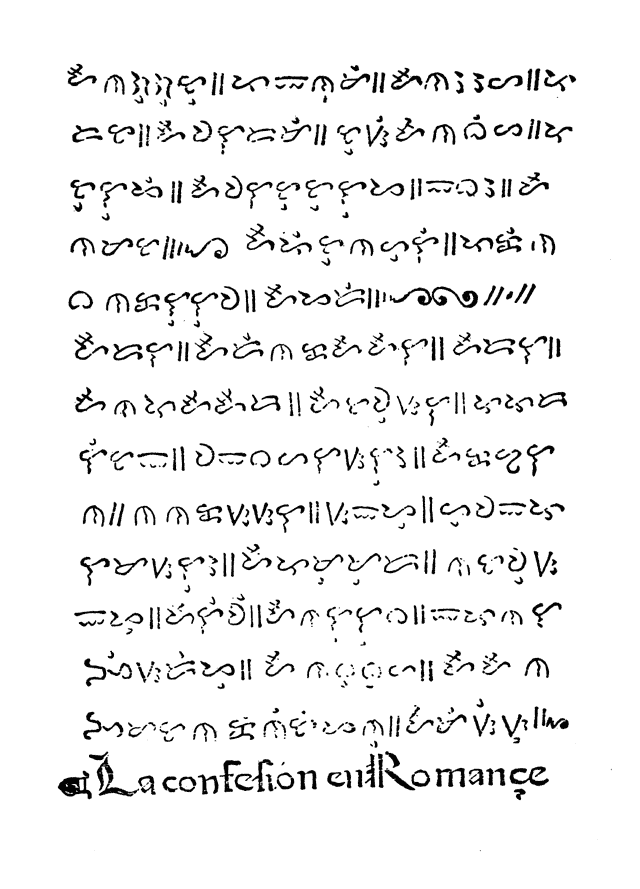
ᜀ ᜈ ᜄᜓ ᜄᜓ ᜆᜓ᜶ ᜉ ᜁ ᜈᜓ ᜋᜒ᜶ ᜀ ᜈ ᜂ ᜂ ᜑ᜶ ᜉ ᜇ ᜆ᜶ ᜀ ᜏ ᜎ ᜇ ᜋᜒ᜶ ᜆᜓ ᜐᜒ ᜀ ᜈ ᜊᜒ ᜑ᜶ ᜉ ᜆᜓ ᜎᜓ ᜌᜒ᜶ ᜀ ᜏ ᜎ ᜆᜓ ᜆᜓ ᜎᜓ ᜌ᜶ ᜁ ᜊ ᜂ᜶ ᜀ ᜈ ᜋ ᜆ᜶ ᜀ ᜉᜒ ᜆᜓ ᜀ ᜑᜓ ᜎᜒ᜶ ᜉ ᜃᜒ ᜈ ᜊ ᜈ ᜃ ᜎᜓ ᜎᜓ ᜏ᜶ ᜀ ᜌ ᜇᜒ᜶ ᜀ ᜇ ᜎ᜶ ᜀ ᜇᜒ ᜈ ᜃ ᜀ ᜀ ᜎ᜶ ᜀ ᜇ ᜎ᜶ ᜀ ᜈ ᜉ ᜀ ᜀ ᜇ᜶ ᜀ ᜆ ᜏᜓ ᜐ ᜎ᜶ ᜉ ᜉ ᜇ ᜎᜒ ᜆ ᜁ᜶ ᜏ ᜁ ᜊ ᜑ ᜎ ᜐ ᜎᜓ ᜂ᜶ ᜀ ᜃ ᜐ ᜎ ᜈ᜶ ᜈ ᜈ ᜃ ᜐ ᜐ ᜎ᜶ ᜐ ᜁ ᜌᜓ᜶ ᜑᜓ ᜏ ᜁ ᜉ ᜎ ᜋ ᜐ ᜎᜓ ᜂ᜶ ᜀ ᜉ ᜋᜓ ᜋᜓ ᜇ᜶ ᜀ ᜆ ᜏᜓ ᜐ ᜁ ᜌᜓ᜶ ᜀ ᜎᜒ ᜏᜒ᜶ ᜀ ᜈ ᜎᜓ ᜎᜓ ᜊ᜶ ᜀ ᜉ ᜈ ᜎ ᜅᜒ ᜐ ᜇᜒ ᜌᜓ᜶ ᜀ ᜈ ᜊᜓ ᜊᜓ ᜑ᜶ ᜀ ᜀ ᜈ ᜅ ᜋ ᜆ ᜈ ᜃᜒ ᜈᜒ ᜆᜒ ᜌ ᜈᜓ᜶ ᜀ ᜋᜒ ᜐᜒ ᜐᜓ᜶
La confesion en Romançe [46]
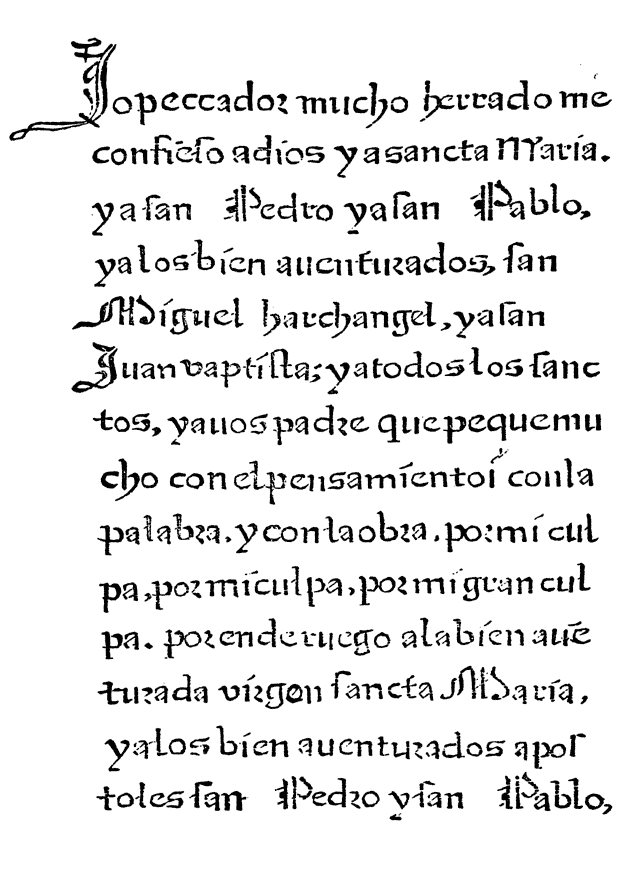
Jopeccador mucho herrado me confieso adios yasancta Maria, ya san Pedro ya san Pablo, ya los bien aueuturados, san Miguel harchangel, ya san Juan baptista; ya todos los sanc tos, yauos padre que peque mu cho con el pensamientoi conla palabra, y conta obra, por mi cul pa por mi culpa, por mi guan cul pa, por en de ruego a la bien auẽ turada uirgen sancta Maria, y alos bien auenturados apos toles san Pedro y san Pablo, [47]
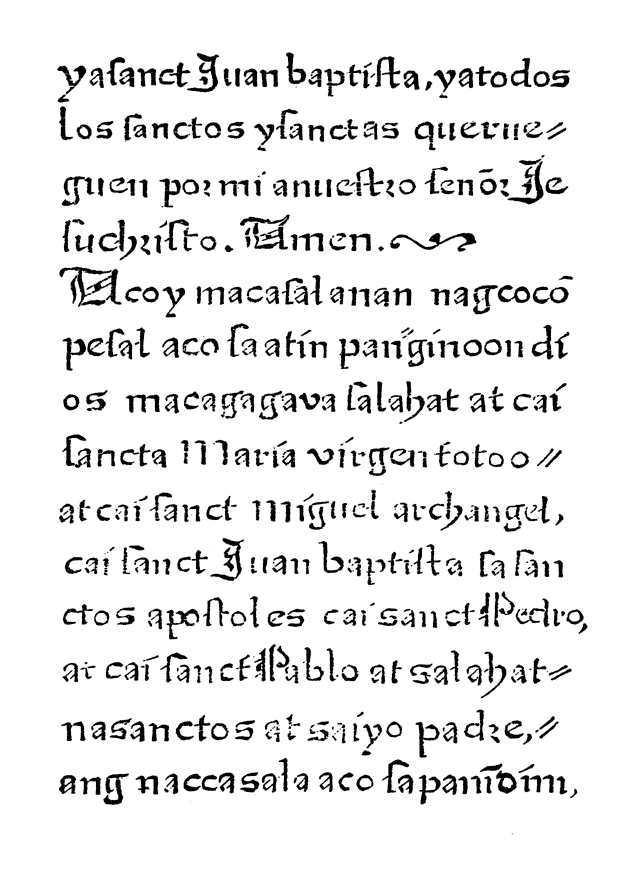
y asanct Juan baptista, ya todos los sanctos y sanctas querue quen por mi anuestro senõr. Je suchristo. Amen.
Acoy macasalanan nagcocõ pesal aco sa atin pang̃inoon di os macagagaua sa lahat at cai sancta Maria uirgen totoo at cai sanct Miguel archangel, cai sanct Juan baptista sa san ctos apostoles cai sanct Pedro, at cai sanct Pablo at sa lahat na sanctos at sa iyo padre, ang naccasala aco sa panĩdim, [48]
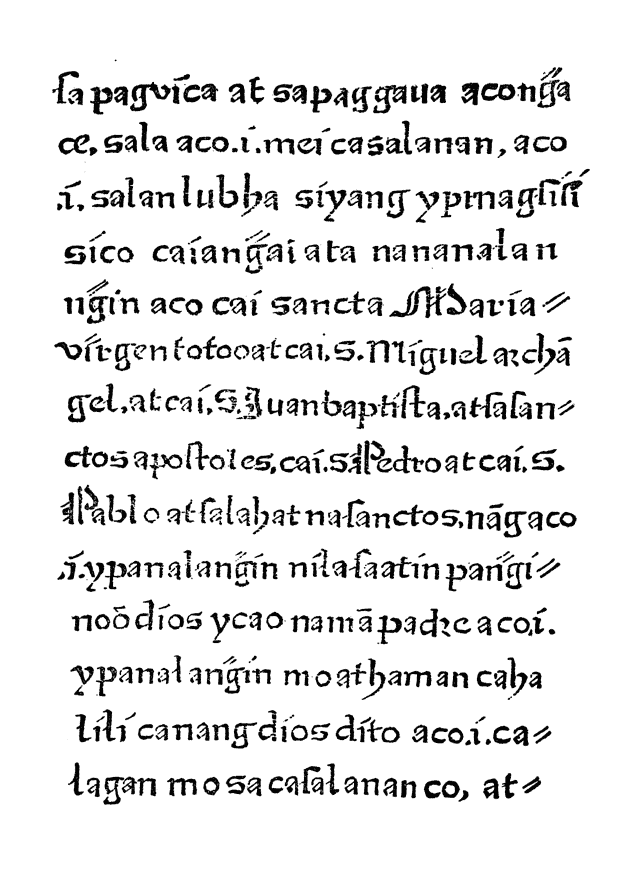
sa pag uica at sa paggaua aco ng̃a ce, sala aco,i, mei casalanan, aco, i, salan lubha siyang ypmagsisi sico caiang̃aiata nananalan ng̃in aco cai sancta Maria uirgen totoo at cai, S. Miguel archã gel, at cai, S.Juan baptista, at sa san ctos apostoles, cai S. Pedro at cai, S. Pablo at sa lahat na sanctos, nãg aco ã. ypanalang̃in nila sa atin pang̃i noõ dios ycao namã padre aco,i. ypanalang̃in mo at haman caha lili canang dios dito aco,i, ca lagan mo sa casalanan co, at [49]
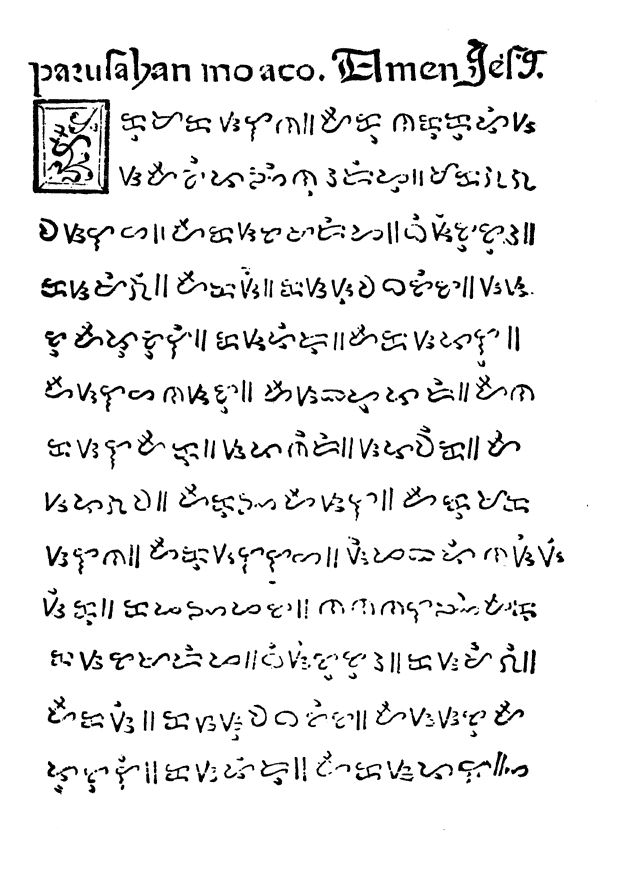
parusahan mo aco. Amen, Jesu.
ᜀ ᜃᜓ ᜋ ᜃ ᜐ ᜎ ᜈ᜶ ᜀ ᜃᜓ ᜈ ᜃᜓ ᜃᜓ ᜉᜒ ᜐ ᜐ ᜀ ᜆᜒ ᜉ ᜅᜒ ᜈᜓ ᜂ ᜇᜒ ᜌᜓ᜶ ᜋ ᜃ ᜄ ᜄ ᜏ ᜐ ᜎ ᜑ᜶ ᜀ ᜃ ᜐ ᜆ ᜋ ᜇᜒ ᜌ᜶ ᜊᜒ ᜐᜒ ᜆᜓ ᜆᜓ ᜂ᜶ ᜃ ᜐ ᜋᜒ ᜄᜒ᜶ ᜀ ᜃ ᜐᜒ᜶ ᜃ ᜐ ᜐᜓ ᜏ ᜊ ᜆᜒ ᜆ᜶ ᜐ ᜐ ᜆᜓ ᜀ ᜉᜓ ᜆᜓ ᜎᜒ᜶ ᜃ ᜐ ᜉᜒ ᜇᜓ᜶ ᜀ ᜃ ᜐ ᜉ ᜎᜓ᜶ ᜀ ᜐ ᜎ ᜑ ᜈ ᜐ ᜆᜓ᜶ ᜀ ᜐ ᜁ ᜌᜓ ᜉ ᜇᜒ᜶ ᜀ ᜈ ᜃ ᜐ ᜎ ᜀ ᜃᜓ᜶ ᜐ ᜉ ᜈᜒ ᜇᜒ᜶ ᜐ ᜉ ᜏᜒ ᜃ᜶ ᜀ ᜐ ᜉ ᜄ ᜏ᜶ ᜀ ᜃᜓ ᜅ ᜀ ᜐ ᜎ᜶ ᜀ ᜃᜓ ᜋ ᜃ ᜐ ᜎ ᜈ᜶ ᜀ ᜃᜓ ᜐ ᜎ ᜎᜓ ᜑ᜶ ᜐᜒ ᜌ ᜁ ᜉᜒ ᜈ ᜐᜒ ᜐᜒ ᜐᜒ ᜃᜓ᜶ ᜃ ᜌ ᜅ ᜌ ᜆᜓ᜶ ᜈ ᜈ ᜈ ᜎ ᜅᜒ ᜀ ᜃᜓ ᜃ ᜐ ᜆ ᜋ ᜇᜒ ᜌᜓ᜶ ᜊᜒ ᜐᜒ ᜆᜓ ᜆᜓ ᜂ᜶ ᜃ ᜐ ᜋᜒ ᜄᜓ᜶ ᜀ ᜃ ᜐᜒ᜶ ᜀ ᜐ ᜐᜓ ᜏ ᜊ ᜆᜒ ᜆ᜶ ᜀ ᜐ ᜐ ᜆᜓ ᜀ ᜉᜓ ᜆᜓ ᜎᜒ᜶ ᜃ ᜐ ᜉᜒ ᜇᜓ᜶ ᜀ ᜃ ᜐ ᜉᜒ ᜎ᜶ [50]
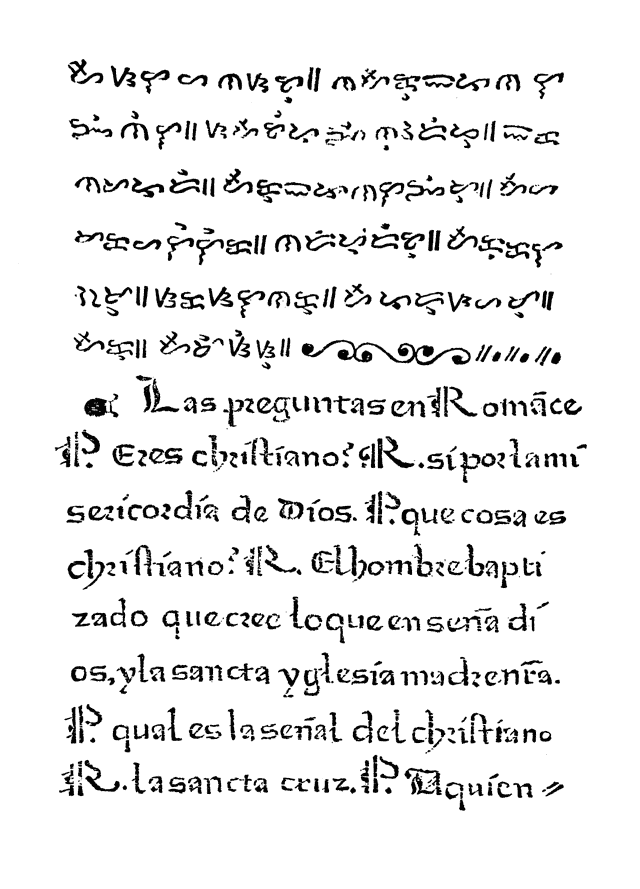
ᜀ ᜐ ᜎ ᜑ ᜈ ᜐ ᜆᜓ᜶ ᜈ ᜀ ᜃᜓ ᜁ ᜉ ᜈ ᜎ ᜅᜒ ᜈᜒ ᜎ᜶ ᜐ ᜀ ᜆᜒ ᜉ ᜅᜒ ᜈᜓ ᜂ ᜇᜒ ᜌᜓ᜶ ᜁ ᜃ ᜈ ᜋ ᜉ ᜇᜒ᜶ ᜀ ᜃᜓ ᜁ ᜉ ᜈ ᜎ ᜅᜒ ᜋᜓ᜶ ᜀ ᜑ ᜋ ᜃ ᜑ ᜎᜒ ᜎᜒ ᜃ᜶ ᜈ ᜇᜒ ᜌᜓ ᜇᜒ ᜆᜓ᜶ ᜀ ᜃᜓ ᜃ ᜎ ᜄ ᜋᜓ᜶ ᜐ ᜃ ᜐ ᜎ ᜈ ᜃᜓ᜶ ᜀ ᜉ ᜇᜓ ᜐ ᜑ ᜋᜓ ᜀ ᜃᜓ᜶ ᜀ ᜋᜒ ᜐᜒ ᜐᜓ᜶
Las preguntas en Romãce P. Eres christiano? R. si porlami sericordia de Dios. P.que cosa es christiano? R. El hombre bapti zado que cree lo que ensenã di os, yla sancta yglesia madre nrã. P. qua les la senãl del christiano R. la sancta cruz. P. Aquien [51]
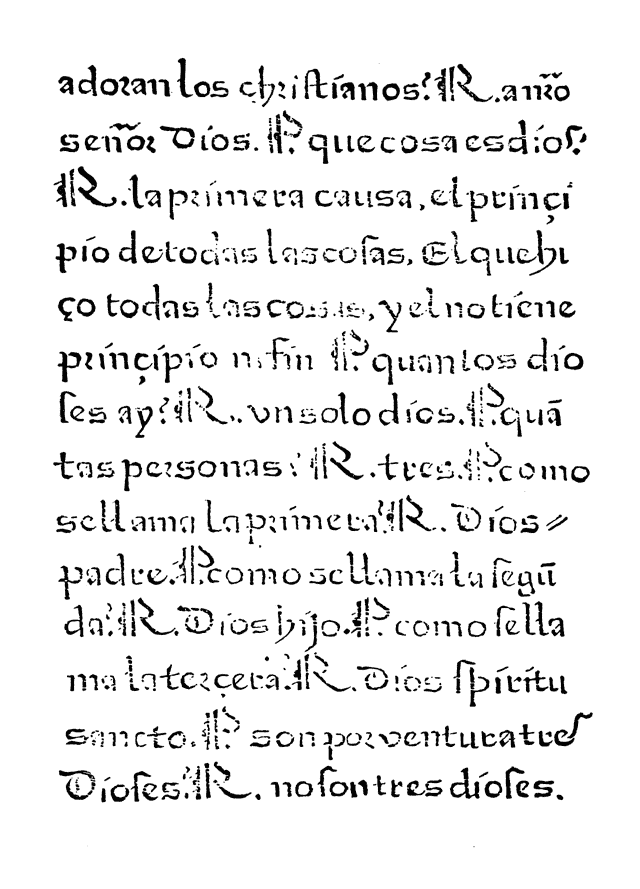
adoran los christianos? R. a nrõ senõr Dios. P. que cosa es dios? R. la primera causa, el princi pio de todas las cosas, El que hi ço todas las cosas, y el no tiene principio nifin. P. quantos dio ses ay? R. un solo dios. P. quã tas personas. R. tres P. como se llama la primera? R. Dios padre. P. como se llama la seũ da? R. Dios hijo. P. como se lla ma la tercera? R. Dios spiritu sancto. P. son por uenturatres Dioses. R. no sontres dioses. [52]
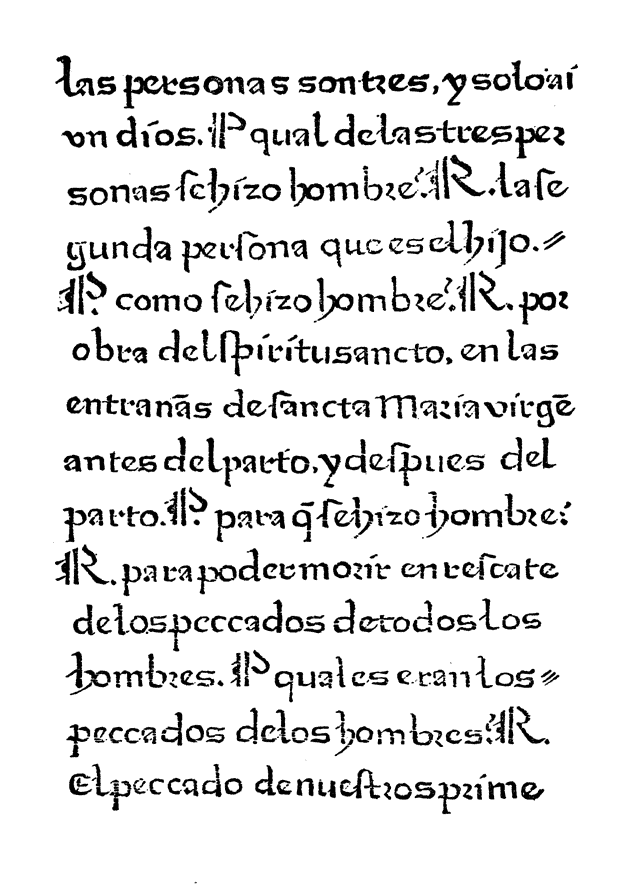
las personas son tres, ysolo ai un dios. P. qual de las tres per sonas se hizo hombre? R. la se gunda persona que es el hijo. P. como se hizo hombre? R. por obra del spiritu sancto, en las entranãs de sancta Maria uirgẽ antes del parto, ydespues del parto. P. para q̃ se hizo hombre? R. para podermorir en rescate de los peccados de todos los hombres. P. qual es erantos peccados de los hombres? R. el peccado de nuestros prime [53]
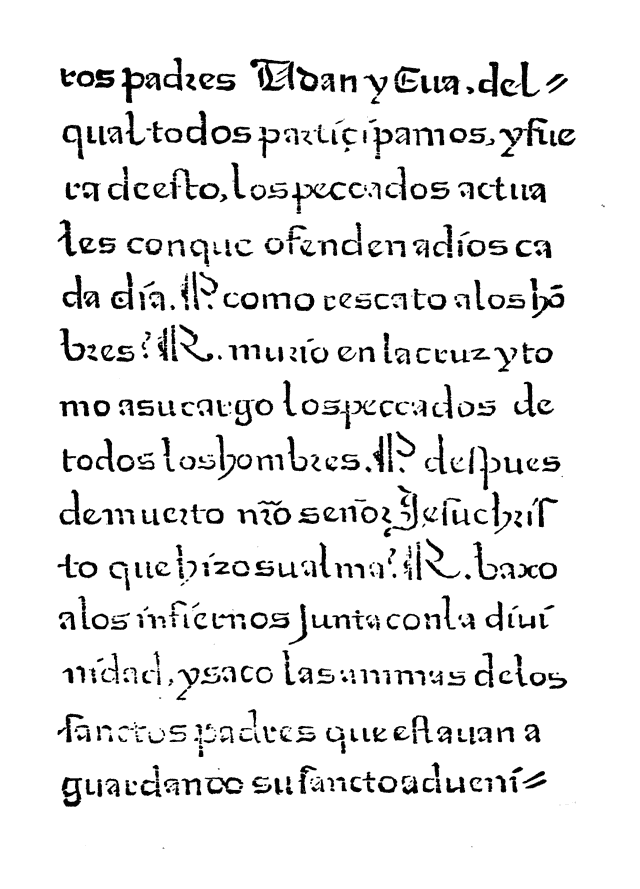
ros padres. Adan y Eva, del qual todos participamos, y fue ra de esto, los peccados actua les conque ofenden a dios ca da dia. P. como rescato a los hõ bres? R. murio en la cruz y to mo asucargo los peccados de todos los hombres. P. despues de muerto nrõ senõr Jesuchris to que hizo su alma? R. baxo a los infiernos junta con la diui nidad, ysaco las animas de los sanctos padres que estauan a guardando su sancto adueni. [54]
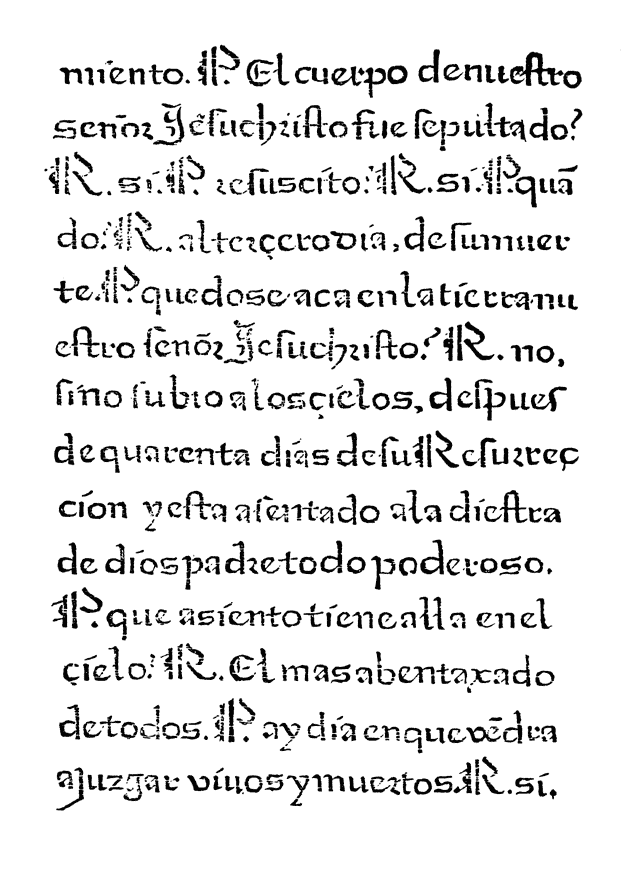
miento. P. El cuerpo de nuestro senõr Jesuchristo fue sepultado? R. si P. resuscito. R. si P.quã do? R. al terçero dia, de su muer te. P. que dose aca en la tierra nu estro senõr Jesuchristo? R. no, sino subro a los çielos, despues de quarenta dias de su. R. esurreç cion y esta asentado ala diestra de dios padre todo poderoso. P. que asiento tiene alla en el cielo? R. El mas abentaxado de todos. P. ay dia enque uẽdra ajuzgar uinos y muertos. R. si, [55]
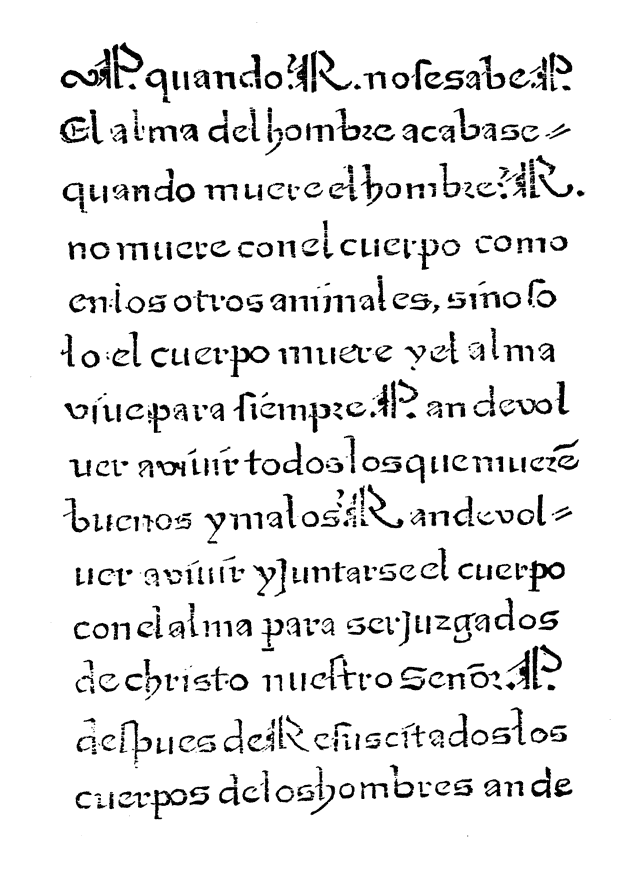
P. quando? R. no se sabe. P. El alma del hombre aca base quando muere el hombre? R. no muere con el cuerpo como en los otros animales, si no so to el cuerpo muere y el alma uiue para siempre. P. ande uol uer adinir todos los que muerẽ buenos y malos? R. ande uol uer adinir y juntar se el cuerpo con el alma para ser juzgados de chirsto nuestro senõr. P. despues de. R. esuscitados los cuerpos de los hombres ande [56]
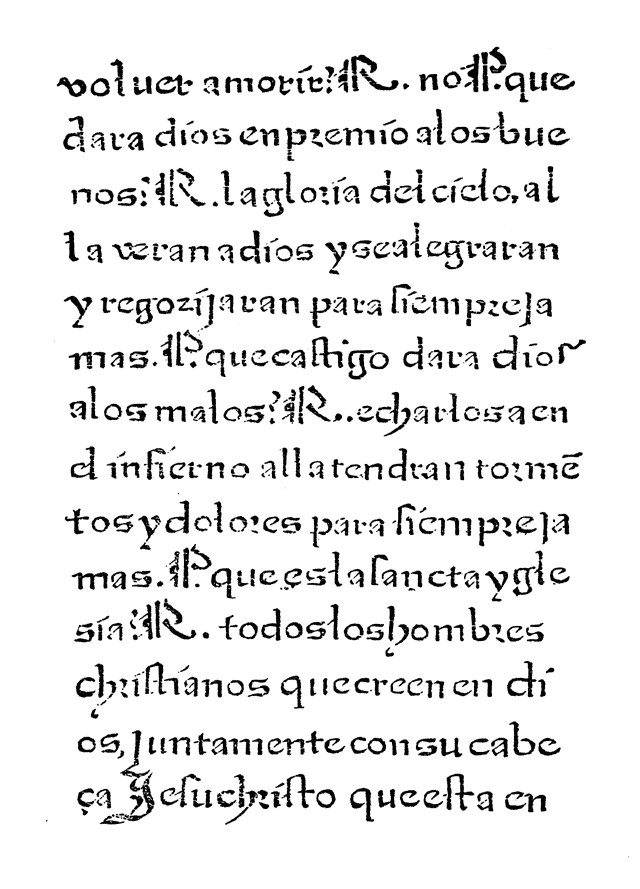
uoluer amorir? R. no P.que dara dios en premio a los bue nos. R. la gloria del cielo al la ueran adios y se alegraran y regozi jaran para siempre ja mas. P. que castigo dara dios a los malos? R. echar los a en el infierno allatendran tormẽ los y dolores para simpre ja mas. P. que esta sancta ygle sia. R. todos los hombres christianos que creen en di os, juntamente consu cabe ça, Jesuschristo que esta en [57]
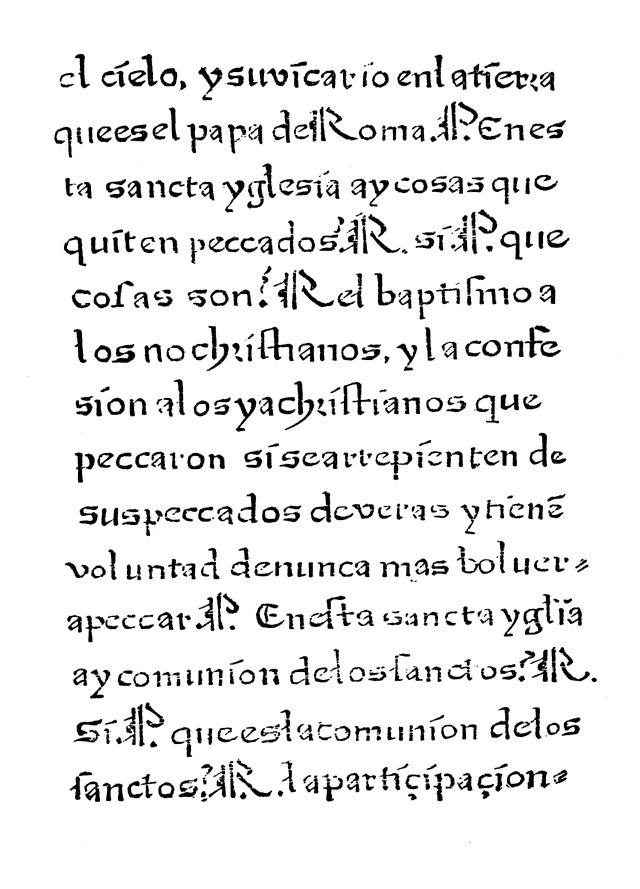
el cielo, ysuuicauio en la tierra que es el papa del Roma. P. En es ta sancta yglesia y cosas que quiten peccados? R. si P. que cosas son? R. el baptisimo a los no christianos, y la confe sion a los ya christianos que peccaron si searrepienten de suspeccados de ueras ytienẽ uoluntad de nunca mas boluer apeccar. P. En esta sancta yglia ay comunion de los sanctos? R. si. P. que esta comunion de los sanctos? R. la partiçipaçion [58]
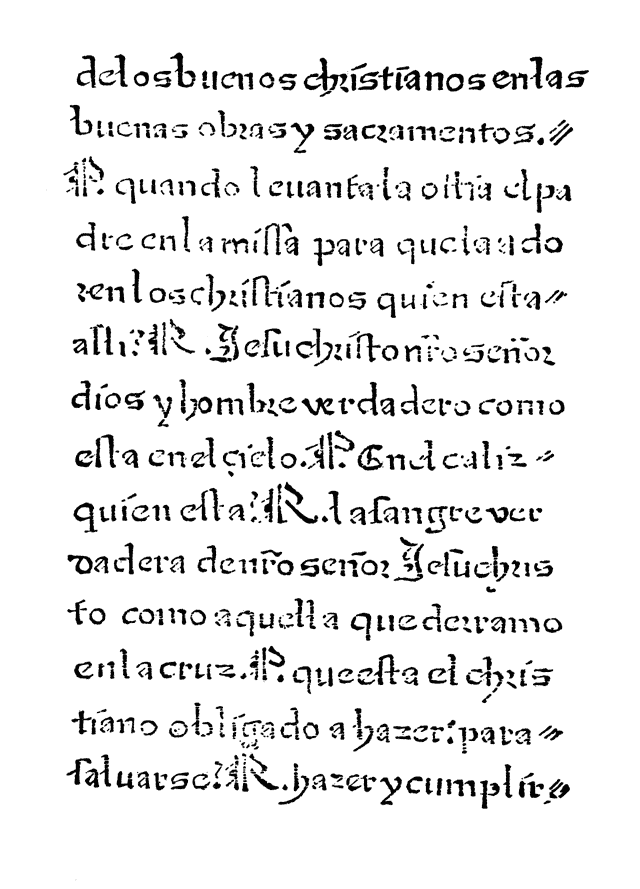
de los buenos christianos en las buenas obras y sacramentos. P. quando leuanta la ostia el pa dre en la missa para quela ado rentos christianos quien esta asti? R. Jesuchristo nrõ senõr dios y hombre uerdadero como esta en el cielo. P. En el caliz quien esta? R. la sangre uer dadera de nrõ senõr Jesuchris to como aquella que deruamo en la cruz. P. que esta el chris tiano obligado a hazer, para saluarse? R. hazer y cumplir. [59]
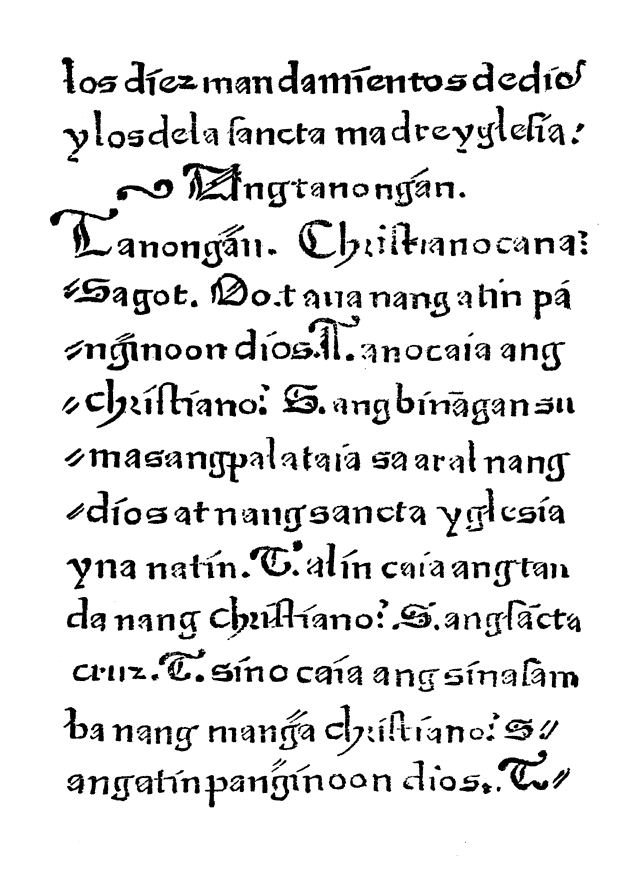
los diez mandamientos de dios y los de la sancta madre yglesia.
Ang tanong̃an.
Tanong̃an. Christiano cana? Sagot. Oo.t aua nang atin pã ng̃inoon dios. T. ano caia ang christiano? S. ang binãgan su masangpalataia sa aral nang dios at nang sancta yglesia yna natin. T. alin caia ang tan da nang christiano? S. ang sãcta cruz. T. sino caia ang sinasam ba nang mang̃a christiano? S. ang atin pang̃inoon dios. T. [60]
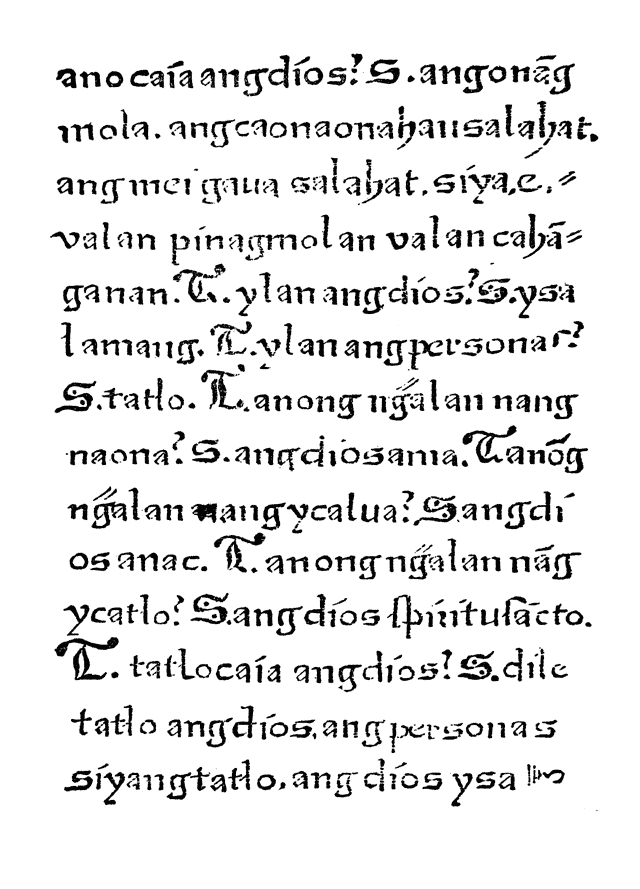
ano caia ang dios? S. ang onãg mola. ang caona onahan sa lahat, ang mei gaua sa lahat, siya,e, ualan pinagmolan ualan cahã ganan. T. ylan ang dios? S. ysa lamang. T. ylan ang personas? S. tatlo. T. anong ng̃alang nang naona? S. ang dios ama. T. anõg ng̃alan nang ycalua? S. ang di os anac. T. anong ng̃alan nãg ycatlo? S. ang dios spiritusãcto. T. tatlo caia ang dios? S. dile tatlo ang dios, ang personas siyang tatlo, ang dios ysa [61]
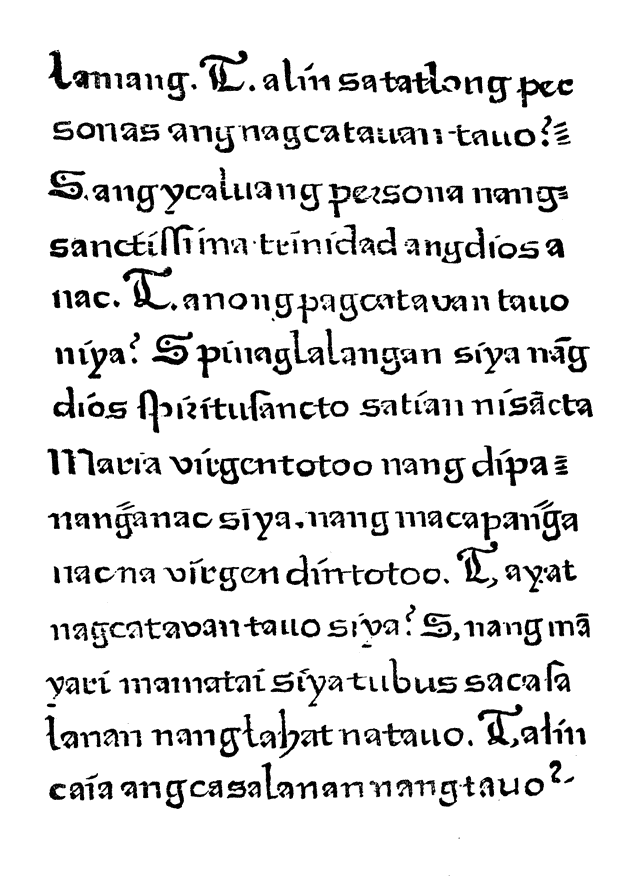
lamang. T. alin sa tatlong per sonas ang nagcatauan tauo? S. ang ycaluang persona nang sanctissima trinidad ang dios a nac. T. anong pagcatauan tauo niya? S. pinaglalangan siya nãg dios spiritusancto satian ni sãcta Maria uirgen totoo nang dipa nang̃anac siya. nang macapang̃a nac na virgen din totoo. T. ayat nagcatauan tauo siya? S, nang mã yari mamatai siya tubus sacasa lanan nang lahat na tauo. T. atin caia ang casalanan nang tauo? [62]
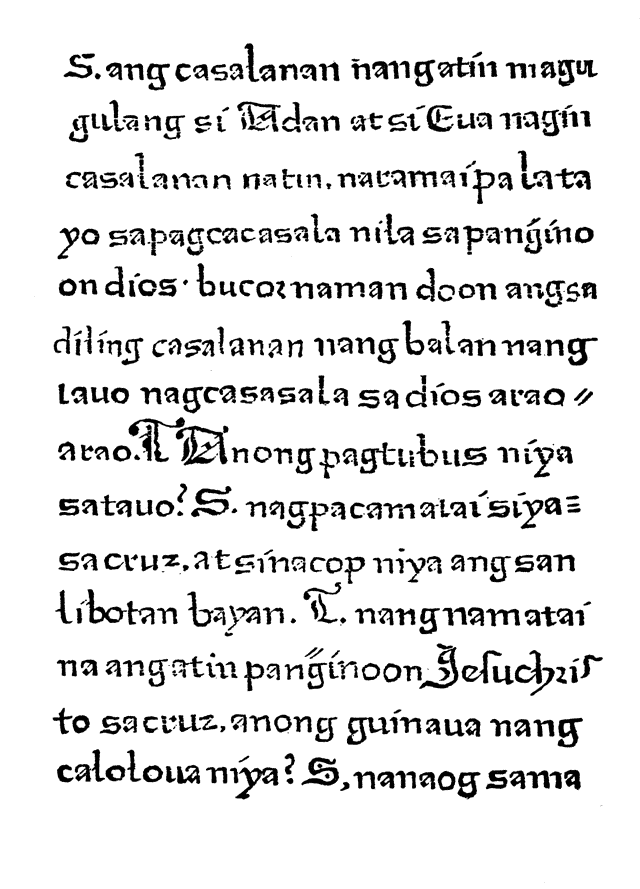
S. ang casalanan nang atin magu gulang si Adan at si Eva nagin casalanan natin, naramai pala ta yo sapagcacasala nila sa pang̃ino on dios. bucor naman doon ang sa diling casalanan nang balan nang tauo nagcasasala sa dios arao arao. T. Anong pagtubus niya sa tauo? S. nagpacamatai siya sa cruz, at sinacop niya ang san libotan bayan. T. nang namatai na ang atin pang̃inoon Jesuchris to sa cruz, anong guinaua nang caloloua niya? S, nanaog sama [63]
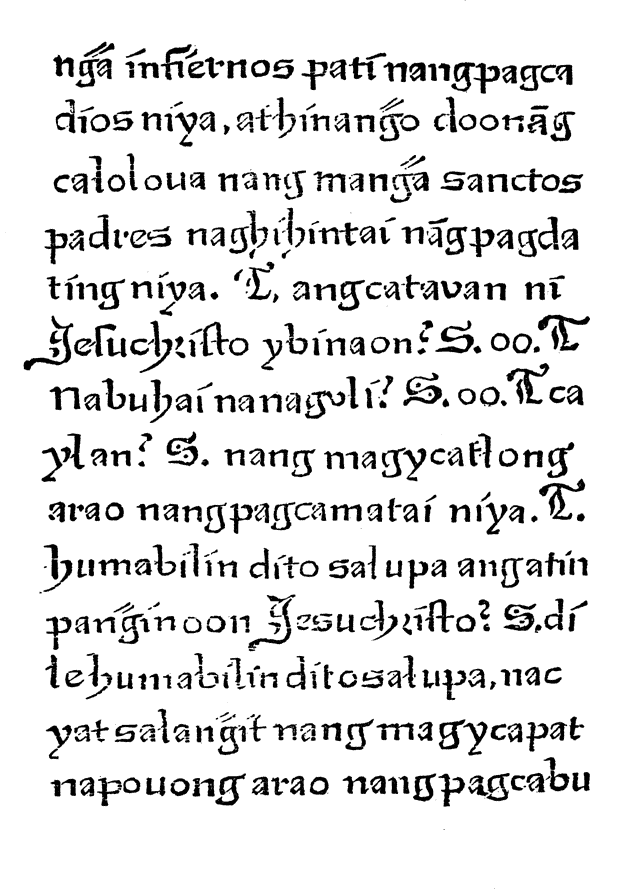
ng̃a infiernos pati nang pagca dios niya, at hinang̃o doon ãg caloloua nang mang̃a sanctos padres naghihintai nãgpagda ting niya. T. ang catauan ni Jesuchristo ybinaon? S. oo. T. nabuhai nanaguli? S. oo. T. ca ylan? S. nang magycatlong arao nangpagcamatai niya. T. humabilin dito sa lupa ang atin pang̃inoon Jesuchristo? S. di le humabilin dito sa lupa, nac yat sa lang̃it nang magycapat napoung arao nang pagcabu [64]
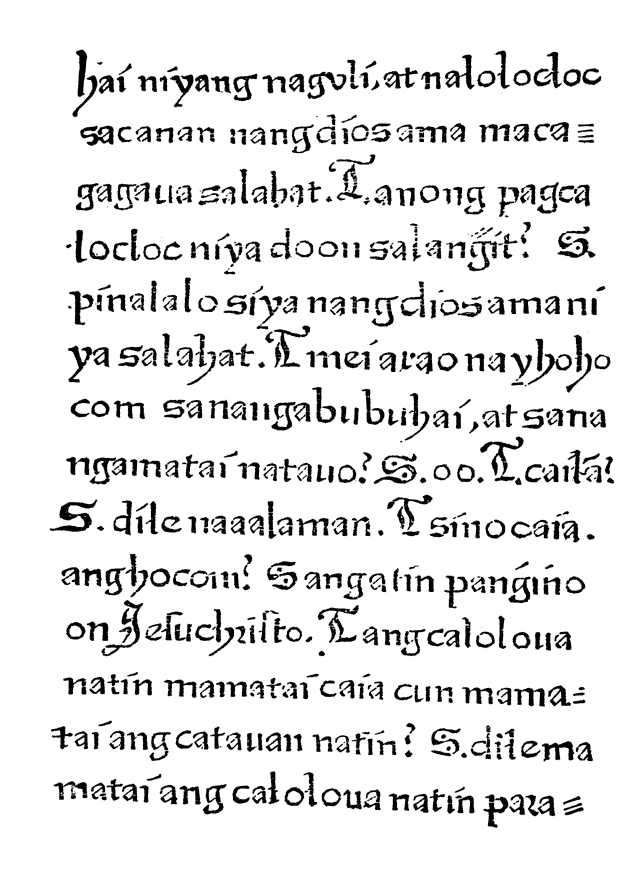
hai niyang naguli, at nalolocloc sa canan nang dios ama maca gagaua sa lahat. T. anong pagca locloc niya doon sa lang̃it? S. pinalalo siya nang dios ama ni ya sa lahat. T. mei arao na yhoho com sa nangabubuhai, at sana ngamatai natauo? S. oo T. cailã? S. dile naaalaman. T. sino caia, ang hocom? S. ang atin pang̃ino on Jesuchristo. T. ang caloloua natin mamatai caia cun mama tai ang catauan natin? S. dile ma matai ang caloloua natin para [65]
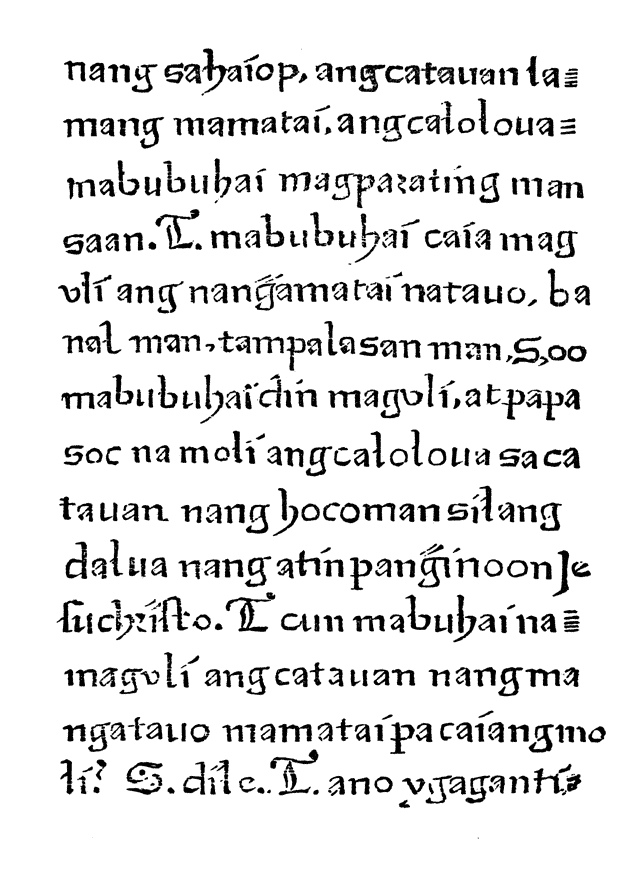
nang sa haiop, ang catauan la mang mamatai, ang caloloua mabubuhai magparating man saan. T. mabubuhai caia mag uli ang nang̃amatai natauo, ba nal man, tampalasan man. S, oo mabubuhai din maguli, at papa soc na moli ang caloloua sa ca tauan nang hocoman silang dalua nang atin pang̃inoon Je suchristo. T. cun mabuhai na maguli ang catauan nang ma nga tauo mamatai pa caiang mo li? S. dile. T. ano ygaganti [66]
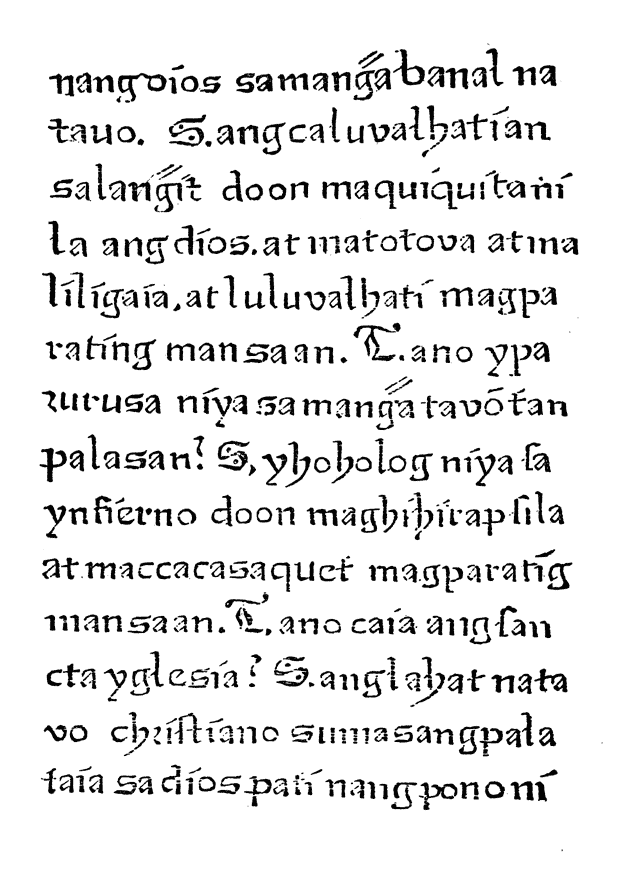
nang dios sa mang̃a banal na tauo. S. ang caluualhatian sa lang̃it doon maquiquita ni la ang dios, at matotoua at ma liligaia, at luluualhati magpa rating man saan. T. ano ypa rurusa niya sa mang̃a tauõ tan palasan? S, yhoholog niya sa ynfierno doon maghihirap sila at maccacasaquet magparatĩg man saan. T. ano caia ang san cta yglesia? S. ang lahat nata uo christiano sumasangpala taia sa dios pati nang pononi [67]
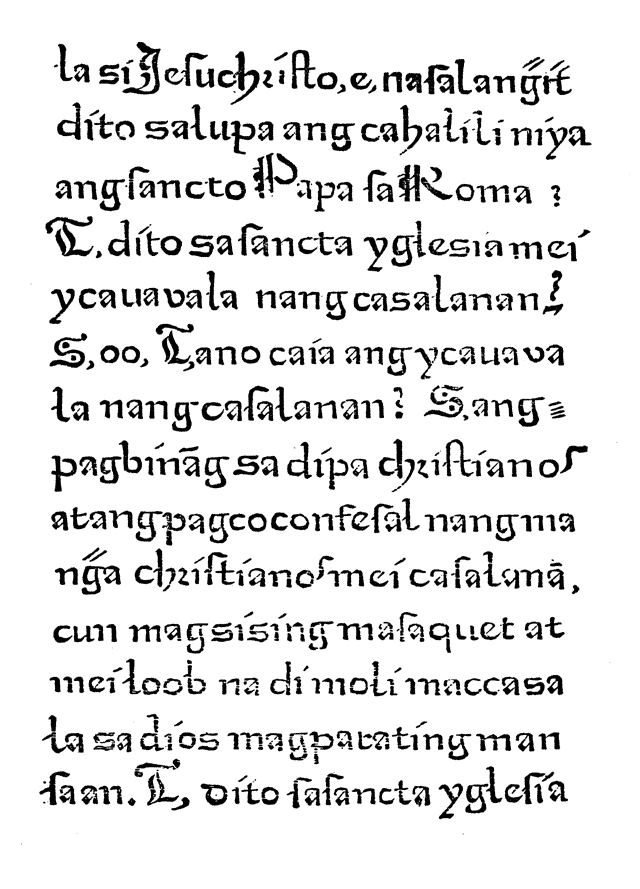
la si Jesuchristo,e, nasa lang̃it dito sa lupa ang cahalili niya ang sancto Papa sa Roma? T. dito sa sancta yglesia mei ycauauala nang casalanan? S, oo, T, ano caia ang ycauaua la nang casalanan? S, ang pinagbinãg sa dipa christianos at ang pagcoconfesal nang ma ng̃a christianos mei casalanã, cun magsising masaquet at mei loob na di moli maccasa la sa dios magparating man saan. T, dito sasancta yglesia [68]
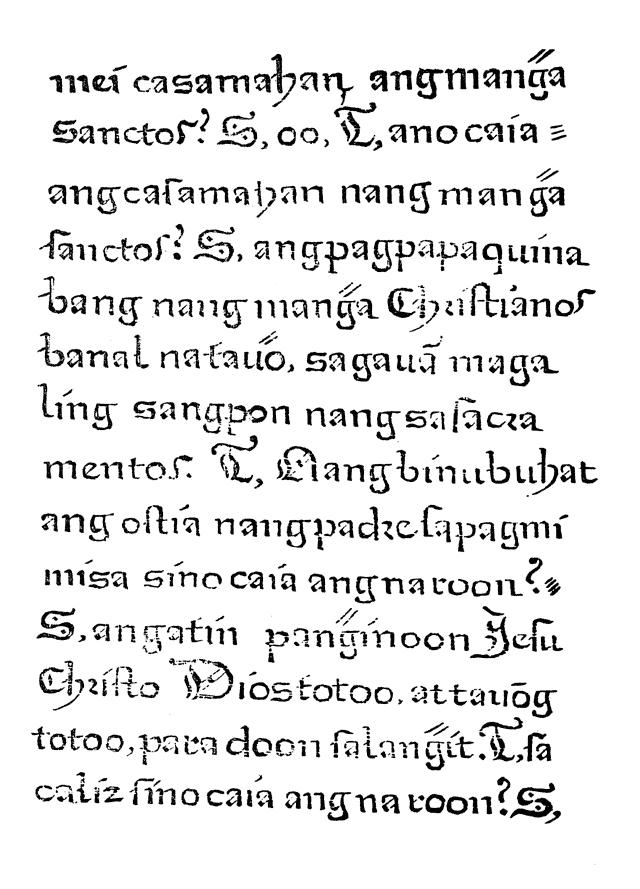
mei casamahan ang mang̃a sanctos? S, oo, T, ano caia ang casamahan nang mang̃a sanctos? S, ang pagpapaquina bang nang mang̃a Christianos banal na tauo, sa gauã maga ling sangpon nang sasacra mentos. T, Nang binubuhat ang ostia nang padre sapagmi misa sino caia ang naroon? S, ang atin pang̃inoon Jesu Christo Dios totoo, at tauõg totoo, para doon sa lang̃it. T, sa caliz sino caia ang naroon? S, [69]
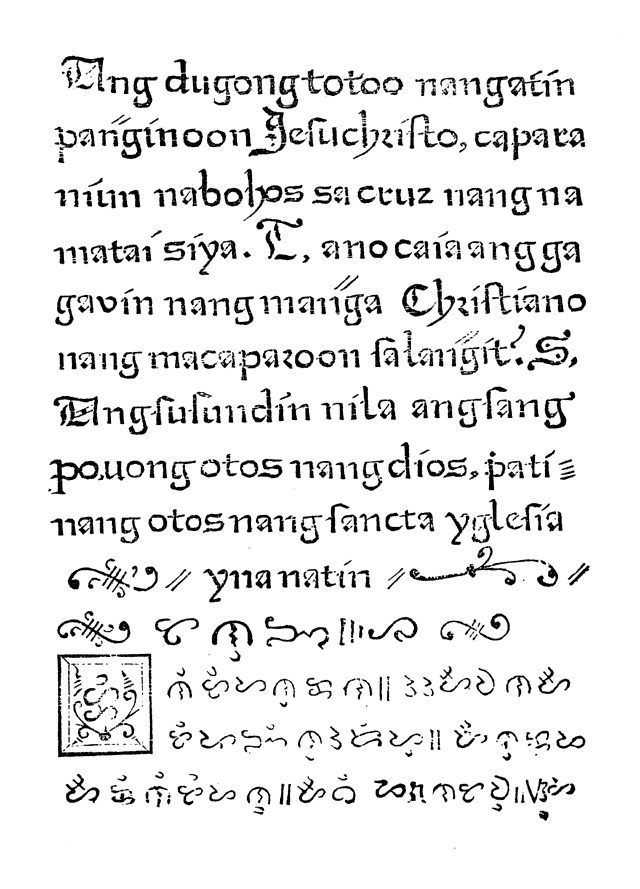
Ang dugong totoo nang atin pang̃inoon Jesuchristo, capara niun nabohos sa cruz nang na matai siya. T, ano caia ang ga gauin nang mang̃a Christiano nang macaparoon sa lang̃it? S, Ang susundin nila ang sang po, uong otos nang dios, pati nang otos nang sancta yglesia yna natin.
ᜆ ᜈᜓ ᜅ᜶
ᜃᜒ ᜈᜒ ᜆᜒ ᜌ ᜈᜓ ᜃ ᜈ᜶ ᜂ ᜂ ᜀ ᜏ ᜈ ᜀ ᜆᜒ ᜉ ᜅᜒ ᜈᜓ ᜂ ᜇᜒ ᜌᜓ᜶ ᜀ ᜈᜓ ᜃ ᜌ ᜀ ᜃᜒ ᜈᜒ ᜆᜒ ᜌ ᜈᜓ᜶ ᜀ ᜊᜒ ᜌ ᜄ ᜈ ᜆ ᜏᜓ᜶ ᜐᜓ ᜋ [70]
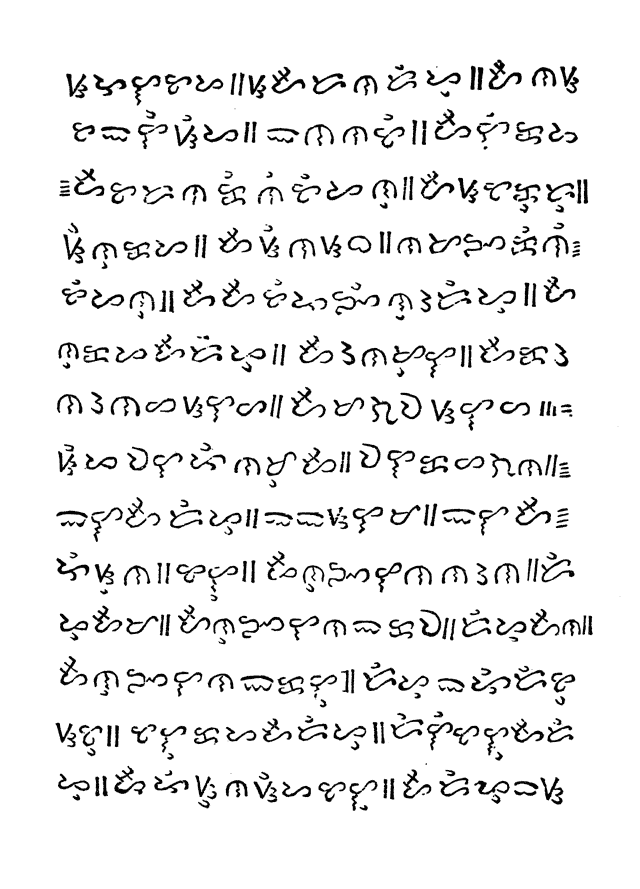
ᜐ ᜉ ᜎ ᜆ ᜌ᜶ ᜐ ᜀ ᜇ ᜈ ᜇᜒ ᜌᜓ᜶ ᜀ ᜈ ᜐ ᜆ ᜁ ᜎᜒ ᜐᜒ ᜌ᜶ ᜁ ᜈ ᜈ ᜆᜒ᜶ ᜀ ᜎᜒ ᜃ ᜌ ᜀ ᜆ ᜇ ᜈ ᜃᜒ ᜈᜒ ᜆᜒ ᜌ ᜈᜓ᜶ ᜀ ᜐ ᜆ ᜃᜓ ᜇᜓ᜶ ᜐᜒ ᜈᜓ ᜃ ᜌ᜶ ᜀ ᜐᜒ ᜈ ᜐ ᜊ᜶ ᜈ ᜋ ᜅ ᜃᜒ ᜈᜒ ᜆᜒ ᜌ ᜈᜓ᜶ ᜀ ᜀ ᜆᜒ ᜉ ᜅᜒ ᜈᜓ ᜂ ᜇᜒ ᜌᜓ᜶ ᜀ ᜈᜓ ᜃ ᜌ ᜀ ᜇᜒ ᜌᜓ᜶ ᜀ ᜂ ᜈ ᜋᜓ ᜎ᜶ ᜀ ᜃ ᜂ ᜈ ᜂ ᜈ ᜑ ᜐ ᜎ ᜑ᜶ ᜀ ᜋ ᜄ ᜏ ᜐ ᜎ ᜑ᜶ ᜐᜒ ᜌ ᜏ ᜎ ᜉᜒ ᜈ ᜋᜓ ᜀ᜶ ᜏ ᜎ ᜃ ᜑ ᜄ ᜈ᜶ ᜁ ᜎ ᜀ ᜇᜒ ᜌᜓ᜶ ᜁ ᜁ ᜐ ᜎ ᜋ᜶ ᜁ ᜎ ᜀ ᜉᜒ ᜐᜓ ᜈ᜶ ᜆ ᜎᜓ᜶ ᜀ ᜈᜓ ᜅ ᜎ ᜈ ᜈ ᜂ ᜈ᜶ ᜇᜒ ᜌᜓ ᜀ ᜋ᜶ ᜀᜈᜓ ᜅ ᜎ ᜈ ᜁ ᜃ ᜏ᜶ ᜇᜒ ᜌᜓ ᜀ ᜋ᜶ ᜀ ᜈᜓ ᜅ ᜎ ᜈ ᜁ ᜃ ᜎᜓ᜶ ᜇᜒ ᜌᜓ ᜁ ᜉᜒ ᜇᜒ ᜆᜓ ᜐ ᜆᜓ᜶ ᜆ ᜎᜓ ᜃ ᜌ ᜀ ᜇᜒ ᜌᜓ᜶ ᜇᜒ ᜎᜒ ᜆ ᜎᜓ ᜀ ᜇᜒ ᜌᜓ᜶ ᜀ ᜉᜒ ᜐᜓ ᜈ ᜐᜒ ᜌ ᜆ ᜎᜓ᜶ ᜀ ᜇᜒ ᜌᜓ ᜁ ᜐ [71]
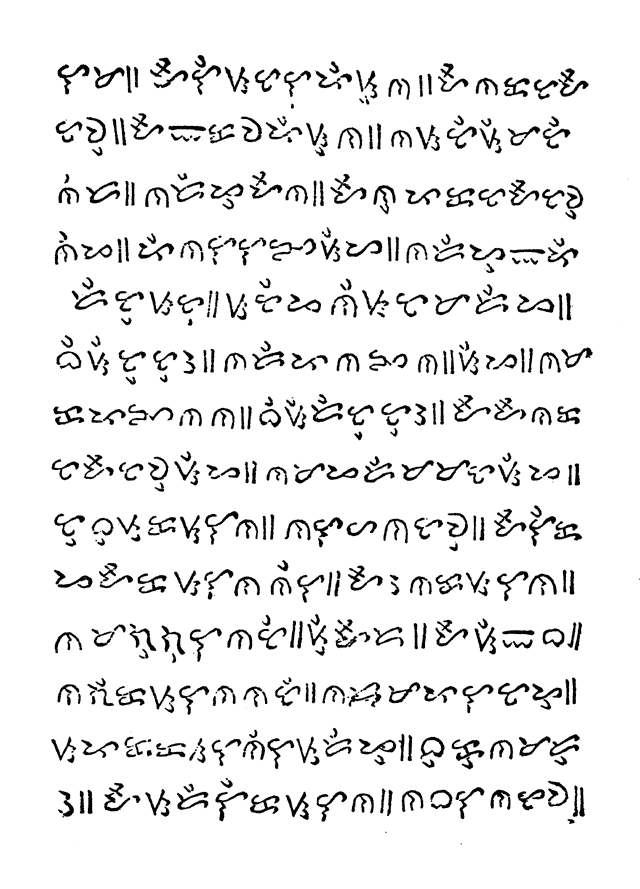
ᜎ ᜋ᜶ ᜀ ᜎᜒ ᜐ ᜆ ᜎᜓ ᜉᜒ ᜐᜓ ᜈ᜶ ᜀ ᜈ ᜃ ᜆ ᜀ ᜆ ᜏᜓ᜶ ᜀ ᜁ ᜃ ᜏ ᜉᜒ ᜐᜓ ᜈ᜶ ᜈ ᜐ ᜆᜒ ᜐᜒ ᜋ ᜆᜒ ᜈᜒ ᜇ᜶ ᜈ ᜇᜒ ᜌᜓ ᜀ ᜈ᜶ ᜀ ᜈᜓ ᜉ ᜃ ᜆ ᜀ ᜆ ᜏᜓ ᜈᜒ ᜌ᜶ ᜉᜒ ᜈ ᜎ ᜎ ᜅ ᜐᜒ ᜌ᜶ ᜈ ᜇᜒ ᜌᜓ ᜁ ᜉᜒ ᜇᜒ ᜆᜓ ᜐ ᜆᜓ᜶ ᜐ ᜆᜒ ᜌ ᜈᜒ ᜐ ᜆᜓ ᜋ ᜇᜒ ᜌ᜶ ᜊᜒ ᜐᜒ ᜆᜓ ᜆᜓ ᜂ᜶ ᜈ ᜇᜒ ᜉ ᜈ ᜅ ᜈ᜶ ᜐᜒ ᜌ᜶ ᜈ ᜋ ᜃ ᜉ ᜅ ᜈ ᜈ᜶ ᜊᜒ ᜐᜒ ᜇᜒ ᜆᜓ ᜆᜓ ᜂ᜶ ᜀ ᜀ ᜈ ᜃ ᜆ ᜀ ᜆ ᜏᜓ ᜐᜒ ᜌ᜶ ᜈ ᜋ ᜌ ᜇᜒ ᜋ ᜋ ᜆ ᜐᜒ ᜌ᜶ ᜆᜓ ᜊᜓ ᜐ ᜃ ᜐ ᜎ ᜈ᜶ ᜈ ᜎ ᜑ ᜈ ᜆ ᜏᜓ᜶ ᜀ ᜎᜒ ᜃ ᜌ ᜀ ᜃ ᜐ ᜎ ᜈ ᜈᜒ ᜎ᜶ ᜀ ᜂ ᜈ ᜃ ᜐ ᜎ ᜈ᜶ ᜈ ᜋ ᜄᜓ ᜄᜓ ᜎ ᜈ ᜆᜒ᜶ ᜐᜒ ᜀ ᜇ᜶ ᜀ ᜐᜒ ᜁ ᜊ᜶ ᜈ ᜄᜒ ᜃ ᜐ ᜎ ᜈ ᜈ ᜆᜒ ᜶ ᜈ ᜇ ᜋ ᜉ ᜎ ᜆ ᜌᜓ᜶ ᜐ ᜉ ᜃ ᜃ ᜂ ᜎ ᜈᜒ ᜎ ᜐ ᜇᜒ ᜌᜓ᜶ ᜊᜓ ᜃᜓ ᜈ ᜋ ᜇᜓ ᜂ᜶ ᜀ ᜐ ᜇᜒ ᜎᜒ ᜀ ᜐ ᜎ ᜈ᜶ ᜈ ᜊ ᜎ ᜈ ᜆ ᜏ᜶ [72]
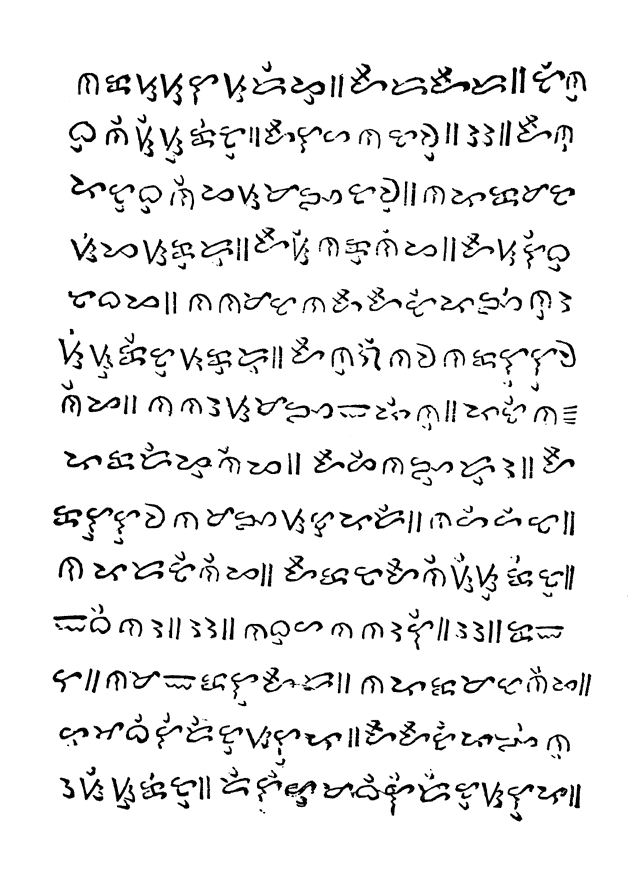
ᜈ ᜃ ᜐ ᜐ ᜎ ᜐ ᜇᜒ ᜌᜓ᜶ ᜀ ᜇ ᜀ ᜇ᜶ ᜆᜒ ᜈᜓ ᜊᜓ ᜈᜒ ᜐᜒ ᜐᜓ ᜃᜒ ᜆᜓ᜶ ᜀ ᜎ ᜑ ᜈ ᜆ ᜏᜓ᜶ ᜂ ᜂ᜶ ᜀ ᜈᜓ ᜉ ᜆᜓ ᜊᜓ ᜈᜒ ᜌ ᜐ ᜋ ᜅ ᜆ ᜏᜓ᜶ ᜀ ᜉ ᜃ ᜋ ᜆ ᜐᜒ ᜌ ᜐ ᜃᜓ ᜇᜓ᜶ ᜀ ᜐᜒ ᜈ ᜃᜓ ᜈᜒ ᜌ᜶ ᜀ ᜐ ᜎᜒ ᜊᜓ ᜆ ᜊ ᜌ᜶ ᜈ ᜈ ᜋ ᜆ ᜈ ᜀ ᜀ ᜆᜒ ᜉ ᜅᜒ ᜈᜓ ᜂ ᜐᜒ ᜐᜓ ᜃᜒ ᜆᜓ ᜐ ᜃᜓ ᜇᜓ᜶ ᜀ ᜈᜓ ᜄᜒ ᜈ ᜏ ᜈ ᜃ ᜎᜓ ᜎᜓ ᜏ ᜈᜒ ᜌ᜶ ᜈ ᜈ ᜂ ᜐ ᜋ ᜅ ᜁ ᜉᜒ ᜈᜓ᜶ ᜉ ᜆᜒ ᜈ ᜉ ᜃ ᜇᜒ ᜌᜓ ᜈᜒ ᜌ᜶ ᜀ ᜑᜒ ᜈ ᜅᜓ ᜇᜓ ᜂ᜶ ᜀ ᜃ ᜎᜓ ᜎᜓ ᜏ ᜈ ᜋ ᜅ ᜐ ᜆᜓ ᜉ ᜇᜒ᜶ ᜈ ᜑᜒ ᜈᜒ ᜆ ᜀ ᜉ ᜇ ᜆᜒ ᜈᜒ ᜌ᜶ ᜀ ᜃ ᜆ ᜀ ᜈᜒ ᜐᜒ ᜐᜓ ᜃᜒ ᜆᜓ᜶ ᜁ ᜊᜒ ᜈ ᜂ᜶ ᜂ ᜂ᜶ ᜈ ᜊᜓ ᜑ ᜈ ᜈ ᜂ ᜎᜒ᜶ ᜂ ᜂ᜶ ᜃ ᜁ ᜎ᜶ ᜈ ᜋ ᜁ ᜃ ᜎᜓ ᜀ ᜇ᜶ ᜀ ᜉ ᜃ ᜋ ᜆ ᜈᜒ ᜌ᜶ ᜑᜓ ᜋ ᜊᜒ ᜎᜒ ᜇᜒ ᜆᜓ ᜐ ᜎᜓ ᜉ᜶ ᜀ ᜀ ᜆᜒ ᜉ ᜅᜒ ᜈᜓ ᜂ ᜐᜒ ᜐᜓ ᜃᜒ ᜆᜓ᜶ ᜇᜒ ᜎᜒ ᜑᜓ ᜋ ᜊᜒ ᜎᜒ ᜇᜒ ᜆᜓ ᜐ ᜎᜓ ᜉ᜶ [73]
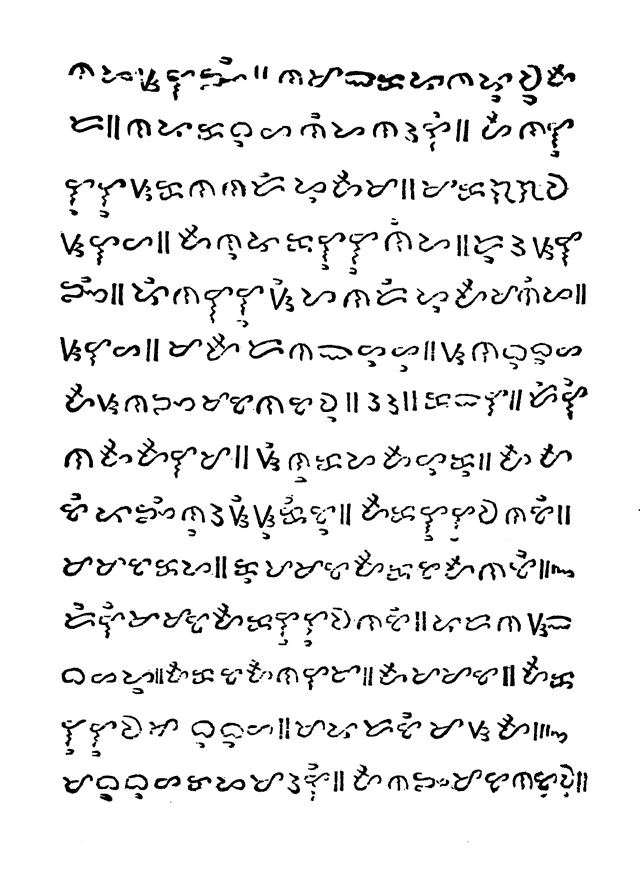
ᜈ ᜌ ᜐ ᜎ ᜅᜒ᜶ ᜈ ᜋ ᜁ ᜃ ᜉ ᜈ ᜉᜓ ᜏᜓ ᜀ ᜇ᜶ ᜀ ᜉ ᜃ ᜊᜓ ᜑ ᜈᜒ ᜌ ᜈ ᜂ ᜎᜒ᜶ ᜀ ᜈ ᜎᜓ ᜎᜓ ᜎᜓ ᜐ ᜃ ᜈ ᜈ ᜇᜒ ᜌᜓ ᜀ ᜋ᜶ ᜀ ᜃ ᜄ ᜄ ᜏ ᜐ ᜎ ᜑ᜶ ᜀ ᜈᜓ ᜉ ᜃ ᜎᜓ ᜎᜓ ᜈᜒ ᜌ᜶ ᜇᜓ ᜂ ᜐ ᜎ ᜅᜒ᜶ ᜉᜒ ᜈ ᜎᜓ ᜎᜓ ᜐᜒ ᜌ ᜈ ᜇᜒ ᜌᜓ ᜀ ᜋ ᜈᜒ ᜌ᜶ ᜐ ᜎ ᜑ᜶ ᜋ ᜀ ᜇ ᜈ ᜁ ᜑᜓ ᜑᜓ᜶ ᜐ ᜋ ᜊᜓ ᜊᜓ ᜑ ᜀ ᜐ ᜈ ᜅ ᜋ ᜆ ᜈ ᜆ ᜏᜓ᜶ ᜂ ᜂ᜶ ᜃ ᜁ ᜎ᜶ ᜇᜒ ᜎᜒ ᜈ ᜀ ᜀ ᜎ ᜋ᜶ ᜐᜒ ᜈᜓ ᜃ ᜌ ᜀ ᜑᜓ ᜃᜓ᜶ ᜀ ᜀ ᜆᜒ ᜉ ᜅᜒ ᜈᜓ ᜂ ᜐᜒ ᜐᜓ ᜃᜒ ᜆᜓ᜶ ᜀ ᜃ ᜎᜓ ᜎᜓ ᜏ ᜈ ᜆᜒ᜶ ᜋ ᜋ ᜆ ᜃ ᜌ᜶ ᜃᜓ ᜋ ᜋ ᜆ ᜀ ᜃ ᜆ ᜀ ᜈ ᜆᜒ᜶ ᜇᜒ ᜎᜒ ᜋ ᜋ ᜆ ᜀ ᜃ ᜎᜓ ᜎᜓ ᜏ ᜈ ᜆᜒ᜶ ᜉ ᜇ ᜈ ᜐ ᜁ ᜊ ᜑ ᜌᜓ᜶ ᜀ ᜃ ᜆ ᜀ ᜈ ᜎ ᜋ᜶ ᜀ ᜋ ᜋ ᜆ᜶ ᜀ ᜃ ᜎᜓ ᜎᜓ ᜏ ᜋ ᜊᜓ ᜊᜓ ᜑ᜶ ᜋ ᜉ ᜇ ᜆᜒ ᜋ ᜐ ᜀ ᜋ ᜊᜓ ᜊᜓ ᜑ ᜃ ᜌ ᜋ ᜂ ᜎᜒ᜶ ᜀ ᜈ ᜅ ᜋ ᜆ ᜈ ᜆᜓ ᜏᜓ᜶ [74]
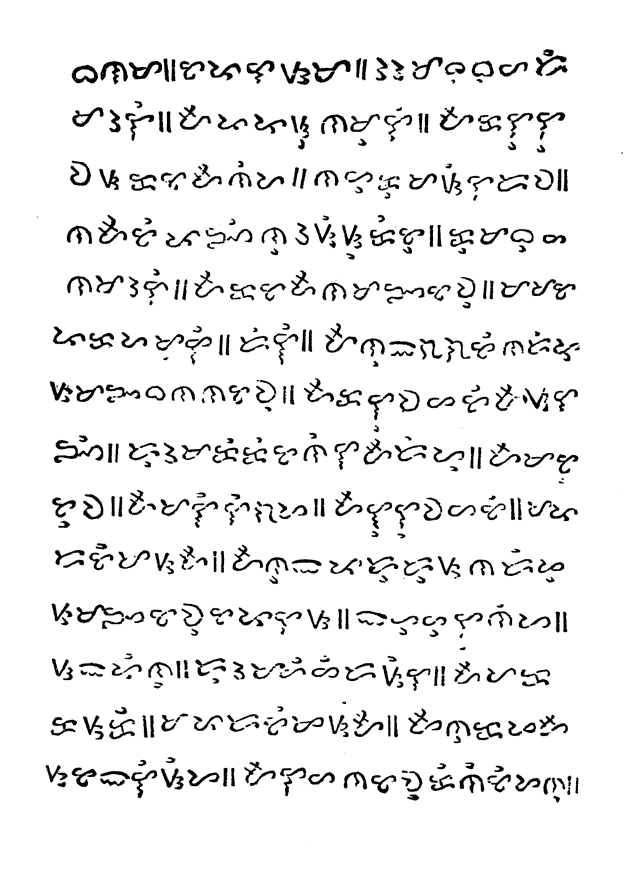
ᜊ ᜈ ᜋ᜶ ᜆ ᜉ ᜎ ᜐ ᜋ᜶ ᜂ ᜂ ᜈ ᜊᜓ ᜊᜓ ᜑ ᜇᜒ ᜋ ᜂ ᜎᜒ᜶ ᜀ ᜉ ᜉ ᜐᜓ ᜈ ᜋᜓ ᜎᜒ᜶ ᜀ ᜃ ᜎᜓ ᜎᜓ ᜏ ᜐ ᜃ ᜆ ᜀ ᜈᜒ ᜌ᜶ ᜈ ᜑᜓ ᜃᜓ ᜋ ᜐᜒ ᜎ ᜇ ᜏ᜶ ᜈ ᜀ ᜆᜒ ᜉ ᜅᜒ ᜈᜓ ᜂ ᜐᜒ ᜐᜓ ᜃᜒ ᜆᜓ᜶ ᜃᜓ ᜋ ᜊᜓ ᜑ ᜈ ᜋ ᜂ ᜎᜒ᜶ ᜀ ᜃ ᜆ ᜀ ᜈ ᜋ ᜅ ᜆ ᜏᜓ᜶ ᜋ ᜋ ᜆ ᜉ ᜃ ᜌ ᜋᜓ ᜎᜒ᜶ ᜇᜒ ᜎᜒ᜶ ᜀᜈᜓ ᜁ ᜄ ᜄ ᜆᜒ ᜈ ᜇᜒ ᜌᜓ ᜐ ᜋ ᜅ ᜊ ᜈ ᜈ ᜆ ᜏᜓ᜶ ᜀ ᜃ ᜎᜓ ᜏ ᜑ ᜆᜒ ᜀ ᜀ ᜐ ᜎ ᜅᜒ᜶ ᜇᜓ ᜂ ᜋ ᜃᜒ ᜃᜒ ᜆ ᜈᜒ ᜎ ᜀ ᜇᜒ ᜌᜓ᜶ ᜀ ᜋ ᜆᜓ ᜆᜓ ᜏ᜶ ᜀ ᜋ ᜎᜒ ᜎᜒ ᜄ ᜌ᜶ ᜀ ᜎᜓ ᜎᜓ ᜏ ᜑ ᜆᜒ᜶ ᜋ ᜉ ᜇ ᜆᜒ ᜋ ᜐ ᜀ᜶ ᜀ ᜈᜓ ᜁ ᜉ ᜇᜓ ᜇᜓ ᜐ ᜈ ᜇᜒ ᜌᜓ ᜀ ᜋ ᜅ ᜆ ᜏᜓ ᜆ ᜉ ᜎ ᜐ᜶ ᜁ ᜑᜓ ᜑᜓ ᜎᜓ ᜈᜒ ᜌ᜶ ᜐ ᜁ ᜉᜒ ᜈᜓ᜶ ᜇᜓ ᜂ ᜋ ᜑᜒ ᜑᜒ ᜇ ᜐᜒ ᜌ᜶ ᜀ ᜋ ᜃ ᜃ ᜐ ᜃᜒ᜶ ᜋ ᜉ ᜇ ᜆᜒ ᜋ ᜐ ᜀ᜶ ᜀ ᜈᜓ ᜃ ᜌ ᜀ ᜐ ᜆ ᜁ ᜎᜒ ᜐᜒ ᜌ᜶ ᜀ ᜎ ᜑ ᜈ ᜆ ᜏᜓ ᜃᜒ ᜈᜒ ᜆᜒ ᜌ ᜈᜓ᜶ [75]
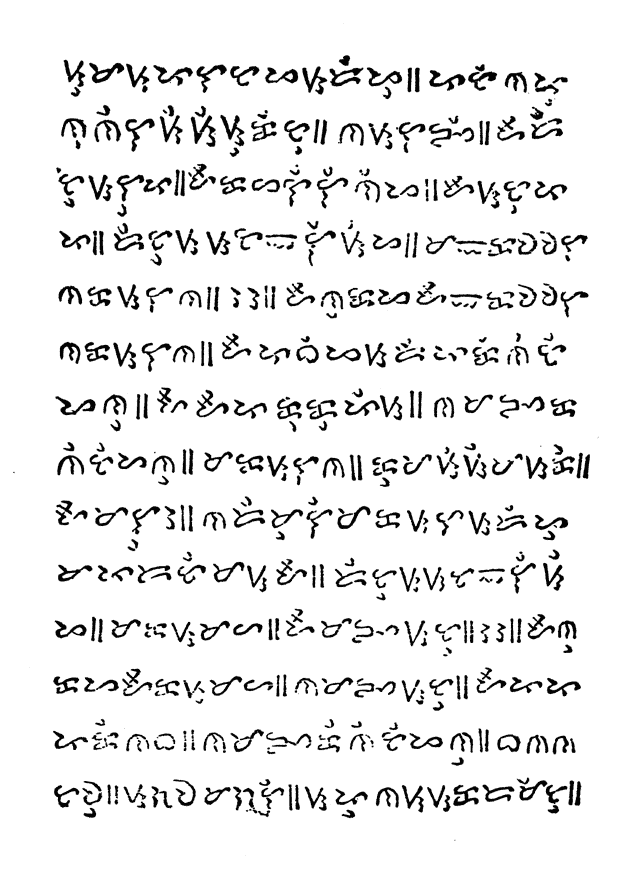
ᜐᜓ ᜋ ᜐ ᜉ ᜎ ᜆ ᜌ ᜐ ᜇᜒ ᜌᜓ᜶ ᜉ ᜆᜒ ᜈ ᜉᜓ ᜉᜓ ᜈᜒ ᜎ ᜐᜒ ᜐᜒ ᜐᜓ ᜃᜒ ᜆᜓ᜶ ᜈ ᜐ ᜎ ᜅᜒ᜶ ᜀ ᜇᜒ ᜆᜓ ᜐ ᜎᜓ ᜉ᜶ ᜀ ᜃ ᜑ ᜎᜒ ᜎᜒ ᜈᜒ ᜌ᜶ ᜀ ᜐ ᜆᜓ ᜉ ᜉ᜶ ᜇᜒ ᜆᜓ ᜐ ᜐ ᜆ ᜁ ᜎᜒ ᜐᜒ ᜌ᜶ ᜋ ᜁ ᜃ ᜏ ᜏ ᜎ ᜈ ᜃ ᜐ ᜎ ᜈ᜶ ᜀ ᜈᜓ ᜃ ᜌ ᜀ ᜁ ᜃ ᜏ ᜏ ᜎ ᜈ ᜃ ᜐ ᜎ ᜈ᜶ ᜀ ᜉ ᜊᜒ ᜌ ᜐ ᜇᜒ ᜉ ᜃᜒ ᜈᜒ ᜆᜒ ᜌ ᜈᜓ᜶ ᜀ ᜀ ᜉ ᜃᜓ ᜃᜓ ᜉᜒ ᜐ᜶ ᜀ ᜋ ᜅ ᜃ ᜈᜒ ᜆᜒ ᜌ ᜈᜓ᜶ ᜋ ᜃ ᜐ ᜎ ᜈ᜶ ᜃᜓ ᜋ ᜐᜒ ᜐᜒ ᜋ ᜐ ᜃᜒ᜶ ᜀ ᜋ ᜎᜓ ᜂ᜶ ᜈ ᜇᜒ ᜋᜓ ᜎᜒ ᜋ ᜃ ᜐ ᜎ ᜐ ᜇᜒ ᜌᜓ ᜋ ᜉ ᜇ ᜆᜒ ᜋ ᜐ ᜀ᜶ ᜇᜒ ᜆᜓ ᜐ ᜐ ᜆ ᜁ ᜎᜒ ᜐᜒ ᜌ᜶ ᜋ ᜃ ᜐ ᜋ ᜑ᜶ ᜀ ᜋ ᜅ ᜐ ᜆᜓ᜶ ᜂ ᜂ᜶ ᜀ ᜈᜓ ᜃ ᜌ ᜀ ᜃ ᜐ ᜋ ᜑ᜶ ᜈ ᜋ ᜅ ᜐ ᜆᜓ᜶ ᜀ ᜉ ᜉ ᜉ ᜃᜒ ᜈ ᜊ᜶ ᜈ ᜋ ᜅ ᜃᜒ ᜈᜒ ᜆᜒ ᜌ ᜈᜓ᜶ ᜊ ᜈ ᜈ ᜆ ᜏᜓ᜶ ᜐ ᜄ ᜏ ᜋ ᜄ ᜎᜒ᜶ ᜐ ᜉᜓ ᜈ ᜐ ᜐ ᜃ ᜇ ᜋᜒ ᜆᜓ᜶ [76]
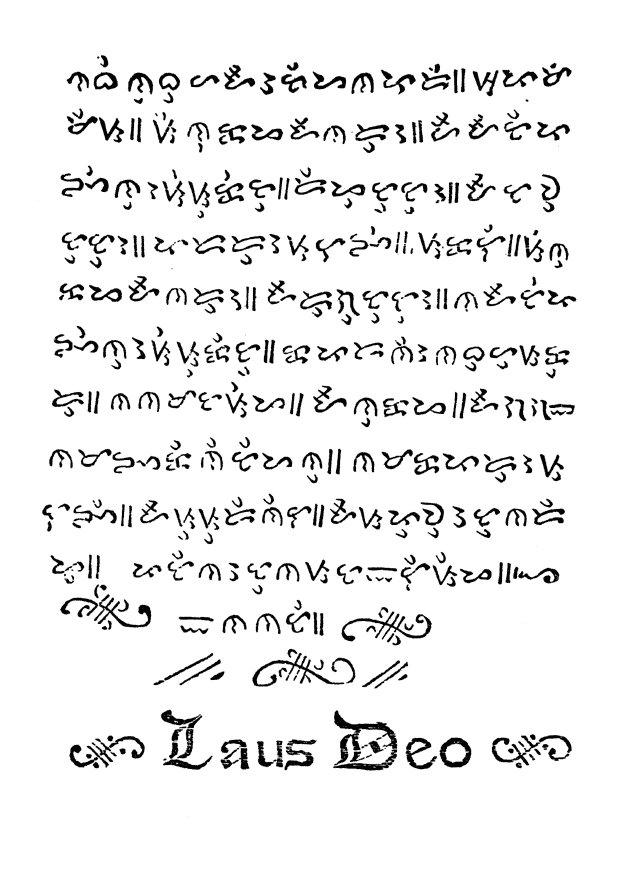
ᜈ ᜊᜒ ᜈᜓ ᜊᜓ ᜑ ᜀ ᜂ ᜆᜒ ᜌ ᜈ ᜉ ᜇᜒ᜶ ᜐ ᜉ ᜋᜒ ᜋᜒ ᜐ᜶ ᜐᜒ ᜈᜓ ᜃ ᜌ ᜀ ᜈ ᜇᜓ ᜂ᜶ ᜀ ᜀ ᜆᜒ ᜉ ᜅᜒ ᜈᜓ ᜂ ᜐᜒ ᜐᜓ ᜃᜒ ᜆᜓ᜶ ᜇᜒ ᜌᜓ ᜆᜓ ᜆᜓ ᜂ᜶ ᜀ ᜆ ᜏᜓ ᜆᜓ ᜆᜓ ᜂ᜶ ᜉ ᜇ ᜇᜓ ᜂ ᜐ ᜎ ᜅᜒ᜶ ᜐ ᜃ ᜎᜒ᜶ ᜐᜒ ᜈᜓ ᜃ ᜌ ᜀ ᜈ ᜇᜓ ᜂ᜶ ᜀ ᜇᜓ ᜄᜓ ᜆᜓ ᜆᜓ ᜂ᜶ ᜈ ᜀ ᜆᜒ ᜉ ᜅᜒ ᜈᜓ ᜂ ᜐᜒ ᜐᜓ ᜃᜒ ᜆᜓ᜶ ᜃ ᜉ ᜇ ᜈᜒ ᜂ ᜈ ᜊᜓ ᜑᜓ ᜐ ᜃᜓ ᜇᜓ᜶ ᜈ ᜈ ᜋ ᜆ ᜐᜒ ᜌ᜶ ᜀᜈᜓ ᜃ ᜌ᜶ ᜀ ᜄ ᜄ ᜁ ᜈ ᜋ ᜅ ᜃᜒ ᜈᜒ ᜆᜒ ᜌ ᜈᜓ᜶ ᜈ ᜋ ᜃ ᜉ ᜇᜓ ᜂ ᜐ ᜎ ᜅᜒ᜶ ᜀ ᜐᜓ ᜐᜓ ᜇᜒ ᜈᜒ ᜌ᜶ ᜀ ᜐ ᜉᜓ ᜏᜓ ᜂ ᜆᜓ ᜈ ᜇᜒ ᜌᜓ᜶ ᜉ ᜆᜒ ᜈ ᜂ ᜆᜓ ᜈ ᜐ ᜆ ᜁ ᜎᜒ ᜐᜒ ᜌ᜶ ᜁ ᜈ ᜈ ᜆᜒ᜶
Laus Deo