A Guide To Sites
Reading edition
99
100
101
Following the Explorers
Though nothing spectacular survives, travelers can find many rewarding historical places that conjure up the Spanish conquistadores and the natives they encountered. The four principal NPS sites are described briefly in the following pages. Many other parks and several Indian communities also preserve landscapes directly associated with the explorations. They are listed below. All these places are well worth a visit and several are worth a journey to anyone interested in the beginnings of North American history.
Ocmulgee National Monument Macon, GA 31201 Ancient mounds built by people of the Mississippian culture. De Soto passed through this region in 1540.
Etowah Indian Mounds State Historic Site Cartersville, GA 30120 De Soto visited this town (called Itaba) in August 1540.
Mound State Monument Moundville, AL 35474 A farming town which flourished AD 1000-1500; representative of the powerful chiefdoms found by De Soto.
Parkin Archeological State Park Parkin, AR 72373 Believed to be a center of an important chiefdom (Casqui) visited by De Soto in 1541.
Coronado State Monument P.O. Box 95 Bernalillo, NM 87004 A Pueblo village visited by the Coronado expedition in 1540. Polychrome murals in the kiva are a prize exhibit.
Pueblo of Acoma P.O. Box 309 New Mexico 87034 A fortress town inhabited by descendents of the Pueblo people who befriended the Alvarado party in 1540.
Zuni Pueblo Box 339 Zuni, NM 87327 The original Cibola of Spanish legend. Háwikuh, the place of Coronado’s first encounter with Pueblo Indians, is now a ruin.
102
De Soto National Memorial, Florida
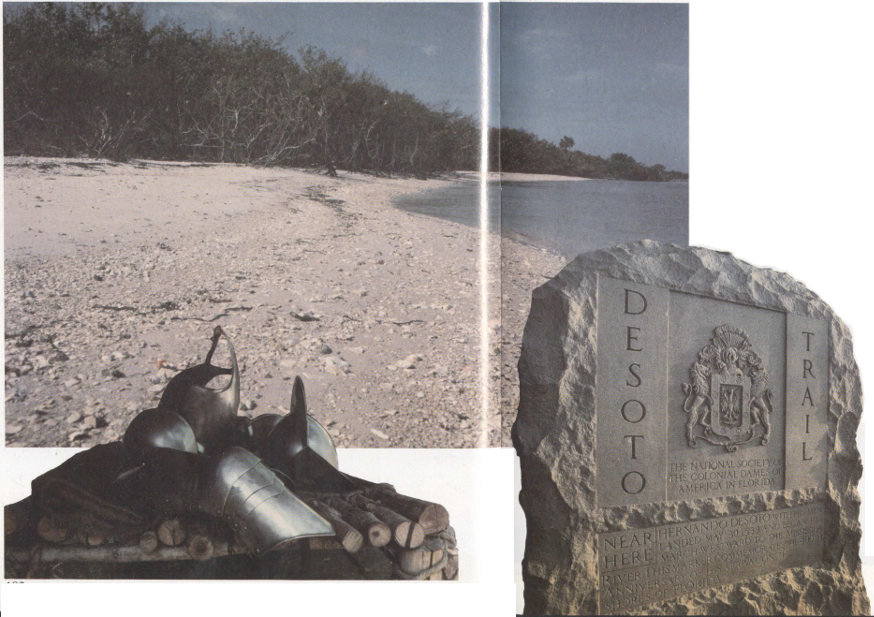
De Soto’s army may well have come ashore at a spot on Tampa Bay that resembled this beach within the park. Below: replica armor and an early marker commemorating De Soto’s bold march.
De Soto National Memorial commemorates the first major European penetration of the southeastern United States. De Soto’s purpose, sanctioned by the King, was to conquer the land Spaniards called La Florida and settle it for Spain. He failed in both objects. There was no rich empire in the north, only a succession of chiefdoms, and his practice of looting villages and grabbing hostages alienated native inhabitants and turned his march into a siege. The lasting significance of the expedition was the information it yielded about the land and its Mississippian people in a late stage of that remarkable civilization.
The park was established in 1949 on the south shore of Tampa Bay. De Soto’s fleet may very well have sailed by this point in May 1539 to a landing spot farther around the bay. Attractions at the park include replicas of the type of weapons carried by the expedition and thickets of red mangrove, the so-called Florida land-builder. The journals tell of De Soto’s men cutting their way inland through mangrove tangles.
For more information about the park and its programs, write:
Superintendent De Soto National Memorial P.O. Box 15390 Bradenton, FL 34280
103
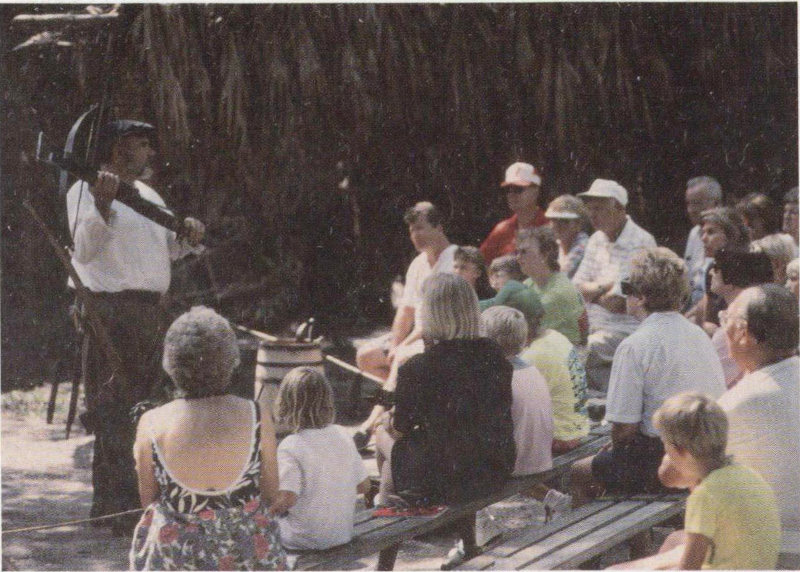
Demonstrations in winter give insight into military life and the Spanish world-view in the 16th century.
104
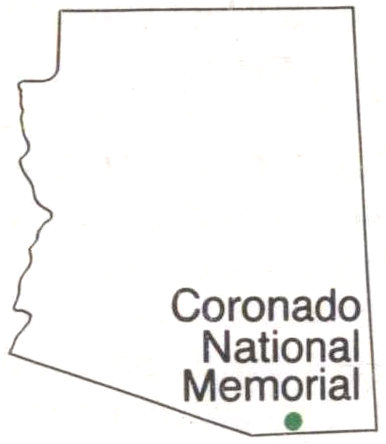
Coronado National Memorial, Arizona
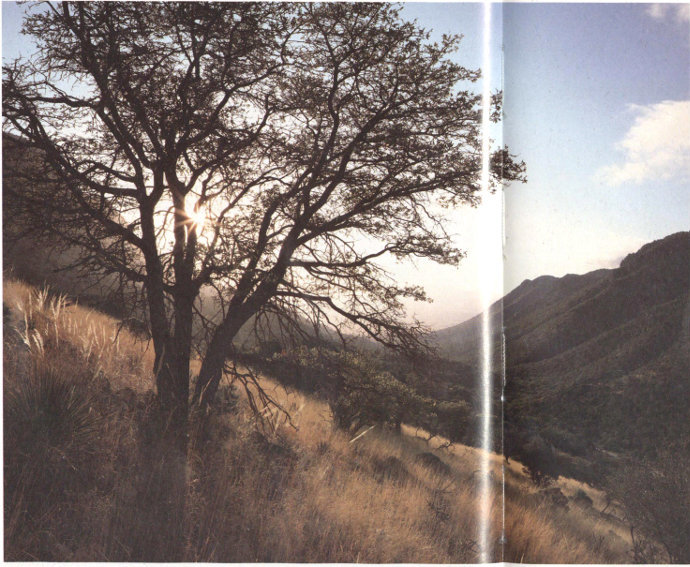
The Huachucas rise like islands above the surrounding Sonoran desert. This landscape is little changed from Coronado’s day.
Following an ancient Indian trade path up the San Pedro valley, the Coronado expedition crossed the present Mexico-United States border just east of this park. Hikers on the Coronado Peak Trail looking down Montezuma Canyon can see in the far distance cottonwood trees that mark Coronado’s line of march.
The national memorial was established in 1941, 400th anniversary of the expedition. Its setting high in the Huachuca Mountains is a fitting place to recall the first major Spanish entrada into the American Southwest in all its color and fire: the gathering of the army at Compostela, arduous marches across wilderness, encounters with native cultures of great subtlety and art, discovery of a land of vast expanse and 105 power, and above all the record of where they had been and what they had seen.
This is a park to see on foot. Trails lead to good viewing points and connect with others in Coronado National Forest, which surrounds the park.
For information about the park and its programs, write:
Superintendent Coronado National Memorial 4104 E. Montezuma Canyon Road, Hereford AZ 85615
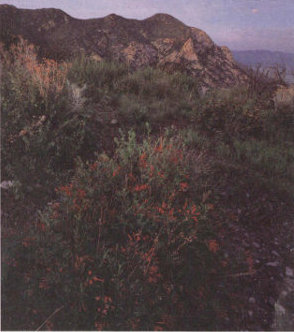
The expedition traveled along the San Pedro River, east of the park.
106
Pecos National Historical Park, New Mexico
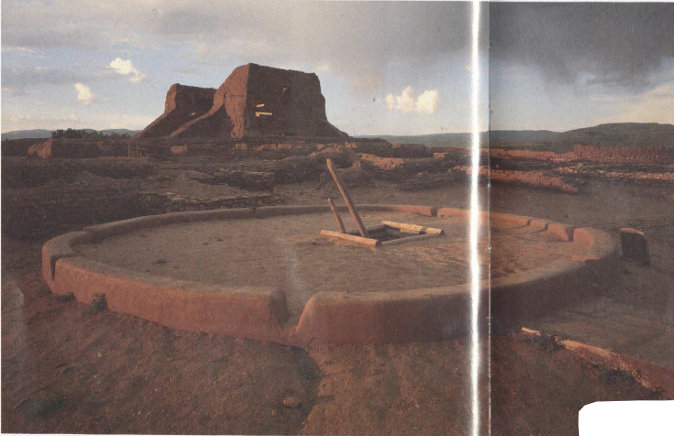
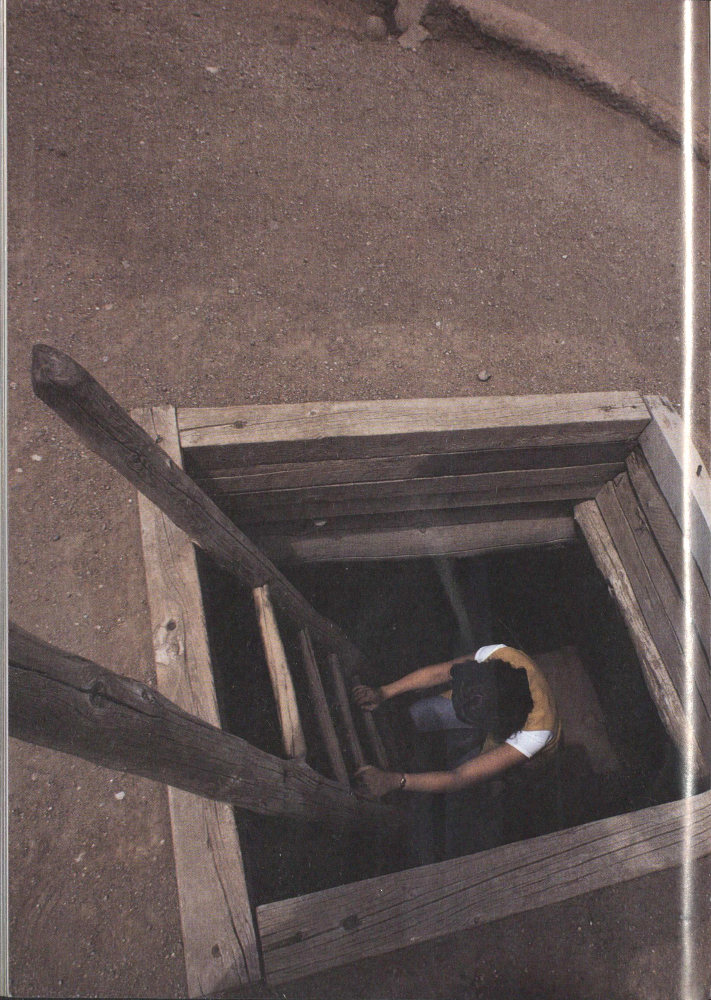
The kiva and the mission church frame the two worlds of the Pecos Indians. During the Pueblo Revolt of 1680, Pecos Indians destroyed the first mission and built this kiva (now restored) within the mission’s convento. For a few years they followed their religion undisturbed.
The ruins of Pecos Pueblo and Spanish missions of the 17th- and 18th-centuries crown a small ridge overlooking the Pecos Valley in upper New Mexico. At the time of the Coronado entrada, the pueblo was a giant apartment house, several stories high, with a central plaza, 600 rooms, and many kivas—home to 2,000 souls. The village prospered because it commanded the trade path between Pueblo farmers of the Rio Grande and buffalo hunters of the Plains. Pecos was a crossroads of commerce and culture, and its people grew adept at trade and war. The arrival of Franciscan priests in the 1600s with Spanish custom, religion, law inexorably altered Pueblo life. The Spaniards built a spacious mission church on the south end of the ridge, and 107 a second but smaller one when the first church was destroyed in the Pueblo revolt of 1680. Pecos continued as a mission for more than a century. Disease and Comanche raids spelt decline in the late 18th century. The last inhabitants—fewer than 20—drifted away in 1838.
The park is 25 miles southeast of Santa Fe. Among its features are the ruins of the ancient pueblo, two restored kivas, and adobe mission walls. For information on the park and its programs, write:
Superintendent Pecos National Historical Park P.O. Drawer 418 Pecos NM 87552-0418
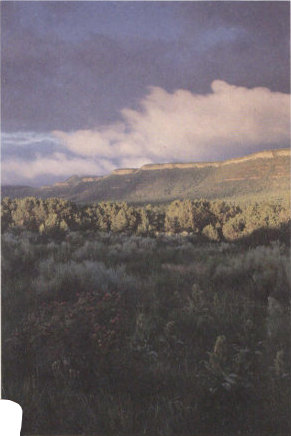
Extensive pinyon-juniper forests once surrounded Pecos Pueblo.
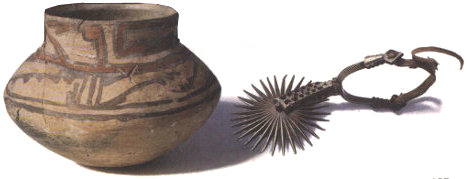
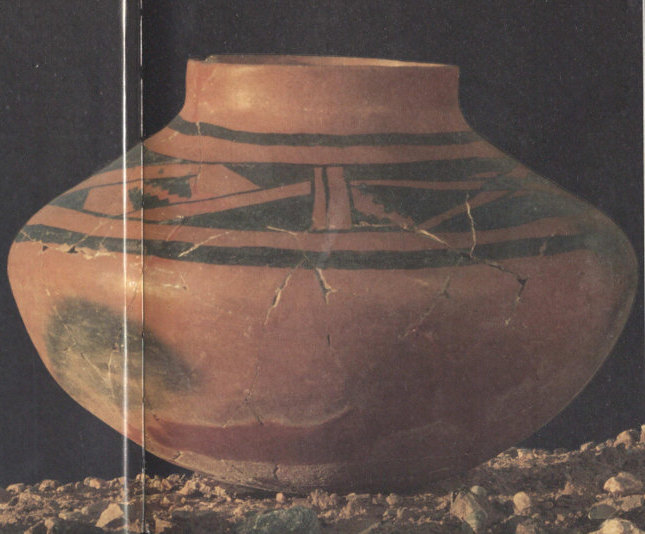
The vessel is a 16th-century olla. The Spanish spur dates from the 17th century.
108
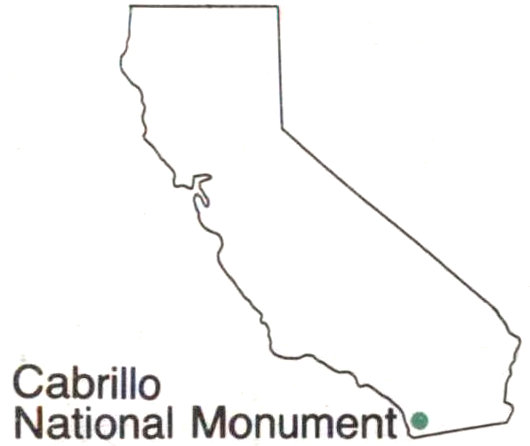
Cabrillo National Monument, California
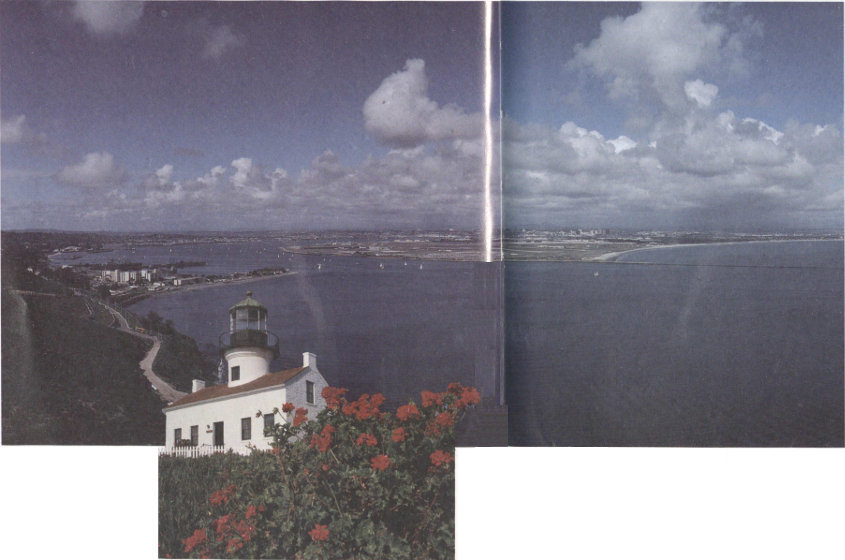
The Old Point Loma Lighthouse, built 1854.
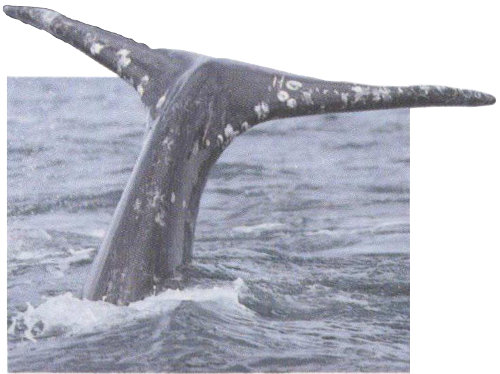
Gray whale migrations in winter are an annual spectacle.
This park honors the man who led the first European exploring expedition along the California coast. Sailing under a Spanish flag, Juan Rodríguez Cabrillo departed on 27 June 1542 from the port of Navidad on Mexico’s west coast. He commanded the ship San Salvador (with a crew of 60); with him was Victoria, and another smaller vessel. His objective: “to discover the coast of New Spain.” Three months later he hove to in “a very good enclosed port”—San Diego Bay. This was the mariner’s first landfall north of Baja peninsula. Cabrillo himself died and was buried in the Channel Islands. His crew went on to explore as far north as Oregon, seeing new landmarks and new peoples, not all friendly.
The park is located on 109 Point Loma, within the city of San Diego. Features include a heroic statue of Cabrillo, dramatic views of the Pacific and San Diego Bay, and Old Point Loma Lighthouse, a 1850s structure. In winter, the point is a good place to see the annual migration of the gray whale.
For information about the park and its programs, write:
Superintendent Cabrillo National Memorial P.O. Box 6670 San Diego CA 92166
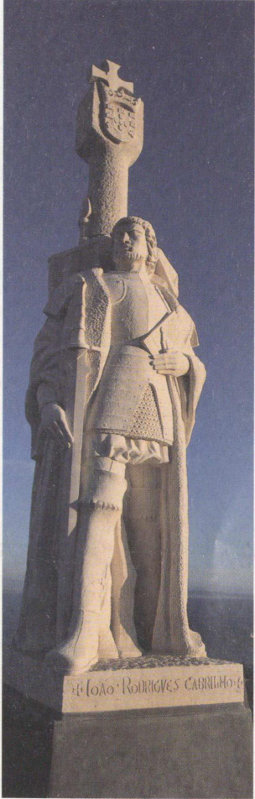
The 14-foot sandstone statue of Cabrillo is the work of Portuguese sculptor Alvaro DeBree. Completed in 1939 for the San Francisco World’s Fair, it was eventually relocated here. The portrait is conjectural; there is no known likeness of the explorer.
110