APPENDIX.
Reading edition
I.—FINLAY GUIVNAC.
(Page 44).
Guibhnich, or Duimhnich, were the Campbells. In a song in dispraise of the clan occurs,
“Bheir mi ’n sgrìob so air na Guibhnich Air son cuimhneachadh o nuadh. (I will make this line on the Campbell clan, To remind them anew);
and in another similar song,
“Sgrios a’ chorrain air a’ choinnlein Air na bheil beò do na Guibhnich.” (The destruction of the reaping-hook on a grain of corn On the living race of the Campbell clan).
In Stewart’s Collection, p. 320, is found,
“Dean mo ghearan gu cuimhneach Ris na Duimhnidh ghlan uasal.” (Be mindful to lay my complaint Before the pure-minded noble Campbells).
II.—PORT-NAN-LONG.
(Page 52).
Port-nan-long is said to have got its name from the following circumstance:—About the year 500 A.D., the few inhabitants then living in Tiree were in the township and neighbourhood of Sorabi, where there was a chapel, and which lies on the south-east side of the island, and is separated by the stream of the same name running past the burying-ground into the bay, from the township of Balinoe (Baile-nodha). The island having been previously desolated by pirates and cattle-raiders, and a rumour being heard at this time that a band of these had again returned among the islands to renew their depredations, a watch was kept, and the factor of the community, who appears to have been their only protector and counsellor, went daily to look seawards for the appearance of the enemy, lest the small and feeble band might be surprised before they could make their escape or reach a hiding-place. One day then he saw ships coming from the south-east, and he went in and sent word to his neighbours. When he looked again, the ships were nearer and were a large fleet. The next look he gave he saw that they were close at hand, near the land. He then called the people round him, and told them how he could see that their enemies, who were near, were too powerful to be resisted; that as he himself and those with him were defenceless, and unable to escape, their only hope of deliverance from their terrible danger was in the power of Almighty God, whose aid he would ask, and kneeling on the ground with his friends and neighbours around him, he said, “O Lord, as all power is in thy hand, help us against these enemies who are coming on us (to destroy us)”; (A Thighearna, o ’n a’s ann ad làimh a tha gach cumhachd, cuidich leinn o na naimhdean sin a tha ’tighinn oirnn!). He had scarcely uttered the last word when a violent storm came from the south-east, and the ships of the enemy came ashore, one heaped above another (air muin a’ chéile). Sixteen of them were completely destroyed. One person even was not left to tell their fate; and from that time the place has been called Port-nan-long, (the Creek of Boats).
III.—A TRADITION OF MORAR.
Mac vic Ailein of Morar (Mòr-thìr) was out in a shealing with his men, on a summer morning, and saw a young woman following cows, with her petticoats gathered to keep them dry, as the dew was heavy on the ground (a còtaichean truiste, le truimead an driùchd, g’ an cumail tioram). He said, “Would not that be a handsome young woman if her two legs were not so slender (mur biodh caoilead a dà choise).” She answered in his hearing, “Often a slender-shanked cow has a large udder[31] (is minig a bha ùth mhòr aig bò chaol-chasach).” He asked her to be brought where he was; she was his own dairymaid. She went away to Ireland, and named her son Murdoch after his foster-father (oide), whom she afterwards married. He was known as Little Murdoch MacRonald (Murcha beag Mac Raonuill). As he grew older his mother would be telling him about a brother he had in Alban (an Albainn) who was a strong and powerful man, and the lad, being a good wrestler, thought he would like to go and see him, to try a bout of wrestling (car-gleachd) with him, to find which of them was the strongest man, and watched for an opportunity to get to Alban. As there was frequent communication then between Ireland and the Western Highlands he had not long to wait till he saw a boat in which it was likely he would be taken. He went to the harbour and on reaching the boat, without knowing that it belonged to his brother, asked the first person he met, who was Mac vic Ailein himself, if he would get ferried across to Scotland (dh’ iarr e ’n t-aiseag). Mac vic Ailein said that he would take him with them. When they went away the day became stormy (shéid an latha), and no one who went to steer but was lifted from the helm,[32] Mac vic Ailein being thrown aside as well as the others. When Murcha beag Mac Raonuill saw that the strongest man among them could not stand at the helm, he asked to be allowed to try it. “You would get that,” Mac vic Ailein said, “if you were like a man who was able to do it, but when it is beyond our strength (’nuair a dh’ fhairtlich i oirnn fhéin), you need not make the attempt.” “At any rate,” he said “I will give it a trial”: and it did not make him alter his position (cha do chuir i thar a bhuinn e) till they reached land. As he was the best seaman Mac vic Ailein would not part with him. He took him to his house and entertained him as a guest. They entered into conversation and began to give news to each other (chaidh iad gu seanachas agus gu naigheachdan) till little Murdoch told him he was his brother and that it was for the express purpose (a dh’ aon obair) of seeing him he had come from Ireland, and that he would not return till they tried a bout of wrestling, since Mac vic Ailein was so renowned for his prowess, and he would find out what strength he possessed before he left. The heroes rose and began to wrestle, but in a short time Mac vic Ailein was thrown (Dh’ éirich na suinn, ach ann an tiota bha Mac ’ic Ailein ’s a dhruim ri talamh). “I am pleased to have taken the trouble of coming from Ireland (toilichte as mo shaothair),” Murdoch said. Next day at dinner they had beef on the table, and little Murdoch said, “Let us try which of us can break the shank bone[33] (a’ chama-dhubh) with the hand closed.” “I am willing,” Mac vic Ailein said. “Well, try it, then,” Murdoch said. Mac vic Ailein tried as hard as his strength would permit, and it defied him (dh’ fhairtlich i air). Murdoch broke it at the first blow. Mac vic Ailein then said, “You will not return to Ireland any more; you will stay with me, and we will divide the estate between us.” Murdoch replied, “I am well to do as it is (glé mhath dheth mar thà), my mother and stepfather have sufficient worldly means (gu leòir de ’n t-saoghal), and I will not stay away from them though you were to give me the whole estate,” and wishing Mac vic Ailein enjoyment and prosperity, he bade him farewell and returned to Ireland, and friendly communication was kept up between them ever afterwards during their lives.
NOTES:
IV.—CORRESPONDENCE BETWEEN J. F. CAMPBELL OF ISLAY AND J. G. CAMPBELL.
Among the treasures regarding folk-lore that I have been able to collect are a few letters of the late J. F. Campbell of Islay to the Rev. J. G. Campbell, late Minister of Tiree. They deal with various questions and traditions.
Inter alia is a discussion concerning the word sàil versus sìol Dhiarmaid. I give the letters as written.
A. CAMPBELL.
SÀIL OR SÌOL DHIARMAID.
The late Campbell of Islay to the late J. G. Campbell.
Travellers’ Club,
Feb. 27, 1871.
My Dear Sir,
I’ll get you the books you name and send them soon. With regard to sàil there was once an actor who amused an audience by putting his head under his cloak and squealing like a pig. A countryman rose and said that he would squeal better next day. So a match was made and tried. The audience applauded the actor and hissed the countryman. But he produced a pig from under his cloak. I know what the man meant who signed Sàil Dhiarmaid. The man who spoke no other language pointed to the place in his foot which he meant by Sàil, so I learned the lesson, and anybody who will try may learn a good deal about Gaelic in the same fashion.
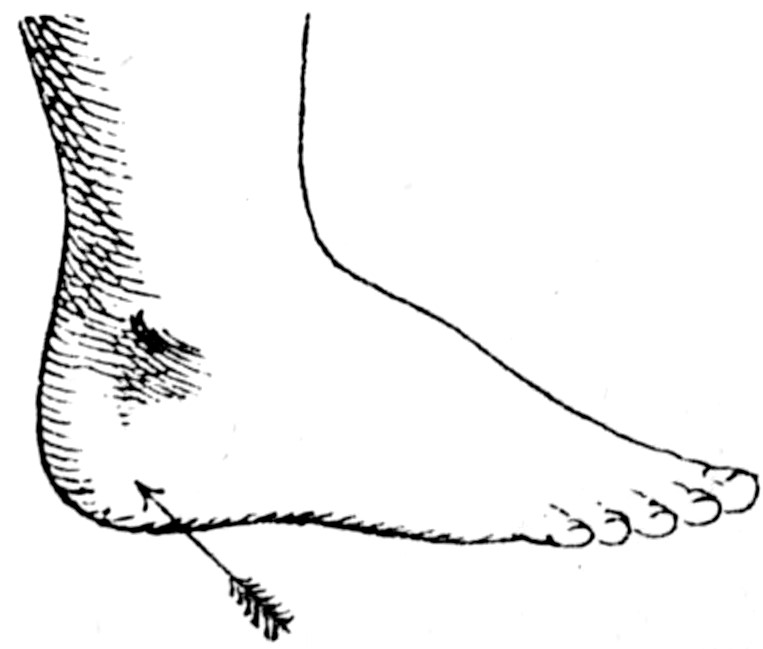
If a man starts with the conviction that knowledge is to the unknown as a drop in the ocean—he will get on.
I have MacNicol, and know his remark about Ossian’s leg.
I have now got the only copy that ever was written, so far as I know, and I shall be glad to get more. But we must all take what we can get. As far as fixing the king or the country and the date, that is perfectly hopeless. I have about 16 versions of one story in Gaelic, and no two have the same name. I suppose that there must be sixty versions of it known in other languages, and no two are alike. The oldest I know is scattered in ejaculations and separate lines through the Rigveda Sanhitâ, which is a collection of hymns in Sanscrit, and the oldest things known. St. George and the Dragon is a form of the story. Perseus and Andromeda is another. In Gaelic it is generally Mac an Iasgair, or Iain Mac somebody, or Fionn Mac a’ Bhradain, a something to do with a mermaid or a dragon, the herding of cows and the slaying of giants. The stories to which I referred were told me by John Ardfenaig as facts (the Duke of Argyll’s factor in the Ross of Mull). A man built a boat. Another, to spite him, said that the death of a man was in that boat—no one would go to sea in it, and at last the boat was sold by the builder to an unbeliever in ghosts and dreams. The other was how the turnips were protected in Tiree. If you know these you have got far, but if not you have a good deal to learn in Tiree.
I wish you success anyhow,
Yours truly,
J. F. CAMPBELL.
Niddry Lodge, Kensington,
March 28, 1871.
My Dear Sir,
I have been too busy about festivities and work to be able to get the book which I promised to seek for you. I got your letter of the 20th, yesterday, and I am much obliged by your promise to put some one to write for me. If he writes from dictation will you kindly beg him to follow the words spoken without regard to his own opinion, or to what they ought to be. I speak English, but when I come to read Chaucer I find words that I am not used to. So it is when men who speak Gaelic begin to write old stories. Our argument is an illustration. You speak Gaelic and you believe that Sàil means heel and nothing else. You told me that Sàil Dhiarmaid ought to be Sìol.
Now I speak Gaelic, but I profess to be a scholar, not a teacher. I happen to know that the man who signed Sàil Dhiarmaid, which was printed Sàil didn’t mean Sìol. I have the following quotation,—
“Eisdibh beag ma ’s àill leibh laoidh Chaidh am bior nimh’ bu mhòr cràdh An Sàil an laoich nach tlàth ’s an trod— ’S e ri sior chall na fala Le lot a’ bhior air a bhonn.”
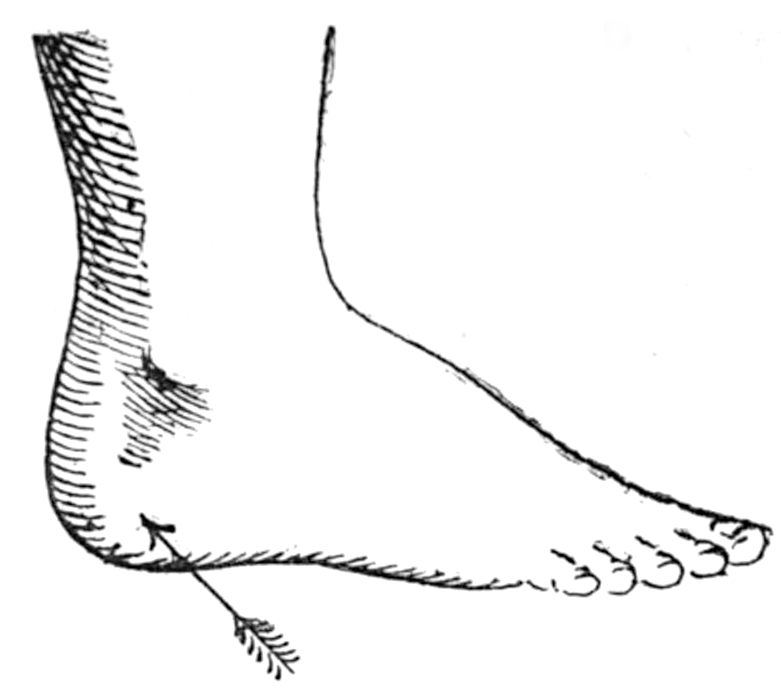
In this old lay as sung in the outer isles these would mean the spot which an old Mull man pointed to as sàil.[34]
If you are sceptical I hold to my creed of the people. But creed or no creed I want to get the tradition as it exists and I would not give a snuff for “cooked” tradition.
Tuesday, Oct. 10, 1871.
Conan House, Dingwall.
My Dear Sir,
I promised yesterday at Portree to send you my version of the fairy song, and asked you to return yours. You must remember that I never tried to write it from Gaelic, and that I never tried to write it from rapid dictation till last month. Correct my spelling, but mind that I took the sounds from ear, so preserve all that you can without reference to dictionary words. Don’t be hard upon a clansman who is doing his best.
Believe me,
Yours very truly,
J. F. CAMPBELL.
From John Cameron, a man about 60, who lives in the south end of Barra, about three miles from Castlebay. He can sing and recite, 1.—The Maiden (written by J. F. C.); 2.—The Death of Diarmaid; 3.—The Death of Osgar; 4.—The Battle of Manus (written by J. F. C.); 5.—The story of the Death of Garry; 6.—The Black Dog; 7.—The story of ditto. 8.—The Smithy and story; 9.—The Muireartach; 10.—Dàn an Deirg; 11.—The Fairy Song (as written here by J. F. C.); 12.—How Coireal was slain; 13.—Fionn’s questions; 14.—A small story written; and sundry other songs, lays, and stories, which he will get written if I wish it. This is one of about a dozen of men whom I have met of late who can sing and recite Ossianic ballads, of which some are not in any book or old manuscript that I know. I have another version of this song, written about ten years ago—by MacLean,[35] I think. See Vol. IV. Popular Tales, Lists somewhere. It is now in London.
The Fairy Song.
The tune is very wild and like a pibroch. I could not learn it in the time.
This is the story as told in Gaelic.
There was a time, at first, when before children were christened they used to be taken by the fairies. A child was born and it was in a woman’s lap. A fairy came to the Bean-ghlùn and she said to the midwife, “’S trom do leanabh.” “’S trom gach torrach,” said the other. “’S aotrom do leanabh,” said the fairy. “’S aotrom gach soghalach,” said the midwife, “’S glas do leanabh,” said the fairy. “’S glas am fiar ’s fàsaidh e,” said the other; and so she came day by day with words and with singing of verses to try if she could “word” him away with her—“am briatharachadh i leatha è.” But the mother always had her answer ready. There was a lad recovering from a fever in the house and he heard all these words, and learned them, and he put the song together afterwards: after the child was christened the fairy came back no more.
This is the song. I have tried to divide the words so as to represent the rhythm of the tune, but I am not sure that I have succeeded.—J. F. C.
I have given a rough copy to Miss MacLeod of MacLeod at Dunvegan, and I should like to have this or a copy back if it is not troublesome. My first manuscript is not easy to read, and I have worked this from it.
Fairy:—“’S e mo leanabh mìleanach Seachd Maìleanach Seachd Dhuanach, Gual na lag; ’s lag na luineach Nach d’ fhàs “nacach.”
[Reciter don’t understand gnathach, common.]
Mother:—Se mo leanabh ruiteach (colour ruddy) Reamhar molteach Miuthear mo luachair Ohog ri mnathan M’ eòin ’us m’ uighean On thug thu muine leat ’Us maire leat ’Us mo chrodh lùigh ’Us mo lochraidh leat. Mother:—Bha thu fo ’m chrios an uire ’S tha thu ’m bliadhna Gu cruinn buanach Air mo guailain Feadh a bhaile. Fairy:—Thug go gu gŏrach (fat, Reciter) Mnath ’n òg a bhaile Lan shaochail[36] uimach Thug go gu gŏrach Le ’n ciabhan dhonna Le ’n ciabhan troma
[He said at first somewhere, “Le ’n ciochan corrach”? place.]
Thug go gu gŏrach ’S le ’n suilean donna Mother:—Se sin Leoid Na lorg ’s na luireach Se Lochlan bu duchas dhuit O fire fire nì mi uimad Cireadh do chinn Ni mi uimad. Fairy:—Fire fire nì mi uimad Cha tu an uan beag Ni mi uimad Crodh ’us caorich Ni mi uimad. Mother:—Fire fire ni mi uimad Breachan chaola Ni mi uimad Fire fire ni mi uimad A bhog mhiladh (? fileadh. Oh soft soldier, soft mine own) O bhòg ’s leam thu O bhog mhilidh bhog Mo bhrù a rug O bhog mhilidh bhog Mo chioch a thug O bhog mhilidh bhog Mo gluin a thog O bhog mhilidh Bho ’s leam thu. Fairy:—B’ fheàrr leam gu faic mi do bhuaille Gu àrd àrd an iomal sleibhe Còta geal cateanach[37] uaine Mu do ghuailain ghil ’us léine. Nurse:—B’ fhearr leam gu faichean do sheisearach Fir na deance (?) a cuit shil Gu rò do cheol air feadh do thalla (land or hall) Leann bhi ga gabhail le fìon Bhog mhilidh bhog ’S leam thu.
And so she says a verse each day, and if that would not do, she came the next and made another, and the little lad made out the song which he sat and heard. When the child was baptized she went away and never came back again.
N.B.—I have set the verses to each character as best I could, not knowing much about it except the last two, these the reciter placed.
NOTES:
The Fairy Song in the MS. is most difficult to read. It was written phonetically, and is now in some places indistinct. The following transliteration and translation by Mr. Duncan Mac Isaac, of Oban, show a probable reading, and this may be enough, in view of the spell-words of the fairy, whose mystic diction appears to have been of a conservative quality, and to have affected the responses of the infant’s mother.—[A. C.]
Fairy—’S e mo leanabh mì-loinneach Seac maoileanach Seac ghuanach, Guailne lag, ’s lag ’n a lùireach Nach d’ ùisinnicheadh. Mother:—’S e mo leanabh ruiteach Reamhar moltach M’ iubhar mo luachair A thog ri mnathan M’ eòin is m’ uighean O ’n thug thu m’ ùine leat Is m’ aire leat Is mo chrodh-laoigh Is mo laochraidh leat. Mother:—Bha thu fo ’m chrios an uiridh ’S tha thu ’m bliadhna Gu cruinn buanach Air mo ghualainn Feadh a’ bhaile. Fairy:—Thuth gò gugurach Mnathan òg a’ bhaile Làn shòghail uidheamach Thuth gò gugurach Le ’n ciabhan donna Le ’n ciabhan troma Thug go gugurach Le ’n cìochan corrach ’S le ’n sùilean donna. Mother:—’S e sin Leòid ’N a lorg ’s ’n a lùireach ’S Lochlann bu dùthchas dhuit O fire fire nì mi umad Cìreadh do chinn Nì mi umad. Fairy:—Fire fire nì mi umad Cha tu an t-uan beag Nì mi umad. Crodh is caoraich Nì mi umad. Mother:—Fire fire nì mi umad Breacain chaola Nì mi umad Fire fire nì mi umad A bhog mhìlidh O bhog ’s leam thu O bhog mhìlidh bhog Mo bhrù a rug O bhog mhìlidh bhog Mo chìoch a thug O bhog mhìlidh bhog Mo ghlùin a thog O bhog mhìlidh Bho ’s leam thu. Fairy:—B’ fheàrr leam gu faic mi do bhuaile Gu àrd àrd ’an iomall sléibhe Còta geal caiteineach uaine Mu do ghualainn ghil is léine. Mother:—B’ fheàrr leam gu faicinn do sheisreach Fir na deannaige a’ cur sìl Gu robh do cheòl air feadh do thalla Leann ’bhi ’g a ghabhail le fìon Bhog mhìlidh bhog ’S leam thu. Fairy:—He is my ungraceful child, Withered, bald, and light-headed, Weak-shouldered, and weak in his equipments, That have not been put to use. Mother:—He is my ruddy child, plump and praiseworthy; My yew-tree, my rush, raised to women; My bird and my eggs, since thou hast taken my time with thee, My watchful care, my calved-cows, and my heroes with thee; Last year thou wast under my girdle, Thou art this year neatly gathered Continually upon my shoulder Through the town. Fairy:—Hooh go googurach, Young women of the town, fond of delicacies and dresses, Hooh go googurach, With their brown ringlets, with their heavy tresses, With their abrupt breasts, with their brown eyes. Mother:—That is a Mac Leod by heredity In his coat of mail; Thy nativity is Scandinavian; O pother, pother, the combing of thy head, I’ll do that about thee. Fairy:—Pother, pother, I’ll do about thee; Thou art not the little lamb I’ll make about thee, Cattle and sheep I’ll make about thee. Mother:—Pother, pother, I’ll do about thee, Narrow plaids I’ll make about thee, O pother I’ll make about thee, thou soft warrior, O tender one, thou art mine, thou soft soldier, The fruit of my womb, thou soft, tender warrior, My breast that took, thou soft champion, Reared upon my knees, thou tender champion, Since thou art mine. Fairy:—I’d prefer to see thy cattle-fold High, high on the shoulder of the mountain, A white coat, ruffled green, About thy white shoulders, and a shirt. Mother:—I’d prefer to see thy team of horses, And the men of the handfuls sowing seed, And that thy music would be through thy hall Accompanied by ale and wine; Thou tender champion, Thou art mine.
The late Campbell of Islay in the following letter, extracts of which will be given, alludes to Mr. Campbell’s intention of publishing at no distant date.
Niddry Lodge, Jan., 16, 1871.
I thank you for your letter of the 10th which reached me on Saturday, on my return to Tiree.
I shall be very glad to assist a namesake and a Highland minister who is engaged in literary work, in which I take a special interest myself. I now repeat my message, and ask you to place my name on the list of subscribers, if you have one. I shall be very glad to read your book. I am not publishing more Gaelic tales, but I am collecting, and I may some day publish a selection or an abstract or something from a great mass which I have got together. If you have anything to spare from your gatherings perhaps the best plan would be to employ some good scribe, etc. etc. etc. If you have any intention of publishing I beg that you will not think of sending me your gatherings. But anything sent will be carefully preserved.
Superstitions are very interesting, but I should fear that the people will not confide their superstitions to the minister. Amongst other matters which are noteworthy are superstitious practices about fowls.
These prevail in Scotland, and are identical with sacrifices by the blacks amongst whom Speke and Grant travelled—so Grant told me. Anything to do with serpents has special interest because of the extent of ancient serpent worship, for which see Ferguson’s great book on Tree and Serpent Worship in India and elsewhere. The connection between tree and well worship in India and in Scotland generally, and generally in the old world, is well worth investigation; also anything that is like the Vedic forms of religion, at which you can get by reading Wilson’s Translation of the Rigveda Sanhitâ, and the works of Max Muller. Anything belonging specially to the sea is interesting. The Aryans are supposed to have been natives of Central Asia, to whom the sea must have been a great mystery.
Now it is a fact that all the Aryan nations have curious beliefs and ceremonies and practices about going to sea, e.g.—you must not whistle at sea; you must not name a mouse Luds in Argyll but Biast tighe; you must not say the shore names for fine or low when at sea, but use sea terms; all that is curious and very hard to get at. Even to me they will not confess their creed in the supernatural. I have a great lot of stuff that might be useful to you, and I shall be glad to serve you, because there is a certain narrow-minded spirit abroad to which reference is made in the paper which I send herewith. It is highly probable that I may be out in the west in spring or summer.
Yours very truly,
J. F. CAMPBELL.
The following letter refers to the longest and most complex tale orally preserved in the Highlands, ‘The Leeching of Kian’s Leg.’ The version which Islay mentions is still unprinted. It is preserved with a portion of his MSS. in the Advocate’s Library at Edinburgh, and a summary of its contents has been published by me in Folk-Lore, Vol. I., p. 369. Mr. Campbell’s fragmentary version was printed and translated by him, ‘Transactions of the Gaelic Society of Inverness, 1888.’ Another fragmentary version, collected by the Rev. D. MacInnes, will be found in Vol. II. of this series. The oldest known MS. version, alluded to in this letter, has been edited and translated by Mr. Standish Hayes O’Grady in Silva Gadelica, from a 15th century MS. A re-telling of the story, based upon all the versions, will be found in Mr. Jacob’s More Celtic Fairy Tales.—A. N.
May, 4, 71. Niddry Lodge,
Kensington.
My Dear Sir,
I sent you a Times review of Clerk’s Ossian the other day to amuse you; also a paper with an account of fighting in Paris, where I was at Easter.
I got your letter and parcel of May 1, last night, and I have just read the story. It is extremely well written, and the language is vernacular and perfectly genuine: as I have now got 20 volumes, and half another, I am able to judge. Yours is a version of the story of which I sent you the abstract. If ever I publish the story I see that I must fuse versions, and select from the majority of various readings, under the name of “The Leching of Khene is legg.” The story is mentioned in the Catalogue of the Earl of Kildare’s library amongst the Irish Books, A.D. 1526 (Harleian MSS., 3756, Brit. Museum). I gave this information to Kildare, who has been hunting high and low to find out what was meant, they could not tell him in Ireland. I met him at Lorne’s marriage and lent him my copy, 142 pages from oral recitation. Now you send me 19 more pages, and 3 of another version, 22. Between us we have already recovered something of a story 345 years old at least.
Therefore Tradition is respectable; a comparison of versions gives a fair measure of the power of popular memory, so that written Gaelic folk-lore is a kind of measure for other and older written traditions. But as all that is old in history was tradition at first, the study is worth trouble as I judge. The more we can get written the better pleased I shall be. I am exceedingly obliged to you, and hope to thank you in person some of these days.
I am,
Yours truly,
J. F. CAMPBELL.
Archibald Sinclair Printer Celtic Press, 10 Bothwell Street, Glasgow.